Book Excerpt: Start Winning With Money by Donnie Masters

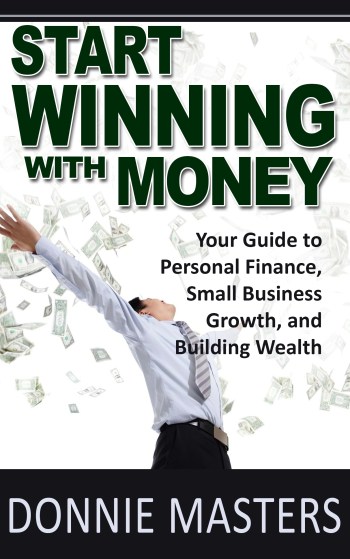
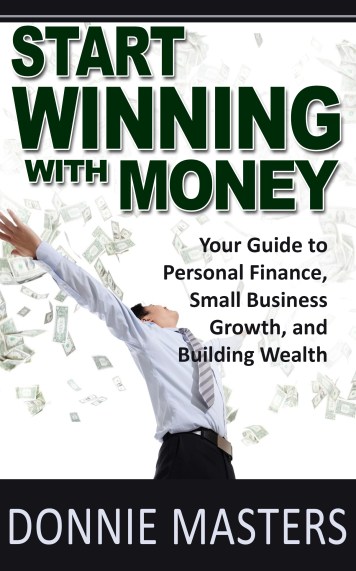
Today, at TRB Lounge, we are featuring an excerpt from Start Winning With Money: Your Guide to Personal Finance, Small Business Growth, and Building Wealth by Donnie Masters.

If you’re in to learn some really good advice about not only building but also managing finances, then read on…

About the Book:
If you are looking to make millions of dollars while sitting in your pajamas, then this book is not for you!

Start Winning With Money is financial book that offers high impact, real world solutions for life’s many money questions.

Want to better your personal finances?
Want to open your own successful business?
Would you like some real clarity on the cost of higher education?
Want to address the issue of debt in your life?
All of that and more is available to you.

Start Winning With Money will teach you:
Why your current income has nothing to do with obtaining wealth
Challenge the popular belief that all debt is bad
Address the issues with public education and why you were taught to fail with money
Define a proper budget
Why good debt can help you grow wealthy
Explain the importance of money in achieving financial freedom
Redefine true wealth

Book Links:

Amazonhttps://www.amazon.com/dp/B071NMPPYR
Goodreadshttps://www.goodreads.com/book/show/35666557-start-winning-with-money


BOOK EXCERPT

Chapter 3

You have been lied to 

Have I previously mentioned my distaste for the public school system in America yet?. One of my biggest concerns with our nation today is that children are being taught years and years of English, Math, and Science. But in most cases, our kids graduate high school without having had one class in financial management.

Over the course of your working life, you will be expected to pay taxes, fund your retirement, and take care of yourself financially. I am not sure how we can expect our children to do this when they are not being taught how to do so. Additionally, the cards are stacked against most children as no one in the family has enough wealth to manage. This simply means that there is zero education at home as well.

Since at least the 1950’s, and maybe longer, the American consumer has been fed four downright lies that have been ingrained in our culture as truth, even though logic and simple math tells us that it doesn’t make sense. These four “truths” are that you must buy a house, you must get a college education, you must save a lot of money for retirement, and you must avoid all debt.

We are going to tackle all of these “truths” head on in this chapter, but we need to break them down one by one in order to make some sense out of it all. Let’s start off with the grand daddy of them all. You must buy a house!


Big Lie #1 – You Must Buy a House

Most people can not just go out and buy a house with cash. They do not have that kind of money in their bank account ready to spend on a residence. In order to purchase a house then, most people must take out a mortgage to pay for their home. Since most people have to utilize a mortgage as part of the payment process, shouldn’t we start by defining what a mortgage is?

Dictionary.com defines a mortgage as:

  1. a conveyance of an interest in property as security for the repayment of money borrowed.
  2. the deed by which such a transaction is effected.
  3. the rights conferred by it, or the state of the property conveyed.

In plain language, a mortgage is a legal agreement that carries the conditional right of ownership of an asset by the owner to a lender as security for taking out a loan. In terms of real estate, the house acts as collateral for the lender. The lender’s interests are then recorded in the register of the title documents to make it public information that they have an interest in a specific property. The mortgage agreement is then voided when the loan is fully repaid by the borrower.

I believe that there are three primary reasons people are told to purchase a home. If you take this advice at face value, it appears to be solid financial advice for a lot of practical reasons. But let’s take a brief moment and really break down these three reasons that people buy a property to live in.

  • A home is an appreciating asset
  • You get to lock in your payments
  • I can sell it later on for a profit, or live in it “free” at retirement

Let’s start by talking about whether your personal home is an appreciating asset. Do you live in a single family home, townhouse, or condo? How much is your house going up in value every year?

USA Today conducted an interview with renown Yale economist and Nobel prize winner Robert Shiller. His direct quote is as follows:

“If you look at the history of the housing market, it hasn’t been a good provider of capital gains. It is a provider of housing services…

Capital gains have not even been positive. From 1890 to 1990, real inflation-corrected home prices were virtually unchanged.”

In other words, yes the house you live in will go up in value over time, but that value is merely keeping up with overall inflation. Your house is therefore NOT an appreciating asset. Furthermore, it does not produce income for you either, so we can’t even classify it as a good debt.

Now someone is thinking okay, but you get to lock in your payments for the life of the loan, right? In theory yes you do. But do you know that your payments are still going to fluctuate every year anyway? Taxes on personal property can be outrageous depending on classification of the property and home values in the area. Every year taxes and insurance cost more than the year before. So yes, your payment on the mortgage and interest will stay the same, assuming that you locked in your mortgage rate, but your escrow will constantly adjust with the changing taxes and insurance rates. This means your payments will fluctuate over time.

All right! I hear someone else saying. Enough of this craziness! At least I get to live in my house “free” at retirement or I can sell it for a big capital gain later on in my life. Sure, if you say so. But before you believe that hype, answer me a question. How do you live in a house for free? Yes, maybe after 30 years you have paid off the mortgage, but taxes, insurance and utilities will be higher than they have ever been. Not only that, but how many upgrades and repairs have you had to do over 30 years? The true cost of home ownership is very high and it is most certainly not free.

Someone else is going, “hold on a minute here.” I sold my house and got a big fat check with capital gains at closing. What can you say about that fella?

I could tell you that you would have done much better investing your money in the stock market over the same 30 years that you paid off your mortgage. Don’t believe me about that one either?

According to the Washington Post:

“The Washington Post analyzed Shiller’s data and reported that, over the past 100 years, home prices have only grown at a compound annual rate of 0.3%, adjusted for inflation. The S&P 500, on the other hand, has had an annual return of 6.5%. That’s an awfully big difference.”

I can certainly understand why many readers may need to re-attach their jaws right now. After all, I currently own a single family home, and I bet a lot of you do to. But what else am I going to do, sell my house and rent forever? No, and neither are you.

As with any legend or myth, there is some truth to this argument. The reality is, that being able to lock in your payment on an appreciating asset is a beautiful thing for your overall wealth accumulation. The problem is, that a single-family house is not an appreciating asset. So what is the best solution?

If you are going to buy a home to live in, I would suggest that you look into a 2-4 unit “multifamily” house. The reason why is incredibly simple to understand. Your private residence will now cost considerably less for you to live there, as other people will rent from you and help pay off the house. With some of these savings you can invest for your retirement sooner in life. Plus, you will build equity over time on a “good debt”. We don’t even need the house to appreciate in value to make this plan work. Let me explain this even farther.

A good debt produces income for you, right?. We have learned that part already in this book. If 3 out of your 4 units are paying rent to you then the property will produce income. This now makes your personal residence a good debt. The rent payments should cover all the mortgage due plus the taxes and insurance on the property. Having 3 paying units will allow you to live in your personal residence for next to nothing. You may even find a deal that allows you to live payment free on your personal residence. No monthly mortgage payments to live in your house, now that’s how to start winning with money!

On top of all that, you are borrowing money in a property that will go up in value over time, even if it only keeps up with inflation. The best part is, the house can actually not appreciate in value and this will still be a winning formula. Maybe your personal residence’s return on investment doesn’t beat the stock market’s return over time, but you have to live somewhere while you are alive. Why not let it be a property that works with you to achieve financial freedom long term.

So if you are going to take on all the risk of a mortgage (and a big one at that), wouldn’t it at least make sense to understand what it all entails?


What’s The Deal with Mortgages?

A mortgage is the most readily available home loan opportunity and what most people are familiar with. When it is truly a home mortgage however, only two different parties are involved; the homeowner and the bank. A loan is provided to the individual from the bank, with the home used as collateral for the length of the loan.

If the agreed payments aren’t made on time, the bank can then begin the foreclosure process. They use the mortgage agreement to take over full control of the house. The bank will then sell the house in an attempt to recover the loan that had initially been given to the individual. Foreclosure homes are often sold via auction, as the bank wants to get back their funds as quickly as possible. The auction process will make the house being sold sell at a steep discount to the general market. This is because all auctions are sold “as-is”, “where-is”. In other words, you are buying the property in the shape you see it with all it’s flaws.

The key factor in the foreclosure process is time. The process can be very time consuming for the bank involved. It often takes several months or up even up to a year to clear the legal system and finally gain possession of the house. Many states also have contingency plans where the homeowner can get the home back very late into the foreclosure process if they can catch up with their payments. Because of the time and money involved in the foreclosure process, most lenders prefer issuing a deed of trust instead.


Deed of Trust

In a deed of trust situation, a third party is involved. This third party is referred to as the “trustee”, or he who holds ownership of the home until the loan is repaid in full. The homeowner is still responsible for making payments to the bank, and once they have repaid the loan, the trustee holding the deed of trust will release it to the individual.

The bank can reclaim the house if payments are not made, just as with a mortgage. The home is reclaimed directly from the trustee however, and the long, lengthy process of a mortgage is non existent. This is because both the bank and the individual never actually held title to the home. Banks prefer the deed of trust arrangement as they can get title to the property and resell it much faster than if a mortgage is in place. A deed of trust also reduces the administrative costs (read legal fees) and length of time between foreclosure and getting the home resold.

Ultimately, when it comes down to it, lenders will desire a deed of trust arrangement while buyers will want a mortgage. Not all states allow deeds of trust and the terms can differ dramatically from state to state. As such, if a bank is pushing for a deed of trust, you should review the state guidelines with a real estate attorney to ensure you clearly comprehend the risks and whether or not a mortgage is even available in your specific state.


Basic Components

As with all other types of installment loans, mortgages have interest and are scheduled to be repaid over a set period of time. Most mortgages are up to 30 years, though repayment plans up to 50 years can be had. All types of real property are secured with the property itself as collateral.

A mortgage is still the primary method used to finance private ownership of residential and commercial property in the United States. Although the methods will differ in various countries, the basic components are similar to ours. These are the common terms used in mortgages and deeds of trust.

Property: The physical residence being paid for. The exact form of ownership is determined by the agreement entered into; either a Deed of Trust or a Mortgage.

Mortgage/Deed of Trust: This is the secured interest of the lender in the property, which may or may not include restrictions on the use or disposal of the property.

Borrower: The person borrowing funds to finance the “asset” and is creating an ownership opportunity in the property.

Lender: The party offering the financing money, but it is usually a bank or financial institution.

Principal: The original total amount of the loan, this may sometimes include other costs. Whenever any principal is repaid, the principal amount will reduce in size.

Interest: The profit or financial reward gained by the lender for the use of their money over time.

Foreclosure or repossession: The process where the lender has to foreclose, repossess, or seize the property under certain situations.

Other terms are more prevalent in different countries, but the above referenced terms are the essential components of a mortgage in the United States. Most governments regulate areas of the banking and lending industries within their respective countries in order to prevent fraud.

Lenders provide loan funds for properties to earn interest income, or make profit. Lenders generally borrow these funds themselves since they do not have enough capital to lend over and over again without replenishing their coffers. The price at which other lenders lend out these monies affects the cost of borrowing as well. Lenders can also sell the mortgage loan to other parties after closing on the deal.

Mortgage lending also has to take into account the risk of default on the loan. In other words, the assumed risk is the likelihood that the funds lent will be repaid as agreed. If they are not repaid as agreed, the lender will foreclose on the real estate assets as we have previously mentioned. This is not the preferable method of most banks. Banks prefer to have the interest funds to re-invest for more interest. They are not interested in a property to maintain and sell.


Mortgage Underwriting

Once the mortgage application enters into the final stages of preparation, the loan application is moved to a mortgage underwriter. The underwriter verifies all the financial information that the applicant has provided, and makes sure it is correct and valid. Verification of the applicant’s credit history will occur. The house is then appraised, or given a value relative to similar properties in the area.

The income and employment information of the applicant will also need to be confirmed by the underwriter. The underwriting process may take several days to complete. It is advisable to maintain your current employment and not open any new credit while undergoing the underwriting process. Any changes made to the applicant’s credit score, employment records, and/or financial information can lead to the loan being denied.

In the case of a fixed rate mortgage, the interest rate remains fixed, or locked-in, for the duration of the loan. In the case of a monthly repayment plan, which most mortgages are, the payment will remain the same amount throughout the entire loan. Please note that the amount of escrow and taxes will fluctuate every year as we discussed earlier.

In an adjustable rate mortgage, the interest rate is generally fixed for a set period of time, after which it will periodically adjust up or down based on the market index. The rate may adjust monthly or annually under the terms of your financing agreement.

Adjustable rate mortgages are not to be taken lightly. Adjustable mortgages transfer the risk of rising interest rates from the lender to the borrower, and thus are largely used where fixed rate funding is difficult to obtain or prohibitively expensive. Since the risk is transferred to the borrower, the initial interest rate may be between, 0.5% and 2% lower than the average 30-year fixed rate. We do no recommend an adjustable rate mortgage for a primary residence.

The interest charged to a borrower will depend upon the credit risk and the interest rate risk. The mortgage origination and underwriting process involves checking several factors including, credit scores, debt relative to income, down payment available, and other current assets owned by the borrower. Jumbo mortgages (mortgages over $417,000 in most of the United States) and subprime lending (borrowers with a credit score under 620) are not supported by government guarantees and face much higher interest rates than standard mortgages.

Now that we have covered one of the biggest financial decisions you will make in your life, buying your personal residence, let’s turn our attention to another big “truth” told in America today. You simply MUST get a college education.


Big Lie #2 – You Must Get a College Education

Okay, so maybe this was sound advice 50 years ago when a majority of people did not already have a college education, but it simply no longer applies in today’s society. Most people can spend a fraction of college costs on certification and/or job training and find meaningful employment. Let’s talk about student loan debt for a bit and why college is not a “good” debt.

In the United States, student loans were not even an option until the 1960’s. In hindsight, a simple law that should have opened the door of opportunity to many more students, quickly got out of control. It took less than 20 years for reality to set in about student loans.

In 1958, the United States was only 13 years removed from World War II. Within our country, there was a legitimate concern about the spread of communism and how to combat it. Most people from the World War II generation will be able to recall the legitimate fear regarding communism. At one point, the United States even went as far as having public hearings, called the McCarthy hearings. Many high profile celebrities were called to testify before Congress in an attempt to expose communism among movie studios.

In an attempt to make sure that the United States stayed competitive with the Soviet Union, especially in regards to math and science studies, Congress decided to pass the National Defense Education Act in 1958. In 1965, the Johnson administration created the guaranteed student loan, or Stafford loan program. Since 1965, the cost of a college education has outpaced inflation by more than 2 1/2 times.

According to an article entitled, “The History of Student Loans in Bankruptcy“, the cost of a higher education amended for inflation is absolutely startling. According to the author of the referenced article, Steven M Palmer, in 1980, the average cost for tuition and room and board at a public institution was $7,587 adjusted for 2014 dollars. So what’s the problem? By 2014 that same, exact education now cost $18,943; more than 2 ½ times the rate of inflation. Unfortunately, the news only gets worse as we go along.

If we continue down that same train of thought, loans are also becoming more necessary for someone who wishes to attend a college or university. In 1981, for example, someone who worked a minimum wage job could work full time in the summer and earn almost enough to cover their annual college costs. By 2005, that same student would have to work the entire year and use every penny of their earnings in order to attend school.

Between the years of 1958 and 1976, the United States government began to see a problem with their plan. Prior to 1976, student loans could be discharged in bankruptcy proceedings without any constraints whatsoever. As the economy began to sour in the 1970s however, change was enacted. The federal bankruptcy code was enacted in 1978, and the ability to get rid of student loan debt in bankruptcy was drastically changed.

The article goes on in detail, explaining that between 1978 and 1984, only private student loans could not be discharged in bankruptcy. As the situation continued to worsen, and more and more people were getting into debt via student loans, the government continued to restrict bankruptcy discharges.

Changes were made to bankruptcy laws in 1984, 1990, 1991, and 1992. In 1996 the federal government even allowed Social Security benefits to be considered as income towards repaying defaulted student loans. In 1998 more changes were made again. By 2001, changes were made again allowing disability and retirement benefits to be considered as repayment income.

Basically, as the United States government became aware of the problem that they created, Congress continued to modify the bankruptcy laws, to make sure that student loans had to be paid back even when someone declared bankruptcy. They began changing the income requirements for repayment as well. Ask yourself a simple question, why is this?

Now that you have been informed of this new information about student loans, it should be obvious that student loans should always be considered a bad debt. In fact, let’s continue to go into this a little deeper still. What about the fact that a college graduate will earn more money over their lifetime?

Technically, it is a true statement that a college graduate will earn more money over their lifetime of earnings than someone that does not attend college. But once again we are only being sold on part of the story. In reality, the average college graduate will not earn enough money to offset the student loan payments and interest accrued on their debt. In fact, a college degree isn’t even a good indicator of whether or not you will get ahead in life.


Are Student Loans a Good Indicator of Success?

There can be no doubt that members of our government were simply trying to encourage its citizens to get a better education. This is most likely the reason that the laws were passed to help ensure every student could go to college if they wished to. So how did a good idea go so bad?

After World War II, the United States government saw the success of the G.I. Bill. The G.I. Bill ensured that military veterans would receive their college expenses paid for by the US government. Based upon the early success of the G.I. Bill, low interest loans were made available to all Americans by 1965.

The college graduation rate in the early 1960s was only 7 to 8% by the time most of these laws went into effect. In other words, a college graduate that was looking for a new job represented only one out of twelve applicants.

By today’s standards, more than 30% of the population has at least a bachelors degree, and more than 60% has some college education, up to and including an Associates degree. At this point, the American workforce has so much education that almost everyone who applies for a job has some college education on their resume.

Based on the college graduation rate of the 1960s, the notion that higher education was better than entering the workforce straight out of high school became a common theme. Multiple generations of Americans have now been sold on this lie. At one point in time, statistics were presented that showed college graduates would earn as much as $3.4 million more in their lifetime than students who didn’t graduate with a college education.

Unfortunately, due to the rising demand that student loans created, the cost of a college education began to rise much faster than the rate of overall inflation. This meant that families began to devote more of their income just to pay for college costs. At this point in time, annual tuition has entered into the tens of thousands of dollars per year. College expenses are so high that they have even outpaced families in the upper middle class. Many more students have had to turn to student loans to pay for their education, even if their family has some money set aside.

Today, more than 71% of students are leaving school with student loans, according to studentloanhero.com. Additionally, even though the average college graduate earns $17,500 more annually than a high school graduate, loans for a basic 4 year degree are now topping $60,000. A repayment on that type of loan equals a small mortgage payment in some parts of the United States. Students are dedicating $400-600 per month on student loan payments. According to the Economist magazine, this means that a lot of students with degrees are actually, “…worse off than if they had started working at 18.”

With more and more students understanding that they are probably going to incur student loans as part of their education expenses, people have begun searching for ways to reduce college costs overall. Let’s continue to go down this path of having a higher education at any cost.


The Dangers of Student Loan Debt

For high school students who are searching for ways to reduce the cost of a college education, your local community college has probably been pitched as a way to reduce your overall expenses and avoid larger debts by attending a more expensive four year university.

Many, if not all, financial advisers actually flat out recommend that you complete your first two years at a community college before transferring credits to a four year university. They claim that this is a sure fire way of cutting overall college costs by as much as half, thus minimizing your need for college loans. So far this sounds like really logical financial advice.

Community colleges usually have annual tuition rates that are well below those of a traditional four year college or university, and the two year route may really help in terms of overall cost management and the amount of student loan debt when finished. So where, exactly, is the problem with this plan?

As it turns out, statistically, community college students are more likely to struggle with their student loan debts AND are also more likely to default on payment of their student loans altogether. This doesn’t seem to make any sense now does it?

According to pewtrusts.org, “38% of two-year college students who started to repay their loans in 2009 defaulted within five years…”

So the bigger question is, why do community colleges have this problem that doesn’t seem to effect major universities?

The truth is that more people simply drop out of community college than a four year program. Some statistics report as many as 38% of community college students do not finish their program. Combine dropping out of school with the fact that high school graduates have lower paying jobs in the first place and you can clearly see the problem. A lot of community college students had to borrow money to live on while they went back to school which means they don’t have extra money to repay the loans.

Even though tuition and overall costs are a lot lower at community college, the students are not as committed to finishing their degree there. Some of this can be explained by age and educational levels in the household (community colleges have older students and more immigrants), but much more of it involves lack of education about the cost of higher education.


Minimizing, and Managing Student Loan Debt

What do we make of all these default and delinquency rates for students trying to find a way into the working world? What do we say to high school graduates who are looking for ways to minimize the cost of a traditional college education by transferring credits from a community college?

The answer is to avoid student loan debt at all costs. It is a much better option to just work your way into better situations, promotions, and opportunities within the work force. The average person will actually do much better for not having the student loans wrapped around their neck for the rest of their life. Especially since student loans can not be discharged in bankruptcy.

If you aren’t willing to take that as an acceptable answer, please at least heed some sound financial advice on student loan debt. Below is a list of things to do or look for in order to avoid taking on more student loan debt than you will be able to handle later on.

  • Keep ALL other expenses as low as possible

Managing or reducing your overall college expenses may mean living at home with your parents and packing your lunch instead of eating on campus every day. Working part time or full time while you go to school in order to pay for it is an even better idea.

  • Constantly be looking for scholarships and grants

You can cut your college costs by seeking out scholarships and grants. Scholarships and grants provide you with financial aid that, unlike a student loan, does not need to be paid back.

If you’re a working student, make friends with the human resources department at your employer. Some employers offer tuition reimbursement programs or professional development benefits that can help you reduce the cost of your education.

  • Always complete your degree program

For college students who must rely on student loans to get through school, the single best predictor of successful repayment is actually graduation. Students who have completed their degree are the most likely to repay their school loans without defaulting.

“Just 15 percent of community college graduates default on their college loans, compared with 27 percent of community college dropouts,” according to the Institute for Higher Education Policy.

Students who spend one year or less in school are the most likely to run into repayment problems on their student debt. This is often because they can’t find a job or the job they do find doesn’t pay enough to enable them to make their student loan payments on top of life’s normal expenses.

  • Do not borrow more than is required

Borrowing more than they need is very problematic for community college students because the federal education loan programs offer the same maximum loan amount regardless of what type of school you attend.

The maximum federal undergraduate loan available each year will typically cover the cost of all tuition and fees at a community college plus a few thousand dollars available for books, transportation, and living expenses.

That extra money can be very tempting to use. Living expenses pose a major challenge for many college students, regardless of what type of school you attend. How you plan to pay for your living expenses while in college can mean the difference between manageable and unmanageable levels of debt when you finish.

Having a plan to pay for your living expenses without resorting to maxing out your student loans will significantly reduce the amount of money you need in order to complete your degree. The less student loan debt you have when you graduate, the lower, and more manageable, your monthly payments will be. Having lower payments also means you will be able to pay those loans off faster.

Before we conclude this section on student loans, I believe it is important to cover the different types of student loans and how they can impact your financial future.


            Not All Student Loans Are Created Equal

Federal education loans are issued directly by the federal government and they carry a fixed (locked in) interest rate, along with very flexible repayment terms. Federal student loans also have multiple options for postponing or reducing monthly payments based on financial circumstances. Federal student loans are generally low cost and lower interest loans.

Private education loans, which are not issued by the government, are issued by banks, credit unions, and other private lenders. These loans often have variable rates. Private loans are credit based loans that typically carry higher fees and interest rates than their federal counterparts. Private student loans offer fewer options for financially distressed borrowers to be able to postpone or reduce their payments as well.

One major difference between typical consumer loans (think auto loan) and a student loan is the deferment period. With a car loan, payments on the principal begin almost immediately, even if they are relatively small at first. In other words, with every payment made you are slowly paying down the total balance of the loan.

In contrast, all federal education loans and a lot of private education loans allow students to defer making any payments while the student is still in school. The repayment of the loan is then delayed for years in most cases while the student finishes their education. This comes with a cost of course, as there is not a delay on interest charges.

Except in the case of subsidized federal student loans (in which the government will cover the interest while a student is in school and are also awarded only to students who demonstrate the most financial need), interest begins to accumulate on college loans as soon as the loans are issued, even if a student is deferring payments.

This accumulation of interest may take place over months or years, quietly running up the balance on a student’s school loan debt to alarmingly high levels.

If we add up all of these small details about student loans, then we begin to understand the much larger picture. Yes, it is true that college graduates will make more money than non-college graduates. The problem with that mathematical equation however, is that we are not calculating the amount of interest and debt repayments that come out of that extra income. When you begin to peel away the layers, we get a much clearer picture.

At this point in time, it just does not make any mathematical sense to enroll in college UNLESS you have a clear path to a high paying career. The amount of debt that one must take on in order to complete a basic four year degree far outweighs the difference in income for an average degree. If you are not looking at a masters or doctorate level career, then I believe the additional income to be truly insignificant for the amount of debt that you will have to incur.

The math no longer makes sense for kids to accumulate debt in order to get a basic degree now does it? That is why America is still being sold on something that no longer applies in today’s new economy. Going to school after high school still helps you earn more money longer term. Unfortunately, the gap is closing quickly for a lot of majors. When you figure in years and years of loan payments that accumulate interest and never go away, the math becomes a lot clearer.

For further reading and research on this topic, I suggest this article. The article, by Nikelle Murphy, specifically points out 10 college degrees that are almost worthless to employers now. Not only is it a great read, but it may help you make a much better decision in life.

I think there is one more point that needs to be made at this time. The new economy that involves the Internet has also broken down the barriers between educated and non-educated citizens. Much like Bill Gates and Steve Jobs did to the computer industry years ago, so has the Internet done to this generation. You literally have college dropouts, high school dropouts, and teenagers, making vast sums of money via the Internet.

While it is important to note that this path is not for everyone, not attending college and pursuing your own business via the Internet is a viable option for some people. If your long term plan does not involve traditional education than you should heavily consider an Internet based business. I specifically like creative and art driven people to consider this road of success as opposed to “graphic design” schools.

Now let’s tackle the next myth head on. That is, you must save a lot of money in order to retire.


Big Lie #3 – You Must Save A Lot Of Money For Retirement

How much money do you need to retire? One million? Two million? More or less than that amount?

No one, and I mean absolutely no one, has a realistic number that you can just plug in and use as a goal for your retirement accounts. The reason why is because one thing is constant in the world we live in, inflation.

Inflation is defined as:

“A sustained, rapid increase in prices, as measured by some broad index (such as Consumer Price Index) over months or years, and mirrored in the correspondingly decreasing purchasing power of the currency.” This definition is according to businessdictionary.com.

So what does inflation have to do with America being sold a big lie about saving money for retirement?

The truth is you will never be able to save enough for retirement. Even if you were to put away 20% of your before tax income from the day you turned 21, you will never have enough for retirement without generating additional income. How can I be so sure this is true? Inflation erosion.

I can hear some of you rolling your eyes already. You are probably going back in time and imagining the job you had a 21, and starting to calculate what 20% of your before tax income would have been. I will save you the math.

Let’s assume for the sake of argument that you earned $100,000 per year, every year for 40 years. In this example, you would have earned $4 million in your adult life. You were also one of the lucky ones, and you were able to retire at the age of 61 since you saved so diligently.

Now using these exact numbers, 20% of your pretax income would be $800,000. But let’s also assume that you invested wisely, and that you were able to grow your $800,000 retirement fund by a 250% return over the 40 years. $800,000 times 250% equals $2 million. A lot of you reading this right now are probably going that’s incredible! I agree completely.

So what is inflation erosion and what does it have to do with my retirement account you ask? Inflation erosion is a technical term based on the belief that savings are being erased faster than ever because inflation is rising faster than the average income.

So at this point, you are probably asking how I can be so confident in my mathematical calculations? As it turns out, once again the United States government is supplying all the information we need. Specifically, the United States Bureau of Labor Statistics produced the following chart attempting to track inflation for just one 12 month period.

The base line for inflation is 1.8% per year for the 2011-2012 period referenced in the above chart. In reality, medical care is almost doubling the rate of inflation every year. Additionally, housing and transportation services are outpacing inflation as well. If we add in discretionary spending, such as higher education and new cars you can see why your dollar is not going as far as it used to. There is no way to “out save” inflation.

So going back to our example, you retire at the age of 61 with $2 million in your retirement account. The problem is, based upon inflation, that $2 million doesn’t go near as far as it used to. Let’s look at a really specific example.

The exact same Bureau of Labor Statistics, has a really neat online calculator. This online calculator will show you exactly what inflation has done to the US dollar over time.

For our specific example, a person working for 40 years between the ages of 1960 and the year 2000 would retire with a $2 million retirement account. However, in order to have the same spending power in the year 2000 that their money had in the year 1960 when they started saving, you would have needed to accumulate $11,522,184.30.

Yes you just read that correctly, in order to have the same spending power that $2 million had in 1960, by the year 2000 and you would have needed more than $11 million! Unfortunately, I don’t see any scenario in which this gets better going forward.

But there’s another other thing I’d like to point out as well. During the years 1960 and the year 2000, a majority of working Americans received some form of pension and will collect full Social Security payments. I want to stress to you that I’m not making a political point here, but rather I am telling you that my generation and the generations behind me will not receive pensions. They simply do not exist anymore in today’s world. As for Social Security, it’s anybody’s guess how long that’s going to stay around.

To make this new information sound even more dire, this specific data was supplied by the US Bureau of Labor Statistics. Yes, the United States government acknowledges that this is a real mess and has zero solutions to fix it. Obama care? Trump care? Neither one will fix the mess that insurance providers, politicians, and pharmaceutical companies have created when it comes to healthcare.

Now let’s talk about your income for just a moment. Are you currently making $100,000 per year? Are you even making more money than you did last year? Are you making more money than you ever have in your life? Probably not.

According to USA Today, Americans finally got a raise in income level during the 2015 tax year. The article says that incomes rose for the first time in 8 years, meaning that incomes had not risen at all since 2007. The same article continues on stating that most Americans don’t feel like they got a raise in income because after adjusting for inflation their true level of income has not matched the levels of 1999. Depressing isn’t it?

So for 16 years straight, the average US household has made less money than before. Once again the data was supplied by our own government. The data for this specific USA Today article was supplied by the United States Census Bureau. The same government that is supposed to be guiding it’s citizens and providing a portion of their retirement has acknowledged that it is failing you.

Is Social Security even going to be available for another generation? Are we creating more jobs that pay a real living wage? Are expenses going down every year? Are incomes going up? The answer to all of those questions is “no”, and I don’t see any reason to believe they are going to be fixed any time soon.

So now we come to the fourth and final lie that is being taught to most Americans, you must avoid all debt in order to succeed in life. Debt is evil! All debt is bad! The credit card companies are ruthless with their aggressive advertising!

Do me a small favor and hear me out on this next part. It really might just change the way you look at things going forward in your life.


Big Lie #4 – You Must Avoid ALL Debt

Ah, yes. Stand up my Dave Ramsey loyalists and scream at me! ALL DEBT IS BAD!

What if I could prove to you it isn’t? In fact, what if I could show you documented proof that debt can actually make you wealthy beyond your wildest dreams?

You have probably heard some stupid expression over the years about how 90% of all millionaires got to millionaire status by investing in real estate. Think back to where you first heard such a crazy thing. Was it a friend that said it?

At one time in life, I repeated this to people as well. In fact, just last year I wrote a blog post that referenced the fact that 90% of millionaires started in real estate. I am guessing that this expression started somewhere in the real estate circle years ago. Most likely a Realtor or mortgage broker started this silly expression trying to convince someone to buy real estate. Can you become a millionaire by owning real estate? Yes. Did 90% of all millionaires achieve their wealth through real estate? No.

According to an article, on Financial Uproar, most millionaires do in fact OWN real estate, but a good portion of them did not use real estate to become wealthy. According to their own admission:

“…90% of millionaires do not come from real estate. Most millionaires come from a combination of success at work, owning a business, and investments, mostly in equities.”

So why do we assume that people who have loads of debt in real estate holdings are wealthy? Does owning something other than your own house make sense long term? Absolutely, as long as it is purchased, repaired, maintained, and managed correctly.

The case for using real estate as part of your personal wealth building plan is a strong one as long as you follow all the rules outlined below. If you want to make money in real estate you must follow the path that many before you have laid out.

The 4 Rules of Investing in Real Estate

  1. Cash Flow
  2. Buy Below Market
  3. Use Leverage Correctly
  4. Take Every Tax Advantage


The cash flow on an investment in real estate must be positive by as much as possible. Simply put, the difference between what you can rent the property for and your mortgage payment must be a positive number. In order to not get into financial trouble down the line, you must be able to put this money away for future repairs and unexpected bills.

I do also want to make one more note here. There are a portion of real estate investors that believe buying the right property at any price is advisable. Based upon their beliefs, they will argue that depreciation, amortization, and the tax benefits of owning real estate as an investment, will make up for any cash flow losses. I strongly urge you not to listen to this advice.

As with any other investment, there are a multitude of general rules that are being taught on the Internet. My biggest suggestion would be to listen to someone that actually owns investment real estate as opposed to someone writing an article on it. If you simply ask for assistance, most people will be willing to share their opinions and advice about their own business.

Buying below market is paramount to making future gains on your property. Paying down the mortgage alone is not great use of your money. We have already looked at why that doesn’t work very well. If you can not add value to a property between the time you buy and the time you sell, then you must get a discount when buying it.

We have already outlined good debt and bad debt. Using debt to make money is a good debt. If you can lock in a payment on the property that offers positive cash flow, then you are making money by using debt. Leverage should never be a long term plan by itself. Use debt along with the other 3 rules to make money.

I would also strongly advise against taking large loans against the property. While in some cases you may be able to get financing up to 95% of the purchase price, I would not advise going this route. The only time that it makes sense not to use a large down payment, is when you are planning to flip a property within a two year time frame. If you are truly buying an investment property, then you probably have no plans of selling it anytime soon, so lock in a great rate with no PMI (private mortgage insurance).

You must also take every single tax advantage available to you as well. Hire a good accountant or pay for professional advice if you are in doubt about anything. The tax advantages of owning rental real estate along with positive cash flow can be simply astounding over the long term.

There are two terms that you also need to become really familiar with. I have already hinted at it, but depreciation and amortization are your friends. I will quickly define both below.

Depreciation is defined as being able to write down the value of an asset over time, based upon common wear and tear.

Amortization on the other hand, is the ability to offset your income by deducting the loan payments as they are incurred. In other words, you will be able to deduct the interest expenses of the mortgage, and a portion of the principal, against the property’s rental income.

I am going to really stress that ALL 4 of these things must be present in order to make it a good investment. If any of the 4 rules are missing in the deal, then you are taking on an extremely risky debt. Don’t do it!

Are their other examples of using debt other than just real estate to help build wealth? Yes.

Many people have borrowed money to start a business, or take their business to the next level. Remember the rule of using debt, if you can make more money by using debt than it is worth considering.

I want to also stress one key point about business loans. Borrowing money to simply increase a business’s revenue without being able to generate additional profits, is just plain stupid. In order to even consider taking on a business loan, you must be able to mathematically prove that the additional profits would be more than enough to repay the loan.

Let me say that one more time to make sure everyone hears this clearly. Before you even consider talking about a business loan, you must be able to mathematically prove that the additional profits generated would be more than enough to repay the loan. I prefer to use a calculation of 2-3 times more profit dollars for the risk of taking on a loan.

We have now clarified what the four “truths” are that Americans have been taught when it comes to personal finances. Additionally, I hope that I have also provided some factual evidence for why I believe that these four truths are not sound financial advice going forward.

So now that we know excelling at work, having a business, and making smart investments in both real estate and stocks are the key to your financial future, let’s get right into starting your own business.


Book links: Goodreads and Amazon

About The Author:

Donnie Masters is the current owner and president of Masters Investment Group. He is an accountant for a small private business, as well as an American book author. Donnie was born and raised in Martinsburg, West Virginia.

In 2015, after having spent more than 15 years as a restaurant manager and retail store manager, Donnie began working on his first book. was published in June 2016.

Mattress Buying 101 is a how-to book on properly buying a mattress. The book was written as a guide to help the average consumer purchase the best mattress for their budget. Donnie’s inspiration for writing the book was based on his career at Sleepy’s, where he rose from salesperson to district manager in just 3 years time.

After his first book’s success in the small niche genre of mattresses, Donnie decided to write again on a couple more subjects he knew about, business and money. Start Winning With Money was started in September of 2016.

In early 2017, Donnie founded the Masters Investment Group and began focusing his energy on financial education. He continues to actively work as an accountant and write full time.

Contact Details:

Website: http://www.donniemasters.com/
Twitter: @realdonniem
Facebook: http://www.facebook.com/realdonniemasters
Email: mastersinvestmentgroupllc@gmail.com


If you are an author and wish to be featured as our guest or if you are a publicist and want to get your author featured on TRB, then please get in touch through e-mail at thereadingbud@gmail.com

Author Interview: Aaron Poochigian

Welcome to TRB Lounge. Today, I’d like to welcome Aaron Poocigian, author of Mr. Either Or, for an author Interview.

About the author:

AARON POOCHIGIAN earned a PhD in Classics from the University of Minnesota and an MFA in Poetry from Columbia University. His book of translations from Sappho, Stung With Love, was published by Penguin Classics in 2009, and his translation of Apollonius’ Jason and the Argonautswas released October 2014. For his work in translation he was awarded a 2010-2011 Grant by the National Endowment for the Arts. His first book of original poetry, The Cosmic Purr (Able Muse Press), was published in 2012 and, winner of the 2016 Able Muse Poetry Prize, his second book Manhattanite will be out in the Fall of 2017. His thriller in verse, Mr. Either/Or, will be released by Etruscan Press in Fall of 2017. His work has appeared in such journals as The Guardian, POETRY and The Times Literary Supplement.

Contact Details:

Websitewww.mreitheror.com and www.aaronpoochigian.com
Facebook: https://www.facebook.com/aaron.poochigian


Hello, Aaron. Thank you for being here today.

Can you please tell my readers about your ambitions for your writing career?

I want to find a broad audience for poetry, and snappy, un-put-down-able narrative verse is, I think, the best way do to it. Poets often complain that no one reads poetry anymore but, as I see it, the lack of interest is primarily the fault of the poets themselves who tend to alienate readers in various ways, rather than giving them something engaging and exciting. I want to engage and excite people through words—that’s my career ambition. I aspire to write poetry that is as popular in the 21st century as Lord Byron’s “Don Juan” was in the 19th. Can you imagine a literary world in which books of poetry sell as well as books by Danielle Steele and Stephen King? I can.

Which writers inspire you?

Raymond Chandler, one of the fathers of the noir crime genre, has been a great inspiration. Though he wrote in a mode generally regarded as “inferior” to literary fiction, his novels are nonetheless master-crafted—every sentence, every phrase, has been labored over and perfected. He is a consummate artist. He taught me that literature can be both popular and virtuosic.

I also find Thomas Pynchon’s early work inspiring. His “The Crying of Lot 49” was another major model for “Mr. Either/Or.” It taught me that the demands of the plot need not restrict wild creativity. The writer should never be merely telling the story—he/she should do that, of course, and do it well but always at the same time be enjoying him/herself creatively. Pynchon’s novel is a mad whirlwind of a thing, a boundless conspiracy theory. I highly recommend it.

Tell us about your book?

“Mr. Either/Or” revives the genre of the verse adventure-story (à la Homer’s Odyssey and Byron’s Don Juan) by sustaining the charge of lyric poetry through an extended narrative. I regard “Mr. Either/Or” as an “upgrade” to prose fiction in that the poetry provides a sound-track as in a film by alternating between free-rhymed lines for the exposition and the alliterative verse of Beowulf for the action scenes. The setting is not real-world New York City, but a timeless one in which fantastic things can happen (as in an urban fantasy novel). The plot focuses on legends and on what I call “American Mythology:” mole-men living underneath the New York and the Roswell Incident, for example. Best of all, the novel is in the second person: “you” the reader are the hero—you think his thoughts and encounter the world through his eyes as in a “first-person-shooter” video game.

How long did it take you to write it?

It took me eight years to write “Mr. Either/Or”—two years to figure out how to write narrative in verse and about six years to write and polish the thing. I am preparing to write a sequel, and I hope it will go much faster now that I know what I am about.

Are you working on any other project(s) right now? If yes, what are they?

Yes, I am working on a new book of poems that aims to invest American places and characters with religious awe. We’ll see if I can do it. I am also preparing for the sequel to “Mr. Either/Or,” though I doubt there will be a sequel proper, rather another book with the same characters and setting.

Why have you chosen this genre?

“Mr. Either/Or” brings together all of my great loves—epic poetry, genre fiction (noir and thriller), action films and Americana. I really don’t know what to call it—sometimes I call it a thriller, sometimes urban fantasy, sometimes an epic poem. The “action” mode was appealing to me for a number of reasons. First, because it is the opposite of most of the poetry that is being written today—it is not static, observational, meditative. Second, the adventures of the hero gave me, I confess, a purely escapist pleasure. We writers are a sedentary bunch: we sit; we write—it’s our job. It has been good for me to get out and have adventures through my hero.

When did you decide to become a writer?

In high-school I was all about music—my band, musical theory, songwriting—but as soon as I took a poetry class in college, the rhythms and sounds of language re-focused my creative impulses. I had a sort of religious experience during my Freshman year. I was reading the opening lines of Vergil’s Aeneid in Latin—Arma virumqute cano. . . Though I didn’t know the language, I was so moved that the sky became brighter and everything became clear: I should learn the Classical Languages and spend the rest of my life writing poetry. That’s what I have done. No regrets. I guess I’m lucky in that I never had a phase when I didn’t know what I was going to do with my life.

Why do you write?

Whoa, tough question. At this point, I write mostly by habit. It’s just what I do every day. I also write by instinct—I feel certain that I was meant to be a writer. I can’t imagine doing anything else. There is also, of course, the fear of death. I want to be able to feel, as I age, that the best of me will live on in literature. Yes, that was a tough question indeed.

Where do your ideas come from?

Where do my ideas come from? Out of my curious mind and out of all that I have read, yes, those and out of daily experiences—the doppler sound of traffic passing in front of my house, the sheen the barista’s mop leaves on the floor at the coffee shop, out of the crazy junk in my backyard and backlot, out of the many, many places I have lived. You’ve got these lines from Yeats’ “The Circus Animals’ Desertion” running through my head:

A mound of refuse or the sweepings of a street,
Old kettles, old bottles, and a broken can,
Old iron, old bones, old rags, that raving slut
Who keeps the till. Now that my ladder’s gone,
I must lie down where all the ladders start
In the foul rag-and-bone shop of the heart.

How do you prefer to write? On computer/laptop, typewriter, dictation or longhand with a pen?

I’m left-handed and writing by hand was always clumsy for me, so I took to the keyboard early on. I prefer writing on a laptop. I always have one with me. I tend to buy super-cheap crappy laptops ($250) so that I can drag one everywhere with me and not worry about it getting banged up. For “Mr. Either/Or” I created one Word.doc for each plot event and allowed myself to go crazy creatively in each file, so long as I also narrated that one plot event. I then fitted all the files together into the whole narrative and polished the transitions. That way, I found I was able to get the story told while still giving myself freedom for creativity.

What are your 5 favorite books and 5 favorite authors?

Five Favorite Books:

  1. “Whitsun Weddings” by Philip Larkin
  2. “The Tower” by William Butler Yeats
  3. “Goodbye, My Lovely” by Raymond Chandler
  4. “The Crying of Lot 49” by Thomas Pynchon
  5. “The Inferno” by Dante Alighieri

Five Favorite Authors:

  1. William Butler Yeats
  2. H. Auden
  3. Philip Larkin
  4. Raymond Chandler
  5. Dante Alighieri

How do you deal with Writer’s Block?

I do my best not to fall into the doldrums of Writer’s Block in the first place. After I finish a poem, I do tend to feel what I call “postpartum depression” tugging at me. I then sit down at my laptop, open a Word.doc and fill a page with lines that I like, phrases, curious words. I play around with them until something happens. A number of years ago I made a promise to myself that I would write full time, 40 hours a week at least, and, since then, I have forced myself to write even when I don’t feel like it. Yes, there are occasional blessed periods of spontaneous creation, but writing is usually hard, certainly harder than just watching tv instead. All the same, we writers must make ourselves focus and do our work.

What advice would you give to new aspiring authors?

I’m afraid that I won’t be able to give anything more than boilerplate advice: craft, craft, craft. Work, work, work. Force yourself to know boring subjects like grammar backwards and forwards, so well, in fact, that you don’t have to think about them any longer. The time you spend early on studying grammar, for example, will pay off down the line, I promise, by making you a clearer and more efficient writer. Preachy, boring advice, I know, but it’s sincere as Hell.


Thank you, Aaron, for all your insightful answers! I particularly agree about the need to know grammar through and through.


About The Book:

Aaron Poochigian’s Mr. Either/Or is an ingenious debut, a verse novel melding American mythology, noir thriller, and classical epic into gritty rhythms, foreboding overtones, and groovy jams surrounding the reader in a surreal atmosphere.

Imagine Byron’s Don Juan on a high-stakes romp through a Raymond Chandler novel. Think Hamlet in Manhattan with a license to kill.


Book Links:

Amazonhttps://www.amazon.com/Mr-Either-Aaron-Poochigian/dp/0997745525/
Goodreadshttps://www.goodreads.com/book/show/34381389-mr-either-or


For more author interviews, click here.

If you are an author and wish to be interviewed or if you are a publicist and want to get your author interviewed on TRB, then please get in touch through direct email: thereadingbud@gmail.com

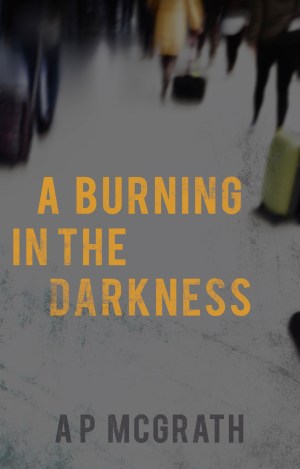
Book Excerpt: A Burning In The Darkness by A.P. McGrath

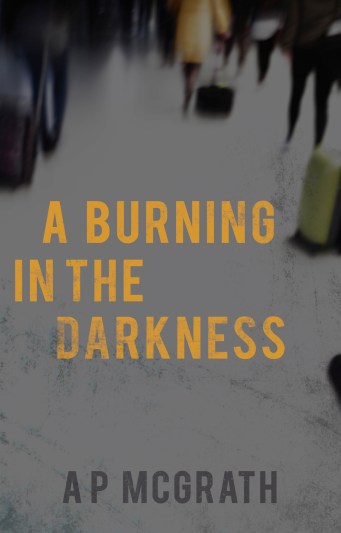
Today, at TRB Lounge, we are featuring an excerpt from A Burning In The Darkness by A.P. McGrath.

Read on to get a sneak-peek into an exciting mystery read.

About the Book:

A murder at one of the world’s busiest airports opens this simmering crime story where a good man’s loyalty is tested to its limits. Michael Kieh is a full time faith representative serving the needs of some of the 80 million passengers, but circumstance and evidence point to his guilt. His struggle to prove his innocence leads him on a charged journey that pitches love against revenge.

Michael’s loneliness was eased by a series of brief encounters with a soul mate. When she confides a dark secret, he is motivated to redress a heart-breaking injustice. Together they must battle against powerful forces as they edge dangerously close to unmasking a past crime. But Michael faces defeat when he chooses to protect a young witness, leaving him a burning spirit in the darkness.

Michael’s commitment to helping those in need was forged in the brutality of the Liberian civil war. Protected by a kind guardian, he too was a young witness to an atrocity that has left a haunting legacy of stolen justice and a lingering need for revenge. More poignantly there is a first love cruelly left behind in Africa because of the impossible choices of war. When Michael and his former lover find each other once again they become formidable allies in proving his innocence and rediscovering their lost love.

BOOK EXCERPT

London

Young Foday Jenkins spied a curious sign at the far end of the concourse. The seven-year- old weaved his way through the hurrying travellers with their trolley-loads of suitcases. There were airline pilots and cabin crew walking briskly towards their international flights and armed police strolling like fortress watch guards. A rainbow glistened in the eastern sky beyond the floor-to-ceiling glass walls, watched in wonder by the frustrated passengers whose flights had been delayed by the ferocious summer storm. A charcoal wash of lightning-filled rain clouds shrouded the distant city outline.

Foday arrived at the sign. It was a matchstick man or woman kneeling, praying. Beneath it there was an entrance of two heavily frosted glass doors. He pushed them open and stepped inside. When the doors closed behind him there was a nice silence. He was in a room, maybe twice the size of his classroom, but it seemed so much bigger because there were sacred symbols from all over the world and holy words on the walls and little statues, and it wasn’t brightly lit in here like outside, yet it wasn’t so dim that it was scary. The duskiness made you look. There was a lovely smell in the air, the scent of a faraway country.

There was a row of electric burning candles that could be switched on for a handful of coins. There were six happy photographs of teenagers from all over the world tacked to the wall above the electric candles. One of the happy faces looked like his older sister Ameyo. She smiled that way. Uh-me-yo. This is how Mummy said it. There were handwritten notes stuck around the photographs with words like Please remember. Foday wondered if the person who wrote one of them had been crying because the ink was smudged.

On a cloth-covered table there was a visitor’s book. Foday wrote his name and address: Foday, 19 Bletchley Avenue, London NW22, UK, Europe, The World. He added I really like this place.

Over on the other side of the church, tucked around a corner, there was a wooden playhouse. A sign outside the door read: If you want a priest to hear your confession, press the button.

Foday turned nervously when he heard the loud sounds of the bustling concourse as the church doors opened. He could see a silhouetted figure against the gleaming frosted glass. The figure focused into a heavy man walking down between the seats. He stopped, agitated and sweating.

‘Are you lost?’ the man asked.
Foday knew he shouldn’t talk to strangers.
‘Where’s your mummy or daddy? Are they with the priest? Are you alone?’ he asked crossly.
Foday pressed the button requesting a priest to take confession.

***

Book links: Goodreads and Amazon

About The Author:

AP was born and grew up in Ireland.

He now lives in London and works in TV. He is a single father with three beautiful teenage children.

He studied English and Philosophy and then post-graduate Film Studies.

A Burning in the Darkness is his first novel.

Contact Details:

Website: http://www.apmcgrath.com


If you are an author and wish to be featured as our guest or if you are a publicist and want to get your author featured on TRB, then please get in touch through e-mail at thereadingbud@gmail.com

Guest Post: Why I Wrote Deanna by Kate Trinity

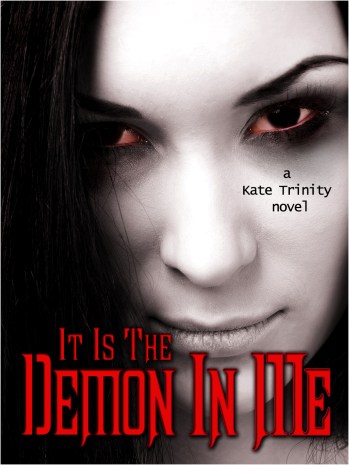
Today, at TRB Lounge, we are hosting author Kate Trinity, author of It’s The Demon In Me.

Presenting Kate Trinity…

Why I wrote Deanna

It is the Demon in Me is the story of Deanna, a girl with supressed abilities that keeps her family on the run from the inevitable. And the inevitable is catching up. Deanna is about to learn the truth of who she really is, whether she likes it or not. She is going to come into her true power, to save her family, but the release of that power brings much bigger problems to their door and she isn’t sure she’s ready to be the one dealing with them.

I’ve always had a very active imagination. And I’ve always made stuff up and written it down. But very few of those imaginative stories every made it to completion. It is the Demon in Me is one of the first to do that – and it only took me three books to find out what happened to Deanna.

It is the Demon in Me is about power – who has it and who doesn’t. And where it can take you when you realise you have more than you thought. It’s about defending those who are weaker than you, standing behind your decisions, and facing your demons. In Deanna’s case this was literal.

And I guess I was battling some of my own at the time. Deanna helped me escape into another world, one that I could control. But she soon took over, the story coming from the decisions her character made as much as from my own ideas. Not every choice she made was the right one.

To begin with I was just writing for my own enjoyment, to see where the story went. It wasn’t until I was shown an article about an author self-publishing that I even knew that was possible. So, I figured I might as well give it a shot.

Whilst the story is technically set in the real world, it’s filled with Demons, Monsters, Angels, and the occasional God. As well as rather a lot of their offspring. And parts of the story take you to other realms and other worlds. My favourite place is the library in the underworld – every book ever written lining shelves in a circular room.

The doorway revealed a huge library with a marble floor and shelves that stood over two floors. She could see a partial gallery type walkway around the top part of the library, and a peppering of gilded ladders that ran on tracks around the large circular room. About every three bookshelves there was a gap with a large window and seat set into it.

There were various people around the room, up the ladders and reading in hidden away seating areas. When Deanna finally brought her attention back to the centre of the room she saw a huge ornate wooden and green leather desk. In the large, high backed green leather chair behind it, a man sat watching her intently.

It is the Demon in Me, Kate Trinity

That man would change everything for her. In ways she never imagined. And plenty ways she never wanted. Deanna must come to terms with who she is and how the people in her life impact her decisions. But all the answers she needs are available to her if she’s willing to ask.

Sometimes I wonder how Deanna is getting on in her world. And it’s tempting to go back and find out -what’s she doing now, did the war happen, who won- but I don’t think it’s a story that will ever be more than those three books. It is the Demon in Me, Sheriff of the Eternal Law, and Becoming the Demon.

But who knows, maybe one day I’ll set another trilogy in the same world but with different characters.


About the author:


11 countries, 2 degrees, a love of animals, and all things supernatural. When Kate isn’t writing she’s baking and loves to decorate cakes in unusual ways. Brought up around steam trains, her father was an engine driver and her mother a nurse in St. Luke’s. The eldest of five siblings and with 2 children of her own her family is a large one. After the break up of her marriage and becoming unwell Kate began to write, and never stopped. Her world is filled with gods and demons, monsters and fae.
About the book:

A wickedly good novel about magic, curses, witches, and demons.

Born a witch, Deanna knew she had powers but not the extent of them.
Her parents and their coven bound her to keep her safe from the demons that wanted to find her.
But as her powers grew, the bindings weakened and they were found.
She must be unbound quickly as only she has the power to fight off the demons.
But what she discovers changes everything.
Her place in this world is not as she thought.
The time has come to make a decision and the lives of her family and their coven rest on it.
‘It Is The Demon In Me’ is the first in a three part series about Deanna, her family, and their true bloodline.
When your whole world changes, do you use fight or flight?


If you are an author and wish to be featured as our guest or if you are a publicist and want to get your author’s guest post on TRB, then please get in touch through e-mail at thereadingbud@gmail.com

Guest Post: Writing is a Lot like Making Music by Jon Budd

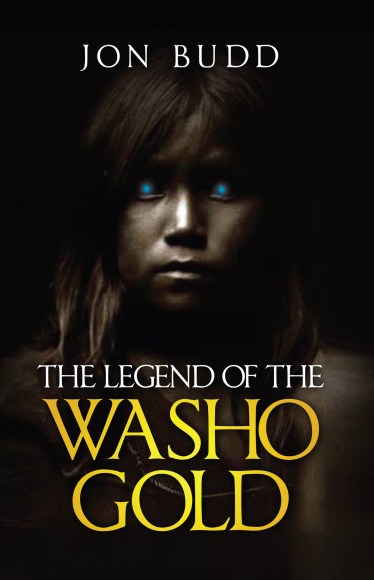
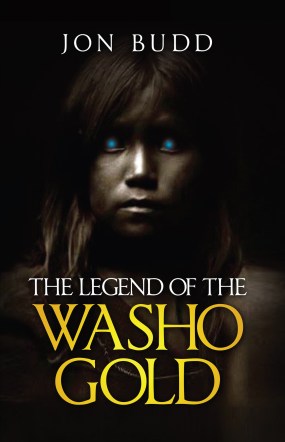
Today, at TRB Lounge, we are hosting author Jon Budd, author of The Legend Of The Washo Gold.

Presenting Jon Budd…

Writing is a Lot like Making Music

Writing is a lot like playing music. The goals of both are to create something that you can feel good about. The challenge is how to do it. One of the hardest parts is starting. When you begin something, whether it’s a piece of writing or learning how to play an instrument or a song, you don’t really know how it’s going to turn out. You’re not really sure if you can even create anything worthwhile. Sometimes it can be like stepping out of your front door to go on a long journey without knowing where you are going. Fear of the unknown can be a difficult obstacle to overcome. A good quantity of blind faith is required. Sometimes, the crucial first step of any endeavor is to say, “Damn the torpedoes” and just take that step and start!

Commitment is also an integral part in creating music and literature. This, especially in the face of long dry periods where despite your efforts, there are no, clear, positive results readily apparent. It can be so easy to just give up. But, this is where the rubber meets the road. One has to fight through these dark periods.

There is probably a hatful of tricks to help the artist work through these droughts. The one that I have found useful for both music and literature is to focus my goal not necessarily on the outcome, but on the process. Just how do you do that, you ask? Well, the answer is I reward myself every day that I write or practice music by keeping a very simple, handwritten, data sheet documenting my work. For example, for my music, I take a sheet of lined, notebook, paper. At the top of the page, I write, “Guitar Practice” and the year. Then, I number the lines below from one to twelve. These numbers are for each month. Then, for each day of the month that I practice for at least one hour a day, I list the calendar number for the day (i.e. 10: 1, 2, 3…). Then, I challenge myself to make and break records of consecutive days that I practiced. My current record is 141 consecutive days. Using this technique, you can actually see progress, if not immediately in your performance level, then in your commitment level. You are rewarded for increasing your commitment. When you increase your commitment, you work yourself closer to achieving your goal of actually improving your art and creating something worthwhile. I have these sheets going back years now and it has helped me achieve things musically that I thought I would never come close to. I even track my scales and songs that I work on in this manner.

Like music, an artist can also use this simple technique for creating literature. Instead of practicing guitar for an hour, write as hard as you can for one hour a day. Make your data sheet, shut out the world, and begin by focusing on one chapter per day. Below the list of months on your data sheet, when you begin, list the chapters one to ten. It’s alright, you will eventually end up with many more chapters, but ten is good number to start. Then, put a little hash mark next to each chapter as you work on them each day. For example, the first day, you work on Chapter One as hard as you can for just one hour. Start by just explaining to yourself what this chapter is about. Then, put a hash mark down for Chapter One. On the next day, do the same thing for your Chapter Two. Do this until you have worked through the entire ten chapters. You now at least have a beginning and an end to your novel, with maybe some good stuff in between. This is your first rough draft. You spend the rest of the time improving it.

If you are doing fiction, you can even list your characters and put hash marks by their names on your data sheet. Spend an hour a day, just writing about your characters. Who are they? What are they like? Who do they remind you of? This is one way you can develop deep, rich, fictional characters.

Hopefully, with this first step out of the door and the commitment you document on your data sheet, you will look up from your work somewhere down the road and see some real movement toward the goal of creating something worthwhile that you feel good about.


About the author:


Jon Budd is an author, musician, and an archeologist. He is also known by his formal name, Jonathan Budd. He grew up in Northern New Mexico playing music and studying ancient Indian ruins. Jon started playing professionally for school dances when he was fourteen years old. By the time he was sixteen, he was performing in nightclubs. When he came of age, he lived and performed in Albuquerque, Houston, and Denver. It was in Denver where he began his university training in archeology. He moved to Los Angeles and recorded his original music album entitled, “Musical Ontology”. This album consists of ten original songs that Jon composed as well as a drum solo he performs. Jon wrote and produced all of the music. He sang all of the songs, played drums, keyboards, most of the guitars, as well as some of the bass guitar. There are some really talented musicians who also recorded on Jon’s album including Andy West (bass), Cornelius Bumpus (saxophone), and Steve Richards and Mike Richards on Guitars. This album is available as a compact disc album as well as individual song downloads at https://store.cdbaby.com/cd/jonathanbudd3. Jon now performs in and around Austin, Texas – the Live Music Capitol of the World!
You can reach him at:

Website: www.jonbudd.org
Email: jonbudd@yahoo.com

About the book:

To prevent a repeat of the Great 1906 San Francisco Earthquake, Hank, a modern day Native American Indian, overcomes his doubts about his tribe’s ancient religion and leads a war party to recover a cursed Indian treasure.

Succumbing to the genocide brought down upon them during the infamous 1849 California Gold Rush, the Washo Indians were teetering on the brink of extinction. With the help of a mysterious stranger, they devised an ingenious plan to survive. Many years later, when the secret of their survival is threatened, the tribe appoints a modern day warrior to lead a war party to San Francisco to recover stolen Indian treasure and secure the secret of the Washo Gold.

This novel enables the reader to experience the infamous 1849 California Gold Rush from the perspective of a tribe of Native American Indians who lived through it.


Related Post: Author Interview: Jon Budd


If you are an author and wish to be featured as our guest or if you are a publicist and want to get your author’s guest post on TRB, then please get in touch through e-mail at thereadingbud@gmail.com

Author Interview: Bridget Nash

Welcome to TRB’s Author Interview Lounge. Today, I’d like to welcome, Bridget Nash, author of Players.

About the author:

Bridget Nash was a newspaper journalist who received several Associated Press/Oklahoma Press Association awards for both writing and photography, before starting her own small portrait photography business. She now stays home with her daughter, contributing to the news world on a freelance basis.
Players is Bridget’s first novel but ever since she could hold a pencil, she has enjoyed writing as a recreational activity. As a child and a teen, she could often be found outdoors with a notebook and pen, listening to the birds and the wind while making up her own worlds on paper.

When she isn’t writing or taking photographs, Bridget enjoys reading and watching sitcoms simultaneously. Her favorite books are Frankenstein, Jane Eyre and A Ring of Endless Light. Bridget lives in a very small Oklahoma town, along with her husband; her daughter; two dogs, Trevor and Penny; a border collie named Taban; a cat named Taylor Swift; and a fancy rat named Sheldon.


Hello, Bridget. Thank you for being here today.

Can you please tell my readers about your ambitions for your writing career?

There are always stories going on in my head, so, really, it’s just a relief to get them out and have them in book form so I can share them or revisit them myself. I suppose my goal is to just get the stories out but I would be lying if I said I didn’t hope a lot of people would read them. It would be really nice to have a story that a lot of people liked.

Which writers inspire you?

Madeleine L’Engle is a writer whose words always just sort of floated around in my head after I’d finished one of her books. I always thought she had such a magical way with words and that really inspired me. She could always make me look at the world in a different and unexpected way.

Tell us about your book?

Players is a dystopian piece about a young man named Ryan who stumbles upon a mysterious group of traveling stage actors. These actors intrigue Ryan and cause him to question things he’d always taken for granted. He begins to wonder if all the world really is a stage.

How long did it take you to write it?

It took several years to write Players. I started it while I was a newspaper reporter, jotting bits of the story down any time I had to do any waiting (there is actually a lot of waiting around when you’re a reporter!). When I quit my job to stay home with my baby, I continued to jot the story down whenever I could, usually in the middle of the night. I wrote the entire first draft by hand.

Are you working on any other project(s) right now? If yes, what are they?

I am currently working on a sequel to Players. It will continue the story, starting a few months after Players ends. The world was just too big to fit into one book!

Why have you chosen this genre?

“What if?” is one of my favorite questions. Tyranny is one of my greatest fears. I think these two things combined are what make me enjoy visiting dystopia. I had only read a couple of dystopian books before I started writing Players but they really stuck with me. After I finished writing it, I found out there is a plethora of dystopian novels out there and I love the genre. So many what-ifs can turn into so many different stories and warnings for society.

When did you decide to become a writer?

Ever since I learned to write, I have written stories to entertain myself. As a kid, I could most often be found somewhere outside with either a book, a notebook, or both. I guess I’ve always been in the clouds.

Why do you write? 

Simply to entertain myself. There are always story ideas dancing around in my head and they won’t leave me alone until I write them down. Sometimes the story dies on the paper and sometimes it comes to full fruition. Either way, the act of writing sets the stories (and me) free.

Where do your ideas come from?

Usually they come from insomnia. I have a hard time turning off my mind at night. Sometimes I’ll imagine I’m not in my bed but, rather, I’m in a bed in a cabin or in a boat on the ocean or in a stairwell, seeking shelter from the rain. Then I imagine someone else in those places. What are they doing there? Are they alone? Where will they go next? These thoughts just turn into stories.

How do you prefer to write? On computer/laptop, typewriter, dictation or longhand with a pen?

Writing certainly goes faster on a computer and I like the mobility of laptops. I’m getting better at writing fiction on a computer but I feel more connected to the story if I’m writing by hand.

What are your 5 favorite books and 5 favorite authors?

  1. A Ring of Endless Light by Madeleine L’Engle
  2. The Giver by Lois Lowry
  3. Jane Eyre by Charlotte Bronte
  4. Hamlet by William Shakespeare
  5. And Then There Were None by Agatha Christie

If you ask me again next month, my answers might change. Too many good books by too many good authors to narrow down a solid top five.

How do you deal with Writer’s Block?

Ugh. You just have to push through it and write anyway. But I’m not one to be touting the virtues of writing when you don’t feel like it. I’m not very good at making myself pick up the pen when I’m in a dry spell.

What advice would you give to new aspiring authors?

You won’t get it done if you don’t do it. I know this from experience. Just write the story! I know I just said that I’m not very good at making myself write, but I would have never finished writing any books if I hadn’t, at some point, made myself just do it.

Thank you, Bridget, for all your lovely answers!


About The Book:

Ryan Scribe is eighteen and has it made.He lacks nothing and doesn’t even know anyone who lacks anything.

Ryan Scribe is eighteen and has it made.He lacks nothing and doesn’t even know anyone who lacks anything.

He lacks nothing and doesn’t even know anyone who lacks anything.Then he hears a beautiful actress say, “Truth is often stranger than perception,” and he begins to look at his world with new eyes.

Then he hears a beautiful actress say, “Truth is often stranger than perception,” and he begins to look at his world with new eyes.All it takes is one wrong question and he is swiftly banished from the only home he’s ever known. Forced to join a band of traveling players, stage actors who look like they could have stepped straight out of Elizabethan England, Ryan begins to question his life, his country and everyone around him. Can he really trust a group of actors? Will his questions land him in even more danger?

All it takes is one wrong question and he is swiftly banished from the only home he’s ever known. Forced to join a band of traveling players, stage actors who look like they could have stepped straight out of Elizabethan England, Ryan begins to question his life, his country and everyone around him. Can he really trust a group of actors? Will his questions land him in even more danger?

Book Links:
Amazon: https://www.amazon.in/Players-Bridget-Nash-ebook/dp/B016J9X2CS
Goodreads: https://www.goodreads.com/book/show/27557254-players


For more author interviews, click here.

If you are an author and wish to be interviewed or if you are a publicist and want to get your author interviewed on TRB, then please get in touch through direct e-mail: thereadingbud@gmail.com

Book Review: Dream, Recurring by Marc Canniff

Author: Mark Canniff
Release Date: 30th August 2016
Genre: Paranormal Fiction
Edition: E-book
Pages: 288
Publisher: Self Published

Rating: ★★★

Blurb:

Can there be a mystery that goes back over a hundred years, that only the dead can reveal?
Lucy has been having a recurring dream. Night after night she finds herself driving on a winding road with her best friend Sam. She feels lost as this path seems to lead to nowhere. That is until she discovers a house. Curious, she goes up to investigate, discovering that the place is empty.
The mystery of the dream deepens when she realizes that she’s being haunted by an entity. Why is it attached to her?
Both Sam and her uncover a piece of history that only those that have passed on have kept secret. Why is it so important and does it have anything to do with the dark being?
It suddenly becomes a race against time as they grasp that their very lives might be at stake.
Can they uncover what is really going on in time, before it’s too late?
Is there a connection between the house, the uncovered past and the evil entity?

Review

Dream, Recurring by Mark Canniff is a cosy paranormal book with a strong plot that’ll pull you in right from the start.

I liked reading this book most of all for the strong and well built-up plotline. The concept was not only unique but also quite smart. I liked the idea of ghosts and spirits doing something other than avenging.

The writing was good but because of not being an edited version the writing fell flat on its face throughout the book (more on this below.

As for the characters, I didn’t particularly find the lead characters, Lucy and Sam, relatable, but they did manage to make me like them enough to keep on going with the book. The character arc was missing and I wasn’t able to feel an emotional connection with either of the leads. The characterization, for me, is one of the 2 main flaws in this book. The 2nd one being the editing (or the lack of it.)

This book would be a much better read after it gets edited thoroughly. The typos and the grammatical errors were disturbing the flow of the reading to an extent that after a while it started to feel like a burden. I’m sure that if this book would have been editing properly, my rating would have been a clean 4 stars, but unfortunately, that’s not the case.

So all in all, this book is good for anyone who enjoys reading Paranormal Fiction and won’t mind the errors and the mistakes in the writing.

More from the authorAuthor Interview: Mark Canniff

Goodreads and Amazon

Author Interview: Jon Budd

Welcome to TRB’s Author Interview Lounge. Today, I’d like to welcome Jon Budd, author of The Legend Of The Washo Gold.

About the author:

Jon Budd is an author, musician, and an archeologist. He is also known by his formal name, Jonathan Budd. He grew up in Northern New Mexico playing music and studying ancient Indian ruins. Jon started playing professionally for school dances when he was fourteen years old. By the time he was sixteen, he was performing in nightclubs. When he came of age, he lived and performed in Albuquerque, Houston, and Denver. It was in Denver where he began his university training in archeology. He moved to Los Angeles and recorded his original music album entitled, “Musical Ontology”. This album consists of ten original songs that Jon composed as well as a drum solo he performs. Jon wrote and produced all of the music. He sang all of the songs, played drums, keyboards, most of the guitars, as well as some of the bass guitar. There are some really talented musicians who also recorded on Jon’s album including Andy West (bass), Cornelius Bumpus (saxophone), and Steve Richards and Mike Richards on Guitars. This album is available as a compact disc album as well as individual song downloads at https://store.cdbaby.com/cd/jonathanbudd3. Jon now performs in and around Austin, Texas – the Live Music Capitol of the World!

You can reach him at:

Website: www.jonbudd.org
Email: jonbudd@yahoo.com


Hello, Jon. Thank you for being here today.

Can you please tell my readers about your ambitions for your writing career?

I want to create something original that I can feel good about. I also want to entertain my readers and make them feel good.

Which writers inspire you?

I admire JRR Tolkien who wrote, “The Hobbit” and “The Lord of the Rings” because he took me to a faraway place. I also admire Richard Henry Dana Jr. who wrote, “Two Years before the Mast” because he revealed to me that good history is entertaining. Finally, I really admire Mark Twain (Samuel Clemens) who wrote, “Tom Sawyer” and “Huckleberry Finn” because of his earthy and ingenious ways of weaving humor into a story.

Tell us about your book?

The title of my novel is, “The Legend of the Washo Gold”. It’s about Hank and Vince who are friends. They work together for the Forest Service near Lake Tahoe in California. Vince is an archeologist and Hank is a Native American Indian Hank is from a local tribe called, “the Washo”. They have an ancient, sacred, landmark known as “Cave Rock”. This place is located on the shore of beautiful Lake Tahoe. Precious tribal treasures are stored there. When one of Hank’s tribal elders learns that raiders have found their way into Cave Rock, he sends Hank down to San Francisco to retrieve what was stolen. Hank learns that there is a curse on Cave Rock and the strangers who have raided the cave may have set things in motion that could culminate in a terrible earthquake just like the one that destroyed San Francisco in 1906. Hank, Vince, and a War Party of Indians must travel to San Francisco and take back what was stolen from the cave before thousands of people perish or get injured from another devastating earthquake. This is their story.

How long did it take you to write it?

It took me twenty years to write this novel. I hope the next one, if there is one, will not take quite as long. I don’t think I have another twenty years.

Are you working on any other project(s) right now? If yes, what are they?

Artistically, this novel drained me. That’s the way it supposed to be isn’t it? I poured everything I had into it. It’s a little painful to think about what my next literary project may be. I’m sure there will be one and I have some ideas, but that’s what they are now, just ideas, nothing firm. However, I am returning to my musical writing and performing. My next artistic endeavor will be bringing forth more original musical compositions and performances.

Why have you chosen this genre?

This genre, Native American Historical Fiction, is what I know. I have a Master’s Degree in Anthropology specializing in Archeology. I have well over twenty-five years working as a professional archeology for the United States Forest Service and the State of Texas where I work now. I have studied Native American Indian culture, religion, and history since I was a boy growing up in New Mexico.

When did you decide to become a writer?

I didn’t consciously make any decision to become a writer. I just had an idea for what I thought would be a good, entertaining story, so I began to write it. I do remember though, a long time ago, while looking for a decent movie to rent at the local Blockbuster Video, saying to myself, “I could come up with a better story for a movie then what I see here”!

Why do you write? 

I think that everyone has an artist inside them. I can’t draw, paint, or sculpt, so I express my personal artist through music and literature.

Where do your ideas come from?

I have a very active imagination. So active, that sometimes it gets me into trouble. I get ideas all the time and from all kinds of different sources. I can however, really act only on the ones that have some meaning for me. Only if I have strong feelings about things.

How do you prefer to write? On computer/laptop, typewriter, dictation or longhand with a pen?

In my experience, writing is a long, painful experience. It’s like giving birth (I’m a man, so I can only guess). The only way that I know how to write is to use a computer keyboard. It’s much easier to edit that way. But, it’s still very difficult for me. I am looking forward to using new technology where you can speak into a microphone and your words are transferred into text.

What are your 5 favourite books and 5 favourite authors?

I have already listed three of my favorites above. Two other authors that I really like include Israel Finkelstein, “The Bible Unearthed” and Francesca Stavrakopoulou, “Land of Our Fathers: The Roles of Ancestor Veneration in Biblical Land Claims (The Library of Hebrew Bible/Old Testament Studies)”. However, these are very esoteric archeological books that debate the historicity of the Bible. I have a very odd sense of what’s entertaining to me in literature.

How do you deal with Writer’s Block?

I focus on the process and not the outcome. An artist may not have all control over what is ultimately produced. However, they do have control over how much they put into the process of creating. I schedule a time period every day where I write just as hard as I can. For example, I commit to writing just as hard as I can for one hour a day. If you do this every day regardless, in three months you will have a draft of your novel. If an artist commits to the process, amazing things happen over time.

What advice would you give to new aspiring authors?

Take the first step and just begin. Commit, commit, commit. Write as hard as you can for an hour a day. Keep track of the days you write and try to set and break records for consecutive days. Write for an hour about each one of your characters. Who are they? What are they like? Who do they remind you of? That will help you develop deep, rich, memorable characters. Don’t be afraid of failing. You are only beaten when you give up. Never give up. Network, network, network. You can never have too many friends.

Thank you, Jon, for all your interesting as well as deeply insightful answers!


About The Book:

To prevent a repeat of the Great 1906 San Francisco Earthquake, Hank, a modern day Native American Indian, overcomes his doubts about his tribe’s ancient religion and leads a war party to recover a cursed Indian treasure.

Succumbing to the genocide brought down upon them during the infamous 1849 California Gold Rush, the Washo Indians were teetering on the brink of extinction. With the help of a mysterious stranger, they devised an ingenious plan to survive. Many years later, when the secret of their survival is threatened, the tribe appoints a modern day warrior to lead a war party to San Francisco to recover stolen Indian treasure and secure the secret of the Washo Gold.

This novel enables the reader to experience the infamous 1849 California Gold Rush from the perspective of a tribe of Native American Indians who lived through it.


For more author interviews, click here.

If you are an author and wish to be interviewed or if you are a publicist and want to get your author interviewed on TRB, then please get in touch through direct e-mail: thereadingbud@gmail.com

Graphic Novel Review: i, Holmes by Michael Lent

Author: Michael Lent
Illustrator: Marc Rene
Release Date: 217th May 2017
Genre: Illustrated, Graphic Novella
Edition: Ebook
Pages: 80
Publisher: Alterna Comics

Rating: ★★★★

Blurb:

Everyone has a secret. Hers can get her killed and she doesn’t even know what it is.

She was born with no parents and no name. Fighting to survive in a world of danger and intrigue is nothing new to i Rose who lives by her wits on the streets of New York, but after discovering that she’s being targeted as the descendant of someone world famous who she’s never met, i Rose realizes that life is about to become even more complicated.

Review

i, Holmes by Michael Lent is a one of a kind new graphic novel that is not only a quick read with some really good illustrations but one that also packs a punch.

When I started with this book, initially I had a few reservations as the story started out with a page that made very little sense to me with a Unicorn-looking mask worn by a man blasting a tunnel or something, but as the story progressed, it all started making sense and once I got the basic set-up, I was in for good.

The writing is good, though the dialogues were confusing at times. Still, I liked the overall construction of the story and the plot progression. The characters were also good and I’m glad that I read this book.

This book is good for anyone looking for a quick action-packed story and graphic novel readers. I’d also recommend it to mystery lovers as this book is one heck of a read.

More from the author: Author Interview: Michael Lent

Goodreads and Amazon

Book Review: Unpacked Sparkle by Patrick A. Roland

Author: Patrick A. Roland
Release Date: 7th  November 2016
Genre:  Non-Fiction, Memoir
Edition: E-book
Pages: 163
Publisher: Wallace Publishing

Rating: ★★★★

Blurb:

Over a year ago, I left a Mariah Carey concert in Las Vegas after six songs. I had gone on the trip as a present to myself for turning forty. But I couldn’t enjoy it. I was high on multiple drugs, but mostly crystal meth, and extremely drunk. I had been this way the majority of the year and a half since my partner Pack had suddenly passed away.
I found him dead on the bathroom floor one January morning while I was getting ready for work. The police told me I had no rights in my own home and asked me to leave. This was before gay marriage became legal. Life as I knew it changed instantly.
His family pretended I didn’t exist. They mauled our home the day he died, leaving it a ravaged mess. I was kicked out of that home. I was also disinvited to his funeral. In eight days I lost everything that mattered. Not even the law protected me from this.
So I got high in an effort to shoulder the pain. It didn’t work. I carried the heavy weight of unresolved complicated grief and addiction on my back. It was like an elephant. A large, unwieldy elephant that wanted me to die.
No longer able to participate in anything that mattered and unwilling to bear this burden anymore, I went back to my hotel room on the twenty-sixth floor of a casino and looked out on the sparkly lights below. I wanted to be in the light. So I opened the window and decided to jump.
But God intervened. My mother had somehow found me. Help came and I surrendered to the powerlessness of my situation. I asked God to help me. I stayed and I fought and I learned how to love myself. I put on a pair of sparkly shoes I had bought for that barely attended concert and I walked in to the rooms of Crystal Meth Anonymous. I had bought the sparkly shoes hoping Mariah would see me in the audience. Though she didn’t get the chance, you did. You all embraced me and my sparkly shoes. They have become my calling card of experience, strength, and hope.

Review

Unpacked Sparkle by Patrick A. Roland is a story about grief, addiction, recovery and everything that entails. It is a heart-touching book that’ll make the reader experience the tragedies the author went through first hand.

It is not just another memoir, but it is one to be remembered for a long time. There is so much pain and desperation in the author’s voice that I felt a deep connection not only to the story but also to the writing. This is a very well written book and it has a lot in store for each and everyone who reads it.

More from the author: Author Interview: Patrick A. Roland and Guest Post: Why I Write By Patrick A. Roland

Goodreads and Amazon

Author Interview: Michael Lent

Welcome to TRB’s Author Interview Lounge. Today, I’d like to welcome, Michael Lent, author of i, Holmes.

About the author:

Honored as a ‘Google Author’ in 2007, Michael Lent’s transmedia writing/experience spans films, fiction and nonfiction books, biographies, graphic novels, animation, video games, and reality television. He got his start in On-Air Promotions at MTV. More recently, Lent wrote the graphic novel i, Holmes (Alterna) adapted into a graphic novel E.M. Forster’s “The Machine Stops” (Alterna) and Stephen King’s “The Reaper’s Image” for the Audio Theater for Our Troops radio. His credits include more than a dozen graphic novels and comics including Prey (Marvel), Brimstone (Zenescope), graphic novel bios for Orbit including Keith Richards, Stephen Hawking, Stephen King and JRR Tolkien. He has written eight books including On Thin Ice, published by Disney/Hyperion, based on the top-rated reality television series Ice Road Truckers. Research for this project entailed spending winter in the Arctic.
He was a writer on three video games including Vigilante 8: Arcade for Xbox 360 Live. Lent was a producer on five films including executive producer of IF YOU’RE SERIOUS, shot in Fenghuang, China and nominated in 2014 by the Academy of Sound Editors for the Verna Fields Golden Reel Award for Sound Editing. Lent has taught screenwriting at UCLA, University of Miami, Santa Barbara City College, as well as lectured at Chapman University. For 2 ½ years, Lent also taught creative writing at the Chino Mens’ Prison in the UCLA Extension/Artsreach Program. He has experienced a prison lockdown, which often comes in handy in a writers’ room.

Contact Links:

Facebookhttps://www.facebook.com/michael.lent1
Twitter: https://twitter.com/michaellent2
Quora: https://www.quora.com/profile/Michael-Lent


Hello, Michael. Thank you for being here today.

Can you please tell my readers about your ambitions for your writing career?

This is one of those questions I used to ask myself a lot in a big picture sense of “I would like to create something that can stand the test of time.” At one point, I quit my job in New York and went backpacking around Europe for five months while trying to write the next great American novel. 47 pages in I was broke and realized I didn’t have a clue what I was doing. But these days I am much more Buddhist in my approach to my ambitions, that is, great joy and sometimes suffering in the smallest moments. So it means a lot to me to find the exact right word or emotion. I enjoy the cadence of crisp dialogue and the rhythm of good storytelling. I try to create characters that I truly care about and feel bad when they’re hurting. I’m trying to earn the privilege and opportunity to keep writing stories, so I feel like if I work hard to craft those small moments, I will connect with readers and tell the best story possible.

Which writers inspire you?

Well, I read a lot which I think is important to any writer so the list of inspirational writers evolves with my current reading list. Six months might be a couple dozen writers and books ago. There are so many writers deserving of our time.

I think Stephen King did a great service to us all when he took time to share his process in his autobiographical book On Writing. I read that cover-to-cover many times over and it got me through some fallow periods. Recently, I’ve been reading a lot of Neil Gaiman and he is wonderful. I write graphic novels, scripts, and non-fiction books. Recently, I reread Art Spiegelman’s Maus series which both inspired and reminded me to dig deeper and write as honestly as possible.

Tell us about your book?

i, Holmes is a graphic novel, a gritty urban detective drama set in 2009. The story is about a brilliant loner, a streetwise 17-year old girl fresh out of juvie who is truly alone in the world. She knows very little about her past except that someone wants to kill her and is willing to take out most of New York. Who she is, in fact, is pretty special, as is the identity of her would-be killer. Through the course of the story the main character begins to open up enough to let others in. The art is by Marc Rene, who I most recently worked with on The Machine Stops series, an adaptation of the E. M. Forster science fiction story. Marc is very, very talented and his style is ideal for this story. Our publisher is Peter Simeti at Alterna. Alterna also published The Machine Stops.

Recently, television producer David Rambo picked up i, Holmes to develop as a television series and has been instrumental in helping to shape the story.

David has helped create some of the best television produced over the past decade including EMPIRE, REVOLUTION and CSI, as well as the upcoming series WILL on TNT. He is certainly one of the most creative people I know, so we are pretty excited and hopeful for what the future holds for i, Holmes.

How long did it take you to write it?

I needed a year to write i, Holmes. The original concept for the story occurred to me very quickly and I got out to a fast start mapping the basic story but then real life intervened with the sudden passing of my sister. John Lennon sang that “life is what happens when you’re busy making other plans.” When I returned to the story a few months later, I discovered that I wasn’t quite the same person anymore, so the story changed a bit. Without that personal tragedy, the process to create i, Holmes would have been much quicker but not as personal.

Are you working on any other project(s) right now? If yes, what are they?

I have a few writing projects in the works. One is a pre-Christian, pre-Viking Norse story that needs an artist. Another is a neo-noir graphic novel about a woman who witnesses a murder and seeks sanctuary in a church with the killers hot on her heels. We’re just beginning to draw this book. I’m also finishing a horror movie script about a boy who loses his family and must go to live with distant relatives who aren’t all that they seem.

I also produce movies. MALEVOLENT is a horror film starring William Shatner, Marena Baccarin and Ray Wise, and TWIN CITIES is an ambitious independent drama coming out in festival.

Why have you chosen this genre?

Actually, I move around and operate in several genres. Basically, I think most writers have a central theme that comes from their own lives that pops up over and over in their work. It doesn’t matter what the genre is, the theme is always the same. Instead of operating in a single genre, theme is the constant. For me, it’s “the Lazarus Man,” the idea of a person leading an auto-pilot existence, essentially dead to their life, but then, suddenly some jarring event occurs, causing them to wake up to the first moment of the rest of their life. How they see the world and what they do next is something I find fascinating. As I said, this theme is something personal: out of college I struggled to find some direction in my life but this struggle was all internal. Outwardly, it looked like I had things figured out. I was working on Wall Street in New York, making a good living, and I had been accepted into law school. But something didn’t feel right. I didn’t want to deal with it, though, because the future seemed so set and all I had to do was acquiesce. One morning, I walked into the executive bathroom at work. In one stall I discovered that someone had strapped a bomb to the toilet. Actually, it was three sticks of dynamite. There was timing device so I never knew whether someone was making a statement or had been interrupted. But that was my Lazarus moment. I quit the job and bought a backpack, one-way ticket to Paris, as well as a Eurorail pass.

When did you decide to become a writer?

When I was in grade school I entered a couple of essay writing contests. “Why I love America,” that kind of thing. That was the start. As an adult I sort of came to writing kicking and screaming. My grandmother had taken in my sister and me as kids. She owned her own beauty shop in the back of our house, working six days a week and also cared for my grandfather who suffered PTSD. She wanted me to become a lawyer and represent IBM. When you see someone with their back to a cliff and fighting against the wind on your behalf, you don’t want to add to their worries. Since my grandmother had done so much for us, I didn’t want to disappoint her. Telling her I was going to be a writer was like saying I planned to juggle chainsaws for a career. Even when I began making inroads into a career as writers she would say, “That’s wonderful — maybe you could be one of those lawyers who write crime novels when they’re not busy.”

Why do you write? 

For a long time, I kept telling myself that there were many easier, more lucrative career options. I think you become a writer after trying those other things and you keep feeling like you’re spinning your wheels and not contributing to the planet unless you get back to writing. Basically, I’m restless doing most other things that aren’t writing. Also, I’m good at researching other endeavors but after about six months, I get tired of them and want to move on. So for a time I might be obsessed with everything that is entailed in landing on Mars but I wouldn’t make a career of it. Luckily, six months is about as long as most projects last.

Where do your ideas come from?

Like a lot of writers I sort of see myself as a sort of detached outsider at least enough to be able to look at things in an overall sense. So things constantly strike me as strange, illogical and interesting. Also, I have always identified with underdogs even though sometimes as a somewhat privileged well- educated Caucasian male it doesn’t seem like I have much right to think that way.

When I was a kid, I read that Robert F. Kennedy had said, “Some men see things as they are and ask, “Why?” But I dream of things that never were and ask, “Why not?” I think this is the basic view of most writers and serves as a springboard for their ideas.

How do you prefer to write? On computer/laptop, typewriter, dictation or longhand with a pen?

It’s a team effort between MacBook Pro laptop, iPhone Notes dictation and my trusty Moleskin reporters pad. I’ll also write on napkins, receipts, gum wrappers and bathroom tissue.

What are your 5 favourite books and 5 favorite authors?

  1. Blood Meridian – Cormac McCarthy. This book shocked me out of the complacence of my life.
  2. The Road – Cormac McCarthy. I read this book when I became a dad. It made me cry and made me realize the obligation for sacrifice that parenting entails.
  3. LotR – JRR Tolkien. It was the first fully immersive universe I ever read and fell in love with. Edith Hamilton’s Mythology had the same effect.
  4. Hamlet – William Shakespeare. It’s a play, of course, but for me, also formative like LotR. Mr. Harmon, my lit. teacher in high school, was our Virgil guiding us into the world of Shakespeare. He was a classically trained actor who would perform Hamlet’s soliloquies and make the story come alive. Through Hamlet I realized the both burden and complexity of being heroic.
  5. A Tale of Two Cities – Charles Dickens. One of the greatest endings of all time.

It’s certainly humbling to list these books and authors and realize how far I must go with my own work.

How do you deal with Writer’s Block?

In On Writing, Steven King has some wonderful observations about writer’s block and Dennis Palumbo has a terrific book about it called Writing from the Inside Out. I think it’s important to recognize WB for what it is, namely, a lack of inspiration. It’s something all writers deal with from time-to-time. First, I try to keep the well from running dry by reading a lot because its inspirational and gives you a discourse with great minds. Second, contracts and deadlines are important because they keep you focused. To be blunt, a publisher can cancel your contract and maybe sue you to get back an advance if you fail to turn in your work on time. That puts the fear of God in most writers. Even when you aren’t on deadline with someone else, you can make an agreement with yourself to finish something by such and such date. You can go one step further by requesting that colleagues and friends read the result, then give them a delivery date.

The in-process way to deal with writer’s block is through structure. Structure is the scaffolding we stand on for hard to reach places. I rely on four layers of structure as the powerful tools that will get me moving forward again. These are:

  1. Conveying Action
  2. Business of the Scene
  3. Advancing Themes and Conflict
  4. Tone

When I come to a roadblock on a particular scene, I say to myself, “Well, what happens next?” The answer is usually something like, “The cop goes to the apartment building to interview a potential witness.” (Conveying Action). Next, I’ll ask what the cop needs to learn via the exchange. Hopefully, this will be more than just gathering a clue. Hopefully, the scene will spin the story in a new direction and cause the cop to reconsider what he thinks he knows about the situation or even the world. That’s the business of the scene. If the cop is reevaluating his base assumptions about people or if the witness is interesting beyond the information they possess, that can advance the themes and conflicts of the story. So maybe we’re dealing with a reluctant witness. Finally, tone is what makes the scene stand out both contextually and artistically. If the scene is set in a small town in Wyoming in 1952, it’s going to have a look and feel that we haven’t seen much of before now. From my reading I might think about Road to Perdition, In Cold Blood or The Onion Field. How did people live and what was the architecture like back then? If the witness is a single woman about 30 years old living in an apartment building in such a place, what could we surmise about her circumstances? How did cops treat such individuals back then? That’s where tone and nuance come in.

15 minutes ago, I didn’t have a clue about how this scene might be written but suddenly, I have lots of ideas and my brain is popping because I know what has to happen and why. I feel inspired. Structure leads to creative solutions when you’re feeling blocked.

What advice would you give to new aspiring authors?

I love what I do so when I meet aspiring writers at conventions and festivals. it’s wonderful to hear of their aspirations. My message is very DIY because I want to see those aspirations go to the next level. For me, it’s unfortunate to run into an aspiring writer a year later and they haven’t moved their dream forward into reality. Sometimes they are rewriting the same chapters or have abandoned a promising premise to work on something new.

The most important advice I can give is to go past dreaming and get your book scheduled. The idea is that the more you tell people about your project and when it will be done, the more tangible it is. So create a community of fellow scribes at your level and one step above.

As long as something stays inside your head, it is pure, perfect and unassailable. I get that. The critic inside all of us says, “What if it’s no good or a waste of time?” So we keep it locked up ostensibly to protect ourselves from failure by rearranging the idea furniture.

Writing takes on a life of its own ONLY when it makes it out into the world. So I wouldn’t get hung up on making it “perfect,” finding agents, or waiting for publisher responses. Get your story or book out there any way you can, then get started on the next as soon as possible. This way, you’ll engage with a community of fellow writers, readers and give yourself a chance at opportunities like mainstream publishers.

Once you’re up and running with your writing, work on multiple projects so that you’re ready for opportunities when they arise. For example, i, Holmes was one of several several projects that I pitched to my publisher. When Peter Simeti said “yes,” we were ready to go.

Thank you, Michael, for all your interesting as well as deeply insightful answers!


About The Book:

Everyone has a secret. Hers can get her killed and she doesn’t even know what it is.

She was born with no parents and no name. Fighting to survive in a world of danger and intrigue is nothing new to i Rose who lives by her wits on the streets of New York, but after discovering that she’s being targeted as the descendant of someone world famous who she’s never met, i Rose realizes that life is about to become even more complicated.

Book Links:

Facebook: https://www.facebook.com/IHolmesGraphicNovel/
Goodreads: https://www.goodreads.com/book/show/32994026-i-holmes


For more author interviews, click here.

If you are an author and wish to be interviewed or if you are a publicist and want to get your author interviewed on TRB, then please get in touch through direct e-mail: thereadingbud@gmail.com

Book Review: Child’s Play by Merry Jones

Author: Merry Jones
Release Date: 3rd January 2017
Genre: Thriller, Mystery, Adult Fiction
Edition: E-book
Pages: 320
Publisher: Oceanview Publishing

Rating: ★★★

Blurb:

Since her husband’s murder two years earlier, life hasn’t been easy for Elle Harrison. Now, at the start of a new school year, the second grade teacher is determined to move on. She’s selling her house and delving into new experiences―like learning trapeze.
Just before the first day of school, Elle learns that a former student, Ty Evans, has been released from juvenile detention where he served time for killing his abusive father. Within days of his release, Elle’s school principal, who’d tormented Ty as a child, is brutally murdered. So is a teacher at the school. And Ty’s former girlfriend. All the victims have links to Ty.
Ty’s younger brother, Seth, is in Elle’s class. When Seth shows up at school beaten and bruised, Elle reports the abuse, and authorities remove Seth and his older sister, Katie, from their home. Is Ty the abuser?
Ty seeks Elle out, confiding that she’s the only adult he’s ever trusted. She tries to be open-minded, even wonders if he’s been wrongly condemned. But when she’s assaulted in the night, she suspects that Ty is her attacker. Is he a serial killer? Is she his next intended victim?
Before Elle discovers the truth, she’s caught in a deadly trap that challenges her deepest convictions about guilt and innocence, childhood and family. Pushed to her limits, she’s forced to face her fears and apply new skills in a deadly fight to survive.

Review

Child’s Play by Mary Jones is a thriller and suspense read with a strong plot and great build-up.

The plotline of this book was really good and the pacing was great, but the suspense was quite predictable. There were a lot of red-herrings, and I did like them, but certain situations gave away the main culprit a bit too early for my taste. This is one book I have mixed feeling for because in spite of enjoying the read overall there were a couple fo things that bothered me. For example, when the murderer was revealed at quite-not-the-end, for some reason, it just felt anti-climactic and the reveal’s beauty, even though being predictable, was ruined.

The build-up was good and the writing was good too. They both accented the story really well and even though the main character was built nicely and I could clearly see the efforts that were put into the main as well as the secondary characters, I was not able to feel a connection with the lead, and hence, found the overall reading experience dimmed by the very fact.

I’d recommend this book to anyone looking for a quick suspense and thriller read not minding the predictability.


Goodreads, NetGalley, and Amazon

Book Review: The Couple Next Door by Shari Lapena

29426188Author: Shari Lapena
Release Date: August 23, 2016
Series:  
Genre: Mystery, Suspense
Edition: Ebook (mobi)
Pages: 320
Publisher: Pamela Dorman Books

Rating: ★★★★

Blurb:

How well do you know the couple next door? Or your husband? Or even—yourself?  
People are capable of almost anything. . . 
A domestic suspense debut about a young couple and their apparently friendly neighbors—a twisty, rollercoaster ride of lies, betrayal, and the secrets between husbands and wives. . . 
Anne and Marco Conti seem to have it all—a loving relationship, a wonderful home, and their beautiful baby, Cora. But one night when they are at a dinner party next door, a terrible crime is committed. Suspicion immediately focuses on the parents. But the truth is a much more complicated story.
Inside the curtained house, an unsettling account of what actually happened unfolds. Detective Rasbach knows that the panicked couple is hiding something. Both Anne and Marco soon discover that the other is keeping secrets, secrets they’ve kept for years.
What follows is the nerve-racking unraveling of a family—a chilling tale of deception, duplicity, and unfaithfulness that will keep you breathless until the final shocking twist.

REVIEW

The Couple Next Door by Shari Lapena is an engrossing mystery read that’ll keep you engaged for the entire length of the book.

This book has a great plot and I enjoyed reading it because it was really engrossing. I liked the characterization and the plot progression and pacing was really good. In fact, I believe that the pacing and tension are the two things that made this book such a huge hit.

I liked the idea behind the novel and the execution of that idea was impressive. The writing style was simple and effective and the overall flow of the story felt very smooth. I read this book in one sitting as I really wanted to get to the end to see if I guessed the mystery right. And right I was, so this book was indeed quite predictable. You can guess the culprit before even reaching the 50% mark if you really focus on the mannerisms of the characters.

Though I liked this book, and I really liked it, I, for the life of me, can’t seem to understand why the hell is this book named as ‘The Couple Next Door.” I don’t want to reveal too much, but the couple really only comes in the picture at the very end and that too only the female mainly, so I felt betrayed as the title is misleading. Had it had some other title (a title which wouldn’t have focused entirely on the couple that wasn’t even involved in the case until the very end and that too quite indirectly) then I would have given this book a much higher rating because, for the entire story, I was trying to make the connection that was basically non-existent.

Other than the title, I don’t have any other complaint and overall it was a nice mystery read. But if you really look at it, it wasn’t a thriller as such, so the genre categorization was misleading too, but that didn’t matter much. Still, it is something that has to be mentioned here.

I’d recommend this book to mystery lovers and I’m sure that cozy mystery lovers would love it as much. But if you’re  a hardcore thriller fan then you might want to skip this one as it is NOT a thriller read.


Goodreads, NetGalley, and Amazon

Author Interview: Mark Canniff

Welcome to TRB’s Author Interview Lounge. Today, I’d like to welcome, Mark Canniff, author of Dream, Recurring.

About the author:

Mark Canniff was born and raised for the first twelve years of his life in Seattle Washington. The next thirteen years were spent in England. (Beginning in London, then moving to Cornwall, finally settling in Somerset.) He arrived there because his mother remarried after being divorced for about ten years. His step-father was English, asking the family “why don’t you come over to my place?”.
And so Mark’s journey into the paranormal began. Finishing his education in England, obtaining an “A” Level in English Literature (which he feels is about the equivalent to an Associates Degree in the US), his adventure led him to discover an interest in things that go “bump in the night”.

While he hasn’t been on a paranormal ghost hunt, he has personally experienced: demons, haunted locations and many apparitions, plus much more. “It’s not for the faint of heart”, as he would later say referring to his experiences. This fueled a passion to create short stories and article writing. (Realizing that he found his “Calling” in life), he began work on a short screenplay (when he was in the film industry) entitled “The Dream.” Although the script was never produced, it did show him that he had something. So the road to “Dream, Recurring”, his first novel, began.

Currently in the Aviation industry, he sees his future in writing. “This is the first book in a series totaling four stories.” The plan being that each one will have their own screenplay (written by him). Plus much more to follow.

Personally, he has been married to the most amazing woman he knows, since 2004. They have one son. He’s said many times how complete his life feels because of both of them. They are the best thing that has ever happened to him.

You can reach him at:

Websitewww.markcanniff.com
Facebookwww.facebook.com/markcanniff1
Twitter: @mark_canniff


Hello, Mark. Thank you for being here today.

Can you please tell my readers about your ambitions for your writing career?

Absolutely! My ambitions are to grow into a full-time writing career. Quite simply, I feel this is my calling, I have this strong sense that I can author some fantastic stories that readers will like with messages they will appreciate.

Which writers inspire you?

Dr. Wayne Dyer and Terry Pratchett.

Interestingly they aren’t in my genre (obviously), however those two have inspired me the most. Not only as an “author” from their own work but helped me to constantly drive towards the one thing that I love to do.

Which I think we all have a special gift to give. Discovering what that is can sometimes take years. The funny thing is, for the longest time I wanted to become a pilot. Flying a 747 or a helicopter was a dream of mine. Neither one of those things I could do.

Going from “pilot” to “author” is I’m sure a curiosity. I’m certain there’s a story there somewhere.

Tell us about your book?

“Dream, Recurring” is a paranormal mystery. The short description which I think describes it well is:

“Cynical by nature, a photographer discovers that she’s haunted by a being after she starts having a recurring dream. Revealing a secret that only the dead know – with the entity bent on keeping it.”

How long did it take you to write it?

Okay, so here’s the fun part…

It took a total of 18 years from concept to publication. The genesis of this novel began life as a short screenplay when I was in the film industry. The name of that script was called “The Dream”.

During that time, I let my friends read it and they all really loved it. Then I had a Producer read it (he really enjoyed it too). So much so that he said if I could make it a full-length feature, he would fund the movie. I laughed when he said it, so he repeated it. He was very serious.

Unfortunately, I couldn’t turn it into a full two-hour film at the time. I didn’t have all the pieces together.

Then I thought what better way to bring the story to life than a novel? This was where the idea was really born.

I thought, at the time, if I could do that, I’ll be able to “reverse engineer” it back into a screenplay for film later.

Now that the book is here, I fully intend doing that.

However, little did I realize what that really meant at the time. It’s been an incredible journey of ups and downs as I put the pieces together. Of course, it still isn’t over because it ultimately needs to be turned into a movie. Which I believe will eventually happen.

The actual “writing” of the book began in 2012 when I wrote the first chapter. I still didn’t have the final “sections” together even then. However, in 2014 is when I really had everything that I needed and two years after that was when I could publish it as a self-published novel.

I’ve learned so much during this whole process and I continue to gain more insight into this journey daily.

Are you working on any other project(s) right now? If yes, what are they?

Oh yes! The great thing about creating a story is that you can do with it whatever you want. The one book has grown into a four-part series. All of them will be under the banner “Island River Tales”.

The second novel, which I’m currently working on is called: “When Night Has Fallen”.

When the series is done is when I will focus on the script of the first one. I don’t aim to do any more than that from that set of stories. (From a film perspective.) Because I’ll want to devote my time in creating another novel.

Why have you chosen this genre?

Great question! For me, this genre allows my imagination to wander. I’ve had countless paranormal experiences, starting when I was about six years old (but really “kicked” in when I became a teenager) that it just seems a natural fit.

I like to explore what “could be” and fiction allows me the leeway to do that. So, putting the story in that kind of setting really worked for me.

If you put those two together what you get is a tale that hopefully the reader will enjoy.

When did you decide to become a writer?

Oh wow. Well, I think a part of me has always known. In my younger years, I would write short stories, or outlines to possible concepts that might become novels one day.

However, it wasn’t until I was in my thirties that I became drawn to writing articles, which were about things I felt I needed to say.

What I learned there was the “cadence”. For example, writing three or four pages a day is of very little effort for me. Plus, I always make sure the story is moving forward in that time-frame.

This I learned from writing articles.

Novels became the next “natural” step as I wanted to create something in-depth. After writing the screenplay for “The Dream”, putting two-and-two together was something I absolutely needed to do.

Why do you write? 

I want to tell a tale that leaves you thinking about it long after you’ve read it. There is always a subtle message underlining the book. Each theme is different for every novel.

It would be my hope that as my writing career grows, I’m able to have a body of work that people will want to read more and more.

At the end of the day, if I can resonate with one person, then I will have done my job.

Where do your ideas come from?

That’s kind of a multilayered answer. I pull from my life’s experience, imagination and sometimes even my dreams become the outline for the story. (In the case of the latter, for example, the fourth book in this series came from a “vision” I had while I was sleeping.)

I often feel that there is no “one” source for storytelling. If you are to really find inspiration then you should let it flow. You have no idea how the next concept is going to come.

How do you prefer to write? On computer/laptop, typewriter, dictation or longhand with a pen?

I used to write longhand then transfer to computer but once I started writing novels (I’m currently working on my second), I found that it was better for me to just go straight for the computer.

The writing flows easier for me that way, plus I don’t have to transfer it to the “electronic medium”. It ultimately saves a lot of time.

What are your 5 favorite books and 5 favorite authors?

I love this question. Here goes:

  1. Terry Pratchett: “Mort.” This was my first introduction into the “Discworld” series and I loved it! Basically, it’s about Death taking on an apprentice, whose name is Mort.
    It was a great introduction to the Discworld series. It’s funny, imaginative, tells an incredible fable and kept me thinking too. I think from an “author’s” perspective, he was a huge inspiration in becoming a writer for me.
  2. Dr. Wayne Dyer: “The Power of Intention.” Anything from this man I love but what I really enjoyed about this book was that it introduced me to the concept of “The Law of Attraction”.
    This law has become a guiding principle for me over the years and I have him to thank for planting the seed, as it were.
  3. Maurice Sendak: “Where the Wild Things Are.” This was the first book I ever read. I poured over it again and again. I loved it. I imagined their world, through the eyes of the story and couldn’t get enough of it.
    It showed me what the power of a great book could do to your own creativity.
  4. Anne Frank: “The Diary of a Young Girl.” This was just so powerful. It was hard to read in places but was so inspiring at the same time.
    It impacted my life in many ways. Mostly, it showed me the power of the written word and how it could draw the reader into real life. At a time when I had little insight from “inside” that world, she enlightened me to her experiences. Wow!
  5. Stephen Hawking: “A Brief History of Time.” I loved this. It was easy for me to read and understand the concepts being discussed. I obviously couldn’t get the mathematics but that didn’t matter. Stephen put it in a way for the reader (in this case, me) to explore Quantum Mechanics. I had read the “very large” from Albert Einstein and now I read the world of the “very small”. Totally awesome.
    It was just pure enjoyment from the very beginning.

How do you deal with Writer’s Block?

Uh… hmm… let me see…

Sometimes I simply do nothing. I walk away for a while, taking a break for as long as I feel. (It’s surprising what “distance” can do to a story.) In instances like that I would make sure that I’m not thinking about it. In fact, the less I do wonder about where I’m headed next, the better it becomes when I do go back.

Other times I push through with only one page at a time. Doing that, helps me to drive my story forward at a faster pace than “stepping back”. Sometimes that’s what’s needed though.

In either case breakthroughs happen and I can drive on. It really depends on how fast I want to go.

They both teach me something about myself, as an “author”. I love that process as much as I enjoy the writing.

What advice would you give to new aspiring authors?

If you are considering a writing career because you feel it’s something you should do, then do it!

Everyone has a good story in them. Relatively few can sit down and do the work.

The best advice I could give is to make sure you are reading too. It is amazing how much you learn from other authors. I would also say practice. Just get in there and write something. Doing that action leads to more.

Once you have an idea, then enjoy it as you see your story come to life. (From concept to synopsis to finally a novel), it is a beautiful process.

Finally, once as you are seeing it develop, switch your thinking to holding the book in your hands. Visualize that so completely that you can feel it there. It’s especially at that point that doors really start opening. Inspiration comes from goodness knows where but you can see it. Maybe no one else can, however you don’t need anyone else for this task in the beginning (for the first draft anyway).

It’s that movement that will really bring the “Author” out in you. Then there’s no stopping you!

I look forward to hearing about the tale(s) that you can bring to life.

Thank you, Mark, for all your interesting as well as deeply insightful answers!


About The Book:

Can there be a mystery that goes back over a hundred years, that only the dead can reveal?
Lucy has been having a recurring dream. Night after night she finds herself driving on a winding road with her best friend Sam. She feels lost as this path seems to lead to nowhere. That is until she discovers a house. Curious, she goes up to investigate, discovering that the place is empty.

The mystery of the dream deepens when she realizes that she’s being haunted by an entity. Why is it attached to her?

Both Sam and her uncover a piece of history that only those that have passed on have kept secret. Why is it so important and does it have anything to do with the dark being?

It suddenly becomes a race against time as they grasp that their very lives might be at stake.

Can they uncover what is really going on in time, before it’s too late?

Is there a connection between the house, the uncovered past and the evil entity?


For more author interviews, click here.

If you are an author and wish to be interviewed or if you are a publicist and want to get your author interviewed on TRB, then please get in touch through direct e-mail: thereadingbud@gmail.com

Book Review: Something Needs Bleeding: The Final Novel by Thomas Singer by Christopher Long

Author: Christopher Long
Release Date: 28th September 2015
Genre: Horror, Dark
Edition: E-book
Pages: 334
Publisher: Wallace Publishing

Rating: ★★★★★

Blurb:

Kensington Gore is a man on a mission. He always aims to give his readers something fresh from the world of horror. Only this time he is offering you something a little different. This time he is offering you a piece of horror history to call your very own. Collected in this volume are the final works of one of the great unsung heroes of horror, Thomas Singer. Singer was a man who truly knew how to terrify his readers with his strange, nightmarish tales. Sadly, though, he never received the acclaim in life he so rightly deserved. Following the mysterious death of the reclusive writer earlier this year, Kensington Gore Publishing author Christopher Long was invited to help edit Singer’s final five bone chilling tales and introduce them to the world. There are many rumours and theories about what secrets these stories may hold. Singer himself selected them from his extensive back catalogue and held them back to be released only after his death. So read Something Needs Bleeding, if you dare. See what you can find hidden in the final pages Thomas Singer had to offer the world. Just be careful you don’t come away with blood all over you.

Review

Something Needs Bleeding by Christopher Long is a compilation of horror stories by  Thomas Singer, a talented but recluse author and wanted who wanted these stories to be published and read by his readers only after his death.

The fact that this book has stories by a dead author who wanted them published only after his death is disquieting in itself. I did feel a queer feeling when I finished reading the introduction and started reading the first story and once I got started there was no turning back. The uncertainty that these stories could very well have been real experiences of the author made my nerves stand on end throughout the book.

I liked the introductions by Christopher Long, mostly because they added a layer of intrigue and uneasiness to the stories that followed. They were also quite informative, as not having known Thomas Singer at all, they helped me know a lot about him and hence, develop a connection with the stories. They added a layer of intimacy between the stories and the reader and it felt like I’ve known Singer all my life.

The stories… well, they were all masterpieces. And I say this being a horror author myself. They weren’t outrageously spooky or even scary, but they were quite firm in holding the reader’s attention and the detailing and the easy flow of the writing and the beautiful progression of each and every story was spot on and more than enough for me to give this book a full 5/5 rating.

In fact, I’m going to dig up other books by Thomas Singer and read them all because his writing deserves to be read and relished. I’m sure he’s smiling from up there reading this review and I hope that he did not meet his end in the way one of his stories end (Something Needs Bleeding – 3rd incision.)

I found each and every story to be a work of genius. I loved each and every single story and I found myself completely losing in them and losing the track of time. The narration (and the first person POVs) were written in such a way that it made me feel as if I was right there and it was all happening right in front of me. The imagery (the proper term for what I just said) was superb!

I’d recommend this book to all the horror readers and to those who won’t mind reading dark and creepy stuff. If you love the horror genre, then you simply can’t afford to miss this one.

More from the author: Author Interview: Christopher Long

Goodreads and Amazon

Book Review: Peanut Butter Principles by Eric Franklin

Author: Eric Franklin 
Release Date: 20th November 2013
Genre: Non-Fiction
Edition: E-book
Pages: 230
Publisher: Everilis Books

Rating: ★★★★

Blurb:

Great leaders aren’t born. They’re nurtured.
In Peanut Butter Principles: 47 Leadership Lessons Every Parent Should Teach Their Kids, entrepreneur, speaker, author, management consultant and parent Eric Franklin has assembled a wealth of wisdom that has stuck with him like peanut butter sticks to the roof of your mouth gleaned from his parents, extended family; and the many other influential people in his life.
Organized by topics, including The Super Self, Making Wishes Come True and The School of Life, Franklin explains how simple concepts can have lasting power to develop young leaders, including:
Be thankful you don’t get everything you ask for.
The difference between a goal and a dream is a deadline.
Your accomplishments should speak for themselves. Don’t interrupt.
If you don t make your own decision, someone else will make it for you.
Count your blessings, not your problems.
One by one, you can serve up spoonfuls of Peanut Butter Principles to the youth in your life and make a profound impact to help them grow into confident, intelligent, and successful adults and leaders who make good choices, build healthy relationships, and cultivate another generation of leaders.

Review

Peanut Butter Principles is a motivating read that’ll furnish you with knowledge that is regarded common yet ignored quite often.

First of all, I’d like to confess that I love the name of this book. It’s smart, well thought out and very impressive.

Moving further, I had one hell of a time reading this book as I enjoyed learning each and every single one of the 47 lessons the author of this book, Eric Franklin, has to offer. These are the most common things that a person seems to forget in crisis, and as a result suffers invariably. These are the things that one would expect the parents to teach their children but are often neglected mostly because the parents themselves don’t follow them. The underlying point of this book is to be aware and make decisions wisely and, as a result, live a comfortable and stressless life.

Most of the times the main reason of our stress is our own selves – our bad choices, wrong decisions, and ill-considered judgments, and in this book the author makes us come face to face with all these things. This book is a treasure trove of knowledge that’ll not only make one’s life easier and happier but also very fulfilling and productive.

I liked the flow and easiness of the narration and was able to read this book in less than 2 hours. It felt like the book was narrated by a close friend who’s out to give you some really wise advice, which goes a long way in saying how good the author’s writing is. I’d recommend this book to all the adults as we all can learn so much from this beautifully insightful book.

I’d recommend this book to all the adults as we all can learn so much from this remarkably insightful book.


Goodreads and Amazon

Guest Post: Why I Write By Patrick A. Roland

Today, at TRB Lounge, we are hosting author Patrick A. Roland, author of Unpacked Sparkle.

Presenting Patrick A. Roland…

Why I Write

For 40 years of my life I was basically a victim. I was the type of person things – usually bad – happened to. I did absolutely nothing to change my fate. I was simply a bystander in life, moving from one abysmal low to the next.
You know how you see a car accident when you are driving on the road and no matter what you do, you can’t turn away from it? You see the mangled debris. The charred flesh. The danger. The destruction. People crying. Lives forever altered. That was me; I was the car accident. And for the longest time, I couldn’t get out of my own way. I just kept staring at the mangled mess that was my life. I was paralyzed with fear. I didn’t want to change. Well, maybe I did; but I was too afraid to change.
Then I started writing. Soon I realized my pain could become my power. I knew I was on to something as what became my book poured out of me in about 12 days when I had 100 days of sobriety. It was during this time that I wrote myself out of pain and morphed from victim to survivor. It was the first time in my life I stood in the truth of everything that had really transpired in the wake of my partner’s sudden death. Yes, it had all happened. Yes, it had all been painful. Yes, I had tried to end my life on more than one occasion. Yes, I had been saved repeatedly. And yes, I ultimately felt telling my story could benefit others. I knew I had been spared to give others hope that they could make it through whatever trial or tribulation you are going through. Because the truth is – you can and you will.
I’m not saying it’s easy. Committing to being happy is the hardest thing I’ve ever done in my whole life. It takes work every day. Remember, I’m bi-polar. I have a symphony of loud voices in my head trying to cause my very undoing on a daily basis. But I have to keep fighting because I’m worth it. And guess what? So are you!
The truth of the matter is that in every situation that caused my downward spiral, the common denominator was me. I was there for all of it. I allowed it. I was party to it. But I’m not willing to allow it anymore. You could say that I’m woke. Im no longer afraid to use my voice. And I’m calling out all the bullies who made me so afraid And feel so worthless I tried to jump out of a 26-story window in Las Vegas, my final act of cowardice that gave birth to two years and counting of sobriety that now makes me fearless and strong.

To the boys in Kindergarten who used to throw rocks at me at the bus stop, making me scared to even go to school: I’m not afraid of you anymore.

To the boys in the third grade who mocked and ridiculed me the day I wore a black and red jacked like the one Michael Jackson wore in “Thriller”: You probably wouldn’t like my sparkly shoes. Too bad. I do.
To the boys in sixth grade who pretended to be my friend on the last day of school and tricked me into eating a Ding Dong laced with Ex Lax: I’m not falling for crap like that anymore.
To the boys in high school who were so mercilessly cruel they dubbed me “The Whipping Boy” when they weren’t drowning me in the pool or trying to push me off roofs: My friends call me “The Sparkle King” now and we will never see each other again.
To the guys my freshman year in college who attacked me in the hallway, forced me to the ground and beat me in the face with socks they stuffed to resemble large penises: I question why you were all hanging out making phalises out of socks in the first place, but whatever, I’m undaunted by your attempts to make me feel bad about being gay.
To the boyfriend who beat me, kicked me, chocked me, tried to kill me, spit on me and violently berated me with a daily mix of harmful names: you don’t ever get to hurt me again.
To the family of the man I loved, the one who made me a stranger in the home I built with your father, brother and uncle and forbade me from attending the services that would have allowed me to grieve the way I deserved to as his lover and best friend: he was right; you didn’t deserve to know me and you’ll never get to.
And to the drugs I did to the point of near death to get over all of the above: you have no power over me anymore; I choose sobriety because I deserve to live a life filled with joy and possibility.
That’s what Unpacked Sparkle is to me. It’s not just a book about things that happened to me; it’s a movement about me taking my pain and making it my power. It is my hope that in doing so, I will inspire others to take a look at their lives and find the strength to move through whatever they need to to survive and thrive. I didn’t want to go through this for the sake of going through it, I wanted to be an example – a cautionary tale even – of what happens when you become a bystander in your own life. Because the fact of the matter is, what you want in life is yours for the taking, but you have to want it and you have to fight for it. You have to believe in yourself and know your worth. I do; and I’m never backing down from myself again.
And that’s how I shifted from feeling worthless to knowing my worth. I now identify as a bi-polar, drug addict, alcoholic, widow who is sober, happy and healthy; and I do so because as long as I stand in my truth and own my stuff, nobody can hurt me anymore with their words or their actions.
I didn’t choose to be bi-polar. I didn’t choose to be an addict. I certainly didn’t choose to be a widow. But I do choose to sparkle. And you can too. It all starts with love.

About the author:

A new voice in self-help, author Patrick A. Roland, in partnership with Az Publishing Services, has released his new memoir about grief and recovery, Unpacked Sparkle, now available on Amazon.
Unpacked Sparkle chronicles Roland’s transformative journey upon finding his partner Pack dead in January 2014. It begins on the day of the funeral that he was uninvited to by Pack’s homophobic family and details the nearly two year journey back to a now thriving, joy-filled life he experienced after attempting to jump out of a twenty-six story Vegas casino after a weekend of intended Britney Spears and Mariah Carey concerts that he mostly missed in the throes of grief and addiction. He was instead hospitalized there after his mother miraculously found him. There, he began to take the vital steps necessary to take back control over his life.

About the book:

Over a year ago, I left a Mariah Carey concert in Las Vegas after six songs. I had gone on the trip as a present to myself for turning forty. But I couldn’t enjoy it. I was high on multiple drugs, but mostly crystal meth, and extremely drunk. I had been this way the majority of the year and a half since my partner Pack had suddenly passed away.
I found him dead on the bathroom floor one January morning while I was getting ready for work. The police told me I had no rights in my own home and asked me to leave. This was before gay marriage became legal. Life as I knew it changed instantly.
His family pretended I didn’t exist. They mauled our home the day he died, leaving it a ravaged mess. I was kicked out of that home. I was also disinvited to his funeral. In eight days I lost everything that mattered. Not even the law protected me from this.
So I got high in an effort to shoulder the pain. It didn’t work. I carried the heavy weight of unresolved complicated grief and addiction on my back. It was like an elephant. A large, unwieldy elephant that wanted me to die.
No longer able to participate in anything that mattered and unwilling to bear this burden anymore, I went back to my hotel room on the twenty-sixth floor of a casino and looked out on the sparkly lights below. I wanted to be in the light. So I opened the window and decided to jump.
But God intervened. My mother had somehow found me. Help came and I surrendered to the powerlessness of my situation. I asked God to help me. I stayed and I fought and I learned how to love myself. I put on a pair of sparkly shoes I had bought for that barely attended concert and I walked in to the rooms of Crystal Meth Anonymous. I had bought the sparkly shoes hoping Mariah would see me in the audience. Though she didn’t get the chance, you did. You all embraced me and my sparkly shoes. They have become my calling card of experience, strength, and hope.


If you are an author and wish to be featured as our guest or if you are a publicist and want to get your author’s guest post on TRB, then please get in touch through e-mail at thereadingbud@gmail.com

Book Review: The Beekeeper’s Daughter by Jane Jordan

Author: Jane Jordan  
Release Date: 26th November 2016
Genre: Dark Thriller, Historical
Edition: E-book
Pages: 
Publisher: Black Opal Books

Rating: ★★★

Blurb:

Annabel Taylor, a beekeeper’s daughter, grows up wild and carefree on the moors of England in the late 1860s, following in the footsteps of her mother, a beautiful witch. Annabel’s closest friend is Jevan Wenham. The son of the blacksmith, he lives his life on the verge of destruction. His devotion to Annabel is full of twists and turns as brutality melds with deepest desire. But when Jevan is forced to travel to London to receive an education, Annabel is devastated.
Then Alex—heir to the Saltonstall legacy and son of Cerberus Saltonstall, the wealthy landowner of the foreboding Gothelstone Manor—comes into her life. Alex is arrogant and self-assured, but he cannot stop thinking about the outspoken girl he encounters on the road to Gothelstone. Not only is he bewitched by Annabel’s beauty, he feels drawn to her by something he can’t explain. Alex and Annabel are socially worlds apart, but that doesn’t stop him from demanding her hand in marriage. When Annabel refuses, she is forced into an impossible situation. Jevan believes she has betrayed him, regardless of the fact that her decision saves him from the hangman’s noose.
As a devastating love triangle unfolds, disturbing revelations thrust Annabel into a startling reality, where nothing is as it seems. Now both her life and Jevan’s are in danger, and her fledging powers may not be enough to save them…


Review

The Beekeeper’s Daughter by Jane Jordan is a historical book that was a bit of a heavy read, at least for me.

I did have a lot of expectations from the book, but when I started reading the book the writing itself failed to pull me in and this happens very rarely with me. Needless to say, it proved to be a hard read for me and in spite of trying my best, I was not able to connect to the lead the way I should have and, as a result, the rest of the book obviously started to feel like a drag.

Though I must say that the story is unique, in spite of the cliched love triangle. I really wish I was able to connect to the lead because then it would have been a much pleasant read.

This book has a lot fo positive reviews, so I’m sure that Historical Fiction lovers might actually like this book. But it wasn’t for me.


Goodreads and Amazon

Author Interview: Christopher Long

Welcome to TRB’s Author Interview Lounge. Today, I’d like to welcome, Christopher Long, author of Something Needs Bleeding.

About the author:

At thirty-six years of age, Christopher Long is a relatively young writer. But when you read his writing, you realise he is older than beyond his years. He has the horror and torment of a million tortured souls in his work.
Dark, supernatural stories are his life blood. His first shocking novella, The Compressionist, is a scary tale about a man that feeds on the very life force of people and has done since the dawn of time. It was published early Spring of 2014.
He writes like a man possessed. Maybe he is? He sure seems older than his years suggest. No one dare go up in his attic to see if there is a picture of his good self that might be changing.
His second novella, The Final Restoration of Wendell Pruce, a tragic tale of a recently retired thespian who finds something very strange in the grounds of his seaside retreat. Was published in the summer of 2014.
His third novella, The Narrow Doors, a tale that proves sometimes you should leave the past buried, was also published. all three of these were released as part of a novel length collection, Christopher Long’s Unusual Things.
His debut novel Something Needs Bleeding, was a ground-breaking novel where he edited the last stories of mysterious horror writer Thomas Singer is a horror tour de force. A further two novels are in the pipeline, or sewer pipe in Christopher Long’s case. The next is early 2017 and we at KGHH Publishing can’t wait.
Christopher has been writing stories since he was first able to hold a pen. Reportedly his first book collection, Tales from the Crib, would scare any nursery school or kindergarten.
It all began for Chris when someone gave him their copy of Roald Dahl’s James and the Giant Peach, and he hasn’t looked back since. If only in fear that someone’s going to hit him with the library late returns fee.
For Chris, stories are a means of escape. Not always to a place your average person or writer would go, but a dark, scary place that Chris feels most at home. The dark places that are in all our minds.
He is happily married to the lovely Samantha, or “Her Highness” as she likes to be called. They live in the midlands of England, which is a bit like Tolkien’s Middle Earth, but with just a few less Orcs! And where Sam refuses to let Chris read her his bedtime stories, as he told her one once and she didn’t sleep for a month.

Hello, Christopher. Thank you for being here today.

Can you please tell my readers about your ambitions for your writing career?

I did start with ambitions but, I’ve got to be honest, they got in the way of the writing. For a long time, I was really only writing for myself. Then, when I self-published a couple of stories, I waited for the praise. The adulation. I know it sounds really childish and naïve, but I assumed that you wrote a story and people came running to you for more. The minute I realised they didn’t, I found it started affecting any story I was working on. It made me question everything I was doing. That’s why, these days, I’m trying to keep one ambition ahead of all the shiny and distracting ones; just enjoy what you’re writing. It seems to be working for me so far.

That said, I will never turn my nose up at thought of fortune and glory.

Which writers inspire you?

Roald Dahl was definitely the first. When I came across his stories as a kid, they caught me off guard. They were devious and cunning. They could make me laugh, scared the hell out of me and never felt like they were talking down to me. I kept waiting for people to come along and confiscate them at first. He taught me a lot as I read everything of his I could get my hands on. Not just about story, but also about the relationship the writer can have with his readers as well.

Neil Gaiman has definitely been a big influence. Although a lot of that influence can also include me hating him for just good his stories are. Pretty much every story I’ve read of his just feels like this perfect, polished gem that’s come from another world. They’re so insightful, yet so deceptively simple. So perfectly designed to fit in a gap in your head that you didn’t know was there until you’ve put the book down. Damn him.

I recently realised Emily Brontë taught me a very important lesson about writing. The first time I read ‘Wuthering Heights’ I was pretty young and I didn’t understand the idea of an untrusty narrator. So, when Lockwood is taking you into the story, I didn’t understand that he was lying to me and trying to cover over his own fault. She had written him so sublimely that all his passive aggressive nature almost snuck under my young radar. Thank you, Emily. Any time I doubt the value of first person narrative, you remind me why it matters.

Tell us about your book?

‘Something Needs Bleeding’ is, on the surface, a collection of ghost stories by recently diseased author called Thomas Singer. However, as you read each of his stories, you’ll start to find links between them that all hint to a secret Thomas kept until his death.

It wasn’t what I was set out to write at all. I was trying to write a far more standard dark horror comedy, but I couldn’t get my teeth into it. It made me start questioning where my own flavor of horror came from and what it really said about me. Which, in turn, got me thinking about how horror can affect people both as a genre and as an actual event in someone’s life. That was when I saw that the far more interesting story lay not so much in telling a horror story as looking at how we tell a horror story through a horror story. It let me talk about how we express something which has scared us or damaged us through the stories we tell other people.

How long did it take you to write it?

Once I actually got moving on the idea, I think it took me around half a year. Although it felt a lot longer at the time. I remember seeing friends and barely being present when they were talking to me. My mind was forever wandering back to these stories and to the man I was creating to write them.

Are you working on any other project(s) right now? If yes, what are they?

The main thing I’m working on right now is my second novel. I started trying to write it back in 2016 and so far, I’ve got to say, it has been an absolute beast. In fact, early this year, I had to drop the story I’d been working on for months and start something new. It wasn’t easy but the original idea had been restarted so many times that I’d completely lost faith in it. On the bright side, doing that has allowed me to start something very different from anything I’ve written better and, so far, it’s going really well.

I’ve also got to get a couple of short ghost stories ready for a Halloween and Christmas collection for this year and I might be getting a story onto a rather popular podcast. Although, I’m worried about jinxing that one. Also, recently, I’ve set up my own website. Which means I’ve entered the glamorous world of the weekly blog. It’s also got me writing poetry again, which I’ve not done in ages. In fact, recently, my poetry got me some incredibly humbling feedback. Someone wants to put one of my poems up on a canvas print in their house. I still can’t quite wrap my head around that.

Why have you chosen this genre?

This is going to sound really tacky, but there’s a possibility it chose me. I never really set out to be a horror writer. To be honest, for a long time, I wasn’t really much of a horror fan. I read Stephen King’s Dark Tower series and some early Clive Barker, but I never delved into the dark and gruesome torture fiction my friends were into when I was growing up. I was busy with Arthur C Clarke, Terry Pratchett and Raymond Chandler.

I was writing big, sweeping fantasy sagas back, until I stumbled across Fight Club and Hunter S Thompson. Which led to me writing some very dark, strange tales for a while.

The ghost stories really came about because of M R James. I’d seen a TV show where Christopher Lee told some of James’ classic tales pretty much straight to camera and that always stayed with me, but I never dreamt of trying to write one. Not until I was bored on a long car journey about three years ago. I saw someone standing on a motorway bridge and then thought I saw someone standing on the next one. It got me thinking and I ended up writing a story called ‘The Low Road’ that afternoon. I found it surprisingly easy and enjoyable to do. It also got a great response from people who read it

As I started to explore the genre I found the potential to write some great character driven stories. Really good horror stories push characters into unfamiliar territory. They force them to face the impossible. So far, that chance to disturb the equilibrium of flawed character’s lives has lead me to some pretty interesting places.

When did you decide to become a writer?

That happened at primary school. I was reading ‘James and the Giant Peach’ when I became aware of the fact people could tell stories for a living. I couldn’t believe that was an actual way to live as an adult. In some respects, it felt a little wasted on adults. Everyone I knew had parents who were office-bound every morning or worked in a shop. I still remember walking into our classroom one morning and one of the girls in my class asked me what I wanted to be when I was older. I told I wanted to be an author and I’ve never really looked back.

Why do you write? 

I guess it’s somewhere between a compulsion and an addiction for me. I know I hate not writing, if that makes sense. When I finished ‘Something Needs Bleeding’ and sent it off to my publisher, I opened a new Word file. I wasn’t exactly sure what I was about to start, but I knew I couldn’t just sit back. It felt wrong. There are too many stories I want to tell. I can’t quite imagine a day where I get up in the morning and don’t write for a couple of hours.

Where do your ideas come from?

The ideas come from the tiniest of details normally. The whole of ‘Something Needs Bleeding’ started off with me walking home from the pub on the first night they turned all the streetlights off after midnight around here. There was that cold, heavy silence that you only get when it’s truly dark. It really got to me and started the wheels spinning in my head. ‘The Final Restoration of Wendell Pruce’, which is probably my favourite of all the short stories I’ve written so far, came from a nightmare. I woke up with these strange images of an old man trapped in a house that was constantly changing around him and knew I had to use them. I ended up sitting and writing for that whole day. I started when it just getting light and stopped after the sun had set. I was determined to capture that fear and I think it worked pretty well. One thing I will say is they rarely come fully formed. They’ll start off as one thing and just the process of telling them to myself on that first draft will change them into something far more interesting.

How do you prefer to write? On computer/laptop, typewriter, dictation or longhand with a pen?

I have the worst handwriting in the world. Well, it’s probably in the top ten. I used to write all my stuff by hand, years ago. I would scrawl them down on pads or spare sheets of paper. They were these ever expanding bundles of scruffy looking pages. I always thought a computer would ruin the process, until the day I tried to read one of them back. After spending hours trying to decode the smudged hieroglyphs I’ve covered those pages with, I decided I had to start typing stuff instead. It took me a while to get used to it. In fact, I started with poetry before I went to prose. It helped me get the rhythm right, as pretentious as that sounds.

Annoyingly, over the years, I’ve been given some really nice leather notebooks to write in and I’ve not got the heart to tell people those pages will never hold a draft of a story. Ideas for a story, sure? The odd comic book shopping list, definitely. But not a story. Not if I want to be able to read it.

What are your 5 favorite books and 5 favorite authors?

That’s a tricky one. It’s a list that can change from one week to the next. That said, my favourite book is pretty much always going to be ‘Catch 22’ by Joseph Heller. I love the insanity and pain of that book. The dizzying logic of the whole thing. It’s brilliant, hilarious, powerful stuff.

‘House of Leaves’ by Mark Z Danielewski is another one of my favourites. It’s a book that plays with reality and style, but has an ingenious story at its heart.

‘Number 9 Dream’ by David Mitchell is another book I will go back to over and over again. I know a lot of people will say ‘Cloud Atlas’ is better, but this was the first Mitchell book I read and it blew me away. It toys with you and your expectations, but it never feels shallow or like a trick.

‘The Witches’ by Roald Dahl is on the list, without a doubt. One of the perfect horror books for a kid. It’s chilling and exiting and, for me, the best use of witches in any fiction.

‘Neverwhere’ by Neil Gaiman is close to perfect as well. I watched the original BBC TV show and hunted the book down as soon as I could. It has this wonderful array of strange fantasy characters who are out of this world but have their roots sewn into the streets of any major city. It’s such a great mythology. Yep, now I have to hate Neil again for a while. Damn him.

How do you deal with Writer’s Block?

Very, very badly. I keep writing as often as I can in order to keep The Block at bay, but it can still catch up with me. Take that idea I had for a second novel. I tried any which way to dodge past it, but it tackled me to the ground in the end. If I’m not careful, I get lost in a maze of notes and previous drafts.

What I’m trying to do right now is work around it. So, if I start to struggle with an idea, I set it aside and try something else out for a while. Work on the next blog post, a poem, look over something I need to get written for a future commitment. Sometimes I pick up a really early idea and play with it again for a day or two. That seems to be a pretty decent distraction at the minute.

What advice would you give to new aspiring authors?

Everyone is going to tell you to write and they’re one hundred percent correct. The best way to find your voice and to find what you want to on the page is all held in that process of just keeping at it. Keeping writing. The thing is, though, I think every aspiring author knows that deep down, already.

So, the best piece of advice I can offer you is to find likeminded people. Hunt them down on social media. Or at conventions. Or at writing groups. Over the past couple of years, I’ve been lucky enough to meet some great people. Some really friendly, really open, really creative writers. Reading their work and talking to them about stories has helped me up my own game no end and it’s also helped me to feel like this isn’t just me sitting in a room on my own. Especially when it hasn’t been easy finishing a story or starting one.

So, yeah, that’s my advice. Go find other writers and stick with them. There’s safety in numbers

Thank you, Christopher, for all your impressive answers!


About The Book:

Kensington Gore is a man on a mission. He always aims to give his readers something fresh from the world of horror. Only this time he is offering you something a little different. This time he is offering you a piece of horror history to call your very own. Collected in this volume are the final works of one of the great unsung heroes of horror, Thomas Singer. Singer was a man who truly knew how to terrify his readers with his strange, nightmarish tales. Sadly, though, he never received the acclaim in life he so rightly deserved. Following the mysterious death of the reclusive writer earlier this year, Kensington Gore Publishing author Christopher Long was invited to help edit Singer’s final five bone chilling tales and introduce them to the world. There are many rumours and theories about what secrets these stories may hold. Singer himself selected them from his extensive back catalogue and held them back to be released only after his death. So read Something Needs Bleeding, if you dare. See what you can find hidden in the final pages Thomas Singer had to offer the world. Just be careful you don’t come away with blood all over you.


For more author interviews, click here.

If you are an author and wish to be interviewed or if you are a publicist and want to get your author interviewed on TRB, then please get in touch through direct e-mail: thereadingbud@gmail.com

Book Review: The Birth of Death (The Legacy of Evorath #1) by Joseph Macolino

Author: Joseph Macolino 
Release Date: 8th June 2014
Genre: Fantasy
Edition: E-book
Pages: 1,378
Publisher: Create Space

Rating: ★★★★

Blurb:

Artimus, the head investigator for the elvish kingdom of Erathal, is disturbed when he discovers that the culprit behind a recent string of kidnappings presents the greatest threat the world of Evorath has ever seen. As he develops feelings for Savannah, a beautiful elvish druid hiding a great secret, he struggles to separate his personal feelings from his responsibilities to the crown. Meanwhile, Irontail, a young centaur warrior, endeavors to find his way in a tribe where independent thought is discouraged.
When their paths cross, the entire forest must unite, performing an ancient ritual to combat this new evil. While the world of Evorath deals with this great threat, Artimus and his companions must put their internal conflicts to rest as they work together to combat this harbinger of death. As they work towards this common goal, they find that they each have their own, unique gifts to offer. But, will they be strong enough to survive?
The first of many stories taking place in the world of Evorath, this series gives readers the thrill of an epic fantasy while introducing characters who are struggling to balance the demands of society with their own personal desires. One thing is for sure: at the end of it all, nothing will be the same.

Review

The story follows Artimus who is the head investigator for the Elvish kingdom. Artimus comes across an interesting investigation and falls in love with a beautiful elvish druid named Savannah. Artimus must fight off the dangers all around the kingdoms while balancing his personal life and his love to Savannah. This was a very nice story to read. This book is a great fantasy book and I enjoyed the classic fantasy feel of the book. I fell in love with the world from the beginning till the end and the author shows us many races and gorgeous places. The land of Frovath seems perfect and the story is full of adventures and friendships.

This book has lots of races, wonderful adventure, magic and tons of action. All these make the story a fast pass read and a fun story to follow and I can’t wait to read the next book.


You go through everything with the characters and feel their problems. I loved the Dryads, they are so intriguing and they bring a lot to the story. My favorite character is Irontail, but they are all written in a wonderful way, even the bad guys (this was important to me).


I loved the author’s writing style. The author has done something unique here, he shows us the character as humans that need to cook or clean, even when their world is in danger. These simple acts show us, just how much we need to feel normal and do normal things, even if the world around us is in chaos.

The story follows different characters, through the different point of views, but the author did a great job following them and describing everything that you knew who the character was, just by how they moved and did things, even before they spoke.

The first 3 chapters were a bit slow to read, but as an avid Fantasy reader, this is a common thing so I was used to it.

The ending of the book left me with wanting more, and more questions were asked. I want to know of this world and about the characters, can’t wait to read the next book.

The cover is gorgeous and once you read the book, you’ll know who it is on the cover.

The blurb was nice and intriguing and made me want to read the book.


Goodreads and Amazon

Author Interview: Patrick A. Roland

Welcome to TRB’s Author Interview Lounge. Today, I’d like to welcome, Patrick A. Roland, author of Unpacked Sparkle.

About the author:

A new voice in self-help, author Patrick A. Roland, in partnership with Az Publishing Services, has released his new memoir about grief and recovery, Unpacked Sparkle, now available on Amazon.
Unpacked Sparkle chronicles Roland’s transformative journey upon finding his partner Pack dead in January 2014. It begins on the day of the funeral that he was uninvited to by Pack’s homophobic family and details the nearly two year journey back to a now thriving, joy-filled life he experienced after attempting to jump out of a twenty-six story Vegas casino after a weekend of intended Britney Spears and Mariah Carey concerts that he mostly missed in the throes of grief and addiction. He was instead hospitalized there after his mother miraculously found him. There, he began to take the vital steps necessary to take back control over his life.
The book discusses addiction and the recovery from it, grief and the journey to acceptance that ensued, the family dynamics and DNA that resulted in a live-saving bi-polar diagnosis, and the importance of civil rights and marriage equality. This miraculous journey is threaded together by a tapestry of amazing friends who helped him find his way back to happiness, as well as signs from beyond that his partner is still with him spiritually, even though his body is not.

Hello, Patrick. Thank you for being here today.

Can you please tell my readers about your ambitions for your writing career?

I’ve been a writer for my entire career, more than 20 years now. I think I probably always wanted to be an author, but I’m not sure I ever thought I would actually do it. I’m glad I did. The whole experience has been the best thing that has ever happened to me. I wrote myself out of pain and made it my power. My whole being shifted as a result of this experience.

Which writers inspire you?

I’ve always been inspired by female African-American writers like Maya Angelou, Alice Williams and Toni Morrison. In fact, Morrison inspired the time-jumping, kind of jumbled narrative in my book because that’s truly what grief is like – it’s all over the place – one day you are lamenting one thing and the next you are fixated on another. But as I was looking at it afterward, it all fit together like a puzzle that I had to put together to heal. Morrison often does that too. I also like authors who are really bold like Augusten Burroughs. I feel like he and I probably have a lot in common.

Tell us about your book?

It’s mostly about the two year period following the sudden death of my partner, Pack. It’s about what happens at the intersection of grief and addiction; but then it’s about what can happen afterward once you overcome it and become sober. It’s about finding the beauty even amid the most horrible thing that ever happened to you. It’s about taking pain and making it power. It’s about loving yourself as you are and letting your inner light – your sparkle – shine the brightest it possibly can do that you can live a beautiful life of joy and purpose despite what your past may have dealt you. It’s about experience, strength and hope. I’m showing readers what I got through in the hope that they realize they can get through things too. You just have to love yourself and believe that you can.

How long did it take you to write it?

I wrote the majority of it in about 12 days. It poured out of me. I was never more inspired. But I was only about 100 days sober at the time and I felt like I needed more sobriety for it to have impact. So, about a year later I wrote some chapters to flesh out my first six months of sobriety since that’s when it ends. I also wanted to redeem my mother more, because at the time I wrote the book we were not getting along. As a matter of fact, the earlier drafts of the chapters about the difficulty of that relationship were much harsher before the editing process, which took about six months.

Are you working on any other project(s) right now? If yes, what are they?

I wrote a children’s book that needs to be illustrated and I am hoping to turn Unpacked Sparkle into a screenplay. I think this could be a movie. I want this to be a movie!

Why have you chosen this genre?

It was the most honest. I felt like I had been through something that was really hard that I also felt could help other people. That’s what this is about: sharing my story so the next person doesn’t have to hurt as much as I did.

When did you decide to become a writer?

Ironically I wrote a poem about my dog dying in the sixth grade that won a pretty major award and now 30 years later I’ve written a book about grief. Maybe this subject matter chose me. I think I have something inspiring and moving to say about a subject that might seem grim on the surface.

Why do you write? 

I think I needed to write this book to work through the grieving process. I started it as one person, and emerged a whole different one by the time I was completed. Even if I never released it, the result was already a major success for me. But I felt like what I had survived could offer others hope. So I wrote this for others like me who are struggling. It’s for the beautifully broken. I hope they unpack their own sparkle and learn to love themselves as they are.

Where do your ideas come from?

For this project, I made a list of all the things I wanted to write about and checked them off as I went along. I had a lot of chapter titles in my head already (many are song titles that pertain to or are an homage to the events that transpired within the chapter). Like I said before, when this was finished it didn’t feel “done” until I wrote those later chapters, one of which – “Safe and Sound” – is the most beloved of the whole book by audiences.

How do you prefer to write? On computer/laptop, typewriter, dictation or longhand with a pen?

I actually wrote this whole book in the notes section of my iPhone. I later put it all together in Word and it was edited that way, but I usually get ideas very quickly so I just grab my phone and get going.

What are your 5 favorite books and 5 favorite authors?

  1. Waiting to Exhale – Terry McMillan
  2. Dry – Augusten Burroughs
  3. Song of Solomon – Toni Morrison
  4. The Lovely Bones – Alice Sebold
  5. The Color Purple – Alice Williams

I’d say those are my favorite authors too, but I’d add Maya Angelou in the mix.

How do you deal with Writer’s Block?

I meditate or try to center myself with relaxation or positive self-talk. If you reframe the situation, you can usually power through anything and make the situation bear fruit.

What advice would you give to new aspiring authors?

Keep going and don’t give up. You can do and be anything if you believe in and love yourself. It all starts with you!

Thank you, Patrick, for all your exciting answers!


About The Book:

Over a year ago, I left a Mariah Carey concert in Las Vegas after six songs. I had gone on the trip as a present to myself for turning forty. But I couldn’t enjoy it. I was high on multiple drugs, but mostly crystal meth, and extremely drunk. I had been this way the majority of the year and a half since my partner Pack had suddenly passed away.
I found him dead on the bathroom floor one January morning while I was getting ready for work. The police told me I had no rights in my own home and asked me to leave. This was before gay marriage became legal. Life as I knew it changed instantly.
His family pretended I didn’t exist. They mauled our home the day he died, leaving it a ravaged mess. I was kicked out of that home. I was also disinvited to his funeral. In eight days I lost everything that mattered. Not even the law protected me from this.
So I got high in an effort to shoulder the pain. It didn’t work. I carried the heavy weight of unresolved complicated grief and addiction on my back. It was like an elephant. A large, unwieldy elephant that wanted me to die.
No longer able to participate in anything that mattered and unwilling to bear this burden anymore, I went back to my hotel room on the twenty-sixth floor of a casino and looked out on the sparkly lights below. I wanted to be in the light. So I opened the window and decided to jump.
But God intervened. My mother had somehow found me. Help came and I surrendered to the powerlessness of my situation. I asked God to help me. I stayed and I fought and I learned how to love myself. I put on a pair of sparkly shoes I had bought for that barely attended concert and I walked in to the rooms of Crystal Meth Anonymous. I had bought the sparkly shoes hoping Mariah would see me in the audience. Though she didn’t get the chance, you did. You all embraced me and my sparkly shoes. They have become my calling card of experience, strength, and hope.


For more author interviews, click here.

If you are an author and wish to be interviewed or if you are a publicist and want to get your author interviewed on TRB, then please get in touch through direct e-mail: thereadingbud@gmail.com

Book Review: New Megiddo Rising (The Apostates #0.5) by Lars Teeney

Author: Lars Teeney
Release Date: 14th September 2015
Genre: Non-Fiction
Edition: E-book
Pages: 87
Publisher: Self-Published

Rating: ★★★★+1/2

Blurb:

At the Dawn of the Texas Republic declaring independence from Mexico, New Megiddo was born. Created by a death cult led by the Reverend Brigham Wainwright, who actively works to flood the empty, barren land with his American followers; undermining his Mexican overlords.

Fast-forward several centuries and America has become New Megiddo, a theocracy run by the Schrubb Administration, where order is kept using the technology of the [Virtue-Net] to feed the Reverend Wilhelm Wainwright’s sermons to the minds of the people. In the slums the humble beginnings of an insurgency of Apostates take shape. The cruel and clueless policies of the Church of New Megiddo and the ruling Regime push the disenfranchised masses one step closer to all-out rebellion.

Review

This is the prequel novella to the Apostates Series.

In my opinion, it will help you a lot if you’ll read the 3 books in the Apostates Series, or even just the first so you’ll be familiar with the world, characters and overall the plot of the story.

This novella flew by fast and I when I finished, it left me craving for more of this world. You could easily see that the world was well thought-out. The author is giving us a bleak view of a future and keeping us wanting more of this world.

This novella is a wonderful background story that shows us how it all started and how this dystopian world came to life and why. This book is not centered on a plot, and at first, it was hard to connect and read, but as soon as I had a few moments to myself, I was quickly reading through the book, and before I knew it, I’ve reached the end.

Each character has their own story but they are not connected. I think this is a wonderful origin story and Lars did an amazing job and even the gorgeous cover, made me enjoy this book a lot.

I love the cover art of this book so much, it’s so pretty.


Goodreads and Amazon

Book Review: The Rustle Of Silence by Lalitha Venkatraman

Author: Lalitha Venkatraman
Release Date: 10th September 2016
Genre: Romantic Thriller
Edition: E-book
Pages: 131
Publisher: 

Rating: ★

Blurb:

Christopher is a handsome and brilliant businessman. His business empire had sprawled across several countries and he could have any woman he wants. His is a loving and caring nature and people adore him for his sterling qualities. For the outside world, Christopher has it all, did he really?
Preeti is an intelligent, savvy professional who has spent her life consumed with work. She lived the life of a Saint, happy to bask in the glory of her parents’ love.
Pulled together by peculiar circumstances, Christopher and Preeti quickly tear down each other’s barriers, bonding over a deep passion for their loving families as they explore the vibrant cities and rich, exotic culture of India. They grew quite close.
Preeti makes a startling discovery in Christopher’s house and to a certain extent, about the man himself. Suspicions run wild. Inexplicably, Preeti becomes the centre of accusations herself when a mysterious man with a traumatic past questions whether her love is truly for Christopher or his incredible wealth. Will Preeti be able to prove her good intentions, or will she have to make the ultimate sacrifice for the man she loves?
And then there is a jungle and people say that it is cursed. The forest is alive and breathing; from time to time, one could hear a huge rumbling noise from within. The trees shed millions of leaves. The hills move a few miles from their places. The river water rises to form solid arches. The forest dazzles the surroundings with its own magical light show. People are terrified of the living, breathing woodland and keep their distance from it.
De Silva lives all alone in the cursed jungle and he rushes to meet total strangers, Christopher and Preeti in the middle of the night…

Review

I tried really hard to not give up on this book and have faith that it will get better as the story progressed, but it just wasn’t for me.

The plot wasn’t entirely original and my main problem with the book was the writing and narration. The narration lacked cohesion with weird time jumps and the pacing was erratic. The book also had too many metaphoric descriptions for mundane aspects and didn’t spend enough time explaining the actual plot.

There was a subplot plot with references to slightly supernatural elements. But it was never properly explained or explored and it just existed to tie up loose ends of the main story. The characters and dialogues were unrealistic and flat.

The book had a decent build up, but around 40% I started to lose interest and ended up skimming over the rest of it. The ending was rushed and predictable with too much exposition crammed into the last few pages.

I feel that strong editing and a better plot structure would have helped this book, but right now, it just didn’t work for me.


Goodreads and Amazon

Book Review: Lake Of Fire (Apostates Book #3) by Lars Teeney

Author: Lars Teeney
Release Date: 1st July 2016
Genre: Science-Fiction, Dystopian
Edition: E-book
Pages: 250
Publisher: Xcism Press

Rating: ★★★★★

Blurb:

Archon Greta Sanchez and Strategos Evan Nubia struggle to hold together the Manhattan Union, amid Acolyte Possession Attacks, factional strife, and Database cartel crimes, while Sister Consuela Grajales tries to provide spiritual guidance to the people after she has renounced violence. But, when the Acolyte Possessions threaten all of their families directly the former Apostates consult Simon Schrubb about this mysterious threat. Simon Schrubb directs them to seek out Paradise, a hypothetical super backup server that just may hold the key to the Acolytes. And so, they set off in an armored convoy across the radioactive city ruins and dead tree littered wastelands on their perilous quest.
Little do the Apostates know that Apedemak Nubia and his Nubian Braves fight for control of their home, Sulfur Springs, which is said to hold Paradise, against the Trinity, a being that somehow controls the Acolyte Horde. As the Nubians split up to search out allies east and west, the Republic of Ukiah finds unlikely allies in the Nubian Braves, and the former Prelate Ayane Inoguchi, who struggles to reconcile her past, while helping to defend the Republic from an all-out Chinese invasion of the West Coast.
But, amid all the chaos the Lake of Fire burns deep below the Earth and threatens to undue all labors to consume the world and usher all souls to Paradise in the name of the Trinity and the Proxy Messiah.

Review

I must say that this story was surprisingly quick read. Evan nubia fights to keep the Manhattan Union from getting in the middle of the Acolytes attacks while others fight against Trinity and protecting their home and themselves. Sister Gvajales is offering spiritual guidance and Apostate Simon is trying to find the Super server that is so important to the Acolytes.

This book has everything in it: Those who fight for power, those who fights for justice, war, betrayal. These elements make you want to read more and be more engaged with the characters. They try to find the answer for the Acolytes while trying to find the right man for the job. Everyone here has neural implants and this can bring all sorts of problems to regular people.
Everything is falling apart fast and Lars did a wonderful job of keeping the suspense until the end.

The characters are well written and well plotted out, that as a reader you get deeply involved with them. I really loved most of the characters, their determination, and strength to keep on fighting. I didn’t have a favorite character like the in the other books, everyone here plays their part beautifully.

This book like the others in this series was well crafted and lots of mystery and suspense. Lars did even better with this book’s descriptions; it felt like I was watching an action movie. I loved the advanced technology so much (omg). With all the different factions that are fighting for the power to rule, gives us a wonderful view of a potential future and how our world can change so drastically.

From the beginning, I was hooked on the story and the characters, but what made me turn the pages more than anything was this world and see what the characters will do next.

The story ended in a perfect way (I will not spoil it for you). The ending truly surprised me, and I’m usually good at seeing what the ending will be. It was truly the perfect ending to this story.
I enjoyed this series a lot and this book was even better than the rest. Even though this series has ended, I can’t wait for what Feeney will write next.

I think the cover is simple and pretty and I like it.

The blurb is very accurate in the story’s plot and of what the characters will have to deal with. I think it’s witty and very engaging.


Goodreads and Amazon

Book Review: I Came, I Saw, I Coffeed by Bruce Miller

Author: Bruce Miller
Release Date: 16th September 2017
Genre: Non-Fiction
Edition: E-book
Pages: 156
Publisher: Pacific Trust Holdings NZ Ltd

Rating: ★★★

Blurb:

I Came, I Saw, I Coffeed Online Dating: Why Didn’t He Call Me Back? What Goes Through a Man’s Mind on the First Meet? Impressions from a Man Who Had Over 350 First Meetups. Have you ever wondered what goes through a man’s mind when you first meet? “Why didn’t he ask me out again? What did he think of me?” “Did I say the wrong thing?” I was newly singled after an unwanted divorce and retired early, so I had time on my hands to find a girlfriend. I didn’t want to be alone, and hadn’t dated in years. I was eager to meet a woman, and became discouraged trying to find someone to be your love, your best trusted friend, a confidant and companion — a very difficult task. Seeing my low spirits to get on with searching to find a woman, a good friend simply told me dating is “Just a game of numbers — the more ladies you meet, the better decision you’ll make.” So, I ventured into the field of online dating and over three years met over 350 ladies. Many women asked me what goes through a man’s mind when he meets a woman. In this book I spell out my thoughts about the women I met, her walk, her appearance, demeanor, clothes, habits, figure, etc. in detail.

Review

I Came, I Saw, I Coffeed by Brian Miller basically is more like a report of the author’s real-life online dating experiences.

This book is unique, to put it mildly, and quite amusing, to be very honest. It was interesting to read about the author’s observations about what women want and how they behave, but it did feel unusual to be reading about them, especially in the starting. But once the tone was set, it got quite interesting.

I liked the plain writing as this book was more about its content than the writing itself and enjoyed reading it.

I’d recommend it to anyone interested in the subject of online dating as this book is a fun, light and a very quick read.


Goodreads and Amazon

Book Review: The Secret Room by Sandra Block

Author: Sandra Block
Release Date: 18th April 2017
Genre: Mystery, Suspense
Edition: E-book
Pages: 
Publisher: Grand Central Publishing

Rating: ★★★★

Blurb:

Her patients are dying. Some are apparent suicides and others possible accidents, but rumors are flying that Dr. Zoe Goldman is an angel of death-intentionally helping hopeless cases go to a “better place” – or, worse yet, a dangerously incompetent doctor.
As a new psychiatry fellow at the local correctional facility, Zoe is still learning the ropes while watching her back to avoid some dangerous prisoners. As the deaths mount up, Zoe is wracked with horror and guilt, feverishly trying to figure out what is going wrong and even questioning her own sanity.
What Zoe doesn’t realize is that someone is targeting her patients to get to her. Someone who has access to her deepest secrets and fears. Someone who will stop at nothing to take everything Zoe has, even her life.

Review

I’ve previously read The Girl Without A Name by Sandra block (the first book in the series) and liked it. Somehow I missed reading the second part, but when I read this part I instantly felt connected to the main lead, Zoe Goldman, even better that the first time.

As I started reading the book I was hooked from the first chapter and was right “into” it till the very last page. The plot was really good and I enjoyed the diary entries of the mysterious antagonist a lot. Initially, I thought I had the villain figured out, but as the plot progressed I started doubting my assumption, and as the plot proceeded further, I was literally biting my nails due to all the anxiousness.

The plot build up was also really good in this book and the pacing was perfect and in tune with the earlier parts(s). I enjoyed the simple writing style of the author and, in fact, appreciated it because it really complimented the story.

I’d recommend this book to anyone who loves reading a nice medical thriller or a cozy suspense and mystery book. Also, if you’re looking to start a new non-detective series, then this will be perfect for you. It’s unique, engaging and consistently good.


Goodreads and NetGalley

Book Review: Echoes Of Terror by Maris Soule

Author: Maris Soule
Release Date: 22nd March 2017
Genre: Thriller, Suspense
Edition: E-book
Pages: 320
Publisher: Five Star Publishing

Rating: ★★★★

Blurb:

Katherine Ward is assigned the case, never expecting it to parallel her own kidnapping experience seventeen years before. In Skagway, Alaska, the usual crimes faced by the police department’s small force are DUIs and missing bikes. With the chief in the hospital and one officer missing, they’re not prepared for the kidnapping of a billionaire’s daughter.
Misty Morgan thought running off with a college boy would get her father’s attention. Now she and another teenager
are praying for their lives.
Stuck in China, Misty’s father knew his daughter was up to something, so he his daughter was up to something, so he asked his longtime friend Vince Nanini to fly to Alaska and stop Misty. Problem is Vince arrives too late. The college boy is dead, Misty is missing, and the police
aren’t eager to let him help.
When Katherine realizes the same man who kidnapped and raped her years ago is the one holding Misty and the other teenager, the terror of those months resurfaces. Vince finds her drunk and in tears, and he’s with her when she realizes the kidnapper has struck again. Together they must figure out where this man has taken three people, and they must find him fast.

Review

Echoes Of Terror by Maris Soule is a suspenseful novel that turned out to be surprisingly good and different than most DI novels.

After reading so many books on DI and Investigating Officers in general, there’s hardly a time when I get overly excited to read another one on the same lines. I was expecting the same from this one, but as it turned out the plot of this book was not only unique but quite simple and fresh, to put it plainly.

The author did a really great job in making the lead character directly involved with the case. It made the plot feel more personal and made the stakes appear very high, which was a big plus for the overall story.

I wasn’t overly enthused about the main characters, Katherine and Vince, but Katherine was likable enough and I was able to follow her story without losing interest. I liked almost all the secondary character and also the place and settings. It was good to read about a different place and to learn about how people live their lives in a particular setting.

The beginning was good and so was the ending. I enjoyed reading this book and would recommend to all the suspense readers and DI fiction lovers.


Goodreads and Amazon

Guest Post: Writing by Jen Benjamin

Today, at TRB Lounge, we are hosting author Jen Benjamin, author of Follow Me Home.

Presenting Jen Benjamin…

Writing

Some people knit. Some bake. Some build cars or race cars or collect cars, while others prefer to take a trip back in time and ride horses. There are those who like to jog and those who like to garden. There are movie buffs and frequent museum visitors and people who spend hours upon hours playing chess. Or Candy Crush.

This world is flooded with ways people can amuse themselves. I amuse myself by writing.

I’m definitely not special. There are plenty of people who write as a hobby. And, if I’m going to be honest (which I can easily do when I’m staring at a computer screen instead of a person), we writers may among the more narcissistic members of the human race. Not in the pathological, personality disorder kind of way. Writers can be very lovely people. But when I write it’s fun because it’s a little like being God.

Hold please while I wait for lightning bolts…

Okay. I’m clear. God knows what I meant. It’s all good.

When I write novels (which I do in more than one genre and more than one name), I get to create a world that fits onto pages and characters to fill it up. And, like real, live humans, they don’t always do what they’re supposed to. I can make a person look a certain way, have certain mannerisms, use certain slang and, somehow, they always end up surprising me. Sometimes they get themselves into big messes and I have to rescue them.

It’s intoxicating.

I’ve been writing since I could hold a pencil. I wish I could say that writing for so many years has made me into a master wordsmith, but that hasn’t happened yet. What has happened is the realization that I will never grow tired of making up stories.

My first romantic comedy is called Follow Me Home and my first romantic comedy heroine is a little like me. She’s a writer, she has bad hair and she’s a little socially awkward. But the similarities end there because, unlike me, she’s a bestselling author who has a book being adapted for film.

The idea for Follow Me Home came to fruition thanks to a bizarre, embarrassing dream I had one night. In the dream, I was engaged to a young celebrity (young as in I’m in my thirties and he was in his twenties). It was a bizarre dream where I took him to a high school reunion and told all my friends it was an arranged marriage. As though an arranged marriage in the 21st Century is less odd than some old cougar with a young, tall drink of water…

Not long after I had the dream, November came along. Many people know that November means National Novel Writing Month. If you don’t know what that is, it’s when over-caffeinated writers from all over gather together on the Internet as they each try to pound out a novel in thirty days for no reason other than to make themselves do it. It’s pure torture and so much fun. Some people run marathons. Other people write entire novels in a month. And if there are people who do both, they need to be captured with giant nets and studied because I’m sure they’re not human.

That particular November, I didn’t have any certain idea for a novel so I decided to write one based on one of my recent dreams. I tend to have vivid, peculiar dreams so I had a few to choose from. The one with the engagement to the young celebrity was the least bizarre and seemed like the best route for a story. That was the birth of my first Rom Com.

Follow Me Home is a lighthearted tale that I hope will make people smile, because I wasn’t setting out to write a literary masterpiece. I amuse myself by writing and my only hope is to amuse the reader who gives me a chance.


About the author:

Jen Benjamin is a newspaper writer who enjoys fiction when she gets time away from writing facts. She lives in Oklahoma with her husband, daughter and various furry creatures. When she isn’t writing, Jen enjoys photography, reading, catching re-runs of Frasier and playing the violin. She used to play the violin for church and various other events, but now just plays for herself (and still has nightmares about her one gig as a strolling violinist!).

Contact Details:
Email: authorjenbenjamin@gmail.com.
Facebook: www.facebook.com/authorjenbenjamin
Twitter: @jenbenjam.

About the book:

When writer Katie Kendall moves to LA to turn her best-selling novel into a film, she is pretty sure it should be the happiest time of her life. But with an unsupportive husband who suddenly files for divorce, the paparazzi assuming she’s having a fling with the leading actor, and her friends left miles away in her old hometown, she begins to think she’s made a big mistake.
Can her new crowd of friends help her through these times? And could those paparazzi snappers have a point about that leading actor…?
This witty romantic comedic debut novel by Jen Benjamin is a tour de force that will have you coming home to it again and again.


If you are an author and wish to be featured as our guest or if you are a publicist and want to get your author’s guest post on TRB, then please get in touch through e-mail at thereadingbud@gmail.com

Graphic Novel Review: Nina The Neighborhood Ninja by Sonia Panigrahy

Author: Sonia Panigrahy 
Illustrator: Hazel Quintanilla
Release Date: 2nd November 2016
Genre: Children’s Book | Illustrated | Graphic Novella
Edition: Ebook
Pages: 44
Publisher: 

Rating: ★★★★

Blurb:

Nina’s a girl who takes charge. She uses her brain and her muscles to complete rescue missions. She doesn’t mind getting dirty and climbing trees. It’s all part of the life of the everyday girl superhero. Young readers are encouraged to recognize that the traits of being smart, strong, and speedy exist within themselves. Young girls will find this book to be a positive affirmation that they too can be superheroes.

Review

Nina The Neighborhood Ninja by Sonia Panigrahy is a delightful read that teaches young children, especially girls, to be a super-hero in their own worlds in their own way.

I rarely read children’s books, but when I was asked to review this title, I simply couldn’t say no. Look at the cover, who can say no to that cute face?!

The book is so adorable that it stole my heart right from the first page and made me smile with each and every turn of the page. Nina is a normal kid who does extraordinary things and has super powers, the best one being her kindness. She teaches kids to be their best self and to do their best to help others in whatever little way they can.

The illustrations are equally beautiful and I’m sure that this book will be quite visually appealing to children.

I’d recommend this book to all the parents who have young children, especially for their little girls. Nina is one superhero you wouldn’t want your child to miss.


Goodreads and Amazon

Author Interview: Jen Benjamin

Welcome to TRB’s Author Interview Lounge. Today, I’d like to welcome, Jen Benjamin, author of Follow Me Home.

About the author:

Jen Benjamin is a newspaper writer who enjoys fiction when she gets time away from writing facts. She lives in Oklahoma with her husband, daughter and various furry creatures. When she isn’t writing, Jen enjoys photography, reading, catching re-runs of Frasier and playing the violin. She used to play the violin for church and various other events, but now just plays for herself (and still has nightmares about her one gig as a strolling violinist!).

Contact Details:
Email: authorjenbenjamin@gmail.com.
Facebook: www.facebook.com/authorjenbenjamin
Twitter: @jenbenjam.


Hello, Jen. Thank you for being here today.

Can you please tell my readers about your ambitions for your writing career?

Oh, ambition! Such a strong word for someone as scatterbrained as I am! I love to write and while it would be fabulous to make a living making up stories, I can safely say that my only immediate ambition, as far as writing goes, is to entertain anyone who happens to read my stories.

Which writers inspire you?

There are and have been so many great writers. It’s hard to narrow it down and my writing skills are nothing in comparison with my favorite writers. I think the first writer who struck me with the beauty of her words was Madeleine L’Engle. She was the master of, not showing me, not telling me, but making me feel a story.

Tell us about your book?

Follow Me Home is a romantic comedy/chick lit story about a (what else?) writer named Katie who is thrust into Hollywood life when her novel becomes a film. She is a fish out of water in so many ways as everything she’s familiar with is yanked out from under her. And she wasn’t even blessed with the good hair gene to help her navigate life with silky, smooth confidence. Follow Me Home is a story that will hopefully allow people to see the humor in every-day life as Katie awkwardly navigates her new environment. And there’s men. Attractive men.

How long did it take you to write it?

Well, it was a project for National Novel Writing Month, an event during which writers torture themselves by writing an entire novel in a month. The reward is the satisfaction of knowing that you’re capable of doing this. So…Follow Me Home took one grueling November to write.

Are you working on any other project(s) right now? If yes, what are they?

I have a second romantic comedy coming out in April called Quick, Fast and in a Surrey. It’s about Annie Gallagher who is a museum curator, surrey cart driver, fashion lover and believer in Fate. When a handsome historian comes to Annie’s small Oklahoma town, she’s sure Fate delivered him there just for her. Or maybe Satan did. It was probably Fate. It had to be Fate.

Why have you chosen this genre?

The chick lit writing style is a nice break for my mind. It’s written in present tense and flows like a natural thought pattern which can be flowery prose or fragmented musings. It’s a lot of fun.

When did you decide to become a writer?

I’ve always liked to write just to amuse myself. I like to daydream and writing is making something out of whimsy.

Why do you write?

It’s an escape and it feel constructive at the same time. Like, yes, I’m crazy but look what I made with my craziness.

Where do your ideas come from?

A lot of my ideas come straight from insomnia. They are born from random things I think when I’m lying awake at night. Other times it’ll be a song lyric or a little anecdote that my mind just builds a story around.

How do you prefer to write? On computer/laptop, typewriter, dictation or longhand with a pen?

I am learning to use the computer for writing. Obviously I know how to use a computer but I used to always write by hand. It’s harder for me to feel connected to a computer screen like I feel connected to a pen and paper. But it’s more efficient to use the computer, so I’m now making myself do it.

What are your 5 favorite books and 5 favorite authors?

That’s a hard question! I’m going to go with:

  1. Jane Eyre by Charlotte Bronte
  2. A Ring of Endless Light by Madeleine L’Engle
  3. The Lion, the Witch and the Wardrobe by C.S. Lewis
  4. Frankenstein by Mary Shelley
  5. The Giver by Lois Lowry

And we’ll say those authors are my favorite five, too. Ask me again tomorrow and things may have changed.

How do you deal with Writer’s Block?

I’m not very disciplined at making myself write when I don’t feel like it. I need a taskmaster to threaten me. Deadlines are great taskmasters. But I’ve found that if I just sit down and do it, the words flow.

What advice would you give to new aspiring authors?

Be your own taskmaster! Don’t be as lazy as I am! Just do it!

Thank you, Jen, for all your interesting answers!

About The Book:

When writer Katie Kendall moves to LA to turn her best-selling novel into a film, she is pretty sure it should be the happiest time of her life. But with an unsupportive husband who suddenly files for divorce, the paparazzi assuming she’s having a fling with the leading actor, and her friends left miles away in her old hometown, she begins to think she’s made a big mistake.
Can her new crowd of friends help her through these times? And could those paparazzi snappers have a point about that leading actor…?
This witty romantic comedic debut novel by Jen Benjamin is a tour de force that will have you coming home to it again and again.


For more author interviews, click here.

If you are an author and wish to be interviewed or if you are a publicist and want to get your author interviewed on TRB, then please get in touch through direct e-mail: thereadingbud@gmail.com