book blog by Heena Rathore-Pardeshi | Of Whiskers And Words
Author: Heena R. Pardeshi
Heena is the author of the award-winning novel Deceived. She works as the novel critic and the chief editor at a local publishing house in Pune, India. She is an animal lover as well as an animal activist.
She loves books, music and wine. Travelling and learning about new cultures is an integral part of her life.
She is presently learning Piano and French language.
She lives in Pune, India with her beloved husband and 6 cats.
Author: Philip Brunetti Release Date: 15th November 2020 Genre: Psychological Fiction Series: Format: E-book Pages: 182 pages Publisher: Atmosphere Press Blurb: Ever get the feeling that your life is caught up in some kaleidoscopic Jungian dream and that you weren’t exactly dying but still everything you’d ever been is flashing before your eyes-and then when you wake from this dissolutive dream, your reality remains altered and time has become concurrent and characters from thirty-plus years ago walk into your life again, if ambiguously, and press you on matters of a sacred-profane written text that you never completed?
Heretical and outrageous, ironic and absurd, Newer Testaments scores a hit in the heart of where the existential meets the fated, and the writer’s task becomes both revelatory and abject. Into this formidable personal struggle a cast of untoward and/or diaphanous characters rotate including The Jesus Girl, John Baptist, Macbeth, King Kisko, The Tree Girl, Nurse Mother, a glass satyr and a French New Wave Mother. Has the nameless narrator lost his mercurial mind, or is this a subconscious-shadow-world sojourn he’s been practicing for all his life?-the keys to the kingdom of being.
“In the tradition of Denis Johnson’s Jesus’ Son, Brunetti’s wondrously wandering writing is taut and cryptic, vivid and hallucinatory, rendering an irony-laden, aberrant odyssey for his impossibly likable protagonist.” -Franco D’Alessandro, playwright & poet, Roman Nights, Stranger Love, and Everything Is Something Else
Review
⭐⭐⭐⭐
Rating: 4 out of 5.
Newer Testament by Philip Brunetti is a uniquely gripping and psychologically testing work of fiction. I was blown away by the bizarre nature of the book, especially in the initial chapters. It did take me some time to get into the rhythm of the book, but once I was caught in it I enjoyed it tremendously.
This book is unlike anything as the author has used a dreamy tone and style in his writing making the reader feel like they are in a surreal trance. And this is what made this book stand out and so different from others, apart from the story itself of kids writing the newer testament continuing the book of revelations with a twist.
I would highly recommend this book to all readers as it is a very good story that should be read by every reader.
Welcome to TRB Lounge. Today, I’d like to welcome author Philip Brunettiwho’ll be sharing an excerpt from his latest release Newer Testaments.
About the Book
Newer Testaments
Ever get the feeling that your life is caught up in some kaleidoscopic Jungian dream and that you weren’t exactly dying but still everything you’d ever been is flashing before your eyes-and then when you wake from this dissolutive dream, your reality remains altered and time has become concurrent and characters from thirty-plus years ago walk into your life again, if ambiguously, and press you on matters of a sacred-profane written text that you never completed?
Heretical and outrageous, ironic and absurd, Newer Testaments scores a hit in the heart of where the existential meets the fated, and the writer’s task becomes both revelatory and abject. Into this formidable personal struggle a cast of untoward and/or diaphanous characters rotate including The Jesus Girl, John Baptist, Macbeth, King Kisko, The Tree Girl, Nurse Mother, a glass satyr and a French New Wave Mother. Has the nameless narrator lost his mercurial mind, or is this a subconscious-shadow-world sojourn he’s been practicing for all his life?-the keys to the kingdom of being.
“In the tradition of Denis Johnson’s Jesus’ Son, Brunetti’s wondrously wandering writing is taut and cryptic, vivid and hallucinatory, rendering an irony-laden, aberrant odyssey for his impossibly likable protagonist.”
-Franco D’Alessandro, playwright & poet, Roman Nights, Stranger Love, and Everything Is Something Else
Excerpt
Three
1.
I thought I was living in a French New Wave film. I had faked my own death. I’d spent my life carrying pens. There were these days. Each thing had its place. But there was never the right thing or place. Or rarely. I went on moaning. They strung me up like a dead Jaws tiger-shark on a hook. But everyone knew I was a fake. I’d lived inside my wallet. Folded up. This doesn’t mean I’d known money. Mostly we were left to pray by the curtains. My sister with her tail in her lap.
2.
They had spoken of vestibules. The house was collapsing around them. I didn’t even know their names. But they were standing there like in a box. An elderly couple. They appeared naked. They were holding each other by the waist. They both had gray hair and pubic hair. It mixed with the dust. The house was being demolished around them for some reason. And for some reason they were naked in the dust. I was off in the bushes somewhere like a secret photographer. A faux paparazzo. But I never clicked a picture. The image of their fall from grace was their own.
3.
We’d picnic in winter. Sometimes in the park under the nether-Whitestone Bridge. I couldn’t remember why I was dying (I wasn’t) but as a kid I had the feeling that I was. I went to get lost in the woods. My sister was behind me. She was getting ready to play a trick. She’d sneak around and jump out on the trail and scare me. I’d throw up my arms and scream. I was timid. Then she’d report me for my timidity. I had to be the man but I wasn’t this kind of man. I hadn’t been invented yet. I was on trial. And all the juries were out still. Maybe it was coming to disaster. But I’d never let out a sound.
4.
In the interim I read Leaves of Grass. I crossed and crisscrossed America. I had a fool’s wanderlust but found nothing inspiring. The Walmarts were a cancer. They’d eaten up the towns. I was on my knees in Chicago—Lake Michigan bound. I fell at the Great Lake seaside. The pillars of tenements behind me. The black children playing in the sand. I took a fiery shot of bourbon. It’d been warmed up in the heat of the van. My partners in crime were misfits. We were men on the run.
5.
We planted infant trees in the garden. We went on planting infant trees. I didn’t know what I was doing but I could follow directions. So I followed them. The woman was like a little drill sergeant. She told me what I could and couldn’t do. I was given a spade and trowel. I had loose wrists and turned the earth. It was slipping from my senses. All the meanings I’d once meant.
‘We’re going nowhere now,’ I said to the woman.
‘That’s why you’re here,’ she rejoined.
I said nothing else. Later I’d show up with a watering can. I was playing with seeds. I didn’t know any better. The ground would open up too. There’d be a big crack in the earth, a hole fissuring. We’d have to go under the trees and roots even. All of the sprigs and dreams busted. But there was some truth in the ground.
‘How deep?’ I asked.
‘Keep going,’ she said.
We were six feet underground.
6.
The Jesus Girl never had a hold on me. I’d buried her like an ant in the carpet. But I could see her still—shining in my eyes. I had wanted to be something. There was this fusion—bad and good, masc and fem, life and death. In truth I couldn’t go through that atrocity. I kept quiet. I was a small man in a big world. The word on the street was there was no word on the street…I’d expected more…or different. I was a man waiting at a vending machine without change. Dark stormy clouds were gathering. I felt weak. In a few hours bad things would happen. It was just a matter of time.
7.
I had to become him but could never become him. It was easier to put the fig back on the tree. Take some other bite.
I didn’t know anything about grace. But it’d been threatened into me so I eventually grew curious. I talked to Simon. His black eyes burning—he harped on the Book of Revelation. He wrote his 8th Grade interpretation of it. The English teacher gave him an A+. It’s a sacred cosmogony. Simon never said that. But it came to that in the report. Even the end of the world was beautiful.
8.
Tiring at dusk. But getting more awake too. And never remembering my name. Never having a proper name in the least bit. Being nameless even with a name. That’s how it mattered then.
We’d go out in the snow. There were 27 inches, nether-New York’s biggest blizzard in years. I had my pants tucked into rust-colored boots. My father put plastic bags over my doubled socks so my feet would slip through, stay dry. Then he tucked in my pants, meticulously, mercilessly. All in the name of love.
We exited from the garage door—into a landscape of pure snow. My older sister led the way. My father kicked me in the ass and I got moving. Each leg lift, each leg plant and I got buried to my thighs. The wind blasts froze my snots to my face. There was no turning back. This was the tundra of youth…we’d keep marching delinquently across the virgin snow.
About The Author
Philip Brunetti
Philip Brunetti writes innovative fiction and poetry and much of his work has been published in various online or paper literary magazines including Cobalt, The Boiler, The Wax Paper, and Identity Theory. His debut novel Newer Testaments, published in November 2020 by Atmosphere Press, has been described by the Independent Book Review as ‘an innovative existential novel told through hallucinatory poetics.’
If you are an author and wish to be featured as our guest or if you are a publicist and want to get your author featured on TRB, then please get in touch directly by e-mail at thereadingbud@gmail.com
Welcome to TRB Lounge. Today, I’d like to welcome author Hilah Roscoe, from Atmosphere Press, for an author interview with The Reading Bud.
About The Author
Hilah Roscoe is originally from Mississippi. She has a love/hate relationship with running, doesn’t deviate from recipes, and should never be left alone with a family-size bag of Salt and Vinegar potato chips. When she isn’t writing, she’s obsessing over her next travel destination, listening to numerous true crime podcasts and taking an obnoxious amount of pictures of friends and family. Currently, she resides in Texas with her husband, daughter and rescue dogs.
Interview
Welcome to TRB! Please give our readers a brief introduction about yourself before we begin.
I grew up in a town in Mississippi that was about twice the size of Taloowa (the main setting in the book). I can’t keep house plants alive to save my life, and I read just about every genre of book. I heart audible books just as much as hard copies or Kindle versions.
Please tell us something about your book other than what we have read in the blurb?
I listened to a lot of country music around the time I was writing the book. I actually never listened to a lot of country music before, and now I am a much bigger fan. You’ll see a few actual songs mentioned throughout the book, and those were just a few on my “Sweet Shrub Inn” playlist.
What is that one message that you’re trying to get across to the readers in this book?
Hmmm. Some relationships can be mended even when there are years of hurt behind them? I wrote Cora as a budding therapist, but I am not one myself.
Who is your favorite character in this book and why?
I’d say Coop is my favorite character. She’s the epitome of what you want a best friend to be to help you steer through life—she’s intrusive, funny, loyal and maternal.
What inspired you to write this book? An idea, some anecdote, a dream or something else?
Honestly, I just wanted to write the type of book that I wanted to read at the time. Easy, funny, sweet. Although it touches on a terrible disease (Alzheimer’s) in its very early stages, I think it’s a feel-good book. After the last few years, I wanted to read something that made me feel good because, seriously, what have we been living through?
How long did it take you to write this particular book?
Writing it took about 7 months.
What are your writing ambitions? Where do you see yourself 5 years from today?
I have another book that’s almost complete now, but I’ve been waiting for the last year to write the last few chapters. I feel like writers are the biggest procrastinators in the universe. It’s set in a fictional town (in Alabama, this time) and involves another small-town romance. The main character in this one is a bit younger, and it isn’t a “we’ve known each other for years” type of romance.
Are you working on any other story presently?
What’s funny is—I wasn’t until today. I have a story that includes some characters from The Sweet Shrub Inn. I’ll say it involves a different Mabry brother.
Why have you chosen this genre? Or do you write in multiple genres?
I actually wrote a book that I referred to as “light science fiction for women” a few years ago, but I couldn’t get an agent or a publisher. Rejection emails were in no short supply. When I started writing The Sweet Shrub Inn I was just in a completely different mindset. I wanted to read/write something that would make me feel good. I am an absolute SUCKER for some romance. There are so many subgenres within romance, and there are authors that do amazing things in each of them. I will read just about anything. I would love to think I could branch over into another genre again, but I am a little partial to southern romance at this particular stage in my life/writing.
What is your writing ritual? How do you do it?
I have to be alone (obviously). I love listening to music before or after I write, but I can’t do it while I write. Even instrumental music distracts me. I write best in the mornings. Come late afternoon, my brain just isn’t where it is in the mornings. I also put YouTube on a crackling fireplace channel to make me feel cozier when I write.
How do you prefer to write – computer/laptop, typewriter, dictation or longhand with a pen?
I do take notes in a notebook, but I work on a laptop 90% of the time.
What are your 5 favourite books? (You can share 5 favourite authors too.)
I think Maggie Stiefvater is a super cool writer. Penny Reid and Colleen Hoover are romance champions, but I’m still reading new romance authors all the time. Jack Olsen, Jon Krakauer, Augusten Burroughs. Is that five? I could go on longer than you have time for.
How do you deal with Writer’s Block?
I don’t beat myself up about it as much anymore. I used to try to force myself to write when I was clearly not in the right mindset. If I had a deadline for an editor, I would keep writing from morning until night (often still not making the deadline). The ideas just weren’t coming after a certain time of day, and I started to second-guess everything I had written previously. You can’t get blood from a turnip. Yes, I just referred to my brain as a turnip. I think Writer’s Block is sometimes your mind’s way of telling you to step away. It sucks when you have it for months at a time. Ideas come to me in the most strange (and sometimes inconvenient) situations. I still find myself trying to “make it happen” when it just isn’t the right time.
What advice would you give to aspiring non-fiction writers?
I can’t claim credit for it, but my best advice is probably to write what you know. I have tried to write stories that weren’t based in my own personal experiences, and I struggled with it. Plenty of writers are able to do it. My second piece of advice would be to enjoy the feeling when readers really relate to your story. Some people will hate what you write. Some people will love it. That’s really how it goes. I was so pleasantly surprised by how much some people enjoyed and invested their time in the book. When they reach out to me to tell me how they felt reading it, I am practically giddy.
Thank you, author Roscoe, for your honest answers!
About the Book
The Sweet Shrub Inn
Combining a captivating romance with a cast of all-too-human characters, Hilah Roscoe’s The Sweet Shrub Inn is an unforgettable tale of love, loss, family, and Southern charm. In less than twenty-four hours, young therapist-in-training, Cora Graham, is dumped by her boyfriend in Chicago and notified that her estranged father is suffering from early onset Alzheimer’s. It’s been years since Cora has visited the small Mississippi town of her birth, and the wounds she suffered there still ache. Two years earlier, at her best friend’s wedding, she finally made her feelings known for Jensen Mabry, the town heartthrob, only to be turned down. Despite her anxieties at seeing those who played such an integral role in her flight from home, Cora returns to discover her ill-tempered father has purchased the old Sweet Shrub Inn, which she must renovate and sell to pay for his increasing medical costs. Though Jensen offers to loan her the money through his family’s construction company, something feels amiss. Has reuniting with her long-lost love in a town that holds so many ghosts clouded her judgment? Or is there another, more suspicious reason for his kindness? As she navigates her rekindled passions and her father’s terrifying illness, Cora must face her heart’s ultimate dilemma: should she return to her old life in Chicago or stay in a town she’s learning to love again?
If you are an author and wish to be featured as our guest or if you are a publicist and want to get your author featured on TRB, then please get in touch directly by e-mail at thereadingbud@gmail.com
Welcome to TRB Lounge. Today, I’d like to welcome author James Gilbert, from Atmosphere Press, for an author interview with The Reading Bud.
About The Author
James Gilbert
James Gilbert is a historian and novelist. While a professor at the University of Maryland, he published eleven books on American culture, and one of which was selected as a New York Times Notable Book. He has lived and taught abroad in Paris, and with year-long Fulbright Fellowships in Australia, Germany, and the University of Uppsala, Sweden, where he received an honorary doctorate degree. His fiction titles include The Key Party, Tales of Little Egypt, and Zona Romantica. Murder at the Olympiad is the second book in the Amanda Pennyworth Mystery series. He currently lives in Silver Spring, Maryland, outside of Washington, D.C. Find more at jamesgilbertauthor.com.
Welcome to TRB! Please give our readers a brief introduction about yourself before we begin.
My career was a long detour to my calling as a fiction writer. Very early on, I wrote plays for puppet and marionette shows. And then I wrote a few stories and poems in high school. After attending university, I spent a long and fruitful career as an American historian, publishing a number of books on culture and always edging closer and closer to literature. During these academic years, I spent considerable time living abroad trying to understand what were, for me, alien cultures. One of my favorite pastimes was to sit in a café observing people, inventing stories of their lives. I suppose what I like best is to watch and imagine. So everything I have experienced, even the smallest observation, is in the sourcebook for my fiction.
Please tell us something about your book other than what we have read in the blurb?
While murder is certainly a serious business and death always a tragedy, life has many lighter, humorous moments which I also try to incorporate into my mystery books. Not everyone is serious all the time or focused for every minute. Life goes on, unexpectedly, even in the most solemn whodunits.
What is that one message that you’re trying to get across to the readers in this book?
My message is plural: life is remarkably complicated; motivations are complex; relationships often difficult and explosive; and the unanticipated should always be expected.
Who is your favorite character in this book and why?
I love this question because it allows me to say what I think most writers feel, and what I do especially. That is: every character I am currently writing about; living in their space; expressing their thoughts; observing their actions—that character is always my favorite. I should add, however, that in retrospect, in this novel my favorite is Amanda Pennyworth, the American Consul to Puerto Vallarta, and the sleuth who solves the mystery. Why? Because she is the most complicated and I inhabit her character the longest.
What inspired you to write this book? An idea, some anecdote, a dream or something else?
I was inspired to write Murder at the Olympiad in part because I was looking to create a sequel to my first Amanda Pennyworth book: Zona Romantica. But the immediate motivation came during a ramble in the trendy part of the resort city, Puerto Vallarta, Mexico. I passed by a doorway, with a staircase leading up into the dark, with a rainbow flag over the entrance. I was pretty sure this was a gay sauna and the thought occurred to me: what about a murder there? And so I started with that.
How long did it take you to write this particular book?
I spent about six months drafting the novel and an additional half-year revising and editing—so I lived with this story and its characters for close to a year.
What are your writing ambitions? Where do you see yourself 5 years from today?
My ambition is not unusual. I would love to publish all of the other manuscripts I have completed. But above all, I hope that my creative energy and inspiration will to continue to allow me to write novels and immerse myself in the imaginary worlds that I love to create.
Are you working on any other story presently?
I have just completed a collection of integrated short stories depicting a very unusual area of Appalachia and the people who live there. My aim was (and is) to understand these folks whom the nation has seemed to have forgotten. By writing about them, I have tried to understand their motives, their fears and aspirations, and especially their dilemmas of living in a place that progress appears to be passing by.
Why have you chosen this genre? Or do you write in multiple genres?
I have always been a writer delving into one genre or another, from the childhood plays I wrote (and performed), to stories and poems I wrote as a teenager, to the many history books and articles I authored, and finally, to the short stories and longer fiction that engage me now. I am particularly drawn to mystery stories because they allow me to explore a variety of characters all linked together by one event or a singular place. And who doesn’t like a puzzle?
When did you decide to become a writer? Was it easy for you follow your passion or did you have to make some sacrifices along the way?
To be a fiction writer was for me perhaps the most difficult, most frightening, and now the most rewarding thing I have ever done. It took me a very long time to gain the confidence and the recklessness to write fiction, because I understood full well, that the writer has nothing to stand behind except the writing itself. A novel or short story is, despite its disguises, much like a naked ego, and inviting criticism is invariably provoking criticism of oneself. So I began tentatively, writing a book of stories that I sent to a literary friend who saw enough in it to encourage me to continue. And suddenly that opened a new life for me and an unexplored part of myself that I have since discovered.
What is your writing ritual? How do you do it?
My writing schedule is both very mundane and then, sometimes, surprising. Every morning I like to go over the previous day’s work, editing, changing words and sentences, adding and subtracting, until I find myself extending the text, almost automatically, into new sentences, paragraphs, scenes and situations.
The really odd part usually occurs as I am settling in, reading, late at night. A sudden thought will come to me, an urgent metaphor, a name, a situation, and I have to write it down on the pad I keep next to my bed…lest I forget. Sometimes these brief notes will occupy my whole writing time the next day.
How do you prefer to write – computer/laptop, typewriter, dictation or longhand with a pen?
I have written several books and articles and stories in longhand when the only other technology was an electric typewriter. But now I prefer the computer because it is easy to correct and edit and because I like to see how the text appears on a page.
What are your 5 favourite books? (You can share 5 favourite authors too.)
James Baldwin for his remarkable prescience and beautiful Biblical cadences.
Isaac Asimov (I, Robot) for his realization that the problems of controlling technology are the same as the age-old ethical problems that humans have always faced.
Alice Munro for her incisive, remarkable novellas and short stories.
Dona Leon, in any of her mystery novels set in Venice because of her realization that a crime once solved is never solved.
Elena Ferrante (My Brilliant Friend), for making it possible to understand a culture that is utterly different yet entirely plausible and comprehensible.
How do you deal with Writer’s Block?
The only time I experience writer’s block is when I am conceptualizing a story—never once I am immersed in it and the characters have come alive.
What advice would you give to aspiring non-fiction writers?
I would advise any writer to follow these suggestions—more or less:
Write about what you know. Let memory spur your story-telling. It will happen anyway, so embrace it.
Don’t be afraid to put people you know (or yourself) into your stories. You will inevitably change them, but it’s a wonderful place to start.
Do research. Find out what things look like, how they operate, how history and contemporary society function.
Surround yourself with images, maps and other visual aids.
Start small with short stories so that you learn the rhythms of writing fiction and especially, how to end a piece of fiction.
For every character you create, no matter how difficult or unpleasant or reprehensible you wish to portray them, try to find something you like about them or that amuses you in their personality or behavior. It will make them come alive.
Thank you, author Gilbert, for your honest answers!
About the Book
Murder at the Olympiad
An American tourist is murdered in a Mexican gay sauna, and Amanda Pennyworth, the American consul to Puerto Vallarta, risks her career and her life to find the culprit.
Amanda Pennyworth works with a junior officer of the Tourist Police in search of suspects in the secretive underworld of a beautiful resort. When a young Mexican boy is arrested on flimsy evidence, Amanda is convinced it is a terrible mistake. But no one is willing to listen to her: not the arrogant chief of police; not the boy’s parents who seem to blame her for the murder; and not the cynical American Ambassador who only wants to avoid an international incident. It’s up to her.
In Murder at the Olympiad by James Gilbert, we travel to the popular resort city of Puerto Vallarta, Mexico, and follow Amanda as she is drawn into the search for the killer of a young American. When she finally identifies the killer, she also discovers some very unpleasant truths about the Foreign Service in which she serves.
If you are an author and wish to be featured as our guest or if you are a publicist and want to get your author featured on TRB, then please get in touch directly by e-mail at thereadingbud@gmail.com
Author: Ashley Parker Owens Release Date: 7th October 2021 Genre: Fantasy, Dystopia, Speculative Series: Format: E-book Pages: 334 pages Publisher: Blurb: In the fight for freedom, a reluctant and unprepared leader faces agonizing choices that will seal the fate of his family—and his heart—in this captivating fantasy adventure. Simple gnome gardener Wil and his faithful rabbit companion Roddy flee the devastation of the village they once called home as it burns behind them. Still reeling from the loss, they stumble across a ragtag group of gnomes who have escaped from the slave fields of the terrifying ogres. Despite the small clan’s missions of theft and murder, Wil decides to stay. Like flowers huddled together through cracks in stone, Wil and his newfound family cling to each other, desperate for something to call their own.
A shocking and violent act of betrayal splits the clan and thrusts Wil into an unenviable leadership position. Now, tasked with the impossible, he must decide between consciousness and kin. Complicating things further, the newly married gnome is distracted by the choice between duty and desire as his heart yearns for another. Each moment wasted with uncertainty brings Wil closer and closer to losing everything. A fantasy adventure drama with a unique premise, Rosetta Gnome is an enthralling read for any fantasy lover. If you’re a fan of Brandon Sanderson’s Mistborn, you’ll love Rosetta Gnome. – Pikasho Deka (Readers’ Favorite)
Review
⭐⭐⭐⭐
Rating: 4 out of 5.
Rosetta Gnome by Ashley Parker Owens is an adventurous dystopian fantasy read that will take you on a perilous and emotional roller-coaster ride!
I was pulled into the story from the very first chapter till the last line. I loved reading this book because the concept was so unique! I liked the writing (for the most part – ignoring a couple of mistakes here and there) as it was simple and complimented the story on the whole. The characterisation was pretty good and I was able to feel a connection with all the characters.
I’d definitely recommend this book to all fantasy lovers and also to those readers who like reading about dystopia-laced adventurous journeys.
Author: Jonathan Koven Release Date: 3rd December 2021 Genre: Coming Of Age, Contemporary Fiction, Magic Realism Series: Format: E-book Pages: 190 pages Publisher: Electric Eclectic Blurb: It’s Christmas, and strange occurrences are plaguing the small town of Torrential Hill: a supernatural comet, undead insects, exploding streetlights, and a presence luring people into the woods. But when the mother of Tristen—a wistful, fatherless sixteen-year-old boy—hears voices from the kitchen sink, all he can think of is running away.
Review
⭐⭐⭐⭐
Rating: 4 out of 5.
Below Torrential Hill by Jonathan Koven is a well-written coming of age contemporary tale that is full of intrigue and surreal appeal.
I liked reading this book mostly because the story had a great flow and the pacing kept me glued to the pages until the end. I was able to relate and connect to the main character, Tristan, and really enjoyed reading about his journey. The writing is good, the story is great and the execution is amazing. The suspense in the story ran high throughout the pages and I enjoyed the surrealness of the supernatural elements that took the story to an entirely another level.
I highly recommend this book to all readers because this book has something to offer to all its readers. And I can’t think of a better novella to recommend reading so close to Christmas!
Author: Michael Vincent Moore Release Date: 10th October 2021 Genre: Non-Fiction, Self-Help Series: The E.Q. Revolution (Book #2) Format: E-book Pages: 333 pages Publisher: Blurb: “Wake yourself up, get to know who you truly are, and follow a path to become part of a new revolution, the greatest one!” Reclaim your authentic self, increase love to a life of meaning and purpose, and stop endless cycles that prevent you from being happier and fulfilled… In his second book in The E.Q. Revolution series, Michael blends age old spiritual wisdom with modern knowledge and timely advice to create a renewed understanding of what it is like to be human in today’s world. Start dreaming again, things can get better!
Learn how, and why, that it all starts from within… And only when enough people take on the most heroic challenge that ever was, to truly and irrevocably become the masters of their own fate, can we see a future beyond all wars and overcome much of human suffering. Life isn’t just about choosing a career and making money anymore, or finding a special someone, there is so much more to it than that. Humanity needs to grow beyond the limits our societies have dictated to us, beyond our self-imposed boundaries and programming, to our ultimate nature. We have not become successful as a species yet, not where success counts most; of who we are and what we stand for, and how much we care about one another and ourselves. And the best part of sharing such a journey: Your whole life becomes better in the process, better relationships, more fulfilled, greater opportunities, and more loving, for yourself, and others. So, Mastering our Emotional Heart-Print is about understanding our impact from the inside out, similar to the effect of our carbon footprint, but in love and kindness, and how that relates to the whole world becoming what it is… We are all in this together, and only together can we make this place of ours great! So, will you be one of the people who will take part in the New Era of Social Responsibility towards the best future we can ever dream of? Read the book, and find out for yourself!
Review
⭐⭐⭐⭐
Rating: 4 out of 5.
The E.Q. Revolution – Mastering Your Emotional Heart-Print by Michael Vincent Moore is the second book in The E.Q. Revolution series and the sequel to The E.Q. Revolution – From Emotional Intelligence to Emotional Maturity: Transform your life through Emotional Growth and Maturity! This book focuses on the Universal or the one-mind theory – one is all and all is one. I found this book very insightful and interesting because the author has explained how, as humans, our energies (the one-ness) can be collectively put to good use for saving our planet and possibly having a better future. The author also talks about being able to see beyond the daily necessities and wants of one’s life and draws the reader’s attention to the core values of kindness and compassion towards, not only others but our own selves too.
The author has a very unique way of explaining how by working on ourselves and focusing on our energy we can in turn change this world, bit by bit. And that is what really impresses me. I personally believe in this way of life too and would definitely be implementing the exercises and ideas suggested by the author in this book.
I would highly recommend this book to anyone wanting to read a book on self-development and reading interesting ideas and thoughts about how we can do our bit to make this world a better place to live in.
Welcome to TRB Lounge. Today, I’d like to welcome author Adesina Brown, from Atmosphere Press, for an author interview with The Reading Bud.
About The Author
Adesina Brown
Adesina Brown is a queer, non-binary author who centers QTPOC in all their work. They have been previously published in Rigorous Magazine, Coffee People Zine, and more, and their debut novel Where the Rain Cannot Reach is forthcoming with Atmosphere Press. Check out their recent guest post on LGBTQ Reads, “The Liberating Politics of Queernorm Fiction.”
Welcome to TRB! Please give our readers a brief introduction about yourself before we begin.
I was born and raised in Los Angeles, California—where I’ve lived all 21 years of my life, with some stints at Vassar College in Poughkeepsie and an internship at Planned Parenthood in New York City, both in New York. I have two younger siblings, Negasi and Bakari, a dog named Oliver, and my mom and I are very close; my family is my greatest inspiration, and I wouldn’t be anywhere without their support, creativity, and care. I love all kinds of creative expression, which I try to make clear in my interactions and in my general enthusiasm for music, tattoos, paintings… I love it all! I also love plants, which you’ll learn in my author bio or on my Instagram; my greatest pride is my money tree, which has grown about three feet in the two years I’ve had it.
Please tell us something about your book other than what we have read in the blurb?
Be prepared for altered states of consciousness with a collectivist lens.
What is that one message that you’re trying to get across to the readers in this book?
I think the greatest lesson I learned from my Room Magazinementorship with Téa Mutonji is that I can’t control what my readers take away from my works. Every person is going to have such a personal, and ultimately emotional, connection to anything they read. That’s the beauty in literature—and the beauty in all art, really. I’m not so interested in defining the experience my readers have so much as I’m happy they’re having an experience at all.
That said… If I had to choose one message I’m trying to communicate to my readers in this novel, it’s that you deserve to live unquestioned and unburdened by what the dominant culture would question and burden you for. You deserve liberation—but it must be on your terms, for your reasons. I poured a lot of my dreams for the future of queernorm fiction into this project, and I hope you may find your own path to safety through glimpses of this world.
Who is your favorite character in this book and why?
My favorite characters often differ from my favorite characters to write; in the case of Where the Rain Cannot Reach, I’d say Shianna is my favorite character, while King Usnaso, who shows up later in the novel, is my favorite character to write. I love both characters because they’re complicated, albeit for vastly different reasons, and they always kept me wondering as to what they would do next—I never knew myself!
What inspired you to write this book? An idea, some anecdote, a dream or something else?
I came up with the very first scene of this book when I was 12 or 13 years old, made some character notes, and then ignored it for the next decade or so. In 2020, I arrived home from Vassar College after having left to pursue writing—but having no idea what I wanted to write. After some digging, I found some of my old journals, and I decided to rewrite the first scene of the book. I think I ended up with something like 10,000 words in that first sitting, so I like to say I was inspired by my younger self to write this book.
How long did it take you to write this particular book?
This is the toughest question for me to answer. It’s taken almost a decade from inception to publication. More accurately, the initial draft of this book took around three months; and it was maybe nine months before Atmosphere Press approached me with an offer for publication. We had another two or three months of editing after that… I don’t think I’ll ever feel like a project is complete.
What are your writing ambitions? Where do you see yourself 5 years from today?
Five years from today, I will have released the entirety of the Doman’s Despair trilogy; I also will release another novel (or two!) that departs from this trilogy. I’ll publish a poetry collection, too. In truth, my greatest ambition as a writer, and my most sustainable goal I think, is simply to write—which means that I want to write a lot. There are days when I don’t have it in me to put a single word on the page, and I’ve learned to accept that. Most days, though, I wake up and wonder what I will write, and I hope that feeling never goes away, not in five years and not in my lifetime.
Are you working on any other story presently?
Currently, I’m writing book two of Doman’s Despair, worldbuilding for another fantasy story, editing a sci-fi novel on-and-off, and shopping around my debut poetry collection.
Why have you chosen this genre? Or do you write in multiple genres?
I’d love to write in as many genres and styles as I can. I love writing poetry and have had a lot of stuff I’m proud of published online and in independent journals. Admittedly, though, speculative fiction is my happy place. Sci-fi, fantasy, and horror come naturally to me. I find a lot of comfort in the questions about, against, and toward reality inherent in speculative fiction genres. As a queer, non-binary, and mixed-race person, I’ve always gravitated toward stories that did not shy away from life’s complexities but instead showed new possibilities within those complexities. I mostly write speculative fiction—mostly think about speculative fiction—because it requires newness and constant reflection of the self and the wider world.
When did you decide to become a writer? Was it easy for you follow your passion or did you have to make some sacrifices along the way?
I truly started writing in my preteen and early teen years. At that time, it was abandoned ideas, like the one I had for Where the Rain Cannot Reach, and fanfiction—my first taste of writing publicly for something other than school. Back then, it was largely anonymous, mostly for fun, and I don’t think I told anyone what or where I was publishing… I probably never will! However, it was my first taste of writing for an audience, and the confidence I gained from the realization that I can write and someone will be interested in it has since proved essential. When I decided to leave Vassar College halfway into my sophomore year, I also knew I was sacrificing institutional structure, stability, and support. Without those things, I had to cultivate and redefine my definitions of wellbeing and success. I’m inspired to keep going whenever I reflect upon what I’ve already accomplished.
What is your writing ritual? How do you do it?
For whatever reason, I can only write in the afternoons, usually starting around 1:30PM. I first change the lighting in my room from warm white light to cool, and then I light a stick of incense. The most important step is choosing the music to accompany my writing: it creates ambience and places me into the world I’m writing. If I’m working on a longer project like a novel, I have one or two songs that trigger my brain to get into writing—my “go song(s).” For Where the Rain Cannot Reach, it was “Human” by Molly Sarle; for the second book of Doman’s Despair, I’m loving “I’m Going Away” by Elizabeth Cotten and “Heavy Horses” by Jethro Tull. When I edit, I always start with Kendrick Lamar’s “DAMN.”
With the space set, I aim for over 2,000 words a session, which I break into parts: after the first thousand words, which takes about 30-45 minutes, I take a break to stretch, drink some water, and make a meal; I then sit down to write whatever I have left in me that day. I’m a total pantser, so I often don’t know what I’ll write until it’s on the page.
How do you prefer to write – computer/laptop, typewriter, dictation or longhand with a pen?
I write on my laptop. More specifically, I write with Microsoft Word in “Focus” mode on my Mac, which is essentially a blank page against a plain background. It’s perfect.
What are your 5 favourite books? (You can share 5 favourite authors too.)
Although it’s ever-changing, my current favorites are: Emergent Strategy by Adrienne Maree Brown; Girl, Woman, Other by Bernadine Evaristo; Wayward Lives, Beautiful Experiments by Sadiya Hartman; She Who Became the Sun by Shelley Parker-Chan; and The Black Poets by Dudley Randall. The lattermost is a lifelong favorite—and probably my most traveled book.
How do you deal with Writer’s Block?
I’m a very self-motivated person, so I usually only take one or two days away from writing at a time. By then, I’m usually desperate to write something. However, if I’m truly unable to move a story forward, I have to change it. With the second book of Doman’s Despair, I wrote about 100 pages before I stopped; because I stopped, I knew I was not writing the story I needed to tell. I decided to scrap it all, and now I’ve almost finished writing it. Sometimes I need to take a step back and remind myself that it is not a block but a necessary break.
What advice would you give to aspiring non-fiction writers?
Anyone can write, so if you’re aspiring to write, I’d recommend getting some words on the page! If you’d like to publish your writing, though, you need time—and you need to take the time you give yourself seriously. I only say this to be realistic about how elitist and inaccessible the publishing world can often be. Be truthful with yourself about how much time you need for this process, take it at a speed that suits you, and remember that your writing deserves to be read.
Thank you, author Brown, for your honest answers!
About the Book
Where The Rain Cannot Reach
Tair has never known what it means to belong. Abandoned at a young age and raised in the all-Elven valley of Mirte, the young Human defines herself by isolation, confined to her small, seemingly trustworthy family. Abruptly, that family uproots her from Mirte and leads her on an inevitable but treacherous journey to Doman: the previous site of unspeakable Human atrocities and the current home of Dwarvenkind. Though Doman offers Tair new definitions of family and love, it also reveals to her that her very existence is founded in lies. Now, tasked with an awful responsibility to the Humans of Sossoa, Tair must decide where her loyalties lie and, in the process, discover who she wants to be… And who she has always been. In their debut fantasy novel Where the Rain Cannot Reach, Adesina Brown constructs a world rich with new languages and nuanced considerations of gender and race, ultimately contemplating how, in freeing ourselves from power, we may find true belonging.
If you are an author and wish to be featured as our guest or if you are a publicist and want to get your author featured on TRB, then please get in touch directly by e-mail at thereadingbud@gmail.com
Welcome to TRB Lounge. Today, I’d like to welcome author Catee Ryan, from Atmosphere Press, for an author interview with The Reading Bud.
About The Author
Catee Ryan
Catee Ryan retired in 2011 after 35 years as a marriage and family therapist. She has dedicated her life to writing since then. She spends her days in her home office in the Coachella Valley, down the street from her wife of 33 years. She enjoys strong coffee, expensive chocolate, and falling asleep on the couch to foreign language murder mysteries on Netflix. Catee’s book of short stories, Diving Home, was published in 2017.
Welcome to TRB! Please give our readers a brief introduction about yourself before we begin.
My travels have deeply impacted my life and influenced my writing. I proudly claim the title: World Citizen.
Istanbul, Turkey
I lived here for 20 months, attending Robert College, which overlooks the Bosphorus, and living in a dorm with Turkish girls who spoke English in their classes but Turkish in the dorms. I was lonely. I wandered the cobblestone streets of Istanbul alone and found my favorite places to get lamb sandwiches, baklava, and espresso. I learned that although many Turks did not like Americans, they did like me. I fell in love with the cobblestone streets. I elected to stay in Istanbul for another 9 months where I taught English to Turkish adults at a Turk-American Cultural Association. I loved my students. (In Diving Home, my book of linked short stories, you can read more about my Istanbul story in the Cathy section.)
Greenfield, New Hampshire
My first of three jobs teaching outdoor education to 5th and 6th graders in New England. My relationship with nature expanded. I fell in love with the trees, forests, bogs, swamps, lakes, rivers, birds of New England, and the constellations in the night sky. Being in nature is being home. (Diving Home, Maine section.)
Bahia de Culebras, Costa Rica
I was on an archeology dig. I drove from St. Louis to Costa Rica on the Pan American Highway with 5 other Beloit College students; explored numerous Mayan ruins; and had many border crossing experiences. For three months we ate rice and beans three times a day at the dig.
New Zealand
I visited my parents in Palmerston North; hiked the Routeburn Track; met life-long friends who owned a dairy farm in Waiuku and are orienteerers. I fell in love with the New Zealand land, trees, birds, people, and culture, and was impressed that every child received medical and dental care at their school. (In The Prisoner and The Executioner, NZ is a destination.)
Southwestern United States
I had my Soul Year with Animas Valley Institute in Durango, Colorado. (2009-2010) I started the Eco-Psychology Program where I began writing prolifically after our first of four sessions, often waking at 3:13 a.m. with story-poems pouring out of me. I call this year: The Year The Muse Came and I Listened. My #1 gift: I became a writer. (I made a 58-minute CD of my story poems.)
Please tell us something about your book other than what we have read in the blurb?
At some point my writing partner told me I had to choose the protagonist. This was a difficult choice for me. I wanted there to be two protagonists. Both Eliza and Emma were important to me. I chose Eliza and I gave Emma a large section because I wanted to honor each woman.
My Muse gives me stories and my job is to weave the pieces together. Sometimes this feels daunting. What a story is about is revealed to me over time. I write what I hear.
What is that one message that you’re trying to get across to the readers in this book?
Transformation is possible no matter what your circumstances are. In The Prisoner and The Executioner most of the characters transformed their lives. Eliza lived in a small underground cell for 3 years and 9 months. Initially she had hope that she would be released. When they condemned her to death, she lost hope. She went through Elisabeth Kubler-Ross’s stages of grief—denial and isolation, anger, bargaining, depression, and acceptance. Lydia/Emma, Nadia, Brian, Brenda, Celeste, and even MaryLou experienced the grief process and transformed their lives.
At some point in our lives all human beings come face-to-face with grief and loss. I want people to know that no matter what you have lost you can find a way to move through the grief process. You can create a life that you love.
Who is your favorite character in this book and why?
This time I do not have to choose: I love both Eliza and Emma. Both women have an amazing transformation process. Maiden—Mother—Crone. I love, appreciate, and relate to their struggles and their willingness to do the work it takes to create a life they want. I respect and admire their courage and willingness to show up and have difficult conversations.
What inspired you to write this book? An idea, some anecdote, a dream or something else?
My Muse began giving me pieces of this story. I said YES! I will take this story on. I had no idea where this story was going. I wrote to prompts which helped me move deeper into this story and its characters. Eventually I got what the story was about. Some of the prompts I wrote to: “If you believe you have it all mapped out…” (25 minutes), “I wonder how I’m going to…” (15 minutes), “When I saw the hanging lightbulb…” (19 minutes), “As I begin to make plans for my trip…” (10 minutes).
Writing to prompts is a great way for me to ignite my creative process.
How long did it take you to write this particular book?
Probably about a year, perhaps 13 months.
What are your writing ambitions? Where do you see yourself 5 years from today?
I have wanted to be on the New York Times bestseller list for a long time. I have wanted to be published by a New York Publishing House. Since getting published by Atmosphere Press, neither of these past ambitions seem to matter as much. I want to make an audiobook of The Prisoner and The Executioner, narrating it myself.
I am working on another novel. The current working title is ISLA. I am beginning to type in the handwritten pieces, which means I am beginning to edit.
I have another novel, Liberty, which is my first novel. I put it aside because I could not do the initial editing. I may want to go back to it.
I like trilogies; I have thought about writing one.
In five years, I see myself having published at least one other novel. More will be revealed as I continue to write daily and am open to getting stories.
Are you working on any other story presently?
I am working on ISLA, a novel. This is the third working title. I am combining two stories and My Muse has given me the connections to be able to do this. I am excited.
Why have you chosen this genre? Or do you write in multiple genres?
My Muse has brought me this genre. I choose to listen to her guidance.
When did you decide to become a writer? Was it easy for you follow your passion or did you have to make some sacrifices along the way?
After completing Session One of my Soul Year with Animas Valley Institute, Nicole, another Soul Year participant, and I spent the first night in Flagstaff, Arizona. Upon awakening I began getting what turned out to be a poem. Every morning I got more words. I had been a daily journal writer since high school and had been doing Julie Cameron’s Morning Pages for about 15 years. Now I began to get stories that My Muse was giving me at 3:13 a.m. Only one time early on in this process did I not get up and write down the words I was hearing. After that one refusal I was full on in. At some point in the year after I completed my Soul Year I claimed I was a writer. I had no idea what that exactly meant, and I knew it was a big claim. For the past 11 years I have dedicated myself to writing.
This poem came to me in the middle of my Soul Year. (15 April 2010)
It is like this when she wakes in the early morning darkness
Before dawn has shown her pretty little head and the first signs of life appear
This woman who comes every morning holding the hopes of this new day
With new possibilities and treasures in store
If you are only open to receiving them
Do your part
Respond to her call
Whatever time it comes
You do not get to pick when The Muse comes for a visit
She comes when she feels like it
This time her words are one two three, connect the dots
That’s what you get
And you can do it or not
She waits to see what you will do
She doesn’t care if you are tired
She wants to know if you have what it takes to follow the thread from the beginning
To see where it goes without judging if something is good or not
Because it doesn’t matter
What matters is your response to the call
Sometimes the deep and bitter response to the call
You prostrate yourself to the words
You commit yourself to the process
What is your writing ritual? How do you do it?
Upon awakening I do an hour of meditation followed by a 25-minute proprioceptive write (PW). In her book, Writing the Mind Alive, Linda Metcalf describes this process. This is the proprioceptive question that I ask periodically during this write: What do I mean by…? I pick a word or phrase from what I am hearing and writing and write into that. When the timer goes off at 25 minutes, I answer four questions: What am I feeling now? What did I hear and did not write? What is the larger story? What are possibilities for future writes? Sometimes in my PW I get story.
I am in two writing groups that meet weekly. We write to prompts in both groups and I get more story. We read our work out loud and people give feedback.
Weekly for the past 11 years, Grace, another Soul Year participant, and I read our PW writes to each other.
How do you prefer to write – computer/laptop, typewriter, dictation or longhand with a pen?
I write in 8½-by-11-inch hardbound journals with blank pages (no lines). I write with two different types of pens. Both have black ink. I prefer a quiet space in my home when I write and I can write anywhere. When I begin to type the handwritten pieces into the computer, I begin my first edit.
What are your 5 favourite books? (You can share 5 favourite authors too.)
Killing Commendatore, Haruki Murakami
1Q84, Haruki Murakami
Surfacing, Margaret Atwood
Carthage, Joyce Carol Oates
The Lying Game, Ruth Ware
My 5 favorite authors: Haruki Murakami, Joyce Carol Oates, Margaret Atwood, Elizabeth Strout, Tana French
How do you deal with Writer’s Block?
I do my PW daily.
I acknowledge I am stuck.
I write about being stuck.
I talk about my stuckness.
I ask My Muse for story.
What advice would you give to aspiring non-fiction writers?
Writers write. Sometimes we like what we write, sometimes we don’t. It doesn’t matter. What matters is that we write no matter how we feel.
Make a commitment to write. Be specific regarding where, when, how long, and what tools you need.
Get an accountability partner if you need one. It helps to have someone supporting us to do what we say we want to do.
Write whether you feel like writing or not.
Develop a writing practice.
Consider joining a writing group or taking a writing class.
Read your work out loud to yourself and eventually to others.
Read a lot of books and notice writing styles, characters, and dialogue that you like and don’t like.
As William Stafford says: When I write, I like to have an interval before me when I am not likely to be interrupted. For me this usually means the early morning, before others are awake. I get pen and paper, take a glance out the window (often it is dark out there), and wait. It is like fishing. But I do not wait very long for there is always a nibble—-and this is where receptivity comes in. To get started I will accept anything that occurs to me.
Thank you, author Ryan, for your honest and insightful answers!
About the Book
The Prisoner and The Executioner
Eliza Jacobs, a former midwife, high school counselor, and child advocate, is now a death row inmate. She was falsely accused and wrongly convicted of murdering Lydia Garth, a fifteen-year-old student. Today is Eliza’s execution day. Brian Stafford, The Executioner and son of The Warden, is scheduled to execute Eliza. The Executioner knows The Prisoner is innocent and he will not be complicit in killing her. Lydia Garth, now Emma Maxwell, is a nineteen-year-old sexual abuse survivor living in Santa Fe. When Emma becomes aware of Eliza’s imprisonment she ‘rises from the dead’ and contacts the FBI. In The Prisoner and The Executioner by Catee Ryan, the reader is drawn into the horrors of injustice, the dark side of human nature, and the transformative power of love.
If you are an author and wish to be featured as our guest or if you are a publicist and want to get your author featured on TRB, then please get in touch directly by e-mail at thereadingbud@gmail.com
Author: Phoenix Read Release Date: November 2021 Genre: Non-Fiction, Finance Series: Format: E-book Pages: 144 pages Publisher: Blurb: The Teens’ Guide to Personal Finance: How to Save, Invest, Build Your Wealth, and Become Richer than Your Parents
Review
⭐⭐⭐⭐
Rating: 4 out of 5.
Making Money For Teenagers by Phoenix Read is a book on managing finances for teenagers.
I liked this book because it has some really good advice for teenagers on how to not only make and save that money but also on how to invest it diligently. I personally think that kids should be taught the investment side of finances from an early age, and this book is exactly that. A lot of people don’t even think about investment until they are well into their 30s and then they end up taking wrong or unyielding decisions. This happens because of a lack of education and experience in investing money from an early age. I loved this book because it focuses on building investment mentality early on in a person’s life which will prove very effective and healthy in the long run.
The writing in this book is simple and can be easily understood by teens. The author has gone to lengths to explain complicated terminologies as well as concepts in very simple way that would definitely help the teen readers to understand them and be able to execute the strategies explained in this book in their lives.
I would highly recommend this book to all teen readers, as well the parents of pre-teen readers so that they can help them understand the concepts of this book better.
Author:Morgan Quaid Release Date: 8th November 2021 Genre: YA, Fantasy, Dystopian Fiction Series: Rust Chronicles (Book #1) Format: E-book Pages: 322 pages Publisher: Markosia Enterprises Blurb: Are you ready to fight? Abducted in the dead of night by a mountainous thug and a ginger-haired dwarf, eighteen-year-old Jack Flint is taken to an underground bunker where he and a group of other teens are forced to fight an implacable enemy in a dream world rife with danger. Whiplash is a fast-paced story set with a rich and intricately detailed fantasy world where nightmarish creatures from the world of dreams threaten the waking world and teens with the ability to lucid dream must fight in a war for humanity’s survival. Above the throng, powerful demigods vie for control while Jack and his companions struggle to find a path out of the madness. Perfect for fans of The Hunger Games, The Maze Runner, Divergent and Ender’s Game.
Review
⭐⭐⭐⭐
Rating: 4 out of 5.
Whiplash by Morgan Quaid, the first book in the Rust Chronicles series, is a highly imaginative, original and entertaining story.
After a long time, I’ve finally found a young adult book that was actually as good as the blurb suggested. This book has rich characterisation and a brilliant world-building that made this book a memorable read. I loved to read about each and every character and was able to relate to most. The world-building was explained well and the concept’s execution was done very cleverly creating a strong base for the readers for the next books to come in this series.
I enjoyed this book a lot and would definitely recommend it to all YA, Fantasy and Dystopian fiction readers.
Author: Sam Mansourou Release Date: 20th October 2021 Genre: Non-Fiction, Socio-Political Series: Format: E-book Pages: 50 pages Publisher: Blurb: Author Mansourou ignores the left-right discourse and targets the ruling class as he calls for united civic action against the current paradigm maintained by the elite’s media, politicians and academia.
Review
⭐⭐⭐⭐
Rating: 4 out of 5.
The Oncoming Revolution: Overcoming The Current Paradigm by Sam Mansourou is an essay-esque book about the current socio-political conditions in the world around us. The subject matter and the topics covered in this book by the author are not just confined to a particular country or continent, but is applicable and is relevant to each and every place I can possibly think of in this world.
The author’s writing style is very refined and the ideas presented did not, in the least, sound preachy which seems to be the go-to style for most political writers these days; on the contrary, the author’s views came across in a very graceful and elegant way as he first puts across his thoughts in a neutral form and then goes on to explain why he thinks what he thinks.
I’d recommend this book to readers interested in socio-political conversations and who enjoy reading non-fiction on politics and finding reasonable solutions to the problems faced by the world around us, especially the oligarchy countries.
Welcome to TRB Lounge. Today, I’d like to welcome author Rosemary Nichols, from Atmosphere Press, for an author interview with The Reading Bud.
About The Author
Rosemary Nichols
Rosemary Nichols practiced land use law for 50 years before she was able to write historical fiction full time. Nurturing an abiding fascination with America’s Civil War years, with this book Rosemary begins a series on the impact of that extraordinary conflict upon residents of the United States, particularly New York.
She has previously published three books of Nineteenth Century historical fiction. The two co-authored volumes earned significant writing awards. Her third published book begins a planned series on building the Erie Canal. Each book highlights a different place on the canal and a different newly invented technology that aided construction. Rosemary has lived for 35 years in a small city (Watervliet) on the banks of the Hudson River in upstate New York with her son and a collection of terriers. These days when she is not writing Rosemary restores her 140 year old house, gardens, makes jewelry and old-fashioned hats, watches birds at the feeders, and volunteers for a variety of organizations celebrating history. Please contact Rosemary at rosemarygailnichols@gmail.com
Welcome to TRB! Please give our readers a brief introduction about yourself before we begin.
I love to read. I cannot remember a time when I didn’t read. My five sisters and brothers and I lived for many years on a relatively remote ranch in central Arizona. The configuration of the ranch at the bottom of a canyon meant telecommunication of any kind in the 1950s was challenging. There was no television, and only one country radio station, and that was late at night. Our indoor entertainment came from reading. Both my father and mother were avid readers when time allowed from the challenge of managing a small cattle ranch, so reading was normal to me as a child. We all read so the books got well-used, being passed from hand to hand.
Please tell us something about your book other than what we have read in the blurb?
I have been studying the American Civil War since I was a high school student. I set out the summer between my junior and senior years in high school to write ‘the great American Civil War novel’. Fortunately, I got distracted. At that time I would have written a derivative, cliché-ridden story. But the Civil War kept nagging at the back of my head through undergraduate and graduate school.
In the part of upstate New York where I have lived since June of 1972, the original European settlers were the Dutch, who came in 1624. After New York was taken over by the English in 1664, many of the Dutch families stayed. New York was their home. Why leave? The colonial Dutch heritage of New York has always been a theme in the history of upstate. Since the Knickerbockers are an original settler minority in the rich mosaic of New York’s population, and culturally very distinct from the early English settlers, I thought it would be fun to create a large family derived from the original Dutch settlers and learn what their experience might have been in 19th-century New York.
What is that one message that you’re trying to get across to the readers in this book?
I wanted to share the insight that for black citizens in the North during the entire 19th century pre-war period, even coming from a monied family did not necessarily protect you. Lately there has been good work done by Civil War Era scholars writing about kidnapping of black Northerners into the South. See Jonathan Daniel Wells, The Kidnapping Club: Wall Street, Slavery, and Resistance on the Eve of the Civil War. Solomon Northup was a Saratoga Springs man who was kidnapped and held for more than a decade as a field hand in Louisiana before his family learned where he was and how to obtain his freedom. Solomon’s story, Twelve Years a Slave, has always fascinated me. Only lately have New York museums and Civil War study groups begun to acknowledge the ugly history of slavery in the Empire State. I think that is useful information to highlight in our current culture.
Who is your favorite character in this book and why?
That’s a tough question because I ended up liking or being intrigued by almost all the characters, including the villain. I started the book from the perspective of 13-year-old Amaranda Van der Peyster, so I have known her longest. I do remember being invisible to the larger world by virtue of my sex and age. No one ever asked me to do a brave series of actions as Ama was called upon to perform, but I hope I would have found the same kind of courage she summoned to help rescue Carl and Hannah.
What inspired you to write this book? An idea, some anecdote, a dream or something else?
To my eyes, the period immediately before the shooting part of the Civil War is intriguing. Everything is in flux. Loyalties are being tested in all ways. Small acts can have large consequences. That is certainly grist for a novelist’s imagination. This book and the series of which it is first has been in my mind for so long that if there was a single triggering element, I have forgotten it.
How long did it take you to write this particular book?
I write relatively quickly once I have my research in hand. In one sense I have been researching and writing this book for more than 50 years. In terms of putting text to paper in the present incarnation, I had been engaged in that work for less than a year before the book was submitted to publisher Atmosphere Press and its talented staff.
What are your writing ambitions? Where do you see yourself 5 years from today?
I want to become a better, more skilled storyteller with each year. Stolen is the initial volume in an open-ended series about New Yorkers in the Civil War. There are so many stories that can be told from a broader perspective than soldiers serving. On the other hand, I also want to make room for additional volumes in my Building the Erie Canal series. That series has a finite end, 1826, with the initial volume set in 1817.
In five years, I would hope to have six additional books published to complement the four, of which Stolen is the most recent.
Are you working on any other story presently?
Like lots of writers, I have plots circling around in my head. I am trying not to distract myself from the Civil War series and the Building the Erie Canal books. The first volume on the Erie Canal, Murder in Rome, came out in 2017. The second, Missing from Utica, got delayed with the closing of the archives of three places where I need to do research to learn more about one of the major characters, a famous Erie Canal engineer, Canvass White. Now that the archives are open for the fully-vaccinated, I have no more excuses to procrastinate.
Why have you chosen this genre? Or do you write in multiple genres?
I write historical fiction because that is my favorite subject to read. I enjoy reading in lots of different eras and locales but for my own work, I like 19th-century America. It is an era on which I have focused my learning and I think I have an affinity for the history.
Several years ago, I wrote a three volume series of fantasy about nation building on a previously uninhabited Earth-like planet. The series garnered some agent interest but I have not pursued it because I think I should focus on the books I have in hand in a genre where I feel competent.
My family is both very old and comparatively new immigrants to what became North America. Two branches of my father’s family settled respectively in Quebec and Tidewater Virginia in the 1640s. My mother’s parents came to the United States from Norway in 1915. Along the way several of the ancestors had some interesting adventures. Two of my 19th-century ancestors wrote well-regarded memoirs that are still in print. When I can I do some genealogical and other research on who the family members were and where they were with an eye toward doing something with the material. It may end up being nothing more than a series of short pieces for my siblings and our children so it is easier for them to remember where we came from.
I think I had an unusual childhood. A number of people, with whom I have workshopped my memoir about a dramatic family incident related to our departure from our ranch home, have agreed. The memoir is almost finished. It just needs polishing and a good editor. I will find both of those essential elements someday. A good story doesn’t spoil over time.
When did you decide to become a writer? Was it easy for you follow your passion or did you have to make some sacrifices along the way? (feel free to give us your story, we love hearing author stories!)
My stepdaughter, Michaela MacColl, is a well-regarded writer of historical fiction usually aimed at young adults. She recognized before I did a decade ago it was time for me to give up the practice of law and embark on my long-held wish to write historical fiction full-time.
I was always too engrossed in my cases and projects to successfully carve out time to pursue a writer’s life part-time as a number of successful lawyers such as Steve Berry, Scott Turow and John Grisham have done. For me it was all or nothing. I had to stop being a lawyer in order in my own mind to satisfactorily become a writer.
Michaela was approached by a friend who had just become the managing editor of a young people’s imprint owned by Boyds Mill Press. Michaela was invited to submit a proposal for a series with the imprint. She had contractual responsibilities to another publisher that raised questions in her mind whether she would have the time to fill both publishers’ expectations as she would wish. She asked if I would like to join her in coauthoring a series we called Hidden Histories. It was an opportunity to bring to light some of the many stories that have gotten lost in the mists of time, with a focus on young people. I was to carry the laboring oar on the history part. Michaela would, at least initially, handle more of the writing duties. We published two books together, Freedom’s Price and The Lost Ones, both of which were commercial successes and won writing awards.
Given Michaela’s importance in my successful introduction to writing and publishing, I think I was able through her good offices to slide relatively easily into the business of being a full-time writer. Having heard the heart-rending horror stories of the challenges that have confronted people who are now successful published writers only because of amazing perseverance, I feel my path as a writer was made much smoother by initially traveling it with Michaela.
What is your writing ritual? How do you do it?
I am a morning person. I do my best work before noon, so that is a characteristic I try to accommodate.
I reconfigured my office so it now says ‘writer,’ not ‘lawyer.’ I changed the art on the walls. I changed the books in the shelves. I liked my desk, my lighting and my chair so I kept them but instead of being the command center of a busy office, they now face an interior wall on which I have installed a large display board where I put relevant elements of what I am presently working on. For example, all the time I was writing Stolen, I had two large calendars, one showing 1860, the other 1861. Though I didn’t end up writing beyond January 1, 1861 as the end of Stolen, I left that 1861 calendar to remind myself there needed to be some clues in the story that looked forward beyond the end I was presently writing. I also displayed a variety of images of the places I was writing about, since I chose to use actual geography and existing buildings in support of the story. This visual display obviously changes with each book.
One of the ways I plot is by telling myself a story every night as I go to sleep. It is my goal to write all or part of that story the next day. Sometimes that works; sometimes not. In any event, come the morning I edit whatever I have written in the past couple of days. This has two benefits. It reminds me where I am in the story, useful because my stories are factually dense. It also cleans up glitches I may not have noticed as I was writing or editing the day before. I may be excessively sensitive, but I would rather catch my factual hiccups or plotting overlooks before my editor does.
I write fairly fast though I edit slowly. I learn a lot about editing from each of the editors with whom I work. I hope that makes me a better client for the editor and a better writer as I incorporate more of the wisdom of people other than myself into the structure and execution of the stories.
Once I finish my edits I then turn my attention to my day’s writing. I expect to produce at least a chapter every day. Since my chapters are between 2000 and 5000 words, that daily writing diet requires between one and three hours. If I come to a natural stopping point as at the end of a chapter, I stop writing. I am confident that if I am short on words on Monday, I will make up the deficit on Tuesday.
From then on, the afternoon is devoted to more of my life. If I am not doing research, I garden, play with my dogs, read or exercise. I also have been doing more organized promotion of my books, which is something I enjoy.
How do you prefer to write – computer/laptop, typewriter, dictation or longhand with a pen?
I have terrible penmanship. There was a flawed concept in the training of early 20th century elementary school teachers that said if a child picks up a pencil or pen with the left hand, you will be doing him or her a favor if you press them to use the right hand as the majority of the population does. I was one of those instinctive lefties. When my beloved first/second/third grade teacher Mrs. Potter (it was a one-room schoolhouse) urged me to learn to write with my right hand, I tried to comply. The price of that obedience was terrible, almost illegible, handwriting all my life. My penmanship is so bad that not only almost everyone I have ever worked with, but also myself, find it difficult to decipher my written notes a few days after they were created. Not a good formula for writing longhand with a pencil or pen.
From the earliest days of commercially available computers, I have sought them out. In the beginning it was word processing equipment. Then came true computers, which I have used faithfully since the early 1980s. If I didn’t have access to a computer, I don’t know that I could write legibly enough to produce any meaningful text.
The one difference I find, which I view as a plus, is that having produced the bulk of the words in a chapter by a process where I type as fast as I can talk (which is pretty fast), on the many edits that follow I can work hard to refine the elegance of the language. Since that kind of language is a hallmark of 19th-century writing, I view that as a positive though I never feel constrained to imitate 19th-century novels. Readers today, myself included, have no patience for all those words.
What are your 5 favourite books? (You can share 5 favourite authors too.)
That is a hard question for me to answer. Having been in the habit of reading an average of 5 fiction books and 1 to 3 nonfiction books a week for almost 75 years, I’ve read a lot of books. I love books. I love the way they feel in my hands, the way they look, the way books smell, the graphics on the cover and inside, the fonts. I feel privileged to live in a time when so many books are available in so many formats. [I do read on the computer, both my office and laptop as well as my phone.]
I can better talk about favorite authors. No surprise, almost all of them are historical fiction of one form or another. My current most favorite author is Louise Penny. I have read all of her books about the enchanting little Three Pines village in rural Quebec. When I read an interview where she said she had not expected to ever write again, having lost her beloved husband, I grieved not only for her loss but also for mine. When she published the Madness of Crowds, I was glad to see the author had not lost a step. Then when a few months later Louise Penny coauthored a thriller, State of Terror, with Hillary Rodham Clinton, I was confident her writing life will long endure.
A longtime favorite author is Anne Perry. I very much enjoy her Thomas and Charlotte Pitt and William and Harriet Monk series as well as the five volumes of World War I historical fiction. Just when it seemed the author was finished with her writing life, she started two apparently open-ended new series. The Daniel Pitt books allow us to see inside the sometime messy practice of law (untidy in the 19th century; still that way) from the perspective of a bright but somewhat naive young man. The Elena Standish series, focused on the then newish profession of photography, allows the author to move into the World War II period. I have enjoyed the volumes I have read in these two series and look forward to others in the future.
I am constantly charmed by Perry’s Christmas volumes. Both physically smaller and slimmer in subject matter, these novellas now number 19 with volume 20 at the publishers for Christmas 2021. They allow Perry to explore in more depth some of the interesting occasional characters she has created in the main series with a lighter touch and a guaranteed happy ending. Just right for reading after a nice Christmas dinner sitting in front of the fireplace with an appropriate holiday beverage close at hand.
One of the themes that always plays in the back of my mind when I read a Perry book is the amazing value of redemption. Most regular readers of 19th-century fiction know Perry and her beloved girlfriend joined together as 15-year-olds in 1954 to murder the other girl’s mother. No surprise, they were quickly apprehended. Sentenced to prison in New Zealand in an indeterminate sentence, Perry served 5 years. She moved to Scotland, took on a variety of different occupations, but started writing professionally in 1979 and never stopped. Talk about overcoming self-created adversity.
Moving to writers with American roots, I am especially fond of C. S. Harris, who writes the Viscount Devlin (Sebastian St. Cyr) early 19th-century series. I always enjoy reading Charles Todd not only for the Inspector Ian Rutledge stories, which are great, but also for the puzzle the joint authors create. I always try, and usually fail, to figure out which author – mother or son – is responsible for which pieces of the story. My interest is probably stimulated by having been part of a joint writer team myself. Going back and trying to critically review Rory’s Promise and Freedom’s Price, after a few years I find it difficult to parse out which pieces of the books Michaela wrote and which pieces I contributed. No wonder I can’t decipher the separate contributions of the mother and son in the Charles Todd team.
Devlin and Rutledge served in two brutal wars, Devlin in the wars with Napoleon, Rutledge in the trenches in World War I. Since one of my major characters in my Erie Canal series also suffers from what we today call PTSD, I am always interested to see how other writers handle the symptoms and consequences of battle upon supposedly surviving soldiers. Having two Marine sons, each of whom served in one version or the other of the 20th-century Iraq wars, that is a topic of more than academic interest: how do soldiers, sailors and Marines find their way home from battle.
Finally, I would mention a writer who only gingerly put his foot into historical fiction in what became the United States. James McGee wrote a six-volume series about a very early Bow Street Runner, Matthew Hawkwood. Most of the last of the six books, The Reckoning, takes place in the wilderness of northern New York with Mohawk warriors as major characters. It seemed to be a successful series. There was no obvious reason why McGee had to stop with the 2017 volume, but he did. In one sense, I admire McGee who at least nonverbally says to his fans, “I don’t have anything else to say about this character.” He has stuck to his guns. Six books are it. I admire that, though I would love at least one more book. I have a chronologically imposed deadline of ten books for my Erie Canal series. That is one for each year it took to build the original Erie Canal, starting in 1817, with the last book in 1826 for celebration of the success. Will I follow McGee’s example, get to the end of the story as history and stop, or will I be tempted to add just one more book to the pile?
How do you deal with Writer’s Block?
I have not yet suffered from Writer’s Block. I have reached places in books from which I cannot at the moment write forward. My solution for that is more research. My deficit is not characters or action. It is answering ‘what happens next’ in a way that is true to the history and engaging for my readers. Picking a different angle to research, or re-reading a scholarly book usually solves my problem. I get ideas about moving the story forward, or a new character steps onto the stage who jars the story loose from its muddy trap, or just taking some self-imposed time to think through the writing problem I perceive has always pulled me out of the trap. But there is another trap waiting around the corner. Transportation in the 19th century was dreadful or worse. I’m not getting smug.
Another help for me is that, though I do not write it down as the formal outline many writers use, I know the arc of my story before I put fingers to keyboard. I know where the story is going. That is partly determined by the known history. I don’t do counterfactual history. Harry Turtledove’s alternate universe is not for me.
What advice would you give to aspiring non-fiction writers?
Read. Read as much and as broadly as your time and inclination allows. If you can, as you read run two tracks in your mind. The first track is the story. That’s why you are reading that book, essay, or poem. The second track is a learning track for you. How does the author do many things: engage your interest; sustain that interest; seem credible; create engaging characters; respect the genre or know you are violating its norms; tell the story in a reasonable number of pages.
If that double track is hard for you, don’t do it. Read the book for its pleasure. Then, if the book seems worth it, read it as a learning experience for you as a writer. Not every book will merit that level of your attention. As you read, you will become a more sophisticated reader. You may still love the books of your youth, but you are revisiting them as much for the memory they trigger as the books themselves. There is no reason why we should abandon our beloved book friends.
If everyone you trust is raving about a work and you despise it, consider why you are the reading outlier. You may learn a lot about yourself and your writing from that internal review. Self-knowledge is never wasted. I learned I am quite judgmental in the privacy of my own brain about what constitutes good writing. It isn’t always what sells. What I consider quality matters to me, in my own writing and in the work I choose to read for my education or recreation.
There is a well-published writer focused on digital books whose name on a promotion simply causes me to move to the next offering by someone else. I don’t even read the description. I read a book she wrote and I hated it. I thought it was derivative. The characters were cardboard. I had seen the plot before. Then I thought I was being too harsh, so I selected another of her books. I became even more set in my earlier negative opinion. In the second book the author had not even chosen to perform her own editing or engage a competent editor. There were factual inconsistencies between one chapter and the next. The book was rife with typos and grammatical mistakes. She got the names of the characters wrong from one place to the next. I felt disrespected as a reader. Why should I spend my precious time immersed in such an unsatisfactory product about which the author obviously did not care?
If the author does not merit your attention, using whatever criteria you impose, put the book back on the shelf or erase it from your computer. Life is short. Don’t waste your time. I used to feel a moral imperative to finish what I started. I don’t feel that way anymore.
Thank you, Nichols, for your honest and insightful answers!
About the Book
Stolen (Civil War Series Volume #1)
“This is the first of what I hope will be a saga about the Van der Peysters, their family illustrating aspects of the Civil War other authors seldom consider. Rosemary has ample experience with the Civil War historical community and knows her history very well indeed.” – Robert E. Mulligan, Associate Curator of Military History New York State Museum
Fall of 1860. America lurches toward Civil War. Two students on their way to college are kidnapped into slavery. What is their family to do? When Hannah and Carl vanish in Cleveland, it takes months to learn the two young people are prisoners in New Orleans, scheduled to be sold into slavery on January 5, 1861. Lincoln has been elected. Southern states are seceding. For Northerners, the streets of New Orleans and its courts are now unfriendly places. What is a family to do to prevent their cousins from vanishing into the horror of the seceding South? Take their courage and baggage in hand, and travel to rescue them.
If you are an author and wish to be featured as our guest or if you are a publicist and want to get your author featured on TRB, then please get in touch directly by e-mail at thereadingbud@gmail.com
Author: Michael Vincent Moore Release Date: 6th December 2020 Genre: Non-Fiction, Self-Help Series: The E.Q. Revolution (Book #1) Format: E-book Pages: 273 pages Publisher: Blurb: “Don’t let your negative emotions and thoughts diminish your quality of life and success, take charge, get motivated, and make your life AWESOME!”
Learn why emotional maturity will become the new social responsibility era, how emotional intelligence is not enough, and why healing, love, and connectedness are the main driving forces behind this next phase in our evolution, and how it all relates to your own personal better life…
Everyone’s best life has something to do not only with how they help themselves, but how they help others at the same time. Emotional Intelligence is an important skill, it helps to make more money, have a better lifestyle, improve relationships and have better social skills… But learning how to develop Emotional Maturity, is to add love and kindness to the emotional intelligence you develop, which is key to increasing self-love, and also crucial to make your dreams come true. Emotional Intelligence, or E.Q., is a skill, and Emotional Maturity is emotional growth, a maturing process to becoming the best version of ourselves.
Part of knowing what your dream life can even look like, is related to knowing yourself at a deeper level, which is related to loving yourself fully and unconditionally. And part of that is seeing and feeling yourself, and all of your life, for what it is, and being in full acceptance of it. Healing, overcoming your struggles, defeating your fears, all contribute to growing in self-love, not an easy process, but well worth the effort!
Make your life great, and everything else will follow!
It is part of the message that all great leaders and wise people of our history have shared with us, and is the only true path to loving ourselves more, towards mastery of one’s life! And since we can only love others to the same extent as we love ourselves, it is all related to developing not only the best relationship with ourselves, but with others as well.
Don’t wait for anyone to make your desires come to life, find out how to do it yourself, and make it happen!
“That is The E.Q. Revolution, mastering ourselves from the inside out and making us, and the world, change with every step each one of us takes on that journey…”
Review
⭐⭐⭐⭐
Rating: 4 out of 5.
The E.Q. Revolution – From Emotional Intelligence to Emotional Maturity: Transform your life through Emotional Growth and Maturity! by Michael Vincent Moore is a new self-help book that focuses on the acceptance of one’s self the way it is and going and thinking beyond emotional intelligence and transcending into emotional maturity.
I liked this book a lot because it had a lot to offer on how acceptance, love and kindness to your own-self will ultimately lead to a happy life instead of only focusing on the materialistic aspect of one’s life. This book will, in a way, teach you to retrain your mind and understand that emotional maturity is as important (if not more) as emotional intelligence. Unless a person is emotionally matured, the happiness we seek on the surface will remain exactly that without being able to fulfil one’s deep sense of self.
I’d recommend this book to all readers who like to read non-fiction works that focus on improving one’s understanding and thus by extension their quality of life. This is a really good book!
Author:Rachel V. Knox Release Date: 13th October 2021 Genre: Young Adult, New Adult, Fantasy Series: Tales Of The Five Realms (Book #1) Format: E-book Pages: 394 pages Publisher: Blurb: In a world where light and shade battle for hearts and minds, young rebel, Hagar, earns a scholarship to study magic. But dreams can turn into nightmares. And if someone gets their way, she won’t see the end of her first year. At first, Vanar University seems a wonderful place. Hagar aspires to study hard with no distractions and to become an accomplished mage. But distractions are happening to her whether she likes it or not. Hagar’s old friend, Noq, is at Vanar too. But he’s up to something, and he won’t tell her what. There’s romantic potential with the intelligent and handsome Jude. But is that a good idea, with all his secrets and a needless interest in forbidden dark magic? And there’s an invitation to join Requiem, a prestigious secret mage society. Hagar should feel honoured. But is Requiem all that it appears to be?
Things start to unravel with conflicting work as a double agent and something dark and hidden in her past that’s coming back to haunt her. The campus that has become her happy place is going to witness an unleashed evil. Before the end, Hagar will look into hell itself, and she’ll discover that even loved ones can’t be trusted… This new paranormal fantasy is ideal for fans of dark academia and fantasy with magic, witches, and wizards. Imagine studying for a degree in magic at a university with an old library full of magic books and grimoires, demons and ghosts loose on campus, secret societies, and sorcerers into dark magic. Add to that a diverse cast, blossoming romances between student mages, and an exciting end battle against evil.
Suitable for YA, NA, and adult readers. This is a full-length novel that can be read as a standalone, or as the first in a series set in the Five Realms, a world of supernatural phenomena where light fighters push back against shade, and the Dark
Review
⭐⭐⭐⭐
Rating: 4 out of 5.
Requiem by Rachel V. Knox is the first book in the Tales Of The Five Realms series. It is a fantastic fantasy book with amazing world-building, a solid plotline, great characterisation and a very well-executed concept.
I was pulled into the world of this book right from the very first page and was left wanting more when the book ended. I was able to relate to all the characters, primary as well as secondary and enjoyed the world-building tremendously. I am eagerly waiting for the next part in the series to see how things turn out for the characters in the next book.
I would highly recommend this book to all fantasy, YA and NA readers!
Welcome to TRB Lounge. Today, I’d like to welcome author A.M. Grotticelli, from Atmosphere Press, for an author interview with The Reading Bud.
About The Author
A.M. Grotticelli
A.M. Grotticelli is a veteran technology trade journalist who resides in suburban New Jersey. After a life of overcoming similar challenges, he is an avid supporter of foster kids aging out of the foster care system at 18 and provides encouragement to all who need it.
Welcome to TRB! Please give our readers a brief introduction about yourself before we begin.
I am a technology journalist who has worked for various trade and consumer publications over the past 30 years, writing about cameras, microphones and everything else used to make television shows. In high school I was part of the video production department, so I guess I learned the ropes then.
I have a natural curiosity for many things and try to stay well balanced in my hobbies (from guitar to collecting football trading cards). I also feel that the written word is a powerful thing to leave behind.
Please tell us something about your book other than what we have read in the blurb?
The book is a tale about what fostercare does to a person’s emotions. Through it, I hope to bring some attention to the plight of kids that turn 18 and are “aged out” of the system and have to fend for themselves. I also plan to start an online discussion group with foster kids to help them make the difficult transition a bit easier.
Why did you choose this particular theme for your book? What is that one message that you’re trying to get across to the readers in this book?
That foster kids are people too. This book shine a light on what it really feels like to want to be part of a family. Too many people take that for granted today.
What inspired you to write this book? An idea, some anecdote, a dream or something else?
This is a story that needed to be told. I’ve been carrying it around in my head for 30 years and have now decided it’s time to share it with the world.
How long did it take you to write this particular book?
Four years (and many rewrites).
What are your writing ambitions? Where do you see yourself 5 years from today?
I am a professional writer by trade, so my ambition with this book is to shed light on a social issue that needs more attention.
Are you working on any other book presently?
Yes.
Do you also dabble in Fiction?
Yes, my next book will be fiction and is called Stupid Cupid. It’s about a hopeless romantic who tries to fix everyone’s relationship around him but can’t get his own relationships right. He spends a lot of time in a psychiatrist’s office. It’s a comedy.
When did you decide to become a writer? Was it easy for you follow your passion or did you have to make some sacrifices along the way? (feel free to give us your story, we love hearing author stories!)
I have kept a diary or journal for most of my life. Although I wrote often as a small kid, I knew I wanted to a professional writer after reading The Catcher In the Rye by J.D. Salinger.
What is your writing ritual? How do you do it?
I write every day at different times of the day. I enjoy writing, so I never have a problem making the time. Finding a regimen is important, but there are no right or wrong hours or times of day/night to work. The key for me is to feel like I’m making progress. That could be ten pages or two paragraphs. Both forward my story, so both are helpful to the eventual goal.
Can you recommend a book or two based on themes or ideas similar to your book? (You can share the name of the authors too.)
Educated by Tara Westover and To the End of June By Cris Beam.
How do you deal with Writer’s Block?
I don’t call it “writer’s block.” When I feel stuck, it’s time to get up from my desk and think about what I am writing. I call it “refreshing” for the next chapter. It’s not good to fight your manuscript. Sometimes you have to listen to your thoughts. Just listen.
What advice would you give to aspiring non-fiction writers?
If you have a story to tell, tell it. I had to write The Bond or I couldn’t live with myself. The story is that important. We live in a world now where there are many ways to publish a book, including just putting it online. Nothing should be holding you back from telling you story. If you are a writer, then you should be writing, not waiting and hoping for a book deal. It’s also a great thing to leave behind for the next generation of your family.
Thank you, Grotticelli, for your insightful answers!
About the Book
The Bond
The Bond is a powerful memoir that chronicles the strength of the relationships formed among a collection of unrelated siblings who forged a remarkable, separate, and permanent family within a foster home.
Kirkus.com calls it: “A poignant, infuriating, informative, and ultimately triumphant account of an unusual clan.” BookLife.com wrote: “Grotticelli’s unsparing honesty about his birth and foster families will make readers wince and keep them marveling at the indomitability of these children. That the foster siblings were able to forge familial bonds with each other is extraordinary.” OnlineBookClub.com said: “This is a book about real people, real lives and real feelings. It is the story of their triumph over adversity and their struggle to find the kind of family love that many of us take for granted.”
If you are an author and wish to be featured as our guest or if you are a publicist and want to get your author featured on TRB, then please get in touch directly by e-mail at thereadingbud@gmail.com
Author: Colin Baldwin Release Date: 2nd September 2021 Genre: New Adult Fiction, Historical Fiction, War Fiction Series: Format: E-book Pages: 227 pages Publisher: Shawline Publishing Group Pty Ltd Blurb: CONRAD BENTLEY ENJOYS HIS RETIREMENT. By chance, he comes across a letter from WWI — a German father writes about his grief of losing a son to war — buried by his three comrades near a small French village. The letter resonates with Conrad and he commits to researching its backstory. Months later, Conrad makes contact with the fallen soldier’s family. He falls deeper into their history and other untold stories from this era, including the fate of young Tasmanian soldiers who also fought on the Western Front.
A Soldier’s Quartet is inspired by true events, a story of perseverance and happenstance that transcends time and reaches across continents. It presents the human faces behind uniforms and battle plans, conveys love and hope set against various landscapes. Conrad’s discovery of the letter brings the past into the present as he reflects on his own life and loss.
Review
⭐⭐⭐⭐⭐
Rating: 5 out of 5.
A Soldier’s Quartet by Colin Baldwin is a beautiful book about love, loss, hope, heartbreak and most of all about the reality of the war that was fought that changed not only the world as we know it today but how it had also affected the relationships and personal lives of generations of families of the soldiers who fought in the war.
I am falling short of words in describing the beauty of this book. It is simply outstanding. The writing, the characters, the settings and the backdrop of the war and the present time – they all interlace perfectly together creating an irresistible blend of a book.
I would like to congratulate author Baldwin for having dealt with such a sensitive and delicate topic with such great care and love that it has metamorphosed into the wonderful and enthralling piece of art that this book is. I would highly recommend this book to all the readers because it has a lot to offer to readers all across the globe.
Author: Laura Lamb Release Date: 9th October 2021 Genre: Children’s Fiction, Middle Grade Fiction Series: Format: E-book Pages: 32 pages Publisher: Blurb: Imagine being given a gift beyond your wildest dreams! Chelsea is beyond excited to now possess her own plot of land on her parents’ farm! It is hers to do with as she pleases. Travel with Chelsea through the decisions she must make. Share in her delight as she spends countless days and nights watching the natural unfolding of her garden and its creatures. Walk with Chelsea as she learns the wisdom of Mother Nature. See how her special bond affects her everyday life. Until, one day, she realizes she’s lost that connection to her special garden. What happens now? Will Chelsea ever regain her feelings of joy and freedom again? Treat yourself to these pages that hold incredible insights for both the young and old.
Review
⭐⭐⭐⭐
Rating: 4 out of 5.
Chelsea’s Forever Garden is a beautiful book about that special place where a person feels happy and safe and, more importantly, how to find it in the midst of chaos and challenging situations. This is a wonderfully written and brilliantly illustrated book which will teach the reader a very important lesson – you can always find joy, no matter what, if you’d only allow yourself the time and put in a little effort to find it.
I would highly recommend this book to all young children, pre-teens and teenagers as this book will explain to them the value of finding peace and connecting with happy memories and places in times of dire need.
Author: Benzon Ray Barbin Release Date: 27th October 2021 Genre: Science-Fiction Fantasy, Speculative Fiction, Short Story Series: Format: E-book Pages: 54 pages Publisher: Blurb: What are the consequences of denying one’s true self? A traveler named Enauria has returned home for the first time in many years. She connects with a psychiatrist and renews a plan to fulfill a promise to an old friend. “Playtime in Vella Dera” is a speculative fiction short story. Set in the future, it unfolds a familiar, contemporary vibe with jazz music, lounge life, and varying cityscapes. Adventure and danger intensify as lore and concealed magic intersect. Enjoy Vella Dera as a stand-alone, or as a companion piece to the novella Reflections of Destiny.
Review
⭐⭐⭐⭐
Rating: 4 out of 5.
Playtime In Vella Dera by Benzon Ray Barbin is a well-written, concise story that packs a powerful punch.
I loved reading it as the story was good, moved quickly and had a lot to offer in such few pages! The character of Enauria is beautifully crafted and as I already knew her, it felt like meeting an old friend. It felt like a side-quest in an RPG – that is how relatable the main character is.
This book is a companion story to Reflections Of Destiny but as the author clarifies it can also be read as a standalone novella. It intersects the world and the events of the RoD so I’d highly suggest reading them both as they both are great pieces of speculative fiction/fantasy.
Among the solitaire games, following are the ones I liked the most (and spent 2 days and nights playing continuously!) The game website that I am talking about is Solitaire.org.
Solitaire.org is a mind-blowing online gaming website with tons and tons of card games, word puzzles, mahjong and hidden object games. This is a golden website for anyone who loves playing these kind of games.
The best thing about this website is that it loads very easily and does not crash AT ALL! So you can play on it as long as you want without the irritating crash ruining your games.
Klondike (Classic Solitaire) – A pretty good game, with the classic set up and the options of playing with 3 cards or 1 card for drawing.
Freecell – Freecell is also good (and really tricky), but I think that the interface could be a little better.
Wordoku – I am a huge sucker for Sudoku and guess what, this website has Wordoku! It has 4 levels – Easy, Medium, Hard & Expert. There can be nothing better than Wordoku for a writer! I am so addicted to this game. So far I have cleared 4 days of Wordoku puzzles (it is a daily puzzle – so 1 puzzle each day.) I of course played them all in just one day – so yeah, you have the option of picking up dates and the puzzle for that day!
I am so hooked to playing these games that now I am playing them daily, especially the daily Wordoku. Solitaire (Klondike) has become my go-to game whenever I need to take a break from reading or writing.
I would highly recommend this gaming website to everyone who likes playing online games.
If you do check out the games then don’t forget to share your experience in the comments below. I’d love to hear from you!
Welcome to TRB Lounge. Today, I’d like to welcome author Cathleen Cohenfor an author interview with The Reading Bud.
About The Author
Cathleen Cohen
Cathleen Cohen was the 2019 Poet Laureate of Montgomery County, PA. A painter and teacher, she founded the We the Poets program at ArtWell, an arts education non-profit in Philadelphia (theartwell.org). Her poems appear in journals such as Apiary, Baltimore Review, Cagibi, East Coast Ink, 6ix, North of Oxford, One Art, Passager, Philadelphia Stories, Rockvale Review and Rogue Agent. Camera Obscura (chapbook, Moonstone Press) appeared in 2017 and Etching the Ghost (Atmosphere Press), 2021. She received the Interfaith Relations Award from the Montgomery County PA Human Rights Commission and the Public Service Award from National Association of Poetry Therapy. Her paintings are on view at Cerulean Arts Gallery (ceruleanarts.com).
You can find author Cohen here: Website | Goodreads| Twitter | Instagram |Facebook
Interview
Welcome to TRB! Please give our readers a brief introduction about yourself before we begin.
I’m a painter, writer and teacher in the Philadelphia area. My family, students, and community have been a big source of inspiration, as has being a painter.
After 9/11, I was galvanized, along with other poets and artists, to create programs for children in our area to express themselves through the creative arts – since few arts programs existed for them. (www.theArtwell.org). There are so many diverse and rich cultures in our area. Teaching has inspired me to write, paint and think deeply about life.
Please tell us something about your book other than what we have read in the blurb?
As the Covid-19 pandemic caused social isolation, I (like many others) couldn’t teach in classrooms. But this gave me more free time to read others’ poetry, ponder and write more of my own poems, to hear my own inner voice. For years I focused on teaching poetry to others, but this project resulted from an enforced personal artist’s retreat.
What is that one message that you’re trying to get across to the readers in this book?
All sorts of experiences will happen to us, joys and challenges. Things are broken and need repair. When such brokenness come to us (big and small, including big social upheavals, personal challenges, etc.) we can notice, listen and process things through creative acts, alone or in community. We can reach out to others. This can help.
What inspired you to write this book? An idea, some anecdote, a dream or something else?
Sparks and Disperses was inspired by an art project that my daughter-in-law, Tiffany, and our friend, Gila, had begun. They were working on a beautiful ceramic mural outdoors. It was a joy to help them, to stand together for hours, even in the cold with our masks on, clipping ceramics and placing tiles. Neighbors dropped off contributions in the form of old plates and such. It became a communal project. There were neighbors next door who raised chickens in a coop (in the city, which was illegal!) These chickens would keep us company and peck at our feet as we worked. I included them in the poems.
How long did it take you to write this particular book?
It took a few months. A few of the poems are edited versions of writing I had begun years back. It was exciting to revise them and piece them together with new poems for the manuscript. Sparks and Disperses is actually the second book that I wrote during this period of Covid. The first is Etching the Ghost(Atmosphere Press).
What are your writing ambitions? Where do you see yourself 5 years from today?
I plan to continue teaching as well as writing poems. Hopefully my own poems will grow richer and deeper over time. So many topics are inspiring: stories of the self and others, issues of community and social justice, the importance of creativity.
Why have you chosen this genre? Or do you write in multiple genres?
I like the lyrical, imagistic properties of poems and how they can resonate on so many levels. They can be a narrative, personal, emotional, a glimpse of a powerful moment. They can reach out to the reader, who bring their own meaning to the poem. How a poet uses the space of the page or between lines and stanzas can be powerful. So much is open and filled with potential. I don’t write much in other genres, but am a painter. My paintings definitely relate to my poems. (www.cathleencohenart.com)
When did you decide to become a writer? Was it easy for you to follow your passion or did you have to make some sacrifices along the way?
My family moved to a new community when I was about 10 years old. A shy child, I was barely able to raise my hand and speak in my new classroom. But our teacher, Mr. DeFalco, was so creative and loved poetry and art. He took us on many field trips to museums in New York City. I remember making mobiles like Calder’s and painting “snow paintings” as we stood outside at our easels, pelted by snow. We read and wrote poetry every day. I seemed to have a flair for it, which my teacher recognized, and I became the “class poet”. This forced me to speak and join the community. What a gift he gave me.
What is your writing ritual? How do you do it?And how do you prefer to write – computer/laptop, typewriter, dictation or longhand with a pen?
Often I write in the morning if my schedule allows, and I try to “make an appointment” with myself to write. I like to write on the computer using a voice activated program,
because that keeps up with the speed of my inner language. Sometimes I take a walk and dictate into my cell phone. It probably looks pretty strange, but maybe the neighbors just think I’m on a call!
I edit poems later, anytime of the day.
How do you prefer to write – computer/laptop, typewriter, dictation or longhand with a pen?
When I was young, I wrote longhand in a notebook. Lately if I am outdoors painting landscape and ideas come to me, I will use a notebook. But if I have a real flow of ideas coming and am home, I use the computer and my voice activated program.
Who are your 5 favorite books or authors?
This is a hard and delightful question. My favorites change by the week, depending what I am reading. Some favorite current poets: Ilya Kaminsky, Briget Pegeen Kelly, Eleanor Wilner, Aracelis Girmay, and the late A.V. Christie (who was one of my teachers).
How do you deal with writer’s block?
Sometimes our brains and souls need a rest! When those times come, I try to get more downtime, connect with others, go outside and walk, read, paint, listen to music, hear what others have to tell me. I try to be a better listener.
What advice would you give to aspiring writers?
I would say to read widely, not just others’ poetry, but from a variety of genres. Keep a journal. Listen deeply to others—including those who feel challenging for you. It helps to have a scheduled time to write, (it’s the same for painting.) This helps your subconscious relax, I think. It can be beneficial to participate in workshops (there are so many available lately, especially online.) It’s nice to have a partner or group where you can share your work– but make sure it’s a safe space, not riddled with competition. I once had a great workshop leader who said, “You have to read and critique another person’s poem with love and care, as if it’s your own.” This is great advice.
Thank you, Cathleen, for your insightful answers!
About the Book
Sparks And Disperses
The poems in Cathleen Cohen’s Sparks and Disperses reckon with contemporary life through the perspective of visual artists. Drawing on an ancient Kabbalistic myth of the “shattering of vessels,” Cohen explores issues of fracture, healing, and creation; the challenges of poverty, isolation, and the pandemic; and how we can find meaning and joy through artmaking. By building a poetic mural made of cracked ceramics, household items, and glass shards, Cohen promotes healing through continuity and hope.
You can find Sparks And Disperses here: Amazon | Goodreads
If you are an author and wish to be featured as our guest or if you are a publicist and want to get your author featured on TRB, then please get in touch directly by e-mail at thereadingbud@gmail.com
Author: Isaac Nasri Release Date: 16th August 2021 Genre: Science-Fiction, Cyberpunk Series: Format: E-book Pages: 252 pages Publisher: Blurb: The year is 2024. A ruthless cartel dominates Latin America, and the FBI’s Troy Levi gets commissioned to intervene. A cyborg for the bureau’s Virtual Division, Levi delivers a devastating blow to the cartel’s power but encounters a wave of social resentment in the aftermath.
As the people’s feelings for cyborgs grow bitter, former black-op cyborg ally and CIA operative Soriana Salazar finds herself caught between sides. Eliminating the cartel destabilized the region, fueling anti-cyborg sentiments in neighboring countries and afar. But tough decisions await Salazar after civil unrest forces the agency to sever all cyborgs ties. And that’s only the beginning…
Betrayed by the government, hated by the people, a vengeful league of cyborgs spawns a sinister scheme of liberation. And While Levi searches for Solace amid the turmoil and Salazar seeks balance, both will have to take a grave stand if they hope to stall the impending chaos.
Review
⭐⭐⭐⭐
Rating: 4 out of 5.
Into The Violet Gardens by Isaac Nasri is a well-written science-fiction novel about a dystopian world that is much like the one we live in. The author has cleverly and intricately incorporated the realistic socio-political aspects of our society into the book’s world-building making it an extremely relatable and a very realistic read.
The characterisation is well-done, the writing is great and the prose flows seamlessly through all the action-packed fast-paced scenes. I enjoyed reading this book a lot because it was a very quick and entertaining read.
I highly recommend this book to all science-fiction, cyberpunk as well as action/adventure readers because this book has a lot to offer to its readers. I am sure you won’t be disappointed at all!
Author: Richard R. Becker Release Date: 21st June 2021 Genre: Short Story Collection, Literary Fiction, Psychological Fiction Series: Format: E-book Pages: 358 pages Publisher: Copywrite, Ink. Blurb: 50 States is a debut collection of short stories that reflect on the human condition. The book spans several literary genres, moods, and situations across the American states between 1955 and 2020. Two runaways cross paths in a Tennessee bus station with only one ticket between them. A middle-aged man in Illinois eyes the daily grind of a young basketball player who never boards the school bus. A family sees looters racing toward their home as they escape an Oregon wildfire. These and 47 more stories make up the collection. Together, they provide a sampling of the American experience over the last 60 years, similar to the Spoon River Anthology by Edger Less Masters or The Canterbury Tales by Geoffrey Chaucer with more diversity.
50 States: A Collection Of Short Short Stories by Richard R. Becker is an impressive short story collection that will take you on a rollercoaster ride of emotions.
In this short story collection, author Becker has written about stories set in 50 different states in the US. But that is not the best part, the best part is that he has totally broken all the stereotypes related to every state and has written about rich and meaningful experiences of a variety of diverse characters and that is what makes this book so special.
I would like to congratulate the author for writing such good characters that were relatable and felt very real. All the stories are great and I would definitely recommend this collection to all short story readers as well as lovers of the slice-of-life genre.
Welcome to TRB Lounge. Today, we are featuring author Richard R. Becker on The Reading Bud and his upcoming book 50 States.
About The Author
Richard R. Becker
Richard R. Becker is an award-winning American writer. His debut collection of literary, psychological, and speculative fiction began as a project to write one story a week for 50 weeks. He continues to expand many of these stories for inclusion in a second collection, and expects some will evolve into larger works.
When he is not writing fiction, Richard works as a creative strategist for Copywrite, Ink., a 30-year-old strategic communication and writing services firm with clients that have included government agencies and Fortune 500 companies. He has also been very active as a community servant, previously taught classes at the University of Nevada, Las Vegas, for 20 years, and has been a featured speaker for organizations such as G2E World Gaming Expo, Nevada Recreation and Parks Society, Regis University, U.S. Small Business Administration, and Wizard World Comic Con.
As a journalist, Richard has written hundreds of magazine and newspaper articles, with his byline appearing in the Denver Post, Los Angeles Times, and publications for Simon & Schuster and Paramount Communications. He also scripted a documentary produced with PBS and contributed to five books, including “Beyond Generation X: A Practical
Guide for Managers” and the American Ambulance Association’s “Public Relations Handbook.” Aside from his writing, he enjoys a broad range of activities, including travel, hiking, exercise, photography, and illustration. He is married and has two children.
50 States is a debut collection of short stories that reflect on the human condition. The book spans several literary genres, moods, and situations across the American states between 1955 and 2020.
Two runaways cross paths in a Tennessee bus station with only one ticket between them. A middle-aged man in Illinois eyes the daily grind of a young basketball player who never boards the school bus. A family sees looters racing toward their home as they escape an Oregon wildfire.
These and 47 more stories make up the collection. Together, they provide a sampling of the American experience over the last 60 years, similar to the Spoon River Anthology by Edger Less Masters or The Canterbury Tales by Geoffrey Chaucer with more diversity.
If you are an author and wish to be featured as our guest or if you are a publicist and want to get your author featured on TRB, then please get in touch directly by e-mail at thereadingbud@gmail.com
Welcome to TRB Lounge. Today, I’d like to welcome author Richard R. Becker for an author interview with The Reading Bud.
About The Author
Richard R. Becker
Richard R. Becker is an award-winning American writer. His debut collection of literary, psychological, and speculative fiction began as a project to write one story a week for 50 weeks. He continues to expand many of these stories for inclusion in a second collection, and expects some will evolve into larger works. When he is not writing fiction, Richard works as a creative strategist for Copywrite, Ink., a 30-year-old strategic communication and writing services firm with clients that have included government agencies and Fortune 500 companies. He has also been very active as a community servant, previously taught classes at the University of Nevada, Las Vegas, for 20 years, and has been a featured speaker for organizations such as G2E World Gaming Expo, Nevada Recreation and Parks Society, Regis University, U.S. Small Business Administration, and Wizard World Comic Con.
As a journalist, Richard has written hundreds of magazine and newspaper articles, with his byline appearing in the Denver Post, Los Angeles Times, and publications for Simon & Schuster and Paramount Communications. He also scripted a documentary produced with PBS and contributed to five books, including “Beyond Generation X: A Practical
Guide for Managers” and the American Ambulance Association’s “Public Relations Handbook.” Aside from his writing, he enjoys a broad range of activities, including travel, hiking, exercise, photography, and illustration. He is married and has two children.
Welcome to TRB! Please give our readers a brief introduction about yourself before we begin.
Thanks so much for including me on TRB! My name is Richard Becker, and I’m the author of 50 States. Until recently, I was best known as an accredited business communicator and president of Copywrite, Ink., which is a writing services and strategic communication firm based in Las Vegas.
For more than 30 years, I’ve developed campaigns for clients all over the world, including the City of Henderson, Fidelity Investments, McDonald’s, National Emergency Number Association (NENA), U.S. Air Force, and Volkswagen. Concurrently, I’ve worked as a journalist, magazine publisher, and university instructor. I’ve also been very active in my community, helping out on nonprofit and professional organization boards. Right now, for example, I’m serving as a city council-appointed parks commissioner for the City of Las Vegas.
Over the years, I’ve refocused my work with those who aspire to make the world a better place or seek to advance humankind. Along with this, I’m investing more time into writing fiction.
Please tell us something about your book other than what we have read in the blurb?
50 States is an eclectic collection of stories that explore the human condition, filled with characters who face or cope with life-changing moments, both real and surreal.
It’s especially suited for people who enjoy many different genres: literary fiction, psychological fiction, speculative fiction, and historical fiction specifically. One reader described it as a box of chocolates because you never really know what’s next. There is some truth to their description. The diversity of the stories has been called out as one of its greatest strengths.
What is that one message that you’re trying to get across to the readers in this book?
As different as the stories are, they are much like life — an infinite series of intersecting stories, paths that cross, divide, and double back again. While it isn’t necessarily apparent in this collection, all of these stories are connected in small or significant ways.
Independently, I hope readers find whatever they want inside each story because I don’t believe in forcing a message. Collectively, however, I hope they find we are more alike than different, all of us experiencing life with our collection of joys and pains, triumphs and tribulations.
Who is your favorite character in this book and why?
This is a very tough question because there are so many stories, each with its own set of characters. So, for this interview, I think I’ll call out Ellen Williamson from ‘A Beautiful Day.’ The story takes place in Pennsylvania in 1990.
Ellen is an older woman, a grandmother, near the end of her life and resolute in knowing it. She isn’t afraid of death. Instead, she embraces its eventuality, content in her life’s completeness, lighter in what she has let go of, and only mildly remorseful for those she leaves behind.
I identify with Ellen because I was raised by a grandmother very much like this and experienced a similar feeling when I was diagnosed with cancer years ago. Except, in my case, I was fortunate enough to beat it.
What inspired you to write this book? An idea, some anecdote, a dream or something else?
I was a storyteller all my life. My grandmother used to tell me that I should be a lawyer because I had a story for everything. It wasn’t until much later in life, in college, that I learned to channel storytelling into writing so I could write other people’s stories.
A couple of years ago, on the advice of a friend, I finally committed to putting my stories first by creating a self-imposed deadline to write one short story a week for 50 weeks. Everything else, the different locations and states of mind, evolved naturally from being immersed in the project.
How long did it take you to write this particular book?
The book took 50 weeks to write ‘first look’ drafts that I started sharing on a social network every week in September 2019. Once all of the stories were finished, the collection took a few more months to edit again, on my own and with editors, and put it into production.
I originally slated six months for editing and production, but a family crisis and tragedy postponed publishing the book for another four months. This also made the initial launch a little haphazard, but things are moving along nicely now.
What are your writing ambitions? Where do you see yourself 5 years from today?
Eventually, I will focus exclusively on writing fiction. I have so many writing projects in the works or waiting in the wings — several collections of short stories and at least five novels. Most of them involve or intersect with characters or locations that exist in 50 States because many of these characters and locales have so much more story to tell. Time will tell how much I can wrap up in the next five years, but I’m hopeful more and more people will enjoy what will become a body of work.
Are you working on any other books presently?
I’m currently working on several projects at once. I’ve written about eight stories that connect with or continue some of the stories in 50 States. I’m working on a much longer story set in Goldfield, Nevada, in the 1950s. And I’ve outlined what I think will be the first novel. So we’ll see how it all shapes up. I treat writing fiction a little bit like someone might garden. I tend to what needed to be tended.
Why have you chosen this genre? Or do you write in multiple genres?
I’m a very eclectic reader, so I suppose it’s only natural to be a very eclectic writer. I write in multiple genres or cross-genres because, for me, I go wherever the stories want to take me.
When did you decide to become a writer? Was it easy for you to follow your passion or did you have to make some sacrifices along the way?
I was always a storyteller, but I never expected to become a writer. I was even held back in the third grade because I couldn’t read very well. I wanted to be an artist, and then a psychologist, and then an artist again. My stories were often told with pictures.
When I realized I didn’t want to become a psychologist, I transferred schools with this idea to combine art and psychology so I could find a job in advertising. But when I arrived at my new school, they told me they had an advertising program through their journalism school. So that’s what I did. They taught me how to write, and I built a career as a writer after I graduated. What the challenge became, for me, was never having time to write my own stories. I was a slave to everyone else’s deadline.
What is your writing ritual? How do you do it?And how do you prefer to write – computer/laptop, typewriter, dictation or longhand with a pen?
I wake up early, work out, and settle into writing first thing in the morning with a cup of coffee. I usually read whatever I wrote last, edit a few things, and then find my rhythm to carry it forward. On the best days, I see and feel the stories unfold in my mind’s eye. Then I write what I see and feel.
I might add that working on 50 States with the self-imposed deadline of a new story every week did talk me out of this comfort zone on occasion. Sometimes I would have to thumb the story out on my phone while I was at the softball fields with my daughter.
Who are your 5 favorite books or authors?
Oh, I’ll have to go with authors because it’s too hard to pin down my favorite books.
I always start with Ernest Hemingway and John Updike because they were so very good at writing straight, honest prose about people. After those two, it becomes more of an ever-changing potluck. I love the rawness of Zora Neale Hurston’s work, the poetic descriptiveness of Peter Heller, and, recently, the developing work of S.A. Cosby.
What advice would you give to aspiring writers?
50 States would have never happened had I not listened to my friend Geoff Livingston. Geoff had a heavy marketing deadline schedule as I do, but he managed to write several books and later transform himself into a photographer. So I asked how he found the time.
He said you have to put your projects first. This really clicked for me a couple of years ago, and I set Monday mornings aside to start a new story every week. I also carved out time to take online classes from writers who are masters of their craft so that I could bridge the gap between commercial writing and fiction writing. This immersion and commitment to the work became its own inspiration. If you want to be a writer, then writing your stories should be the most important thing, not the least important thing like many of us make it (until we don’t).
Thank you, Richard, for your insightful answers!
About the Book
50 States: A Collection Of Short Short Stories
50 States is a debut collection of short stories that reflect on the human condition. The book spans several literary genres, moods, and situations across the American states between 1955 and 2020.
Two runaways cross paths in a Tennessee bus station with only one ticket between them. A middle-aged man in Illinois eyes the daily grind of a young basketball player who never boards the school bus. A family sees looters racing toward their home as they escape an Oregon wildfire.
These and 47 more stories make up the collection. Together, they provide a sampling of the American experience over the last 60 years, similar to the Spoon River Anthology by Edger Less Masters or The Canterbury Tales by Geoffrey Chaucer with more diversity.
If you are an author and wish to be featured as our guest or if you are a publicist and want to get your author featured on TRB, then please get in touch directly by e-mail at thereadingbud@gmail.com
Author: Alysia Ssentamu&Michael Ssentamu Illustrator: Noor Alshalabi Release Date: 19th October 2019 Genre: Children’s Fiction Series: Format: E-book Pages: 38 pages Publisher: – Blurb: Meet Sticky Icky Vicky, a girl who wants to get over her fear—once and for all In Courage over Fear, the first book in the Sticky Icky Vicky™ series, authors Alysia and Michael Ssentamu introduce readers to Vicky, a fun-loving girl who doesn’t mind getting a little sticky and icky. She loves rolling down hills and playing in mud—but when it comes to water, Sticky Icky Vicky’s fear prevents her from joining in the fun. Then Vicky gets an invitation for a waterpark party, and she decides that she really wants to go—even if it means ignoring the Negative Ned voice in her head and getting over her fear.
With vibrant illustrations and catchy rhymes, Courage over Fear offers children an inspirational/loveable heroine who learns some valuable life lessons, such as: ● Courage ● Positive thinking ● Goal-setting Aimed primarily at readers aged six to ten, Sticky Icky Vicky: Courage over Fear is a reading experience that leaves kids believing that they, like Vicky, can get past any obstacle in their way.
Review
⭐⭐⭐⭐
Rating: 4 out of 5.
Sticky Icky Vicky by Alysia Ssentamu & Michael Ssentamu is a beautiful and brilliant children’s fiction book that has a lot to teach the kids.
This book is really good and has such amazing characters. I loved Vicky and her friends, but apart from them I also loved how the authors intuitively and smartly created Negative Ned and Positive Ted. I mean, it is a stroke of brilliance because it makes this book a precious gem that will teach the children about the negative and the positive voice inside their heads (which we all know but are scared of most of the time.)
The story is great and I loved how the authors displayed courage in this engaging story. The illustrations are beautiful and made reading this book a real treat! I would definitely recommend this book to all parents for their kids because it is a very educative and entertaining read.
Welcome to TRB Lounge. Today, we are featuring author Richard R. Becker for his novel 50 States: A Collection Of Short Short Stories.
50 States: A Collection Of Short Short Stories
Book: 50 States: A Collection Of Short Short Stories Author: Richard R. Becker PageCount: 358 Publication Date (Print): 6.21.21 Publication Date (Digital): 7.21.21 Genre: Short Story, Literary Fiction and Psychological Fiction
Synopsis
50 States is a debut collection of short stories that reflect on the human condition. The book spans several literary genres, moods, and situations across the American states between 1955 and 2020.
Two runaways cross paths in a Tennessee bus station with only one ticket between them. A middle-aged man in Illinois eyes the daily grind of a young basketball player who never boards the school bus. A family sees looters racing toward their home as they escape an Oregon wildfire.
These and 47 more stories make up the collection. Together, they provide a sampling of the American experience over the last 60 years, similar to the Spoon River Anthology by Edger Less Masters or The Canterbury Tales by Geoffrey Chaucer with more diversity.
Richard R. Becker is an award-winning American writer. His debut collection of literary, psychological, and speculative fiction began as a project to write one story a week for 50 weeks. He continues to expand many of these stories for inclusion in a second collection, and expects some will evolve into larger works. When he is not writing fiction, Richard works as a creative strategist for Copywrite, Ink., a 30-year-old strategic communication and writing services firm with clients that have included government agencies and Fortune 500 companies. He has also been very active as a community servant, previously taught classes at the University of Nevada, Las Vegas, for 20 years, and has been a featured speaker for organizations such as G2E World Gaming Expo, Nevada Recreation and Parks Society, Regis University, U.S. Small Business Administration, and Wizard World Comic Con. As a journalist, Richard has written hundreds of magazine and newspaper articles, with his byline appearing in the Denver Post, Los Angeles Times, and publications for Simon & Schuster and Paramount Communications. He also scripted a documentary produced with PBS and contributed to five books, including “Beyond Generation X: A Practical Guide for Managers” and the American Ambulance Association’s “Public Relations Handbook.” Aside from his writing, he enjoys a broad range of activities, including travel, hiking, exercise, photography, and illustration. He is married and has two children.
If you are an author and wish to be featured as our guest or if you are a publicist and want to get your author featured on TRB, then please get in touch directly by e-mail at thereadingbud@gmail.com
Author: J. Michael Chamberlain Release Date: 13th April 2019 Genre: Memoir, Non-Fiction, Humor Series: Format: E-book Pages: 202 pages Publisher: Quinn-Hill Publisher Blurb: This wildly entertaining book is laced with wicked concepts, cheap shots and a few bright ideas; a feast of funny words and clever notions without once mentioning vampires or zombies. J. M. Chamberlain created the perfect blend of madcap rants and true life experiences guaranteed to put a never-ending smile on your face. Actually, a never-ending smile might be cause for alarm; if your smile lasts longer than four hours, please call a doctor. In a nutshell, this extraordinary slice of life is almost too good to read, but I suggest reading it anyway. I also suggest telling forty or fifty of your closest friends to read it, because www.peopleneedtolaugh.com(less)
Review
⭐⭐⭐⭐
Rating: 4 out of 5.
Tiny Yellow Hat by J. Michael Chamberlain is a witty, heartfelt memoir that is as entertaining to read as it is relatable.
I enjoyed reading this book because, unlike most memoirs, the author uses his amazing sense of humour to lace even the simplest aspects of life and presents them with so much passion that one can’t help but relate to them while at the same time laughing their butts off. The fact that the author covered topics from his life and career that most people can relate to only adds to the appeal of this surprisingly quick read.
For me, the best part is that the author presented some important life lessons and anecdotes in such a light way that the readers can take away a lot from this book without actually feeling burdened by their weight.
I would definitely recommend this book to anyone who likes reading memoirs and enjoys a good dash of humour.
Author:Nicole Bell Release Date: 23rd October 2021 Genre: Memoir, Non-Fiction Series: Format: E-book Pages: 250 pages Publisher: – Blurb: Russ and Nicole Bell were an upwardly mobile happy couple: two kids, big house, fun hobbies, marvelous life. But something wasn’t quite right—with Russ. He started forgetting things, he got lost, he became enraged, he was harsh with the kids. And he could no longer be trusted with minor responsibilities. They visited doctor after doctor after doctor to try to determine what was wrong, to no avail. “Alzheimer’s,” they were told, but that didn’t make sense. Russ was too young for that. As the formerly brilliant engineer literally lost his mind and his self, the answer finally became clear—but was it in time? In this beautifully written but tragic memoir, Nicole Bell documents their journey through the medical minefield as they searched for answers and treatments. This book will inspire people who are suffering from chronic, symptom-based illnesses to dig deeper, so they can find and treat the root causes of their disease before it’s too late.
Review
⭐⭐⭐⭐⭐
Rating: 5 out of 5.
What Lurks In The Woods by Nicole Bell is a heart-wrenching and emotional memoir that is hard to read but even harder to put down.
This book is a very realistic and harsh reminder for the reader about how tragic chronic illness is and how it affects everyone including the patient and the caregiver. The author has bravely shared a deeply personal as well as emotionally taxing and psychologically jarring experience of her husband’s descent into dementia and how they struggled with finding answers that were crucial to their lives, especially to her husband’s health.
This book is very well-written and I would definitely recommend it to everyone because it is a treasure trove of lessons for each and every single reader, no matter what you do, where you are from or who you are.
Author:Paul Tremblay Release Date: 2nd June 2015 Genre: Horror, Psychological Mystery Series: Format: E-book Pages: 309 pages Publisher: William Morrow Blurb: The lives of the Barretts, a normal suburban New England family, are torn apart when fourteen-year-old Marjorie begins to display signs of acute schizophrenia. To her parents’ despair, the doctors are unable to stop Marjorie’s descent into madness. As their stable home devolves into a house of horrors, they reluctantly turn to a local Catholic priest for help. Father Wanderly suggests an exorcism; he believes the vulnerable teenager is the victim of demonic possession. He also contacts a production company that is eager to document the Barretts’ plight. With John, Marjorie’s father, out of work for more than a year and the medical bills looming, the family agrees to be filmed, and soon find themselves the unwitting stars of The Possession, a hit reality television show. When events in the Barrett household explode in tragedy, the show and the shocking incidents it captures become the stuff of urban legend. Fifteen years later, a bestselling writer interviews Marjorie’s younger sister, Merry. As she recalls those long ago events that took place when she was just eight years old, long-buried secrets and painful memories that clash with what was broadcast on television begin to surface—and a mind-bending tale of psychological horror is unleashed, raising vexing questions about memory and reality, science and religion, and the very nature of evil.
Review
⭐⭐⭐⭐⭐
Rating: 5 out of 5.
In one sentence, this book is a heart-breaking read. One that I don’t think I will be able to get out of my head for a while.
This book is so well-written that at times I’d have to pause to fully appreciate the gravity of a simple sentence that the author adds in between a seemingly benign paragraph that leads to an unsettling realisation that the book is told from the perspective of a child who doesn’t fully understand the consequence of anyone’s (least of all their own) actions or decisions, whereas at the same time failing to understand the gravity of their predicament or the situation going on with others around them.
This book makes one confront the odd truth of life that memories are always polluted and diluted by one’s ever-changing perspective, other’s perception of their reality and truth and their own quest for filling up the ‘gaps’ – the blank spaces that the mind cannot recall or would not recall. It is a heavy read and cannot be read as a casual or a horror read because it covers so much ground that it will baffle, shock and stun you at times.
The ending is obviously a very lucrative thing in this book. The author leaves it to the reader to make of it as they please and so it is a haunting end in its own right.
“To be honest, and all the external influences aside, there are some parts of this that I remember in great, terrible detail, so much so I fear getting lost in the labyrinth of memory. There are other parts of this that remain as unclear and unknowable as someone else’s mind, and I fear that in my head I’ve likely conflated and compressed timelines and events.”


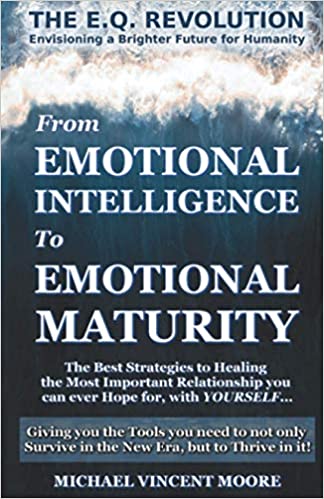
















 The Reading Bud