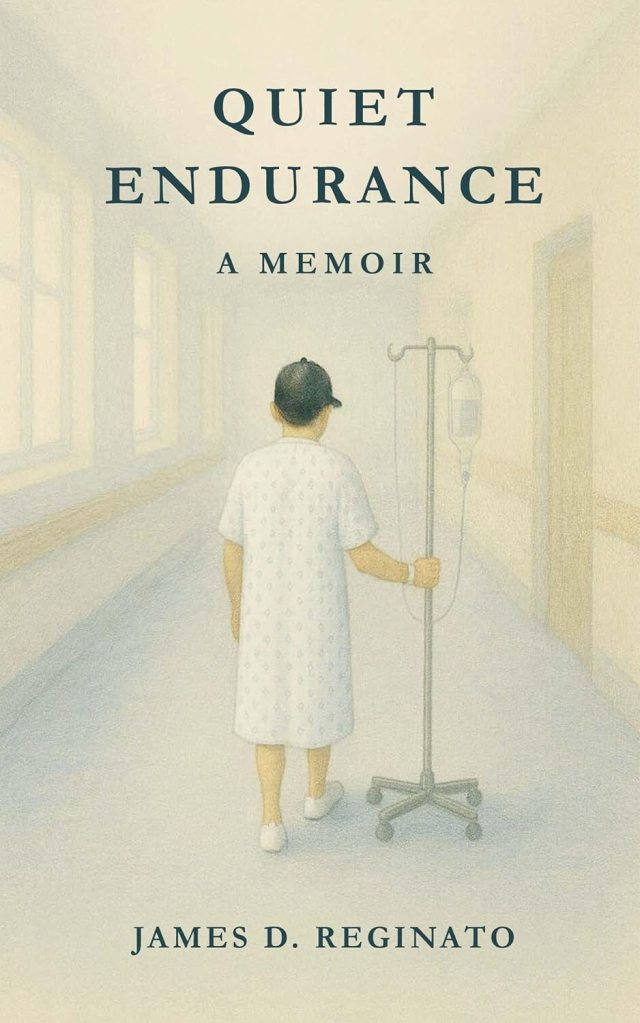
Book Details:
Author: James D. Reginato
Release Date: 3rd November 2025Series:
Genre: Memoir
Format: E-book
Pages: 141 pages
Publisher: James D. Reginato
Blurb:
Quiet Endurance is James’ debut memoir of chronic illness, misdiagnosis, and endurance: a haunting exploration of identity, resilience, and the human need to be believed.
At aged 23, James Reginato was a law and commerce student who loved structure, precision and meaning. He found peace in order, whether through flying, study, or music. Life made sense until a trip overseas left him with a severe infection that marked the beginning of a long and confusing decline. What began as physical illness became something far more complicated when doctors could not explain his symptoms.
Quiet Endurance is a hauntingly raw recount of his journey through misdiagnosis, disbelief, and the quiet erosion of identity that comes from being treated as a problem instead of a person. It is an intimate account of how a once healthy body can become a source of fear and how the healthcare system can lose sight of the human being behind the data.
Through vivid storytelling and careful reflection, James explores the moments that broke him and the small acts of persistence that kept him alive. He writes about the hospitals that misunderstood him, the labels that trapped him, and the eventual discovery of the real conditions that he had been researching all along. Alongside the medical struggle runs a portrait of family, love, and endurance in the face of a system that could not see past its own limits.
This memoir is both personal and universal. It speaks to anyone who has been dismissed, doubted, or reduced to an explanation that does not fit. It is about what happens when you are forced to become your own advocate, when survival depends on refusing to be erased.
Quiet Endurance is not a story of miracle recovery. It is about the resilience that remains when there is nothing left to prove. It is a record of persistence, truth, and the strength that comes from still being here.
Disclaimer
This text includes detailed descriptions of medical treatments, trauma, hospitalisations, severe mental health challenges, suicidal themes, and systemic mistreatment. Reader discretion is advised. This work is based on the author’s personal experiences and medical history. Excerpts from medical correspondence and clinical records are drawn from the author’s own files and have been reproduced or paraphrased for context. Identifying details of individuals, institutions, and locations have been altered or omitted to protect privacy. These passages are presented in good faith as part of the author’s lived experience, and are not intended to criticise or make factual claims about any identifiable person or organisation.
Review
Quiet Endurance: A Memoir by James D. Reginato is an unflinching account of what happens when a body falls apart, and the systems meant to hold you together decide your suffering is “something else.” It opens with the author’s intent to show how misunderstanding, systemic rigidity, and misplaced psychiatric assumptions can fracture care, and the patient inside it.
What makes this memoir so memorable and really mand is the voice; it is controlled, articulate, and furious in the way only the truly exhausted can be. Author Reginato writes with the discipline of someone who thinks in procedures and that contrast becomes painful (and powerful) when medicine fails to offer the same clarity. The result is a narrative that reads like a slow, relentless erosion of selfhood, until “survival” stops meaning improvement and starts meaning persistence.
The book’s emotional hinge is how plausibly it tracks a descent from “treatable” to “suspect.” We watch an origin-point illness after a Bali trip (later identified as typhoid) and the cascade that follows as weight loss, gut dysfunction, hospitalisation, escalating fear, and a homecoming that doesn’t feel like safety so much as being left alone with the consequences. When validation finally arrives in the form of a POTS diagnosis, there’s a brief, aching sense of “finally, I have a name for this,” and then the bitter aftertaste. The memoir’s strongest chapters don’t just catalogue events; they show what repeated dismissal does to the mind and how it teaches you to doubt your own sensations, your own reality.
I want to be fair about what may not work for everyone. The clinical specificity, such as the cycles of admissions, tests, discharge plans, and the repeated need to “prove” symptoms, can feel intentionally repetitive, because that’s the point: the system’s loops become the patient’s prison. Still, readers who prefer a tighter memoir arc may find portions heavy with medical process. But for the audience this book is speaking to, such as patients with complex illness, caregivers, and clinicians who want to experience texture behind the file, those details are exactly what give it authority. And the ending pages, which return to the ethics of care and the radical act of reclaiming narrative (“keep the pen firmly in your hand”), leave the reader with something rarer than inspiration, a sober, hard-earned clarity.
If you pick up Quiet Endurance, do it with appropriate care as the book explicitly warns of trauma, systemic mistreatment, and suicidal themes. But if you’re in the right headspace, this is a compelling and necessary memoir that argues, persuasively, that medicine can’t be reduced to protocols alone.


















 The Reading Bud