Welcome to TRB Lounge. Today, I’d like to welcome author Deb McEwanfor an author interview with The Reading Bud.
About The Author
Deb McEwan
Following a career of over thirty years in the British Army, Deb and her husband moved to Cyprus to become weather refugees.
Deb loves spending time with her husband Allan and rescue dog Sandy. She also loves writing, keeping fit, and socialising, and does her best to avoid housework.
She’s written children’s books about Jason the penguin and Barry the reindeer and young adult/adult books about dogs, the afterlife, soldiers, and netball players.
Welcome to TRB! Please give our readers a brief introduction about yourself before we begin.
Before I started writing books I enjoyed writing rhyming verse and wrote poems/ditties for several friends and colleagues who were moving on to pastures new. I wrote a poem for my niece and her fiancé and was honoured when they invited me to read it at their wedding in 2013.
I started writing song lyrics in the early noughties and collaborated with a few local musicians. I co-wrote a song ‘We Belong Together’, for our 25th wedding anniversary and presented the song to my husband as a surprise. It’s very cheesy but he loved it! You can listen to all my songs here: https://www.debmcewansbooksandblogs.com/my-songs/
I hate cold weather! My extremities turn purple when I’m cold (literally) so my husband and I decided to settle somewhere warm when I left the Army in 2013. That’s why we live in Cyprus. When I’m not writing I work part-time for a military charity and enjoy keeping fit and hanging out with friends and our dog!
Please tell us something about your book other than what we have read in the blurb?
I’ve based the series on a fictional island (Souvia) rather than the island of Cyprus to give me some flexibility with the police procedures. However, whenever I describe any of the locations I have a place I’ve visited in Cyprus in my mind’s eye.
What is that one message that you’re trying to get across to the readers in this book?
In an ideal world you reap what you sow and the characters pay the price for their crimes. Karma is very satisfying!
Who is your favorite character in this book and why?
Elena is my favourite character in this book. She’s hard working, a bit nosey and can be quite naïve, despite what life has thrown at her in the past. Like one of my close friends who’s also a successful businesswoman, Elena’s found her soul mate a little bit later in life and is making the most of it.
What inspired you to write this book? An idea, some anecdote, a dream or something else?
I’ve wanted to write a cozy mystery series since writing my ‘Island Dog Squad’ series of novellas which are based on our rescue dog, Sandy. (Book #1 is free for subscribers at this link https://dl.bookfunnel.com/wdh6nl8p08 ) I also wanted a break from my ‘Afterlife’ series for a while so this felt like the ideal time to do it.
How long did it take you to write this particular book?
Each of the books in this series are approximately 30k long and I already had ideas for the first three. When I’m into my stories I aim to write 1000 words each day so finished the first draft in a month. From first draft to completed book takes about another month to six weeks, depending on how busy my editor is.
What are your writing ambitions? Where do you see yourself 5 years from today?
I’d like to write about 12 books in this series, more in my ‘Afterlife’ series and to also expand my standalone book about netball players into a series. I might even write another in my ‘Unlikely Soldiers’ series so guess that takes up most of the next five years!
Whatever happens writing is in my blood and I’ll carry on for as long as I am able.
Are you working on any other stories presently?
Although I’m concentrating on this series for now, ideas for the next book in the afterlife series often pop into my head. Jotting them down means I can forget them for the time being and come back to them later.
Why have you chosen this genre? Or do you write in multiple genres?
Variety is definitely the spice of live and I love writing in multiple genres. (Supernatural Suspense (Afterlife series), Action and Adventure/Military (Unlikely Soldiers) Women’s Fiction (Court Out, A Netball Girls’ Drama), Children’s Fiction (Jason the Penguin books and Reindeer Dreams for 3-8 year olds), Cozy Animal Mystery/Action and Adventure (The Island Dog Squad novellas)).
I’ve also co-written a non-fiction book entitled ‘Zak My Boy Wonder’. It’s a short, harrowing, but inspirational true story of a mother’s fight for her son’s survival and acceptance in society, and how the military authorities deserted her family when they needed them most.
When did you decide to become a writer? Was it easy for you to follow your passion or did you have to make some sacrifices along the way?
I had a very busy career in the British Army but have always wanted to write. I had confidence issues and never thought I’d be good enough. We have an illness in our family (Huntington’s Disease) and when I discovered that one of my brothers had the disease but that I didn’t, I considered myself very lucky and decided to make the most of my life. I haven’t looked back since.
What is your writing ritual? How do you do it?And how do you prefer to write – computer/laptop, typewriter, dictation or longhand with a pen?
I get up at 6am and write for an hour before going to my part-time job between 8am and 2pm. Then I write some more when I get home from work. I’m a speedy typist so I type all my stories on the computer at home. I stick to this routine at weekends too as I’m at my most creative first thing in the morning.
I write a rough plot for the first three or four chapters and then the end of the book. I always know the ending but sometimes my characters surprise me by taking unexpected turnings to get there. My characters are like real people to me and often surprise me. Some of my friends find this quite weird but that’s the way it is.
What are your 5 favourite books?
That’s such a difficult question so I’m not going to answer it! I loved reading Enid Blyton books when I was a youngster then Wilbur Smith books when I was a little older. Now I mostly read books by Indie authors such as Jean Gill (I love her Natural Forces and Troubadours series) and I’m currently reading ‘How Icasia Bloom Touched Happiness’, by Jessica Bell. It’s a fascinating story set in a future dystopian world where immortality can only be granted to those who follow the rules. I change genre depending on my mood and am always up to reading new authors.
How do you deal with Writer’s Block?
A good walk sets the ideas flowing and always seems to work wonders.
What advice would you give to aspiring writers?
As someone once said, ‘Writers write’. So follow your dreams, go to your happy place, and get writing!
Thank you, Deb, for your insightful answers!
Books by author Deb McEwan
If you are an author and wish to be featured as our guest or if you are a publicist and want to get your author featured on TRB, then please get in touch directly by e-mail at thereadingbud@gmail.com
Today, we are featuring Fedor, the lead character from Fedor by, for our Character Interview feature.
About The Author
Brant Vickers
Brant Vickers started work as a caddy and delivered flowers in Southern California before going into the military. He’s lived in three foreign countries and seven states. He later found his true profession and calling working with students with special needs where he met some of the most endearing and loving people on the planet. His memoir, Chucky’s in Tucson, reflects those 18 years. This led to his interest in Fedor and his imagined story. Brant lives in Arizona with his wife, Cheryl Ann.
Welcome to The Reading Bud! We are really excited to have you over. Please give our readers a brief introduction about yourself before we begin.
Thank you very much. My name is Fedor Adrianovitch Jefticheff and I was born in 1868 in Tbilisi, Georgia, part of Tsarist Russia. I traveled with my father for several years in a small carnival throughout Russia and Europe. A few years ago I was given the chance to become part of the Black Tent in the famous and gargantuan Barnum & Bailey’s sideshow.
What is your age and what do you do for a living?
It’s now 1900 and I’m 32 years old. We’re currently on a several year tour of Great Britain and Europe. P.T. Barnum presents me as Jo-Jo the Dog-Faced Boy in what is commonly called Barnum’s Freak Show. Several of us don’t like that term, but many of us embrace it and deal with the peculiars of our physical infirmaries. This is how I’m forced to make my living. I have no alternate form of employment. As my manager in Russia, Grigory always said, “If they pay in rubles we give them a show; it’s a show we provide.”
How you like to spend your free time?
I have been a voracious reader since my mama started reading to me in my early childhood. We read books in German, English, and, of course, Russian. I am now fluent in both reading and speaking those languages. Her favorite author was Leo Tolstoy, as is mine now. But I have been fortunate enough to meet several writers throughout America. I have developed a close friendship with Mark Twain, who by the way is a fan of the circus. Also I have met, among others, Herman Melville, Harriet Beecher Stowe, and Louisa May Alcott. I hope to meet several more here in Europe.
Please share some of your beliefs, principles, motivations and morals (can be social, religious or political or, etc. Anything that will help us get to know you better.)
I have had to develop a strong attitude to my predicament in this world. My friends and I in the Black Tent cultivate a strong constitution to our lot in life. People pay to gawk at us, but it is the only method, at this time in the world, for us to make a living. My best friend in Russia once said, “I don’t think being ordinary is such a benefit and something they should proud of.” Or as my friend Mark Twain said to me one day, “There was never yet an uninteresting life. Such a thing is an impossibility. Inside the dullest exterior there is drama, a comedy, and a tragedy!”
Tell us something about your family and childhood.
I have long, thick, silky dark hair all over my body. Everywhere. My papa had the same. Our life in Tbilisi was harsh and poor. Even when my papa could get work we rarely had enough to eat and after my beloved mama died, we went on the road with Grigory. His show was small but I had several close loving friends. At age fifteen I met the Tsarevich Nicholas II and shortly after a scout for the Barnum & Bailey Circus. My life changed dramatically after that and I’ve made many more friends whom I live and work with, and consider them my family now.
Tell us something about your dreams and aspirations? Were you able to achieve them or are you planning to?
I have recently met the love of my life and her name is Krao Farni and we suffer from the same malady, but have fallen in love. As Mr. Tolstoy said, “all, everything that I understand, I understand only because I love.” My biggest aspiration is to make enough money and live with Krao comfortably in peace.
What is your biggest fear in life?
I have a fear of not succeeding with my greatest aspiration.
How would you describe your life in one sentence?
I have traveled and seen more of the world than I ever dreamed. My infirmity has made this possible. If not for it, my life as an uneducated peasant in Tsarist Russia would have been very meager. We were, for all intents and purposes serfs. “You can’t throw too much style into a miracle and you my friend are a miracle,” Mark Twain said of me, and I would suggest that sums up my good fortune in life.
What is the worst thing that has ever happened to you?
Living in the wondrous, magical, and unpredictable world of Barnum & Bailey’s Circus brings tragedy along with its marvels. Losing close friends to misfortunes in our world also brings some sadness. Along with gaining much, I’ve lost a few of my dearest friends.
Did it change you for the better or the worse?
I must again quote from my legendary tutor and life long spiritual guide Mr. Tolstoy, “There is only one thing in this word worth dedicating your life to and that is creating more love among people…” If the people, who pay to gawk and be frightened of Krao and myself, can see us and realize we live this life with dignity and love, maybe they would understand there are many ways to live. 11. What are your plans for the future? We are planning to wed upon our return to the United States and look forward to an early retirement and spend our days reading and enjoying each other’s company. I’ll leave you with one more quote and you can probably deduce who wrote it: If you want to be happy, be. And thank you for the opportunity to share my life and thoughts with you.
Fedor by Brant Vickers
“You can’t throw too much style into a miracle, and you my friend are a miracle,” Mark Twain says to Fedor Adrianovitch Jefticheff, also known as Jo-Jo The Dog Faced Boy. Fedor lives, travels, works, and loves among the haunting cast of performers in the Black Tent Sideshow of P.T. Barnum’s Circus in the late 1880s.
Fedor not only survived, but also profited by being a memorable and unforgettable human curiosity. Along with being an intelligent and avid reader of Tolstoy, Twain, Alcott, and Melville, he has remarkable interactions with a myriad of other world-renowned characters, one being Nicholas II the Russian Tsarevich. This proves that more than just being a “sideshow,” there was a lot of individuality and heart to this “dog-faced boy.”
Richly authentic, dramatic, beautifully written, and always thought-provoking, Brant Vickers tells Fedor’s story in an epic account of this young man’s extraordinary life.
Welcome to TRB Lounge. Today, I’d like to welcome author Eric L. Heard for sharing an excerpt from his latest release Reflections of an Anxious African American Dad.
About the Book
Reflections of an Anxious African American Dad
The purpose of this book is an awkward discussion of Eric Heard’s life to his son. He talks about his life in a candid way that tries to explain his anxiety as an African American dad. It is an open and honest account of his life through the life of a child that has been through a lot in his life. It is a reflection on his life that has been shaped by his childhood experiences.
This episode jolted me into making another connection between my childhood and how I was acting as a parent with my son. I would take actions to ensure that what had haunted our family tree for generations would not happen to him. I knew it would require some radical steps. One of those actions was writing a book that he can share with his family after I leave this earth. When he thinks about the times I would not go with him to the baseball game or to his school assembly, this book will provide the answers when he reads between the lines.
I hope this book will help others who don’t have their stories told anywhere in media. There are other African American men dealing with their childhood experiences and wanting to insulate their sons and daughters from the echoes and continued grasp of systematic racism. I grew up during an era of seismic changes that saw whole communities decimated. The mental anguish quietly pushed African American dads to find a way to deal with an unforgiving world. These dads are looking to raise kids while at the same time reconciling crushing pain. I would like this book to be an acknowledgment of that pain and let them know they are not alone.
About The Author
About Eric L. Heard
Eric L. Heard currently lives in Bowling Green, Kentucky with his wife, Sonya, of 17 years and his son, McKinley. Eric is a graduate of Florida State University with a BS in Engineering. He also has a Master’s Business Administration from Indiana University and Master’s of Manufacturing Operations from Kettering University. He is an Army Brat who has lived in the Southeast United States, Germany, and Japan. Please contact me at ericlheard@hotmail.com, if you have any questions or need to contact m
Welcome to TRB Lounge, the section of TRB dedicated to Book Promotions. Today, we are featuring Jake Camp, author of Banshee And The Sperm Whale, for our Author Spotlight feature.
About The Author
Born in Big Timber, Montana in 1973, Jake Camp is the son of an impressionist landscape artist and the grandson of an engineer and inventor. He holds bachelor’s and master’s degrees in philosophy from Western Washington University and the University of Montana, and has been a community college professor and department chair since 2002. An avid fly-fisherman and snowboarder, he lives in Arvada, CO with his sons.
A sunset wedding in Kona. An ugly secret discovered on an iPhone. Experimental philosophical marriage counseling. Time travel. Diver Neurons and Angel Neurons separated by Sea and Sky. Banshee and the Sperm Whale takes the reader on a journey into the unconscious mind of Martin, a biracial chef from Denver who suffers from a particular kind of overabundance. Along the way, a modern allegory unfolds, and everyday notions about self-knowledge, the nature of good and evil, and possibility of finding meaning and spiritual significance in the face of inexorable uncertainty are turned inside out.
If you are an author and wish to be featured as our guest or if you are a publicist and want to get your author/book featured on TRB, then please get in touch directly by e-mail at thereadingbud@gmail.com
Welcome to TRB Lounge. Today, I’d like to welcome author Laricea Ioana Roman-Halliday for an author interview with TRB-team!
About The Author
Laricea Ioana Roman-Halliday
Laricea Ioana Roman-Halliday is a business leader, marketer, mentor, public speaker and brand specialist who has built her passion for brand purpose on the back of her meaningful marketing career with various Fortune 100 companies. Her experience includes working with Microsoft, Google, Unilever, Huawei, Hyundai and many more. She is a big environmental advocate who truly believes in successful business done for good and is constantly curious about driving it forward.
Welcome to TRB! Please give our readers a brief introduction about yourself before we begin.
I am Romanian, living in London with my English husband and our chinchilla called Snowy. I am also very passionate about the environment and madly in love with all animals and plants. I have my own garden which I have been passionately working in for the past 5 years whilst also trying to explore as much as we can this beautiful planet. I have been to 65 countries so far, usually having a target of 5 new countries every year, however with the pandemic this has become really difficult to achieve. I even received a badge from Tripadvisor for one of the highest number of countries visited vs age. Another passion is diving, both my husband and I are certified advanced divers, with over 80 hours of diving all over the world, from Europe to the Indian Ocean, Mediteranean, Pacific and Atlantic oceans. The more we travel and dive, the more we realise how fragile the natural world is and how much we can do on an individual level to protect it. I am hoping that through my book, I will be able to raise awareness of this and encourage businesses and individuals to support the idea of profit for good rather than just profit.
Please tell us something about your book other than what we have read in the blurb?
I set about writing this book from a desire to raise awareness around brand purpose, its critical implications for society and beyond and to provide the tools for making the right, informed decisions for both marketers and consumers when it comes to evaluating true brand purpose. There has never been such a desire to change, fix, improve, eliminate, or embrace actions that would make a difference to the current affairs and not only make us feel better about ourselves but genuinely help shape a better future. Specifically, for this reason more than half of consumers believe that brands play a greater role than governments when it comes to the future of this planet. Whilst this is all fabulous news for brands to be entrusted with such great confidence, some of them are taking advantage of this trend in an unorthodox manner. Thus, through this book I am hoping to highlight some of the issues around brand purpose and purposeful brands, attempting to better define brand purpose and dreaming to be able to make a difference in how people/consumers/marketeers perceive brand purpose and its real importance and power. This book is addressed to a very wide audience: from consumers, to marketers, business leaders, entrepreneurs, founders, pretty much anyone who has an interest in sustainable businesses and future proofing the future.
What is that one message that you’re trying to get across to the readers in this book?
We live in a very troublesome world, which needs more than ever actions that speak more than words, consumers who act through their choices and businesses that put purpose above profit. I set about writing this book from a desire to raise awareness around brand purpose, its critical implications for society and beyond and to provide the tools for making the right, informed decisions for both marketers and consumers when it comes to evaluating true brand purpose. I am hoping that this book will make a difference on how businesses perceive, approach and apply brand purpose, which is for greater good, through genuine actions and a more empathetic approach towards consumers, society and the planet. My desire is for this book to enlighten the audiences, expand their understanding of brand purpose and its greater consequences and ultimately change the current state of affairs by being more like a dazzle of zebras and less like a lonely unicorn!
What inspired you to write this book? An idea, some anecdote, a dream or something else?
I have been working in marketing and advertising for a while now, so I have been exposed to a variety of brands – from cult driven, small, family run businesses to multi billion pound empires that have become modern days icons. One day, during a warm summer in London, I had completed a long brainstorming session with one of my clients, which concluded with a burning desire for the company to establish a new strategy that displays “purpose”. That was the moment when I realised that all of this was wrong; very wrong because what my client was asking me to do was to purely sell an image, portraying a behaviour that resonated with their current customers and potential new ones. However, for them, it was more important as to how they would advertise and market this new “purposeful” positioning and not how they could actually bring it to life with genuine actions and truthful communications.
How long did it take you to write this particular book?
Around 5 months
What are your writing ambitions? Where do you see yourself 5 years from today?
I do not consider myself a writer, as this is my first book, however I believe it’s more of a manifesto, a desire to raise awareness about an issue. I will have to wait and see what is the public’s reaction to this first book and if it is positive I will of course consider expanding on the topic and provide further inspiration and assistance to both brands and consumers.
Are you working on any other stories presently?
No
When did you decide to become a writer? Was it easy for you to follow your passion or did you have to make some sacrifices along the way?
Please see question 5, it all started with my brand experiences and because it felt very unjust and unfair, I decided I need to make my opinion more formal and also provide solutions and advice in terms of true brand purpose and ways of bringing it to life as a business. Lockdown and the pandemic helped me with the book writing as I wouldn’t have had normally so much spare time to sit down and write my ideas. So I have not given up anything per se to make this happen, however I was fortunate enough to do it during a time when the whole world has hit pause. There is a silver line in any cloud 🙂
What is your writing ritual? How do you do it?
I have collected first all my ideas in a little notebook over a few months since I first got the idea of writing a book. I then categorised them in chapters and then I start crafting each chapter. The first two months were most difficult as I was doing it after work, in the evening, so I felt quite tired at the beginning, but then the more I wrote, the more excited and motivated I began. And as I mentioned lockdown helped as I could do it over weekends as well and also over bank holidays, on sunny spring days in the garden. I always had a beautiful candle next to me and a cup of tea, this is my little secret to get inspiration, but it also makes me very happy to feel the beautiful smell of a candle and taste the hot tea on my lips.
How do you prefer to write – computer/laptop, typewriter, dictation or longhand with a pen?
It was a combination of laptop and longhand with a pen as I adore to write 🙂
What are your 5 favourite books?
Non-fiction: Simon Sinek, Seth Godin Fiction: Agnes Martin-Lugand, Elif Shafak, Ion Creanga (Romanian)
How do you deal with Writer’s Block?
I haven’t had this issue yet!
What advice would you give to aspiring writers?
Follow your dreams! If you have an idea, follow it to completion despite the hurdles you might come across. It isn’t easy, it requires a lot of time, dedication and patience, however when you hold you book in your hands for the first time, that feeling is so worth it! And also, knowing that your book will make a difference in this world, may it be cheering people up, inspiring them, helping them to go through difficult times, educating them or even being their companion for a short time, that makes all the difference. Never give up and follow your dream!
Thank you, Larecia, for your insightful answers!
About the book
Brand Purpose – Less Unicorn, More Zebra?
Purpose is a journey, not a destination. More business leaders, marketers and customers need to become aware of true brand purpose and act upon it through business strategies, marketing campaigns and their wallet. This book challenges the way brand purpose has been deployed over the past few years and examines ways of correcting misconceptions and misuses by providing practical solutions and examples of what good looks like. We all have a role to play in the community, so stop dreaming about unicorns and be more zebra!
If you are an author and wish to be featured as our guest or if you are a publicist and want to get your author featured on TRB, then please get in touch directly by e-mail at thereadingbud@gmail.com
Welcome to TRB Lounge. Today, I’d like to welcome author Laricea Ioana Roman-Halliday for sharing an excerpt from her latest release Brand Purpose – Less Unicorn, More Zebra?
About the book
Brand Purpose – Less Unicorn, More Zebra?
Purpose is a journey, not a destination. More business leaders, marketers and customers need to become aware of true brand purpose and act upon it through business strategies, marketing campaigns and their wallet. This book challenges the way brand purpose has been deployed over the past few years and examines ways of correcting misconceptions and misuses by providing practical solutions and examples of what good looks like. We all have a role to play in the community, so stop dreaming about unicorns and be more zebra!
There is a lot of confusion around purpose, especially when it comes to a brands’ purpose, how they deploy this concept in their marketing efforts and then portray it to the world. We are currently living in some really troubled times (probably not the worst in human history); but nevertheless constantly bombarded with bad news, apocalyptic images and consistent negative updates across politics, nature, economics and many other verticals. So naturally, people as consumers and as citizens of this world turn their attention – more than ever to social and environmental issues.
There has never been such a desire to change, fix, improve, eliminate, or embrace actions that would make a difference to the current affairs and not only make us feel better about ourselves but genuinely help shape a better future. Specifically, for this reason more than 60% of consumers believe that brands play a greater role than governments when it comes to the future of this planet. Whilst this is all fabulous news for brands to be entrusted with such great confidence, some of them are taking advantage of this trend in an unorthodox manner.
Here I present this book, hoping to highlight some of the issues around brand purpose and purposeful brands, attempting to better define brand purpose and dreaming to be able to make a difference in how people/consumers/marketers perceive brand purpose and its real importance and power.
I just don’t want to stay silent anymore and marvel at how some big brands who have been silently chopping down trees from nature reserves are getting praised on a wider scale for improving and changing our society for good. I want to bring bad examples to your attention, but I also wish to define genuine brand purpose to inspire those companies out there who are fooling themselves (and at times, us) that their brand purpose is real.
Thus, I hope you will enjoy this book and become inspired to evaluate the brands you are working on as a marketer or the brands you are buying as a consumer through the lens of “true brand purpose”.
About The Author
Laricea Ioana Roman-Halliday
Laricea Ioana Roman-Halliday is a business leader, marketer, mentor, public speaker and brand specialist who has built her passion for brand purpose on the back of her meaningful marketing career with various Fortune 100 companies. Her experience includes working with Microsoft, Google, Unilever, Huawei, Hyundai and many more. She is a big environmental advocate who truly believes in successful business done for good and is constantly curious about driving it forward.
If you are an author and wish to be featured as our guest or if you are a publicist and want to get your author featured on TRB, then please get in touch directly by e-mail at thereadingbud@gmail.com
Welcome to TRB Lounge. Today, we are featuring author Laricea Ioana Roman-Halliday for her novel Brand Purpose – Less Unicorn, More Zebra?
Brand Purpose – Less Unicorn, More Zebra?
Brand Purpose – Less Unicorn, More Zebra? by Laricea Ioana Roman-Halliday
Book: A Brand’s Purpose…Less Unicorn, More Zebra? Author: Laricea Ioana Roman-Halliday PageCount: 200 Publication date: 27th Jan 2021 Genre: non-fiction, business, marketing
Synopsis
Purpose is a journey, not a destination. More business leaders, marketers and customers need to become aware of true brand purpose and act upon it through business strategies, marketing campaigns and their wallet. This book challenges the way brand purpose has been deployed over the past few years and examines ways of correcting misconceptions and misuses by providing practical solutions and examples of what good looks like. We all have a role to play in the community, so stop dreaming about unicorns and be more zebra!
Laricea Ioana Roman-Halliday is a business leader, marketer, mentor, public speaker and brand specialist who has built her passion for brand purpose on the back of her meaningful marketing career with various Fortune 100 companies. Her experience includes working with Microsoft, Google, Unilever, Huawei, Hyundai and many more. She is a big environmental advocate who truly believes in successful business done for good and is constantly curious about driving it forward.
If you are an author and wish to be featured as our guest or if you are a publicist and want to get your author featured on TRB, then please get in touch directly by e-mail at thereadingbud@gmail.com
Today, we are featuring E. T. Gunnarsson, author ofForgive Us, for our Author Interview feature.
About The Author
E. T. Gunnarsson
Mr. Gunnarsson grew up on a horse-rescue ranch in the Rocky Mountains, Colorado. He now resides in Georgetown, TX.
Once in Texas, he wrote his first post-apocalyptic book, “Forgive Us” while attending high school. Outside of writing, Mr. Gunnarsson is a purple belt in BJJ and a brown belt in Judo.
Welcome to TRB! Please give our readers a brief introduction about yourself before we begin.
To start off, I learned how to read through World of Warcraft. It sounds funny, but it’s true. When I was taken out of school at around seven, I didn’t know how to read, write, or do math. While I was being tutored how to read and write, I played World of Warcraft, and as I slowly gained lingual skills, I applied them to the game which allowed me to go from wandering around all day to doing questions and leveling up my character.
I actually started writing when I was nine, though the literature I produced probably sucked, and never saw the light of day. I also started text roleplaying on platforms such as Discord, which led into my author career and where my writing skills first started.
I am also a Norse pagan, and I’m into woodcarving to create idols for deities and spirits.
Please tell us something about your book other than what we have read in the blurb?
Forgive Us is told as three interleaved stories covering different timelines in the 22nd century.This part is not in Forgive Us but gives more info about the environment the survivors live in: The wasteland began way before the fall of civilization. It started with the widespread use of Ignium in the 2050s, and its continued use through the 2060s and 2070s. Ignium, an energy similar to electricity and plasma, is easy to create and extremely malleable, therefore economically better than electricity. Its downfall was its slight toxicity. With its widespread use by billions of people, Ignium slowly poisoned the soil, air, and worldwide ecosystem, leading to cataclysmic climate change and leading to the sixth mass extinction on earth. Combined with pollution such as trash and other waste, the oceans were killed, the sun was blotted out, and the soil itself became a mix of dirt, Ignium, and plastics.
Ignium’s usage became a dependency, and by the time that it was discovered to be extremely damaging to the planet it was too late. Many major companies depended on it and funded campaigns to cover up the damage it caused.
During the 2070s, the world became destabilized and eventually collapsed. The population soared to roughly 14 billion, countries collapsed from resource, water, and food shortages. Despite the amazing technology of the 2070s, major parts of the population died due to illness and starvation as unemployment (in the US) soared into 60%.
Toward 2078, Europe collapsed into war between its nations while the US fell into a three-way civil war. At the same time as a world-wide pandemic and world-wide economic collapse, this broke the country. The pandemic which started in India, ultimately left India, the Middle East, and Africa in a broken state with most of the population dead or dying.
During 2079, the last powerful countries on Earth (such as the USA, Russia, and China) declared war on each other over the last resources on Earth. After a few nukes, bombs, chemical weapons, mutagenic bombs, and more, civilization finally came to a crumbling halt.
What is that one message that you’re trying to get across to the readers in this book?
If there is a single message that can be derived from Forgive Us and the Odemark series as a whole, it’s to be green. In the series, the sky is blotted out from pollution and trash is everywhere, layering the ocean and earth. It is the idea of not poisoning our world. There are many other messages in Forgive Us, like caring for those you love, that war is hell, and that tyranny never dies but should not be stood for.
Who is your favourite character in this book and why?
I have to say that Oliver is my favorite character because he matches the perfect description of a wasteland survivor. He is the lone wolf that many post-apocalyptic works feature, he is the grizzled, mentally scarred survivor he fights and claws to live. His storyline also represents the wolf of power/greed, which is an evil predator.
What inspired you to write this book? An idea, some anecdote, a dream or something else?
There is no specific inspiration for Forgive Us. Rather, Forgive Us and the Odemark series was born from a love of post-apocalyptic fiction, a gap in the genre, and years of interacting with the genre. For example, there are many influences for many aspects of Forgive Us. The father-daughter relationship between London and Rose is seen in many games (see the Dadification of games), the wasteland is inspired from Mad Max, the Fallout Series, and 9, and the conflicts in the book are inspired from history and the media mentioned before.
How long did it take you to write this particular book?
It took me two years to write Forgive Us, starting when I was sixteen and ending when I was eighteen. The first year consisted of the actual writing as I learned the twists and turns of creating a book, while the second year consisted of editing, which was a long process of more learning.
What are your writing ambitions? Where do you see yourself 5 years from today?
In five years I hope to finish the Odemark series, along with starting a new series in my high-fantasy world which is currently still in the works.
Are you working on any other stories presently?
Currently, I am writing the prequel to Forgive Us, Abandon Us, which will show life in theold world, the downfall of civilization, and show who the Outsiders really were.
Why have you chosen this genre? Or do you write in multiple genres?
I love post-apocalyptic fiction. I think it makes for great movies and great games when done well. Forgive Us came to me one day, so it was really the genre choosing me rather than me choosing the general. I learned to write in high-fantasy settings, so I hope to transition back one day.
When did you decide to become a writer? Was it easy for you to follow your passion or did you have to make some sacrifices along the way?
I decided to become a writer when I started Forgive Us in 2018. Being a writer is not easy in general, but I am lucky to have an extremely flexible schedule that allows me to work a lot without sacrificing anything beyond free time that I’d otherwise waste.
Following the course of being a writer comes with a lot of ups and downs. The ups would be positive feedback on your work or success in writing, and the downs would be writer’s block, negative feedback, and self-doubt. Fortunately, I think the ups make the downs look small because when you’re so high up, falling a little bit does seem so far.
What is your writing ritual? How do you do it?
I’m boring when it comes to writing. I generally sit down, try to play some music that fits the genre I am writing in, and write. I usually have tea while I write, but not always. If I am doing serious writing, I will remove all the distractions around me and just write. No distraction writing is a really easy way to burn out in my opinion, and is really boring, so I usually avoid it.
How do you prefer to write – computer/laptop, typewriter, dictation or longhand with a pen?
I have dysgraphia, so it’s hard to write with a pencil or pen. I prefer the power and utility of a computer or a laptop, since it allows me to edit and create with ease.
What are your 5 favourite books?
The Hobbit by J.R.R. Tolkien is one of my favorite books, simply because it’s the Lord of the Rings with lighter reading, and serves as a wonderful introduction to the series. The Poetic Edda by Snorri Sturluson is my second favorite book, since it serves as a pillar to understanding Norse Mythology, and as an important religion text. I also love Maus (Art Spieglman), 1984 (George Orwell), and Rise of the Lich King (Christie Golden).
When it comes to authors, I absolutely love Stephen King and Tolkien. My father read the Dark Tower series to me when I was little, which I think has a subconscious influence on my writing. Tolkien is the father of all modern fantasy, and without him I would not have my childhood game World of Warcraft, or the inspiration to make a high fantasy world.
How do you deal with Writer’s Block?
When it comes to Writer’s Block, a due date gets me out of it. If I feel pressure to write, I will write, and that’s how real writing works in my opinion. It’s a job, and a job does not wait for you. If you struggle with Writer’s Block, you either have to wait for it to go away or break through it.
What advice would you give to aspiring writers?
If one wants to seriously write, it has to be treated like a job. A job has hours, due dates, and expectations, and writing should be no different. Without it, procrastination and no results rule. For me, I have a daily word count I have to reach, and a chapter/page amount I have to reach per week or month.
Thank you, Mr Gunnarsson, for your interesting answers!
About The Book
Forgive Us
Three timelines. One dark future…
A new form of energy has poisoned the earth, leaving civilization in ruins. As decades go by, the inheritors of this devastation struggle to survive and reconquer a broken planet…
In 2099: Mankind emerges from the darkness. A lone rider named Oliver journeys east, seeking civilization beyond the Rocky Mountains. Braving the toxic earth and poison air, Oliver must battle a horde of deadly mutants as he unites a band of refugees into the first nation of this new world…
In 2153: Fledging nations clash over land and resources. London, a veteran of the wasteland, struggles to protect his adopted daughter Rose as the world decays around them. But little does he know, both he and his adopted daughter will soon find themselves drawn into a coming war…
In 2184: Simon, a descendent of those who fled the earth, lives on the great Arcadis Station. A gifted technician, he works vigilantly against those who rule his society with an iron fist. In the shadows, he will be the difference between enslavement or liberty…
Fans of The Gunslinger and The Stand will love Forgive Us. This epic novel takes readers on a post-apocalyptic thrill ride, spanning three generations of a ravaged earth…
If you are an author and wish to be interviewed or if you are a publicist and want to get your author interviewed on TRB, then please get in touch through direct e-mail: thereadingbud@gmail.com
Welcome to TRB-Lounge, the section of TRB dedicated to book promotions. Today, I’d like to welcome author E.T. Gunnarsson, for sharing an excerpt from their latest release Forgive Us.
Read on to get a sneak-peek into this amazing new read!
About The Book
Three timelines. One dark future…
A new form of energy has poisoned the earth, leaving civilization in ruins. As decades go by, the inheritors of this devastation struggle to survive and reconquer a broken planet…
In 2099: Mankind emerges from the darkness. A lone rider named Oliver journeys east, seeking civilization beyond the Rocky Mountains. Braving the toxic earth and poison air, Oliver must battle a horde of deadly mutants as he unites a band of refugees into the first nation of this new world…
In 2153: Fledging nations clash over land and resources. London, a veteran of the wasteland, struggles to protect his adopted daughter Rose as the world decays around them. But little does he know, both he and his adopted daughter will soon find themselves drawn into a coming war…
In 2184: Simon, a descendent of those who fled the earth, lives on the great Arcadis Station. A gifted technician, he works vigilantly against those who rule his society with an iron fist. In the shadows, he will be the difference between enslavement or liberty…
Fans of The Gunslinger and The Stand will love Forgive Us. This epic novel takes readers on a post-apocalyptic thrill ride, spanning three generations of a ravaged earth…
Silent, empty, and cruel. This was the nature of the wasteland.
The wasteland was a vast expanse of ruins, sand, and dying life beneath a polluted sky. This was the new world. It was created by humanity in 2079, and it was the world that they now had to brave to survive.
The downfall of the old world happened slowly. Humanity did not know it, but their cunning and technology became their undoing. In the great battle between Mother Nature and humanity’s dominion, there was no winner.
The sound of a thunderous engine erupted throughout the eerie wasteland as a motorcycle sped along the ancient roads. Upon it was a survivor, alone and braving all odds. His name was Oliver, a thirty-six-year-old man who had grown up in the old world.
Oliver was a refugee from the wild and untamed lands near the Rocky Mountains. He fled East, guided by the hope that the East would be better, though he could feel in his gut that it wouldn’t be. The only solace he had were stories from traveling caravans and survivors who spoke of growing settlements in the East.
Oliver was pursued. Not by man, not by beast, but by time. Starvation, dehydration, exposure, all of these were barely kept at bay by luck and experience. His current and most dangerous pursuer was the weather.
The pollution haze above blocked out the sun. As night approached, the world slowly became pitch black and freezing cold. The darkness parted before the headlights of his motorcycle, yet Oliver felt vulnerable.
Parallel to the road were telephone poles, some of which had tilted or completely fallen to the ground. The surrounding wasteland was desolate and empty, occupied by rocks and sand dunes.
Oliver wore an old-world smart suit that was on its warmest setting. He also wore a coat made out of animal hide over his smart suit. He had traded for it a while ago, and it had saved him from freezing to death many times already. Still, he shivered.
A gas mask covered his face. It was vital for survival in the wasteland; without it, the toxic air would corrode Oliver’s lungs. It was old and worn, created in a factory in the old world. Still, it worked much better than the makeshift masks that most people wore. Finding filters for the gas mask was easy; they were everywhere.
There was a grim face beneath the intimidating gas mask. Oliver’s brown eyes reflected a man whose past was full of pain and hardship. Through the visor, they seemed tired. The light that most people have in their eyes was dim in Oliver’s. He also had deep curves between his brows and fatigued laugh lines. His skin was dark and covered in colored blotches, irritated and damaged from the wasteland air.
Oliver focused on his current task: finding shelter for the night. Such searches were often painful since he had to be picky about the buildings he used. Some were too unstable to hold up against the wasteland’s extreme weather; some were too hard to get into, others occupied.
He paused at a fork in the road, gazing down each path. After a few seconds, Oliver turned the motorcycle right and sped off. The sand-covered asphalt in front of him rose into a hill. Oliver followed the road and arrived at a parking lot. In front of him was an old, wooden church that was leaning to one side. A few cars sat parked in the parking lot, their paint stripped by sandy winds and their frames rusted out by time. The church itself had shattered windows and holes in every wall. Oliver had to make do. It was too dangerous to search for better shelter with night fast approaching.
The thunderous engine cut out as Oliver parked and turned off his motorcycle. The world became silent again. Only faint wind could be heard in the absence of the engine’s power. Oliver turned on a flashlight that was attached to the side of the gas mask. Next, he grabbed his gun off the back of his motorcycle. Holding it with two hands, he turned toward the church. Oliver’s boots met the ground with quiet clicks. These were combat boots, tough and made for smashing jaws.
He swallowed nervously. Though anxious, Oliver felt safe with his Railshot Rifle in hand. It was beautiful, a flawless combination of a railgun and a shotgun. He checked the top port of the gun before entering the church. The gun had plenty of scrap metal in it, ready to shred flesh and bone instantly. Next, he checked the round blue energy meter above the trigger. Oliver felt sure there was enough charge to keep him safe.
He moved toward the entrance. The flashlight pierced the darkness, allowing him to see the gnarled and twisted vines covering the church. They looked so dry that it seemed like they would crumble to dust if Oliver touched them. The twin doors that blocked off the entrance to the building posed no challenge. One was hanging weakly from its hinges, while the other had broken off and now laid on the floor.
Step by step, he entered the church, walking over a fallen door and looking up into the steeple. The lonely church bell still hung far up there. It was rusty, kept in place by a few frayed ropes, gently moving back and forth. Each time the wind gently moved it, Oliver heard a distant “ding” from the steeple.
The bell seemed so lonely. It was a reminder that this place was once the center of a community. Where were they? He assumed that they were all long gone, lost to the last twenty years.
The interior of the church was desolate and destroyed. The hard, wooden floor inside had a layer of sand and pebbles. Each time Oliver took a step, a quiet crunch followed.
There were broken benches and piles of rubble everywhere. Oliver wondered if any ghosts still sat on those benches. Were they at peace, or were they suffering? Many parts of the walls and roof had collapsed upon the altar and benches lining the church. Oliver looked around cautiously, taking in the looming structure.
Here was once a holy site that held peace, now defiled by the wasteland. To Oliver, all of it was just firewood.
The place was empty of any living presence. The only recent trace of human activity was a single piece of graffiti over the altar. Oliver examined the graffiti, stepping upon the altar to wipe some dust off of it.
“GOD HAS ABANDONED US!”
Oliver frowned and stepped down from the altar, turned around, and started to gather pieces of wood. The graffiti was unsettling. Oliver breathed uneasily as he moved around. Once he grabbed enough pieces, he formed them into a campfire at the center of the building. Oliver took off his backpack and laid it beside him. It was an old, rugged backpack that held most of his belongings. There were some holes in it, and its fabric was so worn down that the once blue-ish fibers were black and dirty. The backpack held a bedroll, food, gas mask filters, incredibly precious bottles of water, and bags of scrap metal.
He dug inside the backpack and pulled out a tesla lighter. It was old, given to him when he was younger. On one side was a company logo that was almost invisible from wear. He flipped the cap open and turned it on. Arcs of energy formed between two metal rods, the arcs humming and dancing.
Oliver lowered the lighter down to the campfire. First, there was smoke, then after a few moments, a small flame appeared. Oliver nurtured the flame until it engulfed the small campfire. Once it was going, he unstrapped the bedroll from the backpack and laid it out beneath a bench near the fire. Oliver felt happy as he basked in the warmth of the fire; his shivering slowly stopped as he turned off his flashlight and sat down.
The church creaked and moaned from the rough winds outside. The sounds made Oliver uneasy. He stared at the fire, his face wrinkling in thought as he contemplated the church. People still clung to Christianity in the new world, though their beliefs had changed over the past two decades.
Many were afraid of old churches. Some said that God had punished humanity for their sins. Sin was thought to be the reason why the world was like this now. Many believed that the Devil lived in old holy places like this church. Oliver didn’t believe in all those stories, but the idea still creeped him out. He imagined the evil, horned demon dancing in the shadows with the flickering flame, laughing at his ignorance and plotting to steal his soul.
While warming up from the heat of the campfire, Oliver gazed at the device on his forearm. It was a Smartwrist, similar to a smartwatch from the early 21st century. He turned it on and checked the time. It was nine o’clock, three hours until midnight. New year, new century, same problems. People used to celebrate the new year, drink, and make merry. Not anymore.
With nothing else to do, Oliver decided to eat dinner. He grabbed the backpack and dug through it, procuring a vial with a full meal inside of it. Processed cubes of synthesized meat and vegetables composed the meal, food from the old world. He frowned bitterly under his mask as he looked at the vial. Oliver unscrewed the lid, quickly lifted his gas mask, emptied the vial, and put his mask back on in one swift movement. Instead of throwing away the vial, he put it back in his backpack for later use.
Oliver looked like a chipmunk with so much food in his mouth. Stuffing too much food into his mouth was a bad habit Oliver had; as a matter of fact, he used to be called “Chipmunk” by his family. The artificial food tasted like stale popcorn. Oliver’s metal teeth chewed through the stuff easily. While he was eating, Oliver thought about his last visit to a dentist in the old world.
He remembered having his teeth pulled out to be replaced by 3D printed metal teeth that wouldn’t break or decay. The pain from the procedure was brutal and lasted a few days after the surgery. For many, it was once a rite of passage, marking the transition from teenager to adulthood. Everyone went through it, and, in Oliver’s opinion, he was happy to have metal teeth. Suffering tooth decay from the inability to deal with his hygiene was the last thing Oliver wanted. They looked like real teeth anyway and didn’t turn yellow.
Oliver’s gaze shifted to the doorway of the church. Outside, there was the darkness of a polluted world. There was no grass, but there was still some life, mostly brown, dry, and barely alive. The winds were blowing fiercely as always. A blackish color tainted the air, and waves of dust sailed over the ground with the tremendous force of the wind.
A discontented exhale left his lips as he closed his eyes. Oliver tried to remember a time when the sky didn’t constantly have a dark haze over it. Growing up in a cramped apartment, Oliver heard stories of when there were still green fields and blue skies. He believed the stories only because he had seen pictures that captured those forgotten times, though some doubts lingered in his mind. No matter how hard he tried, he could never recall a bright, sunny day. All that came to mind was the sky darkening as time passed.
He struggled to remember a day when he didn’t have to wear a gas mask to go outside. Oliver recalled that every indoor space had a sort of airlock before anyone could enter. He would walk in, have doors closed behind him, then have the room completely emptied of air and refilled with filtered, clean oxygen in a few seconds.
Oliver checked the time again. Two hours until the new year. He put more wood on the fire to push the biting cold away.
A pained moaning interrupted the peace as the sparks and flames engulfed the new fuel. Oliver let out a startled gasp, holding his breath and looking toward the sound. Far away outside the church, Oliver could hear footsteps approaching. Oliver barely made out the shapes of figures in the darkness outside, human shapes with extra arms, faces, and body parts fused into them. They were human mutants, the fiendish nightmares of the wasteland.
Oliver hastily stood up and snuffed out the fire in front of him with a boot before laying down flat. He reached out for his weapon and held it, his heart throbbing with dread. The noise and the moans were the worst part. The faint silhouette of their horrid, mutant forms was all Oliver could see in the darkness as memories of being chased, attacked, and more slowly crawled back and made his skin feel cold. They came close to the church, horribly close. Their footsteps and hoarse breathing filled the air.
Oliver heard bodies brush against the sides of the church as they walked past, their footsteps passing slowly and beginning to fade. Oliver carefully stood, proceeding to investigate the church. Had he been seen? Did they know he was here? Nothing. Nothing seemed to be hiding among the ruins, and he heard no more sounds outside. A relieved exhale left his lips as he returned to the fire and knelt beside it, trying to start it again.
Abruptly, footsteps quickly approached from behind. Oliver swung around with his gun ready as he heard them. At the same time, something his size crashed into him, causing him to see stars.
It knocked the gun out of his hands and sent Oliver to the ground. He landed with a pained grunt. In an instant, his knife was in his hands. Despite his surprise, Oliver immediately retaliated against the figure he could barely make out.
The beast shrieked as he plunged the blade blindly into its body. Its arms thrashed, mouth gnashing at Oliver. He stabbed again, then again, the thing falling on top of him. Its shrieking grew higher in pitch, a rough hand striking Oliver in the head. The strike made him blink, stunning him but not stopping him from stabbing.
With a tremendous kick, Oliver threw the creature off and began stomping the monster into the floor. Every smack made it squirm less, its whole body growing still after a while. As he stopped, Oliver heard a rasping breath from it. He stomped again out of spite. Oliver wasn’t going to give it mercy. He lifted his mask and spat on the dying creature. As he did, he caught a whiff of its rancid, sweaty smell.
Oliver listened to the creature as it occasionally let out pained squeals. He started the campfire again, the flame slowly growing from the church’s dried, ancient planks. In the light, Oliver could make out the creature dying before him. It was a mutant, shaped like a human with a face fused partly into its shoulder. A useless limb extended from its belly, while a stunted leg dangled from the calf of its right leg. Stab wounds covered its body, blood seeping from each.
Oliver relished its suffering. He watched it trying to fight again, weakly twisting and squirming. It growled and gurgled, painfully bleeding out. After five minutes, it gave in and collapsed completely. Once the mutant was dead, Oliver remained wary of any more creatures. Fortunately, none came to avenge the mutant that he had just killed.
Oliver felt a stinging sensation on the side of the head where the mutant hit him. He rubbed it, causing his face to scrunch as he winced. It must’ve been another mark.
“That’s going to bruise,” he whispered to himself.
His skin was rough and covered in scars, damaged from the toxic air and the violent wasteland. Even if it did bruise, it wouldn’t stand out.
He checked the time again — only forty minutes to midnight. The wind outside began to batter the creaking church. The structure’s stability was questionable, but there was no option to find shelter in another building. Oliver moved his bedroll under a bench and got inside of it, keeping his gun close at hand.
He played games on his Smartwrist to pass the time. Oliver felt a sinking sensation of emptiness when his thoughts dwelled on these games. In his youth, games and social media were a major part of his life. Oliver had followers, friends, people that he still kept in touch with years after losing face-to-face communication. Sometimes, Oliver had met his old friends in virtual worlds. The thought caused his fingers to meet the port where the VR chip went, the object that connected the Smartwrist to the VR equipment he once had.
The world felt more desolate than it already was when these thoughts of loneliness came to him. He remembered virtual games too and how many hours of his life he lost to them. Gaming was a happy memory that made him smile when thinking about all the friends he had made, especially those from strange places. Now, survival was lonely and harsh. Whenever humans met one another, it was either shoot or run.
The last thirty-five minutes passed in the blink of an eye, and before Oliver knew it, the last minute before New Years arrived.
As the last minute dwindled, Oliver released a relaxed, drawn-out exhale. He counted it in his head, one Mississippi, two Mississippi. Oliver mumbled it under his breath until the last ten seconds. He turned off the Smartwrist and lifted both arms in the air with spread fingers.
“Ten, nine, eight, seven, six, five, four, three, two, one… HAPPY NEW YEAR!” he whispered as loudly as he dared.
The year was 2100, and Oliver was still alive.
About The Author
E.T. Gunnarsson
Mr. Gunnarsson grew up on a horse-rescue ranch in the Rocky Mountains, Colorado. He now resides in Georgetown, TX.
Once in Texas, he wrote his first post-apocalyptic book, “Forgive Us” while attending high school. Outside of writing, Mr. Gunnarsson is a purple belt in BJJ and a brown belt in Judo.
Today, we are featuring Kimiko Chou, the lead character from Kimiko Chou, Girl Samurai by Con Chapman, for our Character Interview feature.
About The Author
Con Chapman
Con Chapman is the author most recently of Rabbit’s Blues: The Life and Music of Johnny Hodges (Oxford University Press), winner of the 2019 Book of the Year Award from Hot Club de France. His work has appeared in The Atlantic, The Christian Science Monitor, The Boston Globe, and a number of literary magazines. His young adult short story, “The Vanishing Twin,” appeared in the March/April 2015 issue of Cicada.
Welcome to TRB! We are really excited to have you over. Please give our readers a brief introduction about yourself before we begin.
My name is Kimiko Chou. “Chou” is my given name and means “butterfly.” I was born a twin with a brother, Tadashige, or “Tada” for short. My father is a samurai warrior—Kimiko Kiyotaka. My mother stayed at home and took care of me and my brother. We lived in the city of Ōita, Japan.
What is your age and what do you do for a living?
I am twelve years old. I am returning to Japan after a long journey to find my father, who had gone off to invade Korea with other samurai.
How do you like to spend your free time?
Before my mother and brother were killed, I led the life of a typical Japanese girl of our city. Tada and I would play, my mother would instruct me in gardening, housekeeping, art, poetry—and the tea ceremony.
Please share some of your beliefs, principles, motivations and morals (can be social, religious or political or, etc.) Anything that will help us get to know you better.
My family was Buddhists. It may seem strange that a warrior such as my father followed a religion of peace, but samurai believe that Zen Buddhism helps them find inner peace and enlightenment to strengthen themselves, both in battle and in their daily lives.
Tell us something about your family and childhood.
My family was a happy one until the day when robbers invaded our house and killed my mother and brother while my father was off on an invasion of Korea. From that day until I was reunited with my father, I was a wanderer, traveling with a ronin—a samurai who has been dismissed by his lord—and his page, Moto Mori, a young boy who was older than me.
Tell us something about your dreams and aspirations? Were you able to achieve them or are you planning to?
My aspiration at this point is to return to my home in Ōita and rebuild my life with my father. He is without a wife and a son, and I am without a mother and brother.
What is your biggest fear in life?
After what I’ve been through, there isn’t much I fear. But my father is all I have left, and I could not bear to lose him.
How would you describe your life in one sentence?
My world was a happy one until it was turned upside down by the death of my mother and brother, and I was forced to fend for myself to be reunited with my father.
What is the worst thing that has ever happened to you?
Losing my mother and my brother in a single day, when robbers invaded our home while my father was away.
Did it change you for the better or the worse?
Obviously, things became worse, but there was nothing I could do about it—they were gone, and nothing could bring them back. But I became more self-reliant, and I experienced a great adventure, even though it was harrowing at times. And I was reunited with my father.
What are your plans for the future?
To return to Japan with my father and start our life over again.
Kimiko Chou, Girl Samurai
KIMIKO CHOU is a girl on a mission. Her mother and brother have been killed by robbers in 14th century Japan while her father, a samurai warrior, is off on an invasion of Korea. Chou (“butterfly” in Japanese) narrowly escapes death by hiding while the robbers ransack her home, then—dressed as a boy in her brother’s clothes—she goes in quest of her father. Alone on the road, she takes up with Hyōgo Narutomi, a former samurai who has been dismissed by seven previous masters, and Moto Mori, his page. The three of them—man, boy, and girl—make their way across Japan along with Piebald, an old horse with a curious spot on his coat that resembles a Fenghuang, the mythical bird that rules over all others in Asian mythology. Together this unlikely trio experience a series of adventures and narrow escapes until Chou and Mori—but not Narutomi—land in Korea. There, as a spy for the Koreans, Chou searches for her father-across enemy lines!
If you are an author and wish to be interviewed or if you are a publicist and want to get your author interviewed on TRB, then please get in touch through direct e-mail: thereadingbud@gmail.com
Today, we are featuring Con Chapman, author ofKimiko Chou, Girl Samurai, for our Author Interview feature.
About The Author
Con Chapman
Con Chapman is the author most recently of Rabbit’s Blues: The Life and Music of Johnny Hodges (Oxford University Press), winner of the 2019 Book of the Year Award from Hot Club de France. His work has appeared in The Atlantic, The Christian Science Monitor, The Boston Globe, and a number of literary magazines. His young adult short story, “The Vanishing Twin,” appeared in the March/April 2015 issue of Cicada.
Welcome to TRB! Please give our readers a brief introduction about yourself before we begin.
I’m a writer on the side—it’s not my day job. I’ve written young adult fiction before (“The Vanishing Twin,” Cicada Magazine, March/April, 2015) but this is my first YA novel. My most recent book was about Johnny Hodges, Duke Ellington’s long-time alto sax player: Rabbit’s Blues: The Life and Music of Johnny Hodges (Oxford University Press). Kimiko Chou has a samurai theme because I’m interested in that now-abolished caste whose members were, at the same time, warriors and artistic; they were highly literate and wrote poetry; their motto was “The pen and the sword in accord.”
Please tell us something about your book other than what we have read in the blurb?
It has a “meta” aspect to it, in that it is introduced by a character—Etaoin Shrdlu—who says that he translated the work. He is as fictional as Kimiko Chou, though. This technique—sometimes referred to as a “framing device”—explains how it is that the reader is holding in his or her hands a first-person account from the 14th century. It is used in the novel by Thomas Berger, Little Big Man, one of my favorite works (and one that I think is underrated).
What is that one message that you’re trying to get across to the readers in this book?
Not sure there’s a particular message I want readers to take away from the book, but characters reveal themselves to you as you create them—Pygmalion style. Chou is hardened by the tragedy at the beginning of the book, but doesn’t miss a beat and embarks on a new life. Along the way, she finds that her first impressions about people don’t always turn out to be correct, but even those who she grows close to—such as the boy page, Moto Mori, who is her companion on the journey—have their flaws that are in need of mid-course corrections.
Who is your favourite character in this book and why?
The ronin, or fallen samurai, Hyōgo Narutomi, who leads the two children on their expedition. He is a failure who refuses to acknowledge that fact, and carries on despite having no real hope of ever realizing his ambition; to become a samurai again, after having been dismissed by seven masters.
What inspired you to write this book? An idea, some anecdote, a dream or something else?
I had a lot of time on my hands waiting for a publisher to get back to me on a proposal—over a year. At some point I threw up my hands and decided to start on another project. I’ve written two novels before, one of which (CannaCorn) is a baseball novel with a character who thinks of himself as a latter-day samurai in his role as a relief pitcher. I read a YA novel about a boy samurai, and Women Warriors: An Unexpected History by Pamela Toler, which includes stories of female samurai. I did a little research and didn’t find any YA novels about girl samurai, and decided to write one.
How long did it take you to write this particular book?
Once I got going, not that long, maybe a year. I had to do some research on Japanese history during the period when the samurai first came to prominence, the 12th to the 14th centuries, and also on Japanese geography, to get the details of a Japanese invasion of Korea down.
What are your writing ambitions? Where do you see yourself 5 years from today?
I’d like to be able to write full-time, but I’ve got a long ways to go. I’d like to write a sequel to Kimiko Chou if there’s a demand for it.
Are you working on any other stories presently?
I am currently writing a history of Kansas City jazz for Equinox Publishing, a British publisher.
Why have you chosen this genre? Or do you write in multiple genres?
The novel (or novella, it’s not that long) seemed right for this story. I also write plays, histories, poetry, humor, and short-form journalism.
When did you decide to become a writer? Was it easy for you to follow your passion or did you have to make some sacrifices along the way?
? It’s something I’ve wanted to do since I was in high school. I became a sports reporter for my small-town newspaper when I was a junior in high school, after I hurt myself and couldn’t play football anymore. I got a newspaper reporting job right out of college, but found I wasn’t very good at going up to strangers and asking them embarrassing questions, which is essential to the job. So I had to find some other path, which took a while. I wrote an article on jazz for a Boston-area “underground” paper, but didn’t have much success pitching freelance articles. I decided I needed to get a book written, and chose the 1978 pennant race between the Boston Red Sox and the New York Yankees, which no one had written about. Red Sox fans didn’t want to be reminded about it, since they blew a big lead and didn’t make it to the World Series, and Yankee fans weren’t interested since it wasn’t a big deal to them—they went on to win the World Series, so the win over the Red Sox was insignificant by comparison.
I self-published the book, The Year of the Gerbil (the word “gerbil” refers to a scornful nickname the Red Sox hung on their manager that season). This was back in the bad old days when self-publishing was expensive. I took money out of my savings to finance it, and had to do all the marketing myself. I wrote a lot of letters to bookstores, made personal trips to ask bookstores to stock it—very naïve. I’d send copies to various newspapers and magazines, got maybe two reviews. Then I sent a copy to the Business Editor of The Boston Globe because he had mentioned how Boston and New York had similar rivalries in business and sports; the Yankees back in the day were perennial winners, the Red Sox went 86 years without winning the World Series, and New York is a much bigger business market than Boston. To my surprise, he wrote a glowing review of the book in the Business Section of the paper, the book got named to a list of 50 essential books about the Red Sox, and while I never made back my initial monetary investment, I had a start on a reputation in that I could name a book I’d written and people might actually want to read it.
What is your writing ritual? How do you do it?
. I have to write at the beginning and end of the day since I have a day job. If I wake up early I’ll try to produce a paragraph or two before going off to work, and at night if I’m not too tired I’ll try to do it again.
How do you prefer to write – computer/laptop, typewriter, dictation or longhand with a pen?
? I write on a computer, as it’s much faster, even for drafts. The one exception is playwriting; I’ve had twelve plays published, and because you’re just writing dialogue, not exposition (other than stage directions), it’s easy to get a lot down with just a pen and a pad of paper.
What are your 5 favourite books?
The books I’ve read the most, multiple times, are:
The Moviegoer, Walker Percy (novel)
The Sweet Science, A.J. Liebling (non-fiction, boxing)
True Tales from the Annals of Crime and Rascality, St. Clair McKelway (non-fiction, crime)
George Ade and Ring Lardner, Midwestern humorists
And the Holy Trinity of Southern female writers: Flannery O’Connor, Eudora Welty, and Carson McCullers
How do you deal with Writer’s Block?
I had writer’s block when I got out of college, wanted to be a writer, and couldn’t get anything written. You only have writer’s block if you want to write and can’t, so I can’t say I had writer’s block when I more or less gave up on writing for a while.
It’s sad but true, as far as I’m concerned and one of my friends who had writer’s block and couldn’t finish his Ph.D. dissertation, that getting thrown into a job where you have to write, or going back to school and being under pressure to produce on a daily basis will cure you of writer’s block. The problem then is—you have no time to write because you’re busy.
For the most part that’s the situation I’m in today; I have to find time to write around my work, which forces me to become more efficient and not have a beer and stare off into space and think about the Great American Novel I’ve got in me down deep inside.
What advice would you give to aspiring writers?
Well, you’ve got to look the part on paper. I bought a book on manuscript preparation and writing book proposals (the Writer’s Market book, “Formatting and Submitting Your Manuscript”), which gave me some guidance on presenting yourself as a writer. Where before I’d do things wrong (like sending in a non-fiction article without querying first), I at least had a sense of what an editor or publisher who might actually buy something from you expected it to look like when it came in over the transom.
Thank you, Con, for your insightful answers!
About The Book
Kimiko Chou, Girl Samurai
KIMIKO CHOU is a girl on a mission. Her mother and brother have been killed by robbers in 14th century Japan while her father, a samurai warrior, is off on an invasion of Korea. Chou (“butterfly” in Japanese) narrowly escapes death by hiding while the robbers ransack her home, then—dressed as a boy in her brother’s clothes—she goes in quest of her father. Alone on the road, she takes up with Hyōgo Narutomi, a former samurai who has been dismissed by seven previous masters, and Moto Mori, his page. The three of them—man, boy, and girl—make their way across Japan along with Piebald, an old horse with a curious spot on his coat that resembles a Fenghuang, the mythical bird that rules over all others in Asian mythology. Together this unlikely trio experience a series of adventures and narrow escapes until Chou and Mori—but not Narutomi—land in Korea. There, as a spy for the Koreans, Chou searches for her father-across enemy lines!
If you are an author and wish to be interviewed or if you are a publicist and want to get your author interviewed on TRB, then please get in touch through direct e-mail: thereadingbud@gmail.com
Welcome to TRB Lounge. Today, I’d like to welcome author Con Chapman for sharing an excerpt from his latest release Kimiko Chou, Girl Samurai.
About The Book
KIMIKO CHOU is a girl on a mission. Her mother and brother have been killed by robbers in 14th century Japan while her father, a samurai warrior, is off on an invasion of Korea. Chou (“butterfly” in Japanese) narrowly escapes death by hiding while the robbers ransack her home, then—dressed as a boy in her brother’s clothes—she goes in quest of her father. Alone on the road, she takes up with Hyōgo Narutomi, a former samurai who has been dismissed by seven previous masters, and Moto Mori, his page. The three of them—man, boy, and girl—make their way across Japan along with Piebald, an old horse with a curious spot on his coat that resembles a Fenghuang, the mythical bird that rules over all others in Asian mythology. Together this unlikely trio experience a series of adventures and narrow escapes until Chou and Mori—but not Narutomi—land in Korea. There, as a spy for the Koreans, Chou searches for her father-across enemy lines!
My name is Kimiko Chou, and this is my story. I have set it down so that it will live after me, for other girls to read. They may find it hard to believe, but it is true.
My given name “Chou” means “empress child butterfly.” It was given to me at my oschichiya—naming ceremony. I was swathed in white, like a little cocoon, pure as I came into the world. Like every other aka-chan (“little red one,” loving term for a newborn baby), I wore only this color of godliness for seventeen days. From then on, I was clothed in the colors of the world, and not just the pure shade of ame, the lofty sacred world of the gods of heaven, the ama-tsu-kami.
It should not surprise you that I came to live as a samurai, for the way of the samurai is death, and I was born, so to speak, in death. When robbers invaded our home and attacked my mother and brother, I hid in the alcove—the tokonoma—that is found in the main room of a samurai’s dwelling, and in which is displayed a single beautiful object for contemplation. I held myself still and breathless while the robbers ransacked the house for money and weapons; they looked only for things of material value, and so didn’t notice me. I pulled my clothing over my head like a sea urchin in order to save myself.
How, you ask, is such conduct worthy of a samurai, if the samurai, faced with a choice between life and death, must choose the latter? Well, we all want to live, and we form our thoughts according to our will. But at that moment, I was not a samurai, and I had no master. I had no aim in life, other than to survive.
When the robbers departed, I was alone. My mother Hino and my brother Tadashige were both dead. My father—Kimiko Kiyotaka–was gone, part of a force that had invaded the kingdom of Koguryo (current-day Korea). I did not know when or if he would return. I was eleven years old.
I was fearful, and for good reason. The robbers could be seen moving from house to house, repeating their acts of thievery and violence. Tada and I had recently undergone the ceremony of genpuku, by which we had formally been recognized as adults. I was to prepare for marriage, he was to prepare for war. I received a mogi (a pleated skirt), he—a samurai helmet. If I became my twin brother, I would be able to defend myself from the assaults of the robbers, and I would not be an object of attraction to them. And so I donned the garb of the samurai at an age when most girls had just begun to play the coquette. I was close to Tada, as twins will be, and so I had absorbed much of what he had learned in his training to become a samurai. Now I would become him, and adopt his name.
There was nothing left of value in our home except food, and so I cooked some rice and made onigiri (rice balls). These I packed into Tada’s hakama (pants), and I set off on a quest to find my father, although I knew it might take many years. I saw myself in the eye of my mind having many adventures before we would be reunited. I would be a woman then—if I could find him before he died.
I took with me my mother’s weapons: Her naginata. This is a spear with a curved blade at the end. It was used by women in defending their homes when their samurai husbands were absent from the home. With its long shaft, it could be used to keep a male opponent at a distance, thus allowing a woman to fend off a man stronger than her. Next, her tanto, a dagger favored by women because of its short length and capacity for camouflage. When sheathed, it looked like a fan, and could concealed as an item of innocent adornment until needed. Finally, her kansashi, a hairpin that is a woman’s weapon of last resort. Six inches long, it innocently keeps her hair in place but can be pulled out to pierce an attacker’s chest or throat when he is on the point of overcoming her.
I started out on the road that led towards the sea. I wanted to go to the place where my father would land when he came back, and if that did not happen for some time, I wanted to find a way to go search for him, on a fishing boat or a bigger craft bound for Korea. I must have made a forlorn-looking sight. My brother’s kataginu (sleeveless jacket) hung loose about my shoulders with its exaggerated shoulders, and while I was tried to put on a brave face, my heart was empty—my mother and brother gone, my father far away. I was all alone in the world.
The road was a muddy path, the color of my mother’s clay cooking pots. On either side were bright green hedges of grass that gave way to rice paddies. I was headed in the direction of the Tsushina Strait, towards a sky that was full of rain coming up from the sea. It was tinged with grey and blue and pink, like the inside of an oyster’s shell. It was hard to be hopeful, but I tried to walk with a forceful stride, to show the world that I was determined.
After a while I heard the clip-clop of a horse coming up behind me. I did not turn to look, as I wanted to give the rider the sense that I wasn’t a young girl he could trifle with, I was a samurai on a mission.
As the horseman drew nearer, he called out to me in a curt manner. “You there!”
I turned my head slowly to the left, but did not stop walking. He must know that I would not stop for anyone. He called again—“You!”
I kept walking, but said “Yes?”
“Where are you going?”
“Hirado.”
He laughed. “And how will you get there?”
“I will hire a boat.”
“With what?”
“Never you mind.”
Upon hearing those bold words, he dug his heels in his horse’s side and rode in front of me, blocking my way.
“Are you a samurai?” he asked with a mocking smile.
“I am a samurai’s page.”
“And who is your master.”
I hesitated just a moment. “You would not know him, he lives far from here.”
“Then how did you come to be all by yourself?”
I was silent, out of words. I should have foreseen that I would be questioned, but I had not given thought to the story I would tell.
“Well?” the man asked. “Who are you, and what do you have to say for yourself?”
I fought down a lump in my throat, and spoke. “I am Kimiko Tadashige. My master is dead. I am on my way to seek my father, who is in Korea.”
The man rubbed his chin, sizing me up. A boy came up behind him, dressed much like me, but in shabbier garments. I guessed that he was a page to this samuraiand, from the looks of his clothing, had been traveling with him for some time. Perhaps, I thought, the man on horseback was a ronin, a samurai without a lord.
“I am Hyōgo Narutomi,” he said with a fierce voice, as if he wanted to scare me and not just say his name. “This is my page, Moto Mori.”
The boy bowed slightly and looked me over. His eyes seemed to see a rival, or even an adversary, even though I was just a stranger walking along the same road.
“I could use another page,” Narutomi said with a tone of cold calculation, as if I were a fish in a market.
I did not know what to say. I would be out of food soon enough, and I wanted protection from robbers and others with malice towards me.
“Where are you going?” I asked.
“The same place you are,” Narutomi replied calmly, as if that settled the matter.
I looked off to the horizon behind Mori to my left, and Narutomi ahead of me. There was no shelter, and no other road to be seen, all the way to the end of the world within my view. What choice did I have, other than to continue with my concocted story about where I came from, and where I was going?
“All right,” I said, without enthusiasm. “I will come with you.”
About The Author
Con Chapman is the author most recently of Rabbit’s Blues: The Life and Music of Johnny Hodges (Oxford University Press), winner of the 2019 Book of the Year Award from Hot Club de France. His work has appeared in The Atlantic, The Christian Science Monitor, The Boston Globe, and a number of literary magazines. His young adult short story, “The Vanishing Twin,” appeared in the March/April 2015 issue of Cicada.
Follow the author on Twitter @conchapman
If you are an author and wish to be featured as our guest or if you are a publicist and want to get your author featured on TRB, then please get in touch directly by e-mail at thereadingbud@gmail.com
Today, we are featuring David, the lead characters from The Lodestar by Daniel Hagedorn, for our Character Interview feature.
About The Author
Daniel Hagedorn
Daniel Hagedorn lives in Seattle, Washington, where he was born and raised, with his wife and elderly dog. An alum of Pacific Lutheran University with a couple of humanities degrees, he now splits his time between writing and helping various businesses and entities do what they do. He has written a number of novels, poems, and countless other musings. The Lodestar is his first published novel.
Welcome to TRB! We are really excited to have you over. Please give our readers a brief introduction about yourself before we begin.
My name is David Jones. I would tell you more about myself, but I am not entirely sure. I have bits and pieces of memories, experiences that I feel like I lived, but I have my doubts because I live in an age where reality and fantasy mix. Some of the time, I feel like I have two minds, that I am of two wits, and I can’t always reconcile which is which, and which is me. Who am I? I don’t always know.
What is your age and what do you do for a living?
I am probably in my thirties. Again, I don’t know for sure. I don’t feel any older or wiser, however old I am. As I live in a world that celebrates youth, everyone looks young. No one looks like their age. Even my sense of time, which is how we mark age, seems altered. It might be a strange thing not to know how old I am, but it’s not anything I think about it. There’s no fixation on age when everyone appears perpetually young. Retirement is not even a concept. We all have jobs, essential and important jobs. I am a systems analyst class 1A (A for Architect). I monitor and keep track of things, same as a lot of people, but what I keep track of is more important, yet my job isn’t any more important than another. This is a paradox I readily accept. Without everyone doing their job, our world would cease to function. Everyone has purpose and they know it.
How do you like to spend your free time?
I spend my free time much like everyone else. There is the SIM, the simulated, virtual world, a construct we use for both work and pleasure as the SIM can be shared with real people or representations of people, simulacra. I have memories of doing other things, reading and walking and traveling to new places, but I also have firmly in my mind, the SIM. I don’t know for sure if I went to those places or if it was merely an experience in the SIM. I have books, the great works of fiction and other ideas. I don’t remember reading them, but I know I have read them. Why? Because I have notebooks full of things I’ve written, my thoughts and recollections as well as ideas that could only have come from those books.
Please share some of your beliefs, principles, motivations and morals (can be social, religious or political or, etc.) Anything that will help us get to know you better.
It’s not that I don’t believe in God. I happen to be in a world where the concept of God no longer exists. You see, with the network, God remains unnecessary. We are beyond good and evil. I am not sure how I feel about that. I have a sense there is a God within us all, but I don’t know how to explain it because no one understands God. I believe strongly in quality over quantity, that certain things cannot be measured by a number, a metric, reduceable to a single value. In fact, I never believed the network could be programmed to understand the human condition. To me it has never been so much what something looks like, but what it actually is, what lies beneath, not the surface appeal but the underlining form. In the world I live in, seeing is believing and the world we see, like the people and places, is undeniably beautiful and perfect. Is there any need to go deeper?
Tell us something about your family and childhood.
I do not remember much about my family, even my childhood. Again, I have mere fragments that come to me, but I wonder whether they are real or just things I have experienced in the SIM. I have memories of childhood, we all do. The summer, being out of school, the seaside boardwalk with its carnival sounds and amusement park attractions. But how real are they? I wonder. When I visit my therapist in the SIM, she tries to get me to talk about my family, about my father, in particular, but I can never quite get there. It seems to me she knows more about that part of my life than I do. She says that I know, that I could know many things, yet I tell myself I don’t know, so it’s just a cycle I can’t break out of. I am not sure I believe her. I know my therapist is a product of the combined knowledge of psychotherapy, that she has a window into who I am, but if all that were really true, then why doesn’t she just tell me what I should say? Oh wait, that was before we were all connected. I don’t know if I’ve been in therapy since.
Tell us something about your dreams and aspirations? Were you able to achieve them or are you planning to?
Once I had dreams, real dreams, perhaps even hopes. It’s not fair to say I don’t have them anymore, rather I just know they are different. I once believed I could do great things, be accomplished because I had a purpose. I struggle to know that purpose now that I am not connected to the network. I know I have Marta, she’s my lodestar, and that somehow she is meant to guide me. Even Dante needed a guide. But I don’t know what we’ll find if we make it out of the network. What’s on the other side? And supposing we do get there, and it’s inhabitable, is there anything left of humanity? I am careful not to have too much hope, to believe too much in anything except Marta. I had my doubts at first, but I know she is real. So, for the moment, all I can believe in is Marta and I.
What is your biggest fear in life?
I fear that I cannot change who I am, that I cannot alter what has been set in motion, and like Sisyphus, all my efforts will be doomed. I disconnected myself from the networked world for a reason. But why? And was that something I did or someone else? Either way, maybe I am meant to do something that I am unable to do? That thought paralyzes me. That I am simply not good enough.
How would you describe your life in one sentence?
Am I just a cog in the machine, or have I found there is no machine?
What is the worst thing that has ever happened to you?
The worst thing that happened to me must have been something in the childhood I can’t remember. Those were formative years. Whatever happened then, fixed itself in my head, imprinted its code upon my brain such that I have a distrust for systems, of unity, of groups of people making decisions for the common good. Ultimately, the brain constructs our reality, and without the network assistance, I have to rely on my instincts which tell me to question everything.
Did it change you for the better or the worse?
There is good and bad that comes from every experience. The very thing that at times is a great strength, is a great weakness too. Like kindness. It’s good to be kind. However, being too kind can result in being taken advantage of. In that sense, my skepticism is useful, but it is also the very thing that has driven me apart from people. At a certain point, I have to take a leap of faith and accept things, but more often than not, I am reluctant to make the jump. And yet, rather than even trying, I tend to want to plunge to the depths, so rather than ascend, I descend. I push people away, push them too far so that it takes an extraordinary effort and determination for them to remain. And yet, I found Marta. Or she found me. That must be something special.
What are your plans for the future?
Love is the mystery of all mysteries. I find myself imagining a future with Marta, but where that is and what that entails, I don’t know. If we make it out of the network, I know we will look different. Maybe even we will seem different. Will we still love each other? Is our connection really that deep, beyond the mere appearance of our bodies? What will we be like left to our own devises? I don’t have the answers. All I have is Marta, my lodestar.
The Lodestar
How do humans survive after a massive pandemic that has devastated the population? Rather than living amid continued chaos and panic, the surviving population enjoys a thriving life thanks to the assistance of the network, a vast system that connects everything and everyone. The network protects from the virus while allowing everyone to lead their best life. Every dream and desire can easily be attained.
14 years into this networked world, David, one of the creators, wakes up to find that he is no longer connected. Is he the only one? And why, for what purpose? David feels almost like waking from a dream only to discover a technologically advanced world, full of beautiful and spectacular things, but all may not be what it seems. What is the difference between a dream and reality? What is the nature of experience?
Follow David as he wanders through a vast maze, uncovering layer upon layer in his search for truth. Recalling his former life, he must choose between what he feels, his natural compulsion to question everything, and what is good for humanity. The Lodestar takes you on a deep look into philosophical questions surrounding technology and its role in humanity.
If you are an author and wish to be interviewed or if you are a publicist and want to get your author interviewed on TRB, then please get in touch through direct e-mail: thereadingbud@gmail.com
Today, we are featuring Daniel Hagedorn, author ofThe Lodestar, for our Author Interview feature.
About The Author
Daniel Hagedorn
Daniel Hagedorn lives in Seattle, Washington, where he was born and raised, with his wife and elderly dog. An alum of Pacific Lutheran University with a couple of humanities degrees, he now splits his time between writing and helping various businesses and entities do what they do. He has written a number of novels, poems, and countless other musings. The Lodestar is his first published novel.
Welcome to TRB! Please give our readers a brief introduction about yourself before we begin.
I work in finance. That might surprise some people as if they are incompatible forms that couldn’t co-exist. To me though, words and numbers have more affinity than it seems. Patterns. I see patterns in numbers just as I do in words. When I am not writing, I am often looking at spreadsheets. I started college as a math major. I finished as an English & Philosophy Major with an emphasis in creative writing and a minor in classics. But I still love numbers. Numbers and words are my life.
Please tell us something about your book other than what we have read in the blurb?
The Lodestar can be looked at as an examination of the modern world, not just in terms of this futuristic place, but where we live now, of wanting to escape out of the curated world, whether it be social media or your custom news feed, into something of your own making. Where I live in Seattle, they knock down an old house and put in its place this box that looks exactly like a thousand other boxes in the city as if there is some master design guiding everything towards homogeneity. It’s not just a book about what is real, what is reality, but also being a human, being creative and interesting and unique, about finding a place in the world, an identity amidst the flood of images that dominate our existence.
What is that one message that you’re trying to get across to the readers in this book?
If there is a message in The Lodestar, it would be how we are complicit in handing over our lives to technology because we think it is making our lives better somehow when it may not be. It is not that technology is good or bad, per se, but how we use it or let it use us. I fear the transition to this visual society, where it no longer matters the power of our imagination because we’ve let the world be imagined for us. Why are books better than movies? Well, because in a book I can imagine the world the author has created, wherein a movie, it’s told for me. I almost always feel like I can imagine something more, something better than what’s being presented to me. And the world of video games is another interesting phenomena, this whole interactive experience that rewires our brains. How will this all change us? How will it make the move towards virtual worlds more seamless?
Who is your favourite character in this book and why?
The main character in The Lodestar is David, but my favorite character is in fact Marta. She’s mysterious. She knew before David that she didn’t want to be part of the network world. David is under this illusion that he created this so-called out that dispelled him from the network. He’ll learn later, not in this book, how that’s not true. And Marta is the key. He couldn’t have made it very far without Marta. And of course, David loves Marta, and love is the mystery of all mysteries, something not even the network could understand, so it did away with the concept.
What inspired you to write this book? An idea, some anecdote, a dream or something else?
The Lodestar has been in my mind for about a decade and a half. I never thought I could do justice to the idea, so I resisted the notion to write. Sometimes things are more powerful in the mind, that to commit to paper, to lose that illusion of what it could be, was something I couldn’t give up. A few things, though, struck me. For one, the idea that machines did not become more like humans, but humans became more like machines. Instead of being unique, it seemed to me there was a sameness in things, in people, in the particular look of what makes someone attractive. I was reading a lot of dystopian fiction at the time too. It just seemed more efficient for some grand network controlling everyone as opposed to feeling down and taking a pill. As humans, we do not always know what we want or need, but a network, a system that was unbiased and really knew us, it would know. Of course, I am being sarcastic to a degree. There is a bias in everything.
How long did it take you to write this particular book?
I spent about a year writing The Lodestar. Even then, when I had finished what I thought was my final draft, I wasn’t sure. I let it sit for about 6 months before I went back to the book, this time, with the help of an editor. During that cooling off period, I was still constantly thinking about the book and where it was going because I didn’t like the initial ending, although I thought the book itself was better than it was. In my head, I had created something amazing. However, when I went back and did the proper edit with an editor, that was an eye-opening experience, how incomplete sections were. In the end, The Lodestar took two years, but I am pretty sure I’ll think about the characters and the story for the rest of my life.
What are your writing ambitions? Where do you see yourself 5 years from today?
I have long felt that writing was a kind of breathing, and as long as I breathe, I hope. Whether or not I am successful as a writer does not matter that much. It’s just something I do, something I’ve always done. Obviously, I would love to make a living as a writer. In my mind, I am more successful than I am. That’s always been the thing. I would love to walk around, think about stuff, write, cut vegetables up at dinner time while listening to music and just allow myself to create. I kind of do that anyway, pretending so to speak, so I suppose it would be pretty cool if it was less dream than reality and I had more time to actually write.
Are you working on any other stories presently?
I am always working on something. Just as I might be reading a couple of different books at once, I am writing several different things too. In a normal day, I might compose a poem, write a song or add some part to another novel, one not connected to The Lodestar trilogy. I have written a bunch of novels, close to a dozen probably, some in better states of completion than others.
Why have you chosen this genre? Or do you write in multiple genres?
I am not sure what genre The Lodestar is. Sci fi, I guess. There’s a lot of philosophy mixed in too. Maybe it could be considered speculative fiction, but some of my other stuff seems more speculative, though in a different way. In my mind, I always have this idea of the so-called great American novel. I know that is an overused term, but it has meaning to me. In my twenties, that was a driving force. Now, I am not sure.
When did you decide to become a writer? Was it easy for you to follow your passion or did you have to make some sacrifices along the way?
I’ve long thought of myself as a writer. In some ways, it is necessary to exist under that illusion, that I am writer because that allows me to write. If I didn’t think of myself as a writer, then it might not matter what I do, what I write. But by thinking of myself as a writer I have a sense of purpose, that I am capturing something essential. I’ve used that breathing metaphor. Writing is a kind of music too, that I hear. It’s in my mind. I am the kind of person that has an active imagination. In my early twenties, I worked in a bookstore. I loved being around books. I wrote a lot of stuff back then but felt undermined by my lack of success. That was hard. A writer friend of mine at the time told me it was all about perseverance, that as long as you kept writing, you would be successful. At some point, I kind of changed the equation and thought about success not in the publishing sense, but in terms of creating a body of work representative of the way I think and feel about the world. And when I write, that’s the song I am trying to replicate.
What is your writing ritual? How do you do it?
I prefer to write in the morning. I wake up early. Sometimes I think I write in my sleep because I wake up with solutions to things in my writing. Coffee and a walk help drive my thoughts, get them flowing. I don’t always have the time or opportunity in the morning, but I try to make time during the day to write something, anything. Sometimes, I can’t write what I want to write, but I can always make my daily emails more interesting or even a report I am preparing a better read. The fact is, we are always writing, even if it might something mundane. I’ll use any opportunity I can to try to be creative.
How do you prefer to write – computer/laptop, typewriter, dictation or longhand with a pen?
When I was young, I wrote everything out with a blue pen in a small notebook. The second draft would be transferring the notebook to computer. I actually wrote a lot of The Lodestar out by hand as I was in the backseat of a car along the coast of Italy, Slovenia and Croatia because I didn’t bring my laptop along for the trip. Today, while I prefer my laptop, I accumulate scraps of paper, pages in notebooks, little tidbits here and there, depending when an idea comes to me. I love and hate it, when I am walking by the Canal, and something so good comes to me that I have to stop and write it down. Once I start writing something down on a walk, I’ve broken the cycle, so that whole walk will keep getting interrupted.
What are your 5 favourite books?
Top 5 books. That’s a tough one. I go through phases and so I probably will discount some of my early favorites. I’ll always have Great Gatsby on my list. I love the opening and the close. Probably A Moveable Feast because I love the idea of being an ex-pat in Paris, hanging out in cafés, bars, surrounded by artists. Kerouac was a big inspiration on me, the feeling in his writing and though I was struck by a number of his works, I’ll probably go with The Subterraneans because of one line in that book that seemed so profound to me, about a light always on that one day won’t be on. Brave New World and We. Philip K Dick is one of my favorite authors, so I have to pick something by him. Ubik. I am not going to go with one of his more well-known pieces. And lastly, Play It As It Lays by Joan Didion. I love the voice in that piece, though I am not as fond as some of her other work. I read a lot of foreign authors. I particularly like Murakami and Roberto Bolano. Lately I’ve been reading a lot of Patrick Modiano too.
How do you deal with Writer’s Block?
I don’t want to say I don’t get writer’s block. Maybe that would curse me. I tend to not have much trouble writing, though. It’s just what I do, akin to breathing. I can sit down at any time and write something, a few lines, just something. I don’t worry whether it’s good or bad. I just write. I’ve always thought, write a page or so a day, then after six months you practically have a novel. And I have kind of done that my whole writing life, three decades so to speak. And that has been amazing. Because I don’t remember half of the stuff I have written.
What advice would you give to aspiring writers?
If you want to be a writer, then write. There’s no special advice other than that. Read and write. I am constantly reading, and not just fiction, but philosophy, poetry, economics, science, whatever. I keep a notebook where I accumulate ideas, where I write little imaginary scenes based on some interesting thing I might have read. There’s no special club. If you want to be a writer, then you must write. You mustn’t get swayed by the daunting task it really is.
Thank you, Daniel, for your frank and insightful answers!
About The Book
The Lodestar
How do humans survive after a massive pandemic that has devastated the population? Rather than living amid continued chaos and panic, the surviving population enjoys a thriving life thanks to the assistance of the network, a vast system that connects everything and everyone. The network protects from the virus while allowing everyone to lead their best life. Every dream and desire can easily be attained.
14 years into this networked world, David, one of the creators, wakes up to find that he is no longer connected. Is he the only one? And why, for what purpose? David feels almost like waking from a dream only to discover a technologically advanced world, full of beautiful and spectacular things, but all may not be what it seems. What is the difference between a dream and reality? What is the nature of experience?
Follow David as he wanders through a vast maze, uncovering layer upon layer in his search for truth. Recalling his former life, he must choose between what he feels, his natural compulsion to question everything, and what is good for humanity. The Lodestar takes you on a deep look into philosophical questions surrounding technology and its role in humanity.
If you are an author and wish to be interviewed or if you are a publicist and want to get your author interviewed on TRB, then please get in touch through direct e-mail: thereadingbud@gmail.com
Today, we are featuring Eliza Harrison, author as well as narrator ofThe Mystery Of Martha, for our Narrator Interview feature.
About The Narrator
Eliza Harrison
Eliza has had a lifelong passion for exploring different spiritual pathways in the East and the West and has been a teacher of meditation all her adult life. Alongside her work as a spiritual mentor and guide, she is a photographer and author and has produced several books on the life and landscape of Northern England, including The Light Within – A Celebration of the Spiritual Path, and the story of her own: In Search of Freedom – One Woman’s Journey. Now, with her husband David, she runs Sacred Meditation from their home in Cumbria.
Welcome to TRB! We are really excited to have you over. Please give our readers a brief introduction about yourself before we begin. Please feel free to share about your professional background.
I have taught meditation all my adult life, so use my voice to take people in and out of meditation and explain how the practice works. When teaching it’s important to speak with clarity and calmness, but with gentleness too. Over the years I have been told that my voice is soothing and relaxing, so a friend suggested I make The Mystery of Martha into an Audiobook and narrate it myself. I was daunted by the idea at first, but then rose to the challenge and enjoyed it!
Do you do other voice over work as well?
I make meditation videos so use my voice to guide people through the teaching process. I also do voiceovers for short films I make for Sacred Meditation.
How was your experience recording this audiobook?
Powerful and moving, but I think this was owing to the subject matter as each character goes through intense emotional experiences. Each chapter has a drama of its own and I found it easy to identify with each character. So while narrating, their stories resonated and affected me deeply.
Who is your favourite character in this audiobook and why?
My answer in the author’s interview was that my favourite character was Martha of Bethania. But when narrating it, this became Yeshua. Every time I read a scene when he appeared, especially if it included Aramaic, it seemed as though that he was present in the room. And occasionally at the end of a chapter, my breath was held and I seemed to have shifted into an expanded state of consciousness. This is why I felt narrating the novel a huge privilege and I shall always be grateful for this opportunity.
How long did it take you to record this particular audiobook?
I recorded it during the lockdown in 2019 in my meditation room at home. It took about 3 months including the edits and re-records. I live in a remote place in the countryside so all was quiet, except for the occasional tractor or sheep passing by.
What vocal techniques did you have to develop and hone while narrating this audiobook?
I went to drama school in my late teens where I received voice training and learned a range of exercises. This experience has always remained with me and I made use of doing some warm-up exercises before recording.
What is the one thing you love most about being an audiobook narrator?
I enjoyed feeling that I was reaching out to people all over the world through my voice, which felt intimate and profound.
Are you working on any other audiobooks presently?
Not at the moment, but I am using my voice to make videos and I will definitely create an audio from any new novel or writing I do in the future.
As an audiobook narrator what are the techniques you use or practice to care for your voice and condition it?
My meditation practice keeps me healthy, fit and well. I never get colds, flu or suffer from sore throats, so this is definitely the practice I would recommend to others. It also enables me to remain calm and collected while narrating.
Who is your favourite audiobook narrator and why?
I’m fortunate to know Anton Lesser, a British actor who is widely known for his audiobook recordings. He was my inspiration and gave me some invaluable tips, which you can see in my response to the question below.
What advice would you like to give to anyone who wants to become an audiobook narrator?
Anton told me it was important not to put too much expression or emotion into the reading, as this can colour the listeners’ experience and prevent them from engaging with their personal feelings and responses. So while I was reading, I tried not to act out the different parts, but read from my heart with calmness and clarity.
Thank you, Eliza, for your insightful answers!
About The Book
The Mystery Of Martha
Two timelines, one truth . . .
Two women, two millennia apart with seemingly unconnected lives – one from the Lake District in England and the other from Bethany in Palestine. Both experience loss and betrayal, which engender feelings of fear and uncertainty about what their future holds.
Martha from the Lake District faces challenge and change in 2000 AD as her deepest insecurities are exposed. But supported by her partner Ben, she discovers the mystical Aramaic teachings of Yeshua that offer her a pathway to Self-realisation and freedom.
In Brattleboro, Vermont, a long-forgotten doorway opens, to a land beyond living memory, where two lifelong enemies must journey as allies, to save two worlds, or destroy them.
In 30 AD Martha of Bethany has Yeshua as a friend and guide. From a place of tenderness and vulnerability, she witnesses the last three years of his life as he embodies the ultimate mystery and power of love, which inspires her own journey to awakening.
These two stories weave together seamlessly until finally they converge in a hauntingly beautiful tale of revelation and redemption.
If you are an author and wish to be interviewed or if you are a publicist and want to get your author interviewed on TRB, then please get in touch through direct e-mail: thereadingbud@gmail.com
Today, we are featuring Eliza Harrison, author of The Mystery Of Martha to share a guest post.
About The Author
Eliza Harrison
Eliza has had a lifelong passion for exploring different spiritual pathways in the East and the West and has been a teacher of meditation all her adult life. Alongside her work as a spiritual mentor and guide, she is a photographer and author and has produced several books on the life and landscape of Northern England, including The Light Within – A Celebration of the Spiritual Path, and the story of her own: In Search of Freedom – One Woman’s Journey. Now, with her husband David, she runs Sacred Meditation from their home in Cumbria.
An appreciation of The Mystery of Martha by Eduardo Fernandez Lalanne
For me this novel has been a guide and inspiration during intense and challenging personal times, offering profound insights into the meaning of love, truth and life. The stories take place in the Holy Land and the British Isles, two places that have a turbulent history but also a profound spiritual heritage.
The book is written in an exquisite way, in almost Biblical style, full of poetic touches, with compelling stories and profound teachings. While reading, one can travel through time, walk the different paths of each character, and be transported back 2000 years through evocative tastes, smells and visual images. Effortlessly one is able to engage with the trials and tribulations of the different characters, but also be inspired by their personal insights and realisations. It is a courageous move to bring a seemingly unimportant character of the Bible to the fore, but she becomes an inspiration for all those who feel marginalised today. And ultimately both Marthas find the truth of themselves by opening to the experience of compassion and unconditional love.
The novel enabled me to feel close to Biblical characters for the first time, to sense the depth and truth of each personality: Yeshua, L´azar, Magdala, Maryam, Yehudah and of course Martha of Bethania herself. Despite my Catholic education, I’ve always found it difficult to understand the relevance of many of the Christian stories, but this novel offers a much deeper insight into their meaning. I now realise that the essence of Christian mysticism is rooted in unconditional love.
The stories of the two Marthas are reflections of the path we all walk in order to realise the unity of life – whether experienced within a family context, service to others, intimate relationship or direct spiritual experience. So I shall always be grateful for the precious gift of The Mystery of Martha.
About The Book
The Mystery Of Martha
Two timelines, one truth . . .
Two women, two millennia apart with seemingly unconnected lives – one from the Lake District in England and the other from Bethany in Palestine. Both experience loss and betrayal, which engender feelings of fear and uncertainty about what their future holds.
Martha from the Lake District faces challenge and change in 2000 AD as her deepest insecurities are exposed. But supported by her partner Ben, she discovers the mystical Aramaic teachings of Yeshua that offer her a pathway to Self-realisation and freedom.
In Brattleboro, Vermont, a long-forgotten doorway opens, to a land beyond living memory, where two lifelong enemies must journey as allies, to save two worlds, or destroy them.
In 30 AD Martha of Bethany has Yeshua as a friend and guide. From a place of tenderness and vulnerability, she witnesses the last three years of his life as he embodies the ultimate mystery and power of love, which inspires her own journey to awakening.
These two stories weave together seamlessly until finally they converge in a hauntingly beautiful tale of revelation and redemption.
If you are an author and wish to be interviewed or if you are a publicist and want to get your author interviewed on TRB, then please get in touch through direct e-mail: thereadingbud@gmail.com
Welcome to TRB Lounge. Today, I’d like to welcome author Eliza Harrison for sharing the audio excerpt from her latest release The Mystery Of Martha.
About The Book
The Mystery Of Martha
Two timelines, one truth . . .
Two women, two millennia apart with seemingly unconnected lives – one from the Lake District in England and the other from Bethany in Palestine. Both experience loss and betrayal, which engender feelings of fear and uncertainty about what their future holds.
Martha from the Lake District faces challenge and change in 2000 AD as her deepest insecurities are exposed. But supported by her partner Ben, she discovers the mystical Aramaic teachings of Yeshua that offer her a pathway to Self-realisation and freedom.
In Brattleboro, Vermont, a long-forgotten doorway opens, to a land beyond living memory, where two lifelong enemies must journey as allies, to save two worlds, or destroy them.
In 30 AD Martha of Bethany has Yeshua as a friend and guide. From a place of tenderness and vulnerability, she witnesses the last three years of his life as he embodies the ultimate mystery and power of love, which inspires her own journey to awakening.
These two stories weave together seamlessly until finally they converge in a hauntingly beautiful tale of revelation and redemption.
Eliza has had a lifelong passion for exploring different spiritual pathways in the East and the West and has been a teacher of meditation all her adult life. Alongside her work as a spiritual mentor and guide, she is a photographer and author and has produced several books on the life and landscape of Northern England, including The Light Within – A Celebration of the Spiritual Path, and the story of her own: In Search of Freedom – One Woman’s Journey. Now, with her husband David, she runs Sacred Meditation from their home in Cumbria.
If you are an author and wish to be featured as our guest or if you are a publicist and want to get your author featured on TRB, then please get in touch directly by e-mail at thereadingbud@gmail.com
Today, we are featuring Eliza Harrison, author ofThe Mystery Of Martha, for our Author Interview feature.
About The Author
Eliza Harrison
Eliza has had a lifelong passion for exploring different spiritual pathways in the East and the West and has been a teacher of meditation all her adult life. Alongside her work as a spiritual mentor and guide, she is a photographer and author and has produced several books on the life and landscape of Northern England, including The Light Within – A Celebration of the Spiritual Path, and the story of her own: In Search of Freedom – One Woman’s Journey. Now, with her husband David, she runs Sacred Meditation from their home in Cumbria.
Welcome to TRB! Please tell us something about your book other than what we have read in the blurb?
The portrayal of the present-day Martha is partly autobiographical, the story of my own search for truth and love. My spiritual journey entailed me spending time with different teachers, which gave me the idea of portraying what it might have been like being around Yeshua. From one moment to the next, none of his close followers would have known what experiences he would take them through, teachings he would impart, nor the challenges they would have to face. I also wanted to bring to life people in the Bible, who now seem remote and stereotyped. Owing to the discovery of the Nag Hammadi texts and other recent research, I was able to tell some of the well known Biblical stories from a new perspective, which makes them more relevant to us today.
What is that one message that you’re trying to get across to the readers in this book?
That everyone has within them the capability of moving beyond their fears and insecurities and finding the truth of themselves and the truth of love.
Who is your favourite character in this book and why?
Martha of Bethania as I identify with her most closely. She feels inadequate and lacking, but has the courage to face her fears and determines to move beyond them. In this respect, she serves as inspiration for us all today. I also loved immersing myself in the imagery of Palestine 2000 years ago and painting a picture of Martha’s way of life as it would have been.
What inspired you to write this book?
I first read about Martha of Bethany in a book called The Christ Blueprint, which spoke of two sides to her character – the shadow side, which described how she felt undeserving of love and so felt she had to earn it, and the higher aspect of herself as embodied by Kuan Yin, the Goddess of Compassion and Mercy, who gives selflessly without needing anything in return.
How long did it take you to write this particular book?
Three to four years, with a lot of re-writing and interludes when I researched and travelled to places where the two Marthas lived and spent their time.
What are your writing ambitions? Where do you see yourself 5 years from today?
Writing helps me find myself but before writing another novel, I shall wait until a new idea presents itself or I go through an experience that I want to relate.
Are you working on any other stories presently?
At the moment I am writing scripts for videos that we are making for Sacred Meditation to help people move beyond feelings of fear, which is so important in these challenging times.
Why have you chosen this genre? Or do you write in multiple genres?
This is my first novel, but I imagine that it would be within the genre of inspirational/spiritual fiction that I am drawn to write again.
When did you decide to become a writer? Was it easy for you to follow your passion or did you have to make some sacrifices along the way? (feel free to give us your story, we love hearing to author stories!)
I have written since my early twenties – poetry, a novel that I scrapped, an autobiography that was published: In Search of Freedom – One Woman’s Journey, and a series of published photographic essays for which I also wrote the text. I was blessed with having income from meditation teaching while I wrote, so I just needed to commit to the project, but that can be a challenge in itself.
What is your writing ritual? How do you do it?
I went through a period of getting up at 5am and writing for 3 hours before breakfast, as well as during the day. It was quiet, beautiful and peaceful in the early morning, but I realised I needed my sleep more, so changed to writing in the morning and afternoon instead.
How do you prefer to write – computer/laptop, typewriter, dictation or longhand with a pen?
I write on my laptop.
What are your 5 favourite books? (You can share 5 favourite authors too.)
The two novels that most inspired me to write The Mystery of Martha were Siddhartha by Herman Hesse and The Forty Rules of Love by Elif Shafak. However, my book entailed quite a bit of research and one of the most illuminating books was Jesus – The Explosive Story of the 30 Lost Years by Tricia McCannon.
How do you deal with Writer’s Block?
I never push myself if an idea or words are not flowing. I just walk away from my laptop and take a break. That could be for an hour, a day or even a month or more. I feel the creative process needs gestation time and it’s important not to push oneself when encountering a block.
What advice would you give to aspiring writers?
Begin and never lose heart. It doesn’t matter if it is just a page or two, or if it’s thrown away a day later. It’s my experience that through writing we unleash our creative energy and subsequently find ourselves, which is one of the greatest gifts we ever could have.
Thank you, Eliza, for your enlightening and honest answers!
About The Book
The Mystery Of Martha
Two timelines, one truth . . .
Two women, two millennia apart with seemingly unconnected lives – one from the Lake District in England and the other from Bethany in Palestine. Both experience loss and betrayal, which engender feelings of fear and uncertainty about what their future holds.
Martha from the Lake District faces challenge and change in 2000 AD as her deepest insecurities are exposed. But supported by her partner Ben, she discovers the mystical Aramaic teachings of Yeshua that offer her a pathway to Self-realisation and freedom.
In Brattleboro, Vermont, a long-forgotten doorway opens, to a land beyond living memory, where two lifelong enemies must journey as allies, to save two worlds, or destroy them.
In 30 AD Martha of Bethany has Yeshua as a friend and guide. From a place of tenderness and vulnerability, she witnesses the last three years of his life as he embodies the ultimate mystery and power of love, which inspires her own journey to awakening.
These two stories weave together seamlessly until finally they converge in a hauntingly beautiful tale of revelation and redemption.
If you are an author and wish to be interviewed or if you are a publicist and want to get your author interviewed on TRB, then please get in touch through direct e-mail: thereadingbud@gmail.com
Today, we are featuring Eliza Harrison, author ofThe Mystery Of Martha, for our Author Interview feature.
About The Author
Eliza Harrison
Eliza has had a lifelong passion for exploring different spiritual pathways in the East and the West and has been a teacher of meditation all her adult life. Alongside her work as a spiritual mentor and guide, she is a photographer and author and has produced several books on the life and landscape of Northern England, including The Light Within – A Celebration of the Spiritual Path, and the story of her own: In Search of Freedom – One Woman’s Journey. Now, with her husband David, she runs Sacred Meditation from their home in Cumbria.
Welcome to TRB! Please tell us something about your book other than what we have read in the blurb?
The portrayal of the present-day Martha is partly autobiographical, the story of my own search for truth and love. My spiritual journey entailed me spending time with different teachers, which gave me the idea of portraying what it might have been like being around Yeshua. From one moment to the next, none of his close followers would have known what experiences he would take them through, teachings he would impart, nor the challenges they would have to face. I also wanted to bring to life people in the Bible, who now seem remote and stereotyped. Owing to the discovery of the Nag Hammadi texts and other recent research, I was able to tell some of the well known Biblical stories from a new perspective, which makes them more relevant to us today.
What is that one message that you’re trying to get across to the readers in this book?
That everyone has within them the capability of moving beyond their fears and insecurities and finding the truth of themselves and the truth of love.
Who is your favourite character in this book and why?
Martha of Bethania as I identify with her most closely. She feels inadequate and lacking, but has the courage to face her fears and determines to move beyond them. In this respect, she serves as inspiration for us all today. I also loved immersing myself in the imagery of Palestine 2000 years ago and painting a picture of Martha’s way of life as it would have been.
What inspired you to write this book?
I first read about Martha of Bethany in a book called The Christ Blueprint, which spoke of two sides to her character – the shadow side, which described how she felt undeserving of love and so felt she had to earn it, and the higher aspect of herself as embodied by Kuan Yin, the Goddess of Compassion and Mercy, who gives selflessly without needing anything in return.
How long did it take you to write this particular book?
Three to four years, with a lot of re-writing and interludes when I researched and travelled to places where the two Marthas lived and spent their time.
What are your writing ambitions? Where do you see yourself 5 years from today?
Writing helps me find myself but before writing another novel, I shall wait until a new idea presents itself or I go through an experience that I want to relate.
Are you working on any other stories presently?
At the moment I am writing scripts for videos that we are making for Sacred Meditation to help people move beyond feelings of fear, which is so important in these challenging times.
Why have you chosen this genre? Or do you write in multiple genres?
This is my first novel, but I imagine that it would be within the genre of inspirational/spiritual fiction that I am drawn to write again.
When did you decide to become a writer? Was it easy for you to follow your passion or did you have to make some sacrifices along the way? (feel free to give us your story, we love hearing to author stories!)
I have written since my early twenties – poetry, a novel that I scrapped, an autobiography that was published: In Search of Freedom – One Woman’s Journey, and a series of published photographic essays for which I also wrote the text. I was blessed with having income from meditation teaching while I wrote, so I just needed to commit to the project, but that can be a challenge in itself.
What is your writing ritual? How do you do it?
I went through a period of getting up at 5am and writing for 3 hours before breakfast, as well as during the day. It was quiet, beautiful and peaceful in the early morning, but I realised I needed my sleep more, so changed to writing in the morning and afternoon instead.
How do you prefer to write – computer/laptop, typewriter, dictation or longhand with a pen?
I write on my laptop.
What are your 5 favourite books? (You can share 5 favourite authors too.)
The two novels that most inspired me to write The Mystery of Martha were Siddhartha by Herman Hesse and The Forty Rules of Love by Elif Shafak. However, my book entailed quite a bit of research and one of the most illuminating books was Jesus – The Explosive Story of the 30 Lost Years by Tricia McCannon.
How do you deal with Writer’s Block?
I never push myself if an idea or words are not flowing. I just walk away from my laptop and take a break. That could be for an hour, a day or even a month or more. I feel the creative process needs gestation time and it’s important not to push oneself when encountering a block.
What advice would you give to aspiring writers?
Begin and never lose heart. It doesn’t matter if it is just a page or two, or if it’s thrown away a day later. It’s my experience that through writing we unleash our creative energy and subsequently find ourselves, which is one of the greatest gifts we ever could have.
Thank you, Eliza, for your enlightening and honest answers!
About The Book
The Mystery Of Martha
Two timelines, one truth . . .
Two women, two millennia apart with seemingly unconnected lives – one from the Lake District in England and the other from Bethany in Palestine. Both experience loss and betrayal, which engender feelings of fear and uncertainty about what their future holds.
Martha from the Lake District faces challenge and change in 2000 AD as her deepest insecurities are exposed. But supported by her partner Ben, she discovers the mystical Aramaic teachings of Yeshua that offer her a pathway to Self-realisation and freedom.
In Brattleboro, Vermont, a long-forgotten doorway opens, to a land beyond living memory, where two lifelong enemies must journey as allies, to save two worlds, or destroy them.
In 30 AD Martha of Bethany has Yeshua as a friend and guide. From a place of tenderness and vulnerability, she witnesses the last three years of his life as he embodies the ultimate mystery and power of love, which inspires her own journey to awakening.
These two stories weave together seamlessly until finally they converge in a hauntingly beautiful tale of revelation and redemption.
If you are an author and wish to be interviewed or if you are a publicist and want to get your author interviewed on TRB, then please get in touch through direct e-mail: thereadingbud@gmail.com
Welcome to TRB Lounge, the part of TRB dedicated to Book Promotions. Today, we are featuring Eliza Harrison, author of The Mystery Of Martha, for the Author Spotlight feature.
About The Author
Eliza Harrison
Eliza has had a lifelong passion for exploring different spiritual pathways in the East and the West and has been a teacher of meditation all her adult life. Alongside her work as a spiritual mentor and guide, she is a photographer and author and has produced several books on the life and landscape of Northern England, including The Light Within – A Celebration of the Spiritual Path, and the story of her own: In Search of Freedom – One Woman’s Journey. Now, with her husband David, she runs Sacred Meditation from their home in Cumbria.
Two women, two millennia apart with seemingly unconnected lives – one from the Lake District in England and the other from Bethany in Palestine. Both experience loss and betrayal, which engender feelings of fear and uncertainty about what their future holds.
Martha from the Lake District faces challenge and change in 2000 AD as her deepest insecurities are exposed. But supported by her partner Ben, she discovers the mystical Aramaic teachings of Yeshua that offer her a pathway to Self-realisation and freedom.
In 30 AD Martha of Bethany has Yeshua as a friend and guide. From a place of tenderness and vulnerability, she witnesses the last three years of his life as he embodies the ultimate mystery and power of love, which inspires her own journey to awakening.
These two stories weave together seamlessly until finally they converge in a hauntingly beautiful tale of revelation and redemption.
If you are an author and wish to be featured as our guest or if you are a publicist and want to get your author/book featured on TRB, then please get in touch directly by e-mail at thereadingbud@gmail.com
Welcome to TRB Lounge. Today, we are featuring author Eliza Harrison’s audiobook The Mystery of Martha.
The Mystery Of Martha
Name: The Mystery of Martha
Author: Eliza Harrison
Narrator: Eliza Harrison
Publisher: Authors’ Republic
Genre: Inspirational Fiction, Spiritual Fiction, Christian Fiction
Length of audiobook: 9 hours 13 minutes
Release date: 02.10.2020
Synopsis
Two timelines, one truth . . .
Two women, two millennia apart with seemingly unconnected lives – one from the Lake District in England and the other from Bethany in Palestine. Both experience loss and betrayal, which engender feelings of fear and uncertainty about what their future holds.
Martha from the Lake District faces challenge and change in 2000 AD as her deepest insecurities are exposed. But supported by her partner Ben, she discovers the mystical Aramaic teachings of Yeshua that offer her a pathway to Self-realisation and freedom.
In 30 AD Martha of Bethany has Yeshua as a friend and guide. From a place of tenderness and vulnerability, she witnesses the last three years of his life as he embodies the ultimate mystery and power of love, which inspires her own journey to awakening.
These two stories weave together seamlessly until finally they converge in a hauntingly beautiful tale of revelation and redemption.
Eliza has had a lifelong passion for exploring different spiritual pathways in the East and the West and has been a teacher of meditation all her adult life. Alongside her work as a spiritual mentor and guide, she is a photographer and author and has produced several books on the life and landscape of Northern England, including The Light Within – A Celebration of the Spiritual Path, and the story of her own: In Search of Freedom – One Woman’s Journey. Now, with her husband David, she runs Sacred Meditation from their home in Cumbria.
If you are an author and wish to be featured as our guest or if you are a publicist and want to get your author featured on TRB, then please get in touch directly by e-mail at thereadingbud@gmail.com
Welcome to TRB Lounge. Today, I’d like to welcome author Eliza Harrison, for the cover reveal of her upcoming audiobook TheMystery Of Martha.
Presenting the beautiful cover of The Mystery Of Martha by Eliza Harrison
Two timelines, one truth . . .
Two women, two millennia apart with seemingly unconnected lives – one from the Lake District in England and the other from Bethany in Palestine. Both experience loss and betrayal, which engender feelings of fear and uncertainty about what their future holds.
Martha from the Lake District faces challenge and change in 2000 AD as her deepest insecurities are exposed. But supported by her partner Ben, she discovers the mystical Aramaic teachings of Yeshua that offer her a pathway to Self-realisation and freedom.
In 30 AD Martha of Bethany has Yeshua as a friend and guide. From a place of tenderness and vulnerability, she witnesses the last three years of his life as he embodies the ultimate mystery and power of love, which inspires her own journey to awakening.
These two stories weave together seamlessly until finally they converge in a hauntingly beautiful tale of revelation and redemption.
Eliza has had a lifelong passion for exploring different spiritual pathways in the East and the West and has been a teacher of meditation all her adult life. Alongside her work as a spiritual mentor and guide, she is a photographer and author and has produced several books on the life and landscape of Northern England, including The Light Within – A Celebration of the Spiritual Path, and the story of her own: In Search of Freedom – One Woman’s Journey. Now, with her husband David, she runs Sacred Meditation from their home in Cumbria.
If you are an author and wish to be featured as our guest or if you are a publicist and want to get your author featured on TRB, then please get in touch directly by e-mail at thereadingbud@gmail.com
Today, we are featuring Matt Spencer, author ofThe Blazing Chief, the third book in theThe Deschembine Trilogy, for our Author Interview feature.
About The Author
Matt Spencer
Matt Spencer is the author of five novels, two collections, and numerous novellas and short stories. He’s been a journalist, New Orleans restaurant cook, factory worker, radio DJ, and a no-good ramblin’ bum. He’s also a song lyricist, playwright, actor, and martial artist. He currently lives in Vermont.
Welcome to TRB! Please give our readers a brief introduction about yourself before we begin.
Well, my life has abruptly hit the reset button of late, to put it kindly, not under circumstances I’m happy about, but either way, here I am living on my own again for the first time in years, feeling kind of like a stranger to myself in some ways, like I’m catching up with this version of me. It’s been weird, especially in these Covid days, where getting out around people like I used to isn’t such a thing for the foreseeable future, but I’ve come to realize that ain’t such a bad thing either. I’ve been making the most of it in a lot of ways, eating/exercising/living healthier, to the point where the old saying “40 is the new 30” suddenly makes a lot more sense to me than I’d expected it to. I still work in a restaurant, which is only open to limited capacity, with reduced hours. I assist my best friend in teaching fencing, and we love to sword-fight and martial-arts spar. With a little luck and prudence, I’ll keep the positive things on track, continue to grow and change for the better, do what I can for other people, and keep writing crazy yarns that people get a kick out of reading.
Please tell us something about your book other than what we have read in the blurb?
As the final book in a trilogy, it’s the one where everything boils to a head for a giant blow-out go-for-broke finale, y’know? I’m proud to be able to say that a lot of people have been asking me for years, “So when the hell is the next book coming out?” [more on that later] and now that it’s finally officially on the way, I’m both thrilled and nervous about how it’s going to be received. All of the major characters – Rob, Sally, Sheldon, Janie, Remelea, Jesse, Zane, Puttergong, among others – wind up where they’ve been headed this whole time. Many of them change drastically, some for better, some for worse, some, well, in-between. And yes, some of them die.
What is that one message that you’re trying to get across to the readers in this book?
I don’t typically write stories with didactic messages at the heart of my authorial intent/narrative. There are obviously themes I want to explore, regarding the human condition and my complicated feelings and opinions about where we’re all at, have been, and could go as a species. I find I explore those kinds of themes best when I discover them organically as I’m writing the story, through what the characters are going through and what they’re struggling with, which makes me more aware of what we’re all struggling with, so it sort of builds from there. Whenever I’ve tried to write a story with some thematic social-commentary axe to grind as my driving motive, the characters end up feeling like mouth-pieces for my argument or whatever, rather than living, breathing people, with their own perspectives and motivations that drive the story forward to its natural conclusion. If I lose sight of that, then the story starts to feel like a writing-exercise, and I’m too old for that shit, so it dies on me.
If there’s a “moral of the story” to The Blazing Chief, it’s probably “Hang onto your critical thinking skills, and don’t be a bootlicker.” There’s definitely a running theme throughout the entire series about the cycle of violence and cruelty self-perpetuates itself, and my perhaps naively idealistic belief that healing those cycles begins with small human connections of empathy and love, that can eventually snowball out and make a difference, with the ignorant growing and changing through self-education and better exposure.
Who is your favourite character in this book and why?
It’s a toss-up between Remelea and Balthazar, both of whom were characters who never honestly got their due in this book ’til the last couple drafts or so. In whipping this book into shape, they were the ones I really got to explore on the most fresh ground, so I pushed myself into new territory, and ultimately surprised myself, in ways that I think will make the overall tapestry of the larger narrative far richer and more rewarding to readers.
Remelea’s a character who’s introduced in the second book. She was a hit with a lot of readers. In a lot of ways, she’s the most morally gray character in a series full of morally gray characters. She starts out as this very formidable warrior woman, with a strong, brazen, irreverent sort of personality that readers get a kick out of, that I certainly got a kick out of writing. She likes to see herself as this outlaw rebel who plays by her own rules, except she ironically comes to realize that she’s always just been sort of going through the motions, living life according to how she’s been trained and conditioned, but hasn’t had a cause she’s felt truly passionate about fighting for, ’til she takes up with Rob, one of our central protagonists. She eventually hits a point where she’s forced to question whether this whole revolutionary rampage she’s gotten swept up into is what she really believes in, or if she’s been lying to herself because of her personal emotional connection to Rob. I think that’s a very relatable thing for a lot of people’s continuous journeys of self-discovery through life. A lot of us form deep emotional bonds with people with strong personalities that fire us up to their tune at the time, to where we fall in love more with the idea of them than who they actually are. Then we eventually come to realize later that the relationship was never a healthy one in the first place, and starting over from that place is scary and full of inner-conflict. Most of us aren’t, y’know, monstrous superhuman blade-wielding fighting-machines like Remelea, but still. In the third book, her path diverges from Rob’s, so she’s back to trying to figure out where she fits into this whole apocalyptic mess she’s caught in the middle of. By the end, she’s forced to make some painful decisions, with dire consequences for the big picture, that ultimately define who she truly is on a new, more solid level, as a truly rounded person.
Then there’s Balthazar, who’s the new heavy-hitter villain who this book introduces. He’s one of the most broadly over-the-top major characters I’ve ever written, in ways that were a lot of fiendish fun to write. I treated him in earlier drafts like a sort of glorified red herring, but in the later drafts, I realized that I hadn’t explored him properly, or made the reader truly feel the threat he represents. In brainstorming from my editor Garrett Cooke’s suggestions, I found myself delving into Balthazar a lot deeper. He ultimately turned out to be a lot more psychologically interesting than I expected. On the one hand, he’s this grotesque, diabolical genetically crafted monstrosity, with superhuman abilities and a brain crammed since birth with all this strategic and tactical military prowess on how to use those powers to make him and those he commands a major threat to what’s left of civilization, yet he also has this childlike, naïve mentality about it all, because of the people who abused, twisted, and conditioned him from birth to be what he is. He’s sort of a pitiable Frankenstein-monster sort of figure in a way. There’s no redemption for him, and he has to be stopped, and he’s the center of some of the book’s most disgusting, nightmarish moments. Yet it’s ultimately not his fault that he is the way he is. The older I get, the more I’ve come to realize that a lot of the worst harm people are capable of doesn’t come from malice or what have you, but just from what people have been conditioned to see as normal behavior. With Balthazar I just took that to the most grotesque, deranged extreme I could think of within the context of these already extreme hypothetical circumstances. A lot of both Balthazar’s character-development and an up-close view of the destruction he’s causing and the threat he poses, comes from the point of view of this young human man who he’s tortured, mutilated, broken, and basically made his pet…who he now sees and treats with what he views as affection, like people raise livestock to eventually kill and eat, who they treat like a beloved pet right up to when they slit the animal’s throat, and don’t recognize the cognitive dissonance there.
What inspired you to write this series?
At the time I started writing the first book, there were several ideas of books I wanted to write, then there was the book I started writing. I was playing around with all sorts of concepts, stumped on what to start next. My mind was a pretty big mess over a lot of recent trauma, including the death of a dear friend, and I wasn’t sure where to start processing that whenever I sat down at the keyboard. I felt like writing a straight-up horror novel, in the old-school Stephen King or Robert Bloch vein. I also wanted to write a giant epic adventure story, incorporating all the classical elements of heroic myth…all the intrigue, action, romance, friendship, betrayal, and epic stakes, like in all the great stories my dear departed friend and I used to geek out about…but to somehow make it all my own, to turn all those elements on their heads, say something about my own observations about life, so readers might not even realize that’s what they were reading at first, but by the end still feel something of that sublime rush that my buddy Dave had always gotten out of such tales at their best, hoping to honor his memory that way. I just didn’t know where to start, had to find some way in to make it my own, so I wouldn’t just regurgitate what had already been said in all those masterworks we’d read/watched/loved.
When I started writing The Night and the Land, that’s honestly not the story I thought I was getting myself into. I was more fascinated with the daily minutia of Brattleboro, Vermont, my adopted home town I was living in at the time and have since moved back to and settled in. I started tinkering with writing a quieter, semi-autobiographical magical-realism ensemble novel, about the various quirky characters in the community I was part of. Hell, if I’d continued in that vein, it may well have turned into something publishable under the label Literary Fiction, and wouldn’t that be a hoot? Then I wrote that scene in the bus station in Pittsburgh, where we meet Sally’s family while they’re looking for her, and the whole thing took on a life of its own from there. I sure as shit didn’t know what I was getting myself into, but here we are.
A lot of people these days in the speculative-fiction community will say that the trilogy is a played-out, over-used format. It’s one Tolkien pretty much accidentally invented when he wrote his giant War-and-Peace-sized epic which the publishers decided to split into three parts, but it’s a cool format, in my opinion. When it works, it works, particularly for a long, multibook story with a beginning, middle and end. I was never interested in writing one of those gargantuan 12-books-plus fantasy series that I saw cluttering the bookselves at the time, nor was I interested in making it feel like one continuous book split into three parts, or anything pretentious like that. Once I realized what I’d gotten myself into, it wasn’t long before I had an amorphous, general idea of where everything was headed, and a trilogy just felt like the story’s natural shape. The whole thing should tell a cohesive story, but I always approached each book as its own entity with its own beginning, middle, and end. The first book wound up being on some levels a small-town horror story in that aforementioned King/Bloch mode. There’s a love story driving the central narrative, but I wouldn’t call it a romance novel. The second one expands a great deal on the hidden-world mythos, through the perspective of a lot more characters in lots of different places all over North America. It’s probably the tightest and fasted-paced of the three, basically a chase/road-trip-through-hell story. Which brings us to the third and final book, which starts out like a post-apocalyptic story, then turns into a full-on psychedelic multi-dimensional fantasy tale, with hints of sci-fi, where certain characters, under circumstances I won’t spoil, actually travel through time and space to these other worlds and realities that through most of the series, we’ve only heard spoken of as vague lore and mythology among the people of this hidden society.
What are your writing ambitions?
Artistically, to keep stretching myself, to keep working with the various elements of storytelling that I love, keep making them my own in ways I haven’t even thought of yet, and overall to keep spinning good yarns driven by fascinating characters who hopefully more and more readers continue to discover and connect with. Professionally, I’m very proud to have beaten the odds to the point where my writing is legitimately a source of secondary income, so I figure if I keep my shit together and stay on track, five years from now I’d like to have made it my primary source of income…that’s all assuming, the way things are going in real life, that we’re not all fucked and living in a worse dystopian, apocalyptic nightmare than anything I could come up with. But hey, no one ever accomplished jack shit by succumbing to despair and futility, amIright?
Are you working on any new projects presently?
I’m in the process of re-writing a new novel set in the far future of the world of these stories, where the world is still in the process of rebuilding itself after an apocalypse or two, and many of the characters readers have come to know in the trilogy and the adjacent works have themselves become the stuff of distant, unreliable mythology. It’s been wild and challenging, in some ways like settling back on familiar ground, while at the same time in many ways building a whole new world, with its own new rules, from scratch, and dropping a whole new set of characters into the middle of it. I’ve also had a hankering of late to dive head-first back into contemporary horror, and I have several ideas kicking around about where I might go with that.
Why have you chosen this genre? Or do you work in multiple genre?
My first love, writing-wise, was really horror fiction, particularly the classic Gothic horror works from the likes of Poe, Stoker, Shelley, and Leroux. I really cut my teeth at a young age trying to emulate those styles, before maturing, reading more broadly, going through more life experiences, etc, and developing my own style. As an oddball, neurologically atypical misfit kid growing up, I was particularly drawn to the kinds of larger-than-life human-monsters who were really just misfit social outcasts at odds with mainstream society. I’ve also always been drawn to stories of high adventure, and there’s a fine line between a lot of the morally gray kinds of heroes from those kinds of stories (such as Indiana Jones, the Man With No Name, Conan the Barbarian, or Long John Silver) and Gothic horror villains/anti-heroes like Dracula, the Frankenstein monster, or the Phantom of the Opera. There’s also a very fine line, I think, between adventure stories and horror stories. Compelling fiction is driven by conflict, and both adventure and horror distill that to a primal level, where it’s about high stakes such as the struggle for survival – the stuff of a ripping good yarn that gets the reader’s blood pumping. I think what continues to fascinate me the most at this point, with those kinds of stories, is exploring the contrasting psychologies of different types of characters caught up in those kinds of situations, how different kinds of people will respond differently in any number of ways, depending on their background, temperament, etc, and how those kinds of experiences change people, for better, worse, or some combination of the two.
What advice would you give to aspiring writers?
When reading the kind of shit you want to write, take mental notes on what does/doesn’t work when perfecting your craft. Also, get out there and live a life that makes you feel alive. Take risks, make mistakes, get into trouble, get into adventures, whatever that means to you personally (if not on the scale of the kind of “adventure” yarns I write, well, that’s probably for the best 😉 ). Above all, follow your own inner creative voice. You never know where that’ll take you. You’re not so unique in your experiences and feelings as it often seems, but no one can write about it exactly like you can, and you never know whom your voice is exactly what they need. Shoot for the moon, you may or may not make it, but you’re still likely to hit something along the way that those who didn’t dare never would have dreamed of.
Thank you, Matt, for all your insightful and fun answers!
About The Book
The Blazing Chief
For untold ages, the refugees from the land of Deschemb have lived secretly beneath the surface of human society. Now modern civilization crumbles as their ancient feud boils to the surface. As chaos and brutality engulf the world, strange alien forces reshape the lands for a new beginning…for whoever survives.
In the frozen Canadian wastes, the United Deschembines take shelter in an abandoned military base, under the leadership of Jesse Karn, Zane Rochester, and Sally Coscan.
In the Louisiana swamps, Rob and Remelea press towards the ruins of New Orleans, for a final confrontation with Talino.
In Brattleboro, Vermont, a long-forgotten doorway opens, to a land beyond living memory, where two lifelong enemies must journey as allies, to save two worlds, or destroy them.
If you are an author and wish to be interviewed or if you are a publicist and want to get your author interviewed on TRB, then please get in touch through direct e-mail: thereadingbud@gmail.com
Welcome to TRB Lounge. Today, I’d like to welcome author Matt Spencer for sharing the excerpt from his latest release The Blazing Chief, the 3rd book in The Deschembine Trilogy.
About The Book
For untold ages, the refugees from the land of Deschemb have lived secretly beneath the surface of human society. Now modern civilization crumbles as their ancient feud boils to the surface. As chaos and brutality engulf the world, strange alien forces reshape the lands for a new beginning…for whoever survives.
In the frozen Canadian wastes, the United Deschembines take shelter in an abandoned military base, under the leadership of Jesse Karn, Zane Rochester, and Sally Coscan.
In the Louisiana swamps, Rob and Remelea press towards the ruins of New Orleans, for a final confrontation with Talino.
In Brattleboro, Vermont, a long-forgotten doorway opens, to a land beyond living memory, where two lifelong enemies must journey as allies, to save two worlds, or destroy them.
At nineteen, Ronald “Fishhook” Fairbanks figured he’d seen it all. Over the back end of Summer, he’d seen a whole lot more. For one thing, he’d never expected to see a dude get chopped in half with a Goddamn sword. By the end of the early Autumn day, that wouldn’t even be the weirdest thing he witnessed, or the worst.
That morning, he woke up in a ditch, under a blanket of leaves. He couldn’t remember his dreams, but he knew they’d been bad. He sat up, brushed most of the leaves out of his face and hair, blinked his eyes clear, and looked at the sky. He almost panicked, because it wasn’t the same sky anymore. So what if he should be used to it by now? It still freaked him out, whenever he woke up looking at it. It never had gone back to normal after the solar storm, never lost that weird, sickly, purple-orange tinge.
Fishhook twisted the worst of the snap-crackle-pops out of his body, hoisted his bag over one shoulder, shuffled to the edge of the road, and stopped dead in his tracks. A little kid stood on the other side of the road, staring at him, four or five he guessed by the height, dressed even shabbier than himself, in plain brown shirt and britches with legs and sleeves falling to the knees and elbows, with dirty bare feet. No, wait, hold up. That wasn’t a kid. It was a fully grown, evenly proportioned adult, except only three or four feet tall.
Fishhook blinked, made sure he was seeing this right. “Hello?” he shouted. “Hey, what’s up!”
The short fucker just kept staring, past Fishhook. When he looked around, another face peered out of the bushes, on the other side of the ditch. It was shaped like a human face, but it sure as shit wasn’t human. It wasn’t staring out of the bushes, either, but rather was made of them. Branches and leaves jutted and twined together, pressing against each other at just-so angles, so they formed a jaw, eyebrows and forehead. Knotty clumps formed the chin and cheeks, with the leaves from two parallel horizontal branches for lips, two budding pods that hung in twin hollows for eyes. The breeze drifted through the bush, fluttering the face so it moved, like it was talking to the short fucker across the road. When the air went still, so did the face.
Fishhook spun back around. The short fucker was gone. When he looked again, the bush still had a face. Plants could play tricks on the eyes at funny angles, sure, but such illusions usually faded once you looked closer. The more Fishhook looked at this one, though, the clearer he saw it. Its gleaming seed-pod eyes looked right back at him.
He shivered, muttered, “Well, fuck you too, then, you freaky bitch,” turned, and hurried up the road, doing his best not to look off into the woods. He didn’t want to see more plants with faces, or something even freakier.
At sixteen, Fishhook’s birth-family had kicked him out of the house for being queer. Well, kicked out wasn’t technically accurate. More like he’d left on his own, because his piece-of-shit stepdad would have beaten him to death for it otherwise. Since then, he’d found his brothers and sisters of the road and the rails, and he’d been to plenty of their funerals; all in nice, neat funeral parlors, with open caskets displaying serene, well-dressed, made-up mannequin-like young corpses, of boys and girls who’d died of overdoses, stabbings, shootings, beatings, or exposure. Anyone who showed up who’d known the departed—really known them—might think they’d wandered into the wrong place. More than once, Fishhook had wondered, when his time came, how many of his real friends would show up and ask, Who the fuck is Ronald Fairbanks?
Fishhook hadn’t touched any drugs in months, yet ever since the solar storm, it seemed like the whole world had overdosed on bad acid. He hadn’t seen any of the others in a while; Shipwreck, Scags, Skunk, Stonewall, old Boxcar, Abby, any of them. He usually caught up with folks on the rails, and he’d been avoiding trains like the plague lately. Where the trains still ran, folks said, those railroad bulls had cracked down, gotten twice as diligent and four times as mean. They didn’t even bother to arrest you anymore, just beat you to death, lucky if they didn’t pull a train on your ass first, and that’s if the freaky people—the things—didn’t catch you first.
Who the hell had Fishhook first heard about the things from? Skunk? Yeah, probably. Of course that crazy motherfucker would believe something like that. Except Skunk had never had that much of an imagination. The last time they’d ridden the rails together, though, he wouldn’t shut up about the people from another dimension who you had to watch out for now. Then as the weeks passed, Fishhook heard more folks spouting the same shit…the same strange words and names…
Schomite. Spirelight. Crimbone. And finally, High Natural.
Since the solar storm, cell phone service had come back in some places, but WiFi was a thing of the past. That threw a wrench in anyone keeping up with anyone. The last time Fishhook had seen Abby, she’d mentioned she’d be in Chattanooga in a few weeks, visiting some cousins. If he’d kept track of time right, she should be there by now. So that’s where he was headed.
When the solar storm happened, there’d been a lot of train wrecks, all at once, all over the country, along with plane crashes, prison riots, riots on the streets of major cities…Hell, some people claimed the military had turned on and eaten itself, which was why not even the National Guard had swooped in, to either save everyone or just fuck everything up worse. Nowadays, the back roads were the closest place left to safe. Chattanooga sounded too densely populated for Fishhook’s liking, but if he could just get there and find Abby, maybe he could get his bearings. She’d given him her cousins’ address. If he could just find her—find anyone he trusted who was left—then maybe…
Whenever he heard a vehicle whirring towards his back, he stepped a little further off to the side and stuck his thumb out. A few cars and trucks blasted past him. There were fewer of them these days, and hitching was always a crapshoot, more so in some parts of the country than others. Here in the middle of the damn Bible Belt, you got fewer motorists willing to take a chance on a dude with ratty dreadlocks, with ears and a face full of piercings, including a big septum ring, wearing a beat-up leather jacket covered in radical political buttons. To be fair, they had more reason than usual to be suspicious. Maybe they thought he was one of those others, never mind that he was five-five and weighed a hundred and forty pounds soaking wet, probably less by now.
Something big and clanking slowed to a stop behind him. He turned and saw a long, gray pickup with a rattling U-Haul trailer hooked to the back. Two people sat up front within the truck, which had a backseat in it, to Fishhook’s relief. The U-Haul had a dinosaur painted along the side, advertising some resort out in California that probably didn’t exist anymore. The truck pulled over onto the shoulder. Fishhook hurried up alongside it and yanked on the right rear passenger door. He found it locked. The front passenger window cranked down.
“Just a moment, son,” crooned the driver. “Before we let you in…do a little dance for us. You know what I mean.”
Until a few months ago, Fishhook would have gone, You gotta be shittin’ me. A year or so back, he’d spent part of his winter on the streets of Manhattan. He was only half black, and usually passed for Caucasian. That hadn’t stopped the NYPD pigs from pulling over to harass him for a laugh, to make him do thechicken-dance. For all the stereotypes about the North and the South, the racist bullshit he’d encountered in Tennessee had nothing on what he’d gotten from the New York pigs. Except he’d heard the driver’s tone, and he knew that wasn’t the issue here. He still froze up.
The driver leaned over towards the glove box. A knob turned and it dropped open. Fishhook heard a pistol cock. “You know what I mean,” the driver repeated.
Fishhook’s extremities tightened. His heart pounded while the edges of his jaw quivered with deer-in-the-headlights dread. He wanted to tell the driver to fuck off, wait for the next ride, but lately, that might still be an invitation to get his head blown off. He let his pack slide off his stinging shoulders, then he hopped like a bunny, waving his arms around like some poor bastard in a stupid costume spinning a sign outside a tax-return office.
“Okay, that’s good enough. Well, go on now, Fran. Let the boy in.”
The front seat passenger twisted around, reached back, and pulled the lock up.
Fishhook hoisted his pack, opened the door, climbed in, and tossed the pack across the other side of the long back seat. It smelled like a thousand years of stale dust and wood chips in there. It reminded him of his dad’s truck when he was a little kid, before his mom had won the custody battle and hooked up with that right-wing scumbag who’d become his stepfather. Fishhook bit back on the urge to break down sobbing. His real dad had always been a kind man, fuck what his mom had told the judge. Would he have still been a kind man if he’d been around long enough to find out his son was a queer? Fishhook liked to think so.
He noticed another smell in here, like old rotten eggs. He fumbled around ’til he found the seatbelt strap, then buckled up. The driver up front looked absurdly small, almost a midget, coming up barely high enough to see over the dash. Fishhook remembered the other weird little fucker from earlier, but no, this guy was just a really short dude. He had big, pale, bespectacled bug eyes, with silky salt-and-pepper hair cascading from beneath a dark blue ball cap, around a narrow, weather-beaten, stubbly face. His jaw and cheeks had that sunken quality, from the bone-deterioration that happened after smoking too much meth. He wore a checkered green and white shirt, with sleeves that were too big around his gnarled, spidery hands. He put the pistol back in the glove box and returned both hands to the wheel. Next to him, there sat a woman with pasty, pillowy arms, beneath a sloping, wrinkly neck, supporting a wobbly head that looked too small for the rest of her, covered in pale, patchy, stringy hair. She smiled at Fishhook, showing off more black gaps and tortured red gums than teeth. Looking at the two of them side by side, Fishhook got the impression of an insomnia-crazed Kermit the Frog and a googly-eyed, lobotomized Miss Piggy.
The truck lurched back onto the lonely highway and sped off through this world that wasn’t the world anymore. Fishhook only just now noticed a tiny ceramic crucifix dangling from the windshield mirror. Great. Jesus freaks. Just my luck.
“Sorry I had to scare you like that, son. I had to make sure. You understand.”
“Make sure of what?” Fishhook got the gist, but he had to make sure too. There were a lot of versions of the story going around. Fishhook still didn’t know what to believe, but someone else’s ideas about it could mean the difference between life and death.
“That you’re a man. That the bones beneath your flesh move the way a man’s skeleton is supposed to move. That you don’t move like one of the abominations.”
“Yeah, I get it. A Crimbone, you mean.”
The old guy nodded, keeping his eyes on the road. “What’s your name, son?”
“Fishhook,” said Fishhook.
“No it ain’t,” hiccupped the old bastard. “That’s not your real name, is it?”
“That’s what everyone who knows me calls me.”
“But that’s not the name your loving parents gave you, is it? It’s okay. You don’t have to tell me if you don’t want to. My name’s Norm. This is my wife Fran.”
Fran looked back at Fishhook, gave him that infected, gappy smile again, and waved with a hand like a speckled, flesh-colored Mickey Mouse glove. “Hi!”
“Hi.” Fishhook waved back, even though her high-pitched voice made his skin crawl.
“You want some coffee?” said Norm. “You’re shivering like a leaf back there.” He pulled a thermos from a drink holder and held it back.
“Yeah, that’d be great. Man, thank you so much!” He grabbed the thermos and unscrewed the cap. Steam wafted out. The first gulp burned his tongue. He almost gagged, then tilted the thermos, blew on the liquid’s surface, and sipped slower. It tasted like shitty gas-station coffee, but he didn’t care. The warmth flooding his veins reminded him what true relaxation felt like.
“Where are you headed to, son?” said Norm.
“I’m trying to get to Chattanooga. I’ve got a friend waiting for me there. Or at least she said she would be, before…well…all this craziness.”
Norm nodded. “A girlfriend, then?”
Fishhook glanced at the cross dangling from the dashboard mirror. “Yeah.”
“Chattanooga is on our way. The place used to be a good, God-fearing city. These days, though…I still own land up in the north, son. That’s where we’re going, where we hear things are still good. You and your girlfriend could come with us…”
“Maybe. I’ll have to see what she wants to do.”
‘We’ll be stopping in Rock Spring soon. This highway takes us straight through the center of it. Have you been to Rock Spring, son?”
“I don’t think so.”
“Lovely little town. God-fearing people there. At least I hope that’s still the case. We’ll have to stop for gas there. If the Lord is on our side, there will still be a gas station open. Amazing that there are still gas stations open anywhere, when you think about it, isn’t it?”
“Yeah. Yeah, I guess it is.”
“That’s why people don’t realize the end times are already here. They all expected it to happen at once. After the sky let the fire loose on us, you’d think that would be that, but no, it’s still happening slowly. Lots of people still have electricity. They still go out to eat, would still go to the movies if there was anyone out in Hollywood still making them or shipping them to picture houses…act like this big old world keeps spinning on as always. But I take one look at you, boy, and see that you’ve seen it too.”
Fishhook sipped more coffee from the thermos. “Yeah. Yeah, no shit, right?”
“You know, further down south, there is the town where I grew up. I courted and married Fran there.” As if on cue, Fran looked back at Fishhook, smiled and nodded. Thankfully, she didn’t open her mouth this time. Maybe that meant there was a god. “Fran and I here used to have a program, on the local radio station, talking of the word of the Lord. When the Lord unleashed the wrath of the sun, he spared our radio station, so we might continue to preach our ministry to whoever was still out there listening, right when more people needed to hear it than ever. Except the people no longer liked to hear us tell what the good Lord had to say. I was forced off the airwaves, for speaking the truth of our Lord. Even now, while society falls apart, people still find ways to tell themselves that our civilization has not already abandoned us. Soon, only one civilization shall remain…that of our Lord’s making. That will be the Kingdom. It was censorship, plain and simple. People don’t want to give up the evils they think define them. You can’t be one of the drug-addicts, in the Kingdom. You can’t be a fornicator in the Kingdom. You can’t be one of the homosexuals, in the Kingdom.”
Fuck, Fishhook couldn’t get out of this truck fast enough. The guy’s being nice. So is his wife. He doesn’t have to know who you are. No one’s making you suck their dick for a hit, or anything like that. Count your blessings. It’ll all be over soon enough.
Fishhook also noticed that he really needed to piss. Damn, he should have done that back on the roadside. He tried to will the contents of his bladder further up through his abdomen, away from his aching dick. “Yeah, I know, right? Say, how far are we from…wait, which town, man?”
“Rock Spring. Just another mile or so.”
Even with the windows up, the closer to Rock Spring they drove, the more something smelled like burning pork. It didn’t exactly cancel out the rotten egg smell, but it made Fishhook pay a lot less attention to it. The truck rounded a bend, and he saw all those little boxes made of ticky-tacky buildings of downtown Rock Spring, Tennessee, nestled in the shadow of the Smoky Mountain ranges. Half the town was on fire, including a red caboose in what used to be the yard of the local historical society.
“Norm?” squeaked Fran. “What’s going on? I don’t like this.”
“I don’t like it either, hon. Just sit tight. Now what in the world…”
“We should turn around.”
“We can’t. This is our route to where we’re going.”
“So we can find another route! Come on, honey, we can find one that doesn’t…”
“Doesn’t what? Make us to look in the eye what the Lord hath placed before us? No, my dear, many are those who would avert their eyes, and look where that’s gotten us.”
“Man, seriously,” said Fishhook, “listen to your wife. This is no good.”
“You’re speaking out of turn, young man. I don’t recall asking—”
The nearer the center of town drew, the louder the screams echoed. Fishhook twisted around against the seatbelt in rising agitation. “Dude, look, I know when I’m in a bad place that it’s time to get clear of, and this—”
“We will be clear of it soon enough. Now hush.” The truck sped up.
Far ahead, a soot-covered woman ran screaming out of a burning municipal building. She tripped, fell, got back up and shambled a little, then sprinted across a big, green common-area lawn. What she ran from came from every doorway, alleyway and corner, converging towards her…bodies that did move with superhuman speed and agility, like they didn’t have real human skeletons under their filthy, scarred skin. They weren’t dressed like Fishhook or any of his old train-hopper buddies. Some of them weren’t wearing clothes at all. They all looked like those others, some with the mottled, swirly skin folks now called Schomite or Crimbone or whatever, others with the gleaming, pearly, whiter-than-white elf-like builds of those called Spirelights. It didn’t matter anymore. Some new master had united them, under a banner of rape, murder and plunder. None of the safeguards of so-called modern civilization were left to do shit about it.
The fleeing girl must have had a good thirty feet head-start. One of the Schomites stretched out its gnarly clawed hand and grabbed her, like time and space folded between them to close the distance. It tackled her to the ground, ripping her clothes off, its teeth tearing and worrying into the flesh beneath.
Something hit the side of Norm’s truck. The whole world spun through the air…
~
Blood stung Fishhook’s eyes. When he wiped at it, his arm screamed.
Oh fuck, oh fuck, don’t let it be broken, don’t let it be broken…
Shattered glass blanketed him like sharp snowflakes. Some of it stuck in his face and hands. Someone kept screaming. At first, he thought it was him, then he realized it was Fran. His jaw felt like someone had popped it off and stuck it back on upside down. All that came out of his mouth were huffs and grunts. The whole world screamed, along with every nerve in his body.
One of his eyes still more or less worked. Except every time he opened or closed it, he saw something different. There was Fran up front, shrieking and gyrating. Next to her, Norm stared blankly, over the steering wheel embedded in his chest. Through Norm’s window, Fishhook could see the top of the police car that had broadsided them. The red and blue lights still spun and flashed while smoke rose from the mangled hood. One of the cops moved like a drunk toddler while he tried to pull his partner out of the wreckage. He was gray with ash, except where scarlet streamed from his scalp, down his side. The wrecked cop car wasn’t the only siren blaring. It sounded like there were a lot of them, for miles around.
~
A grumbling whoosh sounded somewhere. Flames licked out of the edges of the twisted hood of the truck, small and pale at first, then dark with smoke, puffing out thicker and thicker. They leaked past the border of the shattered windshield, into the truck. Norm didn’t appear to mind, probably because he was dead. Fran shrieked louder and thrashed furiously. Her seat rocked and banged against Fishhook’s knees.
Fishhook tried to bolt, but his seatbelt held him in place. He tried to unbuckle it, then shrieked because he’d just used his fucked-up arm. Yep, it was definitely broken. Shit! He took a few deep, rapid, whistling breaths to get himself under control. His good hand shook as it found the button. The belt snapped and slithered away. When he tried the door handle, it refused to budge. The whole rig was twisted around him. He rammed the door with his shoulder. Bigger flames were filling the front seat. Fran squalled like a bobcat caught in a trap. Parts of her face turned red, bubbling up with welts full of boiling white pus It smelled a lot worse than the rotting-egg scent from earlier. Fishhook drew up sideways across the seat and mule-kicked the door, once, twice, thrice…
The hinges gave, so the cold air spilled in on him…
~
Concrete pressed against his shoulder, shoving chips of broken glass through his coat so they bit into his arm. Every time he thought he’d gotten the pain under control, it seemed, another part of his body moved funny, so his whole being lit back up with grinding, shrieking raw nerves. He smelled more burning buildings, more burning flesh.
I have to move. I can’t, though. I don’t want to. Why am I even conscious? Can’t I just go back to sleep? Just let all this go away…
~
His eyes opened and closed, opened and closed…
Someone let out a furious howl. At first, Fishhook thought it was one of those things, closing in on him. Then a dark shadow passed overhead. He shifted sideways and tried to crawl under the truck, but the rising fumes sent him scuttling back the other way.
His eyes opened and closed, opened and closed…
~
Everything blurred in and out of focus. His fucked-up arm felt just as bad as before, but it seemed further away now. He got a grip on the next overturned car and pulled himself to his feet.
An echoing clash shook the earth, of metal striking metal…with a chime that reverberated through the concrete, beneath his feet, a sound that pulsed through his whole being. At first, he assumed it was another car accident, but that was wishful thinking. No, it was the clash of otherworldly matter against otherworldly matter…something that shouldn’t even exist in this world, yet there it was.
When his eyes snapped back open, he saw the center of the town lawn. Two of those freaks had just slammed into each other, howling with elemental bloodlust. What the hell was Fishhook watching? This was nuts! It looked almost like a kung-fu fight in some Jet Li movie on TV, but the more his vision cleared, the more it looked like two wild animals ripping each other apart, quicker than the human eye could follow…both of them swinging long, curved blades of black metal, ’til one deflected the other’s downward chop and sidestepped him with a diagonal slice. A meaty crunch sounded. The loser split open and hung in two directions like a blooming flower, his insides gleaming and gushing…because another man had just chopped him in half like a head of cabbage, with a fucking sword. A sword made of unearthly black metal. Fuck!
The winner righted himself, let out a joyous growl, then looked at the split-open body, which was somehow still standing. He gave it a boot to the ass so it fell over, spilling its insides across the grass. That’s when Fishhook noticed the whole lawn alive with a melee from some other reality, an even weirder one than the last few months. Fishhook couldn’t even tell who was on whose side…until the swooping shape descended…
Fishhook’s eyes opened and closed, opened and closed…
~
More meaty crunches sounded, as blades cleaved through bones and organs, everywhere. From where he leaned, Fishhook still heard Fran shrieking. The burning truck wasn’t that far away, still somewhere to his left. He was no badass, that was for sure—and now that he saw all those otherworldly mutant freaks hacking the shit out of each other in the distance, he realized he didn’t want to be—but there was no way was gonna leave someone to burn to death like that, not if he could help it. He lurched, righted himself, hobbled halfway over to the truck. Then the heat of the blaze pulsed in his face, repelling him like a wall of pure, hot energy. Fran stopped screaming. Fishhook’s guts turned to liquid and tried to fall out of his asshole.
Plenty of other folks kept screaming, people who lived around here, while the otherworldly marauders dragged them out of their homes and jobs, while they laid waste to the infrastructure. Big, greasy rednecks came out brandishing shotguns, pistols, semi-automatics, automatics, you name it. At first, they looked happy as pigs in shit to finally get a chance to act like the local militia against the invaders…until they started shooting, and it didn’t do a squirt of piss worth of good, except to get the things’ attention. Fishhook couldn’t tell if the creatures moved fast enough to dodge bullets, or if the bullets just didn’t hurt them. Either way, they swarmed in on the gunmen. Before Fishhook knew it, the shooting had stopped, replaced by more blood, guts, hair, teeth and eyeballs flying all over the place.
Out on the lawn, a strange sort of circle had formed. Somewhere in the middle of all this, Fishhook had gotten a sense of the two sides fighting each other. The ones who’d attacked the town were made up of both those dirty, animalistic freaks and those…pale, gleaming, whiter-than-white elf-like fuckers…Spirelights; that was the word for them, right? Except weren’t those two sides supposed to be fighting each other? What the hell were they doing, ganging up on this town together? The ones who’d come to fight them all seemed to be the other kind, the beastly ones…Crimbone? It was like they’d swarmed in out of the hills, as though to defend the place…baited into a trap, apparently, one which must have worked, given how few of the latter were left, and by the way the leader strutted back and forth like a rooster in a henhouse.
Fishhook couldn’t make sense of the leader’s appearance. It looked like a cartoon animal version of Axl Rose or Kid Rock or one of those assholes, the cap of its head tied up in a dirty red bandana, but with a jutting, deformed snout like a dog’s face, with big dragon wings fanning out on either side. And it was dripping in blood, from head to toe…blood, and who knew what other fluids.
“Okay,” the creature’s voice boomed, while it rubbed at its crotch, “this is where the Daddy told me to git shit rollin’. Can’t tell why just yet. Place looks like a shithole to me. Still, I gots ta say, not a bad Goddamn start at all. Ain’t that right, bitches? Why, just look at all these bitchass so-called Crimbone we got here to start replenishin’ our ranks with.” The creature cast an eye around, at the last of the gnarly defenders who’d been herded into the circle. “Why, it’s almost like they all swam right up to our fishhook, ain’t it?”
In that moment, it might have been Fishhook’s imagination, but he swore the monster peered across the expanse and looked him right in the eye. That’s when he quit pretending not to be a coward, when he booked it, quick as he could, back behind the nearest wrecked vehicle that wasn’t on fire.
“Not as big a haul as we’d hoped for, but that’s okay. Shit, this won’t do at all. No, wait, let me check.” A crunch split the air, followed by another shriek, along with a wet, ripping noise. “Gah, peh, these here Earth-line bastards an’ bitches get more rancid every stop! Oh well, catch as catch can. Nah, nah, nah, boys, you take ’er easy with the good folks of this cute little town. The meat tastes better when you get it off the bones alive.”
About The Author
Matt Spenser
Matt Spencer is the author of five novels, two collections, and numerous novellas and short stories. He’s been a journalist, New Orleans restaurant cook, factory worker, radio DJ, and a no-good ramblin’ bum. He’s also a song lyricist, playwright, actor, and martial artist. He currently lives in Vermont.
If you are an author and wish to be featured as our guest or if you are a publicist and want to get your author featured on TRB, then please get in touch directly by e-mail at thereadingbud@gmail.com
Welcome to TRB Lounge. Today, we are featuring author Matt Spencer novel The Blazing Chief, the 3rd book in the The Deschembine Trilogy.
The Blazing Chief
Synopsis
For untold ages, the refugees from the land of Deschemb have lived secretly beneath the surface of human society. Now modern civilization crumbles as their ancient feud boils to the surface. As chaos and brutality engulf the world, strange alien forces reshape the lands for a new beginning…for whoever survives.
In the frozen Canadian wastes, the United Deschembines take shelter in an abandoned military base, under the leadership of Jesse Karn, Zane Rochester, and Sally Coscan.
In the Louisiana swamps, Rob and Remelea press towards the ruins of New Orleans, for a final confrontation with Talino.
In Brattleboro, Vermont, a long-forgotten doorway opens, to a land beyond living memory, where two lifelong enemies must journey as allies, to save two worlds, or destroy them.
Matt Spencer is the author of five novels, two collections, and numerous novellas and short stories. He’s been a journalist, New Orleans restaurant cook, factory worker, radio DJ, and a no-good ramblin’ bum. He’s also a song lyricist, playwright, actor, and martial artist. He currently lives in Vermont.
If you are an author and wish to be featured as our guest or if you are a publicist and want to get your author featured on TRB, then please get in touch directly by e-mail at thereadingbud@gmail.com
Bureaucrat by day, fantasy author by night, I began my writing career with several highly questionable life choices, such as a major in history and creative writing that was meant to lead to a glorious career as a fantasy author but instead led to the world of unpaid internships, minimum wage jobs, and a dingy, lightless apartment in small-town Ohio.
I suppose I took all those motivational posters about shooting for the moon and landing among the stars far too seriously. After a rocky relationship with a literary agent that didn’t quite work out, I decided to pursue an alternative career path (that actually allows me to pay rent) and to write my books on the side.
Growing up, my father instilled in me a passion for ancient Greek and Roman history (especially all the battles!), while my brother helped immerse me in the imaginative worlds of Morrowind and Middle Earth. All those influences are very much present in my writing.
Welcome to TRB! Please give our readers a brief introduction about yourself before we begin.
I grew up in the American Midwest with my brother, where I spent most of my time pretending I was either in space battling stormtroopers or in some fantasy world battling orcs or demons or whatever the monster of the day happened to be. I was the quintessential quiet, shy, anxious kid—I hated school because it involved social interaction and even CROWDS, a more fearsome foe than any demon. All that self-doubt, fear, alienation—I tend to pour it into my characters. It’s a cathartic process.
I made a number of poor life choices in the intervening years. One winner has to be signing a contract with a literary agent while in a particularly intensive school program. I soon learned that I had absolutely no time, while studying, to make the edits she sought in order to transform the book from an adult fantasy into the more marketable YA genre. I stalled, and the relationship fizzled out. Afterwards, I decided to go it alone, as I kind of preferred the book as an adult fantasy anyway!
Morgan Cole is my pen name. Why the secret identity? I wish it was because I was some kind of secret celebrity, but the truth is that a buried part of me hasn’t totally given up on trying to get “traditionally” published some day when I have more time to devote to agent-hunting (and a book that better fits the market). And I’ve heard it’s easier to do that if the powers that be don’t realize you’ve published books on your own—an act of rebellion many in Big Publishing seem to frown on.
Please tell us something about your book other than what we have read in the blurb?
Though Marilia, the Warlord is a fantasy, it’s written in the structural style of a historical biographical novel, following the protagonist over the course of many years. I love to explore how childhood shapes who we are, so I couldn’t just not have scenes of the characters as children! It’s also possibly one of the only fantasy books I’ve read without any magic. Sure, there’s some weird creatures here and there, and crystal swords and the like, but no powers or spells. I have nothing against magic in principle, though I do truly hate it when the final showdown comes down to a character using some newly-discovered magical ability to just up and destroy the villain (you hear me, Letter for the King on Netflix??). I’ll take a good old-fashioned sword duel any day.
Finally, each book in this series explores a different theme, and one of my main goals with the first novel was to examine the notion of the “strong female character.” For some reason, the media often seems to assume that it’s empowering when a female character beats people up or kills them. Why? Isn’t it interesting that violence—stereotypically a masculine pursuit—is considered strong, while being less martially gifted is considered weak? Marilia swings a sword around, but that’s not what makes her a strong character.
What is that one message that you’re trying to get across to the readers in this book?
Well, that kind of spoils the ending. But one thing I can say—despite this book being about a badass woman warrior, I did not want it to be about the generic kind of tough girl I see in a lot of recent Hollywood movies and bad novels—saucy, witty, always ready with a quip, always the most composed and unflappable person in the room, and strong by the virtue that she beats up/kills men. In fact, that was one of the very notions that I set out to question—that being a strong female character means engaging in the traditionally masculine, and kind of terrible pursuits of violently killing or beating people up. Why is that what is most respected by our society? How far have we really come if being a strong female hero means entirely rejecting traditionally feminine things in favor of violence?
Who is your favourite character in this book and why?
I feel like that’s an easy one. Marilia, of course—the protagonist. She’s the most developed character in the story. She’s also probably the character who changed the most from draft-to-draft, going from a religious zealot who actually believed she heard the voices of the gods to the more grounded, level-headed heroine she is today. I also have a soft spot for several side characters who are loosely inspired by real people I know…but to say who or why would spoil the sequels.
What inspired you to write this book? An idea, some anecdote, a dream or something else?
The Chrysathamere Trilogy was inspired by a conversation I had with my brother where we discussed the unrealized potential of the three Star Wars prequels (I was a shamelessly obsessed Star wars fan growing up; I had the Jedi hair going and everything) and how they were ripe for a remake with better dialogue. The story shifted and changed over time, and now only very loosely resembles its Clone Wars-in-fantasy-land origins.
There are certainly a lot of other influences. A song of Ice and Fire, obviously (I liked Game of Thrones before it was cool!), but also some lesser-known books and movies like Searching for Bobby Fischer, a rather excellent movie about chess and the harmful effects jealousy and cutthroat competition can have on children. When it comes to battle scenes and tactics, I tend to steal a bit here and there from real history. In this book, it was Alexander the Great’s epic battle at Gaugamela.
How long did it take you to write this particular book?
While I’m happy to finally have this book finished, it was a real struggle to get there! I began brainstorming and outlining this novel back when I was scarcely older than Marilia herself. The writing and re-writing took ten long years! At one point, a literary agent advised me to cut the book (which at that time had two protagonists) in half and focus only on Marilia. I did, and the story was stronger for it.
What are your writing ambitions? Are you working on any new projects presently?
When it comes to my writing goals, I’m just going to take things one step at a time. I’ll finish editing and fine-tuning the 4 books (The Chrysathamere Trilogy + 1 other adventure novel) I’ve been working on, and then we’ll see…if people respond to them, like them, I’ll probably feel the urge to make more!
As for the good ‘ol “where do you see yourself in 5 years” question…I don’t think I’ve given an accurate answer to that question thus far in my life. Especially with COVID-19 roiling the globe and political turmoil roiling my home city of Washington, DC, I find it best not to plan too far ahead. In 5 years I could be a victim of the coming apocalypse, who knows? I don’t want to jinx it.
Are you working on any new projects presently?
I’m still working on the third book in this trilogy. It’s the longest and the three, and the bloodiest, so it’s quite a bit of work. I ended up re-writing the last 150 pages from scratch because I wasn’t a fan of the climax. I wanted to be sure to get it right—I might have been inspired by A Song of Ice and Fire/Game of Thrones but I definitely wanted to make the same mistakes that series did when it came to (not) wrapping things up. After that, I have another nearly-finished project that’s sort of like if The Last of Us met the Princess Bride.
Why have you chosen this genre?
When I was a kid, I was obsessed with harrowing sword duels and magical worlds. Together, my brother and I killed many imaginary orcs. So it always felt natural to explore that in my writing. Plus, I’d always wanted to read more fantasy books where there was no magic and the main character was just a regular person, so I figured why not write one?
When did you decide to become a writer? Was it easy for you to follow your passion or did you have to make some sacrifices along the way?
I probably decided to “become a writer” around the time I was ten. I wrote my first novel in high school. It wasn’t totally terrible, but it certainly was pretentious, especially the scene where the villain stopped mid-fight to monologue to the hero for four pages straight about how charity and altruism is for the weak because we live in a society and something something laissez faire capitalism. Just as unnecessarily edgy as you’d expect an emo high schooler’s first novel to be, really.
It wasn’t easy at all. In pursuing the dream of being a writer, I ended up making some foolish choices in college that cost me dearly when it came time to get a job. I feel, in retrospect, that it’s far better to major in something practical like computer science that allows you flexibility in employment (so as to have time to write on the side) then majoring in creative writing itself. For one thing, none of those classes teach you a whit about how to actually write and sell a novel, and the short story market isn’t exactly robust. I also sacrificed a lot of time I could have spent with friends—still a bit sad about that.
Because I screwed college up so badly, I ended up struggling for a whole to find a long-term job. Eventually, an immigration lawyer was kind enough to take me in as an assistant after we met in the middle-of-nowhere Texas in a family detention center where we were both volunteering—him as a free lawyer for refugees seeking political asylum, me as an interpreter. Because of my experience working with him, I ended up going to law school, which is funny, because I never saw myself as any kind of lawyer (I always hated public speaking). Life takes you in strange directions, I guess!
I labored for a long time under the delusion that writing could pay my bills. It really doesn’t—the cost of a professional editor alone will easily be more than the yearly earnings of most self-published authors. But that doesn’t mean there isn’t value or beauty in the act of writing.
What is your writing ritual? How do you do it?
I have no real ritual. I like to do a lot of planning first—sometimes two months of brainstorming before I ever sit down to write. Even then, the story never goes 100% the way I planned. I write when I have time, which is usually on the weekends. Some of my favorite scenes got down on vacation, though.
How do you prefer to write? On computer/laptop, typewriter, dictation or longhand with a pen?
Certainly on a laptop. I tend to hold my pencil with a death-grip and my handwriting is terrible. I’m convinced I was born left-handed and raised right-handed by mistake. I tend to do a lot of editing as I go, so the laptop tends to make that easier.
Your 5 favourite books?
A tough question, as they tend to change as I grow older. But they might be: Dark Age, by Pierce Brown; Circe by Madeline Miller; The Land Beyond the Sea by Sharon Kay Penman; Best Served Cold, by Joe Abercrombie; and Horns, by Joe Hill (what is it with Joes?) But I also like Gillian Flynn’s books a lot, and there’s this one book by Nick Cutter called the Troop that gave me nightmares and still gives me the shivers when I think about it, if you’re into that sort of thing…I guess maybe a part of me is still the edgy student I was in high school.
How do you deal with Writer’s Block?
By feverishly trying to brainstorm my way around a problem until I fail miserably, then talking to someone else—a friend, or a relative—until finally clarity strikes. Usually the answer to my plot hole is outside the box. For example, I once spent three weeks agonizing about how Marilia could break into a castle and assassinate a certain character. After devising twelve plans, each more preposterous than the last, I jettisoned the assassination plotline completely and completely re-did the ending of that book. But I really struggle with writer’s block sometimes. For reasons unknown to me, so many of my problems seem to revolve around boats/ships. That naval battle in Marilia, the Warlord? An absolute nightmare. Once this series is over, if I keep writing, I’m going to only write books set in landlocked countries.
What advice would you give to aspiring writers?
They always say to read in your genre, but I feel like I grew as much, if not more, reading outside it, finding new ideas, and then dragging them back into the fantasy genre. “Literary” fiction, historical fiction, horror—I tend to read those the most. Also, don’t do what I did—major in creative writing in college. They taught me nothing about the marketing side of being an author, and, while my professors gave me some useful teachings regarding writing short stories, I gained almost next to no information about writing novels, which are a very different beast. I wish I’d chosen a major that would have made it easier to get a day job to leave lots of time for writing—I learned best through constant practice.
Thank you, Morgan, for all your honest and helpful (especially to new writers) answers!
About The Book
Marilia: The Warlord
Born the bastard daughter of a painted lady, Marilia was told she would live out her days within the walls of her mother’s brothel, a companion for the rich men of Tyrace. But after a terrible betrayal, Marilia’s world turns upside down. With the help of her twin brother, Annuweth, she flees the only home she’s ever known in search of the one man who can offer her a chance at a better life: one of her deceased father’s friends, the Emperor of Navessea’s greatest general.
What follows is a journey spanning years, from the streets of the desert city of Tyracium to the splendor of the emperor’s keep and the wind-swept, wild island of Svartennos. Along the way, Marilia discovers, for the first time, the gift she has for strategy and warfare—a world that is forbidden to girls like her.
When the empire is threatened by a foreign invasion, the defense of Navessea is left in the hands of a cruel and arrogant general no match for the empire’s foes. With the fate of her new home and her family hanging in the balance, Marilia swears to use all her courage and cunning to help repel the enemy…if she can convince anyone to follow her.
The struggle that follows will test her to her core and lead her back to the past she thought she had escaped. Facing treachery within her own ranks as well as a devious enemy commander, Marilia will need all the help she can get, even if it means doing something her brother may never forgive—making a pact with the man who murdered her father.
Inspired by TheSong of Achilles and Ender’s Game, Marilia, the Warlord is a blend of the epic and the personal, a story of war, romance, envy, the rivalry between brother and sister, and a young woman’s fight to find her place in the world.
If you are an author and wish to be interviewed or if you are a publicist and want to get your author interviewed on TRB, then please get in touch through direct e-mail: thereadingbud@gmail.com
Today, at TRB Lounge, we are hosting Debarshi Kanjilal, author of SuperBu: Homecoming, to share some secrets of being a successful independent author.
Note: Read author Debarshi Kanjilal’s interview with TRB here
The Four Secret Ingredients of a Successful Indie Author
I wanted to be a writer since the age of eight but didn’t know the path to becoming one. At the time, my idea of being an author was being published by Penguin Random House or Bloomsbury. Indie publishing had too much stigma around it.
Years later, when I did end up choosing the path of indie publishing, I was still fighting against similar stigma. But several books, blogs, forums, and courses later, I now know the reason for that stigma as well as the way to avoid it.
A traditionally published author enjoys a few unfair advantages because they’re backed by a big money business. But the unfair advantages created by that money can be offset by the additional effort and time put in by an indie author. So, what are these unfair advantages?
Editing
People often jump to the conclusion that big publishing houses sell more because they have a bigger marketing budget. While not untrue, they don’t just put money into marketing. They invest heavily in their editorial team – professional proofreaders, copy editors, substantial editors, they make sure that every book is editorially perfect. An indie author doesn’t always have the budget for all of that, but most rookie indie authors make the mistake of publishing without any editing whatsoever. I have been there and I still have some books out in the market that suffer due to editorial inferiority. But having learnt from those errors, I now have a formula that works – I try to work with at least three beta readers and at least one copy editor and implement their feedback before publishing anything. This ensures that my books have minimal editorial issues without shooting a hole through my pocket.
Typesetting and Formatting
Books are for readers – a very finite market segment. The truth is not many people who are not readers will buy and read your book. And readers are conditioned to expect a certain way of typesetting and formatting books. A good book will just not capture a reader’s imagination if it is formatted or typeset in a way that distracts them. The good news is that the bulk of indie publishing happens on Amazon, and Amazon has a product called Kindle Create that makes it easier to properly format and typeset both print books and e-books. It is important to utilize these resources efficiently.
Mailing List
While big publishers have access to a vast group of readers who are already waiting for their next book, indie authors do not have such a vast pre-existing audience. They need to cultivate that audience and regularly engage with them. A mailing list is the most effective tool to this end. Yes, you can also cultivate your audience via social media, but email is still the most effective way to connect with them on a personal level. A person who receives an email from you will care more about you and your book than someone who stumbles upon your post about your own book on social media. Social media works best when other people start talking about you and your book.
Digital Marketing
Lastly, big publishers have access to thousands of physical bookstores to display their books and therefore putting their books in front of innumerable eyes. As an indie author, you and I may not have this luxury. However, if your book cannot get any eyeballs then your book isn’t going to sell any copies. This is where digital marketing helps. Amazon ads, Google ads, Facebook ads, etc. democratize advertising to the extent possible. Even an indie author can set aside a small budget to test an online ad, see how it performs, optimize it further, and get in front of thousands of eyeballs. This is an opportunity you wouldn’t want to pass.
Being an indie author can be a rewarding as well as a fulfilling journey. But make no mistake, an indie author needs to work harder and keep toiling alone much longer in order to achieve success. That said, a good story supported by these four secret ingredients can make your journey absolutely worthwhile.
About the author:
Debarshi Kanjilal
Debarshi Kanjilal (DK) is an urban fiction writer based out of Bangalore, India. His debut novella, Based on Lies, was touted as a gripping psychological thriller by several reputable reviewers.
His latest novella, SuperBu: Homecoming is an emotional journey of a family and their dog. Debarshi ran the ‘God of Absurdity’ blog from 2012 to 2015, which published humorous anecdotes and reflection pieces.
He is also an accomplished learning experience design professional who has helped shape adult learning strategy for some of the most well-known organizations globally.
This is not a children’s book or a fairy tale. This novella is not all about fun, or that fuzzy feeling you get from stories about dogs. It is a dramatic story of a family who brought home a dog. If you are looking for a book that’ll keep you continuously smiling through the antics of an adorable puppy, this is perhaps not the book for you.
So, now that you know what not to expect, let’s talk about what you can expect from this book. Have you or someone you know ever felt like something is missing in your life and getting a dog could help you fill a void? Did you, or an acquaintance of yours, end up actually getting that dog? Did you and your dog figure out how to navigate through life together?
This is the story of that dog, or a dog like that one. But more importantly, this is the story of that version of you, or that acquaintance of yours, who decided to act and bring home that dog, or of people like you who went through similar experiences in life.
If you are an author and wish to be featured as our guest or if you are a publicist and want to get your author’s guest post on TRB, then please get in touch through email at thereadingbud@gmail.com
Welcome to the TRB Lounge, the part of TRB that helps authors and publishers promote their titles.
Today, we are featuring Debarshi Kanjilal, author ofSuperBu: Homecoming, for our Author Interview feature.
About The Author
Debarshi Kanjilal
Debarshi Kanjilal (DK) is an urban fiction writer based out of Bangalore, India. His debut novella, Based on Lies, was touted as a gripping psychological thriller by several reputable reviewers.
His latest novella, SuperBu: Homecoming is an emotional journey of a family and their dog. Debarshi ran the ‘God of Absurdity’ blog from 2012 to 2015, which published humorous anecdotes and reflection pieces.
He is also an accomplished learning experience design professional who has helped shape adult learning strategy for some of the most well-known organizations globally.
Welcome to TRB! Please give our readers a brief introduction about yourself before we begin.
Hello to the readers of TRB! I am an urban fiction author based out of Bangalore, India. I published my first novella, Based on Lies, in 2017 and now I have a new story to share with the world. When I am not writing, you will find me lecturing people about the way adults learn, spending time with dogs, fiddling with my phone, or begrudgingly cooking a meal in the kitchen. Before the pandemic hit, you’d also have found me planning weekend road trips around the city.
Please tell us something about your book other than what we have read in the blurb?
I don’t think it will come as a surprise, but the story of SUPERBU is inspired by the life of Buzo, who was a part of our family until recently. When I had first started planning the story, it was meant to be a fantasy about a four-legged superhero. But with time, I realized that every dog is already a superhero for its family; I didn’t need to give Bully, the dog who this book is about, any additional superpowers to tell the story I wanted to tell.
As for Buzo, she will always be my superhero. And if this book does well, she will, hopefully, become a superhero for some other dogs. I plan to use most of the proceeds from this book to fund the Buzoland project, which will provide a real home for a few stray dogs. Being able to get the Buzoland project off the ground will mean much more to me than any accolades this book may or may not earn.
Who is your favourite character in this book and why?
In its essence, SUPERBU Homecoming is the story of a flawed family. I care deeply about each character in that family. Homecoming is the first novella in the SUPERBU series and it focuses heavily on Bully a.k.a. Bu, who the novella is named after and Barnali, the lady of the family. Homecoming is as much Barnali’s story as it is Bully’s.
What inspired you to write this book? An idea, some anecdote, a dream or something else?
I think I kind of answered this question earlier. I wanted to write a book to commemorate my dog, Buzo, who we lost a couple of years ago. This is, among other things, my attempt to do some good in her name.
How long did it take you to write this particular book?
Homecoming is the first of three novellas in the SUPERBU series. The idea to write a book like this came to me a couple of years ago, conceptualization happened a year ago, the actual writing took a month, perhaps, and editing took another month and a half. I work with a few amazing beta readers in my network who really help me refine my work after the first draft is done.
What are your writing ambitions? Are you working on any new projects presently?
I think the goal is to transition into being a full-time writer but right now I just want as many people to read the stories of SUPERBU as possible. I have a few too many projects in the pipeline, to be honest. The immediate focus will be on two of them:
The next novella in the SUPERBU series – Becoming
And a novelette I have in the works called Government
Why have you chosen this genre?
I find genres quite limiting. I tell people that I write urban fiction because it allows me to explore a variety of themes within an urban setting. I wrote SUPERBU because I love dogs and to commemorate my dog.
When did you decide to become a writer?
When I was eight, and every couple of years after that. But I think I have been serious about it for the past couple of years. I like the idea of being an indie author. I feel that it liberates me to write about the things I want to write about and in the manner that I want to write about them. I truly believe that novellas and novelettes are the future of books and yet traditional publishers often push these formats to the sidelines. If we are to capture the imagination of a new generation of readers, we cannot expect them to spend days or even months reading one book. As an indie author, I can cater to that modern reader who is reading on electronic devices and hopping from one interest to another every couple of days.
What is your writing ritual? How do you do it?
A lot of ideation without any actual writing for weeks, followed by panic and a few weeks of 3 or 4-hour writing sprints, and then editing like a madman. Personally, working with chapter outlines or scenes hasn’t really worked out for me. I like to write my stories in sequence.
How do you prefer to write? On computer/laptop, typewriter, dictation or longhand with a pen?
I write on my laptop but I am getting more savvy with mobile word processors. In time and with the advent of superior technology, I won’t mind writing books on my cellphone.
Your 5 favourite books?
I love answering this question, thanks.
The book that got me interested in reading as a kid was Moby Dick.
A favorite of mine in contemporary Indian literature – Ghachar Ghochar.
Third, I’d say Lord of the Rings. I’d recommend anyone to pick LOTR over Harry Potter books, if you had to choose.
Four, The Particular Sadness of Lemon Cake by Aimee Bender. Not many people have read this but it is such a fantastic, whimsical book.
Lastly, The Story of My Experiments with Truth. I loved learning about a different side of Mahatma Gandhi.
If I may take the liberty of adding one more to the list, Maneaters of Kumaon by Jim Corbett is a blast of a read.
How do you deal with Writer’s Block?
By procrastinating until an idea hits me. 😊
No, but seriously, the answer is often care. If I care about a story, I am more likely to be able to write about it than if I don’t. I have realized that writer’s block often comes from an attempt to be inauthentic. I often found myself not being able to write something that I have not experienced in any way, shape, or form. Having had those experiences, I try to only tell stories that I can relate with on some level. Also, switching off for a bit of time helps – music, movies, a long drive, they all seem to work for me.
What advice would you give to aspiring writers?
Getting your work published is easier than ever now. But that also means that competition is stiffer than ever, post publication. Take your time. Invest in professional editing. Know that writing is 20% of the work but the good news is, no one’s stopping you from acing the other 80% either. Persevere and you will succeed.
Thank you, Debarshi, for all your insightful answers!
About The Book
Superbu: Homecoming
This is not a children’s book or a fairy tale. This novella is not all about fun, or that fuzzy feeling you get from stories about dogs. It is a dramatic story of a family who brought home a dog. If you are looking for a book that’ll keep you continuously smiling through the antics of an adorable puppy, this is perhaps not the book for you.
So, now that you know what not to expect, let’s talk about what you can expect from this book. Have you or someone you know ever felt like something is missing in your life and getting a dog could help you fill a void? Did you, or an acquaintance of yours, end up actually getting that dog? Did you and your dog figure out how to navigate through life together?
This is the story of that dog, or a dog like that one. But more importantly, this is the story of that version of you, or that acquaintance of yours, who decided to act and bring home that dog, or of people like you who went through similar experiences in life.
If you are an author and wish to be interviewed or if you are a publicist and want to get your author interviewed on TRB, then please get in touch through direct e-mail: thereadingbud@gmail.com
Welcome to TRB Lounge. Today, I’d like to welcome author Debarshi Kanjilal, for the cover reveal of his upcoming book SuperBu: Homecoming.
Presenting the beautiful cover of SuperBu: Homecoming by Debarshi Kanjilal
This is not a children’s book or a fairy tale. This novella is not all about fun, or that fuzzy feeling you get from stories about dogs. It is a dramatic story of a family who brought home a dog. If you are looking for a book that’ll keep you continuously smiling through the antics of an adorable puppy, this is perhaps not the book for you.
So, now that you know what not to expect, let’s talk about what you can expect from this book. Have you or someone you know ever felt like something is missing in your life and getting a dog could help you fill a void? Did you, or an acquaintance of yours, end up actually getting that dog? Did you and your dog figure out how to navigate through life together?
This is the story of that dog, or a dog like that one. But more importantly, this is the story of that version of you, or that acquaintance of yours, who decided to act and bring home that dog, or of people like you who went through similar experiences in life.
Debarshi Kanjilal (DK) is an urban fiction writer based out of Bangalore, India. His debut novella, Based on Lies, was touted as a gripping psychological thriller by several reputable reviewers.
His latest novella, SuperBu: Homecoming is an emotional journey of a family and their dog. Debarshi ran the ‘God of Absurdity’ blog from 2012 to 2015, which published humorous anecdotes and reflection pieces.
He is also an accomplished learning experience design professional who has helped shape adult learning strategy for some of the most well-known organizations globally.
If you are an author and wish to be featured as our guest or if you are a publicist and want to get your author featured on TRB, then please get in touch directly by e-mail at thereadingbud@gmail.com
Welcome to the TRB Lounge, the part of TRB that helps authors and publishers promote their titles.
Today, we are featuring AbbyArthur, author of Twins of Shadow, for our Author Interview feature.
About The Author
AbbyArthur
Abby Arthur writes young adult fantasy in a fascinating modern world full of magic and adventure that lingers even after the last page. With over 20 years of writing experience, she loves giving readers an escape from reality and is constantly creating new stories. Her magic portal is located in small town Iowa, protected by herself, her husband, and their son. Her first book is Twins of Shadow.
Welcome to TRB! Please give our readers a brief introduction about yourself before we begin.
Hi beautiful readers! I’m Abby Arthur, a young adult fantasy author. I strive to take you on an adventure in a magical land you can never forget with characters and experiences that linger even after the last page.
Please tell us something about your book other than what we have read in the blurb?
TWINS OF SHADOW is the first book I’ve published in a world of magic that’s been living inside me since I was 8 years old. Tarrek and Albree (the twins and the narrators) are some of the first characters I created. They have been with me for almost twenty years. The twins have, therefore, woven themselves into many more books to come.
Who is your favourite character in this book and why?
My first reaction: Albree! Because he’s tall, dark, and handsome … (Wait, so is Tarrek. They’re identical!)
My second reaction: Ok, let’s be serious now … Looking back. Tarrek used to be my favorite (When I was, like, 12) because he was so sensible. However, a friend of mine mentioned how she loved Albree and his “bad-boyness”. She said he had more depth to him because of his rebellious behavior, and something inside me just agreed with her. He’s been my favorite ever since.
What inspired you to write this book? An idea, some anecdote, a dream or something else?
I was inspired to write TWINS OF SHADOW for a few reasons:
I wanted people to start falling in love with the characters I’ve lived with for years.
Books can break through all kinds of barriers. Books reach across the world, helping people connect with each other. (I think of LORD OF THE RINGS and HARRY POTTER when I say this.)
I dream of creating a reason for people to connect, to form a fantasy loving family around the books I write. TWINS OF SHADOW is my first step towards that goal.
How long did it take you to write this particular book?
A week.
I was on fire. The story idea rushed me like a raging river and sucked me under time and time again. I would lay down for bed and jump back up to write more. Then I’d wake up early and start at it again. I wrote around 5,000 words a day.
What are your writing ambitions? Are you working on any new projects presently?
My ambitions are to write until my soul is called home. Stories run thicker than blood in my veins. I’m addicted to writing and can’t imagine life without it.
I’m always working on new projects. I want to see my books spread across the world in multiple languages so the fantasy family can grow.
Just in the last 6 months, I’ve written 3 novels and finished a short story collection. (It’s faster to write than publish :)) All of the stories I’ve finished take place in the same world as TWINS OF SHADOW, and in many of the stories I completed, the twins make multiple appearances.
One of the novels I wrote is told by Sheva, Tarrek and Albree’s crazy younger sister. (She makes an appearance in the second half of TWINS OF SHADOW.) Her novel shows us why she’s crazy (and freakishly powerful). It also follows what she was up to while the twins were on their mission in ToS. Sheva’s story also has a mysterious heart throb and his rival, Albree’s best friend.
Why have you chosen this genre?
I first chose fantasy as a child around the time HARRY POTTER came out. I’ve never read the books myself. (Dramatic gasp). My parents were a part of the “Anti-Harry Potter fan club” when I was young. But I watched the movies at a friend’s house—the most rebellious thing I ever did, I promise.
That said, the book that got me into fantasy was SHADOWMANCER by G.P. Taylor. Followed by the LORD OF THE RINGS movies.
My books were originally inspired by Tolkien’s world and featured a 13-year-old boy as the star. (I was 8 and 13 seemed like such an old age to me!) My characters grew up with me, gained technology, and eventually got stuck in their teens. What a way to be, right?
When did you decide to become a writer?
When I was 8 and my sister read young adult books to me at night. I thought the stories were awesome and just thought, I can do that! So I started writing, and I’ve never stopped.
What is your writing ritual? How do you do it?
I get to my computer, open my current story, and set to it.
My writing time has changed over the years as I’ve grown up, moved around, and gained my own family. I now tend to wake up at 5:30 AM to write for a few hours before everyone else is up. My son takes a nap at 9, and I write again.
I go to work at 12pm and get off at 5pm, so if my husband is home at night, I write some more. I’m obsessed, and my husband feeds the obsession by reading what I write. He’s always up to speed on my character’s lives.
If my husband isn’t home at night, I read books and watch TV shows to feed the stories inside me.
I also always have a notebook with me to brainstorm ideas on the go and during downtime at work.
Making time to keep my body healthy is crucial as well. If my body isn’t in good health, my writing lags. Therefore, I always tend to do something physical in the 8’oclock hour. Yoga has been my go-to for months! My exact writing formula is to break my stories into 4 parts, brainstorm the overall goals of the book, then write all my scenes in order. I can go on, but I explain more on my writing style in my YouTube videos. The one titled “Short Story Writing Tips for Fantasy| 4 EASY STEPS” is actually the formula I use for everything I write, not just short stories.
How do you prefer to write? On computer/laptop, typewriter, dictation or longhand with a pen?
Computer!
I tried a pen and paper when I was 16. My hand cramped so bad! And I still had to move what I wrote to a computer… I ain’t got time for that!
Your 5 favourite books?
Number one is easy. Cassandra Clare is my idol! So of course CITY OF BONES is number one. Sabaa Tahir has a way of making me shake to the core with her un-conventional plot twists, so her AN EMBER IN THE ASHES is number two. THRONE OF GLASS was just so good, and though I’m not in love with every Sarah J. Maas story, I LOVED that one. Four is the POISON EATERS AND OTHER STORIES by Holly Black, because her short story, COLDEST GIRL IN COLDTOWN, is burned to my mind! The fifth is harder to choose, because there’s a lot of good books I’ve read… but right now I’d say KISS OF DECEPTION by Mary E. Pearson.
City of Bones by Cassandra Clare.
An Ember in the Ashes by Sabaa Tahir
Throne of Glass by Sarah J. Maas
The Poison Eaters and Other Stories by Holly Black
Kiss of Deception by Mary E. Pearson
How do you deal with Writer’s Block?
Ooo, the notorious question! There’s not too often I run into writers block these days, as the muscles in my mind related to book stuff seem to be on overdrive! BUT, in the last year I remember one moment where I stood before the computer unsure as what to write, like my inner writer fell asleep! (How dare she!)
After about a minute of contemplating the little curser blinking at me, I took a step back, grabbed a notebook and pen, and implemented something I learned from the author of WRITING BETTER LYRICS, Pat Pattison.
Shameless plug*
WRITING BETTER LYRICS is about the craft of writing itself as much as it is about writing songs. It is the single book I credit to GREATLY improving my writing style, so I highly recommend it!
Anyway… Pat teaches something called Object Writing, where you pick one thing to write about (a phone, paper, etc) and ramble about it. However, the rambles are to use all your senses (sight, hearing, touch, smell, and taste). This naturally causes me to write with metaphors and similes. I do this exercise quite often (for about 5-10 minutes) in the mornings before I write. It has turned out to be an INSTANT writer’s block conqueror for me.
So that one day when writer’s block thought it could claim me, it was instantly conquered by a 5 minute Object Writing session. My inner writer woke up and my story came rushing to me. The blank page disappeared, and I had 1000 words to show for it!
What advice would you give to aspiring writers?
Read books in your genera. Read a lot! But also read how-to-write books from people who’ve gone before you. It will accelerate your writing skills and make your books better faster.
If writing is your dream, and all you can think about is being a writer, you can do it! You will learn to brush off rejection, improve your skills, and never give up. Because you can’t ever give up, even when your fingers cramp from writing 5000 words for three days straight, and you’re rejected too many times to count.
As in the words of Lisa Nichols, “Quitters never win, and winners never quit.”
Thank you for sharing your time with me!
-Abby Arthur
Thank you, Abby, for all your enthusiastic and insightful answers! I personally love doing prompt-writing too and object writing sounds fun! Will definitely give it a try.
About The Book
Twins Of Shadow
A crown prince and his twin brother are secretly skilled assassins…
…killing for a cause they both despise.
A crown prince and his twin brother are secretly skilled assassins…
…killing for a cause they both despise.
Bound to a dragon by a powerful spell, Tarrek and Albree are sent on their deadliest mission yet: Overcome an archangel, capture an innocent snake whisperer and smuggle him across foreign soil, alive. If they fail to comply with the spell’s demand, it will drive them to insanity. Yet a deadlier force commands their attention when an ice-wielding slave trader freezes several civilians in a local village, ensnaring Albree’s love interest in the process. Will the twins choose to complete their near-suicide mission or fight insanity to save innocent lives?
If you are an author and wish to be interviewed or if you are a publicist and want to get your author interviewed on TRB, then please get in touch through direct e-mail: thereadingbud@gmail.com


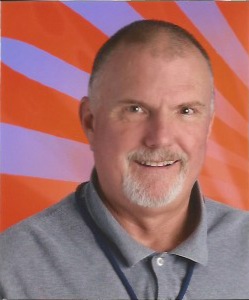


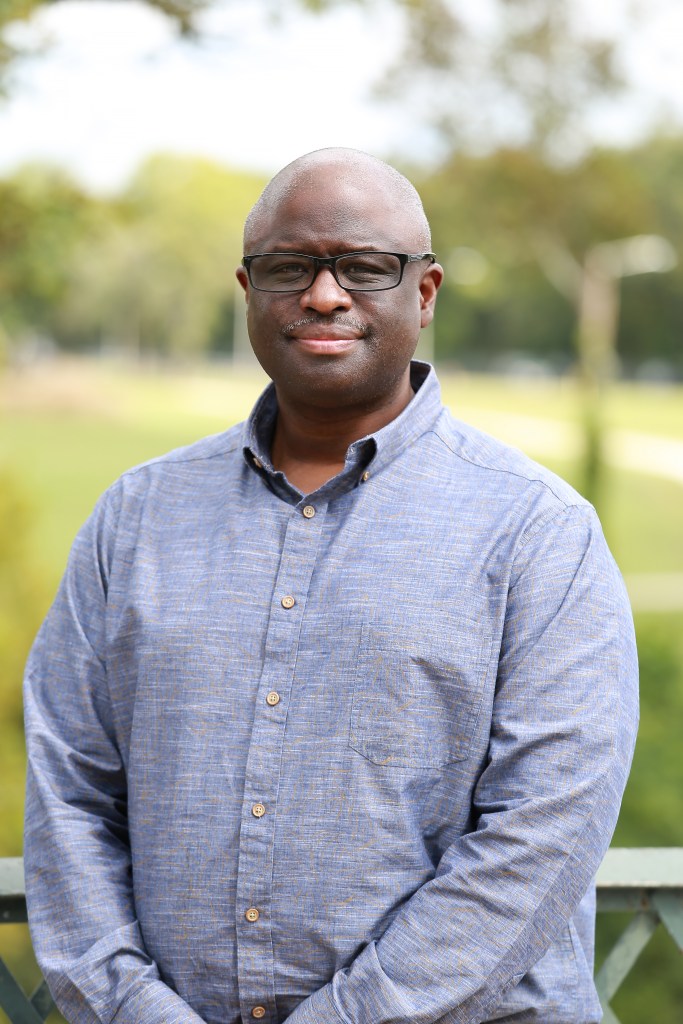




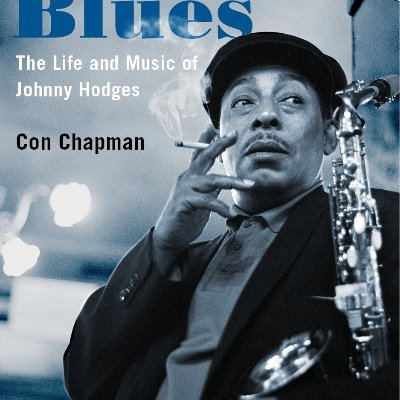
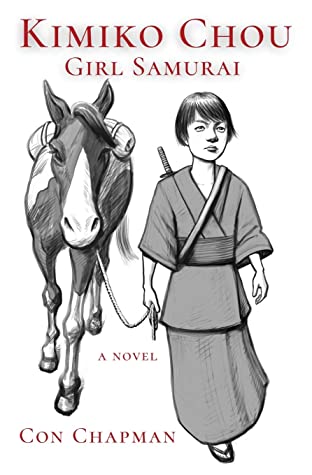


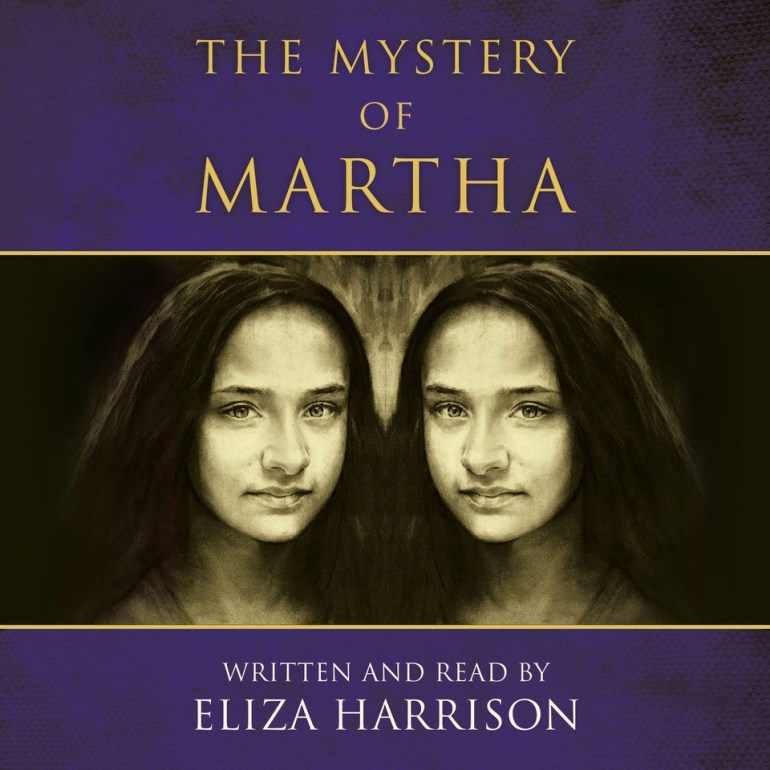





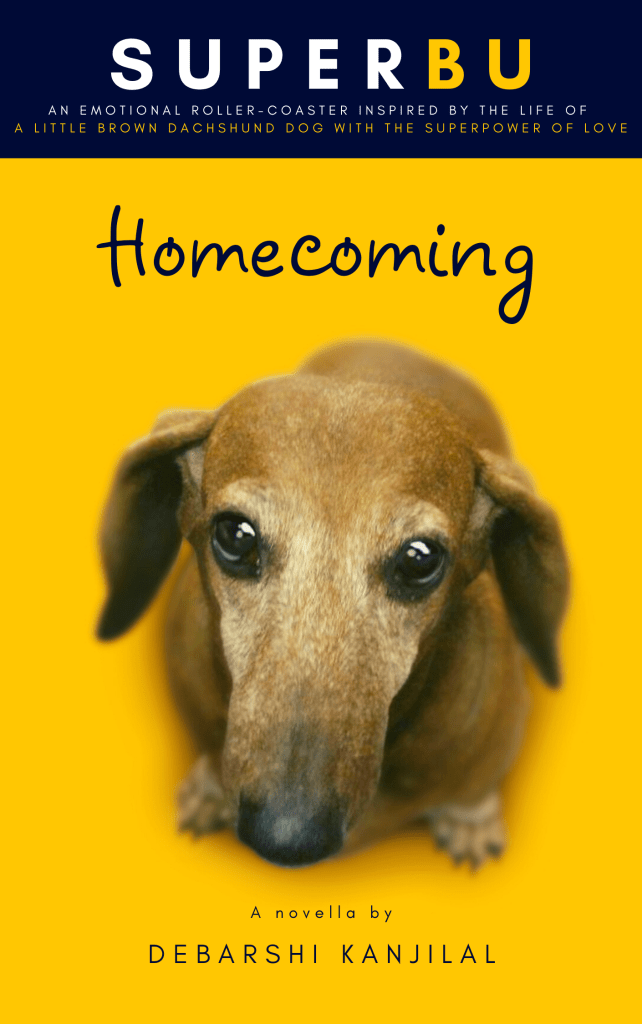
 , for our Author Interview feature.

 The Reading Bud