Today, we roll out the red carpet for the amazing Harold Phifer, who is about to unveil the beautiful cover of his newest masterpiece, Surviving Chaos, How I Found Peace at A Beach Bar. Prepare to be enchanted, for what you’re about to see is not just a cover—it’s a visual symphony that captures the very soul of the story. 📚💖
Presenting…
Alternate Cover
About the Book
For more than fifty years, Harold Phifer’s childhood living conditions remained a secret, even from those who thought they knew him best. No one knew about his past growing up with a mother who suffered from mental illness; a greedy aunt; a mindless and spoiled older brother; an absent father.
It wasn’t until an explosion in Afghanistan that his memory was blasted back into focus. This book is the result of a long, cathartic chat with a stranger at a beach bar, where Harold finally found some peace.
Harold Phifer was born in a deeply segregated South It is here he learned how to survive the harsh life of being unnurtured and unloved on the streets of Columbus, Mississippi. His first twenty-five years were spent dreaming, hustling, and ducking bullies at every turn. After graduating Mississippi State and Jackson State Universities, he became a highly specialized Air Traffic Controller, living and working as an international contractor, serving numerous tours in lraq and Afghanistan. Because of those experiences of being so close to death and the Taliban, he had no choice but accept the Tee-shirt while authoring his memoir “SleepWalking Out of Afghanistan: Walking it all Back.” Next, Harold followed up with an expanded autobiography, “Surviving Chaos: How I Found Peace at A Beach Bar,” which is a combination of two books through different phases of trauma all meshed into one big novel.
If you are an author and wish to be featured as our guest or if you are a publicist and want to get your author featured on TRB, then please get in touch directly by e-mail at thereadingbud@gmail.com
Today, we roll out the red carpet for the amazing Asher Black, who is about to unveil the beautiful cover of his newest masterpiece, The Guitar Decoder Ring. Prepare to be enchanted, for what you’re about to see is not just a cover—it’s a visual symphony that captures the very soul of the story. 📚💖
Presenting…
The Guitar Decoder Ring
About the Book
Meet SIGIL—the new language of guitar. Guitarists who want to improvise and compose, from novice to advanced, will find SIGIL works like a decoder ring for the guitar, yet it’s simple enough to keep in one’s head.
Visualize the whole fretboard. Gain portable knowledge of modes, scales, and intervals without wall charts. This is guitar study re-engineered for every level.
Create more interesting solos. Break through your lull or stall. Decrypt the instrument and unleash your play. The authors are a seasoned musician with albums under his belt and a lively storyteller who walk you through the toolset with eye-opening and sometimes hilarious examples.
023 NYC Big Book Award Winner in the category of Music.
2023 Pinnacle Book Achievement Award for a How-to Book.
Asher Black is an author, karateka, musician, digital ecologist® and maintainer of tobacco pipes of various personalities in Brooklyn, NY. He writes about everything, is a host of multiple podcasts, and (for his day job) connects enterprise sales teams with their audience through sales enablement campaigns and brand story. He boats, dances, and plays with cryptography and linguistics, while reading history and hard-boiled detective novels.
Asher Black is an enforcer for the creativity mafia, plying his art through storytelling (even in non-fiction), collecting oil paintings, improvising and composing for the guitar with the romance of a practitioner in love with the fretboard, and pushing through to zen-like execution of the martial arts. He is a hitman with words, broadcasting from the home studio a continual critique of one-sided thinking, and is known for his raucous sense of humor.
If you are an author and wish to be featured as our guest or if you are a publicist and want to get your author featured on TRB, then please get in touch directly by e-mail at thereadingbud@gmail.com
Welcome to the TRB Lounge. Today, we are featuring author Harold Phifer for his latest release,Surviving Chaos: How I found Peace At A Beach Bar.
About The Author
Harold Phifer
Harold Phifer was born in a deeply segregated South It is here he learned how to survive the harsh life of being unnurtured and unloved on the streets of Columbus, Mississippi. His first twenty-five years were spent dreaming, hustling, and ducking bullies at every turn. After graduating Mississippi State and Jackson State Universities, he became a highly specialized Air Traffic Controller, living and working as an international contractor, serving numerous tours in lraq and Afghanistan. Because of those experiences of being so close to death and the Taliban, he had no choice but accept the Tee-shirt while authoring his memoir “SleepWalking Out of Afghanistan: Walking it all Back.” Next, Harold followed up with an expanded autobiography, “Surviving Chaos: How I Found Peace at A Beach Bar,” which is a combination of two books through different phases of trauma all meshed into one big novel.
For more than fifty years, Harold Phifer’s childhood living conditions remained a secret, even from those who thought they knew him best. No one knew about his past growing up with a mother who suffered from mental illness; a greedy aunt; a mindless and spoiled older brother; an absent father.
It wasn’t until an explosion in Afghanistan that his memory was blasted back into focus. This book is the result of a long, cathartic chat with a stranger at a beach bar, where Harold finally found some peace.
If you are an author and wish to be featured as our guest or if you are a publicist and want to get your author featured on TRB, then please get in touch directly by e-mail at thereadingbud@gmail.com
Welcome to TRB Lounge. Today, I’d like to welcome the author of Civil Twilight – Anique Sara Taylor, for an author interview with The Reading Bud.
About The Author
Anique Sara Taylor’s chapbook Civil Twilight is Winner of the 2022 Blue Light Poetry Prize. Her full-length poetry book Where Space Bends was published in May 2020 by Finishing Line Press. Despite issues with long term chronic illness, Taylor is a Pushcart Prize nominee, and her work has appeared in Rattle, Common Ground Review, Adanna, St. Mark’s Poetry Project’s The World, Stillwater Review, Earth’s Daughters, Cover Magazine. The National Poetry Magazine of the Lower East Side among others. Her chapbook Poems is published by Unimproved Editions Press. Finalists 2023!
When Black Opalescent Birds Still Circled the Globe was chosen Finalist by Harbor Review’s Inaugural 2023 Jewish Women’s Prize. Feathered Strips of Prayer Before Morning was chosen Finalist by Minerva Rising Chapbook Competition 2023. Cobblestone Mist was Longlisted Finalist for the 2023 Harbor Editions’ Marginalia Series. The Strangeness of April is in July 2023 Red Noise Collective Anthology: Tide
Her work has appeared in several anthologies: The Lake Rises, poems to & for our bodies of water (Stockport Flats Press), Pain and Memory, Reflections on the Strength of the Human Spirit in Suffering (Editions Bibliotekos, Inc.), Veils, Halos and Shackles: International Poetry on the Oppression and Empowerment of Women (Kasva Press) among others. Taylor has co-authored works for HBO, Scholastic, Simon & Schuster and a three-act play performed by Playwrights Horizons and Williamstown Theatre Festival. Her Holocaust poem “The Train” was a 2019 finalist in the Charter Oak Award for Best Historical Poem. Where Space Bends in earlier chapbook forms was chosen Finalist in 2014 by both Minerva Rising and Blue Light Press’ Chapbook Competitions. Under the Ice Moon was chosen Finalist in Blue Light Press’ 2015 Chapbook Competition.
She teaches/taught Creative Writing for Benedictine Hospital’s Oncology Support Program, Bard LLI, Writers in the Mountains. She holds a Poetry MFA (Drew University), Diplôme (The Sorbonne, Paris), a Drawing MFA and Painting BFA (With Highest Honors / Pratt Institute) and a Master of Divinity Degree. She studied literature at Antioch College, Poetry at St. Mark’s Poetry Project with Alice Notley, then Bernadette Mayer, and has been a regular at Wallson Glass Poem-Making Sessions with Geoffrey Nutter.
An award-winning artist, Taylor’s art has been featured in numerous galleries including The Bruce Museum, CT, The Monmouth Museum, NJ, The Noyes Museum, NJ, The Puffin Foundation, NJ, The Cork Gallery at Avery Fisher Hall, NYC, The Bronfman Center Gallery, NYC.
An avid supporter of community events, Taylor organized the Phoenicia Spoken Word series, which produced several ongoing poetry&writing events in&around Phoenicia. She and Sparrow taught a weekly Phoenicia Poetry Workshop. While living in NYCs Lower East Side (East Village), she and Etan Ben-Ami edited an excellent (though short-lived) magazine: Cheap Review. They published (among others) Bernadette Mayer, Jim Brodey, Simon Pettet, Tom Savage, Ellen Mudd, Sparrow, Bob Holman, Steve Carey, Peter Bushyeager, Anique Taylor, Sheila Alson, Alice Notley, Elinor Nauen, Norman MacAfee, Bill Kushner.
Taylor was a Featured Reader at St. Mark’s Poetry Project, Dixon Place (and numerous Ulster County venues). She was a regular in group readings in NYC at The Knitting Factory, ABC No Rio, The Cedar Tavern, Charas, Tompkins Square Arts Festival. And in Group Readings: Eve Packer’s What Happens Next Series, and Jeffrey Cyphers Wright’s The New Romantics.
Welcome to TRB! In addition to your formal bio, could you share a deeper, more personal insight into your life that influences your poetry?
I’ve had a lifelong journey with chronic illness which has necessitated work on many levels. Natural wellness, psychology, spiritual practice. It has been both a trial and a gift. Creative work has been at the core of maneuvering these issues. I’ve been an artist most of my life. I’ve won awards. I did the artwork on the covers of my books. Also, a therapist, life coach, children’s entertainer, creative writing teacher. I studied classical piano and voice growing up. Love of the arts is woven through my life. It’s saved me in difficult times.
My understanding of sculpture came in handy when I restored my Victorian home. I love preparing and inventing food. Illness became a fount of thrilling scientific information and imagery, when I came down with a new case of Lyme disease. I traced the history of experimentation that may have caused new virulent strains of ticks. The spirochetes weave in and out of my first book Where Space Bends. I wrote about the spirochetes inside my cells, I researched the properties of herbs. I wrote about the dream state of passing out from allergic reactions. I’ve written about living in New York City. And about living in an enchanted hamlet surrounded by mountains and rivers, seasons of nature. All wonderful material.
With great self-care and in a good place most days, it’s necessary for me to stay on a careful diet, do Yoga and QiGong, meditation, guided visualization. All this requires self-discipline in order to avoid negative physical issues. It’s helped teach me how to be disciplined with a writing practice. With Yoga/QiGong/Visualization–going in and out of meditative states is familiar. This has helped me write from strange viewpoints. Poetry is a beautiful vehicle to express altered states using imagery and metaphor.
Beyond the general overview, could you delve into the themes, emotions, or experiences that inspired your latest collection of poems?
I wanted to touch on many issues. From psychological to ephemeral. Resilience within grief. How we grow from first primary family expectations and issues to find our place in the world. The price of searching for our own path, what we may have to give up, what we go towards. Turning what is given to us into something we can use to grow. I wanted to see beyond what is apparent on the surface, to the spaces inside atoms, distances in the universe. Spaces between and before. Yet, how with perception, there is wonder and magic in our ordinary daily lives. How nature details are a metaphor for our existence. What’s given to us, what we choose, how we move forward. How we try to learn our way through. I was intrigued with the notion of boundaries juxtaposed to the vastness of no boundaries. If others speak to us from other realms, or if it’s only us that speaks to them.
I was exploring long forms and short forms, how to bring alive a long phrase within a short form. To push diction with sound, rhythm, image, without condensing language unnaturally. How themes come from who we are and everything around us. To cause an opening that triggers inspiration.
Poetry often reflects deep personal feelings or insights. What specific emotions or experiences drove you to write the poems in your book?
There’s the usual flow that comes to me regularly in a need to create. The love of words, a dream-space of thought. During an involvement with several lawyers/accountants/business people, I was at the center and had to keep track mentally of all the details of a complicated situation. This pulled my mind into a thick swirling business mix. I felt like I was losing myself. I needed a personal poetry goal, something I could create, build, finish. Perhaps a book in the world with a required timeline, a finishing goal that also honored my personal creative requirements.
I’d been exploring what could be lyric and meaningful within the short form for a while. I began to gather all of this work together and sort out what could form an arc into a chapbook. It includes the death of my father, his ghost that appears and fades again.
I’m forever thankful to Diane Frank and Blue light Press for choosing it Blue Light Press First Prize––and publishing it. Making this book something real in the world was life changing for me.
Many poets have a defining moment or influence that shapes their work. Can you describe what sparked your journey into poetry?
Oh, so many. When I was four-years old, we had a copy of Robert Louis Stevenson’s A Child’s Garden of Verses. My mother read it to me. I was enchanted with how he could have words to talk about the elation of soaring above the countryside on a swing. So, I memorized that poem and recited it to myself as I soared over the hill on my neighbor’s rope and board swing. In 7th grade our teacher Mr. Pettie taught us college-level poetry with Coleridge, Whitman, Robinson, Whittier, Wordsworth, Longfellow, Thoreau, Lowell, Emerson… A huge mix. We read all of Evangeline and even Shakespeare’s A Midsummer Night’s Dream. My high school teacher Angela Kelly encouraged my angry teen-age diatribes.
When I lived in the City, I was a half-block away from St. Mark’s Poetry Project. There was a wonderful community of poets. I studied with Alice Notley and Bernadette Mayer. That’s when the words began to come in a constant flow. Years later at Drew University, MFA in Poetry (which was too beautiful a program to last in this world), I learned how to look into what was inside poetry. How to become totally embroiled and in love with it. Each of these “sparks” awakened something in me which built on the next. Each one saved my life a little. I am forever thankful to all of these teachers.
From initial inspiration to the published collection, how long was your creative process for this book of poetry?
Notes, ideas, studies for this collection simmered in the background for a long time. While I was working on other projects, other books, I experimented with the short form, maybe for years. I loved the process. Like picking small, sweet fruit. Later I began a pinpoint focus toward finished pieces. I was trying to bring together enough of my short poems to create an arc. I didn’t know if or how many would fit with others, so that they could come together into a chapbook with its own purpose and meaning. I experimented with subject matter, direction, and point of view. It simmered through many techniques and countless revisions. It was like a garden I kept tending over time. I’d say maybe five years. But it’s hard to know. It was a very sweet process.
Looking forward, what are your aspirations as a poet? Where do you see yourself in the literary world in the next five years?
These are some of the projects I’m working on, that are at different stages:
Feathered Strips of Prayer Before Morning. I’ve just completed this next chapbook. While I hope to have it published in chapbook form (30 poems), my intention is that parts of it will be a major section of the full-length book I’m working on––which will include other sections.
Goodness Within the Storm is a finished full-length book that takes place in WWII during the Holocaust. It’s a collection of first-person narrative and lyric poems based on stories of non-Jews who risked their lives to save Jews during the Holocaust. I’m now researching publishers.
The Alphabet Book has 27 full-color plates of my artwork. Each letter is a chapter which includes a color plate. A poem relating to the letter. And perhaps journal work prompts related to each letter.
And… I’m working on a creative nonfiction book involving a bucolic hamlet, the lottery, a river, and a daily walk into town.
The project of getting out my newsletter and blog is central to my upcoming goals. The world is changing so quickly, it’s hard to know what form connection will take in five years. But at the core, as I continue deepening my writing practice in solitary morning darkness, I’m also looking for ways to interact in a meaningful way with a larger number of people. Those who love and want to interact around writing. Both reading and writing.
My books have won prizes and been chosen as a finalist several times. I would love to publish more, as I deeply love participating in the poetry community. I’m forever thankful for the wonderful opportunity to create books and words that go out into the world.
Are there new themes or styles of poetry you are currently exploring or plan to explore in your future works?
Currently the American sonnet – basically a fourteen-line poem. There are many new forms poets are making. I’m thinking of having several sections in the book I’m currently working on, to augment the chapbook section already completed. Each section would have a different form. That will entail exploring forms other poets have used or are inventing, exploring which I think might enhance the work. Or I may continue with prose poems and regular line-breaks.
While your primary focus is poetry, have you ever considered or dabbled in other literary forms, like fiction or non-fiction?
I love short forms. They keep coming up in essays, blogs, monologues, flash. Or longer books that are written in small segments. I wish there were a novel in me, but short forms call to me. Even when I was eleven or twelve-years-old, a story or sketch would come to me in a flurry of energy. I could do nothing else until I’d written it down, then typed it up. I didn’t know what to call them. One of my teachers called them slice of life or vignettes. Decades later, I learned––or the concept name was formed. Creative Nonfiction. The line between creative nonfiction / flash fiction / prose poem / poetry becomes so thin these days, I don’t labor over deciding what classification a piece belongs in, until that’s necessary for sending out for publication. I try for the best writing I can––and see what it becomes.
Poetry can actually be non-fiction. In Civil Twilight, fiction and non-fiction weave through parts of the book. It’s not as important what happened when, where or to whom, but that the heart/craft arc of the book follows through.
Can you recall a defining moment when you realized you were meant to be a poet? Was this path a natural calling or one filled with obstacles?
My life seems to have been blessed with a large number of obstacles. I felt these obstacles were keeping me from my writing. When I began to get up before the day to connect with my work, and get things done despite anything that was going on, the nature of my writing changed quickly. Soon the morning practice became something private and deep.
My relationship with poetry shifted from ambition to inner devotion. I came to welcome many phases of writing. My interest grew. Wisps, pieces, story, what came easily, what I needed to work harder on. This morning plan gave me permission to just write. I didn’t have to sit down and write out a whole finished poem. I could just be with the work, letting it grow. This opened into an unexpected gift of feeling like my most real self. I think that’s when I began to feel I was a poet.
Describe your poetic process. Do you follow specific routines or practices that help you capture your thoughts and emotions effectively?
I gather lines, research, journals, thoughts. I shift and combine lines and phrases to find the poem inside the material. How it comes into what I was wanting, even if I didn’t know how to get there.
Morning practice, yes. I work for three hours and stop, usually in the middle. In my journal I leave a map of where I left off. The following day, I find that place with a fresh heart and mind. I work in scattered ways, collecting information, thoughts, research, phrases, notes. Lines that have come to me throughout the day. I collage, re-arrange, rewrite. It’s like a mini-orchestration of diction, sound, purpose.
Rewriting is a form of craft for me. I add, subtract, and research. I rearrange, until it feels like it can’t budge, but also that it isn’t hemmed in too tight. That even after endless rewrites, it still feels fresh and has surprise. Something that’s inexplicable but feels right.
Aside from poetry, do you engage in other professions or hobbies that influence or enrich your writing?
Other chapters of my life have involved: house restoration, teaching pre-school. Being a children’s performer, therapist, and life coach. Playing classical piano. Singing in the Renaissance Street Singers. I’ve been an award-winning artist. I do Yoga and QiGong. Garden. Cooking concoctions: When I became ill from neighbors’ burning fires in ground level fire-pits, I became a whole food vegan for health. I had to retrofit everything I knew about preparing food, so I have fun inventing weird wild and wonderful concoctions. Little pieces of all of this appear in my writing.
Poets often speak of facing creative blocks. Do you encounter these, and if so, how do you overcome them?
With a lifelong dance with chronic illness and depression, much is required of me to stay in the Good Zone. For creative blocks, morning practice is wonderful. Plus, I love to explore books and websites for material and metaphors. Science. Religion. Travel. Torah. Tarot. Psychology. Illness. Also, I take notes on projects and goals. But self-care for me seems at the core of creative flow. Healthy diet. Exercise. Psychological work. Journals. Reading. Meditation. I think of this as a process, in a similar way to someone in training to run a marathon. This self-care is how I am “in training” for creativity and poetry.
Poetry can be a delicate balance of personal expression and universal appeal. How do you navigate this in your writing?
I believe a poem should always hit a nerve, spin you out, make you fall in love a little, break your heart a little, leave you asking questions. It should do something. The world is so vibrantly happening at every moment. I use my personal story, but I also use nature, religion, history––anything in the world for material, trusting that juxtaposed to the personal it will create unexpected metaphors.
You can get lost currying “universal appeal.” It can lead you away from what’s true and immediate and important. I try to look for what’s hot/open/beautiful/scary. What I’m called to write, what I cannot write, what I’m afraid to write. I hope it will speak to someone out there. Poetry has saved my life. I’m hoping it will save others too.
Although outer validation feels good and may make our work a little sweeter, it’s the inner poet relationship that is real and what matters. That will bring us closer to our stronger self.
Poetry sometimes touches on sensitive or controversial subjects. How do you address potential criticism or differing interpretations from your readers?
Maybe everything is open for criticism and interpretation. It’s important to go with what’s true for me. I don’t know what’s controversial, I do know when I want to speak up. When I came down with a new case of Lyme disease, I realized I’d had undiagnosed Lyme as a child. I saw how it had mysteriously woven through my life and chronic illnesses. In my book, Where Space Bends (Finishing Line Press), I wrote a poem about government research labs near Lyme that triggered more virulent strains of ticks (based on research). That poem got nominated for a Pushcart Award. You’d think they would have backed away from it, but it seems heart-felt research and fierceness can be rewarded.
I’ve written a book of poems based on Yad Vashem interviews. Stories of Jews who were in the Holocaust. How non-Jews risked their lives to save Jews during WWII. Persona Poems. Poems written from a first-person point of view, where the “I” in the poem is either the rescuer or the rescued. I’m still trying to get up the courage to send it out to publishers. Maybe this year?
For aspiring poets, what essential advice would you offer for their journey into the world of poetry writing?
Follow your interests, what fascinates you. Let things open up like a pomegranate. Notice the hundreds of seeds inside. Think of the infinity of things going on in a human body. Let go of your story. The world is teeming with living things, with machines, history. Anything you write about will connect with your story.
Take care of your health in every way you can. You know what to do, the information is everywhere. Health breeds well-being, lets inspiration flow. Think of being a writer like being a micro-athlete of the mind. Take care of your body/mind/spirit and learn your craft. The work will grow.
Learn from everything you do. Books. Classes. Reading. Support groups. School. Community. Come to know and love the different phases of writing. Which ones come easily to you? Which do you need to hone? BTW: Short list: Diction (strong nouns, verbs, adjectives). Phrasing, rhythm, repetition, sound. Imagery. Subjective/objective/personal/distant/surreal. Past/present/future. Pronouns. Description. Research subject matter. Forms.
Understand what feeds the inner poet, what feeds the outer poet. What a gorgeous, thrilling world to live in, here among all these words! How wonderful.
Thank you, author Taylor, for taking the time to answer our questions and for all your insightful and interesting answers!
About the Book
Civil Twilight
Anique Sara Taylor’s chapbook Civil Twilight is Winner of the 2022 Blue Light Poetry Prize. As the sun sinks 6˚ below the horizon at dawn or dusk, it’s 5:30am/pm someplace in the world. In thirty shimmering poems (30 words/5 lines each), Civil Twilight probes borders of risk across a landscape of thunderstorms, quill-shaped mist, falcons that soar, the hope of regeneration, a compass to the center. Tightly hewn poems ring with rhythm and sound, follow ghosts who relentlessly weave through a journey of grief toward ecstasy. Spinning words seek to unhinge inner wounds among seashells and hostile mirrors, eagles and cardinals-to enter “the infinity between atoms,” hear the invisible waltz. Even the regrets. The search for an inner silhouette becomes a quest for shards of truth, as she asks the simple question, “What will you take with you?”
If you are an author and wish to be featured as our guest or if you are a publicist and want to get your author featured on TRB, then please get in touch directly by e-mail at thereadingbud@gmail.com
Welcome to the TRB Lounge. Today, we are featuring author Emma Roberson for her latest release, Beast: Book One.
Book: Beast: Book One Author: Emma Roberson Publication date: September 13, 2023 Genres: Fantasy, Monster-Beast Fiction Page Count: 220 pages Publisher: Green Hill Publishing
About the Book
FORCED FROM THE SEA HE ONCE ROAMED AS AN APEX PREDATOR, THE LEVIATHAN MUST FIGHT TO SURVIVE ON LAND.
With a new face and name the Leviathan carves a place for himself in a volatile and violent world where monsters and humans wage war against each other and amongst themselves for survival and supremacy.
An unlikely alliance is forged between the Master of the Vanguard, the leader of the kingdoms royally sanctioned monster hunters, and the Leviathan, once the most notorious and elusive monster of the sea. United by terrible circumstance and bound by a shared purpose, the Master and the Leviathan struggle to overcome the hatred and fear which rules and rots the realm.
The Leviathan must defend the realm from all things monstrous, including himself. He must find a way to conquer the turmoil of the kingdom and the darkness of his own nature.
Emma Roberson is an Australian author and illustrator who is obsessed with all things strange, dark and wild. Emma is an avid reptile and horse keeper, and these animals often feature in her writing and illustrations. Beast is the first book of The Leviathan Series, an illustrated fantasy adventure full of frightful monsters and gritty quests. Find Emma, the critters and the latest updates on her written work on Facebook.
If you are an author and wish to be featured as our guest or if you are a publicist and want to get your author featured on TRB, then please get in touch directly by e-mail at thereadingbud@gmail.com
Welcome to the TRB Lounge. Today, we are featuring authorHarold Phifer for his latest release, Surviving Chaos, How I Found Peace at A Beach Bar.
Book: Surviving Chaos: How I found Peace At A Beach Bar Author: Harold Phifer Publication date: Feb 18, 2021 Genres: Humour, Dysfunctional Family, Young Adult, Non-Fiction Page Count: 267 pages Publisher: Rise and Read Free Press
About the Book
For more than fifty years, Harold Phifer’s childhood living conditions remained a secret, even from those who thought they knew him best. No one knew about his past growing up with a mother who suffered from mental illness; a greedy aunt; a mindless and spoiled older brother; an absent father.
It wasn’t until an explosion in Afghanistan that his memory was blasted back into focus. This book is the result of a long, cathartic chat with a stranger at a beach bar, where Harold finally found some peace.
Harold Phifer was born in a deeply segregated South It is here he learned how to survive the harsh life of being unnurtured and unloved on the streets of Columbus, Mississippi. His first twenty-five years were spent dreaming, hustling, and ducking bullies at every turn. After graduating Mississippi State and Jackson State Universities, he became a highly specialized Air Traffic Controller, living and working as an international contractor, serving numerous tours in lraq and Afghanistan. Because of those experiences of being so close to death and the Taliban, he had no choice but accept the Tee-shirt while authoring his memoir “SleepWalking Out of Afghanistan: Walking it all Back.” Next, Harold followed up with an expanded autobiography, “Surviving Chaos: How I Found Peace at A Beach Bar,” which is a combination of two books through different phases of trauma all meshed into one big novel.
If you are an author and wish to be featured as our guest or if you are a publicist and want to get your author featured on TRB, then please get in touch directly by e-mail at thereadingbud@gmail.com
Welcome to the TRB Lounge. Today, we are featuring authorRebecca Butt for her latest release,Lipstick on a Pig: A Memoir.
About The Author
Rebecca Butt
As a young child, Rebecca escaped into books, and wrote happy stories accompanied by bright and cheerful pictures with houses, trees, flowers, and birds,that were a contradiction to her real-life circumstances. Her childhood love for reading and writing endured, and she eventualy wrote and published her short stories and poetry in a literary journal in college. Lipstick on a Pig is her lengthiest writing endeavor. A licensed Speech Language Pathologist with a master’s degree in communication sciences and disorders, she is the Director of Special Education for a school district in New Hampshire, where she resides.
Candid and poignant, humorous and heart-wrenching, in nomadic fashion, the directionless Butt Family chaotically relocated throughout the city of Laconia, New Hampshire, like a ship, adrift and lost at sea without a captain.
Encumbered by night terrors, hauntings, and scraps of memories that spoke to a cruelty beyond her mother, Becky sneakily devoured her way into young adulthood and developed a crippling, yet all too comforting, binge-eating disorder.
Morbidly obese, visited often by a seething presence, and drowning under the smothering symptoms of childhood trauma, Becky is sure she’s the defective link in her broken family-until her ghost relative provides her a life jacket of hope that may just keep her afloat.
If you are an author and wish to be featured as our guest or if you are a publicist and want to get your author featured on TRB, then please get in touch directly by e-mail at thereadingbud@gmail.com
Today, we roll out the red carpet for the amazing Mark Gutter, who is about to unveil the beautiful cover of his newest masterpiece, Dancer on the Ceiling: More Darkly Humorous Tales. Prepare to be enchanted, for what you’re about to see is not just a cover—it’s a visual symphony that captures the very soul of storytelling. 📚💖
Presenting…
About the Book
Presenting laugh-out-loud stories for lovers of absurd comedy, featuring an eccentric cast of characters including Derek Organ: Private Investigator, Lionel the Moth, Roman slave Servus Minimus, the Battlefield Masseur, ambulance chaser Bradley Scherp, the Incredibly Delusional Shrinking Man, Compound Fracture the Clown, and of course, the Dancer on the Ceiling.
MARK NUTTER grew up in a motel near Joliet, Illinois, which is not as glamorous as it sounds. He acquired a taste for absurd comedy while in the womb. Mark is the author of three short fiction collections (Dancer on the Ceiling, Giant Banana Over Texas, and Sunset Cruise on the River Styx). He’s also written for the stage (Re-Animator the Musical, The Bicycle Men, Christmas Smackdown), television (SNL, 3rd Rock from the Sun), and film (Almost Heroes).
If you are an author and wish to be featured as our guest or if you are a publicist and want to get your author featured on TRB, then please get in touch directly by e-mail at thereadingbud@gmail.com
The world is dead, suffocated by the greed and neglect of the very children it gave birth to, and humankind itself is dancing on a razor’s edge between survival and extinction. Coghan, a young Breath Hunter, is sent out on his first mission to collect breathable air for the Dome, one of humanity’s last bastions. But in a world where a toxic atmosphere blocks out the sun, acid rain corrodes metal, and the wind blows away anything else remaining, a single misstep can be your last. And when everyone looks only after themselves, whom can you trust? Can you hope humanity will learn from its mistakes? Suit up with Coghan and brave through the toxic hell that is the legacy of a society that killed their own planet!
Harken Void is the author’s alter ego – his real name is Kevin – and he uses Harken as a medium to tell his stories. In his writing, he likes to incorporate elements of spirituality, science, philosophy, and personal growth, and present it all in as awesome and epic a way as he can. He loves to ask the big questions, explore life’s deepest secrets, and shine light at those darkest places – while keeping a lighthearted attitude and leaving his readers with a sense of upliftment. He feels most at home in Fantasy and Science Fiction, genres of ideas and exploration of reality itself. While Harken is a multidimensional being, existing beyond all space and time, Kevin is mortal, and he lives in Slovenia, a small country in Europe. He completed a Bachelor’s degree in Geology. Besides writing and contemplating existence, his two most burning passions are music and nature.
If you are an author and wish to be featured as our guest or if you are a publicist and want to get your author featured on TRB, then please get in touch directly by e-mail at thereadingbud@gmail.com
Welcome to the TRB Lounge. Today, we are featuring authorRebecca Butt for her latest release,Lipstick on a Pig: A Memoir.
Lipstick on a Pig: A Memoir
Book: Lipstick on a Pig: A Memoir Author: Rebecca Butt Publication date: June 30, 2023 Genres: Memoir, Non-Fiction Page Count: 276 pages Publisher: Bowker
About the Book
Candid and poignant, humorous and heart-wrenching, in nomadic fashion, the directionless Butt Family chaotically relocated throughout the city of Laconia, New Hampshire, like a ship, adrift and lost at sea without a captain.
Encumbered by night terrors, hauntings, and scraps of memories that spoke to a cruelty beyond her mother, Becky sneakily devoured her way into young adulthood and developed a crippling, yet all too comforting, binge-eating disorder.
Morbidly obese, visited often by a seething presence, and drowning under the smothering symptoms of childhood trauma, Becky is sure she’s the defective link in her broken family-until her ghost relative provides her a life jacket of hope that may just keep her afloat.
As a young child, Rebecca escaped into books, and wrote happy stories accompanied by bright and cheerful pictures with houses, trees, flowers, and birds,that were a contradiction to her real-life circumstances. Her childhood love for reading and writing endured, and she eventualy wrote and published her short stories and poetry in a literary journal in college. Lipstick on a Pig is her lengthiest writing endeavor. A licensed Speech Language Pathologist with a master’s degree in communication sciences and disorders, she is the Director of Special Education for a school district in New Hampshire, where she resides.
If you are an author and wish to be featured as our guest or if you are a publicist and want to get your author featured on TRB, then please get in touch directly by e-mail at thereadingbud@gmail.com
Welcome to TRB Lounge. Today, I’d like to welcome the author of Native Knowings: Wisdom Keys for One and All—Steven McFadden, for an author interview with The Reading Bud.
About The Author
Steven McFadden is an independent journalist based in the Southwest of the USA. In the early 1980s he initiated Chiron Communications as an umbrella concept for his varied interests and pursuits. Chiron is a bridging figure, and bridging is what he has mainly been interested in over the years.
After authoring Profiles in Wisdom and then Legend of the Rainbow Warriors in the early 1990s, he rested the chiron concept to serve as National Coordinator for the annual Earth Day USA celebration, in partnership with the Seventh Generation Fund (1993). Then he returned to the work of chiron.
As a journalist, he is the author of a range of non-fiction books, including Farms of Tomorrow, Farms of Tomorrow Revisited, The Call of the Land, Teach Us To Number Our Days, A Primer for Pilgrims, and Classical Considerations.
He is also the author of an epic, nonfiction saga of North America:Odyssey of the 8th Fire. This saga (8thFire.net) relates a true story arising from the deepest roots of the Americas, but taking place in the present and the future. In it, circles within circles, honorable elders make a great and generous giveaway of the teachings they carry.
McFadden’s newest agrarian book, Deep Agroecology: Farms, Food, and Our Future won the national Indie Excellence Award in the environmental category (2020). He is a member of the New Mexico Book Association (NMBA), and also the SouthWest Writers association (SWW).
Welcome to TRB! Please give our readers a brief introduction about yourself before we begin.
In the early 1960s, upon my older brother Mark’s urging, I took typing class. I was in the 9th grade, and my brother said it was a foolproof way to meet girls. Ha. I did make a few friends, but no teen romances. Just as well for that moment in time, I suppose.
We learned on clanky old manual machines, and back then I felt it was a complete waste of time, although my hands and fingers did become knowing of the keys. By the end of the year I could type perhaps 25-30 WPM. Not impressive, but enough to get by. As school ended and summer began, I thought it likely that I’d never see a keyboard again.
Wrong.
Here it is now, some 60+ years later and I’m still typing on a keyboard, albeit on a far superior machine, the digital age having dawned for me in 1990 with my first computer. Through the decades typing has been my core skill, a reliable tool for the fulfillment of my dharma – the soul impulses that have guided me along the path of my destiny.
What more to say beyond my bio? I’m happily married to Elizabeth Wolf. We’ve been together 16-plus years, and our relationship deepens. Our dog is Amigo, and our cat Lily. We are grateful to be together, to have shelter and food, and to be purposefully engaged in life.
Please tell us something about your book other than what we have read in the blurb.
Beyond the blurb, the main thing that occurs to me is to let readers know the profound depth of feeling I experienced in Spring 2023. That’s when I was moved to update this little book, Native Knowings, and make it available to readers in a print version as well as an ebook.
I’m glad I followed through. As the environmental, social, and political climates intensified, I understood with calm certainty that the voices of learned elders and tradition keepers could be steadying for many people. So those were my main motivations for compiling this version of Native Knowings: steadying the people, and giving readers an opportunity to engage some of the deeper roots of Turtle Island (North America) as we pass through a turbulent era of transition.
Why did you choose this particular theme for your book? What is that one message that you’re trying to get across to the readers in this book?
Since graduating from Boston University in 1975 with a degree in journalism, my personal and professional interest has been to explore intelligent and spirited ways of living on the earth, and then to explain in writing what I’ve been able to understand.
The contemporary tradition keepers of the North American continent are part of an unbroken chain of practical and contemplative understandings (knowings) that go back many thousands of years, long before immigrants came to the land and began calling it America. It is altogether worthwhile to listen to what the learned elders have to say.
From my point of view, considering the condition of our world, listening is critical, deepening, and enriching. The elders offer keys to survival and well-being for all who now call America home, and in many respects for people all around the world.
What inspired you to write this book? An idea, some anecdote, a dream or something else?
My response to question 3 also addresses this question in general. But to add context: I first became interested in learning about our indigenous relatives and neighbors in the late 1970s. I was awakened by a bumper sticker on the back of a beat-up VW in a parking lot of my small village. It said something like “Broken Treaty Score: Red Man 0, White Man 370.”
When I looked into what that might possibly mean I learned that in fact the USA had broken or violated virtually every single one of the solemnly sworn treaties it made with various Native nations. Recognizing that track record of faithlessness by my own government raised an persistent series of questions for me. What? How? Why? And so forth. As a citizen, I felt a share of responsibility for the agreements my government had made and broken. As a journalist, I felt compelled to pursue answers to the questions. What’s going on here? What’s the story. Where does honor lie, and how can honor be advanced? That’s been my career, and Native Knowings is but one concise expression of what I’ve experienced and heard along the trail.
As the years of my life unfurled I began to write about clean, sustainable farms and food (so important), and also to engage the native knowings that were at the heart my personal mission as a messenger: take care of the earth and each other.
How long did it take you to write this particular book?
In terms of compiling the words and photographs, then dealing with layout, cover and other technicalities, it took me just over a month. But to get to the point in life where I had the experience, the tools, the material, and the artistic discernment to express them, about 75 years.
What are your writing ambitions? Where do you see yourself 5 years from today?
Good question. I’ll be 80 in five years, and of course one never knows…At this mature stage one has seen so many souls come and go, and thereby inevitably one has passed through many enriching stages of emotion and understanding about life and death. I’m at peace with whatever comes, although I’m staying fit and actively writing, aiming to live into my 90s. We shall see.
Of note, I had a clear perception at age 40 that I had fulfilled my dharma and could sail off into spirit if I so desired. It was a profoundly peaceful and satisfying sensation. A knowing. For me that knowing was pronounced and enduring. But at the same time I recognized that I could contribute more to the world, that it had potential to be benevolent, and that I was not ready to release. All these years later, I still feel that way.
Are you working on any other books presently?
Yes. I’m nearly finished writing a full-length biography. The title is “Wind Walker
The Sacred Journey of Naa t’áanii Leon Secatero in concert with Niłchʼi Diyin (Holy Wind).” Leon (1943-2008) was a talented and dedicated leader, a servant to his own Navajo community in the Southwest of the United States, as well as for the world at large. His story presents a great and uplifting vision for the world, and also offers a model of exalted courage and leadership. The book should be in print some time in 2024.
Do you dabble in Fiction?
No.
When did you decide to become a writer? Was it easy for you to follow your passion or did you have to make some sacrifices along the way?
My mother’s brother–good old Uncle Paul–was a writer. He once wrote an article for True Magazine. It came out when I was about 11 or 12. The title was “Why I poach deer” and the byline was not my uncle’s name. He instead used my father’s name (Edward Leo M.) as a pseudonym, so no game wardens could read the article and then come hunting for him.
The article made a notable impression in our household. Among other things, it started me thinking that writing could be a job; it could be what a person did in life, among all the possibilities – engineer, builder, doctor, teacher, etc. So many possibilities. And now, for me least, writer was also among that range of possibilities.
While it has not been financially easy to be an independent journalist, and it has required many sacrifices, it’s been worthwhile. I’ve been able to write not what others assigned to me, but rather what called me from both within and without.
What is your writing ritual? How do you do it?
At this stage I’m not sure I’d call anything I do a ritual. Beyond my first cup of coffee, I’m very much in the moment. If I feel it’s time to write, I write. Time to research, I research. Time to hike along the river or climb a mountain, then I’m off to do that.
Always in the back of my mind I’m aware of deadlines, and I am faithful to them, but I’ve no set times or procedures. When the juice is flowing, I write. Otherwise I am called along the trails of One and also Ten Thousand Things.
Is writing your profession, or do you work in some other field too?
Writing is my profession, yet it has not provided sufficient income over the decades of work and marriage. I’ve been able to create hundreds of newspaper and magazine stories, and 15 or more nonfiction books, but I’ve also scrambled for income, working intermittently in a number of occupations: tree surgeon, groundskeeper, cook, yoga teacher, home care for elders, laborer, babysitter, pipe fitter, and more.
Can you recommend a book or two based on themes or ideas similar to your book? (You can share the name of the authors too.)
I recommend Basic Call to Consciousness, published by Akwesasne Press.
How do you deal with Writer’s Block?
Having started my career writing for newspapers for several years, I never experienced the luxury of being able to surrender to a writers block. There were always deadlines to meet, and the job was on the line. Meet the deadlines, or find a new career. That early conditioning has, thankfully, remained more or less consistent for me.
The mantra in my mind: my job is to tell verifiably true stories that offer a compelling and practical vision of the future. “Where there is no vision, the people perish.” – Proverbs 29:18 “ If you don’t have a dream, how can your dream come true?” – South Pacific
What advice would you give to aspiring writers?
Pay attention to your breath. Master your breath, and you will more readily remain centered and capable through all you meet in life and in your profession.
With mastery of the breath you will be inspired: both literally and figuratively. Your personal inspiration will add light to your soul, to your words, and to the truths you strive to reveal through writing.
Thank you, author McFadden, for taking out the time to answer our questions and for all your thought-provoking and interesting answers!
About the Book
Native Knowings: Wisdom Keys for One and All
This original compilation–a small treasure of 72 pages–offers a concise and contemporary compendium of some key North American (Turtle Island) wisdom teachings to help support people through this era of transition. “I ask you to listen, not just with your minds. I ask you to listen with your hearts, because that’s the only way you can receive what it is, what we are giving. These are the teachings of our hearts.” – Frank Decontie, Kitigan Zibi Anishinabeg What do some of the venerable, deeply rooted wisdom teachings of the Americas offer in our era of transition? This Soul*Sparks small treasure offers an array of thoughtful messages, a compilation of keys that everyone has opportunities to turn. We’d be wise to understand and then to weave their enduring insights into the fabric of what we are creating for ourselves, our children, and our children’s children
The words of contemporary elders, in particular, sound a note of urgency.
If you are an author and wish to be featured as our guest or if you are a publicist and want to get your author featured on TRB, then please get in touch directly by e-mail at thereadingbud@gmail.com
Welcome to the TRB Lounge. Today, we are featuring author Steven McFadden for his latest release,Native Knowings: Wisdom Keys for One and All.
Native Knowings: Wisdom Keys for One and All
Book: Native Knowings: Wisdom Keys for One and All Author: Steven McFadden Publication date: May 26, 2023 Genres: Motivational, Self-Help, Inspirational, Non-Fiction Page Count: 84 pages Publisher: –
About the Book
This original compilation–a small treasure of 72 pages–offers a concise and contemporary compendium of some key North American (Turtle Island) wisdom teachings to help support people through this era of transition.
“I ask you to listen, not just with your minds. I ask you to listen with your hearts, because that’s the only way you can receive what it is, what we are giving. These are the teachings of our hearts.” – Frank Decontie, Kitigan Zibi Anishinabeg
What do some of the venerable, deeply rooted wisdom teachings of the Americas offer in our era of transition?
This Soul*Sparks small treasure offers an array of thoughtful messages, a compilation of keys that everyone has opportunities to turn. We’d be wise to understand and then to weave their enduring insights into the fabric of what we are creating for ourselves, our children, and our children’s children
The words of contemporary elders, in particular, sound a note of urgency.
Steven McFadden is an independent journalist based in the Southwest of the USA. In the early 1980s he initiated Chiron Communications as an umbrella concept for his varied interests and pursuits. Chiron is a bridging figure, and bridging is what he has mainly been interested in over the years. After authoring Profiles in Wisdom and then Legend of the Rainbow Warriors in the early 1990s, he rested the chiron concept to serve as National Coordinator for the annual Earth Day USA celebration, in partnership with the Seventh Generation Fund (1993). Then he returned to the work of chiron. As a journalist, he is the author of a range of non-fiction books, including Farms of Tomorrow, Farms of Tomorrow Revisited, The Call of the Land, Teach Us To Number Our Days, A Primer for Pilgrims, and Classical Considerations. He is also the author of an epic, nonfiction saga of North America:Odyssey of the 8th Fire. This saga (8thFire.net) relates a true story arising from the deepest roots of the Americas, but taking place in the present and the future. In it, circles within circles, honorable elders make a great and generous giveaway of the teachings they carry. McFadden’s newest agrarian book, Deep Agroecology: Farms, Food, and Our Future won the national Indie Excellence Award in the environmental category (2020). He is a member of the New Mexico Book Association (NMBA), and also the SouthWest Writers association (SWW).
If you are an author and wish to be featured as our guest or if you are a publicist and want to get your author featured on TRB, then please get in touch directly by e-mail at thereadingbud@gmail.com
Welcome to TRB Lounge. Today, I’d like to welcome the author of Will My Kitty Be In Heaven—Michele Cardneaux—for an author interview with The Reading Bud.
About The Author
I am an avid animal lover and truly love all animals especially cats and dogs! Sadly these furry family members don’t have a life span as long as their owners. I presently do not have any pets and it’s incredibly sad but I wrote this after my daughters beautiful Blue Russian died last summer and it broke our hearts. Gatsby was the love of her life and my book is a memorial for him. And WHY are we humans expected to just go back to acting like nothing happened? It’s incredibly painful and we need to speak to someone and maybe even a pastor or priest to get us through. That’s what this book is about…Sarah got through with the love of both her mom and dad.
Welcome to TRB! Please give our readers a brief introduction about yourself before we begin.
I am Michele Cardneaux and I live now in Paris, Texas, not far from Dallas! Great shopping and great restaurants in Dallas! My only child, Catherine, is also in the Dallas area.
I was born and raised in Mississippi but have lived in Fort Pierce, Florida as well as Rogersville, Tennessee. My senior year in high school we moved to Texas and I’m still here! Lots of HORSES! I love and enjoy horseback riding and I’m one of those that spoils all animals including horses!
Can you share a fun or intriguing detail about your book that isn’t mentioned in the blurb?
When I was growing up we always had kittens and dogs that would give birth to puppies ALL THE TIME!! I got way too attached to the puppies and the kitties and then they were gone. My mother raised them and then sold them after I fell in love with each of them! This went on all throughout my school days and I was quite affected by it.
What’s the main lesson or message you hope young readers will take away from this book?
My main message really is that I truly believe with prayer and family and friends we are more likely to be able to deal with the loss of a beloved pet because they truly become members of our family. I know and understand many people deal with this on the daily and it saddens me.
Who is your favorite character in the book and why? Is it someone kids would love to be friends with?
My favorite character is Sarah because she is relatable. I don’t know anyone who hasn’t lost their furry loved ones at one time in their life. I actually had a beautiful black kitty once that died and I mourned that kitty for five years! I named him Seymour. I must add my daddy was a kitty lover and would frequently bring one home from his work. He didn’t work OUTSIDE—he was a hospital administrator with an office INSIDE—but would tell us they either followed him home or jumped in the car with him!
What sparked the idea for this story? Was it from your own childhood, a story you heard, or maybe even from your imagination?
This book came to me after my daughter’s kitty, Gatsby, passed away, and that’s when I realized people assume you can easily get over a pet. No one has taught us how to properly grieve the loss. When it’s a family member we are bombarded with sympathy cards, food brought over, and of course phone calls but when we lose a pet, nothing. Very upsetting.
How long did it take you to craft this adventure? Did you share it with any kids along the way?
This book was thought of quickly and no one added to it in any way.
What are your dreams as a children’s author? Where do you hope to be in the world of stories 5 years from now?
My ultimate goal is to write a series of books as Sarah tries finding her furry friends! Sarah lives in a small rural area which is on a farm in Mississippi with only farm animals and she loves them but she needs and wants a furry friend who can sleep in her bed with her.
Are there any other magical tales or adventures you’re currently working on?
I’m currently only interested in the journey Sarah has taken on! Maybe kitties and more kitties!
Why did you decide to write for children? Do you also explore other genres?
I decided to write children’s books because I have a true love for young children. Actually, my first job immediately after college was as a preschool teacher, and young children are the ones most affected when the family pet passes away.
When did you first realize you wanted to write stories for children? Was there a special book or moment from your own childhood that inspired you?
As a child myself I would tell stories to the neighborhood children or sit around a campfire telling ghost stories! So much fun! I enjoyed watching their faces full of excitement and anticipating the next word.
What’s your writing routine like? Do you have any special toys or treats that help you write?
No real ROUTINE just write whatever I am seeing or feeling around me.
Do you prefer to write with a computer, pen and paper, or perhaps even a magic quill?
I prefer to write using my iPhone but of course when I was starting out I preferred writing with just pen and paper!
Which 5 children’s books or authors do you absolutely adore?
I love Jacob Grimm from Grimms’ Fairy Tales! Here are five more of my favorite authors:
Carolyn Keene, the author of the Nancy Drew series
Roald Dahl
Dr. Suess
Vera Williams; she does beautiful picture books
Beatrix Potter
How do you bounce back when the story isn’t flowing the way you want it to?
I just allow the story to be in control and I am simply there for the ride!
What magical advice would you give to young aspiring writers and storytellers?
The advice I would give young writers would be simple: IF YOU CAN SEE THE BOOK IN YOUR HEAD WRITE IT!
Thank you, author Cardneaux, for taking the time to answer our questions and for all your thought-provoking and interesting answers!
About the Book
Will my Kitty be in Heaven
Get ready to be transported to the charming farm country of Mississippi with Michele Cardneaux’s heartwarming story of a young girl’s love for animals. In Will My Kitty Be in Heaven?”, readers will follow Sarah’s journey as she yearns for a kitten to call her own amidst a life filled with chickens, pigs, and cattle. As she learns about love and loss through the passing of a beloved pet, Sarah discovers the true meaning of companionship and friendship.
Filled with Michele’s passion for animals and her love for people, “Will My Kitty Be in Heaven?” is a touching tale that will tug at the heartstrings of anyone who has ever loved and lost a furry friend. Whether you’re a fan of animals, children, or heartwarming stories, this book is sure to leave you feeling warm and fuzzy inside. So sit back, relax, and let yourself be swept away by the magic of this story.
You can find Will my Kitty be in Heaven here: Amazon
If you are an author and wish to be featured as our guest or if you are a publicist and want to get your author featured on TRB, then please get in touch directly by e-mail at thereadingbud@gmail.com
Welcome to the TRB Lounge. Today, we are featuring authorGlendall C. Jackson III for his latest release, Naked Came the Detective.
Naked Came the Detective
Book: Naked Came the Detective Author: Glendall C. Jackson III Publication date: 20th June 2023 Genres: Detective Fiction Page Count: 102 pages Publisher: GCJ3 Enterprise Awards: WINNER: 2023 Paris Book Festival, WINNER, best novella: 2023 Firebird Book Awards, WINNER, best noir mystery: The 2023 BookFest Awards, WINNER: 2023 Literary Titan Gold Book Award, RUNNER-UP, sleuth-mystery: 2023 PenCraft Book Awards
Naked Came the Detective
In many murder mysteries, the call girl gets killed. This novella turns that tired trope on its head. A skilled and versatile sex worker learns that one of her clients, a prominent businessman, was brutally murdered just hours after their last date. With her unique access to the upper echelon of Washington D.C. society, she embarks on an investigation that leads to a shocking discovery. Glendall C. Jackson III, an award-winning non-fiction writer, creates a vivid portrait of high-end sex work.
You can find Naked Came the Detectivehere: Amazon |Goodreads
About The Author
Glendall C. Jackson III
Glendall C. Jackson III is an award-winning writer who has long specialized in deeply-reported non fiction. Naked Came the Detective, his first novel, won an award in the Paris Book Festival and has earned numerous five-star reviews.
If you are an author and wish to be featured as our guest or if you are a publicist and want to get your author featured on TRB, then please get in touch directly by e-mail at thereadingbud@gmail.com
Welcome to TRB Lounge. Today, we are featuring author Greg Belliveau on The Reading Bud for his latest release,Gods Of Imago.
About The Author
Greg Belliveau
Greg Belliveau’s books include his dystopian novel Gods of IMAGO (Rogue Phoenix Press, 2023), IMAGO, and Go Down To Silence (Multnomah Publishing), a Christy Award Finalist for Best First Novel. He has written a collection of creative nonfiction entitled Seeds: Mediations on Grace in a World with Teeth (Crosslink Publishing, 2017). His short stories have been published in Fathom Magazine, The Atticus Review, The Cleveland Review, and Vine Leaves, where his vignette “LG Don’t Want To Fly” was selected for their 2012 Best Of Anthology, published by eMergent Publishing. He is a Christopher Isherwood grant recipient and teaches Creative Writing at Antioch University, Midwest, and has taught at The Antioch Writer’s Workshop, Yellow Springs, OH. He is currently a Visiting Instructor at Capital University and lives in Ohio with his wife and two daughters.
It has been ten years since Christopher Dante, the last storyteller, defeated the Ghul in the abandoned subway tunnels under Cogstin, and now he has vanished without a trace. There are rumors and whispers of a new evil emerging, ancient, dark, beyond the Black Mountains, a Horned God who rules the skeleton people of the north. Welcome to Gods of IMAGO, book two in the stunning IMAGO Series. Gods of IMAGO is literary dystopia at its absolute best, blending amazing world-building with thought-provoking, artful prose in an unforgettable, page-turning experience that will haunt the reader long after the last sentence.
If you are an author and wish to be featured as our guest or if you are a publicist and want to get your author featured on TRB, then please get in touch directly by e-mail at thereadingbud@gmail.com
Welcome to TRB Lounge. Today, I’d like to welcome the author of The Guitar Decoder Ring—Asher Black, for an author interview with The Reading Bud.
About The Author
Asher Black is an author, karateka, musician, digital ecologist® and maintainer of tobacco pipes of various personalities in Brooklyn, NY. He writes about everything, is a host of multiple podcasts, and (for his day job) connects enterprise sales teams with their audience through sales enablement campaigns and brand story. He boats, dances, and plays with cryptography and linguistics, while reading history and hard-boiled detective novels.
Asher Black is an enforcer for the creativity mafia, plying his art through storytelling (even in non-fiction), collecting oil paintings, improvising and composing for the guitar with the romance of a practitioner in love with the fretboard, and pushing through to zen-like execution of the martial arts. He is a hitman with words, broadcasting from the home studio a continual critique of one-sided thinking, and is known for his raucous sense of humor.
Welcome to TRB! Please give our readers a brief introduction about yourself before we begin.
I’m a troublemaker, an agitator when I think something can be better than it is, and rebel for the Hell of it, as Abbie Hoffman’s book refers to it. I don’t want to fit in; I want to break out. I don’t care if someone likes me, as long as they hear me. And I’m a human being, which is just a big ape, which is what all we human beings are. That, and I write stuff.
Please tell us something about your book other than what we have read in the blurb?
I’ve always been interested in languages and cryptography. I grew up learning about, solving, and creating ciphers at a young age. The first novels I read at twelve were Tolkien’s works. He was interested in languages, and I learned his runes and tengwar, and would write out things in those constructed languages that he was creating at Oxford. As a young man I spent several years in Korea, which has a phonetic alphabet, and that taught me a lot about language as well. I’ve been a long-time admirer of Noam Chomsky’s transformational grammar, and I think Leonard Bernstein’s The Unanswered Question: Six Talks at Harvard, which applies Chomsky’s linguistics to music, is stellar.
So naturally, when I took up guitar, I saw possibilities for expressing the disparate aspects of music theory involved as a language. I asked around. Nobody had it. It hadn’t been done. In fact, the last time we had innovation of that type was six centuries ago. So I set about deconstructing some of that music theory and finding common patterns in separate systems of understanding. The result was The Guitar Decoder Ring, which proffers a language for guitar that is simple, easy to learn almost at a glance, and explosive in the possibilities for not only mastering guitar scales, guitar modes, and guitar intervals, as well as generally learning guitar, but for flaming solos, new avenues of composition and improvisation, etc.
Why did you choose this particular theme for your book? What is that one message that you’re trying to get across to the readers in this book?
Learning guitar takes work, but it’s not supposed to be a science experiment or a laboratory exercise. You’re not a lab rat. The wall charts, diagrams, and other tools that force your mind out of the creative mode and into a didactic one are not conducive to staying creatively engaged and creating interesting work.
We’re at a crossroads, where more people than ever can pick up an instrument and learn music, and even self-publish it on Spotify, Apple Music, or Youtube, but we’re getting frankly a decline in the kind of creativity that made the guitar a seminal instrument. We don’t have to sit down next to a radio anymore and try to work it out, or drive across the country in search of an obscure chord [The Beatles, and it was a 7th chord]—we can just go to the internet or maybe trust ChatGPT. But the result of all that information, in the form of new manuals, blogs, forums, and so on is not necessarily more light but often more confusion and discouragement, given that we’re still using learning methods from the middle ages and even older.
There’s nothing wrong with old stuff. The old stuff is the good stuff in so many categories. But I think a new era and new access to information needs something that addresses the way people actually learn now, and we’re not all belting out motets and madrigals. A lot of us just want to sit down with the instrument, stay in our creative zone, and make something cool.
What inspired you to write this book? An idea, some anecdote, a dream or something else?
Frustration is the mother of invention—at least it is for a creative problem solver. I got tired of consulting wall charts, looking up new ones, and printing things out. I got tired of asking if anyone more experienced could see a pattern between the interval values, circle of fifths, mode shifts, and scale patterns everyone is using and hearing the answer: “Not really. This all comes from the historic development of Western music. You have to understand . . .” Do we though? It’s useful, certainly, from a contextual standpoint, to understand the history, but are we stuck in it?
Fox Mulder, the FBI agent on The X-Files, asked “How many coincidences does it take to make a pattern?” I have that answer. Three. Three to at least suspect a pattern, deduce there might be one, and begin to accumulate enough evidence to move from correlation to causation, from mystery to meaning. I set about looking for patterns, like a code breaker or philologist or semioticist might, and what I saw was some rather obvious relationships that were sometimes understood but rarely joined in presentation or exploration. I drew out a lot of these as arcane-looking diagrams (we don’t need more diagrams, but it’s a starting place) and eventually was able to encode them in an alphabet we call SIGIL.
A sigil is an emblem of magic language, but what we often perceive as magic and therefore disbelieve or unfortunately turn around and entertain with magic thinking in the form of belief, is often just a rational, reproducible reality we don’t fully understand. A bit of playing with that concept and we had the name for the decoder ring in the book’s title.
How long did it take you to write this particular book?
Nine months of hard work. That’s while working as a self-employed sales enablement professional and brand storyteller. It could have perhaps come faster, but there’s value in taking time for learning, reflection, and nurturing a new idea until it’s ready to show the public. I was anxious not to go out and get ‘hit by the milk truck’ before it was published, but I knew my co-author, Barry Gilman, would finish the task if I didn’t, in some form.
He’s now teaching lessons based on SIGIL and The Guitar Decoder Ring at GuitaRealm.com (one R). It was killing him keeping a lid on it, watching people struggle with the usual scale patterns, interval knowledge, and mode shifts—overall command of the guitar fretboard—while we got the book ready. He’s breathing a sigh of relief now that the book is out.
Barry made the book possible in record time by checking things, suggesting new directions, and finding new patterns that I, as a relative novice player, couldn’t have done at that pace or perhaps at all. It might have been an inferior book if we hadn’t paired these two personalities—a patient, dedicated instructor with albums under his belt and 30 years of experience (that’s Barry Gilman) with an upstart, smart-aleck, autodidact and polymath like myself who just won’t take the status quo for an answer. It really was the perfect mix, and I’m indebted to him.
Guitar instruction has changed my life, enabled me to express feelings that were imprisoned inside, because words just couldn’t convey them properly, but music can. What does it feel like—you name it—ache for something, longing, desire, passion, conviction, frustration, the wish to be loved? We could spend our lives writing novels and poetry to try to nail it and not get there. It’s like asking what is the sound of one hand clapping or the mind of a mountain lion with an elk in his sights. But you touch the strings, if you can stay on that feeling, if you can disregard the sterile laboratory charts, and if you have a language, you can make it known if it’s inside you.
What are your writing ambitions? Where do you see yourself 5 years from today?
Ha. Anywhere I want to be. That’s not meant as arrogance, but I see a world of incredible possibility both within and without. What is Asher Black likely to do next? Anything. I’ve got two novels in the works, one finished but needing the edit, and the other nearly done. I’m passionate about these. They’re intended for the traditional publishing route through an agent, when I find one who’s interested in what I have to share through fiction.
I want to set aside all the ‘science’ work I did with guitar and now go back to just playing for the love like I was, but armed with the extra knowledge and insight I had to create for myself—which I’ve now shared with anyone else who wants it. My musical goals are all about expressing what’s inside. I have eight guitars, several amps, and a boatload of compositions I barely remember writing. I want to be onboard that train until they find me one day, my cold hands curled around the neck of a guitar, or slumped over my desk with an almost finished manuscript.
My great grandfather lived on a farm he built. I ate the best food in the world at his place. He died at the wood pile, and they found him with an ax in his hand and a smile on his face. It’s the way he said he wanted to go—on his own land, working his farm. That’s joy, man. We shouldn’t be afraid of death—only dying unfulfilled and unsatisfied because we never did the things we wanted, never made the sound playing in our heads, never told the story that was meant to be told.
I’m a karateka. I’m passionate about the arts, including the martial arts. It’s not a sport, for me. It’s an art form just like music and storytelling. I take it on that way, with my sensei Vlad, who’s a Ukrainian national champion. I do some exhibitions and the occasional tournament fight, more as a personal challenge than to show off or win a medal. I don’t care about medals. I care about what I can do, what’s inside, what kind of person art makes me. I suppose this passion could sound a bit melodramatic, but I feel it, like I feel the sound of cicadas looking out at the lone tree in an otherwise open field. I feel on fire. I won’t back up from that. Not ever.
Are you working on any other books presently?
Yeah, baby! The novel I finished in about 10-months last year is a hard-boiled action novel. I love that genre—Mickey Spillane, John D. MacDonald. There’s so much opportunity to comment on the world in fiction, and those guys did, that you’d have to write an essay about otherwise. But essays don’t reach many people and land on us the same way. Story hits deep. We’ve been telling stories since we came down out of the trees and built the first fires in front of the caves to drive away the snuffling in the night. Stories of what lurks out there, stories of our contests with it, stories about the lush valleys on the other side of the mountain with cool streams and fruit dripping from the trees, stories of the hunt and the hunters, of our tribes and how we came to be. I think genre fiction in particular enables that in a way that’s digestible to everyone—it’s fundamentally human.
I’m also writing literary fiction. I’m currently finishing a book about growing up in Appalachia. If John Knowles can say what a thing felt like in A Separate Peace, well I have my own things to say. Both of these books surprised me. I don’t think anyone tells you this, or maybe I just didn’t hear it, but I’ve wept, struck to the core by the act of telling these things, of saying the unsayable, speaking the unspeakable, showing the thing that only my eyes have seen. I think if that’s what fiction writing is, the commitment that takes, the courage, then OK, I’m up for it; I took this on, so I’ll stay in the ring. I got a busted rib in a tournament fight. It hurt so much I could barely stand. All I could do was grin around the mouthguard at my opponent and say, “this is fun”. It is fun, but the fun is becoming the person who can say that when you feel it that much. Writing fiction is like that.
Do you dabble in Fiction?
It’s more than dabbling—I’m committed. I want a life of doing it. I think locked up inside of us who are committed to this is a thing we don’t often put words to. So I’ll say it. I’ll go first, in case this is the first time here. I want to be loved. I want it desperately. But I know a thing. You can’t be loved, not fully, not for who you really are, until you have shown the world, or some world, some audience of people who might be open to it, who you are, what you are, what’s inside you.
Storytelling connects with the most basic impulses of the human ape. We’re riveted by good stories, because there’s really just one story, and we’ve been telling it since we sat cross-legged at the fire and opened our mouths to talk. It follows the same basic format every time: an aspiration (or problem), a hurdle or barrier that stops us, and the act of trying to overcome it. This is why fiction works. When we create great fiction, it pulls on the things that make us apes move, literally bother to move at all, to get out of bed, to do anything, to build that fire in the first place.
But also, this is why creating fiction is such a powerful act for the author. We want to be connected—to other people—and to a narrative of what our lives, even if expressed vicariously in the characters, even tangentially, mean. We are creatures built for meaning, wed to meaning, seeking the transcendent meaning of ourselves, the world, and our relationship to it. We get those answers if we stay on the questions long enough, in increments, with bits of clarity coming through like sunlight filtered through the leaves of a maple tree under which we’ve sheltered from the unapproachable sun that burns above.
The act of authorship, of being an auteur, of creating anything—a kata, a song, a story—it engages that part of us that searches for those answers, in a unique way, because the answers are unique for each of us.
When did you decide to become a writer? Was it easy for you to follow your passion or did you have to make some sacrifices along the way?
The thing no one says, or seems to say, about authorship, and I’m thinking specifically of fiction, not necessarily the nonfiction work I’m doing, though that contains, inevitably because I’m a storyteller by design, bits of story throughout, is that it’s replete with pain. “Do you enjoy writing?” people ask. I don’t know how to answer. That’s like saying, “Did you enjoy Schindler’s List.” The best I can do is, “I found it meaningful, for me and in general.” Meaning is the thing. Not pleasure. If you’re in it for pleasure, maybe it’s a hobby. If you’re in it for enjoyment, maybe it’s a sport. For it to be an art, you have to take on the punctuated nature of it—it has moments of sheer ecstasy, and equal, perhaps more moments of agitation, anxiousness, and reflective suffering.
I began that journey when I decided to engage some of the suffering happening outside the act of writing, locked inside, and consign it to the page for others to gawk at. I started with poetry. I wrote a lot of it. I performed it at clubs. I published some. I burned some of it and nearly had my butt handed to me by my best friend at the time for destroying something he said was property of the world. It’s not. It’s my property, like everything I write, but it was just a draft—an unsatisfying one.
Writing is pushing on past the unsatisfying until we can look at something we’ve done and say, “ahhh.” I stayed on that train half my life. I’m finally able to produce work I feel that way about. I let it leak into the nonfiction to the degree I think anyone can stand it.
I have a comment on being a writer though. I don’t think of myself as a writer. It sounds tough, but I think writers go to writers’ conferences, talk online about writing, shop for pens and notebooks, and build trappings. Faulker said, “Don’t be a writer. Be writing.” A writer talks of it; an author makes something. Butt in seat until there’s an outcome. It may not be stellar the first go, but it beats ‘writing’ as a posture, a lifestyle, an identity. Not everything is an identity. I don’t want an identity. I know who I am. I want an action.
Writer is an identity we put on. Author is an outcome we created, a thing we’ve done, a contribution to the tangible, visceral things in the world. Authors create new worlds, build this one larger. Writers ask authors where their ideas come from. Authorship is a noun, not writership, because what we mean by author is “has produced something another person can touch, engage with, and feels complete”. It’s not a popular attitude, but taking that posture has helped me immensely by being unforgiving with the pose—for myself. I think if I was content to be a writer, I wouldn’t have written anything. I said this to a speechwriter once, and she nearly burst a kidney. I get it. It’s hard to hear. That’s the point. We need to be hard on ourselves in that way to produce anything substantial. I don’t mean beating ourselves up about whether our character is strong enough, or some literary archaeology like whether someone can find foreshadowing or symbolism in our work. I mean we need to be hard on the part of ourselves that resists doing the work. It is work, and work is tough, work is often painful, work is glorious, work is satisfying, work gets us from here to there.
What is your writing ritual? How do you do it?
I have a day carved out every week dedicated to progress on my books. I don’t say “to writing” because I’m not interested in anything that doesn’t push that ball forward. I meet with two writing coaches to review the draft, and I write down their feedback. If I can, I’ll spend another half-day implementing some of the feedback.
I use Scrivener for fiction, Vellum for non-fiction, but I’m only referring to the fiction work. The non-fiction stuff, I belt out the rest of the week in the leftover time after business meetings and client work, and in between music and karate. I’m committed to no more than five things in my life. I love boating, dancing, and a host of other things, but I deliberately don’t do them for the sake of the things that MUST happen.
No one writes the great American novel by seeing all their shows, hanging out with all their friends, and going to bed on time. There are trade-offs. Five is the max. Most people will struggle past three things. For me, those are my relationships, business, fiction, karate, and music. The reason you have a nonfiction book about music is that it plugs into those interests. I’ll produce other non-fiction. I have some 40 books on my list to write in the nonfiction category (and countless novels) but I do them because they plug into what I’m already committed to doing.
Case in point, I am in business, running my own business, to make the world better. More specifically, I think we’re going to need a lot of new ideas faster to face the challenges coming down the pike. The way I plug into that is working with the revenue side of enterprises to increase their effectiveness—specifically the sales and brand teams—to reach more people sooner and convert them. I work with firms that are doing something a little bit better.
I’m industry agnostic. As long as it’s removing friction from the system in some category, I’m about plugging in. As a result, I see and hear a lot of things, have a lot of data inputs, and can apply those across domains. I’m a native interdisciplinarian (to coin a term)—a polymath. In the course of doing that work, firms rely on me for a variety of insights, and some of those insights have the potential to make things better for lots of people.
So I write about those, and talk about them, and think and reflect on them, and it’s my plan to put out some nonfiction work in a few domains to share them with the broader public. I don’t mean business books—I mean insights about how things work, why they break, and how they can work better, starting with the human ape itself, because effective firms have effective people, and the most effective people are effective on and off the clock.
Other than that, it’s just butt in seat, a little familiar music, a sandwich, and the laptop open with fingers flying. I’ve received incrementally the grace of needing very few things to be in ‘writing mode’ and I think that’s a worthy goal for anyone intending to do this continuously.
Is writing your profession, or do you work in some other field too?
My profession is thinking, reflecting, and creating, so storytelling, writing, researching, talking, and thinking some more comes out of that. I think of it as a vocation rather than a profession, looked at through a broader lens. David Lee Roth famously said, I believe it was in a Rolling Stone Interview, ‘You think we’re this way because we’re in rock and roll. No, man. We’re in rock and roll, because we’re this way.’ I think that about sums it up.
I don’t pretend I can’t help it. I just know what my own clothes feel like. You spend your younger years trying on hats. “Am I a crested blazer kind of guy? Am I a white pants kind of guy?” Eventually you have your haircut, your wardrobe, your shaving kit, and it doesn’t change. You know what kind of person you are, unless you’re one of those lost souls still searching or you haven’t accepted that, if you’re an artist, you’re weird, so is everyone else, but you’re weird in this way, and so you gotta stop trying to be otherwise.
You get that stuff set, unmessable. You become unmessable as Jocelyn Herman-Saccio says (she’s a spokesperson for Landmark Education), and then, having answered the question “Who am I?” to some degree of satisfaction, and hopefully “What is the world?” because you’re going to run smack into it fast asking who you are, you can move on to “What must I do now?” Those are the three questions all human apes ask (or run away from) and we talk about that in the guitar book. See what I mean? It’s a book for guitarists, but guitarists are fellow human beings and artists, so we’re going to tell stories, recount history, make jokes, and yes, share a little insight on what’s going on inside us all.
Can you recommend a book or two based on themes or ideas similar to your book? (You can share the name of the authors too.)
I found Do the Work by Steven Pressfield useful. Quit screwing around and do it. He tells you why we think that and then don’t, and nudges you into a lifelong fight with Resistance (capital R) which is great.
I like Stephen King’s work, because King is a master at conveying what is quintessentially human. Hearts in Atlantis is four books in one, so don’t take it on unless you’ve got the time, but it’s profound. It’s everywhere in his work, but I like that one.
How do you deal with Writer’s Block?
I murder it, salt the fields, and stick around to re-educate its children. I won’t live with it. I write down ideas constantly. I write down ideas about those ideas, and I jot outlines for potential books. More than one can make in a lifetime, but ones I’d be perfectly happy to make.
I suppose this has been helped greatly, not having writers’ block, by some of the things I’ve already mentioned, but I’ve got two other things going that won’t let it coexist with me. One, I’ve got two superb writing coaches, Noah and Matthew who, if I was ever blocked, would act like colonoscopists for the soul. They’d push until I was connected with whatever is driving me inside. It helped that I started by making a list of things I care about. Where the music is playing, I like to say. If you don’t know what you care about, or what you’re about as a person, it’s kind of a lost cause unless you stop and go after those things, which ARE answerable if you have the heart of a lion, as King says in that book.
Until you connect with yourself, how is anyone else, like a reader, going to connect with you? I think this is where a lot of people get discouraged and quit, and a lot of people who have taken on ‘writer’ as an identity sit and stare at the page, or walk around and think of a virtual page while engaged in avoidance behaviors—not just of writing but of personal learning and connection. Know thyself is a cliche’ for a reason. So is ‘the unreflective life isn’t worth living’. I wouldn’t be able to stand it if I had to go to my grave that way. I don’t fear the grave, I fear being that guy on his deathbed. No one ever lies there saying I wish I had made more money. They say I wish I had found the thing and done it. Find the treasure.
The other thing is I created The Black Academy of Storytelling. It’s a ‘virtual’ regiment of self-study—a construct for study—of dramatic structure. It took a couple of years, but I read everything I could get my hands on about the story spine, the arc, the structure, from inciting incident to climax to denouement. It didn’t help at first. It’s not a formula. It’s kind of useless for that, unless you want to write clones. In a way it’s literary archaeology—reverse engineering what someone with the fire inside them did. But I used that study under that rubric or concept to pay attention—to everything—everywhere I heard even the inkling of story—sales conversations, brand presentations, standup comedy, film, music, everything.
Before long, I had the rhythm. I was just breathing it. I knew when a story was working and what was missing if it wasn’t, not by some shake a stick formula with an inner geek saying ‘you skipped the inciting incident’. Great stories can break great rules. But I could tell the fundamental underlying beats that were either there or not and why they worked. I got so I could predict film trajectories a few minutes in. I could anticipate the direction songs would take, right down the drummer’s next tap. I could feel what needed to happen to keep the audience when I picked up my pen. It was immensely helpful.
So, having the fire in the belly, knowing who I am and what I care about and what I must do, and what the world is I’m talking to, and how good stories do that talking, intrinsically until it feels like instinct, I never looked at a blank page again.
I sometimes don’t know how to START what I’m doing. I have a rule: just start. The first few pages are always awkwardly executed. I don’t care. I’ll fix them in the edit. It’s like making a song. You just have to start humming. Your body and mind, your heart and soul, your gut and your bowels know what to do. Just lay down a rhythm and you’ll find your legs.
What advice would you give to aspiring writers?
Nonfiction is storytelling. ChatGPT can’t do that. Not effectively, despite the hype. The glue that connects with the soul isn’t there, just like the air and breathing that Classic Rock has it in from those tube amplifiers, lack of compression, and analog recording feels human, but the super-compressed chugga-chugga deedly-deedly of what came later feels a little contrived, like a computer could do it.
You know, I can usually tell if a drummer is human. I listen to a record and there are microbeats we don’t measure in Western music. Musicologists and music theorists do in Non-Western cultures. There’s a lot of indigenous African music we don’t even have notation to document, because of that. You can hear when the drummer takes a breath—when he’s technically on-beat, but there’s a segment of time smaller than the official time signature, in which that humanity is conveyed. We can feel it, even if we can’t hear it. That’s why that music still is “the music” for a lot of us, along with the great old jazz, blues, and other Americana.
So that’s about AI, but there are also a lot of nonfiction works being put out that are like the backing tracks in a lot of recorded music, as if we’re just phoning it in and it’s just something to happen while the vocalist works. The musicians are optional. Drummers will even go into studios and do a track and the technician will hand that off to an algorithm to produce a perfect, and therefore sterile imitation. I dig Sia, her story, her vibe, a lot. But I don’t like the music behind Titanium. It doesn’t match what she’s really saying. It’s not human enough. It doesn’t ache with her. It doesn’t connect with the ache in me.
Nonfiction, a lot of it, risks being that—purely nonfiction, like a vocalist with a digital backing track. The best work is replete with real human stories and the idiosyncrasy that real human stories contain and convey. What makes something spectacularly unique and human, like us, is the weirdness, the divergence, the universality of the freaking weird. By that I mean open your gut a little. They tell fiction writers to bleed on the page, and I do it, but nonfiction? All you hear is be well-organized, succinct in presentation, comprehensive—Jeez man, that’s not music.
Tell us something about growing up with your grandmother without running water or refrigeration. Tell us about the time you nearly went down in a fight. Get a little dirt on the page. If you sanitize it, it feels like one of those coffee shops that come off like a science lab. Stainless steel chairs and tables, coffee made in test tubes—no one relaxes on a sofa and writes the opening line to the next spectacular novel, poem, song, or nonfiction work in such a place, so don’t mirror that place in your nonfiction. Let your hair down and have a drink with the unwashed.
Thank you, author Black, for taking out the time to answer our questions and for all your thought-provoking and interesting answers!
About the Book
The Guitar Decoder Ring
2023 NYC Big Book Award Winner in the category of Music.
2023 Pinnacle Book Achievement Award for a How-to Book.
Hollywood Book Festival honorable mention, 2023.
Global Book Awards finalist, 2023.
Meet SIGIL—the new language of guitar. Guitarists who want to improvise and compose, from novice to advanced, will find SIGIL works like a decoder ring for the guitar, yet it’s simple enough to keep in one’s head.
Visualize the whole fretboard. Gain portable knowledge of modes, scales, and intervals without wall charts. This is guitar study re-engineered for every level.
Create more interesting solos. Break through your lull or stall. Decrypt the instrument and unleash your play. The authors are a seasoned musician with albums under his belt and a lively storyteller who walk you through the toolset with eye-opening and sometimes hilarious examples.
If you are an author and wish to be featured as our guest or if you are a publicist and want to get your author featured on TRB, then please get in touch directly by e-mail at thereadingbud@gmail.com
Welcome to the TRB Lounge. Today, we are featuring author Greg Belliveau for his latest release, Gods of Imago.
Gods of Imago
Book: Gods of Imago Author: Greg Belliveau Publication date: August 15, 2023 Genres: Fantasy Page Count: 381 pages Publisher: Rogue Phoenix Press
About Gods of Imago
It has been ten years since Christopher Dante, the last storyteller, defeated the Ghul in the abandoned subway tunnels under Cogstin, and now he has vanished without a trace. There are rumors and whispers of a new evil emerging, ancient, dark, beyond the Black Mountains, a Horned God who rules the skeleton people of the north. Welcome to Gods of IMAGO, book two in the stunning IMAGO Series. Gods of IMAGO is literary dystopia at its absolute best, blending amazing world-building with thought-provoking, artful prose in an unforgettable, page-turning experience that will haunt the reader long after the last sentence.
Greg Belliveau’s books include his dystopian novel Gods of IMAGO (Rogue Phoenix Press, 2023), IMAGO, and Go Down To Silence (Multnomah Publishing), a Christy Award Finalist for Best First Novel. He has written a collection of creative nonfiction entitled Seeds: Mediations on Grace in a World with Teeth (Crosslink Publishing, 2017). His short stories have been published in Fathom Magazine, The Atticus Review, The Cleveland Review, and Vine Leaves, where his vignette “LG Don’t Want To Fly” was selected for their 2012 Best Of Anthology, published by eMergent Publishing. He is a Christopher Isherwood grant recipient and teaches Creative Writing at Antioch University, Midwest, and has taught at The Antioch Writer’s Workshop, Yellow Springs, OH. He is currently a Visiting Instructor at Capital University and lives in Ohio with his wife and two daughters.
If you are an author and wish to be featured as our guest or if you are a publicist and want to get your author featured on TRB, then please get in touch directly by e-mail at thereadingbud@gmail.com
Today, we roll out the red carpet for the amazing Glendall Jackson, who is about to unveil the beautiful cover of his newest masterpiece, Naked Came the Detective. Prepare to be enchanted, for what you’re about to see is not just a cover—it’s a visual symphony that captures the very soul of storytelling. 📚💖
Presenting…
About the Book
WINNER: 2023 Paris Book Festival WINNER, best novella: 2023 Firebird Book Awards WINNER, best noir mystery: The 2023 BookFest Awards WINNER: 2023 Literary Titan Gold Book Award RUNNER-UP, sleuth-mystery: 2023 PenCraft Book Awards
In many murder mysteries, the call girl gets killed. This novella turns that tired trope on its head. A skilled and versatile sex worker learns that one of her clients, a prominent businessman, was brutally murdered just hours after their last date. With her unique access to the upper echelon of Washington D.C. society, she embarks on an investigation that leads to a shocking discovery. Glendall C. Jackson III, an award-winning non-fiction writer, creates a vivid portrait of high-end sex work.
You can find Naked Came the Detectivehere: Amazon |Goodreads
In the Press
International Thriller Writers – Author Spotlight
About The Authors
Glendall C. Jackson III
Glendall C. Jackson III is an award-winning writer who has long specialized in deeply-reported non fiction. Naked Came the Detective, his first novel, won an award in the Paris Book Festival and has earned numerous five-star reviews.
If you are an author and wish to be featured as our guest or if you are a publicist and want to get your author featured on TRB, then please get in touch directly by e-mail at thereadingbud@gmail.com
Welcome to TRB Lounge! We’re thrilled to host author Jack Lucci today, who will be unveiling a tantalising excerpt from their newest masterpiece, Loving & Leaving. Dive in and get an exclusive sneak peek into the intriguing world they’ve crafted in their latest work!
About the Book
Loving & Leaving
The first installment of Jack Lucci’s living memoir, Loving & Leaving spans five years, touching on themes of gratefulness and regret and stories of love for people, places, narcotics, and the effort it takes to sustain that love. Far from stable and rather turbulent, Lucci chronicles his life as he oscillates between hero and anti-hero, sharing lessons learned in the Italian countryside, mistakes made in America’s Second City, the angst and constriction of southeastern Washington, and observations on the miserable Oregon coast. Whether you find yourself rooting for or against him, Loving & Leaving is the result of bleeding over the keyboard.
The light coming in over the water’s edge was blinding. One must block a portion to see the subject clearly. She was a comet crashing through, a most delighted interruption. A shot and a beer sat in front of her, a half-full pack of American Spirit tobacco, and a single hand-rolled cigarette. While my initial impression would turn out to be partially incorrect, I doubt anyone could live up to the way she appeared to me in that moment.
Discovering love seems to be an instant, a flash, bulbs burst, an image captured forever. A single-minded drive to share a moment. My goal became to talk to her. Stan pumped fleeting courage into my spine, and I kept an eye on her. I waited like an alligator in the brush, on the edge of the water, lying completely still, aware that if she perceived any movement, it would be taken as a threat, and while she certainly may evade me, I had a smile to surprise her with. She began to move, taking a step toward the patio.
This was my moment to act. Other predators inhabit the environment, and they, too, stalk their prey. I drank my beer and positioned a pre-rolled cigarette, ready to light, attempting to appear natural, as if we serendipitously decided to step out at the same time. I stepped outside, and it was like stepping off a cliff. I imagine my face went white because my brain, right then, was completely empty. I struggled to offer a greeting; instead, I just stared, forcing her to acknowledge my presence and attempt to engage with the strange man in front of her.
She asked, “You need a light?”
I responded with words that, looking back, were purely instinctual, as there was no way I spoke on my own volition. She offered me a seat at the bench where she was sitting, which I accepted eagerly…
About The Author
Jack Lucci
The American melancholic writer Jack Lucci was born in a valley at the base of the blues. Lucci has lived all over the world and shares stories from his travels with a deserved honesty concerning people, places, and things. Although Lucci may at times be his own worst enemy readers can expect honest introspection and vulnerability. His first book, Loving & Leaving is available now. His blog, Separation Naturalist can be found on his website, Jacklucci.com.
If you are an author and wish to be featured as our guest or if you are a publicist and want to get your author featured on TRB, then please get in touch directly by e-mail at thereadingbud@gmail.com
Today, we roll out the red carpet for the sensational Greg Belliveau, who is about to unveil the breathtaking cover of his newest masterpiece, Gods of Imago. Prepare to be enchanted, for what you’re about to see is not just a cover—it’s a visual symphony that captures the very soul of storytelling. 📚💖
Presenting…
About the Book
It has been ten years since Christopher Dante, the last storyteller, defeated the Ghul in the abandoned subway tunnels under Cogstin, and now he has vanished without a trace. There are rumors and whispers of a new evil emerging, ancient, dark, beyond the Black Mountains, a Horned God who rules the skeleton people of the north. Welcome to Gods of IMAGO, book two in the stunning IMAGO Series. Gods of IMAGO is literary dystopia at its absolute best, blending amazing world-building with thought-provoking, artful prose in an unforgettable, page-turning experience that will haunt the reader long after the last sentence.
Greg Belliveau’s books include his dystopian novel Gods of IMAGO (Rogue Phoenix Press, 2023), IMAGO, and Go Down To Silence (Multnomah Publishing), a Christy Award Finalist for Best First Novel. He has written a collection of creative nonfiction entitled Seeds: Mediations on Grace in a World with Teeth (Crosslink Publishing, 2017). His short stories have been published in Fathom Magazine, The Atticus Review, The Cleveland Review, and Vine Leaves, where his vignette “LG Don’t Want To Fly” was selected for their 2012 Best Of Anthology, published by eMergent Publishing. He is a Christopher Isherwood grant recipient and teaches Creative Writing at Antioch University, Midwest, and has taught at The Antioch Writer’s Workshop, Yellow Springs, OH. He is currently a Visiting Instructor at Capital University and lives in Ohio with his wife and two daughters.
If you are an author and wish to be featured as our guest or if you are a publicist and want to get your author featured on TRB, then please get in touch directly by e-mail at thereadingbud@gmail.com
Welcome to TRB Lounge. Today, I’d like to welcome authors Julie G Fox and Tzuri King for the cover reveal of their upcoming book The Dreamer: The Girl Who Dreamed the War Over.
Presenting the beautiful cover of The Dreamer: The Girl Who Dreamed the War Over by Julie G Fox and Tzuri King
In “The Dreamer: The Girl Who Dreamed the War Over,” readers are transported to a small town in Ukraine where a young girl and her family huddle together in a bomb shelter. With bombs raining down above her, she dreams of a peaceful world where she and her pet are safe, her family is reunited with her veteran dad, and she can dance with her friends without fear. Through the eyes of the brave and hopeful girl, we see the power of imagination and the strength of family in the face of unimaginable hardship. This heartwarming story inspires children of all ages to dream big and never lose hope, even in the darkest of times.
The Dreamer is the brainchild of Tzuri King and Julie G. Fox. It is the first book in a series that aims to incorporate the UN Sustainable Development Goals into children’s literature. This first book is dedicated to Global Goal 16, which promotes ‘peace, justice and strong institutions’. There are more books to come!
You can find The Girl Who Dreamed the War Overhere: Amazon |Goodreads
About The Authors
Julie G Fox
Julie G Fox is the author of over fifty award-winning children’s books. Julie’s philosophy is to write up to children, challenge them with demanding stories and use language and ideas to help them become empathetic and responsible citizens of the world. As an ambassador for the United Nations Sustainable Development Goals, Julie incorporates into her work the UN’s messages of peace and prosperity for people and the planet, ending poverty and other deprivations, improving health and education,
Tzuri is a curious adventurer with a warm, empathetic personality. He ponders the mysteries of the world, and loves lighting fires, fishing, and listening to music. Though he values solitude, he also has a group of students whom he teaches to swim every summer. He has a restless spirit and feels a strong urge to travel and explore. He divides his time between Tel Aviv in the spring and summer, and wandering during winter. His students often ask him why he travels and he answers, to see new things and to have time alone without feeling lonely. He is a non-material person, carrying everything he needs in a single suitcase. Zuri is not fond of authority and hates restrictive signs. He has a sweet tooth and loves his mother’s cakes, especially chocolate ones.
If you are an author and wish to be featured as our guest or if you are a publicist and want to get your author featured on TRB, then please get in touch directly by e-mail at thereadingbud@gmail.com
Welcome to TRB Lounge. Today, we are featuring author Jack Luccion The Reading Bud for his latest releaseLoving & Leaving.
About The Author
The American melancholic writer Jack Lucci was born in a valley at the base of the blues. Lucci has lived all over the world and shares stories from his travels with a deserved honesty concerning people, places, and things. Although Lucci may at times be his own worst enemy readers can expect honest introspection and vulnerability. His first book, Loving & Leaving is available now. His blog, Separation Naturalist can be found on his website, Jacklucci.com.
The first installment of Jack Lucci’s living memoir, Loving & Leaving spans five years, touching on themes of gratefulness and regret and stories of love for people, places, narcotics, and the effort it takes to sustain that love. Far from stable and rather turbulent, Lucci chronicles his life as he oscillates between hero and anti-hero, sharing lessons learned in the Italian countryside, mistakes made in America’s Second City, the angst and constriction of southeastern Washington, and observations on the miserable Oregon coast. Whether you find yourself rooting for or against him, Loving & Leaving is the result of bleeding over the keyboard.
If you are an author and wish to be featured as our guest or if you are a publicist and want to get your author featured on TRB, then please get in touch directly by e-mail at thereadingbud@gmail.com
The first installment of Jack Lucci’s living memoir, Loving & Leaving spans five years, touching on themes of gratefulness and regret and stories of love for people, places, narcotics, and the effort it takes to sustain that love. Far from stable and rather turbulent, Lucci chronicles his life as he oscillates between hero and anti-hero, sharing lessons learned in the Italian countryside, mistakes made in America’s Second City, the angst and constriction of southeastern Washington, and observations on the miserable Oregon coast. Whether you find yourself rooting for or against him, Loving & Leaving is the result of bleeding over the keyboard.
The American melancholic writer Jack Lucci was born in a valley at the base of the blues. Lucci has lived all over the world and shares stories from his travels with a deserved honesty concerning people, places, and things. Although Lucci may at times be his own worst enemy readers can expect honest introspection and vulnerability. His first book, Loving & Leaving is available now. His blog, Separation Naturalist can be found on his website, Jacklucci.com.
If you are an author and wish to be featured as our guest or if you are a publicist and want to get your author featured on TRB, then please get in touch directly by e-mail at thereadingbud@gmail.com
Welcome to TRB Lounge. Today, we are featuring author Amir Shaheenon The Reading Bud for his latest release, F*** My Brain.
About The Author
Amir Shaheen is a 36-year-old writer, comedian, and creative producer from Norway. He is one of the creators behind the TV series “Home for Christmas,” a Netflix Originals, and the author of the humorous book “F*** My Brain!” Shaheen’s writing often explores themes of belonging, society, and alienation, as well as the experience of growing up between two cultures.
F*** My Brain!” is a humorous and relatable book aimed at a young audience. The book delves into themes of belonging, society, and alienation, capturing the challenges of growing up between two cultures. Told with a lighthearted and engaging tone, the book explores the experiences of being a minority in a different country.
Through easy-to-read narratives infused with humor, “F*** My Brain!” offers an insightful and entertaining journey for readers, as they navigate the complexities of identity, relationships, and cultural differences. In this book, he takes you on an unforgettable journey, humorously sharing what it’s like to grow up between two cultures. Finding one’s place amid such distinct cultures isn’t always easy.
Prepare yourself for a rare reading experience, and we can promise you one thing: This book is anything but boring. “One of the Minds Behind the Netflix Success ‘Home for Christmas'”
You can findF*** My Brain here: Amazon |Goodreads
If you are an author and wish to be featured as our guest, or if you are a publicist and want to get your author featured on TRB, then please get in touch directly by e-mail at thereadingbud@gmail.com
Welcome to the TRB Lounge. Today, we are featuring author Mary Beth Moorefor her latest release, Unwanted: Fighting to Belong.
Unwanted: Fighting to Belong
Book: Unwanted: Fighting to Belong Author:Mary Beth Moore Publication date: 8th September 2022 Genres: Memoir, Disability, Parenting Page Count: 218 Publisher: New Degree Press
About Unwanted: Fighting to Belong
“He is my son. A person. He is not a condition or a statistic. He’s my son.”
Mary Beth Moore chose to have hope in a situation experts deemed hopeless. She was encouraged to abort her son when an ultrasound revealed the presence of multiple disabilities. Years later, experts education said the limitations of the school system could not be changed to meet her son’s needs. Again, Mary Beth chose to have hope.
Unwanted is a powerful story about one mom’s journey to make the world a better place for her son. Full of heartbreak, grit, and triumph, it raises awareness for disability rights and advocates for the human right to belong.
The presence of disabilities is a natural part of humanity, and in no way makes someone less worthy of living a full, inclusive life. Children with disabilities face pervasive discrimination and systemic segregation in school systems across the United States and around the world. Unwanted explores the evolution of special education law, research on creating inclusive classrooms, and real-world stories of families and teachers actively fighting to protect the rights of children with disabilities in our education system.
“Unwanted is a captivating page-turner that will resonate with any parent who has found themselves navigating between the legal rights of their child and the historical practices and financial restrictions of the public educational system. Mary Beth challenges the segregated classroom environment, provides practical advice for parents, and inspires systemic change in a way that has never been done before—she is a true powerhouse with the most generous heart.”
~ Kimberly Fradel, Licensed Clinical Social Worker
“As an educator and a mom of a child with Down Syndrome, Unwanted is a must read for educators, parents, and service providers. It gives an authentic glimpse into the realities of raising a child with a disability and the education system in our present day society. Thank you Mary Beth for shining light and attention on the importance of inclusion for all.”
~ Janessa Ginn, Special Educator
“Unwanted is exactly the kind of book that inclusively-minded educators and parents need to read. Despite all of the barriers to inclusion, Mary Beth shows her family’s path to advocate for their son and hopefully can light the way for other families who want the same.”
~ Tim Villegas, Director of Communications for MCIE, Host of the Think Inclusive Podcast
“My heart pounded out of my chest reading Unwanted just knowing someone else experienced the same things I have experienced. I know now that I am not alone and that others also share this journey of fighting for a child that is worthy.”
~ Johnna Elstob, mother of a boy that is very much wanted
About The Author
Mary Beth Moore
I have been writing for most of my adult life, first as a military intelligence analyst and then as a professional marketer and occasional ghostwriter. In the fall of 2022, after many prayers, long bouts of procrastination, a fair amount of cussing, and a lot of rewrites, I finally became a published author!
The title of my debut book is Unwanted: Fighting to Belong. It is a vulnerable story that chronicles my journey from the moment I discovered my child would be born with multiple disabilities, through all of the challenges I faced in getting his basic needs met, and how the lessons I learned transformed me into a leading advocate for inclusive education.
If you are an author and wish to be featured as our guest or if you are a publicist and want to get your author featured on TRB, then please get in touch directly by e-mail at thereadingbud@gmail.com
Welcome to TRB Lounge. Today, we are featuring author Julie G Fox and Tzurei Kingfor their latest release, The Girl Who Dreamed the War Over.
The Girl Who Dreamed the War Over
Book: The Girl Who Dreamed the War Over Author: Tzuri King and Julie G. Fox Publication date: 8th March 2023 Genres: Children’s Fiction, Graphic Novel Page Count: 36 (print) Publisher: Independently Published
About The Girl Who Dreamed the War Over
In “The Dreamer: The Girl Who Dreamed the War Over,” readers are transported to a small town in Ukraine where a young girl and her family huddle together in a bomb shelter. With bombs raining down above her, she dreams of a peaceful world where she and her pet are safe, her family is reunited with her veteran dad, and she can dance with her friends without fear. Through the eyes of the brave and hopeful girl, we see the power of imagination and the strength of family in the face of unimaginable hardship. This heartwarming story inspires children of all ages to dream big and never lose hope, even in the darkest of times.
The Dreamer is the brainchild of Tzuri King and Julie G. Fox. It is the first book in a series that aims to incorporate the UN Sustainable Development Goals into children’s literature. This first book is dedicated to Global Goal 16, which promotes ‘peace, justice and strong institutions’. There are more books to come!
You can find The Girl Who Dreamed the War Overhere: Amazon |Goodreads
Praise for The Girl Who Dreamed the War Over
“Using the thread of Torria’s innocent prayers and the vivid subjects of her grandmother’s poems, [the authors] have done a brilliant job of weaving together the story. The authors speak to their readers from the copyright page to the end of the book, reflecting their own style of communication, instead of adopting common practices. The vibrant colors will catch the eyes of readers, and the book will be dear to them long after the last page. The story is comforting and gives readers a sense of safety as they understand Torria’s situation. Even though Torria seems to dream her wishes and prayers into her life, the story is realistic, and it provides a happy ending. The Dreamer is a great selection for children who fear the uncontrollable effects of war and wish they had the power to end it”.
– Courtnee Turner Hoyle
The Dreamer is not just a children’s book. Tzuri King and Julie G. Fox paint a dark, but to our horror, almost mundane picture of a family spending so much time in a bomb shelter. The repetitions in the text indicate that their life is the same day after day. But there is a distraction from the tragedy of war; the bedtime stories Torria asks her granny to read over and over again like children often do. Natali Barbalat’s excellent illustrations contrast the dim light in the shelter and the vivid colors of the world from the stories, where there is no war. Tzuri and Julie do not name Torria’s country directly, but the girl prays for yellow and blue dreams, telling us it is Ukraine. At the same time, The Dreamer leaves a place for hope for a better future for all children around the world affected by war. The story shows that children should not be separated from their friends and family members and should not lose their pets because of the endless shelling. But despite the hard setting, the story has a beautiful plotline and ends on a high note. Also, I appreciate the brilliant editorial work by Leonora Bulbeck and René Nel for The Dreamer is flawless.
– Nino Lobiladze
talented, and her prose is evocative and thought-provoking. It captures both the heartwarming and tragic aspects of the story beautifully. This book will bring children face to face with the harsh realities of war and its effects on innocent civilians in a way that is both gentle and relatable. The story begins with the young Torria listening to her grandmother read from inside a bomb shelter. The reader is quickly drawn into Torria’s world and that of her family as they try to survive in a war-torn country”.
– Louise Jane
About The Authors
Julie G Fox
Julie G Fox is the author of over fifty award-winning children’s books.
Julie’s philosophy is to write up to children, challenge them with demanding stories and use language and ideas to help them become empathetic and responsible citizens of the world.
As an ambassador for the United Nations Sustainable Development Goals, Julie incorporates into her work the UN’s messages of peace and prosperity for people and the planet, ending poverty and other deprivations, improving health and education,
Tzuri is a curious adventurer with a warm, empathetic personality. He ponders the mysteries of the world, and loves lighting fires, fishing, and listening to music. Though he values solitude, he also has a group of students whom he teaches to swim every summer. He has a restless spirit and feels a strong urge to travel and explore. He divides his time between Tel Aviv in the spring and summer, and wandering during winter. His students often ask him why he travels and he answers, to see new things and to have time alone without feeling lonely. He is a non-material person, carrying everything he needs in a single suitcase. Zuri is not fond of authority and hates restrictive signs. He has a sweet tooth and loves his mother’s cakes, especially chocolate ones.
If you are an author and wish to be featured as our guest or if you are a publicist and want to get your author featured on TRB, then please get in touch directly by e-mail at thereadingbud@gmail.com
Welcome to TRB Lounge. Today, we are featuring author Blake Milleron The Reading Bud for his latest releaseDELOS: The Moon’s Eye.
About The Author
Blake Miller is a graduate of Episcopal High School in Alexandria, VA and Rhodes College in Memphis, TN. He presently resides in his hometown of Lexington, KY.
The magikal world gets even larger, the adventure gets even more thrilling, and the mysteries get even more intriguing in the second installment of this epic fantasy series, where climaxes and anticlimaxes once again abound, keeping you glued to the story. THE QUEST OF SIX WATERS When Cynthia Summers and Kaden Krossway learn that the Lil of Lurkur has gone missing, they join up with Alec Mulsiver and a surprising fourth companion to find her. This leads to another trip into Lurkur Woods, a haunting discovery about what has happened to the Lil, and then to Diluvium where they must undergo the Quest of Six Waters to claim what they need to save the Lil’s life: the Seventh Water. The problem is, no one has survived the Quest in over 6,000 years. . . . The amazing story of Cynthia, Kaden and Alec continues.
“Blake Miller’s DELOS: The Moon’s Eye packs war, love, family drama, prophecy, and humor into a fast- paced (and satisfying standalone) world of quests, magik and deceit. A must-read for fans of sci-fantasy, and one that will bear readers easily along to its next port of call.”
– IndieReader.com (4.5/5 Stars)
“Delos: The Moon’s Eye blends different elements from science fiction and fantasy to create a non-stop adventure that is fast-paced, humorous, and clever.”
– Readers Favorite (5/5 Stars)
“The nature of the quest amazed me, as it repeatedly tested the questers’ intelligence, resourcefulness, and daring. Their friendship, love, and the ability to trust each other often determined the outcome. I liked how they readily made sacrifices for the greater good. The gently blossoming romances completed the young adult story. All in all, I would recommend this engrossing novel to anyone who appreciates science fiction and fantasy.”
– The Chrysalis BREW Project (4.8/5 Stars)
If you are an author and wish to be featured as our guest or if you are a publicist and want to get your author featured on TRB, then please get in touch directly by e-mail at thereadingbud@gmail.com
Welcome to TRB Lounge. Today, we are featuring author Blake Miller for his book, DELOS: The Moon’s Eye.
DELOS: The Moon’s Eye
Book: DELOS: The White Tree Author: Blake Miller Publication date: 04/19/23 Genres: Fantasy (Epic, YA) Page Count: 443 (print) Publisher: Hierophant Press
About DELOS: The Moon’s Eye
The magikal world gets even larger, the adventure gets even more thrilling, and the mysteries get even more intriguing in the second installment of this epic fantasy series, where climaxes and anticlimaxes once again abound, keeping you glued to the story. THE QUEST OF SIX WATERS When Cynthia Summers and Kaden Krossway learn that the Lil of Lurkur has gone missing, they join up with Alec Mulsiver and a surprising fourth companion to find her. This leads to another trip into Lurkur Woods, a haunting discovery about what has happened to the Lil, and then to Diluvium where they must undergo the Quest of Six Waters to claim what they need to save the Lil’s life: the Seventh Water. The problem is, no one has survived the Quest in over 6,000 years. . . . The amazing story of Cynthia, Kaden and Alec continues.
“…this is a really powerful sequel that delivers on the promise of the conclusion of the original one and does it with personality, character, and a clear knowledge of what works and doesn’t work in storytelling. Overall, this is a solid sequel. In addition to that, it is propelled by two protagonists who are both powerful and captivating.”
—Goodreads Reviewer
About The Author
Blake Miller
Blake Miller
Blake Miller is a graduate of Episcopal High School in Alexandria, VA and Rhodes College in Memphis, TN. He presently resides in his hometown of Lexington, KY.
If you are an author and wish to be featured as our guest or if you are a publicist and want to get your author featured on TRB, then please get in touch directly by e-mail at thereadingbud@gmail.com
Welcome to TRB Lounge. Today, we are featuring author Blake Miller for his book, DELOS: The White Tree.
DELOS: The White Tree
Book: DELOS: The White Tree Author: Blake Miller Publication date: 01/05/21 Genres: Fantasy (Epic, YA) Page Count: 492 (print) Publisher: Hierophant Press
About DELOS: The White Tree
Incredible world-building, a thrilling adventure, and intriguing mysteries to unravel will have you engrossed in the story and invested in the characters from the opening chapter to the monumental, unforgettable, hundred-page climax in the first installment of this epic fantasy series. Cynthia Summers and Kaden Krossway have different parents. Cynthia’s from London, England, and Kaden’s from Southern California. Moreover, Cynthia’s black and Kaden’s white. So why do they know with such certainty they’re twins?
Their 16th birthday will reveal that nothing about them is ordinary or as it seems when they’re called upon by a mysterious source for help. Along with a new friend, they’ll learn they’re part of a much larger world, one of Lurkur Witches and evil shadowraiths; of treetop villages and a skeletal forest within the forest; and of battles for survival and a realization they had been hidden away for the first sixteen years of their life for a reason… The story of Cynthia and Kaden begins here. Great for Teens, Young Adults, and Adults alike!
“…Miller has found a way to keep me turning the pages obsessively to find out just what happens next, forcing myself to stay up longer and longer to try and see what may be happening in this world that I seem to keep forgetting isn’t on my current plain of existence.”
—Amazon Reviewer
About The Author
Blake Miller
Blake Miller
Blake Miller is a graduate of Episcopal High School in Alexandria, VA and Rhodes College in Memphis, TN. He presently resides in his hometown of Lexington, KY.
If you are an author and wish to be featured as our guest or if you are a publicist and want to get your author featured on TRB, then please get in touch directly by e-mail at thereadingbud@gmail.com
Welcome to TRB Lounge. Today, I’d like to welcome the author of Exits: Selected Poems—Stephen C. Pllock for an author interview with The Reading Bud in collaboration with Poetic Book Tours.
About The Author
Stephen C. Pollock is a recipient of the Rolfe Humphries Poetry Prize and a former associate professor at Duke University. His poems have appeared in a wide variety of literary journals, including “Blue Unicorn,” “The Road Not Taken,” “Live Canon Anthology,” “Pinesong,” “Coffin Bell,” and “Buddhist Poetry Review.” “Exits” is his first book.
Interview
Welcome to TRB! Please give our readers a brief introduction about yourself before we begin.
Thanks for the warm welcome. I’ll be delighted to provide an introduction that goes beyond the bare bones info in my Author Bio.
I am: an author in multiple genres; an academic physician and neuro-ophthalmologist and who served on the faculty at Duke University until 2004; a former chief executive of a vision benefits company; and an inventor.
My mother was an artist who introduced me to Impressionist and Modern art before I could read. My father, by contrast, was an antitrust attorney. These two divergent influences — aesthetic appreciation from mom, and logic and rationality from dad — both find expression in my various endeavors, including poetry.
On the health front, I’ve been struggling with the spinal cord variant of multiple sclerosis (MS) for twenty-four years. The disease has caused partial paralysis of my right leg, but the good news is that I’m still able to stand up and ambulate independently with a walker.
Finally, I’m a lifelong dog lover. So, you might ask, why don’t you currently have a dog? The answer is that my beloved yorkipoo Dinky passed away in 2012, and I still think about her and grieve for her every day.
Please tell us something about your book other than what we have read in the blurb?
The poems in Exits were written between 2003 and the present. Each poem was crafted in isolation; I had no intention of putting together a collection until 2022, at which point my concept was to incorporate what I considered to be my best work into a book entitled Line Drawings. It was only during the curating process that I realized that many of the poems I’d selected were centered around issues of mortality — disease and decline, death and remembrance. I then decided to curate a more concise collection that cohered by virtue of a unifying theme, and Exits was born.
Please tell us something about your book other than what we have read in the blurb?
The poems in Exits were written between 2003 and the present. Each poem was crafted in isolation; I had no intention of putting together a collection until 2022, at which point my concept was to incorporate what I considered to be my best work into a book entitled Line Drawings. It was only during the curating process that I realized that many of the poems I’d selected were centered around issues of mortality — disease and decline, death and remembrance. I then decided to curate a more concise collection that cohered by virtue of a unifying theme, and Exits was born.
What is that one message that you’re trying to get across to the readers in this book?
The book doesn’t convey a single message. The constituent poems explore the subject of mortality from a variety of perspectives. One can think of the collection as a meditation on mortality, nature, and the cycle of life.
Which poems in the collection are your favourites?
“Seeds” is the best sonnet in the collection, and “Syringe” is probably the most original and creative long poem I’ve ever written. “Arachnidæa: Line Drawings” seems to connect with readers, given that it was a finalist in one statewide competition and was awarded 2nd prize in another statewide competition.
What inspired you to write this book? An idea, some anecdote, a dream or something else?
I think that my focus on the finite nature of our biological selves derived from three sources. First, I was raised without any religious training, so from a very young age, I was left on my own to ponder the enormity of the universe, time and eternity, and the meaning of existence. Second, as a physician and neuro-ophthalmologist, I’ve cared for numerous patients with serious and/or life-threatening diseases. And third, since 1999, I’ve had to deal with multiple sclerosis and the ramifications of that disease for life expectancy. It seems likely that these three factors have influenced the content of my writing, either consciously or unconsciously.
How long did it take you to write this particular book?
As noted above, the twenty poems in Exits were written sporadically over a two-decade span of time, beginning in 2003.
What are your writing ambitions? Where do you see yourself 5 years from today?
I hope to be alive in five years! At my age (67), and having no choice but to cope with a neurological condition that’s almost invariably progressive, planning for the future often feels like a fool’s errand.
Are you working on any other poems presently?
At present, all of my energy is focused on the publication process. I also anticipate taking the steps necessary to introduce Exits to as many readers as possible. Once these activities are behind me, I look forward to resuming the writing life.
Why have you chosen this genre? Or do you write in multiple genres?
Over the course of my life, I’ve written in multiple genres: poetry, short fiction, scientific articles published in peer-reviewed medical journals, book chapters in neuro-ophthalmology texts, and U.S. Patent 4,477,158 (written by me, not by intellectual property attorneys).
When did you decide to become a writer? Was it easy for you to follow your passion or did you have to make some sacrifices along the way?
I began writing independently of schoolwork when I was nine. On the one hand, I scribbled rhyming poems in pencil on the cardboard that came with my father’s laundered shirts. On the other hand, I wrote essays on the structure and functions of the human body. By the end of that year, I had drafted enough material for an illustrated manuscript on human anatomy and physiology. This of course was never published, but it did anticipate my future career as a physician.
With respect to writing poetry, the major sacrifice turned out to be my choice of academic medicine as a career. After I graduated from Amherst College, I trained for ten years to become a physician, ophthalmologist, and neuro-ophthalmologist. In 1987, I was recruited to Duke University as Chief of Neuro-Ophthalmology, eventually achieving a rank of Associate Professor with tenure. I ended up serving on the full-time faculty for seventeen years.
Some physicians are able to write poetry throughout their medical careers. I didn’t belong to that group. For me, maintaining a consultative practice in neuro-ophthalmology, training residents and fellows, publishing clinical research papers in medical journals, and carrying out a variety of administrative responsibilities was all-consuming.
While the instinct to write poetry was completely suppressed throughout this 26-year period, it was not extinguished. As I cut back on academic responsibilities during my last year at Duke, that instinct began to slowly reassert itself.
What is your writing ritual? How do you do it?
I have always been undisciplined with respect to writing poems, as evidenced by the fact that I have no set writing schedule. In contrast to most other poets, I lack the ability to sit down daily at my desk and call forth ideas and/or personal experiences to serve as the basis for new poems. Nor have I ever relied on writing prompts to prime my poetry pump. Instead, I wait for lightning to strike (or, mixing metaphors, for the Muse to whisper in my ear). The unpredictability of this approach means that I never know when the next poem will materialize.
Once I begin writing, however, I become intensely focused. The key for me is to occupy a mental space where words, sounds, rhythms, concepts, and metaphorical possibilities freely and continuously enter the mind, while at the same time applying critical filters to eliminate the 99.9% of options that lack usefulness or merit. Those filters are internal, personal and idiosyncratic. They don’t relate to prevailing trends in poetry, to contemporary poets, or to the work of historical poets.
When fully engaged and maximally productive, my efforts typically result in four new lines of poetry per day (derived from perhaps a dozen pages of notes and drafts).
How do you prefer to write – computer/laptop, typewriter, dictation or longhand with a pen?
I often begin as I did in childhood, with pencil and paper. After sketching out a preliminary concept or drafting a few auspicious words or phrases or stanzas, I transition to composing in Word on a laptop.
What are your 5 favourite books?
I would find it difficult to identify my favourite books because I’m unsure about what criteria to apply in the selection process — enjoyment? literary merit? historical importance? subject matter?
I do think I can identify the books that have had the greatest influence on my philosophy and on my writing:
Nausea by Jean-Paul Sartre
Zen and the Art of Motorcycle Maintenance by Robert Pirsig
How Does a Poem Mean? by John Ciardi
Leonardo Da Vinci by Walter Isaacson
A Little Book on Form by Robert Hass
How do you deal with Writer’s Block?
Given that so-called “writer’s block” describes my natural state, I allow it to persist until it no longer does.
What advice would you give to aspiring writers?
As a debut author, I’m hardly qualified to be doling out advice to other writers. I’m nevertheless happy to share some of the lessons I’ve learned while writing and compiling the poems for Exits:
Write poems that represent your unique aesthetic sensibilities. Try not to be overly influenced by prevailing trends or contemporary poetic styles.
Edit mercilessly over an extended period. Satisfying first drafts often begin to show their flaws only after sufficient time has elapsed to afford an objective assessment.
Be prepared for an abrupt shift into business mode when you transition from writing your book to publishing it.
Thank you, author Stephen, for taking out the time to answer our questions and for all your thought-provoking and interesting answers!
About the Book
Exits: Selected Poems
Stephen C. Pollock’s poetry collection Exits nods to the literary traditions of years past while simultaneously speaking to the present moment. Multilayered and musical, the poems in Exits have drawn comparisons to the work of Eavan Boland and Seamus Heaney. With bold imagery, attention to form, and a consistent through line rooted in the theme of mortality, Pollock’s collection responds to contemporary anxieties surrounding death and the universal search for meaning in life’s transience.
If you are an author and wish to be featured as our guest or if you are a publicist and want to get your author featured on TRB, then please get in touch directly by e-mail at thereadingbud@gmail.com






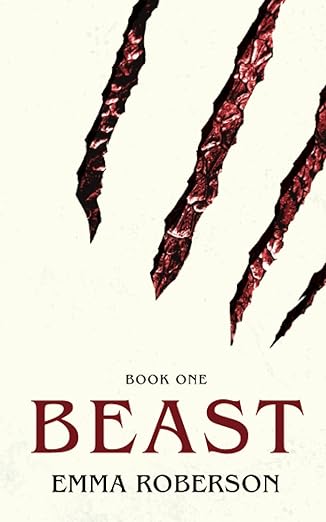


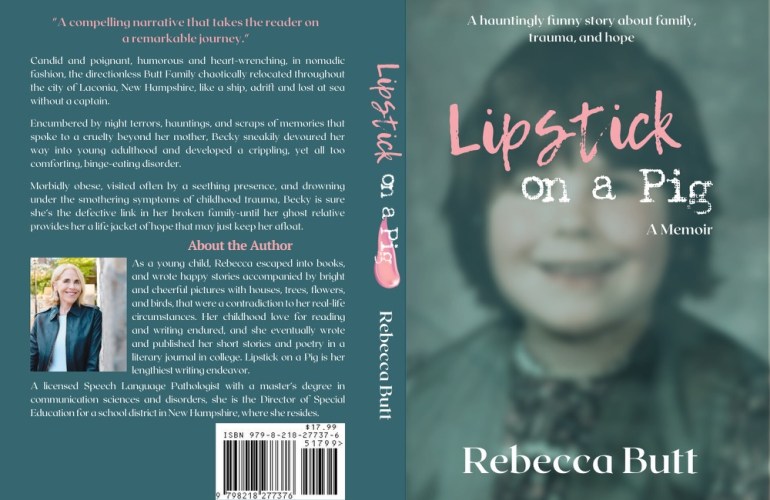

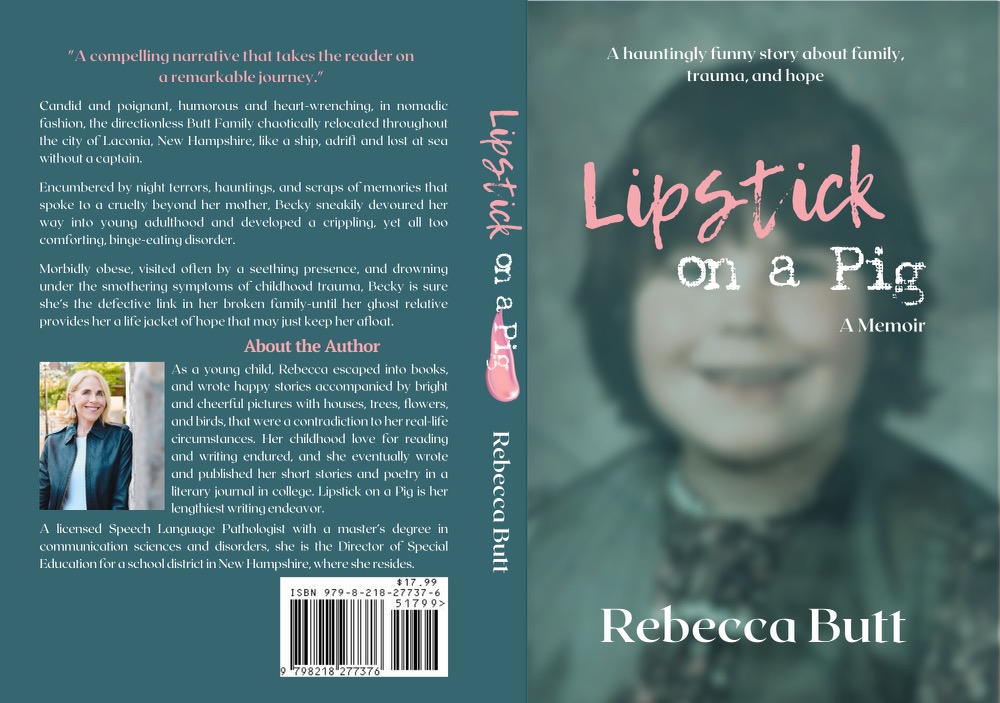

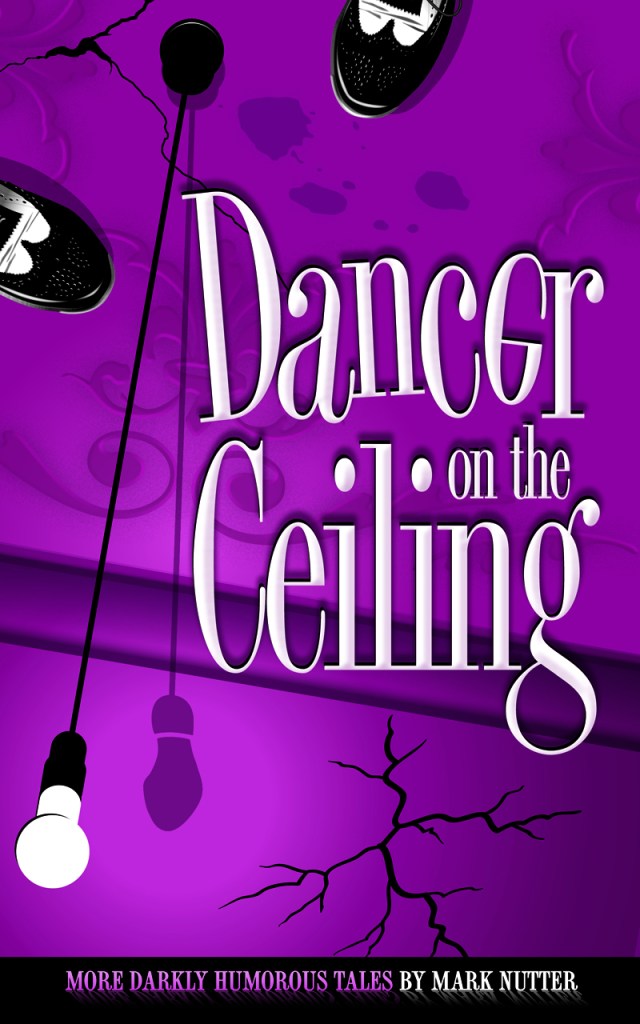



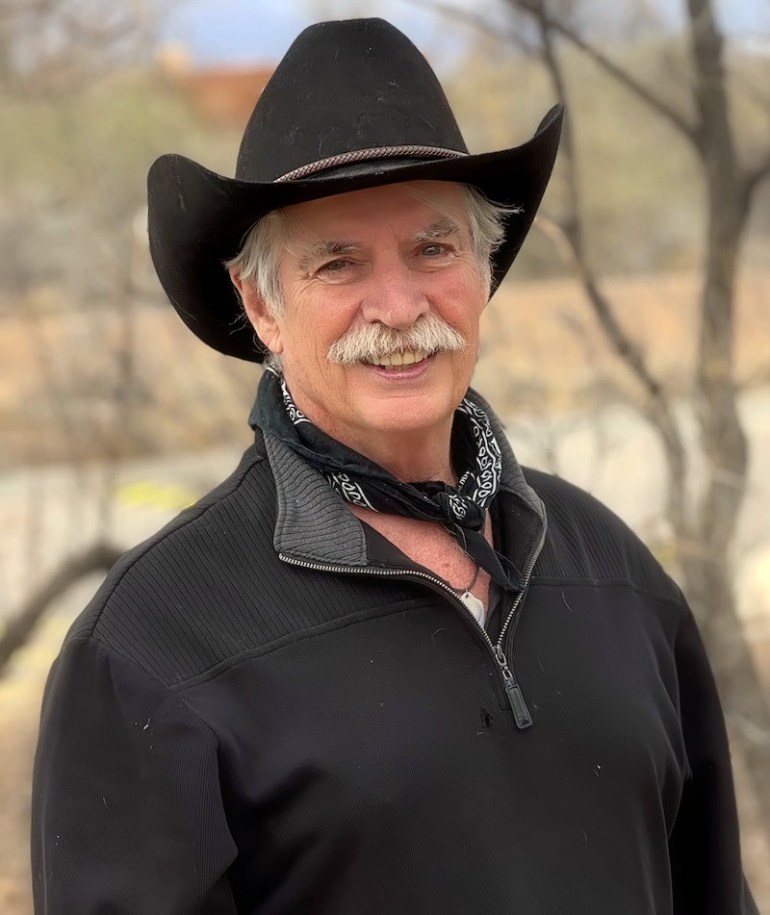

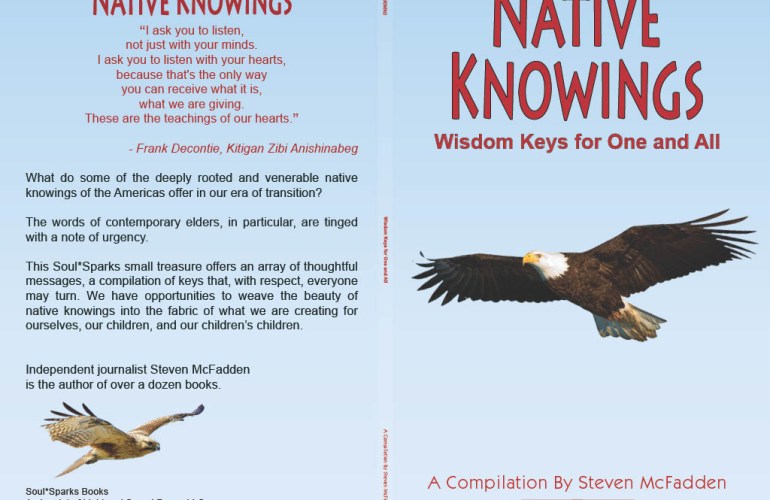


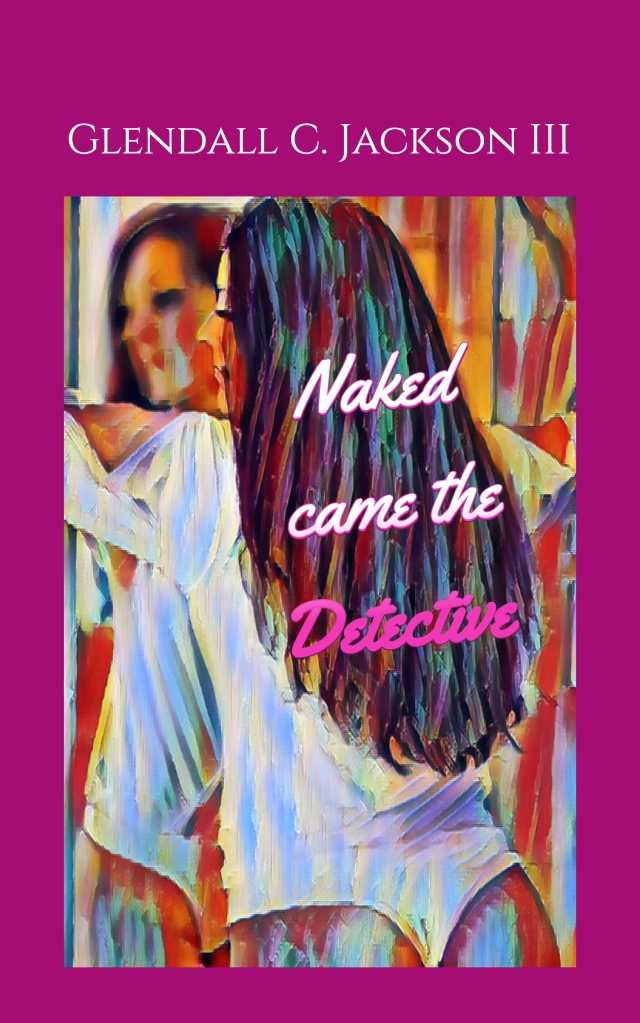
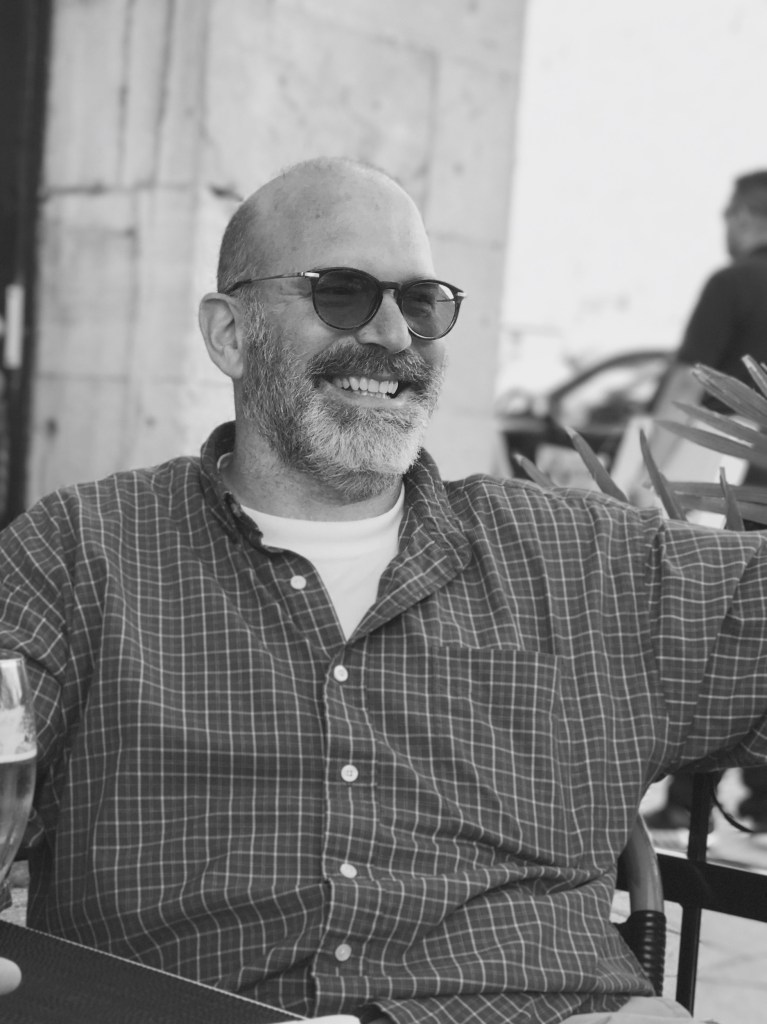


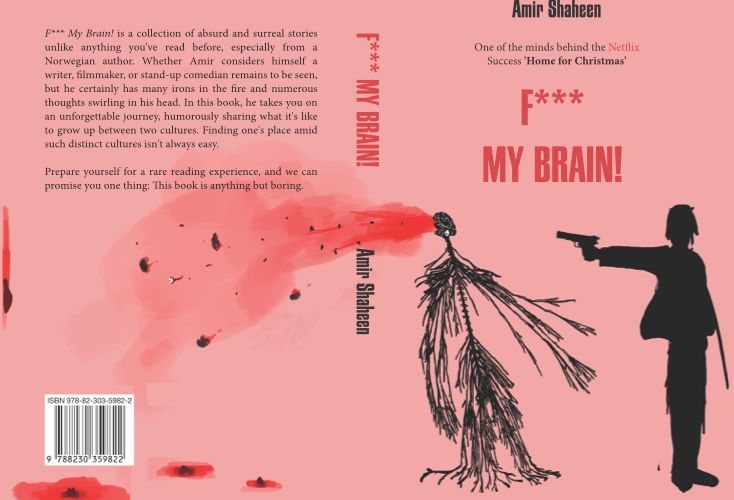


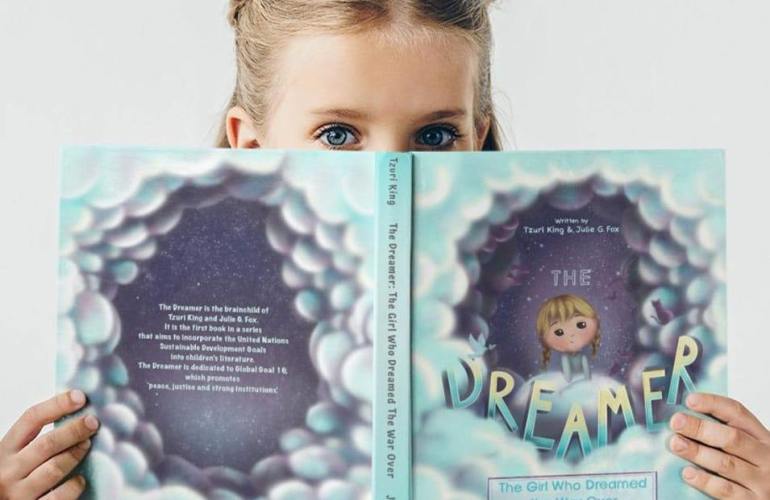
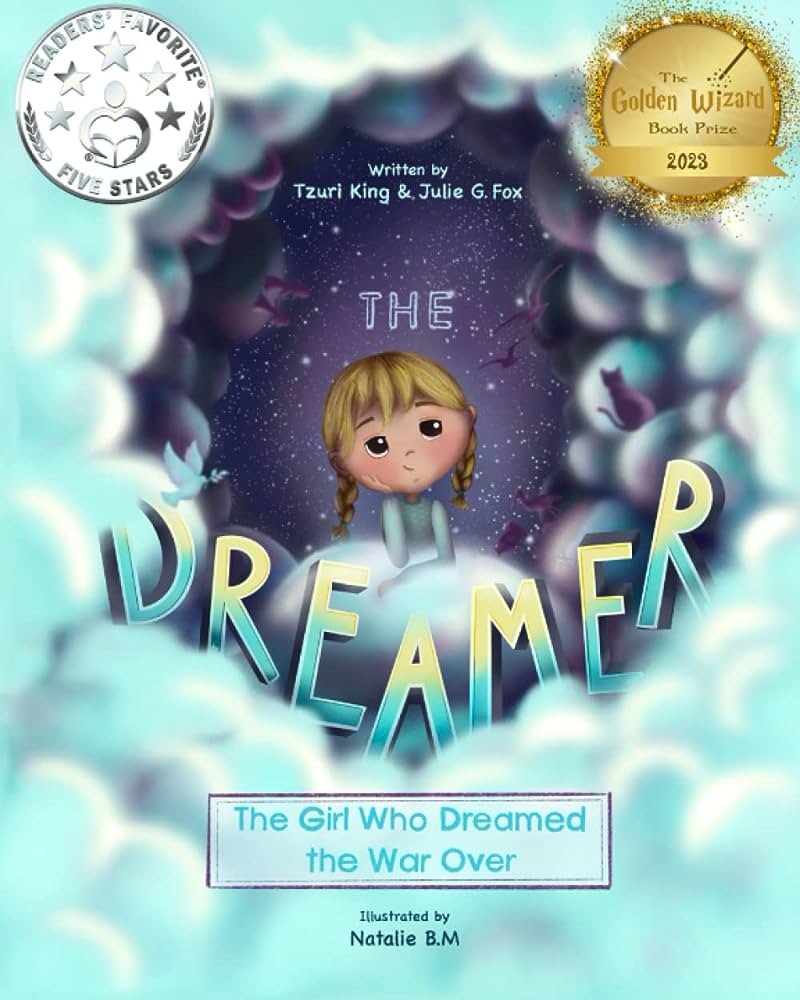





 The Reading Bud