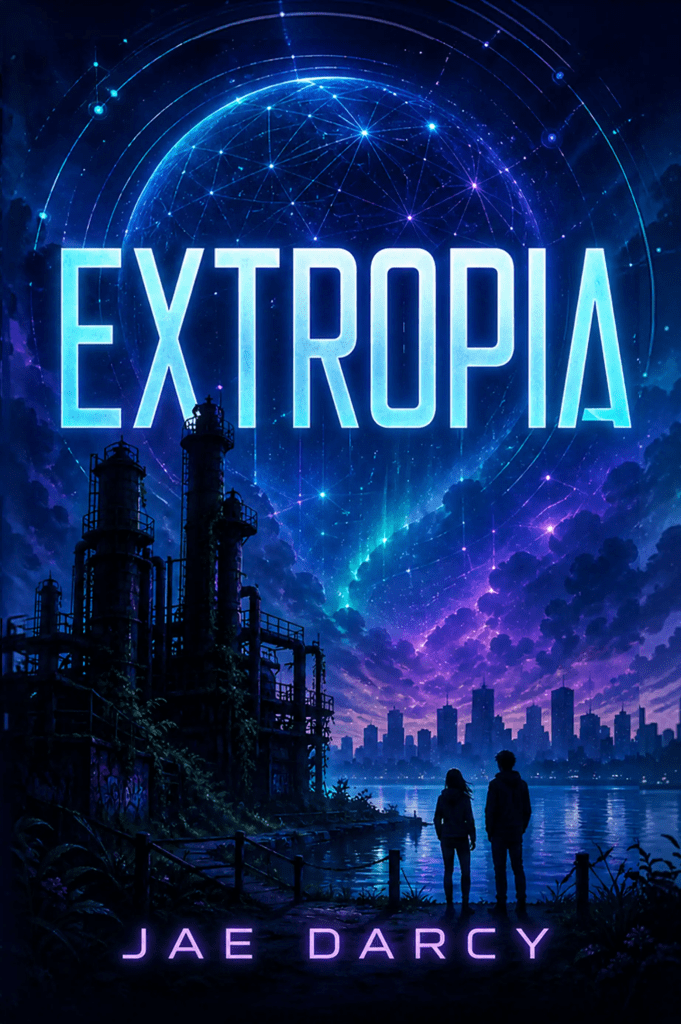
Book Review: Extropia by Jae Darcy

Book Details:

Author: Jae Darcyย 
Release Date: 1 May 2026
Series:
Genre: Young-Adult, Science-Fiction, Dystopia, Cyberpunk
Format:ย E-bookย 
Pages: 407 pages
Publisher: Pomegranate Seed Press
Blurb:
In 2164, reality is something you can buy. The wealthy live online in a gleaming virtual world wired directly into their bodies from birth. Those left outside keep the lights on in an abandoned world.
Bache Parker is eighteen, exiled, and forgotten. His bioware was destroyed in a hack gone wrong, and now he spends his days tending the comatose bodies of people living the life he lost. When a blind girl from a neo-Luddite community asks him to help deliver a virus that will bring the Inside crashing down, he should walk away.
He doesn’t.

Ayven Reynolds has never seen the Inside. She’ hasn’t seen anything at all, until Bache wires her in, and the world her people call an abomination gives her back her sight. Now the virus is live, the stakes are real, and everything both of them thought they believed is suddenly negotiable.

Extropia is a YA cyberpunk novel about power, identity, and what it costs to see the world clearly โ€” even when you’ve been blind your whole life.

Review

Rating: 4 out of 5.

Extropia by Jae Darcy is an ambitious, emotionally charged sci-fi dystopian novel set in a future where humanity has split itself between the physical world and the seductive virtual realm known as the Inside. In 2164, the world outside has decayed into poverty, surveillance, abandoned cities, religious resistance movements, and corporate control, while the wealthy and privileged live much of their lives inside sensory tanks. Against this sharp divide, author Darcy builds a story that is part cyberpunk adventure, part political rebellion, part coming-of-age drama, and part tender, slow-burning romance.

The novel follows two beautifully contrasted protagonists: Bache Parker, a gifted former hacker whose access to the Inside has been destroyed after a disastrous raid, and Ayven Reynolds, a blind sixteen-year-old from a New Green commune in the Cascade Mountains. Bache is bitter, funny, wounded, reckless, and deeply lonely; Ayven is brave, perceptive, principled, and far less fragile than the world around her assumes. Their first meeting itself sets the tone for one of the bookโ€™s strongest elements: the gradual, electric, emotionally complicated trust that develops between them.

What stands out most is the worldbuilding. Author Darcyโ€™s future Seattle is vivid and cinematic with tank towers, Bootjack patrols, abandoned districts, underground routes, access decks, meat-minders, body tanks, hackers, New Greens, and the wealthy Avar society of the Inside. The contrast between Ayvenโ€™s mountain world and Bacheโ€™s decaying city world gives the novel a strong ideological tension. Neither side is treated as wholly pure. The Inside offers beauty, safety, pleasure, and freedom from bodily limitation, but it also enables abandonment, inequality, and disconnection from the dying physical world. The New Greens value nature, community, and embodiment, but their society also contains patriarchy, coercion, secrecy, and fanaticism.

Bache and Ayven are the emotional heart of the novel. Their bond works because it is not instant perfection. It begins with suspicion, betrayal, practical necessity, and ideological disagreement before becoming intimate. Bacheโ€™s cynicism meets Ayvenโ€™s moral seriousness; Ayvenโ€™s sheltered certainty meets Bacheโ€™s painful knowledge of systems, power, and compromise. Their conversations about reality, illusion, the body, technology, nature, and freedom are some of the bookโ€™s most thoughtful passages.

The secondary characters are also strong. Dex and Sarna bring history, loyalty, guilt, and urgency to Bacheโ€™s arc, while Seth and Elijah complicate Ayvenโ€™s world in very different ways. Elijah, in particular, is an effective antagonist because he wraps control in the language of faith and collective duty. Billy Severnโ€™s presence adds another layer of menace, connecting personal grievance to large-scale violence. Linus Ross and NeuroGen, meanwhile, deepen the bookโ€™s critique of corporate power, inherited privilege, and the myth of technological salvation.

That said, Extropia is a substantial read. The book is long, dense, and structurally expansive, with many moving parts: political history, hacker mythology, tank technology, religious ideology, romance, pursuit, rebellion, and corporate conspiracy. Readers looking for a lean, fast sci-fi thriller may find the pacing deliberate in places, especially where the novel pauses to explain the mechanics of the Inside or the political situation outside it. However, for readers who enjoy immersive speculative fiction with emotional stakes and layered worldbuilding, that density becomes part of the appeal.

Overall, Extropia is a compelling, richly imagined, and emotional dystopian sci-fi novel. It combines cyberpunk atmosphere, ecological anxiety, class conflict, forbidden romance, and questions of identity into a story that feels both intimate and large in scope.
You can also read this review at:

Goodreads


Amazon


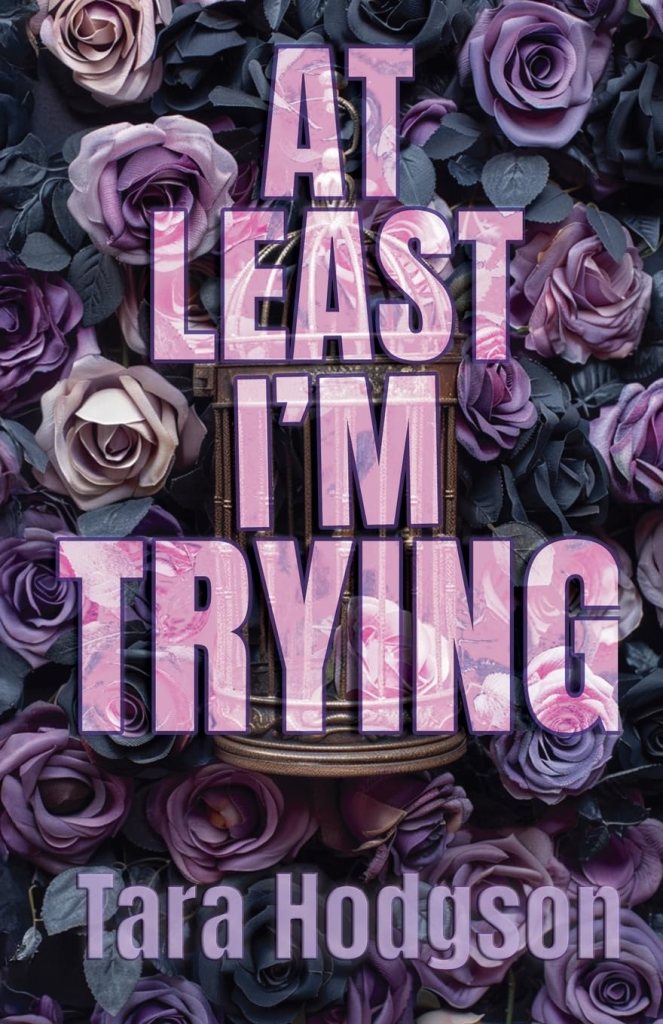
Book Review: At Least I’m Trying by Tara Hodgson

Book Details:

Author: Tara Hodgson
Release Date: 15 October 2025
Series:
Genre: Young-Adult, Psychological Thriller
Format:ย E-bookย 
Pages: 366 pages
Publisher: http://www.tarahodgson.ca
Blurb:
When the volleyball hits the floor mere inches from Reeseโ€™s hands, her dreams of playing
college ball shatter.
After consecutive failures on the court, in the classroom, and in her relationships, sheโ€™s done
playing the part of perfect daughter, perfect student, and perfect athlete. Itโ€™s time for a new life.
Enter Cassie Brentwood.
Bold. Reckless. Free. Cassie is everything Reese isnโ€™t yet longs to be. They quickly become
friends and Cassie introduces her to Liam, a mysterious guy from Snapchat. Blinded by his love
bombing and the desperation to shed her perfect image, Reese plunges head first into their world.
It feels instantly thrillingโ€ฆ until itโ€™s not.

Girls are disappearing from nearby towns, however no one in their quiet small town seems
concerned.
But when Liamโ€™s behaviour grows darker, Reeseโ€™s new life begins to unravel. She ignores the
warnings. The red flags. The little voice screaming to her that somethingโ€™s not right. Until sheโ€™s
far from home, trapped in a nightmare she canโ€™t escape.
With no one left to trust, Reese has to fight to reclaim the life she was so eager to leave behind.
She wanted freedom. Now, she just wants to go home.
At least she has to try.
Told with searing honesty and lyrical depth, At Least Iโ€™m Trying is a poignant novel about mental
health, girlhood, and what happens when the version of yourself youโ€™ve worked so hard to
become starts to fall apart.

Review

Rating: 4 out of 5.

At Least Iโ€™m Trying by Tara Hodgson is a raw, gripping, and emotionally intense YA psychological thriller about perfectionism, vulnerability, grooming, friendship, trauma, and the devastating consequences of wanting to become someone else. The story follows Reese Muller, a high-achieving volleyball player and โ€œperfectโ€ daughter whose life begins to unravel after one bad game, a failed scout opportunity, a breakup with Gabe, and growing distance from her best friend Willow.

What makes the book compelling is how carefully author Hodgson builds Reeseโ€™s emotional collapse before the external danger fully takes over. Reese is not reckless in a simple way; she is exhausted, lonely, over-pressured, and desperate to stop being the version of herself everyone expects. Her parentsโ€™ perfectionism, her comparison with Lizzy, her breakup with Gabe, and her resentment toward Willow create the precise emotional vulnerability that Cassie, Liam, and Seth exploit.

The alternating โ€œBeforeโ€ and โ€œAfterโ€ structure works well, giving the novel a constant sense of dread. We know from the beginning that something terrible has happened, and every choice Reese makes feels loaded with danger. The missing-girls fragments between chapters sharpen that tension further, making the reader aware of a larger pattern even when Reese herself is too overwhelmed to see it clearly.

The strongest relationship in the book is Reese and Willowโ€™s fractured friendship. Their bond is loving but strained, and the novel is honest about how shame can make a person push away the very people who might save them. Gabe is also handled with more nuance than expected; he is not perfect, but his concern for Reese reads as genuine. Cassie, meanwhile, is one of the most interesting characters because she functions as both mirror and warning: another girl trying to escape her own pain, but through choices that lead Reese deeper into danger.

The book is difficult to read in places because it deals with grooming, coercion, sexual exploitation, emotional abuse, intoxication, and trauma. Author Hodgson does not romanticise danger and shows how manipulation often works through attention, validation, secrecy, and the promise of freedom. Liamโ€™s charm is frightening precisely because Reese initially experiences it as relief.

That said, the novel is emotionally heavy and sometimes repetitive in its interiority. Reeseโ€™s spirals around failure, worthlessness, perfection, and not being โ€œenoughโ€ are psychologically believable, but some readers may find the narration intense and claustrophobic. However, that closeness to Reeseโ€™s mind is also the bookโ€™s main strength. We are not simply watching bad decisions from the outside; we are inside the emotional logic that makes those decisions feel possible.

Overall, At Least Iโ€™m Trying is a powerful, unsettling, and socially relevant YA thriller. It is not just a story about a girl in danger, but also about how danger finds girls who are already isolated, ashamed, and desperate to be seen. Honest, painful, and compulsively readable, this is a novel that understands both teenage vulnerability and the terrifying sophistication of manipulation.


You can also read this review at:

Goodreads


Amazon


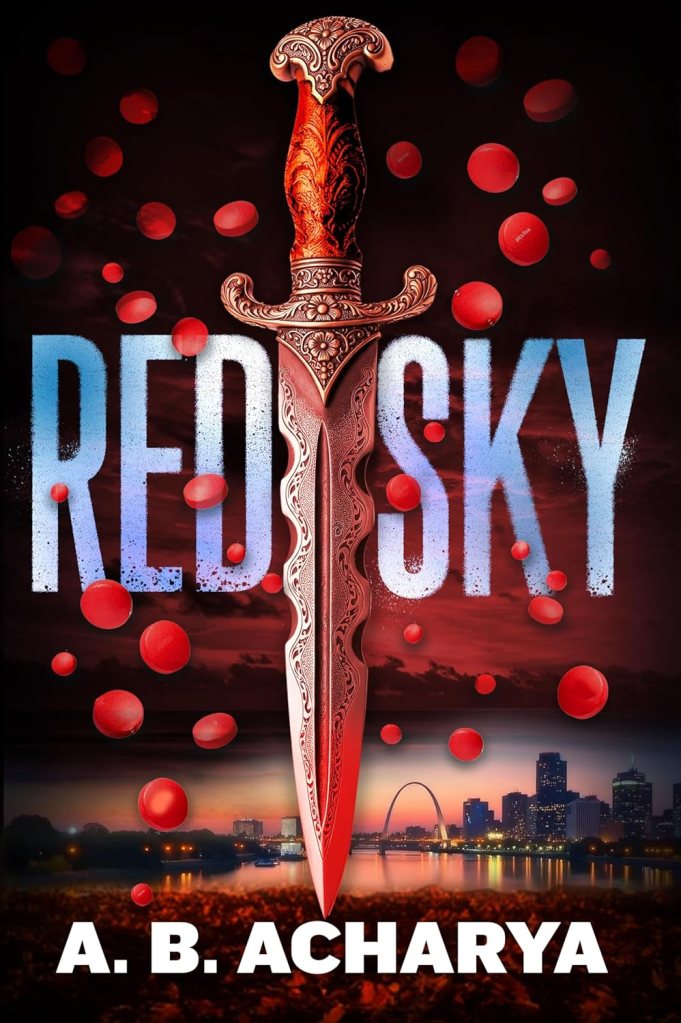
Book Review: Red Sky by A. B. Acharya

Book Details:

Author: A.B. Acharya
Release Date: 2 March 2026
Series: Juggernaut Series (Book #1)
Genre: Medical Conspiracy Thriller
Format:ย E-bookย 
Pages: 334 pages
Publisher:
Blurb:
He came to fix the world’s most dangerous drug. The drug had other plans.
Narin Roy is writing his confession in a police interrogation room, and the only thing keeping him calm is the drug that started it all.
Months earlier, he was a disgraced scientist with one shot left: a job at Harvester Pharmaceuticals, developing a therapeutic version of DMTA, the compound behind Red Sky, the street drug that can make you brilliant but occasionally turns you into a killer. Narin has a secret weapon: a formula on a flash drive that could crack the problem no one else has solved. All he has to do is survive Harvester long enough to use it.
But Harvester is not what it appears. Behind its gleaming faรงade, Narin finds himself caught between a charismatic lawyer whose charm conceals a ruthless agenda, an embittered scientist who built the company and may be destroying it, and a project so classified that its true purpose makes his blood run cold. Meanwhile, a mysterious figure haunts his dreams, a desert prince who trains him for a battle he doesn’t yet understand.
As the weeks pass, Narin can’t tell anymore where the science ends and his unraveling begins. The voices may be hallucinations. The visions may be warnings. And the confession he’s writing, the one that brought him to this cold interrogation room, may not end the way anyone expects.
Red Sky is a propulsive psychological thriller for readers who like their conspiracies dark, their narrators unreliable, and their endings earned.

Review

Rating: 4 out of 5.

Red Sky by A.B. Acharya is a strange, cerebral, darkly funny psychological thriller that begins inside a police interrogation room and then spirals backward through grief, ambition, pharmaceutical corruption, academic failure, obsession, hallucination, and murder. The novel is written as the confession of Narin Roy, a thirty-year-old pharmacology researcher whose life unravels after his work on DMTA, the street drug known as Red Sky, pulls him into the orbit of Harvester Pharmaceuticals, Ian Blair, Maru Chandra, Morey Whitely, and Sophie Whitely.

What makes the book immediately compelling is Narinโ€™s voice. He is precise, awkward, resentful, brilliant, self-pitying, funny, frightening, and oddly vulnerable. The narration works because it never allows the reader to feel fully stable. Narin is telling us everything, but we are never entirely sure how much of what he understands is true, distorted, drug-altered, or self-serving. His scientific explanations of Red Sky, the โ€œswitch,โ€ Type I and Type II receptors, and his proposed drug breakthrough give the novel a strong speculative-scientific foundation, but the real tension lies in watching how his intellect becomes both his gift and his trap.

The book is at its best when it blends science with psychological horror. The pharmaceutical world of Harvester is particularly effective, Ianโ€™s charisma, Maruโ€™s hostility, Moreyโ€™s volatility, and the strange corporate machinery around DMTA make the company feel less like a workplace and more like a trap waiting to close.

Narinโ€™s relationships give the book its emotional complexity. His scenes with Deepa are especially strong because they reveal the fragile, emotional side beneath his arrogance and alienation. His complicated attachment to Sophie is more unsettling than romantic, and that is exactly what makes it work. Ian, meanwhile, is one of the novelโ€™s most intriguing figures: manipulative, generous, damaged, theatrical, and entangled in the very tragedy Narin is trying to explain.

Thematically, Red Sky is rich and unsettling. It explores the seduction of โ€œfixingโ€ the human mind, the ethics of pharmaceutical ambition, the loneliness of immigrant expectation, academic exploitation, mental illness, addiction, masculinity, obsession, and the dangerous fantasy of becoming exceptional enough to justify everything. The drug itself becomes more than a plot device. Red Sky is a metaphor for clarity that may be delusion, transcendence that may be destruction, and happiness that may be chemically engineered at the cost of reality.

That said, this is not a light or fast thriller. The novel is long, intensely interior, and often digressive. Narin explains, analyzes, doubles back, rationalizes, and frequently disappears into scientific, personal, or philosophical tangents. For readers who prefer tight, plot-driven suspense, the pacing may feel demanding. However, for readers who enjoy unreliable narrators, morally murky speculative fiction, and psychological thrillers that let the mind itself become the crime scene, the density is part of the experience.

Overall, Red Sky is an ambitious, intelligent, and unsettling novel. It combines speculative neuroscience, corporate conspiracy, psychological horror, immigrant family drama, and noir-like confession into something distinctive and difficult to categorise. It is messy in places, but deliberately so; its instability mirrors Narinโ€™s own fractured mind. This is a book for readers who like their thrillers dark, intellectual, uncomfortable, and psychologically strange.


You can also read this review at:

Goodreads


Amazon


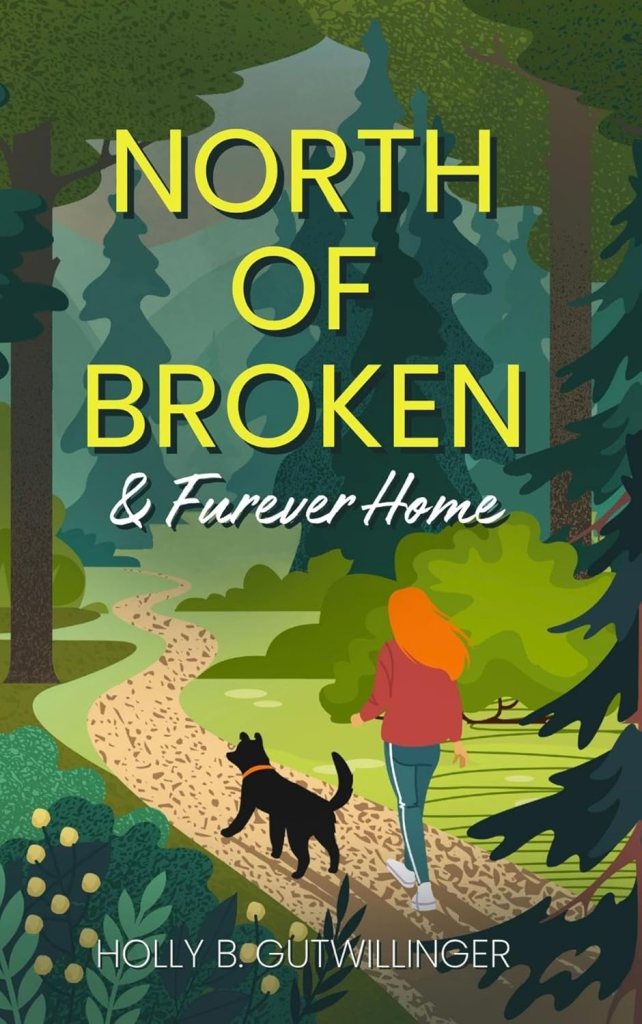
Book Review: North of Broken & Furever Home by Holly B. Gutwillinger

Book Details:

Author: Holly B. Gutwillingerย 
Release Date: 14 February 2026
Series:
Genre: Contemporary Fiction, Animal Fiction
Format:ย E-bookย 
Pages: 264 pages
Publisher: Ramblings From The Little Shed Publishing
Blurb:
Renley Nelsen’s life is unravelling. She’s caught between midlife melancholy, her sons have drifted away, and her mother’s mind is slipping beyond reach.
Sully, the youngest in a pack of abandoned dogs in Ontario’s northern woods, knows only survival. Neglected and scarred, his distrust run deep.
When Renley’s closest friend begs her to join a dog rescue mission, she sees an escape. However, the broken animals, especially Sully, force her to confront more than she bargained for. As she works to dave the pack, Renley discovers hidden strength and faces an impossible choice: keep running or find the courage to claim the life she deserves.
Told from alternating perspectives between Renley and Sully, this is a story of mutual acceptance, where woman and dog must learn that healing demands the bravery to stay, when everything inside you wants to run.

Review

Rating: 4.5 out of 5.

North of Broken & Furever Home by Holly B. Gutwillinger is a warm, emotional, dog-centred novel about grief, rescue, midlife restlessness, family tension, and the strange, healing ways animals enter our lives exactly when we need them. The story follows Renley, a forty-seven-year-old wife, mother, shelter volunteer, and lifelong โ€œserial starter,โ€ who is still grieving the loss of her dog Chance while trying to understand what her life means now that her sons are leaving home. Parallel to Renleyโ€™s story is Sullyโ€™s: a young stray dog trying to survive in the northern wilderness after being separated from his mother and pack.

The dual perspective is the bookโ€™s most distinctive feature. Renleyโ€™s chapters are grounded in the recognisable messiness of domestic life whereas Sullyโ€™s chapters, told from the dogโ€™s point of view, bring a very different emotional cadence that is vulnerable, instinctive, sometimes heartbreaking, and often surprisingly funny. His world of Mama, Middle Dog, Big Dog, Salty Dog, Lazy Dog, Tree, and the humans who may or may not be safe gives the novel its tenderest emotional pull.

What I appreciated most is that author Gutwillinger does not make animal rescue look simple or sentimental. The book understands that rescue is not just the happy moment of bringing a dog home; it is fear, logistics, exhaustion, guilt, medical worries, failed placements, behavioural challenges, and the slow building of trust. The rescue trip to Hidden River is one of the strongest sections of the novel because it brings Renleyโ€™s internal arc and Sullyโ€™s survival story together. Renley is not only rescuing a dog; she is proving to herself that she can do hard things, step beyond the comfort of her routine, and still has a self outside motherhood, marriage, and responsibility.

What stayed with me most is the way the novel treats dogs not as accessories to human healing, but as emotional beings with fear, memory, attachment, confusion, and their own need for safety. Sully and Cash are not simply โ€œrescuesโ€ who fix Renleyโ€™s life. They complicate it, expand it, exhaust it, and ultimately enrich it. By the end, the titleโ€™s playfulness feels earned: โ€œfurever homeโ€ is not just about where a dog lands, but about the ongoing work of choosing love, patience, and belonging every day.

Overall, North of Broken & Furever Home is a heartfelt and comforting novel for readers who love animal stories, family dramas, and gentle emotional journeys. It is tender without being weightless, honest without being bleak, and especially moving in its understanding that healing rarely arrives suddenly. Sometimes, it comes in muddy paws, worried eyes, nervous tail wags, and the decision to open the door again.


You can also read this review at:

Goodreads


Amazon


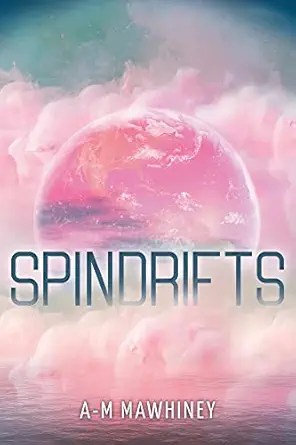
Book Review: Spindrifts by A-M Mawhiney

Book Details:

Author: A-M Mawhiney
Release Date: 24 November 2021
Series:
Genre: Dystopian, Science-Fiction, Speculative Fiction
Format:ย E-bookย 
Pages: 308 pages
Publisher: FriesenPress
Blurb:
Racism, climate change, and violence are in the past. The new world values respect and collaboration with others. But are there secrets lurking in the shadows of the Land of Hope? What truth about the past is being covered up?
When fifteen-year-old Fania returns from Immersion, she is shattered to learn that the next phase of her education is at home with Alicia, her granny. She had hoped for something far grander that would prepare her for an important role with the Earth Project. Their two strong personalities clash as Fania begins to learn more about the past and her familyโ€™s role in it.
As Fania grows in confidence and power, she starts to wonder exactly what secrets Alicia is keeping in her underground lab. After Fania discovers the truth, she finds her calling: one that has the power to change everything.

Review

Rating: 4 out of 5.

Spindrifts by A-M Mawhiney is a thoughtful, hopeful, and ambitious work of speculative fiction set in a future shaped by pandemics, ecological collapse, social reform, and the long, unfinished work of healing Earth. Rather than imagining the future as pure dystopia, author Mawhiney builds something gentler and more difficult: a world that has survived catastrophe and is trying, imperfectly but sincerely, to become better.

At the centre of the novel is Fania, a fifteen-year-old returning home after two years at Immersion, where young people are assessed and guided toward their future contribution to the Earth Project. Fania expects purpose, clarity, and perhaps even adventure with people โ€œFrom Away.โ€ Instead, she is assigned to apprentice with her great-grandmother Alicia, the brilliant researcher who discovered the serum that changed the course of the plague years. What begins as disappointment gradually becomes a layered journey of family history, hidden truths, emotional inheritance, and self-discovery.

One of the strongest parts of the book is its intergenerational family structure. Alicia, Hope, Kaib, Kizhep, Jojo, Fania, and Nuna all live within a household where love is abundant, but so are hierarchy, silence, unresolved grief, and old patterns of control. Author Mawhiney writes family life with warmth and patience. Faniaโ€™s relationship with Nuna is especially tender. Their sisterly bond, strengthened through music, memory, and a form of telepathic connection, gives the novel much of its emotional light.

The worldbuilding is fascinating because it feels both futuristic and deeply rooted in post-pandemic memory making the future in the book not feel sleek or cold but realistic, careful, and consciously rebuilt.

Thematically, Spindrifts is rich. It explores climate repair, public health, disability, community responsibility, language, Indigenous sovereignty, racial history, family memory, and the ethics of deciding another personโ€™s future โ€œfor the greater good.โ€ The novel is particularly strong when Fania begins asking uncomfortable questions: Who gets to choose a personโ€™s contribution? What happens to those labelled dangerous or abnormal? Can a society built for healing still carry hidden harm within its systems? These questions give the book its sharper edge beneath its utopian surface.

That said, this is a slow and very reflective novel. Readers looking for fast-paced science fiction, action, or a tightly plotted dystopian adventure may find the early chapters slow and heavily domestic. The book spends a great deal of time on conversations, family dynamics, memories, explanations of social systems, and emotional processing. At times, the exposition can feel dense, and the pacing may test readers who prefer immediate external conflict. However, the slower rhythm also allows the novelโ€™s emotional and philosophical concerns to deepen gradually.

What I appreciated most is that Spindrifts refuses cynicism. It does not pretend that a better world would be simple, perfect, or free from moral compromise. Instead, it imagines a future where people have done enormous work to restore the planet, but where the next generation must still question, revise, and heal what their elders left unresolved. Faniaโ€™s emerging gifts, especially her ability to sense and heal others, become not only a speculative element but a metaphor for the bookโ€™s larger concern: true restoration requires seeing pain clearly, even when it implicates those we love.

Overall, Spindrifts is a intelligent, hopeful, and challenging novel. It is best suited for readers who enjoy character-driven speculative fiction, ecological futures, intergenerational stories, and books that use science fiction not merely to imagine technology, but to ask how people might live together with more care.


You can also read this review at:

Goodreads


Amazon


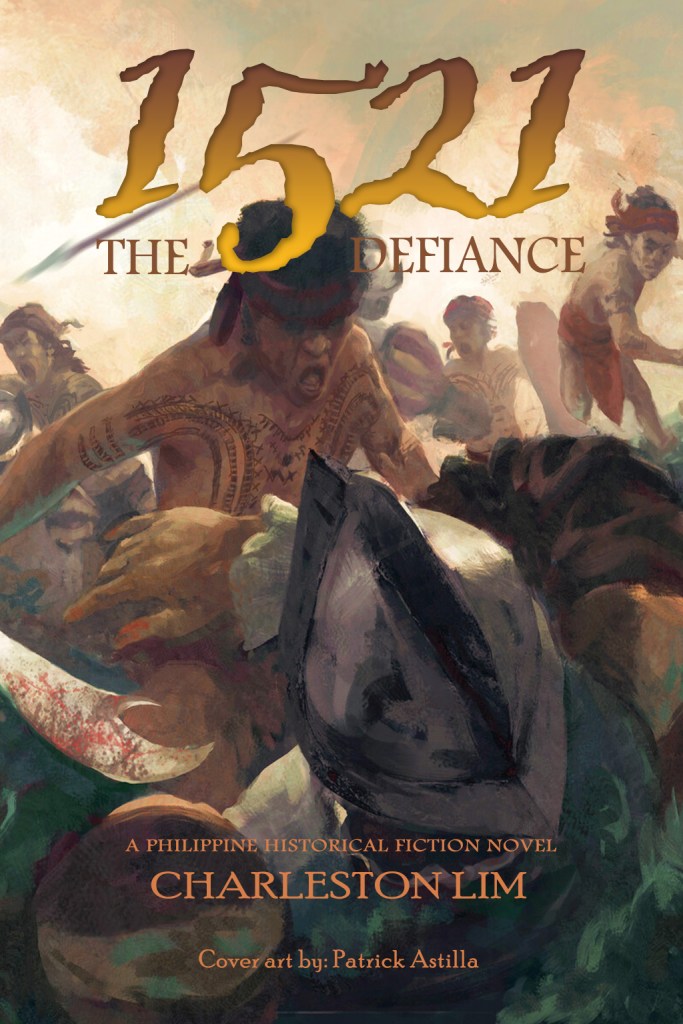
Book Review: 1521: The Defiance by Charleston Lim

Book Details:

Author: Charleston Lim
Release Date: 15 April 2026
Series:
Genre: Historical Fiction
Format:ย E-bookย 
Pages: 243 pages
Publisher:
Blurb:
History remembers the fall of Ferdinand Magellan, but it forgets the lives caught in his death’s shadow.
1521: The Defiance
ย is not merely a retelling of the Battle of Mactan. It is a reckoning with how history is written, who is remembered, and whose stories endure.
Drawing from Antonio Pigafettaโ€™s chronicle, the only surviving firsthand account of Magellanโ€™s final expedition, and grounded in precolonial Visayan culture, this novel explores the lives, fears, and convictions of those who stood on both sides of this historic encounter between islanders and empire.
Written by a Filipino author rooted in the land where these events unfolded, 1521: The Defiance reimagines the human stories behind the clash, filling the silences between recorded facts with narrative, emotion, and cultural memory. It offers a perspective rarely centered in colonial histories, one that restores agency, dignity, and complexity to those long reduced to footnotes.

This is a story of belief and resistance, of men who sought to change the world, and of those who refused to let it be taken from them.
โ€œTell me, Antonio. What will your pages call him if we cannot make him bend?โ€
The Venetian hesitated, then gave a thin smile.
โ€œA rebel, perhaps. Or a heathen. Orโ€ฆโ€
He glanced at his parchment, as if unsure.
โ€œOr a fool who defied destiny.โ€

A powerful tale of belief, resistance, and the cost of empire, this novel is for readers of immersive, multi-perspective historical fiction who seek stories that challenge inherited narratives.

Review

Rating: 4 out of 5.

1521: The Defiance by Charleston Lim is an exceptionally vivid and atmospheric work of Philippine historical fiction that revisits one of the most defining encounters in the archipelagoโ€™s early colonial history: Ferdinand Magellanโ€™s arrival in Cebu and his fatal confrontation with Lapulapu on the shores of Mactan. Rather than treating the Battle of Mactan as a simple heroic episode or a dry historical event, author Lim reimagines it as a layered clash of ambition, faith, politics, survival, and cultural sovereignty.

The novelโ€™s greatest strength lies in its shifting perspectives. Lapulapu is rendered not merely as a symbol of resistance, but as a leader, husband, mentor, and protector of land and people. His bond with Amihan gives the story emotional tenderness, while his relationship with Bulakna adds subtle strength to the narrative. Magellan, meanwhile, is not flattened into a villain. He is written as a man of faith, pride, conviction, and dangerous certainty; someone who genuinely believes he is fulfilling a divine mission, even when that mission begins to resemble conquest.

I especially appreciated how the novel handles Enrique and Pigafetta. Enrique becomes one of the bookโ€™s most compelling figures because he exists between worlds: enslaved yet indispensable, familiar with the islanders yet bound to the Spanish expedition, translator of empire yet increasingly aware of what his translations help unleash. Pigafetta, on the other hand, brings the perspective of the chronicler: observant, fascinated, devout, sometimes prejudiced, and constantly trying to make history legible through his own worldview. Through these two figures, the novel beautifully explores how history is not only lived, but recorded, interpreted, and sometimes distorted.

The worldbuilding is rich and immersive. Author Lim pays close attention to pre-colonial Visayan culture, and the detailing does not feel decorative, it helps restore depth and dignity to a world too often reduced to a footnote in colonial narratives. The descriptions of the mangroves, reefs, villages, feasts, rituals, and battle preparations give the novel a strong sensory presence.

The Battle of Mactan itself is one of the most powerful sections of the book. Author Lim builds it carefully, showing both strategy and emotion. The death of Amihan gives the battle an intimate heartbreak, preventing it from becoming merely a triumphant historical set-piece. Victory here is meaningful, but never bloodless.

That said, the novel is at its strongest when it stays close to character and cultural tension. Some passages, especially those dealing with religious exposition and political explanation, can feel slightly heavy, and readers who prefer faster-paced historical fiction may find the build-up deliberate. However, this slower pace also allows the author to establish the stakes with care, making the eventual confrontation feel earned rather than rushed.

Overall, 1521: The Defiance is a thoughtful, well-researched, and emotionally resonant historical novel. It honours Lapulapuโ€™s defiance while also examining the complicated motives of Magellan, Humabon, Enrique, Pigafetta, and the many people caught between faith, power, survival, and loyalty.


You can also read this review at:

Goodreads


Amazon


Book Review: Fade to Black by D Reign

Book Details:

Author: D Reign
Release Date: 12 December 2025
Series:
Genre: Romance
Format:ย E-bookย 
Pages: 81 pages
Publisher:
Blurb:
Isn’t that what they say happens when you try to forget something so poignant, so soul rendering? you need to run, hide and seek solace. Well, that was me, where I am right now. Maybe I should start from the beginning and tell my story from all perspectives, who was wrong, who was right. It doesn’t matter really in the grand scheme of things, as I lost the one thing that kept me sabe. The love of my life. Now I question how do I get him back.
Come and delve in the lives of Dale and Selene and modern love story set in reality with love and lost and reformed again into something new but you follow the journey of the trials and tribulations that got them there.

Review

Rating: 3 out of 5.

Fade to Black by D. Reign is an emotionally charged second-chance romance about first love, betrayal, misunderstanding, motherhood, and the painful consequences of words left unsaid. The story follows Selene and Dale, childhood friends turned lovers, who are separated by a devastating misunderstanding just as Selene discovers she is pregnant. Years later, Selene finally reaches out to Dale because their eight-year-old son, Beau, wants to know his father.

The strongest emotional thread in the book is the Selene-Dale-Beau dynamic. Beauโ€™s presence gives the story its real tenderness and urgency. Selene is not simply trying to revisit an old romance; she is trying to do right by her child. Daleโ€™s reaction to discovering he has a son is one of the more affecting parts of the story, especially when he looks through the book Selene has prepared for him, filled with moments from her pregnancy and Beauโ€™s childhood. That scene gives the romance a deeper emotional weight because Dale is not only confronting lost love, but lost time.

Selene and Daleโ€™s relationship is written with heat, intensity, and unfinished longing. Their chemistry is immediate, sometimes overwhelming, and the narrative leans heavily into the physical and emotional pull between them. The book captures that dangerous space where old love has not died, but neither has old hurt. The eventual revelation gives the central conflict its shape and explains how two people who loved each other so deeply could lose years of their lives to silence and assumption.

That said, the book does have rough edges. The prose is highly direct and emotionally repetitive in places, and the shifting point of view can sometimes feel abrupt. The story also resolves rather quickly after the truth comes out, especially considering the years of hurt, the existence of Malorie, and Daleโ€™s motherโ€™s long-standing hostility toward Selene. A slower final section might have allowed the emotional reconciliation to breathe more fully. The sensual scenes are also very explicit, so readers who prefer softer or more restrained romance should be aware of that.

Still, Fade to Black has a strong emotional core. At its heart, this is a story about two people who were young, wounded, and misled, and who finally get a chance to reclaim the life that was interrupted. Overall, Fade to Black is a passionate, dramatic, and heartfelt second-chance romance.


You can also read this review at:

Goodreads


Amazon


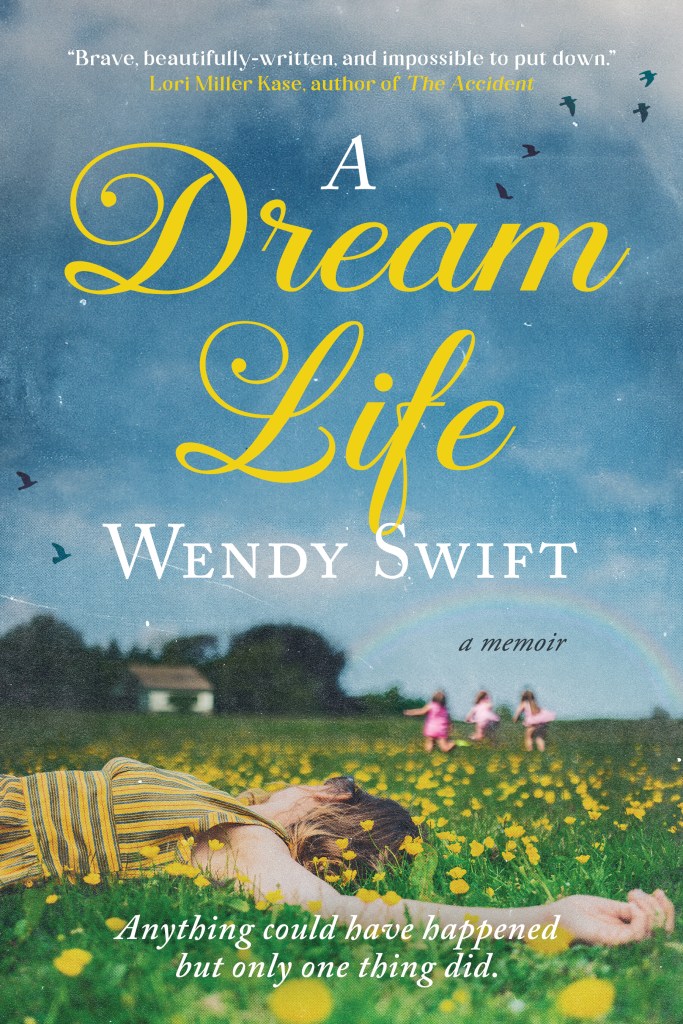
Book Review: A Dream Life: A Memoir by Wendy Swift

Book Details:

Author: Wendy Swift 
Release Date: 21 April 2026
Series:
Genre: Memoir
Format: E-book 
Pages: 296 pages
Publisher:
Blurb:
When Wendy Swift discovers a letter demanding nearly two million dollars in restitution from her attorney husband, she realizes that her life as a suburban stay-at-home mother has been built on illusion. Despite mounting evidence to the contrary, she believed the quintessential dream life she shared with her husband and three daughters was secure and enduring. A Dream Life traces Swiftโ€™s search for validation through marriage, motherhood, and social mobility, and the unraveling that follows.
After her husband begins his incarceration in the 1990s, Swift becomes solely responsible for supporting her three young daughters as they navigate loss, shame, and uncertainty. Her path forward is uneven and hard-won, revealing resilience, reflection, and growth, as well as the perils of blind materialism.
This powerful memoir illuminates the complex challenges families face when confronted with addiction, mental illness, and incarceration. Swift blends unflinching truth-telling with wry self-reflection, awakening readers to the consequences of denial and the restorative power of self-possession. A Dream Life ultimately affirms that anyone can unknowingly fall prey to false beliefs, but once the truth is revealed and the fear of dislocation and upheaval is faced, renewal and strength can emerge.

โ€œA brutally honest portrayal of the emotional, psychological, and economic struggle to keep oneโ€™s family intact while enduring the acute financial betrayal and emotional abuse of a rogue spouse.โ€
โ€” Lisa Lawler, Founder of The White-Collar Wives Project

Review

Rating: 5 out of 5.

A Dream Life by Wendy Swift is an intimate, unflinchingly honest memoir about the slow collapse of a marriage built on hope, denial, love, dependency, and illusion. The story begins as a story of young romance and college life, marriage, motherhood, a home in Connecticut, children, friendships, community, and the promise of an upwardly mobile life, gradually reveals itself as something much darker: a portrait of addiction, financial betrayal, emotional evasion, and the painful awakening of a woman who has spent years believing that if she simply holds everything together, the dream might still survive.

What makes this memoir so compelling is author Swiftโ€™s refusal to write from a place of easy hindsight. She does not present her younger self as foolish, nor does she flatten Danny into a simple villain. Instead, she reconstructs the emotional logic of each stage of her life with remarkable clarity: the longing to be loved, the desire for a beautiful family, the seduction of status and suburban stability, the acceptance of warning signs, and the slow, almost imperceptible way denial becomes a survival mechanism. The result is a layered examination of how people participate in their own illusions before they are ready to see the truth.

Author Swiftโ€™s prose is one of the strongest aspects of the book. It is direct, reflective, and often devastating. She has a gift for grounding emotional complexity in physical detail that accumulate until the reader understands that the โ€œdream lifeโ€ was never one single lie, but a carefully maintained arrangement of small evasions, financial improvisations, emotional silences, and desperate hopes.

The memoir is especially powerful in its treatment of motherhood. Author Swiftโ€™s love for her daughters is the emotional spine of the book, and her struggle is not only to survive Dannyโ€™s choices, but to protect the lives of Julia, Erika, and Alli from being destroyed by them. There is no easy heroism here. She is exhausted, afraid, sometimes complicit, sometimes angry, sometimes paralysed, but always trying to preserve some form of safety and normalcy for her children. That honesty makes the memoir far more moving than a polished story of triumph would have been.

The book also offers a sharp portrait of financial abuse and white-collar crime from the inside of the family home. What is chilling is not only the scale of Dannyโ€™s betrayals, but the ordinariness surrounding them: school events, dinners, synagogue services, house repairs, tennis lessons, grocery shopping, and childrenโ€™s routines continue while the foundations of the family are quietly eroding. Swift captures how economic deception does not merely damage bank accounts; it damages trust, identity, self-worth, and oneโ€™s sense of reality.

If I had one reservation, it is that the memoir is expansive and sometimes deeply detailed, particularly in the early domestic sections. Some readers may feel the pace is slow before the full magnitude of the crisis emerges. However, I also think this gradualness is part of the bookโ€™s design. Swift wants us to understand the dream before we witness its destruction. Without the ordinary texture of the marriage, the suburban life, the friendships, and the childrenโ€™s childhoods, the later collapse would not carry the same emotional weight.

Ultimately, A Dream Life is a brave, intelligent, and deeply humane memoir about illusion, betrayal, self-forgiveness, and the long road back to agency. It is not only about losing a dream life; it is about learning to distinguish between the life one performs, the life one endures, and the life one finally chooses. Painful, reflective, and empowering, this is a memoir that will resonate especially with readers interested in womenโ€™s lives, marriage, addiction, financial betrayal, and the difficult work of reclaiming the self.


You can also read this review at:

Goodreads


Amazon


Book Review: CSR History and Practice: A Study on Swedish Large-Scale Entrepreneurship at the Company Level by Knut-Erland Berglund

Book Details:

Author: Knut-Erland Berglund
Release Date: 2.06.2025
Series:
Genre: Non-fiction, Business studies
Format: E-book 
Pages: 243 pages
Publisher: BoD โ€“ Books on Demand
Blurb:
CSR History and Practice: A Study of Swedish Large-Sclae Entrepreneurship at the Company Level Circa 1940 โ€“ 2010.

Review

Rating: 4 out of 5.

CSR History and Practice by Knut-Erland Berglund is a thoughtful, research-driven exploration of Corporate Social Responsibility through the historical practices of three major Swedish companies: Ericsson, Trelleborg, and Vattenfall. Rather than treating CSR as a modern corporate buzzword, Berglund traces its roots across decades of business activity, showing how companies engaged with employees, communities, culture, education, welfare, environmental issues, and social responsibility long before the term CSR became widely formalised.

In this book, author Berglund does not simply explain CSR as a theoretical concept, he studies how responsibility appeared in practice through company magazines, archival material, personnel policies, sponsorships, environmental initiatives, aid work, corporate defence structures, health programmes, gender equality efforts, and codes of conduct. This makes the book especially useful for readers interested in economic history, business ethics, Scandinavian corporate culture, and the evolution of sustainability thinking.

The strongest aspect of the book is its ability to demonstrate continuity. CSR is often discussed as though it emerged suddenly in the late twentieth or early twenty-first century, but author Berglund shows that many of its impulses like care for workers, cultural patronage, educational scholarships, environmental awareness, and social engagement, were already present in earlier corporate behaviour. Ericsson, Trelleborg, and Vattenfall each become case studies in how Swedish companies negotiated their responsibilities not only to shareholders, but also to employees, society, the state, and the environment.

I particularly appreciated the sections on personnel policy and environmental work, as they reveal how broad the idea of corporate responsibility can be. The book looks at employee share programmes, ceremonies, health strategies, workplace equality, environmental reporting, pollution reduction, energy-saving initiatives, recycling, and institutional responses to social expectations. These details give the study texture and prevent it from becoming purely abstract.

That said, the book is academic in tone and structure, so readers expecting a light business read may find it heavy. The prose is clear enough, but the organisation is very research-oriented, and some sections read more like a historical report. There are also places where the material could have benefited from a stronger interpretive thread to help non-specialist readers connect the many examples more fluidly.

Still, CSR History and Practice succeeds as a serious and valuable contribution to CSR history. Its greatest strength lies in showing that corporate responsibility is not merely a branding exercise or a recent sustainability trend, but part of a much longer conversation about the role of business in society. For readers interested in CSR, sustainability, business history, Swedish industry, or the ethical responsibilities of corporations, this is a focused and worthwhile read.


You can also read this review at:

Goodreads


Amazon


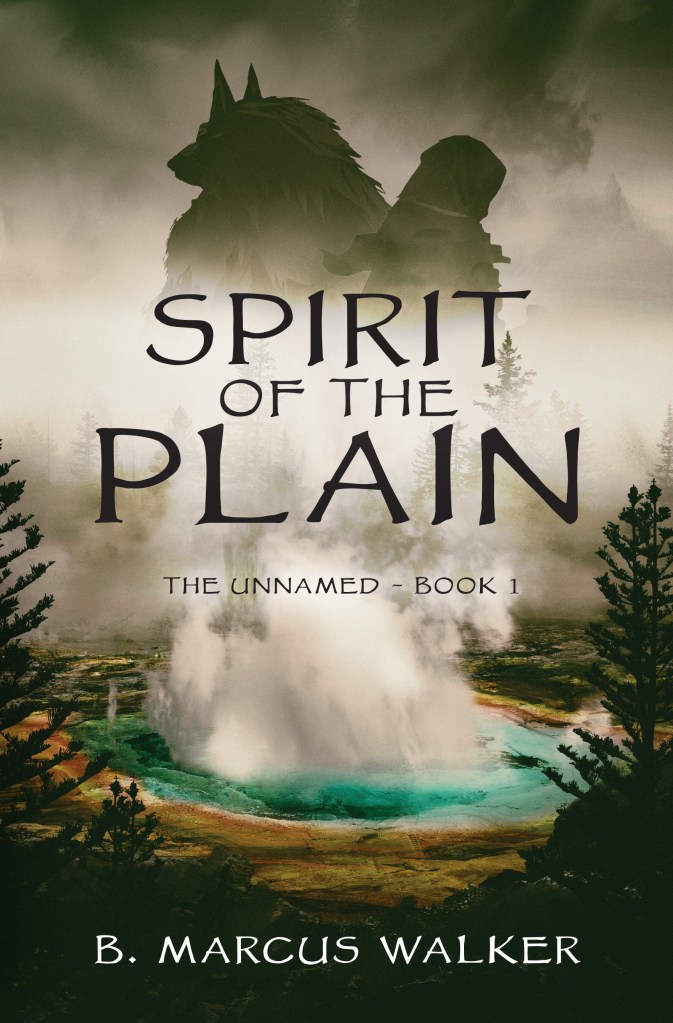
Book Review: Spirit of the Plain: The Unnamed (Book #1) byย B. Walkerย 

Book Details:

Author: B. Walkerย 
Release Date: 30 May 2025
Series: The Unnamed (Book #1)
Genre: Dark Fantasy, Coming-of-Age
Format:ย E-bookย 
Pages: 463 pages
Publisher: Killbot Factory
Blurb:
The Forest Plain will not allow men to settle, farm, or cross with armies. Men of the west dream of breaking its curse, but doing so will destroy the way of life of the nomadic people who live there.
In Grayhaven, they say, โ€œGlory to Ahur and to the Plain,โ€ because it has kept them safe for five centuries and has allowed them to grow into the wealthiest nation on the continent.
COLLIER TRUIT is from Grayhaven, but flees after his grandfatherโ€™s failed political machinations led to the murder of their family. He is part Yurbo, through his father and seeks out his fatherโ€™s clan, determined to win their help in retaking his ancestral titles.
While in the plain, Collier faces mounting threats with his Yurbo hosts. One threat is the fearsome wolfmen known asย Lyken, themselves refugees from colonized homeland. This includes the drunk and shaggy ARNAK, and his friend, the troubadour MOJAG. They flee for Grayhaven but run into the Yurbo. The greater threat is from the west. There, ASHLYN, an acolyte of the order of mages known as the Bruj, heads into the Forest Plain to complete her prophesized destiny to break the Plainโ€™s curse.

Review

Rating: 4 out of 5.

Spirit of the Plain by B. Walker is an ambitious, politically charged dark epic fantasy that opens with violence, exile, and the unsettling sense that every civilisation in this world is standing on old blood. Set across Nordunia and the mysterious Forest Plain, the novel follows three major narrative strands: Collier, a fallen noble heir forced into the Yurbo world after his family is destroyed; Arnak, a lykan caught in the brutal social collapse of Hearthsport; and Ashlyn, a young bruj acolyte drawn into prophecy, power, and the terrifying truth of Allouhuille. The included maps of Nordunia and the Forest Plain immediately signal the scale of the world author Walker is building.

What I admired most is the sheer texture of the worldbuilding. This is not a decorative fantasy world with invented names scattered over familiar terrain; it feels culturally, politically, and linguistically layered. The Yurbo, the lyken, the bruj, the Spirit Talkers, the phaye, Grayhaven, Hearthsport, Stilleon, Lachland, and the Forest Plain all carry different systems of belief, prejudice, power, and survival. The book is especially strong when it explores how cultures misunderstand one another, and how those misunderstandings become fear, cruelty, colonisation, rebellion, and violence.

Thematically, Spirit of the Plain is rich. It examines exile, racial hatred, inherited violence, spiritual power, political legitimacy, and the dangerous hunger to reclaim what has been lost. It is also deeply interested in names: who has one, who is denied one, and what power naming gives or withholds. The title The Unnamed speaks directly to the Yurbo, to identity, to belonging, and to the novelโ€™s larger concern with people who exist outside the official language of empires.

This book is, however, a demanding read. It is long, dense, and often unrelenting. Author Walker asks the reader to absorb a great deal: invented terminology, multiple cultures, political histories, magical systems, religious structures, and shifting points of view. At times, the pacing can feel heavy, especially when the worldbuilding and dialogue slow the forward motion of the plot. Some readers may also find the violence and brutality difficult; the novel does not soften the cost of war, prejudice, captivity, or survival.

Still, even when the book sprawls, it rarely feels careless. There is a clear intelligence behind the construction of this world, and the emotional stakes deepen as the separate storylines begin to feel part of a much larger design. By the final stretch the novel widens into something darker and more mythic than its already intense beginning suggests.

Overall, Spirit of the Plain is a bold, intricate, and morally serious fantasy debut. It may not be a light or easy read, but it rewards patience with a world that feels realistic, wounded, and politically alive. Readers who enjoy complex epic fantasy with cultural depth, morally complex characters, political intrigue, and mythic magic will find a great deal to admire here.


You can also read this review at:

Goodreads


Amazon


Book Review: The Agent Syndicate: Volume 001 โ€“ Matrix University Exclusive by Professor Lazurusย 

Book Details:

Author: Professor Lazurusย 
Release Date: 13 November 2023
Series:
Genre: Science-Fiction Graphic Novel
Format:ย E-bookย 
Pages: 45 pages
Publisher:
Blurb:
Unleash your imagination with “The Agent Syndicate”, an exhilarating tale set in the Matrix-Universe during the purge. Authored by Professor Lazurus and adapted from the popular web comic, this gripping narrative follows the journey of 7 chosen agents entrusted with a mission of unparalleled significance. These agents are faced with a harrowing choice: take the black pill or risk deletion, all in the pursuit of safeguarding the future.
Dive headfirst into a world where reality blurs and digital realms collide, as these elite agents navigate the treacherous landscape of a system preparing to be reset. With each decision, they walk the fine line between rebellion and conformity.

“The Agent Syndicate” seamlessly weaves together elements of action, suspense, and philosophical intrigue, offering readers a front-row seat to an epic struggle for control, freedom, and the ultimate truth. This comic/script book promises to deliver a gripping narrative that will leave you questioning the very fabric of reality.

Join us on an electrifying journey through the digital corridors of the system, where reality is a construct waiting to be shattered, and the agents of “The Agent Syndicate” hold the key to an astonishing revelation. Will they succeed in their mission, or will the new regime prove too powerful? Find out in this must-read comic/script that will keep you on the edge of your seat until the very last page. Unlock the origins of the Agent Syndicate and explore the purge in this thrilling adventure.

Get your copy of “The Agent Syndicate” now and prepare to venture into a world where the line between reality and illusion is blurred by the ultimate pursuit for survival.

Review

Rating: 4 out of 5.

The Agent Syndicate: Volume 001 by Professor Lazurus is a sharp, stylish, Matrix-inspired graphic novel that places its focus not on humans fighting the system, but on the programs left scrambling when the system itself begins to fracture. This first volume works as a high-concept, lore-heavy action piece built around Agents, exiles, reconfiguration, machine politics, and the uneasy emergence of free will inside beings originally designed for obedience.

The story opens with Agent Vasquez entering the Chateau to confront Cain, and this immediately sets the tone: tense, confrontational, visually moody, and steeped in existing Matrix mythology. The werewolf transformation, the use of silver, the White Hallways, the Merovingian, the Architect, Persephone, Agent Smith, and the Analyst all place the comic firmly within a familiar universe, but the perspective feels fresh because the emotional centre belongs to the Agents themselves. These are not faceless system enforcers anymore; they are beginning to question loyalty, survival, purpose, and even belief.

What I found most interesting is the way the comic reframes the Architect. He is still cold, precise, and intellectually superior, but here he also becomes strangely paternal. His address to the Agents, offering them the black pill and therefore a form of free will, is one of the strongest moments in the volume. The Agentsโ€™ transformation into the black-shirt-and-red-tie Syndicate gives the story its identity: they are still dangerous, efficient, and programmed for order, but now they are also exiles trying to survive a purge.

Visually, the work has a strong digital-anime energy. The green-black palette, leather coats, sunglasses, weaponry, club lighting, and monochrome action panels all echo the cyberpunk aesthetic of the Matrix universe while leaning into a slick fan-comic style.

That said, this is very much a first-volume setup. Readers unfamiliar with Matrix mythology may find the references dense, and the pacing moves quickly from one lore-heavy development to another. The plot sometimes assumes prior knowledge of characters, constructs, and system politics, so it may work best for readers who already enjoy the Matrix universe and want an expanded, Agent-centred storyline. The text-heavy layout also occasionally competes with the visual storytelling, though the art still carries a strong sense of atmosphere and movement.

Overall, The Agent Syndicate: Volume 001 is an ambitious and energetic graphic novel that expands familiar Matrix themes through a compelling new angle. Stylish, lore-rich, and full of potential, this first volume sets up an intriguing conflict that should appeal strongly to Matrix fans and readers who enjoy cyberpunk, system rebellions, and morally complicated artificial beings.


You can also read this review at:

Goodreads


Amazon


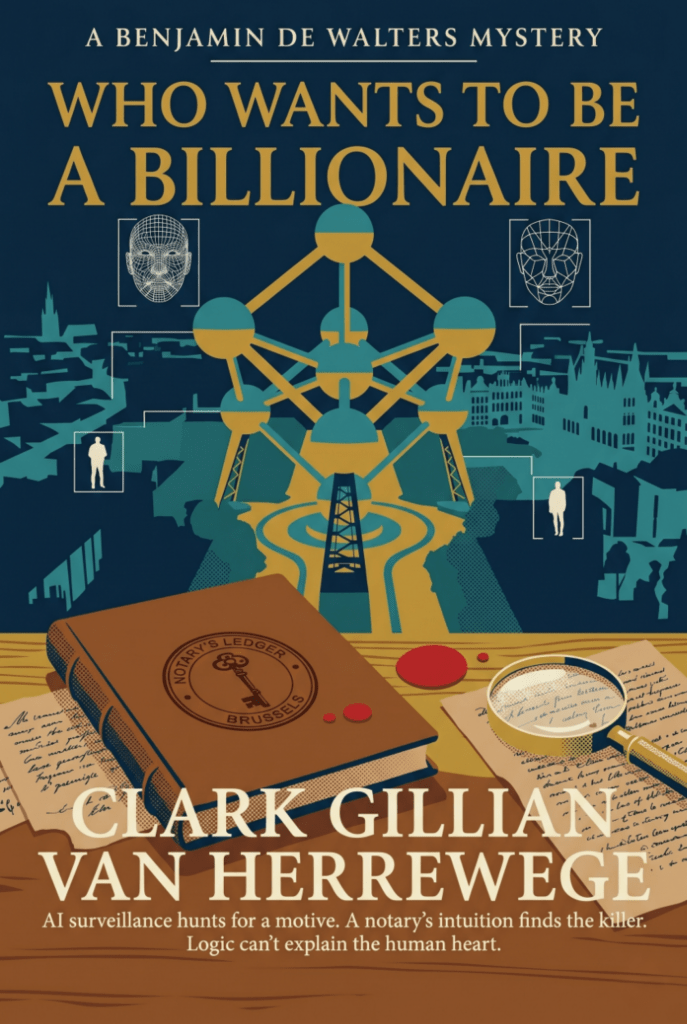
Book Review: Who Wants To Be A Billionaire: A Benjamin de Walters Case byย Clark Gillian Van Herrewege

Book Details:

Author: Clark Gillian Van Herrewege
Release Date: 4 May 2026
Series:
Genre: Thriller, Mystery
Format: E-book 
Pages: 210 pages
Publisher: Brave New Books
Blurb:
One billionaire. One Euro. One secret that could kill.
When eccentric billionaire Johan Paepe is found dead in his Brussels mansion, the reading of his will turns into a high-stakes psychological game. Notary Benjamin De Walters is tasked with a bizarre addendum: a billion-euro fortune has been hidden for a decade, and the murderous secret heir is sitting right in his office amongst Johan’s other next of kin.
As Detective Van Der smet deploys cutting-edge AI facial recognition to hunt for a motive among the family members, Ben must rely on his father’s old-world lessons in observation and human nature. In a climate of digital surveillance and political tension, can a notary’s intuition outpace a police algorithm?
A contemporary tribute to the Golden Age of detective fiction, ‘Who Wants To Be A Billionaire’ explores the thin line between the logic of technology and the chaotic mess of family ties.

Review

Rating: 4 out of 5.

Who Wants to Be a Billionaire? by Clark Gillian Van Herrewege is a wonderfully unusual mystery novel built around inheritance, suspicion, family resentment, AI-assisted policing, and one very observant Brussels notary named Karel Benjamin De Walters. The premise is instantly intriguing: billionaire author Johan Paepe dies under suspicious circumstances just after changing his will, and his possible heirs are gathered together to discover that one among them may already have secretly inherited his fortune years ago. What follows is part locked-room mystery, part family drama, part satire of wealth, and part philosophical meditation on truth, storytelling, and individual and social actions.

What I enjoyed most is the narrative voice as Benjamin De Walters is not a typical detective figure; he is formal, digressive, cultured, legally precise, and frequently distracted by cinema, memory, grief, and moral reflection. His long meditations on Hitchcock, Belgian law, inheritance structures, and social conduct give the book a distinct personality. At times, these digressions slow the plot, but they also make the novel feel unlike a standard commercial mystery. The book is less interested in rushing toward a revelation and more interested in observing how people reveal themselves under pressure.

The central mystery is deliciously theatrical. The Paepe family members are trapped not only by the possibility of murder, but by money itself: the inheritance becomes a moral test, a psychological trap, and a mirror held up to every old grievance in the room. Pieter, Jochen, Cรฉline, Kenny, Joyabel, Layla, Jean-Baptiste, Nele, and Brenda each bring their own history of need, bitterness, injury, or secrecy, and the AI surveillance system adds a sharp contemporary edge to the proceedings.

That said, this is not a lean mystery. The prose is intentionally expansive, and readers who prefer tight, fast-paced thrillers may find the digressions excessive. The Hitchcock commentary, historical asides, and legal-financial explanations are interesting, but they sometimes compete with the immediacy of the investigation. The novel also moves into increasingly strange and metaphysical territory later on, which may divide readers depending on how much they enjoy genre-blending.

Still, Who Wants to Be a Billionaire? is memorable because it refuses to be ordinary. It is witty, eccentric, dramatic, and unexpectedly tender, especially in the epilogue, where the story closes not with spectacle but with companionship, grief, and the image of Brenda, Benjamin, and Ariadne walking through the purple sea of Hallerbos.


You can also read this review at:

Goodreads


Amazon


Book Review: A Moment’s Surrender by John Burt

Book Details:

Author: John Burt
Release Date: 19 January 2026
Series:
Genre: Contemporary Fiction, Literary Fiction
Format:ย E-bookย 
Pages: 332 pages
Publisher: Press Americana
Blurb:
A Moment’s Surrenderย follows freshman writing instructor Paul Bishop in the aftermath of the murder of his former best friend, the renowned poet Tom Corbin. Haunted by guilt and bound by a devastating secret, Paul takes it upon himself to care for Tom’s terminally ill widow, Susan. But the truth he withholds โ€” that Tom had planned to leave Susan for another woman, Paul’s own long-ago lover Rachel Lake โ€” draws Paul into a painful triangle of loyalty, betrayal, and unresolved desire. Caught between the two women, Paul must navigate a web of grief and deception that threatens to undo them all.

Review

Rating: 4 out of 5.

A Momentโ€™s Surrender by John Burt is a literary novel of grief, guilt, desire, betrayal, and the strange moral afterlife of love. The story follows Paul Bishop, a freshman writing instructor whose former best friend, celebrated poet Tom Corbin, is murdered shortly after visiting him in Reno. But the murder is only the event that cracks the surface. Beneath it lies a far more intimate and devastating web: Tom had planned to leave his terminally ill wife Susan for Rachel Lake, Paulโ€™s former lover, and Paul becomes the keeper of this secret even as he grows increasingly bound to Susan and her young son, Jack.

What makes this novel so compelling is its psychological precision. Author Burt is not writing a conventional murder mystery, though the book does contain a murder, an investigation, and the consequences of a violent death. The real mystery here is emotional: what do we owe the dead, what do we owe the living, and how much truth can love bear before it collapses under its own weight? Paul is a fascinatingly flawed protagonist who is passive, guilt-ridden, evasive, intellectually sharp but morally hesitant. His instinct is often to protect people through concealment, yet every concealment draws him deeper into the very harm he wants to avoid.

The strongest parts of the novel are its character dynamics. Susan is beautifully rendered: grieving, exhausted, morally serious, vulnerable without being weak, and heroic in the way she continues to care for Jack while facing her own illness and loss. Rachel brings a darker, more volatile energy into the book and Tom, though dead early in the novel, dominates the narrative like a gravitational force.

Author Burtโ€™s prose is dense, reflective, and literary. The novel is full of meditations on poetry, faith, moral failure, academia, desire, and mortality and readers who enjoy literary fiction that thinks deeply about relationships will find the book richly rewarding.

What I admired most is that A Momentโ€™s Surrender refuses easy moral categories. Nobody here is simply good or bad, betrayed or betrayer, coward or victim. Love is shown as something that can wound, distort, redeem, and trap people all at once. The novel understands that grief does not purify the dead, guilt does not necessarily make us truthful, and compassion is often tangled with selfishness.

Overall, A Momentโ€™s Surrender is a thoughtful, emotionally intricate, and intellectually serious debut. It is not a light read, but it is a rewarding one; especially for readers drawn to literary fiction about grief, moral ambiguity, failed love, and the difficult grace of continuing after irreparable damage.


You can also read this review at:

Goodreads


Amazon


Book Review: Salvation Reignedย by Travis Peterson

Book Details:

Author: Travis Peterson
Release Date: 31 March 2026
Series:
Genre: Dystopian, Post-Aplocalypse, Sci-Fi
Format:ย E-bookย 
Pages: 120 pages
Publisher:
Blurb:
A rogue planet is coming. Humanityโ€™s last city has a plan. You wonโ€™t like it.
Pete wakes in POD 217 with blood on his face and no memory of yesterday. The Last Great City is clean, pleasurable, and perfectly controlled โ€” as long as its citizens follow the cycle. Reset. Comply. Repeat.
Pete keeps failing the reset.
Somewhere in the city, a woman named Marla is looking for him. Somewhere in the past, two scientists just watched something enormous pass in front of Betelgeuse. And somewhere at the edge of a dying wasteland, a cybernaut older than civilization is sitting under a cherry tree, watching the feral descendants of humanity dance under a dying star.

Salvation Reignedย moves across fractured time and colliding perspectives โ€” the scientists who saw it coming, the city that chose control over truth, the lovers whose bond survives every attempt to erase it, and the machine left behind to witness what persists when everything else is gone.
Raw. Nonlinear. Uncompromising.
This is not a story about heroes. It is a story about what love, memory, and consciousness do when a system tries to delete them.
Adult content: extreme language and graphic violence.
For fans of Philip K. Dick, Chuck Palahniuk, and Jeff VanderMeer.

Review

Rating: 4 out of 5.

Salvation Reigned by Travis James Peterson is a strange, abrasive, darkly comic work of dystopian science fiction that reads like the end of the world filtered through panic, intoxication, political theatre, body horror, and cosmic absurdity. The novel begins with Pete, a scientist working on a singularity weapon to stop Nyx, a rogue planet on a collision course with Earth, but very quickly expands into something much wilder: a collapsing civilisation, performative leadership, feral evolution, cybernauts, strongholds, memory cycles, and the unsettling question of whether โ€œsaving humanityโ€ means anything if humanity has already lost itself.

What immediately stands out is the bookโ€™s voice. It is raw, fragmented, profane, hallucinatory, and deliberately excessive. Author Peterson writes in short bursts that feel part fever dream, part stand-up routine, and part apocalypse sermon. This style will not be for everyone, but it gives the novel a distinctive pulse. The political satire is especially sharp in the early sections, where the President, his cabinet, and the media apparatus respond to planetary extinction with ego, spectacle, branding, and grotesque public performance. The discovery of Nyx by Gilbert and Lewis, followed by the governmentโ€™s attempt to control the narrative, sets the tone beautifully: this is a world too stupid, vain, and overstimulated to face its own ending with dignity.

Thematically, the novel is surprisingly rich beneath its chaotic surface. It is deeply concerned with survival, control, memory, bodily autonomy, propaganda, technological salvation, and our recurring instinct to turn even catastrophe into hierarchy. That said, Salvation Reigned is not a smooth or conventionally polished read. Its intensity can become overwhelming, and the constant barrage of profanity, sexual imagery, violence, and surreal humour may exhaust some readers. The prose is intentionally jagged, but there are moments where that jaggedness blurs clarity. Readers looking for traditional pacing, clean exposition, or restrained dystopian storytelling may struggle with it. However, readers who enjoy experimental speculative fiction, satirical apocalypse narratives, and fiction that is willing to be ugly, funny, clever, and uncomfortable all at once may find this book fascinating.

Overall, Salvation Reigned is bold, chaotic, and extremely strange in a way that feels entirely intentional. It is not simply about stopping the apocalypse; it is about what people do when extinction becomes a certainty, and how every system (political, technological, spiritual, and biological) tries to claim the right to define survival. It is messy, provocative, and often grotesque, but it also has flashes of real beauty, especially in its final meditation on memory, destruction, and the life that continues after us.


You can also read this review at:

Goodreads


Amazon


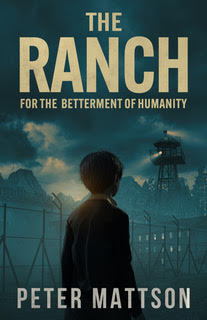
Book Review: Theย Ranch: Forย Theย Betterment of Humanity by Peter Mattsonย 

Book Details:

Author: Peter Mattson
Release Date:
20 February 2026
Series:
Genre: Political Dystopian, Sci-Fi, Thriller
Format:ย E-bookย 
Pages: 288 pages
Publisher:
Blurb:
In the dystopian nation of Harkiem, no one questions the systemโ€”until journalist Jones Torren investigates the death of thirteen-year-old Jack Ovens and uncovers a conspiracy that could cost him his life.
Jack Ovens has always been labeled a troublemaker. After a series of mistakes, he is sent to the Refinement Centreโ€”a government-run program promising discipline, reform, and job training. What Jack encounters is a system that favors some boys while quietly keeping others down.

Months later, journalist Jones Torren is assigned to cover Jackโ€™s death. What begins as a routine human-interest story quickly unravels into something far more disturbing. Records are missing. Testimonies donโ€™t align. And more families are coming forward with the same quiet, devastating truth: their sons never came home. As Jones digs deeper, he uncovers a hidden extension of the program, The Ranch. What happens there isnโ€™t reform. Itโ€™s something worse.
Exposing The Ranch could topple a nation.
It could also get Jones killed.
The Ranch is a gripping dystopian novel that asks the question: What if the system meant to save society is quietly destroying its children? The Ranch explores what happens when authority goes unquestioned, and government policies operate in the shadows, revealing a chilling world where the perfect society comes at a devastating human cost.

Review

Rating: 4 out of 5.

The Ranch: For The Betterment of Humanity by Peter Mattson is a dystopian novel that begins with a deceptively familiar problem of a troubled schoolboy, a worried mother, and a system that claims it can โ€œfixโ€ difficult children, before expanding into a much darker examination of state control, institutional discipline, social engineering, and the terrifying ease with which cruelty can be repackaged as reform. The story moves between Jack Ovensโ€™s past, as he is pulled deeper into the Refinement Centre and later the Ranch, and a present-day investigation into what really happened to him.

What works best in the novel is its central idea. Mattson builds a society where children who are deemed disruptive, unproductive, or dangerous are processed through systems designed to make them useful. The Refinement Centre and the Ranch are chilling because they are not presented as openly villainous at first; they are wrapped in the language of discipline, productivity, safety, and โ€œbetterment.โ€ This is where the bookโ€™s strongest dystopian force lies: in showing how authoritarian systems often survive by convincing ordinary people that suffering is necessary for order.

Jack is an effective emotional anchor because he is not written as a perfect victim. He is impulsive, angry, flawed, and often difficult, which makes the systemโ€™s response to him even more unsettling. That said, The Ranch is also a very idea-driven novel, and at times the themes can overtake the characters. Some sections lean heavily into explanation, policy, and institutional mechanics, which may slow the pace for readers looking for a tighter thriller-like dystopian narrative. The novel is strongest when it dramatises its ideas through Jackโ€™s fear, resistance, isolation, and the brutal logic of the Ranch; it is slightly less effective when it pauses to explain the system too directly. A firmer editorial hand could have sharpened some transitions and given the emotional beats more room to breathe.

Still, the bookโ€™s ambition is clear and admirable. This is not a dystopia built only for spectacle; it is built around a moral argument. Author Mattson is interested in how societies justify sacrifice, governments hide violence behind policy, and how easily children can become raw material for ideological experiments. The titleโ€™s promise of โ€œbettermentโ€ becomes darker with every chapter, because the reader understands that the real question is not whether the system works, but what kind of people it is trying to create.

Overall, The Ranch is a thoughtful, unsettling dystopian novel with strong social commentary and a disturbing institutional core. It may be uneven in pacing, but its premise, moral urgency, and critique of forced reform make it a compelling read for readers who enjoy dystopian fiction rooted in ethical questions rather than pure action.


You can also read this review at:

Goodreads


Amazon


Book Review: The Father, the Dog and the Conspiracy Theorist by Cody Burke

Book Details:

Author: Cody Burke
Release Date:
24 March 2026
Series:
Genre: Memoir
Format:ย E-bookย 
Pages: 274 pages
Publisher: Eternal Lotus Publishing
Blurb:
The Father, the Dog and the Conspiracy Theorist is Cody Burke’s unfiltered story of breaking down and breaking free. In this raw and darkly funny memoir, the author battles his ego and demons as he navigates the absurdity of 2020 as a “conspiracy theorist”. His father is dying, but his family is more concerned about social distancing. He attempts to destroy the government narrative to save his family and to save the worldโ€ฆ or is he just stroking his own ego? Through psychological spirals, absurd humour, and uncomfortable honesty, the author strives to “question everything”. This memoir pulls you inside to not only the chaos of mental collapse, but to the chaos of evolution. You will find humour in the madness, hope in the heartbreak, and perhaps even you will begin to question everything. Just don’t lose your headโ€ฆ

Review

Rating: 3.5 out of 5.

The Father, the Dog and the Conspiracy Theorist by Cody Burke is a raw and candid memoir about mental health, family, masculinity, fear, spiritual awakening, political disillusionment, and grief. Beginning with author Burkeโ€™s sense that part of him โ€œdiedโ€ at twenty-seven, the book moves through childhood in the west of Scotland, anxiety, insecurity, marijuana dependence, self-diagnosis, lockdown, conspiracy thinking, his intense bond with his father, and finally the arrival of Tuco (the little Jack Russell) who becomes the emotional and spiritual centre of the memoir.

What makes the book compelling is its voice. Author Burke writes with rough-edged honesty, lacing profanity, humour, wounds, and self-awareness in an often brutally unfiltered way. The prose is not polished in a conventional literary sense, but it has a strong confessional force. The early chapters are especially effective because they reveal the emotional foundation beneath everything that follows. The sections on lockdown and conspiracy thinking are likely to be the bookโ€™s most polarising. Still the book is most interesting when read less as a manifesto and more as a portrait of a mind under pressure.

If I had one reservation, it is that the book can sometimes feel overextended. There are moments where the digressions into politics, online rabbit holes, and ideological analysis could have been tightened to give the memoir a sharper emotional through-line. However, the sprawl also feels inseparable from the bookโ€™s identity. This is not a neat memoir about healing. It is a messy, searching, sometimes uncomfortable account of a man trying to understand how fear enters the body, love keeps people tethered, and grief can split reality into a before and after.

Overall, The Father, the Dog and the Conspiracy Theorist is a fiercely personal memoir with a great deal of heart beneath its anger and chaos. Its most powerful achievement is its portrait of love: love between father and son, love for a dog who becomes family, and love as the fragile force that keeps a person from disappearing into fear completely.


You can also read this review at:

Goodreads


Amazon


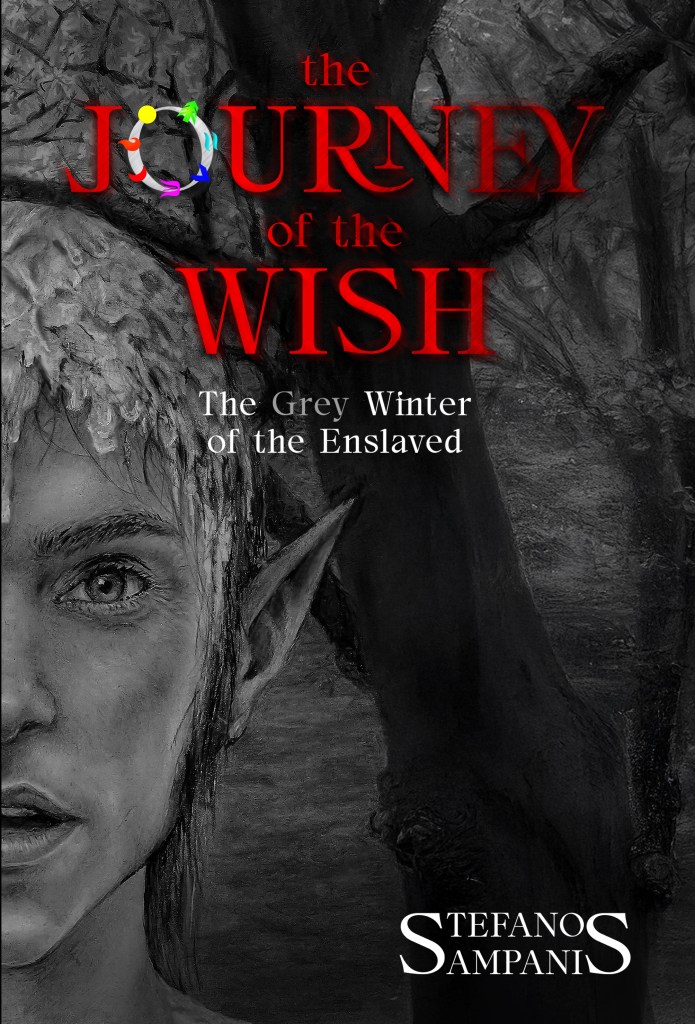
Book Review: The Grey Winter of the Enslavedย (The Journey of the Wish Book 1)ย by Stefanos Sampanis

Book Details:

Author: Stefanos Sampanis
Release Date: 19 January 2026
Series: The Journey of the Wish (Book 1 of 2)
Genre: Fantasy
Format: E-book 
Pages: 435 pages
Publisher:
Blurb:
I perceived the world and acknowledged all of its colours. There was truth; the kind you cannot simply speak of. A tale suits the cause better. It is a disguise that anyone can enjoy and if intrigued, look behind it. This is my testament. A fantasy saga exploring the most human reality. A Journey that lies ahead and matures with each page turned.

Review

Rating: 4 out of 5.

The Grey Winter of the Enslaved by Stefanos Sampanis, the first book in The Journey of the Wish series, is an ambitious epic fantasy that opens with myth, grief, and exile rather than easy adventure. At the centre of the story is Glimm, a young Elf-Fairy child whose life is violently severed from Spring after his mother is killed by Orcs and he is forced into Winter, where survival comes at a devastating cost: blindness, loss of touch, a hail-covered body, and enslavement under King Semela in the Mount of Billows. The novelโ€™s mythology is dense and distinctive, built around Seven Gods, seasonal laws, Slumber, curses, Clarity, and the uneasy moral structure of the Enslaved.

What immediately stands out is the originality of the worldbuilding. Author Sampanis does not offer a conventional elves-and-orcs fantasy; instead, he constructs a world governed by seasons, divine attraction, ritual labour, and ecological duty. The Enslaved are not merely prisoners; they are cursed servants of Winter, responsible for gathering the remnants of Spring and helping the season function. This gives the novel one of its strongest ideas: that punishment, purpose, survival, and servitude can become frighteningly entangled. Glimmโ€™s Clarity, his ability to perceive the world in grey, three-dimensional impressions after losing his sight, is also a fascinating narrative device, and it shapes the prose in unusual ways.

Emotionally, the novel is strongest when it focuses on Glimmโ€™s grief and his complicated relationships. His bond with Than, the silent stone Giant, is one of the bookโ€™s most tender elements; without conventional dialogue, their friendship develops through loyalty, protection, humour, and repeated acts of trust. Ephiren, the old Elf, gives the story philosophical depth and helps Glimm understand pain, memory, and purpose. Setierphiane, the water Wisp, introduces hope, longing, and the possibility of return, not only to Spring, but to feeling, desire, and choice. Through these relationships, Glimm becomes more than a cursed child; he becomes someone slowly learning the difference between survival and living.

That said, this is not an easy or fast read. The prose is heavy, sometimes overextended, and the worldbuilding can feel overwhelming, especially in the long mythological passages and repeated explanations of divine systems. The translation also gives the language a slightly formal, sometimes uneven quality; while this occasionally adds to the mythic atmosphere, it can also make certain sentences feel stiff or densely packed. Readers who prefer clean, swift fantasy plotting may struggle with the bookโ€™s pace and philosophical weight. But readers who enjoy slow, immersive, lore-rich fantasy, especially stories that feel closer to myth than modern commercial fantasy, will likely find a great deal to admire here.

Overall, The Grey Winter of the Enslaved is a dark, unusual, and deeply imaginative opening to The Journey of the Wish. It is impressive in scope, sincerity, and conceptual ambition. Its greatest strength lies in the way it turns fantasy suffering into a meditation on purpose: what it means to lose oneโ€™s world, to be remade against oneโ€™s will, and still search for a wish powerful enough to lead one back toward life.


You can also read this review at:

Goodreads


Amazon


ARC Review: Play From Your Heart byย Scott Martinย and Coryanne Hicks

Book Details:

Author: Scott Martinย andย Coryanne Hicksย 
Release Date: 9 June 2026
Series:
Genre: Soccer Biography
Format:ย E-bookย 
Pages: 227 pages
Publisher: Library Tales Publishing
Blurb:
When rising college soccer coach Scott Martin was struck down by a rare, flesh-eating infection that took both hands and parts of his feet, doctors told him he was lucky just to survive. But survival wasnโ€™t enough. Overnight, the man who lived for the game had to relearn how to move, teach, and live without the very tools that defined him.
From hospital beds and courtroom battles to the touchline of a dusty youth-league field, Martinโ€™s twenty-year odyssey is one of heartbreak and rebirth. He rebuilt his body, lostโ€”and foundโ€”his purpose, married the doctor who saved him, adopted five children from around the world, and, when everything seemed over again, rediscovered his passion by leading a ragtag team of twelve-year-olds to an undefeated state championship.
Told with unflinching honesty and humor,ย Play From Your Heartย is a memoir about endurance, grace, and the power of sport to heal what medicine cannot. For anyone whoโ€™s ever faced the unthinkable, and still chosen to stand back up, this is a story that proves the human spirit is undefeated.
Fans ofย Wild,ย Crying in H Mart, andย Good for a Girlย will find themselves cheering, weeping, and ultimately believing again in the beautiful game, and in the resilience of the human heart.

Review

Rating: 5 out of 5.

Play From Your Heart by Scott Martin and Coryanne Hicks is a memoir about survival, disability, grief, family, and soccer, but more than anything, it is a book about identity: what happens when the life you built, the body you trusted, and the future you assumed were yours are violently interrupted. The book begins with Martin at the height of his physical and professional confidence, driving toward a Nike regional soccer camp in 1993, convinced his coaching career is moving exactly where it should. Within days, that momentum collapses into a medical catastrophe: toxic shock syndrome, necrotizing fasciitis, a month-long coma, multiple organ failure, and the amputation of both hands and parts of both feet.

What makes the memoir so compelling is its refusal to make resilience look neat. Martinโ€™s recovery is not presented as a glossy motivational arc where determination magically solves everything. Instead, the book gives us the brutal daily mechanics of rebuilding a life: learning to sit up, stand, walk, use prosthetic hooks and later myoelectric hands, feed himself, drive again, coach again, and endure the emotional fog that follows trauma. Some of the strongest sections are not the most dramatic medical moments, but the quieter ones; the frustration of eating spaghetti with hooks, the humiliation of being stared at, the panic attacks, the guilt of watching family suffer, and the slow recognition that physical disability can become an emotional one when grief is left unprocessed.

The heart of the book, however, lies in its relationships. Martinโ€™s mother is unforgettable: fierce, unsentimental, and almost mythic in her refusal to let him surrender. His friends, teammates, medical team, and later his young soccer players all become part of the larger story of how a person is held together by community when willpower alone is not enough. I especially appreciated how the memoir keeps returning to soccer not merely as a profession, but as a language of life. The โ€œbeautiful gameโ€ becomes Martinโ€™s way of understanding discipline, improvisation, dignity, loss, teaching, and joy. By the end, when he tells young players that they do not need expensive cleats or constant instruction, only โ€œa ball and a wall,โ€ the title lands with real emotional force: to play from your heart is not a slogan here; it is a philosophy earned through pain.

Overall, Play From Your Heart is a moving and candid memoir about catastrophic illness, disability, adaptation, coaching, and the stubborn work of reclaiming joy. It is painful in places, but never self-pitying; inspiring, but never simplistic. Most importantly, it understands that resilience is not the absence of grief, it is the process of learning how to live alongside it.


You can also read this review at:

Goodreads


Amazon


Book Review: Inconclusive Volume 1 by Alexandraย Devaneย 

Book Details:

Author: Alexandra Devane
Release Date: 31 August 2025
Series: The Shards of Sansatia Series (Book 1 of 2)
Genre: Fantasy, Dark Romantasy
Format: E-book 
Pages: 139 pages
Publisher:
Blurb:
Eighteen-year-old Acteo Venand is an elite striker cadet at Inoton Academy, a military institution that prepares him to battle Noxvaleres, supernatural warriors who hold sway over the three pillars of desire: memory, fantasy, and reality. With graduation just a few months out, Acteo is ready to dedicate his life to the righteous destruction of Noxvaleres and avenge the traumas that he and his family have enduredโ€”until an ill-advised prize fight entangles him with Reyna Ward, an alluring assassin and Inconclusive, meaning a human with a chance at converting into a Noxvalere. Reyna continuously challenges Acteoโ€™s worldview, and soon, his understanding of the distinctions between human and Noxvalere, and justice and desperation, begins to fracture.

In this spicy dark Romantasy Series, you will find
โ€“ Magic, mystery, and mayhem
โ€“ Crime & Intrigue
โ€“ Sword & Sorcery with a modern twist
โ€“ A fascinating cast of characters who are as skilled at secrecy as they are at combat.

Review

Rating: 4 out of 5.

Inconclusive Volume 1 by Alexandra Devane, the first book in The Shards of Sansatia Series, is a dark, dense, high-stakes fantasy that throws the reader into a world already heavy with war, trauma, magical threat, military hierarchy, criminal networks, and moral ambiguity. From the opening chapters, the book establishes a brutal conflict between Andrivalians and Noxvaleres, while centring its emotional tension around cadets like Acteo Venand, Inferi Ward, Kayla Deyrin, and the dangerous, wounded, fascinating Reyna Ward.

What stands out most is the sheer ambition of the worldbuilding. This is not a light fantasy that eases the reader in gently. Author Devane builds an elaborate system of strikers, Inconclusives, Street Strikers, Casters, By-product, Spirit Glass, Jourvalerin weapons, and political-criminal power structures. The mythology is layered and often compelling, especially in the way the book treats โ€œInconclusivesโ€ โ€” people at risk of converting into Noxvaleres โ€” not simply as magical anomalies, but as socially feared, politically controlled bodies. Reynaโ€™s history with the Street Strikers, her connection to Tereus Orsin, and her eventual relocation into Inoton Academy give the novel its sharpest emotional and narrative charge.

The character work is where the book is most interesting. Acteo is not just a gifted soldier; he is grief-struck, guilt-ridden, morally unstable in places, and deeply shaped by the loss of General Sable. Inferi is perhaps even more intriguing because of the tension between who he appears to be at the Academy and what his past still ties him to. Kayla and Aliโ€™s relationship adds another layer of emotional realism, especially through Kaylaโ€™s grief, dependency, and self-sabotage. But for me, Reyna is the bookโ€™s gravitational force: damaged, deadly, sharp-edged, and constantly negotiating survival in systems that have used, trained, and branded her. Her scenes often carry the strongest psychological intensity.

That said, this is also a demanding read. The bookโ€™s complexity is both its strength and its weakness. There are moments when the terminology, factions, backstory, emotional subplots, and political mechanics arrive in such abundance that the pacing becomes heavy. Readers who enjoy immersive, lore-rich fantasy will likely appreciate this density, but those who prefer cleaner exposition and faster narrative movement may find the opening stretch especially challenging. The prose is emotionally charged and often vivid, though occasionally the intensity of the writing makes the narrative feel overpacked.

Still, Inconclusive Volume 1 has a distinct identity. It blends military fantasy, dark academia, crime syndicate intrigue, trauma psychology, and morally grey romance-adjacent tension into something ambitious and unusual. By the end, with Reyna entering the guarded world of Inoton Academy and Volume 2 clearly positioned to deepen the conflict, the book feels like the opening movement of a much larger, darker saga.


You can also read this review at:

Goodreads


Amazon


Book Review: The Abnormal Gumshoe (The Fayetteville Series Book 2) by Tamar Anolic

Book Details:

Author: Tamar Anolicย 
Release Date: 1 March, 2026
Series: The Fayetteville Series (Book 2)
Genre: Crime, Thriller, Mystery
Format:ย E-bookย 
Pages: 214 pages
Publisher:
Blurb:
Chloe Weaver is the oldest daughter in a conservative Christian family of Fayetteville, Arkansas who lives biblically: long skirts for the women, home-schooling for the children, weekly church attendance and old-fashioned courting rules that lead to marriage.
As she turns thirty and remains unmarried, however, Chloe begins to wonder if sheโ€™ll ever have the happy marriage and many kids that she has been led to believe constitutes the perfect life. When her parents allow her to court Barnabas Anderson, Chloe knows she should be ecstatic. Instead, she is uncomfortable with the twelve-year age gap between her and Barnabas. Besides, Barnabas has always been a littleโ€ฆ weird.

When Barnabasโ€™ brother visits the Weavers, bringing tales of Barnabasโ€™ previous wife and her untimely death, Chloe realizes how little she knows about Barnabas. As she prepares for a prayer assembly in San Francisco, where Barnabas used to live, Chloe decides to investigate his past and his wifeโ€™s death. With the help of Detective Logan Cartwright of the San Francisco Police Department, Chloe steps out of her comfort zone to find the truth- and find hope for her future.

The Abnormal Gumshoe is the sequel to the award-winning novel Two Sisters of Fayetteville.

Review

Rating: 4 out of 5.

The Abnormal Gumshoe by Tamar Anolic is an unusual and engaging mystery that begins with a woman slowly realising that the life built around her may not be the life she wants. The novel follows Chloe Weaver, the thirty-year-old eldest daughter in a deeply conservative Christian family in Fayetteville, Arkansas. Still unmarried, still living at home, and still carrying much of the householdโ€™s invisible labour, Chloe is already questioning her place in the world when her parents approve a courtship with Barnabas Anderson, an older man from their church whose awkwardness has always unsettled her.

What begins as a courtship drama gradually turns into a murder investigation, when Barnabasโ€™s brother reveals that Barnabas had once been married in San Francisco, and that his first wife, Clara, died under circumstances officially ruled a suicide. Chloeโ€™s decision to look into Claraโ€™s death gives the novel its detective spine, but what makes the story compelling is not only the mystery itself, it is the way the investigation becomes Chloeโ€™s first real act of self-direction.

The novelโ€™s strongest element is Chloeโ€™s voice. She is observant, anxious, funny in small flashes, and shaped by religious obedience without being reduced to it. Author Anolic does a good job of showing how Chloeโ€™s world has trained her to second-guess herself. This makes the mystery more emotionally layered than expected, because Chloe is not only investigating Barnabas, she is also investigating the boundaries of her own life. The book does not mock Chloeโ€™s religious background, which I appreciated. Instead, it examines the cost of a system where women are taught to wait, obey, serve, and call that fulfilment.

That said, the novel is not without its rough edges. The pacing is gentler than readers might expect from a mystery, especially in the early chapters where domestic details and internal reflection take up considerable space. Some scenes could have been tightened, and certain investigative developments arrive rather conveniently.

Overall, The Abnormal Gumshoe is a thoughtful, character-led mystery with a distinctive protagonist and a strong emotional core. It is less a hardboiled detective novel and more a story of awakening wrapped around a cold case. Chloeโ€™s transformation from overlooked daughter to determined investigator gives the book its real satisfaction, and by the end, the mystery matters not only because justice is needed for Clara, but because Chloe herself deserves a future chosen by her own hands.


You can also read this review at:

Goodreads


Amazon


Book Review: Sleeping With the Enemy: What the White House Still Misses on China by Edouard Prisseย 

Book Details:

Author: Edouard Prisseย 
Release Date: 25 March, 2026
Series:
Genre: ย Macroeconomics, International & World Politics, Economics
Format:ย E-bookย 
Pages: 147 pages
Publisher:
Blurb:
A Wake-Up Call for the West
For decades, Western leaders assumed that deeper economic integration with China would produce stability, openness, and shared prosperity. Instead, those policies helped accelerate Chinaโ€™s wealth accumulation and strategic leverage.
Inย Sleeping With the Enemy: What the White House Still Misses on China, independent political observer Edouard Prisse examines the political, economic, and media assumptions that shaped Western policy toward Chinaโ€”and the consequences of those assumptions today.
This book argues that prevailing free-trade orthodoxies and elite consensus have obscured the long-term risks of economic dependence. By revisiting the decisions, predictions, and narratives that shaped public understanding, Prisse challenges readers to reconsider what the West believed about globalizationโ€”and what those beliefs may have cost.

Review

Rating: 4 out of 5.

Sleeping With The Enemy by Edouard Prisse is a forceful, politically charged work of economic argumentation centred on the urgent claim that the West, particularly the United States, made a grave strategic error when it opened free trade with China in the early 2000s, and that this error has allowed China to grow into a far more dangerous economic and geopolitical power than Western leaders seem willing to admit. From the foreword itself, author Prisse is clear about the bookโ€™s purpose: to identify the original mistake, explain the current consequences, and propose a corrective strategy he calls the โ€œSix-Month Moratorium.โ€

What makes the book compelling is not subtlety, but conviction. Prisse writes with the urgency of someone who believes he saw the danger long before others did, and the manuscript repeatedly returns to two formative experiences: his earlier prediction regarding economic collapse in former East Germany after reunification, and his later concern that Chinaโ€™s low-cost production structure would create a dangerously one-sided trade relationship. Whether one agrees with all of his conclusions or not, there is no denying the clarity of his central thesis: he believes the West is not merely buying cheap goods from China, but helping finance the rise of a rival power.

The strongest sections of the book are those dealing with macroeconomic imbalance. Prisseโ€™s argument that Chinaโ€™s vast foreign exchange reserves and continuing trade surpluses have given Beijing extraordinary geopolitical leverage is presented with intensity and purpose. He connects trade, industrial decline, political influence, Taiwan, Europeโ€™s weakness, and Chinaโ€™s global ambitions into one broad strategic framework. The book is at its best when it focuses on this larger pattern rather than isolated outrage. His proposed solution of replacing free trade with โ€œEqual Tradeโ€ after a carefully prepared six-month transition is ambitious, provocative, and certainly more structured than a simple call for tariffs.

That said, this is also a book that demands a critically alert reader. Its tone is sometimes sweeping and occasionally overconfident in its judgments of individuals, institutions, and nations. Some claims, particularly around a perceived Chinese โ€œfifth columnโ€ influencing American thought, are presented more as inference than demonstrable fact, and readers may rightly want stronger evidence before accepting such serious assertions. The bookโ€™s political framing, especially its praise of Donald Trumpโ€™s instincts alongside criticism of his advisers, will also divide readers depending on their own political and economic perspectives.

Stylistically, the manuscript is direct, argumentative, and personal. It reads like an urgent intervention and that gives it energy, but also creates unevenness. There are moments when the repetition strengthens the warning, and others where the book might have benefited from tighter editorial control and a more measured rhetorical register. Still, the authorโ€™s sincerity and sense of intellectual responsibility come through strongly.

Overall, Sleeping With The Enemy is a bold and deeply opinionated book about trade, China, Western complacency, and the future of democratic power. It is not a light read, nor a detached one, but it is intellectually provocative and designed to provoke debate. Readers interested in China, global trade, U.S. strategy, and the economic roots of geopolitical power will find much here to engage with, even when they disagree.


You can also read this review at:

Goodreads


Amazon


Book Review: The Lucky Penny by Stephanie Vaccaro and Louise Allen

Book Details:

Author: Stephanie Vaccaro & Louise Allen 
Release Date: 4 April, 2024
Series:
Genre: Science Fiction, Dystopian, Post-Apocalyptic
Format: E-book 
Pages: 406 pages
Publisher:
Blurb:
Penny never thought sheโ€™d have family. Penny lost family when Penny little. Penny scared when taken away from home. Penny stay quiet. Penny lost, Penny found. Now Penny have new family. Penny brave. Penny tell her story.
Julietta Milardโ€™s life had been rather mundane up until a few years ago when she found herself in the small town of Waterwealt. Though she had intended to move on to bigger and better things, a beautiful museum preserved in time had her sprouting roots rather than traversing the Wastes further.
Having helped the sleepy town with its various mechanical-based problems, Julietta thought found herself in a smooth routine. That was until the universe decided to throw a curveball her way when about two cycles later a small girl shows up at her doorstep, sick, injured, and unable to speak with only a penny necklace as any identification.
Nearly a cycle and a half later, the young girl, whom Julietta named Penny, has recovered but remains mute despite her best efforts. On top of taking care of little Penny, restoring the museum, and trying to find a solution for the now increasingly weakening water pressure in town, Julietta is faced with another issue. A stranger has come to town, a โ€˜doctorโ€™ named Charles Hawthorne, who seems to think the Arcane is real. Brushing him off, she finds herself questioning what the world is coming to. That is until the world as she knows it to come crashing down around her and vanishes in a cloud of dust.

Review

Rating: 4 out of 5.

The Lucky Penny by Stephanie Vaccaro and Louise Allen is a post-apocalyptic dystopian novel with a surprisingly tender heart. Set in a dust-scarred world still recovering from the devastation of the Great War, the story begins with Julietta, a young restorer living in an abandoned museum, and Penny, the silent little girl she has taken under her care. What starts as an intimate survival story gradually expands into a larger conflict involving lost knowledge, government-controlled โ€œgiftedโ€ children, dangerous facilities, buried science, and the mysterious force known as the Arcane.

The strongest part of the novel is, without question, its central found-family dynamic. Julietta is practical, guarded, intelligent, and extremely protective; Charles Hawthorne brings warmth, medical knowledge, and a gentler emotional steadiness; and Penny, with her silence, her attachment to Nelson, and her extraordinary electrical ability, becomes the emotional centre around which the whole story turns. The relationship between the three grows with real sweetness, especially as Penny slowly begins to trust them enough to reveal fragments of herself. Her transformation from a frightened rescued child into someone loved, protected, and eventually claimed as family gives the novel its most moving thread.

The worldbuilding is ambitious and often engaging. Waterwealt, the museum, the dust storms, the ruined technologies, the fragile settlements, the Apolis Academy, Rho-597, the Curied children, and the recurring tension between science and the โ€œArcaneโ€ all create a layered dystopian setting. I especially liked how the museum functions almost like a character in itself. The novel is at its best when it combines restoration with discovery; when Julietta repairs machines, Charles interprets medical knowledge, and Penny instinctively understands old electronics in ways the adults cannot.

That said, the book does ask for patience. It is a long novel, and there are places where the pacing could have been tighter. Some conversations repeat emotional beats, and certain domestic scenes, while charming, occasionally slow the momentum of the larger dystopian plot. The prose is earnest and accessible rather than highly polished, and readers looking for a lean, fast-moving dystopian thriller may find the middle sections somewhat expansive. However, that same expansiveness also allows the relationships to breathe, which is clearly where the authorsโ€™ emotional investment lies.

Overall, The Lucky Penny is a heartfelt, imaginative, and emotionally sincere dystopian adventure. It blends found family, post-apocalyptic survival, and soft science-fantasy elements into a story that is sometimes rough around the edges but very earnest in its intentions. Readers who enjoy protective family bonds, gifted-child mysteries, ruined-world settings, and hope emerging through care and repair will find much to appreciate here.


You can also read this review at:

Goodreads


Amazon


Book Review: Teslaโ€™s Opera by Mir Seidel

Book Details:

Author: Mir Seidel
Release Date: 02 September, 2025
Series:
Genre: Non-fiction, Crossovers Opera & Biography
Format:ย E-bookย 
Pages: 126 pages
Publisher:
Blurb:
Tesla’s Opera: The Real, Stranger-Than-Fiction Nikola Teslaย brings the visionary inventor Nikola Tesla to life through the opera he inspired,ย Violet Fire. For its creators, only opera could encompass the extremes and surreal qualities of Tesla’s life and career: the visions he had from childhood, his inventions that helped create our wired and wireless world, even his unrealized ideas. Tesla moved in the heights of New York society, yet he never married, and gave his love to a white pigeon.
With a score by minimalist composer Jon Gibson, libretto by Mir Seidel, and directed by Terry O’Reilly,ย Violet Fireย had its world premiere in Serbia, Tesla’s homeland, on the 150th anniversary of his birth.ย Tesla’s Operaย includes the full libretto, stunning photos from the performance, and haunting images from the continuous video projections, along with commentary by the opera’s librettist, director, and conductor, critic Merilyn Jackson, and author/poet Andrei Codrescu.
This book offers us the Tesla we need now-stranger than fiction, worthy of remembrance, and packed with meaning for our time.

Review

Rating: 4 out of 5.

Teslaโ€™s Opera: The Real, Stranger-than-Fiction Nikola Tesla by Mir Seidel, is a hybrid work: part artistic archive, part cultural reclamation, part libretto, part visual-performance document, and part meditation on Tesla as scientist, mystic, showman, futurist, and mythic figure. The result is a slim but densely layered volume that asks us to look past the overused name โ€œTeslaโ€ and return to the actual man behind it.

The bookโ€™s strongest sections are those in which author Seidel reflects on why Teslaโ€™s life demanded operatic treatment. Her framing is compelling: Tesla was not merely an inventor of alternating current, radio-adjacent technologies, robotics, and wireless possibility; he was also a man of visions, contradictions, loneliness, and strange tenderness, most famously embodied in his bond with the white pigeon he loved. That image becomes the emotional and spiritual centre of Violet Fire, allowing the opera to explore not only Teslaโ€™s achievements but his isolation, his yearning, and the mystery of a mind that seemed always half in the laboratory and half in some higher electrical dream-state.

What makes the book especially engaging is its plurality of voices. Andrei Codrescuโ€™s opening poem is sharp, irreverent, and intentionally provocative; Seidelโ€™s essays are lucid and thoughtful; Terry Oโ€™Reillyโ€™s account of directing the opera brings theatrical intelligence and warmth; Merilyn Jacksonโ€™s dance-critical perspective gives the White Dove and choreography their due; and Ana Zorana Brajoviฤ‡โ€™s brief reflection adds a deeply felt Serbian connection to Tesla as cultural hero. Together, these pieces create a living record of an ambitious multimedia opera that moved through Philadelphia, Belgrade, and New York, shaped by music, projection, dance, history, and myth.

Visually, the book is also rewarding. The performance photographs, projection stills, score excerpts, and historical images give the reader a sense of Violet Fire as something larger than text: a stage-world of light, bodies, machinery, pigeons, towers, sparks, and shadow. The libretto itself is poetic and fragmentary in the best sense.

That said, this might not be for readers looking for a straightforward Tesla biography. It assumes some openness to experimental form, opera, performance history, and artistic reflection. At times, the structure can feel more archival than fluid, especially when moving between essays, production notes, libretto pages, and appendices. But this is also part of its purpose: the book preserves the many layers of a performance work while arguing for Teslaโ€™s continued cultural relevance.

Overall, Teslaโ€™s Opera is a rich, unconventional, and intellectually alive tribute to Nikola Tesla and the opera he inspired. It is best read as an artistic companion, cultural essay, and poetic act of reclamation rather than a traditional biography.


You can also read this review at:

Goodreads


Amazon


Book Review: Scrap: Salvaging a Family by Luanne Castle

Book Details:

Author: Luanne Castle
Release Date: 1 January, 2026
Series:
Genre: Memoir
Format:ย E-bookย 
Pages: 172 pages
Publisher: ELJ Editions
Blurb:
Luanne Castleโ€™s new hybrid flash memoir, Scrap: Salvaging a Family (ELJ Editions 2026), is now available to purchase on Amazon and ELJ Editions.

Scrap: Salvaging a Family explores the stain of childhood fear and anxiety on the adult spirit and the experience of reconciling with an aging or dying parent. A daughter has grown up in a household with an angry and abusive father. He keeps the secret of his own biological fatherโ€™s identity from his daughter for decades. Can this family be salvaged?

Review

Rating: 4 out of 5.

Scrap: Salvaging a Family by Luanne Castle is a fragmented, lyrical, and emotionally precise memoir that sifts through family memory, inherited shame, childhood fear, and the difficult work of understanding a parent without excusing the harm they caused. Written as a โ€œmemoir in flash,โ€ the book is built out of short, vivid pieces, named as scraps of childhood, domestic scenes, remembered violence, questions, photographs, family stories, documents, and imagined reconstructions, all stitched together into something devastating and incredibly artful.

At the centre of the memoir is Castleโ€™s father, Rudy, a man carrying the wound of being born โ€œillegitimate,โ€ by the absence of his own father, and by the shame that surrounded his origins. But Castle does not simplify him into villain or victim. He is frightening, volatile, sometimes cruel but he is also resourceful, hardworking, wounded, loving in broken and bewildering ways, and capable of gestures of strange tenderness. This complexity is what gives the memoir its emotional maturity. Author Castle is not writing to settle a score; she is trying to understand the system of hurt that made her father who he was, and how that hurt passed through him into her childhood.

The form of the book is one of its strongest elements. The flash structure mirrors the nature of memory itself as nonlinear, sensory, sharp-edged, and sometimes contradictory. Author Castleโ€™s prose is beautifully controlled, often poetic without becoming ornamental. She has a remarkable ability to locate trauma in objects. The title Scrap is perfect because the memoir is not only about salvage in the literal sense, but about salvaging meaning from what was damaged, hidden, discarded, or misunderstood.

What I admired most is the bookโ€™s refusal to offer easy forgiveness. It moves toward compassion, yes, but not sentimental absolution. Scrap is a beautifully crafted and intelligent memoir about trauma, inheritance, girlhood, secrecy, and family wounds. It is painful, yes, but also tender in unexpected ways. It is a memoir that feels intimate, brave, and unforgettable.


You can also read this review at:

Goodreads


Amazon


Book Review: A Symbol of Time byย John Westley Turnbullย 

Book Details:

Author: John Westley Turnbull
Release Date: 14 November, 2025
Series:
Genre: SScience-Fiction, Dystopian, Alternate History
Format: E-book 
Pages: 243 pages
Publisher:
Blurb:
Survival requires sacrifice. But what if the price is an entire world?
Their home is cold and dying, choked by the toxins of their own progress. Now, an advanced alien species looks toward the Third Planetโ€”Earthโ€”with hope and fear. They see a fertile paradise, but one that is hostile, hot, and dominated by massive, predatory reptiles.
The choice is stark: die in the heat, or remake this new world in their own image.
As they descend to alter the climate and purge the planet of its prehistoric masters, they set in motion a chain of events that will echo through geological time. A Symbol of Time weaves palaeontology and astronomy into a chilling tale of survival. As the new masters of Earth terraform the planet, the question remains: does high intelligence inevitably carry the seeds of its own destruction?

Review

Rating: 4.5 out of 5.

A Symbol of Time by John Westley Turnbull is a haunting speculative fiction that begins with exhaustion, opening on a dying Homeworld, where the last surviving inhabitants of a once-thriving civilisation are forced to abandon their planet and seek refuge on the โ€œThird World,โ€ a beautiful, brutal, water-rich planet teeming with monstrous life. From the very beginning, the novel positions itself as more than a survival story; it is a meditation on ecological ruin, migration, leadership, memory, and the dangerous arrogance of believing that survival justifies everything.

What I found most compelling is the moral tension at the heart of the book. Elthyris begins as a determined leader trying to save her people from extinction, but as the colony reaches the Third World, her decisions grow increasingly severe. The novel does not present colonisation as a clean heroic act. Instead, it asks difficult questions like when does adaptation become domination? When does necessity become cruelty? And how easily does a displaced civilisation carry the seeds of its old destruction into a new world? This gives the book its strongest intellectual weight, especially through the concept of โ€œWorldshaping,โ€ where survival begins to blur into planetary violence.

The world-building is ambitious and often striking. Author Turnbullโ€™s imagined species, their failing Homeworld, the Ark Dawn, the terrifying fauna of the Third World, the underground habitat, and the long generational arc all create a sense of scale that feels genuinely epic. The book is especially effective when it lingers on planetary time and the final movement is one of the most resonant parts of the novel, beautifully tying together the themes of grief, legacy, and the fragile sentient desire to be remembered.

Character-wise, Elthyris, Kithyon, Lyggra, Arrielle, Venryn, and Reuff all serve distinct thematic purposes. Kithyon and Lyggra bring emotional warmth to a narrative otherwise dominated by survival pressure and ethical compromise, while Arrielle becomes a powerful bridge between the founding generation and the long future that follows. Elthyris is perhaps the most interesting figure, not always likeable, not always morally defensible, but consistently compelling because she embodies the terrible burden of leadership under existential threat.

That said, the novel is not without issues. At times, the prose leans heavily into exposition, and some sections read more like historical chronicle than intimate drama. The sweep of the story is impressive, but the emotional immediacy occasionally gets diluted by the sheer amount of world-building, explanation, and long-range plotting. Readers who prefer fast-paced, character-centred sci-fi may find parts of the book dense. But those who enjoy philosophical, ecological, and civilisation-scale speculative fiction will likely appreciate its ambition.

A Symbol of Time is a thoughtful and morally serious science-fiction novel about survival, inheritance, and the repeating patterns of history. It is not merely about reaching a new world; it is about what a species chooses to become once it gets there. Imperfect but extremely ambitious, it leaves the reader with the uneasy sense that memory may be the only true defence against repeating the same old catastrophes. The ending captures this beautifully, reminding us that monuments, like civilizations, are both acts of remembrance and warnings against forgetting.


You can also read this review at:

Goodreads


Amazon


ARC Review: The Fabled One (Book One) by D Reign

Book Details:

Author: D Reign
Release Date: 30 April, 2026
Series: Book 1 of 1: The Fabled one
Genre: Fantasy
Format:ย E-bookย 
Pages: 170 pages
Publisher:
Blurb:
Come on a journey as we follow Gaelin find out who she is. The Fabled One is about a young woman who learns about who she is when her parents (or those she thought were her parents) are tragically killed. Gaelin is wanted by the King and Queen who rule in another realm. Gaelin must leave all that she knows on earth and seek to find her path navigating a fated love with two people who will lay down their lives for her. Gaelin needs to master the powers that she possesses as the Fabled one to bring peace and light to the realms around her. This series is full of intrigue, connecting with the ancestors, finding yourself, and believing in who you are. This a full fiction fantasy book with some steamy scenes so hold onto your hats for this one.

Review

Rating: 4 out of 5.

The Fabled One: Book One by D. Reign does not arrive quietly, it enters through rupture: through death, revelation, prophecy, flight, and the sudden collapse of everything the protagonist thought she understood about herself. From its opening catastrophe, the novel makes its intentions clear. This is a story built on destiny, pursuit, and awakening that leans unapologetically into high emotional stakes and mythic revelation.

At the center of the novel is Gaelin, and she is easily its strongest anchor. What makes her work is not polish but immediacy: she is frightened, angry, mouthy, confused, and often emotionally raw in ways that feel true to her circumstances. The book does not ask her to become composed too quickly. Instead, it lets her remain disoriented by grief and betrayal, even as pieces of her power begin to emerge. That emotional instability gives the novel much of its life. Gaelinโ€™s voice is direct, often impulsive, sometimes funny in spite of herself, and that first-person immediacy carries the reader through some of the bookโ€™s denser exposition.

The other narrative engine here is the growing bond between Gaelin, Lahmae, and Chameleon, and this is where the story begins to take on a more distinctive texture. What starts as rescue and protection gradually becomes something more intimate and fated, and the novel clearly wants to explore not just magical destiny but emotional convergence. There is an earnestness to these dynamics that I found compelling, even when the pace of attachment moves very quickly.

The worldbuilding itself is imaginative, if at times impressionistic. We move through Earth, palace realms, hidden portals, the Fallen planet, magical bloodlines, psychic protections, conjuring, and the increasingly important mythology of the Fabled One. The mythology is interesting, and the sense of layered agendas around Gaelinโ€™s existence gives the book a strong forward thrust. The problem is not a lack of ideas; if anything, it is that the novel contains many ideas at once and does not always distribute them with enough control. Information sometimes arrives in bursts rather than through gradual integration, and there are moments when the reader is being told about systems, titles, histories, and motivations so quickly that the emotional throughline has to work harder to hold everything together.

That, I think, is where the novelโ€™s main limitations lie. The prose has energy, sincerity, and momentum, but it also bears the marks of a draft that could have benefited from further refinement. At times the sentences run too long or repeat an emotional beat more than necessary; at others, the punctuation and phrasing flatten scenes that might otherwise have landed with greater force. There is a strong story here, but it occasionally feels as though it is arriving faster than the language can shape it. Similarly, certain transitions, especially around revelation, trust, and romantic escalation, can feel abrupt rather than fully earned on the page. None of this erases the bookโ€™s strengths, but it does mean that the reading experience is sometimes uneven.

Still, I want to be fair to what the novel is doing well. The Fabled One is never cynical. It is emotionally open, mythically ambitious, and extremely invested in its heroineโ€™s significance. it is refreshing how sincerely it embraces its own stakes. The antagonistic energy around Meridah, Quโ€™Rah, Starmall, and Serena gives the story a clear sense of danger, and the ending understands how to close on intensification rather than closure: Gaelin is changing, her power is growing, and the conflict is clearly widening rather than resolving.

The Fabled One: Book One reads as a fantasy series opener with clear emotional conviction and a strong instinct for dramatic momentum. It is imperfect, certainly, even structurally loose in places, and stylistically rough in others, but it also has heart, urgency, and a heroine whose emotional reality remains compelling even when the world around her becomes increasingly fantastical. Readers who enjoy portal fantasy, magical destiny, dangerous courts, and emotionally charged fantasy romance will likely find plenty here to invest in, especially if they enjoy first books that spend as much time igniting future conflict as resolving present one.


You can also read this review at:

Goodreads


Amazon


Book Review: Star Evolution Volume 1 by Evanjellen

Book Details:

Author: Evan jellen
Illustrator
: Pineapple lavaย 
Release Date: 15 March, 2025
Series:
Genre: Sci-Fantasy, Anime-esque,
Format:ย E-bookย 
Pages: 431 pages
Publisher: Helena St. George
Blurb:
A Cyber beast known as the Ouroboros, came from a higher dimension and viciously attacked the starverse. The land created by a powerful Demon god.
The great Demon Lord fought the Ouroboros to a standstill. She was unable to fully vanquish the beast, so instead, she tore its body apart, sealing it across the stars.
In her time of need, the great Demon Lord received aid. An interloper, the Magician, helped her create a system that produces candidates that have the potential to defeat the powerful god. After countless failures, five female warriors were born, created to finally defeat the perpetual snake god.

However, time is running out, as the great Demon Lord cannot maintain the seals for much longer. Her perpetual nemesis will soon break free. Their failure slay the snake god will bring about the end of the universe. The future depends on the success of the Divine Star warriors.
This is Star Evolution, a story that fuses together a fictional sci-fantasy setting with non-fictional themes of philosophy, self-growth, and realism for a story that transcends normal writing conventions. Together, the five women chosen by fate will overcome the trials of the gods by cultivating their light that is hidden in the darkness. This is a realistic space opera with a grand mystery to unfold!

Review

Rating: 4 out of 5.

Star Evolution, Volume 1 by Evanjellen is an ambition that announces itself from the first few pages to build an entire cosmology and ask the reader to step into it at full speed. From its blood-soaked prologue, with a crimson-armored warrior battling a monstrous silver-eyed serpent across a ruined cosmic battlefield, the novel makes its intentions clear: this is a science-fantasy universe of gods, ancient war, machine beings, sealed calamities, and unfinished destinies. It is expansive, anime-inflected, and unabashedly maximalist in its imagination.

What I found especially interesting is the bookโ€™s dual structure. On one hand, it gives us the large mythic architecture: the Demon Lord, the Ouroboros, the realm gods, the repeated failure of prior โ€œstar warriors,โ€ and the long cosmic project of finding the right champions to finally end the cycle. On the other, it narrows into more local, emotional terrain through Nameless and Divine Flash with two sisters from a harsh village in the Under Realm whose lives are shaped by loss, scarcity, violence, and a growing sense that the systems governing their world are neither just nor trustworthy. That contrast is where the novel often feels most alive.

The strongest character work, for me, lies in those sisterly dynamics. Nameless has an appealing volatility to her; she is impulsive, angry, proud, and deeply loyal, while Divine Flash offers a gentler counterweight shaped by fear, tenderness, and protective love. Their bond gives the story an emotional anchor it needs. By contrast, the realm-level material around Divi, Tony, the council of deities, and the missing Earth Goddess is conceptually rich, but it can sometimes feel more interesting as lore than as immediate drama. The ideas are compelling though the delivery occasionally feels like dense blocks of explanation rather than being revealed as fully dramatized tension.

This is, in many ways, the bookโ€™s chief strength and chief weakness at once. Author Evanjellen clearly has a vivid imaginative grasp of this world, but because the novel carries so much worldbuilding, mythology, and terminology, the pacing can feel overloaded in places. Characters sometimes speak in exposition-heavy bursts, and the prose, while energetic and sincere, can at times become repetitive or mechanically emphatic when a gentler hand might have heightened the drama. That said, the action scenes do have momentum, and when the narrative leans fully into confrontation, it becomes much sharper and more immediate.

I also think it is worth noting that this first volume reads very much like an opening movement rather than a self-contained arc. It is setting pieces into place as it is the beginning of a longer journey.

Star Evolution, Volume 1, is a debut that may work best for readers who actively enjoy anime and RPG-adjacent storytelling with high-concept lore, dramatic confrontations, cosmic hierarchies, chosen-warrior energy, and characters whose destinies are entangled with the fate of worlds. Readers looking for polished restraint or subtle minimalism may find the novel rough around the edges. But readers willing to meet it on its own wavelength will likely find something earnest, imaginative, and promising here; a first volume with visible imperfections, yes, but also real heart and a strong sense of its own universe.


You can also read this review at:

Goodreads


Amazon


Book Review: Shattered But Not Silenced: A Dystopian Novel byย Helena St. George

Book Details:

Author: Helena St. Georgeย 
Release Date: 15 March, 2025
Series:
Genre: Dystopian, Speculative Fiction, Psychological, Social Commentary
Format:ย E-bookย 
Pages: 431 pages
Publisher: Helena St. George
Blurb:
In a world where productivity is the measure of oneโ€™s worth, who decides human value?
Set in a near-future America devastated by economic collapse,ย Shattered But Not Silencedย imagines a regime that targets social service recipients, the disabled, the mentally ill, and the homeless for โ€œreformโ€ under the guise of economic recovery.
At the center is Maya, an autistic young woman navigating a country in turmoil while surviving forced rehabilitation inside the New Thought Center. Her sensory sensitivities, coping mechanisms, and layered internal processing are revealed through her sharp, ironic first-person voice. She is complex. She is observant. She is defiant.
The novel asks difficult questions. Who defines human value? What happens to those who do not meet the definition?

ARC Reader Review:ย “I liked Maya the more I got to know her. The writing is amazing! So many well-crafted sentences and paragraphs. The language used to describe the settings and in dialogue flows. Now that the novel has ended, Iโ€™ll miss Maya. Great job tying up loose ends. Well done!”

ARC Reader Review: “Great writingโ€ฆ You had me at the first page wanting more. Four chapters in and I canโ€™t wait to read the next one! Honestly!!! I canโ€™t put this book down. Maya got arrested! Wow! Didnโ€™t expect that!”

ARC Reader Review: “You know it’s a good read if it makes you cry.”

Review

Rating: 4.5 out of 5.

Shattered but Not Silenced by Helena St. George offers a very unsettling yet profound narrative that examines control, autonomy, and the fragile line between protection and oppression. At its core is Maya, a neurodivergent protagonist wading through a society that increasingly defines human worth through productivity, compliance, and conformity, a premise that feels less like fiction and more like an uncomfortable extension of reality.

What struck me most about this novel is not its dystopian machinery, but its interiority. This is not a plot-driven rebellion story in the conventional sense. Instead, it is a slow, deliberate descent into systems of control, especially economic, institutional, and psychological. The narrative begins almost deceptively grounded, but as the story progresses, the cracks widen, revealing a society tightening its grip through surveillance, propaganda, and systemic erasure.

Mayaโ€™s perspective is the novelโ€™s greatest strength. Her sensory processing, looping thoughts, and emotional responses are not treated as narrative devices but as intrinsic ways of being. Author Helena handles this with notable care and authenticity, ensuring that Maya’s neurodivergence is neither romanticized nor reductive. This lends the narrative a rare intimacy where the reader is not simply observing oppression, but feeling its texture through Mayaโ€™s experience.

Thematically, the novel is relentless. It interrogates systems that claim to rehabilitate but are built to control. The progression from societal unrest to forced confinement and indoctrination is chilling precisely because it feels incremental. Structurally, the book is expansive. With a timeline that spans over a year and a half, the narrative charts Mayaโ€™s transition from a struggling young adult to someone entangled within a system that seeks to redefine her very identity. This progression allows the author to build tension gradually, though, in my opinion, at times it also leads to a sense of narrative diffusion leading to certain stretches that could have benefited from tighter pacing and sharper scene consolidation.

Where the novel wins is in its refusal to offer easy catharsis. The ending, and especially the afterword, makes it clear that this is not a story of triumphant resilience in the conventional sense. Survival here is not heroic; it is uneven and personal. This is a bold narrative choice and that may unsettle readers expecting a more traditional arc, but it ultimately reinforces the bookโ€™s thematic integrity. That said, the novel is not without its limitations. The density of its themes occasionally overtakes narrative momentum, and some external characters feel less fully realized compared to Mayaโ€™s richly developed interior world. Additionally, readers seeking a faster-paced, plot-heavy dystopian thriller may find the introspective tone demanding.

But perhaps that is precisely the point as Shattered but Not Silenced does not try to entertain in the conventional sense, it simply tries to bear witness. It asks difficult questions about who gets to define value, who is deemed โ€œfitโ€ for society, and what happens to those who exist outside those definitions. And more importantly, it refuses to look away from the answers.


You can also read this review at:

Goodreads


Amazon


Book Review: GameTrap: Silicon Dreams, Criminal Schemes by David Yarnton

Book Details:

Author: David Yarnton
Release Date: 8 December, 2025
Series:
Genre: Techno-Thriller, Financial Thriller, Boardroom/Corporate Thriller
Format:ย E-bookย 
Pages: 472 pages
Publisher: 8TE,ย 8 Tech Express Limited
Blurb:
When Isabella Lindstrรถm is drawn into the glittering world of VANTIXโ„ข the tech startup promising to take on Nintendo she thinks sheโ€™s backing the next big thing. But as launch parties give way to missing money, vanished allies, and whispers of criminal ties, she and her friends uncover a scheme far bigger than anyone imagined.
Set across Stockholm, London, and Los Angeles, โ€œGameTrapโ€ is a gripping financial thriller where ambition comes at a cost, and the truth is buried under layers of branding, buzz, and betrayal.
INSPIRED BY REAL EVENTS
Against the high-stakes backdrop of early 2000s tech ambition, โ€œGameTrapโ€ weaves a compelling tale of deception, ambition, and fractured loyalties loosely inspired by the real-world collapse of Gizmondo. What begins as a flashy handheld-console launch spirals into a far-reaching thriller filled with questionable finance, charismatic manipulators, and a determined trio trying to uncover the truth.

Review

Rating: 4.5 out of 5.

GameTrap by David Yarnton is the kind of thriller that thrives not on bullets or body counts alone, but on performanceโ€”on image, seduction, money, access, and the soft glamour of rooms where everybody is pretending not to calculate everybody else. Framed against the feverish optimism of the early-2000s gaming boom and loosely inspired by the real-world collapse of Gizmondo, the book enters its world with style: handheld-console ambition, startup mythology, champagne-fuelled persuasion, and the dangerous ease with which hype can be mistaken for innovation. From the outset, author Yarnton makes it clear that VANTIX is not merely a tech dream but a warning system disguised as one.

I especially liked the novel’s atmosphere of cultivated unreality. The early Uppsala and Stockholm sequences are lush with intrigue, but also just slightly overlit, as though the reader is being invited to admire the chandeliers while something darker moves beneath the floorboards. The introduction of Isabella Lindstrรถm and Isolde is written with almost operatic confidence: they arrive as forces, women whose glamour is inseparable from their danger. That heightened, almost cinematic energy becomes the bookโ€™s signature mode. Author Yarnton clearly understands the allure of surfaces, of beautiful hotels, expensive wine, private dinners, and coded invitations, and more importantly, he understands how those surfaces can be weaponised. In that sense, GameTrap is as much about theatre as it is about finance.

The novelโ€™s core conceit, a gaming platform and handheld device that doubles as a behavioural surveillance engine, gives the book its most interesting thematic edge. What begins as startup seduction gradually reveals itself as something far more invasive: a system designed not just to entertain, but to profile, predict, and monetise human behaviour. Author Yarnton is at his strongest when he leans into that idea. The line between game, trap, and financial instrument grows increasingly blurred, and the novel is most compelling when it exposes how naturally those worlds bleed into each other.

The character dynamics, too, carry a real current of interest. Isabella is arguably the novelโ€™s most compelling creation: poised, intelligent, and always slightly unreadable, she moves through the narrative with the kind of controlled opacity that suits this world. Her relationship to power gives the book one of its stronger psychological undercurrents. Isolde, by contrast, brings volatility, instinct, and a more emotionally exposed energy, particularly once the novel begins threading in questions of inheritance, criminal legacy, and the revelation that her family history may be tied to the same underworld that shaped Stiegโ€™s ascent. Erikโ€™s thread, with Jonasโ€™s disappearance and the gradually resurfacing truth, adds a more grounded emotional stake that helps counterbalance the novelโ€™s glossy surfaces. There is a genuine attempt here to make the thriller machinery personal.

What I admired most, however, is the bookโ€™s ambition. Author Yarnton is not content to write a narrow corporate thriller; he wants glamour, crime, surveillance, old money, nightlife, academic memory, organised violence, tech-world delusion, and transnational fraud all in the same ecosystem. At times, that maximalism works very well. The novel has momentum, and it knows how to build a chapter ending that makes you keep turning the pages. Its world is populated by stylish operators, dubious financiers, vanished friends, and men who reinvent criminality as entrepreneurship. The prose often leans deliberately cinematic, and in the right scenes that heightened quality gives the story exactly the sort of sleek, high-stakes pulse it wants.

That said, GameTrap is also a novel whose reach occasionally exceeds its grip. There are stretches where exposition arrives in dense waves, and where the sheer amount of backstory, intrigue, and revelation competes with emotional texture rather than deepening it. The book sometimes tells us a little more than it needs to, especially in scenes where atmosphere or implication might have served the suspense more elegantly. Likewise, because the story moves through so many tones such as seductive thriller, noir mystery, tech-conspiracy drama, and criminal legacy saga, it can at times feel slightly overextended, as though several different novels are trying to coexist under one stylish roof. Some readers will enjoy that abundance; others may wish for a firmer editorial hand, particularly where pacing and repetition are concerned.

Still, even where it sprawls, GameTrap remains interesting. It is never dull, and it is rarely without intent. Beneath its polished surfaces lies a recognisable contemporary anxiety: that in an age of branding, venture capital, and behavioural data, the most dangerous scams are the ones that arrive looking like innovation. Author Yarnton understands that well. He understands, too, that people are often seduced less by lies than by the version of themselves those lies permit them to become.


You can also read this review at:

Goodreads


Amazon


Book Review: Stealing Stealth: A Gabrielle Hyde Thriller byย Brian L. Reece

Book Details:

Author: by Brian L. Reece 
Release Date: 13 January, 2026
Series: A Gabrielle Hyde Thriller
Genre: Cold War Techno-Thriller
Format: E-book 
Pages: 472 pages
Publisher: Waffle Ink Press
Blurb:
The only way to protect the ultimate secret is to steal it.
1977. Deep inside the secretive Skunk Works facility, the United States is forging its biggest advantage of the Cold War: Stealth technology. Invisible to radar, it will shift the global balance of power forever. But a traitor at the highest level is about to hand the blueprints to the Soviets.
CIA Officer John Olson has seven days to stop the leak. But his agency is compromised, the FBI is hunting him, and the official protocols are a suicide pact. Out of time and out of options, Olson realizes he canโ€™t save the program by following the rules. He has to break them.
Olson turns to the only person capable of stealing the unstealable: Gabrielle Hyde. The brilliant, elusive con artist he spent a decade hunting is now his only hope.
Together, they must launch an elaborate con against the U.S. government itself. From the dusty streets of Africa to the high-security vaults of Los Angeles, they must outwit a ruthless KGB assassin and a vengeful FBI agent to pull off the greatest heist in military history.

Review

Rating: 4.5 out of 5.

Stealing Stealth by Brian L. Reece is a cold war techno thriller that aims to build an entire machinery of tension around intelligence, ideology, and people’s weakness. Framed around the race to protect an experimental U.S. stealth program from Soviet acquisition, the novel operates on two levels at once: as a brisk Cold War espionage thriller, and as a character-driven study of ambition, loyalty, grief, and moral compromise. From its opening pages in 1975 Toronto, where master thief Gabrielle Hyde stages an audacious burglary and first collides with rising CIA officer John Olson, the book makes clear that it is as interested in psychology as it is in action.

What gives the novel much of its energy and flair is this central pairing. Gabrielle is not written as a stock femme-fatale criminal; she is elegant, manipulative, deeply intelligent, and consistently operating several moves ahead of everyone around her. John, by contrast, begins as a man of structure, duty, and institutional faith, yet the novel repeatedly places him in situations where those systems fail him, exploit him, or demand moral elasticity in return for survival. Their first major encounter, ending in Hydeโ€™s escape and Olsonโ€™s humiliation, sets the emotional temperature of the book, but author Reece smartly refuses to leave their dynamic in simple opposition. Over time, the relationship develops into a battle of methods, then of values, and eventually a wary, unstable interdependence.

The bookโ€™s strongest thematic thread is its preoccupation with systems such as government systems, intelligence systems, bureaucratic systems, and the ways all of them reward expediency over truth. By the time the plot widens into the stealth-theft conspiracy, the novel is no longer merely asking whether the Soviets will obtain classified technology; it is asking who within the American apparatus is willing to betray principle, how far โ€œpatriotismโ€ can be manipulated, and whether institutional loyalty is ever morally clean. The discovery that the stolen material concerns the Have-Blue, a stealth fighter program, and the fear that Soviet access to it could destabilize nuclear balance, raises the stakes effectively without reducing the story to dry technothriller exposition.

I also appreciated that the author gives the novel emotional ballast through loss and aftermath. Olsonโ€™s partnership with Nate Balik and the tragedy that follows in Mogadishu sharpen the book considerably, because from that point onward the story is no longer simply about stopping adversaries; it becomes about what failure costs, and what kind of man John is becoming in response to that cost. By the final stretch, the novelโ€™s question is not just whether Hyde can be caught or trusted, but whether John can emerge from this world with any coherent sense of self still intact. The closing chapters land this surprisingly well: Hyde remains elusive and morally uncategorizable, while John, having survived the machinery of espionage and compromise, moves toward a humbler but more self-directed future. The final pages, with John reclaiming choice in ordinary life while Hyde vanishes once again on her own terms, give the book a satisfying emotional aftertaste without sanding away its ambiguity.

If I were to pick a minor flaw (which I can’t help being an editor), it is that the novelโ€™s sheer velocity and density can occasionally work against it. There are stretches where plot mechanics, operational briefings, and layered maneuvering arrive so quickly that the emotional transitions have to fight for air. Readers who prefer leaner spy fiction may at times feel the book is carrying several thriller modes at once such as classic espionage, political conspiracy, procedural pursuit, and caper energy. But to be fair, that maximalism is also part of its identity as author Reece is not writing a minimalist chamber thriller, he is writing a large, unapologetically cinematic Cold War story with moving parts, ideological stakes, and characters who are always one betrayal away from collapse.

Overall, Stealing Stealth succeeds because it understands that espionage is never only about secrets, it is about the people deformed, seduced, or sharpened by proximity to those secrets. Smart, ambitious, and highly readable, it offers enough action for thriller readers while giving its central relationship a complexity that elevates it above mere cat-and-mouse entertainment. It is, in the best sense, a novel about pursuit… of technology, of truth, of redemption, and of the one person clever enough to keep turning all of those pursuits inside out.


You can also read this review at:

Goodreads


Amazon