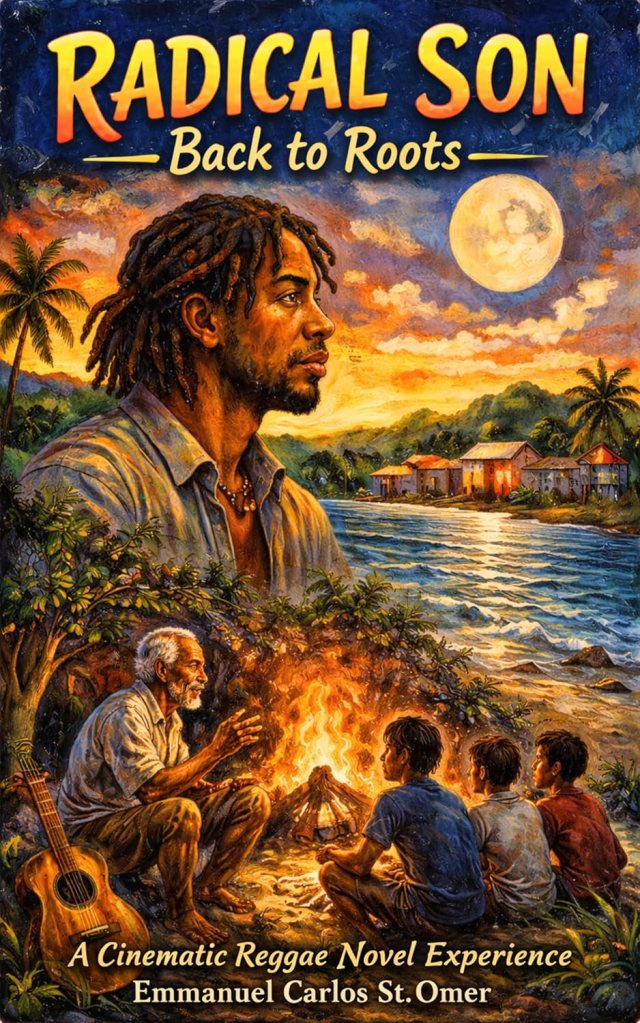
Book Details:
Author: Emmanuel Carlos St. Omer
Release Date: 6 May 2026Series:
Genre: African American Literary Fiction
Format: E-book
Pages: 169 pages
Publisher: –
Blurb:
This is not just a book.
This is a Cinematic Reggae Novel Experience.
Set in the heart of the Caribbean, Radical Son Back to Roots is a powerful fusion of storytelling, music, and cultural truth. Through vivid imagery, unforgettable characters, and deeply rooted wisdom, Emmanuel Carlos St. Omer delivers a story that feels as much seen and heard as it is read.
This novel features a built-in soundtrack, a collection of original songs performed by the author, each one directly connected to the chapters of the story. As the narrative unfolds, the music brings each moment to life, creating a deeply immersive experience unlike anything you’ve encountered before.
Each chapter carries the rhythm of reggae, the weight of history, and the pulse of real life—exploring identity, struggle, faith, and awakening in a world shaped by both beauty and brokenness.
From firelight storytelling under moonlit skies to the echoes of generational truth, this is more than a story, it is something you can feel, see, and hear.
This is more than a novel.
It is a movement back to truth.
Back to culture.
Back to roots.
If you’ve ever felt the call to rediscover who you are… this story is for you.
Review
Radical Son: Back to Roots by Emmanuel Carlos St. Omer is a heartfelt, music-infused coming-of-age novel rooted in Saint Lucian culture, reggae spirituality, oral storytelling, and generational wisdom. Dedicated to the author’s late son, Brandon Carlos Junior St. Omer, the book carries an unmistakable emotional sincerity from the very beginning. It is not simply presented as a novel, but as a “cinematic reggae novel experience,” with each chapter paired with an original song performed by the author which can be listened to on YouTube.
The story follows Brandon, a young boy growing up in a close-knit Caribbean community, as he slowly awakens to history, injustice, identity, spirituality, creativity, and purpose. His grandfather’s backyard storytelling becomes the foundation of his education long before school or institutions try to define him. In the opening chapter, the firelit yard, mango trees, old stories, duppies (malevolent, mischievous, or restless spirits and ghosts in Caribbean folklore, particularly in Jamaican, Bahamian, and Barbadian cultures), laughter, and warning-laced folklore beautifully establish one of the book’s central ideas: stories are not merely entertainment; they are memory, inheritance, and cultural survival.
What works best in the book is its emotional and cultural atmosphere. Author St. Omer writes with warmth, rhythm, and deep affection for Caribbean life. The prose often feels lyrical, almost like spoken-word narration set to a slow reggae bassline. The recurring lessons of “every story is about more than one thing,” “before the music, there was truth,” “Babylon can’t read my heart,” “justice come in Jah own time” give the book a strong thematic spine. Brandon’s journey is not plot-heavy in the conventional sense, it is more of a spiritual and emotional formation, nurtured by elders, friends, silence, music, and self-recognition.
The musical structure is one of the book’s most distinctive features. Each chapter ends with a “Listen While You Read” section, QR code, and song link, while the appendix collects the official soundtrack lyrics. This gives the work a multimedia quality and makes it feel closer to an album-novel hybrid than a traditional prose narrative. For readers open to that format, the songs deepen the emotional intention of the chapters and reinforce the reggae-rooted themes of truth, resistance, faith, love, justice, and identity.
That said, the book does have limitations as a novel. Its structure is more reflective than dramatic, and the chapters often move through lesson-based emotional moments rather than sustained conflict or complex plot development. Some readers may find the moral messages repeated too directly, and the prose can occasionally lean into explanation instead of allowing scenes to carry the full weight on their own. The language is sincere and lyrical, but a tighter editorial hand could have added more narrative complexity, sharper transitions, and greater variation in emotional pacing.
Still, Radical Son: Back to Roots succeeds because it knows exactly what it wants to be. It is not trying to be a conventional commercial novel. It is a tribute, a cultural meditation, a musical offering, and a story about a young man learning to stand in truth before the world tells him who he is allowed to become.
Overall, Radical Son: Back to Roots is a sincere, spiritually grounded, and culturally rich debut. It is best suited for readers who appreciate inspirational fiction, Caribbean storytelling, reggae music, intergenerational wisdom, and books that blur the line between literature, music, testimony, and healing.
 The Reading Bud