Welcome to TRB Lounge. Today, I’d like to welcome the author of Civil Twilight – Anique Sara Taylor, for an author interview with The Reading Bud.

About The Author
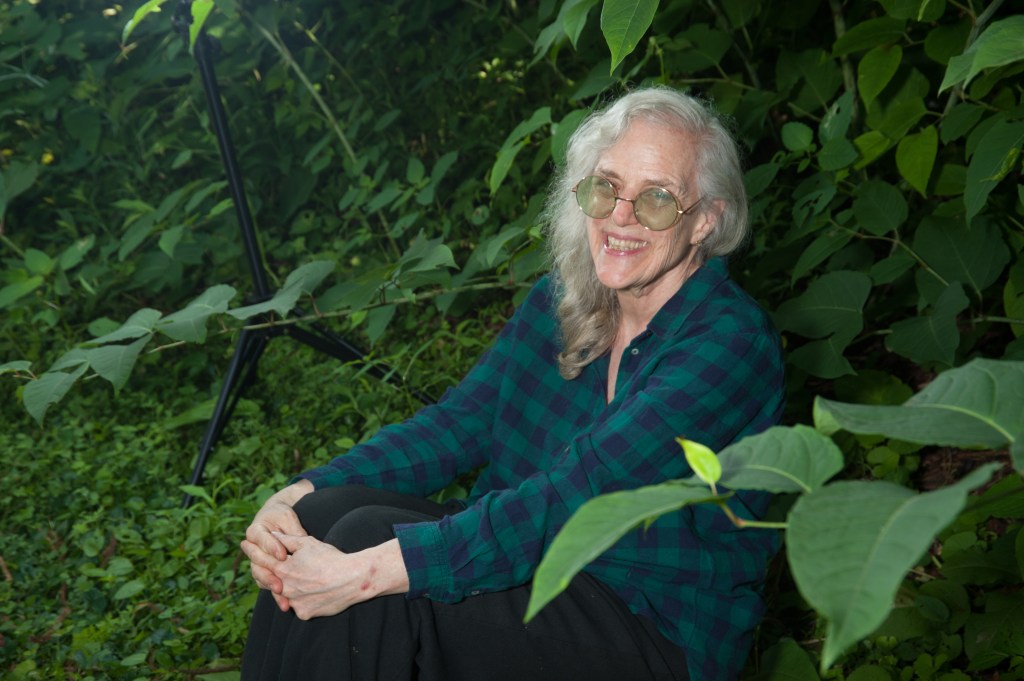
Anique Sara Taylor’s chapbook Civil Twilight is Winner of the 2022 Blue Light Poetry Prize. Her full-length poetry book Where Space Bends was published in May 2020 by Finishing Line Press. Despite issues with long term chronic illness, Taylor is a Pushcart Prize nominee, and her work has appeared in Rattle, Common Ground Review, Adanna, St. Mark’s Poetry Project’s The World, Stillwater Review, Earth’s Daughters, Cover Magazine. The National Poetry Magazine of the Lower East Side among others. Her chapbook Poems is published by Unimproved Editions Press.
Finalists 2023!
When Black Opalescent Birds Still Circled the Globe was chosen Finalist by Harbor Review’s Inaugural 2023 Jewish Women’s Prize. Feathered Strips of Prayer Before Morning was chosen Finalist by Minerva Rising Chapbook Competition 2023. Cobblestone Mist was Longlisted Finalist for the 2023 Harbor Editions’ Marginalia Series. The Strangeness of April is in July 2023 Red Noise Collective Anthology: Tide
Her work has appeared in several anthologies: The Lake Rises, poems to & for our bodies of water (Stockport Flats Press), Pain and Memory, Reflections on the Strength of the Human Spirit in Suffering (Editions Bibliotekos, Inc.), Veils, Halos and Shackles: International Poetry on the Oppression and Empowerment of Women (Kasva Press) among others.
Taylor has co-authored works for HBO, Scholastic, Simon & Schuster and a three-act play performed by Playwrights Horizons and Williamstown Theatre Festival. Her Holocaust poem “The Train” was a 2019 finalist in the Charter Oak Award for Best Historical Poem. Where Space Bends in earlier chapbook forms was chosen Finalist in 2014 by both Minerva Rising and Blue Light Press’ Chapbook Competitions. Under the Ice Moon was chosen Finalist in Blue Light Press’ 2015 Chapbook Competition.
She teaches/taught Creative Writing for Benedictine Hospital’s Oncology Support Program, Bard LLI, Writers in the Mountains. She holds a Poetry MFA (Drew University), Diplôme (The Sorbonne, Paris), a Drawing MFA and Painting BFA (With Highest Honors / Pratt Institute) and a Master of Divinity Degree. She studied literature at Antioch College, Poetry at St. Mark’s Poetry Project with Alice Notley, then Bernadette Mayer, and has been a regular at Wallson Glass Poem-Making Sessions with Geoffrey Nutter.
An award-winning artist, Taylor’s art has been featured in numerous galleries including The Bruce Museum, CT, The Monmouth Museum, NJ, The Noyes Museum, NJ, The Puffin Foundation, NJ, The Cork Gallery at Avery Fisher Hall, NYC, The Bronfman Center Gallery, NYC.
An avid supporter of community events, Taylor organized the Phoenicia Spoken Word series, which produced several ongoing poetry&writing events in&around Phoenicia. She and Sparrow taught a weekly Phoenicia Poetry Workshop.
While living in NYCs Lower East Side (East Village), she and Etan Ben-Ami edited an excellent (though short-lived) magazine: Cheap Review. They published (among others) Bernadette Mayer, Jim Brodey, Simon Pettet, Tom Savage, Ellen Mudd, Sparrow, Bob Holman, Steve Carey, Peter Bushyeager, Anique Taylor, Sheila Alson, Alice Notley, Elinor Nauen, Norman MacAfee, Bill Kushner.
Taylor was a Featured Reader at St. Mark’s Poetry Project, Dixon Place (and numerous Ulster County venues). She was a regular in group readings in NYC at The Knitting Factory, ABC No Rio, The Cedar Tavern, Charas, Tompkins Square Arts Festival. And in Group Readings: Eve Packer’s What Happens Next Series, and Jeffrey Cyphers Wright’s The New Romantics.
You can find author Taylor here:
Author’s Website
Interview
Welcome to TRB! In addition to your formal bio, could you share a deeper, more personal insight into your life that influences your poetry?
I’ve had a lifelong journey with chronic illness which has necessitated work on many levels. Natural wellness, psychology, spiritual practice. It has been both a trial and a gift. Creative work has been at the core of maneuvering these issues. I’ve been an artist most of my life. I’ve won awards. I did the artwork on the covers of my books. Also, a therapist, life coach, children’s entertainer, creative writing teacher. I studied classical piano and voice growing up. Love of the arts is woven through my life. It’s saved me in difficult times.
My understanding of sculpture came in handy when I restored my Victorian home. I love preparing and inventing food. Illness became a fount of thrilling scientific information and imagery, when I came down with a new case of Lyme disease. I traced the history of experimentation that may have caused new virulent strains of ticks. The spirochetes weave in and out of my first book Where Space Bends. I wrote about the spirochetes inside my cells, I researched the properties of herbs. I wrote about the dream state of passing out from allergic reactions. I’ve written about living in New York City. And about living in an enchanted hamlet surrounded by mountains and rivers, seasons of nature. All wonderful material.
With great self-care and in a good place most days, it’s necessary for me to stay on a careful diet, do Yoga and QiGong, meditation, guided visualization. All this requires self-discipline in order to avoid negative physical issues. It’s helped teach me how to be disciplined with a writing practice.
With Yoga/QiGong/Visualization–going in and out of meditative states is familiar. This has helped me write from strange viewpoints. Poetry is a beautiful vehicle to express altered states using imagery and metaphor.
Beyond the general overview, could you delve into the themes, emotions, or experiences that inspired your latest collection of poems?
I wanted to touch on many issues. From psychological to ephemeral. Resilience within grief. How we grow from first primary family expectations and issues to find our place in the world. The price of searching for our own path, what we may have to give up, what we go towards. Turning what is given to us into something we can use to grow.
I wanted to see beyond what is apparent on the surface, to the spaces inside atoms, distances in the universe. Spaces between and before. Yet, how with perception, there is wonder and magic in our ordinary daily lives. How nature details are a metaphor for our existence. What’s given to us, what we choose, how we move forward. How we try to learn our way through. I was intrigued with the notion of boundaries juxtaposed to the vastness of no boundaries. If others speak to us from other realms, or if it’s only us that speaks to them.
I was exploring long forms and short forms, how to bring alive a long phrase within a short form. To push diction with sound, rhythm, image, without condensing language unnaturally. How themes come from who we are and everything around us. To cause an opening that triggers inspiration.
Poetry often reflects deep personal feelings or insights. What specific emotions or experiences drove you to write the poems in your book?
There’s the usual flow that comes to me regularly in a need to create. The love of words, a dream-space of thought. During an involvement with several lawyers/accountants/business people, I was at the center and had to keep track mentally of all the details of a complicated situation. This pulled my mind into a thick swirling business mix. I felt like I was losing myself. I needed a personal poetry goal, something I could create, build, finish. Perhaps a book in the world with a required timeline, a finishing goal that also honored my personal creative requirements.
I’d been exploring what could be lyric and meaningful within the short form for a while. I began to gather all of this work together and sort out what could form an arc into a chapbook. It includes the death of my father, his ghost that appears and fades again.
I’m forever thankful to Diane Frank and Blue light Press for choosing it Blue Light Press First Prize––and publishing it. Making this book something real in the world was life changing for me.
Many poets have a defining moment or influence that shapes their work. Can you describe what sparked your journey into poetry?
Oh, so many. When I was four-years old, we had a copy of Robert Louis Stevenson’s A Child’s Garden of Verses. My mother read it to me. I was enchanted with how he could have words to talk about the elation of soaring above the countryside on a swing. So, I memorized that poem and recited it to myself as I soared over the hill on my neighbor’s rope and board swing. In 7th grade our teacher Mr. Pettie taught us college-level poetry with Coleridge, Whitman, Robinson, Whittier, Wordsworth, Longfellow, Thoreau, Lowell, Emerson… A huge mix. We read all of Evangeline and even Shakespeare’s A Midsummer Night’s Dream. My high school teacher Angela Kelly encouraged my angry teen-age diatribes.
When I lived in the City, I was a half-block away from St. Mark’s Poetry Project. There was a wonderful community of poets. I studied with Alice Notley and Bernadette Mayer. That’s when the words began to come in a constant flow. Years later at Drew University, MFA in Poetry (which was too beautiful a program to last in this world), I learned how to look into what was inside poetry. How to become totally embroiled and in love with it. Each of these “sparks” awakened something in me which built on the next. Each one saved my life a little. I am forever thankful to all of these teachers.
From initial inspiration to the published collection, how long was your creative process for this book of poetry?
Notes, ideas, studies for this collection simmered in the background for a long time. While I was working on other projects, other books, I experimented with the short form, maybe for years. I loved the process. Like picking small, sweet fruit. Later I began a pinpoint focus toward finished pieces. I was trying to bring together enough of my short poems to create an arc. I didn’t know if or how many would fit with others, so that they could come together into a chapbook with its own purpose and meaning. I experimented with subject matter, direction, and point of view. It simmered through many techniques and countless revisions. It was like a garden I kept tending over time. I’d say maybe five years. But it’s hard to know. It was a very sweet process.
Looking forward, what are your aspirations as a poet? Where do you see yourself in the literary world in the next five years?
These are some of the projects I’m working on, that are at different stages:
- Feathered Strips of Prayer Before Morning. I’ve just completed this next chapbook. While I hope to have it published in chapbook form (30 poems), my intention is that parts of it will be a major section of the full-length book I’m working on––which will include other sections.
- Goodness Within the Storm is a finished full-length book that takes place in WWII during the Holocaust. It’s a collection of first-person narrative and lyric poems based on stories of non-Jews who risked their lives to save Jews during the Holocaust. I’m now researching publishers.
- The Alphabet Book has 27 full-color plates of my artwork. Each letter is a chapter which includes a color plate. A poem relating to the letter. And perhaps journal work prompts related to each letter.
And… I’m working on a creative nonfiction book involving a bucolic hamlet, the lottery, a river, and a daily walk into town.
The project of getting out my newsletter and blog is central to my upcoming goals. The world is changing so quickly, it’s hard to know what form connection will take in five years. But at the core, as I continue deepening my writing practice in solitary morning darkness, I’m also looking for ways to interact in a meaningful way with a larger number of people. Those who love and want to interact around writing. Both reading and writing.
My books have won prizes and been chosen as a finalist several times. I would love to publish more, as I deeply love participating in the poetry community. I’m forever thankful for the wonderful opportunity to create books and words that go out into the world.
Are there new themes or styles of poetry you are currently exploring or plan to explore in your future works?
Currently the American sonnet – basically a fourteen-line poem. There are many new forms poets are making. I’m thinking of having several sections in the book I’m currently working on, to augment the chapbook section already completed. Each section would have a different form. That will entail exploring forms other poets have used or are inventing, exploring which I think might enhance the work. Or I may continue with prose poems and regular line-breaks.
While your primary focus is poetry, have you ever considered or dabbled in other literary forms, like fiction or non-fiction?
I love short forms. They keep coming up in essays, blogs, monologues, flash. Or longer books that are written in small segments. I wish there were a novel in me, but short forms call to me. Even when I was eleven or twelve-years-old, a story or sketch would come to me in a flurry of energy. I could do nothing else until I’d written it down, then typed it up. I didn’t know what to call them. One of my teachers called them slice of life or vignettes. Decades later, I learned––or the concept name was formed. Creative Nonfiction. The line between creative nonfiction / flash fiction / prose poem / poetry becomes so thin these days, I don’t labor over deciding what classification a piece belongs in, until that’s necessary for sending out for publication. I try for the best writing I can––and see what it becomes.
Poetry can actually be non-fiction. In Civil Twilight, fiction and non-fiction weave through parts of the book. It’s not as important what happened when, where or to whom, but that the heart/craft arc of the book follows through.
Can you recall a defining moment when you realized you were meant to be a poet? Was this path a natural calling or one filled with obstacles?
My life seems to have been blessed with a large number of obstacles. I felt these obstacles were keeping me from my writing. When I began to get up before the day to connect with my work, and get things done despite anything that was going on, the nature of my writing changed quickly. Soon the morning practice became something private and deep.
My relationship with poetry shifted from ambition to inner devotion. I came to welcome many phases of writing. My interest grew. Wisps, pieces, story, what came easily, what I needed to work harder on. This morning plan gave me permission to just write. I didn’t have to sit down and write out a whole finished poem. I could just be with the work, letting it grow. This opened into an unexpected gift of feeling like my most real self. I think that’s when I began to feel I was a poet.
Describe your poetic process. Do you follow specific routines or practices that help you capture your thoughts and emotions effectively?
I gather lines, research, journals, thoughts. I shift and combine lines and phrases to find the poem inside the material. How it comes into what I was wanting, even if I didn’t know how to get there.
Morning practice, yes. I work for three hours and stop, usually in the middle. In my journal I leave a map of where I left off. The following day, I find that place with a fresh heart and mind. I work in scattered ways, collecting information, thoughts, research, phrases, notes. Lines that have come to me throughout the day. I collage, re-arrange, rewrite. It’s like a mini-orchestration of diction, sound, purpose.
Rewriting is a form of craft for me. I add, subtract, and research. I rearrange, until it feels like it can’t budge, but also that it isn’t hemmed in too tight. That even after endless rewrites, it still feels fresh and has surprise. Something that’s inexplicable but feels right.
Aside from poetry, do you engage in other professions or hobbies that influence or enrich your writing?
Other chapters of my life have involved: house restoration, teaching pre-school. Being a children’s performer, therapist, and life coach. Playing classical piano. Singing in the Renaissance Street Singers. I’ve been an award-winning artist. I do Yoga and QiGong. Garden. Cooking concoctions: When I became ill from neighbors’ burning fires in ground level fire-pits, I became a whole food vegan for health. I had to retrofit everything I knew about preparing food, so I have fun inventing weird wild and wonderful concoctions. Little pieces of all of this appear in my writing.
Poets often speak of facing creative blocks. Do you encounter these, and if so, how do you overcome them?
With a lifelong dance with chronic illness and depression, much is required of me to stay in the Good Zone. For creative blocks, morning practice is wonderful. Plus, I love to explore books and websites for material and metaphors. Science. Religion. Travel. Torah. Tarot. Psychology. Illness. Also, I take notes on projects and goals.
But self-care for me seems at the core of creative flow. Healthy diet. Exercise. Psychological work. Journals. Reading. Meditation. I think of this as a process, in a similar way to someone in training to run a marathon. This self-care is how I am “in training” for creativity and poetry.
Poetry can be a delicate balance of personal expression and universal appeal. How do you navigate this in your writing?
I believe a poem should always hit a nerve, spin you out, make you fall in love a little, break your heart a little, leave you asking questions. It should do something. The world is so vibrantly happening at every moment.
I use my personal story, but I also use nature, religion, history––anything in the world for material, trusting that juxtaposed to the personal it will create unexpected metaphors.
You can get lost currying “universal appeal.” It can lead you away from what’s true and immediate and important. I try to look for what’s hot/open/beautiful/scary. What I’m called to write, what I cannot write, what I’m afraid to write. I hope it will speak to someone out there. Poetry has saved my life. I’m hoping it will save others too.
Although outer validation feels good and may make our work a little sweeter, it’s the inner poet relationship that is real and what matters. That will bring us closer to our stronger self.
Poetry sometimes touches on sensitive or controversial subjects. How do you address potential criticism or differing interpretations from your readers?
Maybe everything is open for criticism and interpretation. It’s important to go with what’s true for me. I don’t know what’s controversial, I do know when I want to speak up. When I came down with a new case of Lyme disease, I realized I’d had undiagnosed Lyme as a child. I saw how it had mysteriously woven through my life and chronic illnesses. In my book, Where Space Bends (Finishing Line Press), I wrote a poem about government research labs near Lyme that triggered more virulent strains of ticks (based on research). That poem got nominated for a Pushcart Award. You’d think they would have backed away from it, but it seems heart-felt research and fierceness can be rewarded.
I’ve written a book of poems based on Yad Vashem interviews. Stories of Jews who were in the Holocaust. How non-Jews risked their lives to save Jews during WWII. Persona Poems. Poems written from a first-person point of view, where the “I” in the poem is either the rescuer or the rescued. I’m still trying to get up the courage to send it out to publishers. Maybe this year?
For aspiring poets, what essential advice would you offer for their journey into the world of poetry writing?
Follow your interests, what fascinates you. Let things open up like a pomegranate. Notice the hundreds of seeds inside. Think of the infinity of things going on in a human body. Let go of your story. The world is teeming with living things, with machines, history. Anything you write about will connect with your story.
Take care of your health in every way you can. You know what to do, the information is everywhere. Health breeds well-being, lets inspiration flow. Think of being a writer like being a micro-athlete of the mind. Take care of your body/mind/spirit and learn your craft. The work will grow.
Learn from everything you do. Books. Classes. Reading. Support groups. School. Community. Come to know and love the different phases of writing. Which ones come easily to you? Which do you need to hone?
BTW: Short list: Diction (strong nouns, verbs, adjectives). Phrasing, rhythm, repetition, sound. Imagery. Subjective/objective/personal/distant/surreal. Past/present/future. Pronouns. Description. Research subject matter. Forms.
Understand what feeds the inner poet, what feeds the outer poet. What a gorgeous, thrilling world to live in, here among all these words! How wonderful.
Thank you, author Taylor, for taking the time to answer our questions and for all your insightful and interesting answers!
About the Book

Civil Twilight
Anique Sara Taylor’s chapbook Civil Twilight is Winner of the 2022 Blue Light Poetry Prize.
As the sun sinks 6˚ below the horizon at dawn or dusk, it’s 5:30am/pm someplace in the world. In thirty shimmering poems (30 words/5 lines each), Civil Twilight probes borders of risk across a landscape of thunderstorms, quill-shaped mist, falcons that soar, the hope of regeneration, a compass to the center. Tightly hewn poems ring with rhythm and sound, follow ghosts who relentlessly weave through a journey of grief toward ecstasy. Spinning words seek to unhinge inner wounds among seashells and hostile mirrors, eagles and cardinals-to enter “the infinity between atoms,” hear the invisible waltz. Even the regrets. The search for an inner silhouette becomes a quest for shards of truth, as she asks the simple question, “What will you take with you?”
You can find Civil Twilight here:
Amazon | Goodreads
If you are an author and wish to be featured as our guest or if you are a publicist and want to get your author featured on TRB, then please get in touch directly by e-mail at thereadingbud@gmail.com

 The Reading Bud
One thought on “Author Interview: Anique Sara Taylor”