Graphic Novel ARC: Harry Rides the Danger by Lancelot Schaubert

Book Details:

Author: Lancelot Schaubert
Release Date:ย 
10th October 2023
Series:
Genre: Children’s Fiction, Graphic Novel, Dark
Format:ย E-bookย 
Pages: 36
Publisher: โ€”
Blurb:
Harry woke at night: in his doorway stood THE DANGER. Harry learns first to face and follow Danger, then to court Danger. Harry takes the Danger out for chocolate cake, for jumping over mountains, for leaping over pits of snakes. Then he wields Danger to save lives, homes, and worlds from a world ending fire.
A children’s book written in the wake of the historic Joplin tornado, HARRY RIDES THE DANGER teaches the abstract concept of courage in a fun way. It will quickly become an early reader classic.

Review

Rating: 4 out of 5.

Harry Rides the Danger by Lancelot Schaubert is a dark children’s fiction graphic novel that will steal any horror lover’s heart. This book is perfect for a nice little spooky read for kids and even for adults who like adventure with a twist.

The characterisation is the heart of this book and I hope the author comes out with more books in this series so that we can read more of Harry’s adventures. This one was a perfect blend of thrills and chills and the brilliant narration and beautiful illustrations took it to an entirely different level.

I’d strongly recommend this book to all children and adult alike.


You can also read this review on:

Goodreads


Amazon


Author Interview: Junis Sultan

Welcome to TRB Lounge. Today, Iโ€™d like to welcome the author of Brothers and Strangers: A German-Iraqi Memoir โ€”Junis Sultan for an author interview with The Reading Bud.

Aboutย Theย Author

Junis Sultan studied in Frankfurt am Main, Eichstรคtt and at California State University Fullerton. He received a Fulbright and a Horizonte Scholarship. For the past six years, he has taught English, politics, and economics as a high school teacher in Frankfurt am Main. He is pursuing a doctorate in Modern Political Theory at the University of Heidelberg.

You can find authorย Sultanย here:
Author Websiteย |ย Hessenschauย |ย UNO-Fluechtlingshilfeย |ย Kohero Magazin


Interview

Welcome to TRB! Please give our readers a brief introduction about yourself before we begin. 

My name is Junis Sultan. Iโ€™m an author, a teacher, and a doctorate student. I was born in Mosul, Iraq in 1986 to a wealthy intercultural family. After the Gulf War in 1991, my family fled to Germany. We have stayed here since then; so, Iโ€™ve spent most of my life in Germany. I started journaling when I was 15 years oldโ€”after the 9/11 terror attacks, a very intense and emotional time. Since then writing has been my way to process things and find meaning.

I studied Politics, Economics, and English in Frankfurt, Eichstรคtt, and Fullerton and received a Fulbright and a Horizonte scholarship at the time. I currently teach part-time at a middle school near Frankfurt and pursue a doctorate in Modern Political Theory at the University of Heidelberg.

In my free time I love to be outside or do sports. One of my lifelong passions in addition to writing is boxing. It started with a movieโ€”Rockyโ€”when we came to Germany.

Please tell us something about your book other than what we have read in the blurb?

It was a quite a journey until my memoir got published. The first version of my memoir was titled โ€œStruggles of Strangers: Of Bonding and Freedomโ€ and self-published in 2017. It was staged at the German National Library in Frankfurt. In 2019, it was shortlisted for the Restless Books Prize for New Immigrant Writing in New York. Shortly, I signed a contract with Brandylane Publisher Inc. and Kรถnigshausen und Neumann to get a polished version of my memoir published with a new title in the US and in Germany. The US title is BROTHERS AND STRANGERS: A GERMAN-IRAQI MEMOIR; the German title is GLAUBENSKRIEGE: VON FREMDEN UND FREUNDEN.

Even though I mostly grew up in Germany and even though German is my mother tongue, I wrote my memoir in English. Writing in English started with some journal entries, mostly poems and lyrics. When I began to study English at Goethe University Frankfurt, I completely switched to journaling in English.

My memoir includes original journal entries; but not just that. It also includes classic storytelling, news-reports, photos, official correspondence, and even court verdicts. On top, it takes place in different settings: Iraq, Jordan, Germany, and the US.ย ย ย  ย 

Why did you choose this particular theme for your book? What is that one message that youโ€™re trying to get across to the readers in this book?

This might sound strange, but I think I did not choose the topic; I believe the topic or life chose me. My father is an Iraqi Muslim and my mother a German Christian. I was born to connect these two worlds, build bridges, and foster mutual understanding and integration. This has been my blessing and curse at the same time. In addition to my family structure, the flight to Germany was another personal fate that demanded my continuous efforts for integration. My happy, privileged childhood was abruptly cut short by the Gulf War in 1991. Our home was destroyed; we were forced to flee and eventually settled in a small conservative town in Germany, near Frankfurt, where we struggled to adapt to our new circumstances. I found myself increasingly torn between two worldsโ€”fighting to carve out an identity for myself between my familyโ€™s expectations and a culture that demanded my assimilation. After the 9/11 terror attacks, I began to keep a diary, in which I reflected on questions of family, friendship, religion, and politics. These deep insights gradually expand beyond cultural borders, as I began to explore the universal human needs for bonding and freedom. If I had to break down my memoir to one message, it would be: Act with openness and love.

What inspired you to write this book? An idea, some anecdote, a dream or something else?

On November 11, 2011, I was so broken from the yearlong repercussions of the Gulf War, our flight, and ethnic and religious conflicts in my family and in our new environment that I didnโ€™t see any sense in staying life. After having returned to Frankfurt, Germany, from a study-abroad year in Fullerton, California, I experienced a reverse culture shock: repeated experiences with racism, the uncovering of the racist NSU murder series, and the separation of my parents after decades of marital problems in which ethnic and religious differences were constantly played up. The feelings of loss, loneliness, and despair overwhelmed me that day. I was determined to end my, what I thought, cursed life. But then, pictures came to my mind, like flashes, picture of the positive experiences and relationships in my life. That day, the idea evolved in my mind. In order not only to survive, but to heal, I wanted to write down everything. I wanted to use my story and create something good for others. I wanted to help others deal with their fears and despairs. I wanted to encourage people to love themselves and those around them. I wanted to tear down the walls we have created and connect old and young, men and women, East and Westโ€”all people. This was the only way my life made sense to me: to encourage our human experiencesโ€”the needs for bonding and freedom, the struggles for happiness and peace, and the connecting and liberating powers of love.

How long did it take you to write this particular book?

It took me several years to finish this memoir as I was facing some challenges on the way: dealing with re-traumatization, developing personally, becoming a better writer in a second language, completing my studies, teacher training, and teaching full-time. The first version of my memoir was called โ€œStruggles of Strangers: Of Bonding and Freedom.โ€ I completed it in 2014/2015 and began to contact literary agents and agenciesโ€”without success. So I revised it, again and again. In 2017, I self-published it. In 2019, after about 1000 rejections, it was eventually shortlisted for the Restless Books Prize for New Immigrant Writing in New York. Shortly, I signed a contract with Brandylane Publisher Inc. and Kรถnigshausen und Neumann to get a polished version of my memoir with a new title published in the US and in Germany.

What are your writing ambitions? Where do you see yourself 5 years from today?

I would definitely like to write more books. I see myself in 5 years doing the sameโ€”teaching and writingโ€”but on another, higher level. Ideally, I will be teaching at university and finishing my next book. I already have it in my mind. It is a continuation of my familyโ€™s story. The next book will tackle topics that have been taboos in my family: personality disorders, sexual abuse, homophobia, drug abuse, and suicide. Obviously, these topics are very serious. And it will be difficult to go through everything again. But I think I owe it my brother who was found dead in his apartment in 2021 as a victim of a drug overdose. I want to encourage people to openly talk about these problemsโ€”which go beyond cultural bordersโ€”so that we all take responsibility and find ways to help those who are affected, in some cases including ourselves, heal, make progress, and live a life in which everyone can prosper.ย 

Are you working on any other books presently?

Yes, I am, but it is another kind of book, an academic book. It is my doctoral dissertation I write at Karl-Ruprecht University Heidelberg. The title is โ€œLinguistic justice: Rethinking Education in Liberal Democracy.โ€ Itโ€™s about how public schools (analyzed by the example of Germany) can do more justice to the growing numbers of students that have a non-European background. Itโ€™s about the politics of recognition, the prioritization of integration, legally binding frameworks, linguistic and global citizenship, community-based multilingual education, longer joint learning, and inclusive education that is open for different cultures, languages, and religions. There are many ways to further integration; they all make a difference.ย ย ย ย ย ย 

Do you also dabble in Fiction?

No, I donโ€™t and probably wonโ€™t because the topic I focus onโ€”integrationโ€”is a matter of heart for me that does not only concern ethnic minorities. Itโ€™s about justice; itโ€™s about how we want to live together as people. On the other hand, I have some dystopic novels with my students at school, which touched this topic indirectly or directlyโ€”like Brave New World or The Giver. So, maybe one day I will dabble in fiction but definitely not in the next five years.

When did you decide to become a writer? Was it easy for you follow your passion or did you have to make some sacrifices along the way?

I first dreamt of becoming a writer when I started journaling as a 15 year old. My dream was to live in a warm country close to the ocean, read a lot of books and write books. At the time, I also began writing and translating a number of speeches for my father, who was the chairman of the Council for Foreigners. Still, writing was more a hobby and I was more serious about becoming a boxer then. Boxing taught me many life lessons, above all discipline, which includes making sacrifices. So, being ambitious and disciplined has been part of my personality for a long time. It was and still is natural to me. I am a driven person. And yes, I made a lot of sacrifices on the way to follow my passion and become a writer. When you work 9 hours a day, commute, do the household, cook, eat, do sports, shower, and sleep 7 hours at night, there is not much time left every day to become something elseโ€”especially if you decide to use your free time watching TV or going out, being social etc. I radically cut back mostly all of those things, except family and health. There always needs to be time for these two things. But if you really want to become something else, you need to invest at least 2 hours every day in yourself, if not more.

What is your writing ritual? How do you do it?

I am a nighthawk. Since writing was never my full-time job, I always wrote after I had met my other obligations. I have the habit of changing place when I write. Sometimes I write at the dining table, sometimes at my desk, sometimes on the couch, sometimes standing, sometimes at the kitchen counter, sometimes in the train or bus, sometimes in a cafรฉ, sometimes right after work or in my breaks in the classroom, sometimes at the train station or airport, sometimes at the pool or even the beach. Sometimes I change places because I have to, sometimes I change place because I want to; it somehow makes me approach the material with different eyes. I usually write on my laptop, but I also have loads of notes on small pieces of paper. My working place is normally a precious mess. Sometimes I like to listen to instrumental music, often soundtracks. When I am working on a difficult piece, I need absolute silence though. I will read the text aloud, again and again until it flows. I usually drink tea, mostly ginger tea with honey, or coffee with milk and sugar when I write.ย 

Is writing your profession or do you work in some other field too?

No, writing is not my profession; I currently work part-time in a middle school as an English and Politics and Economics teacher. In addition, I pursue a doctorate in Modern Political Theory at the Karl Ruprecht University of Heidelberg. I also taught high school for three years before that. I did enroll in several creative writing courses during my studies in Frankfurt and Fullerton though. I was also doing some translation work for my writing teacher in Fullerton, who had lost her uncle in a German concentration camp.ย ย ย ย ย ย ย ย ย ย ย ย ย ย ย ย ย ย ย ย ย ย ย ย  ย ย ย ย ย ย ย ย ย ย ย ย ย ย ย ย  ย ย ย ย ย ย ย ย ย ย ย 

Can you recommend a book or two based on themes or ideas similar to your book? (You can share the name of the authors too.)

Reading โ€œThe Diary of Anne Frankโ€ touched me very deeply as a teenager. Even though I cannot compare her story with mine, there are some similar topic like the mother-child conflict and feeling alone and sad as a teenager.  

Further, I have read many (auto-) biographies and memoirs by African-Americans who have covered themes similar to my book: the struggle for equality and freedom. To name some: W.E.B. Du Bois, Malcolm X, Muhammad Ali, and Michelle and Barak Obama.

How do you deal with Writerโ€™s Block?

I normally use timeboxing as a technique. To give an example: I allocate an evening for a revision of two pages or two years for writing an entire book. This way I create some expectations of myself and take track if I reach my goals. I often do not share my goals with others; reaching new goals is a personal standard I have for myself. The bigger the goal, like writing a new book, the more flexibility I give myself. If, for instance, I am not able to write a halfway good text on one day, I accept that and take a break. I go outside, do sports, and most often that is already enough to approach the piece with more energy and new eyes. If that is still not enough, I try the next day again. And sometimes, I have days where I am very productive and make up for the other less productive days. These are the days when I work until midnight or even longer.

What advice would you give to aspiring writers?

Never give up. Always keep working on your craft. Read and study your topic. Share your work with others. Everybody has got a story. But, always keep in mind that you need to answer the following two questions in the end: What can we learn from you? How does it make anyoneโ€™s life better? ย 

Thank you, author Sultan, for taking out the time to answer our questions and for all your thought-provoking and interesting answers!


About the Book

Brothers and Strangers: A German-Iraqi Memoir

Born in Mosul, Iraq, to a wealthy intercultural family, Junis Sultanโ€™s happy, privileged childhood is abruptly cut short by the start of the Gulf War in 1991. With their home destroyed, Junisโ€™s family flees to Germany, settling in a small conservative town near Frankfurt. As his family struggles to adapt to their new circumstances, Junis finds himself increasingly torn between two worldsโ€”fighting to carve out an identity for himself between his familyโ€™s expectations and a culture that demands his assimilation. After the 9/11 terror attacks, Junis begins to keep a diary, in which he reflects on questions of family, friendship, religion, and politics. These deep insights gradually expand beyond cultural borders, as Junis begins to explore the universal human needs for bonding and freedom.

Brothers and Strangers is a unique, heartfelt memoir of endurance, forgiveness, and self-actualization, offering a timely message about the importance of acting with openness and love in a global reality.


You can findย Brothers and Strangersย here:
Amazonย |ย Brandylane Publishers Inc.ย |ย Facebook

If you are an author and wish to be featured as our guest or if you are a publicist and want to get your author featured on TRB, then please get in touch directly by e-mail at thereadingbud@gmail.com

Book Review: AfterStrike by L.J. Sellers

Book Details:

Author: L.J. Sellers
Release Date:ย 
4th May 2023
Series:
Genre: Thriller, Mystery, Suspense
Format:ย E-bookย 
Pages: 276
Publisher: Spellbinder Press
Blurb:
What if, without warning, you had to run for your life and leave everything behind?
Remi Bartell faces that terrifying moment and takes only the dog who saved her.
But as she starts her new life, lightning strikes! Remi briefly loses her memory and makes one small mistakeโ€”that costs her everything. The crime-family patriarch sheโ€™s hiding from kidnaps her and plunges her into a revenge nightmare. The psychological trauma cracks open buried memories from her old life that will either save her or destroy her.
AfterStrike blends fast-paced action with psychological suspense and unexpected romance, then ends with an explosive twist.

Review

Rating: 4 out of 5.

AfterStrike by L.J. Sellers is a gripping thriller that will hook you right from the beginning and won’t let you put it down until the end. This book is a stunning thriller that plays out in the readers head like a movie, unfolding at each and every turn the many dark and twisted twists and turns that will keep you glued to the book.

This book had excellent characterisation, amazing pacing and tension and the writing is perfect and compliments the plot and the concept beautifully. I would highly recommend it to all thriller readers and to those who simply cannot miss a stunning suspense novel.


You can also read this review on:

Goodreads


Amazon


Excerpt Reveal: Brothers and Strangers: A German-Iraqi Memoir by Junis Sultan

Welcome to TRB Lounge. Today, Iโ€™d like to welcome author Junis Sultan who’ll be sharing an excerpt from his latest release Brothers and Strangers: A German-Iraqi Memoir.

About the Book

Brothers and Strangers

Born in Mosul, Iraq, to a wealthy intercultural family, Junis Sultanโ€™s happy, privileged childhood is abruptly cut short by the start of the Gulf War in 1991. With their home destroyed, Junisโ€™s family flees to Germany, settling in a small conservative town near Frankfurt. As his family struggles to adapt to their new circumstances, Junis finds himself increasingly torn between two worldsโ€”fighting to carve out an identity for himself between his familyโ€™s expectations and a culture that demands his assimilation. After the 9/11 terror attacks, Junis begins to keep a diary, in which he reflects on questions of family, friendship, religion, and politics. These deep insights gradually expand beyond cultural borders, as Junis begins to explore the universal human needs for bonding and freedom.

Brothers and Strangers is a unique, heartfelt memoir of endurance, forgiveness, and self-actualization, offering a timely message about the importance of acting with openness and love in a global reality.

You can find Brothers and Strangers here:
Amazon | Brandylane Publishers Inc. | Facebook

Excerpt

Prologue

And then came the bloody bastard . . .

Growing up, I often wondered whether my skin looked brown or white. My hair is certainly black, and my eyes are brown. Many Westerners I met probably thought Middle East as soon as they laid eyes on me or heard my nameโ€”Junis Sultan. โ€œWhere are you originally from?โ€ I was asked innumerable times. Some were visibly surprised that I spoke their language accent-free. Middle Easterners, however, were oftentimes disappointed that I did not speak Arabic fluently. โ€œWhy did your parents not teach you?โ€ For a number of reasons, it was usually impossible for people to label meโ€”and vice versa.

My story is one of unfavorable coincidence and unending reinvention. In the summer of 1991, after surviving the Gulf War, my family fled from Iraq to Germany. I was four years old at the time. One of my early memories is of sitting with my father in our run-down living room and watching the news. He raised his finger and shouted, โ€œThe West imposed those bloody sanctions on Iraq, not Saddam.[1]หฎ Intimidated by his anger, I quietly asked him what he meant. He said, โ€œThe West is Europe, North America, and Australia. Theyโ€™ve killed millions, and now they are killing us!หฎ His warning scared me. However, when I started attending kindergarten in 1992, I soon realized that his warning had proved wrong. In fact, we would live together happily and in peace with many Westerners for many years.

Since those early days, Iโ€™ve strived to live in harmony with everyone around me, including Middle Easterners and Westerners. Even though Iโ€™ve repeatedly failed, Iโ€™ve kept trying to balance both our common need to bond and common need for freedom. During puberty, I was particularly concerned with religious freedom. The divisiveness I experienced, especially in the post 9/11 years, always seemed human-imposed, harmful to our relationships, and therefore self-destructive and wrong. Growing up in Germany, I frequently pondered the purpose of our existence. Were we not all precious social individuals, connected and meant to support each other while realizing our personal dreams?

Despite my strong belief in the need for humans to bond, I often doubted our connectedness when meeting other people. A number of Westerners confronted me with negative stereotypes: โ€œDoes your mother wear a hijab or a burka?โ€ โ€œWere your sistersโ€™ marriages arranged?โ€ โ€œDo you hate Jews, the United States . . . ?หฎ None of it applied to me. Quite the opposite is true: My mother is Christian, and she has had difficulties accepting my different religion. A number of Middle Easterners have been disappointed by me as well, saying, โ€œDonโ€™t drink! Donโ€™t wear shorts! Donโ€™t . . . ! Itโ€™s haram.[2]หฎ Interactions like these often left me feeling strange, disconnected, and challenged. How could I ease and strengthen our relationship? Was I overreacting? Were they looking for common ground?

The thousands-of-years-old stories of my name have shaped my complex identity. In 1993, during my first school year, my father told me that Junis derives from Yunus, โ€œa prophet in the Quran who strongly believed in Godโ€™s rules.หฎ In a Catholic religion class, I learned that the Hebrew Bible and the New Testament first told the story of Yunus under the name of Jonah. โ€œJonah means dove in Hebrew, and a dove is a symbol of peace,หฎ my teacher said before she read us his story. โ€œJonah was ordered by God to go to Nineveh and prophesy against the Ninevitesโ€™ great wickedness. Afraid, however, that God would simply forgive the sinners, he boarded a ship that sailed in the opposite direction; a serious mistake! God punished him for his disobedience with a heavy storm at sea, and when the sailors found Jonah responsible, they threw him overboard. Jonah was then swallowed by a whale. While inside the belly of the whale, he repented, thanked God for his mercy, and committed himself to Godโ€™s will, so the whale eventually spewed him out. . . .โ€ I looked at my teacher with large eyes. While I had no idea what my life would bring and how I would reactโ€”at times quite like an unforgiving, disobedient runawayโ€”I could relate to Jonahโ€™s story. I, too, wanted to have a relationship with God and be uplifted when I fell.

My first name mostly caused insecurities among new people. Many Germans called me Jonas after I had introduced myself. Sometimes, when I spelled out Jโ€“Uโ€“Nโ€“Iโ€“S, I wondered if my pronunciation was unclear, or whether they ignored my real name out of convenience, or even disrespect. Some asked me to spell it out again, and then wanted to know where the name came from. The problem started when I was naturalized in 1991. โ€œYounes is its international notation, but would complicate matters for Germans. Theyโ€™re not used to Y, which is only used in a few words in German,หฎ a public official told my mother. My first name was thus Germanized. I was too young to notice the forced assimilation. Some Middle Easterners did, however. โ€œSo are you a real Arab?หฎ they asked me after reading my name. โ€œMy mother is German, my father Iraqi,โ€ I usually told them before I explained how my name was Germanizedโ€”which often led to an awkward silence. Growing up, I soon began to understand how much my name defined me.

My last name, Sultan, sometimes amused people, reminding many of a carnival song: โ€œThe caravan is moving, the sultan is thirsty . . .โ€ Sometimes, however, it raised fear or false idolization. The word sultan originally meant โ€œstrengthหฎ in Arabic. Over time, it also became a title for leaders who claimed independence from any higher ruler. According to Wikipedia, one of the most famous sultans, Mehmed II, conquered Constantinople and ended the one-thousand-year-old Byzantine Empire in 1453. I assume his destructive power intimidated the West, whichโ€”as Professor Edward Said[3] would sayโ€”has continuously strived to invent itself as good in direct contrast to the imagined evil of the Orient. Strangely, my father ascribed the exact opposite value to the Middle East. As if Mehmed II were better than any other murderer, and as if killing four thousand non-Muslims in 1453 was good.I always struggled to understand why some people devalued or even demonized those with different cultural backgrounds while idealizing their own people. Were we not all the same: just people, more or less flawed, and yet all worthy of love?

In my school days in Germany between 1993 and 2006, I mostly learned about the merits of the West. We investigated the European Enlightenment of the seventeenth and eighteenth centuries.Kantโ€™s[4] โ€œcategorical imperativeหฎโ€”to always act in such a way that one would be willing for his actions to become general lawโ€”seemed to me like a precious idea that could bring peace among people. We read the classics of the German literary periods; the eighteenth century Storm and Stress period was my favorite since it allowed the free expression of strong emotions. I excitedly examined the revolutions for freedom and unity: 1776 in America, 1789 in France, and 1848 in Germany.

Above all, I embraced the 1948 Universal Declaration of Human Rights (UDHR), the first document I read at school that was drafted by an international committee with the aim of promoting peace for all peopleโ€”a dream I wished everybody shared. While our teachers claimed that the unprecedented horrors of World War II led to the UDHR, I learned in 2009 in a rare seminar on โ€œpost-colonialismหฎ at Goethe University that Nazi Germany was not a short-term mistake, which killed more than seventy million people around the globe, but rather a direct result of the propagandistic and bloody history of the West. Like Hannah Arendt[5] said, mainstream European nationalism and colonialism blended with post-enlightenment racial theories that proclaimed the natural superiority of the โ€œwhite race,โ€ paving the way for the pseudo-legitimized enslavement and killing of non-white and non-Christian people around the globe for almost two centuries beforeHitler. Our seminar discussions also revealed the subtle, allegedly colorblind and areligious ways in which millions of non-white and non-Christian people have been killed far beyond the borders of the West since 1945, through economic exploitation, starvation, or military adventures that brought chaos, destruction, and even civil war. Still, one burning question remained: how could we stop these processes of dehumanization and these crimes against humanity?

I was eager to find out. After I completed my basic studies at Goethe University, Frankfurt, I studied political science at California State University, Fullerton, from 2010 to 2011. During my political philosophy course, I learned about Greek, Hebrew, Roman, and Christian societies, which my senior professor called โ€œthe foundational stories of the West.หฎ In particular, I enjoyed our recurring discussions about whether it was possible to establish truths about ethicsโ€”right individual conductโ€”and politicsโ€”right collective life. I, like a couple of my fellow students, believed we could.

At the end of the semester, my professor suggested that modern, twenty-first century global liberalism represented the synthesis of all stories of the West. Skeptical of his Eurocentric perspective, I asked him about the role of the rest of the world. He pondered for a second before he raised his head and said with a raised eyebrow, โ€œWell, there was Mesopotamia, Egypt, Persia, and then came the bloody bastard Mohammed who spread Islam by the sword.หฎ Sitting in the last row, I looked at him in disbelief. Did he just really say that? As if the stories of the West were free of bloodshed. I remained silent and waited to hear more about his black-and-white worldview; but he stopped himself. โ€œOh, shit, is she here? The one with the scarf?หฎ he asked, looking around.

Her name was Manar, which means โ€œguiding lightหฎ in Arabic. She was not in class that day, but I wasโ€”embodying a vibrant blend of Judeo-Christian-Muslim, German, Arabic, and Ottoman traditions. That day, like so many times before, I wondered: How could we overcome those hostile attitudes against โ€œthe othersโ€? How could we connect with one another and appreciate each other? How could we create more happiness and peace among each other and within ourselves?         


[1] Saddam Hussein (Apr. 28, 1937โ€“Dec. 30, 2006), fifth President of Iraq, serving from July 16, 1979 to Apr. 9, 2003, was sentenced to death after being convicted for crimes against humanity.

[2] Arabic term; means โ€œforbiddenโ€ or โ€œproscribedโ€ by Islamic law.

[3] Edward Wadie Said (Nov. 1, 1935โ€“Sept. 25, 2003); professor of literature, public intellectual, and founder of the academic field of postcolonial studies.

[4] Immanuel Kant (Apr. 22, 1724โ€“Feb. 12, 1804); German philosopher and central figure in modern philosophy, known for his book Groundwork of the Metaphysics of Morals.

[5] Johanna โ€œHannahโ€ Arendt (Oct. 14, 1906โ€“Dec. 4, 1975); German-born Jewish American political theorist.


About The Author

Junis Sultan

Junis Sultan studied in Frankfurt am Main, Eichstรคtt and at California State University Fullerton. He received a Fulbright and a Horizonte Scholarship. For the past six years, he has taught English, politics, and economics as a high school teacher in Frankfurt am Main. He is pursuing a doctorate in Modern Political Theory at the University of Heidelberg.

You can find author Sultan here:
Author Website | Hessenschau | UNO-Fluechtlingshilfe | Kohero Magazin

If you are an author and wish to be featured as our guest or if you are a publicist and want to get your author featured on TRB, then please get in touch directly by e-mail at thereadingbud@gmail.com

Excerpt Reveal: AfterStrike: An Unforgettable Thriller by L.J. Sellers

Welcome to TRB Lounge. Today, Iโ€™d like to welcome author L.J. Sellers who’ll be sharing an excerpt from her latest release AfterStrike.

About the Book

AfterStrike

What if, without warning, you had to run for your life and leave everything behind?

Remi Bartell faces that terrifying moment and takes only the dog who saved her.

But as she starts her new life, lightning strikes! Remi briefly loses her memory and makes one small mistakeโ€”that costs her everything. The crime-family patriarch sheโ€™s hiding from kidnaps her and plunges her into a revenge nightmare. The psychological trauma cracks open buried memories from her old life that will either save her or destroy her.

AfterStrike blends fast-paced action with psychological suspense and unexpected romance, then ends with an explosive twist.

You can find AfterStrike here:
Amazon | Barnes & Noble | Apple Books

Excerpt

Chapter 1

The Turbulent Present

Abandoned and alone

Sept. 7, Wilsonville, OR

Remi opened her eyes, her fists clenched. โ€œItโ€™s still not coming back.โ€

Her counselor sighed.โ€œIโ€™m sorry. Thatโ€™s the only method I know for recalling memories. I think itโ€™s time to see a specialist, someone who can help you in a more neurologic way.โ€ The womanโ€™s robust voice didnโ€™t match her thin, aging body.

โ€œYouโ€™re dumping me?โ€ Another unexpected blow. Remi had found Joanneโ€™s name in her phone contacts and assumed they had a history. Even though this musty, low-rent office didnโ€™t give off a professional vibe, sheโ€™d counted on this woman to help get her life back.

โ€œPlease donโ€™t see it that way.โ€ Joanne scooted forward, her eyes troubled. โ€œThis situation is complex for me. During our earlier sessions, before the incident, you told me things about your past, about your guilt. Now that you canโ€™t remember any of that, it would be unethical and probably counterproductive for me to remind you. So I shouldnโ€™t see you until youโ€™ve recovered.โ€ The counselor reached for a notepad. โ€œIโ€™ll refer you to a neuropsychologist in Portland.โ€

Remi shook her head. โ€œI canโ€™t start over. Itโ€™s all been too much.โ€ Sheโ€™d had a sliver of hope when sheโ€™d walked in, but now she felt abandoned and alone. That would be the tagline on her gravestone.

โ€œIโ€™m still available by phone if you have destructive impulses and need to talk.โ€ Joanne held out the referral note.

Remi let out a harsh laugh. Destructive impulses would be her footnote. โ€œIโ€™ll be fine. Thanks though.โ€

She bolted from the office, knowing she would never be back. Coming here the first time a year ago had felt like cracking open her own chest. She remembered the pain of that first session if not the details. Then two months earlierโ€”just as she was able to get through a day without hating herselfโ€”sheโ€™d suffered the strike and woken up with unbearable pain and no memory. Pieces of her recent life in this town had come back, but the rest of her past was still a total blank.

What was the point of seeing yet another specialist? So they could tell her she was physically fine and to just be patient? The doctor whoโ€™d treated her in the ER kept saying that, and his indifference, especially to her physical distress, infuriated her. Remi reached for her phone to delete the counselorโ€™s contact, but sheโ€™d left the cell in her car.

At the bottom of the exterior stairs, she swore. Not only was it drizzlingโ€”signaling summerโ€™s coming endโ€”some jackass had parked his crappy van too close to her Mazda. Now she would have to squeeze her wide hips in sideways like a contortionist. She shuffled across the secluded back lot, wincing at the literal pain in her ass and wishing sheโ€™d dressed warmer. As she grabbed the driverโ€™s side handle, a flash of panic. Where was Tuck?

Behind her, the vanโ€™s sliding door clanged open. Instinctual fear made her spin around to run, but she was too slow. A powerful hand pressed a vile rag against her mouth and a massive arm wrapped around her rib cage. With a quick lift, the man heaved her like a sack of cement. From inside the van, someone grabbed her armpits and pulled her into the dark space.

โ€œMotherfuโ€”โ€ She couldnโ€™t form the rest of the word. Her tongue wouldnโ€™t work and her brain felt woozy. Yet before she blacked out, a vague thought came together. Whoever sheโ€™d been hiding from had finally found her.


Chapter 2

The Recent Past

Did you call me Remi?

July 3, two months earlier

Thunder boomed in the dark sky and Remi tensed. A storm hadnโ€™t been in the forecast, so the sky-shaking noise caught her off guard. Every fiber in her body wanted to bolt for the building, but she had to round up the kids first. She ran toward the girls on the swing set. โ€œGo inside!โ€ She pointed at the back door. โ€œNow!โ€

Remi pivoted toward the boys playing basketball and repeated her frantic message. Three of the kids went wide-eyed and followed the girls, but Trevor, a hyper five-year old, took another run at the low hoop. Panic made her heart pound in her ears. โ€œI said now!โ€

The boy turned, shocked at her tone, but instead of running toward the daycare, he burst into tears and bolted to the corner of the fenced-in play area.

Shit. She didnโ€™t have time for this.

The sky flashed, a light so bright it hurt her eyes.

โ€œGet inside!โ€ Remi dashed toward him, but he dodged her. Cursing loudly, she gave chase, catching him as he rounded the big metal slide. She scooped him up and tried to run, but he was heavy and kicked at her knees. Thunder boomed again, and her lungs fought for air against her tight chest. Almost there. As she reached the patio, the boy squirmed out of her arms and scurried in the door ahead of her.

A moment later, the air sizzled and a bolt of lightning knocked her to the ground. The pain was so intense Remi blacked out before her face hit the concrete.

She woke to the sound of concerned voices, a man and a woman talking softly nearby. Her eyes fought to stay closed like they did sometimes on sleepy mornings, but she managed to force a word out of her parched mouth. โ€œWater.โ€ Why did she hurt everywhere?

One voice came closer. โ€œRemi, can you hear me? I see you blinking.โ€

Who was Remi? โ€œWater.โ€ She forced her eyes open.

The man, who seemed young and dressed in white, was rather blurry as he leaned in and offered a straw. The cool liquid soothed her mouth, and the room came into focus: a small exam space in the back of an ER.

โ€œWhy am I here?โ€ Dread filled her chest as she realized she couldnโ€™t remember what had happened.

โ€œYou were hit by lightning at the daycare.โ€

What? Confused, she sat up and peeked under the sheet. Her body had nice breasts that were starting to sag and a layer of pudge on her belly. How could she not remember this? Panic rolled in like a tidal surge, threatening to drown her.

โ€œYou should lay back and rest.โ€ The man pressed a lever to raise the top of the wheeled bed. โ€œIโ€™m Dr. Azul Sanjay.โ€

โ€œDid you call me Remi?โ€

A flash of concern. โ€œYour work badge says Remi Bartel.โ€

She gulped for breath. โ€œI canโ€™t remember anything.โ€

โ€œWeโ€™ll get you a CT scan and see whatโ€™s happening.โ€ The doctor sounded calm, but his eyes were uncertain. โ€œYour memory loss is likely temporary.โ€ An uncomfortable pause. โ€œIโ€™ve never treated a high-voltage shock patient, but my understanding is that the effects are short-term.โ€

โ€œGood to hear. Because I need to get home.โ€ Remi didnโ€™t know why, but the feeling was urgent. โ€œHow long have I been here?โ€

โ€œTwo hours or so.โ€

Remi glanced at the wall clock: 3:45. About the time she usually got home from work. The thought floated in and out, untethered to specific details. Still, it offered hope her memory would return.

Dr. Sanjay shifted. โ€œYou donโ€™t seem to have any injuries except for the burns where the lightning entered and exited your body. As soon as you feel ready, we can release you.โ€

Remi touched the white bandage taped to her right shoulder socket. Where was the other burn? She started to ask, then realized she knew. The searing pain in her left butt cheek now made sense. โ€œHave you given me any pain medication?โ€

โ€œNo. I wanted to see how you felt first.โ€

โ€œLike Iโ€™ve been dunked in a deep fryer with a vice-clamp around my head, then branded on the ass.โ€ She tried to smile. โ€œSo put some of the good stuff in my IV, please.โ€

The doctor looked surprised. โ€œOn a scale of one to ten, with ten being the worst pain you can imagine, whatโ€™s your level?โ€

โ€œI thought I just told you, but Iโ€™ll say eight or nine, just to be clear.โ€

A long moment of silence. โ€œOkay. Weโ€™ll get some anti-inflammatory in your line, and Iโ€™ll write you a script for ten Percocet with no refills.โ€

โ€œThanks. Iโ€™d like to leave soon.โ€ And go where? Remi tried to visualize her home. A small brown cottage came to mind. No. That was her childhood home. โ€œWhere are we, by the way?โ€

โ€œWilsonville.โ€

It meant nothing to her. โ€œCan you be more specific?โ€

โ€œItโ€™s a small town south of Portland, Oregon.โ€

The west coast seemed familiar and correct. Time to get out there and see it. Maybe the visual images would trigger actual memories. โ€œWhereโ€™s my purse? With my driverโ€™s license?โ€

โ€œItโ€™s likely still at the daycare. Weโ€™ll call them. Anyone else we should contact? A spouse? Family?โ€

Remi couldnโ€™t think of a single person she might know. โ€œAfter the CT scan, will you call an Uber for me?โ€ Being alone with the pain and memory loss rather terrified her, but lying in this windowless room not knowing anything felt like a layer of hell Dante hadnโ€™t experienced.


Chapter 3

The Recent Past

Her life had once been more vibrant

A few hours later

Remi walked into KinderCare, blinking at the bright colors. If she worked here, she must like kids, but she didnโ€™t remember this place. Or anything else. Her CT scan hadnโ€™t shown an injury to her skull or brain, but her mind seemed to be lost in a thick fog. The sensation was bizarre and embarrassing and she wanted to get this interaction over quickly. Her headache had eased, but so had the effect of the anti-inflammatory, and her burns hurt with every movement.

โ€œRemi!โ€ The stout woman behind the counter desk beamed. โ€œIโ€™m so glad youโ€™re okay. Weโ€™ve all been worried sick.โ€

Remi tried to be pleasant. โ€œThanks.โ€ She glanced at the receptionistโ€™s badge. โ€œCheri.โ€

โ€œYouโ€™re wearing hospital scrubs. Are you sureโ€”?โ€

โ€œIโ€™m fine. My clothes were burned and they cut them off me.โ€

โ€œOh right.โ€ Cheri stood. โ€œLet me get the rest of the staff. Theyโ€™ll want toโ€”โ€

โ€œNo. Please. Iโ€™m not up for it. I just need my purse.โ€

โ€œOf course.โ€ Cheri reached under the counter and held out a brown canvas shoulder bag.

Remi took it, dug around for a wallet, then stared at her driverโ€™s license. The woman in the photo looked vaguely familiar: thirty-five or so with ash-blonde hair, hazel eyes, and round cheeks. Kinda pretty, but not really. The name read: Remi Lynn Bartel. She noted the date of birth and realized she was only thirty-one. She looked up at Cheri. โ€œMy memory is fuzzy. Do I have a car here?โ€

The receptionist frowned. โ€œThe green Mazda.โ€

โ€œThanks. I need to go.โ€

โ€œAre you sure you should be alone?โ€

โ€œIโ€™m not sure of anything, except that I need to get home.โ€ Remi also remembered the address on her license after glancing at it only briefly. That struck her as odd.

From an interior door, a young boy burst into the lobby. โ€œRemi!โ€ He threw his arms around her legs. โ€œIโ€™m so sorry you were hurt.โ€

Startled by his affection and concern, Remi patted his head. โ€œThanks. I think Iโ€™ll be okay.โ€ She felt bad about not remembering his name.

He looked up. โ€œJason told me you were dead.โ€

Remi chuckled and stepped back. โ€œDo I look like a zombie?โ€ She forced a smile. โ€œI was just asleep for a while. Now I have to go home and rest.โ€

โ€œYouโ€™ll be back tomorrow?โ€

โ€œMaybe not โ€™til next week. Bye for now.โ€ She hurried out before anyone else confronted her.

In the car, which was impressively clean, she gave Google Maps her address and let its naggingvoice guide her. As she drove through Wilsonville, the sign for Boonsferry Landing amused her, and directions to Coffee Lake made her smile. Had she grown up in this funky little town or purposely moved here? When the Nag told her sheโ€™d arrived, Remi stopped at the end of a short side street and stared at the two-story farmhouse. This wasnโ€™t it. She noticed two mailboxes, then realized the driveway went past the house to another dwelling in back. Remi eased down the cracked, narrow concrete, spotted a cute cottage, and felt a little less intimidated. On the porch, a planter bloomed with purple petunias. Had she planted them? She stepped up to the door and panic hit her. What if she had a roommate or boyfriend inside? Would she even know their name?

Remi unlocked the door with the other key on her set and stepped inside. The air smelled of fried onions, a strangely comforting scent. Something banged in the back of the house, startling her. Rapid clicking sounds, then a little white dog with a brown face burst across the room. He leapt into her arms, wiggling and kissing her face.

โ€œTuck!โ€

Love surged in her heart, overwhelming her to the point of tears. She wasnโ€™t alone. This little guy was her lifeโ€”and remembering his name delighted her. She squeezed him tight, then sat on the bench by the door, letting him jump and rub all over her until he settled down. By then, pain screamed at her to get up, and she took one of the Percocets sheโ€™d picked up at the hospital pharmacy. She needed to put something in her stomach soon, or the oxy might make her nauseous, but she wanted to explore the house first.

The tour took all of three minutes, with Tuck padding along. In addition to the boxy living room and galley kitchen, she had two small bedrooms, a hall bath with outdated fixtures, and a closet-sized laundry room with a dog door leading outside. The main bedroom was tidy and simple, the only color a mint-green blanket, the only decoration a vase with dried flowers on the dresser. The simplicity suited her, yet also made her sad, as though her life had once been more vibrant.

โ€œNot much to look at, huh, Tuck?โ€

He wagged his tail, and they wandered back down the hall. The spare room contained a narrow desk with a laptop, a dust-covered stationary bike, and a stack of empty retail boxes. Theyโ€™d once contained a flat-screen TV, an electric can opener, and sets of plates, bowls, and glasses. Sheโ€™d either recently purchased these things, or she never threw away boxes. 

A memory tickled her subconscious, like the way her nose itched before a sneeze. Exhausted, Remi headed back to the kitchen. She needed to eat, take some aspirin, and rest for a while.

Halfway through a bowl of canned chili, with Tuck eating his share nearby, an image surfaced. She was stepping out of her car at a park, where sheโ€™d looked around and liked what she sawโ€”a quaint, lush-green town where she could feel safe. Her backseat had some luggage, a blanket, and a bag of dog food. Tuck, of course, was at her side.

When had she moved to this place? By the look of the house, particularly the retail boxes, maybe only a few months ago. Yet she knew it had been longer, and sheโ€™d come here for a reason. Someone to be close to? No. Fear squeezed her heart. Someone to get away from. . . in yet another life she couldnโ€™t remember.


About The Author

L.J. Sellers

L.J. Sellers writes the bestselling Detective Jackson mysteriesโ€”a four-time winner of the Readers Favorite Awards. She also pens the high-octane Agent Dallas series, the Extractors series, and provocative standalone thrillers. The Gender Experiment also won a Readersโ€™ Favorite Award, and her newest release, AfterStrike, is getting the best reviews of her career.
L.J. resides in Eugene, Oregon where many of her 30 novels are set. When not plotting murders, she enjoys standup comedy, cycling, and zip-lining. And much like her Extractor character, she once rescued her grandchildren from a dangerous cult in Costa Rica

You can find author Sellers here:
Author Website | Twitter | Instagram | Facebook | Amazon Goodreads | YouTube | TikTok

If you are an author and wish to be featured as our guest or if you are a publicist and want to get your author featured on TRB, then please get in touch directly by e-mail at thereadingbud@gmail.com

Author Spotlight: Afterstrike by L.J. Sellers

Welcome to TRB Lounge. Today, we are featuring author L.J. Sellers on The Reading Bud for her latest release Afterstrike.

About The Author

L.J. Sellers

L.J. Sellers writes the bestselling Detective Jackson mysteriesโ€”a four-time winner of the Readers Favorite Awards. She also pens the high-octane Agent Dallas series, the Extractors series, and provocative standalone thrillers. The Gender Experiment also won a Readersโ€™ Favorite Award, and her newest release, AfterStrike, is getting the best reviews of her career.
L.J. resides in Eugene, Oregon where many of her 30 novels are set. When not plotting murders, she enjoys standup comedy, cycling, and zip-lining. And much like her Extractor character, she once rescued her grandchildren from a dangerous cult in Costa Rica

You can find author Sellers here:
Author Website | Twitter | Instagram | Facebook | Amazon | Goodreads | YouTube | TikTok


Praise for the Book

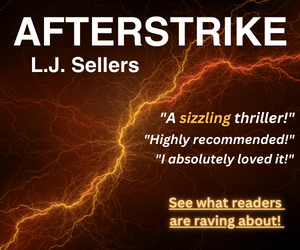
โ€œA sizzling, must-read thriller!โ€

โ€” Midwest Book Review

โ€œThe best thriller L.J. Sellers has written, and sheโ€™s at the top of my must-read list.โ€

โ€” Bestselling Author Teresa Burrell

About the Book

Afterstrike

What if, without warning, you had to run for your life and leave everything behind?

Remi Bartell faces that terrifying moment and takes only the dog who saved her.

But as she starts her new life, lightning strikes! Remi briefly loses her memory and makes one small mistakeโ€”that costs her everything. The crime-family patriarch sheโ€™s hiding from kidnaps her and plunges her into a revenge nightmare. The psychological trauma cracks open buried memories from her old life that will either save her or destroy her.

AfterStrike blends fast-paced action with psychological suspense and unexpected romance, then ends with an explosive twist.

You can find The Ordeal here:
Amazon | Barnes & Noble | Apple Books


If you are an author and wish to be featured as our guest or if you are a publicist and want to get your author featured on TRB, then please get in touch directly by e-mail at thereadingbud@gmail.com

Book Review: The Ordeal by Josephine Walden

Book Details:

Author: Joesphine Walden
Release Date:ย 
20th August 2022
Series:
Genre: Memoir
Format:ย E-bookย 
Pages: 401
Publisher:
Blurb:
After two major floods with their financial, physical, and emotional ramifications, a car accident, several dangerous encounters while traveling and family deaths, I spiraled down into a life-changing, nursing-career ending illness.ย  Diagnosis:ย ย  Myalgic Encephalomyelitis/Chronic Fatigue Syndrome, a little understood illness at the time.ย  A single mom, I struggled to work but the symptoms slowly overtook me:ย ย  debilitating fatigue, flu-like symptoms, a pre-leukemic blood dyscrasia and a slow loss of memory.ย  Then a beloved sister and I inherited two estates.ย  She took care of probate.ย  As I descended into the throes of the illness, she invited me to stay with her and her husband.ย  While there, fun times were punctuated by unpleasant encounters and accusations of family neglect and other short comings.ย  Unable to respond due to memory loss and slow thought processes, I kept silent.ย  As probate progressed, my daughter began to warn me about my sisterโ€™s behavior in dealing with the probate issues.ย  I couldnโ€™t comprehend her concerns as I trusted my sister implicitly.ย  I was blissfully unaware of game playing, creative manipulations, plots, thefts and acts of revenge.

Finally, there was some improvement and I returned to work.  That attempt failed after only four months.  With trepidation I eventually returned to my sisterโ€™s due to her persistent coaxing.  While there, she did all she could to make me physically, as well as emotionally, uncomfortable.  I left.  Once away her behavior became overly hostile and aggressive.  She seemed to be a combination of Baby Janeโ€™s sister and Virginia Wolff!  My ex-husband, a state policeman, guided me through a two-estate, nine-year ordeal.  Julieโ€™s actions would almost financially break me, deprive me of some of my inheritance and cause family members to turn against me. 

Eventually I had to retain an attorney.  He had been a former prosecutor and said it was the worst case he had ever handled.  Finally, after trying to deal with her, the attorneys asked me to meet with her.  Still ill but with some improvement I pulled myself together.  My attempted intervention wasnโ€™t successful.  She was evasive, less than honest, accusatory and walked out of the meeting to avoid answering my questions.  The lawyers made the decision to hold a judicial inquiry so the judge would know how to rule.  Sadly, court would be the next step.

In court the findings influenced the judge to put Julie on supervision to finish the probate business and had her escorted from the parental home and out of town by a Sheriffโ€™s Deputy.  He followed her to the next town.  My lawyer called it โ€œFrontier Justice.โ€  The home was sealed, and contents and home were sold.  This final resolution brought peace and financial stability to my life.  Estranged family members were reunited with me.

Review

Rating: 4 out of 5.

The Ordeal by Josephine Walden is a touching memoir about the author’s story of having been betrayed by someone she held very dear to her heart and how she had to confront the hard realities of life. But thankfully, the author is later saved with the help of her own wits and her dear daughter.

This book is a memoir that deeply resonated with me even though I still cannot understand why; I think may be because it talks about the basic fear we all harbour in our deep subconscious and unconscious minds about being betrayed by the ones we love the most. This book is a very well-written account of the author’s plight and brings out all the situations she had to endure in great detail making the reader understand the situations well and in a very engrossing way.

I would strongly suggest everyone to read this book as this book is a moving story and would make you emotionally involved in it rewarding you with a great payoff too in the end.


You can also read this review on:

Goodreads


Amazon