Welcome to TRB Lounge. Today, I’d like to welcome author of Sword & Sorcery: Frostfire, Ethan Avery, for an author interview with The Reading Bud.
About The Author
Ethan Avery believes in the power of stories. As a child growing up in Ohio, they gave him a chance to see a bigger world, and to hear what life was like for people that didn’t look like him or believe what he did. And now years later, he hopes to do the same for others.
Welcome to TRB! Please give our readers a brief introduction about yourself before we begin.
Hi, I’m Ethan Avery, author of the upcoming novel Sword and Sorcery: Frostfire, thanks for having me! I guess a bit about myself now is that I work between writing novels and movies, so it’s storytelling for me all the way! In addition to the book coming out this month, I also have some exciting potential Hollywood movie news, but I have to be hush-hush about it for now. I’ll probably make an announcement later on YouTube or Twitter. As far as an introduction goes, instead of giving a long and boring list of awards and accomplishments, I’ll just say that I’m a storyteller. I studied at The Ohio State University with a focus on both storytelling as well as the social aspect of politics. Things like why people believe what they believe in a theoretical sense, as opposed to the individual issues themselves. And that’s actually been an invaluable tool as a fantasy writer.
Please tell us something about your book other than what we have read in the blurb?
Oooh, that’s a good one. I guess I’ll keep it spoiler-free. Sword and Sorcery is not only a fantasy adventure, but it’s written from multiple perspectives to really show the world through more than one person’s eyes. Primary socialization, which is a fancy term for how people learn about life in their youth, was one of my big points of study in college and that’s translated to helping me write the book, because the way you grow up truly does affect how you see the world.
What is that one message that you’re trying to get across to the readers in this book?
Oh my, another good one. Personally, I try to keep myself from influencing a reader’s experience by telling them what they should or shouldn’t learn. Sword and Sorcery will probably be a book that different people get something different from, and that’s no problem to me. In fact, I’d love to hear from readers when the book releases about what they feel it might have been about. And I’m always open to connect on Twitter!
Who is your favourite character in this book and why?
Uh-oh, that’s the kind of question that gets writers in trouble, and honestly, I know people think it’s the easy-way-out answer, but I truly can’t choose. From the main cast to the most seemingly-insignificant little side-characters, they all feel to me like the most important person in their own little world, and I try my best to write them as such. Real-life, I think, is similar in that way, in that most people view themselves like the main character of their story or video game, but we all share this space together. In that sense I guess life is less like a traditional RPG game and more like an MMO or giant D&D campaign!
What inspired you to write this book? An idea, some anecdote, a dream or something else?
I was honestly obsessed with fantasy as a kid, and still am now, of course! I’ve read, watched and played pretty much every kind of fantasy story I could get my hands on. Perhaps it spoke to me because in fiction, and fantasy in particular, we get a chance to remove ourselves a bit from the biases of our own world and see the problems societies go through from a fresh, more objective perspective. And I think there’s a lot we can learn from that.
How long did it take you to write this particular book?
Sword and Sorcery was written over the course of about 15 years, so it’s been a blast crafting and building the world of the book, which is always one of my favorite parts of making fantasy stories!
What are your writing ambitions? Where do you see yourself 5 years from today?
Whew, that’s a tough one, hopefully I’ll have written a few more novels.
Are you working on any other stories presently?
I am indeed. Other than the secret movie project, and another book in the Sword and Sorcery series, of course, I’m also beginning to develop another series, but it’s still very early in the creative process at the moment.
Why have you chosen this genre? Or do you write in multiple genres?
Ah, perfect timing on that question. The series I’m starting to develop is a sci-fi universe, so I’m definitely a multi-genre kind of storyteller.
When did you decide to become a writer? Was it easy for you follow your passion or did you have to make some sacrifices along the way?
It happened in several parts. I had a few poems published when I was like 14, and that gave me the confidence to be like, you know, maybe I can do this. But even though I was working on Sword and Sorcery then, I didn’t really have much direction in terms of how to pursue getting a novel published. So I wrote a bit here and there and kind of put the story off to the side. Fast forward a few years and I’m doing film and animation in college and learning screenwriting, which shares the basics of storycrafting with novel writing, but they both branch off in their own fun and interesting ways. And it was here I think I truly realized I’d become a storyteller. I had a college exam once worth a big portion of the grade for the class, and I skipped it to finish a story I was working on at the time. And I also remember a moment listening to Andrew Wyatt from Miike Snow, in the Ron Howard/Jay-Z Made in America documentary, where Andrew mentions that he once pictured himself going back to school and becoming a rich lawyer, and then he realized that if he did that, all he’d want to do once he got there was make music. Anywho, after skipping that college exam, I worked on a lot of film stuff for some years, and yes, there were some rough years but I did indeed survive, then when I had more time on my hands in 2020, due to the pandemic, unfortunately, I decided to dust off my old Sword and Sorcery notes and finally finish the story.
What is your writing ritual? How do you do it?
I do a lot of outlining, which is sort of ridiculous because most of the time I end up writing pretty spontaneously and going away from said outline. But when working in a world as big as the one in Sword and Sorcery, it’s nice to at least know what my plan was before I deviated to something else that I think is better.
How do you prefer to write – computer/laptop, typewriter, dictation or longhand with a pen?
Desktop computer for sure. It’s gotta go there eventually anyway, so it’s easier to just start that way, though I still jot down scenes or notes on my phone or notebook when I’m away from my pc.
What are your 5 favourite books? (You can share 5 favourite authors too.)
Oh no, I’ve been put on the spot. I honestly can’t choose, mostly because the list is forever updating. I’d be remiss not to mention anything though, so how about I recommend Michelle Knudsen’s highly underrated Trelian series. And I think people that have read both of our books will know exactly why.
How do you deal with Writer’s Block?
It’s honestly never been a problem for me. If I’m stuck on a scene where I know the ending I’m writing for it isn’t right or I don’t know what scene to go to next, I just jump to a different part of the story and start writing that. And if it’s a more deep-rooted problem I’m having, like plot/character stuff, I usually get up and take a short walk to clear my head. By the time I’m done, I almost always have a solution!
What advice would you give to aspiring non-fiction writers?
Figure out if you want to do this. Or need to do this. And if you need to do it, what kind of writing do you need to do? There are writing jobs out there that are a lot less hit or miss than being a novelist or screenwriter. You might find you enjoy telling stories as a columnist, journalist or even starting a cool and awesome blog like The Reading Bud!
Thank you, author Avery, for your honest (and fun) answers!
About the Book
Sword & Sorcery: Frostfire
If you could change your life by trusting in a stranger… would you?
Erevan has a problem. He grew up on the unforgiving streets of Bogudos and has the scars to prove it. His friend, however, is stuck in jail because of his mistake. But when a suspicious courier offers him a chance to fix things, should he lift his sword and journey across treacherous lands to aid her cause? Meanwhile, Aireyal has been accepted into the wealthiest and most prestigious magical school in all the land. There’s just one problem. She can’t do magic. But that’s far from the only secret within the walls of Darr-Kamo. And what she discovers might just change the world. Swordsman & Sorcerer Scholar & Spiritualist All four have enemies. And all four need help to get what they want. But help is never free.
What would you sacrifice to get what you most desire?
You can find Sword & Sorcery: Frostfire here: Amazon |Goodreads
If you are an author and wish to be featured as our guest or if you are a publicist and want to get your author featured on TRB, then please get in touch directly by e-mail at thereadingbud@gmail.com
Welcome to TRB Lounge. Today, I’d like to welcome author of Those Around Him,Brett Shapiro, for an author interview with The Reading Bud.
About The Author
Brett Shapiro is an American writer and the best-selling author of L’Intruso – a memoir published in Italy (Feltrinelli) that was later produced into an award-winning film and theatrical production. He is also the author of two children’s books, one of which was the recipient of Austria’s prestigious National Book Award. Several of his short stories have been performed in theatres throughout Italy, where he lived for 25 years, and his essays and articles have appeared in numerous magazines and newspapers in Italy and the United States. While in Italy, he made many guest appearances on Italian television, including as commentator for 60 Minutes, and was a regular guest lecturer at the University of Siena. Brett is a veteran writer for the United Nations and currently lives by the beach in Florida.
You can connect with author Shapiro here: LinkedIn
Interview
Welcome to TRB! Please give our readers a brief introduction about yourself before we begin.
Now this is a challenge: an introduction (brief or otherwise) about a life lived for 66 years and still going strong! I grew up in the suburbs of Philadelphia and moved to Manhattan after university to pay my dues as a budding writer who thought he could change the world – and to make the necessary connections to do so! After 11 years in the Big Apple, I moved to Rome, where I lived for 25 years with my partner and our two sons. When my partner and I uncoupled (very amicably), I decided to return to the USA, where I chose a quiet beach spot in order to shift into a lower gear.
I wake up early each morning and walk to the beach with my dog to watch the sun rise. I spend no more than three hours a day doing my “bread and butter” work – drafting and editing documents for the United Nations and giving writing webinars for UN staff all over the world. The rest of the day is mine to do with as I please. I am semi-retired, after all! In those free hours, I always put in at least two hours of writing each day.
Please tell us something about your book other than what we have read in the blurb?
Those Around Him is a meditative book. I was more concerned with how people think about the things that happen to them; less concerned with the things that happen in themselves. Of course, there is a plot and an arc, but they tend to be unremarkable undulations, as life often is. There is a lot of “interiority” going on in the book, but of the accessible kind. Promise!
What is that one message that you’re trying to get across to the readers in this book?
I’m not sure there is a message that I’m trying to convey in the book. It’s more of a mood, a rhythm, a way of turning things about in our heads that I’m trying to capture and tame so that readers think “Oh my gosh, I can relate to that,” detail after detail, page after page, and in an enriching way.
Who is your favourite character in this book and why?
I’m sure I sound like a parent when I say that I don’t have a favorite. I really care about all of my characters, complete with their various crimes and misdemeanors. I have to care deeply about each and every one of them; otherwise, their complexities won’t emerge and they’ll wither on the page.
What inspired you to write this book? An idea, some anecdote, a dream or something else?
I would say it was an idea that inspired me more than anything else – the power that youth and beauty can have over someone whose own youth and beauty have long since faded. The power to create minor disturbances and to unsettle. A “Death in Venice” kind of theme, but the similarities stop there. Thomas Mann is Thomas Mann.
How long did it take you to write this particular book?
There was about one year of what I call “writers’ avoidance”, where ideas about the book were percolating in my head but not spilling over onto paper. Once I overcame that, it took me two years to write it.
What are your writing ambitions? Where do you see yourself 5 years from today?
My only writing ambition is to continue playing with words every day. I wouldn’t even call it an ambition. For me, it’s more of a necessity – like continuing to eat clean or to walk along the beach at sunrise. I’d be perfectly content if, five years from today, the routine of my daily life remained unchanged and I was still in excellent health – and with another novel or two under my belt.
Are you working on any other stories presently?
I completed another novel – Late in the Day – about eight months ago; after making the rounds of publishers, it should be going to press this summer or autumn. I am also about one-third of the way through the first draft of another novel, provisionally called Henry’s Version.
Why have you chosen this genre? Or do you write in multiple genres?
My novels fall into the category of literary fiction (although I’m not really sure what “literary fiction” means). I didn’t choose the genre and then proceed to write myself into it. I write, and my writing consistently falls into that genre. I don’t think I could write in multiple genres. I’m not in my skin with a lot of “multis”. I can’t be working on multiple stories at a time. I can’t be reading multiple books at a time. But I’m a whizz at putting together a five-course meal in no time flat.
When did you decide to become a writer? Was it easy for you follow your passion or did you have to make some sacrifices along the way?
The writer imperative struck when I was a teenager. I always enjoyed reading books as entertainment, but during adolescence I realized that books could be so much more (thank you Virginia Woolf, Thomas Hardy and a slew of others). As I was reading and marveling over these books (and reflecting on them long after I’d closed the back cover), I was also thinking, “I want to do this too. I must do this too.” Against my parents’ wishes, who wanted me to be a doctor, I majored in literature. All I wanted to do was read great books, analyze them and write papers about them. My parents refused to pay tuition for such “nonsense”, and I had to work full-time while going to university. This double life, which seemed so unfair at the time, actually served me extremely well, as it was a division that I’d have to face and manage carefully even after graduating: I needed to work, I wanted a family, I needed to write, and I wanted to do all of them well and with pleasure. During the years of raising my sons, my writing output certainly decreased. But the books I managed to have published during those years were successful and kept me in the writers’ loop, which was important to me – if only to stave off my parents’ admonition, “What nonsense”. When my sons left the nest, I dug back into writing longer works, and I carved out a space of time each day in which to do so.
What is your writing ritual? How do you do it?
My writing ritual is quite simple. I write best when I feel that all the business of the day has been taken care of. For years, I have made 5:30 until dinner time my writing slot. By 5:30, I’ve finished my quota of UN work, my errands, my phone calls, and my domestic chores. I can afford to be untethered and spin off into my creative zone. Of course, this means that I might eat dinner at 7:30 or I might eat it at 10:00. (Fortunately, I eat a light meal.) I take my computer and whatever scribbles I may have made during the day to the screened-in front porch. Then I sit down and I write. I have a large back yard, with a deck and a pool. But it’s private, and I like to observe the occasional passerby while I’m writing. I’m not sure why. I think it has something to do with reminding myself that people are my main characters and that any idea I’m trying to elaborate needs to come through the characters in my book and not through an invisible but intrusive narrator. The front porch has beautiful shrubbery wrapped around it. Anyone who is walking down the street can’t see me, but I can observe them. Very sneaky.
How do you prefer to write – computer/laptop, typewriter, dictation or longhand with a pen?
I prefer using my laptop. I can see the words as they would appear on the page of a book, which helps me to scrutinize them better. Using a computer also enables me to keep the copy from getting too messy. I don’t work well with messy copy. I keep a sheet of paper and pencil by my side to make notes about things that might need addressing but that I don’t want to address during that particular writing session. I type up the notes on a separate document and review the notes the next morning to decide whether I should incorporate any of them when I return to the front porch in the evening.
What are your 5 favourite books? (You can share 5 favourite authors too.)
Trying to choose five favorite books is an impossible task. As soon as I set myself to thinking about it for more than thirty seconds, I find myself facing a mountain of titles. I’ll offer a knee-jerk reaction: American Pastoral; To the Lighthouse; Enormous Changes at the Last Minute: The Hours; and The Magic Mountain. I read these books years ago, some of them decades ago, and I still can’t shake them off. As far as authors, my knee-jerk reaction would be Philip Roth, Virginia Woolf, Alice Munro, Flannery O’Connor and Grace Paley. I ask forgiveness of the scores of books and authors who didn’t make the list. You know who you are.
How do you deal with Writer’s Block?
I’ve never experienced writers’ block. When I sit down to write, something always gets written. It may only be one sentence in an hour, or it could be an entire page. But the page is never blank. What I used to experience was what I mentioned before: “writers’ avoidance” – continually finding reasons not to sit down to write. This was magically overcome when I attended a one-week writers’ retreat. There was something about a community of writers gathered together to share their work, critique the work of others, have discussions about writing in general – and, most importantly, disperse themselves onto verandas and benches and lawns to write for two-hour intervals each morning, afternoon and evening – that calmed me down and made me realize that the effort was a human effort, not a superhuman one.
What advice would you give to aspiring non-fiction writers?
There is only one piece of advice, and it’s so commonplace that it seems almost banal: Write. Even if it’s only ten minutes a day (to start). Thinking about writing is a lovely idea, a noble idea, but it’s only an idea.
Thank you, author Shapiro, for your insightful answers!
About the Book
Those Around Him
Andrew returns to the beachside town of his father, Charles, who is dying. In the throes of middle age, Andrew is trying to come to terms with the fact that not everything is still possible, that horizons shrink and parts break, and that he may no longer be desirable – or desired. On one of his routine sunrise beach walks, he is greeted by Lex (whom he calls “Ex”), a young man whose physical beauty and emotional warmth and exuberance completely unsettle the quiet and measured rhythm that Andrew is trying to establish in his new home and his own advancing years. The intimate relationships between and among the three generations of men, each with his own needs and hopes – and darknesses – unfolds during hurricane season. When the season is over, carrying off much with it, Andrew has begun to understand his place along the continuum and the quiet balance that he has been seeking amidst his wisdom and foolishness, and through the arrivals and departures of those around him.
If you are an author and wish to be featured as our guest or if you are a publicist and want to get your author featured on TRB, then please get in touch directly by e-mail at thereadingbud@gmail.com
Welcome to TRB Lounge. Today, I’d like to welcome author Wind Out Of Time, Rhema Sayers, from Atmosphere Press, for an author interview with The Reading Bud.
About The Author
Rhema Sayers is a retired physician who started in Family Practice on the Mexican border and then switched to Emergency Medicine after ten years. She loved the ER and spent the rest of her career being an adrenaline junkie. Her husband and she adopted three little girls from China in 1998-99. The girls are young women now, off living their own lives. Rhema took up writing when she retired and has had nearly one hundred articles and short stories published. Living in Arizona near Tucson, she and her husband and her dogs love the desert, the mountains, and the climate.
You can connect with author Rhema Sayers here: Author Website
Interview
Welcome to TRB! Please give our readers a brief introduction about yourself before we begin.
I have wanted to be a doctor since I was about 5 years old. One night our family dog chased a car and unfortunately caught it. Badly injured, we brought him inside. Upstairs from us lived a family whose daughter was my best friend and whose father was a surgical resident. The young doctor worked on that dog for hours. I stayed with surgeon and dog well through my bedtime, fascinated by what he was doing. Finally my parents retrieved me and put me to bed. During the night, Shiner died. But that did not dampen the flame the incident kindled within me. I was going to become a doctor.
After college, I applied to several med schools and was placed on waiting lists, eventually to be rejected. Then I met the love of my life. We were married within 7 weeks. We moved to the Boston area so that he could finish at MIT. Meanwhile, I once again started applying to med schools. University of Connecticut School of Medicine placed me on a waiting list and I got my acceptance letter in June.
We ended up in Arizona on the Mexican border after med school and a family practice residency in Pennsylvania. A decade in, family practice was enough for me. I discovered that I hated office practice and loved the ER. I switched to emergency medicine and spent the next two decades in ERs, until I was no longer able to keep up the pace. Then I did urgent care for a few years and retired.
I have also always wanted to write and that was my plan for retirement. I thought I was pretty hot stuff as a writer. Then I started taking writing classes and discovered that I had a lot to learn. After several years, I have indeed learned a lot. I love writing, although procrastination is also a favorite pastime.
Since retiring, I have had over 90 short stories, historical and other articles, and even a couple of poems published. With that foundation, I approached the massive project of writing a novel.
Please tell us something about your book other than what we have read in the blurb?
I had a wonderful childhood with parents who loved all three of their children. I got a good education and never went to bed hungry. Basically, I did not have the background to write the ‘Great American Novel’. I was happy and had no major psychological scars. I wanted to write a novel that would entertain people, that would take them elsewhere for a few hours, that would make them laugh and possibly cry but would not make them feel uncomfortable. I wanted to write something beguiling but not dark and gloomy. The result is Wind out of Time.
What is that one message that you’re trying to get across to the readers in this book?
A strong woman can do whatever she needs to do. And when you find yourself in an untenable situation, you do not stand around wringing your hands and sobbing. You do whatever it is that you have to in order to resolve the problem.
Who is your favourite character in this book and why?
Actually I really love Denim, the blue roan stallion with a wicked sense of humor. But I like Andrea a lot, too. She is smart, not easily daunted, has a good sense of humor, and loves animals. I’m afraid I based her on my idealized concept of me. Obviously I need to get my self-esteem under control. But I don’t cook and she has a passion for it that I just don’t understand.
What inspired you to write this book? An idea, some anecdote, a dream or something else?
I have always been so annoyed by the Arthurian legends. Everyone is so noble and so damnably stupid. They always, always do the wrong thing. So I brought in a moderator, someone who knows that the wrong path will lead to disaster. She steers the characters down the ‘right’ paths gently – or with a cattle prod if needed.
How long did it take you to write this particular book?
Three years. But I’m about ¼ through the second book now.
What are your writing ambitions? Where do you see yourself 5 years from today?
I hope to have written another 3 or 4 books, along with a large number of short stories and articles. I just had an article come out in The Desert Leaf, a local upscale magazine. The article is about Gleeson, Arizona, a ghost town in Cochise County near Tombstone. It was a boom town in the late 1800s with mines producing silver, gold, and lead. I write a lot about the history of southern Arizona and have gained enough knowledge to become a lecturer on the subject.
My favorite stories have a lot of action. Right now I have about seven stories sent out to magazines with hopes of getting them published.
I want to make Wind out of Time a trilogy and am writing the second book now. I also have a novel in the back of my head about an emergency department woman physician in Tucson who finds a body in the desert when she’s running with her dogs. She’s already becoming attracted to a TPD homicide detective. I plan to follow it from two points of view: the doctor and the killer.
Are you working on any other stories presently?
Oh, yes. A number of them. I am researching a story about the Mountain View Hotel in Tucson, a highly popular hotel whose clientele included Buffalo Bill Cody, senators, and other politicians, run by William and Annie Neal, a black couple who defied the color barriers in the early 1900s. I am also writing a science fiction story, a story of a dog and a young man who find each other, and a story about a sparrow.
My stories tend to be eclectic. I wander around through the genres. I don’t do erotica, but I have written a horror story that I’m trying to sell. I write whatever occurs to me at the moment. The first story I sold was about a man who was so boring and so bored with his life that one day he sat down on the bench at the subway station and evaporated. The kid who stole his clothes found it really weird.
Why have you chosen this genre? Or do you write in multiple genres?
I write murder mysteries, dog stories, bird stories, fantasies, horror stories, medical stories, and some stories that are just plain odd. I let my imagination run wild. Unfortunately, sometimes it comes to an abrupt halt and refuses to go any farther. I have a dozen stories tucked away, looking for an ending, because my imagination refused to go any farther.
When did you decide to become a writer? Was it easy for you follow your passion or did you have to make some sacrifices along the way?
I discovered that I could spin tales when I was just becoming a teenager. I found my own imagination rather fascinating even though that sounds sort of egotistical. But I wrote stories and some very bad poems in high school. In college I took enough creative writing courses and literature courses that I ended up minoring in English lit. But then I met my love, married, and started med school. I kept a diary intermittently while I was a doctor, but it turned out to be very intermittent. It wasn’t until I retired that I had the time to write.
As far as sacrifices are concerned, the most I’ve given up for a story is lunch. I read voraciously and listen to books in the car, hoping some of the brilliance of the authors will rub off on me.
What is your writing ritual? How do you do it?
I sit down at the computer, play a few games, then go to whatever I’m working on. I write a few sentences or pages, sometimes play a few more games, depending on whether I have any idea of where I’m going with the story. As I said, I’m very good at procrastination.
How do you prefer to write – computer/laptop, typewriter, dictation or longhand with a pen?
I love my PC. On rare occasions, I may take a notebook with me to an appointment and spend the downtime writing. Usually something new, whatever pops into my head.
What are your 5 favourite books? (You can share 5 favourite authors too.)
The Lord of the Rings – J.R.R. Tolkien
The Witches of Karres – James Schmitz
The entire Honor Harrington series and the Safehold series – David Weber
Wasp – Eric Frank Russell
The Hitchhiker’s Guide to the Galaxy – Douglas Adams
While I wouldn’t rank any of his books with these five, I absolutely love John Sandford, especially the Prey series. Also Craig Johnson and Walt Longmire, David Rosenfelt and Andy Carpenter.
How do you deal with Writer’s Block?
Basically I ignore it. If I can’t write, I can do housework, wash dogs, take a nap, pay bills, or engage in any number of other thrilling activities. Eventually I go back to the computer.
What advice would you give to aspiring non-fiction writers?
Write. Every day. Your first work will usually be poor. You’re a newb. What do you expect? Keep on writing. Take courses in creative writing at your local college or junior college or on-line.
Remember – the more you write, the better you’ll get.
And then rewrite. Not once or twice, but ten, fifteen, twenty times.
That’s all – write and rewrite. Every day.
Also – remember that you will never be published if you don’t submit your work to editors who will criticize what you’ve done.
That’s their job. You need to learn to roll with the punches.
Good luck.
Thank you, author Sayers, for your insightful answers!
About the Book
Wind Out Of Time
FBI Special Agent Andrea Schilling is chasing a terrorist around the world when they both are forced to go through a time portal. To her horror, Andrea finds herself in the 5th century in King Arthur’s court. Seriously? When she can’t return home, she takes over the kitchen, becoming chief cook for King Arthur. But this king is named Ardur, and resides in a falling down castle where the knights are lecherous drunks. Andrea finds the situation untenable. So, with the help of a perplexed king, two huge dogs, a bad tempered stallion, the servants, and Guinevere, Andrea transforms the kingdom of Camdhur to Camelot. Well, almost. The ancient legend is turned on its head as a strong woman, organized, smart, trained to fight, takes the kingdom apart and puts it back together again, along with the king’s heart.
If you are an author and wish to be featured as our guest or if you are a publicist and want to get your author featured on TRB, then please get in touch directly by e-mail at thereadingbud@gmail.com
Welcome to TRB Lounge. Today, I’d like to welcome authorKara Jacobson, from Atmosphere Press, for an author interview with The Reading Bud.
About The Author
Kara Jacobson resides in the beautiful, rolling hills of Red Wing, MN with her husband and young son, Logan. She and her husband both work at the local hospital, where they first met. Born with an insatiable appetite for science fiction, Kara has always been intrigued with the notion of entire civilizations existing within the earth. She was a New Media Film Festival (2021) nominee for The Intra-Earth Chronicles, Book I: The Two Sisters.
You can connect with author Kara Jacobson here: Author Website
Interview
Welcome to TRB! Please give our readers a brief introduction about yourself before we begin.
Hello, Beautiful Book-loving Friends! My name is Kara Jacobson and I am a little on the shy side. I adore my family, nature, friends, art of any fashion, movies (Star Wars, Harry Potter, and Indiana Jones are a few of my all-time favorites 😊) and fantasy books!
Yes, I am a daydreamer, always walking in two worlds: the mesmerizing and shimmering one playing in my head, and the ordinary, everyday one of working in a hospital pharmacy and taking care of my family (a husband, son, and two cats). Maintaining the perfect balance of both worlds is crucial!
When I first set out on my writing quest, I tried my hand at writing movies. I must admit that writing movies is an art that I have yet to master. Please view my projects on my author website: https://karalynejacobson.com/
Please tell us something about your book other than what we have read in the blurb?
Pictured above is Sasha. She is the intuitive older sister (15 years old) with a red diamond-shaped birthmark on her forehead. Sasha’s diamond-shaped birthmark tingles before she receives a premonition. This picture is in black-and-white in the book.
Adrianne is the younger of the two sisters (11 years old) and is the fierce girl depicted on the cover with the tiger. She wears a brass hair clip in her crimson hair that conceals a tiny, sharp knife.
The initial inspiration for Adrianne was, actually, a real person! Adrianne was inspired by my childhood friend, Bria Gehringer. Bria was an only child who lived down the rural Wisconsin highway from me. She was charismatic, free-spirited, fearless, and harbored a deep connection to the animal kingdom (she had a ton of pets: dogs, cats, birds, ferrets, rats, and an iguana, all of whom she called siblings) and I remember her dying her hair bright red at least once. She saved me from ultimate loneliness as a kid as I accompanied her on many childhood adventures.
The rest of the characters in this story have been completely conjured from my imagination.
What is that one message that you’re trying to get across to the readers in this book?
That there is always hope for a better tomorrow even when outer circumstances appear most dire.
Sasha clung to the hope that Adrianne was still alive and living inside the ravine, which drove her to set off on this adventure across the desert.
Adrianne never relinquished the hope that she could commandeer a nuclear machine that could revive a dying civilization.
Who is your favourite character in this book and why?
Adrianne, because she is absolutely fearless!
What inspired you to write this book? An idea, some anecdote, a dream or something else?
In my early 20s I had the chance to attend a “Walk-Ins International Conference” in Las Vegas. The group took a tour to a park outside of Reno, NV where there were large, intricate stone circles in the ground that were places where they believed that the inner earth beings were close to the surface. This concept blew my mind, and I have been actively exploring the subject ever since!
How long did it take you to write this particular book?
Seven months. It would have been faster, but I have a 4-year-old son and suffer from a multitude of distractions, internal and external.
What are your writing ambitions? Where do you see yourself 5 years from today?
I would love to occupy the ranks of true “author” vs “writer of stories for my own joy”. Or, compromise on an amalgamation of the two.
Are you working on any other stories presently?
The second book in the Intra-Earth Chronicles series is nearly complete!
I also have another book, Beneath Storm Mountain, currently being published by Pegasus Publishing (with a possible 2023 release date) that was first written as a movie screenplay. The screenplay placed as a Semifinalist in the 2019 ScreenCraft Animation Contest.
Beneath Storm Mountain is a YA fantasy adventure that also takes place in the civilizations below the earth’s crust. Two 15-year-old boys, Darren and Kale, star in this tale. While on vacation in South Dakota’s Black Hills, the boys discover an otherworldly relic in their fishing hole that is coveted by evil shadow beings. The boys meet a mysterious girl from the intra-earth, who leads the boys below to her technologically advanced civilization to hide them from the evil shadow beings that hunt them.
I have included scenes from Beneath Storm Mountain, illustrated by Brendan Kulp.
Why have you chosen this genre? Or do you write in multiple genres?
I adore middle grade! I also write YA, but prefer middle grade. My constitution is a bit sensitive, so middle grade is usually the easiest for me to digest.
When did you decide to become a writer? Was it easy for you follow your passion or did you have to make some sacrifices along the way?
A 5th grade teacher (Mr. E.) once said to me, “Kara, you are a writer.” I discarded this message at the time, but it must have remained ingrained in my subconsciousness, because now writing is what I feel most compelled to do!
What is your writing ritual? How do you do it?
I do a meditation for receiving inspired writing and art, created by bj King, when I have time or remember. You may contact her at bjnamaste@gmail.com for the direct prayer.
The meditation involves sealing the room on all sides from negativity, connecting a cord of light (or a lightsaber) into the great central sun at the center of the earth, opening your heart, and then inserting the light cord high above yourself into your own Oversoul or Higher-self. A series of counting begins as you focus on your mid-brain. This puts you into a higher state of consciousness and awareness, to begin the transference of automatic writing from your soul.
How do you prefer to write – computer/laptop, typewriter, dictation or longhand with a pen?
I do both, longhand with a pen and paper, and computer writing. As inspiration strikes, I jot everything down into my pink notebook (as scribbles at midnight), and much later it gets transferred (often changing its form entirely) onto to the computer.
What are your 5 favourite books? (You can share 5 favourite authors too.)
The Mists of Avalon by Marion Zimmer Bradley (I love anything related to King Arthur and Camelot. The Merlin series, starring Colin Morgan, was a smash hit at my house!)
The Valley of Horses by Jean M. Auel
Percy Jackson & The Olympians by Rick Riordan
Harry Potter by J.K. Rowling
The Dead Zone by Stephen King
How do you deal with Writer’s Block?
I take a break and return another day when inspiration strikes. I regret, admittedly, that I am not the most disciplined writer. I truly write for only a few hours a week when I have the house all to myself. Though I think about the story continuously.
What advice would you give to aspiring non-fiction writers?
Write what you yourself would enjoy reading or watching on the big screen! Others will, hopefully, also enjoy your creations 😊.
Submit your books to Atmosphere Press—they are phenomenal!!
Thank you, author Kara, for your insightful answers!
About the Book
The Intra-Earth Chronicles
The Two Sisters #1
In the year 2444, two noble sisters, Sasha (15) and Adrianne (11) have survived a nuclear fallout, only to be torn apart. The ground splits open and Adrianne is thrown from her horse, plummeting into the ravine. Spurned on by the hope that Adrianne lives, Sasha embarks on a journey through the desert to face the ravine that claimed her only sister. Meanwhile, deep within the earth, Adrianne is running for her life. She took something that did not belong to her. In The Intra-Earth Chronicles, Book I: The Two Sisters by Kara Jacobson we experience a fast-paced fantasy adventure woven within the earth, and the unshakeable bond between two sisters.
If you are an author and wish to be featured as our guest or if you are a publicist and want to get your author featured on TRB, then please get in touch directly by e-mail at thereadingbud@gmail.com
Welcome to TRB Lounge. Today, we are featuring author Alexander Dawnrider for his latest release Into The Undercastle.
Into the Undercastle
Book: Into The Undercastle Author: Alexander Dawnrider Series: Shadow Arcanist PageCount: 406 Publication Date: 31st January 2022 Genre: Epic Fantasy Publisher: Dawnrider Press
Synopsis
A kingdom in peril. A forbidden stronghold. An unimaginable horror.
For centuries, the northern kingdom has faced constant attacks from hostile creatures in the surrounding wilderness. The population has dwindled to a few hundred, and an army of savage humanoids threatens to wipe Talidith out forever.
Their only hope is the Undercastle, a subterranean fortress built long ago to protect the people during an invasion. But it has been sealed by a mad king, and entry is punishable by death.
The young fisherman Aedan, along with his father, must retreat with the rest of the population to the Undercastle to wait out the invasion, hoping for help from the outside. But when their presence releases an evil from another realm, it threatens to destroy not only what is left of Talidith, but the entire world.
Alexander Dawnrider grew up reading copious amount of science-fiction and fantasy. Wherever he went, there was a thick paperback in his hands, or stashed in his satchel, or waiting beside his bed. He absorbed the works of Asimov, Heinlein, Tolkien, Foster, and countless others.
As he grew older, he applied his knowledge to the world around him. Each electronic appliance was really a robot ready to serve mankind. Each cat secretly knew how to walk through walls. It wasn’t anything so mundane as bears or foxes inhabiting the nearby forest, but fiendish orcs and goblins. And just beyond the stars was a young urchin with his flying minidrag.
Now Alexander dwells in a lofty tower of a northern province, endeavoring to contribute to that fantastical world with his own ideas. When he isn’t busy madly scribbling away on the scraps of parchment that cross his desk, you can find him enjoying a grilled-cheese sandwich and tinkering with his time machine. His companions are an assortment of gargoyles and a small dragon named Sea Glimmer.
If you are an author and wish to be featured as our guest or if you are a publicist and want to get your author featured on TRB, then please get in touch directly by e-mail at thereadingbud@gmail.com
Welcome to TRB Lounge. Today, I’d like to welcome author Janet Kelley from Atmosphere Press, for an author interview with The Reading Bud.
About The Author
Janet Kelley
Janet Kelley is a teacher, reader, writer, and feminist. A native of Hutchinson, Kansas, she studied Humanistic Studies and Religious Studies at Saint Mary’s College, Notre Dame, Indiana. She studied Historical Theology at the University of Notre Dame. She earned her teaching credentials from Indiana University at South Bend. Ms. Kelley currently lives in Boston and Budapest. Ms. Kelley believes that books are the cornerstone of freedom and justice. Her work to support survivors of sexual assault was inspired by the writer V and The Vagina Monologues. A portion of the proceeds from the sale of this novel will be donated to The Trevor Project. Please consider a donation to The Trevor Project to support their crisis intervention and suicide prevention services for LGBTQ youth.
Welcome to TRB! Please give our readers a brief introduction about yourself before we begin.
Thank you for the chance to introduce myself beyond what you can read in my Author Bio. I am a high school English teacher with a passion for reading. Together with a friend I started a book club that still meets over twenty years later. I was thrilled to join them by Zoom during the Covid era. I started another book club in my city a few years ago. My book clubs read both classics and new releases, fiction and nonfiction. We recently decided to branch out into “reading” films and will even read and then attend a production of the stage adaptation of Toni Morrison’s The Bluest Eye.
Beyond books I love being active—running, working out at my favorite gym, Orange Fitness Theory, and learning how to cross-country ski this season. In my spare time these days I enjoy making homemade jams, taking ukulele lessons, and drinking good coffee. (I also drink terrible coffee as needed.) I spend part of every year in Budapest, Hungary, where I have a home in the city center. I can spend an entire day at one of Budapest’s famous thermal water spas.
Please tell us something about your book other than what we have read in the blurb?
My book deals with the impact of trauma in our lives. Much like how we experienced the terrorist attacks on September 11, 2001, trauma enters our lives seemingly out of nowhere. One day we are living our lives, and then in a flash our lives are changed by forces outside of our control or understanding. Sexual assault sometimes works in this way. (Sometimes sexual abuse is more insidious as perpetrators groom their victims.) This is why I set the story of Luke’s sexual assault in parallel with 9/11. I want readers to see the two events as similar–both are traumatic assaults that force us to consider how to respond.
What is that one message that you’re trying to get across to the readers in this book?
I want readers to contemplate the plight of men and boys who are sexually assaulted. In the early 2000s the situation of men who were assaulted was dire. There were no pathways toward healing. The shame and the fear of being labeled as gay often silenced men. The shameful silencing led to further damage.
In Taint, I show how this damage extends to others. Luke was assaulted and confides in Rebecca. She tells his story and in fact decides for him how to make his rapist pay for the crime. I do not endorse her decisions. I want readers to harshly judge her choices even while they understand what forces caused her to act.
I want readers to understand that male sexual assault happens and that we need to create both a safety net for victims and pathways toward healing.
Who is your favorite character in this book and why?
My favorite character in the book is Tiffany, the third friend in a group of three. She is earnest and well-intentioned. I like that she sticks with her friend Rebecca even when she faces ostracization.
What inspired you to write this book? An idea, some anecdote, a dream or something else?
I had been working with the issue of sexual assault and domestic violence for many years. I produced The Vagina Monologues for many years at our local university. There were several awesome vagina-friendly men who were active leaders in our group. They made me more sensitive to men’s assault stories. I grew very interested in the silence of male victims. I wanted to explore that in my work.
How long did it take you to write this particular book?
Well, a long time. I started writing it in 2006. I was teaching high school at the time. Then I started my family, moved across the country, and moved to Hungary. This novel was in a drawer for many years. I finally decided that its story needed to be told.
What are your writing ambitions? Where do you see yourself 5 years from today?
I see myself with a new book in the next 5 years. I will continue to write poetry and short fiction as well.
Are you working on any other story presently?
Of course! It is natural for me to have drafts floating around. In the past I kept a blog and tried to maintain regular writing practice. Now I am more into snatching time when I can—on the subway, waiting in line, while I am on a lunch break from a teaching job. I keep a small notebook for that purpose in my purse at all times.
Why have you chosen this genre? Or do you write in multiple genres?
I chose YA because it felt natural to me and suited the voice I wanted to explore. I am not too strict about genre. I like to bend the rules about genre and style.
When did you decide to become a writer? Was it easy for you follow your passion or did you have to make some sacrifices along the way?
I am a reader and a writer. I am a teacher. I am a mother. A wife. A friend. These all come naturally to me. The decision to publish was more fraught. My writing was always a personal habit born out of my teaching practice. Taking my work public required an extra push. For me that came due to Covid. The restrictions on life produced the feeling that I needed to push back against all the sorrow and suffering. I wanted to put my novel into the world as a positive push back. It was a way to say that I choose creativity and the life of the mind despite the fear and suffering.
What is your writing ritual? How do you do it?
As I mentioned above, my practice has changed. I used to need two or three hours in the morning. I worked best in a cafe. I needed to be away from home and the lure of cleaning dishes. I loved getting into the flow of writing for hours at a time. In many ways this is my ideal. I think it is necessary for the stage of writing when you are immersed in a long project. Now I have transitioned more into snatch writing–catching a few lines here and there. I have abandoned the need to protect long stretches at a time. It simply wasn’t happening with the demands of children, work, and Covid restrictions. I enjoy my new writing freedom. It gives me more of a writer’s eye–I am constantly looking at people, situations, setting. I listen and eavesdrop with a writer’s ear. I like the energy this brings to my writing.
How do you prefer to write – computer/laptop, typewriter, dictation or longhand with a pen?
Longhand with a pen in my journal. Laptop for longer pieces.
What are your 5 favourite books?
When I was young I loved the Chronicles of Narnia by C.S. Lewis and stories about Ramona by Beverly Clearly. Growing up I was a huge Stephen King fan, until I got too creeped out reading Gerald’s Game. We used to sneak King’s novels beneath our desks during English class. I adored Ender’s Game by Orson Scott Card and Hitchhikers Guide to the Galaxy by Douglas Adams. Now that I look back, reading was kind of what the boys did and my reading selections mirror that. The other book that stands out as an influence was A Girl of the Limberlost by Gene Stratton-Porter, given to me by my grandmother.
In college I really discovered literature (I was a science/sports geek in high school). One of my majors was a Great Books program, which means we read works from the Western canon. Here is the stuff that moved me from college: Kitchen by Banana Yoshimoto, A Passage to India by E.M. Forester, Arcadia by Tom Stoppard, The Unbearable Lightness of Being by Kundera, Goethe’s Sorrows of Young Werther, Pope’s Essay on Man, The Collected Stories of Flannery O’Connor and, of course, Shakespeare.
It has only been since I started to teach high school English that I began to seriously read like a writer. When I had to teach reading/writing/story concepts to 9th graders, I had to be able to analyze a story so that its mechanics were visible to my students (without destroying the magic, which gets dicey). Books/Authors that have moved me in this era include: Blindness by Saramago (really, a favorite), anything by Margaret Atwood or Louse Erdrich, Toni Morrison, Ian McEwan and Alice Munro among others. Most recently I finished Gaddis’s Carpenter’s Gothic and I am slightly obsessed. I can’t leave out the Vagina Monologues by Eve Ensler, now known as V, which I produced/directed for three years. In my recent reading history I would include the following favorites: The Overstory by Richard Powers, Braiding Sweetgrass by Robin Wall Kimmerer, Dept. of Speculation by Jenny Offill, Elena Ferrante, Stoner by John Williams, Never Let Me Go by Ishiguro Kazuo, Lost Children Archive by Valeria Luiselli, Hunger by Roxane Gay, and On Earth We’re Briefly Gorgeous by Ocean Vuong.
How do you deal with Writer’s Block?
I don’t believe in it!
What advice would you give to aspiring non-fiction writers?
Read and write a lot. Try to break some rules. For example, never limit your answer to only 5 favorite books when they ask.
Thank you, author Kelly, for your insightful and honest answers!
About the Book
Taint
Rebecca White, a senior at the top of her class at Plains High School in 2001, is a Kansas girl going places…until the rape. She wants the rapist to pay for his crime and go to jail. Unfortunately, nothing is that simple, and she wasn’t the one raped. This is the story of how Rebecca seeks revenge for her best friend, Luke Warren, who was raped by the principal’s son, Weston. While the senior class chooses corsages and boutonnières for prom, Rebecca plots revenge against Weston. She must find a way to make him pay without revealing Luke’s secret. The solution she finds is chilling. Set in a small town in the American Midwest when the terrorist attacks in New York City brought life to a standstill, Taint by Janet Kelley portrays how friendship and justice are tested when the unthinkable happens.
If you are an author and wish to be featured as our guest or if you are a publicist and want to get your author featured on TRB, then please get in touch directly by e-mail at thereadingbud@gmail.com
Welcome to TRB Lounge. Today, I’d like to welcome Teri M. Brown, author ofSunflowers Beneath The Snow, for an author interview with The Reading Bud.
About The Author
Teri M. Brown
Born in Athens, Greece as an Air Force brat, Teri M Brown graduated from UNC Greensboro. She began her writing career helping small businesses with content creation and published five nonfiction self-help books dealing with real estate and finance, receiving “First Runner Up” in the Eric Hoffman Book Awards for 301 Simple Things You Can Do To Sell Your Home Now, finalist in the USA Best Books Awards for How To Open and Operate a Financially Successful Redesign, Redecorate, and Real Estate Staging Business and for 301 Simple Things You Can Do To Sell Your Home Now, and Honorable Mention in Foreword Magazine’s Book of the Year Award for Private Mortgage Investing. In 2017, after winning the First Annual Anita Bloom Ornoff Award for Inspirational Short Story, she began writing fiction in earnest, and recently published Sunflowers Beneath the Snow. Teri is a wife, mother, grandmother, and author who loves word games, reading, bumming on the beach, taking photos, singing in the shower, hunting for bargains, ballroom dancing, playing bridge, and mentoring others. Teri’s debut novel, Sunflowers Beneath the Snow, is a historical fiction set in Ukraine.
Welcome to TRB! Please give our readers a brief introduction about yourself before we begin.
I’m Teri M Brown, and I’ve wanted to be an author since I was a child, but at the time, it was linked with being a brain surgeon and Olympic ice skater! I loved to read and was always writing stories and poems. My mom recently gave me one she had saved that was written on the back of my grandma’s bank deposit slip! I read everything I could get my hands on and even had a special tree in the yard that I called my reading tree.
But then life kind of got in the way. I got married, had children, divorced, and homeschooled. I remarried someone who was emotionally abusive. By the time that relationship was nearing its end, I no longer believed in myself.
But, I was given an opportunity to go to a writer’s retreat, and from that moment on, the characters in my head wouldn’t shut up. I began writing again.
I’m now married (yes – again) to a wonderful man who supports me in all that I do. And he pushes me to be all that I can be. In fact, we recently rode across the US on a tandem bicycle from the coast of Oregon to Washington DC – 3102 miles. Not only did we raise $34,000 for Toys for Tots, but I found a way to heal from my past relationships.
Please tell us something about your book other than what we have read in the blurb?
The book is loosely based on a real-life story. I am friends with the granddaughter – Ionna – though that is not her name in real life. She was visiting my home and telling me this story that was too incredible to believe. I won’t tell you what it is because it would be a huge spoiler alert. But I knew that story had to be told. Unfortunately, there was no way to know what really happened – so I created a story to get to that ending!
What is that one message that you’re trying to get across to the readers in this book?
I want people to understand that even when life is kicking you in the gut, you can still find joy and happiness. It’s all in the way you choose to see what is happening.
Who is your favorite character in this book and why?
I like Yevtsye the most. She realizes she is gutsy and can do hard things. Plus, I relate to her in many of her experiences like postpartum depression, her angst with her mom, and the empty-nest feelings.
What inspired you to write this book? An idea, some anecdote, a dream or something else?
I pretty much answered this in #2. A friend told me an ending that needed a beginning, so I wrote it.
How long did it take you to write this particular book?
I was at Weymouth Writers in Residence in Southern Pines, NC for two weeks. I got the book out of my head and onto paper during that time. I then did a major edit, adding another 30,000 words during a one-week retreat I created for myself at my mom’s house while she was on vacation. The rest of the editing took about 80 hours of work over a month. However, it took me three years to get the guts to write the story!
What are your writing ambitions? Where do you see yourself 5 years from today?
This is my debut novel, and no one really knows who I am. In five years, I want all of that to change. I want a readership that looks forward to my next book because I have lots of books in my head.
Are you working on any other story presently?
My next novel, An Enemy Like Me, is set during WWII. It features a man who is a first-generation German American who fights for the US in the war but finds himself in Germany. It looks at the angst of loving his heritage and loving his country. I explore this topic from his point of view, as well as his wife’s and his young son’s.
Why have you chosen this genre? Or do you write in multiple genres?
Sunflowers Beneath the Snow is a Historical Fiction/ Women’s Fiction. An Enemy Like Me is a Historical Fiction. However, I have two other stories that are Contemporary Fiction, and another that has a fantasy twist. I also have a great idea for a YA dystopian novel, a humorous women’s fiction, and two children’s storybooks. I don’t think I have a genre as much as I have characters in my head that need a platform. I tell people that I write character-driven fiction and the genre is chosen by the characters.
When did you decide to become a writer? Was it easy for you follow your passion or did you have to make some sacrifices along the way?
It was very difficult to follow my passion. First, children and life kind of got in the way. I loved being a mom and homeschooled my kids, but that left little time to develop my own skills and follow my dreams. Marrying an emotionally abusive man sealed the deal. Although I wrote articles and blog posts for small businesses, I didn’t believe I was capable of writing a novel. But I met a friend who was a young mother and writing a book. She told me about this writer’s retreat, so I applied. I went for one week and wrote my first novel. It was no good. My characters had no depth. The story was too predictable. But I got it out of my head. Those fifty thousand words on paper gave me the courage to keep writing – and to leave my miserable marriage. Getting this book published is just the beginning of my dream.
What is your writing ritual? How do you do it?
I wish I had something crazy or unique to say here, but I don’t. I just write. If I have a computer and some free time, I write. I can write on the beach, in a coffee shop, in the car, or even in the middle of the living room with things going on. In fact, I tend to like a bit of household noise around me – complete silence is not my friend!
When writing a novel, I do what I call ‘word vomit.’ I simply let the story out of my head. I don’t worry too much about character development. I don’t do a lot of research for the setting. I just write the story down and get it out of my head. Once that is done, I leave the story alone for about a month and then begin the editing process. I prefer to have a big chunk of time set aside for this so that I can get the bulk of it done quickly.
How do you prefer to write – computer/laptop, typewriter, dictation or longhand with a pen?
I write almost entirely on a computer. I can type 80 words per minute, which is much faster than I can write longhand. Plus, when I go back to my notes, I don’t have to decipher my scribble! The only time I use pen and paper or dictation is to take a few notes that I will need later on or to capture an idea while I am out walking on the beach.
What are your 5 favourite books?
Gentleman in Moscow by Amor Towles, A Man Called Ove by Fredrik Backman, Britt-Marie Was Here by Fredrik Backman, The Grapes of Wrath by John Steinbeck (The first book I read that made me realize there was more going on than a cute little story), and Where the Crawdads Sing by Delia Owens.
How do you deal with Writer’s Block?
For me, writer’s block means that there are other things pressing on my mind and taking up the space I need to write. The only way to get rid of it is to clear up those other things. Or at least take care of them enough that they are no longer ‘top of mind.’ I rarely get writer’s block. I think I spent too long not writing so my characters refuse to shut up even when life is busy!
What advice would you give to aspiring non-fiction writers?
Write. Write. Write. If you have a story in your head, write it down. Don’t worry that it isn’t perfect. Don’t worry about anything. The more you write, the better you will get. It’s fine to take classes or get a degree, but don’t let that stand in the way of writing or be the excuse to keep you from writing. I also recommend learning a bit about marketing. You will love your book more than anyone else. It will be up to you to help people know it exists.
Thank you, author Teri, for your insightful answers!
About the Book
Sunflowers Beneath The Snow
A Ukrainian rebel. Three generations of women bearing the consequences. A journey that changes everything. When Ivanna opens the door to uniformed officers, her tranquil life is torn to pieces – leaving behind a broken woman who must learn to endure the cold, starvation, and memories of a man who died in the quintessential act of betrayal. Using her thrift, ingenuity, and a bit of luck, she finds a way to survive in Soviet Ukraine, along with her daughter, Yevtsye. But the question remains, will she be strong enough to withstand her daughter’s deceit and the eventual downfall of the nation she has devoted her life to? Or will the memories of her late husband act as a shadow haunting everyone and everything she loves, including Ionna, the granddaughter that never knew him?
In Sunflowers Beneath the Snow, Teri M Brown explores the tenacity of women, showing that even in grueling circumstances, they can, and do, experience all the good things life has to offer – compassion, joy, love, faith, and wonder.
If you are an author and wish to be featured as our guest or if you are a publicist and want to get your author featured on TRB, then please get in touch directly by e-mail at thereadingbud@gmail.com
Welcome to TRB Lounge. Today, I’d like to welcome author Teri M. Brown who’ll be sharing an excerpt from her latest release Sunflowers Below The Snow.
About the Book
Sunflowers Beneath The Snow
A Ukrainian rebel. Three generations of women bearing the consequences. A journey that changes everything. When Ivanna opens the door to uniformed officers, her tranquil life is torn to pieces – leaving behind a broken woman who must learn to endure the cold, starvation, and memories of a man who died in the quintessential act of betrayal. Using her thrift, ingenuity, and a bit of luck, she finds a way to survive in Soviet Ukraine, along with her daughter, Yevtsye. But the question remains, will she be strong enough to withstand her daughter’s deceit and the eventual downfall of the nation she has devoted her life to? Or will the memories of her late husband act as a shadow haunting everyone and everything she loves, including Ionna, the granddaughter that never knew him? In Sunflowers Beneath the Snow, Teri M Brown explores the tenacity of women, showing that even in grueling circumstances, they can, and do, experience all the good things life has to offer – compassion, joy, love, faith, and wonder.
Lyaksandro was aware of just three things. The slit of sun sneaking through the hurriedly closed curtains in an otherwise claustrophobic room. The air sucking into his lungs only to escape again in uneven gasps. And the unsympathetic, unyielding metal pressed against his temple awaiting his decision.
How had he gone from a simple man – Lyaksandro Hadeon Rosomakha – a university employee, a son, a father, and a husband – to a man facing a decision at the end of a gun? What had pulled him into a life littered with secret meetings, men with no names, and information passed in the hours between darkness and dawn?
Undoubtedly, the state police would slap an informant label on his forehead despite the mundane activities he was called upon to perform. His treachery was not the kind to find its way into the banned spy novels still wending their way through the eager hands of boys wanting to prove they were men. No, rather than the high-tension, clandestine meetings of books and movies, he merely passed along innocuous information on loose pages of lined notebook paper carefully taken from the university library that employed him.
Sometimes he was asked to provide a list of those visiting the library on any given day. Other times, he would be asked to provide the names of those who checked out certain books or inquired about specific topics. He’d even been asked to photocopy pages from manuals. He didn’t know what they were looking for. The link between a man named Bodashka Kravets and an interest in 4th century Ukrainian history, for example, was never explained. Nor did he truly know who was asking. His place in the resistance machinery was minor at best, and deadly at worst.
In this moment, though not for the first time, he wondered if the information was actually worth dying for. He was simply a small gear in a huge network of informants. Yet, despite the inconsequential nature of the information he passed, he understood, if caught, he was unlikely to survive. Informants – spies – regardless of their importance, were not tolerated. At best, he might face permanent imprisonment in a psychiatric facility. At worst, he would be killed and unceremoniously dumped into the nearest ravine, never to be heard from again.
The cold metal pressed more urgently against his skull. Would he die here? The choice was his to make and his to live with or die from. Would he say yes? No? Beg for a different option, like a small child hoping to get a treat for lunch rather than carrots and beets?
Pictures from his life flashed into view, each one an arrow pointing toward the path leading him to this place, this time, this decision. Although he had no memory of his father choosing a strong name for a strong son, his naming had become a personal folktale with Lyaksandro as the hero. His father would hold his young son in his thick arms, smelling of sweat and freshly cut wood, explaining each part of his name in considerable detail.
“You, my son, are no ordinary boy, and you have been born into extraordinary times. I’ve given you a name to guide you – to show you what you are meant to be. You are Lyaksandro Hadeon Rosomakha.
“Lyaksandro. Defender of man. A protector and guardian of mankind.
“Hadeon. Warrior. But not merely any kind of warrior – impetuous warrior. I want you to be willing to complete your mission without concern for the consequences as you seek after your cause.
“Rosomakha. Wolverine. Ferocious and wild, yet intelligent. Connected to family. Willing to be alone but longing to be part of a community – preferably like-minded souls longing for something better in life.”
By the time he entered school, he recognized who he was and what kind of man he would become. His name said it all.
A name, however, wasn’t enough fuel to propel someone forward if they weren’t willing to go. He was one Lyaksandro among many, and to his knowledge, they were all waking in their homes this morning while he drew in, what had the potential to be, his remaining breaths.
Although he had been born under communist reign, his father never let the stories of the Ukraine he experienced as a boy die. In the same way he could recite the story of his name, Lyaksandro could narrate the stories of his home as it had once been before communism and the USSR. The community traditions, the dances, and the songs, even the acres and acres of sunflower fields fading into the horizon.
“Ah, the bechornytsi.” This word would sigh from his father’s lips turned upward into the closest thing Lyaksandro would ever see to a smile. “Once the crops were gathered and put up for the long winter to come, all the young people from the village would gather in a sparse building in the center of town erected specifically for occasions like these.
“Such singing and dancing, Leki! Young men performing the Gopack, alternating between standing and squatting while energetically flinging their legs and feet toward the giggling young women who shyly observed in hopes of being chosen from the crowd for more personal attention. Older women embroidering along the edge of the makeshift dance floor, keeping time with their feet. Older men telling tall tales and laughing too loudly at their rude jokes, secretly wishing they still had the ability to dance at the end of a long day to titillate the ladies.
“And the food. Oh, Lyaksandro, you have never seen such food. Varenyky, borscht, golubci, salo, papukhy. Everyone ate and talked and laughed long into the night. I met your mama at a celebration such as this.”
In spite of never witnessing the glory for himself, he missed it with a fierceness as immeasurable as his father’s – a man who died trying to gain back what had been forcefully taken away.
During the Shelest regime, Lyaksandro believed everything his father wanted for his beloved Ukraine was happening. He believed perhaps his father’s death had not been in vain. Novelists, artists, and film directors created their art with few restrictions. Ukrainian pride – something quite apart from Party loyalty – flourished. Lyaksandro had found, courted, and married Ivanna, and the two of them had a darling daughter. What more did a man need to be content?
Except he had ignored the signs and pretended all was right with the world. He was blinded by the Politburo’s permissiveness and flattery and was unable, or unwilling, to see the truth, until, without fanfare, and more importantly, with very little protest, years’ worth of literature was ripped from the shelves. Any art deemed anti-Soviet or nationalist was burned. Dissidents, once tolerated with a mild slap of the hand, were incarcerated in corrective labor camps – ispravitelno-trudovye lageria, or insane asylums.
Then, one fateful day changed the course of his life and brought him here, a man on his knees, at a fork in the road which would change the trajectory of his life. He realized he could no longer be a bleating sheep, following along with a timid “as you wish” while the Party elite dined on stuffed pheasant. He could no longer tolerate a gradual reformation of society, when all around him, those he loved suffered.
Despite his mother’s heroic efforts to keep him from taking up his father’s sword, Lyaksandro would do no less – could do no less. It was for this cause he found himself with a choice to live or die.
His name. His father. His love. His country. Each played a part that landed him in a dark alley – was it just last night? – instead of lying next to his wife of 12 years under a hand-stitched quilt, her soap-scented hair swirled on a pillow they shared. The pretense that all was well in his beloved country was over. This realization led him to seek out those who were actively making changes, while others only whispered about them, furtively looking around for Party finks. Ultimately, he had agreed to collect information to pass on to unknown carriers to squash communism and bring back the Ukraine his father had taught him to long for.
Last night had been the culmination of two long years’ worth of effort. For months, he had been providing information through coded sentences in the still of the night, each time acutely aware that this could be the last time – each time lying to himself that this would be the last time. And yet, he ventured into various alleyways throughout the city on scheduled nights, again and again, delivering bits of information to further the cause despite these promises he made to himself while lurking in alleys in which he didn’t belong.
Three hours ago, maybe four, he had been standing in a pitch-black alley, fear wrapping itself around Lyaksandro like a jaded lover’s arms ready to administer another round of arsenic in the wine. Had he somehow known he would end up here, like this? His skin pricked on the back of his neck again, precisely as it had then, the small hairs standing at attention. He recalled the small sound, a distance away that had caused his breath to halt in his throat, fearing any sound might give him away. He had flattened himself against the doorway and listened intently, once again hearing the small but deafening noise.
Such a minuscule sound would have been swallowed up in the bustle of the day, but there, in the inky darkness, it became ominous and menacing. Though he had willed it to be his contact, his sense of foreboding suggested otherwise. Never had he heard the approach before. In fact, he was often disconcerted at how swiftly and silently the contact arrived, asking for a light before Lyaksandro fully comprehended someone was at hand.
The sound, like soft scraping of metal against stone, happened again. Then again. More regularly. And closer.
Lyaksandro carried no weapon, and though he was officially a spy, he had no training. Until this very moment, he had never considered what he would do if things didn’t go as planned. Nonetheless, some instinct, or perhaps the hand of God, had him drop to his haunches, seconds before a bit of brick where his head had been moments earlier burst into fragments and rained shards into his hair.
Whether he yelled out or not, he did not know, but it wouldn’t have mattered either way. A cacophony of noise instantaneously erupted in the once-silent night. Men’s voices mixed with explosions and the tinkling sound of broken glass. Running footsteps. The squeal of tires. And then silence again.
This could not be happening. He wanted to help his country, to provide a place for his wife and child to thrive. Nothing more. Certainly not this. He wanted only to be home with his wife and child, and tears flooded his eyes as he crouched against the wall, immobilized by fear.
Before he comprehended what was happening, someone grabbed Lyaksandro under the arm and hauled him to his feet. He threw his arms wildly toward the hand that gripped him, desperate to get away. He wasn’t a spy. He was merely a man. “Please, please. I don’t know what you want. I…” But before he uttered another word, a man in perfect Ukrainian said, “Come. Now. Quickly. We don’t have much time. They followed you here, hoping to catch two birds with one stone, but ended up with nothing to show for their night’s adventure, eh? Are you hurt? No? Come.”
One foot quickly followed the other as the man, carefully concealed under a cap and scarf, weaved in and out of streets and alleys, bringing him to a fourth-floor flat in a run-down, nondescript building. He threw some clothes in Lyaksandro’s direction. “Change. Quickly. No! Don’t use the light. Hand me your things.” Then, they were off again, this time, more slowly but not without purpose. Two more times, they ducked into buildings, changed clothes, and emerged again, the final time as others were beginning their morning routines.
Lyaksandro realized with a joyful clarity that, unlike his father, he had lived. His joy, however, was fleeting as the man who saved his life said, “Here. Enter here.” As they moved inside, he gave Lyaksandro specific directions which seemed foreign and impossible to understand, consonants and vowels hobbled together but providing no meaning. “Sit here, in this chair so I can cut and dye your hair. We procurred documents for you. We will have you in London by this time tomorrow.”
“But…” Lyaksandro sat down heavily in the proffered chair, his mind reeling as he tried to take in the events over the past hour. Leaving his beloved Ukraine? Everything he did was to save this country, not leave it. And his family? What would Yevtsye think about leaving her homeland with a child in tow? It would make no sense to her. He needed to speak to her, to help her understand. “What about Ivanna? Yevtsye? When will they arrive? Where are their papers? They will be so frightened, so confused. I must explain everything to them.”
The man’s hand reached out and held Lyaksandro’s shoulder. “мій друг, my friend, the deal is for you. You, alone.”
Lyaksandro jerked away, wild eyes darting around the room. He would never leave his wife and child. They were the reason he did what he did. They were the reason for the risks he took. Without them, the midnight rendezvous made no sense. With a mixture of panic and resolve, he shouted, “No! No! They go, or I stay.”
Bending at the waist, bringing his face level with Lyaksandro’s, the nameless man who had saved his life hours before whispered slowly, as if speaking to a small child. “No. It is too late for ultimatums. We cannot get your wife and daughter. Your home is under surveillance. They watched you leave tonight. They followed you to the alley. They wanted to kill you. Your wife and daughter…they are…it is hard to say…where they might be?”
A wild, animal-like guttural groan escaped from Lyaksandro’s throat. His beautiful Ivanna. His beautiful Yevtsye. He had killed them. He regarded his hands, realizing they were capable of both stroking his wife’s cheek and effectively signing her death certificate. Had they started trembling in the alley, or only as he became aware of his new role as executor?
More urgently, the man said, “Now. You must go now. We cannot permit you fall into your government’s hands. Doing so would cause far too many problems for us. Get up. Now.”
Mere seconds had passed. The man shifted his stance to stare directly into Lyaksandro’s eyes, the two men merely a gun-length apart. “Are you going? Or are you dying here?”
Twenty-four hours later, a shattered man, stripped of his Ukrainian name and his family, landed at Heathrow.
About The Author
Teri M. Brown
Born in Athens, Greece as an Air Force brat, Teri M Brown graduated from UNC Greensboro. She began her writing career helping small businesses with content creation and published five nonfiction self-help books dealing with real estate and finance, receiving “First Runner Up” in the Eric Hoffman Book Awards for 301 Simple Things You Can Do To Sell Your Home Now, finalist in the USA Best Books Awards for How To Open and Operate a Financially Successful Redesign, Redecorate, and Real Estate Staging Business and for 301 Simple Things You Can Do To Sell Your Home Now, and Honorable Mention in Foreword Magazine’s Book of the Year Award for Private Mortgage Investing. In 2017, after winning the First Annual Anita Bloom Ornoff Award for Inspirational Short Story, she began writing fiction in earnest, and recently published Sunflowers Beneath the Snow. Teri is a wife, mother, grandmother, and author who loves word games, reading, bumming on the beach, taking photos, singing in the shower, hunting for bargains, ballroom dancing, playing bridge, and mentoring others. Teri’s debut novel, Sunflowers Beneath the Snow, is a historical fiction set in Ukraine.
If you are an author and wish to be featured as our guest or if you are a publicist and want to get your author featured on TRB, then please get in touch directly by e-mail at thereadingbud@gmail.com
Welcome to TRB Lounge. Today, we are featuring author Teri M. Brown for her latest release Sunflowers Beneath The Snow.
Sunflowers Beneath The Snow
Book: Sunflowers beneath The Snow Author: Teri M. Brown PageCount: 332 Publication Date: January 25, 2022 Genre: Historical Fiction, Women’s Fiction Publisher: Atmosphere Press
Synopsis
A Ukrainian rebel. Three generations of women bearing the consequences. A journey that changes everything.
When Ivanna opens the door to uniformed officers, her tranquil life is torn to pieces – leaving behind a broken woman who must learn to endure the cold, starvation, and memories of a man who died in the quintessential act of betrayal. Using her thrift, ingenuity, and a bit of luck, she finds a way to survive in Soviet Ukraine, along with her daughter, Yevtsye. But the question remains, will she be strong enough to withstand her daughter’s deceit and the eventual downfall of the nation she has devoted her life to? Or will the memories of her late husband act as a shadow haunting everyone and everything she loves, including Ionna, the granddaughter that never knew him?
In Sunflowers Beneath the Snow, Teri M Brown explores the tenacity of women, showing that even in grueling circumstances, they can, and do, experience all the good things life has to offer – compassion, joy, love, faith, and wonder.
Born in Athens, Greece as an Air Force brat, Teri M Brown graduated from UNC Greensboro. She began her writing career helping small businesses with content creation and published five nonfiction self-help books dealing with real estate and finance, receiving “First Runner Up” in the Eric Hoffman Book Awards for 301 Simple Things You Can Do To Sell Your Home Now, finalist in the USA Best Books Awards for How To Open and Operate a Financially Successful Redesign, Redecorate, and Real Estate Staging Business and for 301 Simple Things You Can Do To Sell Your Home Now, and Honorable Mention in Foreword Magazine’s Book of the Year Award for Private Mortgage Investing. In 2017, after winning the First Annual Anita Bloom Ornoff Award for Inspirational Short Story, she began writing fiction in earnest, and recently published Sunflowers Beneath the Snow. Teri is a wife, mother, grandmother, and author who loves word games, reading, bumming on the beach, taking photos, singing in the shower, hunting for bargains, ballroom dancing, playing bridge, and mentoring others. Teri’s debut novel, Sunflowers Beneath the Snow, is a historical fiction set in Ukraine.
If you are an author and wish to be featured as our guest or if you are a publicist and want to get your author featured on TRB, then please get in touch directly by e-mail at thereadingbud@gmail.com
Welcome to TRB Lounge. Today, I’d like to welcome Danielle Dayney, author of When Love Sticks Around , for an author interview with The Reading Bud.
About The Author
Danielle Dayney
Born and raised in Ohio, Danielle Dayney got her start writing rock concert reviews for a Toledo-based music magazine, THE GLASS EYE. Today, her work has appeared in the FREDERICKSBURG LITERARY AND ART REVIEW, online at HUFFINGTON POST, DEAD HOUSEKEEPINGand THE MINDFUL WORD, and in several anthologies.
Welcome to TRB! Please give our readers a brief introduction about yourself before we begin.
I have lived in four states: Ohio, Michigan, New York, and Virginia. Though Virginia is my favorite, I will always think of Detroit, Michigan as a “home”. I have two children, both girls, and two dogs, both doodles. And I have been married for almost seventeen years to my very best friend.
Please tell us something about your book other than what we have read in the blurb?
This book is mostly about relationships; my relationship with my mother, my relationship with my stepfather, my (mostly) non-existent relationship with my biological father, and eventually my relationship with my husband and his family.
While in the research phase of writing When Love Sticks Around, I interviewed aunts, uncles, my sister and my stepfather for pieces to my story that were a little blurry. My family answered any questions I had, even if they seemed ridiculous at the time. The only person who would not talk to me or share any stories with me was my biological father. To this day, unfortunately, we don’t speak.
What is that one message that you’re trying to get across to the readers in this book?
The one message I’m trying to get across in this book is that love doesn’t always look like the typical thing we see in movies. Sometimes loving is merely the opposite of not loving; sometimes the smallest gesture, like sticking around, is love.
Who is your favorite character in this book and why?
Because this is a memoir, some people may assume that my favorite character is myself, but that’s not the case. My mom is my favorite character in this book because she was so kind and selfless, but she also had an Irish temper, which made her fun to write. Plus writing her character helped me understand her a bit more.
What inspired you to write this book? An idea, some anecdote, a dream or something else?
Shortly after my mom passed away, I had a dream about her. I was on a playground surrounded by a field of tiny white flowers with my daughter. In the distance there were two young girls wearing white dresses, swinging on an old metal swing set. I think the girls were me and my sister. As my daughter climbed the slide ladder, I noticed my mom walking toward me. She was also dressed in white, surrounded by tiny butterflies. When she was within arms’ reach, I hugged her. She said to me, “I’m okay now. I’m okay.”
When I awoke in the morning, I started writing about her – stories to remember her life, stories that made myself cry, and stories that I simply didn’t want to forget. That was in 2012, and though none of the stories I wrote back then are in my memoir, it was still the inspiration for this book, and also for my return to writing.
How long did it take you to write this particular book?
A very long time, haha. It took me several years to put the pieces of this book together, a year to edit it and, after a publisher picked it up, another year to edit and proofread with my project manager. So about four or five years, give or take.
What are your writing ambitions? Where do you see yourself 5 years from today?
Five years from today I see myself with a few more books published, one more memoir and hopefully a couple novels. I also see myself taking more writing classes, or maybe even going back to school for my Masters’ degree.
Are you working on any other story presently?
I am currently working on a second memoir about parenting with anxiety, and the first draft of that is close to being done. I’m also working on a novel set in Detroit, Michigan.
Why have you chosen this genre? Or do you write in multiple genres?
I dabble in fiction and poetry, especially when I feel stuck with whatever I’m currently working on in nonfiction, but writing memoir is my favorite. I started experimenting with short memoir pieces about six years ago to decode what was happening in my life and head. It’s my way of processing events and shedding light on the feelings involved with them. I really fell in love with the memoir style and have continued working at it since.
When did you decide to become a writer? Was it easy for you follow your passion or did you have to make some sacrifices along the way?
There are several moments in my life that helped me decide to be a writer. First, in second grade my teacher took me to the local Young Authors Conference. I met Bernard Waber, the author of Lyle, Lyle, Crocodile, and he signed my book in green pen. Second, my first college English professor asked me to write for his music magazine called The Glass Eye. I interviewed bands and reviewed concerts. It wasn’t a bad gig.
Even still, when I moved away from home, I stopped writing for a few years. I was busy with college, working as a part-time paralegal and raising my first daughter. I returned to it after my mom passed away in 2012, and I haven’t stopped since.
The thing I’ve sacrificed most to become a writer is sleep. I wake up very early every morning to write/edit/work on social media.
What is your writing ritual? How do you do it?
Like I said above, I write very early in the morning while everyone in my house is asleep. I pour myself some coffee and head to my home office. My writer-brain works better in the morning.
How do you prefer to write – computer/laptop, typewriter, dictation or longhand with a pen?
I prefer to mind map and write my first drafts by hand, then complete my first edit as I type it on my computer.
What are your 5 favourite books?
It’s so hard to narrow it down! I think one of my favorite fiction books would be The Help by Kathryn Stockett. My two favorite memoirs are More Now Again by Elizabeth Wurtzel and Eat, Pray, Love by Elizabeth Gilbert. My favorite thriller author is probably Lisa Jewell, as I’ve loved every book of her’s that I’ve read. I also love anything by Mary Karr, another memoir author.
How do you deal with Writer’s Block?
For me, writers’ block is an inevitable part of writing. It doesn’t happen very often, but it happens more than I’d like. When I have it, I like to take walks by myself, or listen to music relating to what I’m writing about. Sometimes that helps loosen the block.
What advice would you give to aspiring non-fiction writers?
Read. Take classes if you are able. And write – a lot.
Thank you, author Dayney, for your insightful answers!
About the Book
When Love Sticks Around
Hand-me-down pants that don’t quite fit, twilight bike rides down sleepy neighborhood streets, sweaty family camping trips, the things that almost break you, and the things you barely notice-it’s hard to see the shape of your life until you’re looking back on it. In this collection of short essays, Danielle Dayney recounts her experiences as an awkward child in the piecemeal family that raised her. From her biological father’s absence to her mother’s battle with cancer to the birth of her daughter, Dayney’s stories venture beyond anecdote to nest safely among the tangled experiences that shape the people we become. With a keen eye for the pebbles of humor and glimmers of beauty along the rough roads of her life, Dayney has crafted a book that feels as familiar as a home-cooked meal and as exciting as the first night in a new city.
When Love Sticks Around is a memoir of love, loss, humor, identity, and above all, family-the one you’re born into and the one you gather along the way. Those are the things worth sticking around for.
If you are an author and wish to be featured as our guest or if you are a publicist and want to get your author featured on TRB, then please get in touch directly by e-mail at thereadingbud@gmail.com
Welcome to TRB Lounge. Today, I’d like to welcome author Michelle McConnell from Atmosphere Press, for an author interview with The Reading Bud.
About The Author
Michelle McConnell
Michelle McConnell lives in Atlanta with her son, mother, and two cats. As someone diagnosed with Bipolar and Borderline Personality Disorders, she states: “With my book, I want to rip a hole through the veil of mental illness so that others may understand and help their loved ones who may be suffering in silence. Don’t be afraid to ask questions. Being ignored and neglected is a much worse fate for the mentally ill than having a caring friend asking questions in order to understand.”
You can connect with author McConnell here: Author Website
Interview
Welcome to TRB! Please give our readers a brief introduction about yourself before we begin.
I am a graphic designer, artist and musician. I also enjoy hiking. My first half of my life was spent battling an unknown illness. I have been managing my bi-polar for the past decade. It took a while to find the right medication. Anyone who is going through the medication process should be patient; it takes time to find the right combination of prescriptions. Don’t give up! There is life beyond the illness.
Please tell us something about your book other than what we have read in the blurb?
I began compiling my diaries and journals about 15 years ago, so it took a long time to complete. It was therapeutic to share my story for others to read, in hopes that they may seek the help they need sooner than I did since I didn’t even realize I had an illness. It took five mental hospital stays before I was properly diagnosed. I lost most of my friends due to my erratic behavior, which I share in the book. I hope my book helps at least one person who’s experiencing similar behavior and can’t understand why.
Why did you choose this particular theme for your book? What is that one message that you’re trying to get across to the readers in this book?
I chose the theme of mental illness since I suffer with it. I want the readers to recognize mental illness, and help a friend or relative who may be exhibiting similar behavior. Being bi-polar is not something that can be controlled alone. There are many misconceptions about mental illness, most of them being negative stereotypes. I hope to share that mental illness comes in many forms and is treatable, given time and patience. I would like the reader to know that mental illness is a physical disorder, a chemical imbalance in the brain, which is treatable.
What inspired you to write this book? An idea, some anecdote, a dream or something else?
I got the idea of writing this book one day when I was cleaning out my desk and found a collection of forgotten journals and diaries. I began by putting them in date order, then transferring the entries from written to typed format. I used these entries as an outline, and I edited and rewrote entries for the next fifteen years.
How long did it take you to write this particular book?
Fifteen years, off and on.
What are your writing ambitions? Where do you see yourself 5 years from today?
I don’t plan on writing another book. In five years, I see myself in a healthy, calm place.
Are you working on any other story presently?
No, and I don’t plan to write another book.
Do you also dabble in fiction?
Part of my book is fiction. I based it on real experiences, then elaborated and created credible scenarios. So, my book is both non-fiction and fiction.
When did you decide to become a writer? Was it easy for you follow your passion or did you have to make some sacrifices along the way?
During the last ten years, I really began to believe that I could actually write a book. The biggest sacrifice has been my relationship with my mother, which was always troubled, but really unraveled after the book was released. There are many aspects of my life she doesn’t remember due to her heavy drinking. I try to keep on good terms with her, but the relationship is strained.
What is your writing ritual? How do you do it?
I spent most of my writing hours in a local pizzeria where I felt comfortable and enjoyed the public interactions. Sipping on wine while observing life around me inspired me to keep writing. Working on my book alone felt more depressing, so I really enjoyed sitting somewhere public.
Is writing your profession or do you work in some other field too?
I work two part-time jobs: one as a graphic designer for a magazine, and the other as an office manager for a small company. Writing is not my primary profession, but I respect people who can turn their writing into commercial success.
What are your 5 favourite books?
Two books which are similar are Go Ask Alice, which was anonymously written, and Brilliant Madness: Living with Manic Depressive Illness by Patty Duke and Gloria Hochman. They both inspired me to write my memoir.
How do you deal with Writer’s Block?
I worked on different sections of my book, so if I had Writer’s Block, I skipped to a different chapter and tried my luck there. Since I had an outline of a book, it was easy to move to a different section.
What advice would you give to aspiring non-fiction writers?
Be brave. It is frightening to share one’s life experiences with the public. It feels rather like walking to the edge of a cliff. Don’t let that deter you. If you want to share your thoughts and ideas, a piece of yourself, know that you can do it. It will be a rewarding, therapeutic experience. You can do it!
Thank you, author McConnell, for your insightful answers!
About the Book
Memoirs Of A Manic-Depressant
Harvey Doucet, a reasonably good Catholic, would never have committed suicide. His son, Harvey Jr. – H – knows this, so after Doucet Drilling causes the collapse of a salt mine and thirteen deaths, H searches for clues to clear his estranged father’s name. H and his father’s bodyguard, Placide, encounter dangerous cliffhangers, as the pursuers become the pursued. On the way, H exposes greed, fraud, and corruption, leading all the way to the White House. In Pillars of Salt by J.A. Adams, we experience H’s journey from his original bitterness, angst, and cynicism toward his life and his father, to a place of appreciation and understanding of his father’s integrity. Maybe H will also discover the inherent goodness in people, even when the world seems to be circling the drain.
If you are an author and wish to be featured as our guest or if you are a publicist and want to get your author featured on TRB, then please get in touch directly by e-mail at thereadingbud@gmail.com
Welcome to TRB Lounge. Today, I’d like to welcome author Valeri Stanoevich who’ll be sharing an excerpt from her latest release Fancy Shop, a collection of short stories.
About the Book
Fancy Shop Short Story Collection
The stories contain features of fantasy, urban legends, mystery, magical realism, penetration in the deepness of the human soul. The characters are different: knights, anonymous people, dreamers, outsiders, crazy ones, technocrats, cockroaches, holders of secret knowledge. They crave for another world of dreams come true, inexpressible truths and oases of redemption of past guilt. On the way to their new identities, they move freely between reality and fantasy. They are in constant conflict with themselves, and the front line is the line dividing the two hemispheres of their brains. The stories are very short but each has a complex plot, provocative suggestions and a surprising end. Without in any way denying the traditional concepts of good-evil, simple-profound, they lead the reader into worlds in which paradox is a synonym of universal meaning.
Nobody remembers when the greasy rain started. It’s considered to be a meteorological phenomenon. (Its drops leave stinking spots.) People of means use grease-protected cars and an appliance like a tunnel, through which they reach their shelters. The government provided the rest of the population with remaindered wetsuits, but due to their negligence they soon became completely greasy.
In the evening, the city becomes quiet. From the streets, through the lashing rain, from time to time wails of desperation or hatred can be heard. For example: ‘White worms!’, ‘Shit!’, and so on.
They say that there was a valley over which snow kept falling eternally. Those who reached it, would sink into the drifts. The cold would numb their bodies. The wind would stop their breathing. And there, a moment before they froze, with the last breath of air they accepted freedom. The freedom to be pure.
About The Author
Valeri Stanoevich
Former engineer and forensic expert. All my live except the study I inhabit my native city Ruse at Danube River. Occasional publishing in Bulgarian editions. I prefer silence and loneliness. Beloved activities: wandering through the mountains, contemplation, solving technical problems. Interested in: mythology, philosophy, psychology, poetry and painters with an unusual point of view to the reality. I don’t like displaying. I think that one should remain in the shadow of his deeds.
If you are an author and wish to be featured as our guest or if you are a publicist and want to get your author featured on TRB, then please get in touch directly by e-mail at thereadingbud@gmail.com
Welcome to TRB Lounge. Today, I’d like to welcome author Enne Zale, from Atmosphere Press, for an author interview with The Reading Bud.
About The Author
Enne Zale chooses to remain anonymous until the end of her service in the United States Marine Corp. She is an author, poet, and artist. She is currently a University student in Business Administration while serving as an Active Duty Marine.
Welcome to TRB! Please give our readers a brief introduction about yourself before we begin.
Hello everyone! I go by the pen name of Enne Zale. I got this name by taking parts of my real name, then rearranging the letters to create what we now know as Enne Zale. I was born and raised in Las Vegas, Nevada and spent the first eighteen years of my life there. My father is Puerto Rican and my mother is Mexican. I grew up around art, and enjoy graphic designing in my free time. I’ve done a couple of art commissions, but being an author has always been my dream.
After high school, I knew the next step in life was to go to college, but I couldn’t afford it. I didn’t know how to apply for scholarships, nor did I receive any. My wonderful parents worked too much as it was to support us, so I didn’t have the heart to ask them for more after everything they’ve already given me. So, I enlisted into the United States Marine Corps. It was the hardest thing I’ve done in my life, but the people I’ve met and the adventures I’ve experienced since are something I wouldn’t trade for anything. I am currently twenty-one years old, and have been an Active Duty Marine for a little over two years. I am also a full-time student studying to obtain my BA in Psychology (I changed my Major countless times before settling on this one).
Please tell us something about your book other than what we have read in the blurb?
Convalesce is a collection of experiences from both those around me and myself. My first and last poems are letters to my loved ones that are meant to explain some of my past behavior. My hope is that readers will find a poem they resonate with and realize that they’re not alone.
What is that one message that you’re trying to get across to the readers in this book?
There’s a euphoric relief that dances in someone’s chest when they feel like their story has been heard, and that’s what I wanted to capture in this book. We all have secrets we are too afraid to say out loud, and they sometimes eat away at us. There’s a freedom that comes with confessing your secrets, even if it’s through a medium such as poetry.
What inspired you to write this book? An idea, some anecdote, a dream or something else?
Instead of a diary, I kept a journal where I would write or draw about everything: what I felt, what I saw, what I heard. After some major personal events, I ended up in the hospital for a small period of time. I suddenly had nothing but time on my hands, and it was there I rediscovered my love for literature. I was inspired, reading all those books of different tales, and I realized I had a story I wanted to tell, too. When I was discharged from the hospital, I began the process of publishing my first book.
How long did it take you to write this particular book?
In the beginning, I didn’t decide to write and publish a book. I wrote and eventually had enough poems to fill the pages of a book. It took me about a year and a half to write all of the poems in this collection, and another year to get around to publishing it.
What are your writing ambitions? Where do you see yourself 5 years from today?
I plan to publish at least two more poetry books to complete the Aerial Series, if not more. I’d also like to write one fictional manuscript in my lifetime to say that I tried it, although it doesn’t have to be published. Overall, the goal is to become an established author.
Why have you chosen this genre? Or do you write in multiple genres?
I didn’t necessarily choose the genre; I just happened to write a lot of poetry in my free time. I want to be a fiction author, a poet, and a mental-health advocate, but those things take time.
Currently, I am working on a self-reflection logbook. I have a free one-week logbook on my website, but I’m making a full version of it for resale. It’ll include coping exercises and guided daily reflections.
I have a handful of ideas and drafts sitting around in my workshop, but I like to work one task at a time to ensure each project gets the attention it needs to be the best version of itself.
When did you decide to become a writer? Was it easy for you follow your passion or did you have to make some sacrifices along the way?
Being a first-time author, a lot of publication companies aren’t willing to pay the author to publish their book with them, because there’s no guarantee it’ll do well. I wasn’t prepared for how much publishing would cost, and spent a pretty penny getting this to happen. I learned a lot on the way, such as what to pay for and what not to pay for, but I don’t know anyone in the industry so it was a little harder to get my foot in the door.
The biggest sacrifice I had to make was my comfort and privacy when deciding to become a poetry author. I had to get comfortable with being uncomfortable, which you would think is pretty easy when you don’t have to share your real name anymore. But it still wasn’t, because even if I’m using a pen name, those are still my stories. It’s also impossible to be completely anonymous, especially when it’s a one-man show.
What is your writing ritual? How do you do it?
I have a desk set-up, so normally I just sit down and I can spend hours writing or designing. When it comes to writing poetry, I just hear words which I draw inspiration from sometimes, and I’ll go to my notes section on my phone and write down what comes to me.
Other times I’ll sit down with my notebook and give myself a writing prompt. I select a random feeling and a random object, and my one rule is both themes have to be used in the poem. It’s a good writing exercise to test my creativity.
How do you prefer to write – computer/laptop, typewriter, dictation or longhand with a pen?
I prefer to handwrite my poetry, so I worked on my penmanship for that very reason. After drafting and revising my words carefully, as well as organizing my thoughts, I tend to type my poems on my computer and proofread for errors.
What are your 5 favourite books? (You can share 5 favourite authors too.)
I love Circe and The Song of Achilles by Madeline Miller, Circe being my favorite book and The Song of Achilles being my fourth. Rose Madder by Stephen King is definitely my second favorite book. Jackson Pearce’s fairytale retelling series was amazing; Sweetly and Fathomless were her best works in my opinion. Those two books are a tie for my third favorite book. Lore Olympus is my fifth favorite book/series.
How do you deal with Writer’s Block?
Whenever I have writer’s block I try to get something on paper regardless of the quality. I can always revise the draft, and it gives me somewhere to start. I’ll step away and come back to it later with a fresh set of eyes; other times I scrap the entire idea altogether.
What advice would you give to aspiring non-fiction writers?
My advice is to not settle. Remember, just because you submitted an application with a publication company does not mean you have to sign with them as soon as they respond to you. Take your time, do your research, and make sure you get everything you want from them. It’s a partnership, after all. I also recommend that you save money, because it costs a lot to be a first-time author, but it’s an investment into your future. My final advice to you is to get out of your head and just do it!
“If you give yourself 30 days to clean your home, it will take 30 days. But if you give yourself 3 hours, it will take you 3 hours. The same applies to your goals, ambitions, and plans.” – Elon Musk.
Thank you, author Zale, for your candid answers!
About the Book
Convalesce
Relationships are about an exchange of trust. This trust can be romantic, carnal, or familial. What do we do when this trust is placed with the wrong person? What do we do when that trust is twisted and abused for the benefit of another, at the expense of our innocence? We will fight to justify what happened and make peace with our demons. We will re-play in our heads “he’s a nice guy,” or “she didn’t mean it like that,” until we believe the lie ourselves. But to truly heal and become resilient, we must acknowledge our truth. With Convalesce by Enne Zale, you are challenged to acknowledge your truth. You are challenged to revisit your demons and become resilient. You are challenged to create peace from trauma and find wisdom through your experiences. Find a cozy place to sit. It’s time to whisper your confessions.
If you are an author and wish to be featured as our guest or if you are a publicist and want to get your author featured on TRB, then please get in touch directly by e-mail at thereadingbud@gmail.com
Welcome to TRB Lounge. Today, I’d like to welcome author Garin Cycholl, from Atmosphere Press, for an author interview with The Reading Bud.
About The Author
Garin Cycholl
Garin Cycholl grew up in south-eastern Illinois and has lived in Miami, southern Minnesota, and Chicago, where he has lived for the past two decades. His series of Illinois poems (including Blue Mound to 161, Hostile Witness, The Bonegatherer, and the forthcoming Prairied) explore violence, displacement, and changing ecologies across the state throughout the twentieth century. His recent work also includes the screenplays, The Indianan and The Hippodrome, an adaptation of Cyrus Colter’s novel. Rx is Cycholl’s first novel.
“A deeply American story in the guise of a road trip novel. Elegiac, original and compelling.”
-Ling Ma, author of Severance
“With wit, sticky situations, one-of-a-kind characters, and a captivating mystery, Cycholl probes the idiopathic American psyche. His diagnosis, Rx, is a potent prescription for literary joy.”
-Alex Shakar, author of Luminarium
Interview
Welcome to TRB! Please give our readers a brief introduction about yourself before we begin.
I’m kind of a chameleon, having lived in a range of places. Urban spaces, including Chicago, Miami, and New Haven. Rural spaces, where my nearest neighbors were a half-mile or more away. It’s a fortunate trait in some ways. I can work with a wide range of people, as I have in teaching and pastoral ministry. It’s also kind of a curse—the shape-shifting that Rx’s main character goes through as he tries to locate a center to himself.
I’ve taught in Chicago and Gary over the past 25 years at schools including UIC, the University of Chicago, and Indiana University Northwest. Prior to that, I pastored churches in Southeastern Illinois and on Chicago’s Northwest side.
Please tell us something about your book other than what we have read in the blurb?
My father was a family doctor in Southeastern Illinois for just short of four decades before his death in 2007. My brother currently works as a family doctor in the same town. Their experiences are a great part of Rx, the kinds of joys and frustrations of medical practice in a small town (i.e., getting to know generations of family members, but also seeing them in their own moments of breakdown and loss).
What is that one message that you’re trying to get across to the readers in this book?
Not so much a message as a reappraisal of the fault lines that exist in American culture at present. Through the narrator’s experience and flight, I’m rethinking the distinct American violences that we recall (and hopefully acknowledge) as history, process, and anticipate. Where are those violences’ roots? The book builds a fundamental awareness on how we, personally and culturally, encounter those fault lines—whether they become bridgeable spaces or swallow us.
Who is your favorite character in this book and why?
I’m close to the narrator, a half-assed psychiatrist who can’t decide what to do with himself. I also love Daniel Blackwater, a Native American physician. I’ve tried to engage him as a character with a lot of historical insight and sensitivity to the legacies that define him as well as the wider “country.”
What inspired you to write this book? An idea, some anecdote, a dream or something else?
A joke that I always made with my dad—that when he died, I was going to take on his identity and practice medicine without a license. Of course, there’s also a kind of joke on the mythic figure of Oedipus. What happens when you put him down some place in the rural United States?
Of course, as noted above, there’s also a post-9/11 impulse. How does one measure, sequence, or narrate American violence and the historical terrors perpetrated in “progress?” It seems like capital itself just swallowed the 9/11 bombings as an act and belched up the conflicts in which we reside in this moment. Through the chapters titled by states, Rx explores the violences beneath American geography. Whose blood was spilled on your plot of ground or street corner?
How long did it take you to write this particular book?
Rx was written over the course of several summers. The short chapter structure helped provide individual moments of intense focus within the short bursts of time I had to write the novel. Each of the plotlines developed along a string of chapters that I then reassembled into the final shape of the book.
What are your writing ambitions? Where do you see yourself 5 years from today?
I really enjoy working within and across genres. I recently finished Prairied, the fourth in a series of book-length poems on prairie geographies and family history in Illinois. These poems cover wetlands, stretches of highway, and a range of L stops in Chicago. Completing that feels like the end of a project. I also work in screenplay, a form I wish I had more time and opportunity to work within.
Are you working on any other story presently?
A detective novel set in Chicago that plays within spaces set up by Richard Wright, Saul Bellow, and Daniel Borzutzky.
Why have you chosen this genre? Or do you write in multiple genres?
As noted above, I work in a range of genres, including poetry, screenplay, and essay. I have always found that working across genres provides spaces to explore when something in a novel feels stuck or insoluble. Going into a poem can reset my narrative imagination. Working through scripts has been of inestimable importance in the development of characters on the fictional page.
I’ve also felt a great affinity between geographical and literary spaces. Memoir, poem, narrative, and maps blur in my head. This tendency has encouraged me to think about the more obsessive aspects of literary genre to the point where obsession is on par with conflict as a narrative impulse. How do I tell this “place?” My mind is always moving along what Gaston Bachelard called the “intimate immensities” of memory and poetic experience.
When did you decide to become a writer? Was it easy for you follow your passion or did you have to make some sacrifices along the way?
The lure of writing was a big part of working within ministry, a vocation that allows one to explore a range of capacities (counseling and managing, with the added bonus of getting to stand up once a week and speak what’s on your mind). Sermons were an enjoyable form, but I didn’t get serious about writing’s discipline until I was well into my thirties. I have had the benefit of some great colleagues and mentors, plus the opportunity to cross paths with some highly insightful writers along the way.
What is your writing ritual? How do you do it?
I write on a lot of small scraps of paper. The writing task becomes one of making something coherent out of them.
How do you prefer to write – computer/laptop, typewriter, dictation or longhand with a pen?
Transcribing bits of thought from paper to a laptop, develop them, then print them out and paste them on the walls.
What are your 5 favourite books? (You can share 5 favourite authors too.)
These shift and change, but I’ve been most influenced fictionally by Herman Melville’s The Confidence-Man, Bonnie Jo Campbell’s American Salvage, Michael Anania’s The Red Menace, Valeria Luiselli’s Lost Children Archive, and Barry Hannah’s Ray. Among Chicago and Great Lakes books most recently, I’ve been hanging around Eve Ewing’s Ghosts in the Schoolyard and Dan Egan’s The Death and Life of the Great Lakes. Other works that have shaped my perspective in a sustained way are Sterling Plumpp’s blues lyrics and Robert Schenkkan’s The Kentucky Cycle.
How do you deal with Writer’s Block?
Fortunately, I have never had to fight it. My fits and starts of ideas will probably outlive me.
What advice would you give to aspiring non-fiction writers?
Michael Anania always reminded us that great writers rarely appear in isolation, so build on conversations and friendships with other writers. Don’t see them as competitors. Move into your voice. Love the process.
Thank you, author Cycholl, for your insightful answers!
About the Book
Rx: A Novel
First, do no harm… A patient comes to you with vague but troubling symptoms. He seems to know a little too much about the odd sickness you’ve seen in other patients lately. You start to wonder what he’s been up to in his chicken coop. Is he growing the next plague? Should you call the FBI? The only problem is that you’re not really a doctor. Taking on his dead father’s identity, a man becomes intent on practicing medicine in an out of the way town. He watches the nation bubble into a new kind of civil war around him. A con man amidst rumors, homemade bombs, and a developing sense that he has been “made,” Rx wrestles with a distinct American identity—slippery and always in flight. Between a violent “here” and an anxious “there,” a wider, remapped “America” emerges.
If you are an author and wish to be featured as our guest or if you are a publicist and want to get your author featured on TRB, then please get in touch directly by e-mail at thereadingbud@gmail.com
Welcome to TRB Lounge. Today, I’d like to welcome author J.A. Adams, from Atmosphere Press, for an author interview with The Reading Bud.
About The Author
Author J.A. Adams is retired in Northern Colorado after teaching English for sixteen years at Louisiana State University. This debut novel grew out of observing and becoming enamored with the Cajun culture during those years.
You can connect with author J.A. Adams here: Author Website
Interview
Welcome to TRB! Please give our readers a brief introduction about yourself before we begin.
I’ve lived in many places in the US. I was born in a small town in Ohio and lived there until I was eighteen. My father’s job took the family to Long Island, then Houston, where I was married. Then my husband’s job took us to California and finally to Louisiana, where I went to LSU, earned my PhD, and taught English for sixteen years.
My experiences in each of the places I’ve lived informed my thinking and broadened my mind, though I was most intrigued by the Louisiana culture. My marriage eventually fell apart, but then I met someone in Louisiana, and we’ve been married for four wonderful years. He inspired me to complete the book I had begun years ago. We both had wanted to move to Colorado, so I was able to make my writing dream come true after retirement. Though I miss the Louisiana culture, I am happy to be nearer to my son, who teaches in Boulder.
Please tell us something about your book other than what we have read in the blurb?
I wanted to capture Louisiana’s unique Cajun culture while also showing how big oil, with its government subsidies, corruption, and greed, was taking a toll on the state. As a starting point, I used an actual disaster, in which a drilling rig drilled a hole in a salt mine, causing its collapse. Then I built my fictional story around that, showing how it affected everyone’s lives in and around New Iberia in southwest Louisiana. Moving through the story, we see how greed and the corruption of corporations and politicians have led to the catastrophe.
‘H’, the son of the drilling company’s owner Harvey, is determined to prove that his father didn’t commit suicide. Along the way he discovers the true cause of the disaster and brings bad actors to justice. Not only does he clear his father’s name of suicide, but he develops a new respect for his father’s honesty and integrity in the face of corruption.
What is that one message that you’re trying to get across to the readers in this book?
I tried to impart two important messages. I wanted to show how the greed of corporations, with the help of dishonest lobbyists and politicians, can negatively impact the employees and the land those employees call home. At the same time, I wanted to show how one man, estranged from his father for years, came back to clear his father’s name, and how he finally developed an awareness about aspects of his father’s life he had not considered. It is a novel of his personal growth from bitterness and cynicism to understanding and appreciation.
Who is your favorite character in this book and why?
My favorite character would have to be H; named after his father Harvey, H never wanted or felt worthy of his father’s full name. H’s mother and baby sister died in childbirth, causing his father to turn away from his two sons and devote his life to his job, while H and Victor were raised by their aunt and uncle. In such a dysfunctional family, H and his brother both grew up with their own neuroses: H always bitterly resented being left and ignored by his father, while Vic turned to gambling, fast cars, and fast women. H found purpose in clearing his father’s name and grew as a result. The same transformation has not happened for Vic, but H remains hopeful that he’ll come around in the future.
What inspired you to write this book? An idea, some anecdote, a dream or something else?
I moved to Louisiana the year of the salt mine disaster, so it was powerful in its effect on the state. The cause was never determined, and though, miraculously, no one was killed in the actual disaster, I decided to write a fictional account of what could have happened, based on my understanding of what big oil and political corruption have done to Louisiana.
How long did it take you to write this particular book?
I started writing shortly after I began teaching at LSU. I could only find the time to work on it between semesters. It wasn’t until I retired that I was able to actually sit down and stick with it until the end. So altogether, I guess it took around sixteen years.
What are your writing ambitions? Where do you see yourself 5 years from today?
I am enjoying writing, and now that I have free time, I’ll continue writing, at least over the next five years. I guess my ultimate ambition, like any other writers’ ambitions, is to sell lots of books. Also, when I have an idea, a concern, an event, that impacts or inspires me, I feel that I have to get it out there in the best form I can.
Are you working on any other story presently?
I’m working on a story about a Ukrainian who emigrated to the US with his family after the breakup of the Soviet Union in 1991, during a time of Russian hostilities, Ukrainian corruption, and a failing economy. Mykola was an impressionable seventeen-year-old, aware of a nuclear bomb that had been lost in a storm from the ship his father was stationed on before his retirement from the Navy. The lost bomb intrigued H, and he determined he would return to Ukraine one day to find it before Ukrainian Separatists, who wanted to take over Ukraine, found it and used it on the Ukrainian Resistance. The Russians were surveilling Mykola during his graduate studies and dissertation about Russian aggression, and especially after he returned to Ukraine and located the bomb’s coordinates. They sent an attractive spy to be a student in his class, seduce him, and discover the coordinates.
I believe the book will be timely now, with Russia rattling its sabers and threatening to invade and take over Ukraine, which it considers the Mother of Russia, so I’m working diligently to finish it.
Why have you chosen this genre? Or do you write in multiple genres?
I find mystery, thrillers, and intrigue to be interesting topics. I enjoy timely topics based on corruption and greed unmasked. I guess Pillars of Salt and my new book are both based on a David and Goliath motif. I will probably continue in that vein.
When did you decide to become a writer? Was it easy for you follow your passion or did you have to make some sacrifices along the way?
I was an avid reader at a very young age. My mother would sometimes make me put down a book to go out and play. I regularly walked the mile to the library to check out books like Jane Eyre, Wuthering Heights, my favorite, Rebecca, and others. During those impressionable years I dreamed of writing my own book. It just took many years to realize that dream. I realized I needed a degree in English, and two graduate degrees. Then I had to use my degrees to actually teach! Those years of studying, researching, preparing classes, grading papers, etc. were a roadblock to writing for many more years. But finally, I am in a position to follow that childhood dream.
What is your writing ritual? How do you do it?
I’ve read about writing rituals others have. I don’t really have a ritual. I love to write, so whenever I have some free time, I sit down and write, sometimes for hours on end.
How do you prefer to write – computer/laptop, typewriter, dictation or longhand with a pen?
I began writing everything longhand before sitting down at the computer to revise, revise, revise. I’ve become more adept at composing on the laptop, after which I revise, revise, revise.
What are your 5 favourite books? (You can share 5 favourite authors too.)
My first love as a teen, Rebecca, by Daphne de Maurier; the subject of my dissertation, The Awakening, by Kate Chopin; anything by James Lee Burke, whom I consider my mentor on writing Pillars of Salt; Beloved, by Toni Morrison; I Know Why the Caged Bird Sings, by Maya Angelou; anything by Virginia Woolf or Eudora Welty.
In Non-fiction, On Tyranny and The Road to Unfreedom, by Timothy Snyder
How do you deal with Writer’s Block?
Talk to my husband for ideas; research! I finally solved the ending of Pillars by reading an actual account of a political scam.
What advice would you give to aspiring non-fiction writers?
I guess, if you want it bad enough, it will finally happen. Of course, not everyone can take the long route through grad school and teaching that I took. I urge anyone who wants to write to read, read, read, as much as you can get your hands on. Notice how people put words together, being as economic as possible. If you’ve written a long, wordy phrase, see how you can shorten it without losing meaning. Sometimes a precise word can account for many explanatory words.
Thank you, author Adams, for your insightful answers!
About the Book
Pillars Of Salt
Harvey Doucet, a reasonably good Catholic, would never have committed suicide. His son, Harvey Jr. – H – knows this, so after Doucet Drilling causes the collapse of a salt mine and thirteen deaths, H searches for clues to clear his estranged father’s name. H and his father’s bodyguard, Placide, encounter dangerous cliffhangers, as the pursuers become the pursued. On the way, H exposes greed, fraud, and corruption, leading all the way to the White House. In Pillars of Salt by J.A. Adams, we experience H’s journey from his original bitterness, angst, and cynicism toward his life and his father, to a place of appreciation and understanding of his father’s integrity. Maybe H will also discover the inherent goodness in people, even when the world seems to be circling the drain.
If you are an author and wish to be featured as our guest or if you are a publicist and want to get your author featured on TRB, then please get in touch directly by e-mail at thereadingbud@gmail.com
Welcome to TRB Lounge. Today, I’d like to welcome author Philip Brunettiwho’ll be sharing an excerpt from his latest release Newer Testaments.
About the Book
Newer Testaments
Ever get the feeling that your life is caught up in some kaleidoscopic Jungian dream and that you weren’t exactly dying but still everything you’d ever been is flashing before your eyes-and then when you wake from this dissolutive dream, your reality remains altered and time has become concurrent and characters from thirty-plus years ago walk into your life again, if ambiguously, and press you on matters of a sacred-profane written text that you never completed?
Heretical and outrageous, ironic and absurd, Newer Testaments scores a hit in the heart of where the existential meets the fated, and the writer’s task becomes both revelatory and abject. Into this formidable personal struggle a cast of untoward and/or diaphanous characters rotate including The Jesus Girl, John Baptist, Macbeth, King Kisko, The Tree Girl, Nurse Mother, a glass satyr and a French New Wave Mother. Has the nameless narrator lost his mercurial mind, or is this a subconscious-shadow-world sojourn he’s been practicing for all his life?-the keys to the kingdom of being.
“In the tradition of Denis Johnson’s Jesus’ Son, Brunetti’s wondrously wandering writing is taut and cryptic, vivid and hallucinatory, rendering an irony-laden, aberrant odyssey for his impossibly likable protagonist.”
-Franco D’Alessandro, playwright & poet, Roman Nights, Stranger Love, and Everything Is Something Else
Excerpt
Three
1.
I thought I was living in a French New Wave film. I had faked my own death. I’d spent my life carrying pens. There were these days. Each thing had its place. But there was never the right thing or place. Or rarely. I went on moaning. They strung me up like a dead Jaws tiger-shark on a hook. But everyone knew I was a fake. I’d lived inside my wallet. Folded up. This doesn’t mean I’d known money. Mostly we were left to pray by the curtains. My sister with her tail in her lap.
2.
They had spoken of vestibules. The house was collapsing around them. I didn’t even know their names. But they were standing there like in a box. An elderly couple. They appeared naked. They were holding each other by the waist. They both had gray hair and pubic hair. It mixed with the dust. The house was being demolished around them for some reason. And for some reason they were naked in the dust. I was off in the bushes somewhere like a secret photographer. A faux paparazzo. But I never clicked a picture. The image of their fall from grace was their own.
3.
We’d picnic in winter. Sometimes in the park under the nether-Whitestone Bridge. I couldn’t remember why I was dying (I wasn’t) but as a kid I had the feeling that I was. I went to get lost in the woods. My sister was behind me. She was getting ready to play a trick. She’d sneak around and jump out on the trail and scare me. I’d throw up my arms and scream. I was timid. Then she’d report me for my timidity. I had to be the man but I wasn’t this kind of man. I hadn’t been invented yet. I was on trial. And all the juries were out still. Maybe it was coming to disaster. But I’d never let out a sound.
4.
In the interim I read Leaves of Grass. I crossed and crisscrossed America. I had a fool’s wanderlust but found nothing inspiring. The Walmarts were a cancer. They’d eaten up the towns. I was on my knees in Chicago—Lake Michigan bound. I fell at the Great Lake seaside. The pillars of tenements behind me. The black children playing in the sand. I took a fiery shot of bourbon. It’d been warmed up in the heat of the van. My partners in crime were misfits. We were men on the run.
5.
We planted infant trees in the garden. We went on planting infant trees. I didn’t know what I was doing but I could follow directions. So I followed them. The woman was like a little drill sergeant. She told me what I could and couldn’t do. I was given a spade and trowel. I had loose wrists and turned the earth. It was slipping from my senses. All the meanings I’d once meant.
‘We’re going nowhere now,’ I said to the woman.
‘That’s why you’re here,’ she rejoined.
I said nothing else. Later I’d show up with a watering can. I was playing with seeds. I didn’t know any better. The ground would open up too. There’d be a big crack in the earth, a hole fissuring. We’d have to go under the trees and roots even. All of the sprigs and dreams busted. But there was some truth in the ground.
‘How deep?’ I asked.
‘Keep going,’ she said.
We were six feet underground.
6.
The Jesus Girl never had a hold on me. I’d buried her like an ant in the carpet. But I could see her still—shining in my eyes. I had wanted to be something. There was this fusion—bad and good, masc and fem, life and death. In truth I couldn’t go through that atrocity. I kept quiet. I was a small man in a big world. The word on the street was there was no word on the street…I’d expected more…or different. I was a man waiting at a vending machine without change. Dark stormy clouds were gathering. I felt weak. In a few hours bad things would happen. It was just a matter of time.
7.
I had to become him but could never become him. It was easier to put the fig back on the tree. Take some other bite.
I didn’t know anything about grace. But it’d been threatened into me so I eventually grew curious. I talked to Simon. His black eyes burning—he harped on the Book of Revelation. He wrote his 8th Grade interpretation of it. The English teacher gave him an A+. It’s a sacred cosmogony. Simon never said that. But it came to that in the report. Even the end of the world was beautiful.
8.
Tiring at dusk. But getting more awake too. And never remembering my name. Never having a proper name in the least bit. Being nameless even with a name. That’s how it mattered then.
We’d go out in the snow. There were 27 inches, nether-New York’s biggest blizzard in years. I had my pants tucked into rust-colored boots. My father put plastic bags over my doubled socks so my feet would slip through, stay dry. Then he tucked in my pants, meticulously, mercilessly. All in the name of love.
We exited from the garage door—into a landscape of pure snow. My older sister led the way. My father kicked me in the ass and I got moving. Each leg lift, each leg plant and I got buried to my thighs. The wind blasts froze my snots to my face. There was no turning back. This was the tundra of youth…we’d keep marching delinquently across the virgin snow.
About The Author
Philip Brunetti
Philip Brunetti writes innovative fiction and poetry and much of his work has been published in various online or paper literary magazines including Cobalt, The Boiler, The Wax Paper, and Identity Theory. His debut novel Newer Testaments, published in November 2020 by Atmosphere Press, has been described by the Independent Book Review as ‘an innovative existential novel told through hallucinatory poetics.’
If you are an author and wish to be featured as our guest or if you are a publicist and want to get your author featured on TRB, then please get in touch directly by e-mail at thereadingbud@gmail.com
Welcome to TRB Lounge. Today, I’d like to welcome author Hilah Roscoe, from Atmosphere Press, for an author interview with The Reading Bud.
About The Author
Hilah Roscoe is originally from Mississippi. She has a love/hate relationship with running, doesn’t deviate from recipes, and should never be left alone with a family-size bag of Salt and Vinegar potato chips. When she isn’t writing, she’s obsessing over her next travel destination, listening to numerous true crime podcasts and taking an obnoxious amount of pictures of friends and family. Currently, she resides in Texas with her husband, daughter and rescue dogs.
Interview
Welcome to TRB! Please give our readers a brief introduction about yourself before we begin.
I grew up in a town in Mississippi that was about twice the size of Taloowa (the main setting in the book). I can’t keep house plants alive to save my life, and I read just about every genre of book. I heart audible books just as much as hard copies or Kindle versions.
Please tell us something about your book other than what we have read in the blurb?
I listened to a lot of country music around the time I was writing the book. I actually never listened to a lot of country music before, and now I am a much bigger fan. You’ll see a few actual songs mentioned throughout the book, and those were just a few on my “Sweet Shrub Inn” playlist.
What is that one message that you’re trying to get across to the readers in this book?
Hmmm. Some relationships can be mended even when there are years of hurt behind them? I wrote Cora as a budding therapist, but I am not one myself.
Who is your favorite character in this book and why?
I’d say Coop is my favorite character. She’s the epitome of what you want a best friend to be to help you steer through life—she’s intrusive, funny, loyal and maternal.
What inspired you to write this book? An idea, some anecdote, a dream or something else?
Honestly, I just wanted to write the type of book that I wanted to read at the time. Easy, funny, sweet. Although it touches on a terrible disease (Alzheimer’s) in its very early stages, I think it’s a feel-good book. After the last few years, I wanted to read something that made me feel good because, seriously, what have we been living through?
How long did it take you to write this particular book?
Writing it took about 7 months.
What are your writing ambitions? Where do you see yourself 5 years from today?
I have another book that’s almost complete now, but I’ve been waiting for the last year to write the last few chapters. I feel like writers are the biggest procrastinators in the universe. It’s set in a fictional town (in Alabama, this time) and involves another small-town romance. The main character in this one is a bit younger, and it isn’t a “we’ve known each other for years” type of romance.
Are you working on any other story presently?
What’s funny is—I wasn’t until today. I have a story that includes some characters from The Sweet Shrub Inn. I’ll say it involves a different Mabry brother.
Why have you chosen this genre? Or do you write in multiple genres?
I actually wrote a book that I referred to as “light science fiction for women” a few years ago, but I couldn’t get an agent or a publisher. Rejection emails were in no short supply. When I started writing The Sweet Shrub Inn I was just in a completely different mindset. I wanted to read/write something that would make me feel good. I am an absolute SUCKER for some romance. There are so many subgenres within romance, and there are authors that do amazing things in each of them. I will read just about anything. I would love to think I could branch over into another genre again, but I am a little partial to southern romance at this particular stage in my life/writing.
What is your writing ritual? How do you do it?
I have to be alone (obviously). I love listening to music before or after I write, but I can’t do it while I write. Even instrumental music distracts me. I write best in the mornings. Come late afternoon, my brain just isn’t where it is in the mornings. I also put YouTube on a crackling fireplace channel to make me feel cozier when I write.
How do you prefer to write – computer/laptop, typewriter, dictation or longhand with a pen?
I do take notes in a notebook, but I work on a laptop 90% of the time.
What are your 5 favourite books? (You can share 5 favourite authors too.)
I think Maggie Stiefvater is a super cool writer. Penny Reid and Colleen Hoover are romance champions, but I’m still reading new romance authors all the time. Jack Olsen, Jon Krakauer, Augusten Burroughs. Is that five? I could go on longer than you have time for.
How do you deal with Writer’s Block?
I don’t beat myself up about it as much anymore. I used to try to force myself to write when I was clearly not in the right mindset. If I had a deadline for an editor, I would keep writing from morning until night (often still not making the deadline). The ideas just weren’t coming after a certain time of day, and I started to second-guess everything I had written previously. You can’t get blood from a turnip. Yes, I just referred to my brain as a turnip. I think Writer’s Block is sometimes your mind’s way of telling you to step away. It sucks when you have it for months at a time. Ideas come to me in the most strange (and sometimes inconvenient) situations. I still find myself trying to “make it happen” when it just isn’t the right time.
What advice would you give to aspiring non-fiction writers?
I can’t claim credit for it, but my best advice is probably to write what you know. I have tried to write stories that weren’t based in my own personal experiences, and I struggled with it. Plenty of writers are able to do it. My second piece of advice would be to enjoy the feeling when readers really relate to your story. Some people will hate what you write. Some people will love it. That’s really how it goes. I was so pleasantly surprised by how much some people enjoyed and invested their time in the book. When they reach out to me to tell me how they felt reading it, I am practically giddy.
Thank you, author Roscoe, for your honest answers!
About the Book
The Sweet Shrub Inn
Combining a captivating romance with a cast of all-too-human characters, Hilah Roscoe’s The Sweet Shrub Inn is an unforgettable tale of love, loss, family, and Southern charm. In less than twenty-four hours, young therapist-in-training, Cora Graham, is dumped by her boyfriend in Chicago and notified that her estranged father is suffering from early onset Alzheimer’s. It’s been years since Cora has visited the small Mississippi town of her birth, and the wounds she suffered there still ache. Two years earlier, at her best friend’s wedding, she finally made her feelings known for Jensen Mabry, the town heartthrob, only to be turned down. Despite her anxieties at seeing those who played such an integral role in her flight from home, Cora returns to discover her ill-tempered father has purchased the old Sweet Shrub Inn, which she must renovate and sell to pay for his increasing medical costs. Though Jensen offers to loan her the money through his family’s construction company, something feels amiss. Has reuniting with her long-lost love in a town that holds so many ghosts clouded her judgment? Or is there another, more suspicious reason for his kindness? As she navigates her rekindled passions and her father’s terrifying illness, Cora must face her heart’s ultimate dilemma: should she return to her old life in Chicago or stay in a town she’s learning to love again?
If you are an author and wish to be featured as our guest or if you are a publicist and want to get your author featured on TRB, then please get in touch directly by e-mail at thereadingbud@gmail.com
Welcome to TRB Lounge. Today, I’d like to welcome author James Gilbert, from Atmosphere Press, for an author interview with The Reading Bud.
About The Author
James Gilbert
James Gilbert is a historian and novelist. While a professor at the University of Maryland, he published eleven books on American culture, and one of which was selected as a New York Times Notable Book. He has lived and taught abroad in Paris, and with year-long Fulbright Fellowships in Australia, Germany, and the University of Uppsala, Sweden, where he received an honorary doctorate degree. His fiction titles include The Key Party, Tales of Little Egypt, and Zona Romantica. Murder at the Olympiad is the second book in the Amanda Pennyworth Mystery series. He currently lives in Silver Spring, Maryland, outside of Washington, D.C. Find more at jamesgilbertauthor.com.
Welcome to TRB! Please give our readers a brief introduction about yourself before we begin.
My career was a long detour to my calling as a fiction writer. Very early on, I wrote plays for puppet and marionette shows. And then I wrote a few stories and poems in high school. After attending university, I spent a long and fruitful career as an American historian, publishing a number of books on culture and always edging closer and closer to literature. During these academic years, I spent considerable time living abroad trying to understand what were, for me, alien cultures. One of my favorite pastimes was to sit in a café observing people, inventing stories of their lives. I suppose what I like best is to watch and imagine. So everything I have experienced, even the smallest observation, is in the sourcebook for my fiction.
Please tell us something about your book other than what we have read in the blurb?
While murder is certainly a serious business and death always a tragedy, life has many lighter, humorous moments which I also try to incorporate into my mystery books. Not everyone is serious all the time or focused for every minute. Life goes on, unexpectedly, even in the most solemn whodunits.
What is that one message that you’re trying to get across to the readers in this book?
My message is plural: life is remarkably complicated; motivations are complex; relationships often difficult and explosive; and the unanticipated should always be expected.
Who is your favorite character in this book and why?
I love this question because it allows me to say what I think most writers feel, and what I do especially. That is: every character I am currently writing about; living in their space; expressing their thoughts; observing their actions—that character is always my favorite. I should add, however, that in retrospect, in this novel my favorite is Amanda Pennyworth, the American Consul to Puerto Vallarta, and the sleuth who solves the mystery. Why? Because she is the most complicated and I inhabit her character the longest.
What inspired you to write this book? An idea, some anecdote, a dream or something else?
I was inspired to write Murder at the Olympiad in part because I was looking to create a sequel to my first Amanda Pennyworth book: Zona Romantica. But the immediate motivation came during a ramble in the trendy part of the resort city, Puerto Vallarta, Mexico. I passed by a doorway, with a staircase leading up into the dark, with a rainbow flag over the entrance. I was pretty sure this was a gay sauna and the thought occurred to me: what about a murder there? And so I started with that.
How long did it take you to write this particular book?
I spent about six months drafting the novel and an additional half-year revising and editing—so I lived with this story and its characters for close to a year.
What are your writing ambitions? Where do you see yourself 5 years from today?
My ambition is not unusual. I would love to publish all of the other manuscripts I have completed. But above all, I hope that my creative energy and inspiration will to continue to allow me to write novels and immerse myself in the imaginary worlds that I love to create.
Are you working on any other story presently?
I have just completed a collection of integrated short stories depicting a very unusual area of Appalachia and the people who live there. My aim was (and is) to understand these folks whom the nation has seemed to have forgotten. By writing about them, I have tried to understand their motives, their fears and aspirations, and especially their dilemmas of living in a place that progress appears to be passing by.
Why have you chosen this genre? Or do you write in multiple genres?
I have always been a writer delving into one genre or another, from the childhood plays I wrote (and performed), to stories and poems I wrote as a teenager, to the many history books and articles I authored, and finally, to the short stories and longer fiction that engage me now. I am particularly drawn to mystery stories because they allow me to explore a variety of characters all linked together by one event or a singular place. And who doesn’t like a puzzle?
When did you decide to become a writer? Was it easy for you follow your passion or did you have to make some sacrifices along the way?
To be a fiction writer was for me perhaps the most difficult, most frightening, and now the most rewarding thing I have ever done. It took me a very long time to gain the confidence and the recklessness to write fiction, because I understood full well, that the writer has nothing to stand behind except the writing itself. A novel or short story is, despite its disguises, much like a naked ego, and inviting criticism is invariably provoking criticism of oneself. So I began tentatively, writing a book of stories that I sent to a literary friend who saw enough in it to encourage me to continue. And suddenly that opened a new life for me and an unexplored part of myself that I have since discovered.
What is your writing ritual? How do you do it?
My writing schedule is both very mundane and then, sometimes, surprising. Every morning I like to go over the previous day’s work, editing, changing words and sentences, adding and subtracting, until I find myself extending the text, almost automatically, into new sentences, paragraphs, scenes and situations.
The really odd part usually occurs as I am settling in, reading, late at night. A sudden thought will come to me, an urgent metaphor, a name, a situation, and I have to write it down on the pad I keep next to my bed…lest I forget. Sometimes these brief notes will occupy my whole writing time the next day.
How do you prefer to write – computer/laptop, typewriter, dictation or longhand with a pen?
I have written several books and articles and stories in longhand when the only other technology was an electric typewriter. But now I prefer the computer because it is easy to correct and edit and because I like to see how the text appears on a page.
What are your 5 favourite books? (You can share 5 favourite authors too.)
James Baldwin for his remarkable prescience and beautiful Biblical cadences.
Isaac Asimov (I, Robot) for his realization that the problems of controlling technology are the same as the age-old ethical problems that humans have always faced.
Alice Munro for her incisive, remarkable novellas and short stories.
Dona Leon, in any of her mystery novels set in Venice because of her realization that a crime once solved is never solved.
Elena Ferrante (My Brilliant Friend), for making it possible to understand a culture that is utterly different yet entirely plausible and comprehensible.
How do you deal with Writer’s Block?
The only time I experience writer’s block is when I am conceptualizing a story—never once I am immersed in it and the characters have come alive.
What advice would you give to aspiring non-fiction writers?
I would advise any writer to follow these suggestions—more or less:
Write about what you know. Let memory spur your story-telling. It will happen anyway, so embrace it.
Don’t be afraid to put people you know (or yourself) into your stories. You will inevitably change them, but it’s a wonderful place to start.
Do research. Find out what things look like, how they operate, how history and contemporary society function.
Surround yourself with images, maps and other visual aids.
Start small with short stories so that you learn the rhythms of writing fiction and especially, how to end a piece of fiction.
For every character you create, no matter how difficult or unpleasant or reprehensible you wish to portray them, try to find something you like about them or that amuses you in their personality or behavior. It will make them come alive.
Thank you, author Gilbert, for your honest answers!
About the Book
Murder at the Olympiad
An American tourist is murdered in a Mexican gay sauna, and Amanda Pennyworth, the American consul to Puerto Vallarta, risks her career and her life to find the culprit.
Amanda Pennyworth works with a junior officer of the Tourist Police in search of suspects in the secretive underworld of a beautiful resort. When a young Mexican boy is arrested on flimsy evidence, Amanda is convinced it is a terrible mistake. But no one is willing to listen to her: not the arrogant chief of police; not the boy’s parents who seem to blame her for the murder; and not the cynical American Ambassador who only wants to avoid an international incident. It’s up to her.
In Murder at the Olympiad by James Gilbert, we travel to the popular resort city of Puerto Vallarta, Mexico, and follow Amanda as she is drawn into the search for the killer of a young American. When she finally identifies the killer, she also discovers some very unpleasant truths about the Foreign Service in which she serves.
If you are an author and wish to be featured as our guest or if you are a publicist and want to get your author featured on TRB, then please get in touch directly by e-mail at thereadingbud@gmail.com
Welcome to TRB Lounge. Today, I’d like to welcome author Adesina Brown, from Atmosphere Press, for an author interview with The Reading Bud.
About The Author
Adesina Brown
Adesina Brown is a queer, non-binary author who centers QTPOC in all their work. They have been previously published in Rigorous Magazine, Coffee People Zine, and more, and their debut novel Where the Rain Cannot Reach is forthcoming with Atmosphere Press. Check out their recent guest post on LGBTQ Reads, “The Liberating Politics of Queernorm Fiction.”
Welcome to TRB! Please give our readers a brief introduction about yourself before we begin.
I was born and raised in Los Angeles, California—where I’ve lived all 21 years of my life, with some stints at Vassar College in Poughkeepsie and an internship at Planned Parenthood in New York City, both in New York. I have two younger siblings, Negasi and Bakari, a dog named Oliver, and my mom and I are very close; my family is my greatest inspiration, and I wouldn’t be anywhere without their support, creativity, and care. I love all kinds of creative expression, which I try to make clear in my interactions and in my general enthusiasm for music, tattoos, paintings… I love it all! I also love plants, which you’ll learn in my author bio or on my Instagram; my greatest pride is my money tree, which has grown about three feet in the two years I’ve had it.
Please tell us something about your book other than what we have read in the blurb?
Be prepared for altered states of consciousness with a collectivist lens.
What is that one message that you’re trying to get across to the readers in this book?
I think the greatest lesson I learned from my Room Magazinementorship with Téa Mutonji is that I can’t control what my readers take away from my works. Every person is going to have such a personal, and ultimately emotional, connection to anything they read. That’s the beauty in literature—and the beauty in all art, really. I’m not so interested in defining the experience my readers have so much as I’m happy they’re having an experience at all.
That said… If I had to choose one message I’m trying to communicate to my readers in this novel, it’s that you deserve to live unquestioned and unburdened by what the dominant culture would question and burden you for. You deserve liberation—but it must be on your terms, for your reasons. I poured a lot of my dreams for the future of queernorm fiction into this project, and I hope you may find your own path to safety through glimpses of this world.
Who is your favorite character in this book and why?
My favorite characters often differ from my favorite characters to write; in the case of Where the Rain Cannot Reach, I’d say Shianna is my favorite character, while King Usnaso, who shows up later in the novel, is my favorite character to write. I love both characters because they’re complicated, albeit for vastly different reasons, and they always kept me wondering as to what they would do next—I never knew myself!
What inspired you to write this book? An idea, some anecdote, a dream or something else?
I came up with the very first scene of this book when I was 12 or 13 years old, made some character notes, and then ignored it for the next decade or so. In 2020, I arrived home from Vassar College after having left to pursue writing—but having no idea what I wanted to write. After some digging, I found some of my old journals, and I decided to rewrite the first scene of the book. I think I ended up with something like 10,000 words in that first sitting, so I like to say I was inspired by my younger self to write this book.
How long did it take you to write this particular book?
This is the toughest question for me to answer. It’s taken almost a decade from inception to publication. More accurately, the initial draft of this book took around three months; and it was maybe nine months before Atmosphere Press approached me with an offer for publication. We had another two or three months of editing after that… I don’t think I’ll ever feel like a project is complete.
What are your writing ambitions? Where do you see yourself 5 years from today?
Five years from today, I will have released the entirety of the Doman’s Despair trilogy; I also will release another novel (or two!) that departs from this trilogy. I’ll publish a poetry collection, too. In truth, my greatest ambition as a writer, and my most sustainable goal I think, is simply to write—which means that I want to write a lot. There are days when I don’t have it in me to put a single word on the page, and I’ve learned to accept that. Most days, though, I wake up and wonder what I will write, and I hope that feeling never goes away, not in five years and not in my lifetime.
Are you working on any other story presently?
Currently, I’m writing book two of Doman’s Despair, worldbuilding for another fantasy story, editing a sci-fi novel on-and-off, and shopping around my debut poetry collection.
Why have you chosen this genre? Or do you write in multiple genres?
I’d love to write in as many genres and styles as I can. I love writing poetry and have had a lot of stuff I’m proud of published online and in independent journals. Admittedly, though, speculative fiction is my happy place. Sci-fi, fantasy, and horror come naturally to me. I find a lot of comfort in the questions about, against, and toward reality inherent in speculative fiction genres. As a queer, non-binary, and mixed-race person, I’ve always gravitated toward stories that did not shy away from life’s complexities but instead showed new possibilities within those complexities. I mostly write speculative fiction—mostly think about speculative fiction—because it requires newness and constant reflection of the self and the wider world.
When did you decide to become a writer? Was it easy for you follow your passion or did you have to make some sacrifices along the way?
I truly started writing in my preteen and early teen years. At that time, it was abandoned ideas, like the one I had for Where the Rain Cannot Reach, and fanfiction—my first taste of writing publicly for something other than school. Back then, it was largely anonymous, mostly for fun, and I don’t think I told anyone what or where I was publishing… I probably never will! However, it was my first taste of writing for an audience, and the confidence I gained from the realization that I can write and someone will be interested in it has since proved essential. When I decided to leave Vassar College halfway into my sophomore year, I also knew I was sacrificing institutional structure, stability, and support. Without those things, I had to cultivate and redefine my definitions of wellbeing and success. I’m inspired to keep going whenever I reflect upon what I’ve already accomplished.
What is your writing ritual? How do you do it?
For whatever reason, I can only write in the afternoons, usually starting around 1:30PM. I first change the lighting in my room from warm white light to cool, and then I light a stick of incense. The most important step is choosing the music to accompany my writing: it creates ambience and places me into the world I’m writing. If I’m working on a longer project like a novel, I have one or two songs that trigger my brain to get into writing—my “go song(s).” For Where the Rain Cannot Reach, it was “Human” by Molly Sarle; for the second book of Doman’s Despair, I’m loving “I’m Going Away” by Elizabeth Cotten and “Heavy Horses” by Jethro Tull. When I edit, I always start with Kendrick Lamar’s “DAMN.”
With the space set, I aim for over 2,000 words a session, which I break into parts: after the first thousand words, which takes about 30-45 minutes, I take a break to stretch, drink some water, and make a meal; I then sit down to write whatever I have left in me that day. I’m a total pantser, so I often don’t know what I’ll write until it’s on the page.
How do you prefer to write – computer/laptop, typewriter, dictation or longhand with a pen?
I write on my laptop. More specifically, I write with Microsoft Word in “Focus” mode on my Mac, which is essentially a blank page against a plain background. It’s perfect.
What are your 5 favourite books? (You can share 5 favourite authors too.)
Although it’s ever-changing, my current favorites are: Emergent Strategy by Adrienne Maree Brown; Girl, Woman, Other by Bernadine Evaristo; Wayward Lives, Beautiful Experiments by Sadiya Hartman; She Who Became the Sun by Shelley Parker-Chan; and The Black Poets by Dudley Randall. The lattermost is a lifelong favorite—and probably my most traveled book.
How do you deal with Writer’s Block?
I’m a very self-motivated person, so I usually only take one or two days away from writing at a time. By then, I’m usually desperate to write something. However, if I’m truly unable to move a story forward, I have to change it. With the second book of Doman’s Despair, I wrote about 100 pages before I stopped; because I stopped, I knew I was not writing the story I needed to tell. I decided to scrap it all, and now I’ve almost finished writing it. Sometimes I need to take a step back and remind myself that it is not a block but a necessary break.
What advice would you give to aspiring non-fiction writers?
Anyone can write, so if you’re aspiring to write, I’d recommend getting some words on the page! If you’d like to publish your writing, though, you need time—and you need to take the time you give yourself seriously. I only say this to be realistic about how elitist and inaccessible the publishing world can often be. Be truthful with yourself about how much time you need for this process, take it at a speed that suits you, and remember that your writing deserves to be read.
Thank you, author Brown, for your honest answers!
About the Book
Where The Rain Cannot Reach
Tair has never known what it means to belong. Abandoned at a young age and raised in the all-Elven valley of Mirte, the young Human defines herself by isolation, confined to her small, seemingly trustworthy family. Abruptly, that family uproots her from Mirte and leads her on an inevitable but treacherous journey to Doman: the previous site of unspeakable Human atrocities and the current home of Dwarvenkind. Though Doman offers Tair new definitions of family and love, it also reveals to her that her very existence is founded in lies. Now, tasked with an awful responsibility to the Humans of Sossoa, Tair must decide where her loyalties lie and, in the process, discover who she wants to be… And who she has always been. In their debut fantasy novel Where the Rain Cannot Reach, Adesina Brown constructs a world rich with new languages and nuanced considerations of gender and race, ultimately contemplating how, in freeing ourselves from power, we may find true belonging.
If you are an author and wish to be featured as our guest or if you are a publicist and want to get your author featured on TRB, then please get in touch directly by e-mail at thereadingbud@gmail.com
Welcome to TRB Lounge. Today, I’d like to welcome author Catee Ryan, from Atmosphere Press, for an author interview with The Reading Bud.
About The Author
Catee Ryan
Catee Ryan retired in 2011 after 35 years as a marriage and family therapist. She has dedicated her life to writing since then. She spends her days in her home office in the Coachella Valley, down the street from her wife of 33 years. She enjoys strong coffee, expensive chocolate, and falling asleep on the couch to foreign language murder mysteries on Netflix. Catee’s book of short stories, Diving Home, was published in 2017.
Welcome to TRB! Please give our readers a brief introduction about yourself before we begin.
My travels have deeply impacted my life and influenced my writing. I proudly claim the title: World Citizen.
Istanbul, Turkey
I lived here for 20 months, attending Robert College, which overlooks the Bosphorus, and living in a dorm with Turkish girls who spoke English in their classes but Turkish in the dorms. I was lonely. I wandered the cobblestone streets of Istanbul alone and found my favorite places to get lamb sandwiches, baklava, and espresso. I learned that although many Turks did not like Americans, they did like me. I fell in love with the cobblestone streets. I elected to stay in Istanbul for another 9 months where I taught English to Turkish adults at a Turk-American Cultural Association. I loved my students. (In Diving Home, my book of linked short stories, you can read more about my Istanbul story in the Cathy section.)
Greenfield, New Hampshire
My first of three jobs teaching outdoor education to 5th and 6th graders in New England. My relationship with nature expanded. I fell in love with the trees, forests, bogs, swamps, lakes, rivers, birds of New England, and the constellations in the night sky. Being in nature is being home. (Diving Home, Maine section.)
Bahia de Culebras, Costa Rica
I was on an archeology dig. I drove from St. Louis to Costa Rica on the Pan American Highway with 5 other Beloit College students; explored numerous Mayan ruins; and had many border crossing experiences. For three months we ate rice and beans three times a day at the dig.
New Zealand
I visited my parents in Palmerston North; hiked the Routeburn Track; met life-long friends who owned a dairy farm in Waiuku and are orienteerers. I fell in love with the New Zealand land, trees, birds, people, and culture, and was impressed that every child received medical and dental care at their school. (In The Prisoner and The Executioner, NZ is a destination.)
Southwestern United States
I had my Soul Year with Animas Valley Institute in Durango, Colorado. (2009-2010) I started the Eco-Psychology Program where I began writing prolifically after our first of four sessions, often waking at 3:13 a.m. with story-poems pouring out of me. I call this year: The Year The Muse Came and I Listened. My #1 gift: I became a writer. (I made a 58-minute CD of my story poems.)
Please tell us something about your book other than what we have read in the blurb?
At some point my writing partner told me I had to choose the protagonist. This was a difficult choice for me. I wanted there to be two protagonists. Both Eliza and Emma were important to me. I chose Eliza and I gave Emma a large section because I wanted to honor each woman.
My Muse gives me stories and my job is to weave the pieces together. Sometimes this feels daunting. What a story is about is revealed to me over time. I write what I hear.
What is that one message that you’re trying to get across to the readers in this book?
Transformation is possible no matter what your circumstances are. In The Prisoner and The Executioner most of the characters transformed their lives. Eliza lived in a small underground cell for 3 years and 9 months. Initially she had hope that she would be released. When they condemned her to death, she lost hope. She went through Elisabeth Kubler-Ross’s stages of grief—denial and isolation, anger, bargaining, depression, and acceptance. Lydia/Emma, Nadia, Brian, Brenda, Celeste, and even MaryLou experienced the grief process and transformed their lives.
At some point in our lives all human beings come face-to-face with grief and loss. I want people to know that no matter what you have lost you can find a way to move through the grief process. You can create a life that you love.
Who is your favorite character in this book and why?
This time I do not have to choose: I love both Eliza and Emma. Both women have an amazing transformation process. Maiden—Mother—Crone. I love, appreciate, and relate to their struggles and their willingness to do the work it takes to create a life they want. I respect and admire their courage and willingness to show up and have difficult conversations.
What inspired you to write this book? An idea, some anecdote, a dream or something else?
My Muse began giving me pieces of this story. I said YES! I will take this story on. I had no idea where this story was going. I wrote to prompts which helped me move deeper into this story and its characters. Eventually I got what the story was about. Some of the prompts I wrote to: “If you believe you have it all mapped out…” (25 minutes), “I wonder how I’m going to…” (15 minutes), “When I saw the hanging lightbulb…” (19 minutes), “As I begin to make plans for my trip…” (10 minutes).
Writing to prompts is a great way for me to ignite my creative process.
How long did it take you to write this particular book?
Probably about a year, perhaps 13 months.
What are your writing ambitions? Where do you see yourself 5 years from today?
I have wanted to be on the New York Times bestseller list for a long time. I have wanted to be published by a New York Publishing House. Since getting published by Atmosphere Press, neither of these past ambitions seem to matter as much. I want to make an audiobook of The Prisoner and The Executioner, narrating it myself.
I am working on another novel. The current working title is ISLA. I am beginning to type in the handwritten pieces, which means I am beginning to edit.
I have another novel, Liberty, which is my first novel. I put it aside because I could not do the initial editing. I may want to go back to it.
I like trilogies; I have thought about writing one.
In five years, I see myself having published at least one other novel. More will be revealed as I continue to write daily and am open to getting stories.
Are you working on any other story presently?
I am working on ISLA, a novel. This is the third working title. I am combining two stories and My Muse has given me the connections to be able to do this. I am excited.
Why have you chosen this genre? Or do you write in multiple genres?
My Muse has brought me this genre. I choose to listen to her guidance.
When did you decide to become a writer? Was it easy for you follow your passion or did you have to make some sacrifices along the way?
After completing Session One of my Soul Year with Animas Valley Institute, Nicole, another Soul Year participant, and I spent the first night in Flagstaff, Arizona. Upon awakening I began getting what turned out to be a poem. Every morning I got more words. I had been a daily journal writer since high school and had been doing Julie Cameron’s Morning Pages for about 15 years. Now I began to get stories that My Muse was giving me at 3:13 a.m. Only one time early on in this process did I not get up and write down the words I was hearing. After that one refusal I was full on in. At some point in the year after I completed my Soul Year I claimed I was a writer. I had no idea what that exactly meant, and I knew it was a big claim. For the past 11 years I have dedicated myself to writing.
This poem came to me in the middle of my Soul Year. (15 April 2010)
It is like this when she wakes in the early morning darkness
Before dawn has shown her pretty little head and the first signs of life appear
This woman who comes every morning holding the hopes of this new day
With new possibilities and treasures in store
If you are only open to receiving them
Do your part
Respond to her call
Whatever time it comes
You do not get to pick when The Muse comes for a visit
She comes when she feels like it
This time her words are one two three, connect the dots
That’s what you get
And you can do it or not
She waits to see what you will do
She doesn’t care if you are tired
She wants to know if you have what it takes to follow the thread from the beginning
To see where it goes without judging if something is good or not
Because it doesn’t matter
What matters is your response to the call
Sometimes the deep and bitter response to the call
You prostrate yourself to the words
You commit yourself to the process
What is your writing ritual? How do you do it?
Upon awakening I do an hour of meditation followed by a 25-minute proprioceptive write (PW). In her book, Writing the Mind Alive, Linda Metcalf describes this process. This is the proprioceptive question that I ask periodically during this write: What do I mean by…? I pick a word or phrase from what I am hearing and writing and write into that. When the timer goes off at 25 minutes, I answer four questions: What am I feeling now? What did I hear and did not write? What is the larger story? What are possibilities for future writes? Sometimes in my PW I get story.
I am in two writing groups that meet weekly. We write to prompts in both groups and I get more story. We read our work out loud and people give feedback.
Weekly for the past 11 years, Grace, another Soul Year participant, and I read our PW writes to each other.
How do you prefer to write – computer/laptop, typewriter, dictation or longhand with a pen?
I write in 8½-by-11-inch hardbound journals with blank pages (no lines). I write with two different types of pens. Both have black ink. I prefer a quiet space in my home when I write and I can write anywhere. When I begin to type the handwritten pieces into the computer, I begin my first edit.
What are your 5 favourite books? (You can share 5 favourite authors too.)
Killing Commendatore, Haruki Murakami
1Q84, Haruki Murakami
Surfacing, Margaret Atwood
Carthage, Joyce Carol Oates
The Lying Game, Ruth Ware
My 5 favorite authors: Haruki Murakami, Joyce Carol Oates, Margaret Atwood, Elizabeth Strout, Tana French
How do you deal with Writer’s Block?
I do my PW daily.
I acknowledge I am stuck.
I write about being stuck.
I talk about my stuckness.
I ask My Muse for story.
What advice would you give to aspiring non-fiction writers?
Writers write. Sometimes we like what we write, sometimes we don’t. It doesn’t matter. What matters is that we write no matter how we feel.
Make a commitment to write. Be specific regarding where, when, how long, and what tools you need.
Get an accountability partner if you need one. It helps to have someone supporting us to do what we say we want to do.
Write whether you feel like writing or not.
Develop a writing practice.
Consider joining a writing group or taking a writing class.
Read your work out loud to yourself and eventually to others.
Read a lot of books and notice writing styles, characters, and dialogue that you like and don’t like.
As William Stafford says: When I write, I like to have an interval before me when I am not likely to be interrupted. For me this usually means the early morning, before others are awake. I get pen and paper, take a glance out the window (often it is dark out there), and wait. It is like fishing. But I do not wait very long for there is always a nibble—-and this is where receptivity comes in. To get started I will accept anything that occurs to me.
Thank you, author Ryan, for your honest and insightful answers!
About the Book
The Prisoner and The Executioner
Eliza Jacobs, a former midwife, high school counselor, and child advocate, is now a death row inmate. She was falsely accused and wrongly convicted of murdering Lydia Garth, a fifteen-year-old student. Today is Eliza’s execution day. Brian Stafford, The Executioner and son of The Warden, is scheduled to execute Eliza. The Executioner knows The Prisoner is innocent and he will not be complicit in killing her. Lydia Garth, now Emma Maxwell, is a nineteen-year-old sexual abuse survivor living in Santa Fe. When Emma becomes aware of Eliza’s imprisonment she ‘rises from the dead’ and contacts the FBI. In The Prisoner and The Executioner by Catee Ryan, the reader is drawn into the horrors of injustice, the dark side of human nature, and the transformative power of love.
If you are an author and wish to be featured as our guest or if you are a publicist and want to get your author featured on TRB, then please get in touch directly by e-mail at thereadingbud@gmail.com
Welcome to TRB Lounge. Today, I’d like to welcome author Rosemary Nichols, from Atmosphere Press, for an author interview with The Reading Bud.
About The Author
Rosemary Nichols
Rosemary Nichols practiced land use law for 50 years before she was able to write historical fiction full time. Nurturing an abiding fascination with America’s Civil War years, with this book Rosemary begins a series on the impact of that extraordinary conflict upon residents of the United States, particularly New York.
She has previously published three books of Nineteenth Century historical fiction. The two co-authored volumes earned significant writing awards. Her third published book begins a planned series on building the Erie Canal. Each book highlights a different place on the canal and a different newly invented technology that aided construction. Rosemary has lived for 35 years in a small city (Watervliet) on the banks of the Hudson River in upstate New York with her son and a collection of terriers. These days when she is not writing Rosemary restores her 140 year old house, gardens, makes jewelry and old-fashioned hats, watches birds at the feeders, and volunteers for a variety of organizations celebrating history. Please contact Rosemary at rosemarygailnichols@gmail.com
Welcome to TRB! Please give our readers a brief introduction about yourself before we begin.
I love to read. I cannot remember a time when I didn’t read. My five sisters and brothers and I lived for many years on a relatively remote ranch in central Arizona. The configuration of the ranch at the bottom of a canyon meant telecommunication of any kind in the 1950s was challenging. There was no television, and only one country radio station, and that was late at night. Our indoor entertainment came from reading. Both my father and mother were avid readers when time allowed from the challenge of managing a small cattle ranch, so reading was normal to me as a child. We all read so the books got well-used, being passed from hand to hand.
Please tell us something about your book other than what we have read in the blurb?
I have been studying the American Civil War since I was a high school student. I set out the summer between my junior and senior years in high school to write ‘the great American Civil War novel’. Fortunately, I got distracted. At that time I would have written a derivative, cliché-ridden story. But the Civil War kept nagging at the back of my head through undergraduate and graduate school.
In the part of upstate New York where I have lived since June of 1972, the original European settlers were the Dutch, who came in 1624. After New York was taken over by the English in 1664, many of the Dutch families stayed. New York was their home. Why leave? The colonial Dutch heritage of New York has always been a theme in the history of upstate. Since the Knickerbockers are an original settler minority in the rich mosaic of New York’s population, and culturally very distinct from the early English settlers, I thought it would be fun to create a large family derived from the original Dutch settlers and learn what their experience might have been in 19th-century New York.
What is that one message that you’re trying to get across to the readers in this book?
I wanted to share the insight that for black citizens in the North during the entire 19th century pre-war period, even coming from a monied family did not necessarily protect you. Lately there has been good work done by Civil War Era scholars writing about kidnapping of black Northerners into the South. See Jonathan Daniel Wells, The Kidnapping Club: Wall Street, Slavery, and Resistance on the Eve of the Civil War. Solomon Northup was a Saratoga Springs man who was kidnapped and held for more than a decade as a field hand in Louisiana before his family learned where he was and how to obtain his freedom. Solomon’s story, Twelve Years a Slave, has always fascinated me. Only lately have New York museums and Civil War study groups begun to acknowledge the ugly history of slavery in the Empire State. I think that is useful information to highlight in our current culture.
Who is your favorite character in this book and why?
That’s a tough question because I ended up liking or being intrigued by almost all the characters, including the villain. I started the book from the perspective of 13-year-old Amaranda Van der Peyster, so I have known her longest. I do remember being invisible to the larger world by virtue of my sex and age. No one ever asked me to do a brave series of actions as Ama was called upon to perform, but I hope I would have found the same kind of courage she summoned to help rescue Carl and Hannah.
What inspired you to write this book? An idea, some anecdote, a dream or something else?
To my eyes, the period immediately before the shooting part of the Civil War is intriguing. Everything is in flux. Loyalties are being tested in all ways. Small acts can have large consequences. That is certainly grist for a novelist’s imagination. This book and the series of which it is first has been in my mind for so long that if there was a single triggering element, I have forgotten it.
How long did it take you to write this particular book?
I write relatively quickly once I have my research in hand. In one sense I have been researching and writing this book for more than 50 years. In terms of putting text to paper in the present incarnation, I had been engaged in that work for less than a year before the book was submitted to publisher Atmosphere Press and its talented staff.
What are your writing ambitions? Where do you see yourself 5 years from today?
I want to become a better, more skilled storyteller with each year. Stolen is the initial volume in an open-ended series about New Yorkers in the Civil War. There are so many stories that can be told from a broader perspective than soldiers serving. On the other hand, I also want to make room for additional volumes in my Building the Erie Canal series. That series has a finite end, 1826, with the initial volume set in 1817.
In five years, I would hope to have six additional books published to complement the four, of which Stolen is the most recent.
Are you working on any other story presently?
Like lots of writers, I have plots circling around in my head. I am trying not to distract myself from the Civil War series and the Building the Erie Canal books. The first volume on the Erie Canal, Murder in Rome, came out in 2017. The second, Missing from Utica, got delayed with the closing of the archives of three places where I need to do research to learn more about one of the major characters, a famous Erie Canal engineer, Canvass White. Now that the archives are open for the fully-vaccinated, I have no more excuses to procrastinate.
Why have you chosen this genre? Or do you write in multiple genres?
I write historical fiction because that is my favorite subject to read. I enjoy reading in lots of different eras and locales but for my own work, I like 19th-century America. It is an era on which I have focused my learning and I think I have an affinity for the history.
Several years ago, I wrote a three volume series of fantasy about nation building on a previously uninhabited Earth-like planet. The series garnered some agent interest but I have not pursued it because I think I should focus on the books I have in hand in a genre where I feel competent.
My family is both very old and comparatively new immigrants to what became North America. Two branches of my father’s family settled respectively in Quebec and Tidewater Virginia in the 1640s. My mother’s parents came to the United States from Norway in 1915. Along the way several of the ancestors had some interesting adventures. Two of my 19th-century ancestors wrote well-regarded memoirs that are still in print. When I can I do some genealogical and other research on who the family members were and where they were with an eye toward doing something with the material. It may end up being nothing more than a series of short pieces for my siblings and our children so it is easier for them to remember where we came from.
I think I had an unusual childhood. A number of people, with whom I have workshopped my memoir about a dramatic family incident related to our departure from our ranch home, have agreed. The memoir is almost finished. It just needs polishing and a good editor. I will find both of those essential elements someday. A good story doesn’t spoil over time.
When did you decide to become a writer? Was it easy for you follow your passion or did you have to make some sacrifices along the way? (feel free to give us your story, we love hearing author stories!)
My stepdaughter, Michaela MacColl, is a well-regarded writer of historical fiction usually aimed at young adults. She recognized before I did a decade ago it was time for me to give up the practice of law and embark on my long-held wish to write historical fiction full-time.
I was always too engrossed in my cases and projects to successfully carve out time to pursue a writer’s life part-time as a number of successful lawyers such as Steve Berry, Scott Turow and John Grisham have done. For me it was all or nothing. I had to stop being a lawyer in order in my own mind to satisfactorily become a writer.
Michaela was approached by a friend who had just become the managing editor of a young people’s imprint owned by Boyds Mill Press. Michaela was invited to submit a proposal for a series with the imprint. She had contractual responsibilities to another publisher that raised questions in her mind whether she would have the time to fill both publishers’ expectations as she would wish. She asked if I would like to join her in coauthoring a series we called Hidden Histories. It was an opportunity to bring to light some of the many stories that have gotten lost in the mists of time, with a focus on young people. I was to carry the laboring oar on the history part. Michaela would, at least initially, handle more of the writing duties. We published two books together, Freedom’s Price and The Lost Ones, both of which were commercial successes and won writing awards.
Given Michaela’s importance in my successful introduction to writing and publishing, I think I was able through her good offices to slide relatively easily into the business of being a full-time writer. Having heard the heart-rending horror stories of the challenges that have confronted people who are now successful published writers only because of amazing perseverance, I feel my path as a writer was made much smoother by initially traveling it with Michaela.
What is your writing ritual? How do you do it?
I am a morning person. I do my best work before noon, so that is a characteristic I try to accommodate.
I reconfigured my office so it now says ‘writer,’ not ‘lawyer.’ I changed the art on the walls. I changed the books in the shelves. I liked my desk, my lighting and my chair so I kept them but instead of being the command center of a busy office, they now face an interior wall on which I have installed a large display board where I put relevant elements of what I am presently working on. For example, all the time I was writing Stolen, I had two large calendars, one showing 1860, the other 1861. Though I didn’t end up writing beyond January 1, 1861 as the end of Stolen, I left that 1861 calendar to remind myself there needed to be some clues in the story that looked forward beyond the end I was presently writing. I also displayed a variety of images of the places I was writing about, since I chose to use actual geography and existing buildings in support of the story. This visual display obviously changes with each book.
One of the ways I plot is by telling myself a story every night as I go to sleep. It is my goal to write all or part of that story the next day. Sometimes that works; sometimes not. In any event, come the morning I edit whatever I have written in the past couple of days. This has two benefits. It reminds me where I am in the story, useful because my stories are factually dense. It also cleans up glitches I may not have noticed as I was writing or editing the day before. I may be excessively sensitive, but I would rather catch my factual hiccups or plotting overlooks before my editor does.
I write fairly fast though I edit slowly. I learn a lot about editing from each of the editors with whom I work. I hope that makes me a better client for the editor and a better writer as I incorporate more of the wisdom of people other than myself into the structure and execution of the stories.
Once I finish my edits I then turn my attention to my day’s writing. I expect to produce at least a chapter every day. Since my chapters are between 2000 and 5000 words, that daily writing diet requires between one and three hours. If I come to a natural stopping point as at the end of a chapter, I stop writing. I am confident that if I am short on words on Monday, I will make up the deficit on Tuesday.
From then on, the afternoon is devoted to more of my life. If I am not doing research, I garden, play with my dogs, read or exercise. I also have been doing more organized promotion of my books, which is something I enjoy.
How do you prefer to write – computer/laptop, typewriter, dictation or longhand with a pen?
I have terrible penmanship. There was a flawed concept in the training of early 20th century elementary school teachers that said if a child picks up a pencil or pen with the left hand, you will be doing him or her a favor if you press them to use the right hand as the majority of the population does. I was one of those instinctive lefties. When my beloved first/second/third grade teacher Mrs. Potter (it was a one-room schoolhouse) urged me to learn to write with my right hand, I tried to comply. The price of that obedience was terrible, almost illegible, handwriting all my life. My penmanship is so bad that not only almost everyone I have ever worked with, but also myself, find it difficult to decipher my written notes a few days after they were created. Not a good formula for writing longhand with a pencil or pen.
From the earliest days of commercially available computers, I have sought them out. In the beginning it was word processing equipment. Then came true computers, which I have used faithfully since the early 1980s. If I didn’t have access to a computer, I don’t know that I could write legibly enough to produce any meaningful text.
The one difference I find, which I view as a plus, is that having produced the bulk of the words in a chapter by a process where I type as fast as I can talk (which is pretty fast), on the many edits that follow I can work hard to refine the elegance of the language. Since that kind of language is a hallmark of 19th-century writing, I view that as a positive though I never feel constrained to imitate 19th-century novels. Readers today, myself included, have no patience for all those words.
What are your 5 favourite books? (You can share 5 favourite authors too.)
That is a hard question for me to answer. Having been in the habit of reading an average of 5 fiction books and 1 to 3 nonfiction books a week for almost 75 years, I’ve read a lot of books. I love books. I love the way they feel in my hands, the way they look, the way books smell, the graphics on the cover and inside, the fonts. I feel privileged to live in a time when so many books are available in so many formats. [I do read on the computer, both my office and laptop as well as my phone.]
I can better talk about favorite authors. No surprise, almost all of them are historical fiction of one form or another. My current most favorite author is Louise Penny. I have read all of her books about the enchanting little Three Pines village in rural Quebec. When I read an interview where she said she had not expected to ever write again, having lost her beloved husband, I grieved not only for her loss but also for mine. When she published the Madness of Crowds, I was glad to see the author had not lost a step. Then when a few months later Louise Penny coauthored a thriller, State of Terror, with Hillary Rodham Clinton, I was confident her writing life will long endure.
A longtime favorite author is Anne Perry. I very much enjoy her Thomas and Charlotte Pitt and William and Harriet Monk series as well as the five volumes of World War I historical fiction. Just when it seemed the author was finished with her writing life, she started two apparently open-ended new series. The Daniel Pitt books allow us to see inside the sometime messy practice of law (untidy in the 19th century; still that way) from the perspective of a bright but somewhat naive young man. The Elena Standish series, focused on the then newish profession of photography, allows the author to move into the World War II period. I have enjoyed the volumes I have read in these two series and look forward to others in the future.
I am constantly charmed by Perry’s Christmas volumes. Both physically smaller and slimmer in subject matter, these novellas now number 19 with volume 20 at the publishers for Christmas 2021. They allow Perry to explore in more depth some of the interesting occasional characters she has created in the main series with a lighter touch and a guaranteed happy ending. Just right for reading after a nice Christmas dinner sitting in front of the fireplace with an appropriate holiday beverage close at hand.
One of the themes that always plays in the back of my mind when I read a Perry book is the amazing value of redemption. Most regular readers of 19th-century fiction know Perry and her beloved girlfriend joined together as 15-year-olds in 1954 to murder the other girl’s mother. No surprise, they were quickly apprehended. Sentenced to prison in New Zealand in an indeterminate sentence, Perry served 5 years. She moved to Scotland, took on a variety of different occupations, but started writing professionally in 1979 and never stopped. Talk about overcoming self-created adversity.
Moving to writers with American roots, I am especially fond of C. S. Harris, who writes the Viscount Devlin (Sebastian St. Cyr) early 19th-century series. I always enjoy reading Charles Todd not only for the Inspector Ian Rutledge stories, which are great, but also for the puzzle the joint authors create. I always try, and usually fail, to figure out which author – mother or son – is responsible for which pieces of the story. My interest is probably stimulated by having been part of a joint writer team myself. Going back and trying to critically review Rory’s Promise and Freedom’s Price, after a few years I find it difficult to parse out which pieces of the books Michaela wrote and which pieces I contributed. No wonder I can’t decipher the separate contributions of the mother and son in the Charles Todd team.
Devlin and Rutledge served in two brutal wars, Devlin in the wars with Napoleon, Rutledge in the trenches in World War I. Since one of my major characters in my Erie Canal series also suffers from what we today call PTSD, I am always interested to see how other writers handle the symptoms and consequences of battle upon supposedly surviving soldiers. Having two Marine sons, each of whom served in one version or the other of the 20th-century Iraq wars, that is a topic of more than academic interest: how do soldiers, sailors and Marines find their way home from battle.
Finally, I would mention a writer who only gingerly put his foot into historical fiction in what became the United States. James McGee wrote a six-volume series about a very early Bow Street Runner, Matthew Hawkwood. Most of the last of the six books, The Reckoning, takes place in the wilderness of northern New York with Mohawk warriors as major characters. It seemed to be a successful series. There was no obvious reason why McGee had to stop with the 2017 volume, but he did. In one sense, I admire McGee who at least nonverbally says to his fans, “I don’t have anything else to say about this character.” He has stuck to his guns. Six books are it. I admire that, though I would love at least one more book. I have a chronologically imposed deadline of ten books for my Erie Canal series. That is one for each year it took to build the original Erie Canal, starting in 1817, with the last book in 1826 for celebration of the success. Will I follow McGee’s example, get to the end of the story as history and stop, or will I be tempted to add just one more book to the pile?
How do you deal with Writer’s Block?
I have not yet suffered from Writer’s Block. I have reached places in books from which I cannot at the moment write forward. My solution for that is more research. My deficit is not characters or action. It is answering ‘what happens next’ in a way that is true to the history and engaging for my readers. Picking a different angle to research, or re-reading a scholarly book usually solves my problem. I get ideas about moving the story forward, or a new character steps onto the stage who jars the story loose from its muddy trap, or just taking some self-imposed time to think through the writing problem I perceive has always pulled me out of the trap. But there is another trap waiting around the corner. Transportation in the 19th century was dreadful or worse. I’m not getting smug.
Another help for me is that, though I do not write it down as the formal outline many writers use, I know the arc of my story before I put fingers to keyboard. I know where the story is going. That is partly determined by the known history. I don’t do counterfactual history. Harry Turtledove’s alternate universe is not for me.
What advice would you give to aspiring non-fiction writers?
Read. Read as much and as broadly as your time and inclination allows. If you can, as you read run two tracks in your mind. The first track is the story. That’s why you are reading that book, essay, or poem. The second track is a learning track for you. How does the author do many things: engage your interest; sustain that interest; seem credible; create engaging characters; respect the genre or know you are violating its norms; tell the story in a reasonable number of pages.
If that double track is hard for you, don’t do it. Read the book for its pleasure. Then, if the book seems worth it, read it as a learning experience for you as a writer. Not every book will merit that level of your attention. As you read, you will become a more sophisticated reader. You may still love the books of your youth, but you are revisiting them as much for the memory they trigger as the books themselves. There is no reason why we should abandon our beloved book friends.
If everyone you trust is raving about a work and you despise it, consider why you are the reading outlier. You may learn a lot about yourself and your writing from that internal review. Self-knowledge is never wasted. I learned I am quite judgmental in the privacy of my own brain about what constitutes good writing. It isn’t always what sells. What I consider quality matters to me, in my own writing and in the work I choose to read for my education or recreation.
There is a well-published writer focused on digital books whose name on a promotion simply causes me to move to the next offering by someone else. I don’t even read the description. I read a book she wrote and I hated it. I thought it was derivative. The characters were cardboard. I had seen the plot before. Then I thought I was being too harsh, so I selected another of her books. I became even more set in my earlier negative opinion. In the second book the author had not even chosen to perform her own editing or engage a competent editor. There were factual inconsistencies between one chapter and the next. The book was rife with typos and grammatical mistakes. She got the names of the characters wrong from one place to the next. I felt disrespected as a reader. Why should I spend my precious time immersed in such an unsatisfactory product about which the author obviously did not care?
If the author does not merit your attention, using whatever criteria you impose, put the book back on the shelf or erase it from your computer. Life is short. Don’t waste your time. I used to feel a moral imperative to finish what I started. I don’t feel that way anymore.
Thank you, Nichols, for your honest and insightful answers!
About the Book
Stolen (Civil War Series Volume #1)
“This is the first of what I hope will be a saga about the Van der Peysters, their family illustrating aspects of the Civil War other authors seldom consider. Rosemary has ample experience with the Civil War historical community and knows her history very well indeed.” – Robert E. Mulligan, Associate Curator of Military History New York State Museum
Fall of 1860. America lurches toward Civil War. Two students on their way to college are kidnapped into slavery. What is their family to do? When Hannah and Carl vanish in Cleveland, it takes months to learn the two young people are prisoners in New Orleans, scheduled to be sold into slavery on January 5, 1861. Lincoln has been elected. Southern states are seceding. For Northerners, the streets of New Orleans and its courts are now unfriendly places. What is a family to do to prevent their cousins from vanishing into the horror of the seceding South? Take their courage and baggage in hand, and travel to rescue them.
If you are an author and wish to be featured as our guest or if you are a publicist and want to get your author featured on TRB, then please get in touch directly by e-mail at thereadingbud@gmail.com
Welcome to TRB Lounge. Today, I’d like to welcome author A.M. Grotticelli, from Atmosphere Press, for an author interview with The Reading Bud.
About The Author
A.M. Grotticelli
A.M. Grotticelli is a veteran technology trade journalist who resides in suburban New Jersey. After a life of overcoming similar challenges, he is an avid supporter of foster kids aging out of the foster care system at 18 and provides encouragement to all who need it.
Welcome to TRB! Please give our readers a brief introduction about yourself before we begin.
I am a technology journalist who has worked for various trade and consumer publications over the past 30 years, writing about cameras, microphones and everything else used to make television shows. In high school I was part of the video production department, so I guess I learned the ropes then.
I have a natural curiosity for many things and try to stay well balanced in my hobbies (from guitar to collecting football trading cards). I also feel that the written word is a powerful thing to leave behind.
Please tell us something about your book other than what we have read in the blurb?
The book is a tale about what fostercare does to a person’s emotions. Through it, I hope to bring some attention to the plight of kids that turn 18 and are “aged out” of the system and have to fend for themselves. I also plan to start an online discussion group with foster kids to help them make the difficult transition a bit easier.
Why did you choose this particular theme for your book? What is that one message that you’re trying to get across to the readers in this book?
That foster kids are people too. This book shine a light on what it really feels like to want to be part of a family. Too many people take that for granted today.
What inspired you to write this book? An idea, some anecdote, a dream or something else?
This is a story that needed to be told. I’ve been carrying it around in my head for 30 years and have now decided it’s time to share it with the world.
How long did it take you to write this particular book?
Four years (and many rewrites).
What are your writing ambitions? Where do you see yourself 5 years from today?
I am a professional writer by trade, so my ambition with this book is to shed light on a social issue that needs more attention.
Are you working on any other book presently?
Yes.
Do you also dabble in Fiction?
Yes, my next book will be fiction and is called Stupid Cupid. It’s about a hopeless romantic who tries to fix everyone’s relationship around him but can’t get his own relationships right. He spends a lot of time in a psychiatrist’s office. It’s a comedy.
When did you decide to become a writer? Was it easy for you follow your passion or did you have to make some sacrifices along the way? (feel free to give us your story, we love hearing author stories!)
I have kept a diary or journal for most of my life. Although I wrote often as a small kid, I knew I wanted to a professional writer after reading The Catcher In the Rye by J.D. Salinger.
What is your writing ritual? How do you do it?
I write every day at different times of the day. I enjoy writing, so I never have a problem making the time. Finding a regimen is important, but there are no right or wrong hours or times of day/night to work. The key for me is to feel like I’m making progress. That could be ten pages or two paragraphs. Both forward my story, so both are helpful to the eventual goal.
Can you recommend a book or two based on themes or ideas similar to your book? (You can share the name of the authors too.)
Educated by Tara Westover and To the End of June By Cris Beam.
How do you deal with Writer’s Block?
I don’t call it “writer’s block.” When I feel stuck, it’s time to get up from my desk and think about what I am writing. I call it “refreshing” for the next chapter. It’s not good to fight your manuscript. Sometimes you have to listen to your thoughts. Just listen.
What advice would you give to aspiring non-fiction writers?
If you have a story to tell, tell it. I had to write The Bond or I couldn’t live with myself. The story is that important. We live in a world now where there are many ways to publish a book, including just putting it online. Nothing should be holding you back from telling you story. If you are a writer, then you should be writing, not waiting and hoping for a book deal. It’s also a great thing to leave behind for the next generation of your family.
Thank you, Grotticelli, for your insightful answers!
About the Book
The Bond
The Bond is a powerful memoir that chronicles the strength of the relationships formed among a collection of unrelated siblings who forged a remarkable, separate, and permanent family within a foster home.
Kirkus.com calls it: “A poignant, infuriating, informative, and ultimately triumphant account of an unusual clan.” BookLife.com wrote: “Grotticelli’s unsparing honesty about his birth and foster families will make readers wince and keep them marveling at the indomitability of these children. That the foster siblings were able to forge familial bonds with each other is extraordinary.” OnlineBookClub.com said: “This is a book about real people, real lives and real feelings. It is the story of their triumph over adversity and their struggle to find the kind of family love that many of us take for granted.”
If you are an author and wish to be featured as our guest or if you are a publicist and want to get your author featured on TRB, then please get in touch directly by e-mail at thereadingbud@gmail.com
Welcome to TRB Lounge. Today, I’d like to welcome author Cathleen Cohenfor an author interview with The Reading Bud.
About The Author
Cathleen Cohen
Cathleen Cohen was the 2019 Poet Laureate of Montgomery County, PA. A painter and teacher, she founded the We the Poets program at ArtWell, an arts education non-profit in Philadelphia (theartwell.org). Her poems appear in journals such as Apiary, Baltimore Review, Cagibi, East Coast Ink, 6ix, North of Oxford, One Art, Passager, Philadelphia Stories, Rockvale Review and Rogue Agent. Camera Obscura (chapbook, Moonstone Press) appeared in 2017 and Etching the Ghost (Atmosphere Press), 2021. She received the Interfaith Relations Award from the Montgomery County PA Human Rights Commission and the Public Service Award from National Association of Poetry Therapy. Her paintings are on view at Cerulean Arts Gallery (ceruleanarts.com).
You can find author Cohen here: Website | Goodreads| Twitter | Instagram |Facebook
Interview
Welcome to TRB! Please give our readers a brief introduction about yourself before we begin.
I’m a painter, writer and teacher in the Philadelphia area. My family, students, and community have been a big source of inspiration, as has being a painter.
After 9/11, I was galvanized, along with other poets and artists, to create programs for children in our area to express themselves through the creative arts – since few arts programs existed for them. (www.theArtwell.org). There are so many diverse and rich cultures in our area. Teaching has inspired me to write, paint and think deeply about life.
Please tell us something about your book other than what we have read in the blurb?
As the Covid-19 pandemic caused social isolation, I (like many others) couldn’t teach in classrooms. But this gave me more free time to read others’ poetry, ponder and write more of my own poems, to hear my own inner voice. For years I focused on teaching poetry to others, but this project resulted from an enforced personal artist’s retreat.
What is that one message that you’re trying to get across to the readers in this book?
All sorts of experiences will happen to us, joys and challenges. Things are broken and need repair. When such brokenness come to us (big and small, including big social upheavals, personal challenges, etc.) we can notice, listen and process things through creative acts, alone or in community. We can reach out to others. This can help.
What inspired you to write this book? An idea, some anecdote, a dream or something else?
Sparks and Disperses was inspired by an art project that my daughter-in-law, Tiffany, and our friend, Gila, had begun. They were working on a beautiful ceramic mural outdoors. It was a joy to help them, to stand together for hours, even in the cold with our masks on, clipping ceramics and placing tiles. Neighbors dropped off contributions in the form of old plates and such. It became a communal project. There were neighbors next door who raised chickens in a coop (in the city, which was illegal!) These chickens would keep us company and peck at our feet as we worked. I included them in the poems.
How long did it take you to write this particular book?
It took a few months. A few of the poems are edited versions of writing I had begun years back. It was exciting to revise them and piece them together with new poems for the manuscript. Sparks and Disperses is actually the second book that I wrote during this period of Covid. The first is Etching the Ghost(Atmosphere Press).
What are your writing ambitions? Where do you see yourself 5 years from today?
I plan to continue teaching as well as writing poems. Hopefully my own poems will grow richer and deeper over time. So many topics are inspiring: stories of the self and others, issues of community and social justice, the importance of creativity.
Why have you chosen this genre? Or do you write in multiple genres?
I like the lyrical, imagistic properties of poems and how they can resonate on so many levels. They can be a narrative, personal, emotional, a glimpse of a powerful moment. They can reach out to the reader, who bring their own meaning to the poem. How a poet uses the space of the page or between lines and stanzas can be powerful. So much is open and filled with potential. I don’t write much in other genres, but am a painter. My paintings definitely relate to my poems. (www.cathleencohenart.com)
When did you decide to become a writer? Was it easy for you to follow your passion or did you have to make some sacrifices along the way?
My family moved to a new community when I was about 10 years old. A shy child, I was barely able to raise my hand and speak in my new classroom. But our teacher, Mr. DeFalco, was so creative and loved poetry and art. He took us on many field trips to museums in New York City. I remember making mobiles like Calder’s and painting “snow paintings” as we stood outside at our easels, pelted by snow. We read and wrote poetry every day. I seemed to have a flair for it, which my teacher recognized, and I became the “class poet”. This forced me to speak and join the community. What a gift he gave me.
What is your writing ritual? How do you do it?And how do you prefer to write – computer/laptop, typewriter, dictation or longhand with a pen?
Often I write in the morning if my schedule allows, and I try to “make an appointment” with myself to write. I like to write on the computer using a voice activated program,
because that keeps up with the speed of my inner language. Sometimes I take a walk and dictate into my cell phone. It probably looks pretty strange, but maybe the neighbors just think I’m on a call!
I edit poems later, anytime of the day.
How do you prefer to write – computer/laptop, typewriter, dictation or longhand with a pen?
When I was young, I wrote longhand in a notebook. Lately if I am outdoors painting landscape and ideas come to me, I will use a notebook. But if I have a real flow of ideas coming and am home, I use the computer and my voice activated program.
Who are your 5 favorite books or authors?
This is a hard and delightful question. My favorites change by the week, depending what I am reading. Some favorite current poets: Ilya Kaminsky, Briget Pegeen Kelly, Eleanor Wilner, Aracelis Girmay, and the late A.V. Christie (who was one of my teachers).
How do you deal with writer’s block?
Sometimes our brains and souls need a rest! When those times come, I try to get more downtime, connect with others, go outside and walk, read, paint, listen to music, hear what others have to tell me. I try to be a better listener.
What advice would you give to aspiring writers?
I would say to read widely, not just others’ poetry, but from a variety of genres. Keep a journal. Listen deeply to others—including those who feel challenging for you. It helps to have a scheduled time to write, (it’s the same for painting.) This helps your subconscious relax, I think. It can be beneficial to participate in workshops (there are so many available lately, especially online.) It’s nice to have a partner or group where you can share your work– but make sure it’s a safe space, not riddled with competition. I once had a great workshop leader who said, “You have to read and critique another person’s poem with love and care, as if it’s your own.” This is great advice.
Thank you, Cathleen, for your insightful answers!
About the Book
Sparks And Disperses
The poems in Cathleen Cohen’s Sparks and Disperses reckon with contemporary life through the perspective of visual artists. Drawing on an ancient Kabbalistic myth of the “shattering of vessels,” Cohen explores issues of fracture, healing, and creation; the challenges of poverty, isolation, and the pandemic; and how we can find meaning and joy through artmaking. By building a poetic mural made of cracked ceramics, household items, and glass shards, Cohen promotes healing through continuity and hope.
You can find Sparks And Disperses here: Amazon | Goodreads
If you are an author and wish to be featured as our guest or if you are a publicist and want to get your author featured on TRB, then please get in touch directly by e-mail at thereadingbud@gmail.com
Welcome to TRB Lounge. Today, we are featuring author Richard R. Becker on The Reading Bud and his upcoming book 50 States.
About The Author
Richard R. Becker
Richard R. Becker is an award-winning American writer. His debut collection of literary, psychological, and speculative fiction began as a project to write one story a week for 50 weeks. He continues to expand many of these stories for inclusion in a second collection, and expects some will evolve into larger works.
When he is not writing fiction, Richard works as a creative strategist for Copywrite, Ink., a 30-year-old strategic communication and writing services firm with clients that have included government agencies and Fortune 500 companies. He has also been very active as a community servant, previously taught classes at the University of Nevada, Las Vegas, for 20 years, and has been a featured speaker for organizations such as G2E World Gaming Expo, Nevada Recreation and Parks Society, Regis University, U.S. Small Business Administration, and Wizard World Comic Con.
As a journalist, Richard has written hundreds of magazine and newspaper articles, with his byline appearing in the Denver Post, Los Angeles Times, and publications for Simon & Schuster and Paramount Communications. He also scripted a documentary produced with PBS and contributed to five books, including “Beyond Generation X: A Practical
Guide for Managers” and the American Ambulance Association’s “Public Relations Handbook.” Aside from his writing, he enjoys a broad range of activities, including travel, hiking, exercise, photography, and illustration. He is married and has two children.
50 States is a debut collection of short stories that reflect on the human condition. The book spans several literary genres, moods, and situations across the American states between 1955 and 2020.
Two runaways cross paths in a Tennessee bus station with only one ticket between them. A middle-aged man in Illinois eyes the daily grind of a young basketball player who never boards the school bus. A family sees looters racing toward their home as they escape an Oregon wildfire.
These and 47 more stories make up the collection. Together, they provide a sampling of the American experience over the last 60 years, similar to the Spoon River Anthology by Edger Less Masters or The Canterbury Tales by Geoffrey Chaucer with more diversity.
If you are an author and wish to be featured as our guest or if you are a publicist and want to get your author featured on TRB, then please get in touch directly by e-mail at thereadingbud@gmail.com
Welcome to TRB Lounge. Today, I’d like to welcome author Richard R. Becker for an author interview with The Reading Bud.
About The Author
Richard R. Becker
Richard R. Becker is an award-winning American writer. His debut collection of literary, psychological, and speculative fiction began as a project to write one story a week for 50 weeks. He continues to expand many of these stories for inclusion in a second collection, and expects some will evolve into larger works. When he is not writing fiction, Richard works as a creative strategist for Copywrite, Ink., a 30-year-old strategic communication and writing services firm with clients that have included government agencies and Fortune 500 companies. He has also been very active as a community servant, previously taught classes at the University of Nevada, Las Vegas, for 20 years, and has been a featured speaker for organizations such as G2E World Gaming Expo, Nevada Recreation and Parks Society, Regis University, U.S. Small Business Administration, and Wizard World Comic Con.
As a journalist, Richard has written hundreds of magazine and newspaper articles, with his byline appearing in the Denver Post, Los Angeles Times, and publications for Simon & Schuster and Paramount Communications. He also scripted a documentary produced with PBS and contributed to five books, including “Beyond Generation X: A Practical
Guide for Managers” and the American Ambulance Association’s “Public Relations Handbook.” Aside from his writing, he enjoys a broad range of activities, including travel, hiking, exercise, photography, and illustration. He is married and has two children.
Welcome to TRB! Please give our readers a brief introduction about yourself before we begin.
Thanks so much for including me on TRB! My name is Richard Becker, and I’m the author of 50 States. Until recently, I was best known as an accredited business communicator and president of Copywrite, Ink., which is a writing services and strategic communication firm based in Las Vegas.
For more than 30 years, I’ve developed campaigns for clients all over the world, including the City of Henderson, Fidelity Investments, McDonald’s, National Emergency Number Association (NENA), U.S. Air Force, and Volkswagen. Concurrently, I’ve worked as a journalist, magazine publisher, and university instructor. I’ve also been very active in my community, helping out on nonprofit and professional organization boards. Right now, for example, I’m serving as a city council-appointed parks commissioner for the City of Las Vegas.
Over the years, I’ve refocused my work with those who aspire to make the world a better place or seek to advance humankind. Along with this, I’m investing more time into writing fiction.
Please tell us something about your book other than what we have read in the blurb?
50 States is an eclectic collection of stories that explore the human condition, filled with characters who face or cope with life-changing moments, both real and surreal.
It’s especially suited for people who enjoy many different genres: literary fiction, psychological fiction, speculative fiction, and historical fiction specifically. One reader described it as a box of chocolates because you never really know what’s next. There is some truth to their description. The diversity of the stories has been called out as one of its greatest strengths.
What is that one message that you’re trying to get across to the readers in this book?
As different as the stories are, they are much like life — an infinite series of intersecting stories, paths that cross, divide, and double back again. While it isn’t necessarily apparent in this collection, all of these stories are connected in small or significant ways.
Independently, I hope readers find whatever they want inside each story because I don’t believe in forcing a message. Collectively, however, I hope they find we are more alike than different, all of us experiencing life with our collection of joys and pains, triumphs and tribulations.
Who is your favorite character in this book and why?
This is a very tough question because there are so many stories, each with its own set of characters. So, for this interview, I think I’ll call out Ellen Williamson from ‘A Beautiful Day.’ The story takes place in Pennsylvania in 1990.
Ellen is an older woman, a grandmother, near the end of her life and resolute in knowing it. She isn’t afraid of death. Instead, she embraces its eventuality, content in her life’s completeness, lighter in what she has let go of, and only mildly remorseful for those she leaves behind.
I identify with Ellen because I was raised by a grandmother very much like this and experienced a similar feeling when I was diagnosed with cancer years ago. Except, in my case, I was fortunate enough to beat it.
What inspired you to write this book? An idea, some anecdote, a dream or something else?
I was a storyteller all my life. My grandmother used to tell me that I should be a lawyer because I had a story for everything. It wasn’t until much later in life, in college, that I learned to channel storytelling into writing so I could write other people’s stories.
A couple of years ago, on the advice of a friend, I finally committed to putting my stories first by creating a self-imposed deadline to write one short story a week for 50 weeks. Everything else, the different locations and states of mind, evolved naturally from being immersed in the project.
How long did it take you to write this particular book?
The book took 50 weeks to write ‘first look’ drafts that I started sharing on a social network every week in September 2019. Once all of the stories were finished, the collection took a few more months to edit again, on my own and with editors, and put it into production.
I originally slated six months for editing and production, but a family crisis and tragedy postponed publishing the book for another four months. This also made the initial launch a little haphazard, but things are moving along nicely now.
What are your writing ambitions? Where do you see yourself 5 years from today?
Eventually, I will focus exclusively on writing fiction. I have so many writing projects in the works or waiting in the wings — several collections of short stories and at least five novels. Most of them involve or intersect with characters or locations that exist in 50 States because many of these characters and locales have so much more story to tell. Time will tell how much I can wrap up in the next five years, but I’m hopeful more and more people will enjoy what will become a body of work.
Are you working on any other books presently?
I’m currently working on several projects at once. I’ve written about eight stories that connect with or continue some of the stories in 50 States. I’m working on a much longer story set in Goldfield, Nevada, in the 1950s. And I’ve outlined what I think will be the first novel. So we’ll see how it all shapes up. I treat writing fiction a little bit like someone might garden. I tend to what needed to be tended.
Why have you chosen this genre? Or do you write in multiple genres?
I’m a very eclectic reader, so I suppose it’s only natural to be a very eclectic writer. I write in multiple genres or cross-genres because, for me, I go wherever the stories want to take me.
When did you decide to become a writer? Was it easy for you to follow your passion or did you have to make some sacrifices along the way?
I was always a storyteller, but I never expected to become a writer. I was even held back in the third grade because I couldn’t read very well. I wanted to be an artist, and then a psychologist, and then an artist again. My stories were often told with pictures.
When I realized I didn’t want to become a psychologist, I transferred schools with this idea to combine art and psychology so I could find a job in advertising. But when I arrived at my new school, they told me they had an advertising program through their journalism school. So that’s what I did. They taught me how to write, and I built a career as a writer after I graduated. What the challenge became, for me, was never having time to write my own stories. I was a slave to everyone else’s deadline.
What is your writing ritual? How do you do it?And how do you prefer to write – computer/laptop, typewriter, dictation or longhand with a pen?
I wake up early, work out, and settle into writing first thing in the morning with a cup of coffee. I usually read whatever I wrote last, edit a few things, and then find my rhythm to carry it forward. On the best days, I see and feel the stories unfold in my mind’s eye. Then I write what I see and feel.
I might add that working on 50 States with the self-imposed deadline of a new story every week did talk me out of this comfort zone on occasion. Sometimes I would have to thumb the story out on my phone while I was at the softball fields with my daughter.
Who are your 5 favorite books or authors?
Oh, I’ll have to go with authors because it’s too hard to pin down my favorite books.
I always start with Ernest Hemingway and John Updike because they were so very good at writing straight, honest prose about people. After those two, it becomes more of an ever-changing potluck. I love the rawness of Zora Neale Hurston’s work, the poetic descriptiveness of Peter Heller, and, recently, the developing work of S.A. Cosby.
What advice would you give to aspiring writers?
50 States would have never happened had I not listened to my friend Geoff Livingston. Geoff had a heavy marketing deadline schedule as I do, but he managed to write several books and later transform himself into a photographer. So I asked how he found the time.
He said you have to put your projects first. This really clicked for me a couple of years ago, and I set Monday mornings aside to start a new story every week. I also carved out time to take online classes from writers who are masters of their craft so that I could bridge the gap between commercial writing and fiction writing. This immersion and commitment to the work became its own inspiration. If you want to be a writer, then writing your stories should be the most important thing, not the least important thing like many of us make it (until we don’t).
Thank you, Richard, for your insightful answers!
About the Book
50 States: A Collection Of Short Short Stories
50 States is a debut collection of short stories that reflect on the human condition. The book spans several literary genres, moods, and situations across the American states between 1955 and 2020.
Two runaways cross paths in a Tennessee bus station with only one ticket between them. A middle-aged man in Illinois eyes the daily grind of a young basketball player who never boards the school bus. A family sees looters racing toward their home as they escape an Oregon wildfire.
These and 47 more stories make up the collection. Together, they provide a sampling of the American experience over the last 60 years, similar to the Spoon River Anthology by Edger Less Masters or The Canterbury Tales by Geoffrey Chaucer with more diversity.
If you are an author and wish to be featured as our guest or if you are a publicist and want to get your author featured on TRB, then please get in touch directly by e-mail at thereadingbud@gmail.com
Welcome to TRB Lounge. Today, we are featuring author Richard R. Becker for his novel 50 States: A Collection Of Short Short Stories.
50 States: A Collection Of Short Short Stories
Book: 50 States: A Collection Of Short Short Stories Author: Richard R. Becker PageCount: 358 Publication Date (Print): 6.21.21 Publication Date (Digital): 7.21.21 Genre: Short Story, Literary Fiction and Psychological Fiction
Synopsis
50 States is a debut collection of short stories that reflect on the human condition. The book spans several literary genres, moods, and situations across the American states between 1955 and 2020.
Two runaways cross paths in a Tennessee bus station with only one ticket between them. A middle-aged man in Illinois eyes the daily grind of a young basketball player who never boards the school bus. A family sees looters racing toward their home as they escape an Oregon wildfire.
These and 47 more stories make up the collection. Together, they provide a sampling of the American experience over the last 60 years, similar to the Spoon River Anthology by Edger Less Masters or The Canterbury Tales by Geoffrey Chaucer with more diversity.
Richard R. Becker is an award-winning American writer. His debut collection of literary, psychological, and speculative fiction began as a project to write one story a week for 50 weeks. He continues to expand many of these stories for inclusion in a second collection, and expects some will evolve into larger works. When he is not writing fiction, Richard works as a creative strategist for Copywrite, Ink., a 30-year-old strategic communication and writing services firm with clients that have included government agencies and Fortune 500 companies. He has also been very active as a community servant, previously taught classes at the University of Nevada, Las Vegas, for 20 years, and has been a featured speaker for organizations such as G2E World Gaming Expo, Nevada Recreation and Parks Society, Regis University, U.S. Small Business Administration, and Wizard World Comic Con. As a journalist, Richard has written hundreds of magazine and newspaper articles, with his byline appearing in the Denver Post, Los Angeles Times, and publications for Simon & Schuster and Paramount Communications. He also scripted a documentary produced with PBS and contributed to five books, including “Beyond Generation X: A Practical Guide for Managers” and the American Ambulance Association’s “Public Relations Handbook.” Aside from his writing, he enjoys a broad range of activities, including travel, hiking, exercise, photography, and illustration. He is married and has two children.
If you are an author and wish to be featured as our guest or if you are a publicist and want to get your author featured on TRB, then please get in touch directly by e-mail at thereadingbud@gmail.com
Welcome to TRB Lounge. Today, I’d like to welcome author Deepak Mullick for an author interview with The Reading Bud.
About The Author
Deepak Mullick
Founder and Chief Wealth Strategist, SimplyMutual
Deepak has spent over a quarter of a century in the investments industry, working with the country’s largest wealth creators. His last assignment was a 15-year stint at HDFC Mutual Fund. He was their Business Head for North, South and East India during different parts of his tenure. Having dealt with a large spectrum of investment avenues, Deepak realised that Equity Mutual Funds is where the best balance can be achieved. This belief in the India growth story and its potential to create wealth for decades to come stems from deep experience.
Deepak spent decades in the financial sector witnessing the fast evolution of each constituent of the investments industry — mutual funds, banking, insurance, investment advisors, NBFCs, the regulators, etc. He associated with the country’s top minds in financial and investment planning, attended numerous workshops and conferences, and dived deep into the intricacies of the business.
To come up with the best solutions for investor needs, he constantly drew comparisons between the most popular asset classes, such as equity, debt, real estate, fixed deposits, and gold, and other new asset classes like foreign equity, cryptocurrency, and art. He weighed each option with an exhaustive list of factors such as liquidity, volatility, regulatory environment, transparency, cost of investing, cost of holding and maintenance, convenience, and returns adjusted for risks, taxes, and inflation. This analysis has cemented his belief in the importance of Equity Mutual Funds for individual investors and given him the foundation to create SimplyMutual: The 1% formula to gain financial freedom.
Welcome to TRB! Please give our readers a brief introduction about yourself before we begin.
Thanks for having me here. My one true passion is to travel the world with my family – my wife and two children. And that is what I have been doing post my early retirement. I took keen interest in financial planning and management very early on in life, and that has led to become what I am today. I am also a firm believer of the fact that knowledge is at its best when its shared and that’s something which I have tried to achieve through my book. And a lot of me is sculpted from my school – La Martinere College, where we were instilled with all the key values, and one of them being discipline. That has made me always approach situations and opportunities methodically.
I have spent over a quarter of a century in the investments industry, working with the country’s largest wealth creators. My last assignment was a 15-year stint at HDFC Mutual Fund. I was their Business Head for North, South, and East India during different parts of my tenure. Having dealt with a large spectrum of investment avenues, I realised that Equity Mutual Funds is where the best balance can be achieved. This belief in the India growth story and its potential to create wealth for decades to come stems from deep experience.
I’ve spent decades in the financial sector witnessing the fast evolution of each constituent of the investments industry — mutual funds, banking, insurance, investment advisors, NBFCs, the regulators, etc. I’ve also associated with the country’s top minds in financial and investment planning, attended numerous workshops and conferences, and dived deep into the intricacies of the business. To come up with the best solutions for investor needs, I constantly drew comparisons between the most popular asset classes, such as equity, debt, real estate, fixed deposits, and gold, and other new asset classes like foreign equity, cryptocurrency, and art. I weighed each option with an exhaustive list of factors such as liquidity, volatility, regulatory environment, transparency, cost of investing, cost of holding and maintenance, convenience, and returns adjusted for risks, taxes, and inflation. This analysis has cemented my belief in the importance of Equity Mutual Funds for individual investors and has given me the foundation to create SimplyMutual: The 1% formula to gain financial freedom.
Please tell us something about your book other than what we have read in the blurb?
It’s fairly simple to put it in a few words – FINANCIAL FREEDOM. This book is your guide to retire early by investing smart and investing early.
In this book I talk about a simple-yet-effective formula to make your money work for you!
Want to escape the rat race, travel the world, or retire in your 40s with comfortable assets under your belt? SimplyMutual is your key to unlocking the 1% formula and gain your financial freedom.
With SimplyMutual you can learn how to:
Retire in your 40s with a sizable corpus that provides you with a salary–pension that supports your lifestyle
Free yourself from financial anxiety, fear, and corporate slavery to live the life you always wanted, now, and in the future
Cultivate wealth-building as a second nature, embedding it into the very core of your psyche
Make financial decisions based on facts, not emotions
Make the most of the India opportunity and invest in equity for long term gains while beating volatility
What is that one message that you’re trying to get across to the readers in this book?
In India, millennials have a very unique opportunity to take advantage of. Corporates and start-ups are on the rise. Globalization has increased the kind of jobs that pay well. There is a rise in different types of careers, that was not the case a decade ago. Income ranges are high and most of the population is working in companies or their own ventures. This, coupled with various investment options available to people right now, a little discipline and monthly investments will help them build a massive corpus that can enable them to live their dreams.
What inspired you to write this book? An idea, some anecdote, a dream or something else?
I have spent a fairly decent amount of time in the Finance Industry and I see that most people ‘save’ their money and don’t ‘invest’. Let me give you an example – if you start investing 10,000 today every month for the next 15 years, you would have a corpus of 1 Cr. With this book, I want to educate people about investing, equity mutual funds and share my experience with them. After quitting my job, I mostly consulted on wealth building and management for my friends and family. But that made me realise that there is lack of equity understanding amongst people at large. And there is a sheer potential for growth through equity investing. So that inspired me to bring out my idea and my formula in a book, as that can reach large set of people.
How long did it take you to write this particular book?
It took me a few months to crystalize the idea and get my thoughts structured. Writing a book is no easy feat, I can tell you that. Although the subject is right up my alley, it took a while to structure the subject and simplify it for it to resonate with readers. Finance is a tricky matter – most people don’t like to read about finance. And hence, once I had the structure in place, I had to work on simplifying it and making it interesting for readers.
What are your writing ambitions? Where do you see yourself 5 years from today?
While I am a great planner when it comes to planning for the future, this is one aspect I have not really thought of yet. This particular period has been very overwhelming for me and I would like to take my time to decide what the future is like when it comes to my writing ambitions. But I am more inclined to write my second book.
Are you working on any other books presently?
None as of yet
Why have you chosen this genre? Or do you write in multiple genres?
The sole purpose of choosing this genre was to share my story and experiences with the audience in the most lucid way possible – while I understand that how this topic can get too technical for many, I have tried to keep it as simple as possible
When did you decide to become a writer? Was it easy for you to follow your passion or did you have to make some sacrifices along the way?
Currently approximately 3% of people in India invest in equities. And there is a large potential for growth there. From my experience in equity investment and wealth management, I knew I had insights that are otherwise not easily available. And that’s when I thought, what better vehicle than a book can I use to communicate the idea of achieving financial freedom early. And that caught on very quickly for me and I started penning my thoughts down. Once that happened, I saw myself creating an outline, a structure and the message seemed very interesting and easy to follow. And that’s when I knew that I was ready to be an author. And from there until the time I held the first copy of my book in my hands, the journey has been exhilarating. I have realised that writing a book is not as easy as I thought it would be. There were multiple times, I stopped, had to go back to the drawing board, find a way for my thoughts to flow. Being an author also means that you have to constantly keep your readers in mind. It is not about what you know as an author but what will interest your readers. And putting your knowledge in that perspective is essential and not the easiest part. But not for a second did I doubt the decision of writing the book and it has been a great journey.
What is your writing ritual? How do you do it?And how do you prefer to write – computer/laptop, typewriter, dictation or longhand with a pen?
I like to write at scheduled hours. I am someone who follows a calendar and I have dedicated hours for writing. I put together an outline and then a structure to the story and my flow of thoughts. And then I began writing the book chapter wise.
How do you prefer to write – computer/laptop, typewriter, dictation or longhand with a pen?
After being in the corporate for so many and working on the laptop – writing on a laptop is my go to option.
How do you deal with Writer’s Block?
I read. It helps me get the clutter in my head cleared and my thoughts to flow. But I did not encounter a serious writer’s block while writing Simply Mutual. I was very excited as it was my first book.
What advice would you give to aspiring writers?
I would like to give one simple advice – write what you know and write what you like. If you feel your story/experience can help somebody with your knowledge, don’t hesitate.
Thank you, Deepak, for your thoughtful answers!
About the Book
SimplyMutual : The 1% Formula To Gain Financial Freedom
Everyone wants to be rich, but not everyone is. There is a method and meaning to it that’s more than just numbers. In this book, investment veteran Deepak Mullick takes you on a journey to financial freedom. SimplyMutual isn’t just a guide to make more money, it is about building wealth to live the life of your dreams.
If you’ve ever thought of retiring in your 40s to do what you love, this is THE book for you!
If you are an author and wish to be featured as our guest or if you are a publicist and want to get your author featured on TRB, then please get in touch directly by e-mail at thereadingbud@gmail.com
Welcome to TRB Lounge. Today, we are featuring author DeepakMullick for his new novel SimplyMutual : The 1% Formula To Gain Financial Freedom
SimplyMutual : The 1% Formula To Gain Financial Freedom
Author Deepak Mullick
Book: SimplyMutual: The 1% Formula To Gain Your Financial Freedom Author: Deepak Mullick PageCount: 191 Release Date: 19th August 2021 Genre: Non-Fiction, Finance
Synopsis
SimplyMutual : The 1% Formula To Gain Financial Freedom
Everyone wants to be rich, but not everyone is. There is a method and meaning to it that’s more than just numbers.
In this book, investment veteran Deepak Mullick takes you on a journey to financial freedom. SimplyMutual isn’t just a guide to make more money, it is about building wealth to live the life of your dreams.
If you’ve ever thought of retiring in your 40s to do what you love, this is THE book for you!
Deepak Mullick Founder and Chief Wealth Strategist, SimplyMutual
Deepak has spent over a quarter of a century in the investments industry, working with the country’s largest wealth creators. His last assignment was a 15-year stint at HDFC Mutual Fund. He was their Business Head for North, South and East India during different parts of his tenure. Having dealt with a large spectrum of investment avenues, Deepak realised that Equity Mutual Funds is where the best balance can be achieved. This belief in the India growth story and its potential to create wealth for decades to come stems from deep experience.
Deepak spent decades in the financial sector witnessing the fast evolution of each constituent of the investments industry — mutual funds, banking, insurance, investment advisors, NBFCs, the regulators, etc. He associated with the country’s top minds in financial and investment planning, attended numerous workshops and conferences, and dived deep into the intricacies of the business.
To come up with the best solutions for investor needs, he constantly drew comparisons between the most popular asset classes, such as equity, debt, real estate, fixed deposits, and gold, and other new asset classes like foreign equity, cryptocurrency, and art. He weighed each option with an exhaustive list of factors such as liquidity, volatility, regulatory environment, transparency, cost of investing, cost of holding and maintenance, convenience, and returns adjusted for risks, taxes, and inflation. This analysis has cemented his belief in the importance of Equity Mutual Funds for individual investors and given him the foundation to create SimplyMutual: The 1% formula to gain financial freedom.
If you are an author and wish to be featured as our guest or if you are a publicist and want to get your author featured on TRB, then please get in touch directly by e-mail at thereadingbud@gmail.com
Welcome to TRB Lounge. Today, I’d like to welcome author Deepak Mullick for sharing an excerpt from his latest release SimplyMutual: The 1% Formula To Gain Financial Freedom.
About the Book
SimplyMutual : The 1% Formula To Gain Financial Freedom
Everyone wants to be rich, but not everyone is. There is a method and meaning to it that’s more than just numbers.
In this book, investment veteran Deepak Mullick takes you on a journey to financial freedom. SimplyMutual isn’t just a guide to make more money, it is about building wealth to live the life of your dreams.
If you’ve ever thought of retiring in your 40s to do what you love, this is THE book for you!
On a warm summer evening in 1947, my grandparents packed their bags and left their life behind. FREEDOM. That was the chant in the air. History was being made as the British left a partitioned India behind. For millions of people this meant leaving behind everything they owned, their life’s work and savings, the security and comfort of their homes, of the life they had known, and moving to unknown lands with an uncertain future. My grandparents too made their way from Dera Ismail Khan in the Khyber Pakhtunkhwa province of what is now Pakistan, to Lucknow, Uttar Pradesh.
I grew up hearing the stories of their life. In the evenings when we all sat together in the courtyard of my grandparents house, they would get nostalgic. My grandmother would tell us about our culture, our food, the traditions, all the wealth we had, the lands we owned back then, and how we earned our surname Mullick, a title given to big landlords. Even as a child, I could hear the longing in her voice, and a note of bitterness at being uprooted. When I write this from the comfort of my home now, I can’t even imagine what they must have gone through. The way they had managed to move with just a few suitcases, hurriedly packed. The way they had to travel hundreds of miles in search of a new place to settle in an environment of extreme hostility.The stress and anxiety of not knowing where they are headed and the despondency of having to start living from scratch.
But start again they did! And they made quite a success of it too.
Why am I telling you this? What does a story about uprooting and migration have to do with a book on wealth building?
Well, in this story there is a lesson. That life is unpredictable. That ups and downs will happen. That sometimes everything you took for granted will be disrupted. But don’t lose your wits. Financial success is all about thinking in the long term. As the poster boy for long term investing, Warren Buffet said, “successful investing takes time, discipline, and patience.”
I’ll add to that and say wealth building is also about optimism. I consider myself an eternal optimist! It’s in my DNA! And even after witnessing the ups and downs of economies for over 25 years, I continue to believe in the India growth story. But more on that later.
I learnt important life lessons – resilience, optimism, and street-smartness – from my parents, grandparents, and my Alma Mater La Martiniere, that have helped me immensely on my path to financial freedom.
After I finished my schooling, I had the easy option to join the family business. But it wasn’t something that interested me. I wanted to look at work as something that helped me live the life I desired. And I am very unapologetic about it. I am a firm believer that you work to live and not live to work. Have you ever thought about it?
What would you do if you had all the money you needed to live a comfortable life?
Would you still pursue the job you have currently?
Would you go after something that you are truly passionate about?
Would you give and contribute to the world?
Would you spend time travelling the world, experiencing new things, and gaining different perspectives?
The thing is, most of us spend a lot of time in the lower 2 stages of Maslow’s Hierarchy. We struggle to make enough money to pay for our basic needs of food, clothing, and shelter. And we compromise on building meaningful relationships and on finding our true potential. Often because that raise or that promotion is so much more important. Well, I didn’t want to live all my life with some golden handcuffs.
So my aim was to find a career path that would help me realize my retirement goals (yes, I was thinking of retirement when I was 20!) by the time I turned 45. A highly ambitious goal given India’s economic situation then. However, in a series of seemingly unconnected events, I found my calling.
In the early 90’s when I was figuring out my career choices, the financial services sector was abuzz with activity. India was undergoing an economic transformation. From a bottomless pit for foriegn aid, India was creating Economic Liberalization policies that will make it an emerging superpower in just two decades. Companies were coming up with IPOs every other day and there was high demand for finance talent. Later, this timeframe would also be known as the IPO scam period. Amidst this turmoil, I passed out with an MBA degree and a campus placement in a financial services company that gave me a take-home salary of about Rs. 5000/- per month.
From a starting point of Rs.5000/- per month to a sizable corpus of a few Crores, I have come a long way to retirement at 45. And I have lived well. I’ve indulged in my passions and in things that interest me and my family. We’ve traveled extensively and experienced the world closely. From whisky trails to northern lights, we have made our way to 29 countries across 5 continents.
This financial freedom has been a journey of considerable learning. First, I found a God-sent friend, philosopher, and guide with whom I have had the privilege of working for two decades. And then, for over three decades, I had the opportunity to witness the rapid evolution of the country’s economic constituents – the businesses, the consumers, the regulatory environment, government policy, the markets, and the ever-changing global scene. I have figured out what works and what doesn’t. I have learnt to tame the volatility and to invest in a way that sustains my lifestyle choices while building my corpus of funds. I have distilled this learning into this book and created the 1% formula to gain financial freedom.
The idea of this book came from my experiences of sharing my technique with friends and family members who wanted to quit the rat race, to pursue other life goals, and passions. And most of them have benefitted by following my technique.
This book is written as an equity investing guide for those who are keen to make their money work for them. People in their 20’s and 30’s who are looking to retire by 45 or those who have 7-10 years before they want to retire. People who want an easy to understand insight into how investing works. This book is your ticket to long term wealth creation and living comfortably off that wealth without giving in to stress, anxiety, or overwork.
In this book I will tell you the secrets to financial success. I’ll share stories of people who have seen the light and changed their investing behaviors for enormous gains. I’ll help you build good investing habits and make informed investment choices.
While there are different assets you will invest money in – both physical and financial, we will not cover the entire umbrella of financial planning and management. And there is a reason for that. I believe that if you understand equities the right way, and work with the 1% formula, the need for other kinds of investment vehicles is greatly reduced.
In my 25 years of experience in the financial sector I have got a fair idea of practices of banking industry, insurance industry, and the quality of the advisory business across categories of advisors. I have worked with several financial planners, attended many workshops, and deep dived into the subject of financial and investment planning. I’ve looked at all asset classes – real estate, gold, debt, equity, foreign equity, etc. from the lens of factors such as – returns adjusting for risks, returns adjusting for inflation and taxes, liquidity, volatility, convenience, costs of investing, etc. I’ve realized that Equity Mutual Funds is where the best balance can be achieved. In fact, I’ve been able to pull out of my term life insurance policies because of the corpus I have built through equity MF investments!
And so, this book will deal in equity investments only, and more specifically investing in equity through mutual funds. For the purpose of this book I am also considering Hybrid Mutual Funds with over 65% investments in equity as Equity Mutual Funds.
By reading this book, you would:
Get a better understanding of the India opportunity and how long will it remain
Get the right perspective on share-markets, understand emotional hurdles and mistakes on the way to financial freedom, and gain insights on how to benefit from the markets
Learn a simple equity-based technique to build wealth and to create your own “Salary-Pension” stream for retirement
Like every great adventure, this book is a start. And as you read it, I’d like to give a word of caution. This book focuses on financial resilience. That means periods of no-gain or even loss that you sit through for long-term returns.This book is NOT about quick fixes or immediate gains. If that’s what you are looking for, then this book is not for you. If thinking long-term does not appeal to you, then this book is not for you.
That said, in the coming pages there is a wealth of knowledge and tried and tested methods that work. I hope you’ll find them as useful as I have, and use them to find your financial freedom.
About The Author
Deepak Mullick
Founder and Chief Wealth Strategist, SimplyMutual
Deepak has spent over a quarter of a century in the investments industry, working with the country’s largest wealth creators. His last assignment was a 15-year stint at HDFC Mutual Fund. He was their Business Head for North, South and East India during different parts of his tenure. Having dealt with a large spectrum of investment avenues, Deepak realised that Equity Mutual Funds is where the best balance can be achieved. This belief in the India growth story and its potential to create wealth for decades to come stems from deep experience.
Deepak spent decades in the financial sector witnessing the fast evolution of each constituent of the investments industry — mutual funds, banking, insurance, investment advisors, NBFCs, the regulators, etc. He associated with the country’s top minds in financial and investment planning, attended numerous workshops and conferences, and dived deep into the intricacies of the business.
To come up with the best solutions for investor needs, he constantly drew comparisons between the most popular asset classes, such as equity, debt, real estate, fixed deposits, and gold, and other new asset classes like foreign equity, cryptocurrency, and art. He weighed each option with an exhaustive list of factors such as liquidity, volatility, regulatory environment, transparency, cost of investing, cost of holding and maintenance, convenience, and returns adjusted for risks, taxes, and inflation. This analysis has cemented his belief in the importance of Equity Mutual Funds for individual investors and given him the foundation to create SimplyMutual: The 1% formula to gain financial freedom.
If you are an author and wish to be featured as our guest or if you are a publicist and want to get your author featured on TRB, then please get in touch directly by e-mail at thereadingbud@gmail.com
Welcome to TRB Lounge. Today, I’d like to welcome author Rich Marcellofor an author interview with The Reading Bud.
About The Author
Rich Marcello
Rich is the author of five novels, The Color of Home, The Big Wide Calm, The Beauty of the Fall, The Latecomers, Cenotaphs and the poetry collection, The Long Body That Connects Us All. He also teaches creative writing at Seven Bridges’ Writer Collaborative. Previously, he enjoyed a successful career as a technology executive, managing several multi-billion dollar businesses for Fortune 500 companies.
As anyone who has read Rich’s work can tell you, his books deal with life’s big questions: love, loss, creativity, community, self-discovery and forgiveness. His novels are rich with characters and ideas, crafted by a natural storyteller, with the eye and the ear of a poet. For Rich, writing and art making is about connection, or as he says, about making a difference to a least one other person in the world, something he has clearly achieved many times over, both as an artist, a mentor, and a teacher.
Rich lives in Massachusetts with his wife and Newfoundland, Shaman. He is currently working on his sixth and seventh novels, The Means of Keeping and In the Seat of the Eddas, a follow-on to The Latecomers.
Welcome to TRB! Please give our readers a brief introduction about yourself before we begin.
I’ve been writing full time now for ten years and plan to do so, if all goes well, for the rest of my life. When I started, I had a goal in the back of mind to publish ten books before all was said and done. Cenotaphs is my fifth novel and my sixth book, so I still have a ways to go, but I remain committed to that goal.
On a personal note, I love Newfoundlands and, in particular, my eight-year-old Newfie named Shaman. When I write in the mornings, she is normally at my side.
Please tell us something about your book other than what we have read in the blurb?
I was really interested in writing about a man and woman, separated in age and circumstance, that form a deep emotional bond. Few books are written about platonic love between a man and woman. In the rare cases when that kind of love does happen, it tends to be a deep and honest love. Once I got Ben and Samantha’s connection clear in my mind, the book wrote itself. I was just a conduit telling their story.
What is that one message that you’re trying to get across to the readers in this book?
That love, in its truest form, a form where two people truly see each other, can be redemptive, even for those who don’t believe they are worthy of being redeemed.
Who is your favorite character in this book and why?
I equally love Ben and Samantha. They are such different people on the surface, but underneath they’re driven by the same things. Cenotaphs is their story, and that’s why I chose to tell it from both of their points of view.
What inspired you to write this book? An idea, some anecdote, a dream or something else?
As I mentioned above, not many books are written about platonic love between a man and a woman. I wanted to explore this topic in addition to the topic of redemption for those people who don’t believe they deserve it.
How long did it take you to write this particular book?
A couple of years.
What are your writing ambitions?
I plan to keep writing for the rest of my life. I hope to make it to ten novels before I’m done.
Where do you see yourself 5 years from today?
Going to my writing studio each morning to work on a new novel, Shaman at my side.
Are you working on any other stories presently?
I’m working on two novels, The Means of Keeping, about the climate crisis, and In the Seat of the Eddas, a follow-on to The Latecomers.
Thank you, Rich, for your insightful answers! You can read Rich’s previous Interview here and the review of his book The Latecomers here.
Books by author Rich Marcello
If you are an author and wish to be featured as our guest or if you are a publicist and want to get your author featured on TRB, then please get in touch directly by e-mail at thereadingbud@gmail.com


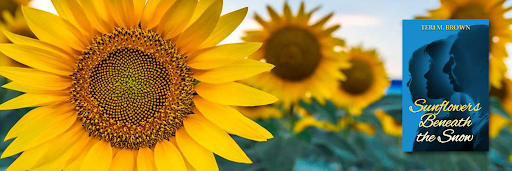
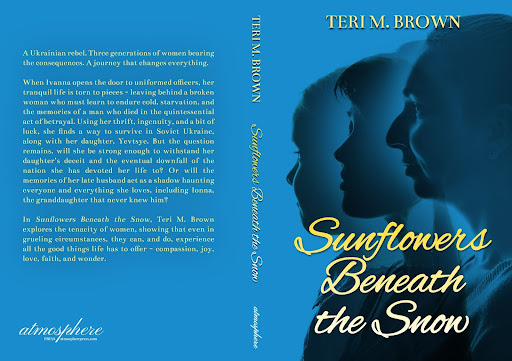









 The Reading Bud