Welcome to TRB Lounge. Today, I’d like to welcome the author of Will My Kitty Be In Heaven—Michele Cardneaux—for an author interview with The Reading Bud.
About The Author
I am an avid animal lover and truly love all animals especially cats and dogs! Sadly these furry family members don’t have a life span as long as their owners. I presently do not have any pets and it’s incredibly sad but I wrote this after my daughters beautiful Blue Russian died last summer and it broke our hearts. Gatsby was the love of her life and my book is a memorial for him. And WHY are we humans expected to just go back to acting like nothing happened? It’s incredibly painful and we need to speak to someone and maybe even a pastor or priest to get us through. That’s what this book is about…Sarah got through with the love of both her mom and dad.
Welcome to TRB! Please give our readers a brief introduction about yourself before we begin.
I am Michele Cardneaux and I live now in Paris, Texas, not far from Dallas! Great shopping and great restaurants in Dallas! My only child, Catherine, is also in the Dallas area.
I was born and raised in Mississippi but have lived in Fort Pierce, Florida as well as Rogersville, Tennessee. My senior year in high school we moved to Texas and I’m still here! Lots of HORSES! I love and enjoy horseback riding and I’m one of those that spoils all animals including horses!
Can you share a fun or intriguing detail about your book that isn’t mentioned in the blurb?
When I was growing up we always had kittens and dogs that would give birth to puppies ALL THE TIME!! I got way too attached to the puppies and the kitties and then they were gone. My mother raised them and then sold them after I fell in love with each of them! This went on all throughout my school days and I was quite affected by it.
What’s the main lesson or message you hope young readers will take away from this book?
My main message really is that I truly believe with prayer and family and friends we are more likely to be able to deal with the loss of a beloved pet because they truly become members of our family. I know and understand many people deal with this on the daily and it saddens me.
Who is your favorite character in the book and why? Is it someone kids would love to be friends with?
My favorite character is Sarah because she is relatable. I don’t know anyone who hasn’t lost their furry loved ones at one time in their life. I actually had a beautiful black kitty once that died and I mourned that kitty for five years! I named him Seymour. I must add my daddy was a kitty lover and would frequently bring one home from his work. He didn’t work OUTSIDE—he was a hospital administrator with an office INSIDE—but would tell us they either followed him home or jumped in the car with him!
What sparked the idea for this story? Was it from your own childhood, a story you heard, or maybe even from your imagination?
This book came to me after my daughter’s kitty, Gatsby, passed away, and that’s when I realized people assume you can easily get over a pet. No one has taught us how to properly grieve the loss. When it’s a family member we are bombarded with sympathy cards, food brought over, and of course phone calls but when we lose a pet, nothing. Very upsetting.
How long did it take you to craft this adventure? Did you share it with any kids along the way?
This book was thought of quickly and no one added to it in any way.
What are your dreams as a children’s author? Where do you hope to be in the world of stories 5 years from now?
My ultimate goal is to write a series of books as Sarah tries finding her furry friends! Sarah lives in a small rural area which is on a farm in Mississippi with only farm animals and she loves them but she needs and wants a furry friend who can sleep in her bed with her.
Are there any other magical tales or adventures you’re currently working on?
I’m currently only interested in the journey Sarah has taken on! Maybe kitties and more kitties!
Why did you decide to write for children? Do you also explore other genres?
I decided to write children’s books because I have a true love for young children. Actually, my first job immediately after college was as a preschool teacher, and young children are the ones most affected when the family pet passes away.
When did you first realize you wanted to write stories for children? Was there a special book or moment from your own childhood that inspired you?
As a child myself I would tell stories to the neighborhood children or sit around a campfire telling ghost stories! So much fun! I enjoyed watching their faces full of excitement and anticipating the next word.
What’s your writing routine like? Do you have any special toys or treats that help you write?
No real ROUTINE just write whatever I am seeing or feeling around me.
Do you prefer to write with a computer, pen and paper, or perhaps even a magic quill?
I prefer to write using my iPhone but of course when I was starting out I preferred writing with just pen and paper!
Which 5 children’s books or authors do you absolutely adore?
I love Jacob Grimm from Grimms’ Fairy Tales! Here are five more of my favorite authors:
Carolyn Keene, the author of the Nancy Drew series
Roald Dahl
Dr. Suess
Vera Williams; she does beautiful picture books
Beatrix Potter
How do you bounce back when the story isn’t flowing the way you want it to?
I just allow the story to be in control and I am simply there for the ride!
What magical advice would you give to young aspiring writers and storytellers?
The advice I would give young writers would be simple: IF YOU CAN SEE THE BOOK IN YOUR HEAD WRITE IT!
Thank you, author Cardneaux, for taking the time to answer our questions and for all your thought-provoking and interesting answers!
About the Book
Will my Kitty be in Heaven
Get ready to be transported to the charming farm country of Mississippi with Michele Cardneaux’s heartwarming story of a young girl’s love for animals. In Will My Kitty Be in Heaven?”, readers will follow Sarah’s journey as she yearns for a kitten to call her own amidst a life filled with chickens, pigs, and cattle. As she learns about love and loss through the passing of a beloved pet, Sarah discovers the true meaning of companionship and friendship.
Filled with Michele’s passion for animals and her love for people, “Will My Kitty Be in Heaven?” is a touching tale that will tug at the heartstrings of anyone who has ever loved and lost a furry friend. Whether you’re a fan of animals, children, or heartwarming stories, this book is sure to leave you feeling warm and fuzzy inside. So sit back, relax, and let yourself be swept away by the magic of this story.
You can find Will my Kitty be in Heaven here: Amazon
If you are an author and wish to be featured as our guest or if you are a publicist and want to get your author featured on TRB, then please get in touch directly by e-mail at thereadingbud@gmail.com
Welcome to the TRB Lounge. Today, we are featuring authorGlendall C. Jackson III for his latest release, Naked Came the Detective.
Naked Came the Detective
Book: Naked Came the Detective Author: Glendall C. Jackson III Publication date: 20th June 2023 Genres: Detective Fiction Page Count: 102 pages Publisher: GCJ3 Enterprise Awards: WINNER: 2023 Paris Book Festival, WINNER, best novella: 2023 Firebird Book Awards, WINNER, best noir mystery: The 2023 BookFest Awards, WINNER: 2023 Literary Titan Gold Book Award, RUNNER-UP, sleuth-mystery: 2023 PenCraft Book Awards
Naked Came the Detective
In many murder mysteries, the call girl gets killed. This novella turns that tired trope on its head. A skilled and versatile sex worker learns that one of her clients, a prominent businessman, was brutally murdered just hours after their last date. With her unique access to the upper echelon of Washington D.C. society, she embarks on an investigation that leads to a shocking discovery. Glendall C. Jackson III, an award-winning non-fiction writer, creates a vivid portrait of high-end sex work.
You can find Naked Came the Detectivehere: Amazon |Goodreads
About The Author
Glendall C. Jackson III
Glendall C. Jackson III is an award-winning writer who has long specialized in deeply-reported non fiction. Naked Came the Detective, his first novel, won an award in the Paris Book Festival and has earned numerous five-star reviews.
If you are an author and wish to be featured as our guest or if you are a publicist and want to get your author featured on TRB, then please get in touch directly by e-mail at thereadingbud@gmail.com
Welcome to TRB Lounge. Today, we are featuring author Greg Belliveau on The Reading Bud for his latest release,Gods Of Imago.
About The Author
Greg Belliveau
Greg Belliveau’s books include his dystopian novel Gods of IMAGO (Rogue Phoenix Press, 2023), IMAGO, and Go Down To Silence (Multnomah Publishing), a Christy Award Finalist for Best First Novel. He has written a collection of creative nonfiction entitled Seeds: Mediations on Grace in a World with Teeth (Crosslink Publishing, 2017). His short stories have been published in Fathom Magazine, The Atticus Review, The Cleveland Review, and Vine Leaves, where his vignette “LG Don’t Want To Fly” was selected for their 2012 Best Of Anthology, published by eMergent Publishing. He is a Christopher Isherwood grant recipient and teaches Creative Writing at Antioch University, Midwest, and has taught at The Antioch Writer’s Workshop, Yellow Springs, OH. He is currently a Visiting Instructor at Capital University and lives in Ohio with his wife and two daughters.
It has been ten years since Christopher Dante, the last storyteller, defeated the Ghul in the abandoned subway tunnels under Cogstin, and now he has vanished without a trace. There are rumors and whispers of a new evil emerging, ancient, dark, beyond the Black Mountains, a Horned God who rules the skeleton people of the north. Welcome to Gods of IMAGO, book two in the stunning IMAGO Series. Gods of IMAGO is literary dystopia at its absolute best, blending amazing world-building with thought-provoking, artful prose in an unforgettable, page-turning experience that will haunt the reader long after the last sentence.
If you are an author and wish to be featured as our guest or if you are a publicist and want to get your author featured on TRB, then please get in touch directly by e-mail at thereadingbud@gmail.com
Welcome to TRB Lounge. Today, I’d like to welcome the author of The Guitar Decoder Ring—Asher Black, for an author interview with The Reading Bud.
About The Author
Asher Black is an author, karateka, musician, digital ecologist® and maintainer of tobacco pipes of various personalities in Brooklyn, NY. He writes about everything, is a host of multiple podcasts, and (for his day job) connects enterprise sales teams with their audience through sales enablement campaigns and brand story. He boats, dances, and plays with cryptography and linguistics, while reading history and hard-boiled detective novels.
Asher Black is an enforcer for the creativity mafia, plying his art through storytelling (even in non-fiction), collecting oil paintings, improvising and composing for the guitar with the romance of a practitioner in love with the fretboard, and pushing through to zen-like execution of the martial arts. He is a hitman with words, broadcasting from the home studio a continual critique of one-sided thinking, and is known for his raucous sense of humor.
Welcome to TRB! Please give our readers a brief introduction about yourself before we begin.
I’m a troublemaker, an agitator when I think something can be better than it is, and rebel for the Hell of it, as Abbie Hoffman’s book refers to it. I don’t want to fit in; I want to break out. I don’t care if someone likes me, as long as they hear me. And I’m a human being, which is just a big ape, which is what all we human beings are. That, and I write stuff.
Please tell us something about your book other than what we have read in the blurb?
I’ve always been interested in languages and cryptography. I grew up learning about, solving, and creating ciphers at a young age. The first novels I read at twelve were Tolkien’s works. He was interested in languages, and I learned his runes and tengwar, and would write out things in those constructed languages that he was creating at Oxford. As a young man I spent several years in Korea, which has a phonetic alphabet, and that taught me a lot about language as well. I’ve been a long-time admirer of Noam Chomsky’s transformational grammar, and I think Leonard Bernstein’s The Unanswered Question: Six Talks at Harvard, which applies Chomsky’s linguistics to music, is stellar.
So naturally, when I took up guitar, I saw possibilities for expressing the disparate aspects of music theory involved as a language. I asked around. Nobody had it. It hadn’t been done. In fact, the last time we had innovation of that type was six centuries ago. So I set about deconstructing some of that music theory and finding common patterns in separate systems of understanding. The result was The Guitar Decoder Ring, which proffers a language for guitar that is simple, easy to learn almost at a glance, and explosive in the possibilities for not only mastering guitar scales, guitar modes, and guitar intervals, as well as generally learning guitar, but for flaming solos, new avenues of composition and improvisation, etc.
Why did you choose this particular theme for your book? What is that one message that you’re trying to get across to the readers in this book?
Learning guitar takes work, but it’s not supposed to be a science experiment or a laboratory exercise. You’re not a lab rat. The wall charts, diagrams, and other tools that force your mind out of the creative mode and into a didactic one are not conducive to staying creatively engaged and creating interesting work.
We’re at a crossroads, where more people than ever can pick up an instrument and learn music, and even self-publish it on Spotify, Apple Music, or Youtube, but we’re getting frankly a decline in the kind of creativity that made the guitar a seminal instrument. We don’t have to sit down next to a radio anymore and try to work it out, or drive across the country in search of an obscure chord [The Beatles, and it was a 7th chord]—we can just go to the internet or maybe trust ChatGPT. But the result of all that information, in the form of new manuals, blogs, forums, and so on is not necessarily more light but often more confusion and discouragement, given that we’re still using learning methods from the middle ages and even older.
There’s nothing wrong with old stuff. The old stuff is the good stuff in so many categories. But I think a new era and new access to information needs something that addresses the way people actually learn now, and we’re not all belting out motets and madrigals. A lot of us just want to sit down with the instrument, stay in our creative zone, and make something cool.
What inspired you to write this book? An idea, some anecdote, a dream or something else?
Frustration is the mother of invention—at least it is for a creative problem solver. I got tired of consulting wall charts, looking up new ones, and printing things out. I got tired of asking if anyone more experienced could see a pattern between the interval values, circle of fifths, mode shifts, and scale patterns everyone is using and hearing the answer: “Not really. This all comes from the historic development of Western music. You have to understand . . .” Do we though? It’s useful, certainly, from a contextual standpoint, to understand the history, but are we stuck in it?
Fox Mulder, the FBI agent on The X-Files, asked “How many coincidences does it take to make a pattern?” I have that answer. Three. Three to at least suspect a pattern, deduce there might be one, and begin to accumulate enough evidence to move from correlation to causation, from mystery to meaning. I set about looking for patterns, like a code breaker or philologist or semioticist might, and what I saw was some rather obvious relationships that were sometimes understood but rarely joined in presentation or exploration. I drew out a lot of these as arcane-looking diagrams (we don’t need more diagrams, but it’s a starting place) and eventually was able to encode them in an alphabet we call SIGIL.
A sigil is an emblem of magic language, but what we often perceive as magic and therefore disbelieve or unfortunately turn around and entertain with magic thinking in the form of belief, is often just a rational, reproducible reality we don’t fully understand. A bit of playing with that concept and we had the name for the decoder ring in the book’s title.
How long did it take you to write this particular book?
Nine months of hard work. That’s while working as a self-employed sales enablement professional and brand storyteller. It could have perhaps come faster, but there’s value in taking time for learning, reflection, and nurturing a new idea until it’s ready to show the public. I was anxious not to go out and get ‘hit by the milk truck’ before it was published, but I knew my co-author, Barry Gilman, would finish the task if I didn’t, in some form.
He’s now teaching lessons based on SIGIL and The Guitar Decoder Ring at GuitaRealm.com (one R). It was killing him keeping a lid on it, watching people struggle with the usual scale patterns, interval knowledge, and mode shifts—overall command of the guitar fretboard—while we got the book ready. He’s breathing a sigh of relief now that the book is out.
Barry made the book possible in record time by checking things, suggesting new directions, and finding new patterns that I, as a relative novice player, couldn’t have done at that pace or perhaps at all. It might have been an inferior book if we hadn’t paired these two personalities—a patient, dedicated instructor with albums under his belt and 30 years of experience (that’s Barry Gilman) with an upstart, smart-aleck, autodidact and polymath like myself who just won’t take the status quo for an answer. It really was the perfect mix, and I’m indebted to him.
Guitar instruction has changed my life, enabled me to express feelings that were imprisoned inside, because words just couldn’t convey them properly, but music can. What does it feel like—you name it—ache for something, longing, desire, passion, conviction, frustration, the wish to be loved? We could spend our lives writing novels and poetry to try to nail it and not get there. It’s like asking what is the sound of one hand clapping or the mind of a mountain lion with an elk in his sights. But you touch the strings, if you can stay on that feeling, if you can disregard the sterile laboratory charts, and if you have a language, you can make it known if it’s inside you.
What are your writing ambitions? Where do you see yourself 5 years from today?
Ha. Anywhere I want to be. That’s not meant as arrogance, but I see a world of incredible possibility both within and without. What is Asher Black likely to do next? Anything. I’ve got two novels in the works, one finished but needing the edit, and the other nearly done. I’m passionate about these. They’re intended for the traditional publishing route through an agent, when I find one who’s interested in what I have to share through fiction.
I want to set aside all the ‘science’ work I did with guitar and now go back to just playing for the love like I was, but armed with the extra knowledge and insight I had to create for myself—which I’ve now shared with anyone else who wants it. My musical goals are all about expressing what’s inside. I have eight guitars, several amps, and a boatload of compositions I barely remember writing. I want to be onboard that train until they find me one day, my cold hands curled around the neck of a guitar, or slumped over my desk with an almost finished manuscript.
My great grandfather lived on a farm he built. I ate the best food in the world at his place. He died at the wood pile, and they found him with an ax in his hand and a smile on his face. It’s the way he said he wanted to go—on his own land, working his farm. That’s joy, man. We shouldn’t be afraid of death—only dying unfulfilled and unsatisfied because we never did the things we wanted, never made the sound playing in our heads, never told the story that was meant to be told.
I’m a karateka. I’m passionate about the arts, including the martial arts. It’s not a sport, for me. It’s an art form just like music and storytelling. I take it on that way, with my sensei Vlad, who’s a Ukrainian national champion. I do some exhibitions and the occasional tournament fight, more as a personal challenge than to show off or win a medal. I don’t care about medals. I care about what I can do, what’s inside, what kind of person art makes me. I suppose this passion could sound a bit melodramatic, but I feel it, like I feel the sound of cicadas looking out at the lone tree in an otherwise open field. I feel on fire. I won’t back up from that. Not ever.
Are you working on any other books presently?
Yeah, baby! The novel I finished in about 10-months last year is a hard-boiled action novel. I love that genre—Mickey Spillane, John D. MacDonald. There’s so much opportunity to comment on the world in fiction, and those guys did, that you’d have to write an essay about otherwise. But essays don’t reach many people and land on us the same way. Story hits deep. We’ve been telling stories since we came down out of the trees and built the first fires in front of the caves to drive away the snuffling in the night. Stories of what lurks out there, stories of our contests with it, stories about the lush valleys on the other side of the mountain with cool streams and fruit dripping from the trees, stories of the hunt and the hunters, of our tribes and how we came to be. I think genre fiction in particular enables that in a way that’s digestible to everyone—it’s fundamentally human.
I’m also writing literary fiction. I’m currently finishing a book about growing up in Appalachia. If John Knowles can say what a thing felt like in A Separate Peace, well I have my own things to say. Both of these books surprised me. I don’t think anyone tells you this, or maybe I just didn’t hear it, but I’ve wept, struck to the core by the act of telling these things, of saying the unsayable, speaking the unspeakable, showing the thing that only my eyes have seen. I think if that’s what fiction writing is, the commitment that takes, the courage, then OK, I’m up for it; I took this on, so I’ll stay in the ring. I got a busted rib in a tournament fight. It hurt so much I could barely stand. All I could do was grin around the mouthguard at my opponent and say, “this is fun”. It is fun, but the fun is becoming the person who can say that when you feel it that much. Writing fiction is like that.
Do you dabble in Fiction?
It’s more than dabbling—I’m committed. I want a life of doing it. I think locked up inside of us who are committed to this is a thing we don’t often put words to. So I’ll say it. I’ll go first, in case this is the first time here. I want to be loved. I want it desperately. But I know a thing. You can’t be loved, not fully, not for who you really are, until you have shown the world, or some world, some audience of people who might be open to it, who you are, what you are, what’s inside you.
Storytelling connects with the most basic impulses of the human ape. We’re riveted by good stories, because there’s really just one story, and we’ve been telling it since we sat cross-legged at the fire and opened our mouths to talk. It follows the same basic format every time: an aspiration (or problem), a hurdle or barrier that stops us, and the act of trying to overcome it. This is why fiction works. When we create great fiction, it pulls on the things that make us apes move, literally bother to move at all, to get out of bed, to do anything, to build that fire in the first place.
But also, this is why creating fiction is such a powerful act for the author. We want to be connected—to other people—and to a narrative of what our lives, even if expressed vicariously in the characters, even tangentially, mean. We are creatures built for meaning, wed to meaning, seeking the transcendent meaning of ourselves, the world, and our relationship to it. We get those answers if we stay on the questions long enough, in increments, with bits of clarity coming through like sunlight filtered through the leaves of a maple tree under which we’ve sheltered from the unapproachable sun that burns above.
The act of authorship, of being an auteur, of creating anything—a kata, a song, a story—it engages that part of us that searches for those answers, in a unique way, because the answers are unique for each of us.
When did you decide to become a writer? Was it easy for you to follow your passion or did you have to make some sacrifices along the way?
The thing no one says, or seems to say, about authorship, and I’m thinking specifically of fiction, not necessarily the nonfiction work I’m doing, though that contains, inevitably because I’m a storyteller by design, bits of story throughout, is that it’s replete with pain. “Do you enjoy writing?” people ask. I don’t know how to answer. That’s like saying, “Did you enjoy Schindler’s List.” The best I can do is, “I found it meaningful, for me and in general.” Meaning is the thing. Not pleasure. If you’re in it for pleasure, maybe it’s a hobby. If you’re in it for enjoyment, maybe it’s a sport. For it to be an art, you have to take on the punctuated nature of it—it has moments of sheer ecstasy, and equal, perhaps more moments of agitation, anxiousness, and reflective suffering.
I began that journey when I decided to engage some of the suffering happening outside the act of writing, locked inside, and consign it to the page for others to gawk at. I started with poetry. I wrote a lot of it. I performed it at clubs. I published some. I burned some of it and nearly had my butt handed to me by my best friend at the time for destroying something he said was property of the world. It’s not. It’s my property, like everything I write, but it was just a draft—an unsatisfying one.
Writing is pushing on past the unsatisfying until we can look at something we’ve done and say, “ahhh.” I stayed on that train half my life. I’m finally able to produce work I feel that way about. I let it leak into the nonfiction to the degree I think anyone can stand it.
I have a comment on being a writer though. I don’t think of myself as a writer. It sounds tough, but I think writers go to writers’ conferences, talk online about writing, shop for pens and notebooks, and build trappings. Faulker said, “Don’t be a writer. Be writing.” A writer talks of it; an author makes something. Butt in seat until there’s an outcome. It may not be stellar the first go, but it beats ‘writing’ as a posture, a lifestyle, an identity. Not everything is an identity. I don’t want an identity. I know who I am. I want an action.
Writer is an identity we put on. Author is an outcome we created, a thing we’ve done, a contribution to the tangible, visceral things in the world. Authors create new worlds, build this one larger. Writers ask authors where their ideas come from. Authorship is a noun, not writership, because what we mean by author is “has produced something another person can touch, engage with, and feels complete”. It’s not a popular attitude, but taking that posture has helped me immensely by being unforgiving with the pose—for myself. I think if I was content to be a writer, I wouldn’t have written anything. I said this to a speechwriter once, and she nearly burst a kidney. I get it. It’s hard to hear. That’s the point. We need to be hard on ourselves in that way to produce anything substantial. I don’t mean beating ourselves up about whether our character is strong enough, or some literary archaeology like whether someone can find foreshadowing or symbolism in our work. I mean we need to be hard on the part of ourselves that resists doing the work. It is work, and work is tough, work is often painful, work is glorious, work is satisfying, work gets us from here to there.
What is your writing ritual? How do you do it?
I have a day carved out every week dedicated to progress on my books. I don’t say “to writing” because I’m not interested in anything that doesn’t push that ball forward. I meet with two writing coaches to review the draft, and I write down their feedback. If I can, I’ll spend another half-day implementing some of the feedback.
I use Scrivener for fiction, Vellum for non-fiction, but I’m only referring to the fiction work. The non-fiction stuff, I belt out the rest of the week in the leftover time after business meetings and client work, and in between music and karate. I’m committed to no more than five things in my life. I love boating, dancing, and a host of other things, but I deliberately don’t do them for the sake of the things that MUST happen.
No one writes the great American novel by seeing all their shows, hanging out with all their friends, and going to bed on time. There are trade-offs. Five is the max. Most people will struggle past three things. For me, those are my relationships, business, fiction, karate, and music. The reason you have a nonfiction book about music is that it plugs into those interests. I’ll produce other non-fiction. I have some 40 books on my list to write in the nonfiction category (and countless novels) but I do them because they plug into what I’m already committed to doing.
Case in point, I am in business, running my own business, to make the world better. More specifically, I think we’re going to need a lot of new ideas faster to face the challenges coming down the pike. The way I plug into that is working with the revenue side of enterprises to increase their effectiveness—specifically the sales and brand teams—to reach more people sooner and convert them. I work with firms that are doing something a little bit better.
I’m industry agnostic. As long as it’s removing friction from the system in some category, I’m about plugging in. As a result, I see and hear a lot of things, have a lot of data inputs, and can apply those across domains. I’m a native interdisciplinarian (to coin a term)—a polymath. In the course of doing that work, firms rely on me for a variety of insights, and some of those insights have the potential to make things better for lots of people.
So I write about those, and talk about them, and think and reflect on them, and it’s my plan to put out some nonfiction work in a few domains to share them with the broader public. I don’t mean business books—I mean insights about how things work, why they break, and how they can work better, starting with the human ape itself, because effective firms have effective people, and the most effective people are effective on and off the clock.
Other than that, it’s just butt in seat, a little familiar music, a sandwich, and the laptop open with fingers flying. I’ve received incrementally the grace of needing very few things to be in ‘writing mode’ and I think that’s a worthy goal for anyone intending to do this continuously.
Is writing your profession, or do you work in some other field too?
My profession is thinking, reflecting, and creating, so storytelling, writing, researching, talking, and thinking some more comes out of that. I think of it as a vocation rather than a profession, looked at through a broader lens. David Lee Roth famously said, I believe it was in a Rolling Stone Interview, ‘You think we’re this way because we’re in rock and roll. No, man. We’re in rock and roll, because we’re this way.’ I think that about sums it up.
I don’t pretend I can’t help it. I just know what my own clothes feel like. You spend your younger years trying on hats. “Am I a crested blazer kind of guy? Am I a white pants kind of guy?” Eventually you have your haircut, your wardrobe, your shaving kit, and it doesn’t change. You know what kind of person you are, unless you’re one of those lost souls still searching or you haven’t accepted that, if you’re an artist, you’re weird, so is everyone else, but you’re weird in this way, and so you gotta stop trying to be otherwise.
You get that stuff set, unmessable. You become unmessable as Jocelyn Herman-Saccio says (she’s a spokesperson for Landmark Education), and then, having answered the question “Who am I?” to some degree of satisfaction, and hopefully “What is the world?” because you’re going to run smack into it fast asking who you are, you can move on to “What must I do now?” Those are the three questions all human apes ask (or run away from) and we talk about that in the guitar book. See what I mean? It’s a book for guitarists, but guitarists are fellow human beings and artists, so we’re going to tell stories, recount history, make jokes, and yes, share a little insight on what’s going on inside us all.
Can you recommend a book or two based on themes or ideas similar to your book? (You can share the name of the authors too.)
I found Do the Work by Steven Pressfield useful. Quit screwing around and do it. He tells you why we think that and then don’t, and nudges you into a lifelong fight with Resistance (capital R) which is great.
I like Stephen King’s work, because King is a master at conveying what is quintessentially human. Hearts in Atlantis is four books in one, so don’t take it on unless you’ve got the time, but it’s profound. It’s everywhere in his work, but I like that one.
How do you deal with Writer’s Block?
I murder it, salt the fields, and stick around to re-educate its children. I won’t live with it. I write down ideas constantly. I write down ideas about those ideas, and I jot outlines for potential books. More than one can make in a lifetime, but ones I’d be perfectly happy to make.
I suppose this has been helped greatly, not having writers’ block, by some of the things I’ve already mentioned, but I’ve got two other things going that won’t let it coexist with me. One, I’ve got two superb writing coaches, Noah and Matthew who, if I was ever blocked, would act like colonoscopists for the soul. They’d push until I was connected with whatever is driving me inside. It helped that I started by making a list of things I care about. Where the music is playing, I like to say. If you don’t know what you care about, or what you’re about as a person, it’s kind of a lost cause unless you stop and go after those things, which ARE answerable if you have the heart of a lion, as King says in that book.
Until you connect with yourself, how is anyone else, like a reader, going to connect with you? I think this is where a lot of people get discouraged and quit, and a lot of people who have taken on ‘writer’ as an identity sit and stare at the page, or walk around and think of a virtual page while engaged in avoidance behaviors—not just of writing but of personal learning and connection. Know thyself is a cliche’ for a reason. So is ‘the unreflective life isn’t worth living’. I wouldn’t be able to stand it if I had to go to my grave that way. I don’t fear the grave, I fear being that guy on his deathbed. No one ever lies there saying I wish I had made more money. They say I wish I had found the thing and done it. Find the treasure.
The other thing is I created The Black Academy of Storytelling. It’s a ‘virtual’ regiment of self-study—a construct for study—of dramatic structure. It took a couple of years, but I read everything I could get my hands on about the story spine, the arc, the structure, from inciting incident to climax to denouement. It didn’t help at first. It’s not a formula. It’s kind of useless for that, unless you want to write clones. In a way it’s literary archaeology—reverse engineering what someone with the fire inside them did. But I used that study under that rubric or concept to pay attention—to everything—everywhere I heard even the inkling of story—sales conversations, brand presentations, standup comedy, film, music, everything.
Before long, I had the rhythm. I was just breathing it. I knew when a story was working and what was missing if it wasn’t, not by some shake a stick formula with an inner geek saying ‘you skipped the inciting incident’. Great stories can break great rules. But I could tell the fundamental underlying beats that were either there or not and why they worked. I got so I could predict film trajectories a few minutes in. I could anticipate the direction songs would take, right down the drummer’s next tap. I could feel what needed to happen to keep the audience when I picked up my pen. It was immensely helpful.
So, having the fire in the belly, knowing who I am and what I care about and what I must do, and what the world is I’m talking to, and how good stories do that talking, intrinsically until it feels like instinct, I never looked at a blank page again.
I sometimes don’t know how to START what I’m doing. I have a rule: just start. The first few pages are always awkwardly executed. I don’t care. I’ll fix them in the edit. It’s like making a song. You just have to start humming. Your body and mind, your heart and soul, your gut and your bowels know what to do. Just lay down a rhythm and you’ll find your legs.
What advice would you give to aspiring writers?
Nonfiction is storytelling. ChatGPT can’t do that. Not effectively, despite the hype. The glue that connects with the soul isn’t there, just like the air and breathing that Classic Rock has it in from those tube amplifiers, lack of compression, and analog recording feels human, but the super-compressed chugga-chugga deedly-deedly of what came later feels a little contrived, like a computer could do it.
You know, I can usually tell if a drummer is human. I listen to a record and there are microbeats we don’t measure in Western music. Musicologists and music theorists do in Non-Western cultures. There’s a lot of indigenous African music we don’t even have notation to document, because of that. You can hear when the drummer takes a breath—when he’s technically on-beat, but there’s a segment of time smaller than the official time signature, in which that humanity is conveyed. We can feel it, even if we can’t hear it. That’s why that music still is “the music” for a lot of us, along with the great old jazz, blues, and other Americana.
So that’s about AI, but there are also a lot of nonfiction works being put out that are like the backing tracks in a lot of recorded music, as if we’re just phoning it in and it’s just something to happen while the vocalist works. The musicians are optional. Drummers will even go into studios and do a track and the technician will hand that off to an algorithm to produce a perfect, and therefore sterile imitation. I dig Sia, her story, her vibe, a lot. But I don’t like the music behind Titanium. It doesn’t match what she’s really saying. It’s not human enough. It doesn’t ache with her. It doesn’t connect with the ache in me.
Nonfiction, a lot of it, risks being that—purely nonfiction, like a vocalist with a digital backing track. The best work is replete with real human stories and the idiosyncrasy that real human stories contain and convey. What makes something spectacularly unique and human, like us, is the weirdness, the divergence, the universality of the freaking weird. By that I mean open your gut a little. They tell fiction writers to bleed on the page, and I do it, but nonfiction? All you hear is be well-organized, succinct in presentation, comprehensive—Jeez man, that’s not music.
Tell us something about growing up with your grandmother without running water or refrigeration. Tell us about the time you nearly went down in a fight. Get a little dirt on the page. If you sanitize it, it feels like one of those coffee shops that come off like a science lab. Stainless steel chairs and tables, coffee made in test tubes—no one relaxes on a sofa and writes the opening line to the next spectacular novel, poem, song, or nonfiction work in such a place, so don’t mirror that place in your nonfiction. Let your hair down and have a drink with the unwashed.
Thank you, author Black, for taking out the time to answer our questions and for all your thought-provoking and interesting answers!
About the Book
The Guitar Decoder Ring
2023 NYC Big Book Award Winner in the category of Music.
2023 Pinnacle Book Achievement Award for a How-to Book.
Hollywood Book Festival honorable mention, 2023.
Global Book Awards finalist, 2023.
Meet SIGIL—the new language of guitar. Guitarists who want to improvise and compose, from novice to advanced, will find SIGIL works like a decoder ring for the guitar, yet it’s simple enough to keep in one’s head.
Visualize the whole fretboard. Gain portable knowledge of modes, scales, and intervals without wall charts. This is guitar study re-engineered for every level.
Create more interesting solos. Break through your lull or stall. Decrypt the instrument and unleash your play. The authors are a seasoned musician with albums under his belt and a lively storyteller who walk you through the toolset with eye-opening and sometimes hilarious examples.
If you are an author and wish to be featured as our guest or if you are a publicist and want to get your author featured on TRB, then please get in touch directly by e-mail at thereadingbud@gmail.com
Welcome to the TRB Lounge. Today, we are featuring author Greg Belliveau for his latest release, Gods of Imago.
Gods of Imago
Book: Gods of Imago Author: Greg Belliveau Publication date: August 15, 2023 Genres: Fantasy Page Count: 381 pages Publisher: Rogue Phoenix Press
About Gods of Imago
It has been ten years since Christopher Dante, the last storyteller, defeated the Ghul in the abandoned subway tunnels under Cogstin, and now he has vanished without a trace. There are rumors and whispers of a new evil emerging, ancient, dark, beyond the Black Mountains, a Horned God who rules the skeleton people of the north. Welcome to Gods of IMAGO, book two in the stunning IMAGO Series. Gods of IMAGO is literary dystopia at its absolute best, blending amazing world-building with thought-provoking, artful prose in an unforgettable, page-turning experience that will haunt the reader long after the last sentence.
Greg Belliveau’s books include his dystopian novel Gods of IMAGO (Rogue Phoenix Press, 2023), IMAGO, and Go Down To Silence (Multnomah Publishing), a Christy Award Finalist for Best First Novel. He has written a collection of creative nonfiction entitled Seeds: Mediations on Grace in a World with Teeth (Crosslink Publishing, 2017). His short stories have been published in Fathom Magazine, The Atticus Review, The Cleveland Review, and Vine Leaves, where his vignette “LG Don’t Want To Fly” was selected for their 2012 Best Of Anthology, published by eMergent Publishing. He is a Christopher Isherwood grant recipient and teaches Creative Writing at Antioch University, Midwest, and has taught at The Antioch Writer’s Workshop, Yellow Springs, OH. He is currently a Visiting Instructor at Capital University and lives in Ohio with his wife and two daughters.
If you are an author and wish to be featured as our guest or if you are a publicist and want to get your author featured on TRB, then please get in touch directly by e-mail at thereadingbud@gmail.com
Today, we roll out the red carpet for the amazing Glendall Jackson, who is about to unveil the beautiful cover of his newest masterpiece, Naked Came the Detective. Prepare to be enchanted, for what you’re about to see is not just a cover—it’s a visual symphony that captures the very soul of storytelling. 📚💖
Presenting…
About the Book
WINNER: 2023 Paris Book Festival WINNER, best novella: 2023 Firebird Book Awards WINNER, best noir mystery: The 2023 BookFest Awards WINNER: 2023 Literary Titan Gold Book Award RUNNER-UP, sleuth-mystery: 2023 PenCraft Book Awards
In many murder mysteries, the call girl gets killed. This novella turns that tired trope on its head. A skilled and versatile sex worker learns that one of her clients, a prominent businessman, was brutally murdered just hours after their last date. With her unique access to the upper echelon of Washington D.C. society, she embarks on an investigation that leads to a shocking discovery. Glendall C. Jackson III, an award-winning non-fiction writer, creates a vivid portrait of high-end sex work.
You can find Naked Came the Detectivehere: Amazon |Goodreads
In the Press
International Thriller Writers – Author Spotlight
About The Authors
Glendall C. Jackson III
Glendall C. Jackson III is an award-winning writer who has long specialized in deeply-reported non fiction. Naked Came the Detective, his first novel, won an award in the Paris Book Festival and has earned numerous five-star reviews.
If you are an author and wish to be featured as our guest or if you are a publicist and want to get your author featured on TRB, then please get in touch directly by e-mail at thereadingbud@gmail.com
Welcome to TRB Lounge! We’re thrilled to host author Jack Lucci today, who will be unveiling a tantalising excerpt from their newest masterpiece, Loving & Leaving. Dive in and get an exclusive sneak peek into the intriguing world they’ve crafted in their latest work!
About the Book
Loving & Leaving
The first installment of Jack Lucci’s living memoir, Loving & Leaving spans five years, touching on themes of gratefulness and regret and stories of love for people, places, narcotics, and the effort it takes to sustain that love. Far from stable and rather turbulent, Lucci chronicles his life as he oscillates between hero and anti-hero, sharing lessons learned in the Italian countryside, mistakes made in America’s Second City, the angst and constriction of southeastern Washington, and observations on the miserable Oregon coast. Whether you find yourself rooting for or against him, Loving & Leaving is the result of bleeding over the keyboard.
The light coming in over the water’s edge was blinding. One must block a portion to see the subject clearly. She was a comet crashing through, a most delighted interruption. A shot and a beer sat in front of her, a half-full pack of American Spirit tobacco, and a single hand-rolled cigarette. While my initial impression would turn out to be partially incorrect, I doubt anyone could live up to the way she appeared to me in that moment.
Discovering love seems to be an instant, a flash, bulbs burst, an image captured forever. A single-minded drive to share a moment. My goal became to talk to her. Stan pumped fleeting courage into my spine, and I kept an eye on her. I waited like an alligator in the brush, on the edge of the water, lying completely still, aware that if she perceived any movement, it would be taken as a threat, and while she certainly may evade me, I had a smile to surprise her with. She began to move, taking a step toward the patio.
This was my moment to act. Other predators inhabit the environment, and they, too, stalk their prey. I drank my beer and positioned a pre-rolled cigarette, ready to light, attempting to appear natural, as if we serendipitously decided to step out at the same time. I stepped outside, and it was like stepping off a cliff. I imagine my face went white because my brain, right then, was completely empty. I struggled to offer a greeting; instead, I just stared, forcing her to acknowledge my presence and attempt to engage with the strange man in front of her.
She asked, “You need a light?”
I responded with words that, looking back, were purely instinctual, as there was no way I spoke on my own volition. She offered me a seat at the bench where she was sitting, which I accepted eagerly…
About The Author
Jack Lucci
The American melancholic writer Jack Lucci was born in a valley at the base of the blues. Lucci has lived all over the world and shares stories from his travels with a deserved honesty concerning people, places, and things. Although Lucci may at times be his own worst enemy readers can expect honest introspection and vulnerability. His first book, Loving & Leaving is available now. His blog, Separation Naturalist can be found on his website, Jacklucci.com.
If you are an author and wish to be featured as our guest or if you are a publicist and want to get your author featured on TRB, then please get in touch directly by e-mail at thereadingbud@gmail.com
Today, we roll out the red carpet for the sensational Greg Belliveau, who is about to unveil the breathtaking cover of his newest masterpiece, Gods of Imago. Prepare to be enchanted, for what you’re about to see is not just a cover—it’s a visual symphony that captures the very soul of storytelling. 📚💖
Presenting…
About the Book
It has been ten years since Christopher Dante, the last storyteller, defeated the Ghul in the abandoned subway tunnels under Cogstin, and now he has vanished without a trace. There are rumors and whispers of a new evil emerging, ancient, dark, beyond the Black Mountains, a Horned God who rules the skeleton people of the north. Welcome to Gods of IMAGO, book two in the stunning IMAGO Series. Gods of IMAGO is literary dystopia at its absolute best, blending amazing world-building with thought-provoking, artful prose in an unforgettable, page-turning experience that will haunt the reader long after the last sentence.
Greg Belliveau’s books include his dystopian novel Gods of IMAGO (Rogue Phoenix Press, 2023), IMAGO, and Go Down To Silence (Multnomah Publishing), a Christy Award Finalist for Best First Novel. He has written a collection of creative nonfiction entitled Seeds: Mediations on Grace in a World with Teeth (Crosslink Publishing, 2017). His short stories have been published in Fathom Magazine, The Atticus Review, The Cleveland Review, and Vine Leaves, where his vignette “LG Don’t Want To Fly” was selected for their 2012 Best Of Anthology, published by eMergent Publishing. He is a Christopher Isherwood grant recipient and teaches Creative Writing at Antioch University, Midwest, and has taught at The Antioch Writer’s Workshop, Yellow Springs, OH. He is currently a Visiting Instructor at Capital University and lives in Ohio with his wife and two daughters.
If you are an author and wish to be featured as our guest or if you are a publicist and want to get your author featured on TRB, then please get in touch directly by e-mail at thereadingbud@gmail.com
Welcome to TRB Lounge. Today, I’d like to welcome authors Julie G Fox and Tzuri King for the cover reveal of their upcoming book The Dreamer: The Girl Who Dreamed the War Over.
Presenting the beautiful cover of The Dreamer: The Girl Who Dreamed the War Over by Julie G Fox and Tzuri King
In “The Dreamer: The Girl Who Dreamed the War Over,” readers are transported to a small town in Ukraine where a young girl and her family huddle together in a bomb shelter. With bombs raining down above her, she dreams of a peaceful world where she and her pet are safe, her family is reunited with her veteran dad, and she can dance with her friends without fear. Through the eyes of the brave and hopeful girl, we see the power of imagination and the strength of family in the face of unimaginable hardship. This heartwarming story inspires children of all ages to dream big and never lose hope, even in the darkest of times.
The Dreamer is the brainchild of Tzuri King and Julie G. Fox. It is the first book in a series that aims to incorporate the UN Sustainable Development Goals into children’s literature. This first book is dedicated to Global Goal 16, which promotes ‘peace, justice and strong institutions’. There are more books to come!
You can find The Girl Who Dreamed the War Overhere: Amazon |Goodreads
About The Authors
Julie G Fox
Julie G Fox is the author of over fifty award-winning children’s books. Julie’s philosophy is to write up to children, challenge them with demanding stories and use language and ideas to help them become empathetic and responsible citizens of the world. As an ambassador for the United Nations Sustainable Development Goals, Julie incorporates into her work the UN’s messages of peace and prosperity for people and the planet, ending poverty and other deprivations, improving health and education,
Tzuri is a curious adventurer with a warm, empathetic personality. He ponders the mysteries of the world, and loves lighting fires, fishing, and listening to music. Though he values solitude, he also has a group of students whom he teaches to swim every summer. He has a restless spirit and feels a strong urge to travel and explore. He divides his time between Tel Aviv in the spring and summer, and wandering during winter. His students often ask him why he travels and he answers, to see new things and to have time alone without feeling lonely. He is a non-material person, carrying everything he needs in a single suitcase. Zuri is not fond of authority and hates restrictive signs. He has a sweet tooth and loves his mother’s cakes, especially chocolate ones.
If you are an author and wish to be featured as our guest or if you are a publicist and want to get your author featured on TRB, then please get in touch directly by e-mail at thereadingbud@gmail.com
Welcome to TRB Lounge. Today, we are featuring author Jack Luccion The Reading Bud for his latest releaseLoving & Leaving.
About The Author
The American melancholic writer Jack Lucci was born in a valley at the base of the blues. Lucci has lived all over the world and shares stories from his travels with a deserved honesty concerning people, places, and things. Although Lucci may at times be his own worst enemy readers can expect honest introspection and vulnerability. His first book, Loving & Leaving is available now. His blog, Separation Naturalist can be found on his website, Jacklucci.com.
The first installment of Jack Lucci’s living memoir, Loving & Leaving spans five years, touching on themes of gratefulness and regret and stories of love for people, places, narcotics, and the effort it takes to sustain that love. Far from stable and rather turbulent, Lucci chronicles his life as he oscillates between hero and anti-hero, sharing lessons learned in the Italian countryside, mistakes made in America’s Second City, the angst and constriction of southeastern Washington, and observations on the miserable Oregon coast. Whether you find yourself rooting for or against him, Loving & Leaving is the result of bleeding over the keyboard.
If you are an author and wish to be featured as our guest or if you are a publicist and want to get your author featured on TRB, then please get in touch directly by e-mail at thereadingbud@gmail.com
The first installment of Jack Lucci’s living memoir, Loving & Leaving spans five years, touching on themes of gratefulness and regret and stories of love for people, places, narcotics, and the effort it takes to sustain that love. Far from stable and rather turbulent, Lucci chronicles his life as he oscillates between hero and anti-hero, sharing lessons learned in the Italian countryside, mistakes made in America’s Second City, the angst and constriction of southeastern Washington, and observations on the miserable Oregon coast. Whether you find yourself rooting for or against him, Loving & Leaving is the result of bleeding over the keyboard.
The American melancholic writer Jack Lucci was born in a valley at the base of the blues. Lucci has lived all over the world and shares stories from his travels with a deserved honesty concerning people, places, and things. Although Lucci may at times be his own worst enemy readers can expect honest introspection and vulnerability. His first book, Loving & Leaving is available now. His blog, Separation Naturalist can be found on his website, Jacklucci.com.
If you are an author and wish to be featured as our guest or if you are a publicist and want to get your author featured on TRB, then please get in touch directly by e-mail at thereadingbud@gmail.com
Welcome to TRB Lounge. Today, we are featuring author Amir Shaheenon The Reading Bud for his latest release, F*** My Brain.
About The Author
Amir Shaheen is a 36-year-old writer, comedian, and creative producer from Norway. He is one of the creators behind the TV series “Home for Christmas,” a Netflix Originals, and the author of the humorous book “F*** My Brain!” Shaheen’s writing often explores themes of belonging, society, and alienation, as well as the experience of growing up between two cultures.
F*** My Brain!” is a humorous and relatable book aimed at a young audience. The book delves into themes of belonging, society, and alienation, capturing the challenges of growing up between two cultures. Told with a lighthearted and engaging tone, the book explores the experiences of being a minority in a different country.
Through easy-to-read narratives infused with humor, “F*** My Brain!” offers an insightful and entertaining journey for readers, as they navigate the complexities of identity, relationships, and cultural differences. In this book, he takes you on an unforgettable journey, humorously sharing what it’s like to grow up between two cultures. Finding one’s place amid such distinct cultures isn’t always easy.
Prepare yourself for a rare reading experience, and we can promise you one thing: This book is anything but boring. “One of the Minds Behind the Netflix Success ‘Home for Christmas'”
You can findF*** My Brain here: Amazon |Goodreads
If you are an author and wish to be featured as our guest, or if you are a publicist and want to get your author featured on TRB, then please get in touch directly by e-mail at thereadingbud@gmail.com
Welcome to the TRB Lounge. Today, we are featuring author Mary Beth Moorefor her latest release, Unwanted: Fighting to Belong.
Unwanted: Fighting to Belong
Book: Unwanted: Fighting to Belong Author:Mary Beth Moore Publication date: 8th September 2022 Genres: Memoir, Disability, Parenting Page Count: 218 Publisher: New Degree Press
About Unwanted: Fighting to Belong
“He is my son. A person. He is not a condition or a statistic. He’s my son.”
Mary Beth Moore chose to have hope in a situation experts deemed hopeless. She was encouraged to abort her son when an ultrasound revealed the presence of multiple disabilities. Years later, experts education said the limitations of the school system could not be changed to meet her son’s needs. Again, Mary Beth chose to have hope.
Unwanted is a powerful story about one mom’s journey to make the world a better place for her son. Full of heartbreak, grit, and triumph, it raises awareness for disability rights and advocates for the human right to belong.
The presence of disabilities is a natural part of humanity, and in no way makes someone less worthy of living a full, inclusive life. Children with disabilities face pervasive discrimination and systemic segregation in school systems across the United States and around the world. Unwanted explores the evolution of special education law, research on creating inclusive classrooms, and real-world stories of families and teachers actively fighting to protect the rights of children with disabilities in our education system.
“Unwanted is a captivating page-turner that will resonate with any parent who has found themselves navigating between the legal rights of their child and the historical practices and financial restrictions of the public educational system. Mary Beth challenges the segregated classroom environment, provides practical advice for parents, and inspires systemic change in a way that has never been done before—she is a true powerhouse with the most generous heart.”
~ Kimberly Fradel, Licensed Clinical Social Worker
“As an educator and a mom of a child with Down Syndrome, Unwanted is a must read for educators, parents, and service providers. It gives an authentic glimpse into the realities of raising a child with a disability and the education system in our present day society. Thank you Mary Beth for shining light and attention on the importance of inclusion for all.”
~ Janessa Ginn, Special Educator
“Unwanted is exactly the kind of book that inclusively-minded educators and parents need to read. Despite all of the barriers to inclusion, Mary Beth shows her family’s path to advocate for their son and hopefully can light the way for other families who want the same.”
~ Tim Villegas, Director of Communications for MCIE, Host of the Think Inclusive Podcast
“My heart pounded out of my chest reading Unwanted just knowing someone else experienced the same things I have experienced. I know now that I am not alone and that others also share this journey of fighting for a child that is worthy.”
~ Johnna Elstob, mother of a boy that is very much wanted
About The Author
Mary Beth Moore
I have been writing for most of my adult life, first as a military intelligence analyst and then as a professional marketer and occasional ghostwriter. In the fall of 2022, after many prayers, long bouts of procrastination, a fair amount of cussing, and a lot of rewrites, I finally became a published author!
The title of my debut book is Unwanted: Fighting to Belong. It is a vulnerable story that chronicles my journey from the moment I discovered my child would be born with multiple disabilities, through all of the challenges I faced in getting his basic needs met, and how the lessons I learned transformed me into a leading advocate for inclusive education.
If you are an author and wish to be featured as our guest or if you are a publicist and want to get your author featured on TRB, then please get in touch directly by e-mail at thereadingbud@gmail.com
Welcome to TRB Lounge. Today, we are featuring author Julie G Fox and Tzurei Kingfor their latest release, The Girl Who Dreamed the War Over.
The Girl Who Dreamed the War Over
Book: The Girl Who Dreamed the War Over Author: Tzuri King and Julie G. Fox Publication date: 8th March 2023 Genres: Children’s Fiction, Graphic Novel Page Count: 36 (print) Publisher: Independently Published
About The Girl Who Dreamed the War Over
In “The Dreamer: The Girl Who Dreamed the War Over,” readers are transported to a small town in Ukraine where a young girl and her family huddle together in a bomb shelter. With bombs raining down above her, she dreams of a peaceful world where she and her pet are safe, her family is reunited with her veteran dad, and she can dance with her friends without fear. Through the eyes of the brave and hopeful girl, we see the power of imagination and the strength of family in the face of unimaginable hardship. This heartwarming story inspires children of all ages to dream big and never lose hope, even in the darkest of times.
The Dreamer is the brainchild of Tzuri King and Julie G. Fox. It is the first book in a series that aims to incorporate the UN Sustainable Development Goals into children’s literature. This first book is dedicated to Global Goal 16, which promotes ‘peace, justice and strong institutions’. There are more books to come!
You can find The Girl Who Dreamed the War Overhere: Amazon |Goodreads
Praise for The Girl Who Dreamed the War Over
“Using the thread of Torria’s innocent prayers and the vivid subjects of her grandmother’s poems, [the authors] have done a brilliant job of weaving together the story. The authors speak to their readers from the copyright page to the end of the book, reflecting their own style of communication, instead of adopting common practices. The vibrant colors will catch the eyes of readers, and the book will be dear to them long after the last page. The story is comforting and gives readers a sense of safety as they understand Torria’s situation. Even though Torria seems to dream her wishes and prayers into her life, the story is realistic, and it provides a happy ending. The Dreamer is a great selection for children who fear the uncontrollable effects of war and wish they had the power to end it”.
– Courtnee Turner Hoyle
The Dreamer is not just a children’s book. Tzuri King and Julie G. Fox paint a dark, but to our horror, almost mundane picture of a family spending so much time in a bomb shelter. The repetitions in the text indicate that their life is the same day after day. But there is a distraction from the tragedy of war; the bedtime stories Torria asks her granny to read over and over again like children often do. Natali Barbalat’s excellent illustrations contrast the dim light in the shelter and the vivid colors of the world from the stories, where there is no war. Tzuri and Julie do not name Torria’s country directly, but the girl prays for yellow and blue dreams, telling us it is Ukraine. At the same time, The Dreamer leaves a place for hope for a better future for all children around the world affected by war. The story shows that children should not be separated from their friends and family members and should not lose their pets because of the endless shelling. But despite the hard setting, the story has a beautiful plotline and ends on a high note. Also, I appreciate the brilliant editorial work by Leonora Bulbeck and René Nel for The Dreamer is flawless.
– Nino Lobiladze
talented, and her prose is evocative and thought-provoking. It captures both the heartwarming and tragic aspects of the story beautifully. This book will bring children face to face with the harsh realities of war and its effects on innocent civilians in a way that is both gentle and relatable. The story begins with the young Torria listening to her grandmother read from inside a bomb shelter. The reader is quickly drawn into Torria’s world and that of her family as they try to survive in a war-torn country”.
– Louise Jane
About The Authors
Julie G Fox
Julie G Fox is the author of over fifty award-winning children’s books.
Julie’s philosophy is to write up to children, challenge them with demanding stories and use language and ideas to help them become empathetic and responsible citizens of the world.
As an ambassador for the United Nations Sustainable Development Goals, Julie incorporates into her work the UN’s messages of peace and prosperity for people and the planet, ending poverty and other deprivations, improving health and education,
Tzuri is a curious adventurer with a warm, empathetic personality. He ponders the mysteries of the world, and loves lighting fires, fishing, and listening to music. Though he values solitude, he also has a group of students whom he teaches to swim every summer. He has a restless spirit and feels a strong urge to travel and explore. He divides his time between Tel Aviv in the spring and summer, and wandering during winter. His students often ask him why he travels and he answers, to see new things and to have time alone without feeling lonely. He is a non-material person, carrying everything he needs in a single suitcase. Zuri is not fond of authority and hates restrictive signs. He has a sweet tooth and loves his mother’s cakes, especially chocolate ones.
If you are an author and wish to be featured as our guest or if you are a publicist and want to get your author featured on TRB, then please get in touch directly by e-mail at thereadingbud@gmail.com
Welcome to TRB Lounge. Today, we are featuring author Blake Milleron The Reading Bud for his latest releaseDELOS: The Moon’s Eye.
About The Author
Blake Miller is a graduate of Episcopal High School in Alexandria, VA and Rhodes College in Memphis, TN. He presently resides in his hometown of Lexington, KY.
The magikal world gets even larger, the adventure gets even more thrilling, and the mysteries get even more intriguing in the second installment of this epic fantasy series, where climaxes and anticlimaxes once again abound, keeping you glued to the story. THE QUEST OF SIX WATERS When Cynthia Summers and Kaden Krossway learn that the Lil of Lurkur has gone missing, they join up with Alec Mulsiver and a surprising fourth companion to find her. This leads to another trip into Lurkur Woods, a haunting discovery about what has happened to the Lil, and then to Diluvium where they must undergo the Quest of Six Waters to claim what they need to save the Lil’s life: the Seventh Water. The problem is, no one has survived the Quest in over 6,000 years. . . . The amazing story of Cynthia, Kaden and Alec continues.
“Blake Miller’s DELOS: The Moon’s Eye packs war, love, family drama, prophecy, and humor into a fast- paced (and satisfying standalone) world of quests, magik and deceit. A must-read for fans of sci-fantasy, and one that will bear readers easily along to its next port of call.”
– IndieReader.com (4.5/5 Stars)
“Delos: The Moon’s Eye blends different elements from science fiction and fantasy to create a non-stop adventure that is fast-paced, humorous, and clever.”
– Readers Favorite (5/5 Stars)
“The nature of the quest amazed me, as it repeatedly tested the questers’ intelligence, resourcefulness, and daring. Their friendship, love, and the ability to trust each other often determined the outcome. I liked how they readily made sacrifices for the greater good. The gently blossoming romances completed the young adult story. All in all, I would recommend this engrossing novel to anyone who appreciates science fiction and fantasy.”
– The Chrysalis BREW Project (4.8/5 Stars)
If you are an author and wish to be featured as our guest or if you are a publicist and want to get your author featured on TRB, then please get in touch directly by e-mail at thereadingbud@gmail.com
Welcome to TRB Lounge. Today, we are featuring author Blake Miller for his book, DELOS: The Moon’s Eye.
DELOS: The Moon’s Eye
Book: DELOS: The White Tree Author: Blake Miller Publication date: 04/19/23 Genres: Fantasy (Epic, YA) Page Count: 443 (print) Publisher: Hierophant Press
About DELOS: The Moon’s Eye
The magikal world gets even larger, the adventure gets even more thrilling, and the mysteries get even more intriguing in the second installment of this epic fantasy series, where climaxes and anticlimaxes once again abound, keeping you glued to the story. THE QUEST OF SIX WATERS When Cynthia Summers and Kaden Krossway learn that the Lil of Lurkur has gone missing, they join up with Alec Mulsiver and a surprising fourth companion to find her. This leads to another trip into Lurkur Woods, a haunting discovery about what has happened to the Lil, and then to Diluvium where they must undergo the Quest of Six Waters to claim what they need to save the Lil’s life: the Seventh Water. The problem is, no one has survived the Quest in over 6,000 years. . . . The amazing story of Cynthia, Kaden and Alec continues.
“…this is a really powerful sequel that delivers on the promise of the conclusion of the original one and does it with personality, character, and a clear knowledge of what works and doesn’t work in storytelling. Overall, this is a solid sequel. In addition to that, it is propelled by two protagonists who are both powerful and captivating.”
—Goodreads Reviewer
About The Author
Blake Miller
Blake Miller
Blake Miller is a graduate of Episcopal High School in Alexandria, VA and Rhodes College in Memphis, TN. He presently resides in his hometown of Lexington, KY.
If you are an author and wish to be featured as our guest or if you are a publicist and want to get your author featured on TRB, then please get in touch directly by e-mail at thereadingbud@gmail.com
Welcome to TRB Lounge. Today, we are featuring author Blake Miller for his book, DELOS: The White Tree.
DELOS: The White Tree
Book: DELOS: The White Tree Author: Blake Miller Publication date: 01/05/21 Genres: Fantasy (Epic, YA) Page Count: 492 (print) Publisher: Hierophant Press
About DELOS: The White Tree
Incredible world-building, a thrilling adventure, and intriguing mysteries to unravel will have you engrossed in the story and invested in the characters from the opening chapter to the monumental, unforgettable, hundred-page climax in the first installment of this epic fantasy series. Cynthia Summers and Kaden Krossway have different parents. Cynthia’s from London, England, and Kaden’s from Southern California. Moreover, Cynthia’s black and Kaden’s white. So why do they know with such certainty they’re twins?
Their 16th birthday will reveal that nothing about them is ordinary or as it seems when they’re called upon by a mysterious source for help. Along with a new friend, they’ll learn they’re part of a much larger world, one of Lurkur Witches and evil shadowraiths; of treetop villages and a skeletal forest within the forest; and of battles for survival and a realization they had been hidden away for the first sixteen years of their life for a reason… The story of Cynthia and Kaden begins here. Great for Teens, Young Adults, and Adults alike!
“…Miller has found a way to keep me turning the pages obsessively to find out just what happens next, forcing myself to stay up longer and longer to try and see what may be happening in this world that I seem to keep forgetting isn’t on my current plain of existence.”
—Amazon Reviewer
About The Author
Blake Miller
Blake Miller
Blake Miller is a graduate of Episcopal High School in Alexandria, VA and Rhodes College in Memphis, TN. He presently resides in his hometown of Lexington, KY.
If you are an author and wish to be featured as our guest or if you are a publicist and want to get your author featured on TRB, then please get in touch directly by e-mail at thereadingbud@gmail.com
Welcome to TRB Lounge. Today, I’d like to welcome the author of Exits: Selected Poems—Stephen C. Pllock for an author interview with The Reading Bud in collaboration with Poetic Book Tours.
About The Author
Stephen C. Pollock is a recipient of the Rolfe Humphries Poetry Prize and a former associate professor at Duke University. His poems have appeared in a wide variety of literary journals, including “Blue Unicorn,” “The Road Not Taken,” “Live Canon Anthology,” “Pinesong,” “Coffin Bell,” and “Buddhist Poetry Review.” “Exits” is his first book.
Interview
Welcome to TRB! Please give our readers a brief introduction about yourself before we begin.
Thanks for the warm welcome. I’ll be delighted to provide an introduction that goes beyond the bare bones info in my Author Bio.
I am: an author in multiple genres; an academic physician and neuro-ophthalmologist and who served on the faculty at Duke University until 2004; a former chief executive of a vision benefits company; and an inventor.
My mother was an artist who introduced me to Impressionist and Modern art before I could read. My father, by contrast, was an antitrust attorney. These two divergent influences — aesthetic appreciation from mom, and logic and rationality from dad — both find expression in my various endeavors, including poetry.
On the health front, I’ve been struggling with the spinal cord variant of multiple sclerosis (MS) for twenty-four years. The disease has caused partial paralysis of my right leg, but the good news is that I’m still able to stand up and ambulate independently with a walker.
Finally, I’m a lifelong dog lover. So, you might ask, why don’t you currently have a dog? The answer is that my beloved yorkipoo Dinky passed away in 2012, and I still think about her and grieve for her every day.
Please tell us something about your book other than what we have read in the blurb?
The poems in Exits were written between 2003 and the present. Each poem was crafted in isolation; I had no intention of putting together a collection until 2022, at which point my concept was to incorporate what I considered to be my best work into a book entitled Line Drawings. It was only during the curating process that I realized that many of the poems I’d selected were centered around issues of mortality — disease and decline, death and remembrance. I then decided to curate a more concise collection that cohered by virtue of a unifying theme, and Exits was born.
Please tell us something about your book other than what we have read in the blurb?
The poems in Exits were written between 2003 and the present. Each poem was crafted in isolation; I had no intention of putting together a collection until 2022, at which point my concept was to incorporate what I considered to be my best work into a book entitled Line Drawings. It was only during the curating process that I realized that many of the poems I’d selected were centered around issues of mortality — disease and decline, death and remembrance. I then decided to curate a more concise collection that cohered by virtue of a unifying theme, and Exits was born.
What is that one message that you’re trying to get across to the readers in this book?
The book doesn’t convey a single message. The constituent poems explore the subject of mortality from a variety of perspectives. One can think of the collection as a meditation on mortality, nature, and the cycle of life.
Which poems in the collection are your favourites?
“Seeds” is the best sonnet in the collection, and “Syringe” is probably the most original and creative long poem I’ve ever written. “Arachnidæa: Line Drawings” seems to connect with readers, given that it was a finalist in one statewide competition and was awarded 2nd prize in another statewide competition.
What inspired you to write this book? An idea, some anecdote, a dream or something else?
I think that my focus on the finite nature of our biological selves derived from three sources. First, I was raised without any religious training, so from a very young age, I was left on my own to ponder the enormity of the universe, time and eternity, and the meaning of existence. Second, as a physician and neuro-ophthalmologist, I’ve cared for numerous patients with serious and/or life-threatening diseases. And third, since 1999, I’ve had to deal with multiple sclerosis and the ramifications of that disease for life expectancy. It seems likely that these three factors have influenced the content of my writing, either consciously or unconsciously.
How long did it take you to write this particular book?
As noted above, the twenty poems in Exits were written sporadically over a two-decade span of time, beginning in 2003.
What are your writing ambitions? Where do you see yourself 5 years from today?
I hope to be alive in five years! At my age (67), and having no choice but to cope with a neurological condition that’s almost invariably progressive, planning for the future often feels like a fool’s errand.
Are you working on any other poems presently?
At present, all of my energy is focused on the publication process. I also anticipate taking the steps necessary to introduce Exits to as many readers as possible. Once these activities are behind me, I look forward to resuming the writing life.
Why have you chosen this genre? Or do you write in multiple genres?
Over the course of my life, I’ve written in multiple genres: poetry, short fiction, scientific articles published in peer-reviewed medical journals, book chapters in neuro-ophthalmology texts, and U.S. Patent 4,477,158 (written by me, not by intellectual property attorneys).
When did you decide to become a writer? Was it easy for you to follow your passion or did you have to make some sacrifices along the way?
I began writing independently of schoolwork when I was nine. On the one hand, I scribbled rhyming poems in pencil on the cardboard that came with my father’s laundered shirts. On the other hand, I wrote essays on the structure and functions of the human body. By the end of that year, I had drafted enough material for an illustrated manuscript on human anatomy and physiology. This of course was never published, but it did anticipate my future career as a physician.
With respect to writing poetry, the major sacrifice turned out to be my choice of academic medicine as a career. After I graduated from Amherst College, I trained for ten years to become a physician, ophthalmologist, and neuro-ophthalmologist. In 1987, I was recruited to Duke University as Chief of Neuro-Ophthalmology, eventually achieving a rank of Associate Professor with tenure. I ended up serving on the full-time faculty for seventeen years.
Some physicians are able to write poetry throughout their medical careers. I didn’t belong to that group. For me, maintaining a consultative practice in neuro-ophthalmology, training residents and fellows, publishing clinical research papers in medical journals, and carrying out a variety of administrative responsibilities was all-consuming.
While the instinct to write poetry was completely suppressed throughout this 26-year period, it was not extinguished. As I cut back on academic responsibilities during my last year at Duke, that instinct began to slowly reassert itself.
What is your writing ritual? How do you do it?
I have always been undisciplined with respect to writing poems, as evidenced by the fact that I have no set writing schedule. In contrast to most other poets, I lack the ability to sit down daily at my desk and call forth ideas and/or personal experiences to serve as the basis for new poems. Nor have I ever relied on writing prompts to prime my poetry pump. Instead, I wait for lightning to strike (or, mixing metaphors, for the Muse to whisper in my ear). The unpredictability of this approach means that I never know when the next poem will materialize.
Once I begin writing, however, I become intensely focused. The key for me is to occupy a mental space where words, sounds, rhythms, concepts, and metaphorical possibilities freely and continuously enter the mind, while at the same time applying critical filters to eliminate the 99.9% of options that lack usefulness or merit. Those filters are internal, personal and idiosyncratic. They don’t relate to prevailing trends in poetry, to contemporary poets, or to the work of historical poets.
When fully engaged and maximally productive, my efforts typically result in four new lines of poetry per day (derived from perhaps a dozen pages of notes and drafts).
How do you prefer to write – computer/laptop, typewriter, dictation or longhand with a pen?
I often begin as I did in childhood, with pencil and paper. After sketching out a preliminary concept or drafting a few auspicious words or phrases or stanzas, I transition to composing in Word on a laptop.
What are your 5 favourite books?
I would find it difficult to identify my favourite books because I’m unsure about what criteria to apply in the selection process — enjoyment? literary merit? historical importance? subject matter?
I do think I can identify the books that have had the greatest influence on my philosophy and on my writing:
Nausea by Jean-Paul Sartre
Zen and the Art of Motorcycle Maintenance by Robert Pirsig
How Does a Poem Mean? by John Ciardi
Leonardo Da Vinci by Walter Isaacson
A Little Book on Form by Robert Hass
How do you deal with Writer’s Block?
Given that so-called “writer’s block” describes my natural state, I allow it to persist until it no longer does.
What advice would you give to aspiring writers?
As a debut author, I’m hardly qualified to be doling out advice to other writers. I’m nevertheless happy to share some of the lessons I’ve learned while writing and compiling the poems for Exits:
Write poems that represent your unique aesthetic sensibilities. Try not to be overly influenced by prevailing trends or contemporary poetic styles.
Edit mercilessly over an extended period. Satisfying first drafts often begin to show their flaws only after sufficient time has elapsed to afford an objective assessment.
Be prepared for an abrupt shift into business mode when you transition from writing your book to publishing it.
Thank you, author Stephen, for taking out the time to answer our questions and for all your thought-provoking and interesting answers!
About the Book
Exits: Selected Poems
Stephen C. Pollock’s poetry collection Exits nods to the literary traditions of years past while simultaneously speaking to the present moment. Multilayered and musical, the poems in Exits have drawn comparisons to the work of Eavan Boland and Seamus Heaney. With bold imagery, attention to form, and a consistent through line rooted in the theme of mortality, Pollock’s collection responds to contemporary anxieties surrounding death and the universal search for meaning in life’s transience.
If you are an author and wish to be featured as our guest or if you are a publicist and want to get your author featured on TRB, then please get in touch directly by e-mail at thereadingbud@gmail.com
Junis Sultan studied in Frankfurt am Main, Eichstätt and at California State University Fullerton. He received a Fulbright and a Horizonte Scholarship. For the past six years, he has taught English, politics, and economics as a high school teacher in Frankfurt am Main. He is pursuing a doctorate in Modern Political Theory at the University of Heidelberg.
As fate would have it, I started writing very young, in primary school. I did not only write fictional stories to rediscover my lost Iraqi identity in Germany. Since my father was not very fluent in German and since I was the most successful among my siblings at school in academic terms, he asked me to read and explain our letters from the mailbox and answer them. Soon, I began to translate and write speeches for my father, who worked as the chairman of the Council of Foreigners in our town. I first dreamed of becoming a writer when I started journaling as a 15 year old—in the aftermath of the 9/11 terror attacks, a very intense and emotional time. My dream was to live in a warm country close to the ocean, read a lot of books, and write books. Writing has been my way to process things and find meaning ever since. It started as a hobby as I was more serious about becoming a boxer as a teenager. Boxing taught me many life lessons, above all discipline, which includes making sacrifices. So, being ambitious and disciplined has been part of my personality for a long time. It was and still is natural to me. And yes, I made a lot of sacrifices on the way to follow my passion and become a writer. When you work 9 hours a day, commute, do the household, cook, eat, do sports, shower, and sleep 7 hours at night, there is not much time left every day to become something else in addition to your current job—especially if you decide to use your free time watching TV or going out, being social etc. I radically cut back mostly all of those things, except family and health. There always needs to be time for these two things. But if you really want to become something else, you need to invest at least 2 hours every day in yourself, if not more. If you add up those days, months, and years, you will eventually reap the fruits of your work.
About The Book
Brothers and Strangers: A German-Iraqi Memoir
Born in Mosul, Iraq, to a wealthy intercultural family, Junis Sultan’s happy, privileged childhood is abruptly cut short by the start of the Gulf War in 1991. With their home destroyed, Junis’s family flees to Germany, settling in a small conservative town near Frankfurt. As his family struggles to adapt to their new circumstances, Junis finds himself increasingly torn between two worlds—fighting to carve out an identity for himself between his family’s expectations and a culture that demands his assimilation. After the 9/11 terror attacks, Junis begins to keep a diary, in which he reflects on questions of family, friendship, religion, and politics. These deep insights gradually expand beyond cultural borders, as Junis begins to explore the universal human needs for bonding and freedom.
Brothers and Strangers is a unique, heartfelt memoir of endurance, forgiveness, and self-actualization, offering a timely message about the importance of acting with openness and love in a global reality.
If you are an author and wish to be interviewed or if you are a publicist and want to get your author interviewed on TRB, then please get in touch through direct e-mail: thereadingbud@gmail.com
Welcome to TRB Lounge. Today, I’d like to welcome the author of Brothers and Strangers: A German-Iraqi Memoir —Junis Sultan for an author interview with The Reading Bud.
About The Author
Junis Sultan studied in Frankfurt am Main, Eichstätt and at California State University Fullerton. He received a Fulbright and a Horizonte Scholarship. For the past six years, he has taught English, politics, and economics as a high school teacher in Frankfurt am Main. He is pursuing a doctorate in Modern Political Theory at the University of Heidelberg.
Welcome to TRB! Please give our readers a brief introduction about yourself before we begin.
My name is Junis Sultan. I’m an author, a teacher, and a doctorate student. I was born in Mosul, Iraq in 1986 to a wealthy intercultural family. After the Gulf War in 1991, my family fled to Germany. We have stayed here since then; so, I’ve spent most of my life in Germany. I started journaling when I was 15 years old—after the 9/11 terror attacks, a very intense and emotional time. Since then writing has been my way to process things and find meaning.
I studied Politics, Economics, and English in Frankfurt, Eichstätt, and Fullerton and received a Fulbright and a Horizonte scholarship at the time. I currently teach part-time at a middle school near Frankfurt and pursue a doctorate in Modern Political Theory at the University of Heidelberg.
In my free time I love to be outside or do sports. One of my lifelong passions in addition to writing is boxing. It started with a movie—Rocky—when we came to Germany.
Please tell us something about your book other than what we have read in the blurb?
It was a quite a journey until my memoir got published. The first version of my memoir was titled “Struggles of Strangers: Of Bonding and Freedom” and self-published in 2017. It was staged at the German National Library in Frankfurt. In 2019, it was shortlisted for the Restless Books Prize for New Immigrant Writing in New York. Shortly, I signed a contract with Brandylane Publisher Inc. and Königshausen und Neumann to get a polished version of my memoir published with a new title in the US and in Germany. The US title is BROTHERS AND STRANGERS: A GERMAN-IRAQI MEMOIR; the German title is GLAUBENSKRIEGE: VON FREMDEN UND FREUNDEN.
Even though I mostly grew up in Germany and even though German is my mother tongue, I wrote my memoir in English. Writing in English started with some journal entries, mostly poems and lyrics. When I began to study English at Goethe University Frankfurt, I completely switched to journaling in English.
My memoir includes original journal entries; but not just that. It also includes classic storytelling, news-reports, photos, official correspondence, and even court verdicts. On top, it takes place in different settings: Iraq, Jordan, Germany, and the US.
Why did you choose this particular theme for your book? What is that one message that you’re trying to get across to the readers in this book?
This might sound strange, but I think I did not choose the topic; I believe the topic or life chose me. My father is an Iraqi Muslim and my mother a German Christian. I was born to connect these two worlds, build bridges, and foster mutual understanding and integration. This has been my blessing and curse at the same time. In addition to my family structure, the flight to Germany was another personal fate that demanded my continuous efforts for integration. My happy, privileged childhood was abruptly cut short by the Gulf War in 1991. Our home was destroyed; we were forced to flee and eventually settled in a small conservative town in Germany, near Frankfurt, where we struggled to adapt to our new circumstances. I found myself increasingly torn between two worlds—fighting to carve out an identity for myself between my family’s expectations and a culture that demanded my assimilation. After the 9/11 terror attacks, I began to keep a diary, in which I reflected on questions of family, friendship, religion, and politics. These deep insights gradually expand beyond cultural borders, as I began to explore the universal human needs for bonding and freedom. If I had to break down my memoir to one message, it would be: Act with openness and love.
What inspired you to write this book? An idea, some anecdote, a dream or something else?
On November 11, 2011, I was so broken from the yearlong repercussions of the Gulf War, our flight, and ethnic and religious conflicts in my family and in our new environment that I didn’t see any sense in staying life. After having returned to Frankfurt, Germany, from a study-abroad year in Fullerton, California, I experienced a reverse culture shock: repeated experiences with racism, the uncovering of the racist NSU murder series, and the separation of my parents after decades of marital problems in which ethnic and religious differences were constantly played up. The feelings of loss, loneliness, and despair overwhelmed me that day. I was determined to end my, what I thought, cursed life. But then, pictures came to my mind, like flashes, picture of the positive experiences and relationships in my life. That day, the idea evolved in my mind. In order not only to survive, but to heal, I wanted to write down everything. I wanted to use my story and create something good for others. I wanted to help others deal with their fears and despairs. I wanted to encourage people to love themselves and those around them. I wanted to tear down the walls we have created and connect old and young, men and women, East and West—all people. This was the only way my life made sense to me: to encourage our human experiences—the needs for bonding and freedom, the struggles for happiness and peace, and the connecting and liberating powers of love.
How long did it take you to write this particular book?
It took me several years to finish this memoir as I was facing some challenges on the way: dealing with re-traumatization, developing personally, becoming a better writer in a second language, completing my studies, teacher training, and teaching full-time. The first version of my memoir was called “Struggles of Strangers: Of Bonding and Freedom.” I completed it in 2014/2015 and began to contact literary agents and agencies—without success. So I revised it, again and again. In 2017, I self-published it. In 2019, after about 1000 rejections, it was eventually shortlisted for the Restless Books Prize for New Immigrant Writing in New York. Shortly, I signed a contract with Brandylane Publisher Inc. and Königshausen und Neumann to get a polished version of my memoir with a new title published in the US and in Germany.
What are your writing ambitions? Where do you see yourself 5 years from today?
I would definitely like to write more books. I see myself in 5 years doing the same—teaching and writing—but on another, higher level. Ideally, I will be teaching at university and finishing my next book. I already have it in my mind. It is a continuation of my family’s story. The next book will tackle topics that have been taboos in my family: personality disorders, sexual abuse, homophobia, drug abuse, and suicide. Obviously, these topics are very serious. And it will be difficult to go through everything again. But I think I owe it my brother who was found dead in his apartment in 2021 as a victim of a drug overdose. I want to encourage people to openly talk about these problems—which go beyond cultural borders—so that we all take responsibility and find ways to help those who are affected, in some cases including ourselves, heal, make progress, and live a life in which everyone can prosper.
Are you working on any other books presently?
Yes, I am, but it is another kind of book, an academic book. It is my doctoral dissertation I write at Karl-Ruprecht University Heidelberg. The title is “Linguistic justice: Rethinking Education in Liberal Democracy.” It’s about how public schools (analyzed by the example of Germany) can do more justice to the growing numbers of students that have a non-European background. It’s about the politics of recognition, the prioritization of integration, legally binding frameworks, linguistic and global citizenship, community-based multilingual education, longer joint learning, and inclusive education that is open for different cultures, languages, and religions. There are many ways to further integration; they all make a difference.
Do you also dabble in Fiction?
No, I don’t and probably won’t because the topic I focus on—integration—is a matter of heart for me that does not only concern ethnic minorities. It’s about justice; it’s about how we want to live together as people. On the other hand, I have some dystopic novels with my students at school, which touched this topic indirectly or directly—like Brave New World or The Giver. So, maybe one day I will dabble in fiction but definitely not in the next five years.
When did you decide to become a writer? Was it easy for you follow your passion or did you have to make some sacrifices along the way?
I first dreamt of becoming a writer when I started journaling as a 15 year old. My dream was to live in a warm country close to the ocean, read a lot of books and write books. At the time, I also began writing and translating a number of speeches for my father, who was the chairman of the Council for Foreigners. Still, writing was more a hobby and I was more serious about becoming a boxer then. Boxing taught me many life lessons, above all discipline, which includes making sacrifices. So, being ambitious and disciplined has been part of my personality for a long time. It was and still is natural to me. I am a driven person. And yes, I made a lot of sacrifices on the way to follow my passion and become a writer. When you work 9 hours a day, commute, do the household, cook, eat, do sports, shower, and sleep 7 hours at night, there is not much time left every day to become something else—especially if you decide to use your free time watching TV or going out, being social etc. I radically cut back mostly all of those things, except family and health. There always needs to be time for these two things. But if you really want to become something else, you need to invest at least 2 hours every day in yourself, if not more.
What is your writing ritual? How do you do it?
I am a nighthawk. Since writing was never my full-time job, I always wrote after I had met my other obligations. I have the habit of changing place when I write. Sometimes I write at the dining table, sometimes at my desk, sometimes on the couch, sometimes standing, sometimes at the kitchen counter, sometimes in the train or bus, sometimes in a café, sometimes right after work or in my breaks in the classroom, sometimes at the train station or airport, sometimes at the pool or even the beach. Sometimes I change places because I have to, sometimes I change place because I want to; it somehow makes me approach the material with different eyes. I usually write on my laptop, but I also have loads of notes on small pieces of paper. My working place is normally a precious mess. Sometimes I like to listen to instrumental music, often soundtracks. When I am working on a difficult piece, I need absolute silence though. I will read the text aloud, again and again until it flows. I usually drink tea, mostly ginger tea with honey, or coffee with milk and sugar when I write.
Is writing your profession or do you work in some other field too?
No, writing is not my profession; I currently work part-time in a middle school as an English and Politics and Economics teacher. In addition, I pursue a doctorate in Modern Political Theory at the Karl Ruprecht University of Heidelberg. I also taught high school for three years before that. I did enroll in several creative writing courses during my studies in Frankfurt and Fullerton though. I was also doing some translation work for my writing teacher in Fullerton, who had lost her uncle in a German concentration camp.
Can you recommend a book or two based on themes or ideas similar to your book? (You can share the name of the authors too.)
Reading “The Diary of Anne Frank” touched me very deeply as a teenager. Even though I cannot compare her story with mine, there are some similar topic like the mother-child conflict and feeling alone and sad as a teenager.
Further, I have read many (auto-) biographies and memoirs by African-Americans who have covered themes similar to my book: the struggle for equality and freedom. To name some: W.E.B. Du Bois, Malcolm X, Muhammad Ali, and Michelle and Barak Obama.
How do you deal with Writer’s Block?
I normally use timeboxing as a technique. To give an example: I allocate an evening for a revision of two pages or two years for writing an entire book. This way I create some expectations of myself and take track if I reach my goals. I often do not share my goals with others; reaching new goals is a personal standard I have for myself. The bigger the goal, like writing a new book, the more flexibility I give myself. If, for instance, I am not able to write a halfway good text on one day, I accept that and take a break. I go outside, do sports, and most often that is already enough to approach the piece with more energy and new eyes. If that is still not enough, I try the next day again. And sometimes, I have days where I am very productive and make up for the other less productive days. These are the days when I work until midnight or even longer.
What advice would you give to aspiring writers?
Never give up. Always keep working on your craft. Read and study your topic. Share your work with others. Everybody has got a story. But, always keep in mind that you need to answer the following two questions in the end: What can we learn from you? How does it make anyone’s life better?
Thank you, author Sultan, for taking out the time to answer our questions and for all your thought-provoking and interesting answers!
About the Book
Brothers and Strangers: A German-Iraqi Memoir
Born in Mosul, Iraq, to a wealthy intercultural family, Junis Sultan’s happy, privileged childhood is abruptly cut short by the start of the Gulf War in 1991. With their home destroyed, Junis’s family flees to Germany, settling in a small conservative town near Frankfurt. As his family struggles to adapt to their new circumstances, Junis finds himself increasingly torn between two worlds—fighting to carve out an identity for himself between his family’s expectations and a culture that demands his assimilation. After the 9/11 terror attacks, Junis begins to keep a diary, in which he reflects on questions of family, friendship, religion, and politics. These deep insights gradually expand beyond cultural borders, as Junis begins to explore the universal human needs for bonding and freedom.
Brothers and Strangers is a unique, heartfelt memoir of endurance, forgiveness, and self-actualization, offering a timely message about the importance of acting with openness and love in a global reality.
If you are an author and wish to be featured as our guest or if you are a publicist and want to get your author featured on TRB, then please get in touch directly by e-mail at thereadingbud@gmail.com
Welcome to TRB Lounge. Today, I’d like to welcome author Junis Sultan who’ll be sharing an excerpt from his latest release Brothers and Strangers: A German-Iraqi Memoir.
About the Book
Brothers and Strangers
Born in Mosul, Iraq, to a wealthy intercultural family, Junis Sultan’s happy, privileged childhood is abruptly cut short by the start of the Gulf War in 1991. With their home destroyed, Junis’s family flees to Germany, settling in a small conservative town near Frankfurt. As his family struggles to adapt to their new circumstances, Junis finds himself increasingly torn between two worlds—fighting to carve out an identity for himself between his family’s expectations and a culture that demands his assimilation. After the 9/11 terror attacks, Junis begins to keep a diary, in which he reflects on questions of family, friendship, religion, and politics. These deep insights gradually expand beyond cultural borders, as Junis begins to explore the universal human needs for bonding and freedom.
Brothers and Strangers is a unique, heartfelt memoir of endurance, forgiveness, and self-actualization, offering a timely message about the importance of acting with openness and love in a global reality.
Growing up, I often wondered whether my skin looked brown or white. My hair is certainly black, and my eyes are brown. Many Westerners I met probably thought Middle East as soon as they laid eyes on me or heard my name—Junis Sultan. “Where are you originally from?” I was asked innumerable times. Some were visibly surprised that I spoke their language accent-free. Middle Easterners, however, were oftentimes disappointed that I did not speak Arabic fluently. “Why did your parents not teach you?” For a number of reasons, it was usually impossible for people to label me—and vice versa.
My story is one of unfavorable coincidence and unending reinvention. In the summer of 1991, after surviving the Gulf War, my family fled from Iraq to Germany. I was four years old at the time. One of my early memories is of sitting with my father in our run-down living room and watching the news. He raised his finger and shouted, “The West imposed those bloody sanctions on Iraq, not Saddam.[1]ˮ Intimidated by his anger, I quietly asked him what he meant. He said, “The West is Europe, North America, and Australia. They’ve killed millions, and now they are killing us!ˮ His warning scared me. However, when I started attending kindergarten in 1992, I soon realized that his warning had proved wrong. In fact, we would live together happily and in peace with many Westerners for many years.
Since those early days, I’ve strived to live in harmony with everyone around me, including Middle Easterners and Westerners. Even though I’ve repeatedly failed, I’ve kept trying to balance both our common need to bond and common need for freedom. During puberty, I was particularly concerned with religious freedom. The divisiveness I experienced, especially in the post 9/11 years, always seemed human-imposed, harmful to our relationships, and therefore self-destructive and wrong. Growing up in Germany, I frequently pondered the purpose of our existence. Were we not all precious social individuals, connected and meant to support each other while realizing our personal dreams?
Despite my strong belief in the need for humans to bond, I often doubted our connectedness when meeting other people. A number of Westerners confronted me with negative stereotypes: “Does your mother wear a hijab or a burka?” “Were your sisters’ marriages arranged?” “Do you hate Jews, the United States . . . ?ˮ None of it applied to me. Quite the opposite is true: My mother is Christian, and she has had difficulties accepting my different religion. A number of Middle Easterners have been disappointed by me as well, saying, “Don’t drink! Don’t wear shorts! Don’t . . . ! It’s haram.[2]ˮ Interactions like these often left me feeling strange, disconnected, and challenged. How could I ease and strengthen our relationship? Was I overreacting? Were they looking for common ground?
The thousands-of-years-old stories of my name have shaped my complex identity. In 1993, during my first school year, my father told me that Junis derives from Yunus, “a prophet in the Quran who strongly believed in God’s rules.ˮ In a Catholic religion class, I learned that the Hebrew Bible and the New Testament first told the story of Yunus under the name of Jonah. “Jonah means dove in Hebrew, and a dove is a symbol of peace,ˮ my teacher said before she read us his story. “Jonah was ordered by God to go to Nineveh and prophesy against the Ninevites’ great wickedness. Afraid, however, that God would simply forgive the sinners, he boarded a ship that sailed in the opposite direction; a serious mistake! God punished him for his disobedience with a heavy storm at sea, and when the sailors found Jonah responsible, they threw him overboard. Jonah was then swallowed by a whale. While inside the belly of the whale, he repented, thanked God for his mercy, and committed himself to God’s will, so the whale eventually spewed him out. . . .” I looked at my teacher with large eyes. While I had no idea what my life would bring and how I would react—at times quite like an unforgiving, disobedient runaway—I could relate to Jonah’s story. I, too, wanted to have a relationship with God and be uplifted when I fell.
My first name mostly caused insecurities among new people. Many Germans called me Jonas after I had introduced myself. Sometimes, when I spelled out J–U–N–I–S, I wondered if my pronunciation was unclear, or whether they ignored my real name out of convenience, or even disrespect. Some asked me to spell it out again, and then wanted to know where the name came from. The problem started when I was naturalized in 1991. “Younes is its international notation, but would complicate matters for Germans. They’re not used to Y, which is only used in a few words in German,ˮ a public official told my mother. My first name was thus Germanized. I was too young to notice the forced assimilation. Some Middle Easterners did, however. “So are you a real Arab?ˮ they asked me after reading my name. “My mother is German, my father Iraqi,” I usually told them before I explained how my name was Germanized—which often led to an awkward silence. Growing up, I soon began to understand how much my name defined me.
My last name, Sultan, sometimes amused people, reminding many of a carnival song: “The caravan is moving, the sultan is thirsty . . .” Sometimes, however, it raised fear or false idolization. The word sultan originally meant “strengthˮ in Arabic. Over time, it also became a title for leaders who claimed independence from any higher ruler. According to Wikipedia, one of the most famous sultans, Mehmed II, conquered Constantinople and ended the one-thousand-year-old Byzantine Empire in 1453. I assume his destructive power intimidated the West, which—as Professor Edward Said[3] would say—has continuously strived to invent itself as good in direct contrast to the imagined evil of the Orient. Strangely, my father ascribed the exact opposite value to the Middle East. As if Mehmed II were better than any other murderer, and as if killing four thousand non-Muslims in 1453 was good.I always struggled to understand why some people devalued or even demonized those with different cultural backgrounds while idealizing their own people. Were we not all the same: just people, more or less flawed, and yet all worthy of love?
In my school days in Germany between 1993 and 2006, I mostly learned about the merits of the West. We investigated the European Enlightenment of the seventeenth and eighteenth centuries.Kant’s[4] “categorical imperativeˮ—to always act in such a way that one would be willing for his actions to become general law—seemed to me like a precious idea that could bring peace among people. We read the classics of the German literary periods; the eighteenth century Storm and Stress period was my favorite since it allowed the free expression of strong emotions. I excitedly examined the revolutions for freedom and unity: 1776 in America, 1789 in France, and 1848 in Germany.
Above all, I embraced the 1948 Universal Declaration of Human Rights (UDHR), the first document I read at school that was drafted by an international committee with the aim of promoting peace for all people—a dream I wished everybody shared. While our teachers claimed that the unprecedented horrors of World War II led to the UDHR, I learned in 2009 in a rare seminar on “post-colonialismˮ at Goethe University that Nazi Germany was not a short-term mistake, which killed more than seventy million people around the globe, but rather a direct result of the propagandistic and bloody history of the West. Like Hannah Arendt[5] said, mainstream European nationalism and colonialism blended with post-enlightenment racial theories that proclaimed the natural superiority of the “white race,” paving the way for the pseudo-legitimized enslavement and killing of non-white and non-Christian people around the globe for almost two centuries beforeHitler. Our seminar discussions also revealed the subtle, allegedly colorblind and areligious ways in which millions of non-white and non-Christian people have been killed far beyond the borders of the West since 1945, through economic exploitation, starvation, or military adventures that brought chaos, destruction, and even civil war. Still, one burning question remained: how could we stop these processes of dehumanization and these crimes against humanity?
I was eager to find out. After I completed my basic studies at Goethe University, Frankfurt, I studied political science at California State University, Fullerton, from 2010 to 2011. During my political philosophy course, I learned about Greek, Hebrew, Roman, and Christian societies, which my senior professor called “the foundational stories of the West.ˮ In particular, I enjoyed our recurring discussions about whether it was possible to establish truths about ethics—right individual conduct—and politics—right collective life. I, like a couple of my fellow students, believed we could.
At the end of the semester, my professor suggested that modern, twenty-first century global liberalism represented the synthesis of all stories of the West. Skeptical of his Eurocentric perspective, I asked him about the role of the rest of the world. He pondered for a second before he raised his head and said with a raised eyebrow, “Well, there was Mesopotamia, Egypt, Persia, and then came the bloody bastard Mohammed who spread Islam by the sword.ˮ Sitting in the last row, I looked at him in disbelief. Did he just really say that? As if the stories of the West were free of bloodshed. I remained silent and waited to hear more about his black-and-white worldview; but he stopped himself. “Oh, shit, is she here? The one with the scarf?ˮ he asked, looking around.
Her name was Manar, which means “guiding lightˮ in Arabic. She was not in class that day, but I was—embodying a vibrant blend of Judeo-Christian-Muslim, German, Arabic, and Ottoman traditions. That day, like so many times before, I wondered: How could we overcome those hostile attitudes against “the others”? How could we connect with one another and appreciate each other? How could we create more happiness and peace among each other and within ourselves?
[1] Saddam Hussein (Apr. 28, 1937–Dec. 30, 2006), fifth President of Iraq, serving from July 16, 1979 to Apr. 9, 2003, was sentenced to death after being convicted for crimes against humanity.
[2] Arabic term; means “forbidden” or “proscribed” by Islamic law.
[3] Edward Wadie Said (Nov. 1, 1935–Sept. 25, 2003); professor of literature, public intellectual, and founder of the academic field of postcolonial studies.
[4] Immanuel Kant (Apr. 22, 1724–Feb. 12, 1804); German philosopher and central figure in modern philosophy, known for his book Groundwork of the Metaphysics of Morals.
[5] Johanna “Hannah” Arendt (Oct. 14, 1906–Dec. 4, 1975); German-born Jewish American political theorist.
About The Author
Junis Sultan
Junis Sultan studied in Frankfurt am Main, Eichstätt and at California State University Fullerton. He received a Fulbright and a Horizonte Scholarship. For the past six years, he has taught English, politics, and economics as a high school teacher in Frankfurt am Main. He is pursuing a doctorate in Modern Political Theory at the University of Heidelberg.
If you are an author and wish to be featured as our guest or if you are a publicist and want to get your author featured on TRB, then please get in touch directly by e-mail at thereadingbud@gmail.com
Welcome to TRB Lounge. Today, I’d like to welcome author L.J. Sellers who’ll be sharing an excerpt from her latest release AfterStrike.
About the Book
AfterStrike
What if, without warning, you had to run for your life and leave everything behind?
Remi Bartell faces that terrifying moment and takes only the dog who saved her.
But as she starts her new life, lightning strikes! Remi briefly loses her memory and makes one small mistake—that costs her everything. The crime-family patriarch she’s hiding from kidnaps her and plunges her into a revenge nightmare. The psychological trauma cracks open buried memories from her old life that will either save her or destroy her.
AfterStrike blends fast-paced action with psychological suspense and unexpected romance, then ends with an explosive twist.
Remi opened her eyes, her fists clenched. “It’s still not coming back.”
Her counselor sighed.“I’m sorry. That’s the only method I know for recalling memories. I think it’s time to see a specialist, someone who can help you in a more neurologic way.” The woman’s robust voice didn’t match her thin, aging body.
“You’re dumping me?” Another unexpected blow. Remi had found Joanne’s name in her phone contacts and assumed they had a history. Even though this musty, low-rent office didn’t give off a professional vibe, she’d counted on this woman to help get her life back.
“Please don’t see it that way.” Joanne scooted forward, her eyes troubled. “This situation is complex for me. During our earlier sessions, before the incident, you told me things about your past, about your guilt. Now that you can’t remember any of that, it would be unethical and probably counterproductive for me to remind you. So I shouldn’t see you until you’ve recovered.” The counselor reached for a notepad. “I’ll refer you to a neuropsychologist in Portland.”
Remi shook her head. “I can’t start over. It’s all been too much.” She’d had a sliver of hope when she’d walked in, but now she felt abandoned and alone. That would be the tagline on her gravestone.
“I’m still available by phone if you have destructive impulses and need to talk.” Joanne held out the referral note.
Remi let out a harsh laugh. Destructive impulses would be her footnote. “I’ll be fine. Thanks though.”
She bolted from the office, knowing she would never be back. Coming here the first time a year ago had felt like cracking open her own chest. She remembered the pain of that first session if not the details. Then two months earlier—just as she was able to get through a day without hating herself—she’d suffered the strike and woken up with unbearable pain and no memory. Pieces of her recent life in this town had come back, but the rest of her past was still a total blank.
What was the point of seeing yet another specialist? So they could tell her she was physically fine and to just be patient? The doctor who’d treated her in the ER kept saying that, and his indifference, especially to her physical distress, infuriated her. Remi reached for her phone to delete the counselor’s contact, but she’d left the cell in her car.
At the bottom of the exterior stairs, she swore. Not only was it drizzling—signaling summer’s coming end—some jackass had parked his crappy van too close to her Mazda. Now she would have to squeeze her wide hips in sideways like a contortionist. She shuffled across the secluded back lot, wincing at the literal pain in her ass and wishing she’d dressed warmer. As she grabbed the driver’s side handle, a flash of panic. Where was Tuck?
Behind her, the van’s sliding door clanged open. Instinctual fear made her spin around to run, but she was too slow. A powerful hand pressed a vile rag against her mouth and a massive arm wrapped around her rib cage. With a quick lift, the man heaved her like a sack of cement. From inside the van, someone grabbed her armpits and pulled her into the dark space.
“Motherfu—” She couldn’t form the rest of the word. Her tongue wouldn’t work and her brain felt woozy. Yet before she blacked out, a vague thought came together. Whoever she’d been hiding from had finally found her.
Chapter 2
The Recent Past
Did you call me Remi?
July 3, two months earlier
Thunder boomed in the dark sky and Remi tensed. A storm hadn’t been in the forecast, so the sky-shaking noise caught her off guard. Every fiber in her body wanted to bolt for the building, but she had to round up the kids first. She ran toward the girls on the swing set. “Go inside!” She pointed at the back door. “Now!”
Remi pivoted toward the boys playing basketball and repeated her frantic message. Three of the kids went wide-eyed and followed the girls, but Trevor, a hyper five-year old, took another run at the low hoop. Panic made her heart pound in her ears. “I said now!”
The boy turned, shocked at her tone, but instead of running toward the daycare, he burst into tears and bolted to the corner of the fenced-in play area.
Shit. She didn’t have time for this.
The sky flashed, a light so bright it hurt her eyes.
“Get inside!” Remi dashed toward him, but he dodged her. Cursing loudly, she gave chase, catching him as he rounded the big metal slide. She scooped him up and tried to run, but he was heavy and kicked at her knees. Thunder boomed again, and her lungs fought for air against her tight chest. Almost there. As she reached the patio, the boy squirmed out of her arms and scurried in the door ahead of her.
A moment later, the air sizzled and a bolt of lightning knocked her to the ground. The pain was so intense Remi blacked out before her face hit the concrete.
She woke to the sound of concerned voices, a man and a woman talking softly nearby. Her eyes fought to stay closed like they did sometimes on sleepy mornings, but she managed to force a word out of her parched mouth. “Water.” Why did she hurt everywhere?
One voice came closer. “Remi, can you hear me? I see you blinking.”
Who was Remi? “Water.” She forced her eyes open.
The man, who seemed young and dressed in white, was rather blurry as he leaned in and offered a straw. The cool liquid soothed her mouth, and the room came into focus: a small exam space in the back of an ER.
“Why am I here?” Dread filled her chest as she realized she couldn’t remember what had happened.
“You were hit by lightning at the daycare.”
What? Confused, she sat up and peeked under the sheet. Her body had nice breasts that were starting to sag and a layer of pudge on her belly. How could she not remember this? Panic rolled in like a tidal surge, threatening to drown her.
“You should lay back and rest.” The man pressed a lever to raise the top of the wheeled bed. “I’m Dr. Azul Sanjay.”
“Did you call me Remi?”
A flash of concern. “Your work badge says Remi Bartel.”
She gulped for breath. “I can’t remember anything.”
“We’ll get you a CT scan and see what’s happening.” The doctor sounded calm, but his eyes were uncertain. “Your memory loss is likely temporary.” An uncomfortable pause. “I’ve never treated a high-voltage shock patient, but my understanding is that the effects are short-term.”
“Good to hear. Because I need to get home.” Remi didn’t know why, but the feeling was urgent. “How long have I been here?”
“Two hours or so.”
Remi glanced at the wall clock: 3:45. About the time she usually got home from work. The thought floated in and out, untethered to specific details. Still, it offered hope her memory would return.
Dr. Sanjay shifted. “You don’t seem to have any injuries except for the burns where the lightning entered and exited your body. As soon as you feel ready, we can release you.”
Remi touched the white bandage taped to her right shoulder socket. Where was the other burn? She started to ask, then realized she knew. The searing pain in her left butt cheek now made sense. “Have you given me any pain medication?”
“No. I wanted to see how you felt first.”
“Like I’ve been dunked in a deep fryer with a vice-clamp around my head, then branded on the ass.” She tried to smile. “So put some of the good stuff in my IV, please.”
The doctor looked surprised. “On a scale of one to ten, with ten being the worst pain you can imagine, what’s your level?”
“I thought I just told you, but I’ll say eight or nine, just to be clear.”
A long moment of silence. “Okay. We’ll get some anti-inflammatory in your line, and I’ll write you a script for ten Percocet with no refills.”
“Thanks. I’d like to leave soon.” And go where? Remi tried to visualize her home. A small brown cottage came to mind. No. That was her childhood home. “Where are we, by the way?”
“Wilsonville.”
It meant nothing to her. “Can you be more specific?”
“It’s a small town south of Portland, Oregon.”
The west coast seemed familiar and correct. Time to get out there and see it. Maybe the visual images would trigger actual memories. “Where’s my purse? With my driver’s license?”
“It’s likely still at the daycare. We’ll call them. Anyone else we should contact? A spouse? Family?”
Remi couldn’t think of a single person she might know. “After the CT scan, will you call an Uber for me?” Being alone with the pain and memory loss rather terrified her, but lying in this windowless room not knowing anything felt like a layer of hell Dante hadn’t experienced.
Chapter 3
The Recent Past
Her life had once been more vibrant
A few hours later
Remi walked into KinderCare, blinking at the bright colors. If she worked here, she must like kids, but she didn’t remember this place. Or anything else. Her CT scan hadn’t shown an injury to her skull or brain, but her mind seemed to be lost in a thick fog. The sensation was bizarre and embarrassing and she wanted to get this interaction over quickly. Her headache had eased, but so had the effect of the anti-inflammatory, and her burns hurt with every movement.
“Remi!” The stout woman behind the counter desk beamed. “I’m so glad you’re okay. We’ve all been worried sick.”
Remi tried to be pleasant. “Thanks.” She glanced at the receptionist’s badge. “Cheri.”
“You’re wearing hospital scrubs. Are you sure—?”
“I’m fine. My clothes were burned and they cut them off me.”
“Oh right.” Cheri stood. “Let me get the rest of the staff. They’ll want to—”
“No. Please. I’m not up for it. I just need my purse.”
“Of course.” Cheri reached under the counter and held out a brown canvas shoulder bag.
Remi took it, dug around for a wallet, then stared at her driver’s license. The woman in the photo looked vaguely familiar: thirty-five or so with ash-blonde hair, hazel eyes, and round cheeks. Kinda pretty, but not really. The name read: Remi Lynn Bartel. She noted the date of birth and realized she was only thirty-one. She looked up at Cheri. “My memory is fuzzy. Do I have a car here?”
The receptionist frowned. “The green Mazda.”
“Thanks. I need to go.”
“Are you sure you should be alone?”
“I’m not sure of anything, except that I need to get home.” Remi also remembered the address on her license after glancing at it only briefly. That struck her as odd.
From an interior door, a young boy burst into the lobby. “Remi!” He threw his arms around her legs. “I’m so sorry you were hurt.”
Startled by his affection and concern, Remi patted his head. “Thanks. I think I’ll be okay.” She felt bad about not remembering his name.
He looked up. “Jason told me you were dead.”
Remi chuckled and stepped back. “Do I look like a zombie?” She forced a smile. “I was just asleep for a while. Now I have to go home and rest.”
“You’ll be back tomorrow?”
“Maybe not ’til next week. Bye for now.” She hurried out before anyone else confronted her.
In the car, which was impressively clean, she gave Google Maps her address and let its naggingvoice guide her. As she drove through Wilsonville, the sign for Boonsferry Landing amused her, and directions to Coffee Lake made her smile. Had she grown up in this funky little town or purposely moved here? When the Nag told her she’d arrived, Remi stopped at the end of a short side street and stared at the two-story farmhouse. This wasn’t it. She noticed two mailboxes, then realized the driveway went past the house to another dwelling in back. Remi eased down the cracked, narrow concrete, spotted a cute cottage, and felt a little less intimidated. On the porch, a planter bloomed with purple petunias. Had she planted them? She stepped up to the door and panic hit her. What if she had a roommate or boyfriend inside? Would she even know their name?
Remi unlocked the door with the other key on her set and stepped inside. The air smelled of fried onions, a strangely comforting scent. Something banged in the back of the house, startling her. Rapid clicking sounds, then a little white dog with a brown face burst across the room. He leapt into her arms, wiggling and kissing her face.
“Tuck!”
Love surged in her heart, overwhelming her to the point of tears. She wasn’t alone. This little guy was her life—and remembering his name delighted her. She squeezed him tight, then sat on the bench by the door, letting him jump and rub all over her until he settled down. By then, pain screamed at her to get up, and she took one of the Percocets she’d picked up at the hospital pharmacy. She needed to put something in her stomach soon, or the oxy might make her nauseous, but she wanted to explore the house first.
The tour took all of three minutes, with Tuck padding along. In addition to the boxy living room and galley kitchen, she had two small bedrooms, a hall bath with outdated fixtures, and a closet-sized laundry room with a dog door leading outside. The main bedroom was tidy and simple, the only color a mint-green blanket, the only decoration a vase with dried flowers on the dresser. The simplicity suited her, yet also made her sad, as though her life had once been more vibrant.
“Not much to look at, huh, Tuck?”
He wagged his tail, and they wandered back down the hall. The spare room contained a narrow desk with a laptop, a dust-covered stationary bike, and a stack of empty retail boxes. They’d once contained a flat-screen TV, an electric can opener, and sets of plates, bowls, and glasses. She’d either recently purchased these things, or she never threw away boxes.
A memory tickled her subconscious, like the way her nose itched before a sneeze. Exhausted, Remi headed back to the kitchen. She needed to eat, take some aspirin, and rest for a while.
Halfway through a bowl of canned chili, with Tuck eating his share nearby, an image surfaced. She was stepping out of her car at a park, where she’d looked around and liked what she saw—a quaint, lush-green town where she could feel safe. Her backseat had some luggage, a blanket, and a bag of dog food. Tuck, of course, was at her side.
When had she moved to this place? By the look of the house, particularly the retail boxes, maybe only a few months ago. Yet she knew it had been longer, and she’d come here for a reason. Someone to be close to? No. Fear squeezed her heart. Someone to get away from. . . in yet another life she couldn’t remember.
About The Author
L.J. Sellers
L.J. Sellers writes the bestselling Detective Jackson mysteries—a four-time winner of the Readers Favorite Awards. She also pens the high-octane Agent Dallas series, the Extractors series, and provocative standalone thrillers. The Gender Experiment also won a Readers’ Favorite Award, and her newest release, AfterStrike, is getting the best reviews of her career. L.J. resides in Eugene, Oregon where many of her 30 novels are set. When not plotting murders, she enjoys standup comedy, cycling, and zip-lining. And much like her Extractor character, she once rescued her grandchildren from a dangerous cult in Costa Rica
If you are an author and wish to be featured as our guest or if you are a publicist and want to get your author featured on TRB, then please get in touch directly by e-mail at thereadingbud@gmail.com
Welcome to TRB Lounge. Today, we are featuring author L.J. Sellerson The Reading Bud for her latest release Afterstrike.
About The Author
L.J. Sellers
L.J. Sellers writes the bestselling Detective Jackson mysteries—a four-time winner of the Readers Favorite Awards. She also pens the high-octane Agent Dallas series, the Extractors series, and provocative standalone thrillers. The Gender Experiment also won a Readers’ Favorite Award, and her newest release, AfterStrike, is getting the best reviews of her career. L.J. resides in Eugene, Oregon where many of her 30 novels are set. When not plotting murders, she enjoys standup comedy, cycling, and zip-lining. And much like her Extractor character, she once rescued her grandchildren from a dangerous cult in Costa Rica
“The best thriller L.J. Sellers has written, and she’s at the top of my must-read list.”
— Bestselling Author Teresa Burrell
About the Book
Afterstrike
What if, without warning, you had to run for your life and leave everything behind?
Remi Bartell faces that terrifying moment and takes only the dog who saved her.
But as she starts her new life, lightning strikes! Remi briefly loses her memory and makes one small mistake—that costs her everything. The crime-family patriarch she’s hiding from kidnaps her and plunges her into a revenge nightmare. The psychological trauma cracks open buried memories from her old life that will either save her or destroy her.
AfterStrike blends fast-paced action with psychological suspense and unexpected romance, then ends with an explosive twist.
If you are an author and wish to be featured as our guest or if you are a publicist and want to get your author featured on TRB, then please get in touch directly by e-mail at thereadingbud@gmail.com
Welcome to TRB Lounge. Today, we are featuring author Josephine Waldenon The Reading Bud for her upcoming book The Ordeal.
About The Author
Josephine Walden
Josephine was raised in a quaint small town in “the thumb” of Michigan in a close extended family. Music and nursing were her passions. She became a psychiatric nurse and worked while her husband attended college. Work opportunities took them to Chicago. Years later they returned to “the thumb” and renovated her ancestral home. She enjoys her daughter and granddaughter who live nearby. “The Ordeal” is her first book and she is working on another true story involving hardship and duplicity.
After two major floods with their financial, physical, and emotional ramifications, a car accident, several dangerous encounters while traveling and family deaths, I spiraled down into a life-changing, nursing-career ending illness. Diagnosis: Myalgic Encephalomyelitis/Chronic Fatigue Syndrome, a little understood illness at the time. A single mom, I struggled to work but the symptoms slowly overtook me: debilitating fatigue, flu-like symptoms, a pre-leukemic blood dyscrasia and a slow loss of memory. Then a beloved sister and I inherited two estates. She took care of probate. As I descended into the throes of the illness, she invited me to stay with her and her husband. While there, fun times were punctuated by unpleasant encounters and accusations of family neglect and other short comings. Unable to respond due to memory loss and slow thought processes, I kept silent. As probate progressed, my daughter began to warn me about my sister’s behavior in dealing with the probate issues. I couldn’t comprehend her concerns as I trusted my sister implicitly. I was blissfully unaware of game playing, creative manipulations, plots, thefts and acts of revenge.
Finally, there was some improvement and I returned to work. That attempt failed after only four months. With trepidation I eventually returned to my sister’s due to her persistent coaxing. While there, she did all she could to make me physically, as well as emotionally, uncomfortable. I left. Once away her behavior became overly hostile and aggressive. She seemed to be a combination of Baby Jane’s sister and Virginia Wolff! My ex-husband, a state policeman, guided me through a two-estate, nine-year ordeal. Julie’s actions would almost financially break me, deprive me of some of my inheritance and cause family members to turn against me.
Eventually I had to retain an attorney. He had been a former prosecutor and said it was the worst case he had ever handled. Finally, after trying to deal with her, the attorneys asked me to meet with her. Still ill but with some improvement I pulled myself together. My attempted intervention wasn’t successful. She was evasive, less than honest, accusatory and walked out of the meeting to avoid answering my questions. The lawyers made the decision to hold a judicial inquiry so the judge would know how to rule. Sadly, court would be the next step.
In court the findings influenced the judge to put Julie on supervision to finish the probate business and had her escorted from the parental home and out of town by a Sheriff’s Deputy. He followed her to the next town. My lawyer called it “Frontier Justice.” The home was sealed, and contents and home were sold. This final resolution brought peace and financial stability to my life. Estranged family members were reunited with me.
If you are an author and wish to be featured as our guest or if you are a publicist and want to get your author featured on TRB, then please get in touch directly by e-mail at thereadingbud@gmail.com
What if, without warning, you had to run for your life and leave everything behind?
Remi Bartell faces that terrifying moment and takes only the dog who saved her.
But as she starts her new life, lightning strikes! Remi briefly loses her memory and makes one small mistake—that costs her everything. The crime-family patriarch she’s hiding from kidnaps her and plunges her into a revenge nightmare. The psychological trauma cracks open buried memories from her old life that will either save her or destroy her.
AfterStrike blends fast-paced action with psychological suspense and unexpected romance, then ends with an explosive twist.
“The best thriller L.J. Sellers has written, and she’s at the top of my must-read list.”
Bestselling Author Teresa Burrell
“A sizzling, must-read thriller!”
Midwest Book Review
About The Author
L.J. Sellers
L.J. Sellers
L.J. Sellers writes the bestselling Detective Jackson mysteries—a four-time winner of the Readers Favorite Awards. She also pens the high-octane Agent Dallas series, the Extractors series, and provocative standalone thrillers. The Gender Experiment also won a Readers’ Favorite Award, and her newest release, AfterStrike, is getting the best reviews of her career.
L.J. resides in Eugene, Oregon where many of her 30 novels are set. When not plotting murders, she enjoys standup comedy, cycling, and zip-lining. And much like her Extractor character, she once rescued her grandchildren from a dangerous cult in Costa Rica
If you are an author and wish to be featured as our guest or if you are a publicist and want to get your author featured on TRB, then please get in touch directly by e-mail at thereadingbud@gmail.com
Welcome to TRB Lounge. Today, we are featuring author Josephine Walden for her latest release, The Ordeal.
The Ordeal
Book: The Ordeal Author: Josephine Walden Publication date: 20th August 2022 Genres: Memoir, Non-Fiction Page Count: 401 Publisher: Self-Published
About The Ordeal
After two major floods with their financial, physical, and emotional ramifications, a car accident, several dangerous encounters while traveling and family deaths, I spiraled down into a life-changing, nursing-career ending illness. Diagnosis: Myalgic Encephalomyelitis/Chronic Fatigue Syndrome, a little understood illness at the time. A single mom, I struggled to work but the symptoms slowly overtook me: debilitating fatigue, flu-like symptoms, a pre-leukemic blood dyscrasia and a slow loss of memory. Then a beloved sister and I inherited two estates. She took care of probate. As I descended into the throes of the illness, she invited me to stay with her and her husband. While there, fun times were punctuated by unpleasant encounters and accusations of family neglect and other short comings. Unable to respond due to memory loss and slow thought processes, I kept silent. As probate progressed, my daughter began to warn me about my sister’s behavior in dealing with the probate issues. I couldn’t comprehend her concerns as I trusted my sister implicitly. I was blissfully unaware of game playing, creative manipulations, plots, thefts and acts of revenge.
Finally, there was some improvement and I returned to work. That attempt failed after only four months. With trepidation I eventually returned to my sister’s due to her persistent coaxing. While there, she did all she could to make me physically, as well as emotionally, uncomfortable. I left. Once away her behavior became overly hostile and aggressive. She seemed to be a combination of Baby Jane’s sister and Virginia Wolff! My ex-husband, a state policeman, guided me through a two-estate, nine-year ordeal. Julie’s actions would almost financially break me, deprive me of some of my inheritance and cause family members to turn against me.
Eventually I had to retain an attorney. He had been a former prosecutor and said it was the worst case he had ever handled. Finally, after trying to deal with her, the attorneys asked me to meet with her. Still ill but with some improvement I pulled myself together. My attempted intervention wasn’t successful. She was evasive, less than honest, accusatory and walked out of the meeting to avoid answering my questions. The lawyers made the decision to hold a judicial inquiry so the judge would know how to rule. Sadly, court would be the next step.
In court the findings influenced the judge to put Julie on supervision to finish the probate business and had her escorted from the parental home and out of town by a Sheriff’s Deputy. He followed her to the next town. My lawyer called it “Frontier Justice.” The home was sealed, and contents and home were sold. This final resolution brought peace and financial stability to my life. Estranged family members were reunited with me.
Josephine was raised in a quaint small town in “the thumb” of Michigan in a close extended family. Music and nursing were her passions. She became a psychiatric nurse and worked while her husband attended college. Work opportunities took them to Chicago. Years later they returned to “the thumb” and renovated her ancestral home. She enjoys her daughter and granddaughter who live nearby. “The Ordeal” is her first book and she is working on another true story involving hardship and duplicity.
If you are an author and wish to be featured as our guest or if you are a publicist and want to get your author featured on TRB, then please get in touch directly by e-mail at thereadingbud@gmail.com
Anyone who’s thinking about becoming an insurance agent has a great career ahead of them that’s both lucrative and fulfilling but you’ll have to pass an insurance exam before you can get started. It’s something that all insurance agents have had to do, so you can expect a streamlined process that thousands of people undertake every year. Your first step is to figure out what type of insurance you want to be involved with.
There are different licenses for every type of insurance out there and you’re going to have to pass an exam for the one that you choose. Whether you decide to go with life insurance, property insurance, casualty insurance, or health insurance, you have to know what it’s all about. That’s why the best decision you can ever make is to take classes that will prepare you for the exam you have to pass to get your license.
Every State is Different
On top of every insurance type requiring its license, each state is also going to have its standards that you have to adhere to to become an insurance agent. If you have a license in another state, you can’t simply start practicing anywhere you want. The best course of action is to seek out the best Utah insurance license exam prep that you can find.
Any exam prep you find is going to come with around 200 hours of class work, no matter which states you’re pursuing your license in. That’s because those hours are typically required by the state before you can sit down and take your exam with them. The sooner you start taking your prep classes, the sooner you’ll get through those 200 hours and be able to schedule your test.
Residential and Non-Residential
On top of that, you also have to consider the fact that you might have to get an out-of-state insurance license if your job requires you to travel to different states for work. Once again, exam prep classes are going to get you ready to take any exam from any state and get you on the path toward becoming an insurance agent.
Welcome to TRB Lounge. Today, I’d like to welcome the author ofThe Fall of Immortals (Shogun of the Heavens #1) —I.D.G. Curry, from Atmosphere Press, for an author interview with The Reading Bud.
About The Author
I.D.G. Curry is a fiction novelist who was compelled to bring what started as a dream into an entire universe of characters that interact and intertwine with the mythology he loves. He believes that fiction, folklore, and myths are the true essences of storytelling; which opens the reader’s mind to what could be possible or even what the truth might actually be. Curry aims to collide the world we live in with centuries of man-kind’s imagination, even scattering elements from his own life into the journey. This is the journey’s beginning.
Welcome to TRB! Please give our readers a brief introduction about yourself before we begin.
Thank you, Heena & TRB, for taking the time to interview me. I am a fiction novelist who felt compelled to bring to life what started as a dream during one of my darkest hours: an entire universe of characters that interact and intertwine with the mythology I grew to love. In my opinion, fiction, folklore, and myths are the true essences of storytelling; they open the reader’s mind to what could be possible or even what the truth might actually be.
Please tell us something about your book other than what we have read in the blurb?
One thing you will hear a lot about the Shogun of the Heavens series is its pace. It has been described as cinematic to a degree. That was actually very intentional. When I started the Shogun of the Heavens, I wanted it to be in a style and flavor of my own. Because there were characters from well-known artworks from our history, I did not focus too much on their individual details because everyone who is familiar with them already would know what they look like. However, my original characters were all unique and my goal was to bring them to life, with the story, within the minds of my readers. So, I aim to do that mentally and then visually on my website where there will be artwork continuously added over the course of the story: www.shogunoftheheavens.com
In regards to the pace itself, I never really liked “filler episodes” in the content I watched. I understood why they were there, though most of the time, I felt there were other ways to introduce the past into the present or the present into the future. So, although I could make the story longer if I wanted to, it would actually take away more from the story because it would become more like everything else. The story stays focused on what is happening or wherever there is progression. Ask yourself: Do you really need to read a bunch of short fights where you can easily predict who was going to win? Of course not. You want to grip onto your seat! Even if you have no idea who is fighting, it excites you. Because you don’t know what is going to happen. One extra exclusive fact is that Shogun of the Heavens was not the original name of the series. I was originally going to call it GodsGrave, but when I was creating the Facebook group, I learned the name was taken. Oh boy, was I upset, because I wanted there to be symbolism in the name. Not only that, there were volumes of it and I wanted this book to stand out like it deserves so I brainstormed about the story from start to finish and I took a look at where the journey was going and then it hit me: “The Shogun of the Heavens.” I searched across the internet for any other title or reference with that name and there were none, so from then on, Shogun of the Heavens has been it.
What is that one message that you’re trying to get across to the readers in this book?
For such a long time, stories have been based on the tried-and-true perception of good versus evil and that the world’s morality is in black and white. I challenge you to determine who is the hero and who is the villain in this story. What you will find as the story continues is that how you feel about a particular character may change from book to book. The way that all of the characters interact with one another and what motivates them are mixed into the story as if it truly happened, while remaining comparable to the stories told five thousand years ago.
Who is your favourite character in this book and why?
Xauldin is my favorite character. Because he is so multi-dimensional, which is also interesting since he himself started out as one of three dimensions of another being. His evolution throughout the story is a journey itself, fulfilling a prophecy of his own in a way.
What inspired you to write this book? An idea, some anecdote, a dream or something else?
It was a dream. The Acolytes of Dawn’s personalities each came from individuals that knew me personally, both now and at the time. Even then, I did not start writing it until eight years later in the summer of 2019. I hadn’t told anyone that I had started writing it because I was still planning it on my War Table as I called it at that time, though I had begun organizing it from point A to point Z.
How long did it take you to write this particular book?
This first installment took me around a year and six months, finishing in the middle of March of 2020. I was becoming a father, then later a husband, while learning a new family around the beginning of the Covid-19 era, so writing was a way for me to stay focused on a grander goal, rather than focus on the chaos that was happening around us.
What are your writing ambitions? Where do you see yourself 5 years from today?
Honestly five years from now, I hope to bring Shogun of the Heavens to a streaming service like Hulu or Netflix. One with a studio that will join me in bringing this epic story to the screen in a series that I know the fans would love.
Are you working on any other stories presently?
Not at this time. I have noted a few other stories to begin on after I have completed the Shogun of the Heavens series. Though right now I am focusing the same energy and attention into this series that I hope to draw from my audience, as I write Book Two. Everyone who finished that first page and then nearly panicked when at the end of The Fall of Immortals, fear not. Book Two: The Throne Crusher is expected to be published on December 9th, 2023.
Why have you chosen this genre? Or do you write in multiple genres?
I have been caught up in this genre since the first time I saw Disney’s Hercules as a kid. I was a big follower of anime and animated films just as I am today. However, as I am now an adult, I expanded into more historical and philosophical book such as The Moors in Spain, The Prince, and the different studies on the mythologies, which in essence are the religions of the past. I believe I have the ability to write another genre, such as crime or a philosophical piece, but I don’t feel the need to get that serious with that right now. I am having fun with Shogun of the Heavens and don’t want to rush it.
When did you decide to become a writer? Was it easy for you follow your passion or did you have to make some sacrifices along the way?
The peculiar thing is I did not actually consider myself a writer until I got published by Atmosphere Press. Before that, I was just a person with an idea, ink, and some pages. I do not say this to demean anyone or discourage the writers of the future. What I am saying is that as I wrote my first book, I learned more about myself, my reality, and the story itself. As I wrote my book, I read others that helped to give me an understanding from multiple points of view. I had to come up with answers to questions like: What is a god? How did this god originate? How can their power and abilities be scaled?
You will know that you are a writer when you realize your ability to take a singular idea or concept and create a message to the world that only you and your audience will understand. The more relatable this concept is to understand, the more people you will inevitably reach.
What is your writing ritual? How do you do it?
I feel the power of music is underrated. Music can create feelings and emotions inside us and help us channel our energy into other mediums. I listen to music on YouTube that is either meditative or matches the intensity of a scene I am writing. Channels like Lofi Girl, TSWG, Tranquil Music, or even Tokyo Café Jazz. Hearing melodies that did not put words in my head.
How do you prefer to write – computer/laptop, typewriter, dictation or longhand with a pen?
I plan on paper for a visual medium to arrange my ideas on something I can touch. The rest of it, though, is done on my laptop. From the time I was in elementary or secondary school, I did not write fast or have “pretty handwriting” as referred to by my peers at the time. But I could cruise 45 words per minute on a keyboard. I decided to stick to my strengths.
What are your 5 favourite books? (You can share 5 favourite authors too.)
A Cruel Wind by Glen Cook
Marco Polo by Laurence Bergreen
Genghis Khan and the Making of the Modern World by Jack Weatherford
Venus and Adonis by William Shakespeare
Gilgamesh translated by Stephen Mitchell
How do you deal with Writer’s Block?
Never believed in it. At least not for myself. To me, Writer’s Block means you’re out of ideas. I wouldn’t even want to admit that to myself. However, I have reached points in the story where I look left, right, and center. Then ask myself: Where do I go from here? The music I mentioned I listen to earlier is also helpful for stimulating the state a writer enters where you can see the story. I pace back and forth in my office, simulating the consequences, potential catastrophes or benefits that would result from one of my characters making a decision. This, as you can imagine, becomes more difficult the more characters that may be involved in one scene. “The King’s Trial” was one of those chapters, involving the princess and her host who was a Loyalist to her family’s regime. There are a few ways that something of that nature can go. I like the direction we went.
What advice would you give to aspiring writers?
The same advice I give to all of my friends and associates who tell me that they are writing. If you want to write then reading is going to be essential to you. It is not as though you are copying someone else. In fact, if you really think about it, most—if not all—artworks were inspired by something else or something similar that was also inspired by something or someone else. When you read books related to a topic you are writing on, you grasp the concept better, becoming able to view the world through another writer’s eyes. Everything that they learned while writing, you will then learn and incorporate it into your works that will inspire the generations of writers after you.
I love writing. When I first was selecting my career as a youth, being an author would have never made the list. Now, I write not because it makes a living or just as a hobby. I write because I love telling impactful stories that provoke both thought and self-reflection.
Once again, my thanks to you, our friends, at The Reading Bud.
Thank you, author I.D.G. Curry, for taking out the time to answer our questions and for all your thought-provoking and interesting answers!
About the Book
The Fall of Immortals
In the ancient world, during the time of war, gods, and monsters. A sensation had been detected approaching Gaia, so ominous that it was felt across the cosmos by the few who dwelled in its supreme echelon. One Fallen Immortal will be pursued by mercenaries, the divine, and above all, those he once held dear from his past life. The clashes between these factions will decide who becomes an ally or who’s next. The deep bonds of both friendship and love will be strained, some may even be severed. How far would you go for the ultimate prize? How much would you be willing to sacrifice? Most of us spend so much time desperately holding on to what little we can. There are also those of us who are ostracized because we choose to walk a path different from our group or community and then for that simple choice, are treated as if we have committed treason. If you were given the opportunity to gain everything you always wanted at the cost of the aforementioned, would you take it? If your answer is yes, I invite you to turn these pages. If you don’t think it’s possible, I challenge you to witness as our champion accomplishes the impossible.
If you are an author and wish to be featured as our guest or if you are a publicist and want to get your author featured on TRB, then please get in touch directly by e-mail at thereadingbud@gmail.com
Welcome to TRB Lounge. Today, we are featuring author Noureddine Hifadon The Reading Bud for his upcoming book Wagers of Fate.
About The Author
Noureddine Hifad
A native of the small Moroccan town of Essaouira which is located on the country’s Atlantic side, the author studied economics in high school and later did management studies in a business school. He is a self-made entrepreneur and one of the major exporters of Moroccan argan oil. The author is an amateur of Fantasy, and his writings are influenced by everything related to war and strategy, with a predominantly historical background.
You can find author Noureddine Hifad`here: Twitter
About the Book
Wagers Of Fate
Amidst a millennium of harmony and affluence, the Vargassian dynasty’s reign was abruptly extinguished with the sudden demise of its last emperor. The realm was thrown into pandemonium, with factions battling each other for control, until General Casper Leonberg seized Soliris, the imperial capital. As the political turmoil escalated, the young heir to the throne, Prince Hector, made a daring escape, determined to gather 108 righteous heroes to free the land from the Northern-Tiger’s tyranny.
You can find Please Feel Bad I’m Deadhere: Amazon | Goodreads
If you are an author and wish to be featured as our guest or if you are a publicist and want to get your author featured on TRB, then please get in touch directly by e-mail at thereadingbud@gmail.com
Today, we are featuring William Miller, from An Enemy Like Me, for our Character Interview feature.
About The Author
Teri M. Brown
Born in Athens, Greece as an Air Force brat, Teri M Brown came into this world with an imagination full of stories to tell. She now calls the North Carolina coast home, and the peaceful nature of the sea has been a great source of inspiration for her creativity. Not letting 2020 get the best of her, Teri chose to go on an adventure that changed her outlook on life. She and her husband, Bruce, rode a tandem bicycle across the United States from Astoria, Oregon to Washington DC, successfully raising money for Toys for Tots. She learned she is stronger than she realized and capable of anything she sets her mind to. Teri is a wife, mother, grandmother, and author who loves word games, reading, bumming on the beach, taking photos, singing in the shower, hunting for bargains, ballroom dancing, playing bridge, and mentoring others.
Welcome to The Reading Bud! We are really excited to have you over. Please give our readers a brief introduction about yourself before we begin.
My name is William Miller. I was born in North Canton, Ohio right before the United States entered World War II. That war shaped my life, not only while the fighting lasted but to this very day. That may surprise you since I was obviously too young to be a soldier. But here is something you should know – war changes people – even when they aren’t the ones doing the fighting.
What is your age and what do you do for a living?
I’m 76 years old, so I’m retired now. However, when I was younger, I was a carpenter. Although I built some houses, I mostly did renovation work. In my later years, I did what would be called finish work, such as creating mantles for a fireplace or dental molding to a dining room. I gained quite a reputation in my little North Carolina town for my work and stayed very busy.
How you like to spend your free time?
I have two main hobbies, painting and fixing up old cars. My paintings were never as good as my father’s, so I often went months without getting out the oils. However, I did produce a few that I’m proud of, including one featuring a set of silver wine goblets. You can see images in the condensation. Now, fixing up old cars? That is my true love. I’ve restored over 100 cars. The first one I ever completed was a 1932 Model A coupe with a rumble seat. When I got it, it was nothing more than a rusted-out shell with more holes than metal. I had to borrow money from my father-in-law to buy it, and boy was my wife, Marie, ticked off! However, I fixed it up and sold it. With that money, I paid back my debt and bought another car. Now, 50 years later, I work on cars worth $50,000 or more.
Please share some of your beliefs, principles, motivations and morals (can be social, religious or political or, etc. Anything that will help us get to know you better.)
There are two things that really drive me. The first is family. Family is at the center of everything I do. I worked to earn money for my family. I created fun experiences over the holidays to bring my family closer together. I would give my life for my family. Without family, what does a person have?
The second driver is patriotism. I love the United States and all it stands for. My father fought in WWII to preserve our freedoms, and I joined the Air Force for the same reason. I think I am a lot like my father in both respects. He had to make impossible decisions because of his love for both.
Tell us something about your family and childhood.
I loved growing up in a German community. The food was amazing. I remember going to my grandma’s house when she’d be baking. I didn’t know it at the time, but she was a professional baker and candy maker. But for me, as a little boy? It was just grandma making me treats.
One of my favorites was made from leftover pie dough. She would roll out the leftover dough, spread it with butter, and sprinkle cinnamon sugar on top. Then, she’d roll it up into a log and slice it up into discs. Once baked, I’d get to eat them hot off the baking sheet.
I wasn’t very good in school. Reading was hard for me. I did fine in math and loved doing anything with my hands. To this day, I’m not much of a reader, unless it is a magazine about antique cars.
There is a funny story about me and cars as a teenager. Well, it is funny now, but at the time? My dad let me drive the sedan, but I wanted the car to look extra special for a date. The steering wheel had a brodie knob, or what my friends and I liked to call a necker knob. You could hold onto the knob with one hand and have your arm around your girlfriend with the other.
Well, I thought it would be cool to move the knob to the right side of the steering wheel. I would still hold it with my left hand, but that would allow my left hand to be across my body.
I took the car out for a test drive and stopped to show my buddies. Everyone loved the idea. However, on the way home, I must have let my mind wander. All of a sudden, I had a thought that my hand was in the wrong place, so I quickly pulled on the knob – and ran into a tree. Needless to say, my father was not happy!
Tell us something about your dreams and aspirations? Were you able to achieve them or are you planning to?
I dreamed of being an inventor like my grandfather. Although I never actually became an inventor, I did create many things that helped me in the garage or at work. I never let the lack of a part or a tool stop me from completing a job. I just figured out another way around the problem.
What is your biggest fear in life?
My biggest fear is not living up to my father’s expectations. He’s been dead for several years, and I still wonder if he’d approve of what I’m accomplishing.
How would you describe your life in one sentence?
My life has been a series of events that have led to this moment in time.
What is the worst thing that has ever happened to you?
My father left for the war, and I had to live with my grandparents while my mother went to work.
Did it change you for the better or the worse?
That’s a good question. It definitely changed me. After you read An Enemy Like Me, you’ll have to decide if the change was good or bad.
What are your plans for the future?
My life is about at the end. However, I hope to figure out my relationship with my son, continue to work on my cars, and travel a bit with Marie. She has always wanted to go to Australia, so we are planning a trip next winter – their summer.
An Enemy Like Me
How does a man show his love – for country, for heritage, for family – during a war that sets the three at odds? What sets in motion the necessity to choose one over the other? How will this choice change everything and everyone he loves? Jacob Miller, a first-generation American, grew up in New Berlin, a small German immigrant town in Ohio where he endured the Great Depression, met his wife, and started a family. Though his early years were not easy, Jacob believes he is headed toward his ‘happily ever after’ until a friend is sent to an internment camp for enemy combatants, and the war lands resolutely on his doorstep. In An Enemy Like Me, Teri M Brown uses the backdrop of World War II to show the angst experienced by Jacob, his wife, and his four-year-old son as he left for and fought in a war he did not create. She explores the concepts of xenophobia, intrafamily dynamics, and the recognition that war is not won and lost by nations, but by ordinary men and women and the families who support them.
If you are a fan of historical fiction with a love for heartfelt, introspective war stories, then you’ll enjoy An Enemy Like Me. This emotional saga explores war and its impacts in unique ways that few military fiction novels do.
If you are an author and wish to be featured as our guest or if you are a publicist and want to get your author featured on TRB, then please get in touch directly by e-mail at thereadingbud@gmail.com


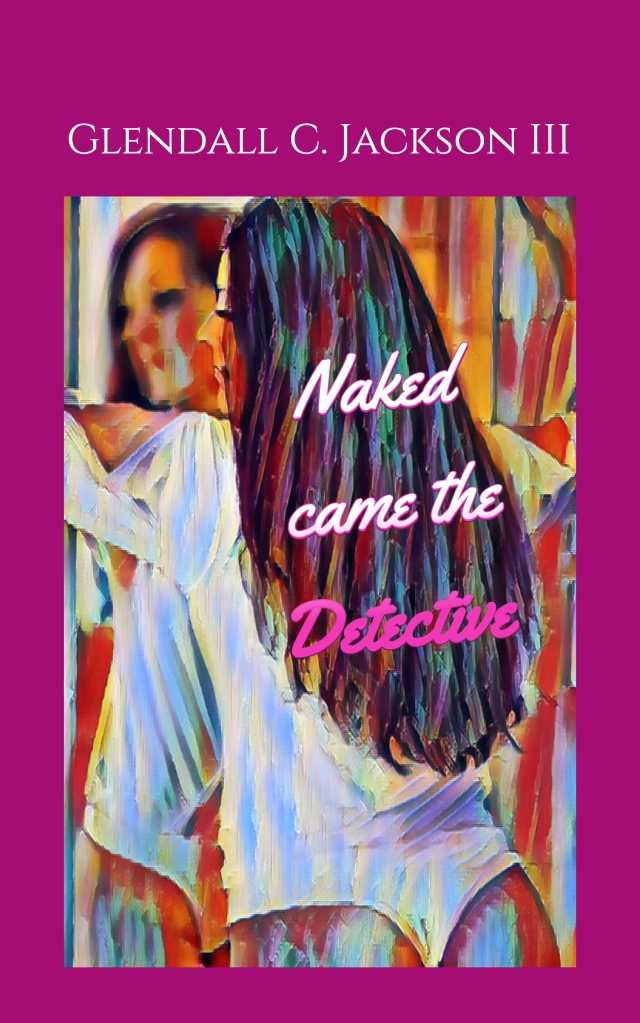
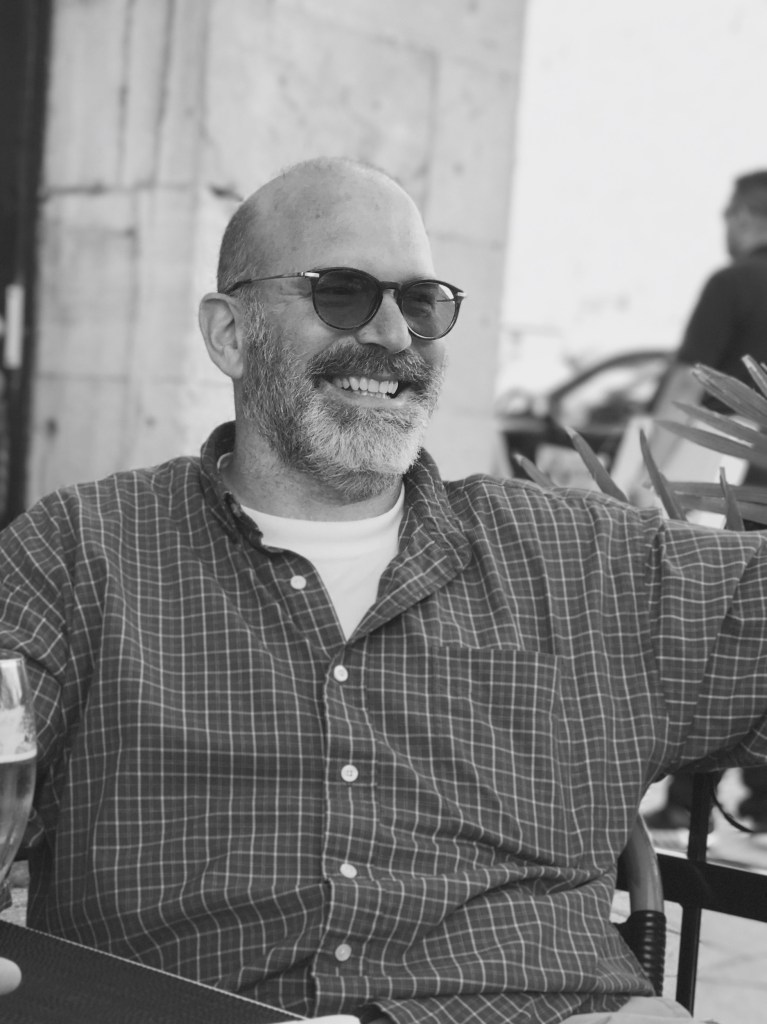


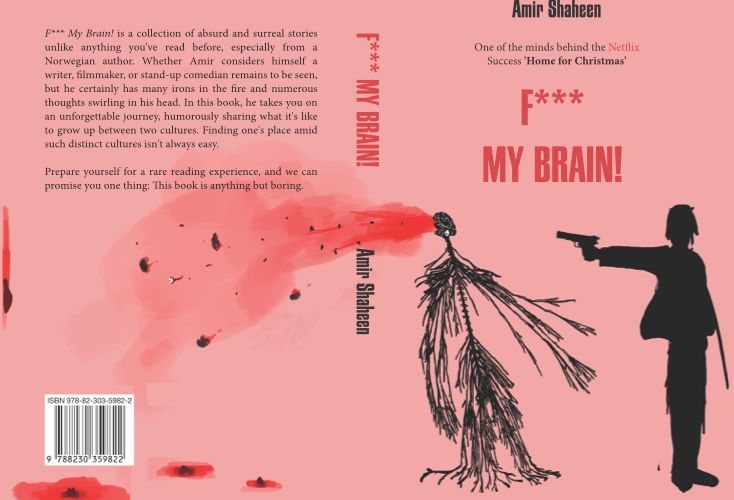


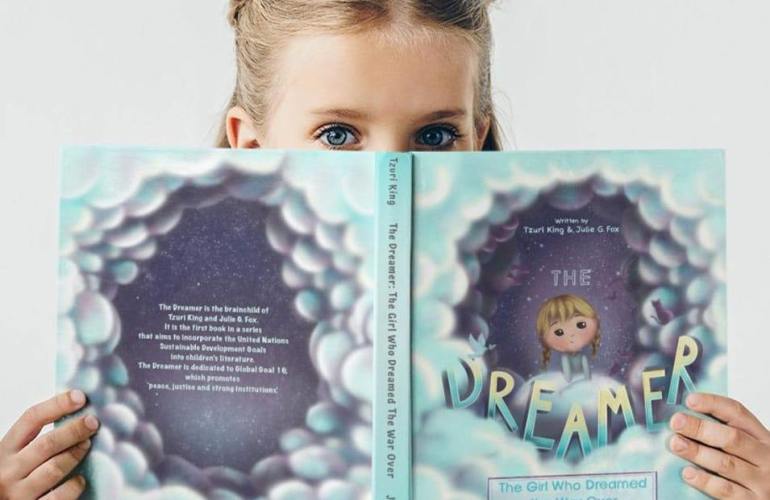
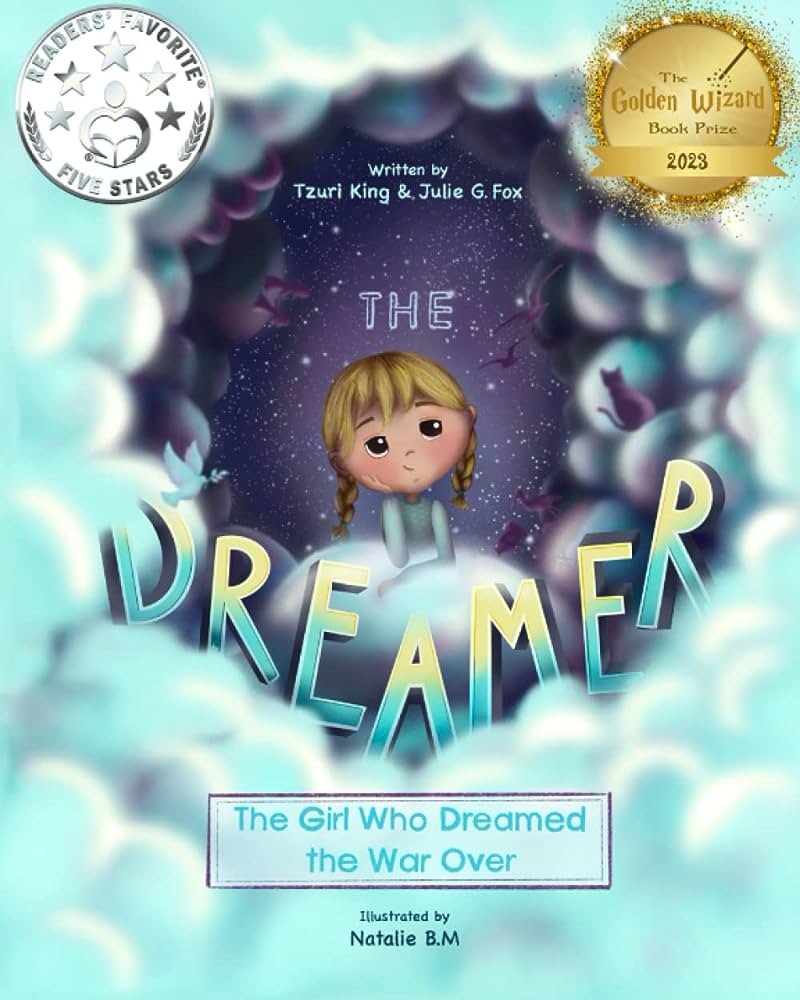



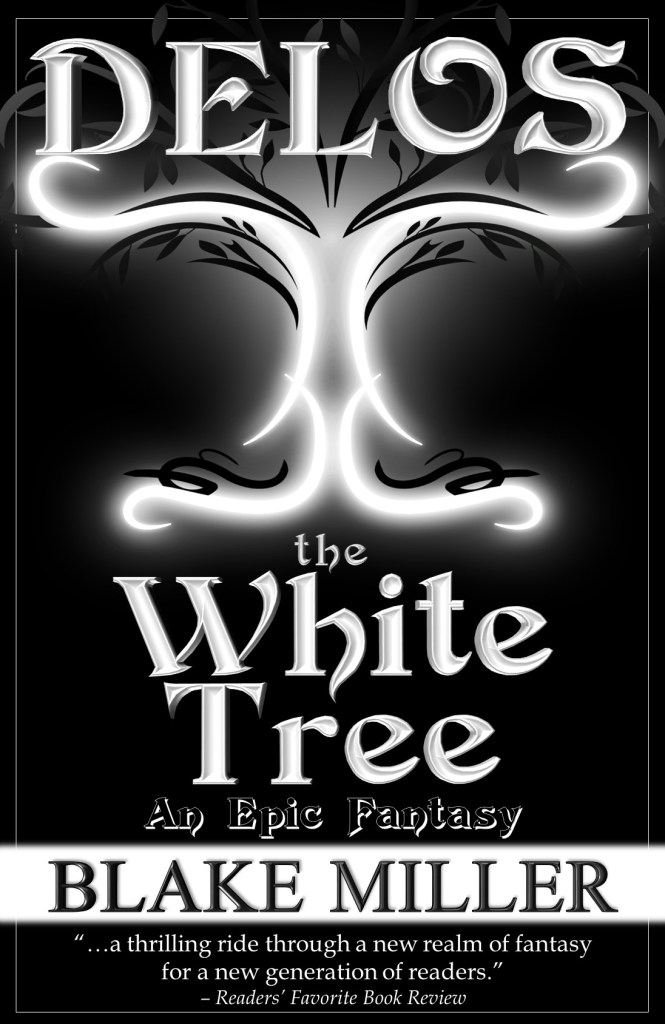


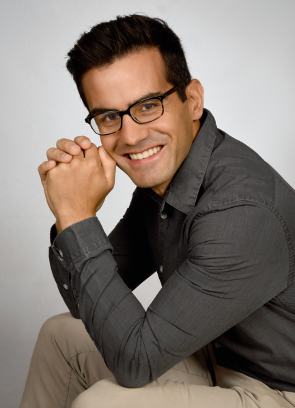

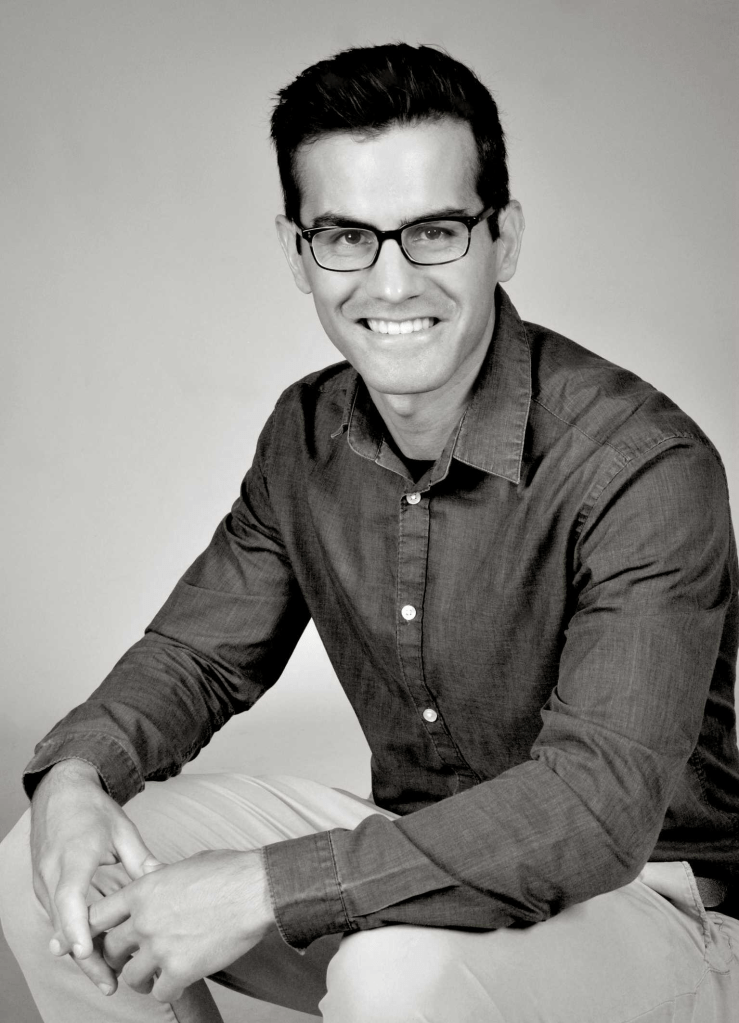




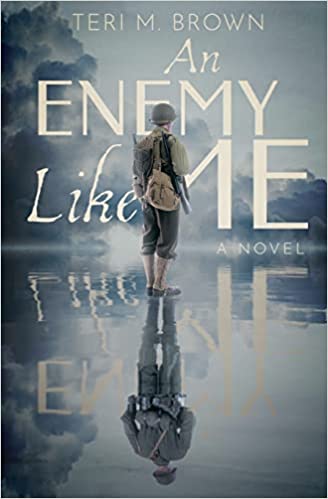
 The Reading Bud