Welcome to TRB Lounge! We’re thrilled to host author Suzie Leonie today, who will be unveiling an exciting excerpt from her book, Ivan, Boris and Me. Dive in and get an exclusive sneak peek into this amazing read!
About the Book
Ivan, Boris and Me
Illustrator Elodie Ginsburg and her spendthrift best friend, Boris, are inseparable. Taking care of an audacious yellow-haired clown in a red-and-white-striped onesie and oversized black shoes can be a challenge. However, Boris means the world to Elodie. He is a handful, but he’s her handful. Their symbiosis is disrupted when Ivan Lennard, a former professional cyclist with a closely guarded secret, moves into the house next door and becomes a regular occurrence in their lives. Each encounter is a catalyst for Boris to spiral more out of control and increase his outrageous demands, until Elodie finds herself at a crossroads and has to make the most difficult decision she’s ever made.
Boris: When we call in on our new neighbor, we have to bring dessert.
Elodie: I need to finish my work. I don’t have time to make anything extravagant.
Boris: It’s impolite to arrive somewhere without dessert.
Elodie: We aren’t even sure our new neighbor likes dessert.
Boris: You can’t bring the worst part of the meal and not the best.
Elodie: What do you mean?
Boris: You have to get through the savory to be rewarded with the sweet.
Elodie: That is not my experience.
Boris: But it is how it is.
Elodie: We have to agree to disagree on that.
Boris: No, we don’t.
Elodie: What if the neighbor agrees with me and isn’t a fan of dessert?
Boris: That isn’t going to be a problem. If he doesn’t like it, I will eat it all.
Elodie: Aren’t you planning to leave any for me at least?
Boris: Not necessarily.
Elodie: So, the dessert is actually for you then, not for our new neighbor?
Boris: You didn’t hear me say that.
Elodie: No, of course not.
Boris: It’s settled then. What are you going to make?
Elodie: I’m never going to win with you, am I? Why do I even try?
I find enough ingredients in my pantry and fridge to make a three-cheese lasagna and a two-tiered mango coconut cake for dessert. I spread them out, so everything is waiting for me on the counter while I add the last few details to my current illustration. I put down my pencils and admire the work. These pictures are turning out beautifully. My celebrity client came up with his own candy-based family a gift to his kids and, as an added bonus, an easy way to pad his bank account. The Lollipoppets hop around on one foot. Their bodies are rectangular-shaped with two bear ears at the top and cutout circles for their faces. Their eyes consist of a simple white rim with a black dot inside, and their mouths are made of small pieces of stringed licorice. I like their names: Molli Lolli, the indigo, grape-flavored one; Dolli Lolli, the pink, raspberry-flavored one; Polli Lolli, the tangerine, orange-flavored one; and Rolli Lolli, the brown, cola-flavored one. The project isn’t a chore. After all, the Lollipoppets are exactly what they’re supposed to be—cute, whimsical, and delightful. Boris likes them as well. Every time I finish a picture, he looks at it for at least half an hour, cautiously studying the details.
Before I can put my supplies away, Boris skips over to the table. I hurry to cover everything up and keep my work out of harm’s way, careful to prevent any smears from ending up on it. Boris isn’t the most prudent when there’s food around. He might even see staining my drawings as a contribution with intrinsic artistic value, and there would be no time to start over.
“My Melody Elodie, please read your story to me from the beginning. I like the Lollipoppets.”
“Boris, sweetie, we don’t have time. I need to prepare dinner.”
“Ten extra minutes won’t make a difference. I like the story. Please, please, please.”
“Exactly, and that is why they started a search. First, they looked under the couch, then under the table, then upstairs under the bed. Unfortunately, there were no other Lollipoppets to be found anywhere. That is why they had to take their first steps into the wide world outside of Chocolate Cottage, which is where they lived. What do you think happened next?”
“I don’t even have to read it to you anymore. You already know the story by heart.”
“My Melody Elodie, I like it. Can we keep the drawings?”
“Unfortunately not, but as soon as the book comes out, the publisher will send us a copy.”
“But I love the Lollipoppets. I don’t want you to give them away.”
“I’ll throw together a booklet with some of my sample drawings for you, so we can keep reading once I’m done with the project.”
“Okay. Can I eat a piece of cake now?”
“After dinner. Why don’t you tell me who your favorite Lollipoppet is while I’m cooking?”
“I like Tolli the most because he is red, and I have red-and-white-striped clothes. Can you hang a picture of him above my bed? Will you draw one for me?”
“Sure, why not.”
Boris does cartwheels in the kitchen as a response. The space is small, and he barrels right into me, knocking the chopping board and knife I used to cut the vegetables from the counter. Fortunately, I’d already put the lasagna into the oven and only spill leftover vegetable juices on the floor. I set the timer before mopping up the mess. Then I open the back door and give Boris a little shove into the garden. There’s a big porch swing we like to sit on together. Boris loves it. “My Melody Elodie, can you push as hard as you can?”
“Of course.” The swing creaks precariously, but it’s sturdy and strong enough to hold us both. Boris pulls his nose away from his face as far as the elastic will stretch, and when I stick out my tongue in response, he howls with laughter. We are making a lot of noise, and apparently that is something our new neighbor doesn’t appreciate. I can see the top half of his face over the fence, and his grimace is even more prominent than it was earlier in the day. Boris says hello and smiles, but my new neighbor doesn’t acknowledge him, and the captivatingly gleeful expression on Boris’s face turns sour instead. I better take my clown inside and give him some fudge. I normally don’t allow him to eat sweets before a meal, but desperate times call for desperate measures.
I hope I’m doing the right thing by bringing my neighbor dinner after this brief but telling display of displeasure. I don’t have long to think about it, though, because the timer on the oven pings, and I want the food to be hot when I deliver it. I grab a towel to protect my hands from the heat and put the clear glass dish onto the counter. “Boris, it’s time for us to go.”
“My Melody Elodie, do I have to come? I don’t like our new neighbor very much. He looks mean.”
“I’m sure there’s a good reason for him to be grumpy. Let’s give the man the benefit of the doubt, and if he’s distant to us again, we can always leave. It’s possible that he needs to warm up to us because he’s an introvert.” Boris shrugs, which means he’s heard the message but isn’t buying it. I’m not sure if I am either. Our new neighbor frightens me a little. He’s kind of strange and stand-offish. I like a challenge and appreciate a good enigma, but I prefer for them to not be too far out of my comfort zone.
There’s a path that connects the gardens in our cul-de-sac, and since it’s easier to reach my neighbor’s house with my hands full and a clown by my side that way, I decide to risk going around the back. I have to balance both the lasagna and the cake, while simultaneously needing to pay attention not to trip over Boris’s feet when we both squeeze through the narrow entrance of my neighbor’s property at the same time.
Fortunately for us, the man is still outside. He’s sitting on an expensive wooden lounge set covered in thick, luxurious pillows with his legs stretched out in front of him. The construction looks sturdy. It is made of teak and it probably cost more than I make in three months. It’s way too big for the relatively small-sized patio though and covers the entire width and more than half of the length.
“Hello again. I hope we aren’t interrupting, but we thought we’d welcome you to the neighborhood. As moving takes a lot of energy and you probably still have plenty to do, we brought you dinner.”
My neighbor’s scowl turns into a wistful gaze for a moment, which disappears almost as quickly as it appears. The change happens so fast I don’t even know if it’s actually real or solely a figment of my imagination.
“My Melody Elodie, the neighbor still isn’t nice. I don’t want to stay.” My clown is already fretting. I hope he’ll be patient enough to at least give the man a chance.
Boris turns around, ready to walk out. However, that’s when the new neighbor finally holds out his hand. I put my offerings on the outdoor coffee table and shake it. While his fingers are warm and dry, his grip isn’t as firm as I expected it to be. I quickly withdraw when I experience a jolt of electricity. It’s zinging through me like the shock I received when I was thirteen and hurt myself switching on a broken blender with a faulty wire. I check my palm and see the skin is undamaged. I must have been the only one who felt it, because my neighbor looks unperturbed.
“Please excuse my bad manners. I’m Ivan, and I’m not used to unannounced visitors. My house is still a mess, so I have nothing to offer you yet. Although I do appreciate your kind gesture.” He’s pointing at the food. “Thank you very much.” Ivan picks up the dishes and walks away with them. I stand there on his porch, flabbergasted, not sure what to do with myself.
“That man is weird. He didn’t even ask us to come in. I was hoping he’d give me a glass of lemonade.” Boris is clearly disappointed.
I’m about to leave when Ivan steps outside once more. “I’m sorry I’m not more hospitable, but I am grateful and shall return the kitchenware to you tomorrow.” With another one of his curt nods, he walks back into the house and leaves me and Boris standing, gaping like two unsightly river pikes. Boris is right, Ivan is odd. At least he’s accepted my food. I don’t want to judge my new neighbor based on two brief impressions; maybe the man has a good reason for his sullenness. However, Boris isn’t as forgiving.
“This garden is ugly. It only has boring gray tiles, and there is nothing for me to play with. Can we go now?” Boris grabs my elbow and pulls me along with him. He starts to run, and despite his huge feet, he’s gathering too much speed for me to keep up. This time I trip over a loose tree root close to the gate. I have to hold on to the recently replaced woodwork to stay upright, and even though the hinges manage to hold my weight, they bend out of shape. Great, the first time we’ve been to my new neighbor’s house, Boris and I were snubbed, and I’ve already wrecked something. Why can’t I be the epitome of grace, the sophisticated elegant lady who wows everyone around her with her timeless beauty and poise? My sister-in-law Andrea has all these qualities, but my mother is right, I don’t possess any of them.
I’ll somehow have to find the cash to replace that fence, which means accepting even more commissions. It’s going to be a struggle to add to my already overflowing schedule, but I have done it before. Sleep is overrated anyway. I wipe the moisture from my eyes and soldier on.
“My Melody Elodie, are you mad at me?” Boris has done nothing wrong. He shouldn’t be the victim of my overdramatic tendencies.
“Of course not, sweetheart, accidents can happen.” It’s too bad that they always happen to me and Boris though.
About The Author
Suze Leonie
Suze Leonie is a literary fiction and children’s fiction author and illustrator from a Dutch coastal town. She has a passion for literature and philosophy and when she isn’t writing or drawing, she’s usually found with a book in her hand. In the spring of 2024 Suze Leonie made her debut with the novel Ivan, Boris and Me, which is the first book in a collection of literary works that heavily focus on human psychology. When Suze Leonie is able to let go of her precious books she enjoys going to museums, good food, board games and long walks on the beach.
If you are an author and wish to be featured as our guest or if you are a publicist and want to get your author featured on TRB, then please get in touch directly by e-mail at thereadingbud@gmail.com
Welcome to TRB Lounge! We’re thrilled to host author Harrison F. Kraustoday, who will be unveiling an exciting excerpt from his latest release, Of Gods and Men Book 1: Men. Dive in and get an exclusive sneak peek into this superb book!
About the Book
Of Gods and Men Book 1: Men
The war to end all wars has already been fought—and darkness has won. In the realm of Aezigar, gods clashed, dragons roamed, and mortals fought for survival. But when the war between light and shadow reached its end, the god of darkness, Umbra, emerged victorious. His dominion is unchallenged, his hunger insatiable. Now, even as the land of Aezigar suffers beneath Umbra’s shadow, the god of darkness turns to a new world to conquer: Earth. But Umbra’s conquest is far from assured. On Earth, unexpected powers awaken in the unlikeliest of Earth’s inhabitants: an uncertain younger brother, a fiery older brother, an ignored son, an aspirant student, and a hardened military captain. Soon these heroes begin to discover their extraordinary connections to their parallel selves in Aezigar.
Meanwhile, in his arrogance, Umbra has left embers of rebellion still smoldering in Aezigar. In that alternate universe, the heroes begin to stand against a world dominated by the forces Umbra left to rule in his absence: a hunter in service to the darkness, two brothers fleeing for their lives, a coward hiding in enemy lands, a leader of a shattered people, and a reaver seeking plunder in the chaos. Now, the fate of two worlds hangs in the balance. Will the heroes of two worlds be able to stop the darkness that the heroes of Aezigar alone could not? Or will the light of both worlds be extinguished forever? … Of Gods and Men is a sweeping blend of fantasy and superhero genres, crafted for those who crave epic tales of courage, sacrifice, and hope. Spanning two worlds—modern Earth and the fantastical realm of Aezigar—it weaves multiple interconnected storylines into a grand narrative of rebellion, redemption, and resilience. With heroes shaped by their struggles and choices that echo across realities, this is a story where every action carries weight, every bond is tested, every sacrifice matters, and the fate of entire worlds hangs in the balance. Prepare to embark on an unforgettable journey of parallel worlds, godlike battles, and the enduring fight against darkness.
You can find Of Gods and Men Book 1: Men here: Amazon | Goodreads
Excerpt
Prologue: The Man
Before the turn of the millennium, there was a man. He was tall, about 6’4”, with a skinny enough build that he nearly gave off the impression of being malnourished. However, if he wasn’t eating enough, his clothing gave enough indication to assume that it wasn’t due to a lack of financial means. He sat at a desk in an office overlooking New York City while wearing a three-piece suit. His pants, socks, shoes, jacket, vest, and tie were all black, as had been most of his clothing since he was a teenager. At the moment, he had his feet propped up on his desk. He held in his hand an audio recording device that he had purchased the evening before.
He spoke. “Today, I have resolved to stop.” The audio device had been recording for hours, but he hadn’t said a word. He wondered if it was even storing anything anymore.
He erased the recording and started again. “Today, I’ve made up my mind to put an end to the madness. Certain practices have been going on here, in the very company I founded, that can only be described as shameful, cruel, and downright evil. I’ve tried to stop this many times, but I failed. For the past three months, I’ve lain awake every night thinking about what’s been happening here, and every night, I’ve promised myself I’d put a stop to it. But every day, I’ve failed. It always pulls me back in. So today, I’ve decided to end it tonight. The truth is, I’m the one responsible for every crime, every cruel act, and every wrong done. I’ve given the orders, and I’ve pulled the trigger. I’ve dragged others into this life, and I’ve brought them down to the point where they’ve begged for mercy. I have to admit, I enjoyed the power and control. I’ve ruined lives and hurt people I claimed to love. To be honest, I don’t know if I’m capable of that… love. I never thought I was, but I thought that if I said the words, maybe they’d become true. Maybe if I pretended to be a trustworthy person, I’d become one. But I haven’t. To those who followed my lead, I lied. This life is destructive. But it might not be too late for you. It’s certainly too late for me. I have one honorable option left. I’ve tried to quit, but I can’t. As long as I’m alive, this will never end. I’ve lost control. So, I’ve decided to end the madness, stop the injustices, and kill the villain.”
About The Author
Harrison F. Kraus
Harrison F. Kraus has always been drawn to complex, multi-character narratives. Though he holds a PhD in Chemical Engineering, storytelling remains his greatest passion. He spent many weekends in college library study cubbies crafting his novel, balancing scientific rigor with creative worldbuilding. His stories often begin with a hand-drawn map, a habit that extends to his Dungeons & Dragons campaigns. Exploring themes of internal struggle, unity, and consequence, his work is subtly shaped by his Christian faith. Now residing in Greenbelt, Maryland, with his wife, Nisha, and their cat, Mika, he continues to write stories that reflect his lifelong love of epic storytelling.
If you are an author and wish to be featured as our guest or if you are a publicist and want to get your author featured on TRB, then please get in touch directly by e-mail at thereadingbud@gmail.com
Welcome to TRB Lounge! We’re thrilled to host author Miles Joyner today, who will be unveiling an insightful excerpt from his latest book, Bazaar, an action-packed techno-thriller with a heart. Dive in and get an exclusive sneak peek into this superb book!
About the Book
Bazaar
A high-profile homicide of a former ambassador’s son in the nightlife district of the nation’s capital gets connected to an assassination market on the dark web, turning the DC area into a battlefield over a new generation of class warfare. When the ex-diplomat, Chiedu Attah, hires an elite executive protection team headed by siblings Yemi and Karen Uzunma to guarantee his safety, the security firm realizes they are going up against a young inventive contract killer who is determined to finish off the political VIP by any means necessary.
Bazaar is the first book in a series that follows the security contractor Raptor as it deals with the ramifications the prediction market has on the political celebrities of the capital region.
The only lighting inside the dark room was a couple of red LED lamps. They didn’t bother the eyesight of eighteen-year-old Aaron Williams, who was wide-eyed in fascination at his Ultramaker XT 3D printer going to work. The last of the white filament flew out the extruder onto the print bed, and he couldn’t have felt any more like a father watching his wife through the glass, holding their newborn baby.
He reached onto the platform and gripped his new plastic handgun that shot real, metal bullets. Like its predecessors, the Mini Talon had been banned from all sites hosting 3-D printing design files. However, Aaron was able to obtain it through torrents online, and now he had the opportunity to add it to his family of firearms that lay around the room, including an assault rifle with a lower receiver printed with the same material. But unlike the rest of its siblings, the MT wouldn’t be another one of Aaron’s toys to fire off rounds at tree targets deep in the woods. Some of the former models exploded on tests from the videos Aaron watched online, but he was confident the new version would not fail to take out his intended target in a few days with its untraceable ballistics.
Danny would be his escape. The son of a local pho restaurant owner was Aaron’s only friend outside the digital realm. Danny Phat took very little in life seriously, but for all the flaws, he knew every back road of the entire DC, Maryland, Virginia area. He could whip his raggedy-ass decade-old Nissan Altima pretty well. Either way, Aaron had no driver’s license and he wouldn’t risk getting pulled over or traced to a rideshare app. The young 21st-century gunsmith couldn’t take his eyes off his latest creation. He loaded a magazine, cocked the weapon, and listened satisfyingly to the crisp click. It blew Aaron’s mind to think the ammunition clip had fit perfectly into a gun made from the same material as his storage cabinet.
He was ready to test the gun. Would it fire smoothly? He had two days to test it and find out before he had to execute his assigned job.
August 20th, 2024. 1:30 AM. Washington, D.C.
Liquor-induced shrieks and screams of laughter carried over the bass thumps throughout a bumping Adams Morgan, the corridor of D.C. that served as one of the city’s nightlife hot spots. Neon lights shined on the designer-brand, clean-cut, modern-day yuppies who strut out of the nightclubs and the plaid-shirt bearded hipsters who stumbled out of the brewing taverns. A lot were on their nights off from studying, but the cost of drinks was far higher than college town prices so the professional class of everyone from policy aides to software engineers got just as wasted. Regardless of education or socioeconomic background, many women looked for their best friend whom they lost in the partying, and many male counterparts hoped to be that lucky dude they might have run off with.
Isaiah knew that’s what his best friend Adamu Attah wanted to be at that moment. But it was past Last Call, and Isaiah had put pressure on him for them to start heading back to their university dorms. He could tell Adamu didn’t get it. The youngest patriarch of the politically rich Attah family from Nigeria had no issues getting cheeks back home, butAmerican girls apparently weren’t as impressed with his super-forward approach. Isaiah tried to explain this to Adamu outside the Astro Lounge on 18th Street with neither a female around his arm nor a single new contact in his phone, but before he could bother to listen, a tipsy trio of curvy young women strolled out after him and caught his eye. Long braids, luscious shapes formed from their Lycra dresses, flawless different shades of ebony skin. Isaiah just knew Adamu would try again.
“AY!” The belles reluctantly turned toward the source of the attempt at a mating call. “Where we goin’ tonight?”
“Nowhere that involves ugly!” The tallest out of the three formed a smirk under her glasses, her two graduate degrees having only enhanced a life’s worth of sharp rebuttals to catcalling in her neighborhood. She laughed, and the pack began to leave the scene. No different than a kid eyeing the milk chocolate bar right before checkout, Isaiah knew Adamu just couldn’t take no for an answer. The shorter one with the most voluptuous figure became the unlucky winner to have her hand grabbed without permission.
“C’mon mami, ditch these bitches—” Adamu was snatched mid-sentence by a bouncer whose neck rolls formed a poop emoji and got tossed like a rag doll into the hands of Isaiah a few feet away.
“Dumbass!” screamed the short one as the three marched off down the street.
“I’m royalty, hoes! Some other BITCH will get blessed with this big dick tonight!”
“HEY!” The head of Astro Lounge security had enough. So had Isaiah.
“I’m so sorry, sir, he’s drunk.”
“Get him the fuck outta here before I break his jaw.”
“Yes, sir. Again, I’m sorry!”
The situation was all too familiar to Isaiah. Except now, instead of guiding a destroyed Adamu down the Terrapin-flagged residential streets of College Park, Maryland, from one frat house to another, they had graduated to bar hopping in D.C., where the young bachelor had been able to finally drink legally for the past ninety minutes.
“Sometimes you’re a freaking embarrassment, Adamu.”
“Shut the hell up and get an Uber. We’re going to Starline.”
“Starline?”
“Strip club.” Adamu gulped down a wad of vomit from coming out. Isaiah looked away in disgust, but something else caught his eye as they turned the corner.
A Metrobus stop bench rested thirty yards from their position. He figured that was where they could gather themselves after such a night. He used the remainder of his stamina to finally reach the bench and slap the back of Adamu to the hard rubber as if to try to wake him up. Isaiah checked his phone. 2% battery.
“Dammit…Adamu!”
His eyes opened, barely able to comprehend where he was even at, let alone being able to give Isaiah a response.
“Your phone. Mine’s about to die.” Body in total slow motion, Adamu managed to tap his pockets.
“Sh-Sh-Sh-Shit” eeked out of Adamu’s mouth.
“WHAT?!” Isaiah tapped his friend’s pockets. “Where is it?! Or your wallet?” Another tap. Wow. Alcohol and a night of partying caused his buddy to lose track of his valuables. Unbelievable.
“The hell is wrong with you? This isn’t Saint Catherines anymore!” Isaiah yelled at him, referencing their boarding school back in Victoria Island.
Vomit rose through his esophagus, except Isaiah could tell from the lump in Adamu’s throat that this batch was going full projectile. Isaiah jumped out of the way right in time for only a chunk to get on his shoes. The rest of Adamu’s day’s intake became a red-yellow puddle at the side of the bench. The gross site, as well as the realization that their options were fading, prompted Isaiah to throw his fist and scream a few “fucks” to himself. He looked up at the bus stop sign and saw that the 92 bus had a destination of SHAW-Howard, a Metro station. Maybe the route was their best bet if the bus got there within fifteen minutes and they made the last train, figured Isaiah as he composed himself.
He looked away, and something else caught his eye. Several blocks down Marion Street walked a hooded figure. Not too brisk, but certainly with purpose right toward their position. Isaiah squinted, and the street lamps revealed a teenager in a dark blue hoodie with jeans. The getup, time of night, and even the location were enough for Isaiah’s nerves to merge into his skin. Yeah, they were in the “nice part” of D.C., but Isaiah’s classmates had been robbed on campus, so it could happen anywhere. The young male got closer. When he was thirty feet away, Isaiah was still unsure of how to react or whether to react at all. The feeling might have been what his student counselor emphasized as overthinking.
“Com’on now.” Shifting from foot to foot, Isaiah sunk his hands deep into his pockets, a reflex move he made whenever he was nervous. At the same time, he heard his parents’ judgmental biases about inner-city youth, fighting to stave off his own similar thoughts.
“Hey, bro,” the figure said once he reached the bus stop. They traded ‘sup’ nods. Isaiah’s was way more reserved. “My phone’s dead. You got the time?”
“Mine’s dead, too. Sorry.”
“Hate when that happens out of nowhere.” Isaiah started to ease up to the source of the voice that seemed extra friendly with a hint of anxiety. The jitters he noticed from the kid were probably from him panicking over his phone being dead, figured Isaiah. Something he clearly could relate to, given his own situation. The original image shaped in his head was starting to look too judgemental. The teenager looked at Adamu who hung over the bench, motionless and barely conscious. “I’d ask him, but he looks done.”
“Yeah, he lost his at the club. Long night.” Isaiah gandered at his friend draped over the bench, now sharing sympathy with his comrade.
“Ah, so THAT’S why the phone is dead. Had it out the whole time booking them females. Can’t even be mad at him.”
“Not even,” laughed Isaiah, trying to shake off whatever anxiety he had left. “Word, y’all heading to Howard?”
“Nah. We go to Maryland. Trying to figure out a way back, actually.”
“Shit, I’m in the same position. Know where the closest metro is? Wonder if we can make the last train…”
The sign, Isaiah remembered. They had to just keep walking down Marion.”Yeah, I think—” POP POP. The friend of the target was not getting up from the two .380 caliber bullets that were just blasted through his skull with the utmost precision and professionalism. Aaron didn’t waste a beat as he tactically shifted the open sights of his plastic 3-D printed pistol to a groggy Adamu struggling to get his words out. “Please,” he cried. “I-I don’t have my wallet, but I can give you anything. I’m rich as fuck I swear— ” POP. Three total gunshots.The first one might have caught attention, but the second one was supposed to send any potential eyewitnesses running. At least, that’s what he learned from observing the few shootings he witnessed around his way. Aaron stowed the pistol away in his waistband holster. He checked the surroundings for the fifth time that night. There was no sign of anybody. He picked the right spot and predicted Adamu’s every move since the club perfectly. But where the hell was Danny? His Altima was supposed to be turning that corner before the first shot. VROOM. SCREECH. There it was. Revved and making too much damn noise as it peeled from an alleyway to scoop Aaron. The passenger door flew open, and Aaron jumped in. They took off before any sirens could be heard.
“Woo!” yelled Danny as he whipped around another corner. The two dressed pretty similar but everything Danny did was exaggerated in an attempt to blend into the projects they were heading back to. Everything from the Commander’s fitted hat to his Foamposite pressed against the gas pedal contrasted the plainer attire of Aaron, who didn’t care at all about the brands his former classmates worshipped on a daily basis.
“Fool you a BEAST!”
Aaron needed a moment to gather himself. Despite his success so far, taking someone’s life for the first time was a difficult realization to settle into. Let alone two lives. His parents never intended to raise a killer. His dyslexia limited the options the school offered. Danny’s advice about selling drugs or sketchy affiliate marketing plans wasn’t a solution either. He knew what would end up to him down that familiar path. He also took note of how naive Danny’s hype was in the latest additions to the district’s homicide rate.
“You were late” was the first thing out of Aaron’s mouth.
“Chill, fam. Traffic around the corner was O-C. Stop acting like I ain’t do my job.” Aaron’s eyes just rolled in response. Maybe if it was another debate at Danny’s spot about Harden Vs. Curry over some french fries drenched in mambo sauce, he’d entertain the bickering. But not after carrying out his first homicide. He wanted silence.
“But yeah, slim, you did the damn thing. How much did those lames have anyways? Real live starving in this bitch.” Aaron’s eyes widened. Unbeknownst to Danny, Aaron was just supposed to make it only look like a robbery.
“Shit, I forgot to run through their pockets.”
“The fuck you mean forgot? Nigga what was the whole point of tonight?”
“I still got you…and I told you not to use that word around me.”
“Imma call you a whole lot of other things if you don’t get my bread, muh fucka. Fuck type shit you think this is—”
“DANNY! SHUT THE HELL UP! Please.” Aaron didn’t yell often, but the authentic rage in his voice shut down whatever gangsta persona Danny was going for. By then, Aaron knew Danny finally realized it wasn’t another discussion about the NBA playoffs.
“Just get us to P-G,” Aaron said. P-G was the county of their home right outside the nation’s capital, Prince George’s. “Stop somewhere, and I’ll cover, but I can’t talk right now.” Nothing but the sound of road bumps and night traffic until Danny began to piece together a hint as to what the real motivation for that night had been.
“Aaron.” Danny had to pause for a moment. “Are you saying this was a hit?” Aaron didn’t care to answer Danny’s curiosity. He stared at the night-lit city outside the car window. He had just clocked out, and there was no desire to talk about work. The murder of Adamu happened two hours after midnight, meaning his death landed on the date Aaronhad bet on the assassination market called the Bazaar.
About The Author
Miles Joyner
Miles shifted to novels after years of filmmaking and editing television in the Washington, DC area. He particularly loves the technothriller genre at the moment and is an active member of International Thriller Writers where his first novel, Bazaar, was selected for their Debut Authors program. He also attends monthly meetings for the writer’s group, Novels in Progress DC.
If you are an author and wish to be featured as our guest or if you are a publicist and want to get your author featured on TRB, then please get in touch directly by e-mail at thereadingbud@gmail.com
Welcome to TRB Lounge! We’re thrilled to host author Bernt Erik Bjontegard today, who will be unveiling an insightful excerpt from his latest book, History Rules My Tomorrow. Dive in and get an exclusive sneak peek into this amazing book!
About the Book
History Rules My Tomorrow
A question to ponder: are we as humans pre-programmed to “follow in our father’s footsteps?” Is there something inherent in our heritage? Do we repeat what our forefathers and mothers did? And if so, can we apply these inherited cross-generational learning methods as we invent the next generations of intelligent systems? Rather than creating AI that is artificial and intended to replace human work, can we create intelligent systems that AUGMENT the human’s work and support him or her? Can we invent intelligent systems that learn and improve themselves with the mind of creating betterment for all humans as well?
Erik Bjontegard left Norway when he was 18 to study in the UK, then moved on to California. Not realizing until later in life, his actions and behavior, his quests for new discoveries, and his desire to invent followed his father and grandfather on his mother’s side. Now an accomplished inventor, former NASA rocket scientist, deep sea robotics, and submarine explorer, he is now navigating the new Phygital realms connecting the physical and digital.
In this engaging and inspiring autobiography, Bernt “Erik” Bjontegard narrates his life filled with the stories of his grandparents’ sacrifices during WWII, his own mistakes and discoveries, and poses important questions on how to engage the listeners and their families to assist in creating and inventing better human-technology interfaces. Learning from his history, he is embarking on the journey to make his tomorrow better than today.
While my own life story does not include war, Mayan Indians, Nazis, or building new countries or nations, you may start to see some interesting trends that I have only now started to understand as my hair is turning gray.
I left Norway to study in the UK at 18 instead of attending the university in Norway where my father was a visiting professor. I had been accepted, and staying in Norway would have been easier. All the education was in Norwegian. In England, they speak English a lot, even more so in the university classes.
I worked on subsea engineering and robotics. I got stuck in a submarine at the bottom of the North Sea. It made me look into space and explore other paths, which eventually brought me to the USA. So, I shifted from subsea robotics to aerospace and worked with NASA on their space shuttle at one of their big sub-contractors.
I had great success and was on the corporate ladder, supporting Boeing and Airbus in certifying their aircraft for the FAA, but I wanted more adventure. So, I ventured into a completely different realm, from deep-sea robotics, aerospace, and deep space to the equally mysterious world of make-up and fashion. As you may be able to tell, it is not a typical employment path.
From there onward, I moved into another entirely different business sector: building new homes and communities and becoming a real estate broker and land developer. Once that wasn’t exciting enough, I went onto something brand new.
Mobile technology. Another brand new frontier. I came into telecommunications, looking for new ways to connect the physical and digital worlds and build a way to enhance daily experiences.
As an American sci-fi author, Kage Baker said, “I don’t think humanity just replays history. We are the same people our ancestors were, and our descendants are going to face a lot of the same situations we do. It’s instructive to imagine how they would react to different technologies on different worlds.”
You must have figured by now that I am somewhat unusual. I don’t choose the road that most take. Instead, I create new paths. While different from my forefathers and parents, we will explore some remarkable similarities.
I am a patented inventor. I have started new companies and have also gone bankrupt.I have made a fortune and have lost it all. I’ve lived in tiny apartments and huge mansions. I have had a large family to feed and have sometimes been alone with my boy with little support.
But throughout it all, I seek answers to new questions! I ask, then paint visions of the future in my head. I think outside the box. I have been recognized by the high-tech giant CGI as one of the top technology visionaries in the world and have won numerous awards and accolades, from recognition at the White House to magazine cover stories.
I choose to do things differently. I’m an idealistic inventor and fascinated by technological and scientific innovation. I have conceived and invented things that affect millions of people and more to come. The common thread between all these various industries has been my desire to do something different and deliver better outcomes. I model, recreate, build, and deploy, and then I seem to get bored and go to the next challenge!
Weird, huh?
I have traveled the world and met key political figures across the globe, from 10 Downing Street in the UK to the White House in the USA, from Abu Dhabi to Norway, and from Hong Kong to Thailand.
As I look to the future, I wonder what we can learn about the past. Can we look at my family’s history and see how this can be used to improve the algorithms of augmented intelligence systems of the future? Is this my next destination? I am building solutions that connect the physical and digital, creating new worlds—Metaverses and Phygital spaces.
During the COVID-19 pandemic lockdown, I discovered my interest in the lost art of storytelling. My family, our four kids, and my fiancé had conversations around our dining table and shared ideas. I have observed my kids’ changing use of technology over the years. Now, we sat down and talked about it instead of using it. This made me realize that technological advancement has challenged the human transfer of knowledge and experience. Before, it was the tech that enabled us to talk. Now, we sat down at the table and spoke.
It was as if we had rediscovered something powerful. The COVID pandemic made us pause and observe how we had become dependent on tech for tech’s sake. We had lost the art of storytelling.
Personally, as you may be able to tell, I’ve always been driven by the challenge of combining science and innovation in ways that improve our lives. This is especiallysignificant in today’s ever-changing digital world, but we must keep the human elements.
It’s about taking advantage of the latest communication innovations delivered to everyone’s hand, wrist, and pocket. We all walk around with these connected “supercomputers” —our mobile phones. They are far faster and superior to those my grandfather used at UCLA or those my father used to find oil. Better than those used to build and used to operate the Space Shuttle to deliver people to space and back! Vastly more powerful than those I used to ensure we are all safe when we fly commercial airliners. We have enabled businesses and organizations to drive dynamic marketing, services, and communications. The result is the ability to easily bring real-time, relevant experiences to people in places like convention centers, universities, airports, medical centers, hospitals, events, office buildings, and tourist destinations. We even use these computers to play games when in the restroom! With my patented platform, we even deliver a layer of contextual intelligence to communications, turning engagements into relationships. Today’s norm was crazy science fiction only a few years ago. Imagine what we will consider normal 5 years from now?!
An excerpt from Yuval Noah Harari’s book, Homo Deus: A History of Tomorrow, reads, “If Kindle is upgraded with face recognition and biometric sensors, it can know what made you laugh, what made you sad, and what made you angry. Soon, books will read you while you are reading them.”
This is possible today. My platform can do this and more… much more. Even when shopping, stores can read people’s reactions to products and ads served on shelves in real time. Creating experiences like those in the SciFi movie “Minority Report” with personalized ads and offers to those in front of the signs is quite easy with my platform. We can even do more. We can send that offer to your phone there and then, and with a single button, ship it to your home! Why is it not everywhere yet, you may ask? Sometimes, just because you can doesn’t mean you should. The creepy factor of these interactive AI displays is rather high. But soon, this will be common. Imagine a flight display at an airport changing the flight and gate information to your flight as you approach it and then sending the gate information to your phone’s indoor navigation system so the phone will tell you where to go. This is possible now with contextually intelligent signage systems, integrated indoor navigation, and hybrid mobile app interfaces. It’s all part of a Contextually Intelligent Communication Platform ecosystem.
Nowadays, technology is all around us; as we fast forward deeper into the territories of intelligent computers and brain interfaces, the question of whether technology isneutral or not arises. One can argue that no moral value can be accredited to technology.
Technology is blind, is the thought. Thus, tools only have value when a person with their value system applies them, and thus, the technology is dependent on the value system of that individual.
Hence, this outlook advocates that the operators are responsible for the ethical use of technology. This argument is used all over. Crypto itself doesn’t cause terrorism. Terrorist do. Another such argument is that we shouldn’t blame guns for killing people. It’s not the gun that kills in and of itself. It’s the person pulling the trigger. Guns are neutral; people aren’t. But isn’t the fact that the gun enabled the killer and that crypto enables terrorists to do their horrible acts of violence? So, then, the tech enables actions. In fact, in a way, with this mindset, the technology augments the human’s actions.
When evaluating technologies and what to invent, should we consider why and what they can be used for? Surely, the invention of the atomic bomb had these diabolic considerations—if you drop one bomb, hundreds of thousands will die. But if you don’t drop the bomb, the war will continue, and many more will be lost. Is it our values that determine what technology to build? It’s the consideration of what is good and what is right. If a choice to invent something may be used for evil and wrong reasons versus not inventing it at all, I would suggest that it’s better to invent and then invent ways to control it. Someone else will eventually invent something similar and may not have the same moral considerations as you do!
While the actual value for the technology users will determine how the technology is used, the fact that it only exists because of our values makes them inseparable. Thus, we can debate that technology can be maneuvered. It can add choices or improve processes that point in a specific direction.
In addition to that, when we get too used to how things are, it takes a greater struggle to see how things could be different. It takes a more creative mind to see it in any other way. As time passes and familiarity grows, the technology and its functions become so entrenched as to be hardly thought about or questioned.
In 1986, Robert J. Welchel wrote in IEEE Technology and Society Magazine:
“This moral neutrality is based upon viewing technology purely as a means (providing tools for society to use) with the ends (the actual usage of technology) lying beyond and outside the realm of engineering; this position also assumes that available means have no causal influence on the ends chosen. If technology truly is only a means, then engineering is a second-class profession since we are the mere pawns of the real power brokers. We buy our innocence at a tremendous cost: To be innocent, we must be powerless.”
A vital impediment here is our inherent acceptance of the failure to predict the future. If no designer, inventor, or company can foresee the future benefits and costs of what they build, how can they ensure they embed good values?
So, using the information we have, we must find the best explanations or predictions we can. We can learn from our mistakes and make better decisions if we consider how different technologies progress and their consequences.
This is important, as future technologies will likely be much more powerful and consequential than today. Can we find ways to ensure these systems are based on knowledge of what works elsewhere? What worked before? Is there a way to learn from this transfer of knowledge that passes from generation to generation when the ages cannot physically meet? Naturally, I cannot meet and talk with my great-great-grandfather; he passed away long before I was born. How am I following his path so closely?
So, we are heading into a future where it is important to start asking strange and new questions. When intelligent machines make their own ethical choices, it will make no sense to say that technology is neutral, and aligning our values will be tremendously important.
Now it is getting interesting, isn’t it? There is much more to ponder and think about. We all know that there are consequences to our actions. Now, we must consider that there are consequences to our thoughts, dreams, and visions.
About The Author
Bernt Erik Bjontegard
Bernt “Erik” Bjontegard is the inventor of the patented, award-winning Spark Compass™, a Contextually Intelligent™ communication platform used globally to deliver the right message to the right person at the right time and place. As founder and CEO of Total Communicator Solutions, Inc., Erik has led innovative deployments at events like Wimbledon and America’s Cup, for brands like Puma and Coca-Cola, and even for public health initiatives in the UK. He holds multiple pioneering patents, many of which have been cited by industry giants, including IBM, Apple, Samsung, Google, and Qualcomm. Originally from Norway, Erik began his journey as a snow shuffler and windsurf instructor, later earning a full scholarship to the University of Salford in the UK. He became a mechanical engineer, designing deep-sea robotics before working with NASA on the Space Shuttle program—something he proudly recalls with his favorite phrase: “I used to be a rocket scientist!” He later certified aircraft designs for Boeing and Airbus and has contributed to technologies that are now part of 5G infrastructure.
Erik’s career path has been anything but conventional, spanning fashion, real estate, and advanced telecommunications. His time with Qualcomm’s Corporate R&D team saw him contribute to emerging platforms like Vuforia and Gimbal, and it was there he learned to write patents and began his deep dive into innovation. Erik is also an honorary Fellow at the University of Salford and serves on advisory boards for several universities, sharing his visionary insights with future generations. In his autobiography, Erik reflects on his life journey, his family’s sacrifices during WWII, and the inherited spirit of innovation that connects generations. He explores how human experiences can shape the development of intelligent systems that enhance rather than replace human work. Through personal stories and big-picture questions, Erik invites readers to imagine a better future—one where technology supports humanity, not the other way around.
If you are an author and wish to be featured as our guest or if you are a publicist and want to get your author featured on TRB, then please get in touch directly by e-mail at thereadingbud@gmail.com
Welcome to TRB Lounge! We’re thrilled to host author Adam Knight today, who will be unveiling an insightful excerpt from their memoir, Made of Iron: The Dina Jacobson Story. Dive in and get an exclusive sneak peek into this beautiful book!
About the Book
Made of Iron
Made of Iron: The Dina Jacobson Story 1939, Southern Poland. Dina was a young Jewish woman. She anticipated getting married and raising a family in the same small town where she had grown up. War broke her life. But it would not break her. Dina endured years of suffering in Auschwitz concentration camp, then more years of homelessness after the war. She finally settled in America where, after finally raising that family, she dedicated her life to sharing her story with young people. I was one of them.
Stepping into the lecture hall of my high school filled me with a sense o freverence and awe. Ordinary classes on ordinary days took place in ordinary rooms, but the lecture hall was for special events. As a freshman, I had never been inside. I scanned the banked rows of hard-backed plastic seats and the laminated tables that curved in a semicircle around the lighted stage. A pair of chairs sat in the middle of the stage. One, I knew, was for my teacher; the other was for the guest—the guest for this special event.
I took a seat in the second row. I didn’t dare sit in the back row. People who sit in the back row send a certain message to the speaker. I also didn’t sit in the front. That was too close. I was, and will always be, a sit-in-the- second-row type of person. I set my overloaded backpack down by a seat, then plunked myself down. The seat swiveled. How fancy! How collegiate! I could hear the squeaks and groans of all of the other seats in the hall. My classmate who sat next to me commented about how we should have class here every day. I smiled and agreed. It’s just a thing to say.
Recently, in history class, we finished a unit about the Holocaust and genocide. It was the first time I learned about these topics, and as always, I studied and did well on the test. Our teacher, Mr. Adessa, invited this guest speaker to give us a better understanding of the material. Since I had already gotten an A on the test, I did not see how much better understanding I could have, but I welcomed any assembly that broke up the monotony of the school day. I was 15 years old.
Mr. Adessa stepped onto the stage. He was tall, over six feet with a military bearing that made him seem taller still. Mustachioed, hair swept back, he was a man who rarely smiled, I had come to recognize him as a teacher who was tough and demanding and expected more of his students than they realized they could handle. A teacher who would give a B+ to an A student, so the student worked harder to realize what an A requires. Me.
He welcomed us and invited us to sit and pay attention. His students obeyed.
“I have with me here an important guest to our school. She is also a dear friend of mine. In class, you have learned about the Holocaust. You have heard of the Auschwitz concentration camp. You have learned a little bit about what happened to those who survived. I want to introduce you to my friend, Dina. She lives in Elmira, about an hour from here. She has a family there and has lived here in upstate New York for almost 50 years. But before that, she grew up in Poland and—well, I will let her tell her story.”
He escorted a woman to the chairs on the stage. He stooped down to offer an arm, though she did not need it. This woman could not have been more than five feet tall, with curly white hair and piercing eyes. She seemed old, the age of my grandparents, but she moved with a sense of strength and surety that made her seem like she could live forever. She sat in one chair. Mr. Adessa took the other.
“Thank you,” she said, and I immediately heard the Eastern European accent. She faced the audience. “My name is Dina Jacobson, and I was in Auschwitz concentration camp.”
I listened, silent and respectful, as Dina spent the next hour telling us about her life. She told us a few details about growing up on a farm in Poland. She told us about Nazis coming to her hometown and taking her family away, then eventually taking her. Much of her talk consisted of stories about her years in Auschwitz. She told about the abuse she suffered at the hands of guards, about living off of no more than a cup of ersatz coffee and a thin slice of bread each day. She rolled up her sleeve and showed us her forearm, where a number was written in blue ink. I couldn’t see the number clearly, as I was two rows back. Mr. Adessa told us that if we want to come up and see the tattoo up close at the end of the talk, we will have an opportunity. I already knew I would not. That would be too close.
Dina finished her talk by telling us a little about liberation from the camp, and about living in Elmira. Then she took questions, and students wanted to know more about the concentration camps. They wanted details. They wanted to know how terrible it was, and Dina did her best to explain. I asked no questions. I was moved, though not to tears, like some of my classmates. I assumed that this talk, like most educational experiences, will settle into my memory and stay there. I assumed that between the unit in history class and the presentation that day, I learned most of what I needed to know about the Holocaust. I assumed my relationship with Dina would end after the talk, and my relationship with my history teacher would end in June.
About all of these assumptions, I was completely wrong.
About The Author
Adam Knight
Adam Knight is an author and teacher in northern New Jersey, USA. His novel, At the Trough, was published in 2019 by NineStar Press. His memoir, Made of Iron: The Dina Jacobson Story, was published in 2024 by The Wordsmithy. His short fiction and essays have been published in a number of anthologies and online venues, including Arcturus Press, Daily Science Fiction and Escape Pod. He is currently seeking publication for a cosmic horror novel about the sinking of the Titanic.
If you are an author and wish to be featured as our guest or if you are a publicist and want to get your author featured on TRB, then please get in touch directly by e-mail at thereadingbud@gmail.com
Welcome to TRB Lounge! We’re thrilled to host author Morgan Hatch today, who will be unveiling an intriguing excerpt from the first installment of their new suspense-thriller trilogy, Gone to Ground. Dive in and get an exclusive sneak peek into the intriguing plot they’ve crafted in their latest work!
About the Book
Gone to Ground
The first in a suspenseful new trilogy, a fast-paced thriller set in the streets of Los Angeles, featuring a Mexican American high school senior embroiled in a conspiracy that threatens to destroy his neighborhood.
Javier Jimenez is on a glide path to college while his brother, Alex, has done a 180 and is heading for trouble. Neither, however, have any idea what’s coming their way when George Jones sets in motion his plan for their neighborhood. “Some people flip homes. I flip zip codes.” It’s a cataclysmic vision of urban renewal replete with manmade disasters, civil unrest, and a tsunami of ambitious Zoomers.
Meanwhile, Alex and Javier’s feud quickly escalates, even as Alex finds himself in way over his head with Denker Street, the local gang. The bodies start falling, and Javier soon realizes Jones has put a target on his back. It’s time to go to ground. Can he keep Alex from falling further into the streets? Can he outplay Jones at his own game? All this and his own hopes, once so bright, now fading like a smog-shrouded LA skyline.
Halfway through lunch, the pair from Denker would arrive, Itchy and Scratchy, the former notable for his insistent, vacuous smile and the latter for his slightly forlorn appearance. They’d take the bleachers two at a time, stepping over lunch trays on their way to the back row. Itchy always had on a pristine ball cap turned at a jaunty angle, a shiny decal still affixed to the bill, and Scratchy, hands shoved deep in his pockets, wore a hoodie that bisected his skull and swung off the crown of his head as if glued in place. Itchy would plop down next to Alex, stick one hand in the bag of chips, then drape an arm over Alex’s shoulder, a telling combination of coercion and brotherhood that had grown over the first semester. Three months ago, Alex would have given the boy all shoulder, kept his eyes on his phone. Here it was October, now with the dap and the head nods, a steady drip of street-love like water for the thirsty. Itchy, the salesman, brought the hype, and sad-sack Scratchy brought the promise of violence. Javier held the most contempt for guys like Scratchy, follow-ons who kept the whole charade going. Javier had known a handful of Scratchies—his friend, Chuey, exhibit A—and knew they had more choice in their lives than the Itchys of the world who couldn’t help but inspire the worst in others. Scratchies lacked imagination, and without them, Itchys were just gas.
The Gaither lunch bell rang. Scratchy scanned the quad like a farmer looking for a good place to plant corn. He clutched the side of his jeans and climbed down the steps, a pop-and-lock that gave him the appearance of old age. Then Itchy stood, having sold Alex a vision of vidaloca now for ten minutes, and offered the cherry-on-top out of view of the school cameras. His hands, belt-high and with the fluid grace of an interpreter for the deaf, flashed the Denker trademark S-R-V: the first letters of the three street names, Sepulveda, Roscoe, and Van Nuys, which bounded their neighborhood, Barrio Horseshoe, or as everyone called it, the Shoe.
There was no fourth street because the southern boundary of the Shoe was a lunar landscape called Dogtown, a 500-acre vacant lot in the middle of East San Fernando Valley big enough to site a football stadium. Fifty years ago, when this part of Los Angeles had been mostly farmland, the area had been a man-made lake. Seen from above even today, it resembled an enormous footprint minus the toes. On Google Maps, it was cryptically referred to as a hazard abatement area, a lake long since dried up and now a tent city for the Valley’s destitute. Both code and law enforcement took a hands-off approach, certain that a close look would trigger enough paperwork to keep everyone behind their desks for months.
Javier watched Alex slow-walk to class like he was underwater. Another bad sign.
“Dumb and Dumber come by?” Raffa broke in.
Class was ending, Patel now returning to the mundane world of homework and Friday’s quiz. Javier looked at the whiteboard and made a mental note of the page numbers to read and the problem set to finish. Raffa knew Javier had been watching Alex and the daily ritual. “He’s in eighth grade, big brother. They’re all stupid.” Raffa zipped up his backpack. “Trust me. Jocelyn belongs in a cage.” Jocelyn was his sister. “I say put ‘em all on an island, come back in a year. Whoever survives gets to go on to high school.”
Javier thought of smiling but couldn’t. “Kid’s a follower, and he’s angry about something.” He stuck his notebook in his backpack and watched Alex disappear around a building. “Those two mooks been working him since August.” He couldn’t shake the fact that it was Alex, not Beto or Augusto, who’d been the target these past three months.
The bell rang, and the class stood to leave. Javier nudged Gio who was now staring at McRibbs, the skeleton parked in the corner, its head tilted toward the floor as if he’d dropped a set of keys. Enrique was already macking on the girl next to him who had the hunched posture of someone expecting a bomb to go off. Javier, Raffa, and Gio left him there and walked into the hallway traffic, a human salmon run after fourth period.
Raffa turned to Javier over his shoulder. “Relax. He’s gonna join a tagging crew, throw up his placa three times, get busted on the fourth when he shows up on camera.” They wound down the stairwell and outside to the quad. “Then Mendez’s gonna turn the jets on his ass.” Raffa took out his water bottle, offered a sip first to Gio then to Javier; both declined. “Then you’ll take him to Walmart to buy a new set of chones.”
Officer Mendez was the school police officer who’d made it his life’s mission to put wayward boys like Alex back on the path their mothers wanted them on. Twice a year he’d round up the Gaither frequent fliers and put them into a room with a group of veteranos who’d lived the life, done the time, and now put the fear of God into boys like Alex. Their facial scars webbed with stitch lines belied a history of violence, their jailhouse tats now blurred and illegible. Eight of them would put their chairs in a row, a firing squad for each of the Gaither bad apples.
See this paperclip? That’s what Papi will use to ink his initials on your neck, entiendes? Then another would push in closer, an ugly, staring face with dead eyes. Each fatherless boy, an unexpected spark of need suddenly welling up, as if summoned by this stranger, so close now, he could hear the man’s breath whistling through his nose. One by one, their chairs scraping the floor, until they formed an OG semicircle. One of them—whichever one still had his prison swole—would whip off his shirt to reveal a torso slabbed with muscle.
Gonna put salt on yo ass. Hahahahahaha. Yo ass taste better with salt. More riotous laughter then Mendez would get up and leave the room to take a call, and that’s when some of the boys would pee themselves.
About The Author
Morgan Hatch
Having been a teacher for thirty years in the public schools of Los Angeles, Morgan Hatch now writes about the people and places he’s encountered in the classrooms and neighborhoods in which he’s worked. Inspired by true events detailed in his blog, Gone To Ground is his debut novel. He lives in Los Angeles with his wife where he is forever trying to learn his mother-in-law’s dal dhokli recipe.
If you are an author and wish to be featured as our guest or if you are a publicist and want to get your author featured on TRB, then please get in touch directly by e-mail at thereadingbud@gmail.com
Welcome to TRB Lounge! We’re thrilled to host author Robert A. Walker today, who will be unveiling an intriguing excerpt from their new series, The Legends of Baelon. Dive in and get an exclusive sneak peek into the intriguing world they’ve crafted in their latest work!
About the Book
Two Crowns, Three Blades
“Revenge is a temptress, full of promise, but she rarely satisfies… and almost always exacts payment.“
Still grieving over the loss of his wife and daughter, King Axil of Aranox declares war on The Guild of Takers. The GOT’s High Order responds, strengthening its efforts to kill both of Baelon’s monarchs. Tristan Godfrey seeks his brother’s murderer, and true love is made to wait again as Sibil Dunn embarks on a solitary crusade. Saved from the guillotine, Overseer Reynard Rascall looks to avenge Spiro’s death, while retired Royal Guard, Rolft Aerns, recovers from his wounds and puts away his sword—until, that is, he learns of Sibil’s quest.
By mid-morning, they were deep in what Gradi repeatedly referred to as “the wicked woods,” surrounded by coniferous evergreens, patches of smokewood, and masses of joining trees so closely knit the sun could not find the forest floor. Overhead, the only visible patch of sky mirrored the trail they followed, like a ribbon of blue framed by the tips of tall trees on either side.
Warm air enveloped them, prompting conservation of movement. Their horses plodded along, side by side, hooves nearly silent on a carpet of duff.The lush forest undergrowth captured other noises, quickly suffocating them. But each snap of a twig, every rustle of dried leaves, reminded Sibil that the bortok thought itself the king of the Dark Woods, and its subjects all fair prey.
There was little in the landscape to spark interest, or to distinguish one stretch of trail from the next, until the sudden appearance of a fork in the road.
“Corpse’s Choice?” she asked.
Gradi nodded. “Decision time. You’re sure you won’t turn back?”
Before she could answer, the old man raised a hand, suggesting she stay silent. What sounded like the faint patter of rain caused her to look back down the trail, her gaze fixed there until three bare-chested riders turned a corner into view.
The biggest of them, a heavy, burly man, sat atop his horse like a large soup kettle. Or is he half beast? Thick, dark hair covered his bare arms and chest. A dozen or more coarse braids dangled past his shoulders, a few resting on his untrimmed beard. A string of white shells encircled his neck. Two leaner riders followed, their faces hidden from Sibil’s view until Black Braids stopped his mount to gawk at her and Gradi. His companions sidled next to him, one bald with a square, clean-shaven face and sunken eyes; the other was clearly younger than his counterparts, despite his scraggly beard. Even sitting in the saddle doing nothing, he appeared wild-eyed and agitated.
Just the type one might expect to inhabit the Dark Woods!
Wherever they were headed, the leader seemed in little hurry. Black Braids cast a look at Corpse’s Choice before cultivating his interest in Sibil. The way he stared reminded her of the king’s steward, and she glared back at him. He would have to do or say something especially pleasant in the very near future to change her first impression of him.
He spat into the woods. “Lost, are you?” His bald companion circled slowly behind Gradi. The youngest, all too interested in Sibil, coaxed his mount so close to Shadow the two horse’s flanks rubbed against one another. Sibil’s hand crept inside her shirt.
“Listen to me, friend.” Gradi leaned forward in his saddle to capture Black Braids’ attention. “Where we’re going is of no concern to you.” The words came slowly, as though meant to be digested just as carefully. “But as I can see what’s on your mind, I’m going to do you a favor and tell you what you need to know. The young lady is to be received by someone of importance. I’m not at liberty to say just who has sent for her, but given our location and the direction of our travel, I think that you might guess. If she does not arrive when expected, and in sound condition, whoever is to blame for that will live just long enough to regret his actions a thousand times over.”
“Is that right?” Black Braids snorted. “Someone special, is she? And yet…” His eyes spent a few moments studying Gradi and his rusted sword. “Whoever waits for her trusts the likes of you to protect her?”
“I’m not here to protect her,” Gradi said. “I’m merely her escort, and that should tell you something about the degree of trouble we are expected to encounter from others. You could easily dispense with me, no doubt. Just know that would offend the one who waits for her. She’s not to be touched. Not by me. Not by anyone. No one in their right mind would dare.”
One of Black Braids’ little fingers barely twitched, but its message was as clear to Sibil as it was to its intended audience. The youngest rider removed his hand from Shadow’s rump.
Gradi cleared his voice. “You’ve been warned.”
Clearly weighing options, Black Braids tried a different tack. “You don’t say. Perhaps whoever’s waiting for her would appreciate our joining you. Might they not be grateful for our protection?”
“They would not,” came Gradi’s curt response. “I’m to report any contact or unpleasantness upon our arrival. I trust I shan’t have to mention you, and that we’ll not cross paths again.” One of Black Braids’ nostrils began to twitch. Gradi’s expression did not waver. “I’ll close my eyes for a silent count of ten, shall I? And when I open them, I’ll pretend you were never here.”
Sibil’s fingers curled around the hilt of her knife. Her heart pounded as Gradi’s eyelids lowered.
Black Braids gave her a last look, and she returned it impassively. He spat toward the ground before digging his heels into his horse’s ribs. “Hyah!” All three riders took the left fork and trotted out of sight.
Sibil’s hand relaxed.
Gradi opened his eyes, and for a long moment, he just stared at her. “We’ll stay put for a bit, and let them put some distance between us, shall we?” Sibil nodded. “Though I seriously doubt they’ll trouble us further.”
“You’re shaking,” Sibil said.
“Am I?” Gradi held a hand out and watched it tremble. “So I am.”
“That was…” Sibil struggled to find the right words.
Gradi gave a nervous laugh. “Yes, it was.” He exhaled a heavy breath. “But I know the type.”
“Which is to say?” asked Sibil.
The old man smiled. “There are men whose courage is bound to their heart. It’s as much a part of them as any limb or bone. You cannot tame it, nor can they, not even in the face of certain death. It’s in their blood, you see, and will remain there until the last drop is spilled.”
Like Rolft, wounded and unarmed, challenging the knife-wielding “cat” to attack him during the celebration of Six Moons!
“These were a different breed,” Gradi said. “Their courage comes and goes like water from their bodies. If they think they hold the high ground or sense a weak opponent, they drink it in and swell like a sponge. But if they sense the slightest threat or danger, their courage leaks from them as easily as sweat or piss until there’s nothing left. A baby lamb could be attacking them, but if they’re made to believe it is a bortok, if they see it as a bortok, they’re going to run and hide.”
“What told you they were this breed?”
Gradi shrugged. “It was a gamble, to be sure. What I could see without a doubt was their intent. What else was I to do?”
Sibil nodded slowly. “I see.”
“You know the kind of man I’m talking about?”
“I do. And now I know the kind you are as well.” She tilted her head toward the left fork of Corpse’s Choice. “Shall we?”
About The Author
Robert A. Walker
I grew up in a small Northwestern town in Massachusetts. My father was a professional editor, so I’m sure the itch to play with words is something I inherited from him. I was always writing stories as a youth, and my dad would scribble all over them before handing them back to me. When I graduated college, I packed everything I owned into a small car with a rusted-out floorboard and headed west. I wound up in California where I found not only employment, but a wife, and we have lived here happily with our dogs and a view of the Pacific Ocean ever since. When I’m not fabricating tales, I can be found competing on local tennis courts or working on a never-ending list of DIY house projects.
If you are an author and wish to be featured as our guest or if you are a publicist and want to get your author featured on TRB, then please get in touch directly by e-mail at thereadingbud@gmail.com
Welcome to TRB Lounge! We’re thrilled to host author Robert A. Walker today, who will be unveiling an intriguing excerpt from their new fantasy series, The Legend of Baelon, Six Moons, Seven Gods. Dive in and get an exclusive sneak peek into the intriguing world they’ve crafted in their latest work!
About the Book
Six Moons, Seven Gods
“One must be careful practicing deception. The easiest to deceive will always be one’s self.”
The skilled thieves of the Takers Guild plot to overthrow the kingdoms of Baelon, but when their plans are thwarted by a prescient woman and her brooding daughter, they must turn to the League of Assassins for assistance. Meanwhile, retired royal guard Rolft Aerns returns to the palace of King Axil with an old score to settle. When they all cross paths–and swords–in the dark shadows of Fostead’s south end, nothing is as it seems and the murder count rises quickly.
The long fingers of the Guild reach everywhere, and one overly ambitious thief is all it takes to spark a chain of events that will haunt the world of Baelon for many years to come.
Six Moons, Seven Gods is book one in The Legends of Baelon.
Night was falling as Sibil left the cobbler’s shop. She turned to watch its front door close, managing to wave before the cobbler’s wrinkled face and long leather apron disappeared inside. The small shop was, as the abbot had said, but a short walk from The God of Children’s House; she had had no trouble finding it following his directions. The abbot had given her a metal amulet in the shape of a rectangular shield the size of her palm. Its leather thong enabled it to be worn around the neck, but the abbot had told her to present it to the cobbler with one of her mother’s worn shoes upon arrival.
She had done so and, as predicted by the abbot, the cobbler—a kindly old man with a mop of white hair—had simply asked, “How do you come by this, my dear?”
And though it seemed a bit odd to her, she had responded as instructed: “Thank you for asking, Master Nash. Father Syrus prays for me.”
The cobbler had returned the amulet to her hand, folding her fingers around it. “Then I am at your service, madam. What can I do for you?”
When Sibil had explained her predicament, the cobbler had assured her that if she would return on the morrow at sunrise, he would have ready for her mother a pair of new turnshoes made of soft leather goatskin. There would be no charge.
Sibil retraced her steps down a narrow alley as her thoughts returned to her mother’s strange behavior. She had purposely ignored previous impulses to reconstruct the day’s events, telling herself she had more important things to pursue. She had first focused her energies on finding shelter, and then busied herself with the abbot’s offer of new shoes. Those would help her mother’s immediate plight, no doubt, but the woman’s physical ailments were clearly nothing compared to what was plaguing her mind. Things had not been right with her since Sibil’s father died. And they had gotten progressively worse. It was as though she had drifted away from her old self, and from those she had been close to. Sibil had not had a meaningful conversation with her for almons. There were sparks of life here and there, moments when Sibil dared to hope that her mother might be released from whatever enthralled her, but today’s events had seriously dashed any such dream. Aloof and withdrawn was bad enough. Now it seemed her mother was drifting from reality as well. Her irrational rants about the king and Sibil’s own safety were a new—
A violent force slammed into Sibil’s shoulder, knocking her sideways and into the alley wall. She lost her footing, falling to one knee, dazed. There was the sound of gravel grating under foot.
“Well now, lass, jest where might you be goin’?”
Sibil’s heartbeat quickened. She should have known not to take the alley. It was dark, but not so dark that she could not make out the shape of a tall man standing over her. She could smell him as well. Suddenly, he grabbed her by the hair and yanked her head toward his crotch.
Sibil still held the amulet. Instinctively, she drove it as hard as she could up between the man’s legs. He gasped and released her hair.
“Bitch!” The man reached once more for her, but Sibil had already drawn her arm back. She struck him again with the amulet, in the same spot, only this time with more purchase and resolve. “Agh!” Too late, the man struggled to shield his privates.
Sibil stood, dropping the amulet as she reached frantically for the dagger beneath her coat. Her fingers trembled as they curled tightly around its hilt. She brandished the blade menacingly, panting as she sought to ward off her attacker.
“Bitch!” The man drew his own, much larger, knife. He lunged as Sibil turned and ran straight into the arms of an even larger man she had not seen approaching from the other end of the alley. She tried to push away, but already he had wrapped a strong arm around her, pinning both of hers and lifting her off her feet. Still holding her, the big man grabbed her oncoming assailant with his other arm and threw him headfirst against the alley wall.
Sibil squirmed, but the big man held her tightly with one arm. With the other, he pried the dagger from her hand.
“I’m going to let you go now. No further harm will come to you.”
Sibil found herself standing on her own, unsure of what to think. The big man held her dagger by the blade and offered it to her. “Take it and be off.”
What’s happening? Sibil hesitated before instinct overrode all else. With another surge of adrenaline coursing through her veins, she snatched her knife and ran.
About The Author
Robert A. Walker
I grew up in a small Northwestern town in Massachusetts. My father was a professional editor, so I’m sure the itch to play with words is something I inherited from him. I was always writing stories as a youth, and my dad would scribble all over them before handing them back to me. When I graduated college, I packed everything I owned into a small car with a rusted-out floorboard and headed west. I wound up in California where I found not only employment, but a wife, and we have lived here happily with our dogs and a view of the Pacific Ocean ever since. When I’m not fabricating tales, I can be found competing on local tennis courts or working on a never-ending list of DIY house projects.
If you are an author and wish to be featured as our guest or if you are a publicist and want to get your author featured on TRB, then please get in touch directly by e-mail at thereadingbud@gmail.com
Welcome to TRB Lounge! We’re thrilled to host author Andrew Goliszek today, who will be unveiling an intriguing excerpt from their new fantasy series, Like Embers in the Night. Dive in and get an exclusive sneak peek into the intriguing world they’ve crafted in their latest work!
About the Book
Like Embers in the Night
During Stalin’s brutal reign of terror, Janek, a Polish soldier, and his wife, Wanda, endure the horrors of Soviet labor camps and Siberian gulags as World War II rages across Europe. While millions perish, they endure the invasion of Poland by Germany and Russia and then miraculously survive mass deportations, imprisonment, torture, and starvation. Broken both physically and emotionally by their near-death experiences and the unspeakable atrocities of dictatorships and of war, Janek and Wanda are reunited seven years after he marched off to defend his country. They must begin a new life and try to forget the many scars of their past, but where? And can they ever truly forget all that happened to them while they were apart…
You can find Like Embers in the Night here: Amazon
Excerpt
Slumped almost lifelessly against the tufts of her chair, Wanda stared out an open window overlooking a lovely garden. Warm August rains had colored the grounds with a sea of vibrant flowers, their scent filling her room like a bouquet, though she barely noticed. Occasionally, even the most insignificant events would trigger memories from a time long gone: a soft whisper, a faint smell, the delicate warmth of a child’s breath against her face, the soothing melody of a Mozart sonata. It was at those moments that Wanda would waken from her darkness and, with a look of fear spreading across her face, remember her family in Radom, who had no idea that a hundred miles south, the skies rained gray with the ashes of a thousand souls. On most days, they hardly detected the grainy soot around them, or even witnessed an evening sunset because the five incinerators in Auschwitz burned bodies day and night. Before long, everyone in Radom simply got used to it—a lingering grit that filled the air and settled upon the smallest things: a blade of grass, a delicate flower, a pat of butter spread on toast, a tongue that flicked unconsciously to rid itself of a strange and fleshy taste that hours earlier had been someone’s husband or wife.
Wanda’s memories these days came in and out, bubbling to the surface, then vanishing as if someone had reached in and wiped them away. On especially bad days, her world was a blank slate. No parents or grandparents to remember. No children or grandchildren to bring joy into her life. Not even a husband to keep her warm at night as she slept. The good sisters of Saint Francis who ran the Catholic nursing home tried as best they could to ease the bouts of anger and depression that overcame her. It didn’t help that Wanda, afflicted with worsening dementia, had, on some days, reverted to speaking Polish to everyone around her.
That particular day in early August started out as a good one. Perked up and searching the room for anything familiar, her eyes sparkled as she caught glimpses of happier days, but suddenly turned despondent when she remembered the day she’d seen her beloved Janek for the last time. He was eighty-six years old when she walked into his hospital room in Pensacola, Florida—a gentle shadow of a man with a Polish accent, a kind but stoic face, and such remarkable stories of love and suffering and war that they’d forever changed the way his children and grandchildren looked at life. The few friends he had knew him as John, but he preferred Janek, one of the few reminders he had of his beloved Poland. His hazel eyes, so animated they seemed to dance, would glisten with tears whenever he spoke of what his wife and daughter had endured in the brutal labor camps of Siberia; and it was at those moments when Janek’s eyes would harden and expose the very depths of his soul.
Wanda remembered that morning like it was yesterday, picturing the ventilator tube snaked down his throat, his frail chest rising and falling to the rhythm of oxygen that kept his heart from stopping until his family could all gather and say goodbye for the last time, staring at his ashen face as she thought back to a life that most people would find unimaginable. Her bony fingers clenched as if holding onto something precious, she looked at a small painting of the Virgin Mary, then glanced around the stark room. Something familiar pervaded the silence. She felt alone, as she did on most days, though she rarely knew it or even cared, until her memory suddenly returned and she would whisper, “Janek. Where are you, my love?”
For the entire minute she was lucid, Wanda remembered pressing Janek’s cold hand into hers, thinking that he had no business being alive; that his children and grandchildren should not have been born; that whosever’s life he’d ever touched or changed, made better or worse because of his existence on earth, would be as different as night and day. And that whatever he’d done in his next forty-six years, whatever contributions he’d made, significant or not, would have vanished like dust in the wind were it not for the fateful day he’d risked his life and walked to freedom while twenty-five thousand other Polish soldiers marched in lockstep to Stalin’s execution order and on to their graves in the Katyn Forest.
Over the years, Wanda had heard the tragic story of Stalin’s Katyn Massacre and the Polish soldiers executed and thrown into mass graves where they lay buried and forgotten for decades. Though she’d never spoken of it herself, and it pained her to listen to Janek’s heart wrenching tales of war, she’d accepted that, for him, it was cathartic. But as she grew older, and because she’d experienced more pain in seven years than most women would suffer in a lifetime, she prohibited even a mention of anything Russian, especially when Janek would describe a time in history when hell, in all its fury, had made its home on earth.
Wanda’s Poland, with a population of only thirty-five million, was the only Allied nation that fought in World War II from the opening salvos of Nazi occupation and Russia’s invasion in 1939 until Germany’s surrender a week after Adolf Hitler had committed suicide in 1945. For its size, no other nation on earth had given as much or had suffered more than Poland: millions sent to gulags or deported to labor camps in Kazakhstan and the frigid regions of Siberia; millions more exterminated in concentration camps dotted across the Polish landscape; countless men, women, and children starved, tortured, murdered, and worked to death simply because they were Poles. By the time the war ended, its population had been reduced by at least ten million. To survive six years of the two most brutal regimes in modern history was not only unlikely, it was truly a miracle. But amongst the ashes and smoldering ruins, broken lives and unspeakable horrors of war, miracles did happen; survivors who’d lived to tell their children of war and gulags, of victors and unlikely heroes, trying in vain to forget the shocking cruelty of a world that had taken everything they had from them, living their lives in the shadows as if no one else in the world cared. It’s said that these heroes are like embers in the night, glowing brilliantly in the darkest moments of history, forever changing the course of humanity, and then, just as suddenly, vanishing as distant memories fade and the world forgets what ordinary men and women did when hope was gone and all seemed lost. Wanda and Janek were two of those seemingly ordinary people, and on that day and at that moment in Sandusky, Ohio, Wanda remembered.
About The Author
Andrew Goliszek
After receiving a Ph.D. in Physiology from Utah State University, Dr. Andrew Goliszek was a research associate at Wake Forest University School of Medicine in both the department of Physiology and the department of Medicine. Following that, he was Associate Professor of Biology and Human Anatomy & Physiology at North Carolina A&T State University where he developed and taught 6 undergraduate and graduate course. He has written numerous books and articles, was principal investigator on several NIH biomedical research grants, and was recipient of the prestigious College of Arts & Sciences Faculty of the Year Award for excellence in teaching, research, and student advising.
If you are an author and wish to be featured as our guest or if you are a publicist and want to get your author featured on TRB, then please get in touch directly by e-mail at thereadingbud@gmail.com
Welcome to TRB Lounge! We’re thrilled to host author Allen Whyler today, who will be unveiling an intriguing excerpt from their newest release, Deadly Odds 7.0. Dive in and get an exclusive sneak peek into the intriguing world they’ve crafted in their latest work!
About the Book
Deadly Odds 7.0
In Wyler’s 7th installment of the Deadly Odds techno-thriller series, reformed hacker Arnold Gold and his team are contracted to come up with a daring plan to sneak past the building’s newly installed AI-enhanced security systems to hack the computers and offices a high-profile Seattle law firm in an ultra-secure downtown office building while squaring off against the clock and a hard-driving, paranoid Head of Security, Itzhak Mizrahi.
Excerpt
EXCEPT FOR OCASSIONAL intense sapphire glints from her eyes, low sweeping cedar branches formed an island of impenetrable layered shadows in a lake of harsh mercury-vapor streetlight, cloistering a petite female in black jeans, black wool turtleneck, black shoes, and a black ski mask over her pale white skin and regimented coif of platinum-blond hair. She sat cross-legged in a roughly triangular patch of weed-infested ivy, back propped against the scaly red strips of cedar bark. Her third consecutive night of surveilling Arnold Gold’s home from 7 p.m. to 10 p.m. Precisely. And like the prior nights, no one appeared to be inside the ultra-contemporary cube despite various lights that turned on at the same time each evening. Alexa smart switches, she assumed.
Another glance at her watch. Another sixty minutes had just snailed past. Amazing. The time just seemed to… dissipate. Another sixty minutes of her life had evaporated doing… what, exactly? Surveillance. There was, however, a bright side. Those sixty minutes were billable. The not-so-bright side, however, was that the time could never be recaptured. Oh well, it was a job, and like certain orifices, everybody needs one. If she weren’t doing this, she might be wiping tables and slinging hash browns at a Denny’s. She stifled a yawn. Enough. She had fulfilled her commitment for the evening.
According to the property records, this was indeed Gold’s home. But he wasn’t inside during the specified hours on these specified evenings. Where was he? On vacation? At a girlfriend’s? Or perhaps a boyfriend’s? No idea and not her problem, for she hadn’t been asked to address that question. Adhering to her well-established reputation as a diligent and rigorous investigator, she intended to write up the exact details outlined in the assignment and that would be that. Then on to the next job.
She stood, swatted debris from her black pants, did an about-face to ruffle the matted ivy back into some semblance of natural confusion, then stepped back to inspect how well she’d disguised her presence. Not quite perfect. Bending over, she messed up an edge that didn’t look quite right. Surveyed her work again and nodded silent approval. Now it was perfect.
Three full strides and she was standing on the edge of the narrow, windy, asphalt side street. Stood still for a moment, scanning the immediate vicinity. No vehicular nor pedestrian traffic. No one in sight. Off came her ski mask, which she quickly wadded into the back pocket of her jeans, then slid from the concealing shadows up the sidewalk of the deserted street. Turned right at the corner, continued straight ahead for half a block, then another right turn into the alley that again shrouded her in the dense shadows of shrubs and fences. Silently she navigated an obstacle course of color-coded recycling, garbage, and compost bins, all the while concealed in the darkest areas. Her contracted three hours finished, she was now working on her own time. But true to her reputation for scrupulous thoroughness, she felt it necessary to add a trademark garnish to her report. Lest anyone should ever accuse her work of being shoddy. And besides, it cost only a handful of minutes. Salve for her conscience. This job, after all, had turned out to be less of a challenge than originally thought, so anything to spice it up…
About The Author
Allen Wyler
Allen Wyler is a retired neurosurgeon who lives in Seattle.
Allen’s thrillers have twice been nominated for the prestigious Thriller Award. He has served on the Board of Directors of the International Thriller Writers and is also an active member of the North American Crime Writers and Mystery Writers of America. He lives in Seattle.
If you are an author and wish to be featured as our guest or if you are a publicist and want to get your author featured on TRB, then please get in touch directly by e-mail at thereadingbud@gmail.com
Welcome to TRB Lounge! We’re thrilled to host author Harold Phifer today, who will be unveiling tantalising excerpts from their newest masterpiece, Surviving Chaos, How I found Peace at a Beach Bar. Dive in and get an exclusive sneak peek into the intriguing world they’ve crafted in their latest work!
About the Book
Surviving Chaos, How I Found Peace at A Beach Bar
For more than fifty years, Harold Phifer’s childhood living conditions remained a secret, even from those who thought they knew him best. No one knew about his past growing up with a mother who suffered from mental illness; a greedy aunt; a mindless and spoiled older brother; an absent father.
It wasn’t until an explosion in Afghanistan that his memory was blasted back into focus. This book is the result of a long, cathartic chat with a stranger at a beach bar, where Harold finally found some peace.
Out of nowhere, one of the twins grabbed my cap while the other delivered a blow to my head. She slapped the taste right out of my mouth. I couldn’t even feel my tongue. I spun around to face my bullies. The twins had become triplets. I couldn’t remember ever trying to drink three glasses of anything and this wouldn’t be the day to try. The girls stared at me and said, “Who the hell do you think you are?”
As I approached the twins I smiled, tipped my hat, and continued on my way. I had done the ‘big move’ just as Jerry instructed. I smiled from jawline to jawline; I was so full of myself.
The third girl disappeared. She was a mirage, a figment of my imagination; created when I was knocked senseless. I shrugged and stared back at the twins. They gave me back my cap and told me to get lost. I didn’t challenge those instructions.
So much for Jerry’s advice! I needed to create my own playbook.
Tapping Out
Once I got to know Adela, I learned she was a religious zealot. Her friends and family were of the same mindset. They always tried to ‘out-Christian’ one another. If one person said, “Praise the Lord” then the other had to top it with, “Praise the Lord and Thank you, Jesus!” Or someone would say, “Oh, help me Lord,” then a voice would say, “Help me Lord. You are an angel of mercy on high.” Or, someone would say, “Jesus carried me today,” and suddenly some- one would jump up doing the church dance while screaming, “Won’t he do it, Lord! Won’t he do it!”
Dinner at 2:00
Second, I knew Dad was concerned about my past associations. I was from the Trash Alley. It was my community. I hung out with thugs from the Frog Bottom, the Burns Bottoms, the Red Line, the S-Curve, the Sandfield, the Morning Side, and a bunch of other places that shall remain nameless. I knew all of the “Legends of the Hood”: Sin Man, Swap, Boo Boo, Emp-Man, Cookie Man, Shank, Polar Bear, Bae Willy, Bae
Bruh, Skullhead Ned, Pimp, Crunch, and Goat Turd (just to name a few). I thought maybe Dad had summoned me as a “show and tell” for the kids in his neighborhood—the hardliner to scare those wayward suburban brats back into reality.
About The Author
Harold Phifer
Harold Phifer was born and raised in Columbus, Mississippi. All of his first 25 years were solidly spent inside his home state. After graduating from Mississippi State University and Jackson State University, he went on to work for the Federal Aviation Administration (FAA) for 23 years as an Air Traffic Controller. He left the FAA and began work as an International Contractor, where he has done numerous tours in Iraq and Afghanistan.
If you are an author and wish to be featured as our guest or if you are a publicist and want to get your author featured on TRB, then please get in touch directly by e-mail at thereadingbud@gmail.com
Welcome to TRB Lounge! We’re thrilled to host author Jack Lucci today, who will be unveiling a tantalising excerpt from their newest masterpiece, Loving & Leaving. Dive in and get an exclusive sneak peek into the intriguing world they’ve crafted in their latest work!
About the Book
Loving & Leaving
The first installment of Jack Lucci’s living memoir, Loving & Leaving spans five years, touching on themes of gratefulness and regret and stories of love for people, places, narcotics, and the effort it takes to sustain that love. Far from stable and rather turbulent, Lucci chronicles his life as he oscillates between hero and anti-hero, sharing lessons learned in the Italian countryside, mistakes made in America’s Second City, the angst and constriction of southeastern Washington, and observations on the miserable Oregon coast. Whether you find yourself rooting for or against him, Loving & Leaving is the result of bleeding over the keyboard.
The light coming in over the water’s edge was blinding. One must block a portion to see the subject clearly. She was a comet crashing through, a most delighted interruption. A shot and a beer sat in front of her, a half-full pack of American Spirit tobacco, and a single hand-rolled cigarette. While my initial impression would turn out to be partially incorrect, I doubt anyone could live up to the way she appeared to me in that moment.
Discovering love seems to be an instant, a flash, bulbs burst, an image captured forever. A single-minded drive to share a moment. My goal became to talk to her. Stan pumped fleeting courage into my spine, and I kept an eye on her. I waited like an alligator in the brush, on the edge of the water, lying completely still, aware that if she perceived any movement, it would be taken as a threat, and while she certainly may evade me, I had a smile to surprise her with. She began to move, taking a step toward the patio.
This was my moment to act. Other predators inhabit the environment, and they, too, stalk their prey. I drank my beer and positioned a pre-rolled cigarette, ready to light, attempting to appear natural, as if we serendipitously decided to step out at the same time. I stepped outside, and it was like stepping off a cliff. I imagine my face went white because my brain, right then, was completely empty. I struggled to offer a greeting; instead, I just stared, forcing her to acknowledge my presence and attempt to engage with the strange man in front of her.
She asked, “You need a light?”
I responded with words that, looking back, were purely instinctual, as there was no way I spoke on my own volition. She offered me a seat at the bench where she was sitting, which I accepted eagerly…
About The Author
Jack Lucci
The American melancholic writer Jack Lucci was born in a valley at the base of the blues. Lucci has lived all over the world and shares stories from his travels with a deserved honesty concerning people, places, and things. Although Lucci may at times be his own worst enemy readers can expect honest introspection and vulnerability. His first book, Loving & Leaving is available now. His blog, Separation Naturalist can be found on his website, Jacklucci.com.
If you are an author and wish to be featured as our guest or if you are a publicist and want to get your author featured on TRB, then please get in touch directly by e-mail at thereadingbud@gmail.com
Welcome to TRB Lounge. Today, I’d like to welcome author Junis Sultan who’ll be sharing an excerpt from his latest release Brothers and Strangers: A German-Iraqi Memoir.
About the Book
Brothers and Strangers
Born in Mosul, Iraq, to a wealthy intercultural family, Junis Sultan’s happy, privileged childhood is abruptly cut short by the start of the Gulf War in 1991. With their home destroyed, Junis’s family flees to Germany, settling in a small conservative town near Frankfurt. As his family struggles to adapt to their new circumstances, Junis finds himself increasingly torn between two worlds—fighting to carve out an identity for himself between his family’s expectations and a culture that demands his assimilation. After the 9/11 terror attacks, Junis begins to keep a diary, in which he reflects on questions of family, friendship, religion, and politics. These deep insights gradually expand beyond cultural borders, as Junis begins to explore the universal human needs for bonding and freedom.
Brothers and Strangers is a unique, heartfelt memoir of endurance, forgiveness, and self-actualization, offering a timely message about the importance of acting with openness and love in a global reality.
Growing up, I often wondered whether my skin looked brown or white. My hair is certainly black, and my eyes are brown. Many Westerners I met probably thought Middle East as soon as they laid eyes on me or heard my name—Junis Sultan. “Where are you originally from?” I was asked innumerable times. Some were visibly surprised that I spoke their language accent-free. Middle Easterners, however, were oftentimes disappointed that I did not speak Arabic fluently. “Why did your parents not teach you?” For a number of reasons, it was usually impossible for people to label me—and vice versa.
My story is one of unfavorable coincidence and unending reinvention. In the summer of 1991, after surviving the Gulf War, my family fled from Iraq to Germany. I was four years old at the time. One of my early memories is of sitting with my father in our run-down living room and watching the news. He raised his finger and shouted, “The West imposed those bloody sanctions on Iraq, not Saddam.[1]ˮ Intimidated by his anger, I quietly asked him what he meant. He said, “The West is Europe, North America, and Australia. They’ve killed millions, and now they are killing us!ˮ His warning scared me. However, when I started attending kindergarten in 1992, I soon realized that his warning had proved wrong. In fact, we would live together happily and in peace with many Westerners for many years.
Since those early days, I’ve strived to live in harmony with everyone around me, including Middle Easterners and Westerners. Even though I’ve repeatedly failed, I’ve kept trying to balance both our common need to bond and common need for freedom. During puberty, I was particularly concerned with religious freedom. The divisiveness I experienced, especially in the post 9/11 years, always seemed human-imposed, harmful to our relationships, and therefore self-destructive and wrong. Growing up in Germany, I frequently pondered the purpose of our existence. Were we not all precious social individuals, connected and meant to support each other while realizing our personal dreams?
Despite my strong belief in the need for humans to bond, I often doubted our connectedness when meeting other people. A number of Westerners confronted me with negative stereotypes: “Does your mother wear a hijab or a burka?” “Were your sisters’ marriages arranged?” “Do you hate Jews, the United States . . . ?ˮ None of it applied to me. Quite the opposite is true: My mother is Christian, and she has had difficulties accepting my different religion. A number of Middle Easterners have been disappointed by me as well, saying, “Don’t drink! Don’t wear shorts! Don’t . . . ! It’s haram.[2]ˮ Interactions like these often left me feeling strange, disconnected, and challenged. How could I ease and strengthen our relationship? Was I overreacting? Were they looking for common ground?
The thousands-of-years-old stories of my name have shaped my complex identity. In 1993, during my first school year, my father told me that Junis derives from Yunus, “a prophet in the Quran who strongly believed in God’s rules.ˮ In a Catholic religion class, I learned that the Hebrew Bible and the New Testament first told the story of Yunus under the name of Jonah. “Jonah means dove in Hebrew, and a dove is a symbol of peace,ˮ my teacher said before she read us his story. “Jonah was ordered by God to go to Nineveh and prophesy against the Ninevites’ great wickedness. Afraid, however, that God would simply forgive the sinners, he boarded a ship that sailed in the opposite direction; a serious mistake! God punished him for his disobedience with a heavy storm at sea, and when the sailors found Jonah responsible, they threw him overboard. Jonah was then swallowed by a whale. While inside the belly of the whale, he repented, thanked God for his mercy, and committed himself to God’s will, so the whale eventually spewed him out. . . .” I looked at my teacher with large eyes. While I had no idea what my life would bring and how I would react—at times quite like an unforgiving, disobedient runaway—I could relate to Jonah’s story. I, too, wanted to have a relationship with God and be uplifted when I fell.
My first name mostly caused insecurities among new people. Many Germans called me Jonas after I had introduced myself. Sometimes, when I spelled out J–U–N–I–S, I wondered if my pronunciation was unclear, or whether they ignored my real name out of convenience, or even disrespect. Some asked me to spell it out again, and then wanted to know where the name came from. The problem started when I was naturalized in 1991. “Younes is its international notation, but would complicate matters for Germans. They’re not used to Y, which is only used in a few words in German,ˮ a public official told my mother. My first name was thus Germanized. I was too young to notice the forced assimilation. Some Middle Easterners did, however. “So are you a real Arab?ˮ they asked me after reading my name. “My mother is German, my father Iraqi,” I usually told them before I explained how my name was Germanized—which often led to an awkward silence. Growing up, I soon began to understand how much my name defined me.
My last name, Sultan, sometimes amused people, reminding many of a carnival song: “The caravan is moving, the sultan is thirsty . . .” Sometimes, however, it raised fear or false idolization. The word sultan originally meant “strengthˮ in Arabic. Over time, it also became a title for leaders who claimed independence from any higher ruler. According to Wikipedia, one of the most famous sultans, Mehmed II, conquered Constantinople and ended the one-thousand-year-old Byzantine Empire in 1453. I assume his destructive power intimidated the West, which—as Professor Edward Said[3] would say—has continuously strived to invent itself as good in direct contrast to the imagined evil of the Orient. Strangely, my father ascribed the exact opposite value to the Middle East. As if Mehmed II were better than any other murderer, and as if killing four thousand non-Muslims in 1453 was good.I always struggled to understand why some people devalued or even demonized those with different cultural backgrounds while idealizing their own people. Were we not all the same: just people, more or less flawed, and yet all worthy of love?
In my school days in Germany between 1993 and 2006, I mostly learned about the merits of the West. We investigated the European Enlightenment of the seventeenth and eighteenth centuries.Kant’s[4] “categorical imperativeˮ—to always act in such a way that one would be willing for his actions to become general law—seemed to me like a precious idea that could bring peace among people. We read the classics of the German literary periods; the eighteenth century Storm and Stress period was my favorite since it allowed the free expression of strong emotions. I excitedly examined the revolutions for freedom and unity: 1776 in America, 1789 in France, and 1848 in Germany.
Above all, I embraced the 1948 Universal Declaration of Human Rights (UDHR), the first document I read at school that was drafted by an international committee with the aim of promoting peace for all people—a dream I wished everybody shared. While our teachers claimed that the unprecedented horrors of World War II led to the UDHR, I learned in 2009 in a rare seminar on “post-colonialismˮ at Goethe University that Nazi Germany was not a short-term mistake, which killed more than seventy million people around the globe, but rather a direct result of the propagandistic and bloody history of the West. Like Hannah Arendt[5] said, mainstream European nationalism and colonialism blended with post-enlightenment racial theories that proclaimed the natural superiority of the “white race,” paving the way for the pseudo-legitimized enslavement and killing of non-white and non-Christian people around the globe for almost two centuries beforeHitler. Our seminar discussions also revealed the subtle, allegedly colorblind and areligious ways in which millions of non-white and non-Christian people have been killed far beyond the borders of the West since 1945, through economic exploitation, starvation, or military adventures that brought chaos, destruction, and even civil war. Still, one burning question remained: how could we stop these processes of dehumanization and these crimes against humanity?
I was eager to find out. After I completed my basic studies at Goethe University, Frankfurt, I studied political science at California State University, Fullerton, from 2010 to 2011. During my political philosophy course, I learned about Greek, Hebrew, Roman, and Christian societies, which my senior professor called “the foundational stories of the West.ˮ In particular, I enjoyed our recurring discussions about whether it was possible to establish truths about ethics—right individual conduct—and politics—right collective life. I, like a couple of my fellow students, believed we could.
At the end of the semester, my professor suggested that modern, twenty-first century global liberalism represented the synthesis of all stories of the West. Skeptical of his Eurocentric perspective, I asked him about the role of the rest of the world. He pondered for a second before he raised his head and said with a raised eyebrow, “Well, there was Mesopotamia, Egypt, Persia, and then came the bloody bastard Mohammed who spread Islam by the sword.ˮ Sitting in the last row, I looked at him in disbelief. Did he just really say that? As if the stories of the West were free of bloodshed. I remained silent and waited to hear more about his black-and-white worldview; but he stopped himself. “Oh, shit, is she here? The one with the scarf?ˮ he asked, looking around.
Her name was Manar, which means “guiding lightˮ in Arabic. She was not in class that day, but I was—embodying a vibrant blend of Judeo-Christian-Muslim, German, Arabic, and Ottoman traditions. That day, like so many times before, I wondered: How could we overcome those hostile attitudes against “the others”? How could we connect with one another and appreciate each other? How could we create more happiness and peace among each other and within ourselves?
[1] Saddam Hussein (Apr. 28, 1937–Dec. 30, 2006), fifth President of Iraq, serving from July 16, 1979 to Apr. 9, 2003, was sentenced to death after being convicted for crimes against humanity.
[2] Arabic term; means “forbidden” or “proscribed” by Islamic law.
[3] Edward Wadie Said (Nov. 1, 1935–Sept. 25, 2003); professor of literature, public intellectual, and founder of the academic field of postcolonial studies.
[4] Immanuel Kant (Apr. 22, 1724–Feb. 12, 1804); German philosopher and central figure in modern philosophy, known for his book Groundwork of the Metaphysics of Morals.
[5] Johanna “Hannah” Arendt (Oct. 14, 1906–Dec. 4, 1975); German-born Jewish American political theorist.
About The Author
Junis Sultan
Junis Sultan studied in Frankfurt am Main, Eichstätt and at California State University Fullerton. He received a Fulbright and a Horizonte Scholarship. For the past six years, he has taught English, politics, and economics as a high school teacher in Frankfurt am Main. He is pursuing a doctorate in Modern Political Theory at the University of Heidelberg.
If you are an author and wish to be featured as our guest or if you are a publicist and want to get your author featured on TRB, then please get in touch directly by e-mail at thereadingbud@gmail.com
Welcome to TRB Lounge. Today, I’d like to welcome author L.J. Sellers who’ll be sharing an excerpt from her latest release AfterStrike.
About the Book
AfterStrike
What if, without warning, you had to run for your life and leave everything behind?
Remi Bartell faces that terrifying moment and takes only the dog who saved her.
But as she starts her new life, lightning strikes! Remi briefly loses her memory and makes one small mistake—that costs her everything. The crime-family patriarch she’s hiding from kidnaps her and plunges her into a revenge nightmare. The psychological trauma cracks open buried memories from her old life that will either save her or destroy her.
AfterStrike blends fast-paced action with psychological suspense and unexpected romance, then ends with an explosive twist.
Remi opened her eyes, her fists clenched. “It’s still not coming back.”
Her counselor sighed.“I’m sorry. That’s the only method I know for recalling memories. I think it’s time to see a specialist, someone who can help you in a more neurologic way.” The woman’s robust voice didn’t match her thin, aging body.
“You’re dumping me?” Another unexpected blow. Remi had found Joanne’s name in her phone contacts and assumed they had a history. Even though this musty, low-rent office didn’t give off a professional vibe, she’d counted on this woman to help get her life back.
“Please don’t see it that way.” Joanne scooted forward, her eyes troubled. “This situation is complex for me. During our earlier sessions, before the incident, you told me things about your past, about your guilt. Now that you can’t remember any of that, it would be unethical and probably counterproductive for me to remind you. So I shouldn’t see you until you’ve recovered.” The counselor reached for a notepad. “I’ll refer you to a neuropsychologist in Portland.”
Remi shook her head. “I can’t start over. It’s all been too much.” She’d had a sliver of hope when she’d walked in, but now she felt abandoned and alone. That would be the tagline on her gravestone.
“I’m still available by phone if you have destructive impulses and need to talk.” Joanne held out the referral note.
Remi let out a harsh laugh. Destructive impulses would be her footnote. “I’ll be fine. Thanks though.”
She bolted from the office, knowing she would never be back. Coming here the first time a year ago had felt like cracking open her own chest. She remembered the pain of that first session if not the details. Then two months earlier—just as she was able to get through a day without hating herself—she’d suffered the strike and woken up with unbearable pain and no memory. Pieces of her recent life in this town had come back, but the rest of her past was still a total blank.
What was the point of seeing yet another specialist? So they could tell her she was physically fine and to just be patient? The doctor who’d treated her in the ER kept saying that, and his indifference, especially to her physical distress, infuriated her. Remi reached for her phone to delete the counselor’s contact, but she’d left the cell in her car.
At the bottom of the exterior stairs, she swore. Not only was it drizzling—signaling summer’s coming end—some jackass had parked his crappy van too close to her Mazda. Now she would have to squeeze her wide hips in sideways like a contortionist. She shuffled across the secluded back lot, wincing at the literal pain in her ass and wishing she’d dressed warmer. As she grabbed the driver’s side handle, a flash of panic. Where was Tuck?
Behind her, the van’s sliding door clanged open. Instinctual fear made her spin around to run, but she was too slow. A powerful hand pressed a vile rag against her mouth and a massive arm wrapped around her rib cage. With a quick lift, the man heaved her like a sack of cement. From inside the van, someone grabbed her armpits and pulled her into the dark space.
“Motherfu—” She couldn’t form the rest of the word. Her tongue wouldn’t work and her brain felt woozy. Yet before she blacked out, a vague thought came together. Whoever she’d been hiding from had finally found her.
Chapter 2
The Recent Past
Did you call me Remi?
July 3, two months earlier
Thunder boomed in the dark sky and Remi tensed. A storm hadn’t been in the forecast, so the sky-shaking noise caught her off guard. Every fiber in her body wanted to bolt for the building, but she had to round up the kids first. She ran toward the girls on the swing set. “Go inside!” She pointed at the back door. “Now!”
Remi pivoted toward the boys playing basketball and repeated her frantic message. Three of the kids went wide-eyed and followed the girls, but Trevor, a hyper five-year old, took another run at the low hoop. Panic made her heart pound in her ears. “I said now!”
The boy turned, shocked at her tone, but instead of running toward the daycare, he burst into tears and bolted to the corner of the fenced-in play area.
Shit. She didn’t have time for this.
The sky flashed, a light so bright it hurt her eyes.
“Get inside!” Remi dashed toward him, but he dodged her. Cursing loudly, she gave chase, catching him as he rounded the big metal slide. She scooped him up and tried to run, but he was heavy and kicked at her knees. Thunder boomed again, and her lungs fought for air against her tight chest. Almost there. As she reached the patio, the boy squirmed out of her arms and scurried in the door ahead of her.
A moment later, the air sizzled and a bolt of lightning knocked her to the ground. The pain was so intense Remi blacked out before her face hit the concrete.
She woke to the sound of concerned voices, a man and a woman talking softly nearby. Her eyes fought to stay closed like they did sometimes on sleepy mornings, but she managed to force a word out of her parched mouth. “Water.” Why did she hurt everywhere?
One voice came closer. “Remi, can you hear me? I see you blinking.”
Who was Remi? “Water.” She forced her eyes open.
The man, who seemed young and dressed in white, was rather blurry as he leaned in and offered a straw. The cool liquid soothed her mouth, and the room came into focus: a small exam space in the back of an ER.
“Why am I here?” Dread filled her chest as she realized she couldn’t remember what had happened.
“You were hit by lightning at the daycare.”
What? Confused, she sat up and peeked under the sheet. Her body had nice breasts that were starting to sag and a layer of pudge on her belly. How could she not remember this? Panic rolled in like a tidal surge, threatening to drown her.
“You should lay back and rest.” The man pressed a lever to raise the top of the wheeled bed. “I’m Dr. Azul Sanjay.”
“Did you call me Remi?”
A flash of concern. “Your work badge says Remi Bartel.”
She gulped for breath. “I can’t remember anything.”
“We’ll get you a CT scan and see what’s happening.” The doctor sounded calm, but his eyes were uncertain. “Your memory loss is likely temporary.” An uncomfortable pause. “I’ve never treated a high-voltage shock patient, but my understanding is that the effects are short-term.”
“Good to hear. Because I need to get home.” Remi didn’t know why, but the feeling was urgent. “How long have I been here?”
“Two hours or so.”
Remi glanced at the wall clock: 3:45. About the time she usually got home from work. The thought floated in and out, untethered to specific details. Still, it offered hope her memory would return.
Dr. Sanjay shifted. “You don’t seem to have any injuries except for the burns where the lightning entered and exited your body. As soon as you feel ready, we can release you.”
Remi touched the white bandage taped to her right shoulder socket. Where was the other burn? She started to ask, then realized she knew. The searing pain in her left butt cheek now made sense. “Have you given me any pain medication?”
“No. I wanted to see how you felt first.”
“Like I’ve been dunked in a deep fryer with a vice-clamp around my head, then branded on the ass.” She tried to smile. “So put some of the good stuff in my IV, please.”
The doctor looked surprised. “On a scale of one to ten, with ten being the worst pain you can imagine, what’s your level?”
“I thought I just told you, but I’ll say eight or nine, just to be clear.”
A long moment of silence. “Okay. We’ll get some anti-inflammatory in your line, and I’ll write you a script for ten Percocet with no refills.”
“Thanks. I’d like to leave soon.” And go where? Remi tried to visualize her home. A small brown cottage came to mind. No. That was her childhood home. “Where are we, by the way?”
“Wilsonville.”
It meant nothing to her. “Can you be more specific?”
“It’s a small town south of Portland, Oregon.”
The west coast seemed familiar and correct. Time to get out there and see it. Maybe the visual images would trigger actual memories. “Where’s my purse? With my driver’s license?”
“It’s likely still at the daycare. We’ll call them. Anyone else we should contact? A spouse? Family?”
Remi couldn’t think of a single person she might know. “After the CT scan, will you call an Uber for me?” Being alone with the pain and memory loss rather terrified her, but lying in this windowless room not knowing anything felt like a layer of hell Dante hadn’t experienced.
Chapter 3
The Recent Past
Her life had once been more vibrant
A few hours later
Remi walked into KinderCare, blinking at the bright colors. If she worked here, she must like kids, but she didn’t remember this place. Or anything else. Her CT scan hadn’t shown an injury to her skull or brain, but her mind seemed to be lost in a thick fog. The sensation was bizarre and embarrassing and she wanted to get this interaction over quickly. Her headache had eased, but so had the effect of the anti-inflammatory, and her burns hurt with every movement.
“Remi!” The stout woman behind the counter desk beamed. “I’m so glad you’re okay. We’ve all been worried sick.”
Remi tried to be pleasant. “Thanks.” She glanced at the receptionist’s badge. “Cheri.”
“You’re wearing hospital scrubs. Are you sure—?”
“I’m fine. My clothes were burned and they cut them off me.”
“Oh right.” Cheri stood. “Let me get the rest of the staff. They’ll want to—”
“No. Please. I’m not up for it. I just need my purse.”
“Of course.” Cheri reached under the counter and held out a brown canvas shoulder bag.
Remi took it, dug around for a wallet, then stared at her driver’s license. The woman in the photo looked vaguely familiar: thirty-five or so with ash-blonde hair, hazel eyes, and round cheeks. Kinda pretty, but not really. The name read: Remi Lynn Bartel. She noted the date of birth and realized she was only thirty-one. She looked up at Cheri. “My memory is fuzzy. Do I have a car here?”
The receptionist frowned. “The green Mazda.”
“Thanks. I need to go.”
“Are you sure you should be alone?”
“I’m not sure of anything, except that I need to get home.” Remi also remembered the address on her license after glancing at it only briefly. That struck her as odd.
From an interior door, a young boy burst into the lobby. “Remi!” He threw his arms around her legs. “I’m so sorry you were hurt.”
Startled by his affection and concern, Remi patted his head. “Thanks. I think I’ll be okay.” She felt bad about not remembering his name.
He looked up. “Jason told me you were dead.”
Remi chuckled and stepped back. “Do I look like a zombie?” She forced a smile. “I was just asleep for a while. Now I have to go home and rest.”
“You’ll be back tomorrow?”
“Maybe not ’til next week. Bye for now.” She hurried out before anyone else confronted her.
In the car, which was impressively clean, she gave Google Maps her address and let its naggingvoice guide her. As she drove through Wilsonville, the sign for Boonsferry Landing amused her, and directions to Coffee Lake made her smile. Had she grown up in this funky little town or purposely moved here? When the Nag told her she’d arrived, Remi stopped at the end of a short side street and stared at the two-story farmhouse. This wasn’t it. She noticed two mailboxes, then realized the driveway went past the house to another dwelling in back. Remi eased down the cracked, narrow concrete, spotted a cute cottage, and felt a little less intimidated. On the porch, a planter bloomed with purple petunias. Had she planted them? She stepped up to the door and panic hit her. What if she had a roommate or boyfriend inside? Would she even know their name?
Remi unlocked the door with the other key on her set and stepped inside. The air smelled of fried onions, a strangely comforting scent. Something banged in the back of the house, startling her. Rapid clicking sounds, then a little white dog with a brown face burst across the room. He leapt into her arms, wiggling and kissing her face.
“Tuck!”
Love surged in her heart, overwhelming her to the point of tears. She wasn’t alone. This little guy was her life—and remembering his name delighted her. She squeezed him tight, then sat on the bench by the door, letting him jump and rub all over her until he settled down. By then, pain screamed at her to get up, and she took one of the Percocets she’d picked up at the hospital pharmacy. She needed to put something in her stomach soon, or the oxy might make her nauseous, but she wanted to explore the house first.
The tour took all of three minutes, with Tuck padding along. In addition to the boxy living room and galley kitchen, she had two small bedrooms, a hall bath with outdated fixtures, and a closet-sized laundry room with a dog door leading outside. The main bedroom was tidy and simple, the only color a mint-green blanket, the only decoration a vase with dried flowers on the dresser. The simplicity suited her, yet also made her sad, as though her life had once been more vibrant.
“Not much to look at, huh, Tuck?”
He wagged his tail, and they wandered back down the hall. The spare room contained a narrow desk with a laptop, a dust-covered stationary bike, and a stack of empty retail boxes. They’d once contained a flat-screen TV, an electric can opener, and sets of plates, bowls, and glasses. She’d either recently purchased these things, or she never threw away boxes.
A memory tickled her subconscious, like the way her nose itched before a sneeze. Exhausted, Remi headed back to the kitchen. She needed to eat, take some aspirin, and rest for a while.
Halfway through a bowl of canned chili, with Tuck eating his share nearby, an image surfaced. She was stepping out of her car at a park, where she’d looked around and liked what she saw—a quaint, lush-green town where she could feel safe. Her backseat had some luggage, a blanket, and a bag of dog food. Tuck, of course, was at her side.
When had she moved to this place? By the look of the house, particularly the retail boxes, maybe only a few months ago. Yet she knew it had been longer, and she’d come here for a reason. Someone to be close to? No. Fear squeezed her heart. Someone to get away from. . . in yet another life she couldn’t remember.
About The Author
L.J. Sellers
L.J. Sellers writes the bestselling Detective Jackson mysteries—a four-time winner of the Readers Favorite Awards. She also pens the high-octane Agent Dallas series, the Extractors series, and provocative standalone thrillers. The Gender Experiment also won a Readers’ Favorite Award, and her newest release, AfterStrike, is getting the best reviews of her career. L.J. resides in Eugene, Oregon where many of her 30 novels are set. When not plotting murders, she enjoys standup comedy, cycling, and zip-lining. And much like her Extractor character, she once rescued her grandchildren from a dangerous cult in Costa Rica
If you are an author and wish to be featured as our guest or if you are a publicist and want to get your author featured on TRB, then please get in touch directly by e-mail at thereadingbud@gmail.com
Welcome to TRB Lounge. Today, I’d like to welcome author M. Pricewho’ll be sharing an excerpt from his latest release Please Feel Bad I’m Dead.
About the Book
Please Feel Bad I’m Dead
Jhaegar Holdburn is a forlorn teenage edgelord who constantly attempts suicide and finds himself continually failing due to last second blunders. His desire for death comes from his often frazzled, often incoherent mind and how it fuels the way he’s ostracized by his peers as well as how he’s been made a pariah in the current social climate. At last the opportunity arises, Jhaegar manages to commit suicide using a foolproof method, and after years of despair he finally dies… But not quite… Jhaegar is instead resurrected…as he will always be resurrected. He finds the one thing standing in the way of sweet death is his uncanny inability to truly die and that his suicides result in increasingly stranger and psychedelic realities, irreversibly made worse by his ever deteriorating mind. He discovers the only way to break this cycle of death and rebirth is to uncover the real root of his problems and find his own personal sense of happiness, as well as to unravel the esoteric tangle of his own repressed psyche. But, with his grasp of reality slipping away by the minute, will Jhaegar have time to save himself from his own self-destruction?
Jumpin’ Christ, this is too much work. How do people even get these things loaded?
I’m on nine, but there’s still room for seven more. What? How? Who’s this strong? It’s—ya know, it’s not even about strength, it’s dexterity—but how do others have this dexterity? They’re strong, yeah, but they can’t be that good with their hands. And why do I even care? I only need one. Guess it’s just unrealistic, uh, something standards.
And my thumbs! Already swollen up to shit now. What’s really stupid is people would see this and be like, “Oh, what a loser, he can’t even load it all the way, what a scrawny whi—” —ya know, it’s not always about strength—just not as practiced as others may be in this field and that’s nothing to hold against me. I’m certainly trying something new and isn’t that what everyone wants? What they keep telling me to do? Whatever.
Durkheim posits that neurasthenia has no definite correlation to suicide. Jhaegar Holdburn posits that Durkheim’s a rustic country asshole who doesn’t know anything about me and I’m gonna do whatever I want. Stupid sociology, telling me how to think. Or psychology. Phycology. Something. They’re all the same. Bunch of old white people (which I’m definitely not, by the way).
Oh, my jumpi—forget it. We’re sticking with nine. I don’t have time for this, it’s all just a waste—they’re not gonna check it anyway. Nobody but me has standards in the first place and if they’re all gonna be degenerates, I may as well be, too.
But yeah, I set the gun (pistol?) on my desk. My nerves assault me as I do. What if I miss? I should’ve got the shotgun—I mean, it’ll be Visa’s problem, not mine. Sigh. I never think. This website I saw (name forgotten already) listed all the best (best) ways to (I gotta stop using parenthesis) kill yourself and they listed shotguns with a 99% success rate (“success” and I sure feel bad for that remaining 1%). Gun/pistol was set at I think number three right after cyanide, but it’s like, who has cyanide? And I feel it’s more classical or something this way with a gun/pistol. I’m a man of aesthetics.
I’m just afraid I’ll jerk my head at the last moment and shoot my face off. Or shoot below my brain and just sever my eye connector things—orbiter deals. Or shoot myself in the forehead and hit the wrong lobe. According to that website, it’s actually a lot more difficult than it may initially appear. I really should’ve got the shotgun, but it’s fine. It’s all fine.
Whatever. Step two: Music. I turn on my radio cuz I’m also a rustic country asshole and still own one and put in The Sleepy Jackson’s Personality (One Was a Spider, One Was a Bird). It’s my favorite album and the second track, “Devil in my Yard,” is one of my favorite songs and should queue up by the time I’ve completed the other steps. Their album title also has parenthesis. Double also: I enjoy, “You Won’t Bring People Down in My Town,” but it’s farther down the track list. I was gonna use it in a movie I never made—it was for the part when Mico’s at the dance with all the girls and he dances with all of them in turn during the “na na bu dah” parts but he doesn’t really feel it until the big “na na bu dah” part comes in while Luke’s like—ya know? I’d use the real lyrics, but I’m sure they’d sue my corpse—fine me while I’m in Hell or something—but then the right girl comes on to dance with him even though she’s not actually real and all the lights switch to a new color and they dance and as they dance the camera does this neat thing where it changes the central filmic lens and the girl then becomes the main character of the movie to help illustrate the man having a sexual identity crisis and longing to be a woman but then he dies and like I said she’s the main character until of course she dies and he’s reborn out of her dead body. It was a pretty wild movie. “How Was I Supposed to Know?” is also a great song, but it’s the last one.
Step three: Use the bathroom.
Step four: The Note. One must (wait, isn’t THIS the note?) be careful creating The Note as this’ll be the final messa—well, I’m just trying to get out of a going to a party tonight. Is this worth it at the moment?
Shut up! Yes, yes it is—I was gonna do it anyway, it’s just a convenient coincidence. But The Note, or lack thereof, is important cuz it’s your last chance to blame others—or leave an extreme, yet ambiguous, trail of breadcrumbs about your death to forev—
—A dog just took a shit outside. Is that alright? And she just left! Pick up after your dog, people live here!
Benny’s back of course. Squirrely little squirrel asshole. Always mocking me.
“Dear Benny: Fuck you.”
No, that won’t work. All wrong. How could I put “Dear” in my note? Do I really hold anyone dear? Not really. But what else would I put? Do I have to put anything? “Devil in My Yard” is playing so I don’t have time to lollygag.
Ya know, I’ll put “Deer” instead. The detectives won’t understand cuz Benny’s a squirrel. We’re doing it.
Alright, “Deer…”
…
…
I fucking hate writing. Waste of time—goofy I even have to do this. I rather say nothing, but then people’ll call me selfish. Need a drink of water.
I get said water from the bathroom sink like a real American. An unfortunate side effect of this is that I see myself in the mirror. I’m, uh, six even, hundred eighty pounds of muscle cuz I’m in basketball. Yeah. I’m smokin’. And I’m black…I mean, Black. Well, brown (Brown). Definitely not white. Never white. I’m a woman, too. Latin-American is offensive to me, just letting you know. I’m Chilean Second Generation.
The “Welcome to Chili’s” meme gets stuck in my head. Great. This is what I wanted to think about right now.
“Deer: I hope you’re all doing fine. As you can see by the body in this room: I am not fine.”
Ehh, I can’t use that. That’s stealing from George Carlin…well, the whole idea of this note is stealing from George Carlin, but they won’t know. They don’t listen. I’ll use it and they’ll never see. And if they did, they wouldn’t care. Maybe they like him, too? Maybe it’d make them admire me, they’d find in me a kindred spirit. Plus, what are they gonna do, write me up? I’m dead.
“Deer: I hope you’re all doing fine. As you can see by the body in this room: I am not fine. I’m penning you this notice regarding my death in hopes of bringing to light my decisions (not that you could ever hope to understand HahHahHahHahHah). Luke Steele’s an underrated singer who—”
—Piss! My thoughts interrupted my writing again! Gotta start over. Do I have enough paper for this? Oh well, I’ll quick get this thought out before I write again: Luke Steele, the main singer guy, has his other band, Empire of the Sun, right? They rushed their third album, like SO hard. That kind of stuff disappoints people. You get these expectations and
This is my fault
Shut up! It’s fine. Just get the note, get the note, get the note, get the—
—I sneeze. I have a cold, I guess. It’s not ideal, but it’ll have to do. We all make the best of our situations. See? I’m always told I’m not very positive. Clearly wrong. I am quite positive (double meaning!).
When one leaves behind a suicide note, the detective people take it in and examine it to see if I was murdered. Nirvana fans still think Cobain was murdered—not all Nirvana fans, I understand this, just some—but he wasn’t murdered. Kurt definitely killed himself. I wonder if it’s better that he did? The whole message they were giving wouldn’t have really worked with a band of forty-year-olds…and at least he knew commercialization with appeal to a larger audience ultimately kills true art…or maybe he wanted to die. Doesn’t matter thinking about it now, he’s dead and—
—He used a shotgun! I should’ve got the shotgun!
Christine Chubbuck lived for like fifteen hours after she shot herself. I don’t want that, that’s nuts! She severed the eye thingy—the orbiter!—she shot too low. I won’t make that mistake. Have to learn from others. Thanks Christine, for all you did for us. Is it alright if I call you “Christine?”
I ditch the note. Simply not practical. I’ve been writing (attempting) for a time now, so long in fact I’m actually approaching, “You Won’t Bring People Down in My Town.” This is either an unforeseen boon, a, uh, or—people always wanna do things in threes. There’s actually only one in this situation. You won’t see a false second and third from me. Terrorists don’t win this time.
But yeah, people’ll just have to deal with it. They don’t care anyway. I reset the album back to the beginning. I take my gun/pistol off my desk, slip into bed, a
I’m sorry
Jhaegar! Stop! Just do it already!
I prime or whatever-it-is the gun/pistol. Harder than it looks. Daniel Craig just snaps it back like a badass. It’s more of a strained yank for me. I always wanted to make a James Bond movie cuz I have an old ex-friend who loved James Bond and I know he’d go nuts. He ruins my friendship, I ruin his movie. It’s the least I could do.
I sneeze again. Man, this cold. Suddenly, I get the impression I’m a Manchurian candidate. What? What even is that? Does that relate to my cold?
“Devil in My Yard” comes on. Now’s my chance. I decide to leave a mental suicide note. Wait, weren’t there more steps? Never mind. “Deer everyone: it’s my life and I love it, I will never live for the sake of another man, nor ask, uh…I won’t ever ask…or tell, I guess.” It’s alright to copy that, people too busy playing Bioshock instead.
I hold the barrel underneath my chin. Sigh, too unreliable…I hold it to my temples. The eye thingies! I raise it higher. I don’t know how much is right! I try my forehead! It’s hard to aim this way! Do I have sufficient finger strength?! Finger dexterity?!?!
Luke’s almost done! Piss on it all, I hold the gun/pistol back underneath my chin and pull the—
—I sneeze.
***
I wake up in the hospital.
Piss…
Or maybe it’s just a hospital-like Heaven or Hell? Whether this is worse or better, I cannot yet determine.
If Charlie Kaufman directed this scene from my life and/or death, the lights would be flickering and there’d be cockroaches everywhere. That’s called Expressionism, ya know? Expressionist filmmaking. Not about how something is, but how something feels. But Kaufman didn’t direct this, some dime a dozen studio “Filmmaker” did. And no, I’m not gonna attack Marvel right now (though I should). Rather, I must investigate.
My mystery finds itself quickly solved. I discover several thick bandages covering my right ear—this is the same moment I realize I can no longer hear anything out of my right ear.
I sigh.
***
I sigh just a bit harder as I sneak back inside my house. God knows what would happen if my Mom saw this. The Doctor told me she’d (cuz not all doctors are men mind you!) let me off with a warning which I found rather strange. An attendant at the door then told me to, “Please come visit us again!” Real, real strange.
Some blood trickles past my bandages. A soft pang (right word?) in my heart gives me a tad of insight into what it must be like being a woman. At least maybe? I’m a woman sometimes—but not at the moment, so my prior knowledge is null. I wipe the trickle with a store brand facial tissue and remind myself to never wear white again and then chastise myself for reminding me now cuz it won’t really matter unless I remind myself at the next instance I’ll be pressured to wear white. No barnyard weddings in the coming weeks I can think of so I should be fine. I can’t stand those barnyard girls. Quirky culture’s dead.
I get a drink of water and, well, you know me, it leads me to the bathroom sink and I see my new reflection. These bandages put a damper on my appearance. Jumpin’ Christ, they’re gonna call me “Hijab Holdburn” now. I take off the bandages.
I see my NEW new look.
I put the bandages back on.
“Hijab Holdburn” isn’t that bad. Maybe it’ll make people think I’m Middle Eastern? But Middle Eastern is the one that hasn’t really risen up the social tiers yet, they’re still kinda open season. Not like Black. Black is set. Black is good to go. Is there a Black sounding nickname I could get from this? I only see Middle Eastern or Latinx—Latino—Latin—La—whatever. I don’t know, I just have to stop being white.
The “Suicide Checklist” I keep on my wall mocks me (it’s the several items already crossed out). Jumping off the roof just hurt my legs and apparently I have a preternatural immunity to sleeping pills, et cetera, et cetera. I grab a pen and cross out, “Fucking shoot yourself.” You got me this time, Life, but next time I swear I’ll win. This pride dissipates as there’s nothing left on my list to try.
I recall that party is still on tonight and I, quite well alive, must attend.
Super sigh. I regret not putting all sixteen bullets in the clip. That probably would’ve added the required weight to stop the gun from jerking so hard.
About The Author
M. Price
M. Price may or may not live in the American Midwest. If one should find Price walking alone in the park, please feel free to leave Price alone. Some people say Price is something, but others say Price is definitely not (but defiantly yes), and whether it can really be known, who can know? All we know now is that you will never get this time back. M. Price’s favorite pizza is pineapple (not Hawaiian as Canadian bacon is for the Goys (Hilary Hahn’s favorite pizza is pepperoni (or so I’ve been informed))). STONKS.
If you are an author and wish to be featured as our guest or if you are a publicist and want to get your author featured on TRB, then please get in touch directly by e-mail at thereadingbud@gmail.com
Welcome to TRB Lounge. Today, I’d like to welcome author Kathy Martone who’ll be sharing an excerpt from her latest release Victorian Songlight: The Birthings Of Magic & Mystery.
About the Book
Victorian Songlight: The Birthings Of Magic & Mystery
The birth of a magical child at the time of the Devil Moon sets the stage for heartache and misery, magic and supernatural love. Beset by unrelenting obstacles and bestowed with remarkable psychic gifts, Kate is often accompanied by fantastical black ravens who carry her through time and space. A well known legend in the Ozark Mountain countryside where Kate lives, Grandfather is a ghost with large golden eyes who frequently rides on the back of Pegasus, another Ozarkian legend. Victorian Songlight is a tale of redemption and renewal, death and rebirth, triumph over darkness. But most importantly, it is a love story. Alone and utterly forsaken, adrift on treacherous waters, Kate meets Grandfather for the second time in her life and they become lovers fulfilling a prophecy at the moment of her birth.
It is a cool winter evening in mid-January, and the moon is full, casting her alabaster veil over the tiny house nestled among the forest of trees deep within the Ozark Mountains of northwestern Arkansas. The three-room cabin is home to Hank and Jane, a newly married couple in their twenties. Where Hank is dark haired, rail thin, and movie-star handsome, his wife is an auburn-haired beauty with big, green eyes. Jane is nine months pregnant with their first child and frequently troubled with the anxiety of a first-time mom.
“O-o-oh I wish this baby would get on with it!” Jane complains to her husband, who is engrossed in the newspaper he holds in front of his face. “Honey, would you hand me my knitting needles?” she asks as she awkwardly deposits her very large bottom into the antique rocking chair. Silently Hank tosses her the pointed plastic tools, letting the ball of yarn unravel across the room behind them. “Ha-a-ank! Can’t you please just hand me the yarn too? I can’t exactly do much without it, ya know.”
Hank begrudgingly stands up and slaps the newspaper onto the yellow-and-red plaid couch while bending over to retrieve the pesky fabric sphere. Handing Jane the desired object, he ambles over to the record player, a wedding present from his parents, and moves the needle up and over the black plastic disk already in place. As he gently drops the tip of the pin onto the shiny grooves, the silky melody of Frank Sinatra’s voice fills the room with its soothing refrain:
I look at you and suddenly Something in your eyes I see Soon begins bewitching me It’s that old devil moon That you stole from the skies It’s that old devil moon in your eyes
Blinds me with love Blinds me with love
Closing his eyes as he sways to the music, Hank doesn’t notice his wife’s grimace of pain and her back-arching exit from the chair. “Hank!” she yells. “I think this is it! Better call Jessie and get me a towel. I think my water just broke.”
Instantly Hank snaps to attention, his eyes wide open with concern. “Of course, my darling. Of course. Let’s get you into the bedroom first.”
One hour later, Jane is lying drenched in sweat in their double bed, waiting for the midwife to arrive. Tearfully she clenches Hank’s right hand in a viselike grip, causing him to wince in pain. “Honey, stop! You’re hurting me,” he says as he gets up to answer the knock at the front door. “Hope this is Jessie,” he mumbles. “Don’t think I can deal with this much longer.”
Hank hurries into the living room and jerks open the door, relieved to see Jessie standing there with her thirteen-year-old daughter, Winnie. “Black as the Ace of Spades, the both of them,” he mumbles under his breath.
“Sorry, Mistah. What was dat you jus said?” Jessie asks. “I couldna unnerstan a word dat you jes spoke.”
“Never you mind, Jessie. Just please get into that bedroom and take care of Jane, will ya?”
Jessie nods her head and bobbles her round, short body across the living room, pulling her daughter along with her. “Jessie, is that you?” Jane calls from the bowels of the birthing room.
“Yes ma’am,” Jessie replies. “’Tis Jessie fer sure come to hep you, Miss Jane.” Jessie enters the small room and looks around before moving to the bed and taking Jane’s hand in hers. “It’s goin’ to be okay, Missie,” she whispers.
Minutes later, Jane’s high-pitched screech causes Hank to stop dead in his tracks just outside the bedroom door. “Holy shit,” Hank snorts. “This is more than I bargained for.” Taking a deep breath, he cracks open the door and cautiously peeks inside the semi-dark room. Jessie has her back to him as she peers between his wife’s spreadopen legs on the bed. “Everything okay?” Hank whispers.
Jessie turns around slowly and escorts him out of the room, ordering him to boil some water. Once she thinks he is out of sight, she shakes her head and makes the sign of the cross over her forehead. “Poor thang,” she mutters to herself. “This ain’t goin’ to be no easy birth, no way.” Looking out the window at the moon scudded with bluish-colored dark clouds, she brings her hand to her mouth. “Oh my, my!” she utters between her fingers. “We in fer a long night, sure ‘nuf!”
Lying peacefully in their bed the next morning, Hank and Jane can’t stop smiling at their baby daughter sound asleep between them. “She’s such a pretty thing, Hank, isn’t she?” Jane gushes to her husband. Hank nods in silent, blissful agreement. “But, sweetheart, did you notice this ugly, red birthmark on the back of her neck?”
Hank gently turns the infant over onto his arm and there he sees it—a dark red mark in the shape of a crescent moon, of all things. “What the hell?” Hank mouths silently to his wife.
A knock at the front door startles them both, and Hank places his precious child back in her mother’s arms to go see who could be bothering them so early in the day. Hank’s scowl turns to a bright smile when he sees Jessie standing before him. “Oh, goodness, Jessie! I almost forgot about you. Come on in and have a seat. Jane’s resting with the baby and besides, I want to have a chat with you, if you don’t mind.”
“Sure ‘nuf, Hank,” Jessie replies as she sits in the rocking chair. “What name did you give dat little one?” she asks as she sways back and forth.
“Kate,” Hank responds. “We named her Kate, after my mother. She looks like a Kate, don’t you think?”
Jessie smiles and nods her head, clearly enjoying the soothing motion of the rocker. “Kate’s a might purty name, sure ‘nuf, Mistah Hank.”
“Oh, Jessie. I almost forgot. Here’s your money—well earned, I must say!” Hank hands her a wad of dollar bills. “Now then, about our chat.”
Jessie comes to a halting stop in the rocker and takes the payment, placing the money in the front pocket of her red calico dress. Then placing both hands on her knees and staring right at Jane’s husband, she says, “Yessir. What you wanna talk ‘bout?”
Hank clears his throat and stammers. “Well, uh, gosh, Jessie, um, I’m not sure how to bring this up. But well, geesh, I was watching how you reacted to that moon outside the bedroom window last night. Something upset you, didn’t it?” Coughing into his fist, Hank continues. “And on top of that, why Jane and I saw that awful red birthmark on the back of our baby’s neck. We want to know what you make of that too!”
For several long minutes, Jessie sits stone quiet in the chair just staring at Hank. Finally she stands up, never taking her eyes off his, folds her arms, and says, “Thought you didn’t b’lieve in my dealins in dat dere magic, Mistah Hank. I ‘member you tellin’ me lossa times never to bring any o’ dat nonsense into yore house, ‘member? You called it nonsense, ‘member?”
“Yes. Yes, I remember, Jessie,” Hank says, waving his right hand in a gesture of dismissal. “You know me. I’m always spouting off saying things I don’t really mean. Now can we please talk? I really am interested in what you have to say, okay? Please, Jessie. This is my daughter we’re talking about here!”
“Okay, Mistah Hank, if you be sure den.” Jessie speaks slowly, holding her breath as she resumes her seat in the rocking chair and begins to swing back and forth, back and forth, her eyes closed and her hands placed solemnly on her knees. After what seems like an eternity to Hank, she exhales loudly, opens her eyes, and says, “Dat chile o’ yorn, Mistah Hank, is mighty gifted, being she was born on da night o’ da Devil Moon. Dat birthmark, as you call it, is da mark of dat light in da night sky. She goin’ to be quite a magician but her life also goin’ to be harder dan most. Quite distressin’, actually, poor thang.” Jessie looks down at her hands and shakes her head slowly.
“Devil moons, they give an’ they take, Mistah Hank,” she continues. “Tragic.” Jessie’s expression turns even more decidedly downcast. “Mos’ likely she gonna feel like she don’t b’long nowhere. Shapeshifter she be, scarin’ folks as Miss Kate won’t never appear same ways twice.” Taking a deep breath, she finishes, “Now da givin’ part of da lady in da night sky. Da givin’ part is a spirit man, Mistah Hank. A spirit man who goin’ to love Miss Kate like none udder. A spirit man wit’ big ole yeller eyes.”
Standing up and wiping her hands on the front of her dress, the black-skinned sorceress speaks her final words. “And lastly, Mistah Hank, yor preshus chile, she gonna ‘member lots o’ da happenins in her early livin’, mark my words. She even gonna ‘member this here night wit’ dat moon. Oh, she won’t know dat what she ‘members but she’ll ‘member jus da same. Good day to ya and thanks fer the cash,” she says, patting her front dress pocket. “You take good care now, ya hear? You and da missus, you take good care.” And Jessie the shamaness turns on her heel and exits the house, leaving Hank feeling dumbfounded.
“Aw, shit—what a bunch of nonsense!” Hank exclaims quietly.
About The Author
Dr. Kathy Martone
Dr. Kathy Martone is currently an author and artist living in a small Victorian town in the Ozark Mountains in Arkansas. Before retiring, and moving from Denver, CO to Eureka Springs, AR in 2015, she was a Jungian psychologist in private practice specializing in dream work, women’s spirituality and shamanic journeys. The magical world of dreams has fascinated and intrigued Kathy for as long as she can remember. Inspired by a dream in 2005, she began making velvet tapestries imprinted with the image of one of her own dream figures and embellished with ribbons, rhinestones, feathers, glass beads, Swarovski crystals, antique jewelry and semi-precious stones. Dr. Martone’s work has been displayed in galleries in Denver, Colorado as well as in Eureka Springs, Arkansas.
In 2006 Dr. Martone self-published her first book titled, Sacred Wounds: A Love Story. Essays and short stories written by Dr. Martone have been published in eMerge, an online magazine published by The Writer’s Colony at Dairy Hollow. In addition, some of her writings have also appeared in two anthologies titled Dairy Hollow Echo and Not Dead Yet 2.
If you are an author and wish to be featured as our guest or if you are a publicist and want to get your author featured on TRB, then please get in touch directly by e-mail at thereadingbud@gmail.com
Welcome to TRB Lounge. Today, I’d like to welcome author Lee Rozelle who’ll be sharing a couple of excerpts from their latest audiobook Ballad Of Jasmine Wills.
About the Book
Ballad Of Jasmine Wills
A zany twist on the Southern Gothic, Ballad of Jasmine Wills is a wild and heartfelt tale of abduction and revenge, body shaming and media fame. Lee Rozelle’s debut novel is the story of overweight banker Jasmine and her kidnapper, the enigmatic reality TV mastermind Preston Price. Trapped inside an egg-shaped studio in the secluded backwoods, Jasmine is tortured with haute cuisine, brainwashed with self-help videos, and badgered with cardio exercise routines for her growing mass of livestream fans. Filled with flashbacks of adolescent nuttiness and ennui in the 1980s, Ballad of Jasmine Wills goes bizarro to explore links between reality TV and the real, intervention and exploitation.
Overweight banker Jasmine Wills has been kidnapped, placed in an egg-shaped dome, and forced to watch self-help videos. Suddenly a monitor pops on and she hears techno…
Audio Excerpt #2 “The Ossobuco Catastrophe”
Reality TV chefs Annon Martiz and Morris make a special Mediterranean meal for kidnapped Jasmine.
Audio Excerpt #3 “Preston’s Deliverance”
Preston searches for Jasmine in the woods but finds a gang of suspicious-looking pig hunters instead.
If you are an author and wish to be featured as our guest or if you are a publicist and want to get your author featured on TRB, then please get in touch directly by e-mail at thereadingbud@gmail.com
Welcome to TRB Lounge. Today, I’d like to welcome author Teri M. Brown who’ll be sharing an excerpt from her latest release Sunflowers Below The Snow.
About the Book
Sunflowers Beneath The Snow
A Ukrainian rebel. Three generations of women bearing the consequences. A journey that changes everything. When Ivanna opens the door to uniformed officers, her tranquil life is torn to pieces – leaving behind a broken woman who must learn to endure the cold, starvation, and memories of a man who died in the quintessential act of betrayal. Using her thrift, ingenuity, and a bit of luck, she finds a way to survive in Soviet Ukraine, along with her daughter, Yevtsye. But the question remains, will she be strong enough to withstand her daughter’s deceit and the eventual downfall of the nation she has devoted her life to? Or will the memories of her late husband act as a shadow haunting everyone and everything she loves, including Ionna, the granddaughter that never knew him? In Sunflowers Beneath the Snow, Teri M Brown explores the tenacity of women, showing that even in grueling circumstances, they can, and do, experience all the good things life has to offer – compassion, joy, love, faith, and wonder.
Lyaksandro was aware of just three things. The slit of sun sneaking through the hurriedly closed curtains in an otherwise claustrophobic room. The air sucking into his lungs only to escape again in uneven gasps. And the unsympathetic, unyielding metal pressed against his temple awaiting his decision.
How had he gone from a simple man – Lyaksandro Hadeon Rosomakha – a university employee, a son, a father, and a husband – to a man facing a decision at the end of a gun? What had pulled him into a life littered with secret meetings, men with no names, and information passed in the hours between darkness and dawn?
Undoubtedly, the state police would slap an informant label on his forehead despite the mundane activities he was called upon to perform. His treachery was not the kind to find its way into the banned spy novels still wending their way through the eager hands of boys wanting to prove they were men. No, rather than the high-tension, clandestine meetings of books and movies, he merely passed along innocuous information on loose pages of lined notebook paper carefully taken from the university library that employed him.
Sometimes he was asked to provide a list of those visiting the library on any given day. Other times, he would be asked to provide the names of those who checked out certain books or inquired about specific topics. He’d even been asked to photocopy pages from manuals. He didn’t know what they were looking for. The link between a man named Bodashka Kravets and an interest in 4th century Ukrainian history, for example, was never explained. Nor did he truly know who was asking. His place in the resistance machinery was minor at best, and deadly at worst.
In this moment, though not for the first time, he wondered if the information was actually worth dying for. He was simply a small gear in a huge network of informants. Yet, despite the inconsequential nature of the information he passed, he understood, if caught, he was unlikely to survive. Informants – spies – regardless of their importance, were not tolerated. At best, he might face permanent imprisonment in a psychiatric facility. At worst, he would be killed and unceremoniously dumped into the nearest ravine, never to be heard from again.
The cold metal pressed more urgently against his skull. Would he die here? The choice was his to make and his to live with or die from. Would he say yes? No? Beg for a different option, like a small child hoping to get a treat for lunch rather than carrots and beets?
Pictures from his life flashed into view, each one an arrow pointing toward the path leading him to this place, this time, this decision. Although he had no memory of his father choosing a strong name for a strong son, his naming had become a personal folktale with Lyaksandro as the hero. His father would hold his young son in his thick arms, smelling of sweat and freshly cut wood, explaining each part of his name in considerable detail.
“You, my son, are no ordinary boy, and you have been born into extraordinary times. I’ve given you a name to guide you – to show you what you are meant to be. You are Lyaksandro Hadeon Rosomakha.
“Lyaksandro. Defender of man. A protector and guardian of mankind.
“Hadeon. Warrior. But not merely any kind of warrior – impetuous warrior. I want you to be willing to complete your mission without concern for the consequences as you seek after your cause.
“Rosomakha. Wolverine. Ferocious and wild, yet intelligent. Connected to family. Willing to be alone but longing to be part of a community – preferably like-minded souls longing for something better in life.”
By the time he entered school, he recognized who he was and what kind of man he would become. His name said it all.
A name, however, wasn’t enough fuel to propel someone forward if they weren’t willing to go. He was one Lyaksandro among many, and to his knowledge, they were all waking in their homes this morning while he drew in, what had the potential to be, his remaining breaths.
Although he had been born under communist reign, his father never let the stories of the Ukraine he experienced as a boy die. In the same way he could recite the story of his name, Lyaksandro could narrate the stories of his home as it had once been before communism and the USSR. The community traditions, the dances, and the songs, even the acres and acres of sunflower fields fading into the horizon.
“Ah, the bechornytsi.” This word would sigh from his father’s lips turned upward into the closest thing Lyaksandro would ever see to a smile. “Once the crops were gathered and put up for the long winter to come, all the young people from the village would gather in a sparse building in the center of town erected specifically for occasions like these.
“Such singing and dancing, Leki! Young men performing the Gopack, alternating between standing and squatting while energetically flinging their legs and feet toward the giggling young women who shyly observed in hopes of being chosen from the crowd for more personal attention. Older women embroidering along the edge of the makeshift dance floor, keeping time with their feet. Older men telling tall tales and laughing too loudly at their rude jokes, secretly wishing they still had the ability to dance at the end of a long day to titillate the ladies.
“And the food. Oh, Lyaksandro, you have never seen such food. Varenyky, borscht, golubci, salo, papukhy. Everyone ate and talked and laughed long into the night. I met your mama at a celebration such as this.”
In spite of never witnessing the glory for himself, he missed it with a fierceness as immeasurable as his father’s – a man who died trying to gain back what had been forcefully taken away.
During the Shelest regime, Lyaksandro believed everything his father wanted for his beloved Ukraine was happening. He believed perhaps his father’s death had not been in vain. Novelists, artists, and film directors created their art with few restrictions. Ukrainian pride – something quite apart from Party loyalty – flourished. Lyaksandro had found, courted, and married Ivanna, and the two of them had a darling daughter. What more did a man need to be content?
Except he had ignored the signs and pretended all was right with the world. He was blinded by the Politburo’s permissiveness and flattery and was unable, or unwilling, to see the truth, until, without fanfare, and more importantly, with very little protest, years’ worth of literature was ripped from the shelves. Any art deemed anti-Soviet or nationalist was burned. Dissidents, once tolerated with a mild slap of the hand, were incarcerated in corrective labor camps – ispravitelno-trudovye lageria, or insane asylums.
Then, one fateful day changed the course of his life and brought him here, a man on his knees, at a fork in the road which would change the trajectory of his life. He realized he could no longer be a bleating sheep, following along with a timid “as you wish” while the Party elite dined on stuffed pheasant. He could no longer tolerate a gradual reformation of society, when all around him, those he loved suffered.
Despite his mother’s heroic efforts to keep him from taking up his father’s sword, Lyaksandro would do no less – could do no less. It was for this cause he found himself with a choice to live or die.
His name. His father. His love. His country. Each played a part that landed him in a dark alley – was it just last night? – instead of lying next to his wife of 12 years under a hand-stitched quilt, her soap-scented hair swirled on a pillow they shared. The pretense that all was well in his beloved country was over. This realization led him to seek out those who were actively making changes, while others only whispered about them, furtively looking around for Party finks. Ultimately, he had agreed to collect information to pass on to unknown carriers to squash communism and bring back the Ukraine his father had taught him to long for.
Last night had been the culmination of two long years’ worth of effort. For months, he had been providing information through coded sentences in the still of the night, each time acutely aware that this could be the last time – each time lying to himself that this would be the last time. And yet, he ventured into various alleyways throughout the city on scheduled nights, again and again, delivering bits of information to further the cause despite these promises he made to himself while lurking in alleys in which he didn’t belong.
Three hours ago, maybe four, he had been standing in a pitch-black alley, fear wrapping itself around Lyaksandro like a jaded lover’s arms ready to administer another round of arsenic in the wine. Had he somehow known he would end up here, like this? His skin pricked on the back of his neck again, precisely as it had then, the small hairs standing at attention. He recalled the small sound, a distance away that had caused his breath to halt in his throat, fearing any sound might give him away. He had flattened himself against the doorway and listened intently, once again hearing the small but deafening noise.
Such a minuscule sound would have been swallowed up in the bustle of the day, but there, in the inky darkness, it became ominous and menacing. Though he had willed it to be his contact, his sense of foreboding suggested otherwise. Never had he heard the approach before. In fact, he was often disconcerted at how swiftly and silently the contact arrived, asking for a light before Lyaksandro fully comprehended someone was at hand.
The sound, like soft scraping of metal against stone, happened again. Then again. More regularly. And closer.
Lyaksandro carried no weapon, and though he was officially a spy, he had no training. Until this very moment, he had never considered what he would do if things didn’t go as planned. Nonetheless, some instinct, or perhaps the hand of God, had him drop to his haunches, seconds before a bit of brick where his head had been moments earlier burst into fragments and rained shards into his hair.
Whether he yelled out or not, he did not know, but it wouldn’t have mattered either way. A cacophony of noise instantaneously erupted in the once-silent night. Men’s voices mixed with explosions and the tinkling sound of broken glass. Running footsteps. The squeal of tires. And then silence again.
This could not be happening. He wanted to help his country, to provide a place for his wife and child to thrive. Nothing more. Certainly not this. He wanted only to be home with his wife and child, and tears flooded his eyes as he crouched against the wall, immobilized by fear.
Before he comprehended what was happening, someone grabbed Lyaksandro under the arm and hauled him to his feet. He threw his arms wildly toward the hand that gripped him, desperate to get away. He wasn’t a spy. He was merely a man. “Please, please. I don’t know what you want. I…” But before he uttered another word, a man in perfect Ukrainian said, “Come. Now. Quickly. We don’t have much time. They followed you here, hoping to catch two birds with one stone, but ended up with nothing to show for their night’s adventure, eh? Are you hurt? No? Come.”
One foot quickly followed the other as the man, carefully concealed under a cap and scarf, weaved in and out of streets and alleys, bringing him to a fourth-floor flat in a run-down, nondescript building. He threw some clothes in Lyaksandro’s direction. “Change. Quickly. No! Don’t use the light. Hand me your things.” Then, they were off again, this time, more slowly but not without purpose. Two more times, they ducked into buildings, changed clothes, and emerged again, the final time as others were beginning their morning routines.
Lyaksandro realized with a joyful clarity that, unlike his father, he had lived. His joy, however, was fleeting as the man who saved his life said, “Here. Enter here.” As they moved inside, he gave Lyaksandro specific directions which seemed foreign and impossible to understand, consonants and vowels hobbled together but providing no meaning. “Sit here, in this chair so I can cut and dye your hair. We procurred documents for you. We will have you in London by this time tomorrow.”
“But…” Lyaksandro sat down heavily in the proffered chair, his mind reeling as he tried to take in the events over the past hour. Leaving his beloved Ukraine? Everything he did was to save this country, not leave it. And his family? What would Yevtsye think about leaving her homeland with a child in tow? It would make no sense to her. He needed to speak to her, to help her understand. “What about Ivanna? Yevtsye? When will they arrive? Where are their papers? They will be so frightened, so confused. I must explain everything to them.”
The man’s hand reached out and held Lyaksandro’s shoulder. “мій друг, my friend, the deal is for you. You, alone.”
Lyaksandro jerked away, wild eyes darting around the room. He would never leave his wife and child. They were the reason he did what he did. They were the reason for the risks he took. Without them, the midnight rendezvous made no sense. With a mixture of panic and resolve, he shouted, “No! No! They go, or I stay.”
Bending at the waist, bringing his face level with Lyaksandro’s, the nameless man who had saved his life hours before whispered slowly, as if speaking to a small child. “No. It is too late for ultimatums. We cannot get your wife and daughter. Your home is under surveillance. They watched you leave tonight. They followed you to the alley. They wanted to kill you. Your wife and daughter…they are…it is hard to say…where they might be?”
A wild, animal-like guttural groan escaped from Lyaksandro’s throat. His beautiful Ivanna. His beautiful Yevtsye. He had killed them. He regarded his hands, realizing they were capable of both stroking his wife’s cheek and effectively signing her death certificate. Had they started trembling in the alley, or only as he became aware of his new role as executor?
More urgently, the man said, “Now. You must go now. We cannot permit you fall into your government’s hands. Doing so would cause far too many problems for us. Get up. Now.”
Mere seconds had passed. The man shifted his stance to stare directly into Lyaksandro’s eyes, the two men merely a gun-length apart. “Are you going? Or are you dying here?”
Twenty-four hours later, a shattered man, stripped of his Ukrainian name and his family, landed at Heathrow.
About The Author
Teri M. Brown
Born in Athens, Greece as an Air Force brat, Teri M Brown graduated from UNC Greensboro. She began her writing career helping small businesses with content creation and published five nonfiction self-help books dealing with real estate and finance, receiving “First Runner Up” in the Eric Hoffman Book Awards for 301 Simple Things You Can Do To Sell Your Home Now, finalist in the USA Best Books Awards for How To Open and Operate a Financially Successful Redesign, Redecorate, and Real Estate Staging Business and for 301 Simple Things You Can Do To Sell Your Home Now, and Honorable Mention in Foreword Magazine’s Book of the Year Award for Private Mortgage Investing. In 2017, after winning the First Annual Anita Bloom Ornoff Award for Inspirational Short Story, she began writing fiction in earnest, and recently published Sunflowers Beneath the Snow. Teri is a wife, mother, grandmother, and author who loves word games, reading, bumming on the beach, taking photos, singing in the shower, hunting for bargains, ballroom dancing, playing bridge, and mentoring others. Teri’s debut novel, Sunflowers Beneath the Snow, is a historical fiction set in Ukraine.
If you are an author and wish to be featured as our guest or if you are a publicist and want to get your author featured on TRB, then please get in touch directly by e-mail at thereadingbud@gmail.com
Welcome to TRB Lounge. Today, I’d like to welcome author Valeri Stanoevich who’ll be sharing an excerpt from her latest release Fancy Shop, a collection of short stories.
About the Book
Fancy Shop Short Story Collection
The stories contain features of fantasy, urban legends, mystery, magical realism, penetration in the deepness of the human soul. The characters are different: knights, anonymous people, dreamers, outsiders, crazy ones, technocrats, cockroaches, holders of secret knowledge. They crave for another world of dreams come true, inexpressible truths and oases of redemption of past guilt. On the way to their new identities, they move freely between reality and fantasy. They are in constant conflict with themselves, and the front line is the line dividing the two hemispheres of their brains. The stories are very short but each has a complex plot, provocative suggestions and a surprising end. Without in any way denying the traditional concepts of good-evil, simple-profound, they lead the reader into worlds in which paradox is a synonym of universal meaning.
Nobody remembers when the greasy rain started. It’s considered to be a meteorological phenomenon. (Its drops leave stinking spots.) People of means use grease-protected cars and an appliance like a tunnel, through which they reach their shelters. The government provided the rest of the population with remaindered wetsuits, but due to their negligence they soon became completely greasy.
In the evening, the city becomes quiet. From the streets, through the lashing rain, from time to time wails of desperation or hatred can be heard. For example: ‘White worms!’, ‘Shit!’, and so on.
They say that there was a valley over which snow kept falling eternally. Those who reached it, would sink into the drifts. The cold would numb their bodies. The wind would stop their breathing. And there, a moment before they froze, with the last breath of air they accepted freedom. The freedom to be pure.
About The Author
Valeri Stanoevich
Former engineer and forensic expert. All my live except the study I inhabit my native city Ruse at Danube River. Occasional publishing in Bulgarian editions. I prefer silence and loneliness. Beloved activities: wandering through the mountains, contemplation, solving technical problems. Interested in: mythology, philosophy, psychology, poetry and painters with an unusual point of view to the reality. I don’t like displaying. I think that one should remain in the shadow of his deeds.
If you are an author and wish to be featured as our guest or if you are a publicist and want to get your author featured on TRB, then please get in touch directly by e-mail at thereadingbud@gmail.com
Welcome to TRB Lounge. Today, I’d like to welcome author Philip Brunettiwho’ll be sharing an excerpt from his latest release Newer Testaments.
About the Book
Newer Testaments
Ever get the feeling that your life is caught up in some kaleidoscopic Jungian dream and that you weren’t exactly dying but still everything you’d ever been is flashing before your eyes-and then when you wake from this dissolutive dream, your reality remains altered and time has become concurrent and characters from thirty-plus years ago walk into your life again, if ambiguously, and press you on matters of a sacred-profane written text that you never completed?
Heretical and outrageous, ironic and absurd, Newer Testaments scores a hit in the heart of where the existential meets the fated, and the writer’s task becomes both revelatory and abject. Into this formidable personal struggle a cast of untoward and/or diaphanous characters rotate including The Jesus Girl, John Baptist, Macbeth, King Kisko, The Tree Girl, Nurse Mother, a glass satyr and a French New Wave Mother. Has the nameless narrator lost his mercurial mind, or is this a subconscious-shadow-world sojourn he’s been practicing for all his life?-the keys to the kingdom of being.
“In the tradition of Denis Johnson’s Jesus’ Son, Brunetti’s wondrously wandering writing is taut and cryptic, vivid and hallucinatory, rendering an irony-laden, aberrant odyssey for his impossibly likable protagonist.”
-Franco D’Alessandro, playwright & poet, Roman Nights, Stranger Love, and Everything Is Something Else
Excerpt
Three
1.
I thought I was living in a French New Wave film. I had faked my own death. I’d spent my life carrying pens. There were these days. Each thing had its place. But there was never the right thing or place. Or rarely. I went on moaning. They strung me up like a dead Jaws tiger-shark on a hook. But everyone knew I was a fake. I’d lived inside my wallet. Folded up. This doesn’t mean I’d known money. Mostly we were left to pray by the curtains. My sister with her tail in her lap.
2.
They had spoken of vestibules. The house was collapsing around them. I didn’t even know their names. But they were standing there like in a box. An elderly couple. They appeared naked. They were holding each other by the waist. They both had gray hair and pubic hair. It mixed with the dust. The house was being demolished around them for some reason. And for some reason they were naked in the dust. I was off in the bushes somewhere like a secret photographer. A faux paparazzo. But I never clicked a picture. The image of their fall from grace was their own.
3.
We’d picnic in winter. Sometimes in the park under the nether-Whitestone Bridge. I couldn’t remember why I was dying (I wasn’t) but as a kid I had the feeling that I was. I went to get lost in the woods. My sister was behind me. She was getting ready to play a trick. She’d sneak around and jump out on the trail and scare me. I’d throw up my arms and scream. I was timid. Then she’d report me for my timidity. I had to be the man but I wasn’t this kind of man. I hadn’t been invented yet. I was on trial. And all the juries were out still. Maybe it was coming to disaster. But I’d never let out a sound.
4.
In the interim I read Leaves of Grass. I crossed and crisscrossed America. I had a fool’s wanderlust but found nothing inspiring. The Walmarts were a cancer. They’d eaten up the towns. I was on my knees in Chicago—Lake Michigan bound. I fell at the Great Lake seaside. The pillars of tenements behind me. The black children playing in the sand. I took a fiery shot of bourbon. It’d been warmed up in the heat of the van. My partners in crime were misfits. We were men on the run.
5.
We planted infant trees in the garden. We went on planting infant trees. I didn’t know what I was doing but I could follow directions. So I followed them. The woman was like a little drill sergeant. She told me what I could and couldn’t do. I was given a spade and trowel. I had loose wrists and turned the earth. It was slipping from my senses. All the meanings I’d once meant.
‘We’re going nowhere now,’ I said to the woman.
‘That’s why you’re here,’ she rejoined.
I said nothing else. Later I’d show up with a watering can. I was playing with seeds. I didn’t know any better. The ground would open up too. There’d be a big crack in the earth, a hole fissuring. We’d have to go under the trees and roots even. All of the sprigs and dreams busted. But there was some truth in the ground.
‘How deep?’ I asked.
‘Keep going,’ she said.
We were six feet underground.
6.
The Jesus Girl never had a hold on me. I’d buried her like an ant in the carpet. But I could see her still—shining in my eyes. I had wanted to be something. There was this fusion—bad and good, masc and fem, life and death. In truth I couldn’t go through that atrocity. I kept quiet. I was a small man in a big world. The word on the street was there was no word on the street…I’d expected more…or different. I was a man waiting at a vending machine without change. Dark stormy clouds were gathering. I felt weak. In a few hours bad things would happen. It was just a matter of time.
7.
I had to become him but could never become him. It was easier to put the fig back on the tree. Take some other bite.
I didn’t know anything about grace. But it’d been threatened into me so I eventually grew curious. I talked to Simon. His black eyes burning—he harped on the Book of Revelation. He wrote his 8th Grade interpretation of it. The English teacher gave him an A+. It’s a sacred cosmogony. Simon never said that. But it came to that in the report. Even the end of the world was beautiful.
8.
Tiring at dusk. But getting more awake too. And never remembering my name. Never having a proper name in the least bit. Being nameless even with a name. That’s how it mattered then.
We’d go out in the snow. There were 27 inches, nether-New York’s biggest blizzard in years. I had my pants tucked into rust-colored boots. My father put plastic bags over my doubled socks so my feet would slip through, stay dry. Then he tucked in my pants, meticulously, mercilessly. All in the name of love.
We exited from the garage door—into a landscape of pure snow. My older sister led the way. My father kicked me in the ass and I got moving. Each leg lift, each leg plant and I got buried to my thighs. The wind blasts froze my snots to my face. There was no turning back. This was the tundra of youth…we’d keep marching delinquently across the virgin snow.
About The Author
Philip Brunetti
Philip Brunetti writes innovative fiction and poetry and much of his work has been published in various online or paper literary magazines including Cobalt, The Boiler, The Wax Paper, and Identity Theory. His debut novel Newer Testaments, published in November 2020 by Atmosphere Press, has been described by the Independent Book Review as ‘an innovative existential novel told through hallucinatory poetics.’
If you are an author and wish to be featured as our guest or if you are a publicist and want to get your author featured on TRB, then please get in touch directly by e-mail at thereadingbud@gmail.com
Welcome to TRB Lounge. Today, I’d like to welcome author Eric L. Heard for sharing an excerpt from his latest release Reflections of an Anxious African American Dad.
About the Book
Reflections of an Anxious African American Dad
The purpose of this book is an awkward discussion of Eric Heard’s life to his son. He talks about his life in a candid way that tries to explain his anxiety as an African American dad. It is an open and honest account of his life through the life of a child that has been through a lot in his life. It is a reflection on his life that has been shaped by his childhood experiences.
This episode jolted me into making another connection between my childhood and how I was acting as a parent with my son. I would take actions to ensure that what had haunted our family tree for generations would not happen to him. I knew it would require some radical steps. One of those actions was writing a book that he can share with his family after I leave this earth. When he thinks about the times I would not go with him to the baseball game or to his school assembly, this book will provide the answers when he reads between the lines.
I hope this book will help others who don’t have their stories told anywhere in media. There are other African American men dealing with their childhood experiences and wanting to insulate their sons and daughters from the echoes and continued grasp of systematic racism. I grew up during an era of seismic changes that saw whole communities decimated. The mental anguish quietly pushed African American dads to find a way to deal with an unforgiving world. These dads are looking to raise kids while at the same time reconciling crushing pain. I would like this book to be an acknowledgment of that pain and let them know they are not alone.
About The Author
About Eric L. Heard
Eric L. Heard currently lives in Bowling Green, Kentucky with his wife, Sonya, of 17 years and his son, McKinley. Eric is a graduate of Florida State University with a BS in Engineering. He also has a Master’s Business Administration from Indiana University and Master’s of Manufacturing Operations from Kettering University. He is an Army Brat who has lived in the Southeast United States, Germany, and Japan. Please contact me at ericlheard@hotmail.com, if you have any questions or need to contact m
Welcome to TRB Lounge. Today, I’d like to welcome author Laricea Ioana Roman-Halliday for sharing an excerpt from her latest release Brand Purpose – Less Unicorn, More Zebra?
About the book
Brand Purpose – Less Unicorn, More Zebra?
Purpose is a journey, not a destination. More business leaders, marketers and customers need to become aware of true brand purpose and act upon it through business strategies, marketing campaigns and their wallet. This book challenges the way brand purpose has been deployed over the past few years and examines ways of correcting misconceptions and misuses by providing practical solutions and examples of what good looks like. We all have a role to play in the community, so stop dreaming about unicorns and be more zebra!
There is a lot of confusion around purpose, especially when it comes to a brands’ purpose, how they deploy this concept in their marketing efforts and then portray it to the world. We are currently living in some really troubled times (probably not the worst in human history); but nevertheless constantly bombarded with bad news, apocalyptic images and consistent negative updates across politics, nature, economics and many other verticals. So naturally, people as consumers and as citizens of this world turn their attention – more than ever to social and environmental issues.
There has never been such a desire to change, fix, improve, eliminate, or embrace actions that would make a difference to the current affairs and not only make us feel better about ourselves but genuinely help shape a better future. Specifically, for this reason more than 60% of consumers believe that brands play a greater role than governments when it comes to the future of this planet. Whilst this is all fabulous news for brands to be entrusted with such great confidence, some of them are taking advantage of this trend in an unorthodox manner.
Here I present this book, hoping to highlight some of the issues around brand purpose and purposeful brands, attempting to better define brand purpose and dreaming to be able to make a difference in how people/consumers/marketers perceive brand purpose and its real importance and power.
I just don’t want to stay silent anymore and marvel at how some big brands who have been silently chopping down trees from nature reserves are getting praised on a wider scale for improving and changing our society for good. I want to bring bad examples to your attention, but I also wish to define genuine brand purpose to inspire those companies out there who are fooling themselves (and at times, us) that their brand purpose is real.
Thus, I hope you will enjoy this book and become inspired to evaluate the brands you are working on as a marketer or the brands you are buying as a consumer through the lens of “true brand purpose”.
About The Author
Laricea Ioana Roman-Halliday
Laricea Ioana Roman-Halliday is a business leader, marketer, mentor, public speaker and brand specialist who has built her passion for brand purpose on the back of her meaningful marketing career with various Fortune 100 companies. Her experience includes working with Microsoft, Google, Unilever, Huawei, Hyundai and many more. She is a big environmental advocate who truly believes in successful business done for good and is constantly curious about driving it forward.
If you are an author and wish to be featured as our guest or if you are a publicist and want to get your author featured on TRB, then please get in touch directly by e-mail at thereadingbud@gmail.com
Welcome to TRB-Lounge, the section of TRB dedicated to book promotions. Today, I’d like to welcome author E.T. Gunnarsson, for sharing an excerpt from their latest release Forgive Us.
Read on to get a sneak-peek into this amazing new read!
About The Book
Three timelines. One dark future…
A new form of energy has poisoned the earth, leaving civilization in ruins. As decades go by, the inheritors of this devastation struggle to survive and reconquer a broken planet…
In 2099: Mankind emerges from the darkness. A lone rider named Oliver journeys east, seeking civilization beyond the Rocky Mountains. Braving the toxic earth and poison air, Oliver must battle a horde of deadly mutants as he unites a band of refugees into the first nation of this new world…
In 2153: Fledging nations clash over land and resources. London, a veteran of the wasteland, struggles to protect his adopted daughter Rose as the world decays around them. But little does he know, both he and his adopted daughter will soon find themselves drawn into a coming war…
In 2184: Simon, a descendent of those who fled the earth, lives on the great Arcadis Station. A gifted technician, he works vigilantly against those who rule his society with an iron fist. In the shadows, he will be the difference between enslavement or liberty…
Fans of The Gunslinger and The Stand will love Forgive Us. This epic novel takes readers on a post-apocalyptic thrill ride, spanning three generations of a ravaged earth…
Silent, empty, and cruel. This was the nature of the wasteland.
The wasteland was a vast expanse of ruins, sand, and dying life beneath a polluted sky. This was the new world. It was created by humanity in 2079, and it was the world that they now had to brave to survive.
The downfall of the old world happened slowly. Humanity did not know it, but their cunning and technology became their undoing. In the great battle between Mother Nature and humanity’s dominion, there was no winner.
The sound of a thunderous engine erupted throughout the eerie wasteland as a motorcycle sped along the ancient roads. Upon it was a survivor, alone and braving all odds. His name was Oliver, a thirty-six-year-old man who had grown up in the old world.
Oliver was a refugee from the wild and untamed lands near the Rocky Mountains. He fled East, guided by the hope that the East would be better, though he could feel in his gut that it wouldn’t be. The only solace he had were stories from traveling caravans and survivors who spoke of growing settlements in the East.
Oliver was pursued. Not by man, not by beast, but by time. Starvation, dehydration, exposure, all of these were barely kept at bay by luck and experience. His current and most dangerous pursuer was the weather.
The pollution haze above blocked out the sun. As night approached, the world slowly became pitch black and freezing cold. The darkness parted before the headlights of his motorcycle, yet Oliver felt vulnerable.
Parallel to the road were telephone poles, some of which had tilted or completely fallen to the ground. The surrounding wasteland was desolate and empty, occupied by rocks and sand dunes.
Oliver wore an old-world smart suit that was on its warmest setting. He also wore a coat made out of animal hide over his smart suit. He had traded for it a while ago, and it had saved him from freezing to death many times already. Still, he shivered.
A gas mask covered his face. It was vital for survival in the wasteland; without it, the toxic air would corrode Oliver’s lungs. It was old and worn, created in a factory in the old world. Still, it worked much better than the makeshift masks that most people wore. Finding filters for the gas mask was easy; they were everywhere.
There was a grim face beneath the intimidating gas mask. Oliver’s brown eyes reflected a man whose past was full of pain and hardship. Through the visor, they seemed tired. The light that most people have in their eyes was dim in Oliver’s. He also had deep curves between his brows and fatigued laugh lines. His skin was dark and covered in colored blotches, irritated and damaged from the wasteland air.
Oliver focused on his current task: finding shelter for the night. Such searches were often painful since he had to be picky about the buildings he used. Some were too unstable to hold up against the wasteland’s extreme weather; some were too hard to get into, others occupied.
He paused at a fork in the road, gazing down each path. After a few seconds, Oliver turned the motorcycle right and sped off. The sand-covered asphalt in front of him rose into a hill. Oliver followed the road and arrived at a parking lot. In front of him was an old, wooden church that was leaning to one side. A few cars sat parked in the parking lot, their paint stripped by sandy winds and their frames rusted out by time. The church itself had shattered windows and holes in every wall. Oliver had to make do. It was too dangerous to search for better shelter with night fast approaching.
The thunderous engine cut out as Oliver parked and turned off his motorcycle. The world became silent again. Only faint wind could be heard in the absence of the engine’s power. Oliver turned on a flashlight that was attached to the side of the gas mask. Next, he grabbed his gun off the back of his motorcycle. Holding it with two hands, he turned toward the church. Oliver’s boots met the ground with quiet clicks. These were combat boots, tough and made for smashing jaws.
He swallowed nervously. Though anxious, Oliver felt safe with his Railshot Rifle in hand. It was beautiful, a flawless combination of a railgun and a shotgun. He checked the top port of the gun before entering the church. The gun had plenty of scrap metal in it, ready to shred flesh and bone instantly. Next, he checked the round blue energy meter above the trigger. Oliver felt sure there was enough charge to keep him safe.
He moved toward the entrance. The flashlight pierced the darkness, allowing him to see the gnarled and twisted vines covering the church. They looked so dry that it seemed like they would crumble to dust if Oliver touched them. The twin doors that blocked off the entrance to the building posed no challenge. One was hanging weakly from its hinges, while the other had broken off and now laid on the floor.
Step by step, he entered the church, walking over a fallen door and looking up into the steeple. The lonely church bell still hung far up there. It was rusty, kept in place by a few frayed ropes, gently moving back and forth. Each time the wind gently moved it, Oliver heard a distant “ding” from the steeple.
The bell seemed so lonely. It was a reminder that this place was once the center of a community. Where were they? He assumed that they were all long gone, lost to the last twenty years.
The interior of the church was desolate and destroyed. The hard, wooden floor inside had a layer of sand and pebbles. Each time Oliver took a step, a quiet crunch followed.
There were broken benches and piles of rubble everywhere. Oliver wondered if any ghosts still sat on those benches. Were they at peace, or were they suffering? Many parts of the walls and roof had collapsed upon the altar and benches lining the church. Oliver looked around cautiously, taking in the looming structure.
Here was once a holy site that held peace, now defiled by the wasteland. To Oliver, all of it was just firewood.
The place was empty of any living presence. The only recent trace of human activity was a single piece of graffiti over the altar. Oliver examined the graffiti, stepping upon the altar to wipe some dust off of it.
“GOD HAS ABANDONED US!”
Oliver frowned and stepped down from the altar, turned around, and started to gather pieces of wood. The graffiti was unsettling. Oliver breathed uneasily as he moved around. Once he grabbed enough pieces, he formed them into a campfire at the center of the building. Oliver took off his backpack and laid it beside him. It was an old, rugged backpack that held most of his belongings. There were some holes in it, and its fabric was so worn down that the once blue-ish fibers were black and dirty. The backpack held a bedroll, food, gas mask filters, incredibly precious bottles of water, and bags of scrap metal.
He dug inside the backpack and pulled out a tesla lighter. It was old, given to him when he was younger. On one side was a company logo that was almost invisible from wear. He flipped the cap open and turned it on. Arcs of energy formed between two metal rods, the arcs humming and dancing.
Oliver lowered the lighter down to the campfire. First, there was smoke, then after a few moments, a small flame appeared. Oliver nurtured the flame until it engulfed the small campfire. Once it was going, he unstrapped the bedroll from the backpack and laid it out beneath a bench near the fire. Oliver felt happy as he basked in the warmth of the fire; his shivering slowly stopped as he turned off his flashlight and sat down.
The church creaked and moaned from the rough winds outside. The sounds made Oliver uneasy. He stared at the fire, his face wrinkling in thought as he contemplated the church. People still clung to Christianity in the new world, though their beliefs had changed over the past two decades.
Many were afraid of old churches. Some said that God had punished humanity for their sins. Sin was thought to be the reason why the world was like this now. Many believed that the Devil lived in old holy places like this church. Oliver didn’t believe in all those stories, but the idea still creeped him out. He imagined the evil, horned demon dancing in the shadows with the flickering flame, laughing at his ignorance and plotting to steal his soul.
While warming up from the heat of the campfire, Oliver gazed at the device on his forearm. It was a Smartwrist, similar to a smartwatch from the early 21st century. He turned it on and checked the time. It was nine o’clock, three hours until midnight. New year, new century, same problems. People used to celebrate the new year, drink, and make merry. Not anymore.
With nothing else to do, Oliver decided to eat dinner. He grabbed the backpack and dug through it, procuring a vial with a full meal inside of it. Processed cubes of synthesized meat and vegetables composed the meal, food from the old world. He frowned bitterly under his mask as he looked at the vial. Oliver unscrewed the lid, quickly lifted his gas mask, emptied the vial, and put his mask back on in one swift movement. Instead of throwing away the vial, he put it back in his backpack for later use.
Oliver looked like a chipmunk with so much food in his mouth. Stuffing too much food into his mouth was a bad habit Oliver had; as a matter of fact, he used to be called “Chipmunk” by his family. The artificial food tasted like stale popcorn. Oliver’s metal teeth chewed through the stuff easily. While he was eating, Oliver thought about his last visit to a dentist in the old world.
He remembered having his teeth pulled out to be replaced by 3D printed metal teeth that wouldn’t break or decay. The pain from the procedure was brutal and lasted a few days after the surgery. For many, it was once a rite of passage, marking the transition from teenager to adulthood. Everyone went through it, and, in Oliver’s opinion, he was happy to have metal teeth. Suffering tooth decay from the inability to deal with his hygiene was the last thing Oliver wanted. They looked like real teeth anyway and didn’t turn yellow.
Oliver’s gaze shifted to the doorway of the church. Outside, there was the darkness of a polluted world. There was no grass, but there was still some life, mostly brown, dry, and barely alive. The winds were blowing fiercely as always. A blackish color tainted the air, and waves of dust sailed over the ground with the tremendous force of the wind.
A discontented exhale left his lips as he closed his eyes. Oliver tried to remember a time when the sky didn’t constantly have a dark haze over it. Growing up in a cramped apartment, Oliver heard stories of when there were still green fields and blue skies. He believed the stories only because he had seen pictures that captured those forgotten times, though some doubts lingered in his mind. No matter how hard he tried, he could never recall a bright, sunny day. All that came to mind was the sky darkening as time passed.
He struggled to remember a day when he didn’t have to wear a gas mask to go outside. Oliver recalled that every indoor space had a sort of airlock before anyone could enter. He would walk in, have doors closed behind him, then have the room completely emptied of air and refilled with filtered, clean oxygen in a few seconds.
Oliver checked the time again. Two hours until the new year. He put more wood on the fire to push the biting cold away.
A pained moaning interrupted the peace as the sparks and flames engulfed the new fuel. Oliver let out a startled gasp, holding his breath and looking toward the sound. Far away outside the church, Oliver could hear footsteps approaching. Oliver barely made out the shapes of figures in the darkness outside, human shapes with extra arms, faces, and body parts fused into them. They were human mutants, the fiendish nightmares of the wasteland.
Oliver hastily stood up and snuffed out the fire in front of him with a boot before laying down flat. He reached out for his weapon and held it, his heart throbbing with dread. The noise and the moans were the worst part. The faint silhouette of their horrid, mutant forms was all Oliver could see in the darkness as memories of being chased, attacked, and more slowly crawled back and made his skin feel cold. They came close to the church, horribly close. Their footsteps and hoarse breathing filled the air.
Oliver heard bodies brush against the sides of the church as they walked past, their footsteps passing slowly and beginning to fade. Oliver carefully stood, proceeding to investigate the church. Had he been seen? Did they know he was here? Nothing. Nothing seemed to be hiding among the ruins, and he heard no more sounds outside. A relieved exhale left his lips as he returned to the fire and knelt beside it, trying to start it again.
Abruptly, footsteps quickly approached from behind. Oliver swung around with his gun ready as he heard them. At the same time, something his size crashed into him, causing him to see stars.
It knocked the gun out of his hands and sent Oliver to the ground. He landed with a pained grunt. In an instant, his knife was in his hands. Despite his surprise, Oliver immediately retaliated against the figure he could barely make out.
The beast shrieked as he plunged the blade blindly into its body. Its arms thrashed, mouth gnashing at Oliver. He stabbed again, then again, the thing falling on top of him. Its shrieking grew higher in pitch, a rough hand striking Oliver in the head. The strike made him blink, stunning him but not stopping him from stabbing.
With a tremendous kick, Oliver threw the creature off and began stomping the monster into the floor. Every smack made it squirm less, its whole body growing still after a while. As he stopped, Oliver heard a rasping breath from it. He stomped again out of spite. Oliver wasn’t going to give it mercy. He lifted his mask and spat on the dying creature. As he did, he caught a whiff of its rancid, sweaty smell.
Oliver listened to the creature as it occasionally let out pained squeals. He started the campfire again, the flame slowly growing from the church’s dried, ancient planks. In the light, Oliver could make out the creature dying before him. It was a mutant, shaped like a human with a face fused partly into its shoulder. A useless limb extended from its belly, while a stunted leg dangled from the calf of its right leg. Stab wounds covered its body, blood seeping from each.
Oliver relished its suffering. He watched it trying to fight again, weakly twisting and squirming. It growled and gurgled, painfully bleeding out. After five minutes, it gave in and collapsed completely. Once the mutant was dead, Oliver remained wary of any more creatures. Fortunately, none came to avenge the mutant that he had just killed.
Oliver felt a stinging sensation on the side of the head where the mutant hit him. He rubbed it, causing his face to scrunch as he winced. It must’ve been another mark.
“That’s going to bruise,” he whispered to himself.
His skin was rough and covered in scars, damaged from the toxic air and the violent wasteland. Even if it did bruise, it wouldn’t stand out.
He checked the time again — only forty minutes to midnight. The wind outside began to batter the creaking church. The structure’s stability was questionable, but there was no option to find shelter in another building. Oliver moved his bedroll under a bench and got inside of it, keeping his gun close at hand.
He played games on his Smartwrist to pass the time. Oliver felt a sinking sensation of emptiness when his thoughts dwelled on these games. In his youth, games and social media were a major part of his life. Oliver had followers, friends, people that he still kept in touch with years after losing face-to-face communication. Sometimes, Oliver had met his old friends in virtual worlds. The thought caused his fingers to meet the port where the VR chip went, the object that connected the Smartwrist to the VR equipment he once had.
The world felt more desolate than it already was when these thoughts of loneliness came to him. He remembered virtual games too and how many hours of his life he lost to them. Gaming was a happy memory that made him smile when thinking about all the friends he had made, especially those from strange places. Now, survival was lonely and harsh. Whenever humans met one another, it was either shoot or run.
The last thirty-five minutes passed in the blink of an eye, and before Oliver knew it, the last minute before New Years arrived.
As the last minute dwindled, Oliver released a relaxed, drawn-out exhale. He counted it in his head, one Mississippi, two Mississippi. Oliver mumbled it under his breath until the last ten seconds. He turned off the Smartwrist and lifted both arms in the air with spread fingers.
“Ten, nine, eight, seven, six, five, four, three, two, one… HAPPY NEW YEAR!” he whispered as loudly as he dared.
The year was 2100, and Oliver was still alive.
About The Author
E.T. Gunnarsson
Mr. Gunnarsson grew up on a horse-rescue ranch in the Rocky Mountains, Colorado. He now resides in Georgetown, TX.
Once in Texas, he wrote his first post-apocalyptic book, “Forgive Us” while attending high school. Outside of writing, Mr. Gunnarsson is a purple belt in BJJ and a brown belt in Judo.
Welcome to TRB Lounge. Today, I’d like to welcome author Con Chapman for sharing an excerpt from his latest release Kimiko Chou, Girl Samurai.
About The Book
KIMIKO CHOU is a girl on a mission. Her mother and brother have been killed by robbers in 14th century Japan while her father, a samurai warrior, is off on an invasion of Korea. Chou (“butterfly” in Japanese) narrowly escapes death by hiding while the robbers ransack her home, then—dressed as a boy in her brother’s clothes—she goes in quest of her father. Alone on the road, she takes up with Hyōgo Narutomi, a former samurai who has been dismissed by seven previous masters, and Moto Mori, his page. The three of them—man, boy, and girl—make their way across Japan along with Piebald, an old horse with a curious spot on his coat that resembles a Fenghuang, the mythical bird that rules over all others in Asian mythology. Together this unlikely trio experience a series of adventures and narrow escapes until Chou and Mori—but not Narutomi—land in Korea. There, as a spy for the Koreans, Chou searches for her father-across enemy lines!
My name is Kimiko Chou, and this is my story. I have set it down so that it will live after me, for other girls to read. They may find it hard to believe, but it is true.
My given name “Chou” means “empress child butterfly.” It was given to me at my oschichiya—naming ceremony. I was swathed in white, like a little cocoon, pure as I came into the world. Like every other aka-chan (“little red one,” loving term for a newborn baby), I wore only this color of godliness for seventeen days. From then on, I was clothed in the colors of the world, and not just the pure shade of ame, the lofty sacred world of the gods of heaven, the ama-tsu-kami.
It should not surprise you that I came to live as a samurai, for the way of the samurai is death, and I was born, so to speak, in death. When robbers invaded our home and attacked my mother and brother, I hid in the alcove—the tokonoma—that is found in the main room of a samurai’s dwelling, and in which is displayed a single beautiful object for contemplation. I held myself still and breathless while the robbers ransacked the house for money and weapons; they looked only for things of material value, and so didn’t notice me. I pulled my clothing over my head like a sea urchin in order to save myself.
How, you ask, is such conduct worthy of a samurai, if the samurai, faced with a choice between life and death, must choose the latter? Well, we all want to live, and we form our thoughts according to our will. But at that moment, I was not a samurai, and I had no master. I had no aim in life, other than to survive.
When the robbers departed, I was alone. My mother Hino and my brother Tadashige were both dead. My father—Kimiko Kiyotaka–was gone, part of a force that had invaded the kingdom of Koguryo (current-day Korea). I did not know when or if he would return. I was eleven years old.
I was fearful, and for good reason. The robbers could be seen moving from house to house, repeating their acts of thievery and violence. Tada and I had recently undergone the ceremony of genpuku, by which we had formally been recognized as adults. I was to prepare for marriage, he was to prepare for war. I received a mogi (a pleated skirt), he—a samurai helmet. If I became my twin brother, I would be able to defend myself from the assaults of the robbers, and I would not be an object of attraction to them. And so I donned the garb of the samurai at an age when most girls had just begun to play the coquette. I was close to Tada, as twins will be, and so I had absorbed much of what he had learned in his training to become a samurai. Now I would become him, and adopt his name.
There was nothing left of value in our home except food, and so I cooked some rice and made onigiri (rice balls). These I packed into Tada’s hakama (pants), and I set off on a quest to find my father, although I knew it might take many years. I saw myself in the eye of my mind having many adventures before we would be reunited. I would be a woman then—if I could find him before he died.
I took with me my mother’s weapons: Her naginata. This is a spear with a curved blade at the end. It was used by women in defending their homes when their samurai husbands were absent from the home. With its long shaft, it could be used to keep a male opponent at a distance, thus allowing a woman to fend off a man stronger than her. Next, her tanto, a dagger favored by women because of its short length and capacity for camouflage. When sheathed, it looked like a fan, and could concealed as an item of innocent adornment until needed. Finally, her kansashi, a hairpin that is a woman’s weapon of last resort. Six inches long, it innocently keeps her hair in place but can be pulled out to pierce an attacker’s chest or throat when he is on the point of overcoming her.
I started out on the road that led towards the sea. I wanted to go to the place where my father would land when he came back, and if that did not happen for some time, I wanted to find a way to go search for him, on a fishing boat or a bigger craft bound for Korea. I must have made a forlorn-looking sight. My brother’s kataginu (sleeveless jacket) hung loose about my shoulders with its exaggerated shoulders, and while I was tried to put on a brave face, my heart was empty—my mother and brother gone, my father far away. I was all alone in the world.
The road was a muddy path, the color of my mother’s clay cooking pots. On either side were bright green hedges of grass that gave way to rice paddies. I was headed in the direction of the Tsushina Strait, towards a sky that was full of rain coming up from the sea. It was tinged with grey and blue and pink, like the inside of an oyster’s shell. It was hard to be hopeful, but I tried to walk with a forceful stride, to show the world that I was determined.
After a while I heard the clip-clop of a horse coming up behind me. I did not turn to look, as I wanted to give the rider the sense that I wasn’t a young girl he could trifle with, I was a samurai on a mission.
As the horseman drew nearer, he called out to me in a curt manner. “You there!”
I turned my head slowly to the left, but did not stop walking. He must know that I would not stop for anyone. He called again—“You!”
I kept walking, but said “Yes?”
“Where are you going?”
“Hirado.”
He laughed. “And how will you get there?”
“I will hire a boat.”
“With what?”
“Never you mind.”
Upon hearing those bold words, he dug his heels in his horse’s side and rode in front of me, blocking my way.
“Are you a samurai?” he asked with a mocking smile.
“I am a samurai’s page.”
“And who is your master.”
I hesitated just a moment. “You would not know him, he lives far from here.”
“Then how did you come to be all by yourself?”
I was silent, out of words. I should have foreseen that I would be questioned, but I had not given thought to the story I would tell.
“Well?” the man asked. “Who are you, and what do you have to say for yourself?”
I fought down a lump in my throat, and spoke. “I am Kimiko Tadashige. My master is dead. I am on my way to seek my father, who is in Korea.”
The man rubbed his chin, sizing me up. A boy came up behind him, dressed much like me, but in shabbier garments. I guessed that he was a page to this samuraiand, from the looks of his clothing, had been traveling with him for some time. Perhaps, I thought, the man on horseback was a ronin, a samurai without a lord.
“I am Hyōgo Narutomi,” he said with a fierce voice, as if he wanted to scare me and not just say his name. “This is my page, Moto Mori.”
The boy bowed slightly and looked me over. His eyes seemed to see a rival, or even an adversary, even though I was just a stranger walking along the same road.
“I could use another page,” Narutomi said with a tone of cold calculation, as if I were a fish in a market.
I did not know what to say. I would be out of food soon enough, and I wanted protection from robbers and others with malice towards me.
“Where are you going?” I asked.
“The same place you are,” Narutomi replied calmly, as if that settled the matter.
I looked off to the horizon behind Mori to my left, and Narutomi ahead of me. There was no shelter, and no other road to be seen, all the way to the end of the world within my view. What choice did I have, other than to continue with my concocted story about where I came from, and where I was going?
“All right,” I said, without enthusiasm. “I will come with you.”
About The Author
Con Chapman is the author most recently of Rabbit’s Blues: The Life and Music of Johnny Hodges (Oxford University Press), winner of the 2019 Book of the Year Award from Hot Club de France. His work has appeared in The Atlantic, The Christian Science Monitor, The Boston Globe, and a number of literary magazines. His young adult short story, “The Vanishing Twin,” appeared in the March/April 2015 issue of Cicada.
Follow the author on Twitter @conchapman
If you are an author and wish to be featured as our guest or if you are a publicist and want to get your author featured on TRB, then please get in touch directly by e-mail at thereadingbud@gmail.com
Welcome to TRB Lounge. Today, I’d like to welcome author Eliza Harrison for sharing the audio excerpt from her latest release The Mystery Of Martha.
About The Book
The Mystery Of Martha
Two timelines, one truth . . .
Two women, two millennia apart with seemingly unconnected lives – one from the Lake District in England and the other from Bethany in Palestine. Both experience loss and betrayal, which engender feelings of fear and uncertainty about what their future holds.
Martha from the Lake District faces challenge and change in 2000 AD as her deepest insecurities are exposed. But supported by her partner Ben, she discovers the mystical Aramaic teachings of Yeshua that offer her a pathway to Self-realisation and freedom.
In Brattleboro, Vermont, a long-forgotten doorway opens, to a land beyond living memory, where two lifelong enemies must journey as allies, to save two worlds, or destroy them.
In 30 AD Martha of Bethany has Yeshua as a friend and guide. From a place of tenderness and vulnerability, she witnesses the last three years of his life as he embodies the ultimate mystery and power of love, which inspires her own journey to awakening.
These two stories weave together seamlessly until finally they converge in a hauntingly beautiful tale of revelation and redemption.
Eliza has had a lifelong passion for exploring different spiritual pathways in the East and the West and has been a teacher of meditation all her adult life. Alongside her work as a spiritual mentor and guide, she is a photographer and author and has produced several books on the life and landscape of Northern England, including The Light Within – A Celebration of the Spiritual Path, and the story of her own: In Search of Freedom – One Woman’s Journey. Now, with her husband David, she runs Sacred Meditation from their home in Cumbria.
If you are an author and wish to be featured as our guest or if you are a publicist and want to get your author featured on TRB, then please get in touch directly by e-mail at thereadingbud@gmail.com
Welcome to TRB Lounge. Today, I’d like to welcome author Matt Spencer for sharing the excerpt from his latest release The Blazing Chief, the 3rd book in The Deschembine Trilogy.
About The Book
For untold ages, the refugees from the land of Deschemb have lived secretly beneath the surface of human society. Now modern civilization crumbles as their ancient feud boils to the surface. As chaos and brutality engulf the world, strange alien forces reshape the lands for a new beginning…for whoever survives.
In the frozen Canadian wastes, the United Deschembines take shelter in an abandoned military base, under the leadership of Jesse Karn, Zane Rochester, and Sally Coscan.
In the Louisiana swamps, Rob and Remelea press towards the ruins of New Orleans, for a final confrontation with Talino.
In Brattleboro, Vermont, a long-forgotten doorway opens, to a land beyond living memory, where two lifelong enemies must journey as allies, to save two worlds, or destroy them.
At nineteen, Ronald “Fishhook” Fairbanks figured he’d seen it all. Over the back end of Summer, he’d seen a whole lot more. For one thing, he’d never expected to see a dude get chopped in half with a Goddamn sword. By the end of the early Autumn day, that wouldn’t even be the weirdest thing he witnessed, or the worst.
That morning, he woke up in a ditch, under a blanket of leaves. He couldn’t remember his dreams, but he knew they’d been bad. He sat up, brushed most of the leaves out of his face and hair, blinked his eyes clear, and looked at the sky. He almost panicked, because it wasn’t the same sky anymore. So what if he should be used to it by now? It still freaked him out, whenever he woke up looking at it. It never had gone back to normal after the solar storm, never lost that weird, sickly, purple-orange tinge.
Fishhook twisted the worst of the snap-crackle-pops out of his body, hoisted his bag over one shoulder, shuffled to the edge of the road, and stopped dead in his tracks. A little kid stood on the other side of the road, staring at him, four or five he guessed by the height, dressed even shabbier than himself, in plain brown shirt and britches with legs and sleeves falling to the knees and elbows, with dirty bare feet. No, wait, hold up. That wasn’t a kid. It was a fully grown, evenly proportioned adult, except only three or four feet tall.
Fishhook blinked, made sure he was seeing this right. “Hello?” he shouted. “Hey, what’s up!”
The short fucker just kept staring, past Fishhook. When he looked around, another face peered out of the bushes, on the other side of the ditch. It was shaped like a human face, but it sure as shit wasn’t human. It wasn’t staring out of the bushes, either, but rather was made of them. Branches and leaves jutted and twined together, pressing against each other at just-so angles, so they formed a jaw, eyebrows and forehead. Knotty clumps formed the chin and cheeks, with the leaves from two parallel horizontal branches for lips, two budding pods that hung in twin hollows for eyes. The breeze drifted through the bush, fluttering the face so it moved, like it was talking to the short fucker across the road. When the air went still, so did the face.
Fishhook spun back around. The short fucker was gone. When he looked again, the bush still had a face. Plants could play tricks on the eyes at funny angles, sure, but such illusions usually faded once you looked closer. The more Fishhook looked at this one, though, the clearer he saw it. Its gleaming seed-pod eyes looked right back at him.
He shivered, muttered, “Well, fuck you too, then, you freaky bitch,” turned, and hurried up the road, doing his best not to look off into the woods. He didn’t want to see more plants with faces, or something even freakier.
At sixteen, Fishhook’s birth-family had kicked him out of the house for being queer. Well, kicked out wasn’t technically accurate. More like he’d left on his own, because his piece-of-shit stepdad would have beaten him to death for it otherwise. Since then, he’d found his brothers and sisters of the road and the rails, and he’d been to plenty of their funerals; all in nice, neat funeral parlors, with open caskets displaying serene, well-dressed, made-up mannequin-like young corpses, of boys and girls who’d died of overdoses, stabbings, shootings, beatings, or exposure. Anyone who showed up who’d known the departed—really known them—might think they’d wandered into the wrong place. More than once, Fishhook had wondered, when his time came, how many of his real friends would show up and ask, Who the fuck is Ronald Fairbanks?
Fishhook hadn’t touched any drugs in months, yet ever since the solar storm, it seemed like the whole world had overdosed on bad acid. He hadn’t seen any of the others in a while; Shipwreck, Scags, Skunk, Stonewall, old Boxcar, Abby, any of them. He usually caught up with folks on the rails, and he’d been avoiding trains like the plague lately. Where the trains still ran, folks said, those railroad bulls had cracked down, gotten twice as diligent and four times as mean. They didn’t even bother to arrest you anymore, just beat you to death, lucky if they didn’t pull a train on your ass first, and that’s if the freaky people—the things—didn’t catch you first.
Who the hell had Fishhook first heard about the things from? Skunk? Yeah, probably. Of course that crazy motherfucker would believe something like that. Except Skunk had never had that much of an imagination. The last time they’d ridden the rails together, though, he wouldn’t shut up about the people from another dimension who you had to watch out for now. Then as the weeks passed, Fishhook heard more folks spouting the same shit…the same strange words and names…
Schomite. Spirelight. Crimbone. And finally, High Natural.
Since the solar storm, cell phone service had come back in some places, but WiFi was a thing of the past. That threw a wrench in anyone keeping up with anyone. The last time Fishhook had seen Abby, she’d mentioned she’d be in Chattanooga in a few weeks, visiting some cousins. If he’d kept track of time right, she should be there by now. So that’s where he was headed.
When the solar storm happened, there’d been a lot of train wrecks, all at once, all over the country, along with plane crashes, prison riots, riots on the streets of major cities…Hell, some people claimed the military had turned on and eaten itself, which was why not even the National Guard had swooped in, to either save everyone or just fuck everything up worse. Nowadays, the back roads were the closest place left to safe. Chattanooga sounded too densely populated for Fishhook’s liking, but if he could just get there and find Abby, maybe he could get his bearings. She’d given him her cousins’ address. If he could just find her—find anyone he trusted who was left—then maybe…
Whenever he heard a vehicle whirring towards his back, he stepped a little further off to the side and stuck his thumb out. A few cars and trucks blasted past him. There were fewer of them these days, and hitching was always a crapshoot, more so in some parts of the country than others. Here in the middle of the damn Bible Belt, you got fewer motorists willing to take a chance on a dude with ratty dreadlocks, with ears and a face full of piercings, including a big septum ring, wearing a beat-up leather jacket covered in radical political buttons. To be fair, they had more reason than usual to be suspicious. Maybe they thought he was one of those others, never mind that he was five-five and weighed a hundred and forty pounds soaking wet, probably less by now.
Something big and clanking slowed to a stop behind him. He turned and saw a long, gray pickup with a rattling U-Haul trailer hooked to the back. Two people sat up front within the truck, which had a backseat in it, to Fishhook’s relief. The U-Haul had a dinosaur painted along the side, advertising some resort out in California that probably didn’t exist anymore. The truck pulled over onto the shoulder. Fishhook hurried up alongside it and yanked on the right rear passenger door. He found it locked. The front passenger window cranked down.
“Just a moment, son,” crooned the driver. “Before we let you in…do a little dance for us. You know what I mean.”
Until a few months ago, Fishhook would have gone, You gotta be shittin’ me. A year or so back, he’d spent part of his winter on the streets of Manhattan. He was only half black, and usually passed for Caucasian. That hadn’t stopped the NYPD pigs from pulling over to harass him for a laugh, to make him do thechicken-dance. For all the stereotypes about the North and the South, the racist bullshit he’d encountered in Tennessee had nothing on what he’d gotten from the New York pigs. Except he’d heard the driver’s tone, and he knew that wasn’t the issue here. He still froze up.
The driver leaned over towards the glove box. A knob turned and it dropped open. Fishhook heard a pistol cock. “You know what I mean,” the driver repeated.
Fishhook’s extremities tightened. His heart pounded while the edges of his jaw quivered with deer-in-the-headlights dread. He wanted to tell the driver to fuck off, wait for the next ride, but lately, that might still be an invitation to get his head blown off. He let his pack slide off his stinging shoulders, then he hopped like a bunny, waving his arms around like some poor bastard in a stupid costume spinning a sign outside a tax-return office.
“Okay, that’s good enough. Well, go on now, Fran. Let the boy in.”
The front seat passenger twisted around, reached back, and pulled the lock up.
Fishhook hoisted his pack, opened the door, climbed in, and tossed the pack across the other side of the long back seat. It smelled like a thousand years of stale dust and wood chips in there. It reminded him of his dad’s truck when he was a little kid, before his mom had won the custody battle and hooked up with that right-wing scumbag who’d become his stepfather. Fishhook bit back on the urge to break down sobbing. His real dad had always been a kind man, fuck what his mom had told the judge. Would he have still been a kind man if he’d been around long enough to find out his son was a queer? Fishhook liked to think so.
He noticed another smell in here, like old rotten eggs. He fumbled around ’til he found the seatbelt strap, then buckled up. The driver up front looked absurdly small, almost a midget, coming up barely high enough to see over the dash. Fishhook remembered the other weird little fucker from earlier, but no, this guy was just a really short dude. He had big, pale, bespectacled bug eyes, with silky salt-and-pepper hair cascading from beneath a dark blue ball cap, around a narrow, weather-beaten, stubbly face. His jaw and cheeks had that sunken quality, from the bone-deterioration that happened after smoking too much meth. He wore a checkered green and white shirt, with sleeves that were too big around his gnarled, spidery hands. He put the pistol back in the glove box and returned both hands to the wheel. Next to him, there sat a woman with pasty, pillowy arms, beneath a sloping, wrinkly neck, supporting a wobbly head that looked too small for the rest of her, covered in pale, patchy, stringy hair. She smiled at Fishhook, showing off more black gaps and tortured red gums than teeth. Looking at the two of them side by side, Fishhook got the impression of an insomnia-crazed Kermit the Frog and a googly-eyed, lobotomized Miss Piggy.
The truck lurched back onto the lonely highway and sped off through this world that wasn’t the world anymore. Fishhook only just now noticed a tiny ceramic crucifix dangling from the windshield mirror. Great. Jesus freaks. Just my luck.
“Sorry I had to scare you like that, son. I had to make sure. You understand.”
“Make sure of what?” Fishhook got the gist, but he had to make sure too. There were a lot of versions of the story going around. Fishhook still didn’t know what to believe, but someone else’s ideas about it could mean the difference between life and death.
“That you’re a man. That the bones beneath your flesh move the way a man’s skeleton is supposed to move. That you don’t move like one of the abominations.”
“Yeah, I get it. A Crimbone, you mean.”
The old guy nodded, keeping his eyes on the road. “What’s your name, son?”
“Fishhook,” said Fishhook.
“No it ain’t,” hiccupped the old bastard. “That’s not your real name, is it?”
“That’s what everyone who knows me calls me.”
“But that’s not the name your loving parents gave you, is it? It’s okay. You don’t have to tell me if you don’t want to. My name’s Norm. This is my wife Fran.”
Fran looked back at Fishhook, gave him that infected, gappy smile again, and waved with a hand like a speckled, flesh-colored Mickey Mouse glove. “Hi!”
“Hi.” Fishhook waved back, even though her high-pitched voice made his skin crawl.
“You want some coffee?” said Norm. “You’re shivering like a leaf back there.” He pulled a thermos from a drink holder and held it back.
“Yeah, that’d be great. Man, thank you so much!” He grabbed the thermos and unscrewed the cap. Steam wafted out. The first gulp burned his tongue. He almost gagged, then tilted the thermos, blew on the liquid’s surface, and sipped slower. It tasted like shitty gas-station coffee, but he didn’t care. The warmth flooding his veins reminded him what true relaxation felt like.
“Where are you headed to, son?” said Norm.
“I’m trying to get to Chattanooga. I’ve got a friend waiting for me there. Or at least she said she would be, before…well…all this craziness.”
Norm nodded. “A girlfriend, then?”
Fishhook glanced at the cross dangling from the dashboard mirror. “Yeah.”
“Chattanooga is on our way. The place used to be a good, God-fearing city. These days, though…I still own land up in the north, son. That’s where we’re going, where we hear things are still good. You and your girlfriend could come with us…”
“Maybe. I’ll have to see what she wants to do.”
‘We’ll be stopping in Rock Spring soon. This highway takes us straight through the center of it. Have you been to Rock Spring, son?”
“I don’t think so.”
“Lovely little town. God-fearing people there. At least I hope that’s still the case. We’ll have to stop for gas there. If the Lord is on our side, there will still be a gas station open. Amazing that there are still gas stations open anywhere, when you think about it, isn’t it?”
“Yeah. Yeah, I guess it is.”
“That’s why people don’t realize the end times are already here. They all expected it to happen at once. After the sky let the fire loose on us, you’d think that would be that, but no, it’s still happening slowly. Lots of people still have electricity. They still go out to eat, would still go to the movies if there was anyone out in Hollywood still making them or shipping them to picture houses…act like this big old world keeps spinning on as always. But I take one look at you, boy, and see that you’ve seen it too.”
Fishhook sipped more coffee from the thermos. “Yeah. Yeah, no shit, right?”
“You know, further down south, there is the town where I grew up. I courted and married Fran there.” As if on cue, Fran looked back at Fishhook, smiled and nodded. Thankfully, she didn’t open her mouth this time. Maybe that meant there was a god. “Fran and I here used to have a program, on the local radio station, talking of the word of the Lord. When the Lord unleashed the wrath of the sun, he spared our radio station, so we might continue to preach our ministry to whoever was still out there listening, right when more people needed to hear it than ever. Except the people no longer liked to hear us tell what the good Lord had to say. I was forced off the airwaves, for speaking the truth of our Lord. Even now, while society falls apart, people still find ways to tell themselves that our civilization has not already abandoned us. Soon, only one civilization shall remain…that of our Lord’s making. That will be the Kingdom. It was censorship, plain and simple. People don’t want to give up the evils they think define them. You can’t be one of the drug-addicts, in the Kingdom. You can’t be a fornicator in the Kingdom. You can’t be one of the homosexuals, in the Kingdom.”
Fuck, Fishhook couldn’t get out of this truck fast enough. The guy’s being nice. So is his wife. He doesn’t have to know who you are. No one’s making you suck their dick for a hit, or anything like that. Count your blessings. It’ll all be over soon enough.
Fishhook also noticed that he really needed to piss. Damn, he should have done that back on the roadside. He tried to will the contents of his bladder further up through his abdomen, away from his aching dick. “Yeah, I know, right? Say, how far are we from…wait, which town, man?”
“Rock Spring. Just another mile or so.”
Even with the windows up, the closer to Rock Spring they drove, the more something smelled like burning pork. It didn’t exactly cancel out the rotten egg smell, but it made Fishhook pay a lot less attention to it. The truck rounded a bend, and he saw all those little boxes made of ticky-tacky buildings of downtown Rock Spring, Tennessee, nestled in the shadow of the Smoky Mountain ranges. Half the town was on fire, including a red caboose in what used to be the yard of the local historical society.
“Norm?” squeaked Fran. “What’s going on? I don’t like this.”
“I don’t like it either, hon. Just sit tight. Now what in the world…”
“We should turn around.”
“We can’t. This is our route to where we’re going.”
“So we can find another route! Come on, honey, we can find one that doesn’t…”
“Doesn’t what? Make us to look in the eye what the Lord hath placed before us? No, my dear, many are those who would avert their eyes, and look where that’s gotten us.”
“Man, seriously,” said Fishhook, “listen to your wife. This is no good.”
“You’re speaking out of turn, young man. I don’t recall asking—”
The nearer the center of town drew, the louder the screams echoed. Fishhook twisted around against the seatbelt in rising agitation. “Dude, look, I know when I’m in a bad place that it’s time to get clear of, and this—”
“We will be clear of it soon enough. Now hush.” The truck sped up.
Far ahead, a soot-covered woman ran screaming out of a burning municipal building. She tripped, fell, got back up and shambled a little, then sprinted across a big, green common-area lawn. What she ran from came from every doorway, alleyway and corner, converging towards her…bodies that did move with superhuman speed and agility, like they didn’t have real human skeletons under their filthy, scarred skin. They weren’t dressed like Fishhook or any of his old train-hopper buddies. Some of them weren’t wearing clothes at all. They all looked like those others, some with the mottled, swirly skin folks now called Schomite or Crimbone or whatever, others with the gleaming, pearly, whiter-than-white elf-like builds of those called Spirelights. It didn’t matter anymore. Some new master had united them, under a banner of rape, murder and plunder. None of the safeguards of so-called modern civilization were left to do shit about it.
The fleeing girl must have had a good thirty feet head-start. One of the Schomites stretched out its gnarly clawed hand and grabbed her, like time and space folded between them to close the distance. It tackled her to the ground, ripping her clothes off, its teeth tearing and worrying into the flesh beneath.
Something hit the side of Norm’s truck. The whole world spun through the air…
~
Blood stung Fishhook’s eyes. When he wiped at it, his arm screamed.
Oh fuck, oh fuck, don’t let it be broken, don’t let it be broken…
Shattered glass blanketed him like sharp snowflakes. Some of it stuck in his face and hands. Someone kept screaming. At first, he thought it was him, then he realized it was Fran. His jaw felt like someone had popped it off and stuck it back on upside down. All that came out of his mouth were huffs and grunts. The whole world screamed, along with every nerve in his body.
One of his eyes still more or less worked. Except every time he opened or closed it, he saw something different. There was Fran up front, shrieking and gyrating. Next to her, Norm stared blankly, over the steering wheel embedded in his chest. Through Norm’s window, Fishhook could see the top of the police car that had broadsided them. The red and blue lights still spun and flashed while smoke rose from the mangled hood. One of the cops moved like a drunk toddler while he tried to pull his partner out of the wreckage. He was gray with ash, except where scarlet streamed from his scalp, down his side. The wrecked cop car wasn’t the only siren blaring. It sounded like there were a lot of them, for miles around.
~
A grumbling whoosh sounded somewhere. Flames licked out of the edges of the twisted hood of the truck, small and pale at first, then dark with smoke, puffing out thicker and thicker. They leaked past the border of the shattered windshield, into the truck. Norm didn’t appear to mind, probably because he was dead. Fran shrieked louder and thrashed furiously. Her seat rocked and banged against Fishhook’s knees.
Fishhook tried to bolt, but his seatbelt held him in place. He tried to unbuckle it, then shrieked because he’d just used his fucked-up arm. Yep, it was definitely broken. Shit! He took a few deep, rapid, whistling breaths to get himself under control. His good hand shook as it found the button. The belt snapped and slithered away. When he tried the door handle, it refused to budge. The whole rig was twisted around him. He rammed the door with his shoulder. Bigger flames were filling the front seat. Fran squalled like a bobcat caught in a trap. Parts of her face turned red, bubbling up with welts full of boiling white pus It smelled a lot worse than the rotting-egg scent from earlier. Fishhook drew up sideways across the seat and mule-kicked the door, once, twice, thrice…
The hinges gave, so the cold air spilled in on him…
~
Concrete pressed against his shoulder, shoving chips of broken glass through his coat so they bit into his arm. Every time he thought he’d gotten the pain under control, it seemed, another part of his body moved funny, so his whole being lit back up with grinding, shrieking raw nerves. He smelled more burning buildings, more burning flesh.
I have to move. I can’t, though. I don’t want to. Why am I even conscious? Can’t I just go back to sleep? Just let all this go away…
~
His eyes opened and closed, opened and closed…
Someone let out a furious howl. At first, Fishhook thought it was one of those things, closing in on him. Then a dark shadow passed overhead. He shifted sideways and tried to crawl under the truck, but the rising fumes sent him scuttling back the other way.
His eyes opened and closed, opened and closed…
~
Everything blurred in and out of focus. His fucked-up arm felt just as bad as before, but it seemed further away now. He got a grip on the next overturned car and pulled himself to his feet.
An echoing clash shook the earth, of metal striking metal…with a chime that reverberated through the concrete, beneath his feet, a sound that pulsed through his whole being. At first, he assumed it was another car accident, but that was wishful thinking. No, it was the clash of otherworldly matter against otherworldly matter…something that shouldn’t even exist in this world, yet there it was.
When his eyes snapped back open, he saw the center of the town lawn. Two of those freaks had just slammed into each other, howling with elemental bloodlust. What the hell was Fishhook watching? This was nuts! It looked almost like a kung-fu fight in some Jet Li movie on TV, but the more his vision cleared, the more it looked like two wild animals ripping each other apart, quicker than the human eye could follow…both of them swinging long, curved blades of black metal, ’til one deflected the other’s downward chop and sidestepped him with a diagonal slice. A meaty crunch sounded. The loser split open and hung in two directions like a blooming flower, his insides gleaming and gushing…because another man had just chopped him in half like a head of cabbage, with a fucking sword. A sword made of unearthly black metal. Fuck!
The winner righted himself, let out a joyous growl, then looked at the split-open body, which was somehow still standing. He gave it a boot to the ass so it fell over, spilling its insides across the grass. That’s when Fishhook noticed the whole lawn alive with a melee from some other reality, an even weirder one than the last few months. Fishhook couldn’t even tell who was on whose side…until the swooping shape descended…
Fishhook’s eyes opened and closed, opened and closed…
~
More meaty crunches sounded, as blades cleaved through bones and organs, everywhere. From where he leaned, Fishhook still heard Fran shrieking. The burning truck wasn’t that far away, still somewhere to his left. He was no badass, that was for sure—and now that he saw all those otherworldly mutant freaks hacking the shit out of each other in the distance, he realized he didn’t want to be—but there was no way was gonna leave someone to burn to death like that, not if he could help it. He lurched, righted himself, hobbled halfway over to the truck. Then the heat of the blaze pulsed in his face, repelling him like a wall of pure, hot energy. Fran stopped screaming. Fishhook’s guts turned to liquid and tried to fall out of his asshole.
Plenty of other folks kept screaming, people who lived around here, while the otherworldly marauders dragged them out of their homes and jobs, while they laid waste to the infrastructure. Big, greasy rednecks came out brandishing shotguns, pistols, semi-automatics, automatics, you name it. At first, they looked happy as pigs in shit to finally get a chance to act like the local militia against the invaders…until they started shooting, and it didn’t do a squirt of piss worth of good, except to get the things’ attention. Fishhook couldn’t tell if the creatures moved fast enough to dodge bullets, or if the bullets just didn’t hurt them. Either way, they swarmed in on the gunmen. Before Fishhook knew it, the shooting had stopped, replaced by more blood, guts, hair, teeth and eyeballs flying all over the place.
Out on the lawn, a strange sort of circle had formed. Somewhere in the middle of all this, Fishhook had gotten a sense of the two sides fighting each other. The ones who’d attacked the town were made up of both those dirty, animalistic freaks and those…pale, gleaming, whiter-than-white elf-like fuckers…Spirelights; that was the word for them, right? Except weren’t those two sides supposed to be fighting each other? What the hell were they doing, ganging up on this town together? The ones who’d come to fight them all seemed to be the other kind, the beastly ones…Crimbone? It was like they’d swarmed in out of the hills, as though to defend the place…baited into a trap, apparently, one which must have worked, given how few of the latter were left, and by the way the leader strutted back and forth like a rooster in a henhouse.
Fishhook couldn’t make sense of the leader’s appearance. It looked like a cartoon animal version of Axl Rose or Kid Rock or one of those assholes, the cap of its head tied up in a dirty red bandana, but with a jutting, deformed snout like a dog’s face, with big dragon wings fanning out on either side. And it was dripping in blood, from head to toe…blood, and who knew what other fluids.
“Okay,” the creature’s voice boomed, while it rubbed at its crotch, “this is where the Daddy told me to git shit rollin’. Can’t tell why just yet. Place looks like a shithole to me. Still, I gots ta say, not a bad Goddamn start at all. Ain’t that right, bitches? Why, just look at all these bitchass so-called Crimbone we got here to start replenishin’ our ranks with.” The creature cast an eye around, at the last of the gnarly defenders who’d been herded into the circle. “Why, it’s almost like they all swam right up to our fishhook, ain’t it?”
In that moment, it might have been Fishhook’s imagination, but he swore the monster peered across the expanse and looked him right in the eye. That’s when he quit pretending not to be a coward, when he booked it, quick as he could, back behind the nearest wrecked vehicle that wasn’t on fire.
“Not as big a haul as we’d hoped for, but that’s okay. Shit, this won’t do at all. No, wait, let me check.” A crunch split the air, followed by another shriek, along with a wet, ripping noise. “Gah, peh, these here Earth-line bastards an’ bitches get more rancid every stop! Oh well, catch as catch can. Nah, nah, nah, boys, you take ’er easy with the good folks of this cute little town. The meat tastes better when you get it off the bones alive.”
About The Author
Matt Spenser
Matt Spencer is the author of five novels, two collections, and numerous novellas and short stories. He’s been a journalist, New Orleans restaurant cook, factory worker, radio DJ, and a no-good ramblin’ bum. He’s also a song lyricist, playwright, actor, and martial artist. He currently lives in Vermont.
If you are an author and wish to be featured as our guest or if you are a publicist and want to get your author featured on TRB, then please get in touch directly by e-mail at thereadingbud@gmail.com
Welcome to TRB-Lounge, the section of TRB dedicated to book promotions. Today, I’d like to welcome author Rich Marcello, for sharing an excerpt from his latest release The Latecomers.
Read on to get a sneak-peek into this amazing new read!
About The Book
AN AGING COUPLE AND THEIR CLOSEST FRIENDS PIECE TOGETHER A LIFE-CHANGING PLAN FROM AN OTHERWORLDLY TEXT.
Maggie and Charlie Latecomer, at the beginning of the last third of their lives, love each other but are conflicted over what it means to age well in a youth-oriented society. Forced into early retirement and with grown children in distant cities, they’ve settled into a curbed routine, leaving Charlie restless and longing for more
When the Latecomers and their friends discover a mystical book of indecipherable logographs, the corporeal world and preternatural world intertwine. They set off on a restorative journey to uncover the secrets of the book that pits them against a potent corporate foe in a struggle for the hearts and minds of woman and men the world over.
A treatise on aging, health, wisdom, and love couched in an adventure, The Latecomers will make readers question the nature of deep relationships and the fabric of modern society.
Hello. You’ve reached Charlie Latecomer. I’m away now, probably spending time with my lovely wife, Maggie. Please leave your name and number so we soon can have a deep conversation about the meaning of life.
I hung up my phone and smiled. Soon after, I got down on my hands and knees and began digging. The dirt, rich and fertile, scooped out easier than expected. A few inches down, I exposed a circular metal door resembling a submarine hatch. I opened it.
Stale air rose out of the hole. A wooden ladder extended down into cobwebs thick enough to obscure what was below. I secured a nearby branch the size of a cane, and using the branch to clear the way, descended into the opening. At the bottom of the ladder, a long passageway, high enough to walk upright in, extended down at a steep angle. The walls of the passageway, solid red stone, were covered with logographs and lit by bare lights. I descended flight after flight of stairs, taking in the logographs on the wall, as beautiful in stone.
At the bottom of the stairs, two thousand steps and three hundred logographs later, a steel-reinforced door impeded my progress. I studied it for a time, running my hand over the metal, looking for a way in until, unexpectedly, the door slid open. A rush of air flowed over me with the same intoxicating ambrosial scent I’d experienced earlier in front of the cave painting. As soon as I entered, the door closed behind me.
The cavern, as big as the entire lake about it, with naturally illuminated ceilings probably two hundred feet high, housed thousands of plants. The plants directly in front of me, five feet tall and half as wide, with seeds the size of chestnuts, were vibrant and full of the same colors I’d seen in the cave animation. I went over to a plant and tasted a leaf. Above me, the entire ceiling glowed in pulses, not only generating light but heat, enough to maintain the cavern as an underground grow room.
I heard machines in the distance. As I moved through the plants toward them, a sense of well-being infused each step I took, and despite the uncertainty of what was ahead, I knew I’d found ground again.
PART I — MOAIS & ELDERS
IN A SILENT WAY Maggie
Charlie, hands resting on his hips, silver hair making art in a gentle breeze, naked except for the guitar strapped to his back, waded off into the ocean, staring at something in the distance I couldn’t make out. Maybe a longship or an island or a woman? Tattooed on his free shoulder, an oversized pair of sympathetic eyes weighed what he’d left behind. Above him, the colorless sky propped up mostly gentle clouds, one shaped like a sheltering hand, another like the priest’s altar, and a third like Sabina’s rope. Below him, the water, brain- like, surfaced with ever-moving sulci and gyri, welcomed Charlie as he fell into himself again, maybe for a final time.
“Maggie, it’s time,” he said, fully dressed, from the doorway of my studio.
“Okay. Be right there.”
I glanced at the digital. Noon. The man’s acute awareness of time pulled at me for a
moment, but Charlie’s Moai pulled me back. Moai, my lovely Okinawan word, defined then as a circle of people who purposefully met up and looked out for one another. Ours contained the two of us, though Charlie resisted such a small configuration. Although I had most of the basic elements of the painting roughed out, I still wasn’t clear on the colors. Bright or subdued? Variants of a single color or widely varied? Sharply contrasted or melded? The colors would come later.
On my way to wash-up, I stopped in front of the other pieces in the series, all painted over the previous eighteen months, all lined up and mounted on the wall, all centered around Charlie. In the first, Perfect Ass, he lay mostly naked on his stomach on our bed, sporting only his I-can-talk-you-into-anything smile, fully aware of his power. Next up, on a walkabout in the Outback, an aboriginal elder at his side, wearing nothing but his favorite Wigens Longshoreman’s Cap, Charlie cast about for tribal wisdom. I’d named that one Sunscreen. Third, in How to Avoid a Crush, riding shotgun down a rock slide next to Jenna and wearing only a pair of paisley-colored cowboy boots, Charlie hunted for a safe way off. Fourth, and my favorite, The Big Swirl had him sitting naked in a lounge chair, wearing a pair of extra-large Ray-Bans, contemplating the event horizon of a black hole. Fifth, a blank space waited patiently for the last in the series, the finished Charlie’s Moai. Eighteen months earlier, when Charlie had posed for the first, Perfect Ass, I’d felt relieved I hadn’t known him when he was young. He would have been too much. But that morning, in Moai, too little of him connected.
As I washed my hands, the ever-changing, timeless, warm water streamed into the sink and held me. Painting full time had been good for me, as building things had been good for Charlie, in part because we needed time alone each day for our time together to be generative. I closed the faucet, dried off, and examined both sides of my hands and
forearms. I would scrub off a few specks of blue later.
In the mirror, I caught myself. I was still okay. More wrinkles and gray, yes, but okay.
On most date nights, I cleaned up pretty well, and on most days, I smiled and laughed often, happy simply to spend my time with Charlie. For twenty years, we’d been good together. Though it had been harder after our careers had ended. Had we reinvented ourselves as artists, as I liked to say, or had we been forced into early retirement, as Charlie often claimed? I did like to paint, and Charlie did like to make stuff — furniture, wooden sculptures, guitars — but for over a year, I’d often thought he missed his old life. Or something. Not that many years earlier, before the financial crash, we’d been on a different path. I thrived as a C-level executive at a big pharma company, and Charlie acted as a mid- level manager at a mid-sized company, but like death-in-twos in true-love marriages, we’d lost our jobs within a month of each other.
Did Charlie honestly miss his old life? Or as a Latecomer in more than name, did he long for a new life, one we hadn’t fully created, our rightful one? All I knew was that I was okay. Maggie Latecomer — wife, lover, best friend, creator — that was who I was. If we’d finished out our lives in our Northampton house, in love, doing retirement art, I would have remained more than fulfilled.
I stopped at my studio window and surveyed the yard. Charlie had finished his chores early. The annuals, freshly planted, filled the perimeter with reds, yellows, and oranges. Four cords of wood we would need for the winter had been expertly stacked in squares next to the shed. The soil in the garden, tilled and organic, held new vegetable plants. We planned to sell the extra tomatoes, peppers, and corn at the farmer’s market in the fall.
Our small Northampton cape suited us. I was thankful it was well outside the city, off the beaten path, and modest, except for the bathroom and the bookend studios we’d added on, one for Charlie’s making stuff and the one for my painting. Years earlier and right before we got married, we’d built the house together on the piece of land where I’d first sketched Charlie, the one where he discovered love wasn’t always stillborn.
Our Northampton house was not unlike our summer house in Nova Scotia, a house Charlie had summered in for much longer than I’d known him. Bigger, yes, but as modest. Charlie’s thing for Nova Scotia was as strong as ever, because of some mystical balancing of rugged beauty and angst, he said, though I thought it was mostly angst. That, and the transplanted Nordic folks. Charlie loved everything Nordic, from the Vikings to the myths to the goddesses. I didn’t mind because I too had a bit of Nordic goddess in me, or as Charlie liked to say, many Nordic goddesses. Sometimes Freya, a goddess with endless strengths, helped me when Charlie needed balancing, especially when he got lost in an ideal, the past, or a mind rift. After the previous summer’s difficult balancing on Flogo Island, a summer in which he’d come dangerously close to sinking back into the ocean, the same ocean I longed to capture in Charlie’s Moai, he’d told me how his sadness had calmed when he found me again. Though what he’d really found were the idealized parts of me, the ones reminiscent of Freya.
On the way outside, I entered our main hallway, its walls covered with framed photos of our children, awards we’d won during our careers, a photo of the first painting I’d sold,
another of Charlie’s first guitar. There were numerous photos taken when I was a young activist endlessly protesting for the Equal Rights Amendment, sensible gun control, and the Universal Declaration of Human Rights. As I always did when passing through the hallway, I brought three fingers to my lips, kissed them, and then touched one of the activist photos.
On our patio, as the twelve-thirty sun threatened to break a sweat on my forehead, Charlie towered over the table, waiting for me with his hands in his jean pockets. When I reached him, I gave him a quick, moist peck on the lips and took my seat under the canopy. He served me my favorite salad of steak tips, quinoa, and greens and filled my glass from a pitcher of fresh ice-cold lemonade he’d made to help combat the heat. As I pressed lemonade-coated ice cubes under my tongue to cool off, I glanced over at the wall clock to confirm the time.
“How was your morning?” he said.
“Slow. Still working on the moai canvas. Yours?”
“Good. I finished the oak table.”
“We can use the money.”
“I know.”
I glanced at the clock again. Charlie didn’t know the exact moment when he was born,
so each of our twenty years together I’d wished him Happy Birthday at a different time of day. Both hands on the table, I tapped in unison as I counted down from ten.
“Happy birthday, my love,” I said. “Sixty years old!”
Charlie smiled.
“Shall we have the cake with lunch or tonight?”
“Tonight. Midday and ice cream don’t go well together.”
I smiled in his favorite way. “How about, instead, we cool off after lunch?” “I’d love to,” he said.
We ate in spurts, talking in between bites, often pausing to let each other’s thoughts sink in or to drift off in search of a new train. In a Silent Way played in the background, the first of Miles’ electric albums, a perfect melding of sonata form and fusion.
Train one carried our finances. Neither of us was making enough money through our art to cover basic expenses, and as a result, we were running through our modest savings at an alarming rate. To help, Charlie agreed to build more lucrative high-end guitars, and I agreed, after I finished Charlie’s Moai, to paint easier-to-reel-off-and-sell Berkshire Mountains landscapes.
Train two carried our children. Of concern to me and delight to Charlie, my twin sons, both living close to their father, both recent university graduates, had entered their wandering phase, a phase filled with too much alcohol, pot, and casual sex. Charlie’s daughter lived near her mom, ran a burgeoning alternative medical practice, and played house with a guy I liked and whom Charlie referred to as “the Ken doll.” We missed our children, spoke of them often, and sometimes wished careers, school, and divorce hadn’t carried them far away from us. We would have welcomed them into our moai if it were solely up to us.
Train three carried our health. Overall, by accepted standards, we were in fairly good
shape for our ages, but we spoke of exercising more, dropping pounds, and going off our meds, as we often had the previous year. We even flirted with going the holistic medicine route and trusting our wellness to plants, herbs, and ancient practices — something I’d never even fathomed given my corporate background.
Though long-standing topics, the fresh words, ideas, and laughter flowed like good jazz, like the album playing, like my other loves: Mingus, Coltrane, and Davis. I was thankful our talks had often been effortless, silver-tongued, indelible, improvised. Talking and sex; sex and talking; they’d edged our relationship from the start. Once, Charlie compared us to camels who had stored up millions of gallons of love in preparation for our time together in the desert of age. Desert and all, I’d resonated with that thought because, for the most part, it had turned out to be true. For me, our Northampton life, in our moai of two, exemplified life at its best, a life filled with love, with self-expression, with presence. Wasn’t that everyone’s dream of gracefully growing old? Still, sometimes in the middle of the night, I woke and watched Charlie sleep. Invariably, the restlessness on his face suggested our last act would be built from more than wood and paint, more than Northampton, more than us.
After we cleared the table and went inside, I gently took Charlie’s hand. Like young lovers, we ping-ponged our way off the hallway walls toward the bathroom, him pushing me up against one wall, kissing me shallow-deep, the way I liked it, me pushing him up against the opposite wall, slipping my hand down over his stomach, over his already-erect penis, kissing him shallow-deep, the way he liked it. He tasted like lemons. At the end of the hallway, I smiled at the tilted photo frames.
In the bathroom, Charlie turned on the shower. I glanced over at the vanity and took in our row of amber bottles full of chemicals for high blood pressure, for high cholesterol, for high blood sugar, for depression — all prescribed within the last few years. I shook my head. How could we make love like we were in our prime and, at the same time, need so many drugs? The drugs had crept up on us.
As we slipped out of our clothes, the mirror fogged over our extra pounds, mine from menopause, his from love of food. I took Charlie’s hand, and we entered the shower together. The shower, one of those oversized double-rainspout ones sometimes seen in movies, walled with artistic, eight-inch square tiles a friend of mine had made for us as a housewarming gift, centered the bathroom. Each tile was adorned with abstract carvings Native American elders might have scratched on a cave wall long before the fall, and when combined into a mural, gave one a sense of a lost way of life. Years earlier, the first time Charlie and I made love in our shower, we held each other under the same spout as rain sheltered our bodies. Afterward, the water still running, Charlie began to sob, as if he needed the water to cover him so I could see and not see. I was thirty-five at the time. Back then, Charlie liked to tell people he was the same age.
Charlie lathered his hands with my favorite rose-and-cinnamon- scented soap. With slow circular movements, he washed my shoulders as I rested my hands on the tiles. From there, he glided down my body, not missing an inch of me. Lower back. Buttocks. Hamstrings. Calves. Feet. Then he turned me around and before he worked the front,
kissed each eyelid, my lips, each side of my neck. With each stroke and kiss, I took a step closer to release.
When my turn came, first I shampooed and fingertip massaged his hair using a technique he loved almost as much as sex — slow, firm, circular movements, clockwise, counterclockwise, as though I was dialing knobs up and down. The hair on Charlie’s head had fully grayed over the year, along with the hair on his body. He wasn’t fond of the change, but I loved gray even more than gray-black.
As we escalated under Charlie’s spout, a special gentleness and a mastery guided his geometric strokes, dabs, and caresses, not unlike how I imagine Klimt painted The Kiss, and an intensity, too, as if he would never forget. I met him halfway, with gentleness and mastery, and for a few moments lost myself in what we had created in the shower, in our bed, in every part of our home. It was a work of art.
It didn’t take either of us long.
When we left the shower, Charlie reached for an oversized white towel and slowly dried me, beginning with my hair and working his way down. I drifted back to our first year in the house, during another drying, when I’d asked Charlie what we should master in the last phase of our lives. He’d signaled with his favorite contemplative look, one he’d often used, one suggestive of searching for the perfect answer. Then he dropped the towel to the floor, pulled me close, my back against his chest, and while both of us were looking into the full- wall mirror, he slicked my wet hair front to back, and said, “This.”
If we’d snapped a picture every year of the defining moment, the one capturing the mood of the time with absolute certainty, if we could somehow have gone back to our start and studied all the snapshots together, as augurs of a sort, would those photos have been enough to navigate twenty, thirty, forty years together?
Both dry, we slipped into our bathrobes and stood in front of the mirror. Charlie rested his hands on my shoulders and softly kissed the crown of my head. His reflection was calm, at peace, and, even though I knew the peace was ephemeral, it pulled me in.
“Deep in thought?” I asked.
“Yes, though I’m not ready to talk about it.”
“You sure you want to wait?”
Charlie kissed my crown again as his hands tightened a little over my shoulders. The
tightening, one of his tells last triggered when he’d lost his job, signaled he had something difficult to discuss, a topic we would need to work through together; I speculated an add-on to our earlier discussions about money.
“I want to leave for Nova Scotia soon,” he said.
“That would be a welcome change for us. Pick a date.” “I need to go by myself this time.”
“How come?”
Charlie looked away from the mirror.
“What’s wrong?”
“I’ve made a decision.”
“Tell me, love,” I said.
With a resigned look on his face, one I’d never seen before, one that made me wonder if I’d been right about his tell, Charlie slid his hands off my shoulders and rested them at his sides, only to return them a short time later, hands trembling.
“Maybe it would be better if we talked more tonight,” he said. “That bad?”
Charlie didn’t answer.
“You’re scaring me, Charlie.”
“I’m sorry.”
“Remember, radical honesty in the moment is our rule,” I said.
I crossed my arms over my chest and placed both of my hands on top of his. With my
index fingers, I caressed the top of his wrists, hoping I might calm him. He feigned a smile, and then, as if he were still posing for Charlie’s Moai, went almost breathless. A thought — nothing will ever be the same again — dug until firmly planted in my mind. With all my strength, I struggled to rip it out.
Charlie looked down at the floor for what seemed like a long time. When his reflection came back to me, in a whisper he said, “I’m leaving . . . here . . . I’m leaving . . . you.”
“No.”
I said no a few more times, I think, until my breath caught, the air trapped inside my chest waiting for Charlie’s mirrored image to recant. When it didn’t, I pulled away and turned toward him to see if the mirror had lied, only to backtrack until I was leaning against the mirror, hands hard pressed. I homed in on the black-and-white floor tiles, some hairline-cracked.
“Why?” I asked.
“There’s something I’ve lost.”
“What?”
“I don’t know. I’m so sorry.”
“But we always work through things together . . . Can’t we do it this time?”
“I don’t think so.”
“Why?”
“I don’t see them in you anymore.”
“I never thought — ”
How had he lost sight of the goddesses? Had I done something wrong? Had we run our
course? When we’d committed to each other years earlier, neither one of us believed in forever. Instead, we’d focused on every day, convinced of the power of stringing them together. But what happened after your husband no longer saw the goddesses in you, after the love of your life stopped stringing?
I took a deep breath. Another. I tried to focus on the out-breath for relaxation as I’d been taught. Telling me was better than not, right? That had been our agreement after the Wave of Incidents. Radical honesty, no matter what the fallout. Besides, leaving was not new information; the canvases had warned me. At least, one way or another, we would get to the bottom of his restlessness, and after a short time, life would return to normal. Yes, normal.
I raised my head. Charlie met me with the kindest face, the same one that in the past had signaled green, had signaled that we were workable, had signaled we wouldn’t be out of sync for long, except his cheeks were stained red. I had this strong urge to marshal him back into the shower, to scrub his face white with sea-salt soap, but instead, I asked, “Have we run our course?”
Charlie took a step toward me and softly clasped my hands, circling his thumbs on my palms as he often did in gentler moments. Even after his news, I went thoughtless at his touch for an instant. Then I uncuffed my hands and slid them into my bathrobe pockets.
“I don’t know,” he said.
“You don’t know?”
“I’m not trying to hurt you, Maggie, but I have to work through this alone.”
“Will you be alone?”
Charlie discovered the bathroom floor again. I traced a crack, long and jagged, zig-
zagging across two tiles. Was it possible he had met someone else? How would that happen without me knowing? Was she younger? Nordic? Weren’t we too old for any romantic drama? When Charlie found me again, the deepest sadness draped his face.
“I don’t know if I’ll be alone.”
“Oh. Do you know who might join you?”
“No.”
“Are you sure?”
“Yes.”
I cycled through the women he knew in town. Judy. Michelle. Sienna. None of them
were strong enough to be more than good friends. In Nova Scotia, none of our island acquaintances were strong enough, either. Linnéa. Ebba. Sanna. No, I believed him. I wanted to. I had to. Charlie would work through things as fast as he could, and then he would come home.
“When are you coming back?”
“I don’t know.”
“Why would you make love to me and then tell me this?”
“Because I do love you.”
I studied his face.
“I do,” he said. “I didn’t plan to tell you until tonight, but I couldn’t keep it in any longer.” “You planned to tell me on your birthday over cake?”
“Why don’t we go to the living room and talk more? I’ll make more lemonade.”
“Fuck lemonade.”
A dry-ice cold shiver stabbed me from the inside out. Fuck Nova Scotia, fuck Charlie
and his fucking restlessness, fuck all young, unnamed, of-Nordic-descent women. Was this how Charlie planned to master our relationship? And what about the time we’d brought in young American Jenna? Hadn’t she been enough? But none of the fucks beyond lemonade surfaced, and instead, we dressed in silence. I had lived long enough to know what was underneath all the fucking was a broken place, and although I couldn’t name it, that day its size, its weight was overwhelming and unlike anything I’d experienced, as
though the collective loss of all humanity had been stored in my chest.
On the way back to my studio, Charlie stopped and tried to place his arms around me, but I swatted them down. No, I didn’t want more lemonade-talk. No, I didn’t want touch. Yes, I needed to be alone, silent, with paint. Reluctantly, Charlie nodded like he had heard my no-no-yes, then haltingly backpedaled away down the hallway, a moment later
disappearing behind his studio door.
In my studio, I turned on In a Silent Way, from the beginning. Miles’s trumpet sounded
fuller, with each melodic phrase sweet and sad, old and new, full of love and loss. As he played, I worked at a feverish pace, adding bright colors to the canvas. The altar took on orange. The rope sprouted Picasso-blue hearts. Charlie donned a red bathing suit. So, what was off in the distance was not an island or a longboat.
***
About The Author
Rich Marcello
Rich is the author of four novels, The Color of Home, The Big Wide Calm, and The Beauty of the Fall, The Latecomers, and the poetry collection, The Long Body That Connects Us All. He also teaches creative writing at Seven Bridges’ Writer Collaborative. Previously, he enjoyed a successful career as a technology executive, managing several multi-billion dollar businesses for Fortune 500 companies.
The Color of Home was published in 2013. Author Myron Rogers says the novel “sings an achingly joyful blues tune, a tune we’ve all sung, but seldom with such poetry and depth.” The Big Wide Calmwas published in 2014. The US Review of Books stated, “Marcello’s novel has a lot going for it. Well-written, thought-provoking, and filled with flawed characters, it meets all of the basic requirements of best-of-show in the literary fiction category.” The Beauty of the Fall was published in 2016. The Midwest Review of Books called it “a deftly crafted novel by a master of the storytelling arts” and “a consistently compelling read from cover to cover.” The Long Body That Connects Us All was published in 2018. Publishers Daily said, “Fathers and sons have always shared a powerful and sometimes difficult bond. Rich Marcello, in a marvelous new collection of extraordinary verse, drinks deeply from this well as he channels the thoughts and feelings of every father for his son.”
As anyone who has read Rich’s work can tell you, his books deal with life’s big questions: love, loss, creativity, community, aging, self-discovery. His novels are rich with characters and ideas, crafted by a natural storyteller, with the eye and the ear of a poet. For Rich, writing and art making is about connection, or as he says, about making a difference to a least one other person in the world, something he has clearly achieved many times over, both as an artist, a mentor, and a teacher.
Rich lives in Massachusetts with his family. He is currently working on his fifth and sixth novels, Cenotaphs and In the Seat of the Eddas.
Welcome to TRB-Lounge, the section of TRB dedicated to book promotions. Today, I’d like to welcome author Thalia Henry, for sharing an excerpt from her latest release Beneath Pale Water.
Read on to get a sneak-peek into this amazing new read!
About The Book
Set amidst the physical and psychological landscapes of New Zealand’s southern hills and grasslands, Beneath Pale Water is a social realist and expressionistic novel that follows a triangle of three damaged individuals – a sculptor, a vagrant and a model – who have grown calcified shells against the world. Their search for identity and belonging leads them into dangerous territory that threatens both their sanity and lives. As their protective shells crack they are left vulnerable – both physically and emotionally – to the high country winds and their own conflicts that, ultimately, might free – or destroy them.
In the fading light Luke took his fishing rod and laid it flat by the water’s edge. His stomach rumbled. He walked away from the campsite, closer to the roadside where a row of poplars swayed. His fingers tossed aside the larger rocks. He picked one up in each hand and gouged at the dirt. It stung underneath his nails, and the exertion coated his forehead with a sheen of sweat. A tail flickered just beyond his grasp. Its body glistened and then vanished. He dug deeper and, with his thumb and forefinger, pulled a worm from its escape. He squeezed and it died instantly. He pulled a second and it too hung lifeless in his fingers. The first worm he brushed off and swallowed, then attached the second to a hook and cast out the line into the evening light. No food was wasted, not even the most disgusting. He was used to it and didn’t retch.
The smell of searing trout wafted across the campsite. Luke chewed on strips of flesh. Afterwards he buried the bones at the spot where he’d dug the worms.
He felt around inside his tent for the jersey he kept beside his mat and a baggy hat to rest askew on his head, put his feet into a pair of gumboots, sat on a rock and watched his breath rise. The lake stretched before him, a burnish of silver gracing its surface. Two ghosts danced pirouettes on it. He shook his head to shake the image away but the ghosts remained.
He watched the, smiling to tempt their friendship. Each figure was blurred, lingering somewhere between life and death. The man had bare feet and looked weatherworn and free. The woman turned her head, acknowledging Luke’s figure perched in the darkness. Two share eyes stared at him. Startled, he realised the apparition looked just like Delia. This jarred him. Since he’d met her by the side of the lake, she hadn’t returned, and he was starting to wonder whether she’d visited him at all. His eyes and mind fell heavy. The ghosts with their piercing eyes waltzed a slow diagonal in one direction and then the other, criss-crossing the corners of his skull until they fade from his sight. She might have turned to farewell him, her sundress swirling in the night, but he couldn’t be sure. Too much time alone; he must be losing it. When he looked up again, he saw what he had thought to be figures were worn down pylons – like those that once must have held up a jetty, and that the shapes of the pylons had warped with the lull of the lake into contours. He returned to his tent. The isolation of the landscape covered him in a blanket and he fell asleep.
About The Author
Thalia Henry
From Aotearoa New Zealand, Thalia Henry is the author of the novel Beneath Pale Water, her Masters of Creative Writing thesis and a work that comes out of a play, Powdered Milk. Inspired by the landscapes of the rugged South Island high country, where she spent time as a teenager learning to glide with her late father, Beneath Pale Water is her debut novel. Beneath Pale Water was awarded a gold award in the 2018 IPPY competition – Australia/New Zealand Best Regional Fiction category.
If you are an author and wish to be featured as our guest or if you are a publicist and want to get your author featured on TRB, then please get in touch directly by e-mail at thereadingbud@gmail.com
Welcome to TRB-Lounge. Today, I’d like to welcome author K.M. Mackmurdie, for sharing with us an excerpt from her latest release, a fascinating new urban fantasy, The Inheritants.
Read ahead to get a sneak-peek into this amazing new read!
ABOUT THE BOOK:
An urban fantasy like no other, The Inheritants delivers adventure and magic with a realistic, gritty twist. Meredith may have inherited her powers from the Gods, but she isn’t the only one….and she soon discovers that the other side fights dirty.
Meredith Earl is an Inheritant orphan with no one left to trust. Her lover Sloane is dead and his corpse missing – now Meredith must find out who took him, and why.
After the tragic death of her parents she vowed never to use her powers again, but to find Sloane Meredith must enter the shrouded world of the Inheritant Families once more, and rediscover who she really is.
Meredith embarks on a voyage rife with love, loss, sacrifice and despair to face an enemy more cruel and vengeful than she could have ever imagined.
What was left of Sloane was bathed in a feeble, flickering glow. The mulch that served as his head had tipped forward, revealing the debris of skull and brain that congealed on the wall behind him, maggots and porridge against bloodstains that appeared black in the gloom. The blood was still dripping, that night when Meredith knocked at the door, the pool seeping into the hallway being the first thing she had seen. A good girlfriend would have run straight in to face it. A good girlfriend would have had the first two nines dialled before she even discovered it was too late. Meredith was not a good girlfriend, and neither was she an optimist. She threw up right there on the threshold.
When she thought back now she cringed, because the fact was she had sat in that hallway, dry eyed and brain dead, tasting and smelling her own sick for almost an hour. Until the dripping had stopped and the blood that first appeared like clustered, winking rubies was now still and brown, like fatty stew.
She had braved the room eventually with no particular purpose. Something in her bones told her to stand, and so she did. Something somewhere told her legs to move, and her body followed. She had been unprepared by how the blood had stuck to her shoes. It was almost comical, the way each step was accompanied with the squelching sound usually found in tacky clubs and children’s play areas. At the time Meredith was disgusted with the thought. She knew now it was the shock. Still, the distaste persisted. The initial glimpse had been the worst, surprisingly, because there was so much to take in, yet in that moment the smell overtook the visual. Sloane’s bowels and fluids had mixed and spurted from his corpse, wafting a putrid scent of rotting meat and sickeningly sweet perfume to catch in her throat. She couldn’t breathe with the cold heaviness of it; it was as if she were being buried in it, the stench getting stronger and stronger, filling up the air she dragged in until even her oxygen tasted like rancid garbage during a heatwave. Meredith threw up again, right there on the doorway to the living room, as if she were playing hopscotch with her DNA.
The second look stopped her heart and released her tears.
All of him was drenched in crimson, a parody of a king draped in velvet. His legs were crossed under him, uncomfortable, though she supposed that was no longer a concern. The inane thoughts kept drifting and twisting through her head as she took in what she could see of his face, or what remained. It had caved inward, everything above his nose little more than a bridge. He no longer had a mouth or teeth. His jaw hung obscenely by two flaps of skin attached to his free-falling chin. Even under the weak glow of the lamp, Sloane was lit up like New Year’s Eve, alone but for the side table and light, a vulgar tableau.
Eventually, Meredith dialled the three nines but been unable to speak to the operator, so her call was marked low priority and she sat, just outside the circle of blood, for a further half an hour before the police showed up. She had spent forty-eight hours at the station while two greasy officers by the name of Greaves and Judd had worked her over. Meredith hadn’t asked for a lawyer, or even to leave. She hadn’t even said it wasn’t her. Two weeks later they told her the fingerprints had come back and, other than a partial on the front door, there was no sign of her prints anywhere else in the house. They told her she could speak to a grief counsellor. Meredith had hung up the phone. The smell had stayed with her for days. When she closed her eyes and thought of Sloane, it was still the first image to come to mind, no matter how hard she tried to forget it. She knew that would stay with her forever.
About the Author
K.M. Mackmurdie
K.M.Mackmurdie has always preferred fantasy lands to reality – and it only took her twenty five years to bring her daydreams to life.
Born and bred in Islington, London, she moved from place to place soaking up snatches of conversation and the body language between furrowed brows, before ending up in Hertfordshire, with a wonderful partner and two highly distracting cats. A local government dropout, K.M. Mackmurdie swapped politics for storytelling and published the first three instalments of her hotly anticipated Inheritant Saga in May 2018.
When not being a tortured artist, K.M. Mackmurdie can be found reading, (duh, right?), cooking up a masterpiece or making a fool of herself on the dancefloor.
Check out The Inheritants now on Amazon Kindle and Ingram Spark. K.M.Mackmurdie’s full debut novel is also available in print.
If you are an author and wish to be featured as our guest or if you are a publicist and want to get your author featured on TRB, then please get in touch directly by e-mail at thereadingbud@gmail.com
Welcome to TRB Lounge. Today, I’d like to welcome author Ashraf Haggag, for sharing with us the excerpt from his upcoming novel Legends Over Generations.
Read ahead to get a sneak-peek into this insightful new release.
ABOUT THE BOOK:
Since the beginning of human settlement, a lot of people came up with ideas, philosophies, beliefs, experiments, research, redesigning of thoughts, talents, and surveys to bring myths to reality.
People contributed to various life aspects science, politics, literature, arts, social activities and so many other fields. These genius minds put a keen interest in every phenomenon right from when they were young. The zeal, passion, dedication, hard work and efforts they put into their work helped them discover something new about the world we live in.
In these Legends, we’ve seen inexplicable abilities that helped us define our existence and human life. Their names are engraved in the sands of time for their work in the welfare of mankind with different inventions that have made our lives easy, enjoyable and successful. The following chapters commemorate the greatest personalities we’ve ever seen who changed the world.
They are among the most influential people of today’s world. With practical advantages in various aspects, they have helped us to grow a better understanding of the world and different working phenomenon’s that governs us. Their way of shaping modern day culture is completely unrivaled.
Greatest people are passionate about what they do.
Passion tops the list because “if you love what you’re doing, it will be so much easier to develop the other seven success traits. There are two types of people: strivers and seekers. Strivers know what they want to do early and can go for it from a young age, the majority of people, however, are seekers. They have to discover what they love.
There’s one easy question you can ask yourself to determine if you’ve found your passion: “Would you do it without being paid?” If the answer is yes, then you’ve likely found it.
Greatest people work hard while living
Hard work is necessary in any field, but it’s important to live while you work. There is no link between success and hours worked however Successful people aren’t workaholics; they’re “work frolics” because they perform and live normally their daily life.
Greatest people have a specific focus.
Focus is key. To be successful, it’s important to specialize in a certain area and build your expertise.
“Success means narrowing down and focusing on one thing, not being scattered all over the map,” St. John writes.
However there’s more to it than just picking a field and focusing on it. You should start out thinking wide and then narrow it down into one specific focus.
Greatest people push themselves out of their comfort zones.
Pushing yourself starts with getting out of your comfort zone. Greatest people push themselves through shyness, doubts, and fear.
There are seven specific ways helps to push yourself toward success:
A goal to push you.
A challenge to push you.
A deadline to push you.
Push yourself with self-discipline.
Get others to push you.
Get competition to push you.
Get a tormentor to push you and a mentor to support you.
5. Greatest people consistently come up with new ideas.
The key here is creativity. There are eight ways to come up with ideas and creativity
A problem to solve, because creative ideas come from everyday problems.
An observant: Eye-Q can be more important than IQ.
Listening Ears are antennas for ideas.
Asking questions leads to ideas.
Borrow an idea, and build it into a new idea.
Make connections: Take one thing and connect it to another.
Mistakes and failures lead to great ideas.
6. Greatest people are constantly getting better.
Someone who achieves great success is always improving, regardless the field.” Continuous improvement means getting good at something, then getting better, and then aiming to be the best. It’s important to focus on your strengths rather than your weaknesses. It’s fine to be bad at a lot of things as long as you’re really good at one thing.
Greatest people provide value to others.
Most people only care about how they can handle their problems. However if you shift your focus off yourself and put it onto the people you serve, you set yourself in a different category of others
Greatest people are persistent through failure.
There is no true overnight success. Persistence works hand-in-hand with patience. And it’s important to keep in mind that failure is unavoidable, whether it’s making mistakes or facing blatant rejection. How you deal with it can be the deciding factor.
“Failure can be heartbreaking, and when it happens you have a choice, “You can let it be your school or your funeral.”
Greatest people using failure as a stepping stone and building off it.
*The weak can never forgive. Forgiveness is an attribute of the strong – Gandhi
*We can never obtain peace in the outer world until we make peace with ourselves –Dalai Lama
* It always seems impossible until it’s done –Nelson Mandela
*Silence is the ultimate weapon of power –Charles De Gaulle
*Never, never, never give up.-Winston Churchill
ABOUT THE AUTHOR:
Ashraf Haggag is a senior executive with nearly three decades of experience in close proximity to the corporate market. His more recent experience has also taken him to every facet of the hospitality industry.
Haggag has direct experience in many different aspects of business, including sales, marketing, revenue management, and administration. Having worked in Germany, the United States, Turkey, Egypt, and Saudi Arabia, his global experiences have helped him realize that companies must target new market zones in order to grow and prosper in the international marketplace. He is eager to bring enhanced cross-cultural awareness to today’s business leaders.
If you are an author and wish to be featured as our guest or if you are a publicist and want to get your author featured on TRB, then please get in touch directly by e-mail at thereadingbud@gmail.com


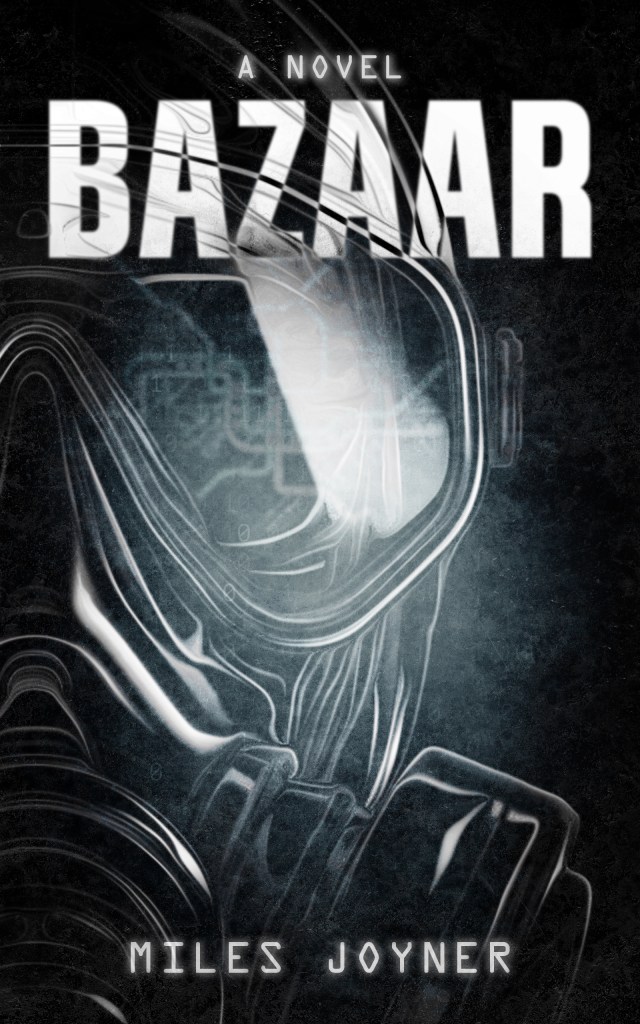


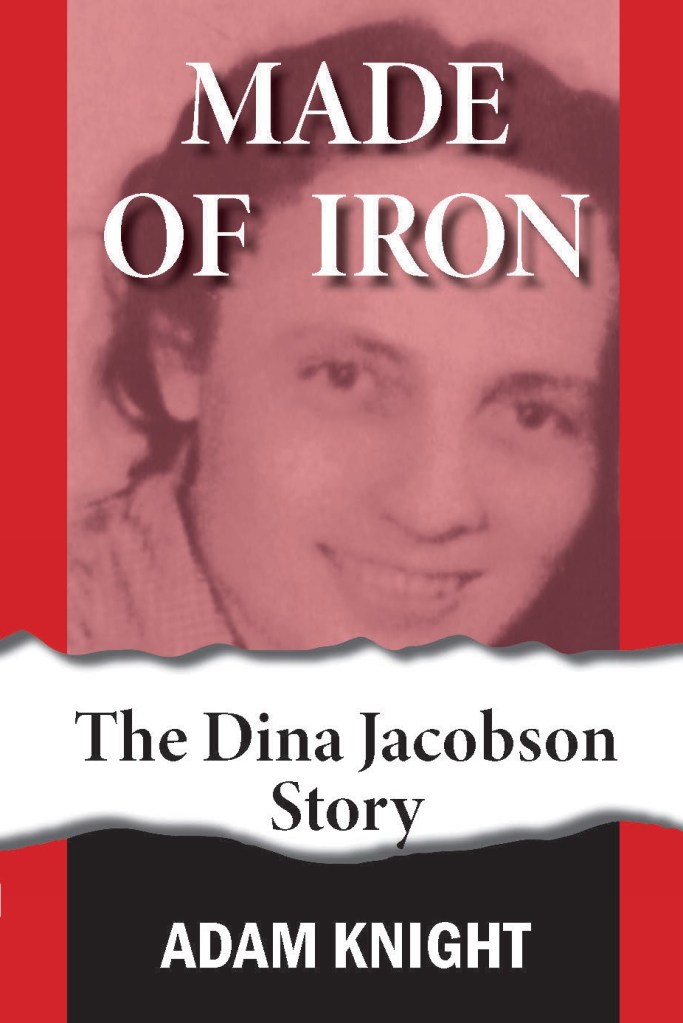


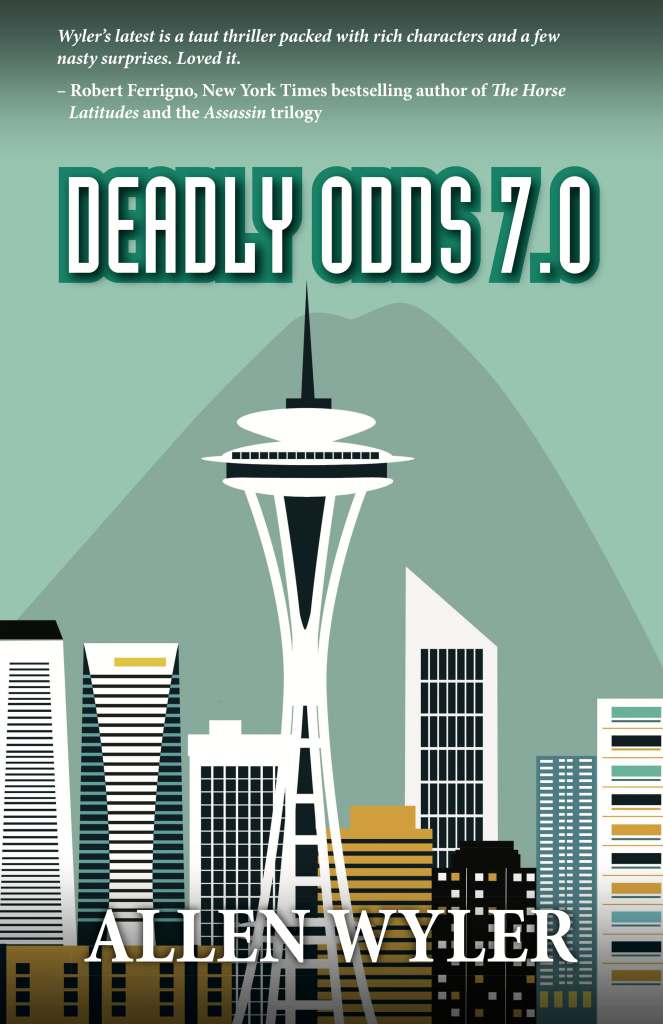


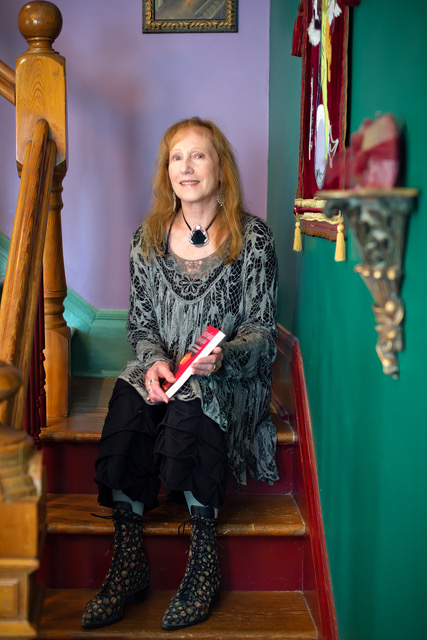


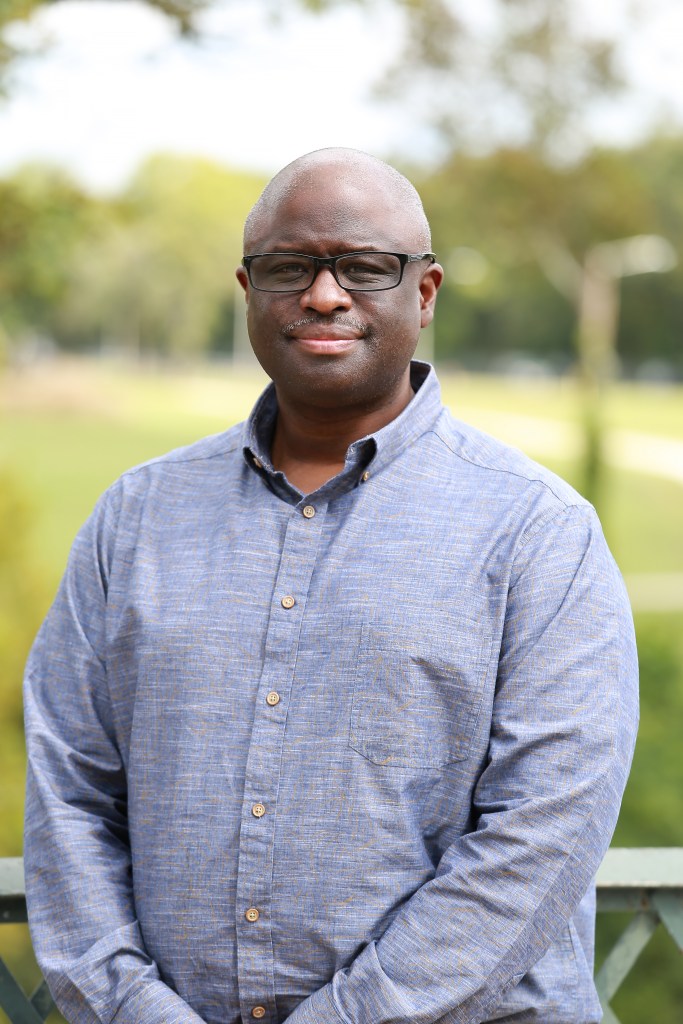


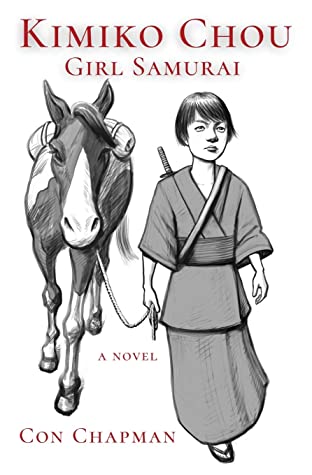
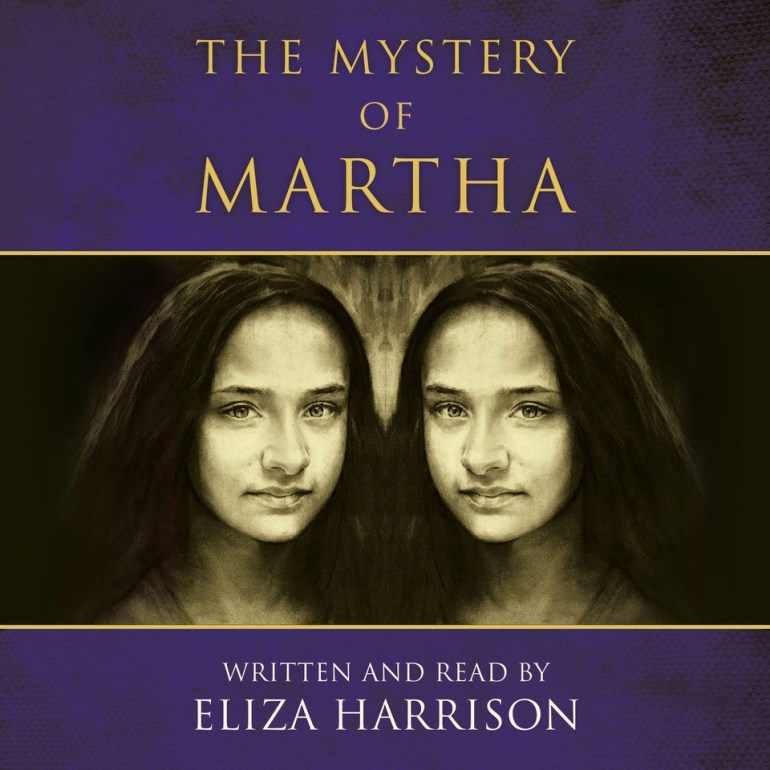


 Set amidst the physical and psychological landscapes of New Zealand’s southern hills and grasslands, Beneath Pale Water is a social realist and expressionistic novel that follows a triangle of three damaged individuals – a sculptor, a vagrant and a model – who have grown calcified shells against the world. Their search for identity and belonging leads them into dangerous territory that threatens both their sanity and lives. As their protective shells crack they are left vulnerable – both physically and emotionally – to the high country winds and their own conflicts that, ultimately, might free – or destroy them.

 K.M.Mackmurdie has always preferred fantasy lands to reality – and it only took her twenty five years to bring her daydreams to life.
 Since the beginning of human settlement, a lot of people came up with ideas, philosophies, beliefs, experiments, research, redesigning of thoughts, talents, and surveys to bring myths to reality.
 The Reading Bud