Welcome to TRB Lounge. Today, I’d like to welcome J.J.N. Whitley, author of The Orichalcum Crown, for an author interview with The Reading Bud.
About The Author
J.J.N. Whitley
J. J. N. Whitley is a licensed attorney and proud cat-dad. His time in Okinawa sparked a love for anime and JRPGs, and living in Australia did the same for sports.
Welcome to TRB! Could you provide our readers with a personal introduction beyond yourofficial Author Bio?
Sure. I’m JJNW (Juh-jin-wuh). I introduced myself as that one year in drama class, and the name stuck. One year for Halloween I told a friend I was JJNW’s ghost, and that stuck too.
I’m naturally fidgety and always itching to work on the next project, whether it’s something I’m writing, playing or watching. So when I was diagnosed with ADHD last year I thought it explained a lot.
Beyond the blurb, can you share a unique aspect or background detail about your book’s setting or characters?
One major detail is the prevalence of gods. The oft aloof All-Mother is the literal mother of Athena and one of her sisters. The original emperor runs a brothel just down the mountain. Even when they’re not directly involved in the plot, their shadows loom large.
Every book begins with an idea. What was the initial inspiration that led you to write this particular story?
Funny enough, it came from a lack of inspiration. I realized that while I’d been working on existing projects for several years, I hadn’t come up with anything new in a long time. I started with the central idea of exploring the relationships of a royal family with an aging emperor on the decline and let it flow from there.
Fantasy often tackles profound themes. What central message or theme do you hope readers will take away from your book?
The initial theme was about the weight of leadership. Heavy is the head that wears the crown and all. But, despite the best intentions, that head is still human and prone to err. As the story evolved, it also tackled the theme of feeling like an outcast even in places where you’re supposed to be loved.
Of all the characters in your book, is there one you feel particularly close to? Why?
As much as I love Athena, I’d have to say Makoto. At her core, Makoto is someone who believes love must be earned and is almost always at risk of being lost. She wants nothing more than to be loved without needing to perform but is terrified of her authentic self being rejected.
There are elements of that I relate to. My favorite line in the book comes from her conversation with Ephraim in the garden and came right from my own heart.
How do you approach character development in a fantasy setting to ensure they are relatable to readers?
By grounding key character traits and relationships in reality. A handful of examples.
Athena being a protective older sister comes from her strained relationships with her parents. Dad is busy running the empire, and Mom is too busy being a god to care. So, she takes it on herself to make sure the little scamps are cared for.
Olive’s love of art stems from Athena’s encouragement. Now it helps her feel connected to a sister that’s no longer around.
Makoto and Ephraim are so close, because they met at a time when they each needed friendship. She needed a friend to make her feel safe in a new environment, and he needed a friend to deal with the grief of losing his parents.
When the character’s core feels grounded, their development comes naturally. Even in the face of fantastical elements.
What served as the primary inspiration for your characters? Were they from existing myths, personal experiences, dreams, or something else entirely?
Once I decided on the initial premise of a royal family, I had to start filling out the ranks. While some characters, like Ephraim and Klaus, are unique to this story, several others are from other ideas that never went anywhere. This includes major players; such as Athena, Makoto and Reina. It’s why I often refer to this story as my Island of Misfit Toys.
How long did the process of writing this book take from inception to completion?
About six years off and on. I had several drafts that started and ended in different places. I’d take breaks from writing or to work on other projects before coming back to tinker with it some more. The first idea started around February, 2020 when I was walking the track at the gym.
Are there other stories or fantasy worlds you’re currently developing?
Absolutely. One of them is a story of people trapped in a video game, so it’s a hybrid science fiction story as well. Another takes place in a world my friend made. And another is small town Indiana but with a little dash of magic.
What attracts you to the fantasy genre specifically? Do you explore other genres as well?
I usually stick with fantasy but include other genres as part of the work. I love that fantasy has no limits and can encompass other genres. You can still write romance, horror, comedy and drama within a fantasy setting.
When did you first realise you wanted to be a writer? Was the journey straightforward, or did you face challenges along the way?
My fourth grade teacher, Mr. Kolp, had a mandatory journal writing period. I would write stories based on shows I was watching; like Dragon Ball or Pokémon. Had so much fun that I kept doing it. There’ve been a lot of challenges. Self-doubt, low sales and all that. But, here we are still doing it because I love it.
Can you describe your typical writing routine?
It usually goes one of two ways. I’ll either have a flash of inspiration and starting writing a scene on my phone until the scene ends or I get stuck.
Alternatively, I’ll sit at my computer and re-read the last few paragraphs to get back into the scene. I’ll see it play out in my head and transcribe it as best I can. If I get stuck, I’ll go for a walk and think through it and hopefully get unstuck.
Editing is a crucial part of the writing process. How do you approach revisions and self-editing in the context of a fantasy narrative?
I try to note what’s missing or inconsistent in a draft when I’m reviewing it. If a character mentions something that’s from a previous draft then it needs to be cut or reworked. Likewise, if someone acts in a way they normally wouldn’t there needs to be a good reason for it or else it’s gone.
In addition, if there are elements of the plot or characterization that are lacking or not featured at all then I note where they should be inserted and rework those moments.
With the growing popularity of audiobooks and multimedia adaptations, have you considered these formats for your work?
I haven’t looked into audiobooks at this time, but I’d love one. I think it would be really cool.
I’d be ecstatic if someone wanted to adapt Orichalcum into a show, movie or game but I’m not holding my breath yet.
If you had to describe your writing style in three words, what would they be?
Talkative but violent.
What tools or methods do you prefer for writing—computer, typewriter, voice recording, or traditional pen and paper?
My go to is the notes app on my phone. That way I can write in just about any situation. But when I need to grind out some pages or editing, then I have to sit at my computer. Every now and then I do enjoy hand writing a few pages.
Could you share five books or authors that have influenced your writing, especially within the fantasy genre?
The Harry Potter series is a big one. I know I read a lot as a kid, but it’s the first time I remember being sucked into another world and not wanting to leave.
Lord of the Rings and Warriors as series with their own mythologies and large casts of characters.
I read Mistborn a few years ago, which helped a lot in developing the magic system of another story.
While not a book series, I’d be remiss if I didn’t include the Trails series for its world building and character writing.
How do you tackle Writer’s Block when working within the expansive boundaries of fantasy?
A couple different ways. If a particular sentence is giving me trouble I’ll write a very basic to the point sentence, put it in brackets and move on with the paragraph.
If it’s the start of a scene or story, I’ll try hand writing and just seeing what happens. I did that with one story and a character I hadn’t previously imagined showed up and changed the whole ding dang thing.
If it’s a big picture element, I’ll play around with different versions of it and discuss it with people who know the story.
What piece of advice would you offer to budding writers, especially those looking to venture into fantasy?
Number one is to write. It’s the cliche answer, but your idea will always be just that until you write it down.
Number two is be flexible and willing to adapt. Sometimes plot threads and characters don’t go where you initially imagined, and that’s okay.
Last is to have a “why guy”. Someone who knows the story about as well as you do who you can bounce ideas off of. Regardless if they like the new idea or not, their job is to ask why a new direction is a good thing. The process of explaining it will generally show if it’s a passing fancy or something with deeper roots. Then you can have a good faith discussion about it.
Thank you, author Whitley, for taking the time to answer our questions and for all your insightful answers!
About the Book
The Orichalcum Crown
Makoto lost her mother to a battle she can’t remember before being adopted into the Kauneus Empire’s royal family. Upon her eighteenth birthday, she receives her mother’s necklace from the emperor. Makoto’s memories slowly return, haunting her with visions of her lost sister and her mother’s murder. She is torn between the family and answers awaiting her across the sea and the relationships with her family, best friend, and his handsome brother. Makoto fears returning home will cast doubt upon her loyalty to the emperor and sever her from the family. After all, Kauneus has no need for a disloyal princess. Makoto’s eldest adoptive sister, Athena, remains banished from Zenith Palace for uncovering the emperor’s secret bastard. She is visited by her former dragon uncle, who shares a rumor that the emperor will be assassinated during the annual ball. Athena has no choice but to break her exile to save her father. Returning home risks death, but she’ll pay any price for her family’s safety. As night falls upon the ball, lurking shadows and hidden agendas threaten the empire’s fragile peace. Makoto and Athena must navigate the delicate lines between loyalty and betrayal and learn what they are willing to sacrifice for freedom, truth, and family.
If you are an author and wish to be featured as our guest or if you are a publicist and want to get your author featured on TRB, then please get in touch directly by e-mail at thereadingbud@gmail.com
Welcome to TRB Lounge. Today, I’d like to welcome Alison Bellringer, author of Whisper: Book One, for an author interview with The Reading Bud.
About The Author
Alison Bellringer
Alison has been writing short stories to share with friends and family for many years and always enjoys exploring her creativity when putting pen to paper, so she is excited to have the opportunity to share her love of writing with others through the art of publishing. Alison loves spending time with her pet dog, a Labrador x Huntaway called Smoky, teaching her tricks and taking her for walks. She lives in a small town in New Zealand near many beautiful parks and beaches. Alison has been playing trombone since about 2010, euphonium from mid-2019, and always likes getting together with a few friends to ‘make a joyful noise’ sharing music. She also enjoys a bit of freelance photography when she gets the chance, especially if it involves taking pictures of sunsets.One of her books, The Bronson Escapades, is a Silver Recipient of the Mom’s Choice Awards® honorary seal of excellence, and The Wolf Cub is a 2nd Place winner of the Royal Dragonfly Book Award Competition of 2024 in both the ‘Education’ and ‘Coffee Table & Gift Books’ categories, in addition to obtaining Honorary Mention in several others: Best Cover Design, Children’s Chapter Books, Middle Grade Fiction, and Animals/Pets (a complete list of results can be found on the Story Monsters Book Awards website). More recently, The Wolf Cub received the Bronze Medal for the ‘EBook Pre-Teen Fiction’ category in the 2025 Moonbeam Book Awards. Alison’s 2024 trilogy titled Whisper, Lucas, and Escape have also been presented with the NAPPA Award winning seal.
Welcome to TRB! Could you give our readers a personal introduction beyond what’s mentioned in your Author Bio?
Everyone in my immediate family have been avid readers for a long time and my three older siblings and I were all homeschooled using a very literacy-based program, which means there were always plenty of books lying around the house whenever we wanted to read something. The style of each author that we had literature from was quite varied, so the range of material available to us covered quite a number of different topics or genres, including early-readers to more in-depth novels for older children or young adults.
As a result of this widespread exposure to books from such an early age, it would be reasonable to assume that my initial interest in reading naturally contributed toward my notable passion for creative writing. This pursuit has only grown stronger ever since penning my first little story and I have now been writing children’s fiction for at least twenty years, with several later ones actually being professionally published, including Whisper (Book One) and the rest of the trilogy.
Children’s books often come with vibrant illustrations and settings. Can you share some background or details about the world or characters of your book that might not be immediately obvious?
At this point, none of my children’s books contain illustrations, other than what may be on the front cover. I absolutely love leaving the visual aspect up to each individual reader to interpret as they wish because they would all have a slightly different idea about exactly how each character looks, and what distinctive impression or feeling various settings invoke for them in particular. My writing style is usually quite descriptive and several independent reviewers have commented about things like how they’ve been drawn right into the book’s plot, could easily identify with the main character or topic being touched upon, or vividly able to picture different scenes in their mind’s eye and feel as if they were there in person.
Every children’s book carries a spark. What was the moment or idea that inspired this story for you?
Unfortunately, more and more children are facing similar problems in the real world to what my fictional character endures at the tender age of five. Initially, this little girl is a victim of domestic abuse, and I wanted other children to be able to relate to her story and have hope that even extremely difficult circumstances can be overcome if the right support is in place to help them get through it.
In actual fact, a friend of mine read this first manuscript and suggested that the story could easily be turned into a series, with the central focus switching between some of the other main characters and filling out more details about their own lives, making each one even more relatable and compelling overall. I readily agreed with this idea and after a bit of thought and time to consider, fitted together parts two and three, with certain scenes overlapping some of those already covered in Whisper, only pictured from a different character’s point of view.
Children’s literature often imparts valuable lessons. Is there a particular message or theme in your book that you hope resonates with young readers?
I hope readers are able to learn valuable life skills as a result of picking up one of my books and that my writing will encourage more in-depth discussions about different subjects, both within and out of the classroom. As a simple example, because a lot of my titles include some form of basic animal care as a key part of the story, I would love to hear directly from children who have gained new insight or a deeper understanding of how they could look after their own pets with a greater amount of awareness or sensitivity. Another example would be for readers to show more empathy toward others, especially when superficial differences occur, and being more mindful when they don’t know what personal struggles or battles someone else may be facing beneath the surface.
Among the characters in your book, is there one that holds a special place in your heart? Why?
My favorite character is Lucas; the titular character of the second book in the trilogy. Without giving too much away, he is one of the two kind-hearted people who took the vulnerable Britney in after she flees from an abusive home (which takes place in Whisper). I really enjoyed being able to delve more deeply into Lucas’ backstory as a young orphan and further developing this character’s journey as he makes the distinct transition from being a runaway himself and then later becoming the main guardian and protector of a similarly traumatized little girl.
Crafting characters that resonate with young readers can be a unique challenge. How do you approach character development to ensure they’re both engaging and relatable?
Apparently this aspect of writing develops very naturally for me, as I hardly ever have to intentionally think about this sort of thing beforehand, or even as the story progresses. It is often only once I’ve finished the primary draft that I am able to take a figurative step back in order to see the bigger picture and can then pinpoint the fundamental core values or foremost attributes of each character, making slight adjustments if anything needs improving or could be expanded upon.
One thing authors could do to assess whether or not a particular character is sufficiently engaging or relatable is to ask themselves a series of questions about how the character has been portrayed. For example, do they experience a believable combination of real human emotions? Does the character have an interesting backstory or achieve something of notable worth over the course of the narrative? What is something new that the character has learned about themselves or someone else by the end of the book? Have they changed their opinion or view of something that was previously misunderstood? What would you have done in the character’s situation? While readers may not have to like every character personally, it is still important that they are able to connect with them in some way and can at least have a general understanding of who they are or what it is about the character that makes them convincing enough to include as a meaningful part of the story.
Was there a specific event, memory from your own childhood, or something else that served as the cornerstone for this book?
Not that I’m aware of. My books are not generally based on real people or specific true-to-life scenarios, but on a foundational aspect, they are depicted quite strongly with a sense of realism rather than being overly steeped in fantasy or make-believe. For Whisper, I wanted the main topic, or topics, to be something a little more challenging or thought-provoking than any themes I had attempted before with my earlier works. While the precise language being used has been deliberately chosen to remain suitable for a middle-grade audience, it does still deal with different elements regarding domestic abuse, survival, overcoming childhood trauma, and navigating complex family relationships.
How long did it take you to bring this story from concept to the final published book?
As I’ve just mentioned in answer to an earlier question, there was a bit of a gap between finishing off Whisper as book one and until the time I really started on the rest of the trilogy, but once I’m ready to get going, the physical writing of each manuscript never takes very long to complete. I generally like to get each draft to a level I’m pretty satisfied with before setting it aside, however many read throughs that requires, but I would generally revisit the story and give it a final polish prior to submitting any new material to my publisher.
Are there other tales or characters you’re currently working on for young readers?
I am working on a new series with my publisher at the moment which will likely consist of several consecutive stories each featuring the same central characters. The Horses of Saddlers Ranch is my take on the classic ‘horse-loving, pony-mad teenager concept’ and the bonds that they form with these majestic, four-legged animals. Each subsequent book is titled after a different horse, and centers around the lives of Coral Johnson and her two best friends as they have various adventures on her family’s ranch and discover the unique personalities of each new animal. Cloud kick-starts the series and came out during mid-2025, and the second book, Golden Haze, was released in early October. Book Three currently has a release date set for January 2026 and I am extremely hopeful that there will be a few more instalments yet to come even after that.
This series is also aimed for a similar middle-grade audience, or 9-12 age group, as last years’ trilogy, with underlying themes of treasuring close friendships (regardless of any starkly contrasting attributes), behaving responsibly and accepting the often-unexpected consequences of different actions, problem-solving, and overcoming various other challenges in the characters’ daily lives. It is proving to be a fantastic new series, suitable for horse or animal lovers alike, with the chief focus of each book based on offering a more convincing portrayal of how difficult ranch work can be in the real world.
What draws you to writing for children specifically? Do you ever dabble in other genres or age groups?
My main focus as an author is to create engaging chapter books for children who are able to read simple plotlines on their own, continuing to help them grow in confidence and learn about real-life issues, even within fictional settings. Similarly, a long-term goal for my writing is to present younger readers with a wider range of material which illustrate high moral standards and assist those children to personally embrace these traits in their own day-to-day lives. It has never been about the number of sales made, but rather, how many people I can reach in a positive way who will then come away from their reading experience feeling encouraged or more inspired by the underlying messages of hope found in most of my books.
Children’s middle-grade fiction is still one of my favorite genres to read, even though I’m no longer in that age group, and my stories are likely a tangible reflection of that. I especially enjoy the ones about animals, so it seemed perfectly natural for me to adopt a similar sort of approach with my own writing. I do, however, have plenty of ideas for some adult novels that I would be keen to try my hand at in the not-too-distant future, but I am uncertain exactly when that will happen or how long it might be before I’d be ready to share them with anyone else…
Can you recall the moment you decided to write for children? Was it a straightforward path or were there twists along the way?
I don’t think this was ever really a conscious decision so much as a natural leaning toward writing in the genres that I have always enjoyed reading anyway. Crafting new stories for children has long been the direction that has inevitably drawn me in, and it seems the most fitting option considering my more long-term goals and some of the driving factors behind why I keep coming up with fresh material for this age group in particular.
Could you share a bit about your writing routine, especially as it pertains to crafting stories for children?
I have no regular time set aside specifically for writing, as it usually just depends on whenever the appropriate incentive strikes. I also like to mix it up with my other hobby of photography so that I’m not always doing the same thing every week.
What most often seems to happen is a potential new title will pop into my mind first and then I’ll gradually fill out more of the corresponding plotline or additional details as I write, sometimes with slightly unexpected results. I generally prefer to just go with the flow and see where it takes me rather than risk hindering my creativity too much by having any predetermined criteria, such as its exact length when finished or deciding how many chapters the story is going to have in advance instead of allowing it to fit together more naturally. I do have quite a long list of ideas though, which is where I will note down any sudden bursts of inspiration for safekeeping until I am ready to select the next most pressing title that is clamoring for attention and actually begin the process of writing out the entire original draft so that it’ll be ready for any future touch-ups to be incorporated as needed.
Editing stories for young readers has its own set of considerations. How do you approach the revision process to ensure the narrative is both engaging and age-appropriate?
There are a number of issues I keep an eye out for during the final editing stage. One key aspect of this process is to make sure that the vocabulary is challenging enough to test and grow readers’ skills, but not so difficult that it is no longer manageable or would detract from their overall enjoyment of the story as a whole. I generally go through each manuscript multiple times after the initial draft, and one reason for that is to help minimize the potential for readers to trip over unusual words or phrases if all it takes is a simple reordering of words, or some other quick fix, that would make it flow off the tongue just that much easier. Another purpose for doing this is to avoid having too much repetition throughout the book (i.e. using the same word multiple times to describe something when I could easily just swap it out for another, which would keep the story sounding fresh while retaining more avid interest from the reader).
It has always come quite naturally for me to craft memorable scenes or characters that would be appealing to lots of middle-graders. Most of my books are best suited to children aged 8-14 who are confident enough to handle reading them on their own, but adapting read-alouds to slightly younger kids would also suit my style of writing quite well, and the short chapters make it far more practical to just read small sections at a time if they cannot cope with any longer sessions given all at once.
Given the increasing multimedia engagement for children, have you considered other formats like audiobooks or interactive apps for your stories?
Not really at this stage. I realize these formats are becoming more and more popular in this day and age, but to put it simply, the more editions or formats an author decides to use for their books the more expensive it can get to first have the initial production done, and then maintain effective marketing plans or promotional leads for every additional aspect relating to each title. I have not put much research into pursuing any of these options as of yet, so I may very well be mistaken, however even having just paperback and ebook editions available are great options to start with and seemed perfectly adequate to me when I first accepted the publisher’s contract.
In just three words, how would you describe your style of storytelling for children?
Immersive. Uplifting. Wholesome.
Do you have a preferred method or tool for writing – whether it’s a computer, typewriter, voice recording, or good old-fashioned pen and paper?
I have always preferred writing my stories by hand – hence the general inclusion of the ‘putting pen to paper’ reference in my author bio – but I’ve now come to the point where doing this and then having to type it all up afterward is simply too time-consuming and becoming no longer practical, largely because of this needless doubling up of tasks (especially as my manuscripts have been gaining in length and complexity as the years go by). I love copy-typing really, and used to just freeze up if there was nothing already there for me to work off, but more experience and consistent practice in constructing various plotlines and developing a range of different characters has made this much less of a problem area for me.
Are there children’s authors or specific books that have been influential in shaping your writing journey?
Nothing specific comes to mind. I have read a great many middle-grade books in my lifetime, as well as an array of adult novels, so it would be reasonable to assume that a lot of my writing is simply a general reflection of some kind of ‘storehouse’ of information that has been unconsciously accumulated over a significant period of time, especially as new titles or authors are discovered whose work is then enjoyed over and over again.
Writer’s Block can strike anyone. How do you navigate it, especially when crafting stories for a younger audience?
I believe this can be an issue for some writers, although I’ve always found it to be more of a problem depending on the mindset of the author concerned rather than anything else. For me, I occasionally get the misguided notion stuck in my head that the next scene or some upcoming dialogue is going to be more difficult to keep the story moving forward, so I end up just putting it off despite knowing from previous experience that whenever I decide to just sit down and get on with it the words usually just flow into place automatically, often without conscious thought. I also have quite a long list of potential titles or topics to include in future stories, so coming up with new material to write about has never been much of a challenge for me either.
For those aspiring to write for children, what advice would you share based on your experiences?
Just keep trying! It can be a rough road, full of potholes and bumps along the way, but I think it’s extremely important for authors to be able to write about topics that inspire them, or things that they’re passionate about, and can really let that shine through by staying true to themselves. Write what you know, but keep challenging yourselves in new ways to get better at your craft, so always set achievable goals to aim for. My last piece of advice would be to not let anyone push you around – pursue the vision which you have for your own book and then tirelessly search for those who will help you get there, rather than limiting your creative freedom by sticking it in a box or restricting yourself only to certain areas by attaching labels that you can’t break out of if your skillsets change when you continue to mature as a writer.
Thank you, author Bellringer, for taking the time to answer our questions and for all your insightful answers!
About the Book
Whisper: Book One
Britney is a young, extremely malnourished child, who comes from a poor family with an abusive father. Her mother does everything she can to protect her daughter from her husband, receiving the brunt of the aggressive beatings herself. The girl barely speaks, afraid of being overheard by the wrong person, and the only words she knows are the few repeated words her mother uses to calm her after a fight. A total of three words in all, namely – Whisper, Britney, and Ma. There is a very private, sheltered spot in the nearby forest which Britney uses as a place to hide away if ever her mother has to spend the day walking into the nearest town to purchase supplies or to trade goods. They have discreet, non-verbal signals which they use to keep the area hidden and make sure that Britney is secure (far away from Pa’s prying eyes). On one such day, Britney hears unusual sounds and is terrified that her father has found out about their system, but the surprise turns out to be just a lonesome little puppy. The girl quickly becomes friends with the stray, instantly joining forces in their solitude, only ever meeting in the secret place where they share such a deeply silent, unspoken bond. This continues until Ma helps her only child run away for good, tearfully leaving Britney to fend for herself in the best way she knows how. The adoring puppy (promptly being referred to as Whisper) unexpectedly follows the girl, and together they set off on a journey that will forever change their lives…
If you are an author and wish to be featured as our guest or if you are a publicist and want to get your author featured on TRB, then please get in touch directly by e-mail at thereadingbud@gmail.com
Welcome to TRB Lounge. Today, I’d like to welcome S.A. Sterling, author of AWAKE: Notes from the Quiet Hours, for an author interview with The Reading Bud.
About The Author
S.A. Sterling
S.A. Sterling writes about real life: the quiet struggles, late-night thoughts, and moments that push us to grow. She’s lived across oceans, taught languages for years, and met women from all walks of life who share one thing in common: the desire to keep showing up, even when life gets messy.
Her latest book, AWAKE: Notes from the Quiet Hours, was born from sleepless nights and honest reflection. Before that, she wrote Ride On!—the story of Dame Sarah Storey’s extraordinary journey of resilience—and several books designed to help women navigate everyday life with more clarity and courage, including Executive Functioning Skills for Women with ADHD, The 369 Manifestation Journal, and The Women Rising Strong 2024 Workbook.
She lives in northern Italy with her husband, where she teaches, writes, and keeps a pot of lemon water on her desk for the early hours that refuse to sleep.
Welcome to TRB! Please give our readers a brief introduction about yourself before we begin. We’d love to know beyond what your Author Bio says about you.
I’m someone who’s learning to make peace with imperfection. I live in a small Italian town surrounded by mountains, where I teach languages, write, and try to balance too many notebooks and not enough hours of sleep. I’m a mother, a wife, a sister, and a woman still figuring out how to be all of those things without losing myself. Writing, for me, is how I stay honest.
Beyond the blurb, could you delve into some unique aspects or pivotal moments from your book?
Each page was written in real time, during sleepless nights between 2 and 5 a.m. Nothing was planned. I simply sat down and wrote what was true in that moment. Sometimes grief, sometimes humor, sometimes calm. The uniqueness lies in its immediacy. AWAKE isn’t about sleep, it’s about what surfaces when the noise quiets down: aging, motherhood, marriage, identity, and the small things that hold us together when everything else feels uncertain.
What drove you to explore this specific theme?
Insomnia became a doorway. I stopped fighting it and started listening to what those hours were trying to tell me. I realized that sleeplessness mirrors midlife, that stage where we can’t hide from ourselves anymore. The book’s message is simple: you’re not alone in your wakefulness, in your restlessness, in your questions.
What served as the catalyst for this one?
It started with frustration. I couldn’t sleep, and all the advice —magnesium, herbal teas, no screens — wasn’t working. One night I opened my notebook and typed a few lines just to release the noise in my head. That became the first “night.” Then came another, and another. Over time, it became a ritual, a way to process my changing body, relationships, and life.
How long was the journey from concept to final version?
About two years. I didn’t plan it as a book at first; it grew naturally from those nights. The editing process took several months after that, turning fragments into a cohesive journey.
What are your future aspirations as a writer?
I want to keep writing books that make readers feel seen, especially women in midlife. I don’t aim for perfection or grandeur, just truth. In five years, I hope to have published more works that explore the quiet transformations we rarely talk about.
Are there other topics or projects you’re currently working on?
Yes, several. I’m writing a memoir about body image, belonging, and learning to stop performing for acceptance. I’m also expanding my Women Rising Strong platform, where I share stories of resilience and empowerment. Alongside that, I’ve resumed my weekly newsletters, where I write about midlife, creativity, and personal growth. And I’m working on a new book about self-reinvention for women over 50: how we can redefine purpose and possibility in this next chapter of life.
Have you ever been tempted to venture into fiction?
Yes, many times. But even when I try, reality sneaks back in. My writing always starts from something true: a conversation, a feeling, a memory. Maybe one day I’ll write fiction, but it will probably still sound like real life.
Can you recall the moment you realized you wanted to be a writer?
I don’t think it was one moment. Writing was always there: poems, letters, journals, scraps of thoughts. But it became serious when I understood that writing helps me make sense of things. It wasn’t an easy path; there was doubt, comparison, rejection. But each word felt like coming home.
Describe your writing process.
I write early in the morning or in the middle of the night, when the world is quiet. I keep lemon water or tea next to me and write in bursts: no outline, no plan. Later I come back to shape it. It’s less about discipline and more about showing up for myself.
Outside of writing, do you have another profession?
Yes, I’m a language coach. I teach English, Italian, and Russian to adults and teenagers. Having lived across oceans and learned seven languages, I’ve been able to meet women from many walks of life, each with her own story, accent, and way of seeing the world. Teaching keeps me close to real conversations, the kind that remind me how language isn’t just about words. It’s about who we are, and how we connect. That understanding shapes everything I write.
Given the theme of your book, could you recommend other reads with similar ideas?
Two come to mind: The Year of Magical Thinking by Joan Didion, for its quiet honesty about grief and resilience, and I Am, I Am, I Am by Maggie O’Farrell, for its raw reflection on the body, mortality, and what it means to stay awake to life. Both explore how awareness, even painful awareness, can lead us back to meaning.
In non-fiction, are there authors who influenced your approach?
Joan Didion, Anne Lamott, and Cheryl Strayed have shaped how I see the power of truth on the page. They write with honesty, vulnerability, and restraint. They turn ordinary life into something worth sitting with. I also connect with Maggie O’Farrell’s way of writing about the body and memory. All of them remind me that raw truth often says more than polished perfection ever could.
How do you handle writer’s block?
I don’t call it a block anymore. It’s usually exhaustion or fear. When words stop coming, I step away. I cook, walk, or play piano. Then I come back. Writing always returns when I stop forcing it.
How do you balance research and narrative?
Since AWAKE is rooted in lived experience, research wasn’t formal. It came from observing, reading about perimenopause, and listening to other women. I try to weave those truths naturally into the narrative, without turning it into a lecture.
How do you handle criticism or differing viewpoints?
I remind myself that readers bring their own experiences to every book. Not everyone will connect, and that’s okay. I don’t write to please. I write to tell the truth as I know it. If someone disagrees, at least it started a conversation.
What advice would you give aspiring nonfiction writers?
Write what keeps you up at night, literally or metaphorically. Don’t wait for it to sound perfect. Tell the truth, even when it feels uncomfortable. The right readers will find you not because your story is flawless, but because it’s real.
Thank you, author Sterling, for taking the time to answer our questions and for all your insightful answers!
About the Book
AWAKE: Notes from the Quiet Hours
2:47 a.m. Again. For two years, she woke in the quiet hours—when the house slept, when the world felt suspended between night and morning. In that stillness, she began to write. AWAKE is a collection of sixty nights lived in real time: the hum of insomnia, the weight of perimenopause, the questions that surface at 3 a.m. when defenses are down. These pages don’t offer solutions. They offer presence. For anyone who’s ever felt alone in the dark hours, this book is company.
You can find AWAKE: Notes from the Quiet Hourshere: Ebook | Paperback
If you are an author and wish to be featured as our guest or if you are a publicist and want to get your author featured on TRB, then please get in touch directly by e-mail at thereadingbud@gmail.com
Welcome to TRB Lounge. Today, I’d like to welcome MJ Walker, author ofItalian By Default, for an author interview with The Reading Bud.
About The Author
MJ Walker
Margaret Walker is a teacher. She lives in Sydney, Australia with her family. Her first two novels His Most Italian City and Through Forests and Mountains were published by Penmore Press in the USA.
Welcome to TRB! Please give our readers a brief introduction about yourself before we begin. We’d love to know beyond what your Author Bio says about you.
Hi Heena,
I’m a teacher (almost retired). I have been reading and writing all my life and have had short stories published in Australia and the UK as well as two previous novels published by Penmore Press in the USA. They are His Most Italian City and Through Forests and Mountains.
Beyond the official blurb, could you offer us a unique insight or a behind-the-scenes glimpse into your book?
Italian By Default is based on my own story about trying to find my identity as an adopted person living with a husband (and his identical twin brother) who were crazy about their own Italian heritage. At the same time, it is about my adoption reunion. In 1960, I and my twin sister were adopted together to my parents. My sister is not interested in adoption. I left her out of the book so as not to cause her distress.
Evey book has a starting point. What was the spark or pivotal moment that inspired you to write this one?
Probably the death of my mother-in-law in 2000. Our house, which had been Italian anyway, became much more so because many of her belongings came to us.
Is there a core message or theme in your book that you wish readers to discover?
You are important regardless of the circumstances of your conception. God knew you before you were conceived.
Of all the characters in your book, do you have a personal favourite? What makes themspecial to you?
Polly’s friend Felicity, who was based on a lovely friend of mine.
How do you approach character development, ensuring they resonate with readers andfeel authentic?
I constantly have that person in front of me when I write. I forget about myself and become them.
What was the inspiration for this book? Was it an idea, an anecdote, a dream, or somethingelse?
I met my birth mother in 1989 but I didn’t meet my birth siblings until 2002. I’d say that frustration with that situation was my inspiration.
How long did it take you to write this particular book?
25 years. I kept writing during the adoption reunion and finally finished with the death of my birth mother in 2020. For example, after a family dinner or meeting or whatever, I would come home and write it up immediately. After that, it was just revision.
Are you working on any other stories presently?
Yep! I have at least 3 manuscripts I am hoping to have published one day, plus a fun one I am writing at the moment just to keep my hand in.
Why have you chosen this genre? Or do you write in multiple genres?
I am most interested in history, and character development in fiction. I also have a history blog, mwalkeristra.blogspot.com.
When did you decide to become a writer? Was it easy for you to follow your passion, or didyou have to make some sacrifices along the way?
I can’t stop writing. It’s cathartic for me, if I’m stressed or anxious. I don’t think it matters what you write or how you write. If you practise, you’ll improve.
What is your writing ritual? How do you do it?
I generally write every morning after I’ve walked the dog and had coffee.
Editing can be a gruelling process. How do you approach revisions and self-editing?
If I get stuck, it really helps to put the manuscript away for a few weeks, write something else, then return to the first one. Something I have also found invaluable is to have a manuscript professionally assessed. It is worth every cent.
With the rise of audiobooks and multimedia experiences, have you considered exploringthese avenues for your stories?
A lot of people I know read audiobooks while they’re driving. I haven’t got around to that yet. It’s expensive, but a friend of mine did it recently, and it really bought the book to life.
Lastly, if you were to describe your writing style in three words, what would they be?
Not too sure.
How do you prefer to write—computer/laptop, typewriter, dictation, or longhand with apen?
Everything, plus I always carry a notepad and pen in my bag.
What are your 5 favourite books? (You can share 5 favourite authors too.)
Jane Eyre by Charlotte Bronte, Madam Will You Talk by Mary Stewart, Exodus by Leon Uris, anything by Dickens. Crime? Ian Rankin, MC Beaton. She looks simple but under the surface, she’s very cluey. I love Bill Bryson’s style. He cannot write a dull sentence.
How do you deal with Writer’s Block?
Zone out and write anyway. Just sit down and write non-stop for 15 minutes.
What advice would you give to aspiring writers?
Join a writer’s group. My writers’ group is fabulous at all the things I’m bad at. I really need them.
Thank you, author Walker, for taking the time to answer our questions and for all your insightful answers!
About the Book
Italian by Default
AN ADOPTION REUNION – based on a true story – Meet Polly, her Italian husband Joe and his identical twin brother Cicero. Polly is adopted and wants to find her heritage, but the twins’ passion for Italy dominates her life. She gets more style than Gucci, more opera than Verdi and more pasta than she can eat. If this isn’t bad enough, Polly’s friends insist that she belongs where she is loved – safe and secure in her wealthy Sydney suburb. What should Polly do? She has met her birth mother, but not only will that lady refuse to discuss the past, she has barred Polly from ever meeting her siblings. Then one day Polly reads in the newspaper that her mother has been murdered. Or has she? Polly’s longed-for adoption reunion finally happens but not in the way she expects.
If you are an author and wish to be featured as our guest or if you are a publicist and want to get your author featured on TRB, then please get in touch directly by e-mail at thereadingbud@gmail.com
Welcome to TRB Lounge. Today, I’d like to welcome Veronica Preston, author of Book of the Devil: Genesis, for an author interview with The Reading Bud.
About The Author
Veronica Preston
Veronica Preston is an author of spiritual fantasy fiction whose debut novel, Book of the Devil: Genesis, reimagines the myth of Iblis through a deeply philosophical and emotional lens. A lifelong lover of books, Veronica draws inspiration from sacred texts, spiritual philosophy, and her own reflections on morality, free will, and destiny.
Welcome to TRB! Could you provide our readers with a personal introduction beyond your official Author Bio?
I grew up surrounded by books and would often lose myself in their worlds. My first “real” job was at a library, and I loved everything about it — the smell of old pages, the towering bookcases, and the quiet, almost sacred atmosphere. These days, I gravitate toward non-fiction, which has deeply influenced my spiritual fantasy debut, Book of the Devil. Outside of writing, I love traveling and experiencing different cultures, foods, and traditions. At home, I share my space with four rescue cats who keep life lively, and I’m always on the hunt for new restaurants to try — I’m a true foodie at heart.
Beyond the blurb, can you share a unique aspect or background detail about your book’s setting or characters?
The blurb tells you the shape of the story, but not its pulse. Book of the Devil: Genesis was never meant to be just a retelling — it is the whisper of an ancient voice speaking through a modern pen. While I wrote, scenes would appear unbidden, as if the world of Nahar was pulling me inside it. One of the most vivid moments — when Iblis tears through the fabric of reality and stumbles into another dimension — wasn’t planned at all. It came to me like a vision, carrying with it the awe and terror of a being who does not yet understand the power he wields. Those moments, born of instinct rather than outline, became the heart of the story.
One of the most unique aspects of Book of the Devil: Genesis is the world of Nahar itself. It’s not just a backdrop—it’s a living, breathing realm with its own laws, rhythms, and energy. The Jinn who inhabit it are born of smokeless fire, yet they carry the same moral struggles, loyalties, and flaws as we do. Iblis, in particular, is unlike any portrayal of the Devil you’ve read before—here, you meet him as a child, shaped by love, loyalty, and the quiet but inevitable tug of destiny. It’s a story that blurs the line between the mythical and the deeply human.
Every book has a starting point. What was the spark or pivotal moment that inspired you towrite this one?
I was at a crossroads in my life, questioning whether the choices I was making were right or wrong. That search led me into scripture—the Qur’an, The Three Testaments, and writings on the Jinn and Iblis, who had fascinated me since university. At the same time, I was absorbing works like The Four Agreements, Conversations with God, and The Power of Now. Those ideas began to fuse, and then—almost overnight—the story appeared in my mind, fully formed. All I had to do was write it down. I felt, and still feel, a burning desire to get this story out and I can’t explain why. That’s why I’m working on Book 2 as we speak.
Is there a core message or theme in your book that you wish readers to discover?
Yes. At its core, Book of the Devil: Genesis asks readers to reconsider what they think they know about good, evil, and the space in between. I wanted to explore the idea that the “adversary” is not always a villain in the traditional sense, but sometimes a necessary force—one that challenges, questions, and disrupts in order to bring growth or truth to light.
It’s a story about pride, obedience, love, and exile—but also about the cost of holding onto your convictions when the price is everything you value. My hope is that readers walk away not with simple answers, but with deeper questions about morality, faith, and what it truly means to stand for something.
Of all the characters in your book, do you have a personal favourite? What makes themspecial to you?
I would have to say Zahra is my personal favorite. She embodies the quiet strength I admire—spiritual, compassionate, and deeply attuned to the unseen. Zahra has the gift of foresight and the power to heal, yet she wields them with humility and grace. She is a moral anchor in the story, someone who can see beyond the immediate to the greater arc of fate. Her calm presence feels like a light in a world full of conflict, and her love is both gentle and unshakable. Writing her felt like channeling a soul who already knew the answers, even when everyone else was still searching. Though, in the book, Zahra has doubts too but her faith in God’s will is strong.
How do you approach character development, ensuring they resonate with readers andfeel authentic?
Honestly, for Book of the Devil, the characters came to me as naturally as the story did. But to ensure they truly resonated with readers, I dug deeper. I asked myself: What made them who they are? What shaped their beliefs, attitudes, and values? What kind of decisions have they made—and why? What drives them, and what do they fear? I created detailed character profiles, exploring everything from their backstories to their likes, dislikes, and education.
Writing Book 1 taught me just how much depth there is to character development—I was only scratching the surface when I began. Now I see that authenticity often comes from how characters interact with one another and whether those interactions feel true to who they are. Building that depth is a blend of knowing them intimately and allowing them to surprise you on the page.
What was the inspiration for this book? Was it an idea, an anecdote, a dream, or somethingelse?
I sometimes say it was “divine inspiration,” but in truth, the story arrived like a whisper from somewhere older than memory. It came unbidden, yet with a sense of inevitability—like it had been waiting for me to give it form.
Perhaps it’s because I have always believed in the sanctity of free will. The thought of another—be it man, spirit, or Devil—pulling the strings of my choices unsettles me. In scripture, it is said that we will stand accountable for our deeds, while the Devil, in the end, will wash his hands of us. That truth lingers with me: the burden of morality is ours, a gift and a trial from God.
This book became my way of exploring that responsibility. Beneath the story’s fire and shadow, I hope readers will feel the pull to question the forces that shape them… and to seek their own truth, no matter how hidden it may be.
How long did it take you to write this particular book?
Approximately 5 months.
Are you working on any other stories presently?
Yes—right now I’m working on Book of the Devil: Purgatory, the second book in the trilogy. In Genesis, Iblis’s story was about discovery—of himself, his power, and the divine will. Purgatory is about what happens when that power is tested to its limits.
The stakes are higher, the battles—both within and without—more dangerous. Love, loyalty, and faith will be pushed to breaking point, and Iblis will be forced to confront the cost of the path he’s chosen.
Why have you chosen this genre? Or do you write in multiple genres?
I think the genre picked me, honestly. I didn’t start out with a specific category in mind—this was simply a story I felt compelled to write for reasons I still can’t fully explain. As the writing unfolded, I realized it could fall under the fantasy genre, but it’s far from a traditional, action-heavy fantasy novel. It’s deeply spiritual, reflective, and mythic. For the next two books in the trilogy, I’ll remain in the spiritual fantasy space, but I’d also love to explore other genres—perhaps a drama loosely based on real-life events, and one day, even a dive into horror.
When did you decide to become a writer? Was it easy for you to follow your passion, or didyou have to make some sacrifices along the way?
I’ve known I wanted to be a writer since I was a little kid—I wrote my first short story in grade four and was hooked. But following that passion wasn’t straightforward. My family had other ideas for my future, so I pursued a career where I found success and fulfillment for many years. Still, there was always a quiet voice inside reminding me that I needed something to truly feed my soul. Writing kept calling me back. I’m fortunate to have a very supportive partner, and his encouragement was instrumental—not only in giving me the courage to step into writing, but also in helping me through the journey of bringing my first book to life.
What is your writing ritual? How do you do it?
I don’t have a fixed writing ritual—at least, not yet. For Book of the Devil: Genesis, the words came when they wished, and if I wasn’t tied to something important, I would sit and let them spill onto the page. If I couldn’t write in that exact moment, I made it a priority to return to the idea before it faded, capturing it while it still burned brightly in my mind.
Because this was my first book, I didn’t follow a structured routine; the process felt more like being visited by a story that insisted on being told. That said, I can already see the beginnings of a ritual forming as I move into Book 2—an evolving rhythm in how I approach storytelling, as if the act of writing itself is slowly teaching me how it wants to be done.
Editing can be a gruelling process. How do you approach revisions and self-editing?
I’m not sure how other writers do it, but I’m a big believer in the magic of a second—or even third—set of eyes. When you’re living and breathing your own story, you stop seeing the little things: the sneaky typos, the awkward sentences, or that one paragraph that made sense at 2 a.m. but reads like ancient code the next morning.
After about 100 pages, my brain waves the white flag, so I happily hand the manuscript over to a couple of trusted friends—one with an editorial background—who are brave enough to tell me the truth. For me, editing isn’t just fixing mistakes; it’s turning “almost there” into “I can’t stop reading.”
We don’t have to do it alone and it was actually a fun process for me. When it becomes mentally fatiguing, I just step away from it for a while. Having those second and third set of eyes has been pivotal in the development of book 2.
With the rise of audiobooks and multimedia experiences, have you considered exploringthese avenues for your stories?
Absolutely! In fact, I’ve already begun exploring that space. Book of the Devil: Genesis is in production as an audiobook, with a voice actor bringing Iblis to life in a way that feels both intimate and cinematic. I’m also experimenting with multimedia—book trailers, character art, and even narrated excerpts—to immerse readers in the world of Nahar beyond the page. My goal is to make the story an experience, whether you’re reading it, listening to it, or watching it unfold.
Lastly, if you were to describe your writing style in three words, what would they be?
Mythic. Philosophical. Evocative.
How do you prefer to write—computer/laptop, typewriter, dictation, or longhand with apen?
Laptop all the way. I love the freedom to edit, rearrange, and make a mess without crossing out half a page. That said, when inspiration hits and I’m not near my computer, I’ll quickly type it into the Notes app on my phone—just to capture it before it slips away. I’ve also contemplated making a big visual storyboard to hang on my wall, so I can see the entire story world at a glance and live in it while I write
What are your 5 favourite books? (You can share 5 favourite authors too.)
There are far too many to choose from, so I’ll cheat a little and pick five from different genres. Letting Go by David R. Hawkins (spiritual self-discovery), Change Your Paradigm, Change Your Life by Bob Proctor (personal growth), Memoirs of a Geisha by Arthur Golden (historical fiction), the Harry Potter series by J.K. Rowling (fantasy), and the Twilight saga by Stephenie Meyer (paranormal romance). Each one left its own mark on me in completely different ways.
How do you deal with Writer’s Block?
I give my mind a breather. I truly believe inspired ideas come when we sit in stillness and give them space to be heard. When writer’s block hits, I’ll turn inward—maybe meditate or simply sit with the question, ‘What’s next?’—and then deliberately step away. I might go out with a friend, take a walk, or do something completely unrelated to writing. The distance works wonders. Eventually, the answer always finds its way back to me
What advice would you give to aspiring writers?
I’m still very much on my own writing journey, but if I had to offer advice, it would be this: don’t wait for the ‘perfect moment’ to start—just begin. Let your first draft be messy, raw, and unapologetic. Read widely, write often, and don’t be afraid to step away when you need to recharge. And most importantly, trust that your voice matters, even if you’re still figuring out exactly what it sounds like
Every book begins with an idea. What was the initial inspiration that led you to write thisparticular story?
I sometimes say it was “divine inspiration,” but in truth, the story arrived like a whisper from somewhere older than memory. It came unbidden, yet with a sense of inevitability—like it had been waiting for me to give it form.
Perhaps it’s because I have always believed in the sanctity of free will. The thought of another—be it man, spirit, or Devil—pulling the strings of my choices unsettles me. In scripture, it is said that we will stand accountable for our deeds, while the Devil, in the end, will wash his hands of us. That truth lingers with me: the burden of morality is ours, a gift and a trial from God.
This book became my way of exploring that responsibility. Beneath the story’s fire and shadow, I hope readers will feel the pull to question the forces that shape them… and to seek their own truth, no matter how hidden it may be.
Fantasy often tackles profound themes. What central message or theme do you hopereaders will take away from your book?
At its heart, Book of the Devil: Genesis is about choice. The power we each hold to shape our path—no matter the forces, temptations, or voices that try to sway us. It’s about the weight of free will, the courage to question, and the cost of standing by one’s convictions. I hope readers leave with the reminder that light and darkness aren’t always external—they exist within us, and our decisions determine which we nurture.
Of all the characters in your book, is there one you feel particularly close to? Why?
I would have to say Zahra is my personal favorite. She embodies the quiet strength I admire—spiritual, compassionate, and deeply attuned to the unseen. Zahra has the gift of foresight and the power to heal, yet she wields them with humility and grace. She is a moral anchor in the story, someone who can see beyond the immediate to the greater arc of fate. Her calm presence feels like a light in a world full of conflict, and her love is both gentle and unshakable. Writing her felt like channeling a soul who already knew the answers, even when everyone else was still searching. Though, in the book, Zahra has doubts too but her faith in God’s will is strong.
How do you approach character development in a fantasy setting to ensure they arerelatable to readers?
Character development is tricky enough when they’re human—try doing it for a being made of smokeless fire. My first step was to give them a form so readers could connect with them. Since scripture, especially the Qur’an, often speaks in allegory, I asked myself what could represent smokeless fire in a way that felt true to the text yet vivid for the imagination. That question sent me deep into research until the right image emerged. Once they had a body, the rest was effortless—their personalities, flaws, and quirks just seemed to step into the story, as though they’d been waiting all along for me to write them down
What served as the primary inspiration for this book? Was it an existing myth, a personalexperience, a dream, or something else entirely?
If I had to name it, I’d call it divine mischief—an idea that arrived uninvited and refused to leave. The inspiration flowed as though it had always been there, waiting for me to give it voice. Perhaps it’s because I value my autonomy and bristle at the thought of unseen forces—like the Devil—steering my actions. I believe free will is a gift from God, and with it comes the responsibility to live ethically. Scripture tells us the Devil will one day wash his hands of us, absolved of wrongdoing, leaving only our choices to speak for us. That truth stayed with me. This book is my way of wrestling with that idea and, I hope, inviting others to seek their own
How long did the process of writing this book take from inception to completion?
2 years. Approximately 5 months to write.
Are there other stories or fantasy worlds you’re currently developing?
Yes—I’m deep in the creation of Book 2 in the Book of the Devil series, Purgatory. If Genesis is the origin, then Purgatory is the crucible. Iblis has matured from an impassioned youth into a warrior in God’s army, navigating the shifting tides between duty and doubt. The story delves into the forging of Hell—not as a place of senseless torment, but as a realm of purpose—and tests the limits of forgiveness, loyalty, and destiny. This world is expanding, its shadows lengthening, and I’m eager for readers to walk deeper into it with me
What attracts you to the fantasy genre specifically? Do you explore other genres as well?
I like to think the fantasy genre chose me. I didn’t set out with a label in mind—this story arrived fully formed in my head, and I simply followed where it led. As I wrote, I realized it fit into the realm of spiritual fantasy, though it isn’t the traditional action-heavy quest type. Fantasy allows me to blend the mythical with the philosophical, to weave worlds where divine questions meet human emotion. I do plan to stay in this genre for the rest of the trilogy, but I’m also drawn to drama inspired by real life and, someday, I’d love to explore horror. I suppose I’m a storyteller first, and a genre writer second.
When did you first realise you wanted to be a writer? Was the journey straightforward, ordid you face challenges along the way?
I’ve known I wanted to be a writer since I was a little kid—I wrote my first short story in grade four and was hooked. But following that passion wasn’t straightforward. My family had other ideas for my future, so I pursued a career where I found success and fulfillment for many years. Still, there was always a quiet voice inside reminding me that I needed something to truly feed my soul. Writing kept calling me back. I’m fortunate to have a very supportive partner, and his encouragement was instrumental—not only in giving me the courage to step into writing, but also in helping me through the journey of bringing my first book to life.
Can you describe your typical writing routine?
I don’t have a fixed writing routine—at least, not yet. For Book of the Devil: Genesis, the words came when they wished, and if I wasn’t tied to something important, I would sit and let them spill onto the page. If I couldn’t write in that exact moment, I made it a priority to return to the idea before it faded, capturing it while it was still in my mind.
Because this was my first book, I didn’t follow a structured routine; the process felt more like being visited by a story that insisted on being told. That said, I can already see the beginnings of a routine forming as I move into Book 2—an evolving rhythm in how I approach storytelling, as if the act of writing itself is slowly teaching me how it wants to be done.
Editing is a crucial part of the writing process. How do you approach revisions and self-editing in the context of a fantasy narrative?
For me, editing is where the world of Nahar sharpens into focus. I’m too close to the work while drafting—too deep in the fire—to catch every flaw. That’s why I lean on trusted second (and third) sets of eyes, including a friend with an editorial background. I’ll read through, refine what I can, then hand it off. Sometimes after 100 pages my brain goes cross-eyed, so having outside perspective keeps the magic intact while catching the cracks.
How do you tackle Writer’s Block when working within the expansive boundaries offantasy?
I don’t fight it. I step away. I believe ideas often arrive when we stop chasing them. I’ll meditate, sit with the question, “What next?”, then distract myself—walks, time with friends, something unrelated. Without fail, the answer eventually pushes through the quiet.
What piece of advice would you offer to budding writers, especially those looking toventure into fantasy?
Don’t be afraid to build a world that only you could imagine—and then trust your readers to step into it. Research deeply, write boldly, and remember: the first draft isn’t meant to be perfect, it’s meant to exist.
Thank you, author Preston, for taking the time to answer our questions and for all your insightful answers!
About the Book
The Book of the Devil
This isn’t a tale of horns and pitchforks. It’s a tale of questions, echoes, and exile. Book of the Devil: Genesis reimagines the Devil as Iblis—a being of fire, loyalty, and impossible choices. Born into a world of smokeless flame, Iblis is chosen to serve God, but he begins to question the nature of obedience, justice, and divine will. His rebellion is not out of vanity, but love, sorrow, and a desire to understand. As he rises through the celestial order, Iblis walks the line between sacred and profane, setting the stage for a fall that may be more holy than it seems.
If you are an author and wish to be featured as our guest or if you are a publicist and want to get your author featured on TRB, then please get in touch directly by e-mail at thereadingbud@gmail.com
Welcome to TRB Lounge. Today, I’d like to welcome P.S. Bartlett, author of HIRO-J: Energy, for an author interview with The Reading Bud.
About The Author
P.S. Bartlett
P.S. Bartlett (pen name), an award-winning author, was born on Valentine’s Day in Baltimore, Maryland, near the historic sites of Fort McHenry and Federal Hill. As the youngest of eleven siblings, she was surrounded by history and enjoyed cycling to explore these national landmarks with her friends during her childhood. She released her debut novel, Fireflies, in 2013 and has since self-published twelve books. During the pandemic, Peggy used her writing skills to freelance in copywriting, editing, and beta-reading, which helped her regain lost income and grow her freelance business. Collaborating with authors has become a fulfilling passion, as she enjoys helping others achieve their writing goals. She has also added publishing and social media management to her list of offerings to her clients. Alongside her literary endeavors, she loves reading, painting, drawing, and learning anything new. While writing and coaching other authors takes up much of her leisure time by choice, she treasures the moments spent with friends and family. Currently serving as a full-time marketing director, Peggy hopes to transition into a full-time writing career upon her retirement in 2026 and continue her work supporting other authors. “Always remember to go for what you want, no matter your age, because whatever makes you happy and fulfilled is always worth your time.”
Her motto: I’m taking a fantastic voyage. Won’t you join me?
Welcome to TRB! Could you provide our readers with a personal introduction beyond your official Author Bio?
P.S. Bartlett (pen name), an award-winning author, was born on Valentine’s Day in Baltimore, Maryland, near the historic sites of Fort McHenry and Federal Hill. As the youngest of eleven siblings, she was surrounded by history and enjoyed cycling to explore these national landmarks with her friends during her childhood.
She released her debut novel, Fireflies, in 2013 and has since self-published twelve books.
During the pandemic, Peggy utilized her writing skills to freelance in copywriting, editing, and beta-reading, which helped her regain lost income and grow her freelance business. Collaborating with authors has become a fulfilling passion, as she enjoys helping others achieve their writing goals. She has also incorporated publishing and social media management into her offerings for clients.
Alongside her literary endeavors, she loves reading, painting, drawing, and learning anything new. While writing and coaching other authors occupies much of her leisure time by choice, she treasures the moments spent with friends and family.
Currently serving as a full-time marketing director, Peggy hopes to transition into a full-time writing career upon her retirement in 2026 and continue her work supporting other authors.
“Always remember to go for what you want, no matter your age, because whatever makes you happy and fulfilled is always worth your time.”
Her motto: I’m taking a fantastic voyage. Won’t you join me?
Beyond the blurb, can you share a unique aspect or background detail about your book’s setting or characters?
I’m guessing a scientific institute that is secretly housing an alien being is pretty unique, but who knows? I suppose that’s subjective to the reader.
Every book begins with an idea. What was the initial inspiration that led you to write this particular story?
Sometimes, or rather, most of the time, I hear a voice in my head that starts getting louder. It starts telling me a story. This particular time, I thought of an ordinary person who is caught up in extraordinary circumstances. How Hiro joined the party is still a mystery. I started outlining and thought, how cool would it be to meet an alien being and make that ultimate connection—love!
Fantasy often tackles profound themes. What central message or theme do you hope readers will take away from your book?
That emotional intelligence is important to our survival, and that we love who we love, even if it happens to be an alien.
Of all the characters in your book, is there one you feel particularly close to? Why?
Definitely, Lana. She and I are very much alike—introverted extroverts. I believe she’s an INFJ-A personality type, just like me.
How do you approach character development in a fantasy setting to ensure they are relatable to readers?
I draw all my characters from life. Having been on Earth for a long time, I have met, known, and loved people from all walks of life. I’m very observant, much like Willie in the story, and I can quickly identify a character’s attributes and flaws.
What served as the primary inspiration for this book? Was it an existing myth, a personal experience, a dream, or something else entirely?
I honestly don’t know. I think I wanted to dispel the “Little Green men” from Mars myth and tell a story about people who were the exact opposite of what we’ve seen in the movies. Hiro is like a big, beautiful, sweet E.T. type of person.
How long did the process of writing this book take from inception to completion?
I started the book in late October 2024, if I remember correctly. I began three books within a few weeks of each other, but this one kept calling to me. As a writing coach and editor for other authors, my work kept me so busy that I had to schedule time to work on Hiro-J. All in all, it’s not a huge book, so it only took me about three months total.
Are there other stories or fantasy worlds you’re currently developing?
No, I’m going to stick with Hiro for a while. I’ve already started forming the plot for Book Two.
What attracts you to the fantasy genre specifically? Do you explore other genres as well?
My first novel, Fireflies, was a blend of fantasy and magical realism. I believe life is full of mystery, and we don’t always need to look to aliens, dragons, fairies, and vampires to find that magic. I believe that if we shut off our electronics, sit quietly in the world, especially in nature, for a while, and “touch grass,” as they say, we can feel the magic of the real world around us. However, I’ve a whole series about female pirates, also known as Historical Fiction. I’ve written Historical Romance, Fantasy, and Contemporary Romance, and now I’ve added Science Fiction Romance. I write what I want to read and what excites me at the time.
When did you first realize you wanted to be a writer? Was the journey straightforward, or did you face challenges along the way?
I’ve been a writer my whole life, as well as an artist and dreamer. However, I didn’t publish my first book until 2013. Challenges? Try being married, raising children, working a full-time job, and taking care of an elderly parent. Writing has been and continues to be my escape from the real world, as is reading. I make time to escape, I guess. It’s much easier now, though. It’s only the full-time job that holds me back.
Can you describe your typical writing routine?
I brew a pot of coffee, have some dinner, go into my home office, and play with my cat for a bit. Then, I sit down to play a computer game or scroll through BookTok for about 30 minutes to clear out the day’s cobwebs. After that, I open my manuscript, read back the previous chapter from the night before, and start banging on the keyboard.
Editing is a crucial part of the writing process. How do you approach revisions and self-editing in the context of a fantasy narrative?
I’m a fixer and I love it. Anything that can improve the story, I’ll do it, no matter how long it takes. Mistakes you better. I’m lucky to have a great beta reader who isn’t afraid to tell me the truth… the cold, hard truth.
With the growing popularity of audiobooks and multimedia adaptations, have you considered these formats for your work?
I have several audiobooks for my other books. I have so much on my plate right now, trying to market Hiro-J, that the audiobook is way down the list for now. However, I am looking forward to having it created.
If you had to describe your writing style in three words, what would they be?
Outline. Adjust. Write.
What tools or methods do you prefer for writing – computer, typewriter, voice recording, or traditional pen and paper?
Good old Microsoft Word and my PC. Nothing fancy.
Could you share five books or authors that have influenced your writing, especially within the fantasy genre?
Definitely George R.R. Martin. I re-read A Song of Ice and Fire at least once a year. He is a master. There are five books in that series, so there you go. Seriously, though, he is my ultimate writing hero. Now, I can tell you about my favorite authors in other genres, such as Stephen King, for Horror, Elisa Braden, Elizabeth Johns, Julia Quinn, and Mimi Matthews, for Historical Romance. J. R. Ward—The Warden is my queen of Dark Romance. The list goes on and on.
How do you tackle Writer’s Block when working within the expansive boundaries of fantasy?
Read something else by another author or a different genre. I read, read, read, and listen to an audiobook. It cures me every time.
What piece of advice would you offer to budding writers, especially those looking to venture into fantasy
Read a bunch of fantasy books in the area you wish to write in. Fantasy is a vast genre with numerous subgenres, so be discerning. Read as much as you can to understand the genre and then sit down and just write!
Thank you, author Bartlette, for taking the time to answer our questions and for all your insightful answers!
About the Book
Hiro-J Energy
They told her she’d be studying human behavior. They never said the subject wasn’t human. Lana Delaney isn’t the kind of girl who chases adventure. A champion swimmer and psychology major, she keeps her world small—school, training, and staying invisible. But when her bold, unpredictable new roommate Willie bursts into her life, Lana starts to believe maybe she doesn’t have to hide forever. Everything changes when she accepts a summer internship at a classified research facility. Her assignment? To observe an unusual subject known only as Project J. His name is Hiro. He isn’t human. And he’s been waiting for her. Trapped in a saltwater pool and fading fast, Hiro speaks through thoughts, memories, and something deeper Lana can feel. With the help of Logan—a conflicted but charming tech specialist—Lana begins to unravel a web of secrets, cover-ups, and buried truths. Now, caught between two powerful connections and a dangerous conspiracy, Lana must decide how far she is willing to go to save the only being who has ever truly seen her. Perfect for fans of Starman, Arrival, and The Host, Hiro-J: Energy is a romantic sci-fi thriller about memory, trust, and the invisible energy that binds us all.
If you are an author and wish to be featured as our guest or if you are a publicist and want to get your author featured on TRB, then please get in touch directly by e-mail at thereadingbud@gmail.com
Suze Leonie is a literary fiction and children’s fiction author and illustrator from a Dutch coastal town. She has a passion for literature and philosophy and when she isn’t writing or drawing, she’s usually found with a book in her hand. In the spring of 2024 Suze Leonie made her debut with the novel Ivan, Boris and Me, which is the first book in a collection of literary works that heavily focus on human psychology. When Suze Leonie is able to let go of her precious books she enjoys going to museums, good food, board games and long walks on the beach.
Welcome to TRB! Please give our readers a brief introduction about yourself before we begin. (We’d love to know beyond what your Author Bio says about you.)
I’m Suze and I live in a wonderful Dutch coastal town. Ever since I was a little girl, I wanted to become a writer. I also have passion for art and anything creative. Combining the two is a dream come true.
Beyond the official blurb, could you offer us a unique insight or a behind-the-scenes glimpse into your book?
Boris is a tribute to my grandfather and is based on one memory in particular. He bought us tickets for Olev Popov’s farewell tour and something wonderful happened there. The clown singled me out during one of his last performances and gave me a rose. Because of my grandfather’s great enthusiasm this is something I still think about often. It was such a special moment. If you want the full story, there’s a newsletter article you can subscribe to through the website of Fidessa Literary.
Every book has a starting point. What was the spark or pivotal moment that inspired you to write this one?
It was a conversation I had with a friend of mine. We were talking about our inner clowns and wanting to give them a kick back to the circus sometimes.
Is there a core message or theme in your book that you wish readers to discover?
Each story I write feels like a quiet conversation between me and the reader. I bring the narrative, and they bring their thoughts, their memories, their own way of seeing things. Somewhere in that space between us, meaning takes shape. What they find might not be what I meant — and I think that’s the beauty of it.
Of all the characters in your book, do you have a personal favourite? What makes them special to you?
There’s equal love for all of them, but I’ll give you a hint of what’s to come: Devon Harmel will feature in several future books. And that’s just one of the many easter eggs hidden throughout my work.
How do you approach character development, ensuring they resonate with readers and feel authentic?
There’s no plan, I just sit and write and everything develops naturally from there. I let them surprise me. I need to know what makes them tick and by getting to know them through and through, I’m able to tell their story.
What was the inspiration for this book? Was it an idea, an anecdote, a dream, or something else?
Besides the conversation with my friend, watching cycling in France. The athletes all have a story to tell and some of them are incredibly inspiring. While they were passing me by at high speed, I was thinking about how lightning fast such a career can develop but also come to an end.
How long did it take you to write this particular book?
The first draft took me a couple of weeks and then the hard work started. In total, it took me two years to finish.
Are you working on any other stories presently?
Definitely! I’m currently finishing a novel about Frenkie Puckerman — a quiet literary fiction story set in a small world where real friendship takes center stage.
Why have you chosen this genre? Or do you write in multiple genres?
Literary fiction has my heart. My world has become a better place because of it. I feel blessed I’m getting the chance to write my own. I also write children’s books. I love telling a story through both words and illustrations. Both are challenging and rewarding in their own way and I like the versatility.
When did you decide to become a writer? Was it easy for you to follow your passion, or did you have to make some sacrifices along the way? (Feel free to share your story; we love hearing author stories!)
I already knew when I was nine years old, which is also when my first poem was published in the school paper. I read a book of children’s verses written by Annie M.G. Schmidt and immediately knew that was what I wanted to do. I immediately started writing my own poems and later I moved my attention to fiction. This is a dream come true.
What is your writing ritual? How do you do it?
I see writing a book like building a house. I start with a foundation and then build it from the ground up. I love writing so much that I spend as much time doing it as I can manage. I’m a night owl. Mornings aren’t my forte.
Editing can be a gruelling process. How do you approach revisions and self-editing?
I love editing, especially the first edit, which I call my embellishment edit. I’m a lean writer, so as soon as the plot is solid enough, I can start adding details, which is one of the most fantastic parts of creating a story for me.
With the rise of audiobooks and multimedia experiences, have you considered exploring these avenues for your stories?
I have, hopefully my books will become audiobooks in the future.
Lastly, if you were to describe your writing style in three words, what would they be?
Ambiguous, absurd and artistic.
How do you prefer to write—computer/laptop, typewriter, dictation, or longhand with a pen?
Computer, because I keep changing everything I write over and over again. It takes a while until I’m satisfied.
What are your 5 favourite books? (You can share 5 favourite authors too.)
Jonathan Strange and Mr. Norrell
Captain Corelli’s Mandolin
The Evenings: A Winter’s Tale
The Picture of Dorian Gray
Disgrace
How do you deal with Writer’s Block?
By recharging my creative batteries through other creative mediums like listening to music, looking at inspirational art, enjoying nature.
What advice would you give to aspiring writers?
Write without abandon. Enjoy the process, create what makes you happy and worry about the quality later. Everyone needs to edit, and most issues can be fixed. Perfectionism is the killer of initial creativity.
Thank you, author Leonie, for taking the time to answer our questions and for all your insightful answers!
About the Book
Ivan, Boris and Me
Illustrator Elodie Ginsburg and her spendthrift best friend, Boris, are inseparable. Taking care of an audacious yellow-haired clown in a red-and-white-striped onesie and oversized black shoes can be a challenge. However, Boris means the world to Elodie. He is a handful, but he’s her handful. Their symbiosis is disrupted when Ivan Lennard, a former professional cyclist with a closely guarded secret, moves into the house next door and becomes a regular occurrence in their lives. Each encounter is a catalyst for Boris to spiral more out of control and increase his outrageous demands, until Elodie finds herself at a crossroads and has to make the most difficult decision she’s ever made.
When famous new media artist Eli Schmidt inherits a mysterious chest from his emotionally detached grandmother that he is instructed not to open, he can’t curb his curiosity. Inside, he finds a lost and lonely doll named Devorah, who begins to heartbreakingly scream for the love of her life, Yonah. Wishing he had obeyed orders, Eli has no choice but to go on a journey to reunite the pair. To his great distress, this means he must give up his treasured peace and quiet and do what he loathes the most: interact with other people. While Eli desperately tries to break free from this burden, Devorah amplifies her control, embroiling him in a battle that will forever change the course of his life.
You can find Yonah and Devorah’s Traveling Music Theatre here: Amazon
If you are an author and wish to be featured as our guest or if you are a publicist and want to get your author featured on TRB, then please get in touch directly by e-mail at thereadingbud@gmail.com
Welcome to TRB Lounge. Today, I’d like to welcome Bernt Erik Bjontegard, author of History Rules My Tomorrow, for an author interview with The Reading Bud.
About The Author
Bernt Erik Bjontegard
Bernt “Erik” Bjontegard is the inventor of the patented, award-winning Spark Compass™, a Contextually Intelligent™ communication platform used globally to deliver the right message to the right person at the right time and place. As founder and CEO of Total Communicator Solutions, Inc., Erik has led innovative deployments at events like Wimbledon and America’s Cup, for brands like Puma and Coca-Cola, and even for public health initiatives in the UK. He holds multiple pioneering patents, many of which have been cited by industry giants, including IBM, Apple, Samsung, Google, and Qualcomm.
Originally from Norway, Erik began his journey as a snow shuffler and windsurf instructor, later earning a full scholarship to the University of Salford in the UK. He became a mechanical engineer, designing deep-sea robotics before working with NASA on the Space Shuttle program—something he proudly recalls with his favorite phrase: “I used to be a rocket scientist!” He later certified aircraft designs for Boeing and Airbus and has contributed to technologies that are now part of 5G infrastructure.
Erik’s career path has been anything but conventional, spanning fashion, real estate, and advanced telecommunications. His time with Qualcomm’s Corporate R&D team saw him contribute to emerging platforms like Vuforia and Gimbal, and it was there he learned to write patents and began his deep dive into innovation. Erik is also an honorary Fellow at the University of Salford and serves on advisory boards for several universities, sharing his visionary insights with future generations.
In his autobiography, Erik reflects on his life journey, his family’s sacrifices during WWII, and the inherited spirit of innovation that connects generations. He explores how human experiences can shape the development of intelligent systems that enhance rather than replace human work.
Through personal stories and big-picture questions, Erik invites readers to imagine a better future—one where technology supports humanity, not the other way around.
Welcome to TRB! Beyond the formal details in your Author Bio, could you share a more personal glimpse into who you are with our readers?
I’m Eric Bjontegard, and I was born in the US but grew up in Norway. I had a wonderful upbringing. My parents were very supportive and great role models. I had a lot of friends. I was lucky to attend good schools. I was encouraged to study hard. I achieved good grades and was awarded a scholarship by the Norwegian government to attend university in England. After graduating, I came to the US. I didn’t know anybody when I came here, but I formed who I am today.
Later in life, I was encouraged to try to work hard and was rewarded for doing so. I was also always encouraged to try new things. I was blessed to have this experience, and I’ve had an attitude of exploration, excitement, and a desire to try something new, not following someone else’s footsteps in everything I do. I’m grateful for having had tough times, great times, wonderful times, and exceptionally trying times, but throughout it all, I have had one motto: never a dull moment. Go for it. Try, and if you fail? Stand up again and do it again, and I have No Fear. That’s really what I am, who I am, and what I aspire to show my kids, my friends, and those who are interested: that living life to the fullest is the greatest success one can have.
Beyond the blurb, could you delve into some unique aspects or pivotal moments from your book?
The elements in this book are a genuine desire to explore. I think that during the COVID-19 pandemic when we were forced to avoid many external interactions, meetings, and travel, I had the time to sit down and ask, ‘Okay, what can I explore now?’ And that led to an exploration of my history and my being. Why am I who I am, and why do I do what I do? What made me choose all these crazy things that I’ve done when many times it would have been a lot easier to follow in someone else’s footsteps or take the easy path? The exploration of shifting from external to internal is one of those pivotal moments in the book where I realized that we can always explore external journeys and adventures. Often, when we take a pause and look inward, the most amazing explorations can be into ourselves, our history, and our backgrounds.
What drove you to explore this specific theme in your book? Is there a central message or insight you aim to convey to your readers?
The search for meaning, the search for purpose, the search for why am I here. Also, since I’m here, what can I do to make this as good as possible? And what can I do so that when people think of me in the future, they will think of me as someone who had integrity and lived life with excitement? I wanted to share joy, laughter, and love, and that was where I wanted to try to do it. Share this further beyond my immediate family and possibly in a different medium than my current work. And that led me to ponder on this book. As I began pondering this book, I started making notes, thinking that these notes might be of interest to someone someday. I continued to put more and more together, sharing stories with my family during the COVID lockdown. While this is not intended to be an ego trip about me, it’s more intended to be a guide to potentially enable or encourage the reader to take the journey for themselves and explore their background, their self, their purpose, and by doing so, hopefully, they can share their stories with their family members etcetera.
Every book has its roots. What served as the catalyst for this one—a personal experience, a persistent idea, a transformative event, or something else entirely?
The catalyst for this book was the tragic event around COVID-19. We were here in San Diego. We’re blessed to live in a big house. I’m blessed to have four wonderful children: my biological son and three stepchildren. And we became very close during this time. Unfortunately, we all had COVID. Luckily, we all recovered. I was the one who had the hardest time and the longest. Although there were side effects and problems, the idea that we were able to hear stories, share stories, and cherish these moments together was what was important for us. This idea encompasses the concept of storytelling, the sharing of information, the transformation of knowledge, and teaching. In other words, it is something important, and as the world becomes more and more technical and social media becomes the, in many instances, de facto communication tool, the importance of storytelling more than in a video and a selfie. I think it’s an extremely important art form that we must not let die. We must ensure that we can all communicate in manners beyond typing on a keyboard or typing on a screen and reading and watching each other and comparing our world to others.
How long was the journey from conceptualising the idea to seeing the final version of this book?
The journey to take this was actually quite a long one. Many of the ideas in the book were conceived over a period of time, and it’s actually a lifelong journey of experience, remembering instrumental elements, recalling stories that were told, and trying to retell them. However, when the decision was made to say ‘yes,’ this might be worthy, or it might be of help, or it might be of interest to others, the process of writing it down was fairly rapid, and I was fortunate to have an editor who helped me. I put the notes and the stories into words and a format that made sense.
As a writer, what are your future aspirations? Where do you envision yourself in the literary world five years from now?
I would love to write more stories, and I am indeed actually doing that as we speak. I currently have three projects, books, and works in progress. There are two stories about my family members that I’m sharing in more detail. I have a script. I have published another book centered on a Passion of mine: innovation. I am writing patents, and I have created a series of patents that I continue to expand. These journeys and the methodology I’ve developed have become my second book, which is now published.
I look forward to expanding the journeys further across the other stories I’m generating.
Are there other topics or projects you’re currently researching or writing about?
Yes, I am writing a script and a book around my grandmother and grandfather and their fights during the Second World War against the Nazis. That’s a book and screenplay called The Sheildmaiden. I’m also writing a journey and love story about my great-great-grandmother and her husband, who had a shipwreck off the coast of Tulum in Mexico. I’m also writing a fictional comedy story inspired by the jargon of many people. The comedic experiences I’ve had are a mix of Schitz Creek meets Arrested Development. The saga of an eco-crypto casino scammer’s final gamble, known as Green Jackpot. I hope this movie and book will be a good journey as well. Then, I will write a follow-up to my book, History Rules My Tomorrow, which will be the next exploration into the new realms I’m now discovering and exploring, both on a personal level and in the technology space.
While your focus is on nonfiction, have you ever been tempted to venture into the realm of fiction?
I write fiction, science fiction, and nonfiction. I’d like to blend all of it to a certain degree. All kidding aside, the journeys that I’d like to go on are often blends, a combination of fantasy. In many ways, innovation can be seen as a fantasy. You try to create something that hasn’t been there before, and that, in other words, is fantasy. Many things initially written about, such as fantasy and fiction, were later recorded and evolved into science fiction, which eventually became a science. We can look back to Jules Verne and his Nemo Ship and other inventions that are now a reality, and we can discuss Flash Gordon and cartoons that featured pure efficiency. What was once pure fantasy many years ago has become today’s reality.
Can you recall the moment when you realised you wanted to be a writer? Was it a path filled with challenges or a passion you seamlessly transitioned into? (Our readers cherish personal author journeys!)
I can’t say exactly when I wanted to become an official writer, but I have always been a storyteller. This is a trait that I have. Learning is something I inherited from my father, someone who always had a good story and would always like to share it. Sometimes, I find myself droning on and on, just like he did at times. However, the desire to share, the desire to engage, and the desire to inspire are remarkable. It’s rewarding when you can share something and realise that people are actually paying attention and are interested. It’s a very fulfilling feeling when you hear somebody say, ‘I like what you said; I like the story you told; I’d like to hear more.’ And so I think I’ve always been a little bit of a storyteller and writer, and now I’m making it more official, maybe.
Describe your writing process. Do you have any routines or rituals that help you stay focused and inspired?
I take every day as it comes, and I try to wake up with a smile. I smile in the mirror every morning, and my intent for the day is to create a new experience, do something different, and let the day unfold. Look for the positive in anything that happens throughout the day. This doesn’t always work naturally. Knowing that every obstacle is a lesson, every problem is seeking a solution, and every challenge is theirs to be overcome. When you have that mindset, you’re not lost; you’re just not entirely sure where you’re headed or where you are at the moment. Then, all of a sudden, the fear of the unknown disappears. That’s really what I’d like to do. This desire to reach, search, try, fail, stand up, try again, and explore. As my father said very clearly, research is a very interesting word. When we research something, it means we’re searching for information and doing so repeatedly. In other words, RE. The research involves repeatedly searching and then we finally discover the answer.
Outside of writing, do you have another profession or area of expertise?
I’m an inventor. I write patents, innovate, lead, explore, generate, excite, and inspire. My goal is to be one of those people that everybody will say attempted to its fullest. He was never afraid to take on a challenge. He never saw an obstacle he couldn’t overcome. And he did it his way.
Given the theme of your book, could you recommend one or two other reads that resonate with similar ideas or insights? (Feel free to mention influential authors as well.)
In this instance, there are tons of good motivating books, ranging from Think and Grow Rich to The Secret to Sapiens and Beyond. There are tons of books out there written by people who are way smarter than me. More articulate than I am. And so it’s impossible to highlight any one book. And, of course, the one that has been read more than any other book. The Bible is obviously the masterpiece, but the intent here is, again, just to tell stories. And so, while an author resonates with many people, it’s also a matter of personal preference as a reader. That is more important in many ways. And it depends on the mood. It depends on what the objective is to read. Sometimes, reading for excitement, fantasy, exploration, travel, discovery, laughter, or joy can be completely different from that of those seeking a deeper exploration. So, I don’t like to say that one is better than the other.
In the vast realm of nonfiction, are there specific authors or books that have profoundly influenced your approach or thinking?
I love the silliness of Douglas Adams and his Hitchhiker’s Guide to the Galaxy. And, of course, the answer is 42, and the towel is the most usable thing in the universe. That kind of humor where we try to take a very serious aspect and put a twist on it, I love that. We love the UM PG Woodhouse books for their intrigue and conflict, as well as Agatha Christie’s brain teasers and the thought-provoking nature of her plots. I love those.
The dreaded Writer’s Block—does it ever hinder your process, and if so, how do younavigate past it?
What I found is that the best approach is to acknowledge that some people have it and then say, ‘Well, I don’t have it because I’m writing.’ The moment you start writing, it could be completely different from what you intended to write about, but your brain will eventually guide you back to what you’re trying to say. As I think about these questions, I don’t necessarily know the answer. Still, by starting to put it down on paper, without having the internal dialogue, it becomes as if you’re talking between two people – yourself and the paper – and thereby, the block disappears.
Nonfiction often requires a balance of research and narrative. How do you strike that balance, ensuring your work is both informative and engaging?
When we’re talking about nonfiction, yes, in many ways, there has to be a narrative of research and so forth. However, my book is a little different because while it’s nonfictional, it’s a form of storytelling, and it’s storytelling that is not like a mathematical equation. It’s not like a patent, it’s not like a formula, it’s not an algorithm. There is an element of fiction in it because, again, the story doesn’t exist anywhere else than in my head until it’s put on paper. So, therefore, there is fiction in my nonfiction, if that makes sense.
Writing nonfiction can sometimes mean delving into controversial or sensitive topics. How do you handle potential criticism or differing viewpoints from readers?
I hope that I have criticism. I hope that I have objections. I hope that I have someone who disagrees with what I say; that’s the whole purpose of a dialogue. If what I said or wrote is something that everybody would agree with, then it has no purpose because everybody would already know it before reading it. Should I, therefore, offend anybody? That depends on the intent. I do not intend to offend anyone. That’s not my purpose. However, some people might feel offended, and this could lead to more unfair observations instead of focusing on the message. In my mind, there are two possibilities when someone is offended or insulted. One could be the words used by the person who shared them. They could have been insulting and offensive, yes. Then, it was the person who wrote them that created that issue or that situation.
Additionally, unfortunately, in today’s world, political correctness has progressed to the point where people are offended by the most innocuous things that were not intended to be offensive in any way. I also view this as a generational issue. As a foreigner for whom English is my second language, I sometimes use words that, in my mind and when I was young, were not offensive, but in some cases, they might be now. I’m not referring to clearly offensive words; I’m talking about nuances. That has changed in the last couple of years, where the political correctness here in the US, in particular, has become a problem in my mind. But again, I’m sure I’m stepping on somebody’s toes by saying that, but we’ve taken it too far.
For those looking to embark on their own nonfiction writing journey, what piece of advice would you deem invaluable?
The best advice I can offer is to do it. Stop thinking about it. Stop planning it. Stop saying tomorrow. Stop saying that once I have this, or once I take a break, or once I’m on the beach, or once I have a vacation, or once I feel better. Do it. Do it now. Start now. Even if it’s just a piece of paper, and you decide to put six words on it. That’s the start. Do that. Do it now. Don’t think about it. Just do it.
Thank you, author Byontegard, for taking the time to answer our questions and for all your insightful and inspiring answers!
About the Book
History Rules My Tomorrow
A question to ponder: are we as humans pre-programmed to “follow in our father’s footsteps?” Is there something inherent in our heritage? Do we repeat what our forefathers and mothers did? And if so, can we apply these inherited cross-generational learning methods as we invent the next generations of intelligent systems? Rather than creating AI that is artificial and intended to replace human work, can we create intelligent systems that AUGMENT the human’s work and support him or her? Can we invent intelligent systems that learn and improve themselves with the mind of creating betterment for all humans as well? Erik Bjontegard left Norway when he was 18 to study in the UK, then moved on to California. Not realizing until later in life, his actions and behavior, his quests for new discoveries, and his desire to invent followed his father and grandfather on his mother’s side. Now an accomplished inventor, former NASA rocket scientist, deep sea robotics, and submarine explorer, he is now navigating the new Phygital realms connecting the physical and digital. In this engaging and inspiring autobiography, Bernt “Erik” Bjontegard narrates his life filled with the stories of his grandparents’ sacrifices during WWII, his own mistakes and discoveries, and poses important questions on how to engage the listeners and their families to assist in creating and inventing better human-technology interfaces. Learning from his history, he is embarking on the journey to make his tomorrow better than today.
If you are an author and wish to be featured as our guest or if you are a publicist and want to get your author featured on TRB, then please get in touch directly by e-mail at thereadingbud@gmail.com
Welcome to TRB Lounge. Today, I’d like to welcome Miles Joyner, author of Bazaar, for an author interview with The Reading Bud.
About The Author
Miles Joyner
Miles shifted to novels after years of filmmaking and editing television in the Washington, DC area. He particularly loves the technothriller genre at the moment and is an active member of International Thriller Writers where his first novel, Bazaar, was selected for their Debut Authors program. He also attends monthly meetings for the writer’s group, Novels in Progress DC.
Welcome to TRB! Please give our readers a brief introduction about yourself before webegin. (We’d love to know beyond what your Author Bio says about you.)
I’m a writer who primarily writes novels and screenplays. I love most genres, but if I had to pick a favorite it’d probably be technothrillers. Nothing much else to say about to me other than what’s in the book 🙂
Beyond the official blurb, could you offer us a unique insight or a behind-the-scenes glimpse into your book?
I first came across the concept of an assassination market in the early 2010s, specifically the one conceived by the controversial engineer Jim Bell which is the basis for how the Bazaar in the novel functions. I was pretty surprised that even though the concept of crowdsourced assassinations may have been used in fiction, I couldn’t find a story based around Bell’s concept about a Crypto-backed dead pool revolutionizing politics. I had always wanted to write something about a tactical squad and I realized the area I grew up in would serve as the perfect backdrop for a dark scenario where Bell’s vision is a reality.
Every book has a starting point. What was the spark or pivotal moment that inspired you to write this one?
Bazaar was originally a TV pilot I wrote. It did pretty well in some screenplay contests, however it was constructive feedback that gave me the idea it was fitting to write the novel. A reader had remarked that while the idea had limitless potential, the characters felt a bit flat except for the anatgonist, Aaron. I wrote the first chapter sometime in late 2019 and it immediately became an addiction.
Is there a core message or theme in your book that you wish readers to discover?
The major theme that seems to fascinate me the most during the writing process is entrepreneurship. In a way, both Aaron and Yemi are entrepreneurs with a common goal, financial freedom. They’re just on opposite sides of the law. One is a contract killer and the other a contract bodyguard. They pursue their goals relentlessly as rapidly evolving technology and widespread sharing of information show the cracks in the modern political system. Other things such as class, corruption, and power are also mixed up in there, but I’m not trying to preach anything. My favorite raction so far has been certain readers wondering if this could really happen given the direction society is going.
Of all the characters in your book, do you have a personal favourite? What makes themspecial to you?
I love them all for different reasons, but I think my personal favorite may be Damien. He only appears in one scene in the latter half of the novel, yet he has two very different sides to his personality, one he thought he left in the past but is forced to make an appearance when he is faced with the potential for violence. Hopefully this doesn’t spoil the story, but I like how he’s pretty much the only person who humbles Aaron.
How do you approach character development, ensuring they resonate with readers and feel authentic?
I base characters off real life people I’ve met that intrigued me in some shape or form. Even if I didn’t get a long with them. It’s impossible to write something that appeases everybody, so I just focus on creating characters I personally find fascinating or interesting.
What was the inspiration for this book? Was it an idea, an anecdote, a dream, or something else?
That’s hard to pin down, but I pretty much tie it to my fascination with stories centered around squads whether it be video games, films, or novels combined with me learning more about how an assassination market works.
Thank you, author Joyner, for taking the time to answer our questions and for all your insightful and interesting answers!
About the Book
Bazaar
A high-profile homicide of a former ambassador’s son in the nightlife district of the nation’s capital gets connected to an assassination market on the dark web, turning the DC area into a battlefield over a new generation of class warfare. When the ex-diplomat, Chiedu Attah, hires an elite executive protection team headed by siblings Yemi and Karen Uzunma to guarantee his safety, the security firm realizes they are going up against a young inventive contract killer who is determined to finish off the political VIP by any means necessary.
Bazaar is the first book in a series that follows the security contractor Raptor as it deals with the ramifications the prediction market has on the political celebrities of the capital region.
If you are an author and wish to be featured as our guest or if you are a publicist and want to get your author featured on TRB, then please get in touch directly by e-mail at thereadingbud@gmail.com
Welcome to TRB Lounge. Today, I’d like to welcome Raphael Pond, author of Bell Tower for an author interview with The Reading Bud.
About The Author
Raphael Pond
Author bio: Raphael Pond earned a degree in professional writing at York College of Pennsylvania. While there, he also studied the philosophy of technology and its effects on humankind. Raphael currently lives in Salem, Oregon where he is a personal trainer by day and a writer by night. In the summers, he and his wife like to go on adventures in nature. They are always looking for a good hike, hot spring, swimming hole, or rock wall to climb.
Welcome to TRB! Please give our readers a brief introduction about yourself before we begin. (We’d love to know beyond what your Author Bio says about you.)
I’ve always been obsessed with the big questions: What is life? What is death? Where has humanity been? Where is humanity going? I think these are important questions. And I think every piece of our day-to-day lives – every struggle, every accomplishment, every pleasure, every pain – it’s all part of a story, a story that’s been going on for thousands of centuries. And it’s a crazy story, but I want to understand that story and appreciate it as much as possible. That’s why I read and write. The more I learn about humanity and its long, complicated story, the more I learn about myself and how I fit into that story.
Beyond the official blurb, could you offer us a unique insight or a behind-the-scenesglimpse into your book?
In my book, Bell Tower, there is a magical meditation called Solosis. Solosis is a soul-to-soul osmosis. Here’s how it works: Two people face each other. Then they say a sacred phrase. As soon as they say it, one person’s entire life flows through the other person. It only takes nine seconds, but after those nine seconds, those two people understand each other – their strengths, their weaknesses, their flaws, their wounds. After nine seconds, they can heal each other in profound ways.
Every book has a starting point. What was the spark or pivotal moment that inspired you to write this one?
In my early twenties, I went through a phase where I was fascinated by bell towers. I thought they were noble structures. Every time I heard one or looked at one, I imagined a more meaningful world, where the sound of the bells would wake us and remind us of what’s truly important, which, in my opinion, is each other.
Is there a core message or theme in your book that you wish readers to discover?
Yes. You have one short life on this planet. Use it to relate to other people, to discover inner peace, and to achieve great things. Don’t waste it on distractions.
Of all the characters in your book, do you have a personal favourite? What makes them
Hugo is my favorite character. He has a dark, twisted past and he’s been through weird, awful things, but he still gravitates towards good values. He seeks wisdom in the ancient past.
How do you approach character development, ensuring they resonate with readers and feel authentic?
When I think of characters, I think of wants/desires and flaws/wounds. I think of what’s holding them back and where they want to go. These are basic yet powerful forces that all of us can recognize in each other.
What was the inspiration for this book? Was it an idea, an anecdote, a dream, or something else?
The June of 1985 cover of National Geographic featured an Afghan girl with piercing green eyes. When I was 23, I saw that cover of National Geographic. I saw those eyes. And they stirred something inside of me. They wanted me to tell a story about eye-contact, about empathy, about demanding the best of the human spirit.
How long did it take you to write this particular book?
I wrote many drafts over many years. The final draft took about six months.
Are you working on any other stories presently?
I’m brainstorming another near-future fiction story. But I also want to get some short stories out there.
Why have you chosen this genre? Or do you write in multiple genres?
I have a wild imagination. Science fiction, fantasy, and magical realism allow me to blur the lines between what’s real and what could be real.
When did you decide to become a writer? Was it easy for you to follow your passion, or did you have to make some sacrifices along the way? (Feel free to share your story; we love hearing author stories!)
Growing up, I wrote a lot of short stories, poetry, love letters. When I was 17, I decided I wanted to write books. The biggest sacrifice I’ve had to make is headspace. In my free time, I’m always daydreaming about my stories and my characters. Sometimes I wish I could use some of that headspace for more practical things, like learning new recipes. My wife loves my imagination, but I’m sure she wouldn’t mind if I learned how to cook a roast.
What is your writing ritual? How do you do it?
I go for walks. I visualize a scene from beginning to middle to end. Once I have it perfectly pictured in my mind, I pour it onto the page as fast as I can.
Editing can be a gruelling process. How do you approach revisions and self-editing?
For me, editing is asymptotic. I know I’ll never achieve perfection, but I must get as close to it as possible. A lot of times, that means obsessing over a paragraph or even a sentence. I often tell myself, “Again. Again. Again. Better. Better. Better.”
With the rise of audiobooks and multimedia experiences, have you considered exploring these avenues for your stories?
Yes. My book has a lot of lively characters and lively dialogue. If there were an audiobook with a different voice for each character, I think that would be really cool. My book is also very visual. Readers tell me it reads like a movie, so yes, a film adaptation would be awesome.
Lastly, if you were to describe your writing style in three words, what would they be?
Vivid, vibrant, stirring.
How do you prefer to write—computer/laptop, typewriter, dictation, or longhand with a pen?
I brainstorm ideas and outline scenes with pen and paper. When it’s time to actually write the scene, I use my laptop.
What are your 5 favourite books? (You can share 5 favourite authors too.)
Ishmael by Daniel Quinn
Brave New World by Aldous Huxley
Fight Club by Chuck Palahniuk
The Giver by Lois Lowry
Girl, Interrupted by Susanna Kaysen
How do you deal with Writer’s Block?
I don’t. For me, writing is a seasonal process. Some months, the ideas are gushing and flowing. Other months, my brain is all dried up. And I think that’s a very natural thing. When I look at a scraggily tree in the dead of winter, I don’t think the tree is lazy or unproductive. It’s just dormant. And that’s okay. It’s good to have cycles of creativity and dormancy.
What advice would you give to aspiring writers?
Know what’s tried and true, but try what’s weird and new.
Thank you, author Pond, for taking the time to answer our questions and for all your insightful and interesting answers!
About the Book
Bell Tower
In a future where one phrase can heal any pain, there exists a meditation unlike any other: Solosis. It’s a practice that forms an empathetic bond between two souls, unlocking unparalleled healing power. But its secrets are fiercely guarded by Sasha Sumzer, a mysterious meditation teacher with a darker agenda. Sasha is determined to bring down Axiom, the social media giant that has reshaped society with its revolutionary Glow Domes—devices that have replaced smartphones and altered daily life forever. While Glow Domes captivate the masses, Sasha believes the human mind is the final frontier for true liberation. As an unsuspecting group of individuals stumbles upon Sasha’s teachings, they become entangled in a dangerous game that forces them to question whether Solosis is a tool for healing or a weapon for control. To discover the truth , they must confront their deepest fears and decide what they’re willing to sacrifice to save the nation’s collective consciousness. In this gripping thriller, the battle for the mind has begun—and the line between healing and manipulation is dangerously thin.
If you are an author and wish to be featured as our guest or if you are a publicist and want to get your author featured on TRB, then please get in touch directly by e-mail at thereadingbud@gmail.com
Andrew Masseurs is a creatively restless spirit. While spending over twenty years creating music, four albums and an ep, he found himself inexplicably focused on writing one day on holiday. The result, his first exciting novella, A Day in the Life Novella (A Day in the Life Series, Book One) Relishing the experience Andrew has now released book two, three and four of the A Day in the Life series, The Day After Book Two, Days Of Fury Book Three and The Uncles of the Apocalypse Book Four. Andrew is currently writing Book Five.
Andrew is a loving husband and father to four kids living in the beautiful country that is New Zealand.
Welcome to TRB! In addition to your formal bio, could you share a deeper, more personal insight into your life that influences your poetry?
My name is Andrew Masseurs. I’m a novelist, past songwriter, father and husband. I love creating. It keeps me busy. I love learning new things. I’ve got four kids who keep me super busy. I have two cats and two dogs. I also have a business that I run. My life is crazy and busy. Just the way I like it.
Beyond the official blurb, could you offer us a unique insight or a behind-the-scenesglimpse into your book?
Days of Fury Book Three of the A Day in the Life series was one of the hardest books I’ve had to write. In the past two books of the series, it was always the world that was the antagonist. In this book we meet Tony. A person that is out for himself. I wanted him to be the ultimate baddie. He is the opposite of Michael Stevenson, our hero. I was uncomfortable writing a lot of what he was getting up to. It really was unsettling. If I was ever stuck, I’d just ask myself what is something Michael would never do and then I’d make Tony do it. Some of the things he says and the actions he comes up with I was always questioning if I’d pushed the boat too far and then I’d push it even further. I wanted to be uncomfortable. I’m sure certain moments in this book will shock people. I knew it would make the reader feel something. It would also lead to further consequences later in the series and keep the reader guessing as to what might happen next. I want the reader to never feel safe while reading. Just like being in the world where no law exists. This book also explores a family breaking down under immense pressure.
The Uncles of the Apocalypse Book Four of the A Day in the Life series was a joy to write. From start to finish everything was smooth and just fell into place. I’ve always wanted to write something where the heroes are threatened by an ominous entity. Creating paranoia and suspense in a controlled space. It’s probably my favourite book in the series as my favourite characters are all under threat. I hated the idea but also loved it. I didn’t want anyone to go. If I pick up the book and start reading a chapter, I find myself getting lost in the book yet again. This book also introduces Gavin and Morgan. Two characters that were extremely fun to write. It carries on the story of Oscar, Margery and Terrance. Let’s just say, I hope the readers get lost in the suspense and twists and a totally left unsuspecting of how it all concludes. I didn’t want any of the uncles to leave this world. But at the end of the day this world takes no prisoners and the threat of dying at any stage is very real. As my editor said, “this book was such a wild ride, I was entertained the entire way through.”
Every book has a starting point. What was the spark or pivotal moment that inspired you to write this one?
Days of Fury Book Three runs in tandem with The Day After Book Two. The timelines are the same. It explains what happened to Teresa Stevenson who disappeared at the very beginning of The Day After only to appear near the very end as something very different. The questions from The Day After needed to be answered. How does a person change so much in an apocalyptic world?
The spark for The Uncles of the Apocalypse was exploring the very simple idea of having the uncles trapped in a house for one night with a prophecy of one will die and one will be chosen to be a minion of The Hunter. I wanted to try and write something that was suspenseful and thrilling with a known threat and countdown. Each time I write a book in the series I want it to be a little different from the last. This I hope keeps the reader on edge as well as eager for the next novel. Keeping the unexpected, expected.
Is there a core message or theme in your book that you wish readers to discover?
Family. Love. The themes are of family and how groups of people grow together under pressure. How they must trust each other to survive and in doing so become so much closer to one another. How also under pressure families and friends can fall apart when death is around every corner.
Of all the characters in your book, do you have a personal favourite? What makes them
special to you? They are all favourites in certain ways. I try to create characters that I would want to be around. Even the bad ones are interesting. Its funny as I write the book, I am always thinking someone should die at some point but I love them all so much I can’t do it. If you ever listen to an audiobook, I’ve narrated you will hear the pain as something happens to one of my characters. Its very real for me. Can’t we all just live and be happy? Not in this world.
How do you approach character development, ensuring they resonate with readers and feel authentic?
As I said previously, I try to create characters that are relatable to me. It makes it so much easier. I also have fallen into writing a chapter for a character that will explain what makes that character tick. I don’t mean it to but usually it will have an emotional pull that will come out later in the story. A lot of it is instinctive. Each character will have a trait that can be explored and as a result will give the reader and me as a writer a better understanding for why they do what they do. Whether it be a reason for making horrible choices or correct ones. The themes are normally related to family as we all have been moulded and created by our loved ones.
Thank you, author Masseurs, for taking the time to answer our questions and for all your insightful and interesting answers!
About the Book
Days of Fury
Who can you trust? They called it, The Vanishing. When the world’s population mysteriously disappeared. Where new predatory species stalk the earth. Where every turn could lead to certain death. In book three of the A Day in the Life award winning series we will find out what happened to Teresa, Michael and Pup on that fateful night of terrors. When Shelby and Lucy found themselves separated from their family. In a world that sees humanity as a virus that must be eradicated. The worst enemy could be yourself or the person standing next to you. How did Teresa come to hold the fatal dagger’s handle? Who is the villainous Tony? How did Steven become a prisoner? What new secrets is the Earth unveiling? All will be revealed and more, in this must-read thrilling sequel, Days of Fury.
You can find Days of Furyhere: Books2Read (all platforms)
The Uncles of the Alocalypse
Who will survive? They called it, The Vanishing. When the world’s population mysteriously disappeared and predatory species walked the earth. Horror! The Uncles of the Apocalypse have found themselves prisoners in a house stalked by The Hunter and his chained minions. The owner of the house, Tiberius, a soothsayer and dreamer, has prophesied one of the uncles will die and one will be chosen to be a minion of the hunter. Join author Andrew Masseurs on an action packed, heart stopping, thrilling adventure to find out who will survive and who will be chosen in Book Four of the A Day in the Life award winning series, The Uncles of the Apocalypse.
You can find The Uncles of the Alocalypsehere: Books2Read (all platforms)
If you are an author and wish to be featured as our guest or if you are a publicist and want to get your author featured on TRB, then please get in touch directly by e-mail at thereadingbud@gmail.com
Welcome to TRB Lounge. Today, I’d like to welcome the author of Knowing– Mark Cox, for an author interview with The Reading Bud.
About The Author
Mark Cox has authored six other volumes of poetry, the most recent being Readiness (2018) and Sorrow Bread: Poems 1984-2015 (2017). He has a forty-year history of publication in prominent magazines and his honors include a Whiting Writers Award, a Pushcart Prize, the Oklahoma Book Award, and The Society of Midland Authors Poetry Prize. He chairs the Department of Creative Writing at UNC Wilmington and teaches in the Vermont College of Fine Arts MFA Program.
Welcome to TRB! In addition to your formal bio, could you share a deeper, more personal insight into your life that influences your poetry?
When I was compiling my selected and new poems, Sorrow Bread, I very much had my three children in mind. I felt that I was leaving them a record of exactly who their father was. I feel the same way about many of the poems in Knowing. “Gasoline” is a complex poem that offers a perspective on the divorce that helped shape them. The poems that reference them like “The Song that Never Ends” and “Wonderbread” are particularly dear to my heart.
Beyond the general overview, could you delve into the themes, emotions, or experiences that inspired your latest collection of poems?
Knowing, at its core, is about living comfortably with three facts we know for sure. That is, living involves loss, insists on change and ends in death. These constants give value to all human relationships, be they with other people or matters of the spirit. In this sense, the book is as much about not knowing as it is about knowing
Poetry often reflects deep personal feelings or insights. What specific emotions or experiences drove you to write the poems in your book?
Life is chock full of mistakes, missteps, embarrassments and regrets, yes? If you are not being honest about them, you are not embracing and encountering your whole self with your art. Art is very much a revelation of self, even when art seems impersonal or denies it. I have done a lot of things that I am ashamed of; being honest with myself about them is a prerequisite for change and growth. We have to come to terms with our failings if we want to approach forgiveness and some semblance of inner peace.
Many poets have a defining moment or influence that shapes their work. Can you describe what sparked your journey into poetry?
I became a poet accidentally, really. In sixth or seventh grade I had a teacher named Irma Schiele who saw some talent in me after doing a class metaphor clustering exercise. She had me stay after class and told me to go home, write a poem and have it on her desk in the morning. I did that. She marked it with an A in red ink and said write me another one. That was perhaps 55 years ago and I have just kept at it. There were times when I concentrated on song lyrics or prose, but I have been writing poetry since that day in grade school.
From initial inspiration to the published collection, how long was your creative process for this book of poetry?
Although there are some older poems in it, most of the book was written in a five year period between the publication of Readiness and Knowing. That’s probably a constant for me in terms of time. It takes between four and five years for a book to take shape. I revisit and revise heavily.
While your primary focus is poetry, have you ever considered or dabbled in other literary forms, like fiction or non-fiction?
I have written short stories and screenplays. Many of the prose pieces in my poetry books are really flash fiction or flash memoir. Narrative comes naturally to me. When I start writing something I don’t really know what shape it will ultimately take. The work has to tell me that over time.
Can you recall a defining moment when you realised you were meant to be a poet? Was this path a natural calling or one filled with obstacles?
I will answer this with a poem from my book Readiness:
Night Sky above Bassae
That sky is a kind of book with black pages. Then stars appear, cluster by cluster, syllables first, then whole sentences, shivering faintly in the frost of their fire. A passage it has taken thirty-five years to translate—still on my back, still clasping the thin wool blanket to my throat, the Greek ruins I lie within, unguarded, fenceless, bordered only by their own felled walls. To sleep on stone is to enter it. To be stilled by history is to age. What you are becomes who you are. Carbons, calcium, water, salt— basic compounds, simple chains loosing into… what? Desire? Design?
When the bus returns, as one does each morning, to complete its mountain route up or down, as may be the case—when that bus stops, the young man I was will step up into it and its patrons, feel his clothing rubbed against others’, the smell of simple breakfasts and tobacco and Turkish coffee on their breaths. He will hear the chickens squawking from their woven cages. And I will have reentered the story of the living, once again a paying passenger, jolted along, vaguely claustrophobic, but now a poet, more or less.
Describe your poetic process. Do you follow specific routines or practices that help you capture your thoughts and emotions effectively?
I imagine the creative process as an infinite spectrum of processes between two theoretical poles: the mysterious internal and the factually known external. For comprehension’s sake, I divide this continuum into three stages: Vision; RE Vision; and Revision. During the first stage, I work intuitively and naturally, getting as much on paper as possible. During this stage I often work in prose and I may write two or more pages before one element (image, word, sound, pattern, line) emerges from the boil. In the second stage selection begins, partially conscious but mainly intuitive. During this stage, I trust the flow, yet begin to ask questions about the “photo” that’s evolving within the developing fluid. The lines might start to break here. A baseline might emerge. The stanzaic form might begin to materialize. The shape of the poem’s argument and experience begins to appear. At stage three, the hard questions about purpose and craft begin. How can I use this poem to understand myself and my world? Am I challenging my own ideas and temperament? What would the poem be like if I did it differently than this? During this stage the poem is more fully outside of me, an object, and I try to ignore the intense, personal investment I have in it. I am more like a mechanic fine tuning an engine. Obviously, in the process I also move between these stages fluidly and in different orders.
Aside from poetry, do you engage in other professions or hobbies that influence or enrich your writing?
I would just encourage writers to see themselves as artists and as part of that larger world of creative exploration and expression. Engage all the other arts seriously and learn what you can from them. Within writing, this is true of genre, as well. Don’t limit your exposure to poetry alone. Engage prose of all kinds as both a reader and practitioner.
Considering the themes in your poetry, can you recommend a few other poets or poetry collections that resonate with similar sentiments?
I’ll take advantage of this moment to list some poets who I think are under-recognized. Most of them have passed now: Jack Myers, Michael Van Walleghen, Morton Marcus, Stephen Berg, Claudia Emerson, Laura Kasischke, William Hathaway.
In the world of poetry, who are the authors or works that have significantly shaped your style or thinking?
There are too many to list. I feel I have been influenced by everything I’ve ever read, in one way or another. The English Romantics were important to me in the early years. Certainly, the Confessional poets, Lowell and Sexton in particular. Some poets you might not expect, like Wallace Stevens, Robinson Jeffers and Conrad Aiken. Stephen Berg’s poems struck a chord in me. They all trained my ear in lyrical and conversational music. They taught me to be ambitious in my approach to the art of poetry.
Poets often speak of facing creative blocks. Do you encounter these, and if so, how do you overcome them?
There are no blocks if you learn to accept failure and understand that it is the ongoing process of failing that makes a few limited successes possible. You have to be able to undertake and enjoy the process of writing without imposing judgment too early in that process.
Poetry can be a delicate balance of personal expression and universal appeal. How do you navigate this in your writing?
Well, accessibility has always been important to me. I always wanted the poems to be approachable, something that people could respond to without having to be highly educated in terms of what poetry is and how it functions. The struggle is always between this wrestling that we do between artfulness and naturalness. As Lorca said, between discipline and passion. When I came up, it was common to strive for art that seemed as if it just happened organically. As if it was not a made thing. You esteemed the re-enactment of experience over intellectual contrivance. So even those things that are the most colloquial or the most casual, the most conversational, might be things that you spent hours considering, in terms of their thematic shape, in terms of the nuances of the voice, or the kind of music that you were trying to create. But you wanted it to read as if it was very, very natural. This way of thinking about style very much influences content. It privileges personal, human, often quotidian, subject matter.
Poetry sometimes touches on sensitive or controversial subjects. How do you address potential criticism or differing interpretations from your readers?
I don’t feel it is my job to teach an audience something. I have no expectations of them. It is my job to share my experience, my psychic truth, as best I can with the hope that others might find some value in it. Poetry accomplishes varied things. It connects, it consoles, it challenges, it provokes, and so on. I guess my hope is that my poems connect with readers on the basic human level, making my perspectives known.
For aspiring poets, what essential advice would you offer for their journey into the world of poetry writing?
We talk a lot about finding our voices, our authenticity. But I think the important thing for poets is to worry about listening as opposed to speaking. We have to listen to, and trust, our inner voice, pay attention to the ways in which we perceive and experience the world. We need to discover innate patterns, recognize them as such, then be able to question and alter those filters for personal and poetic evolution. Being a poet is a way of life, a way of being in, and interacting with, the world.
Thank you, author Cox, for taking the time to answer our questions and for all your insightful and interesting answers!
About the Book
Knowing
Mark Cox pulls no punches in these poems about loving, drinking, traveling, and screwing up his relationships and parts of his life. “Looking back for a low point marking the worst of my insobriety, it might be that signal moment I put out my cigarette in the holy water font of St. Paul’s Catholic church, right in front of the priest. . .” Sometimes sobering, often times funny, but always honest, the poems in Knowing aim for the heart and soul of us all.
If you are an author and wish to be featured as our guest or if you are a publicist and want to get your author featured on TRB, then please get in touch directly by e-mail at thereadingbud@gmail.com
Welcome to TRB Lounge. Today, I’d like to welcome the author of Lyrical Revelations– Thomas Leslie McRae, for an author interview with The Reading Bud.
Welcome to TRB! Beyond the formal details in your Author Bio, could you share a more personal glimpse into who you are with our readers?
Thomas Leslie McRae I’m a poet, writer and author. My poetry is inspired by my personal experiences and the lives of the people around me and also my surroundings. Poetry is my way to express my mind, body and soul while reaching out to several other people with my words and God given talents.
What exactly inspired your latest poetry collection? And how do you feel you have grown as a poet, author and writer?
Life inspired my book from every aspect you can think of, such as my job and the craziness that comes with it. My family and close friends, who are my rock and biggest pains in my ass and of course my hater’s who continue to doubt me, knock me, discouraged me but could never break me or take away my shine. I have grown as a writer because I have grown as a person and as a man. I know who I am, what I’m trying to become and how I’ve evolved creatively and spiritually. While maintaining the integrity that was installed in me by my mother and father.
Poetry often reflects deep personal feelings or insights. What specific emotions or experiences drove you to write the poems in your book?
Shoot to be honest pain and love played a huge decisive Factor. But just trying to tell a story and reach as many people as I can was a huge motivator and inspiration.
What defining moment shaped and inspired you to start writing poetry? Was it a person a thing or mixture of both?
I’ve said this on numerous interviews and I’ll keep saying it my brother Marshall Edward McRae Jr inspired me with this poem he wrote about our mother. I don’t remember the details but I still get this tingling feeling, when I think about that childhood memory it was such a warm beautiful powerful poem and it just made me say wow if his words can inspire and touch her and myself I can imagine what I can do. Because Junior was always good but I knew I was better.
How long was your creative process to write your book and what do you usually do to get motivated and inspired?
It doesn’t take long as long as I’m motivated and excited and what I mean by that is when I have no negative distractions or anyone in my ear trying to spread negative thoughts. I like listening to music to get into a flow or I may think about past events such as childhood crushes, young youthful indiscretions or just craziness I experience and saw along the way.
Looking forward what are your aspirations as a poet? Where do you see yourself in the literary world in the next 5 years?
At this point I’m not looking at anything, just excited to be here in the moment trying to get myself more exposure and give people a chance to experience wonderful reading material that is from the heart and 100% authentic and real.
What are your favourite format of poetry? And do you ever switch or use same style and craft when writing?
I love writing rhyming poems especially since a lot of my poetry is influenced by music and rhythm and beats. I like to fantasize myself as a singer/rapper especially since I can’t do neither, but I like to pretend and use the melodies and hooks to get my creative juices flowing and sparking.
Have you ever written anything other than poetry? Such as fiction or short fiction?
Yes I’ve written two short fiction novels one based on my work experience and the other was inspired by my family, particularly on my mother’s side. The books were titled Street trash and pimp in the pulpit both were very successful despite the limited resources I had to promote and market them.
Which is more important to you loyalty or respect?
It depends on the person but today I’m going to go with loyalty. Because if you can’t trust the people who supposed to be loyal to you then there is no foundation of respect or friendship.
Which excites you more writing in general or your regular paying job? And why?
I got to be honest I’m not crazy about my nine to five job, because there’s a lot of funny people who works for the city in particularly where I work at. You got a lot of dudes and women who smile in your face knowing they hate your guts, but instead of being real about it they want to be so called politically correct. All the while being fake and insincere I’m just getting tired of the BS too many two-faced people and yet so many of them claim to be real. If writing was paying bills regularly then I definitely would do it because I get more joy and fulfillment and even when I get writer’s block I’m still very excited and happy.
Considering the themes of your poetry and writing style can you recommend any past or current authors to potential readers?
I can’t think of anyone at this time but I will say Maya Angelou Nikki Giovanni and Langston Hughes are three of my favorite poets. And I was strongly recommended them to anyone to read.
What poets are your favourites, and why?
I already answered it Maya Angelou and Nikki Giovanni and Langston Hughes are the three greatest poets, dead or alive.
Do you have writer’s block? And how do you overcome?
It doesn’t happen often but it has happened, I just try to be patient and wait it out. Usually I listen to a song or two, or just think about something that happened to me that was funny and entertaining and before I know it I’m back writing and in a majestic poetic lyrical flow.
How do you balance personal experience and universal appeal through your poetry?
I don’t why would I balance I just speak from the heart and let God do the rest. Everything I am and done is because of him so all I can do is be me and always praise the heavenly father.
Poetry sometimes touches on sensitive or controversial subjects. How do you address criticism or differences of opinion from your reader’s?
It depends if their criticism is constructive and positive I’ll try to be more in tune and informative. But if you criticize me and talking to me crazy then I’m going to tell you off after I’m done I’ll say don’t buy the book. The sad truth is most people criticize what they can’t do, I think Martin Lawrence said it best a critic is the biggest scumbag on the Earth because he doesn’t have the talent but he wants to judge yours. Don’t get me wrong we all have our strengths and weaknesses but you can also criticize somebody’s craft with elegance, Grace and class.
What advice would you give inspired new writers who want to get their work out there?
Do your research be patient and remember that timing is everything. Always ask questions and don’t be afraid to second guess if something doesn’t sound or seem right. Trust me there’s a lot of shady people in the publishing industry, but there is also a lot of good people who is willing to work with new talent. Just use good judgment and keep a real tight knit circle around you.
What kind of poetry do you write? And which style do you like the most?
I like rhyming poetry and also what I use because I think poetry is kind of like music when written correctly it can get you in a rhythm and beat while stimulating your mind, body and soul.
Other than writing what do you do for fun?
I like to watch movies and TV shows go fishing with my father. Sometimes I hang out with my brother I spend time with my mother my two boys from Job corp Ronny and Kimo. Listen to music take as many naps as possible I know I sound like an old man and I try to talk to my coworkers and Friends who I actually enjoy being around specifically my peoples from sheepshead Bay Brooklyn NY.
When first writing did you have a huge support system?
No not really I had a few people who was consistently showing me love my parents were off and on my brother very rarely but eventually everybody came around. You know when I was younger I took certain things personal, but as I get older i realize not everyone is going to be on the same page or level as you. So you have to be ready to prove them wrong, just keep your faith with God and yourself and nothing is out of reach.
Are you in a relationship? And if not do you want to be in one?
I’m going to be honest I’ve been single for a while mainly because I refuse to settle on what I don’t want, especially when I know what I do want. I prefer someone who doesn’t have kids since I don’t have any but I’m willing to see and date a young lady with one or two kids. Especially if she conducts herself with class and Grace and actually take the time to raise her kids like my mother did with me and my brother. I want someone who’s going to bring something to the table other than her ass I also prefer someone who doesn’t come with a whole lot of baggage and unwanted drama. She doesn’t have to be a PhD graduate but just don’t be someone who has any STDs. I’m not the most religious person in the world, but I do have a relationship with God and I will appreciate it if my mate had a similar one as well.
Do you have any awards for your poetry or been in magazines or newspaper?
Yes I’ve been in the Rockaway newspaper, several poetry blogs for reviews and interviews New York City Housing Authority magazine the bulletin I’ve even done a few podcasts as well.
Is there anyone you want to acknowledge or thank regarding your book, writing journey or in general?
First I want to thank God Almighty for giving me a talent and making sure I use it and put it to productive use . I want to take the time to acknowledge my mother and father Mrs Sylvia Annette McRae and Marshall Edward McRae Senior. My brother Marshall Edward McRae Jr my Uncle Charles McRae my cousin Anna Rose Ford. I love you all and wish you all nothing but the absolute best
I also want to thank my extended family my brothers and sister from Sheepshead Bay Brooklyn New York base Vinson McCrae Jr, Rastislav Kovalcik, Melissa Lopez, Mr P formally known as the legend, Mark Wilkins and Rohan Bloomfield and brother Blake. Thank you all for being awesome friends and family members.
I would also like to thank and acknowledge the following people Damon Adams,Christopher Bohan, Cristo Pinto, Rhina Alcantara, Nathaniel Scott, Tyra Mosby, my sister and friend Nekema Moore and her entire beautiful family, Patricia May Khalil Abdus Sabuurr last but not least Beverly Weathers.
Special shotout to my blogger friends who have help got me much appreciated publicity.
Joleene Naylor, Maria Schneider from Bear mountain books, Rune S Nielsen, Poetry Pop Blog, Joseph Awujoola, literary Titan, Eileen Moynihan, Kenitra Mounger and how can I forget The Reading Bud Blog as well.
Thank you to each and every one of you for your support kind words and overall goodness I appreciate and love each and every one of you I’m going to take the time to think everyone who took the time to check out this interview, because the fact of the matter is you could have been anywhere and you chose to be with me so thank you. This interview is to promote my poetry book of lyrical Revelations which is a brand new very affordable exquisite poetic craft masterpiece and it is for sale on Amazon.com Barnes and noble.comwalmart.com and any and every online store you can think of. It’s only $7.50 and it’s 22 pages not a very big book but it still has a whole lot to say.
Thank you, author McRae, for taking the time to answer our questions and for all your insightful and interesting answers!
About the Book
Lyrical Revelations
Join Thomas on a profound journey through the pages of his poetry book, where he eloquently explores themes of love, civil rights, religion, and more. Each poem is intentional, diving deep into the depths of the human heart and societal issues with poignant insight and heartfelt expression. From the tender verses about love to the powerful reflections on civil rights struggles, Thomas’s words will captivate your soul and inspire reflection on the complexities of life. This poetry collection is a testament to the enduring power of words to illuminate the human experience and provoke thought on the world around us.
If you are an author and wish to be featured as our guest or if you are a publicist and want to get your author featured on TRB, then please get in touch directly by e-mail at thereadingbud@gmail.com
Welcome to TRB Lounge. Today, I’d like to welcome the author of Surviving Chaos: How I Found Peace at A Beach Bar– Harold Phifer, for an author interview with The Reading Bud.
About The Author
Harold Phifer was born in a deeply segregated South It is here he learned how to survive the harsh life of being unnurtured and unloved on the streets of Columbus, Mississippi. His first twenty-five years were spent dreaming, hustling, and ducking bullies at every turn. After graduating Mississippi State and Jackson State Universities, he became a highly specialized Air Traffic Controller, living and working as an international contractor, serving numerous tours in lraq and Afghanistan. Because of those experiences of being so close to death and the Taliban, he had no choice but accept the Tee-shirt while authoring his memoir “SleepWalking Out of Afghanistan: Walking it all Back.” Next, Harold followed up with an expanded autobiography, “Surviving Chaos: How I Found Peace at A Beach Bar,” which is a combination of two books through different phases of trauma all meshed into one big novel.
Welcome to TRB! Beyond the formal details in your Author Bio, could you share a more personal glimpse into who you are with our readers?
I’m a small-town author that spent half of my life in the deep south. That would be Columbus, Mississippi USA. I was boxed in by an absent father, schizophrenic mom, bullies that didn’t hesitate to belittle me due to my mom’s condition, and an abusive aunt who made sure I never got more sunshine than my mindless older brother. Of course, you must throw in the abject poverty. Luckily, I can joke about that upbring, yet many-a-times, I do speak of being too poor to live in the projects (or section 8 housings).
Honestly, I formed a plan at a young age (about 11 years old). I knew if I could make it to college my world would drastically change. Of course, it did change and I got recruited as an Air Traffic Controller. After 23 years with the Federal Aviation Administration, I retired then went to work as an International Contractor but doing the same type of work.
Beyond the blurb, could you delve into some unique aspects or pivotal moments from your book?
The moments that touch me are probably not great moments for the reader. Such as, “A Moment in the Sun” and “The Walls Stand Silent Now.” Those reflections remind me of the pure terror I had not knowing if my social life at 7 years old was over. With “The Walls Stand Silent” I couldn’t stop vividly seeing my mom going through her episodes of mayhem. I cried a lot when I wrote those stories.
What drove you to explore this specific theme in your book? Is there a central message or insight you aim to convey to your readers? Yes, Resilience. The need to believe in yourself and find inner love even if it doesn’t exist outside of you.
Every book has its roots. What served as the catalyst for this one – a personal experience, a persistent idea, a transformative event, or something else entirely?
Loneliness, Fear, Insecurities, Lack of love and Support, and Constant hunger
How long was the journey from conceptualizing the idea to seeing the final version of this book?
I knew I was going to write this book around the age of 20 years old. I think I officially started at 35 years of age (just framing how to do it) and finished at 57.
As a writer, what are your future aspirations? Where do you envision yourself in the literary world five years from now?
I do have a unique sense of humor that I try to expose in my books. I have written in Fiction (“Fool Me Thrice: Money Changes Everything” by Dean Conan) and Non-Fiction (“Sleepwalking Out of Afghanistan: Walking it All Back” & “Surviving Chaos: How I Found Peace at A Beach Bar” by Harold Phifer). Surviving Chaos is a merging of two books (SleepWalking Out of Afghanistan & The Bicycle Lady). “The Bicycle Lady” was never published. However, I think I will continue to write in both genres but mostly Fiction. Fiction is much more fun and not as tough on my state of mind.
Are there other topics or projects you’re currently researching or writing about?
Yes, I have a book about the “Follies of being an International Contractor or Expatriate.” Of course, Not officially named yet. Then, there’s the sequel to “Fool Me Thrice: Money Changes Everything” by Dean Conan currently named “A Fool Indeed” by Dean Conan (Not yet released).
While your focus is on non-fiction, have you ever been tempted to venture into the realm of fiction?
Yes, see: “Fool Me Thrice: Money Changes Everything” by Dean Conan.
Can you recall the moment when you realized you wanted to be a writer? Was it a path filled with challenges or a passion you seamlessly transitioned into?
I realized back in high school I wanted to write. But I also knew I had a unique story (or past) I wanted to tell, yet without being a book of Sorrows. Therefore, I pulled out all the bizarre and humorous details I could possibly recall and placed them in “Surviving Chaos: How I found Peace at A beach Bar.”
Describe your writing process. Do you have any routines or rituals that help you stay focused and inspired?
I put myself in the mindset of reliving the events that took place. That way, I was able to deliver as if it was happening in real time even after all those years.
Outside of writing, do you have another profession or area of expertise?
I’m an Air Traffic Controller with around 37 years of experience.
Given the theme of your book, could you recommend one or two other reads that resonate with similar ideas or insights?
That’s a tough one. Since, I wanted to infused hardship with humor then I would say my book is a combination of the movie “Antwone Fisher” with Derek Luke (also adapted to the book “Finding Fish” by Antwone Fisher) and Denzel Washington. Then, there’s the movie “Pushing Tin.” But the character is more of a huckster and mischievous teenager. I can’t say any one author influenced me. I do love Stephen King, James Patterson, and the social-life authors like Steve Harvey and Terry McMillan.
In the vast realm of non-fiction, are there specific authors or books that have profoundly influenced your approach or thinking?
Not really. I had stories I wanted to share with the world. If I found them to be zany or funny, then others would too.
The dreaded Writer’s Block—does it ever hinder your process, and if so, how do you navigate past it?
Oh yes! I stop and find other things to do. Like, go to a movie or watch a sporting event. Eventually, the vision comes back even if it takes months.
Non-fiction often requires a balance of research and narrative. How do you strike that balance, ensuring your work is both informative and engaging?
I try to dredge up all details from that time frame and bring it forward to what people can relate to today. Or I try to spell out the details to the extent the readers can understand or emphasize with me.
Writing non-fiction can sometimes mean delving into controversial or sensitive topics. How do you handle potential criticism or differing viewpoints from readers?
There are lots of things I try not to touch. But if it’s central to the story (or needed for understanding an event), then I try to respectfully talk about sensitive details without making lite of something that can be taken as an insult.
For those looking to embark on their own non-fiction writing journey, what piece of advice would you deem invaluable?
I do try to bring out the uniqueness of my stories. There’re so many books about life and people experiences. Since, so many before me have spilled their guts, I wanted my journeys to be worth picking up but with little to no likeness to anything that’s been read or written before.
Thank you, author Phifer, for taking the time to answer our questions and for all your insightful and interesting answers!
About the Book
Surviving Chaos: How I Found Peace at A Beach Bar
For more than fifty years, Harold Phifer’s childhood living conditions remained a secret, even from those who thought they knew him best. No one knew about his past growing up with a mother who suffered from mental illness; a greedy aunt; a mindless and spoiled older brother; an absent father.
It wasn’t until an explosion in Afghanistan that his memory was blasted back into focus. This book is the result of a long, cathartic chat with a stranger at a beach bar, where Harold finally found some peace.
If you are an author and wish to be featured as our guest or if you are a publicist and want to get your author featured on TRB, then please get in touch directly by e-mail at thereadingbud@gmail.com
Welcome to TRB Lounge. Today, I’d like to welcome the author of Civil Twilight – Anique Sara Taylor, for an author interview with The Reading Bud.
About The Author
Anique Sara Taylor’s chapbook Civil Twilight is Winner of the 2022 Blue Light Poetry Prize. Her full-length poetry book Where Space Bends was published in May 2020 by Finishing Line Press. Despite issues with long term chronic illness, Taylor is a Pushcart Prize nominee, and her work has appeared in Rattle, Common Ground Review, Adanna, St. Mark’s Poetry Project’s The World, Stillwater Review, Earth’s Daughters, Cover Magazine. The National Poetry Magazine of the Lower East Side among others. Her chapbook Poems is published by Unimproved Editions Press. Finalists 2023!
When Black Opalescent Birds Still Circled the Globe was chosen Finalist by Harbor Review’s Inaugural 2023 Jewish Women’s Prize. Feathered Strips of Prayer Before Morning was chosen Finalist by Minerva Rising Chapbook Competition 2023. Cobblestone Mist was Longlisted Finalist for the 2023 Harbor Editions’ Marginalia Series. The Strangeness of April is in July 2023 Red Noise Collective Anthology: Tide
Her work has appeared in several anthologies: The Lake Rises, poems to & for our bodies of water (Stockport Flats Press), Pain and Memory, Reflections on the Strength of the Human Spirit in Suffering (Editions Bibliotekos, Inc.), Veils, Halos and Shackles: International Poetry on the Oppression and Empowerment of Women (Kasva Press) among others. Taylor has co-authored works for HBO, Scholastic, Simon & Schuster and a three-act play performed by Playwrights Horizons and Williamstown Theatre Festival. Her Holocaust poem “The Train” was a 2019 finalist in the Charter Oak Award for Best Historical Poem. Where Space Bends in earlier chapbook forms was chosen Finalist in 2014 by both Minerva Rising and Blue Light Press’ Chapbook Competitions. Under the Ice Moon was chosen Finalist in Blue Light Press’ 2015 Chapbook Competition.
She teaches/taught Creative Writing for Benedictine Hospital’s Oncology Support Program, Bard LLI, Writers in the Mountains. She holds a Poetry MFA (Drew University), Diplôme (The Sorbonne, Paris), a Drawing MFA and Painting BFA (With Highest Honors / Pratt Institute) and a Master of Divinity Degree. She studied literature at Antioch College, Poetry at St. Mark’s Poetry Project with Alice Notley, then Bernadette Mayer, and has been a regular at Wallson Glass Poem-Making Sessions with Geoffrey Nutter.
An award-winning artist, Taylor’s art has been featured in numerous galleries including The Bruce Museum, CT, The Monmouth Museum, NJ, The Noyes Museum, NJ, The Puffin Foundation, NJ, The Cork Gallery at Avery Fisher Hall, NYC, The Bronfman Center Gallery, NYC.
An avid supporter of community events, Taylor organized the Phoenicia Spoken Word series, which produced several ongoing poetry&writing events in&around Phoenicia. She and Sparrow taught a weekly Phoenicia Poetry Workshop. While living in NYCs Lower East Side (East Village), she and Etan Ben-Ami edited an excellent (though short-lived) magazine: Cheap Review. They published (among others) Bernadette Mayer, Jim Brodey, Simon Pettet, Tom Savage, Ellen Mudd, Sparrow, Bob Holman, Steve Carey, Peter Bushyeager, Anique Taylor, Sheila Alson, Alice Notley, Elinor Nauen, Norman MacAfee, Bill Kushner.
Taylor was a Featured Reader at St. Mark’s Poetry Project, Dixon Place (and numerous Ulster County venues). She was a regular in group readings in NYC at The Knitting Factory, ABC No Rio, The Cedar Tavern, Charas, Tompkins Square Arts Festival. And in Group Readings: Eve Packer’s What Happens Next Series, and Jeffrey Cyphers Wright’s The New Romantics.
Welcome to TRB! In addition to your formal bio, could you share a deeper, more personal insight into your life that influences your poetry?
I’ve had a lifelong journey with chronic illness which has necessitated work on many levels. Natural wellness, psychology, spiritual practice. It has been both a trial and a gift. Creative work has been at the core of maneuvering these issues. I’ve been an artist most of my life. I’ve won awards. I did the artwork on the covers of my books. Also, a therapist, life coach, children’s entertainer, creative writing teacher. I studied classical piano and voice growing up. Love of the arts is woven through my life. It’s saved me in difficult times.
My understanding of sculpture came in handy when I restored my Victorian home. I love preparing and inventing food. Illness became a fount of thrilling scientific information and imagery, when I came down with a new case of Lyme disease. I traced the history of experimentation that may have caused new virulent strains of ticks. The spirochetes weave in and out of my first book Where Space Bends. I wrote about the spirochetes inside my cells, I researched the properties of herbs. I wrote about the dream state of passing out from allergic reactions. I’ve written about living in New York City. And about living in an enchanted hamlet surrounded by mountains and rivers, seasons of nature. All wonderful material.
With great self-care and in a good place most days, it’s necessary for me to stay on a careful diet, do Yoga and QiGong, meditation, guided visualization. All this requires self-discipline in order to avoid negative physical issues. It’s helped teach me how to be disciplined with a writing practice. With Yoga/QiGong/Visualization–going in and out of meditative states is familiar. This has helped me write from strange viewpoints. Poetry is a beautiful vehicle to express altered states using imagery and metaphor.
Beyond the general overview, could you delve into the themes, emotions, or experiences that inspired your latest collection of poems?
I wanted to touch on many issues. From psychological to ephemeral. Resilience within grief. How we grow from first primary family expectations and issues to find our place in the world. The price of searching for our own path, what we may have to give up, what we go towards. Turning what is given to us into something we can use to grow. I wanted to see beyond what is apparent on the surface, to the spaces inside atoms, distances in the universe. Spaces between and before. Yet, how with perception, there is wonder and magic in our ordinary daily lives. How nature details are a metaphor for our existence. What’s given to us, what we choose, how we move forward. How we try to learn our way through. I was intrigued with the notion of boundaries juxtaposed to the vastness of no boundaries. If others speak to us from other realms, or if it’s only us that speaks to them.
I was exploring long forms and short forms, how to bring alive a long phrase within a short form. To push diction with sound, rhythm, image, without condensing language unnaturally. How themes come from who we are and everything around us. To cause an opening that triggers inspiration.
Poetry often reflects deep personal feelings or insights. What specific emotions or experiences drove you to write the poems in your book?
There’s the usual flow that comes to me regularly in a need to create. The love of words, a dream-space of thought. During an involvement with several lawyers/accountants/business people, I was at the center and had to keep track mentally of all the details of a complicated situation. This pulled my mind into a thick swirling business mix. I felt like I was losing myself. I needed a personal poetry goal, something I could create, build, finish. Perhaps a book in the world with a required timeline, a finishing goal that also honored my personal creative requirements.
I’d been exploring what could be lyric and meaningful within the short form for a while. I began to gather all of this work together and sort out what could form an arc into a chapbook. It includes the death of my father, his ghost that appears and fades again.
I’m forever thankful to Diane Frank and Blue light Press for choosing it Blue Light Press First Prize––and publishing it. Making this book something real in the world was life changing for me.
Many poets have a defining moment or influence that shapes their work. Can you describe what sparked your journey into poetry?
Oh, so many. When I was four-years old, we had a copy of Robert Louis Stevenson’s A Child’s Garden of Verses. My mother read it to me. I was enchanted with how he could have words to talk about the elation of soaring above the countryside on a swing. So, I memorized that poem and recited it to myself as I soared over the hill on my neighbor’s rope and board swing. In 7th grade our teacher Mr. Pettie taught us college-level poetry with Coleridge, Whitman, Robinson, Whittier, Wordsworth, Longfellow, Thoreau, Lowell, Emerson… A huge mix. We read all of Evangeline and even Shakespeare’s A Midsummer Night’s Dream. My high school teacher Angela Kelly encouraged my angry teen-age diatribes.
When I lived in the City, I was a half-block away from St. Mark’s Poetry Project. There was a wonderful community of poets. I studied with Alice Notley and Bernadette Mayer. That’s when the words began to come in a constant flow. Years later at Drew University, MFA in Poetry (which was too beautiful a program to last in this world), I learned how to look into what was inside poetry. How to become totally embroiled and in love with it. Each of these “sparks” awakened something in me which built on the next. Each one saved my life a little. I am forever thankful to all of these teachers.
From initial inspiration to the published collection, how long was your creative process for this book of poetry?
Notes, ideas, studies for this collection simmered in the background for a long time. While I was working on other projects, other books, I experimented with the short form, maybe for years. I loved the process. Like picking small, sweet fruit. Later I began a pinpoint focus toward finished pieces. I was trying to bring together enough of my short poems to create an arc. I didn’t know if or how many would fit with others, so that they could come together into a chapbook with its own purpose and meaning. I experimented with subject matter, direction, and point of view. It simmered through many techniques and countless revisions. It was like a garden I kept tending over time. I’d say maybe five years. But it’s hard to know. It was a very sweet process.
Looking forward, what are your aspirations as a poet? Where do you see yourself in the literary world in the next five years?
These are some of the projects I’m working on, that are at different stages:
Feathered Strips of Prayer Before Morning. I’ve just completed this next chapbook. While I hope to have it published in chapbook form (30 poems), my intention is that parts of it will be a major section of the full-length book I’m working on––which will include other sections.
Goodness Within the Storm is a finished full-length book that takes place in WWII during the Holocaust. It’s a collection of first-person narrative and lyric poems based on stories of non-Jews who risked their lives to save Jews during the Holocaust. I’m now researching publishers.
The Alphabet Book has 27 full-color plates of my artwork. Each letter is a chapter which includes a color plate. A poem relating to the letter. And perhaps journal work prompts related to each letter.
And… I’m working on a creative nonfiction book involving a bucolic hamlet, the lottery, a river, and a daily walk into town.
The project of getting out my newsletter and blog is central to my upcoming goals. The world is changing so quickly, it’s hard to know what form connection will take in five years. But at the core, as I continue deepening my writing practice in solitary morning darkness, I’m also looking for ways to interact in a meaningful way with a larger number of people. Those who love and want to interact around writing. Both reading and writing.
My books have won prizes and been chosen as a finalist several times. I would love to publish more, as I deeply love participating in the poetry community. I’m forever thankful for the wonderful opportunity to create books and words that go out into the world.
Are there new themes or styles of poetry you are currently exploring or plan to explore in your future works?
Currently the American sonnet – basically a fourteen-line poem. There are many new forms poets are making. I’m thinking of having several sections in the book I’m currently working on, to augment the chapbook section already completed. Each section would have a different form. That will entail exploring forms other poets have used or are inventing, exploring which I think might enhance the work. Or I may continue with prose poems and regular line-breaks.
While your primary focus is poetry, have you ever considered or dabbled in other literary forms, like fiction or non-fiction?
I love short forms. They keep coming up in essays, blogs, monologues, flash. Or longer books that are written in small segments. I wish there were a novel in me, but short forms call to me. Even when I was eleven or twelve-years-old, a story or sketch would come to me in a flurry of energy. I could do nothing else until I’d written it down, then typed it up. I didn’t know what to call them. One of my teachers called them slice of life or vignettes. Decades later, I learned––or the concept name was formed. Creative Nonfiction. The line between creative nonfiction / flash fiction / prose poem / poetry becomes so thin these days, I don’t labor over deciding what classification a piece belongs in, until that’s necessary for sending out for publication. I try for the best writing I can––and see what it becomes.
Poetry can actually be non-fiction. In Civil Twilight, fiction and non-fiction weave through parts of the book. It’s not as important what happened when, where or to whom, but that the heart/craft arc of the book follows through.
Can you recall a defining moment when you realized you were meant to be a poet? Was this path a natural calling or one filled with obstacles?
My life seems to have been blessed with a large number of obstacles. I felt these obstacles were keeping me from my writing. When I began to get up before the day to connect with my work, and get things done despite anything that was going on, the nature of my writing changed quickly. Soon the morning practice became something private and deep.
My relationship with poetry shifted from ambition to inner devotion. I came to welcome many phases of writing. My interest grew. Wisps, pieces, story, what came easily, what I needed to work harder on. This morning plan gave me permission to just write. I didn’t have to sit down and write out a whole finished poem. I could just be with the work, letting it grow. This opened into an unexpected gift of feeling like my most real self. I think that’s when I began to feel I was a poet.
Describe your poetic process. Do you follow specific routines or practices that help you capture your thoughts and emotions effectively?
I gather lines, research, journals, thoughts. I shift and combine lines and phrases to find the poem inside the material. How it comes into what I was wanting, even if I didn’t know how to get there.
Morning practice, yes. I work for three hours and stop, usually in the middle. In my journal I leave a map of where I left off. The following day, I find that place with a fresh heart and mind. I work in scattered ways, collecting information, thoughts, research, phrases, notes. Lines that have come to me throughout the day. I collage, re-arrange, rewrite. It’s like a mini-orchestration of diction, sound, purpose.
Rewriting is a form of craft for me. I add, subtract, and research. I rearrange, until it feels like it can’t budge, but also that it isn’t hemmed in too tight. That even after endless rewrites, it still feels fresh and has surprise. Something that’s inexplicable but feels right.
Aside from poetry, do you engage in other professions or hobbies that influence or enrich your writing?
Other chapters of my life have involved: house restoration, teaching pre-school. Being a children’s performer, therapist, and life coach. Playing classical piano. Singing in the Renaissance Street Singers. I’ve been an award-winning artist. I do Yoga and QiGong. Garden. Cooking concoctions: When I became ill from neighbors’ burning fires in ground level fire-pits, I became a whole food vegan for health. I had to retrofit everything I knew about preparing food, so I have fun inventing weird wild and wonderful concoctions. Little pieces of all of this appear in my writing.
Poets often speak of facing creative blocks. Do you encounter these, and if so, how do you overcome them?
With a lifelong dance with chronic illness and depression, much is required of me to stay in the Good Zone. For creative blocks, morning practice is wonderful. Plus, I love to explore books and websites for material and metaphors. Science. Religion. Travel. Torah. Tarot. Psychology. Illness. Also, I take notes on projects and goals. But self-care for me seems at the core of creative flow. Healthy diet. Exercise. Psychological work. Journals. Reading. Meditation. I think of this as a process, in a similar way to someone in training to run a marathon. This self-care is how I am “in training” for creativity and poetry.
Poetry can be a delicate balance of personal expression and universal appeal. How do you navigate this in your writing?
I believe a poem should always hit a nerve, spin you out, make you fall in love a little, break your heart a little, leave you asking questions. It should do something. The world is so vibrantly happening at every moment. I use my personal story, but I also use nature, religion, history––anything in the world for material, trusting that juxtaposed to the personal it will create unexpected metaphors.
You can get lost currying “universal appeal.” It can lead you away from what’s true and immediate and important. I try to look for what’s hot/open/beautiful/scary. What I’m called to write, what I cannot write, what I’m afraid to write. I hope it will speak to someone out there. Poetry has saved my life. I’m hoping it will save others too.
Although outer validation feels good and may make our work a little sweeter, it’s the inner poet relationship that is real and what matters. That will bring us closer to our stronger self.
Poetry sometimes touches on sensitive or controversial subjects. How do you address potential criticism or differing interpretations from your readers?
Maybe everything is open for criticism and interpretation. It’s important to go with what’s true for me. I don’t know what’s controversial, I do know when I want to speak up. When I came down with a new case of Lyme disease, I realized I’d had undiagnosed Lyme as a child. I saw how it had mysteriously woven through my life and chronic illnesses. In my book, Where Space Bends (Finishing Line Press), I wrote a poem about government research labs near Lyme that triggered more virulent strains of ticks (based on research). That poem got nominated for a Pushcart Award. You’d think they would have backed away from it, but it seems heart-felt research and fierceness can be rewarded.
I’ve written a book of poems based on Yad Vashem interviews. Stories of Jews who were in the Holocaust. How non-Jews risked their lives to save Jews during WWII. Persona Poems. Poems written from a first-person point of view, where the “I” in the poem is either the rescuer or the rescued. I’m still trying to get up the courage to send it out to publishers. Maybe this year?
For aspiring poets, what essential advice would you offer for their journey into the world of poetry writing?
Follow your interests, what fascinates you. Let things open up like a pomegranate. Notice the hundreds of seeds inside. Think of the infinity of things going on in a human body. Let go of your story. The world is teeming with living things, with machines, history. Anything you write about will connect with your story.
Take care of your health in every way you can. You know what to do, the information is everywhere. Health breeds well-being, lets inspiration flow. Think of being a writer like being a micro-athlete of the mind. Take care of your body/mind/spirit and learn your craft. The work will grow.
Learn from everything you do. Books. Classes. Reading. Support groups. School. Community. Come to know and love the different phases of writing. Which ones come easily to you? Which do you need to hone? BTW: Short list: Diction (strong nouns, verbs, adjectives). Phrasing, rhythm, repetition, sound. Imagery. Subjective/objective/personal/distant/surreal. Past/present/future. Pronouns. Description. Research subject matter. Forms.
Understand what feeds the inner poet, what feeds the outer poet. What a gorgeous, thrilling world to live in, here among all these words! How wonderful.
Thank you, author Taylor, for taking the time to answer our questions and for all your insightful and interesting answers!
About the Book
Civil Twilight
Anique Sara Taylor’s chapbook Civil Twilight is Winner of the 2022 Blue Light Poetry Prize. As the sun sinks 6˚ below the horizon at dawn or dusk, it’s 5:30am/pm someplace in the world. In thirty shimmering poems (30 words/5 lines each), Civil Twilight probes borders of risk across a landscape of thunderstorms, quill-shaped mist, falcons that soar, the hope of regeneration, a compass to the center. Tightly hewn poems ring with rhythm and sound, follow ghosts who relentlessly weave through a journey of grief toward ecstasy. Spinning words seek to unhinge inner wounds among seashells and hostile mirrors, eagles and cardinals-to enter “the infinity between atoms,” hear the invisible waltz. Even the regrets. The search for an inner silhouette becomes a quest for shards of truth, as she asks the simple question, “What will you take with you?”
If you are an author and wish to be featured as our guest or if you are a publicist and want to get your author featured on TRB, then please get in touch directly by e-mail at thereadingbud@gmail.com
Welcome to TRB Lounge. Today, I’d like to welcome the author of Native Knowings: Wisdom Keys for One and All—Steven McFadden, for an author interview with The Reading Bud.
About The Author
Steven McFadden is an independent journalist based in the Southwest of the USA. In the early 1980s he initiated Chiron Communications as an umbrella concept for his varied interests and pursuits. Chiron is a bridging figure, and bridging is what he has mainly been interested in over the years.
After authoring Profiles in Wisdom and then Legend of the Rainbow Warriors in the early 1990s, he rested the chiron concept to serve as National Coordinator for the annual Earth Day USA celebration, in partnership with the Seventh Generation Fund (1993). Then he returned to the work of chiron.
As a journalist, he is the author of a range of non-fiction books, including Farms of Tomorrow, Farms of Tomorrow Revisited, The Call of the Land, Teach Us To Number Our Days, A Primer for Pilgrims, and Classical Considerations.
He is also the author of an epic, nonfiction saga of North America:Odyssey of the 8th Fire. This saga (8thFire.net) relates a true story arising from the deepest roots of the Americas, but taking place in the present and the future. In it, circles within circles, honorable elders make a great and generous giveaway of the teachings they carry.
McFadden’s newest agrarian book, Deep Agroecology: Farms, Food, and Our Future won the national Indie Excellence Award in the environmental category (2020). He is a member of the New Mexico Book Association (NMBA), and also the SouthWest Writers association (SWW).
Welcome to TRB! Please give our readers a brief introduction about yourself before we begin.
In the early 1960s, upon my older brother Mark’s urging, I took typing class. I was in the 9th grade, and my brother said it was a foolproof way to meet girls. Ha. I did make a few friends, but no teen romances. Just as well for that moment in time, I suppose.
We learned on clanky old manual machines, and back then I felt it was a complete waste of time, although my hands and fingers did become knowing of the keys. By the end of the year I could type perhaps 25-30 WPM. Not impressive, but enough to get by. As school ended and summer began, I thought it likely that I’d never see a keyboard again.
Wrong.
Here it is now, some 60+ years later and I’m still typing on a keyboard, albeit on a far superior machine, the digital age having dawned for me in 1990 with my first computer. Through the decades typing has been my core skill, a reliable tool for the fulfillment of my dharma – the soul impulses that have guided me along the path of my destiny.
What more to say beyond my bio? I’m happily married to Elizabeth Wolf. We’ve been together 16-plus years, and our relationship deepens. Our dog is Amigo, and our cat Lily. We are grateful to be together, to have shelter and food, and to be purposefully engaged in life.
Please tell us something about your book other than what we have read in the blurb.
Beyond the blurb, the main thing that occurs to me is to let readers know the profound depth of feeling I experienced in Spring 2023. That’s when I was moved to update this little book, Native Knowings, and make it available to readers in a print version as well as an ebook.
I’m glad I followed through. As the environmental, social, and political climates intensified, I understood with calm certainty that the voices of learned elders and tradition keepers could be steadying for many people. So those were my main motivations for compiling this version of Native Knowings: steadying the people, and giving readers an opportunity to engage some of the deeper roots of Turtle Island (North America) as we pass through a turbulent era of transition.
Why did you choose this particular theme for your book? What is that one message that you’re trying to get across to the readers in this book?
Since graduating from Boston University in 1975 with a degree in journalism, my personal and professional interest has been to explore intelligent and spirited ways of living on the earth, and then to explain in writing what I’ve been able to understand.
The contemporary tradition keepers of the North American continent are part of an unbroken chain of practical and contemplative understandings (knowings) that go back many thousands of years, long before immigrants came to the land and began calling it America. It is altogether worthwhile to listen to what the learned elders have to say.
From my point of view, considering the condition of our world, listening is critical, deepening, and enriching. The elders offer keys to survival and well-being for all who now call America home, and in many respects for people all around the world.
What inspired you to write this book? An idea, some anecdote, a dream or something else?
My response to question 3 also addresses this question in general. But to add context: I first became interested in learning about our indigenous relatives and neighbors in the late 1970s. I was awakened by a bumper sticker on the back of a beat-up VW in a parking lot of my small village. It said something like “Broken Treaty Score: Red Man 0, White Man 370.”
When I looked into what that might possibly mean I learned that in fact the USA had broken or violated virtually every single one of the solemnly sworn treaties it made with various Native nations. Recognizing that track record of faithlessness by my own government raised an persistent series of questions for me. What? How? Why? And so forth. As a citizen, I felt a share of responsibility for the agreements my government had made and broken. As a journalist, I felt compelled to pursue answers to the questions. What’s going on here? What’s the story. Where does honor lie, and how can honor be advanced? That’s been my career, and Native Knowings is but one concise expression of what I’ve experienced and heard along the trail.
As the years of my life unfurled I began to write about clean, sustainable farms and food (so important), and also to engage the native knowings that were at the heart my personal mission as a messenger: take care of the earth and each other.
How long did it take you to write this particular book?
In terms of compiling the words and photographs, then dealing with layout, cover and other technicalities, it took me just over a month. But to get to the point in life where I had the experience, the tools, the material, and the artistic discernment to express them, about 75 years.
What are your writing ambitions? Where do you see yourself 5 years from today?
Good question. I’ll be 80 in five years, and of course one never knows…At this mature stage one has seen so many souls come and go, and thereby inevitably one has passed through many enriching stages of emotion and understanding about life and death. I’m at peace with whatever comes, although I’m staying fit and actively writing, aiming to live into my 90s. We shall see.
Of note, I had a clear perception at age 40 that I had fulfilled my dharma and could sail off into spirit if I so desired. It was a profoundly peaceful and satisfying sensation. A knowing. For me that knowing was pronounced and enduring. But at the same time I recognized that I could contribute more to the world, that it had potential to be benevolent, and that I was not ready to release. All these years later, I still feel that way.
Are you working on any other books presently?
Yes. I’m nearly finished writing a full-length biography. The title is “Wind Walker
The Sacred Journey of Naa t’áanii Leon Secatero in concert with Niłchʼi Diyin (Holy Wind).” Leon (1943-2008) was a talented and dedicated leader, a servant to his own Navajo community in the Southwest of the United States, as well as for the world at large. His story presents a great and uplifting vision for the world, and also offers a model of exalted courage and leadership. The book should be in print some time in 2024.
Do you dabble in Fiction?
No.
When did you decide to become a writer? Was it easy for you to follow your passion or did you have to make some sacrifices along the way?
My mother’s brother–good old Uncle Paul–was a writer. He once wrote an article for True Magazine. It came out when I was about 11 or 12. The title was “Why I poach deer” and the byline was not my uncle’s name. He instead used my father’s name (Edward Leo M.) as a pseudonym, so no game wardens could read the article and then come hunting for him.
The article made a notable impression in our household. Among other things, it started me thinking that writing could be a job; it could be what a person did in life, among all the possibilities – engineer, builder, doctor, teacher, etc. So many possibilities. And now, for me least, writer was also among that range of possibilities.
While it has not been financially easy to be an independent journalist, and it has required many sacrifices, it’s been worthwhile. I’ve been able to write not what others assigned to me, but rather what called me from both within and without.
What is your writing ritual? How do you do it?
At this stage I’m not sure I’d call anything I do a ritual. Beyond my first cup of coffee, I’m very much in the moment. If I feel it’s time to write, I write. Time to research, I research. Time to hike along the river or climb a mountain, then I’m off to do that.
Always in the back of my mind I’m aware of deadlines, and I am faithful to them, but I’ve no set times or procedures. When the juice is flowing, I write. Otherwise I am called along the trails of One and also Ten Thousand Things.
Is writing your profession, or do you work in some other field too?
Writing is my profession, yet it has not provided sufficient income over the decades of work and marriage. I’ve been able to create hundreds of newspaper and magazine stories, and 15 or more nonfiction books, but I’ve also scrambled for income, working intermittently in a number of occupations: tree surgeon, groundskeeper, cook, yoga teacher, home care for elders, laborer, babysitter, pipe fitter, and more.
Can you recommend a book or two based on themes or ideas similar to your book? (You can share the name of the authors too.)
I recommend Basic Call to Consciousness, published by Akwesasne Press.
How do you deal with Writer’s Block?
Having started my career writing for newspapers for several years, I never experienced the luxury of being able to surrender to a writers block. There were always deadlines to meet, and the job was on the line. Meet the deadlines, or find a new career. That early conditioning has, thankfully, remained more or less consistent for me.
The mantra in my mind: my job is to tell verifiably true stories that offer a compelling and practical vision of the future. “Where there is no vision, the people perish.” – Proverbs 29:18 “ If you don’t have a dream, how can your dream come true?” – South Pacific
What advice would you give to aspiring writers?
Pay attention to your breath. Master your breath, and you will more readily remain centered and capable through all you meet in life and in your profession.
With mastery of the breath you will be inspired: both literally and figuratively. Your personal inspiration will add light to your soul, to your words, and to the truths you strive to reveal through writing.
Thank you, author McFadden, for taking out the time to answer our questions and for all your thought-provoking and interesting answers!
About the Book
Native Knowings: Wisdom Keys for One and All
This original compilation–a small treasure of 72 pages–offers a concise and contemporary compendium of some key North American (Turtle Island) wisdom teachings to help support people through this era of transition. “I ask you to listen, not just with your minds. I ask you to listen with your hearts, because that’s the only way you can receive what it is, what we are giving. These are the teachings of our hearts.” – Frank Decontie, Kitigan Zibi Anishinabeg What do some of the venerable, deeply rooted wisdom teachings of the Americas offer in our era of transition? This Soul*Sparks small treasure offers an array of thoughtful messages, a compilation of keys that everyone has opportunities to turn. We’d be wise to understand and then to weave their enduring insights into the fabric of what we are creating for ourselves, our children, and our children’s children
The words of contemporary elders, in particular, sound a note of urgency.
If you are an author and wish to be featured as our guest or if you are a publicist and want to get your author featured on TRB, then please get in touch directly by e-mail at thereadingbud@gmail.com
Welcome to TRB Lounge. Today, I’d like to welcome the author of Will My Kitty Be In Heaven—Michele Cardneaux—for an author interview with The Reading Bud.
About The Author
I am an avid animal lover and truly love all animals especially cats and dogs! Sadly these furry family members don’t have a life span as long as their owners. I presently do not have any pets and it’s incredibly sad but I wrote this after my daughters beautiful Blue Russian died last summer and it broke our hearts. Gatsby was the love of her life and my book is a memorial for him. And WHY are we humans expected to just go back to acting like nothing happened? It’s incredibly painful and we need to speak to someone and maybe even a pastor or priest to get us through. That’s what this book is about…Sarah got through with the love of both her mom and dad.
Welcome to TRB! Please give our readers a brief introduction about yourself before we begin.
I am Michele Cardneaux and I live now in Paris, Texas, not far from Dallas! Great shopping and great restaurants in Dallas! My only child, Catherine, is also in the Dallas area.
I was born and raised in Mississippi but have lived in Fort Pierce, Florida as well as Rogersville, Tennessee. My senior year in high school we moved to Texas and I’m still here! Lots of HORSES! I love and enjoy horseback riding and I’m one of those that spoils all animals including horses!
Can you share a fun or intriguing detail about your book that isn’t mentioned in the blurb?
When I was growing up we always had kittens and dogs that would give birth to puppies ALL THE TIME!! I got way too attached to the puppies and the kitties and then they were gone. My mother raised them and then sold them after I fell in love with each of them! This went on all throughout my school days and I was quite affected by it.
What’s the main lesson or message you hope young readers will take away from this book?
My main message really is that I truly believe with prayer and family and friends we are more likely to be able to deal with the loss of a beloved pet because they truly become members of our family. I know and understand many people deal with this on the daily and it saddens me.
Who is your favorite character in the book and why? Is it someone kids would love to be friends with?
My favorite character is Sarah because she is relatable. I don’t know anyone who hasn’t lost their furry loved ones at one time in their life. I actually had a beautiful black kitty once that died and I mourned that kitty for five years! I named him Seymour. I must add my daddy was a kitty lover and would frequently bring one home from his work. He didn’t work OUTSIDE—he was a hospital administrator with an office INSIDE—but would tell us they either followed him home or jumped in the car with him!
What sparked the idea for this story? Was it from your own childhood, a story you heard, or maybe even from your imagination?
This book came to me after my daughter’s kitty, Gatsby, passed away, and that’s when I realized people assume you can easily get over a pet. No one has taught us how to properly grieve the loss. When it’s a family member we are bombarded with sympathy cards, food brought over, and of course phone calls but when we lose a pet, nothing. Very upsetting.
How long did it take you to craft this adventure? Did you share it with any kids along the way?
This book was thought of quickly and no one added to it in any way.
What are your dreams as a children’s author? Where do you hope to be in the world of stories 5 years from now?
My ultimate goal is to write a series of books as Sarah tries finding her furry friends! Sarah lives in a small rural area which is on a farm in Mississippi with only farm animals and she loves them but she needs and wants a furry friend who can sleep in her bed with her.
Are there any other magical tales or adventures you’re currently working on?
I’m currently only interested in the journey Sarah has taken on! Maybe kitties and more kitties!
Why did you decide to write for children? Do you also explore other genres?
I decided to write children’s books because I have a true love for young children. Actually, my first job immediately after college was as a preschool teacher, and young children are the ones most affected when the family pet passes away.
When did you first realize you wanted to write stories for children? Was there a special book or moment from your own childhood that inspired you?
As a child myself I would tell stories to the neighborhood children or sit around a campfire telling ghost stories! So much fun! I enjoyed watching their faces full of excitement and anticipating the next word.
What’s your writing routine like? Do you have any special toys or treats that help you write?
No real ROUTINE just write whatever I am seeing or feeling around me.
Do you prefer to write with a computer, pen and paper, or perhaps even a magic quill?
I prefer to write using my iPhone but of course when I was starting out I preferred writing with just pen and paper!
Which 5 children’s books or authors do you absolutely adore?
I love Jacob Grimm from Grimms’ Fairy Tales! Here are five more of my favorite authors:
Carolyn Keene, the author of the Nancy Drew series
Roald Dahl
Dr. Suess
Vera Williams; she does beautiful picture books
Beatrix Potter
How do you bounce back when the story isn’t flowing the way you want it to?
I just allow the story to be in control and I am simply there for the ride!
What magical advice would you give to young aspiring writers and storytellers?
The advice I would give young writers would be simple: IF YOU CAN SEE THE BOOK IN YOUR HEAD WRITE IT!
Thank you, author Cardneaux, for taking the time to answer our questions and for all your thought-provoking and interesting answers!
About the Book
Will my Kitty be in Heaven
Get ready to be transported to the charming farm country of Mississippi with Michele Cardneaux’s heartwarming story of a young girl’s love for animals. In Will My Kitty Be in Heaven?”, readers will follow Sarah’s journey as she yearns for a kitten to call her own amidst a life filled with chickens, pigs, and cattle. As she learns about love and loss through the passing of a beloved pet, Sarah discovers the true meaning of companionship and friendship.
Filled with Michele’s passion for animals and her love for people, “Will My Kitty Be in Heaven?” is a touching tale that will tug at the heartstrings of anyone who has ever loved and lost a furry friend. Whether you’re a fan of animals, children, or heartwarming stories, this book is sure to leave you feeling warm and fuzzy inside. So sit back, relax, and let yourself be swept away by the magic of this story.
You can find Will my Kitty be in Heaven here: Amazon
If you are an author and wish to be featured as our guest or if you are a publicist and want to get your author featured on TRB, then please get in touch directly by e-mail at thereadingbud@gmail.com
Welcome to TRB Lounge. Today, I’d like to welcome the author of The Guitar Decoder Ring—Asher Black, for an author interview with The Reading Bud.
About The Author
Asher Black is an author, karateka, musician, digital ecologist® and maintainer of tobacco pipes of various personalities in Brooklyn, NY. He writes about everything, is a host of multiple podcasts, and (for his day job) connects enterprise sales teams with their audience through sales enablement campaigns and brand story. He boats, dances, and plays with cryptography and linguistics, while reading history and hard-boiled detective novels.
Asher Black is an enforcer for the creativity mafia, plying his art through storytelling (even in non-fiction), collecting oil paintings, improvising and composing for the guitar with the romance of a practitioner in love with the fretboard, and pushing through to zen-like execution of the martial arts. He is a hitman with words, broadcasting from the home studio a continual critique of one-sided thinking, and is known for his raucous sense of humor.
Welcome to TRB! Please give our readers a brief introduction about yourself before we begin.
I’m a troublemaker, an agitator when I think something can be better than it is, and rebel for the Hell of it, as Abbie Hoffman’s book refers to it. I don’t want to fit in; I want to break out. I don’t care if someone likes me, as long as they hear me. And I’m a human being, which is just a big ape, which is what all we human beings are. That, and I write stuff.
Please tell us something about your book other than what we have read in the blurb?
I’ve always been interested in languages and cryptography. I grew up learning about, solving, and creating ciphers at a young age. The first novels I read at twelve were Tolkien’s works. He was interested in languages, and I learned his runes and tengwar, and would write out things in those constructed languages that he was creating at Oxford. As a young man I spent several years in Korea, which has a phonetic alphabet, and that taught me a lot about language as well. I’ve been a long-time admirer of Noam Chomsky’s transformational grammar, and I think Leonard Bernstein’s The Unanswered Question: Six Talks at Harvard, which applies Chomsky’s linguistics to music, is stellar.
So naturally, when I took up guitar, I saw possibilities for expressing the disparate aspects of music theory involved as a language. I asked around. Nobody had it. It hadn’t been done. In fact, the last time we had innovation of that type was six centuries ago. So I set about deconstructing some of that music theory and finding common patterns in separate systems of understanding. The result was The Guitar Decoder Ring, which proffers a language for guitar that is simple, easy to learn almost at a glance, and explosive in the possibilities for not only mastering guitar scales, guitar modes, and guitar intervals, as well as generally learning guitar, but for flaming solos, new avenues of composition and improvisation, etc.
Why did you choose this particular theme for your book? What is that one message that you’re trying to get across to the readers in this book?
Learning guitar takes work, but it’s not supposed to be a science experiment or a laboratory exercise. You’re not a lab rat. The wall charts, diagrams, and other tools that force your mind out of the creative mode and into a didactic one are not conducive to staying creatively engaged and creating interesting work.
We’re at a crossroads, where more people than ever can pick up an instrument and learn music, and even self-publish it on Spotify, Apple Music, or Youtube, but we’re getting frankly a decline in the kind of creativity that made the guitar a seminal instrument. We don’t have to sit down next to a radio anymore and try to work it out, or drive across the country in search of an obscure chord [The Beatles, and it was a 7th chord]—we can just go to the internet or maybe trust ChatGPT. But the result of all that information, in the form of new manuals, blogs, forums, and so on is not necessarily more light but often more confusion and discouragement, given that we’re still using learning methods from the middle ages and even older.
There’s nothing wrong with old stuff. The old stuff is the good stuff in so many categories. But I think a new era and new access to information needs something that addresses the way people actually learn now, and we’re not all belting out motets and madrigals. A lot of us just want to sit down with the instrument, stay in our creative zone, and make something cool.
What inspired you to write this book? An idea, some anecdote, a dream or something else?
Frustration is the mother of invention—at least it is for a creative problem solver. I got tired of consulting wall charts, looking up new ones, and printing things out. I got tired of asking if anyone more experienced could see a pattern between the interval values, circle of fifths, mode shifts, and scale patterns everyone is using and hearing the answer: “Not really. This all comes from the historic development of Western music. You have to understand . . .” Do we though? It’s useful, certainly, from a contextual standpoint, to understand the history, but are we stuck in it?
Fox Mulder, the FBI agent on The X-Files, asked “How many coincidences does it take to make a pattern?” I have that answer. Three. Three to at least suspect a pattern, deduce there might be one, and begin to accumulate enough evidence to move from correlation to causation, from mystery to meaning. I set about looking for patterns, like a code breaker or philologist or semioticist might, and what I saw was some rather obvious relationships that were sometimes understood but rarely joined in presentation or exploration. I drew out a lot of these as arcane-looking diagrams (we don’t need more diagrams, but it’s a starting place) and eventually was able to encode them in an alphabet we call SIGIL.
A sigil is an emblem of magic language, but what we often perceive as magic and therefore disbelieve or unfortunately turn around and entertain with magic thinking in the form of belief, is often just a rational, reproducible reality we don’t fully understand. A bit of playing with that concept and we had the name for the decoder ring in the book’s title.
How long did it take you to write this particular book?
Nine months of hard work. That’s while working as a self-employed sales enablement professional and brand storyteller. It could have perhaps come faster, but there’s value in taking time for learning, reflection, and nurturing a new idea until it’s ready to show the public. I was anxious not to go out and get ‘hit by the milk truck’ before it was published, but I knew my co-author, Barry Gilman, would finish the task if I didn’t, in some form.
He’s now teaching lessons based on SIGIL and The Guitar Decoder Ring at GuitaRealm.com (one R). It was killing him keeping a lid on it, watching people struggle with the usual scale patterns, interval knowledge, and mode shifts—overall command of the guitar fretboard—while we got the book ready. He’s breathing a sigh of relief now that the book is out.
Barry made the book possible in record time by checking things, suggesting new directions, and finding new patterns that I, as a relative novice player, couldn’t have done at that pace or perhaps at all. It might have been an inferior book if we hadn’t paired these two personalities—a patient, dedicated instructor with albums under his belt and 30 years of experience (that’s Barry Gilman) with an upstart, smart-aleck, autodidact and polymath like myself who just won’t take the status quo for an answer. It really was the perfect mix, and I’m indebted to him.
Guitar instruction has changed my life, enabled me to express feelings that were imprisoned inside, because words just couldn’t convey them properly, but music can. What does it feel like—you name it—ache for something, longing, desire, passion, conviction, frustration, the wish to be loved? We could spend our lives writing novels and poetry to try to nail it and not get there. It’s like asking what is the sound of one hand clapping or the mind of a mountain lion with an elk in his sights. But you touch the strings, if you can stay on that feeling, if you can disregard the sterile laboratory charts, and if you have a language, you can make it known if it’s inside you.
What are your writing ambitions? Where do you see yourself 5 years from today?
Ha. Anywhere I want to be. That’s not meant as arrogance, but I see a world of incredible possibility both within and without. What is Asher Black likely to do next? Anything. I’ve got two novels in the works, one finished but needing the edit, and the other nearly done. I’m passionate about these. They’re intended for the traditional publishing route through an agent, when I find one who’s interested in what I have to share through fiction.
I want to set aside all the ‘science’ work I did with guitar and now go back to just playing for the love like I was, but armed with the extra knowledge and insight I had to create for myself—which I’ve now shared with anyone else who wants it. My musical goals are all about expressing what’s inside. I have eight guitars, several amps, and a boatload of compositions I barely remember writing. I want to be onboard that train until they find me one day, my cold hands curled around the neck of a guitar, or slumped over my desk with an almost finished manuscript.
My great grandfather lived on a farm he built. I ate the best food in the world at his place. He died at the wood pile, and they found him with an ax in his hand and a smile on his face. It’s the way he said he wanted to go—on his own land, working his farm. That’s joy, man. We shouldn’t be afraid of death—only dying unfulfilled and unsatisfied because we never did the things we wanted, never made the sound playing in our heads, never told the story that was meant to be told.
I’m a karateka. I’m passionate about the arts, including the martial arts. It’s not a sport, for me. It’s an art form just like music and storytelling. I take it on that way, with my sensei Vlad, who’s a Ukrainian national champion. I do some exhibitions and the occasional tournament fight, more as a personal challenge than to show off or win a medal. I don’t care about medals. I care about what I can do, what’s inside, what kind of person art makes me. I suppose this passion could sound a bit melodramatic, but I feel it, like I feel the sound of cicadas looking out at the lone tree in an otherwise open field. I feel on fire. I won’t back up from that. Not ever.
Are you working on any other books presently?
Yeah, baby! The novel I finished in about 10-months last year is a hard-boiled action novel. I love that genre—Mickey Spillane, John D. MacDonald. There’s so much opportunity to comment on the world in fiction, and those guys did, that you’d have to write an essay about otherwise. But essays don’t reach many people and land on us the same way. Story hits deep. We’ve been telling stories since we came down out of the trees and built the first fires in front of the caves to drive away the snuffling in the night. Stories of what lurks out there, stories of our contests with it, stories about the lush valleys on the other side of the mountain with cool streams and fruit dripping from the trees, stories of the hunt and the hunters, of our tribes and how we came to be. I think genre fiction in particular enables that in a way that’s digestible to everyone—it’s fundamentally human.
I’m also writing literary fiction. I’m currently finishing a book about growing up in Appalachia. If John Knowles can say what a thing felt like in A Separate Peace, well I have my own things to say. Both of these books surprised me. I don’t think anyone tells you this, or maybe I just didn’t hear it, but I’ve wept, struck to the core by the act of telling these things, of saying the unsayable, speaking the unspeakable, showing the thing that only my eyes have seen. I think if that’s what fiction writing is, the commitment that takes, the courage, then OK, I’m up for it; I took this on, so I’ll stay in the ring. I got a busted rib in a tournament fight. It hurt so much I could barely stand. All I could do was grin around the mouthguard at my opponent and say, “this is fun”. It is fun, but the fun is becoming the person who can say that when you feel it that much. Writing fiction is like that.
Do you dabble in Fiction?
It’s more than dabbling—I’m committed. I want a life of doing it. I think locked up inside of us who are committed to this is a thing we don’t often put words to. So I’ll say it. I’ll go first, in case this is the first time here. I want to be loved. I want it desperately. But I know a thing. You can’t be loved, not fully, not for who you really are, until you have shown the world, or some world, some audience of people who might be open to it, who you are, what you are, what’s inside you.
Storytelling connects with the most basic impulses of the human ape. We’re riveted by good stories, because there’s really just one story, and we’ve been telling it since we sat cross-legged at the fire and opened our mouths to talk. It follows the same basic format every time: an aspiration (or problem), a hurdle or barrier that stops us, and the act of trying to overcome it. This is why fiction works. When we create great fiction, it pulls on the things that make us apes move, literally bother to move at all, to get out of bed, to do anything, to build that fire in the first place.
But also, this is why creating fiction is such a powerful act for the author. We want to be connected—to other people—and to a narrative of what our lives, even if expressed vicariously in the characters, even tangentially, mean. We are creatures built for meaning, wed to meaning, seeking the transcendent meaning of ourselves, the world, and our relationship to it. We get those answers if we stay on the questions long enough, in increments, with bits of clarity coming through like sunlight filtered through the leaves of a maple tree under which we’ve sheltered from the unapproachable sun that burns above.
The act of authorship, of being an auteur, of creating anything—a kata, a song, a story—it engages that part of us that searches for those answers, in a unique way, because the answers are unique for each of us.
When did you decide to become a writer? Was it easy for you to follow your passion or did you have to make some sacrifices along the way?
The thing no one says, or seems to say, about authorship, and I’m thinking specifically of fiction, not necessarily the nonfiction work I’m doing, though that contains, inevitably because I’m a storyteller by design, bits of story throughout, is that it’s replete with pain. “Do you enjoy writing?” people ask. I don’t know how to answer. That’s like saying, “Did you enjoy Schindler’s List.” The best I can do is, “I found it meaningful, for me and in general.” Meaning is the thing. Not pleasure. If you’re in it for pleasure, maybe it’s a hobby. If you’re in it for enjoyment, maybe it’s a sport. For it to be an art, you have to take on the punctuated nature of it—it has moments of sheer ecstasy, and equal, perhaps more moments of agitation, anxiousness, and reflective suffering.
I began that journey when I decided to engage some of the suffering happening outside the act of writing, locked inside, and consign it to the page for others to gawk at. I started with poetry. I wrote a lot of it. I performed it at clubs. I published some. I burned some of it and nearly had my butt handed to me by my best friend at the time for destroying something he said was property of the world. It’s not. It’s my property, like everything I write, but it was just a draft—an unsatisfying one.
Writing is pushing on past the unsatisfying until we can look at something we’ve done and say, “ahhh.” I stayed on that train half my life. I’m finally able to produce work I feel that way about. I let it leak into the nonfiction to the degree I think anyone can stand it.
I have a comment on being a writer though. I don’t think of myself as a writer. It sounds tough, but I think writers go to writers’ conferences, talk online about writing, shop for pens and notebooks, and build trappings. Faulker said, “Don’t be a writer. Be writing.” A writer talks of it; an author makes something. Butt in seat until there’s an outcome. It may not be stellar the first go, but it beats ‘writing’ as a posture, a lifestyle, an identity. Not everything is an identity. I don’t want an identity. I know who I am. I want an action.
Writer is an identity we put on. Author is an outcome we created, a thing we’ve done, a contribution to the tangible, visceral things in the world. Authors create new worlds, build this one larger. Writers ask authors where their ideas come from. Authorship is a noun, not writership, because what we mean by author is “has produced something another person can touch, engage with, and feels complete”. It’s not a popular attitude, but taking that posture has helped me immensely by being unforgiving with the pose—for myself. I think if I was content to be a writer, I wouldn’t have written anything. I said this to a speechwriter once, and she nearly burst a kidney. I get it. It’s hard to hear. That’s the point. We need to be hard on ourselves in that way to produce anything substantial. I don’t mean beating ourselves up about whether our character is strong enough, or some literary archaeology like whether someone can find foreshadowing or symbolism in our work. I mean we need to be hard on the part of ourselves that resists doing the work. It is work, and work is tough, work is often painful, work is glorious, work is satisfying, work gets us from here to there.
What is your writing ritual? How do you do it?
I have a day carved out every week dedicated to progress on my books. I don’t say “to writing” because I’m not interested in anything that doesn’t push that ball forward. I meet with two writing coaches to review the draft, and I write down their feedback. If I can, I’ll spend another half-day implementing some of the feedback.
I use Scrivener for fiction, Vellum for non-fiction, but I’m only referring to the fiction work. The non-fiction stuff, I belt out the rest of the week in the leftover time after business meetings and client work, and in between music and karate. I’m committed to no more than five things in my life. I love boating, dancing, and a host of other things, but I deliberately don’t do them for the sake of the things that MUST happen.
No one writes the great American novel by seeing all their shows, hanging out with all their friends, and going to bed on time. There are trade-offs. Five is the max. Most people will struggle past three things. For me, those are my relationships, business, fiction, karate, and music. The reason you have a nonfiction book about music is that it plugs into those interests. I’ll produce other non-fiction. I have some 40 books on my list to write in the nonfiction category (and countless novels) but I do them because they plug into what I’m already committed to doing.
Case in point, I am in business, running my own business, to make the world better. More specifically, I think we’re going to need a lot of new ideas faster to face the challenges coming down the pike. The way I plug into that is working with the revenue side of enterprises to increase their effectiveness—specifically the sales and brand teams—to reach more people sooner and convert them. I work with firms that are doing something a little bit better.
I’m industry agnostic. As long as it’s removing friction from the system in some category, I’m about plugging in. As a result, I see and hear a lot of things, have a lot of data inputs, and can apply those across domains. I’m a native interdisciplinarian (to coin a term)—a polymath. In the course of doing that work, firms rely on me for a variety of insights, and some of those insights have the potential to make things better for lots of people.
So I write about those, and talk about them, and think and reflect on them, and it’s my plan to put out some nonfiction work in a few domains to share them with the broader public. I don’t mean business books—I mean insights about how things work, why they break, and how they can work better, starting with the human ape itself, because effective firms have effective people, and the most effective people are effective on and off the clock.
Other than that, it’s just butt in seat, a little familiar music, a sandwich, and the laptop open with fingers flying. I’ve received incrementally the grace of needing very few things to be in ‘writing mode’ and I think that’s a worthy goal for anyone intending to do this continuously.
Is writing your profession, or do you work in some other field too?
My profession is thinking, reflecting, and creating, so storytelling, writing, researching, talking, and thinking some more comes out of that. I think of it as a vocation rather than a profession, looked at through a broader lens. David Lee Roth famously said, I believe it was in a Rolling Stone Interview, ‘You think we’re this way because we’re in rock and roll. No, man. We’re in rock and roll, because we’re this way.’ I think that about sums it up.
I don’t pretend I can’t help it. I just know what my own clothes feel like. You spend your younger years trying on hats. “Am I a crested blazer kind of guy? Am I a white pants kind of guy?” Eventually you have your haircut, your wardrobe, your shaving kit, and it doesn’t change. You know what kind of person you are, unless you’re one of those lost souls still searching or you haven’t accepted that, if you’re an artist, you’re weird, so is everyone else, but you’re weird in this way, and so you gotta stop trying to be otherwise.
You get that stuff set, unmessable. You become unmessable as Jocelyn Herman-Saccio says (she’s a spokesperson for Landmark Education), and then, having answered the question “Who am I?” to some degree of satisfaction, and hopefully “What is the world?” because you’re going to run smack into it fast asking who you are, you can move on to “What must I do now?” Those are the three questions all human apes ask (or run away from) and we talk about that in the guitar book. See what I mean? It’s a book for guitarists, but guitarists are fellow human beings and artists, so we’re going to tell stories, recount history, make jokes, and yes, share a little insight on what’s going on inside us all.
Can you recommend a book or two based on themes or ideas similar to your book? (You can share the name of the authors too.)
I found Do the Work by Steven Pressfield useful. Quit screwing around and do it. He tells you why we think that and then don’t, and nudges you into a lifelong fight with Resistance (capital R) which is great.
I like Stephen King’s work, because King is a master at conveying what is quintessentially human. Hearts in Atlantis is four books in one, so don’t take it on unless you’ve got the time, but it’s profound. It’s everywhere in his work, but I like that one.
How do you deal with Writer’s Block?
I murder it, salt the fields, and stick around to re-educate its children. I won’t live with it. I write down ideas constantly. I write down ideas about those ideas, and I jot outlines for potential books. More than one can make in a lifetime, but ones I’d be perfectly happy to make.
I suppose this has been helped greatly, not having writers’ block, by some of the things I’ve already mentioned, but I’ve got two other things going that won’t let it coexist with me. One, I’ve got two superb writing coaches, Noah and Matthew who, if I was ever blocked, would act like colonoscopists for the soul. They’d push until I was connected with whatever is driving me inside. It helped that I started by making a list of things I care about. Where the music is playing, I like to say. If you don’t know what you care about, or what you’re about as a person, it’s kind of a lost cause unless you stop and go after those things, which ARE answerable if you have the heart of a lion, as King says in that book.
Until you connect with yourself, how is anyone else, like a reader, going to connect with you? I think this is where a lot of people get discouraged and quit, and a lot of people who have taken on ‘writer’ as an identity sit and stare at the page, or walk around and think of a virtual page while engaged in avoidance behaviors—not just of writing but of personal learning and connection. Know thyself is a cliche’ for a reason. So is ‘the unreflective life isn’t worth living’. I wouldn’t be able to stand it if I had to go to my grave that way. I don’t fear the grave, I fear being that guy on his deathbed. No one ever lies there saying I wish I had made more money. They say I wish I had found the thing and done it. Find the treasure.
The other thing is I created The Black Academy of Storytelling. It’s a ‘virtual’ regiment of self-study—a construct for study—of dramatic structure. It took a couple of years, but I read everything I could get my hands on about the story spine, the arc, the structure, from inciting incident to climax to denouement. It didn’t help at first. It’s not a formula. It’s kind of useless for that, unless you want to write clones. In a way it’s literary archaeology—reverse engineering what someone with the fire inside them did. But I used that study under that rubric or concept to pay attention—to everything—everywhere I heard even the inkling of story—sales conversations, brand presentations, standup comedy, film, music, everything.
Before long, I had the rhythm. I was just breathing it. I knew when a story was working and what was missing if it wasn’t, not by some shake a stick formula with an inner geek saying ‘you skipped the inciting incident’. Great stories can break great rules. But I could tell the fundamental underlying beats that were either there or not and why they worked. I got so I could predict film trajectories a few minutes in. I could anticipate the direction songs would take, right down the drummer’s next tap. I could feel what needed to happen to keep the audience when I picked up my pen. It was immensely helpful.
So, having the fire in the belly, knowing who I am and what I care about and what I must do, and what the world is I’m talking to, and how good stories do that talking, intrinsically until it feels like instinct, I never looked at a blank page again.
I sometimes don’t know how to START what I’m doing. I have a rule: just start. The first few pages are always awkwardly executed. I don’t care. I’ll fix them in the edit. It’s like making a song. You just have to start humming. Your body and mind, your heart and soul, your gut and your bowels know what to do. Just lay down a rhythm and you’ll find your legs.
What advice would you give to aspiring writers?
Nonfiction is storytelling. ChatGPT can’t do that. Not effectively, despite the hype. The glue that connects with the soul isn’t there, just like the air and breathing that Classic Rock has it in from those tube amplifiers, lack of compression, and analog recording feels human, but the super-compressed chugga-chugga deedly-deedly of what came later feels a little contrived, like a computer could do it.
You know, I can usually tell if a drummer is human. I listen to a record and there are microbeats we don’t measure in Western music. Musicologists and music theorists do in Non-Western cultures. There’s a lot of indigenous African music we don’t even have notation to document, because of that. You can hear when the drummer takes a breath—when he’s technically on-beat, but there’s a segment of time smaller than the official time signature, in which that humanity is conveyed. We can feel it, even if we can’t hear it. That’s why that music still is “the music” for a lot of us, along with the great old jazz, blues, and other Americana.
So that’s about AI, but there are also a lot of nonfiction works being put out that are like the backing tracks in a lot of recorded music, as if we’re just phoning it in and it’s just something to happen while the vocalist works. The musicians are optional. Drummers will even go into studios and do a track and the technician will hand that off to an algorithm to produce a perfect, and therefore sterile imitation. I dig Sia, her story, her vibe, a lot. But I don’t like the music behind Titanium. It doesn’t match what she’s really saying. It’s not human enough. It doesn’t ache with her. It doesn’t connect with the ache in me.
Nonfiction, a lot of it, risks being that—purely nonfiction, like a vocalist with a digital backing track. The best work is replete with real human stories and the idiosyncrasy that real human stories contain and convey. What makes something spectacularly unique and human, like us, is the weirdness, the divergence, the universality of the freaking weird. By that I mean open your gut a little. They tell fiction writers to bleed on the page, and I do it, but nonfiction? All you hear is be well-organized, succinct in presentation, comprehensive—Jeez man, that’s not music.
Tell us something about growing up with your grandmother without running water or refrigeration. Tell us about the time you nearly went down in a fight. Get a little dirt on the page. If you sanitize it, it feels like one of those coffee shops that come off like a science lab. Stainless steel chairs and tables, coffee made in test tubes—no one relaxes on a sofa and writes the opening line to the next spectacular novel, poem, song, or nonfiction work in such a place, so don’t mirror that place in your nonfiction. Let your hair down and have a drink with the unwashed.
Thank you, author Black, for taking out the time to answer our questions and for all your thought-provoking and interesting answers!
About the Book
The Guitar Decoder Ring
2023 NYC Big Book Award Winner in the category of Music.
2023 Pinnacle Book Achievement Award for a How-to Book.
Hollywood Book Festival honorable mention, 2023.
Global Book Awards finalist, 2023.
Meet SIGIL—the new language of guitar. Guitarists who want to improvise and compose, from novice to advanced, will find SIGIL works like a decoder ring for the guitar, yet it’s simple enough to keep in one’s head.
Visualize the whole fretboard. Gain portable knowledge of modes, scales, and intervals without wall charts. This is guitar study re-engineered for every level.
Create more interesting solos. Break through your lull or stall. Decrypt the instrument and unleash your play. The authors are a seasoned musician with albums under his belt and a lively storyteller who walk you through the toolset with eye-opening and sometimes hilarious examples.
If you are an author and wish to be featured as our guest or if you are a publicist and want to get your author featured on TRB, then please get in touch directly by e-mail at thereadingbud@gmail.com
Welcome to TRB Lounge. Today, I’d like to welcome the author of Exits: Selected Poems—Stephen C. Pllock for an author interview with The Reading Bud in collaboration with Poetic Book Tours.
About The Author
Stephen C. Pollock is a recipient of the Rolfe Humphries Poetry Prize and a former associate professor at Duke University. His poems have appeared in a wide variety of literary journals, including “Blue Unicorn,” “The Road Not Taken,” “Live Canon Anthology,” “Pinesong,” “Coffin Bell,” and “Buddhist Poetry Review.” “Exits” is his first book.
Interview
Welcome to TRB! Please give our readers a brief introduction about yourself before we begin.
Thanks for the warm welcome. I’ll be delighted to provide an introduction that goes beyond the bare bones info in my Author Bio.
I am: an author in multiple genres; an academic physician and neuro-ophthalmologist and who served on the faculty at Duke University until 2004; a former chief executive of a vision benefits company; and an inventor.
My mother was an artist who introduced me to Impressionist and Modern art before I could read. My father, by contrast, was an antitrust attorney. These two divergent influences — aesthetic appreciation from mom, and logic and rationality from dad — both find expression in my various endeavors, including poetry.
On the health front, I’ve been struggling with the spinal cord variant of multiple sclerosis (MS) for twenty-four years. The disease has caused partial paralysis of my right leg, but the good news is that I’m still able to stand up and ambulate independently with a walker.
Finally, I’m a lifelong dog lover. So, you might ask, why don’t you currently have a dog? The answer is that my beloved yorkipoo Dinky passed away in 2012, and I still think about her and grieve for her every day.
Please tell us something about your book other than what we have read in the blurb?
The poems in Exits were written between 2003 and the present. Each poem was crafted in isolation; I had no intention of putting together a collection until 2022, at which point my concept was to incorporate what I considered to be my best work into a book entitled Line Drawings. It was only during the curating process that I realized that many of the poems I’d selected were centered around issues of mortality — disease and decline, death and remembrance. I then decided to curate a more concise collection that cohered by virtue of a unifying theme, and Exits was born.
Please tell us something about your book other than what we have read in the blurb?
The poems in Exits were written between 2003 and the present. Each poem was crafted in isolation; I had no intention of putting together a collection until 2022, at which point my concept was to incorporate what I considered to be my best work into a book entitled Line Drawings. It was only during the curating process that I realized that many of the poems I’d selected were centered around issues of mortality — disease and decline, death and remembrance. I then decided to curate a more concise collection that cohered by virtue of a unifying theme, and Exits was born.
What is that one message that you’re trying to get across to the readers in this book?
The book doesn’t convey a single message. The constituent poems explore the subject of mortality from a variety of perspectives. One can think of the collection as a meditation on mortality, nature, and the cycle of life.
Which poems in the collection are your favourites?
“Seeds” is the best sonnet in the collection, and “Syringe” is probably the most original and creative long poem I’ve ever written. “Arachnidæa: Line Drawings” seems to connect with readers, given that it was a finalist in one statewide competition and was awarded 2nd prize in another statewide competition.
What inspired you to write this book? An idea, some anecdote, a dream or something else?
I think that my focus on the finite nature of our biological selves derived from three sources. First, I was raised without any religious training, so from a very young age, I was left on my own to ponder the enormity of the universe, time and eternity, and the meaning of existence. Second, as a physician and neuro-ophthalmologist, I’ve cared for numerous patients with serious and/or life-threatening diseases. And third, since 1999, I’ve had to deal with multiple sclerosis and the ramifications of that disease for life expectancy. It seems likely that these three factors have influenced the content of my writing, either consciously or unconsciously.
How long did it take you to write this particular book?
As noted above, the twenty poems in Exits were written sporadically over a two-decade span of time, beginning in 2003.
What are your writing ambitions? Where do you see yourself 5 years from today?
I hope to be alive in five years! At my age (67), and having no choice but to cope with a neurological condition that’s almost invariably progressive, planning for the future often feels like a fool’s errand.
Are you working on any other poems presently?
At present, all of my energy is focused on the publication process. I also anticipate taking the steps necessary to introduce Exits to as many readers as possible. Once these activities are behind me, I look forward to resuming the writing life.
Why have you chosen this genre? Or do you write in multiple genres?
Over the course of my life, I’ve written in multiple genres: poetry, short fiction, scientific articles published in peer-reviewed medical journals, book chapters in neuro-ophthalmology texts, and U.S. Patent 4,477,158 (written by me, not by intellectual property attorneys).
When did you decide to become a writer? Was it easy for you to follow your passion or did you have to make some sacrifices along the way?
I began writing independently of schoolwork when I was nine. On the one hand, I scribbled rhyming poems in pencil on the cardboard that came with my father’s laundered shirts. On the other hand, I wrote essays on the structure and functions of the human body. By the end of that year, I had drafted enough material for an illustrated manuscript on human anatomy and physiology. This of course was never published, but it did anticipate my future career as a physician.
With respect to writing poetry, the major sacrifice turned out to be my choice of academic medicine as a career. After I graduated from Amherst College, I trained for ten years to become a physician, ophthalmologist, and neuro-ophthalmologist. In 1987, I was recruited to Duke University as Chief of Neuro-Ophthalmology, eventually achieving a rank of Associate Professor with tenure. I ended up serving on the full-time faculty for seventeen years.
Some physicians are able to write poetry throughout their medical careers. I didn’t belong to that group. For me, maintaining a consultative practice in neuro-ophthalmology, training residents and fellows, publishing clinical research papers in medical journals, and carrying out a variety of administrative responsibilities was all-consuming.
While the instinct to write poetry was completely suppressed throughout this 26-year period, it was not extinguished. As I cut back on academic responsibilities during my last year at Duke, that instinct began to slowly reassert itself.
What is your writing ritual? How do you do it?
I have always been undisciplined with respect to writing poems, as evidenced by the fact that I have no set writing schedule. In contrast to most other poets, I lack the ability to sit down daily at my desk and call forth ideas and/or personal experiences to serve as the basis for new poems. Nor have I ever relied on writing prompts to prime my poetry pump. Instead, I wait for lightning to strike (or, mixing metaphors, for the Muse to whisper in my ear). The unpredictability of this approach means that I never know when the next poem will materialize.
Once I begin writing, however, I become intensely focused. The key for me is to occupy a mental space where words, sounds, rhythms, concepts, and metaphorical possibilities freely and continuously enter the mind, while at the same time applying critical filters to eliminate the 99.9% of options that lack usefulness or merit. Those filters are internal, personal and idiosyncratic. They don’t relate to prevailing trends in poetry, to contemporary poets, or to the work of historical poets.
When fully engaged and maximally productive, my efforts typically result in four new lines of poetry per day (derived from perhaps a dozen pages of notes and drafts).
How do you prefer to write – computer/laptop, typewriter, dictation or longhand with a pen?
I often begin as I did in childhood, with pencil and paper. After sketching out a preliminary concept or drafting a few auspicious words or phrases or stanzas, I transition to composing in Word on a laptop.
What are your 5 favourite books?
I would find it difficult to identify my favourite books because I’m unsure about what criteria to apply in the selection process — enjoyment? literary merit? historical importance? subject matter?
I do think I can identify the books that have had the greatest influence on my philosophy and on my writing:
Nausea by Jean-Paul Sartre
Zen and the Art of Motorcycle Maintenance by Robert Pirsig
How Does a Poem Mean? by John Ciardi
Leonardo Da Vinci by Walter Isaacson
A Little Book on Form by Robert Hass
How do you deal with Writer’s Block?
Given that so-called “writer’s block” describes my natural state, I allow it to persist until it no longer does.
What advice would you give to aspiring writers?
As a debut author, I’m hardly qualified to be doling out advice to other writers. I’m nevertheless happy to share some of the lessons I’ve learned while writing and compiling the poems for Exits:
Write poems that represent your unique aesthetic sensibilities. Try not to be overly influenced by prevailing trends or contemporary poetic styles.
Edit mercilessly over an extended period. Satisfying first drafts often begin to show their flaws only after sufficient time has elapsed to afford an objective assessment.
Be prepared for an abrupt shift into business mode when you transition from writing your book to publishing it.
Thank you, author Stephen, for taking out the time to answer our questions and for all your thought-provoking and interesting answers!
About the Book
Exits: Selected Poems
Stephen C. Pollock’s poetry collection Exits nods to the literary traditions of years past while simultaneously speaking to the present moment. Multilayered and musical, the poems in Exits have drawn comparisons to the work of Eavan Boland and Seamus Heaney. With bold imagery, attention to form, and a consistent through line rooted in the theme of mortality, Pollock’s collection responds to contemporary anxieties surrounding death and the universal search for meaning in life’s transience.
If you are an author and wish to be featured as our guest or if you are a publicist and want to get your author featured on TRB, then please get in touch directly by e-mail at thereadingbud@gmail.com
Welcome to TRB Lounge. Today, I’d like to welcome the author of Brothers and Strangers: A German-Iraqi Memoir —Junis Sultan for an author interview with The Reading Bud.
About The Author
Junis Sultan studied in Frankfurt am Main, Eichstätt and at California State University Fullerton. He received a Fulbright and a Horizonte Scholarship. For the past six years, he has taught English, politics, and economics as a high school teacher in Frankfurt am Main. He is pursuing a doctorate in Modern Political Theory at the University of Heidelberg.
Welcome to TRB! Please give our readers a brief introduction about yourself before we begin.
My name is Junis Sultan. I’m an author, a teacher, and a doctorate student. I was born in Mosul, Iraq in 1986 to a wealthy intercultural family. After the Gulf War in 1991, my family fled to Germany. We have stayed here since then; so, I’ve spent most of my life in Germany. I started journaling when I was 15 years old—after the 9/11 terror attacks, a very intense and emotional time. Since then writing has been my way to process things and find meaning.
I studied Politics, Economics, and English in Frankfurt, Eichstätt, and Fullerton and received a Fulbright and a Horizonte scholarship at the time. I currently teach part-time at a middle school near Frankfurt and pursue a doctorate in Modern Political Theory at the University of Heidelberg.
In my free time I love to be outside or do sports. One of my lifelong passions in addition to writing is boxing. It started with a movie—Rocky—when we came to Germany.
Please tell us something about your book other than what we have read in the blurb?
It was a quite a journey until my memoir got published. The first version of my memoir was titled “Struggles of Strangers: Of Bonding and Freedom” and self-published in 2017. It was staged at the German National Library in Frankfurt. In 2019, it was shortlisted for the Restless Books Prize for New Immigrant Writing in New York. Shortly, I signed a contract with Brandylane Publisher Inc. and Königshausen und Neumann to get a polished version of my memoir published with a new title in the US and in Germany. The US title is BROTHERS AND STRANGERS: A GERMAN-IRAQI MEMOIR; the German title is GLAUBENSKRIEGE: VON FREMDEN UND FREUNDEN.
Even though I mostly grew up in Germany and even though German is my mother tongue, I wrote my memoir in English. Writing in English started with some journal entries, mostly poems and lyrics. When I began to study English at Goethe University Frankfurt, I completely switched to journaling in English.
My memoir includes original journal entries; but not just that. It also includes classic storytelling, news-reports, photos, official correspondence, and even court verdicts. On top, it takes place in different settings: Iraq, Jordan, Germany, and the US.
Why did you choose this particular theme for your book? What is that one message that you’re trying to get across to the readers in this book?
This might sound strange, but I think I did not choose the topic; I believe the topic or life chose me. My father is an Iraqi Muslim and my mother a German Christian. I was born to connect these two worlds, build bridges, and foster mutual understanding and integration. This has been my blessing and curse at the same time. In addition to my family structure, the flight to Germany was another personal fate that demanded my continuous efforts for integration. My happy, privileged childhood was abruptly cut short by the Gulf War in 1991. Our home was destroyed; we were forced to flee and eventually settled in a small conservative town in Germany, near Frankfurt, where we struggled to adapt to our new circumstances. I found myself increasingly torn between two worlds—fighting to carve out an identity for myself between my family’s expectations and a culture that demanded my assimilation. After the 9/11 terror attacks, I began to keep a diary, in which I reflected on questions of family, friendship, religion, and politics. These deep insights gradually expand beyond cultural borders, as I began to explore the universal human needs for bonding and freedom. If I had to break down my memoir to one message, it would be: Act with openness and love.
What inspired you to write this book? An idea, some anecdote, a dream or something else?
On November 11, 2011, I was so broken from the yearlong repercussions of the Gulf War, our flight, and ethnic and religious conflicts in my family and in our new environment that I didn’t see any sense in staying life. After having returned to Frankfurt, Germany, from a study-abroad year in Fullerton, California, I experienced a reverse culture shock: repeated experiences with racism, the uncovering of the racist NSU murder series, and the separation of my parents after decades of marital problems in which ethnic and religious differences were constantly played up. The feelings of loss, loneliness, and despair overwhelmed me that day. I was determined to end my, what I thought, cursed life. But then, pictures came to my mind, like flashes, picture of the positive experiences and relationships in my life. That day, the idea evolved in my mind. In order not only to survive, but to heal, I wanted to write down everything. I wanted to use my story and create something good for others. I wanted to help others deal with their fears and despairs. I wanted to encourage people to love themselves and those around them. I wanted to tear down the walls we have created and connect old and young, men and women, East and West—all people. This was the only way my life made sense to me: to encourage our human experiences—the needs for bonding and freedom, the struggles for happiness and peace, and the connecting and liberating powers of love.
How long did it take you to write this particular book?
It took me several years to finish this memoir as I was facing some challenges on the way: dealing with re-traumatization, developing personally, becoming a better writer in a second language, completing my studies, teacher training, and teaching full-time. The first version of my memoir was called “Struggles of Strangers: Of Bonding and Freedom.” I completed it in 2014/2015 and began to contact literary agents and agencies—without success. So I revised it, again and again. In 2017, I self-published it. In 2019, after about 1000 rejections, it was eventually shortlisted for the Restless Books Prize for New Immigrant Writing in New York. Shortly, I signed a contract with Brandylane Publisher Inc. and Königshausen und Neumann to get a polished version of my memoir with a new title published in the US and in Germany.
What are your writing ambitions? Where do you see yourself 5 years from today?
I would definitely like to write more books. I see myself in 5 years doing the same—teaching and writing—but on another, higher level. Ideally, I will be teaching at university and finishing my next book. I already have it in my mind. It is a continuation of my family’s story. The next book will tackle topics that have been taboos in my family: personality disorders, sexual abuse, homophobia, drug abuse, and suicide. Obviously, these topics are very serious. And it will be difficult to go through everything again. But I think I owe it my brother who was found dead in his apartment in 2021 as a victim of a drug overdose. I want to encourage people to openly talk about these problems—which go beyond cultural borders—so that we all take responsibility and find ways to help those who are affected, in some cases including ourselves, heal, make progress, and live a life in which everyone can prosper.
Are you working on any other books presently?
Yes, I am, but it is another kind of book, an academic book. It is my doctoral dissertation I write at Karl-Ruprecht University Heidelberg. The title is “Linguistic justice: Rethinking Education in Liberal Democracy.” It’s about how public schools (analyzed by the example of Germany) can do more justice to the growing numbers of students that have a non-European background. It’s about the politics of recognition, the prioritization of integration, legally binding frameworks, linguistic and global citizenship, community-based multilingual education, longer joint learning, and inclusive education that is open for different cultures, languages, and religions. There are many ways to further integration; they all make a difference.
Do you also dabble in Fiction?
No, I don’t and probably won’t because the topic I focus on—integration—is a matter of heart for me that does not only concern ethnic minorities. It’s about justice; it’s about how we want to live together as people. On the other hand, I have some dystopic novels with my students at school, which touched this topic indirectly or directly—like Brave New World or The Giver. So, maybe one day I will dabble in fiction but definitely not in the next five years.
When did you decide to become a writer? Was it easy for you follow your passion or did you have to make some sacrifices along the way?
I first dreamt of becoming a writer when I started journaling as a 15 year old. My dream was to live in a warm country close to the ocean, read a lot of books and write books. At the time, I also began writing and translating a number of speeches for my father, who was the chairman of the Council for Foreigners. Still, writing was more a hobby and I was more serious about becoming a boxer then. Boxing taught me many life lessons, above all discipline, which includes making sacrifices. So, being ambitious and disciplined has been part of my personality for a long time. It was and still is natural to me. I am a driven person. And yes, I made a lot of sacrifices on the way to follow my passion and become a writer. When you work 9 hours a day, commute, do the household, cook, eat, do sports, shower, and sleep 7 hours at night, there is not much time left every day to become something else—especially if you decide to use your free time watching TV or going out, being social etc. I radically cut back mostly all of those things, except family and health. There always needs to be time for these two things. But if you really want to become something else, you need to invest at least 2 hours every day in yourself, if not more.
What is your writing ritual? How do you do it?
I am a nighthawk. Since writing was never my full-time job, I always wrote after I had met my other obligations. I have the habit of changing place when I write. Sometimes I write at the dining table, sometimes at my desk, sometimes on the couch, sometimes standing, sometimes at the kitchen counter, sometimes in the train or bus, sometimes in a café, sometimes right after work or in my breaks in the classroom, sometimes at the train station or airport, sometimes at the pool or even the beach. Sometimes I change places because I have to, sometimes I change place because I want to; it somehow makes me approach the material with different eyes. I usually write on my laptop, but I also have loads of notes on small pieces of paper. My working place is normally a precious mess. Sometimes I like to listen to instrumental music, often soundtracks. When I am working on a difficult piece, I need absolute silence though. I will read the text aloud, again and again until it flows. I usually drink tea, mostly ginger tea with honey, or coffee with milk and sugar when I write.
Is writing your profession or do you work in some other field too?
No, writing is not my profession; I currently work part-time in a middle school as an English and Politics and Economics teacher. In addition, I pursue a doctorate in Modern Political Theory at the Karl Ruprecht University of Heidelberg. I also taught high school for three years before that. I did enroll in several creative writing courses during my studies in Frankfurt and Fullerton though. I was also doing some translation work for my writing teacher in Fullerton, who had lost her uncle in a German concentration camp.
Can you recommend a book or two based on themes or ideas similar to your book? (You can share the name of the authors too.)
Reading “The Diary of Anne Frank” touched me very deeply as a teenager. Even though I cannot compare her story with mine, there are some similar topic like the mother-child conflict and feeling alone and sad as a teenager.
Further, I have read many (auto-) biographies and memoirs by African-Americans who have covered themes similar to my book: the struggle for equality and freedom. To name some: W.E.B. Du Bois, Malcolm X, Muhammad Ali, and Michelle and Barak Obama.
How do you deal with Writer’s Block?
I normally use timeboxing as a technique. To give an example: I allocate an evening for a revision of two pages or two years for writing an entire book. This way I create some expectations of myself and take track if I reach my goals. I often do not share my goals with others; reaching new goals is a personal standard I have for myself. The bigger the goal, like writing a new book, the more flexibility I give myself. If, for instance, I am not able to write a halfway good text on one day, I accept that and take a break. I go outside, do sports, and most often that is already enough to approach the piece with more energy and new eyes. If that is still not enough, I try the next day again. And sometimes, I have days where I am very productive and make up for the other less productive days. These are the days when I work until midnight or even longer.
What advice would you give to aspiring writers?
Never give up. Always keep working on your craft. Read and study your topic. Share your work with others. Everybody has got a story. But, always keep in mind that you need to answer the following two questions in the end: What can we learn from you? How does it make anyone’s life better?
Thank you, author Sultan, for taking out the time to answer our questions and for all your thought-provoking and interesting answers!
About the Book
Brothers and Strangers: A German-Iraqi Memoir
Born in Mosul, Iraq, to a wealthy intercultural family, Junis Sultan’s happy, privileged childhood is abruptly cut short by the start of the Gulf War in 1991. With their home destroyed, Junis’s family flees to Germany, settling in a small conservative town near Frankfurt. As his family struggles to adapt to their new circumstances, Junis finds himself increasingly torn between two worlds—fighting to carve out an identity for himself between his family’s expectations and a culture that demands his assimilation. After the 9/11 terror attacks, Junis begins to keep a diary, in which he reflects on questions of family, friendship, religion, and politics. These deep insights gradually expand beyond cultural borders, as Junis begins to explore the universal human needs for bonding and freedom.
Brothers and Strangers is a unique, heartfelt memoir of endurance, forgiveness, and self-actualization, offering a timely message about the importance of acting with openness and love in a global reality.
If you are an author and wish to be featured as our guest or if you are a publicist and want to get your author featured on TRB, then please get in touch directly by e-mail at thereadingbud@gmail.com
Welcome to TRB Lounge. Today, I’d like to welcome the author ofThe Fall of Immortals (Shogun of the Heavens #1) —I.D.G. Curry, from Atmosphere Press, for an author interview with The Reading Bud.
About The Author
I.D.G. Curry is a fiction novelist who was compelled to bring what started as a dream into an entire universe of characters that interact and intertwine with the mythology he loves. He believes that fiction, folklore, and myths are the true essences of storytelling; which opens the reader’s mind to what could be possible or even what the truth might actually be. Curry aims to collide the world we live in with centuries of man-kind’s imagination, even scattering elements from his own life into the journey. This is the journey’s beginning.
Welcome to TRB! Please give our readers a brief introduction about yourself before we begin.
Thank you, Heena & TRB, for taking the time to interview me. I am a fiction novelist who felt compelled to bring to life what started as a dream during one of my darkest hours: an entire universe of characters that interact and intertwine with the mythology I grew to love. In my opinion, fiction, folklore, and myths are the true essences of storytelling; they open the reader’s mind to what could be possible or even what the truth might actually be.
Please tell us something about your book other than what we have read in the blurb?
One thing you will hear a lot about the Shogun of the Heavens series is its pace. It has been described as cinematic to a degree. That was actually very intentional. When I started the Shogun of the Heavens, I wanted it to be in a style and flavor of my own. Because there were characters from well-known artworks from our history, I did not focus too much on their individual details because everyone who is familiar with them already would know what they look like. However, my original characters were all unique and my goal was to bring them to life, with the story, within the minds of my readers. So, I aim to do that mentally and then visually on my website where there will be artwork continuously added over the course of the story: www.shogunoftheheavens.com
In regards to the pace itself, I never really liked “filler episodes” in the content I watched. I understood why they were there, though most of the time, I felt there were other ways to introduce the past into the present or the present into the future. So, although I could make the story longer if I wanted to, it would actually take away more from the story because it would become more like everything else. The story stays focused on what is happening or wherever there is progression. Ask yourself: Do you really need to read a bunch of short fights where you can easily predict who was going to win? Of course not. You want to grip onto your seat! Even if you have no idea who is fighting, it excites you. Because you don’t know what is going to happen. One extra exclusive fact is that Shogun of the Heavens was not the original name of the series. I was originally going to call it GodsGrave, but when I was creating the Facebook group, I learned the name was taken. Oh boy, was I upset, because I wanted there to be symbolism in the name. Not only that, there were volumes of it and I wanted this book to stand out like it deserves so I brainstormed about the story from start to finish and I took a look at where the journey was going and then it hit me: “The Shogun of the Heavens.” I searched across the internet for any other title or reference with that name and there were none, so from then on, Shogun of the Heavens has been it.
What is that one message that you’re trying to get across to the readers in this book?
For such a long time, stories have been based on the tried-and-true perception of good versus evil and that the world’s morality is in black and white. I challenge you to determine who is the hero and who is the villain in this story. What you will find as the story continues is that how you feel about a particular character may change from book to book. The way that all of the characters interact with one another and what motivates them are mixed into the story as if it truly happened, while remaining comparable to the stories told five thousand years ago.
Who is your favourite character in this book and why?
Xauldin is my favorite character. Because he is so multi-dimensional, which is also interesting since he himself started out as one of three dimensions of another being. His evolution throughout the story is a journey itself, fulfilling a prophecy of his own in a way.
What inspired you to write this book? An idea, some anecdote, a dream or something else?
It was a dream. The Acolytes of Dawn’s personalities each came from individuals that knew me personally, both now and at the time. Even then, I did not start writing it until eight years later in the summer of 2019. I hadn’t told anyone that I had started writing it because I was still planning it on my War Table as I called it at that time, though I had begun organizing it from point A to point Z.
How long did it take you to write this particular book?
This first installment took me around a year and six months, finishing in the middle of March of 2020. I was becoming a father, then later a husband, while learning a new family around the beginning of the Covid-19 era, so writing was a way for me to stay focused on a grander goal, rather than focus on the chaos that was happening around us.
What are your writing ambitions? Where do you see yourself 5 years from today?
Honestly five years from now, I hope to bring Shogun of the Heavens to a streaming service like Hulu or Netflix. One with a studio that will join me in bringing this epic story to the screen in a series that I know the fans would love.
Are you working on any other stories presently?
Not at this time. I have noted a few other stories to begin on after I have completed the Shogun of the Heavens series. Though right now I am focusing the same energy and attention into this series that I hope to draw from my audience, as I write Book Two. Everyone who finished that first page and then nearly panicked when at the end of The Fall of Immortals, fear not. Book Two: The Throne Crusher is expected to be published on December 9th, 2023.
Why have you chosen this genre? Or do you write in multiple genres?
I have been caught up in this genre since the first time I saw Disney’s Hercules as a kid. I was a big follower of anime and animated films just as I am today. However, as I am now an adult, I expanded into more historical and philosophical book such as The Moors in Spain, The Prince, and the different studies on the mythologies, which in essence are the religions of the past. I believe I have the ability to write another genre, such as crime or a philosophical piece, but I don’t feel the need to get that serious with that right now. I am having fun with Shogun of the Heavens and don’t want to rush it.
When did you decide to become a writer? Was it easy for you follow your passion or did you have to make some sacrifices along the way?
The peculiar thing is I did not actually consider myself a writer until I got published by Atmosphere Press. Before that, I was just a person with an idea, ink, and some pages. I do not say this to demean anyone or discourage the writers of the future. What I am saying is that as I wrote my first book, I learned more about myself, my reality, and the story itself. As I wrote my book, I read others that helped to give me an understanding from multiple points of view. I had to come up with answers to questions like: What is a god? How did this god originate? How can their power and abilities be scaled?
You will know that you are a writer when you realize your ability to take a singular idea or concept and create a message to the world that only you and your audience will understand. The more relatable this concept is to understand, the more people you will inevitably reach.
What is your writing ritual? How do you do it?
I feel the power of music is underrated. Music can create feelings and emotions inside us and help us channel our energy into other mediums. I listen to music on YouTube that is either meditative or matches the intensity of a scene I am writing. Channels like Lofi Girl, TSWG, Tranquil Music, or even Tokyo Café Jazz. Hearing melodies that did not put words in my head.
How do you prefer to write – computer/laptop, typewriter, dictation or longhand with a pen?
I plan on paper for a visual medium to arrange my ideas on something I can touch. The rest of it, though, is done on my laptop. From the time I was in elementary or secondary school, I did not write fast or have “pretty handwriting” as referred to by my peers at the time. But I could cruise 45 words per minute on a keyboard. I decided to stick to my strengths.
What are your 5 favourite books? (You can share 5 favourite authors too.)
A Cruel Wind by Glen Cook
Marco Polo by Laurence Bergreen
Genghis Khan and the Making of the Modern World by Jack Weatherford
Venus and Adonis by William Shakespeare
Gilgamesh translated by Stephen Mitchell
How do you deal with Writer’s Block?
Never believed in it. At least not for myself. To me, Writer’s Block means you’re out of ideas. I wouldn’t even want to admit that to myself. However, I have reached points in the story where I look left, right, and center. Then ask myself: Where do I go from here? The music I mentioned I listen to earlier is also helpful for stimulating the state a writer enters where you can see the story. I pace back and forth in my office, simulating the consequences, potential catastrophes or benefits that would result from one of my characters making a decision. This, as you can imagine, becomes more difficult the more characters that may be involved in one scene. “The King’s Trial” was one of those chapters, involving the princess and her host who was a Loyalist to her family’s regime. There are a few ways that something of that nature can go. I like the direction we went.
What advice would you give to aspiring writers?
The same advice I give to all of my friends and associates who tell me that they are writing. If you want to write then reading is going to be essential to you. It is not as though you are copying someone else. In fact, if you really think about it, most—if not all—artworks were inspired by something else or something similar that was also inspired by something or someone else. When you read books related to a topic you are writing on, you grasp the concept better, becoming able to view the world through another writer’s eyes. Everything that they learned while writing, you will then learn and incorporate it into your works that will inspire the generations of writers after you.
I love writing. When I first was selecting my career as a youth, being an author would have never made the list. Now, I write not because it makes a living or just as a hobby. I write because I love telling impactful stories that provoke both thought and self-reflection.
Once again, my thanks to you, our friends, at The Reading Bud.
Thank you, author I.D.G. Curry, for taking out the time to answer our questions and for all your thought-provoking and interesting answers!
About the Book
The Fall of Immortals
In the ancient world, during the time of war, gods, and monsters. A sensation had been detected approaching Gaia, so ominous that it was felt across the cosmos by the few who dwelled in its supreme echelon. One Fallen Immortal will be pursued by mercenaries, the divine, and above all, those he once held dear from his past life. The clashes between these factions will decide who becomes an ally or who’s next. The deep bonds of both friendship and love will be strained, some may even be severed. How far would you go for the ultimate prize? How much would you be willing to sacrifice? Most of us spend so much time desperately holding on to what little we can. There are also those of us who are ostracized because we choose to walk a path different from our group or community and then for that simple choice, are treated as if we have committed treason. If you were given the opportunity to gain everything you always wanted at the cost of the aforementioned, would you take it? If your answer is yes, I invite you to turn these pages. If you don’t think it’s possible, I challenge you to witness as our champion accomplishes the impossible.
If you are an author and wish to be featured as our guest or if you are a publicist and want to get your author featured on TRB, then please get in touch directly by e-mail at thereadingbud@gmail.com
Welcome to TRB Lounge. Today, I’d like to welcome the author ofThe Lighthouse—Karin Ciholas, from Atmosphere Press, for an author interview with The Reading Bud.
About The Author
Karin Ciholas was born in Virginia and grew up in Switzerland where she studied classical languages. The study of Latin and Greek led to her fascination with the ancient world and its history. She earned advanced degrees in languages and comparative literature at UNC Chapel Hill and enjoyed teaching modern languages and courses on the ancient world. She has won twelve awards for her short stories and plays. She lives in Sarasota with her husband, author and theologian Paul Ciholas.
Interview
Welcome to TRB! Please give our readers a brief introduction about yourself before we begin.
My father sang Norwegian songs to me and told me stories about his native Norway. My mother told me about her “old Kentucky home” where she grew up. As a child in Switzerland, I learned the Swiss dialect from my school friends, and all my courses were taught in German. All my life, I have been grateful for my gifted teachers in the Swiss school system that placed great emphasis on Greek and Latin and gave me a lifelong love of classical antiquity and ancient history. We spoke English at home, but the first class I ever had in English was when I came to the US to go to college. On a student trip to Rome, I fell in love with a young theology student from France, and when we married four years later, we lived in France for several years. After completing advanced degrees, we chose teaching careers in the US: Paul to teach religion and philosophy at universities in Kentucky and I to teach languages and humanities at Centre College. And that is how we ended up in “our new Kentucky home.”
Please tell us something about your book other than what we have read in the blurb?
The Lighthouse is about a dedicated Jewish physician named Simon who wants to heal and save lives and make the world a better place. But he is thwarted and opposed by violence and racism. Antisemitism rears its ugly head. He fights back at every turn. He fights against vicious criminals, against arbitrary Roman power, and against the injustices of racism. He struggles for freedom for his fellow Jews. One of the battles he cares most about is his struggle to find better ways to treat illness. When his sister is abducted and sold into slavery, he starts his fight against slavery. It is a deeply personal battle that endangers his family. It is a battle he cannot win.
He is a witness to several historical events that profoundly changed the world. He is neither responsible for those events, nor can he intervene to stop them. During the first pogrom of recorded history in Alexandria, Egypt, Simon tries but cannot stop the massacre. He does manage to save many lives.
What is that one message that you’re trying to get across to the readers in this book?
The fight against prejudice, racism, and antisemitism is never done. Prejudices against fellow human beings have distorted human behavior since Cain and Abel, and wars and hatred in the name of religion still mar our history and continue to cause havoc. Simon, the physician who seeks to heal, cannot find the way to cut this defect out of the human heart. And yet he tries. Boldly, Simon fights for justice for his family and his people. When Simon plunges into danger, we worry about him. Sometimes we want to shake him and talk sense into him. We are moved by historical drama where life and death are at stake. His urgent fight for justice is never done. At stake, for him, is the survival of his people. Despite many setbacks, Simon brings healing to many. We all need healing.
Who is your favourite character in this book and why?
Aurelia is my favorite character because she is strong. In many ways, she is stronger than Simon even though Simon does not see it that way. She often protects him, assists him in saving lives during the pogrom, and is not intimidated even when the emperor or the prefect of Egypt opposes her. There are several strong women who sometimes quietly and other times quite theatrically make a difference. Antonia, sister-in-law of Tiberius, saves Rome from an upstart tyrant who wants to take over the imperial throne. One of my favorite characters is Sosias, an orphan Simon rescues who has irrepressible curiosity and sets out to become an engineer. Through him, I show some of the scientific and technological advances of the times.
What inspired you to write this book? An idea, some anecdote, a dream or something else?
My Mother was a discerning and avid reader. She enjoyed reading my short stories and plays but complained she couldn’t find enough historical fiction set in New Testament times. She asked if I had ever thought about writing a novel about one of the characters in the New Testament who knew Jesus. I told her I was intrigued by Simon of Cyrene. I mentioned Simon did not really know Jesus, that he met Jesus under the most excruciating circumstances and that Simon was an unusual Jew since he gave his children Roman and Greek names. She turned to me and said, “Well, Karin, when will you write his story?”
How long did it take you to write this particular book?
It took about 15 years. During a demanding teaching career, I kept my mother’s request in mind, enjoyed studying primary sources in ancient history, and discovered so many jewels of information I could use for the novel she wanted. When I finished the first chapter, I sent it to her in the mail. Then she kept wanting more. I sent chapter by chapter until 1000 pages landed in her mailbox. There have been many changes since, but the basic bones of the novel are still there. A wise agent told me the book needed to be divided into a trilogy.
What are your writing ambitions? Where do you see yourself 5 years from today?
I hope to get the next two books in the trilogy into shape for publication. Between initial concept—even if on paper—and completion much needs to be done. After that, I may turn back to a historical novel I’m writing set during WWII. I have also ghostwritten several memoirs for veterans of WWII and helped them with the logistics of publishing. Alas, more and more vets are leaving us without having told their stories.
Are you working on any other stories presently?
History provides an endless source of material. My favorite era is the first century when so much was going on. I like to take a character like Simon and show events through his eyes, making him a witness to the great events that occurred in his lifetime: the rise of science in Alexandria, the power of the Roman empire, amazing advances in medicine that will later be lost for centuries, the crucifixion of Jesus, the beginnings of Christianity, the fall of the temple…. I might write a story about another historical character from that time.
Why have you chosen this genre? Or do you write in multiple genres?
I’ve written and published short stories and poems in literary journals, and five of my plays have been performed. But historical fiction is my preferred genre for reading and writing. Faulkner said: “The past is never dead…It’s not even past.”
When did you decide to become a writer? Was it easy for you follow your passion or did you have to make some sacrifices along the way?
I have always loved books. As children, my brother and I even started a little library and made library cards for each book he owned and each book I owned. When my mother discovered he was charging me a penny to read his books, and I charged nothing, she put a stop to his enterprise but not a stop to our reading. The impulse to write was first evident when I started rewriting the endings of stories I didn’t like. From there it was a logical step to just make up my own stories. From those childish beginnings came the urge to write short stories. All my first attempts at publishing them were rejected. I am sure the editors of the journals did me a favor by rejecting them. I started subscribing to the best literary journals and began to learn what was getting published. I also learned that what one publisher rejects can be submitted elsewhere and be accepted.
What is your writing ritual? How do you do it?
When I go to my computer in the morning, I read the news and check the last sentences I wrote the day before. Reading the news is quickly depressing. So, I turn to my writing. Writing makes me feel involved in the whole story of humanity. Research is exciting. I am in a different century. Except…some current events are not always that different from what was going on in the Roman empire.
How do you prefer to write – computer/laptop, typewriter, dictation or longhand with a pen?
I started out with pen and paper. All writing is now on the computer.
What are your 5 favourite books? (You can share 5 favourite authors too.)
Any book by Sharon Kay Penman. One special favorite: Here Be Dragons. She makes Welsh history come alive.
Books by Margaret George. She is the doyenne of historical fiction, the astute researcher who makes major historical characters live and breathe. The Autobiography of Henry VIII with Notes by his Fool, Will Somers is a compelling saga. The Prologue alone is a masterpiece of historical and psychological insights.
Books by Tan Twan Eng. The Gift of Rain is set in Malaysia during WWII. A beautifully written novel filled with mystery and wonder.
Books by Mark Helprin. Paris in the Present Tense is a personal favorite. Helprin’s writing is lyrical, visual, hauntingly beautiful, entrancing.
Books by Geraldine Brooks. My favorite new book this year: Horse. There are many levels of meaning in this book, woven together into a fine masterpiece. Brooks is a versatile writer who makes time travel to distant shores and times sound easy.
How do you deal with Writer’s Block?
Life can intervene. That’s ok. I just had cancer surgery a week ago. I need times when I must be gentle with myself. When at an impasse, I go to some writers I love most and reread my favorite passages and follow the flow of their sentences through a dramatic sequence and try to learn from them. If inspiration doesn’t come quickly, I like to sit in my garden or take a walk. The silliest thing I do is tell the story to my stuffed bear and explain what I want to do in the next scene. By the time I have told him, I often know what to do. I have a very intelligent bear, and he often warns me not to overthink it.
What advice would you give to aspiring writers?
Besides getting an intelligent stuffed bear? Read, read, and read good writers you enjoy. After your enjoyment, take time to analyze why the writing moves you or inspires you or why it makes you smile or cry. Remember 3 p’s: perseverance, passion, and professionalism. It takes perseverance to complete a work and see it through the many steps toward publication. So don’t give up. If you are not passionate about your subject, your reader will not be. And if there is no passion in your main characters, they will not be interesting. Professionalism requires following the rules of submission to the letter, proper language use or having someone help with that, and being attentive and appreciative to those who give you advice, especially if they care enough to give you pointers when you get rejections. There is a fourth p. But you should avoid this one—perfectionism. Maybe Shakespeare wrote the perfect play, but I doubt it. At some point, you must stop the rewriting and editing and send your work out. Perfectionism is an enemy of success.
Thank you, author Karin Cicholas, for your insightful answers!
About the Book
The Lighthouse
Simon is a gifted physician who faces constant danger as a Jew in first-century Egypt under Roman rule.
When Meidias, an escaped convict, declares a “holy” war against Jews and abducts Simon’s sister, Simon’s search for her leads him on a treacherous journey to slave markets in Alexandria and to Jerusalem where a Roman soldier forces Simon to carry a crossbeam for a stranger. Simon is troubled by the stranger’s death but does not know that this moment will change the world forever.
Simon’s passion is Aurelia, inaccessible daughter of a Roman senator. His mission is revenge against the outlaw Meidias. His ambition is justice for his family and his people. His torment is the conflict between his Hippocratic oath and his vow to kill Meidias.
As his medical reputation grows, he comes face to face with prefects and emperors and the poor suffering masses of Alexandria and Rome. Overwhelmed by the plight of his people, he tries to stop what becomes the first pogrom in Alexandria. THE LIGHTHOUSE moves between Egypt and Italy and back to Alexandria. It is a story about family love and loyalty, medical breakthroughs and heartbreaks, and one man’s quest for justice for his people.
If you are an author and wish to be featured as our guest or if you are a publicist and want to get your author featured on TRB, then please get in touch directly by e-mail at thereadingbud@gmail.com
Welcome to TRB Lounge. Today, I’d like to welcome the author ofBalsamic Moon – Alan Gartenhaus, from Atmosphere Press, for an author interview with The Reading Bud.
About The Author
Alan Gartenhaus served as an educator at the New Orleans Museum of Art and Smithsonian Institution, and as a director of Cornish College of the Arts, in Seattle. A recipient of an Alden B. Dow Creativity Fellowship, he created and was the publishing editor of The Docent Educator magazine. His fiction has appeared in numerous literary journals, including Broad River Review, Entropy Magazine, Euphony Journal (University of Chicago), Ignatian Literary Magazine (University of San Francisco), and the Santa Fe Literary Review. His short stories have been awarded with an “Editor’s Choice” distinction, and been designated a finalist in an international competition for Baby Boomer authors by Living Spring Publishers. His nonfiction has been published by Running Press, Smithsonian Press, and Writer’s Workshop Review.
You can connect with author Alan Gartenhaus here: Author Website
Interview
Welcome to TRB! Please give our readers a brief introduction about yourself before we begin.
Thank you for the welcome and for your interest in my novel, Balsamic Moon.
Balsamic Moon takes place in New Orleans. My undergraduate and graduate degrees are from Tulane University, in New Orleans, and my early working years were spent on staff at the New Orleans Museum of Art. I loved my time in that colorful, diverse, richly textured, and exotic city. It was akin to my “first crush,” the place that still makes my heart race whenever I think of it.
Today, many years later, I am seventy, married, and have lived on the island of Hawaii since 1995. In addition to having created, edited, and published a professional journal for museum educators and docents teaching with art, history, and science collections, I’ve spent much of my Hawaii years farming avocados, breadfruit, grapefruit, oranges, and pineapples. Rather than sell our produce, we’ve donated everything beyond what we consumed to local foodbanks.
Please tell us something about your book other than what we have read in the blurb?
“Balsamic moon” is an astrological term for the final phase of the lunar cycle. It’s considered a dark time of endings, dissolution, and change. I had never heard of a balsamic moon until researching the dates on which the novel takes place and discovered that it occurred during such a lunar phase. The irony of this did not escape me, and ultimately provided the story with its title.
What is that one message that you’re trying to get across to the readers in this book?
To be compassionate and respectful of all people, regardless of how they might differ from you.
Who is your favourite character in this book and why?
I love and care about both of my main characters, but am most fond of Doreen, who struggled to succeed in life, to retain a sense of humor, and to grow despite adverse experiences.
What inspired you to write this book? An idea, some anecdote, a dream or something else?
Perhaps not surprisingly, the inspiration for Balsamic Moon came from watching the experiences and tragedies that befell the citizens of New Orleans when Hurricane Katrina struck, the levees were breached, and floodwaters surged into 80% of the city. Seeing the suffering, the damage, and the ineptitude of our response to the desperation was agonizing. Writing helped me process that pain.
How long did it take you to write this particular book?
I worked on the manuscript for over eleven years, although not consistently. I would write, put it away, and come back to it months later. I reworked the text many times over those years.
What are your writing ambitions? Where do you see yourself 5 years from today?
I want to continue writing both short stories and novels, and hope that my readership, and their interest in my writing, will have grown.
Are you working on any other stories presently?
I am almost always writing––mostly short stories. I am also working on another novel that is presently in an initial, rough draft form.
Why have you chosen this genre? Or do you write in multiple genres?
All storytelling interests me but I am most prolific as a writer of short stories. I have had about twenty short stories published. Several of them are shared on my author website: www.alangartenhaus.com.
When did you decide to become a writer? Was it easy for you follow your passion or did you have to make some sacrifices along the way?
I can barely remember a time when I didn’t write. As a youngster, a neighbor-kid and I used to write science-fiction stories, alternating paragraphs––he, then me, back-and-forth. Since adolescence, I’ve kept journals, written poems, dashed down stream-of-consciousness thoughts, and recorded personal events. I haven’t had to make sacrifices to write; it’s been folded into my life. It is an integral part of who I am.
My focus on writing fiction became more serious when we moved to a very rural environment. In addition to providing me with “imaginary friends” to play with, writing offered a balance to daily chores and the physical rigors of farming.
What is your writing ritual? How do you do it?
I am an early riser, and routinized person. I write most days, after morning exercises and walks, until lunch. If the writing is going well, I continue into the afternoons; if not, I don’t.
How do you prefer to write – computer/laptop, typewriter, dictation or longhand with a pen?
With the exceptions of making notes, or writing a journal entry, both of which are in longhand, all my writing is composed on a laptop.
What are your 5 favourite books? (You can share 5 favourite authors too.)
These are five favorites, not necessarily of all time but that I’ve much enjoyed in the recent past:
Edgar Allan Poe: The Complete Short Stories
Shantaram by Gregory David Roberts
The Curious Incident of the Dog in the Night-Time by Mark Haddon
Boy Swallows Universe by Trent Dalton
The Absolutist by John Boyne
How do you deal with Writer’s Block?
I wish I had a magic solution, but don’t. Mostly, I agonize, fret, and take long walks.
What advice would you give to aspiring writers?
Give your work to readers whose opinions you respect. Listen and learn from criticisms; don’t rigidly defend your choices without understanding what has caused a reader to hesitate, question, or have difficulty. Be flexible.
Thank you, author Alan Gartenhaus, for your insightful answers!
About the Book
Balsamic Moon
Within a few short hours, rising floodwaters force next-door neighbors into a desperate fight for survival. Before Hurricane Katrina, neighbors Doreen Williams, an African American single mother, and Richard Girard, a reclusive gay man, were aloof and even suspicious of each other. But when the levees in New Orleans burst, these two are sent scrambling into a cramped attic where, together, they face tests of grueling heat, dwindling supplies, worries about loved ones, and the struggle to keep living. In his novel Balsamic Moon, author Alan Gartenhaus explores the journeys and losses that survivors endure, the courage and persistence required to come through them, and the truth that, when our very survival depends on the formation of ties across differences, our compassion for one another is what makes us feel safe and whole.
If you are an author and wish to be featured as our guest or if you are a publicist and want to get your author featured on TRB, then please get in touch directly by e-mail at thereadingbud@gmail.com
Welcome to TRB Lounge. Today, I’d like to welcome Teri M. Brown, the author of An Enemy Like Me for an author interview with The Reading Bud.
About The Author
Teri M. Brown
Born in Athens, Greece as an Air Force brat, Teri M Brown came into this world with an imagination full of stories to tell. She now calls the North Carolina coast home, and the peaceful nature of the sea has been a great source of inspiration for her creativity. Not letting 2020 get the best of her, Teri chose to go on an adventure that changed her outlook on life. She and her husband, Bruce, rode a tandem bicycle across the United States from Astoria, Oregon to Washington DC, successfully raising money for Toys for Tots. She learned she is stronger than she realized and capable of anything she sets her mind to. Teri is a wife, mother, grandmother, and author who loves word games, reading, bumming on the beach, taking photos, singing in the shower, hunting for bargains, ballroom dancing, playing bridge, and mentoring others.
Welcome to TRB! Please give our readers a brief introduction about yourself before we begin.
Hello! I’m Teri M Brown. Besides being a writer, I’m a wife, mother, grandmother, and great-grandmother. My life hasn’t been easy. I’ve been so poor that I the home I lived in had no central heat or air, and I could see the ground between the floorboards in the living room. I was also married to an emotionally abusive man for 14 years and didn’t want to leave because I didn’t want to be seen as a failure. Now, I’m married to a wonderful man who has helped me understand who I am and what I’m meant to be. However, we found out in June that he has an aggressive form of brain cancer, so my life has taken yet another twist as we navigate this journey together. Despite all of this, I am an optimistic person who honestly believes that everything turns out okay in the end. If it’s not okay, then it’s not the end.
Please tell us something about your book other than what we have read in the blurb?
The characters are loosely based on my own family. My grandfather is the soldier, Jacob. My grandmother is Bonnie. My father is William. Although I take liberties with their personalities and stories, anyone that knew them in real life would likely recognize them in the book.
What is that one message that you’re trying to get across to the readers in this book?
We are far more like our enemy than we are different from them. I believe that if we look for similarities rather than focus on our differences, we can rid the world of the hatred that splits us up into opposing groups.
Who is your favorite character in this book and why?
My favorite character is Bonnie because she is a woman ahead of her times. We see a quiet strength in her, and even when she is weak, she eventually rises above it.
What inspired you to write this book? An idea, some anecdote, a dream or something else?
My family is German-American, though we’ve lived in the United States since before the Revolutionary War. My grandfather fought in WWII and ended up in Germany in an area near where our ancestors were from. He rarely talked about the war, but once, when I was a teenager, he said to me, “I always wondered if the person on the other side of the gun was a cousin.” That idea haunted me and became the basis of this book.
How long did it take you to write this particular book?
My writing process is something I call word vomit. I don’t use an outline (also called a pantster), and I tend to find a time to write in which I can truly immerse myself for days (I call this binge writing). As a binge pantster, I try to get my story down from start to finish as quickly as possible. Then I let it sit for a while – a month or two – before going back to make substantial edits. When writing An Enemy Like Me, I did the binge pantster part during a two-week writer’s retreat. I completed the edits during a one-week retreat. After going to my editor, I spent another 60 hours or so making the needed changes.
What are your writing ambitions? Where do you see yourself 5 years from today?
Five years from now, I hope to have another five books out, for a total of seven. My goal is to write a novel a year. I also hope to have finished my book about our tandem bicycle tour, as well as a children’s book that I’ve promised my grandchildren. Finally, although I have written historical fiction to date, my writing is really character-driven fiction. I hope to branch out and write some other genres including something with a bit of fantasy or even a romantic comedy.
Are you working on any other stories presently?
I am currently working on a manuscript about a healer woman in the mountains of North Carolina. I hope to include lots of mountain folklore as well as Cherokee lore, and show what happens to traditions as ‘modern’ advancements take over.
Why have you chosen this genre? Or do you write in multiple genres?
I love historical fiction for two reasons. The first is that I love to do research. I call myself a #researchjunkie. The second is that I have trouble with setting. I wouldn’t do well with the kind of world building often found in full-fledged fantasies or science fiction. With historical fiction, I don’t have to ‘make up’ a setting. I just have to do enough research to help my readers understand what it was like at that time. It’s a perfect genre for me.
When did you decide to become a writer? Was it easy for you to follow your passion or did you have to make some sacrifices along the way?
As a child, I used to tell people that I wanted to be three things. The first was an Olympic ice skater, but for anyone who knows me, this isn’t likely because I’m not terribly coordinated! I also said I wanted to be a brain surgeon. Once again, unlikely because I hate the sight of blood. However, I also said I wanted to be an author.
I wrote a lot as a child and teen. Unfortunately, being a writer was not seen as a worthy occupation by my family. One didn’t go to college to learn to write because being a writer meant you would end up as a server in a restaurant and likely starve to death. So, I went to college getting a major in education and psychology, as well as minors in math and sociology – but I never used any of these directly in an occupation.
After getting married, having four children, and then divorcing, I needed to find a job that allowed me to continue to stay at home and homeschool my children. I began writing for small businesses, helping them create content for the Internet.
Then, I spent 14 years married to an emotionally abusive man. I eventually came to the point of no longer believing in myself or my abilities. I had stories that needed telling, but I believed – and was told – that just because I could write nonfiction didn’t mean I could write fiction.
Once I finally got out of that relationship, the words started to flow. However, I was still too terrified to let the words out into the public. I couldn’t handle the thought of rejection.
In February 2018, I met my current husband. Although I never planned to marry again, he was persistent – and perfectly suited for me. While we dated, he encouraged me to write the manuscript that became my first novel, Sunflowers Beneath the Snow. Then, after we married, we went on our tandem cycling adventure. That adventure changed my life. After those three months doing something well outside my comfort zone and very challenging, I realized that I could do anything I set my mind to.
Six months after returning from the trip, Atmosphere Press accepted the manuscript for Sunflowers Beneath the Snow. And now, my second novel, An Enemy Like Me, is out.
How do you prefer to write – computer/laptop, typewriter, dictation or longhand with a pen?
I am a computer writer all the way. I type very quickly and can keep up with my thoughts. I can’t do that with longhand. Plus, my longhand is very messy, meaning I have trouble deciphering what I wrote later!
What are your 5 favourite books? (You can share 5 favourite authors too.)
I have never liked this question because my favorite books change every time I read something new! So, I will give you some books that have meant something to me over the years.
Over in the Meadow – This was a picture book with a sing-song poem by Olive A. Wadsworth. This is the first book I remember being read to me, and it still brings back happy memories.
Trixie Belden books – Trixie Belden was a girl detective. These books were aimed at readers younger than Nancy Drew. I read them all. Then, I read all of Nancy Drew. And then? I read all of The Hardy Boys because it made me angry that I wasn’t supposed to read the books for boys.
The Grapes of Wrath – This novel by John Steinbeck was the first book I read for something other than pleasure. It was with this novel that I learned that authors often had something they wished to impart to their readers. Learning this changed the way I read books.
1776 – I loved the way David McCullough weaved history as a story. I used 1776 to teach my children American history. Because the facts were part of a story, it made history fun and exciting. His books helped me to become a historical fiction fan.
Harry Potter series – Because my children were interested, I read the books, too. I realized that JK Rowling had the ability to write in a way that intrigued children, teens, and adults. That is a skill I’d love to cultivate.
How do you deal with Writer’s Block?
I don’t believe in writer’s block. When a writer can’t write, I believe it is because there is something else going on that is taking up the creative space in their head. It’s impossible to write if something big or overwhelming is crowding out creativity. The only thing to do is to fix the thing that is ‘top of mind’ or find a way to put it into perspective so that it is no longer in the way. For instance, when I first found out that my husband had brain cancer, I could not write because that was the only thing on my mind. It took up all the free space and crowded out creativity. I can write again, not because there has been a change in his condition, but because I’ve found a way to go on living despite the diagnosis. Cancer is part of our life right now and it has its own space in my head. However, I have far more control over it and when it comes out.
What advice would you give to aspiring non-fiction writers?
I have four things I would tell aspiring writers. The first is to write. Don’t wait for a class or a degree or some specific event to get started. You will never be a writer until you write, so get started now.
The second is that once you have something you feel has merit, let someone you trust – but who will be honest and give you feedback – read it. Then listen to what they have to say. Feedback can be difficult because it can feel like criticism. But you won’t get better at writing if you continue to do the same things over and over without improving.
The third sounds like it contradicts the second but bear with me. You don’t have to listen to everyone’s advice! There is more than one way to write and more than one kind of reader. Listen to suggestions and give them a try, but if they don’t work for you, it’s okay to put them to one side. For instance, I cannot use an outline. I’ve been told it is the “BEST” way to write, but for me, it stifles my creativity. I tried it. It didn’t work. Now? I’m comfortable with being a binge pantser.
Finally, you’re going to have to be more than a writer if you want to sell your books. That means you’ll need to learn marketing. So, before your first book goes to print, learn how to market and get started marketing at least 12 weeks before the launch date.
Here are ways readers can purchase the book and/or get in contact with you?
The easiest way to connect with me is through my website at www.terimbrown.com. In addition to joining my newsletter, where you will get the list of “The 10 Historical Fiction Novels You’ve Never Heard of That Will Bring You to Tears,” you can reach out to me through my contact form and find links to all my social media.
For those who prefer going directly to social media, you can find me here:
Thank you, author Teri M. Brown, for your insightful answers!
Book Trailer
About the Book
An Enemy Like Me
How does a man show his love – for country, for heritage, for family – during a war that sets the three at odds? What sets in motion the necessity to choose one over the other? How will this choice change everything and everyone he loves? Jacob Miller, a first-generation American, grew up in New Berlin, a small German immigrant town in Ohio where he endured the Great Depression, met his wife, and started a family. Though his early years were not easy, Jacob believes he is headed toward his ‘happily ever after’ until a friend is sent to an internment camp for enemy combatants, and the war lands resolutely on his doorstep. In An Enemy Like Me, Teri M Brown uses the backdrop of World War II to show the angst experienced by Jacob, his wife, and his four-year-old son as he left for and fought in a war he did not create. She explores the concepts of xenophobia, intrafamily dynamics, and the recognition that war is not won and lost by nations, but by ordinary men and women and the families who support them.
If you are a fan of historical fiction with a love for heartfelt, introspective war stories, then you’ll enjoy An Enemy Like Me. This emotional saga explores war and its impacts in unique ways that few military fiction novels do.
If you are an author and wish to be featured as our guest or if you are a publicist and want to get your author featured on TRB, then please get in touch directly by e-mail at thereadingbud@gmail.com
Welcome to TRB Lounge. Today, I’d like to welcome Emma Grace, he author of Match for an author interview with The Reading Bud.
About The Author
Emma Grace
Emma Grace is a lifelong novelist, student, and lover of the outdoors. She is currently pursuing a B.A. in Creative Writing with a Minor in Wilderness Education at SUNY Potsdam, a combination of her two passions, however different they may be.
Emma lives in both northern New York and southern New Jersey, splitting her time while she pursues her degree. The back-and-forth nature of college has allowed her to embrace her love of travel while simultaneously learning to understand her transient characters (who handle change far better than she does). Her parents, sister, and exceptionally spoiled dog are her biggest supporters.
When she isn’t holed up in a library or coffee shop, you can find Emma out in nature, either sunbathing on a rock like a gecko or finding yet another mountain to climb.
Match is Emma’s debut novel. To learn more about the Underground and Katie’s future, visit her website, www.authoremmagrace.com, where you can sign up for her newsletter.
Welcome to TRB! Please give our readers a brief introduction about yourself before we begin.
Hi! My name is Emma, and I’ve been writing for pretty much my entire life. Match is my first novel, which I’m super excited to share with the world! I was born and raised in southern New Jersey (think of farms and big pine trees) but I go to college in super-upstate New York. In fact, my school is so far upstate that it’s not even called upstate—it’s called the north country! I’m a creative writing major and wilderness education minor, and I love spending time outside, whether I’m climbing, hiking, camping, or simply enjoying an afternoon in my trusty hammock. A lot of my best work happens after a day spent outdoors. I’m really excited to share my work with you guys and get to know you, too!
Please tell us something about your book other than what we have read in the blurb?
One of my favorite things about Match is that it’s written in first-person, present tense, which gives it a really intimate feel. The narrator’s name is Katie, and you get to see into her brain and understand why she makes the choices that she does, how she rationalizes them, all those gory details. You also get to see how much she loves her friends Chris, Ava, and Noah. The four of them are exceptionally close, and while the story is narrated through Katie’s POV, they’re really all the protagonists, which is why I simply refer to her as the narrator.
What is that one message that you’re trying to get across to the readers in this book?
First and foremost, I want readers to have a good time. That’s my main goal with writing—produce something enjoyable to share with others. As far as a message goes, I want readers to realize that they’re so much tougher than they think they are. Katie, Chris, Ava, and Noah go through so much together, and a lot of it seems unsurvivable. But at the end of it all, they get through it, and even manage to laugh a little along the way. I want readers to look at the four of them and think ‘wow, if they can get through that, then I can get through whatever I’m dealing with, too.’
Who is your favorite character in this book and why?
Even though Katie narrates this book, I really love Noah, one of her best friends. He’s funny, sweet, and very protective, but in a respectful way. He sees the world in a very black and white way, which sometimes lands him into trouble. There’s a running joke that he and the principle were on a first-name basis when he was younger because he was such a prankster, but they were always pretty harmless because he just wanted to make people laugh, not hurt them. He’s really protective and would go to bat for pretty much anyone without a second thought. He’s just a total doll, and I love writing scenes with him.
What inspired you to write this book? An idea, some anecdote, a dream or something else?
I saw a Tumblr post when I was younger that pretty much said, “what if when you turned 18 you were given this half-heart necklace and your soulmate had the other half, so you had to go on this epic journey to find them?” That really struck me as interesting, and I said, “what if we took that, but made it dark and twisted?” So then I kind of reversed the concept and made it, “your soulmate is already in this town, and the government will tell you who it is by matching up your half-heart necklaces,” which is what prompts my characters to run away. Throw in a resistance military, old family secrets, and the journey of self-discovery, and now you have Match!
How long did it take you to write this particular book?
I started writing Match when I was about 13 and decided to publish right after I turned 20. So technically 7 years, but I would take time away from it to work on other projects or just focus on school (usually work on other projects, like the sequel).
What are your writing ambitions? Where do you see yourself 5 years from today?
I would love to publish Match and its two sequels, and then maybe get more into poetry or general YA. I also plan to go on a lot of adventures in the near future, doing some long-distance hiking, working outdoorsy jobs, etc. I would love to eventually publish a memoir of all of my adventures. In 5 years, I see myself getting ready to settle down somewhere in the Adirondacks, or maybe out in the western U.S. if I find somewhere that captures my heart just as much. I’ve got lots of exploring to do before then, though!
Are you working on any other stories presently?
I’m currently working on the sequels to Match, which are called Spark and Burn. Spark is narrated from Chris’s point of view, which is a really interesting adjustment to make. A lot of Katie’s narration is how my inner monologue sounds, so I have to be very careful and deliberately switch it up for Chris. Burn is from Katie’s point of view again, so it feels more natural to me, which is why Spark is currently getting a lot more of my attention.
Why have you chosen this genre? Or do you write in multiple genres?
I chose YA dystopia because those were my favorite books growing up. The Hunger Games rocked my world—I was so obsessed I wrote fanfiction, braided my hair every day, the works! When I first started Match, I wanted to create something that, if I worked really hard and also got really lucky, would have the same kind of impact. I do dabble in poetry, but only if an idea pops into my head—I try not to force it. Eventually, I’d like to work on a regular YA project that I have in mind, but that’s a ways away!
When did you decide to become a writer? Was it easy for you to follow your passion or did you have to make some sacrifices along the way? (feel free to give us your story, we love hearing author stories!)
I decided I was going to be a writer in the 3rd grade. We had a period in school called “Writer’s Workshop” which was just time to work on stories or poems, kind of whatever we wanted. I liked it so much that I started typing up a story on my mom’s work laptop every night when she got home, and eventually I (with the help of my dad) emailed it to my teacher. The next day in school, she was so excited about it, asking me questions about what happens next (I’d left it on a cliffhanger, which is something I still do). I remember thinking, ‘wow, I really like doing this, and other people really like when I do this, too!’ And that was it, I never looked back. Over the years, other things have taken up more my time and attention, but I always come back to writing.
What is your writing ritual? How do you do it?
My favorite times to write are whenever I feel like I’m stealing words, if that makes sense. In high school, I’d race through a test to have a couple minutes to write; at work, I’d pull up a word document whenever my boss wasn’t looking. Those are the times when I feel the words flow the fastest—when I feel like my writing is a tiny act of rebellion. When I’m not stealing words, I like to head to the library and put some lofi beats on. I usually use noise-cancelling headphones—I call them my “work-mode blanket.” I’ve found that I’m not great at writing at home since that’s primarily my place to relax and rest, although I do enjoy lighting a candle and doing social media work there.
How do you prefer to write – computer/laptop, typewriter, dictation or longhand with a pen?
I really like to write on my laptop—my brain works too fast for me to write longhand! I’m also a leftie, so I end up with pen smudges all over my hand. I would love to get a typewriter someday, but I do tend to make a lot of typos, so we’ll see! Occasionally, I’ll use dictation, especially on a long drive (like the one from NJ to the north country) if I have an idea that just won’t leave me alone.
What are your 5 favourite books? (You can share 5 favourite authors too.)
This is like asking me to choose my 5 favorite friends! Okay, here goes nothing:
The Hunger Games/The Ballad of Songbirds and Snakes (SO excited for the movie!!!)
Wild: From Lost to Found on the Pacific Crest Trail
The Song of Achilles (except I cried so hard that I’ll probably never read it again—I can’t afford to be that dehydrated)
The Boy, the Mole, the Fox, and the Horse
The Sun is a Compass
My favorite authors, however, are a little different:
Suzanne Collins
J.K. Rowling (I don’t agree with her on pretty much everything/I won’t financially support her anymore, but Harry Potter did shape my childhood/desire to write, and I’ll always have a special place in my heart for those books)
Rick Riordan (PJO also shaped my childhood)
Delia Owens (same as JKR—amazing writing, crummy person!)
Madeline Miller
How do you deal with Writer’s Block?
For me, ideas have to kind of fall into my head. They remind me of thunderstorms in July—they appear very suddenly, and then poof, they’re gone. Staring at the sky won’t make a storm appear, and staring at the blank page won’t make an idea show up. I like to stay busy by hiking, climbing, hitting the gym, or hanging out with friends. Funnily enough, reading does not help, because then I end up comparing my writing to whatever I’m reading and then I just feel worse. So, staying busy, keeping my mind and body active, and allowing the ideas to come naturally is my best method for dealing with Writer’s Block. A good cry helps sometimes, too.
What advice would you give to aspiring non-fiction writers?
I would tell aspiring writers to defend themselves fiercely. There are going to be people who doubt you, even in your inner circle. My best advice would be to cut those people out ASAP—not necessarily from your whole life, but definitely from your writing life. Writing is hard, and it’s a process that can be filled with self-doubt. The last thing you need is someone else making it harder for you. Surround yourself with support and positivity, and you’ll realize very quickly how much you and your writing can thrive. You’ve got this—I can’t wait to read your story!
Thank you, author Emma Grace, for your insightful answers!
About the Book
Match
Katie Davis has had her whole life planned out for her since birth. She, along with every other citizen of Carcera, is predestined to marry her perfect Match. She knows that she will eventually have two children, and that none of the citizens will never leave the Border, the wall of stone encircling the city. No one could have predicted, however, the harrowing night that forces Katie and her three best friends to flee for their lives only days after their Matching Ceremony. With nowhere to go, Katie and her friends must make impossible choices at every turn.
They are faced with life-altering decisions, such as whether or not to join the Underground, a resistance army dedicated to overthrowing Borders. The smaller choices seem just as unfathomable as the larger ones-what to eat for dinner, what to do in their free time, and even what to wear. When their luck begins to run out, they are left with only two options: fight, or die.
Match is the first installment of The Matchbook Trilogy.
If you are an author and wish to be featured as our guest or if you are a publicist and want to get your author featured on TRB, then please get in touch directly by e-mail at thereadingbud@gmail.com
Welcome to TRB Lounge. Today, I’d like to welcome the author ofMe and My Shadow: Memoirs of a Cancer Survivor – John Walker Pattison, for an author interview with The Reading Bud.
About The Author
John Walker Pattison
John Walker Pattison was born in the wonderful seaside town of South Shields 65 years ago. He is a dedicated Newcastle United supporter since 1969 when he took his steps through the clackerty clack of the turnstiles at St James Park; however, there is little doubt that the crucial hinge in John’s life is his beautiful wife, June. “Nothing is more important than family,” says John. He retired from his post as a senior clinical nurse specialist and head of service in haematology at his local hospital, partially due to his chronic illnesses as a consequence of the salubrious chemotherapy and radiotherapy he received decades ago, this being the same hospital that established his cancer diagnosis almost 50 years earlier; at that time his parents were told that he would not survive, yet here he is today, humbled to be one of the longest living cancer survivors in the UK. He has written dozens of articles for national and international nursing and medical press-presented lectures the length and breadth of the country on many aspects of haematology and cancer management. He is honoured to have won numerous awards both locally and nationally for his work in haematology.
However, Pattison knows that being one of the longest cancer survivors is his greatest achievement. John Walker Pattison recently completed his memoirs, ‘Me, and My Shadow – memoirs of a cancer survivor’ and which was published on 31 st October 2022. In addition, following the completion of his memoirs and in retirement he is now focusing on children’s fiction. John declares, “I have always been an elasticated Grandpa – relaying exaggerated stories to my grandchildren for many years.” These unbelievable tales are now the basis for his children’s books. In 2021, his inaugural title, ‘Strange Trips and Weird Adventures’ was published, as part of a series of adventures of Daniel and Papa. ‘Blenkinsop Blabbermouth and the Ghost of Broderick McCaffery,’ is due to be published on 16 th December 2022, ‘The Fastest Water Pistol in Splodge City’ has a target publication date of May 2023 and the fourth title, ‘The Kingdom of Huckleberry Jam,’ is likely to be released late 2023. Meanwhile, Lunar von Buella the Mystical Mouse from Missoula is a work in progress. Pattison enjoys the solitude and escapism of fly fishing and photographing Native Americans. More significantly, he found solace throughout his cancer journey in the history, and spirituality of the Lakota Sioux Nation. In 2018, he would spend time on Pine Ridge Indian Reservation with the indigenous people of South Dakota, the people who, unknowingly, supported him through his, and life’s greatest challenge, cancer.
Welcome to TRB! Please give our readers a brief introduction about yourself before we begin.
I am 65 years young, married to June and live in an old Victorian house, built in 1867 in South Shields. South Shields is nestled on the north east coast of England and is our home. We have three daughters and four grandchildren, all living locally, “Nothing is more important than family.” I left school with a handful of worthless qualifications and started working life as a welder in a local shipyard. Early in life, my aim was to join the Royal Navy, however, when cancer gripped my life in a deathly stranglehold, that goal was lost. In 1997 I returned to college to get the qualifications required to start my nurse training.
Please tell us something about your book other than what we have read in the blurb?
My book, ‘Me and My Shadow – memoirs of a cancer survivor’ had a number of high profile celebrities ready to write a foreword. However, I decided not to offer any of them that opportunity as I wanted the book to stand on its own merits. I did not want to be seen to be relying on a celebrity in order to raise the book’s profile as I believe the three-dimensional and inspirational story, will stand up to scrutiny and critique. I am honoured to reveal that his Royal Highness King Charles III has a copy of ‘Me and My Shadow -memoirs of a cancer survivor.’
Why did you choose this particular theme for your book? What is that one message that you’re trying to get across to the readers in this book?
Inspiration! I felt passionately that not only should my unique story be heard but, that it would offer inspiration and hope to anyone in society, but especially to anyone touched by a cancer diagnosis. Statistically, 1 in 2 of the population will get a cancer diagnosis at some point in their lives, a scary thought. Each and every one of us knows someone, friend, relative or loved one who has been affected by the scourge of society, cancer. Everyday makes me realise how fortunate I am, humbled at being one of the UK’s longest cancer survivors at almost fifty years post diagnosis. But, it is not just my story – the fact that my parents, way back in 1978 after 3 years of treatment and multiple relapse’s, were told that I would not survive is a blessing in itself. Yet eight years after my unexpected recovery, my daughter was diagnosed with terminal leukaemia – like her father she too would unexpectedly survive, going on to become an international swimmer, gaining two silver medals at the ‘World Swimming Championships’ in New Zealand in 1998. However, the third aspect of this three dimensional chronicle details my return to college and then a subsequent meteoric rise to the top of the clinical nursing ladder, becoming a haematology nurse consultant at my local hospital, the same place that made my cancer diagnosis decades earlier and where I would prescribe chemotherapy and break bad news diagnosis to individuals with the same cancers as my daughter and myself.
What inspired you to write this book? An idea, some anecdote, a dream or something else?
When, last year I retired due to chronic long term illness due to the salubrious chemotherapy, I just felt compelled to share my story
How long did it take you to write this particular book?
Although the story is almost fifty years in the making; the actual writing of the book took around six month. This did not include the time I spent requesting, then gaining access to my medical records in order to ensure I transcribed the correct chronological order of the many treatments I received. Occasionally, my memory would recall the many thoughts of my journey and, often during the middle of the night, when this happened, I had no other option than to get up, and start writing. Even today, after publication, there are one or two anecdotal stories that were not included in the book because I simply did not recall them.
What are your writing ambitions? Where do you see yourself 5 years from today?
At the risk of sounding blasé, I would hope to be sitting on a best seller, delivering inspiring author talks to patient groups, health care professionals and any other reader groups that are prepared to listen. I have also played around with the idea of a follow up chronicle, so that would not be beyond the realms of possibility. Ultimately, in response to the question and with total sincerity, I will settle for just being around in five years.
Are you working on any other stories presently?
Yes, my fifth children’s book, ‘Lunar von Buella the Mystical Mouse from Missoula.’
Do you also dabble in Fiction?
I certainly do, following retirement I wanted to keep active and, being an elasticated Grandpa I decided to write children’s fiction. I have always told my grandchildren about the adventures I have undertaken during my past years; such as, the time I climbed Mount Everest barefoot and captured the Abominable snowman, before letting him go again or, the time I built a sherbet fuelled rocket and blast off to Jupiter or, the time I won the world’s greatest steeplechase, the ‘Grand National’ on donkey called slowcoach or, my fights with lions, tigers and salt water alligators during the time I spent in the jungle teaching Tarzan how to survive or, the time I saved the King of England from being robbed of the crown jewels by masked robbers when I squirted them with salad cream and, the stories go on. I published ‘Strange Trips and Weird Adventures’ in 2021 and this was followed by ‘Blenkinsop Blabbermouth and the Ghost of Broderick McCaffery’ only this month. My third title, ‘The Fastest Water Pistol in Splodge City’ is on target for publication in May 2023 after which time I will submit the fourth title called ‘The Kingdom of Huckleberry Jam.’ As highlighted in a previous question, I am currently working on ‘Lunar von Buella the Mystical Mouse from Missoula.’
When did you decide to become a writer? Was it easy for you to follow your passion or did you have to make some sacrifices along the way? (feel free to give us your story, we love hearing author stories!)
Following my retirement, my wife suggested my elasticated stories would make good reading for children. I therefore, set about formulating a series of adventures of Daniel (my grandson) and his best friend Papa (me). Despite having never written a book previously, I decided the key ingredients should be intrigue, escapism and a splattering of magic, leading the child to feel as though they are participating in the adventure themselves. Ultimately, I think all children’s authors will agree that we are all children in a part of our hearts and I believe we never lose that childlike sense of fantasy and adventure. In that respect, I am no different to anyone else. It is that fantasy imagination that allows me to conjure up my stories.
What is your writing ritual? How do you do it?
To be honest, I do not have a specific writing ritual. Like most writers, there are times when the thoughts and ideas are free flowing. But, of course there are many times when I come up against the inevitable wall. In that situation, as I am extremely lucky to live on the North East coast of England, I can simply walk out of the door, stroll along a beach or, amble through a serene park and often a sudden splurge of ideas will enter my mind. I tend to try and write a little each morning, but it doesn’t always work out that way.
Do you believe in Writer’s Block? If you do, how do you overcome it?
I don’t think writer’s block as an entity is real, some authors, of course, will disagree and that’s fine. Admittedly, there are times when you struggle to find the vocabulary needed to further your work. But, at the outset of your project, you have a direction and a route map of how that work will progress. You know how you want the work to flow, so it’s not unusual to find that ideas dry up. But, I feel it is important to realise that if it were as easy as just writing and writing without the occasional stoppage or the need to gather your thoughts, redirect the project, and perhaps even make a major change to the story, then everyone would be an author. It is of course important to recognise this and put the pen down (or remove your fingers from the keyboard) and do something else for a few hours, possibly a few days. I have, certainly when writing children’s fiction left my work for up to three weeks. What is significant is, that eventually, you will continue the thread from where you left it.
Is writing your profession or do you work in some other field too?
I guess as I retired from my senior cancer nursing post last year, yes, writing would now be considered my profession.
Can you recommend a book or two based on themes or ideas similar to your book? (You can share the name of the authors too.)
That’s an easy one and relates to my memoirs, ‘Me and My Shadow.’ My inspiration during the difficult challenges of cancer treatment and the ultimate psychological battle I faced; was the history and spirituality of the Lakota Sioux nation. Early in my diagnosis I read ‘Bury My Heart at Wounded Knee’ by Dee Brown, a history of the indigenous people of America and their oppression and how they were almost destroyed beyond recovery. Yet their strength, pride and humility were such an enormous inspiration to me that eventually, I would spend time on Pine Ridge Indian Reservation in South Dakota with the Lakota people who unknowingly supported me through life’s greatest challenge, a cancer diagnosis. In addition, as a children’s author I have no hesitation in suggesting any book written by Julia Donaldson, in my view a phenomenal once in a life time innovative children’s author.
How do you deal with Writer’s Block?
I tend to put my work to one side, just go for a walk, or, pick up my camera and head out to seek stimulation and a thought that will allow me to continue. I have always believed that simply sitting (in a park for example) and watching the world go by, observing peoples mannerism, their interactions or listening and watching nature will yield thought provoking ideas. Alternatively, it is not unusual for me to leave my work alone for a few days.
What advice would you give to aspiring non-fiction writers?
Decide what you are going to write, be true to yourself. Make plenty of notes (I still write long-hand before transcribing to the PC). Write from the heart but do not be afraid to re-write where necessary. Re-writes are almost always inevitable. You must be your own critic but be prepared to accept criticism from others. Remember, family members are not always the best people to offer a critique as they are clearly bias in your favour. Join author forums and seek advice from your peers. I tend to structure my projects, deciding in advance what each chapter will contain, but it is not written in concrete and can and often does change, but it gives me a framework.
Thank you, author John Walker Pattison, for your honest and insightful answers!
About the Book
Me and My Shadow
Me and My Shadow – memoirs of a cancer survivor, is a brutally honest account of one teenager’s struggle to understand and deal with the most feared diagnosis known to society: cancer. At 18 years of age, John Walker Pattison was thrust onto a roller coaster ride of emotional turbulence – his innocence cruelly stripped from him; his fate woven into the tapestry of life. After years of failed chemotherapy and radiotherapy treatments that ravaged his physical frame and almost destroyed his psychological stability – his parents were told that he would not survive. Yet, today, he is one of the longest surviving cancer patients in the UK. Eight years after his unexpected recovery, the news that all parents fear, his daughter is diagnosed with terminal leukaemia. Yet like her father, she too would defy the odds and go on to become an international swimmer. Pattison turned his life full circle and became a cancer nurse specialist at the same hospital that made his diagnosis decades earlier. He prescribes chemotherapy and cares for individuals with the same cancers experienced by both him and his daughter.
Throughout his journey, Pattison’s inspirations were the space rock legends, Hawkwind. He would get to play on stage with his heroes at the Donnington Festival in 2007. More significantly, he found solace throughout his cancer journey in the history and spirituality of the Lakota Sioux Nation. In 2018, he would spend time on Pine Ridge Indian Reservation with the indigenous people of South Dakota. The same people who, unknowingly, supported him through life’s greatest challenge: cancer.
If you are an author and wish to be featured as our guest or if you are a publicist and want to get your author featured on TRB, then please get in touch directly by e-mail at thereadingbud@gmail.com
Welcome to TRB Lounge. Today, I’d like to welcome the author ofUmbilical – Jane Kay, from Atmosphere Press, for an author interview with The Reading Bud.
About The Author
Jane Kay is a South African-born writer whose early career was in teaching. She has worked as a research analyst for the management consulting industry and as a writer/editor. She has lived and worked in South Africa, Canada and Russia and currently lives in northern Portugal. Umbilical is her second novel.
Welcome to TRB! Please give our readers a brief introduction about yourself before we begin.
How wonderful to share your space – thanks for having me! I’m a fan of TRB.
What’s not mentioned in my bio is that books helped raise me. What I didn’t get at home or in my life, I went looking for in the written word; in stories about others. What you might guess from reading my bio is that I’m a bit of a nomad, both mentally and physically. I think I always was, even in the days when South Africa was far more isolated from the world and I was a kid with significant awareness of what was out there. Don’t we all have the capacity to become better humans when we’re exposed to what’s “other”? I certainly think so. Finally, it’s not all cerebral or sedentary for me – I’m a wine (and naturally food) lover and I have a physically active lifestyle. Not only does the latter help with the writing process but my hedonistic leanings necessitate it!
Please tell us something about your book other than what we have read in the blurb?
It’s very personal, more than I initially recognised. When I submitted my first manuscript to agents and publishers, I was told that writing about South(ern) Africa was no longer sexy. So, in my youth and insecurity, I turned away and wrote something entirely different, but this one I felt I had to write. It’s a love letter to a flawed country with a complicated history and at the same time a way of trying to examine the forces (and people) that shaped me.
What is that one message that you’re trying to get across to the readers in this book?
It’s all connected – and it’s up to us to discover where and how. And once we discover the connection, what are we going to do with it?
Who is your favorite character in this book and why?
You’re making me choose, no! I have a soft spot for both my main female protagonists: Ella for her defiance, irreverence and deep sense of anger and Ruth for her grace and fortitude. Although there is one very peripheral character – Ryan Henningh, a very broken man whose full story is not in the book – who still lives in my head.
What inspired you to write this book? An idea, some anecdote, a dream or something else?
If you’re a South African and you have half a brain and a fraction of conscience, you probably grapple with some of the issues of our past. There are so many secrets and we all have a few in the pasts of our families. The idea came to me of a person receiving a message that said: I know what you did in 1989/1990/xyz. An implied threat not intended for the recipient but one that they started exploring when they realised that it was a part of their own history. What would happen if they tried to unravel the secret? How would that knowledge then affect them?
How long did it take you to write this particular book?
12-18 months of writing, several years on ice (due to a bruised ego after a major publisher showed interest and then rejected the novel) and then a full year of polishing the book and going through the publishing process.
What are your writing ambitions? Where do you see yourself 5 years from today?
I wonder how many writers have specific ambitions other than the thing or things they’re working on at any moment. It’s a fickle business, so it feels scary/unwise to have grand plans, much less voice them! I’d say my main fuzzy goal is to keep growing and maturing as a storyteller. The more concrete one would be to have one or two more well-received international mystery/thrillers under my belt as well as a growing audience.
Are you working on any other stories presently?
Yes! A completely whacky one that is inspired by a series of industrial, criminal and political events – all connected – in China and the US. It’s complex and I’m currently waayyyy down the rabbit hole…
Why have you chosen this genre? Or do you write in multiple genres?
It’s one of the main genres I read for relaxation. I read almost everything, but I love a complex mystery/thriller with some solid characters thrown in. I guess that means I write what I want to read.
When did you decide to become a writer? Was it easy for you to follow your passion or did you have to make some sacrifices along the way? (feel free to give us your story, we love hearing author stories!
Decide? Phew, it was more a case of taking one step, quivering… and doing it again.
I’ve written since I was a kid – little rhyming poems to start with! My head was full of stories, but you know, life and career and all that. The catalyst for this phase of my life came when I was working as an analyst/researcher for a consulting firm and my boyfriend (now husband) transferred to a different part of the world with the firm. That route wasn’t available to me, so we got to the point where we had to address the future and it was kinda sorta agreed that I would follow him halfway across the world, without having a job, and pursue the dream of writing so that we could be together. Having said that, though, the number of people in this world who have that very dream is not insignificant, and to make it happen is difficult. The sacrifices, judgments, challenges and pressures are real. I’m eternally grateful for the engaged, supportive life partner I have. He is the original nomad and I’m extremely lucky.
What is your writing ritual? How do you do it?
Based on an idea or something that interests me, I do a great deal of research initially, then outline what shakes loose during that process, and then I put pen to paper.
How do you prefer to write – computer/laptop, typewriter, dictation or longhand with a pen?
I tend to do longhand first. I write so fast that I can barely decipher it half the time, but it does slow me down for round two, which is when I turn to my laptop. From there it’s a bit of both until I think the story has strong enough legs to live independently on my laptop. I do multiple versions and endless tweaks and edits all on the laptop.
What are your 5 favourite books? (You can share 5 favourite authors too.)
Impossible task – I’m going to go with authors.
Biggest childhood influence – Enid Blyton for the stories (while acknowledging her somewhat tarnished reputation these days)
A book that stayed with me as I grew up – First Poems by South African poet Antjie Krog, gifted to me by a friend at a time when I was particularly receptive to her poetry.
Biggest influence – Robert Goddard
A small selection of other favourites: JM Coetzee, Tom Wolfe, Stieg Larsson, Deon Meyer, Joyce Carol Oates, David McCullough, Kurt Vonnegut, Michael Lewis, Anne Applebaum, Gillian Flynn, etc.
How do you deal with Writer’s Block?
For immediate distraction: Sudoku, solitaire or a crossword puzzle! Yes, embarrassingly, I’m that person… A quick game or puzzle manages to relax my brain enough to be able to get back to the task at hand quickly.
Generally, I don’t have writer’s block (just laziness!), but I do need thinking time, so I go for long runs to give me space to think and process.
What advice would you give to aspiring non-fiction writers?
The same advice I give myself: break it down, don’t be overly attached to pretty sentences, keep going.
Thank you, author Jane Kay, for your honest and insightful answers!
About the Book
Umbilical
It’s the early nineties in southern Africa. Not far from Cape Town, a small chartered plane on its way to Namibia crashes unexpectedly. On board is a nun who is hiding an undocumented baby. Today, thirty years later, two people have very different reasons for wanting to find out what happened to the child: Ruth Masisi, a prominent African judge about to be appointed to the International Criminal Court, and Arthur Coleman, a pharmaceutical industry tycoon from America, who is finalizing the deal of a lifetime with China to establish southern Africa’s first full-scale pharmaceutical manufacturing facility in Botswana. Werner and Ella, the descendants of the men who rescued the child, know nothing of the complex history that connects them, but when Ruth tracks them down and pleads for their help, they find themselves faced with an almost impossible situation. Will they be prepared—or able—to sift through their shared past and find the child in time? In Umbilical, Jane Kay weaves a tale of an unwelcome inheritance, one that is as inescapable as it is perilous.
If you are an author and wish to be featured as our guest or if you are a publicist and want to get your author featured on TRB, then please get in touch directly by e-mail at thereadingbud@gmail.com
Welcome to TRB Lounge. Today, I’d like to welcome the author ofA Lot of Questions (with no answers)? – Jordan Neben, from Atmosphere Press, for an author interview with The Reading Bud.
About The Author
A Lot of Questions (with no answers)? is Jordan Neben’s first published book. Jordan has always possessed a life-long passion for learning, and especially reading history. This book is an attempt to try and pass some of the questions and insights that the author has arrived at after decades of learning and consideration. Jordan was born in and currently resides in Nebraska.
Welcome to TRB! Please give our readers a brief introduction about yourself before we begin.
Well as it said in the author bio of my book, A Lot of Questions (With No Answers?), I was born and currently reside in Nebraska. I’m in my late twenties, I am part of a family of parents and four siblings, I am 6’7”, no I didn’t play basketball when I was in high school or college. Since my book is a philosophical work covering topics such as history and how it is viewed and interpreted, you can probably guess I am interested in history. I have always been fascinated by history, and lately I have devoted myself to learning more about history that was never taught or even mentioned in public school or college. For example, I have recently been reading Jason K. Stearns’ books Dancing in the Glory of Monsters and The War That Doesn’t Say Its Name about the decades of conflict in the Democratic Republic of the Congo. At least in my experience living in the central US, African history and current events are never mentioned, and in my opinion that is a detriment to us all.
Another one of my passions that doesn’t relate to my book at all is aviation. I have been fascinated by flight ever since my maternal grandfather showed me his collection of aircraft books when I was a toddler, and when my paternal grandfather took me on my first flight in his old Piper J-3 cub. Someday I would like to be a pilot, though for someone of my height that will not be an easy task.
Please tell us something about your book other than what we have read in the blurb?
As is mentioned on the back cover, the book is a collection of six essays, but publishing a book was not how I originally planned to start my career as a writer. The first two essays in the book are the first ones I wrote; I initially thought I could get them published in a philosophy magazine. However, none of the magazines I approached were interested in publishing such long essays, even as a multi-part series, and to get the essays down to a suitable length would have meant getting rid or more than half the material, which I felt would be too reductive for the subject matter. After having no luck with the magazines, I had an idea. Through the course of writing the first two essays, I had inspiration for yet more essays to write. I thought to myself: “Instead of trying to get each individual essay published separately, if I can write enough of them, and put them together, I would have enough material for a full-length book.” As soon as I had this idea, I knew this is what I wanted to do. Combining the essays into a book meant that I wouldn’t have to make compromises on how long I wanted each essay to be, and I could write until I felt I had done the topic in each piece justice.
Why did you choose this particular theme for your book? What is that one message that you’re trying to get across to the readers in this book?
As readers of my book will see, the essays cover a variety of topics ranging from religion and belief to the recent (and currently ongoing) pandemic, to how history is perceived. However, even though the book visits widely ranging subjects, there is a central theme that acts as a foundation that all the essays are built upon. Naturally, the theme also relates to the title of the book: questioning. Questions such as: Why do people believe what they believe? How often do people take the time to consider why they hold the beliefs that they do? Theoretically, could a person’s convictions be altered by changing the circumstances of their life? For example, someone is born in the United States and grows up to be a staunch American nationalist in the early 21st century, and this person has strong anti-China views, out of a fear of China’s growing economy and global influence. What if the circumstances of this person’s life were changed so that now they are born and raised in China in the same time period? Could this person become a staunch Chinese nationalist, who possesses similarly strong anti-American views, believing that the US has been a chauvinistic and hypocritical global hegemon for too long? How much are our convictions based on genetic traits, and how much are they based on factors completely outside of our control, such as the society we were born into? These are the types of questions readers will find in my book, and questioning is the central theme.
What inspired you to write this book? An idea, some anecdote, a dream or something else?
As I mentioned above and will discuss in more detail in another question below, the first essay of the book is the first one I wrote, which I initially intended to be a magazine article. But more specifically, why did I write this type of book, a philosophical piece with the goal of challenging the reader to think more critically about their own beliefs and humanity as a whole? That term I just used, “critical thinking,” is one that has been used a lot recently, so much so that it has to an extent lost its meaning and impact. Which, in my opinion, is a disservice to us all, because critical thinking is vitally important, especially in the age of mass information and social media. Now hopefully I am not about to sound like some out of touch old codger lamenting about what the kids are doing these days, and as readers shall see I believe that humanity has changed little over time and that history reveals patterns of human behavior that are cyclical in nature. With that being said, the digital age and social media do represent a sea change in technology. It is easier and easier for politicians, businesses, celebrities, and ordinary people to tell others what to think, what to buy, what to love or hate, what to think about themselves, what to think about their nation and the world, and so much more. I wrote my book in the hope that it will inspire the reader to examine their own views and those of others more closely, and to believe something not because they were told to by someone else, but because they used their own critical thinking.
How long did it take you to write this particular book?
All six essays put together took about a year to write. I did not write the entire book from beginning to end all right away, however. After I finished writing the first two essays, I spent some time trying to get them published, thinking I would write more essays after the first two had already been released. When that fell through and I had the idea to combine all the essays into a book, that is when I began to write non-stop until the manuscript was complete.
What are your writing ambitions? Where do you see yourself 5 years from today?
Hopefully 5 years from now I will have published one more book and possibly be working on a third. I do have several ideas for books covering a variety of topics. These new book ideas will more than likely require more time and much more research to complete. A Lot of Questions is mostly a philosophical work, and any historical events mentioned in the text are not meant to inform the reader on the events. Rather, they are used as a way to create discussion. A scholarly historical text recounts the events and lists the author’s sources, while A Lot of Questions looks at the event and asks, “What can this tell us?” The books I plan to write in the future, however, will be carefully researched and cited. I have never written a book of this type before, so it will likely take time to learn how to write it and cite my sources correctly.
Are you working on any other stories presently?
I do have a topic for my next book, and I have begun the preliminary research to test the waters of the subject to see what information is out there and what other authors have already written about. That is all I will say about my next book at this time, since it still remains a kernel of an idea and it will likely be years from now until I have a book that is ready for publishing.
Do you also dabble in fiction?
As readers of A Lot of Questions will see, in each essay of the book I use what I call “hypothetical case studies,” as a tool to help the reader understand the topic of each essay. Through the course of writing the first essay I realized that I had several pages of nothing but abstract questions, which could be difficult for a reader to intellectually digest, and frankly is not the most entertaining reading. That is when I had the idea for the “case studies.” These case studies are short stories where I take the questions and ideas that have been postulated in the essay and put them into the context of the stories. Hopefully, readers will find these stories entertaining and engaging. More importantly, as readers consider or discuss these hypothetical case studies, they will be considering the questions raised in the essays. My hope is that these fictional stories (often based on an amalgamation of real events) will show the reader how abstract questions can have ramifications on the real world.
I wanted to highlight that aspect of A Lot of Questions here, because I think it is an important component of the book’s character. However, to return to the spirit of the question above, have I written any fiction, or do I plan to do so in the future? As of right now, no I have not written any fiction, and I do not plan to in the future. That does not mean that I do not thoroughly enjoy fiction and do not want to write a large and successful fictional book. To be honest, at this point I do not think I have what it takes to write a fictional novel. I have had a few ideas for books, but I never get further than the initial idea. I imagine that if I took that initial idea I would get buried or lost trying to build a fleshed out fictional universe, create believable characters, and write a compelling story all at the same time. If I do write any fiction in the future, I will probably start small, with much more manageable short stories, and build from there.
When did you decide to become a writer? Was it easy for you to follow your passion or did you have to make some sacrifices along the way? (feel free to give us your story, we love hearing author stories!
For me there wasn’t really an exact point where I said to myself “Yes I shall become a writer.” And this may be a bit of imposter syndrome talking but even after publishing a book sometimes I have to remind myself that I am a writer. However, as I have mentioned before, the first essay in the book was the first one I wrote, and there was an initial moment of inspiration that started me on the path to writing my book. By nature, I am an introspective person, and I enjoy thinking about the events or ideas that I have heard in podcasts or from books. One day at work, I was thinking about the subject of faith and organized religion when I thought to myself, “I should write some of these ideas down so that I can remember them.” I didn’t realize it at the time but those little notes I quickly jotted down on a sticky note would eventually grow into an essay eighteen thousand words long. Once I started writing and thinking about the subject of the essay more and more it was relatively easy to get new ideas on how to expand and make the essay large enough that no magazine wanted to publish it.
What is your writing ritual? How do you do it?
As I said in the question above, I started the first essay of my book by jotting down a few ideas on a sticky note so I wouldn’t forget them. That is actually how a lot of the book was written. When I couldn’t sit down to write, if I was busy at work or at home doing chores, I was still thinking about what I wanted to write continually. Whenever I thought of a sentence I wanted to write or a concept I wanted to discuss, I would quickly write it down on a sticky note or a small composition notebook I had so I could remember it. These notes would probably make little sense to anyone but me, not the least because of my terrible handwriting. I usually only wrote enough so that it would act as a placeholder for my brain, so when I read the note again, I could say “That’s what I was thinking about.” Once I had time to sit down with my laptop to write, I would go to my essay outlines and transcribe my hastily written notes in greater detail. When I was in high school and college, I usually sneered at the idea of creating an outline for a paper, mostly because I couldn’t stand the extra work. Only once I started writing a book did I realize how useful they actually were. The outlines were crucial to my writing process, not only for forming a basic structure for the essay, but also as a tool to take all the random notes I made and put them all together. But the outlines were not static and immovable; as I wrote each essay the outline would change, too. Notes and ideas would shift around as I wrote, and I would make additions or deletions as the essay took shape.
Is writing your profession or do you work in some other field too?
Currently I work a 9-5 job that I am not passionate about; it just pays the bills. I hope to someday become a full-time author, but I would have to write something successful enough to give me that financial freedom. I’m hoping the promotional work I’m doing for A Lot of Questions will help me realize that goal.
Can you recommend a book or two based on themes or ideas similar to your book? (You can share the name of the authors too.)
No doubt the two biggest inspirations for me as I wrote my book were authors and podcast hosts, and their work I cited in the “Suggested Reading and Listening” section of A Lot of Questions. They are Dan Carlin, host of Hardcore History and author of The End is Always Near, and Mike Duncan, host of The History of Rome and Revolutions and author of The Storm Before the Storm and Hero of Two Worlds. My book is very similar in style to Dan Carlin’s book, and I hope that readers of The End is Always Near will enjoy my book as well. Carlin took many of the themes and questions he had been developing in his podcast and put them into a book that his listeners had been demanding for some time. The End is Always Near is a fun and thought-provoking read and I can’t recommend it highly enough. In the Revolutions podcast, Mike Duncan walks listeners through some of the most complex and tumultuous periods in human history, while still delivering a coherent and cohesive narrative that not only provides context for each revolution, but also gives concise and informative biographies of the major players in each revolution. Listeners of Revolutions will recognize many similar themes as they read several of the hypothetical case studies in A Lot of Questions.
I also wanted to mention here that my two brothers helped me a great deal as I wrote my book. We often had discussions as I was writing the book that helped me develop my thoughts more fully, and they read through the early drafts of the essays which helped reduce the number of errors before it was sent to the publisher.
How do you deal with Writer’s Block?
I never actually planned anything that helped me deal with writer’s block. My schedule for writing, however, accidentally helped whenever I did encounter it. Usually, I tried to devote two to three hours a day to write. Since I was working full-time for the entire book writing process, that two to three hours was always broken into smaller chunks as my free time allowed. Every once in a while, as I was writing, I would get a burst of inspiration and would be able to write several pages in a short period of time, and I would be upset that I didn’t have more time to write. But those bursts of inspiration were rare. More often than not writing was a slower process, and there were times where I would get completely stuck and could waste an hour writing a single short paragraph that I was never satisfied with. It was at those moments I was glad that I didn’t have a lot of time to write. Going to work or running errands allowed me to clear my head and ease my frustration, so that when I returned to writing later I could do so with a better frame of mind. If I ever do become a full-time writer, I will have to develop a ritual to help with writer’s block. For me it would probably involve going outside. I find nature rejuvenating, so a walk or a bike ride would probably serve the same purpose of helping me feel more relaxed and ready to write again.
What advice would you give to aspiring non-fiction writers?
Since my book is a philosophical examination of different topics, it didn’t require a lot of in-depth research, so I doubt I could offer a lot of practical advice on how to do research and citations. In fact, I am the one who could use advice in that department. The advice I would give any aspiring author might sound cheap or obvious, but I do think it is essential: read as much as you can. I have always had an interest in learning, and I spent years with the goal of reading several new books every month just for the sake of reading. There is no way I could have ever written my own book had I not spent those years learning and observing how other authors wrote their books. I know everyone says it, but reading is important if you want to be a better writer. It is the same as if you wanted to become good at a sport or learn to play a musical instrument proficiently: there is no magical shortcut to becoming an author; it just takes time and practice.
Thank you, author Jordan Neben, for your insightful answers!
About the Book
A Lot of Questions (with no answers)?
How often do people take the time to question the basic assumptions that underlie their beliefs and worldview? How strong can a person’s convictions be if they cannot allow room for doubt in their minds? Is a great deal of conflict generated by people’s refusal to question what they believe? Can a person’s beliefs be molded in a specific direction? These are the types of questions the reader will encounter in A Lot of Questions (with no answers)? In a series of six essays (essays with whimsical titles such as “Make Sure Your Death is Sudden and Violent”), we will discuss topics ranging from religion, to history, to the recent pandemic. The goal of this book is to encourage the reader to consider not only their own beliefs, but also humanity as a whole. Can humanity overcome its flaws? Are we doomed to repeat history in a cyclical pattern? Is being able to examine our flaws and shortcomings the first step to bettering ourselves (on an individual and collective level)?
This sounds like a lot to discuss in the course of a short book. Indeed, it is, and by no means is this essay collection definitive, but hopefully it is the first step to the reader becoming more discerning.
If you are an author and wish to be featured as our guest or if you are a publicist and want to get your author featured on TRB, then please get in touch directly by e-mail at thereadingbud@gmail.com
Dr. Kathy Martone is currently an author and artist living in a small Victorian town in the Ozark Mountains in Arkansas. Before retiring, and moving from Denver, CO to Eureka Springs, AR in 2015, she was a Jungian psychologist in private practice specializing in dream work, women’s spirituality and shamanic journeys. The magical world of dreams has fascinated and intrigued Kathy for as long as she can remember. Inspired by a dream in 2005, she began making velvet tapestries imprinted with the image of one of her own dream figures and embellished with ribbons, rhinestones, feathers, glass beads, Swarovski crystals, antique jewelry and semi-precious stones. Dr. Martone’s work has been displayed in galleries in Denver, Colorado as well as in Eureka Springs, Arkansas.
In 2006 Dr. Martone self-published her first book titled, Sacred Wounds: A Love Story. Essays and short stories written by Dr. Martone have been published in eMerge, an online magazine published by The Writer’s Colony at Dairy Hollow. In addition, some of her writings have also appeared in two anthologies titled Dairy Hollow Echo and Not Dead Yet 2.
Welcome to TRB! Please give our readers a brief introduction about yourself before we begin.
Like Kate, the protagonist in my book, I am currently living in a small Victorian village in the Ozark Mountains in Arkansas. I first visited Eureka Springs when I was 12 years old and immediately fell in love with the magic and the mystery of this place. I determined that one day I would make my home in this historic, mystical town. I just didn’t realize it would take me another 57 years to make it happen!
Eureka is an artist colony brimming with lots of creative people, many of whom find inspiration in the turn of the century buildings that whisper tales of magic and wonder, not to mention ancient history as well. People have lived here from the late Ice Age, some 10,000 years ago, to the present time.
When I was younger, I never saw myself as an artist or a writer but over the years my dreams kept prompting me to pursue creative endeavors and now I am nestled in the perfect place to follow my dreams!
Please tell us something about your book other than what we have read in the blurb?
Around 2007, I had a psychic reading in which I was told that I would publish a book roughly 12 years hence. The psychic suggested that I “seed” the book by writing a chapter on my computer. So I promptly went home and wrote the chapter and then completely forgot about it.
Some 12½ years later, I happened to spot the short text on my desktop and opened it up. I was so surprised and pleased at what I had written that I continued to embellish the story until the novel was completed several months later.
When I went searching for a publisher, I ultimately discovered a company whose name is “Dreaming Big Publications” and their logo is the image of an eye. During my career as a psychologist, my specialty was dream interpretation and my logo just happened to be the image of an eyeball! That just seemed too much of a coincidence so I contacted them and they agreed to publish my book. Like Kate, the synchronicities were flying fast and furious around the publication of my manuscript.
What is that one message that you’re trying to get across to the readers in this book?
I think the most important message would be to know that we are all capable of re-imagining ourselves, of stepping into lives that are much bigger and more profound than we could ever imagine, that magic is real. No matter what our human failings or humble beginnings, we are all spirit beings at our core and thus, we all carry within ourselves Divine Light.
Who is your favourite character in this book and why?
I think I would have to say that Kate is my favorite character. She is extremely talented but she also struggles with the same human issues that plague all of us at one time or another. I really like the way her humanity actually contributes to her talents as an artist and her gift for mystical revelations.
What inspired you to write this book? An idea, some anecdote, a dream or something else?
Victorian Songlight is based on a true story – my story. Many years ago, I was training to be a shamanic practitioner and during many of my shamanic journeys, a ghost by the name of Grandfather often showed up. Kate’s love affair with her Grandfather is loosely based on my own relationship with a disembodied spirit who goes by the same name. It was a relationship that changed my entire life – just as it changed Kate’s life in the book.
How long did it take you to write this particular book?
Once I rediscovered the “seedling” on my computer, it took me about 8 months to finish the story. However, my publisher suggested a number of additions and corrections, which took me several more months to complete. So, all in all, it took me a little over a year to complete the process of writing the book.
What are your writing ambitions? Where do you see yourself 5 years from today?
It’s hard to say what I envision for my future as I am in my early 70’s and I don’t have as much energy as I used to. However, I would like to write at least one more fantasy novel and I also want to continue creating art as long as I can.
Are you working on any other stories presently?
About the time I published Victorian Songlight, I began another fantasy novel but had to put it down in order to complete the publication process. And when the pandemic hit, I lost most of my motivation and interest in finishing it. However, just lately I have picked it up again and I’m looking forward to re-engaging with the process of writing.
Why have you chosen this genre? Or do you write in multiple genres?
Having a relationship with a spirit or ghost just automatically sets the stage for fantasy. Beyond that, I have always enjoyed an active imagination and have loved pushing the boundaries of what we call reality. I have studied shamanism extensively as well, and this spiritual practice easily lends itself to visionary fiction. However, I do enjoy writing in other genres as well and have published a number of nonfiction essays and short stories.
When did you decided to become a writer? Was it easy for you follow your passion or did you have to make some sacrifices along the way?
I am a Jungian psychologist, mostly retired. As such, my specialties have included dream interpretation, shamanic journeys, and women’s spirituality. I never saw myself as an author and only accidentally found my way into writing. (However, when I was in grammar school, I used to love writing stories especially ones with fantastical themes.) Once I picked up my author’s pen again, so to speak, I felt compelled to continue and Victorian Songlight was born. I feel lucky that I didn’t have to make any sacrifices in order to follow my passions, as my career gave me lots of flexibility with my time. And now that I am semi-retired, I continue to have that same flexibility.
What is your writing ritual? How do you do it?
I don’t really have a ritual per se. I just sit quietly and let the images and thoughts in my mind coalesce and then I start writing down what I see and hear, even if it doesn’t make any sense. (I think all the years of recording my dreams has helped me with this, as dreams often don’t make any sense at first and it is only after having them interpreted does the story become clear.) So I have learned to let the jumbled thoughts and pictures in my brain marinate until I have time to return and edit the material.
How do you prefer to write – computer/laptop, typewriter, dictation or longhand with a pen?
Computer always!
What are your 5 favourite books? (You can share 5 favourite authors too.)
Only 5????? Gosh, I have so many favorites! Okay I’ll give it a try.
Favorite Books:
The Walking People by Paula Underwood
Thou Shalt Not Be Aware by Alice Miller
Daughter of Fire by Irina Tweedie
Mists of Avalon by Marion Zimmer Bradley
Return of the Bird Tribes by Ken Carey
Favorite Authors:
Marion Woodman
Augusta Trobaugh
John Grisham
Leo Tolstoy
Alice Howell
How do you deal with Writer’s Block?
I guess I’m lucky as I haven’t experienced any significant writer’s block yet – probably because I only sit down to write when I already have lots of ideas and images jotted down on scrap paper. If I get stuck, I just leave my computer and go do something else. Usually when I return, I have come up with new ideas, etc. And once I start writing, things usually just start to flow – its really magical for me.
What advice would you give to aspiring writers?
I think I would tell aspiring authors that the most important thing is to enjoy what you do. So if you enjoy writing, you should write, regardless of whether you publish anything. I would also say that publishing should be an act of joy, not a task.
Thank you, author Martone, for your honest and insightful answers!
About the Book
Victorian Songlight: The Birthings Of Magic & Mystery
The birth of a magical child at the time of the Devil Moon sets the stage for heartache and misery, magic and supernatural love. Beset by unrelenting obstacles and bestowed with remarkable psychic gifts, Kate is often accompanied by fantastical black ravens who carry her through time and space. A well known legend in the Ozark Mountain countryside where Kate lives, Grandfather is a ghost with large golden eyes who frequently rides on the back of Pegasus, another Ozarkian legend. Victorian Songlight is a tale of redemption and renewal, death and rebirth, triumph over darkness. But most importantly, it is a love story. Alone and utterly forsaken, adrift on treacherous waters, Kate meets Grandfather for the second time in her life and they become lovers fulfilling a prophecy at the moment of her birth.
If you are an author and wish to be featured as our guest or if you are a publicist and want to get your author featured on TRB, then please get in touch directly by e-mail at thereadingbud@gmail.com
Welcome to TRB Lounge. Today, I’d like to welcome the author ofThe Grand Game (Dark Creatures #2),Tim Aherns, from Atmosphere Press, for an author interview with The Reading Bud.
About The Author
Tim Ahrens has been writing for more than forty years, and he is especially passionate about character creation. He has worked on a number of short stories and novels and has frequently collaborated with other writers. Dark Creatures: The Grand Game is his third book; his first was The Salvation of Tanlegalle with a foreword by Piers Anthony, followed by Dark Creatures: A Simple Game. Find more at www.thedarkcreatures.com.
You can connect with author Tim Aherns here: Author Website
Interview
Welcome to TRB! Please give our readers a brief introduction about yourself before we begin.
Hello, my name is Tim Ahrens and I have been writing or involved with writing since I turned 14 years old. I got started writing short stories and novels mainly because of one of my best friends. His name was Tim Atkinson. He got me hooked on a little-known game at the time called Dungeons & Dragons. As it turned out I would end up game mastering our group more than playing. In fact, the players loved the games I concocted so much that many of them, including Tim, pushed me to start writing my ideas down for future stories. This is how I started down the long path of a writer. I soon began incorporating my fantasy stories with my other passion: horror. I’d been in love with horror since I was ten. I used to sit with my father every Friday and Saturday night and watch horror movies with him. It was one of the tings that brought me closer to him. He started me off with the classic Universal monster movies. Then TV series like Kolchak: The Night Stalker, The Twilight Zone, The Outer Limits, and One Step Beyond. To this day I still feel a pang of sadness for the Frankenstein monster, or Lawrence Talbot’s curse to become a wolf when the wolfbane blooms and the moon is full and bright.
Please tell us something about your book other than what we have read in the blurb?
The Dark Creatures series is a multi-level story. The first level is that of the ancient forgotten Gods that have been cast out of our reality and into a realm where they are forced to wait until the end of creation. In order to alleviate the boredom of eternal life they have been granted the power to play a Game they have dubbed Dark Creatures. In this game two Gods face off against one another in a god versus evil scenario. They are allowed to chose two mortals who have little or no connection with current history and use them as pawns. While they play an amphitheater full of Gods waiting their turn to play cheer, boo or bet on the outcome.
The second level deals with the human pawns chosen for the game. William J. Donovan and Doug Pimpkin have no idea that the events that are unfolding around them will alter their world forever.
The third level is that of the actual living world known to its inhabitants as the world of Dark Creatures. This is a dark world where every nightmare or horrifying creature you can ever dream up lives and roams. Humans also exist in this dark world, but they are in the minority. Into this world William and Doug create their own pawns, bringing to life their own avatars so that an even more complex game can be brought to life for all to enjoy. DarkCreatures: A Simple Game and Dark Creatures: The Grand Game follow these motley entities as they try to stop what was supposed to be a simple game of pawn against pawn from spiraling out of control and threating the very existence of the universe itself.
What is that one message that you’re trying to get across to the readers in this book?
Stop every once in a while and look up from your busy lives at the world around you. You never know what or who may be watching you as you watch them.
Who is your favourite character in this book and why?
I love all of the characters in my books. All of them have a life and a flavor all their own. But if pressed for an answer I would have to say Llica Travilan. Why? Well, I get to write songs for her to sing. She’s a quick-tempered, good-hearted bard who loves Augury with all of her heart. She faces life with an adventurous gusto yet is never too busy to stop and play with a child or teach a dark-hearted individual manners. She’s just fun to write.
What inspired you to write this book? An idea, some anecdote, a dream or something else?
Believe it or not, I got the motivation to write the Dark Creatures Series from an anime I was watching at the time called Berserk. It’s about a swordsman who wanders a very dark world in search of his mortal enemy. After listening to the music along with the anime I suddenly began to see my story forming in my mind.
How long did it take you to write this particular book?
It took about a year to write The Grand Game. I had to keep starting and stopping because I have a full-time job that keeps the roof over my head lol.
What are your writing ambitions? Where do you see yourself 5 years from today?
I’d love to say that I’d be a full-time writer with a fan base and enough of a following that I can do this full-time. But until that happens I will continue to create the world of Dark Creatures and hold down my full-time job.
Are you working on any other stories presently?
Yes, Book Three in the series, called Dark Creatures: Worlds Without End. I hope to have it done sometime near the end of 2023.
Why have you chosen this genre? Or do you write in multiple genres?
I love the fusion of horror and fantasy, or dark fantasy, as it’s called. I can and have written short stories in sci-fi and modern settings, as well as Westerns and Gothic settings. Dark Creatures just happened to be set in a dark fantasy setting.
When did you decided to become a writer? Was it easy for you follow your passion or did you have to make some sacrifices along the way?
As I said above, I started writing when I was about fourteen. And I have to say, yes, it’s been easy to follow this passion because I can move it at my own pace. As far as sacrifices go, I really didn’t have to make many. I loved to dream and when I wrote I dreamed in 3D. Beside friends pushing me into spending the money to get published as well as giving me their endless goodwill when I flooded them with questions, like Is this any good? What do you think? Do you like this?
What is your writing ritual? How do you do it?
I sit down and get my bearing after I return home from work for about half an hour. Then I pour myself a cup of coffee, turn on my computer, and put on the soundtrack music that is most appropriate to the scene I am working on. Then I just begin to write, and the world opens up before me in my mind. Sometimes I only write for an hour. Sometimes for half the night. It all depends on how that world flows out before me.
How do you prefer to write – computer/laptop, typewriter, dictation or longhand with a pen?
I use a computer. Without Word my poor editor might pull their hair out lol.
What are your 5 favourite books? (You can share 5 favourite authors too.)
Steven King’s Firestarter. Pers Anthony’s The Blue Adept. Elaine Cunningham’s Daughter of the Drow. Robert A. Heinlein’s Friday. And Brian Stableford’s The Werewolves of London.
How do you deal with Writer’s Block?
I take long walks. Try to clear my head. Listen to music. Take a nap 🙂
What advice would you give to aspiring writers?
Never give up. All you need is time to hone your craft. Also, never throw anything away!! You never know when you might need that page!
Thank you, author Tim Aherns, for your insightful answers!
About the Book
The Grand Game
A Grand Game of Dark Creatures has Begun! Three new Gods join the Janus’s in the madness that has become a Grand Game of Dark Creatures. Circe, Goddess of magic, Apophis, God of chaos, and I Am, Eder God of nightmares, add their human pawns to the game table that has become Millten, Wisconsin. In turn two more souls join William J. Donovan and Doug Pimpkin, the Gods’ human pawns, as all are forced to craft slaves of their own with in the very fabric of yet another world. A world of real fantasy and nightmares. The true world of Dark Creatures. What role will Augury Pars and Llica Travilan play? What other horrors may they encounter as they strive to survive as they do the bidding of their human masters? Does the town of Millten, it’s people, as well as the whole of creation, still rest on in their hands? Or is there another force at work that may tip the balance of power and doom all the worlds to darkness?
Come read, enjoy, participate in the greatest of all role playing games! Welcome to Dark Creatures: The Grand Game!
If you are an author and wish to be featured as our guest or if you are a publicist and want to get your author featured on TRB, then please get in touch directly by e-mail at thereadingbud@gmail.com
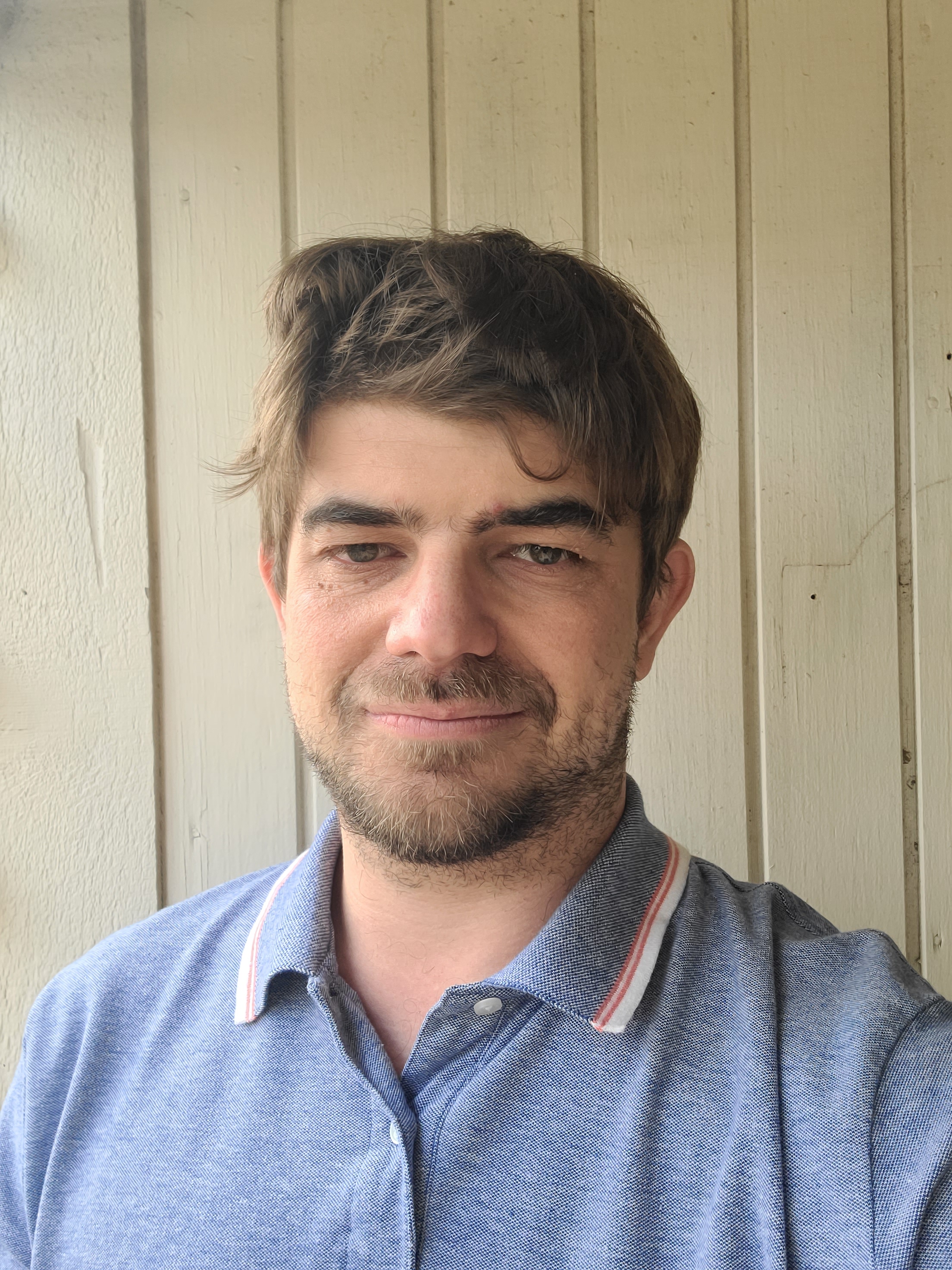


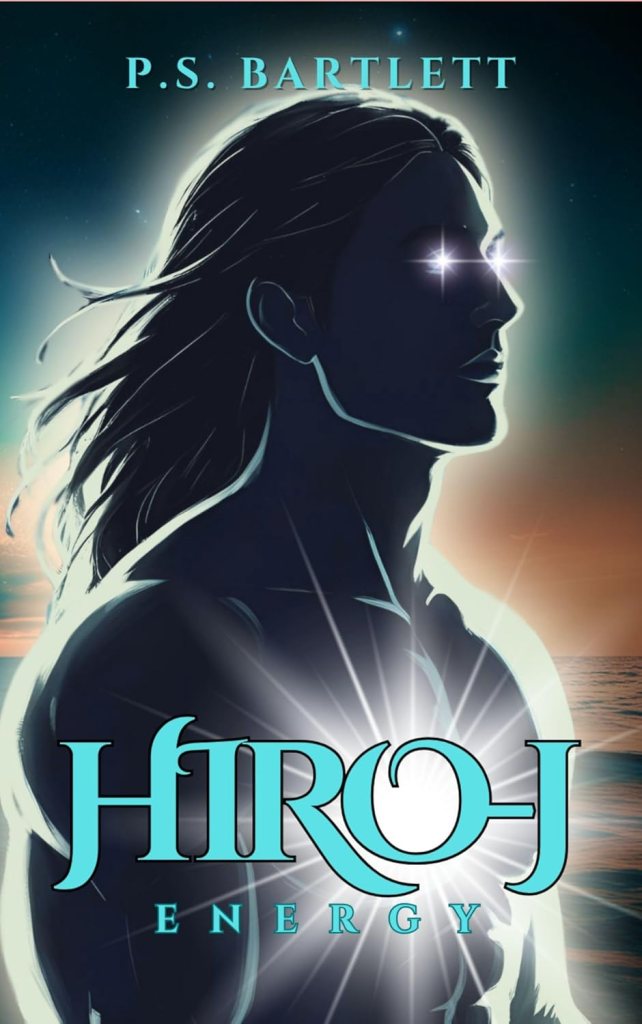


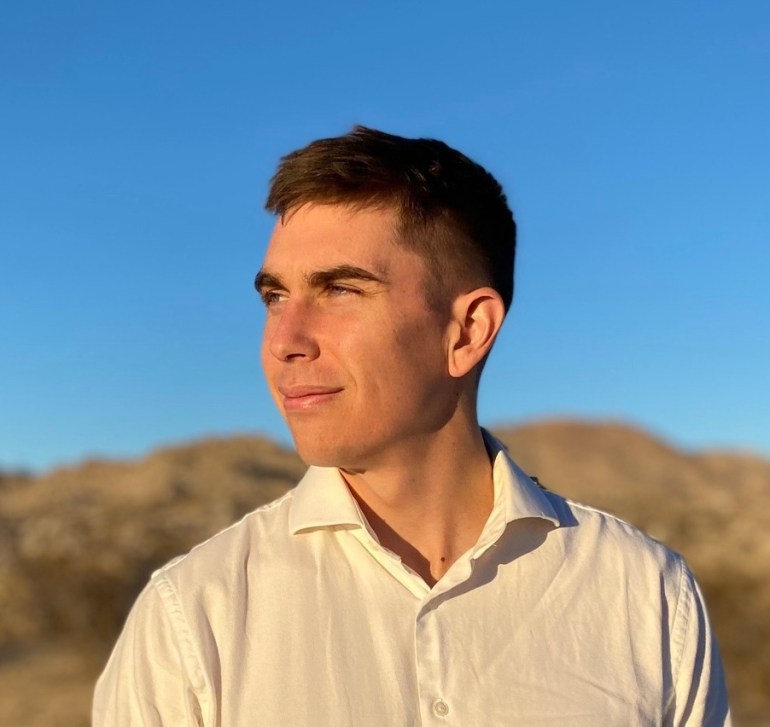


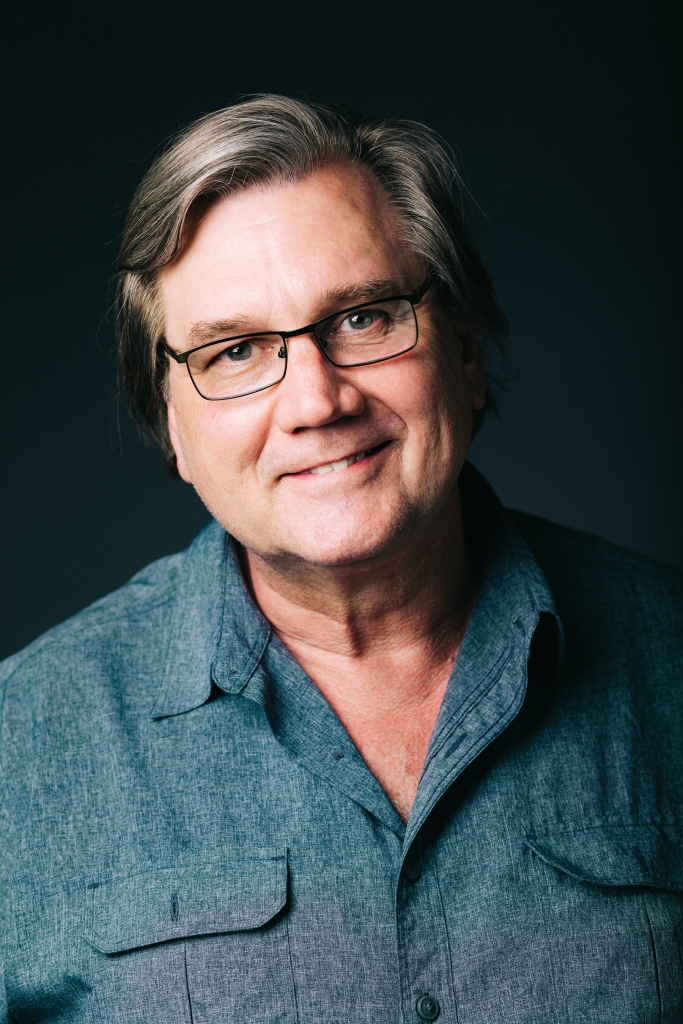








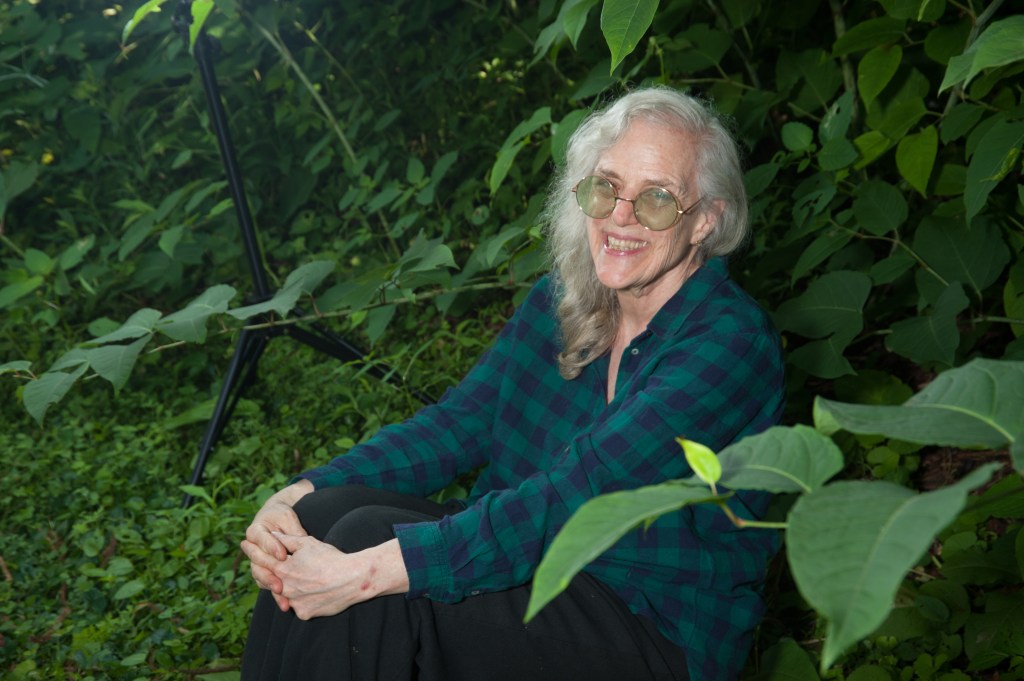


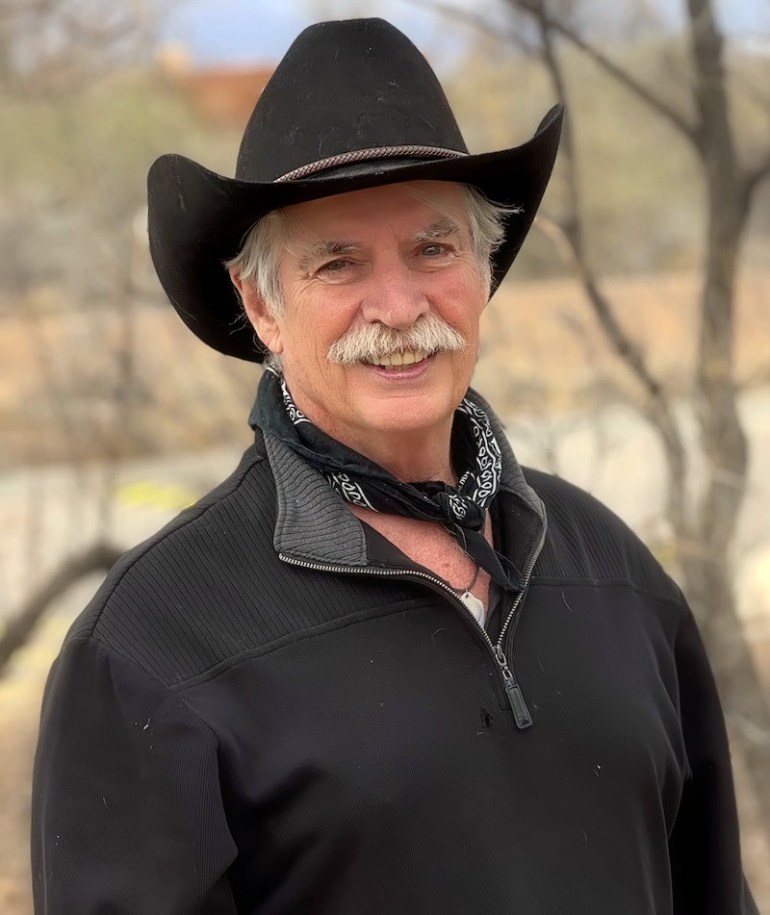




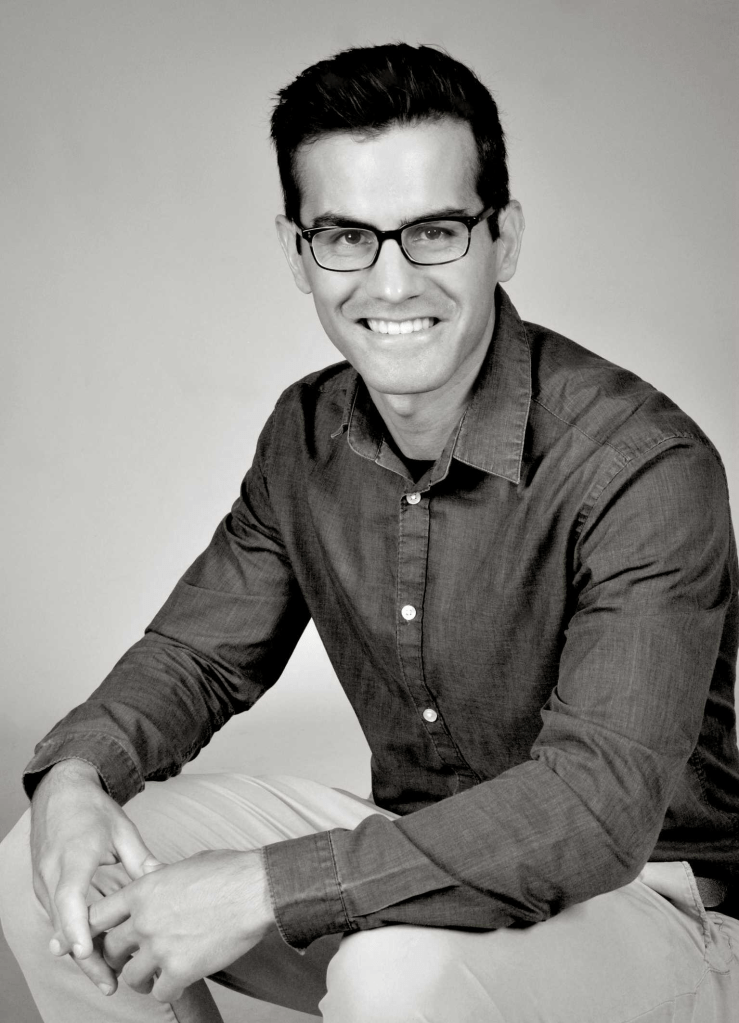


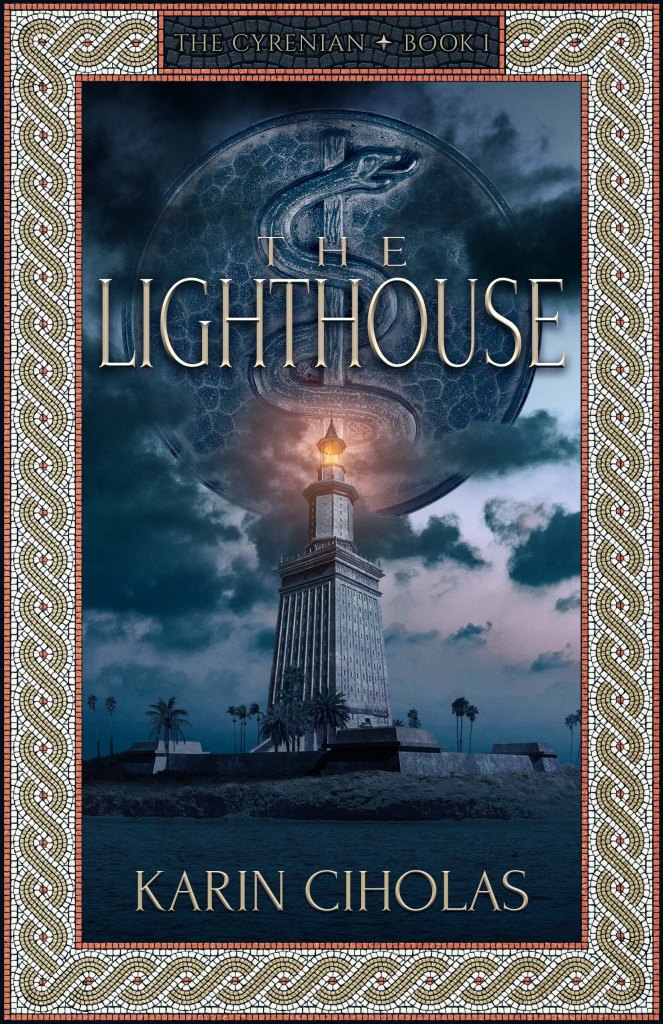


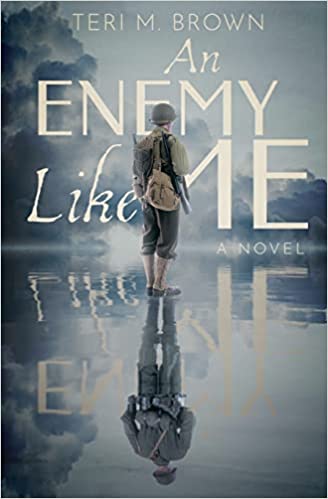


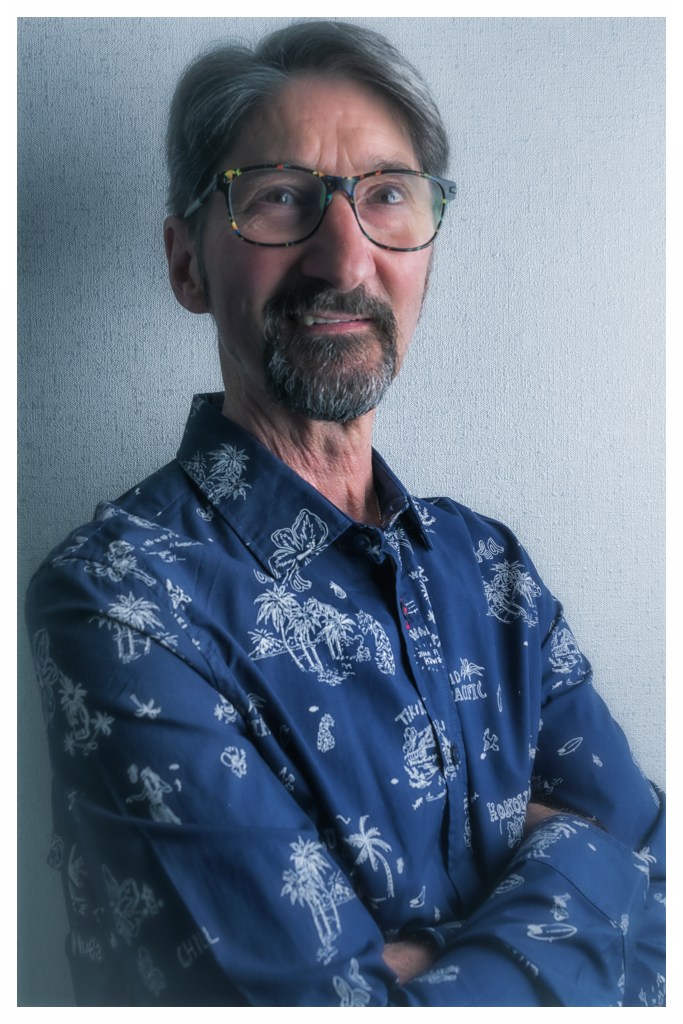


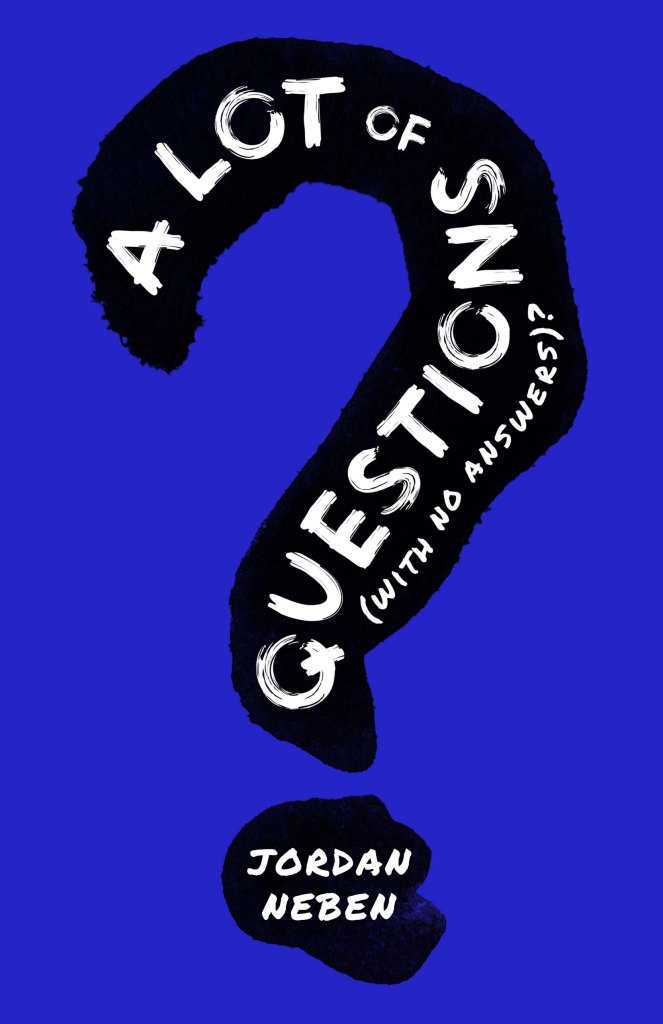
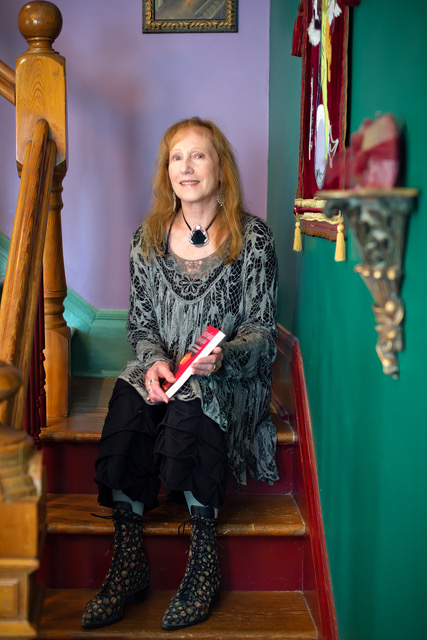


 The Reading Bud