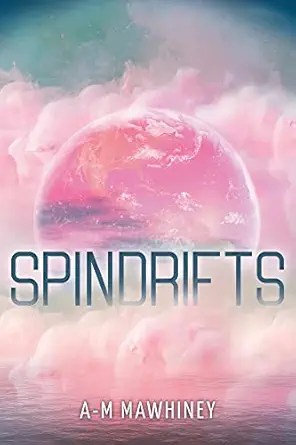
Book Details:
Author: A-M Mawhiney
Release Date: 24 November 2021Series:
Genre: Dystopian, Science-Fiction, Speculative Fiction
Format: E-book
Pages: 308 pages
Publisher: FriesenPress
Blurb:
Racism, climate change, and violence are in the past. The new world values respect and collaboration with others. But are there secrets lurking in the shadows of the Land of Hope? What truth about the past is being covered up?
When fifteen-year-old Fania returns from Immersion, she is shattered to learn that the next phase of her education is at home with Alicia, her granny. She had hoped for something far grander that would prepare her for an important role with the Earth Project. Their two strong personalities clash as Fania begins to learn more about the past and her family’s role in it.
As Fania grows in confidence and power, she starts to wonder exactly what secrets Alicia is keeping in her underground lab. After Fania discovers the truth, she finds her calling: one that has the power to change everything.
Review
Spindrifts by A-M Mawhiney is a thoughtful, hopeful, and ambitious work of speculative fiction set in a future shaped by pandemics, ecological collapse, social reform, and the long, unfinished work of healing Earth. Rather than imagining the future as pure dystopia, author Mawhiney builds something gentler and more difficult: a world that has survived catastrophe and is trying, imperfectly but sincerely, to become better.
At the centre of the novel is Fania, a fifteen-year-old returning home after two years at Immersion, where young people are assessed and guided toward their future contribution to the Earth Project. Fania expects purpose, clarity, and perhaps even adventure with people “From Away.” Instead, she is assigned to apprentice with her great-grandmother Alicia, the brilliant researcher who discovered the serum that changed the course of the plague years. What begins as disappointment gradually becomes a layered journey of family history, hidden truths, emotional inheritance, and self-discovery.
One of the strongest parts of the book is its intergenerational family structure. Alicia, Hope, Kaib, Kizhep, Jojo, Fania, and Nuna all live within a household where love is abundant, but so are hierarchy, silence, unresolved grief, and old patterns of control. Author Mawhiney writes family life with warmth and patience. Fania’s relationship with Nuna is especially tender. Their sisterly bond, strengthened through music, memory, and a form of telepathic connection, gives the novel much of its emotional light.
The worldbuilding is fascinating because it feels both futuristic and deeply rooted in post-pandemic memory making the future in the book not feel sleek or cold but realistic, careful, and consciously rebuilt.
Thematically, Spindrifts is rich. It explores climate repair, public health, disability, community responsibility, language, Indigenous sovereignty, racial history, family memory, and the ethics of deciding another person’s future “for the greater good.” The novel is particularly strong when Fania begins asking uncomfortable questions: Who gets to choose a person’s contribution? What happens to those labelled dangerous or abnormal? Can a society built for healing still carry hidden harm within its systems? These questions give the book its sharper edge beneath its utopian surface.
That said, this is a slow and very reflective novel. Readers looking for fast-paced science fiction, action, or a tightly plotted dystopian adventure may find the early chapters slow and heavily domestic. The book spends a great deal of time on conversations, family dynamics, memories, explanations of social systems, and emotional processing. At times, the exposition can feel dense, and the pacing may test readers who prefer immediate external conflict. However, the slower rhythm also allows the novel’s emotional and philosophical concerns to deepen gradually.
What I appreciated most is that Spindrifts refuses cynicism. It does not pretend that a better world would be simple, perfect, or free from moral compromise. Instead, it imagines a future where people have done enormous work to restore the planet, but where the next generation must still question, revise, and heal what their elders left unresolved. Fania’s emerging gifts, especially her ability to sense and heal others, become not only a speculative element but a metaphor for the book’s larger concern: true restoration requires seeing pain clearly, even when it implicates those we love.
Overall, Spindrifts is a intelligent, hopeful, and challenging novel. It is best suited for readers who enjoy character-driven speculative fiction, ecological futures, intergenerational stories, and books that use science fiction not merely to imagine technology, but to ask how people might live together with more care.


I love reading your comments, so please go ahead…