Author: Ian Lewis & Matt Sugerik Release Date: 29th November 2020 Genre: Short Story Collection, Mix of – Speculative Fiction, Thriller, Horror & Slice of life Series: Format: E-book Pages: 231 pages Publisher: Blurb: Join authors Ian Lewis and Matt Sugerik on a unique storytelling journey in which each use an identical writing prompt to create a work of short fiction. As originally heard on Season 2 of the Promptly Written Podcast.
Review
โญโญโญโญ
Rating: 4 out of 5.
Promptly Written (Volume 2) by Ian Lewis & Matt Sugerik is a really interesting collection of short stories that I enjoyed reading thoroughly.
I am a sucker for good short stories because if done well, they have more power and offer way more than a full-length novel without the reader having to spend a lot of time reading them and these stories were precisely that. Well-written, succinct, terse and entertaining. I liked all the stories and was left wanting more.
I’d recommend this collection to all short story readers, especially to those who are looking for new authors to explore.
Indian, including myself and my family, love investing in two things – property and gold, no matter what. Even though 2020 was a difficult year for the entire world, it hardly affected this deep-rooted habit of obsessively investing in gold as well as properties. The real estate market in India saw a downward dip in the initial months of the lockdowns, but since the lockdowns were eased, India, being one of those few countries that are already on the path of recovery from the economic damages caused by the global pandemic, saw an upward climb in the real estate market.
Now, Indians are investing in property as much as (if not more than) before. Nothing will deter the Indian population from investing in a good piece of land or a well-built house or apartment. Though, one significant change that can be observed in the priorities of the Indian buyers while considering a new house is to look for the extra space to be able to establish a home office. During the pandemic, while many lost their jobs, a lot of people were asked to work from home, and thus began the new culture of working from home in India. Where earlier, this concept was only rarely seen in a few new start-ups, today we all have accepting working-from-home as the new normal.
So when Vishal and I also began looking for a place to buy, our priorities included having two separate home-offices/workspace for both fo us. Earlier where we shared one of the biggest rooms in our bungalow as our shared office space, we are now looking for an even bigger place to have our 2 separate workplaces so that we both can do our work dedicatedly throughout the year.
Many people, including us, now actually prefer this way of life to the old one where one had to constantly be away from home in order to pay the bills. Now you can simply stay at home and do the work. But of course, the most important thing that is needed is the privacy of the extra room or space and that is why post-COVID, people are looking for bigger places and extra rooms in apartments.
In fact, with the humongous evolution of digital markets and the need for social distancing, there are now various ways in which you can not only view the properties online on innumerous websites but can also calculate the mortgage online when you plan or decide to buy/rent a property. One such website is Mortgage Calculator.
This website has a lot to offer – it can quickly and efficiently estimate mortgage affordability based on one person (or even two people’s) income, you can also find graphs of loan repayment along with monthly and yearly amortisation tables and printable amortisation schedules, etc. Even though this website is primarily for the UK market, it suits the needs of every country’s market and has personally helped me in calculating the mortgage for the property we are planning to buy.
Buying a home is a huge deal for us and I am personally really grateful to such online devices that can help buyers to not only view but also help in the planning of one’s finances. Corona has affected the entire world, but in a way, it has brought the entire world together too.
Author:ย Pramudith D. Rupasinghe Release Date:ย 29th April 2018 Genre:ย Literary Fiction, Historical Fiction, Sri Lankan Literature Series: Format:ย E-bookย Pages:ย 272 pages Publisher:ย Vor Press Blurb: In the serene tempo of classical Soviet literature charmingly merged into modernity, Bayan is a unique blend from among the work of Pramudith D Rupasinghe.ย Bayan begins in the sunny Ukrainian summer and ends with a hidden, deeply meaningful message. It is not only the story of a strange, bearded old man who finds solace and a soulmate of sorts, in a traditional string instrument, while facing a common narrative of his era; it is a commentary on life, and a celebration of the ultimate coming of age.ย
It juxtaposes the failure of physical strength and faculties to the accumulation of immense emotional fortitude. It lulls you into feeling safe in spite of the passing of transient seasons, the waning of political ideologies and the inevitable disintegration of the corporeal being. Bayan tells about changing world`s order, revolutions and the ravages of time, the music of life will go on.
Bayan is the only novel by a Sri Lankan author to be translated into Polish, Ukrainian, Burmese and Hungarian languages. And its German, Russian, Hindi and Sinhala translations have been added among the books of Sri Lankan authors translated into other languages.
Review
โญโญโญโญโญ
Rating: 5 out of 5.
Bayan by Pramudith D. Rupasinghe is a beautifully written book full of, and highlighting, a wide spectrum of emotions and emotional sensibilities.
It is difficult to summarise my opinion of reading this beautiful book because it was nothing short of an out-of-the-world experience and simply cannot be expressed in words. This book takes you on a journey to a time and place where you’d be struggling between contrasting emotions of wonder and revulsion. It is not an easy feat to write about the times of war and the post-war world because they both are two subjects that need a very good, and thankfully, Dr Pramudith – the author, did it so wonderfully well that I was left in awe.
This book is written beautifully well, interspersed with odd letters and poems, which made the experience of reading this book even more realistic. The characterisation was brilliant and I ached and pained for the plight of the characters. This book not only helped me understand the emotional background of many people who might have experienced the events told in this book but also made me reflect on the present times and how far the world has changed today from those of the earlier times.
This is a very good book that I will recommend to all readers, of all genres because it is an experience that no one should pass on.
You can also read this review on Goodreads and Amazon.
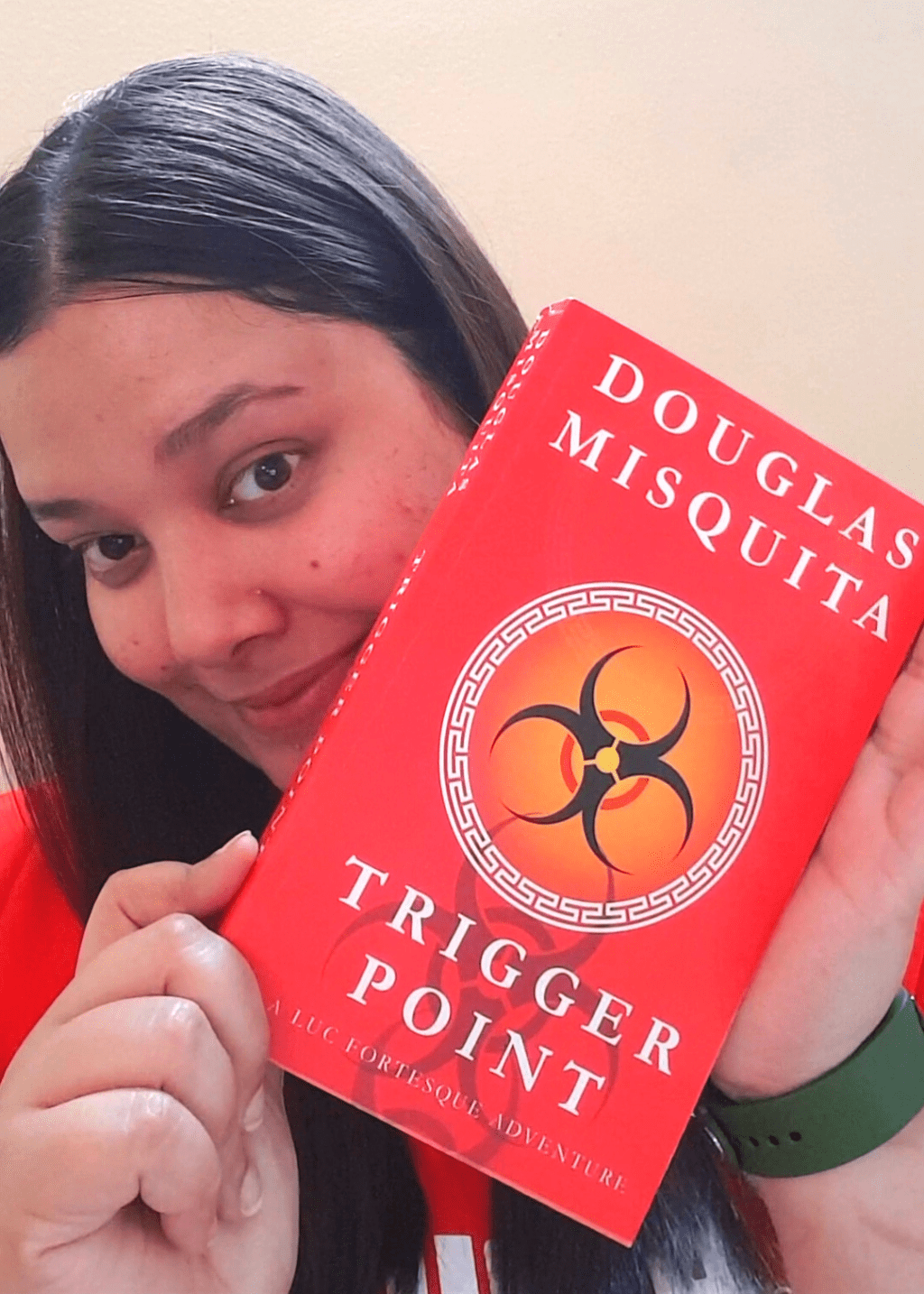
Author: Douglas Misquita Release Date: 14th January 2021 Genre: Adventure, Thriller, Suspense Series: Format: Paperback Pages: 401 pages Publisher: Pencil Blurb: Smuggling himself into Europe despite an Interpol Red Notice? Possible. Avenging a German BKA officer? Easy. Evading special ops teams hunting him for the secrets he possesses? Impossible. Things are about to get moreโฆ interesting for Luc Fortesque. An escaped terrorist threatens a landmark dialogue between Muslims and Christians. More terrifying is the theft of a bioweapon from a secret vault operated by the Holy See. That the damaging news is not public hints the weapon will be detonated. With cataclysm imminent, the worldโs oldest espionage agency โ the Vaticanโs Lโ Entity โ must get to Luc Fortesque first, hoping he might possess the cure.
Accepting an off-the-books mission, former DEA agent, Raymond Garrett, intends to put an end Colombian drug lord, El Fantasma. But El Fantasma has a mission of his own for Garrett. Treachery and corruption infect the highest reaches of religion and government, and Fortesque and Garrett must confront their past to be truly free of it. If they survive the confrontation.
Review
โญโญโญโญโญ
Rating: 4.5 out of 5.
Trigger Point: A Luc Fortesque adventure thriller by Douglas Misquita is a heart-pumping rush of adrenaline that will definitely leave you asking for more.
I have one word for this book, and that is – Wow. I am not a huge fan of Indian authors but author Douglas’ book totally blew my mind. It was jam-packed with high octane action taking place in beautiful and exotic settings and well-built characters. And to top it all off, the writing was simply amazing! This is a well-written book, with strong characterisation, great pacing, high tension and brilliant concept. This book had so much going on that I simply couldn’t put it down even for an hour!
If you’re looking for a fast-paced and action-packed book with amazing locations or settings this you should definitely read this book! I’d highly recommend it to all readers.
You can watch the video for the review of this book on my IGTV channel here:
Author:ย Ian Lewis Release Date:ย 8th April 2019 Genre:ย Alternate history fiction, Fantasy, Suspense, Mystery Series:ย The Reeve (Book #1) Format:ย E-bookย Pages:ย 252 pages Publisher:ย – Blurb: Sober, serious, and driven, Logan Hale is the highest peace officer in Beldenridge, and he knows his city better than anyone: the labyrinthine streets, the vaulted architecture, and all the dark corners where tales of mutations and a vicious enemy still linger like hushed secrets. Logan is quick to dismiss these accounts as part of a storied past with which heโd rather not contend, but when a suicide investigation leads him to believe thereโs something more sinister at hand, he questions whether that near-forgotten lore isnโt the stuff of legend after all.ย
Review
โญโญโญโญ
Rating: 4 out of 5.
From Legend by Ian Lewis is the first book in the alternate historical series The Reeve.
The first thing I loved about this book is the cover art! I absolutely loved it and once done with the book I was really happy (and grateful) that the high expectations set by the cover were fully delivered by the author in this book. I enjoyed this book tremendously and the many elements it had to offer to a speculative fiction lover like myself. I loved the writing, the world-building, the characterisation as well as the fast pacing and high tension throughout the story.
I liked how the author interweaved the alternate historical settings with fantastical elements and used old lores, legends and fables to build intrigue as well as the perfect atmosphere for keeping the reader on edge. I would highly recommend this book to all readers who like reading speculative fiction, fantasy as well as alternate history and also to those who are looking to explore a new author or a new series. This book would be a really good pick for most readers.
Today, we are featuring Kimiko Chou, the lead character from Kimiko Chou, Girl Samurai by Con Chapman, for our Character Interview feature.
About The Author
Con Chapman
Con Chapman is the author most recently of Rabbitโs Blues: The Life and Music of Johnny Hodges (Oxford University Press), winner of the 2019 Book of the Year Award from Hot Club de France. His work has appeared in The Atlantic, The Christian Science Monitor, The Boston Globe, and a number of literary magazines. His young adult short story, โThe Vanishing Twin,โ appeared in the March/April 2015 issue of Cicada.
Welcome to TRB! We are really excited to have you over. Please give our readers a brief introduction about yourself before we begin.
My name is Kimiko Chou. โChouโ is my given name and means โbutterfly.โ I was born a twin with a brother, Tadashige, or โTadaโ for short. My father is a samurai warriorโKimiko Kiyotaka. My mother stayed at home and took care of me and my brother. We lived in the city of ลita, Japan.
What is your age and what do you do for a living?
I am twelve years old. I am returning to Japan after a long journey to find my father, who had gone off to invade Korea with other samurai.
How do you like to spend your free time?
Before my mother and brother were killed, I led the life of a typical Japanese girl of our city. Tada and I would play, my mother would instruct me in gardening, housekeeping, art, poetryโand the tea ceremony.
Please share some of your beliefs, principles, motivations and morals (can be social, religious or political or, etc.) Anything that will help us get to know you better.
My family was Buddhists. It may seem strange that a warrior such as my father followed a religion of peace, but samurai believe that Zen Buddhism helps them find inner peace and enlightenment to strengthen themselves, both in battle and in their daily lives.
Tell us something about your family and childhood.
My family was a happy one until the day when robbers invaded our house and killed my mother and brother while my father was off on an invasion of Korea. From that day until I was reunited with my father, I was a wanderer, traveling with a roninโa samurai who has been dismissed by his lordโand his page, Moto Mori, a young boy who was older than me.
Tell us something about your dreams and aspirations? Were you able to achieve them or are you planning to?
My aspiration at this point is to return to my home in ลita and rebuild my life with my father. He is without a wife and a son, and I am without a mother and brother.
What is your biggest fear in life?
After what Iโve been through, there isnโt much I fear. But my father is all I have left, and I could not bear to lose him.
How would you describe your life in one sentence?
My world was a happy one until it was turned upside down by the death of my mother and brother, and I was forced to fend for myself to be reunited with my father.
What is the worst thing that has ever happened to you?
Losing my mother and my brother in a single day, when robbers invaded our home while my father was away.
Did it change you for the better or the worse?
Obviously, things became worse, but there was nothing I could do about itโthey were gone, and nothing could bring them back. But I became more self-reliant, and I experienced a great adventure, even though it was harrowing at times. And I was reunited with my father.
What are your plans for the future?
To return to Japan with my father and start our life over again.
Kimiko Chou, Girl Samurai
KIMIKO CHOU is a girl on a mission. Her mother and brother have been killed by robbers in 14th century Japan while her father, a samurai warrior, is off on an invasion of Korea. Chou (โbutterflyโ in Japanese) narrowly escapes death by hiding while the robbers ransack her home, thenโdressed as a boy in her brotherโs clothesโshe goes in quest of her father. Alone on the road, she takes up with Hyลgo Narutomi, a former samurai who has been dismissed by seven previous masters, and Moto Mori, his page. The three of themโman, boy, and girlโmake their way across Japan along with Piebald, an old horse with a curious spot on his coat that resembles a Fenghuang, the mythical bird that rules over all others in Asian mythology. Together this unlikely trio experience a series of adventures and narrow escapes until Chou and Moriโbut not Narutomiโland in Korea. There, as a spy for the Koreans, Chou searches for her father-across enemy lines!
If you are an author and wish to be interviewed or if you are a publicist and want to get your author interviewed on TRB, then please get in touch through direct e-mail: thereadingbud@gmail.com
Today, we are featuring Con Chapman, author ofKimiko Chou, Girl Samurai, for our Author Interview feature.
About The Author
Con Chapman
Con Chapman is the author most recently of Rabbitโs Blues: The Life and Music of Johnny Hodges (Oxford University Press), winner of the 2019 Book of the Year Award from Hot Club de France. His work has appeared in The Atlantic, The Christian Science Monitor, The Boston Globe, and a number of literary magazines. His young adult short story, โThe Vanishing Twin,โ appeared in the March/April 2015 issue of Cicada.
Welcome to TRB! Please give our readers a brief introduction about yourself before we begin.
Iโm a writer on the sideโitโs not my day job. Iโve written young adult fiction before (โThe Vanishing Twin,โ Cicada Magazine, March/April, 2015) but this is my first YA novel. My most recent book was about Johnny Hodges, Duke Ellingtonโs long-time alto sax player: Rabbitโs Blues: The Life and Music of Johnny Hodges (Oxford University Press). Kimiko Chou has a samurai theme because Iโm interested in that now-abolished caste whose members were, at the same time, warriors and artistic; they were highly literate and wrote poetry; their motto was โThe pen and the sword in accord.โ
Please tell us something about your book other than what we have read in the blurb?
It has a โmetaโ aspect to it, in that it is introduced by a characterโEtaoin Shrdluโwho says that he translated the work. He is as fictional as Kimiko Chou, though. This techniqueโsometimes referred to as a โframing deviceโโexplains how it is that the reader is holding in his or her hands a first-person account from the 14th century. It is used in the novel by Thomas Berger, Little Big Man, one of my favorite works (and one that I think is underrated).
What is that one message that youโre trying to get across to the readers in this book?
Not sure thereโs a particular message I want readers to take away from the book, but characters reveal themselves to you as you create themโPygmalion style. Chou is hardened by the tragedy at the beginning of the book, but doesnโt miss a beat and embarks on a new life. Along the way, she finds that her first impressions about people donโt always turn out to be correct, but even those who she grows close toโsuch as the boy page, Moto Mori, who is her companion on the journeyโhave their flaws that are in need of mid-course corrections.
Who is your favourite character in this book and why?
The ronin, or fallen samurai, Hyลgo Narutomi, who leads the two children on their expedition. He is a failure who refuses to acknowledge that fact, and carries on despite having no real hope of ever realizing his ambition; to become a samurai again, after having been dismissed by seven masters.
What inspired you to write this book? An idea, some anecdote, a dream or something else?
I had a lot of time on my hands waiting for a publisher to get back to me on a proposalโover a year. At some point I threw up my hands and decided to start on another project. Iโve written two novels before, one of which (CannaCorn) is a baseball novel with a character who thinks of himself as a latter-day samurai in his role as a relief pitcher. I read a YA novel about a boy samurai, and Women Warriors: An Unexpected History by Pamela Toler, which includes stories of female samurai. I did a little research and didnโt find any YA novels about girl samurai, and decided to write one.
How long did it take you to write this particular book?
Once I got going, not that long, maybe a year. I had to do some research on Japanese history during the period when the samurai first came to prominence, the 12th to the 14th centuries, and also on Japanese geography, to get the details of a Japanese invasion of Korea down.
What are your writing ambitions? Where do you see yourself 5 years from today?
Iโd like to be able to write full-time, but Iโve got a long ways to go. Iโd like to write a sequel to Kimiko Chou if thereโs a demand for it.
Are you working on any other stories presently?
I am currently writing a history of Kansas City jazz for Equinox Publishing, a British publisher.
Why have you chosen this genre? Or do you write in multiple genres?
The novel (or novella, itโs not that long) seemed right for this story. I also write plays, histories, poetry, humor, and short-form journalism.
When did you decide to become a writer? Was it easy for you to follow your passion or did you have to make some sacrifices along the way?
? Itโs something Iโve wanted to do since I was in high school. I became a sports reporter for my small-town newspaper when I was a junior in high school, after I hurt myself and couldnโt play football anymore. I got a newspaper reporting job right out of college, but found I wasnโt very good at going up to strangers and asking them embarrassing questions, which is essential to the job. So I had to find some other path, which took a while. I wrote an article on jazz for a Boston-area โundergroundโ paper, but didnโt have much success pitching freelance articles. I decided I needed to get a book written, and chose the 1978 pennant race between the Boston Red Sox and the New York Yankees, which no one had written about. Red Sox fans didnโt want to be reminded about it, since they blew a big lead and didnโt make it to the World Series, and Yankee fans werenโt interested since it wasnโt a big deal to themโthey went on to win the World Series, so the win over the Red Sox was insignificant by comparison.
I self-published the book, The Year of the Gerbil (the word โgerbilโ refers to a scornful nickname the Red Sox hung on their manager that season). This was back in the bad old days when self-publishing was expensive. I took money out of my savings to finance it, and had to do all the marketing myself. I wrote a lot of letters to bookstores, made personal trips to ask bookstores to stock itโvery naรฏve. Iโd send copies to various newspapers and magazines, got maybe two reviews. Then I sent a copy to the Business Editor of The Boston Globe because he had mentioned how Boston and New York had similar rivalries in business and sports; the Yankees back in the day were perennial winners, the Red Sox went 86 years without winning the World Series, and New York is a much bigger business market than Boston. To my surprise, he wrote a glowing review of the book in the Business Section of the paper, the book got named to a list of 50 essential books about the Red Sox, and while I never made back my initial monetary investment, I had a start on a reputation in that I could name a book Iโd written and people might actually want to read it.
What is your writing ritual? How do you do it?
. I have to write at the beginning and end of the day since I have a day job. If I wake up early Iโll try to produce a paragraph or two before going off to work, and at night if Iโm not too tired Iโll try to do it again.
How do you prefer to write – computer/laptop, typewriter, dictation or longhand with a pen?
? I write on a computer, as itโs much faster, even for drafts. The one exception is playwriting; Iโve had twelve plays published, and because youโre just writing dialogue, not exposition (other than stage directions), itโs easy to get a lot down with just a pen and a pad of paper.
What are your 5 favourite books?
The books Iโve read the most, multiple times, are:
The Moviegoer, Walker Percy (novel)
The Sweet Science, A.J. Liebling (non-fiction, boxing)
True Tales from the Annals of Crime and Rascality, St. Clair McKelway (non-fiction, crime)
George Ade and Ring Lardner, Midwestern humorists
And the Holy Trinity of Southern female writers: Flannery OโConnor, Eudora Welty, and Carson McCullers
How do you deal with Writerโs Block?
I had writerโs block when I got out of college, wanted to be a writer, and couldnโt get anything written. You only have writerโs block if you want to write and canโt, so I canโt say I had writerโs block when I more or less gave up on writing for a while.
Itโs sad but true, as far as Iโm concerned and one of my friends who had writerโs block and couldnโt finish his Ph.D. dissertation, that getting thrown into a job where you have to write, or going back to school and being under pressure to produce on a daily basis will cure you of writerโs block. The problem then isโyou have no time to write because youโre busy.
For the most part thatโs the situation Iโm in today; I have to find time to write around my work, which forces me to become more efficient and not have a beer and stare off into space and think about the Great American Novel Iโve got in me down deep inside.
What advice would you give to aspiring writers?
Well, youโve got to look the part on paper. I bought a book on manuscript preparation and writing book proposals (the Writerโs Market book, โFormatting and Submitting Your Manuscriptโ), which gave me some guidance on presenting yourself as a writer. Where before Iโd do things wrong (like sending in a non-fiction article without querying first), I at least had a sense of what an editor or publisher who might actually buy something from you expected it to look like when it came in over the transom.
Thank you, Con, for your insightful answers!
About The Book
Kimiko Chou, Girl Samurai
KIMIKO CHOU is a girl on a mission. Her mother and brother have been killed by robbers in 14th century Japan while her father, a samurai warrior, is off on an invasion of Korea. Chou (โbutterflyโ in Japanese) narrowly escapes death by hiding while the robbers ransack her home, thenโdressed as a boy in her brotherโs clothesโshe goes in quest of her father. Alone on the road, she takes up with Hyลgo Narutomi, a former samurai who has been dismissed by seven previous masters, and Moto Mori, his page. The three of themโman, boy, and girlโmake their way across Japan along with Piebald, an old horse with a curious spot on his coat that resembles a Fenghuang, the mythical bird that rules over all others in Asian mythology. Together this unlikely trio experience a series of adventures and narrow escapes until Chou and Moriโbut not Narutomiโland in Korea. There, as a spy for the Koreans, Chou searches for her father-across enemy lines!
If you are an author and wish to be interviewed or if you are a publicist and want to get your author interviewed on TRB, then please get in touch through direct e-mail: thereadingbud@gmail.com
Author: Debbie Ann Ice Release Date: 22nd April 2021 Genre: Women’s Fiction, Literary Fiction, Contemporary Fiction, Satire Series: Format: E-book Pages: 272 pages Publisher: Bedazzled Ink Publisher, LLC Blurb: Itโs the year 20-somethingโa changed yet still complacent Americaโand Lorraine Mulderon is mad. Sheโs mad that dying fish litter the shores of her small Connecticut coastal town. Sheโs mad birds seem to be dying, possibly indirectly related to fish deaths. Sheโs still mad about a wave of crow deaths over a decade ago. But, mostly, Lorraine is mad at the lack of madness.
She makes speeches. She phones lazy, and now corrupt, legislators. She is ignored. What has happened to passion? What has happened to our country? And now, what has happened to Lorraine? Lorraine disappears during a protest march. Her daughter, Haley, writes a letter to the world explaining her motherโsomeone who confronts grief and tragedy the only way she knows how and has depended upon those who tenderly watch over herโher daughter, certain friends, and a flock of blue jays. However, as the blue jays reveal, Lorraine is not so tenderly watched over by the forces working against her. It’s a dark future and our nation has normalized tragedy; however, DEAD FISH touches upon these intense themes with hope and humor.
Review
โญโญโญโญ
Rating: 4 out of 5.
Dead Fish And What the Blue Jays Know by Debbie Ann Ice is a beautiful book about passion, love and loyalty. When I started reading this book, I wasn’t really sure what it was about and if I was going to like it much, but only a couple of pages into the story and I knew that it was going to be a great read. And to my utter satisfaction, it turned out to be that and so much more.
This book not only has a well-written plot but the concept itself is really good and necessary in its own right. I loved the characters and was able to connect and relate to them. The pacing and tension are apt and compliment the story beautifully.
I really enjoyed reading this emotional, at times funny and beautiful read and would definitely recommend it to readers of literary and women’s fiction.
Welcome to TRB Lounge. Today, Iโd like to welcome authorย Con Chapman for sharing an excerpt from his latest release Kimiko Chou, Girl Samurai.
About The Book
KIMIKO CHOU is a girl on a mission. Her mother and brother have been killed by robbers in 14th century Japan while her father, a samurai warrior, is off on an invasion of Korea. Chou (“butterfly” in Japanese) narrowly escapes death by hiding while the robbers ransack her home, thenโdressed as a boy in her brother’s clothesโshe goes in quest of her father. Alone on the road, she takes up with Hyลgo Narutomi, a former samurai who has been dismissed by seven previous masters, and Moto Mori, his page. The three of themโman, boy, and girlโmake their way across Japan along with Piebald, an old horse with a curious spot on his coat that resembles a Fenghuang, the mythical bird that rules over all others in Asian mythology. Together this unlikely trio experience a series of adventures and narrow escapes until Chou and Moriโbut not Narutomiโland in Korea. There, as a spy for the Koreans, Chou searches for her father-across enemy lines!
My name is Kimiko Chou, and this is my story. I have set it down so that it will live after me, for other girls to read. They may find it hard to believe, but it is true.
My given name โChouโ means โempress child butterfly.โ It was given to me at my oschichiyaโnaming ceremony. I was swathed in white, like a little cocoon, pure as I came into the world. Like every other aka-chan (โlittle red one,โ loving term for a newborn baby), I wore only this color of godliness for seventeen days. From then on, I was clothed in the colors of the world, and not just the pure shade of ame, the lofty sacred world of the gods of heaven, the ama-tsu-kami.
It should not surprise you that I came to live as a samurai, for the way of the samurai is death, and I was born, so to speak, in death. When robbers invaded our home and attacked my mother and brother, I hid in the alcoveโthe tokonomaโthat is found in the main room of a samuraiโs dwelling, and in which is displayed a single beautiful object for contemplation. I held myself still and breathless while the robbers ransacked the house for money and weapons; they looked only for things of material value, and so didnโt notice me. I pulled my clothing over my head like a sea urchin in order to save myself.
How, you ask, is such conduct worthy of a samurai, if the samurai, faced with a choice between life and death, must choose the latter? Well, we all want to live, and we form our thoughts according to our will. But at that moment, I was not a samurai, and I had no master. I had no aim in life, other than to survive.
When the robbers departed, I was alone. My mother Hino and my brother Tadashige were both dead. My fatherโKimiko Kiyotaka–was gone, part of a force that had invaded the kingdom of Koguryo (current-day Korea). I did not know when or if he would return. I was eleven years old.
I was fearful, and for good reason. The robbers could be seen moving from house to house, repeating their acts of thievery and violence. Tada and I had recently undergone the ceremony of genpuku, by which we had formally been recognized as adults. I was to prepare for marriage, he was to prepare for war. I received a mogi (a pleated skirt), heโa samurai helmet. If I became my twin brother, I would be able to defend myself from the assaults of the robbers, and I would not be an object of attraction to them. And so I donned the garb of the samurai at an age when most girls had just begun to play the coquette. I was close to Tada, as twins will be, and so I had absorbed much of what he had learned in his training to become a samurai. Now I would become him, and adopt his name.
There was nothing left of value in our home except food, and so I cooked some rice and made onigiri (rice balls). These I packed into Tadaโs hakama (pants), and I set off on a quest to find my father, although I knew it might take many years. I saw myself in the eye of my mind having many adventures before we would be reunited. I would be a woman thenโif I could find him before he died.
I took with me my motherโs weapons: Her naginata. This is a spear with a curved blade at the end. It was used by women in defending their homes when their samurai husbands were absent from the home. With its long shaft, it could be used to keep a male opponent at a distance, thus allowing a woman to fend off a man stronger than her. Next, her tanto, a dagger favored by women because of its short length and capacity for camouflage. When sheathed, it looked like a fan, and could concealed as an item of innocent adornment until needed. Finally, her kansashi, a hairpin that is a womanโs weapon of last resort. Six inches long, it innocently keeps her hair in place but can be pulled out to pierce an attackerโs chest or throat when he is on the point of overcoming her.
I started out on the road that led towards the sea. I wanted to go to the place where my father would land when he came back, and if that did not happen for some time, I wanted to find a way to go search for him, on a fishing boat or a bigger craft bound for Korea. I must have made a forlorn-looking sight. My brotherโs kataginu (sleeveless jacket) hung loose about my shoulders with its exaggerated shoulders, and while I was tried to put on a brave face, my heart was emptyโmy mother and brother gone, my father far away. I was all alone in the world.
The road was a muddy path, the color of my motherโs clay cooking pots. On either side were bright green hedges of grass that gave way to rice paddies. I was headed in the direction of the Tsushina Strait, towards a sky that was full of rain coming up from the sea. It was tinged with grey and blue and pink, like the inside of an oysterโs shell. It was hard to be hopeful, but I tried to walk with a forceful stride, to show the world that I was determined.
After a while I heard the clip-clop of a horse coming up behind me. I did not turn to look, as I wanted to give the rider the sense that I wasnโt a young girl he could trifle with, I was a samurai on a mission.
As the horseman drew nearer, he called out to me in a curt manner. โYou there!โ
I turned my head slowly to the left, but did not stop walking. He must know that I would not stop for anyone. He called againโโYou!โ
I kept walking, but said โYes?โ
โWhere are you going?โ
โHirado.โ
He laughed. โAnd how will you get there?โ
โI will hire a boat.โ
โWith what?โ
โNever you mind.โ
Upon hearing those bold words, he dug his heels in his horseโs side and rode in front of me, blocking my way.
โAre you a samurai?โ he asked with a mocking smile.
โI am a samuraiโs page.โ
โAnd who is your master.โ
I hesitated just a moment. โYou would not know him, he lives far from here.โ
โThen how did you come to be all by yourself?โ
I was silent, out of words. I should have foreseen that I would be questioned, but I had not given thought to the story I would tell.
โWell?โ the man asked. โWho are you, and what do you have to say for yourself?โ
I fought down a lump in my throat, and spoke. โI am Kimiko Tadashige. My master is dead. I am on my way to seek my father, who is in Korea.โ
The man rubbed his chin, sizing me up. A boy came up behind him, dressed much like me, but in shabbier garments. I guessed that he was a page to this samuraiand, from the looks of his clothing, had been traveling with him for some time. Perhaps, I thought, the man on horseback was a ronin, a samurai without a lord.
โI am Hyลgo Narutomi,โ he said with a fierce voice, as if he wanted to scare me and not just say his name. โThis is my page, Moto Mori.โ
The boy bowed slightly and looked me over. His eyes seemed to see a rival, or even an adversary, even though I was just a stranger walking along the same road.
โI could use another page,โ Narutomi said with a tone of cold calculation, as if I were a fish in a market.
I did not know what to say. I would be out of food soon enough, and I wanted protection from robbers and others with malice towards me.
โWhere are you going?โ I asked.
โThe same place you are,โ Narutomi replied calmly, as if that settled the matter.
I looked off to the horizon behind Mori to my left, and Narutomi ahead of me. There was no shelter, and no other road to be seen, all the way to the end of the world within my view. What choice did I have, other than to continue with my concocted story about where I came from, and where I was going?
ย ย ย ย ย ย ย ย ย ย ย ย โAll right,โ I said, without enthusiasm.ย ย โI will come with you.โ
Aboutย Theย Author
Con Chapmanย is the author most recently of Rabbitโs Blues: The Life and Music of Johnny Hodges (Oxford University Press), winner of the 2019 Book of the Year Award from Hot Club de France. His work has appeared inย The Atlantic,ย The Christian Science Monitor,ย The Boston Globe, and a number of literary magazines. His young adult short story, โThe Vanishing Twin,โ appeared in the March/April 2015 issue ofย Cicada.
Follow the author on Twitter @conchapman
If you are an author and wish to be featured as our guest or if you are a publicist and want to get your author featured on TRB, then please get in touch directly by e-mail at thereadingbud@gmail.com
Author:ย Christi Eley Illustrator: Aries Cheung Release Date:ย 8th January 2021 Genre:ย Children’s Fiction, Christian Fiction Series: Mr. Flopsy, Whispers From God Format:ย E-bookย Pages:ย 40 pages Publisher:ย Cottontail Publishing Blurb: Mr. Flopsy, Whispers from God is an early reader storybook that shares the simple message and guidance from a pet bunny to help your child find stillness and peace. By connecting with animals, children learn to see and hear Godโs love and feel secure as they learn to be quiet, patient, brave and trusting. Written in a rhythmic bouncy script, Mr. Flopsy,
Whispers from God: A Lesson on Being Still provides a platform for your child to begin their own relationship with God and is reaffirmed by the gentle words and affirmations of Godโs love through the Bible verse โBe still and Know that I am Godโ Psalm 46:10. Join Mr. Flopsy on this heartwarming adventure that will inspire your child for a lifetime!
Review
โญโญโญโญ
Rating: 4 out of 5.
Mr. Flopsy, Whispers From God: A Lesson On Being Still by Christi Eley is a colourful short graphic novel for children that helps them understand how to be still.
This book series is very unconventional and teaches different important verses from the Bible in a very simplified and easy to understand way for children. And this particular book talks about how to show children the wisdom in being still. I suppose this book is especially for those children who are always loud and have extra energy that seems to drain everyone around them – I’ve seen a couple of such children myself. So this book teaches the children how exactly to sit quiet and still while also focusing on the fact that sometimes it is actually good to just relax and be.
The illustrations in this book are really good – very cute and attractive, and I am positive the children would love studying them and might even draw a couple of them for themselves.
This book would be great for parents who like reading bed-side stories to their children, even if they are not a Christian, they can always use the trick given in this book to modify and apply according to how they see it fit as per their own religion and customs. In particular, I think, this book would be really beneficial to those parents who have hyperactive children in calming them by way of positive reinforcement.
Author:ย Christopher Griffith Release Date:ย 28th May 2019 Genre:ย Fantasy, Historical, Comedy, YA, Short Story collection Series: Format:ย E-bookย Pages:ย 126 pages Publisher:ย Blurb: William seeks contented ease, not tragic hardship; Rick loves simple melody, not its mysteriously melancholic effect upon him; Emily dreams of anything but having to work another day for darkly comic Carol; Saman is overcome by revenge fantasy, but the subject of his vengeance wants only reconciliation; and young Will Shakespeareโs dream is to act, not write though the latter as history tells comes eagerly calling for him instead. Each protagonist definitely planned something else when life, in form of these unfolding stories, haply intervened!
Review
โญโญโญโญ
Rating: 4 out of 5.
William Ottoway’s Utopia by Christopher Griffith is a vibrant short story collection of diverse nature showcasing different varieties of narration.
This collection contains 5 tales and I liked reading all of them. I liked this book mostly because of the assorted nature of all the stories. They all had a very different setting, characterisation, narratives, and ever time periods and crossed different realms even. Each and every one of them was very different from each other but equally good and engaging. I liked the way characters were brought to life in a fitting way and the pacing that was set by the clever use of varied types of sentence structures.
I’d recommend this book to readers of all genre especially if they like reading experimental styles of narrative prose.
You can also read this review on Goodreads and Amazon.