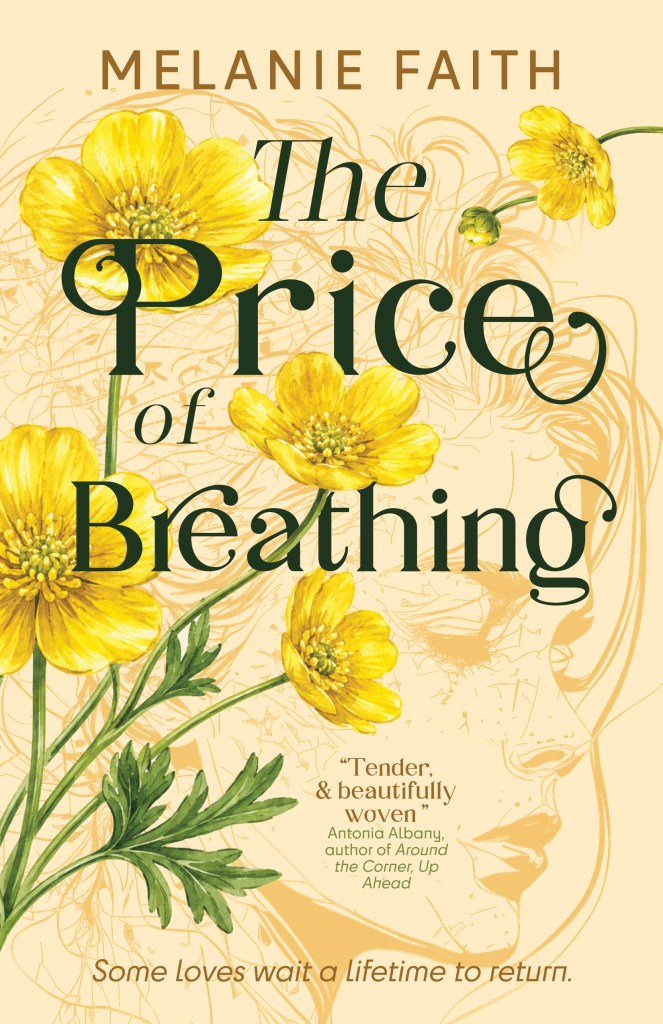
Book Details:
Author: Melanie Faith
Release Date: September 15, 2026Series:
Genre: Novel in Verse, Poetry
Format: E-book
Pages: 134 pages
Publisher: Vine Leaves Press
Blurb:
“This is a tender, beautifully woven and expertly crafted story told in poems about the power of first loves, long marriages, the ache of illness, and the way feelings and actions from the past linger in all of us” Antonia Albany, author of Around the Corner, Up Ahead
Read full book blurb
Meet Helen and Harry Crawley, a couple living in the American West in 1951. A letter arrives that will detonate their everyday routine and send Harry swiftly traveling East (to Helen’s protest) to visit his ailing first love, Flora, now a polio patient hospitalized in an iron lung.
What follows—in telegrams, free-verse poems, letters, and postcard text—is a timeless look at relationship dynamics, raising questions about the strength and meaning of first love long after the sweethearts have parted, the teamwork and ties that bind later-in-life bonds, and the challenges of living with chronic illness.
Will Harry return home to Helen? Should Helen accept his return if he does? Or will Harry’s renewed bond with Flora prove a permanent disruption and the start of a different life for all involved?
Review
The Price of Breathing by Melanie Faith is a historical novel-in-verse that explores chronic illness, first love, jealousy, marriage and the complicated forms love can assume over a lifetime. Set primarily in 1951, the book follows Harry as he travels across the country to visit Flora, his first love, who is living with the devastating effects of polio and spending weeks at a time inside an iron lung. Waiting at home is Helen, the woman Harry now loves, caught between compassion for Flora and the very real fear that some loves never entirely release their hold.
Author Faith could easily have reduced this premise to a conventional love triangle, but she does something far more intelligent and compassionate. Helen’s jealousy is neither mocked nor treated as selfishness; Flora’s illness does not render all her desires automatically innocent; and Harry’s decision to go is both generous and emotionally complicated. Even Gus, Flora’s husband, gradually emerges as a affecting figure rather than an obstacle placed between former lovers. By allowing Helen, Harry, Flora, Gus and several peripheral characters to speak for themselves, author Faith reminds us that the same relationship can look entirely different depending on who is remembering it, and that love, loyalty and regret seldom arrive in morally convenient forms.
The poems centred on Flora and the iron lung are the most powerful in the collection. Faith captures not only the terror of being unable to breathe independently, but also the indignities that accompany prolonged illness. The recurring lists of things Flora misses are deceptively simple and deeply moving because they make us recognise how much of life rests inside actions most of us never think to value. The book’s visual construction is equally effective. Broken lines, interrupted spacing, telegrams, letters and carefully positioned dialogue recreate laboured breath, physical confinement, distance and emotional hesitation. The recurring images of flowers, food, books, hands and breath gently bind the different timelines together without making the symbolism feel forced.
I was also particularly taken by Helen, whose sharpness, insecurity, humour and practical tenderness make her wonderfully relatable. Her solitary breakfast at the beginning and the breakfast prepared for two near the end form a beautifully understated emotional frame. If I were editing the collection, however, I would consider tightening a few of the repeated recollections and reconsidering the placement of the contemporary, more documentary poems, particularly those in which the voice shifts away from the central 1951 narrative. They provide valuable historical context, but the change in perspective briefly interrupts the intimacy author Faith has worked so carefully to establish. I would also shorten the extensive discussion material following the poems, allowing the final domestic image to linger a little longer before the book moves into its educational back matter.
Tender, formally inventive and emotionally mature, The Price of Breathing is ultimately less concerned with deciding whom Harry loves “more” than with examining the different shapes love can assume across a lifetime. It is about first love and chosen love, chronic illness and bodily autonomy, jealousy and mercy, and the private compromises through which ordinary people build their lives. Author Faith does not offer easy heroes or villains; she offers people trying, sometimes imperfectly, to be kind without denying what they themselves need. This is a very affecting collection that rewards close reading and leaves us newly conscious of breathing more than merely an involuntary act, as freedom, dignity and life itself.


I love reading your comments, so please go ahead…