Welcome to TRB Lounge!
Today, we are featuring Con Chapman, author of Kimiko Chou, Girl Samurai, for our Author Interview feature.
About The Author
Con Chapman
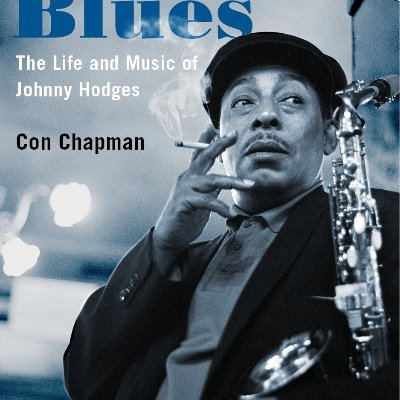
Con Chapman is the author most recently of Rabbit’s Blues: The Life and Music of Johnny Hodges (Oxford University Press), winner of the 2019 Book of the Year Award from Hot Club de France. His work has appeared in The Atlantic, The Christian Science Monitor, The Boston Globe, and a number of literary magazines. His young adult short story, “The Vanishing Twin,” appeared in the March/April 2015 issue of Cicada.
CONNECT WITH THE AUTHOR:
The Interview
Welcome to TRB! Please give our readers a brief introduction about yourself before we begin.
I’m a writer on the side—it’s not my day job. I’ve written young adult fiction before (“The Vanishing Twin,” Cicada Magazine, March/April, 2015) but this is my first YA novel. My most recent book was about Johnny Hodges, Duke Ellington’s long-time alto sax player: Rabbit’s Blues: The Life and Music of Johnny Hodges (Oxford University Press). Kimiko Chou has a samurai theme because I’m interested in that now-abolished caste whose members were, at the same time, warriors and artistic; they were highly literate and wrote poetry; their motto was “The pen and the sword in accord.”
Please tell us something about your book other than what we have read in the blurb?
It has a “meta” aspect to it, in that it is introduced by a character—Etaoin Shrdlu—who says that he translated the work. He is as fictional as Kimiko Chou, though. This technique—sometimes referred to as a “framing device”—explains how it is that the reader is holding in his or her hands a first-person account from the 14th century. It is used in the novel by Thomas Berger, Little Big Man, one of my favorite works (and one that I think is underrated).
What is that one message that you’re trying to get across to the readers in this book?
Not sure there’s a particular message I want readers to take away from the book, but characters reveal themselves to you as you create them—Pygmalion style. Chou is hardened by the tragedy at the beginning of the book, but doesn’t miss a beat and embarks on a new life. Along the way, she finds that her first impressions about people don’t always turn out to be correct, but even those who she grows close to—such as the boy page, Moto Mori, who is her companion on the journey—have their flaws that are in need of mid-course corrections.
Who is your favourite character in this book and why?
The ronin, or fallen samurai, Hyōgo Narutomi, who leads the two children on their expedition. He is a failure who refuses to acknowledge that fact, and carries on despite having no real hope of ever realizing his ambition; to become a samurai again, after having been dismissed by seven masters.
What inspired you to write this book? An idea, some anecdote, a dream or something else?
I had a lot of time on my hands waiting for a publisher to get back to me on a proposal—over a year. At some point I threw up my hands and decided to start on another project. I’ve written two novels before, one of which (CannaCorn) is a baseball novel with a character who thinks of himself as a latter-day samurai in his role as a relief pitcher. I read a YA novel about a boy samurai, and Women Warriors: An Unexpected History by Pamela Toler, which includes stories of female samurai. I did a little research and didn’t find any YA novels about girl samurai, and decided to write one.
How long did it take you to write this particular book?
Once I got going, not that long, maybe a year. I had to do some research on Japanese history during the period when the samurai first came to prominence, the 12th to the 14th centuries, and also on Japanese geography, to get the details of a Japanese invasion of Korea down.
What are your writing ambitions? Where do you see yourself 5 years from today?
I’d like to be able to write full-time, but I’ve got a long ways to go. I’d like to write a sequel to Kimiko Chou if there’s a demand for it.
Are you working on any other stories presently?
I am currently writing a history of Kansas City jazz for Equinox Publishing, a British publisher.
Why have you chosen this genre? Or do you write in multiple genres?
The novel (or novella, it’s not that long) seemed right for this story. I also write plays, histories, poetry, humor, and short-form journalism.
When did you decide to become a writer? Was it easy for you to follow your passion or did you have to make some sacrifices along the way?
? It’s something I’ve wanted to do since I was in high school. I became a sports reporter for my small-town newspaper when I was a junior in high school, after I hurt myself and couldn’t play football anymore. I got a newspaper reporting job right out of college, but found I wasn’t very good at going up to strangers and asking them embarrassing questions, which is essential to the job. So I had to find some other path, which took a while. I wrote an article on jazz for a Boston-area “underground” paper, but didn’t have much success pitching freelance articles. I decided I needed to get a book written, and chose the 1978 pennant race between the Boston Red Sox and the New York Yankees, which no one had written about. Red Sox fans didn’t want to be reminded about it, since they blew a big lead and didn’t make it to the World Series, and Yankee fans weren’t interested since it wasn’t a big deal to them—they went on to win the World Series, so the win over the Red Sox was insignificant by comparison.
I self-published the book, The Year of the Gerbil (the word “gerbil” refers to a scornful nickname the Red Sox hung on their manager that season). This was back in the bad old days when self-publishing was expensive. I took money out of my savings to finance it, and had to do all the marketing myself. I wrote a lot of letters to bookstores, made personal trips to ask bookstores to stock it—very naïve. I’d send copies to various newspapers and magazines, got maybe two reviews. Then I sent a copy to the Business Editor of The Boston Globe because he had mentioned how Boston and New York had similar rivalries in business and sports; the Yankees back in the day were perennial winners, the Red Sox went 86 years without winning the World Series, and New York is a much bigger business market than Boston. To my surprise, he wrote a glowing review of the book in the Business Section of the paper, the book got named to a list of 50 essential books about the Red Sox, and while I never made back my initial monetary investment, I had a start on a reputation in that I could name a book I’d written and people might actually want to read it.
What is your writing ritual? How do you do it?
. I have to write at the beginning and end of the day since I have a day job. If I wake up early I’ll try to produce a paragraph or two before going off to work, and at night if I’m not too tired I’ll try to do it again.
How do you prefer to write – computer/laptop, typewriter, dictation or longhand with a pen?
? I write on a computer, as it’s much faster, even for drafts. The one exception is playwriting; I’ve had twelve plays published, and because you’re just writing dialogue, not exposition (other than stage directions), it’s easy to get a lot down with just a pen and a pad of paper.
What are your 5 favourite books?
The books I’ve read the most, multiple times, are:
- The Moviegoer, Walker Percy (novel)
- The Sweet Science, A.J. Liebling (non-fiction, boxing)
- True Tales from the Annals of Crime and Rascality, St. Clair McKelway (non-fiction, crime)
- George Ade and Ring Lardner, Midwestern humorists
- And the Holy Trinity of Southern female writers: Flannery O’Connor, Eudora Welty, and Carson McCullers
How do you deal with Writer’s Block?
I had writer’s block when I got out of college, wanted to be a writer, and couldn’t get anything written. You only have writer’s block if you want to write and can’t, so I can’t say I had writer’s block when I more or less gave up on writing for a while.
It’s sad but true, as far as I’m concerned and one of my friends who had writer’s block and couldn’t finish his Ph.D. dissertation, that getting thrown into a job where you have to write, or going back to school and being under pressure to produce on a daily basis will cure you of writer’s block. The problem then is—you have no time to write because you’re busy.
For the most part that’s the situation I’m in today; I have to find time to write around my work, which forces me to become more efficient and not have a beer and stare off into space and think about the Great American Novel I’ve got in me down deep inside.
What advice would you give to aspiring writers?
Well, you’ve got to look the part on paper. I bought a book on manuscript preparation and writing book proposals (the Writer’s Market book, “Formatting and Submitting Your Manuscript”), which gave me some guidance on presenting yourself as a writer. Where before I’d do things wrong (like sending in a non-fiction article without querying first), I at least had a sense of what an editor or publisher who might actually buy something from you expected it to look like when it came in over the transom.
Thank you, Con, for your insightful answers!
About The Book
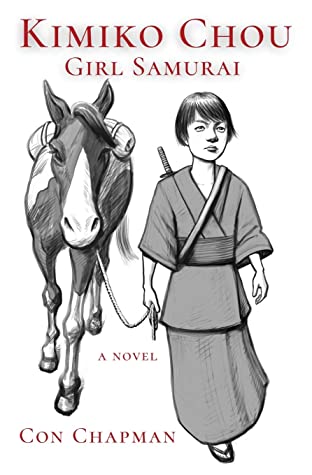
Kimiko Chou, Girl Samurai
KIMIKO CHOU is a girl on a mission. Her mother and brother have been killed by robbers in 14th century Japan while her father, a samurai warrior, is off on an invasion of Korea.
Chou (“butterfly” in Japanese) narrowly escapes death by hiding while the robbers ransack her home, then—dressed as a boy in her brother’s clothes—she goes in quest of her father. Alone on the road, she takes up with Hyōgo Narutomi, a former samurai who has been dismissed by seven previous masters, and Moto Mori, his page.
The three of them—man, boy, and girl—make their way across Japan along with Piebald, an old horse with a curious spot on his coat that resembles a Fenghuang, the mythical bird that rules over all others in Asian mythology. Together this unlikely trio experience a series of adventures and narrow escapes until Chou and Mori—but not Narutomi—land in Korea. There, as a spy for the Koreans, Chou searches for her father-across enemy lines!
You can find Kimiko Chou, Girl Samurai here:
Goodreads | Amazon | Barnes & Noble | IndieBound
To read more author interviews, click here.
If you are an author and wish to be interviewed or if you are a publicist and want to get your author interviewed on TRB, then please get in touch through direct e-mail: thereadingbud@gmail.com


I love reading your comments, so please go ahead…